

Carbon Markets and
Biochar: An Offset
Buyers Perspective
North American Biochar Conference
August 10th, 2009
Peter Weisberg
Offset Project Analyst
pweisberg@climatetrust.org
503-238-1915
Outline
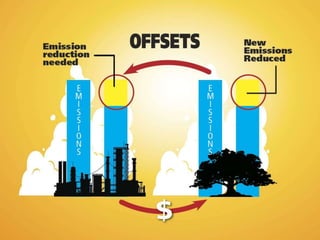
• Theory of offsets
• How offsets could support biochar projects
• Methodology issues
• Current funding from The Climate Trust
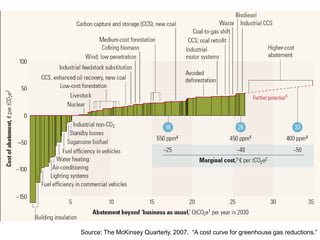
Source: The McKinsey Quarterly. 2007. “A cost curve for greenhouse gas reductions.”
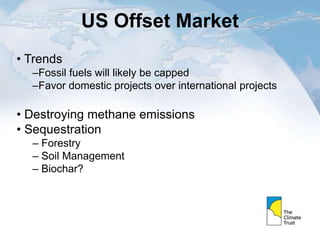
US Offset Market
• Trends
–Fossil fuels will likely be capped
–Favor domestic projects over international projects
• Destroying methane emissions
• Sequestration
– Forestry
– Soil Management
– Biochar?
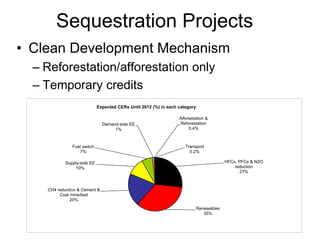
Sequestration Projects
• Clean Development Mechanism
– Reforestation/afforestation only
– Temporary credits
HFCs, PFCs & N2O
reduction
27%
Renewables
35%
CH4 reduction & Cement &
Coal mine/bed
20%
Supply-side EE
10%
Fuel switch
7%
Demand-side EE
1%
Afforestation &
Reforestation
0.4%
Transport
0.2%
Expected CERs Until 2012 (%) in each category
Outline
• Theory of offsets
• How offsets could support biochar projects
• Methodology issues
• Current funding from The Climate Trust
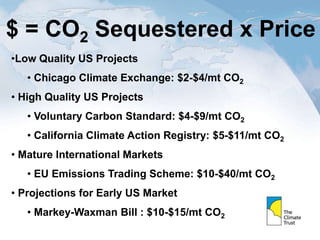
$ = CO2 Sequestered x Price
•Low Quality US Projects
• Chicago Climate Exchange: $2-$4/mt CO2
• High Quality US Projects
• Voluntary Carbon Standard: $4-$9/mt CO2
• California Climate Action Registry: $5-$11/mt CO2
• Mature International Markets
• EU Emissions Trading Scheme: $10-$40/mt CO2
• Projections for Early US Market
• Markey-Waxman Bill : $10-$15/mt CO2
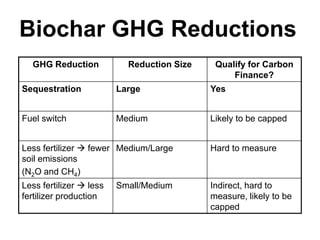
GHG Reduction Reduction Size Qualify for Carbon
Finance?
Sequestration Large Yes
Fuel switch Medium Likely to be capped
Less fertilizer  fewer
soil emissions
(N2O and CH4)
Medium/Large Hard to measure
Less fertilizer  less
fertilizer production
Small/Medium Indirect, hard to
measure, likely to be
capped
Biochar GHG Reductions
Currently Methodologies
Avoidance of methane production from
biomass decay through controlled
pyrolysis
• Small scale
• No credit for carbon sequestration, but…
• Char must be “biologically inert”
• Volatile C/Fixed C ratio lower than 50%
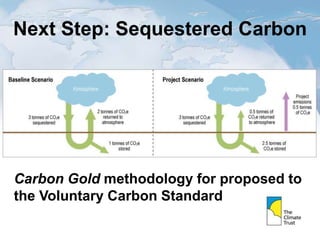
Next Step: Sequestered Carbon
Carbon Gold methodology for proposed to
the Voluntary Carbon Standard
Outline
• Theory of offsets
• How offsets could support biochar projects
• Methodology issues
• Current funding from The Climate Trust
Unresolved Methodology
Issues
• Recalcitrance
• Guarantee 100 years of permanent
sequestration
• Carbon Gold: Volatile C/Fixed C ratio
lower than 50%
• Soil monitoring
• What happens to char that erodes out of
the soils?
Unresolved Methodology
Issues
• Ownership – Three entities, same reduction
1. Feedstock owner
2. Pyrolysis plant
3. Land owner
• Carbon Gold: Credits pyrolysis plant
• Sequestered carbon can only be claimed once
Unresolved Methodology
Issues
• Environmental impact
– Heavy metals
– Criteria air pollutants
– Microbe health
– Carbon already in soil
Resolved Issue: Waste
Feedstocks
• Leakage
– Changes in emissions outside the project
itself
• Direct: Biomass fuel unavailable
• Indirect: displace current farm land for biochar
feedstock plantations  land use change
• Carbon Gold: “biomass that would otherwise
have been left to decay or been burned in an
uncontrolled manner”
Outline
• Theory of offsets
• How offsets could support biochar projects
• Methodology issues
• Current funding from The Climate Trust
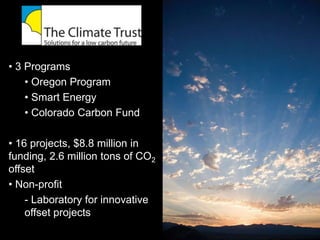
• 3 Programs
• Oregon Program
• Smart Energy
• Colorado Carbon Fund
• 16 projects, $8.8 million in
funding, 2.6 million tons of CO2
offset
• Non-profit
- Laboratory for innovative
offset projects
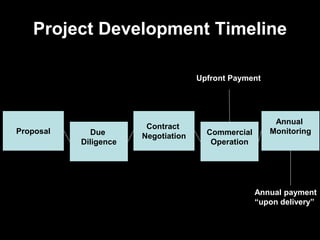
Project Development Timeline
Proposal Due
Diligence
Contract
Negotiation Commercial
Operation
Annual
Monitoring
Upfront Payment
Annual payment
“upon delivery”
Peter Weisberg
Offset Project Analyst
pweisberg@climatetrust.org
503-238-1915 x 207

2009 National Biochar Conference Presentation

  • 1.
    Carbon Markets and Biochar:An Offset Buyers Perspective North American Biochar Conference August 10th, 2009 Peter Weisberg Offset Project Analyst pweisberg@climatetrust.org 503-238-1915
  • 2.
    Outline • Theory ofoffsets • How offsets could support biochar projects • Methodology issues • Current funding from The Climate Trust
  • 4.
    Source: The McKinseyQuarterly. 2007. “A cost curve for greenhouse gas reductions.”
  • 8.
    US Offset Market •Trends –Fossil fuels will likely be capped –Favor domestic projects over international projects • Destroying methane emissions • Sequestration – Forestry – Soil Management – Biochar?
  • 9.
    Sequestration Projects • CleanDevelopment Mechanism – Reforestation/afforestation only – Temporary credits HFCs, PFCs & N2O reduction 27% Renewables 35% CH4 reduction & Cement & Coal mine/bed 20% Supply-side EE 10% Fuel switch 7% Demand-side EE 1% Afforestation & Reforestation 0.4% Transport 0.2% Expected CERs Until 2012 (%) in each category
  • 10.
    Outline • Theory ofoffsets • How offsets could support biochar projects • Methodology issues • Current funding from The Climate Trust
  • 11.
    $ = CO2Sequestered x Price •Low Quality US Projects • Chicago Climate Exchange: $2-$4/mt CO2 • High Quality US Projects • Voluntary Carbon Standard: $4-$9/mt CO2 • California Climate Action Registry: $5-$11/mt CO2 • Mature International Markets • EU Emissions Trading Scheme: $10-$40/mt CO2 • Projections for Early US Market • Markey-Waxman Bill : $10-$15/mt CO2
  • 12.
    GHG Reduction ReductionSize Qualify for Carbon Finance? Sequestration Large Yes Fuel switch Medium Likely to be capped Less fertilizer  fewer soil emissions (N2O and CH4) Medium/Large Hard to measure Less fertilizer  less fertilizer production Small/Medium Indirect, hard to measure, likely to be capped Biochar GHG Reductions
  • 13.
    Currently Methodologies Avoidance ofmethane production from biomass decay through controlled pyrolysis • Small scale • No credit for carbon sequestration, but… • Char must be “biologically inert” • Volatile C/Fixed C ratio lower than 50%
  • 14.
    Next Step: SequesteredCarbon Carbon Gold methodology for proposed to the Voluntary Carbon Standard
  • 15.
    Outline • Theory ofoffsets • How offsets could support biochar projects • Methodology issues • Current funding from The Climate Trust
  • 16.
    Unresolved Methodology Issues • Recalcitrance •Guarantee 100 years of permanent sequestration • Carbon Gold: Volatile C/Fixed C ratio lower than 50% • Soil monitoring • What happens to char that erodes out of the soils?
  • 17.
    Unresolved Methodology Issues • Ownership– Three entities, same reduction 1. Feedstock owner 2. Pyrolysis plant 3. Land owner • Carbon Gold: Credits pyrolysis plant • Sequestered carbon can only be claimed once
  • 18.
    Unresolved Methodology Issues • Environmentalimpact – Heavy metals – Criteria air pollutants – Microbe health – Carbon already in soil
  • 19.
    Resolved Issue: Waste Feedstocks •Leakage – Changes in emissions outside the project itself • Direct: Biomass fuel unavailable • Indirect: displace current farm land for biochar feedstock plantations  land use change • Carbon Gold: “biomass that would otherwise have been left to decay or been burned in an uncontrolled manner”
  • 20.
    Outline • Theory ofoffsets • How offsets could support biochar projects • Methodology issues • Current funding from The Climate Trust
  • 21.
    • 3 Programs •Oregon Program • Smart Energy • Colorado Carbon Fund • 16 projects, $8.8 million in funding, 2.6 million tons of CO2 offset • Non-profit - Laboratory for innovative offset projects
  • 23.
    Project Development Timeline ProposalDue Diligence Contract Negotiation Commercial Operation Annual Monitoring Upfront Payment Annual payment “upon delivery”
  • 24.
    Peter Weisberg Offset ProjectAnalyst pweisberg@climatetrust.org 503-238-1915 x 207

Editor's Notes

  • #4 Very hard to regulate every source of emissions