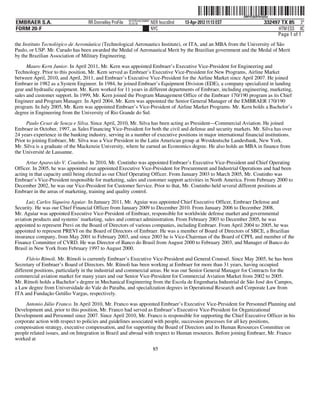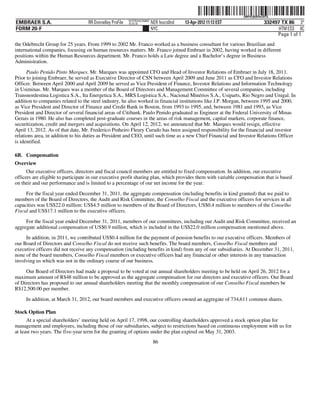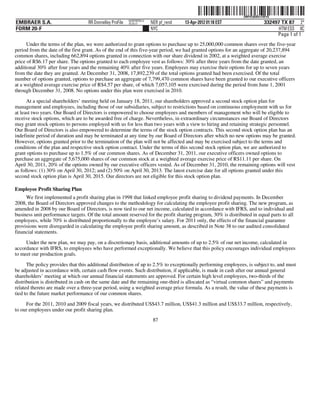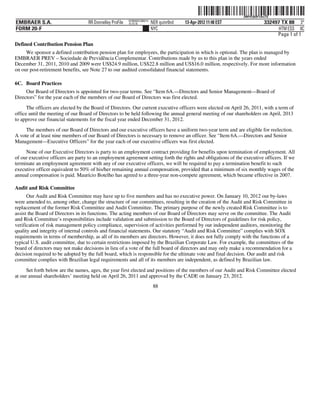
ˆ200FVFj&BF2cyw2wDŠ        200FVFj&BF2cyw2w
                                                                   NYCFBUAC350924
EMBRAER S.A.                              RR Donnelley ProFile     10.10.16         NER dormr0nd        13-Apr-2012 14:40 EST                              332497 FS 1 8*
FORM 20-F                                                                           NYC                                                                        HTM ESS 0C
                                                                                                                                                               Page 1 of 1
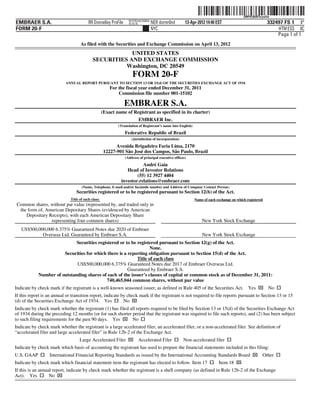
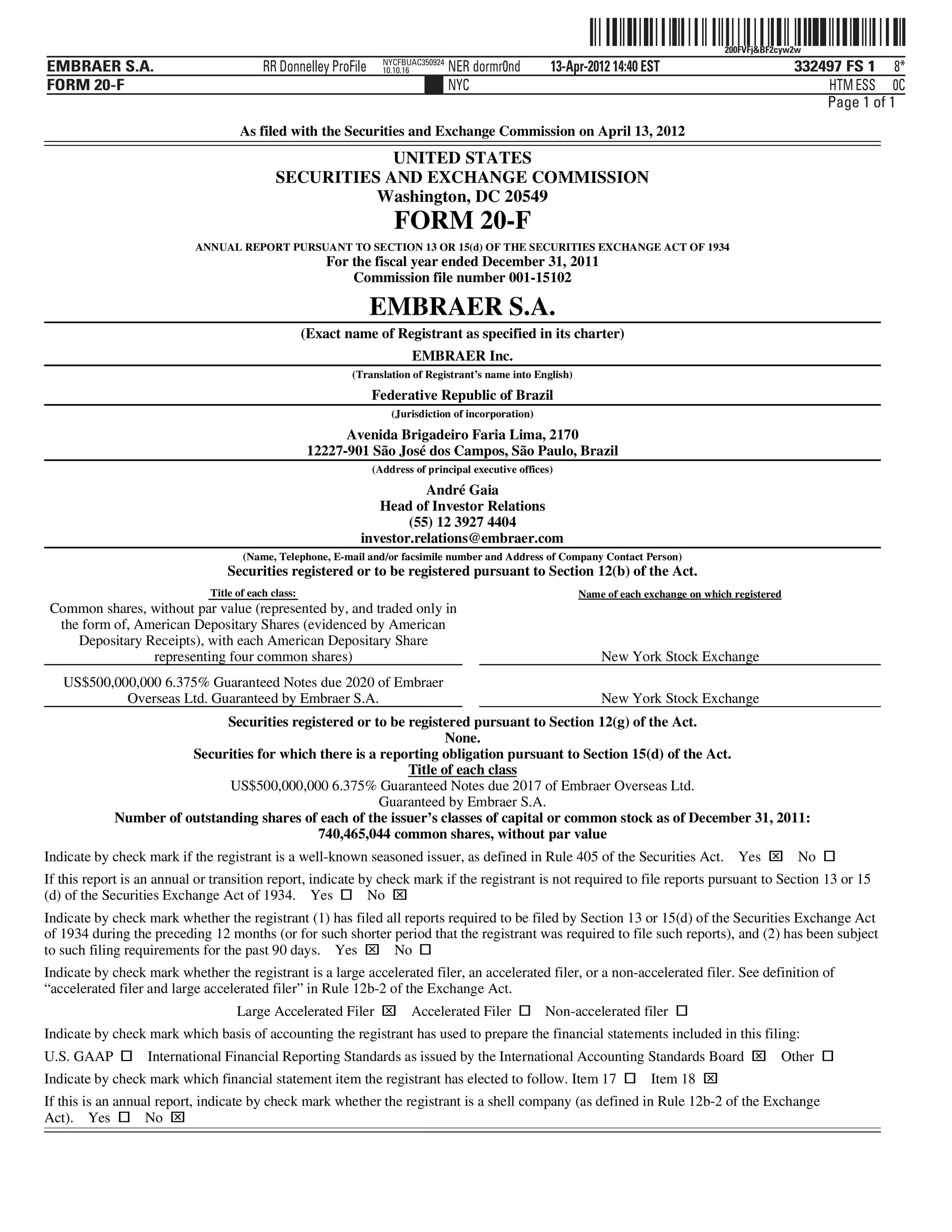
                                    As filed with the Securities and Exchange Commission on April 13, 2012
                                                         UNITED STATES
                                             SECURITIES AND EXCHANGE COMMISSION
                                                       Washington, DC 20549
                                                                     FORM 20-F
                           ANNUAL REPORT PURSUANT TO SECTION 13 OR 15(d) OF THE SECURITIES EXCHANGE ACT OF 1934
                                                         For the fiscal year ended December 31, 2011
                                                             Commission file number 001-15102

                                                                 EMBRAER S.A.
                                                     (Exact name of Registrant as specified in its charter)
                                                                         EMBRAER Inc.
                                                             (Translation of Registrant’s name into English)
                                                                 Federative Republic of Brazil
                                                                     (Jurisdiction of incorporation)

                                                           Avenida Brigadeiro Faria Lima, 2170
                                                     12227-901 São José dos Campos, São Paulo, Brazil
                                                                 (Address of principal executive offices)
                                                                          André Gaia
                                                                  Head of Investor Relations
                                                                       (55) 12 3927 4404
                                                               investor.relations@embraer.com
                                     (Name, Telephone, E-mail and/or facsimile number and Address of Company Contact Person)
                                  Securities registered or to be registered pursuant to Section 12(b) of the Act.
                              Title of each class:                                                             Name of each exchange on which registered
 Common shares, without par value (represented by, and traded only in
  the form of, American Depositary Shares (evidenced by American
     Depositary Receipts), with each American Depositary Share
                 representing four common shares)                                                                  New York Stock Exchange
   US$500,000,000 6.375% Guaranteed Notes due 2020 of Embraer
            Overseas Ltd. Guaranteed by Embraer S.A.                                                               New York Stock Exchange
                             Securities registered or to be registered pursuant to Section 12(g) of the Act.
                                                                   None.
                       Securities for which there is a reporting obligation pursuant to Section 15(d) of the Act.
                                                            Title of each class
                             US$500,000,000 6.375% Guaranteed Notes due 2017 of Embraer Overseas Ltd.
                                                       Guaranteed by Embraer S.A.
            Number of outstanding shares of each of the issuer’s classes of capital or common stock as of December 31, 2011:
                                            740,465,044 common shares, without par value
Indicate by check mark if the registrant is a well-known seasoned issuer, as defined in Rule 405 of the Securities Act. Yes                          ⌧     No
If this report is an annual or transition report, indicate by check mark if the registrant is not required to file reports pursuant to Section 13 or 15
(d) of the Securities Exchange Act of 1934. Yes             No       ⌧
Indicate by check mark whether the registrant (1) has filed all reports required to be filed by Section 13 or 15(d) of the Securities Exchange Act
of 1934 during the preceding 12 months (or for such shorter period that the registrant was required to file such reports), and (2) has been subject
to such filing requirements for the past 90 days. Yes        No⌧
Indicate by check mark whether the registrant is a large accelerated filer, an accelerated filer, or a non-accelerated filer. See definition of
“accelerated filer and large accelerated filer” in Rule 12b-2 of the Exchange Act.
                                    Large Accelerated Filer        ⌧     Accelerated Filer             Non-accelerated filer
Indicate by check mark which basis of accounting the registrant has used to prepare the financial statements included in this filing:
U.S. GAAP         International Financial Reporting Standards as issued by the International Accounting Standards Board                          ⌧     Other
Indicate by check mark which financial statement item the registrant has elected to follow. Item 17                          Item 18    ⌧
If this is an annual report, indicate by check mark whether the registrant is a shell company (as defined in Rule 12b-2 of the Exchange
Act). Yes          No ⌧
ˆ200FVFj&BDzzt7#Q+Š
                                                                                                          200FVFj&BDzzt7#Q
                                                      NERPRFRS16
EMBRAER S.A.                   RR Donnelley ProFile   10.10.17      NER pf_rend   13-Apr-2012 01:15 EST                332497 TOC 1 2*
FORM 20-F                      START PAGE                           NYC                                                      HTM ESS 0C
                                                                                                                             Page 1 of 1
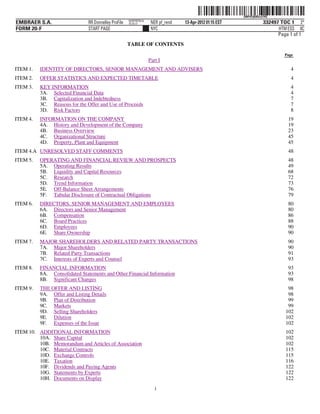
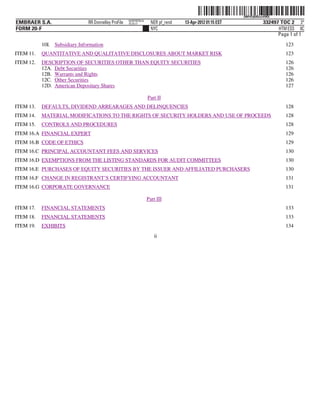
                                                      TABLE OF CONTENTS
                                                                                                                               Page
                                                                   Part I
ITEM 1.   IDENTITY OF DIRECTORS, SENIOR MANAGEMENT AND ADVISERS                                                                   4
ITEM 2.   OFFER STATISTICS AND EXPECTED TIMETABLE                                                                                 4
ITEM 3.   KEY INFORMATION                                                                                                         4
          3A. Selected Financial Data                                                                                             4
          3B. Capitalization and Indebtedness                                                                                     7
          3C. Reasons for the Offer and Use of Proceeds                                                                           7
          3D. Risk Factors                                                                                                        8
ITEM 4.   INFORMATION ON THE COMPANY                                                                                             19
          4A. History and Development of the Company                                                                             19
          4B. Business Overview                                                                                                  23
          4C. Organizational Structure                                                                                           45
          4D. Property, Plant and Equipment                                                                                      45
ITEM 4.A UNRESOLVED STAFF COMMENTS                                                                                               48
ITEM 5.   OPERATING AND FINANCIAL REVIEW AND PROSPECTS                                                                           48
          5A. Operating Results                                                                                                  49
          5B. Liquidity and Capital Resources                                                                                    68
          5C. Research                                                                                                           72
          5D. Trend Information                                                                                                  73
          5E. Off-Balance Sheet Arrangements                                                                                     76
          5F. Tabular Disclosure of Contractual Obligations                                                                      79
ITEM 6.   DIRECTORS, SENIOR MANAGEMENT AND EMPLOYEES                                                                             80
          6A. Directors and Senior Management                                                                                    80
          6B. Compensation                                                                                                       86
          6C. Board Practices                                                                                                    88
          6D. Employees                                                                                                          90
          6E. Share Ownership                                                                                                    90
ITEM 7.   MAJOR SHAREHOLDERS AND RELATED PARTY TRANSACTIONS                                                                      90
          7A. Major Shareholders                                                                                                 90
          7B. Related Party Transactions                                                                                         91
          7C. Interests of Experts and Counsel                                                                                   93
ITEM 8.   FINANCIAL INFORMATION                                                                                                  93
          8A. Consolidated Statements and Other Financial Information                                                            93
          8B. Significant Changes                                                                                                98
ITEM 9.   THE OFFER AND LISTING                                                                                                  98
          9A. Offer and Listing Details                                                                                          98
          9B. Plan of Distribution                                                                                               99
          9C. Markets                                                                                                            99
          9D. Selling Shareholders                                                                                              102
          9E. Dilution                                                                                                          102
          9F. Expenses of the Issue                                                                                             102
ITEM 10. ADDITIONAL INFORMATION                                                                                                 102
         10A. Share Capital                                                                                                     102
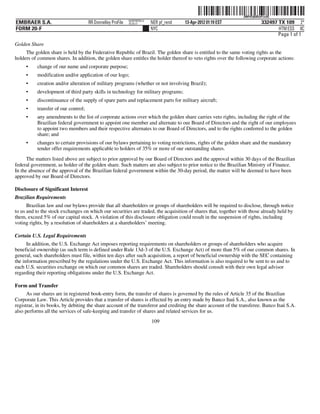
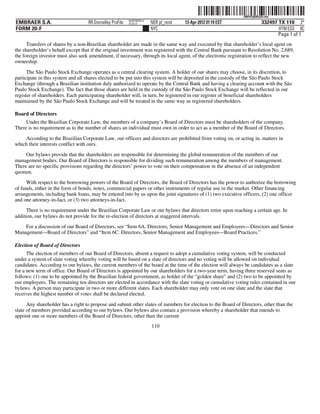
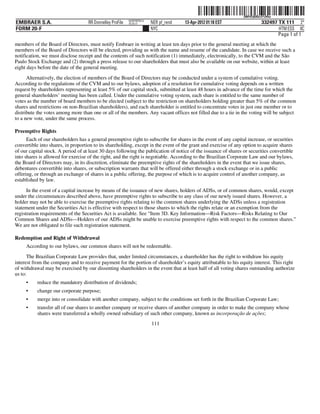
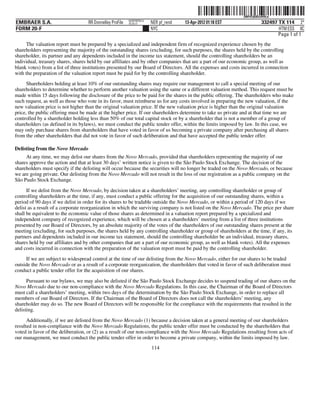
         10B. Memorandum and Articles of Association                                                                            102
         10C. Material Contracts                                                                                                115
         10D. Exchange Controls                                                                                                 115
         10E. Taxation                                                                                                          116
         10F. Dividends and Paying Agents                                                                                       122
         10G. Statements by Experts                                                                                             122
         10H. Documents on Display                                                                                              122
                                                                      i
ˆ200FVFj&BDzzvVWQ/Š
                                                                                                           200FVFj&BDzzvVWQ
                                                      NERPRFRS16
EMBRAER S.A.                   RR Donnelley ProFile   10.10.17       NER pf_rend   13-Apr-2012 01:15 EST              332497 TOC 2 3*
FORM 20-F                                                            NYC                                                    HTM ESS 0C
                                                                                                                            Page 1 of 1
           10I. Subsidiary Information                                                                                         123
ITEM 11.   QUANTITATIVE AND QUALITATIVE DISCLOSURES ABOUT MARKET RISK                                                          123
ITEM 12.   DESCRIPTION OF SECURITIES OTHER THAN EQUITY SECURITIES                                                              126
           12A. Debt Securities                                                                                                126
           12B. Warrants and Rights                                                                                            126
           12C. Other Securities                                                                                               126
           12D. American Depositary Shares                                                                                     127

                                                                   Part II
ITEM 13.   DEFAULTS, DIVIDEND ARREARAGES AND DELINQUENCIES                                                                     128
ITEM 14.   MATERIAL MODIFICATIONS TO THE RIGHTS OF SECURITY HOLDERS AND USE OF PROCEEDS                                        128
ITEM 15.   CONTROLS AND PROCEDURES                                                                                             128
ITEM 16.A FINANCIAL EXPERT                                                                                                     129
ITEM 16.B CODE OF ETHICS                                                                                                       129
ITEM 16.C PRINCIPAL ACCOUNTANT FEES AND SERVICES                                                                               130
ITEM 16.D EXEMPTIONS FROM THE LISTING STANDARDS FOR AUDIT COMMITTEES                                                           130
ITEM 16.E PURCHASES OF EQUITY SECURITIES BY THE ISSUER AND AFFILIATED PURCHASERS                                               130
ITEM 16.F CHANGE IN REGISTRANT’S CERTIFYING ACCOUNTANT                                                                         131
ITEM 16.G CORPORATE GOVERNANCE                                                                                                 131

                                                                   Part III
ITEM 17.   FINANCIAL STATEMENTS                                                                                                133
ITEM 18.   FINANCIAL STATEMENTS                                                                                                133
ITEM 19.   EXHIBITS                                                                                                            134
                                                                      ii
ˆ200FVFj&BF0rk46QgŠ
                                                                                                                  200FVFj&BF0rk46Q
                                                          NYCFBUAC350875
EMBRAER S.A.                       RR Donnelley ProFile   10.10.16         NER wernm0nd   13-Apr-2012 10:58 EST                  332497 TX 1 4*
FORM 20-F                                                                  NYC                                                        HTM ESS 0C
                                                                                                                                     Page 1 of 1
                                                              INTRODUCTION
      In this annual report, “Embraer,” “we,” “us” or “our” refer to Embraer S.A. All references herein to the “real,” “reais” or “R$”
are to the Brazilian real, the official currency of Brazil. All references to “US$,” “dollars” or “U.S. dollars” are to United States
dollars.

Presentation of Financial and Other Data
Financial Data
     Our audited consolidated financial statements at December 31, 2011 and 2010 and for each of the years ended December 31,
2011, 2010, and 2009 are included in this annual report.

     Our consolidated financial statements have been prepared in accordance with International Financial Reporting Standards, or
IFRS, as issued by the International Accounting Standards Board, or IASB. Our financial statements for the year ended December 31,
2010 are our first annual financial statements that comply with IFRS as issued by the IASB. As permitted by the applicable rules,
when making the transition from U.S. GAAP to IFRS, we did not include in this annual report our financial statements as of and for
the years ended December 31, 2008 and 2007, as they were prepared in accordance with U.S. GAAP and not IFRS.

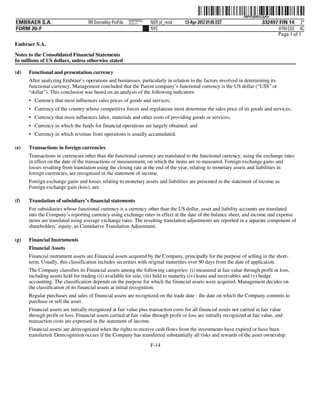
     After analyzing our operations and businesses with regard to the applicability of International Accounting Standards, or IAS, 21
– “The Effects of Changes in Foreign Exchange Rates,” particularly in relation to the factors involved in determining our functional
currency, management concluded that our functional currency is the U.S. dollar. This conclusion was based on an analysis of the
following factors, as set forth in IAS 21: (1) the currency that mainly influences the sale prices of our goods and services, (2) the
currency of the countries whose competitive forces mainly determine the sale prices of our goods and services, (3) the currency that
mainly influences prices of raw materials and other costs involved in providing our goods and services, (4) the currency in which the
funds for financial operations are principally obtained, and (5) the currency in which revenue from operations is usually received.
Items included in the financial statements of each of our subsidiaries are measured using the currency of the primary economic
environment in which such subsidiary operates. Our audited consolidated financial statements included elsewhere in this annual
report are presented in U.S. dollars, which is our presentation currency. Our financial statements and financial data presented herein
and prepared in accordance with IFRS do not reflect the effects of inflation.

     In our 2011, 2010 and 2009 financial statements, gains or losses resulting from the remeasurement of the monetary items and
from foreign currency transactions have been reported in the consolidated statement of income as single line items.

      For certain purposes, such as providing reports to our Brazilian shareholders, filing financial statements with the Comissão de
Valores Mobiliários (Brazilian securities commission), or CVM, and determining dividend payments and other distributions and tax
liabilities in Brazil, we have prepared, and will continue to be required to prepare, financial statements in accordance with Law
No. 6,404 of December 15, 1976, as amended, or Brazilian Corporate Law. Effective 2008, significant changes were introduced to the
accounting aspects of the Brazilian Corporate Law by Law 11,638 of December 28, 2007. In addition, in 2008 certain changes to the
accounting principles, as well as other changes to the accounting practices adopted in Brazil, or Brazilian GAAP, were introduced by
the Comitê de Pronunciamentos Contábeis (Brazilian Accounting Standards Setting Board), and have become effective in 2010.
These changes to the accounting aspects of the Brazilian Corporate Law and Brazilian GAAP impacted our parent company financial
statements as of and for the years ended December 31, 2011, 2010 and 2009 and the basis of our distribution of minimum mandatory
dividends. Other than that, such changes had no effect on our consolidated financial statements prepared in accordance with IFRS that
are included elsewhere in this annual report. Our parent company financial statements as of and for the years ended December 31,
2011, 2010 and 2009 which are prepared in accordance with the Brazilian Corporate Law, which are not included in this annual
report, differ from those prepared in accordance with IFRS.
                                                                            1
ˆ200FVFj&BF0tcGbwsŠ
                                                                                                                   200FVFj&BF0tcGbw
                                                           NYCFBUAC350875
EMBRAER S.A.                        RR Donnelley ProFile   10.10.16         NER wernm0nd   13-Apr-2012 11:10 EST                 332497 TX 2 3*
FORM 20-F                                                                   NYC                                                       HTM ESS 0C
                                                                                                                                     Page 1 of 1
     As a result of the listing of our common shares on the Novo Mercado segment of the BM&FBOVESPA S.A.—Bolsa de Valores,
Mercadorias e Futuros de São Paulo, or São Paulo Stock Exchange, since January 2009 we are required to translate into English our
quarterly and annual financial statements.

Other Data and Backlog
     In this annual report:
     •   some of the financial data reflects the effect of rounding;
     •   aircraft ranges are indicated in nautical miles;
     •   one nautical mile is equal to approximately 1.15 ordinary or “statute” miles, or approximately 1.85 kilometers;
     •   aircraft speeds are indicated in nautical miles per hour, or knots, or in Mach, which is a measure of the speed of sound;
     •   the term “regional jet” refers to narrow body jet aircraft with 30-60 passenger seats;
     •   the term “mid-capacity jet” refers to jet aircraft with 70-120 passenger seats. All of our regional and mid-capacity jet aircraft
         are sold in the commercial aviation segment;
     •   the term “commercial aircraft,” as it applies to Embraer, refers to our regional jets and mid-capacity jets;
     •   the terms “entry-level jet” and “light jet” refer to executive jets that carry from six to eight passengers and up to nine
         passengers, respectively, that are designed for short take-off distances;
     •   the term “ultra-large jet” refers to executive jets that have longer range and over-sized cabin space and carry, on average, 19
         passengers; and
     •   the term “executive jets,” as it applies to Embraer, refers to our aircraft sold to companies, including fractional ownership
         companies, charter companies and air-taxi companies and high net-worth individuals.

      We calculate the value of our backlog by considering all firm orders that have not yet been delivered. A firm order is a firm
commitment from a customer, represented by a signed contract and customarily accompanied by a down payment, for which we have
reserved a place on one of our production lines. Every time we refer to our backlog in this annual report, we make reference only to
firm orders and not to options. We also include the number of aircraft sold by our defense and security segment to state-owned
airlines in our commercial aircraft backlog.

Special Note Regarding Forward-Looking Statements
     This annual report includes forward-looking statements, within the meaning of Section 27A of the U.S. Securities Act of 1933,
as amended, or the Securities Act, and Section 21E of the U.S. Securities Exchange Act of 1934, as amended, or the Exchange Act,
principally in Items 3 through 5 and Item 11 of this annual report. We have based these forward-looking statements largely on our
current expectations and projections about future events, industry and financial trends affecting our business. These forward-looking
statements are subject to risks, uncertainties and assumptions, including, among other things:
     •   general economic, political and business conditions, both in Brazil and in our markets;
     •   changes in competitive conditions and in the general level of demand for our products;
     •   management’s expectations and estimates concerning our future financial performance, financing plans and programs, and
         the effects of competition;
                                                                             2
ˆ200FVFj&BDzzly4wNŠ200FVFj&BDzzly4w
                                                          NERPRFRS9
EMBRAER S.A.                       RR Donnelley ProFile   10.10.17    NER pf_rend    13-Apr-2012 01:15 EST                    332497 TX 3 2*
FORM 20-F                                                             NYC                                                          HTM ESS 0C
                                                                                                                                  Page 1 of 1
     •   the effects of customers canceling, modifying and/or rescheduling contractual orders;
     •   the effect of changing priorities or reductions in the Brazilian federal government or international government defense
         budgets on our revenues;
     •   continued successful development and marketing of the EMBRAER 170/190 jet family, our line of executive jets (including
         the Phenom 100, Phenom 300, Lineage 1000, Legacy 450 and Legacy 500) and our defense aircraft;
     •   our level of indebtedness;
     •   anticipated trends in our industry, including but not limited to the continuation of long-term trends in passenger traffic and
         revenue yields in the airline industry;
     •   our short- and long-term outlook for the 30-120 seat commercial airline market;
     •   our expenditure plans;
     •   inflation and fluctuations in exchange rates;
     •   the impact of volatile fuel prices and the airline industry’s response;
     •   our ability to develop and deliver our products on a timely basis;
     •   availability of sales financing for our existing and potential customers;
     •   existing and future governmental regulation;
     •   our relationship with our workforce; and
     •   other risk factors as set forth under “Item 3D. Key Information—Risk Factors.”
     The words “believe,” “may,” “will,” “forecast,” “estimate,” “plan,” “continue,” “anticipate,” “intend,” “expect” and similar
words are intended to identify forward-looking statements. We undertake no obligation to update publicly or revise any forward-
looking statements because of new information, future events or other factors. In light of these risks and uncertainties, the forward-
looking events and circumstances discussed in this annual report might not occur. Our actual results and performance could differ
substantially from those anticipated in our forward-looking statements. As a result of various factors such as those risks described in
“Item 3D. Key Information—Risk Factors,” undue reliance should not be placed on these forward-looking statements.
                                                                       3
ˆ200FVFj&BDzzn1NQrŠ     200FVFj&BDzzn1NQ
                                                           NERPRFRS9
EMBRAER S.A.                        RR Donnelley ProFile   10.10.17     NER pf_rend   13-Apr-2012 01:15 EST                        332497 TX 4 2*
FORM 20-F                                                               NYC                                                             HTM ESS 0C
                                                                                                                                       Page 1 of 1


                                                                       PART I

ITEM 1.      IDENTITY OF DIRECTORS, SENIOR MANAGEMENT AND ADVISERS
     Not applicable.

ITEM 2.      OFFER STATISTICS AND EXPECTED TIMETABLE
     Not applicable.

ITEM 3.      KEY INFORMATION
3A. Selected Financial Data
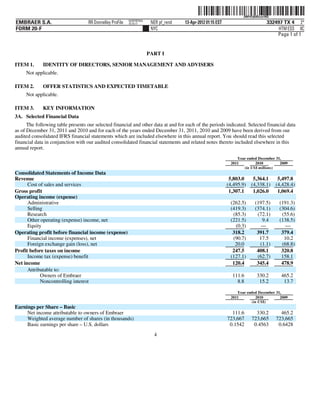
      The following table presents our selected financial and other data at and for each of the periods indicated. Selected financial data
as of December 31, 2011 and 2010 and for each of the years ended December 31, 2011, 2010 and 2009 have been derived from our
audited consolidated IFRS financial statements which are included elsewhere in this annual report. You should read this selected
financial data in conjunction with our audited consolidated financial statements and related notes thereto included elsewhere in this
annual report.
                                                                                                                  Year ended December 31,
                                                                                                               2011        2010         2009
                                                                                                                     (in US$ millions)
Consolidated Statements of Income Data
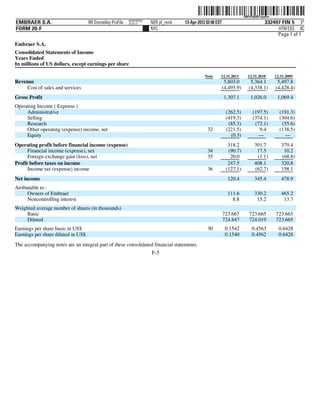
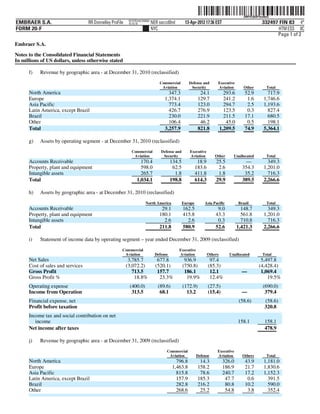
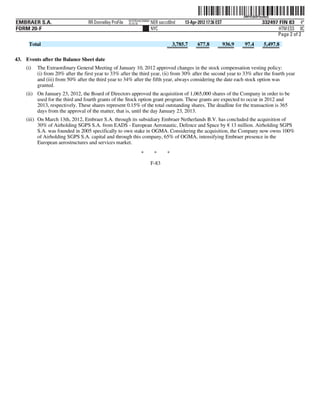
Revenue                                                                                                        5,803.0     5,364.1       5,497.8
      Cost of sales and services                                                                              (4,495.9)   (4,338.1)     (4,428.4)
Gross profit                                                                                                   1,307.1     1,026.0       1,069.4
Operating income (expense)
      Administrative                                                                                           (262.5)      (197.5)      (191.3)
      Selling                                                                                                  (419.3)      (374.1)      (304.6)
      Research                                                                                                  (85.3)       (72.1)       (55.6)
      Other operating (expense) income, net                                                                    (221.5)         9.4       (138.5)
      Equity                                                                                                     (0.3)         —           —
Operating profit before financial income (expense)                                                              318.2        391.7        379.4
      Financial income (expenses), net                                                                          (90.7)        17.5         10.2
      Foreign exchange gain (loss), net                                                                          20.0         (1.1)       (68.8)
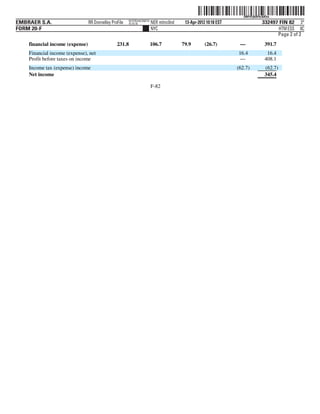
Profit before taxes on income                                                                                   247.5        408.1        320.8
      Income tax (expense) benefit                                                                             (127.1)       (62.7)       158.1
Net income                                                                                                      120.4        345.4        478.9
      Attributable to:
            Owners of Embraer                                                                                   111.6        330.2        465.2
            Noncontrolling interest                                                                               8.8         15.2         13.7

                                                                                                                  Year ended December 31,
                                                                                                               2011        2010         2009
                                                                                                                         (in US$)
Earnings per Share – Basic
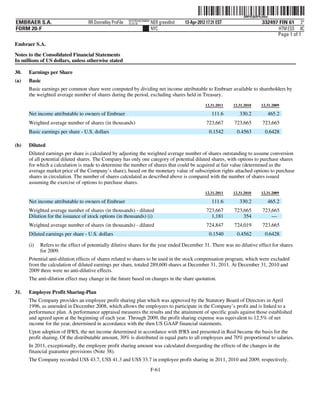
     Net income attributable to owners of Embraer                                                               111.6       330.2         465.2
     Weighted average number of shares (in thousands)                                                         723,667     723,665       723,665
     Basic earnings per share – U.S. dollars                                                                   0.1542      0.4563        0.6428
                                                                         4
ˆ200FVFj&BDzzpMtQHŠ      200FVFj&BDzzpMtQ
                                                         NERPRFRS9
EMBRAER S.A.                      RR Donnelley ProFile   10.10.17    NER pf_rend   13-Apr-2012 01:15 EST                         332497 TX 5 2*
FORM 20-F                                                            NYC                                                              HTM ESS 0C
                                                                                                                                     Page 1 of 1
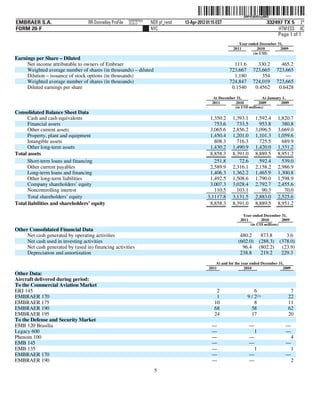
                                                                                                                Year ended December 31,
                                                                                                             2011        2010        2009
                                                                                                                       (in US$)
Earnings per Share – Diluted
     Net income attributable to owners of Embraer                                                            111.6        330.2         465.2
     Weighted average number of shares (in thousands) – diluted                                            723,667      723,665       723,665
     Dilution – issuance of stock options (in thousands)                                                     1,180          354           —
     Weighted average number of shares (in thousands)                                                      724,847      724,019       723,665
     Diluted earnings per share                                                                             0.1540       0.4562        0.6428
                                                                                                   At December 31,            At January 1,
                                                                                                  2011         2010         2009        2009
                                                                                                              (in US$ millions)
Consolidated Balance Sheet Data
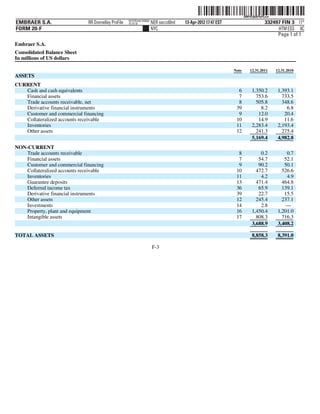
      Cash and cash equivalents                                                                 1,350.2      1,393.1      1,592.4     1,820.7
      Financial assets                                                                            753.6        733.5        953.8       380.8
      Other current assets                                                                      3,065.6      2,856.2      3,096.5     3,669.0
      Property, plant and equipment                                                             1,450.4      1,201.0      1,101.3     1,059.6
      Intangible assets                                                                           808.3        716.3        725.5       689.9
      Other long-term assets                                                                    1,430.2      1,490.9      1,420.0     1,331.2
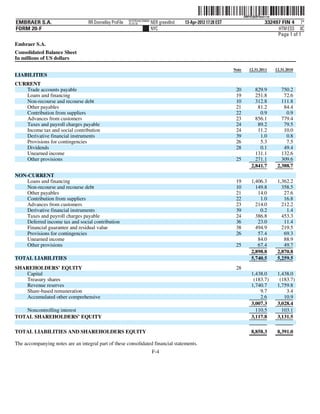
Total assets                                                                                    8,858.3      8,391.0      8,889.5     8,951.2
      Short-term loans and financing                                                              251.8         72.6        592.4       539.0
      Other current payables                                                                    2,589.9      2,316.1      2,158.2     2,986.9
      Long-term loans and financing                                                             1,406.3      1,362.2      1,465.9     1,300.8
      Other long-term liabilities                                                               1,492.5      1,508.6      1,790.0     1,598.9
      Company shareholders’ equity                                                              3,007.3      3,028.4      2,792.7     2,455.6
      Noncontrolling interest                                                                     110.5        103.1         90.3        70.0
      Total shareholders’ equity                                                               3,1117.8      3,131.5      2,883.0     2,525.6
Total liabilities and shareholders’ equity                                                      8,858.3      8,391.0      8,889.5     8,951.2

                                                                                                                   Year ended December 31,
                                                                                                                 2011       2010        2009
                                                                                                                      (in US$ millions)
Other Consolidated Financial Data
     Net cash generated by operating activities                                                                  480.2       873.8        3.6
     Net cash used in investing activities                                                                      (602.0)     (288.3)    (378.0)
     Net cash generated by (used in) financing activities                                                         96.4      (802.2)     (23.9)
     Depreciation and amortization                                                                               238.8       219.2      229.3
                                                                                                    At and for the year ended December 31,
                                                                                                2011                2010                 2009
Other Data:
Aircraft delivered during period:
To the Commercial Aviation Market
ERJ 145                                                                                             2                    6                  7
EMBRAER 170                                                                                         1                9 / 2(1)              22
EMBRAER 175                                                                                        10                    8                 11
EMBRAER 190                                                                                        68                  58                  62
EMBRAER 195                                                                                        24                  17                  20
To the Defense and Security Market
EMB 120 Brasília                                                                                  —                    —                  —
Legacy 600                                                                                        —                     1                 —
Phenom 100                                                                                        —                    —                   4
EMB 145                                                                                           —                    —                  —
EMB 135                                                                                           —                     1                  1
EMBRAER 170                                                                                       —                    —                  —
EMBRAER 190                                                                                       —                    —                   2
                                                                      5
ˆ200FVFj&BF0tfKvwbŠ     200FVFj&BF0tfKvw
                                                          NYCFBUAC350875
EMBRAER S.A.                       RR Donnelley ProFile   10.10.16         NER wernm0nd     13-Apr-2012 11:10 EST                           332497 TX 6 3*
FORM 20-F                                                                  NYC                                                                   HTM ESS 0C
                                                                                                                                                Page 1 of 1
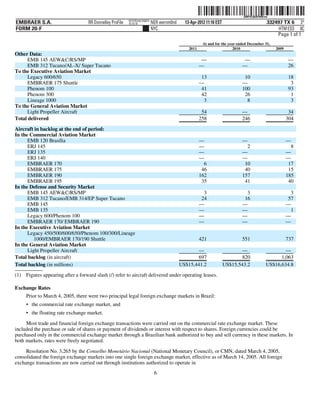
                                                                                                      At and for the year ended December 31,
                                                                                              2011                      2010                    2009
Other Data:
      EMB 145 AEW&C/RS/MP                                                                            —                      —                          —
      EMB 312 Tucano/AL-X/ Super Tucano                                                              —                      —                          26
To the Executive Aviation Market
      Legacy 600/650                                                                                 13                      10                        18
      EMBRAER 175 Shuttle                                                                            —                      —                           3
      Phenom 100                                                                                     41                     100                        93
      Phenom 300                                                                                     42                      26                         1
      Lineage 1000                                                                                    3                       8                         3
To the General Aviation Market
      Light Propeller Aircraft                                                                        54                    —                           34
Total delivered                                                                                      258                    246                        304

Aircraft in backlog at the end of period:
In the Commercial Aviation Market
      EMB 120 Brasília                                                                               —                      —                          —
      ERJ 145                                                                                        —                        2                          8
      ERJ 135                                                                                        —                      —                          —
      ERJ 140                                                                                        —                      —                          —
      EMBRAER 170                                                                                      6                     10                         17
      EMBRAER 175                                                                                     46                     40                         15
      EMBRAER 190                                                                                    162                    157                        185
      EMBRAER 195                                                                                     35                     41                         40
In the Defense and Security Market
      EMB 145 AEW&C/RS/MP                                                                             3                      3                          3
      EMB 312 Tucano/EMB 314/EP Super Tucano                                                         24                     16                         57
      EMB 145                                                                                        —                      —                          —
      EMB 135                                                                                        —                      —                           1
      Legacy 600/Phenom 100                                                                          —                      —                          —
      EMBRAER 170/ EMBRAER 190                                                                       —                      —                          —
In the Executive Aviation Market
      Legacy 450/500/600/650/Phenom 100/300/Lineage
         1000/EMBRAER 170/190 Shuttle                                                                421                    551                        737
In the General Aviation Market
      Light Propeller Aircraft                                                                    —                         —                      —
Total backlog (in aircraft)                                                                       697                       820                  1,063
Total backlog (in millions)                                                               US$15,441.2               US$15,543.2            US$16,634.8
(1) Figures appearing after a forward slash (/) refer to aircraft delivered under operating leases.

Exchange Rates
     Prior to March 4, 2005, there were two principal legal foreign exchange markets in Brazil:
     • the commercial rate exchange market, and
     • the floating rate exchange market.

     Most trade and financial foreign exchange transactions were carried out on the commercial rate exchange market. These
included the purchase or sale of shares or payment of dividends or interest with respect to shares. Foreign currencies could be
purchased only in the commercial exchange market through a Brazilian bank authorized to buy and sell currency in these markets. In
both markets, rates were freely negotiated.

     Resolution No. 3,265 by the Conselho Monetário Nacional (National Monetary Council), or CMN, dated March 4, 2005,
consolidated the foreign exchange markets into one single foreign exchange market, effective as of March 14, 2005. All foreign
exchange transactions are now carried out through institutions authorized to operate in
                                                                            6
ˆ200FVFj&BF0sfDKw@Š       200FVFj&BF0sfDKw
                                                           NYCFBUAC350875
EMBRAER S.A.                        RR Donnelley ProFile   10.10.16         NER wernm0nd   13-Apr-2012 11:05 EST                          332497 TX 7 3*
FORM 20-F                                                                   NYC                                                                HTM ESS 0C
                                                                                                                                              Page 1 of 1
the consolidated market and are subject to registration with the electronic registration system of the Central Bank of Brazil, or Central
Bank. Foreign exchange rates continue to be freely negotiated, but may be influenced by Central Bank intervention.

       Since 1999, the Central Bank has allowed the real/U.S. dollar exchange rate to float freely, and during that period, the real/U.S.
dollar exchange rate has fluctuated considerably. In the past, the Central Bank has intervened occasionally to control unstable
movements in foreign exchange rates. We cannot predict whether the Central Bank or the Brazilian federal government will continue
to let the real float freely or will intervene in the exchange rate market through a currency band system or otherwise. The real may
depreciate or appreciate against the U.S. dollar substantially in the future. See “Item 3D. Key Information—Risk Factors—Risks
Relating to Brazil.”

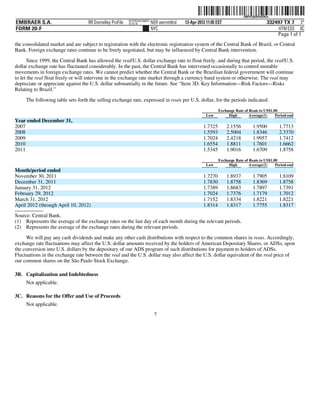
     The following table sets forth the selling exchange rate, expressed in reais per U.S. dollar, for the periods indicated:
                                                                                                              Exchange Rate of Reais to US$1.00
                                                                                                       Low         High        Average(1)     Period-end
Year ended December 31,
2007                                                                                                 1.7325        2.1556        1.9500         1.7713
2008                                                                                                 1.5593        2.5004        1.8346         2.3370
2009                                                                                                 1.7024        2.4218        1.9957         1.7412
2010                                                                                                 1.6554        1.8811        1.7601         1.6662
2011                                                                                                 1.5345        1.9016        1.6709         1.8758
                                                                                                              Exchange Rate of Reais to US$1.00
                                                                                                       Low         High        Average(2)     Period-end
Month/period ended
November 30, 2011                                                                                    1.7270        1.8937        1.7905         1.8109
December 31, 2011                                                                                    1.7830        1.8758        1.8369         1.8758
January 31, 2012                                                                                     1.7389        1.8683        1.7897         1.7391
February 29, 2012                                                                                    1.7024        1.7376        1.7179         1.7012
March 31, 2012                                                                                       1.7152        1.8334        1.8221         1.8221
April 2012 (through April 10, 2012)                                                                  1.8314        1.8317        1.7755         1.8317
Source: Central Bank.
(1) Represents the average of the exchange rates on the last day of each month during the relevant periods.
(2) Represents the average of the exchange rates during the relevant periods.

     We will pay any cash dividends and make any other cash distributions with respect to the common shares in reais. Accordingly,
exchange rate fluctuations may affect the U.S. dollar amounts received by the holders of American Depositary Shares, or ADSs, upon
the conversion into U.S. dollars by the depositary of our ADS program of such distributions for payment to holders of ADSs.
Fluctuations in the exchange rate between the real and the U.S. dollar may also affect the U.S. dollar equivalent of the real price of
our common shares on the São Paulo Stock Exchange.

3B. Capitalization and Indebtedness
     Not applicable.

3C. Reasons for the Offer and Use of Proceeds
     Not applicable.
                                                                             7
ˆ200FVFj&BF0tkhiwAŠ
                                                                                                                   200FVFj&BF0tkhiw
                                                           NYCFBUAC350875
EMBRAER S.A.                        RR Donnelley ProFile   10.10.16         NER wernm0nd   13-Apr-2012 11:10 EST                  332497 TX 8 3*
FORM 20-F                                                                   NYC                                                        HTM ESS 0C
                                                                                                                                      Page 1 of 1
3D. Risk Factors
Risks Relating to Embraer
A downturn in commercial aviation may reduce our sales and revenue, and, consequently, our profitability, in any given year.
     We expect that a substantial portion of our sales in the near future will be derived from sales of commercial aircraft, particularly
the EMBRAER 170/190 jet family. Historically, the market for commercial aircraft has been cyclical due to a variety of factors that
are both external and internal to the air travel industry, including general economic conditions.
     The commercial airline industry has been negatively impacted by a number of factors. For example, in 2004, we reduced
scheduled deliveries from 160 to 145 aircraft following US Airways’ second Chapter 11 filing in September 2004. Moreover, in 2004
we re-evaluated our risk exposure related to aircraft valuations and customer credit risk, which resulted in charges to income of
US$16.0 million. In 2011, AMR Corporation, or AMR, the parent company of American Airlines, which currently operates a fleet of
216 ERJ 145 family aircraft through its wholly-owned subsidiary, American Eagle, filed for a Chapter 11 bankruptcy. As a result of
the expected fleet adjustments that will take place at AMR, we have provisioned a total of US$317.5 million to account for expected
expenses related to obligations from financial guarantees and residual value guarantees for these 216 aircraft. See “Item 5E. Operating
and Financial Review and Prospects—Off-Balance Sheet Arrangements.”

      Although the U.S. and world economies showed some signs of recovery starting in 2004, many airlines continued to face
increased competition, escalating insurance costs, increased security costs, credit downgrades, liquidity concerns and bankruptcy, and
later sharply higher fuel costs.

     In the second half of 2007, the economies of the U.S. and many other countries began to experience downturns which were
characterized by, among other factors, instability in securities’ value and capital markets, instability of currencies, a widespread
reduction in demand, sharp reductions in the availability of credit and inflationary pressure.

      By the second half of 2008, the additional effects of the severe economic downturns in our markets included significant
reductions in air travel and contractions in corporate and personal spending which, as a result, have negatively impacted our product
lines. Additional impacts of such downturns on the air transport industry have included a decrease in orders of executive jets and a
decrease in the volume of financing available to our customers for aircraft purchases, particularly in the commercial and executive
aviation segments (see “Item 4B. Information on The Company—Business Overview—Aircraft Financing Arrangements”). A
continued downturn in general economic conditions could result in further reductions in air travel and decreased orders from our
customers for our aircraft. Our customers could also defer or cancel their purchases of our aircraft. We cannot, at this time, predict the
magnitude or duration of the impact that the above events will have on the air transport industry as a whole and on our business in
particular.
      In February 2009, we had to lay off approximately 20% of our labor force as part of our efforts to reposition Embraer in view of
the global economic downturn. The cost of these layoffs was US$61.3 million. In addition, we also experienced cancellations of 60
aircraft orders by several of our customers (for more information on aircraft cancellations, see “Item 3D. —Our aircraft sales are
subject to cancellation provisions that may reduce our cash flows”).
     We cannot guarantee that material cancellations will not occur in the future or that our other businesses will not be affected.
Material cancellations, delays or decreases in the number of aircraft delivered in any year in the future would likely reduce our
revenue and backlog.

We depend on key customers and key suppliers, the loss of any of which could harm our business.

     Commercial aircraft. As of December 31, 2011, 41% of our firm orders in backlog for the EMBRAER 170/190 jet family were
from Flybe, in the U.K., JetBlue Airways and Air Lease, in the U.S., and Azul, a Brazilian airline founded in 2008. We believe that
we will continue to depend on a number of key customers, the loss of any one of which could reduce our sales and reduce our market
share. Fewer sales could reduce our profitability.
                                                                             8
ˆ200FVFj&BF0tnLcQ,Š
                                                                                                                    200FVFj&BF0tnLcQ
                                                            NYCFBUAC350875
EMBRAER S.A.                         RR Donnelley ProFile   10.10.16         NER wernm0nd   13-Apr-2012 11:10 EST                  332497 TX 9 3*
FORM 20-F                                                                    NYC                                                        HTM ESS 0C
                                                                                                                                       Page 1 of 1
      Increasingly, due to the global economic slowdown, the commercial airline industry is seeking to reduce costs and increase
efficiency, and is experiencing a consolidation process through mergers and acquisitions and alliances through code-sharing
arrangements. Although it is expected that such consolidations and alliances may result in the creation of more stable and competitive
airlines, they may also have the effect of reducing the number of existing and potential customers and, possibly, the number of
purchases of our aircraft.
     Defense aircraft. The Força Aérea Brasileira, or Brazilian Air Force, is our largest customer of defense aircraft products.
Revenue arising from sales to the Brazilian federal government accounted for 25.0% of our defense and security revenue for the year
ended December 31, 2011. A decrease in defense spending by the Brazilian federal government due to defense spending cuts, general
budgetary constraints or other factors that are out of our control could decrease our defense and security revenue. We cannot assure
you that the Brazilian federal government will continue to purchase aircraft or services from us in the future at the same rate or at all.
      Key suppliers. Our risk-sharing partners develop and manufacture significant portions of our aircraft, including the engines,
hydraulic components, avionics, interior and parts of the fuselage and tail. Once risk-sharing partners have been selected and program
development and aircraft production have begun, it is difficult to substitute these partners. In some cases, the aircraft are designed
specifically to accommodate a particular component, such as the engine, which cannot be substituted by another manufacturer without
significant delays and expense. This dependence makes us susceptible to the risks of performance, product quality and financial
condition of these risk-sharing partners.

      We cannot assure you that we will not experience significant delays in obtaining key equipment in our manufacturing process in
the future. A large number of the equipment employed by the aircraft industry is subject to export control regulations and, as such,
deliveries are dependent on suppliers having secured the applicable export licenses. In 2007, deliveries of equipment for one of our
defense products were temporarily suspended due to export control requirements. Although we work closely with, and monitor the
production process of, our risk-sharing partners and major suppliers, the failure of our risk-sharing partners and other major suppliers
to meet our performance specifications, quality standards or delivery schedules or to comply with regulatory requirements (including
export control requirements) could affect our ability to deliver new aircraft to customers in a timely manner.

Our aircraft sales are subject to cancellation provisions that may reduce our cash flow.

     A portion of our aircraft firm orders is subject to significant contingencies, both before and after delivery. Prior to delivery,
some of our purchase contracts may be terminated, or all or a portion of a particular firm order may be canceled, for different reasons,
including:
     • extended delays in delivering aircraft or failure to obtain certification of the aircraft or otherwise meet performance
       milestones and other requirements;
     • failure of a customer to honor its aircraft purchases; or
     • production rate shortfalls.
     Our customers may also reschedule deliveries or cancel orders, particularly during an economic downturn. In 2011 we had an
unusually high liquidated damages revenue, of approximately US$67.1 million, compared to US$30.4 million in 2010, which were
recognized in other operating (expenses) income, net, due to the termination of certain aircraft sales contracts. Although these
cancellations occurred primarily in our executive aviation business, we cannot guarantee that in the future we will not experience
material cancellations in our other aircraft segments. Material cancellations, delays or decreases in the number of aircraft delivered in
any year in the future would likely reduce our sales and revenue, and, consequently, our profitability, for that year. A substantial
number of cancellations or extensions of delivery schedules could reduce our sales and revenue for a given year, which in turn would
reduce our cash flow and backlog.
                                                                              9
ˆ200FVFj&BF0tsH!wSŠ
                                                                                                                   200FVFj&BF0tsH!w
                                                           NYCFBUAC350875
EMBRAER S.A.                        RR Donnelley ProFile   10.10.16         NER wernm0nd   13-Apr-2012 11:10 EST                332497 TX 10 3*
FORM 20-F                                                                   NYC                                                       HTM ESS 0C
                                                                                                                                     Page 1 of 1
Some of our aircraft sales may be subject to financial and residual value guarantees and trade-in options that may require us to
make significant cash disbursements in the future.

      We have in the past guaranteed, and may in the future guarantee, the financial performance of a portion of the financing for, and
the residual value of, some of our aircraft that have already been delivered. Financial guarantees are provided to financing parties to
support a portion of the payment obligations of purchasers of our aircraft under their financing arrangements to mitigate default-
related losses. These guarantees are collateralized by the financed aircraft.

      Residual value guarantees typically ensure that, at the 15th year as of the aircraft delivery date, the relevant aircraft will have a
residual market value equal to a percentage of the original sale price. More recently, residual value guarantees have been issued to
ensure a residual market value for the 10th year following delivery of the aircraft. Most of our residual value guarantees are subject to
a limitation (a “cap”) and, therefore, on average, our residual value guarantee exposure is limited to 17% of the original sale price. In
the event of an exercise by a purchaser of its residual value guarantee, we will bear the difference, if any, between the guaranteed
residual value and the market value of the aircraft at the time of exercise.

      Assuming all customers who are supported by off-balance sheet financial guarantees defaulted on their aircraft financing
arrangements, and also assuming we were required to pay the full aggregate amount of outstanding financial and residual value
guarantees and were unable to remarket any of the aircraft to offset our obligations, our maximum exposure under these guarantees
(less provisions and liabilities) would have been US$682.8 million as of December 31, 2011. As a result, we would be obligated to
make substantial payments that may not be recoverable through proceeds from aircraft sales or leases, particularly if in the future we
are not able to remarket any of the aircraft to offset our obligations or financing defaults occur with respect to a significant portion of
our aircraft. The value of the underlying aircraft is more likely to decrease and third parties are more likely to default during
economic downturns. For further discussion of these off-balance sheet arrangements, see Note 40 to our audited consolidated
financial statements.

      In addition, in connection with the execution of purchase agreements for new aircraft, we may provide trade-in options to our
customers. These options provide customers with the right to trade in existing Embraer aircraft upon the purchase and acceptance of a
new aircraft. From the 18 trade-in options we had in 2010, in 2011 we accepted five aircraft for trade-in and another 12 trade-in
options were cancelled. Also, in 2011, we accepted two aircraft for trade-in pursuant to trade-in aircraft options signed in 2011. As a
result, we are currently subject to trade-in options relating to one aircraft, as a result of trade-ins tied to contractual obligations with
customers and to their taking delivery of certain new aircraft. In addition, other aircraft may become subject to trade-in due to new
sales agreements. The trade-in price is determined in the manner discussed under “Item 5A. Operating and Financial Review and
Prospects—Operating Results—Critical Accounting Estimates—Guarantees and Trade-In Rights” for commercial and executive
aircraft. We may be required to accept trade-ins at prices that are above the market price of the aircraft, which would result in
financial loss for us when we remarket the aircraft.
      We continuously re-evaluate our risk related to financial guarantees and trade-in obligations based on a number of factors,
including the estimated future market value of our aircraft based on third-party appraisals, based on information on similar aircraft
remarketing in the secondary market, and the credit rating of the customers. In this regard, based on our risk assessment of Mesa’s
Chapter 11 filing, in 2009 we reserved US$74.4 million of collateral in the form of cash deposited in escrow, in recognition of
estimated losses that at the time we had classified as probable with respect to financial guarantees extended by us in connection with
sales of our aircraft to Mesa. As a result of the AMR Chapter 11 filing in 2011, and related exposure from financial guarantees and
residual value guarantee obligations, we made a total net provision of US$360.7 million related to these obligations. Of this amount,
US$107.4 million is accounted for under financial (expenses) income, net, and, therefore, does not impact our operating margin. The
remaining US$253.3 million is accounted for under other operating income (expenses), net, and, therefore, impacted our operating
margin for the year.
     Considering the potential impacts to the regional aircraft secondary market and aircraft values that may come as a result of an
increase in aircraft availability due to the AMR restructuring process, we also revised existing provisions, which also relate to our
financial guarantee and residual value guarantee obligations, and the net effect of such revisions was negative US$43.2 million. It
should be noted that, among other things (such as residual value guarantee related provisions), these revisions include an additional
provision related to the Mesa Air Group
                                                                             10
ˆ200FVFj&BF0tvMGw)Š
                                                                                                                   200FVFj&BF0tvMGw
                                                           NYCFBUAC350875
EMBRAER S.A.                        RR Donnelley ProFile   10.10.16         NER wernm0nd   13-Apr-2012 11:10 EST               332497 TX 11 3*
FORM 20-F                                                                   NYC                                                      HTM ESS 0C
                                                                                                                                    Page 1 of 1
bankruptcy process that occurred in 2010. This additional provision was as a result of the latest market developments in the 50-seat
segment and the expectation that the Mesa aircraft will be remarketed in the coming months. It is important to note that with this
additional provision for the Mesa Air Group obligations, we have now provisioned for the maximum potential expenses related to
such obligations and, therefore, no additional provisions are expected for these guarantees. For further information, see Note 40 to our
audited consolidated financial statements.
      Any future decrease in the market value of the aircraft covered by trade-in rights or financial guarantees would decrease our
ability to recover the amounts payable to satisfy our obligations and cause us to incur additional charges to income. If we are required
to pay amounts related to such guarantees, we may not have sufficient cash or other financial resources available to do so and may
need to seek financing to fund these payments. We cannot assure you that the then-prevailing market conditions would allow us to
resell or lease the underlying aircraft at its anticipated fair value or in a timely manner. Consequently, honoring our financial
guarantee or trade-in obligations could require us to make significant cash disbursements in a given year, which, in turn, would
reduce our cash flow in that year.

Any decrease in Brazilian federal government-sponsored customer financing, or increase in government-sponsored financing that
benefits our competitors, may decrease the cost-competitiveness of our aircraft.
      Historically, when purchasing our aircraft, our customers have benefited from export financing incentives provided by Brazilian
government-sponsored export programs. The most important of these government programs was a system of interest rate adjustments
called the Programa de Financiamento às Exportações (the Export Financing Program), or ProEx.
      As a result of past disputes between the Canadian and Brazilian governments at the World Trade Organization, or WTO,
regarding the granting of export subsidies relating to sales of aircraft, the Brazilian federal government ultimately amended ProEx, so
that any ProEx payments would not decrease the effective interest rate below the interest rate permitted by the WTO, and the
Canadian government has also made changes to its financing arrangements for sales of aircraft by Bombardier, Inc., or Bombardier, a
Canadian aircraft manufacturer.
      Although ProEx is currently in compliance with WTO rules, other export financing programs available to our customers may be
subject to challenge in the future. If, in the future, ProEx or another similar Brazilian export financing program is not available, or if
the terms of the ProEx are substantially changed such that our customers’ export financing costs become higher than those offered by
other export credit agencies, or ECAs, that support our competitors exports, our competitiveness in the commercial jet market could
decrease.
     In July 2007, Brazil and the Organization for Economic Co-operation and Development, or OECD, countries entered into an
agreement known as the Aircraft Sector Understanding to establish a “level-playing field” for official financing support for aircraft
exports. Export Credit Agencies, or ECAs, from signatory countries are required to offer the same basic financial terms and
conditions when financing sales of aircraft that compete with those produced by the jet manufacturers of their respective countries.
The effect of the agreement is to encourage aircraft purchasers to focus on the price and quality of aircraft products offered by aircraft
manufacturers rather than on the financial packages offered by their respective governments. As a result of the above agreement,
financing support by the Brazilian federal government to the potential purchasers of our aircraft will contain similar terms and
conditions offered to such purchasers by The Boeing Company, or Boeing, Airbus S.A.S., or Airbus, Bombardier or any other
competitor from a signatory country to the Aircraft Sector Understanding of the OECD. By the end of 2007, the Banco Nacional de
Desenvolvimento Econômico e Social (Brazilian Social and Economic Development Bank), or BNDES, started to offer financing to
our customers under terms and conditions required by the OECD’s Aircraft Sector Understanding. To the extent we do not continue
to maintain the pricing advantage and quality of our aircraft, our future sales may be negatively affected. In addition, aircraft
manufacturers from countries which are not signatories to the agreement may be able to offer financing packages which will
negatively affect the cost competitiveness of our products.

      Any future government subsidies supporting any of our major competitors may cause the cost-competitiveness of our aircraft to
suffer and our sales to decline.
                                                                             11
ˆ200FVFj&BF1hL9VwÇŠ
                                                                                                                   200FVFj&BF1hL9Vw
                                                           NYCFBUAC350875
EMBRAER S.A.                        RR Donnelley ProFile   10.10.16         NER wernm0nd   13-Apr-2012 13:09 EST                332497 TX 12 4*
FORM 20-F                                                                   NYC                                                       HTM ESS 0C
                                                                                                                                     Page 1 of 1
The Brazilian federal government may reduce funds available to our customers under government-sponsored financing programs.
      From 2004 through 2011, approximately 18.0% of the total value of our export deliveries was subject to financing support by
the BNDES and the Export Guarantee Fund (Fundo de Garantia à Exportação), or FGE, a special fund linked to the Ministry of
Finance and managed by the BNDES to foster exports. We cannot ensure that the Brazilian federal government will continue to
provide sufficient funding for the financing of our aircraft or that other sources of funding will be available to our customers. The loss
or significant reduction of funds available to customers, without an adequate substitute, could lead to fewer deliveries and result in
lower profitability for us.

We may face a number of challenges resulting from the development of new products and the possible pursuit of strategic growth
opportunities.

      As we continue to develop new products, we may need to reallocate existing resources and coordinate with new suppliers and
risk-sharing partners. From time to time, there is significant competition within the aviation industry for skilled personnel in general
and engineers in particular. To the extent such competition reoccurs, we may be unable to recruit and retain the necessary number of
highly skilled engineers and other personnel we require. Failure to coordinate our resources in a timely manner or to attract and retain
skilled personnel could slow down our development efforts and cause delays in production and deliveries of our aircraft, which would
delay recognition of revenue.

      We may pursue strategic growth opportunities, including joint ventures, acquisitions or other transactions, to expand our
business or enhance our products and technology. We may face a number of challenges, including difficulties in identifying
appropriate candidates, assimilating their operations and personnel and maintaining internal standards and controls, as well as the
diversion of our management’s focus from our ongoing business. We cannot assure you that we will be able to meet these challenges
or that our business will not face disruptions.

We may have to refund cash contributions in connection with the production or development of the EMBRAER 170/190 jet family
and the Legacy 450/500 jet family if certain milestones for each of these aircraft are not reached.

       We have arrangements with our risk-sharing partners, pursuant to which they have contributed to us, in cash, a total of
US$652.4 million through December 31, 2011. Cash contributions do not have to be refunded by us to the risk-sharing partners if we
fulfill certain milestones agreed with our risk-sharing partners. An amount of US$650.5 million of these cash contributions had
become nonrefundable through 2011. If we cancel the production of the Phenoms 100/300 family or any aircraft in the EMBRAER
170/190 family, or if we cancel the development of the Legacy 450/500 family, because we are unable to obtain certification or for
other nonmarket related reasons, we may be obligated to refund US$1.9 million of the total cash contributions already received. The
Legacy 500 executive jet is expected to enter into service in late 2013, and the Legacy 450 is expected to enter service one year after
the Legacy 500.
     If we are unable to meet certain milestones agreed with our risk-sharing partners, we may be required to refund cash
contributions for which we have not established provisions.

We face significant international competition, which may adversely affect our market share.
      The worldwide commercial aircraft manufacturing industry is highly competitive. We are one of the leading manufacturers of
commercial aircraft (i.e., regional and mid-capacity aircraft) in the world, along with Boeing, Airbus and Bombardier, all of which are
large international companies. Certain of these competitors may have greater financial, marketing and other resources than we have.
Although we have attained a significant share of the market for our commercial aircraft products, we cannot assure you that we will
be able to maintain this market share. Our ability to maintain this market share and remain competitive in the commercial aircraft
manufacturing market over the long-term requires continued technological and performance enhancement to our products. Our
primary competitor in the regional and mid-capacity jet markets is Bombardier Inc., a Canadian company, which has significant
technological capabilities and financial and marketing resources and, in some instances, benefits from government-sponsored product
development subsidies. These companies also may have significant technological capabilities and greater financial and marketing
resources than us. Additionally, Chinese, Russian and Japanese companies are developing mid-capacity jets and already have firm
orders in backlog.
                                                                             12
ˆ200FVFj&BF1hNuNQ?Š
                                                                                                                   200FVFj&BF1hNuNQ
                                                           NYCFBUAC350875
EMBRAER S.A.                        RR Donnelley ProFile   10.10.16         NER wernm0nd   13-Apr-2012 13:09 EST               332497 TX 13 3*
FORM 20-F                                                                   NYC                                                      HTM ESS 0C
                                                                                                                                    Page 1 of 1
      We also face significant competition from companies with longer operating histories and established reputations in this industry.
Also, some of our competitors in the business jet market may reach the market with their product before we do, allowing them to
establish a customer base and making our efforts to gain greater market share more difficult. Recently, some of the most traditional
manufacturers have been engaging in aggressive sales and marketing strategies, such as lowering sales prices, offering additional
service packages and targeting advertisement to specific consumers. In addition, we have also been facing significant competition
from sales of slightly used or almost new pre-owned aircraft. We cannot assure you that we will continue to increase our market share
in the business jet market segment as we have been able to do in the past, or that we will not experience a reduction in our current
market share in this segment.

We may have to make significant payments as a result of unfavorable outcomes of pending challenges to various taxes and payroll
charges.
      We have challenged the constitutionality of certain Brazilian taxes and payroll charges, as well as modifications and increases in
the rates and basis of calculation of such taxes and charges. Interest on the total amount of these unpaid taxes and payroll charges
accrues monthly based on the Selic rate, the principal lending rate of the Central Bank, and we make an accrual as part of the financial
expenses, net item in our statements of income.
      As of December 31, 2011, there was a US$386.5 million provision recorded as a liability (taxes and payroll charges) on our
balance sheet in connection with litigation contingencies that we classify as representing probable losses to us. We are awaiting a
final decision in these proceedings. We cannot assure you that we will prevail in these proceedings or that we will not have to pay
significant amounts, including interest, to the Brazilian federal government in the future as payment for these liabilities.

Risks Relating to the Commercial Airline Industry
Scope clause restrictions in airline pilot contracts may limit demand for regional and mid-capacity jets in the U.S. market.

      A key limiting factor in demand for regional and mid-capacity jets is the existence of scope clauses contained in airline pilot
contracts. These scope clauses are union-negotiated restrictions on the number and/or size of regional and mid-capacity jets that a
particular carrier may operate. Current scope clause restrictions, which are more prevalent in the United States, include restrictions on
the number of seats, weight of aircraft and number of 60-90 seat commercial aircraft in an airline’s fleet operated by regional carriers.
As a result, our opportunities for near-term growth in the U.S. regional jet market in the 60-90 seat categories may be limited. The
continuation or further tightening of scope clauses could also lead some of our customers who have purchased options to acquire our
regional and mid-capacity jets not to exercise those options. We cannot assure you that current restrictions will be lessened, or will
not be expanded, including by amending these scope clauses to cover larger-sized commercial aircraft. Furthermore, although scope
clauses are less prevalent outside the United States, we cannot assure you that scope clauses will not become more prevalent or
restrictive, or that some other form of restriction will not take effect, in Europe or in other markets.
We are subject to stringent certification requirements and regulation, which may prevent or delay our obtaining certification in a
timely manner.

      Our civil aviation products are subject to regulation in Brazil and in each jurisdiction where our customers are located. The
aviation authority in Brazil known as the Agência Nacional de Aviação Civil - ANAC (National Civil Aviation Agency), or Brazilian
Aviation Authority, as well as in other countries in which our customers are located, most notably the U.S. Federal Aviation
Administration, or the FAA, and the European Aviation Safety Agency, or the EASA, must certify our civil aviation products before
we can deliver them to our customers in those regions. We cannot assure you that we will be able to obtain certification of our aircraft
on a timely basis or at all. We also believe that environmental requirements, such as reduction of greenhouse gas emissions, are
becoming one of the main drivers of airline fleet decisions and will influence future aircraft developments. If we fail to obtain a
required certification from an aviation authority for any of our aircraft, that aviation authority can prohibit the use of that aircraft
within its jurisdiction until certification has been obtained. In addition, complying with the requirements of the certification and other
regulatory authorities can be both expensive and time-consuming.
                                                                             13
ˆ200FVFj&BDz!2SaQ9Š  200FVFj&BDz!2SaQ
                                                          NERPRFRS9
EMBRAER S.A.                       RR Donnelley ProFile   10.10.17    NER pf_rend   13-Apr-2012 01:15 EST                    332497 TX 14 2*
FORM 20-F                                                             NYC                                                          HTM ESS 0C
                                                                                                                                  Page 1 of 1

      Changes in government regulations and certification procedures could also delay our start of production as well as entry of a
new product into a new market. Despite our continuous efforts to strictly observe and comply with all certifications and other
regulatory requirements, we cannot predict how future laws or changes in the interpretation, administration or enforcement of laws
will affect us. We may be required to spend significantly more money to comply with these laws or to respond to these changes.

Any catastrophic events involving our aircraft could adversely affect our reputation and future sales of our aircraft, as well as the
market price of the common shares and the ADSs.
      We believe that our reputation and the safety record of our aircraft are important selling points for our products. We design our
aircraft with backup systems for major functions and appropriate safety margins for structural components. However, the safe
operation of our aircraft depends to a significant degree on a number of factors largely outside our control, including our customers’
proper maintenance and repair of our aircraft and pilot skill. The occurrence of one or more catastrophic events involving one of our
aircraft could adversely affect our reputation and future sales, as well as the market price of our common shares and the ADSs.

Risks Relating to Brazil
Brazilian political and economic conditions have a direct impact on our business and the trading price of our common shares and
ADSs.
      The Brazilian federal government has frequently intervened in the Brazilian economy and occasionally has made drastic changes
in policy and regulations. The Brazilian federal government’s actions to control inflation and affect other policies and regulations
have often involved, among other measures, increases in interest rates, changes in tax policies, price controls, currency devaluations,
capital controls and limits on imports. Our business, financial condition, results of operations and the trading price of the common
shares and the ADSs may be adversely affected by changes in policy or regulations at the federal, state or municipal level involving
or affecting factors such as:
     •    interest rates;
     •    monetary policies;
     •    exchange controls and restrictions on remittances abroad (such as those that were imposed in 1989 and early 1990);
     •    currency fluctuations;
     •    inflation;
     •    liquidity of domestic capital and lending markets;
     •    tax policies; and
     •    other political, diplomatic, social and economic developments in or affecting Brazil.
     Uncertainty over whether the Brazilian federal government will implement changes in policy or regulation affecting these or
other factors in the future may contribute to economic uncertainty in Brazil and to heightened volatility in the Brazilian securities
markets and securities issued abroad by Brazilian companies.
      Historically, the political scenario in Brazil has influenced the performance of the Brazilian economy. In particular, political
crises have affected the confidence of investors and the public in general, which adversely affected the economic development in
Brazil. In addition, 2010 was an election year in Brazil and a new president, along with state governors and members of congress,
were elected. Although the transition of power in the last decade has been less disruptive to the overall Brazilian economic scenario
than in prior periods, we cannot ensure that a new administration would not implement new government policies that would not be
disruptive to Brazil’s relative economic stability that has prevailed in recent years.
                                                                       14
ˆ200FVFj&BF0pXcZw]Š
                                                                                                                    200FVFj&BF0pXcZw
                                                            NYCFBUAC350897
EMBRAER S.A.                         RR Donnelley ProFile   10.10.16         NER feucs0nd   13-Apr-2012 10:47 EST               332497 TX 15 3*
FORM 20-F                                                                    NYC                                                      HTM ESS 0C
                                                                                                                                     Page 1 of 1
     These and other future developments in the Brazilian economy and governmental policies may adversely affect us and our
business and results of operations and may adversely affect the trading price of our common shares and ADSs.

Inflation and government efforts to combat inflation may contribute significantly to economic uncertainty in Brazil and to
heightened volatility in the Brazilian securities markets and, consequently, may adversely affect the market value of our common
shares and ADSs.

      Brazil experienced extremely high rates of inflation during the decade of the 1980s and in the early part of the 1990s. Since
1994, Brazil’s inflation has been under control. More recently, Brazil’s annual rate of inflation was 4.5%, 5.9%, 4.3%, 5.9%, and
6.5%, from 2007 through 2011, respectively, as measured by the Índice Nacional de Preços ao Consumidor Amplo (National
Consumer Price Index), or IPCA. Although inflation rates in Brazil are under control to a certain extent, there continues to be some
inflationary pressure as a result of the strong expansion of the Brazilian economy in recent years. Among the effects of such
inflationary pressure, labor costs have risen in the past couple of years. More recently, the Brazilian government has taken certain
fiscal actions in order to keep inflation under control.

     Future Brazilian federal government actions, including interest rate decreases, intervention in the foreign exchange market and
actions to adjust or fix value of the real may trigger increases in inflation. If Brazil experiences high inflation again in the future, our
operating expenses and borrowing costs may increase, our operating and net margins may decrease and, if investor confidence
decreases, the price of our common shares and ADSs may fall.

Exchange rate instability may adversely affect our financial condition and results of operations and the market price of our
common shares and ADSs.

     Although most of our revenue and debt is U.S. dollar-denominated, the relationship of the real to the value of the U.S. dollar,
and the rate of depreciation of the real relative to the prevailing rate of inflation, may adversely affect us.

     As a result of inflationary pressures, among other factors, the Brazilian currency has devalued periodically during the last four
decades. Throughout this period, the Brazilian federal government has implemented various economic plans and utilized a number of
exchange rate policies, including sudden devaluations, periodic mini-devaluations during which the frequency of adjustments has
ranged from daily to monthly, floating exchange rate systems, exchange controls and dual exchange rate markets. Although over long
periods depreciation of the Brazilian currency generally has correlated with the rate of inflation in Brazil, devaluation over shorter
periods has resulted in significant fluctuations in the exchange rate between the Brazilian currency and the U.S. dollar and other
currencies.

      For example, in 2002, the real to U.S. dollar exchange rate increased by 52.3% due in part to political uncertainty surrounding
the Brazilian presidential elections and the global economic slowdown. Although the R$ to US$ exchange rate decreased by 18.2%,
8.1%, 11.8%, 8.7%, and 17.2% in 2003, 2004, 2005, 2006, and 2007, respectively, in 2008 it appreciated by 31.9%, mainly as a result
of the global economic crisis. In 2009 and 2010, the real to U.S. dollar exchange rate decreased 25.5% and 4.3%, respectively, mainly
as the effects of the global economic crisis on the Brazilian economy appeared to be less severe than in other parts of the world. In
2011, such rate increased another 12.6%, a trend that persisted in the first months of 2012. No assurance can be given that the real
will not appreciate or depreciate significantly against the U.S. dollar in the future.
     Historically, depreciations in the real relative to the U.S. dollar have also created additional inflationary pressures in Brazil by
generally increasing the price of imported products and requiring recessionary government policies to curb aggregate demand. On the
other hand, appreciation of the real against the U.S. dollar may lead to a deterioration of the current account and the balance of
payments, as well as dampen export-driven growth. Depreciations generally curtail access to foreign financial markets and may
prompt government intervention, including recessionary governmental policies. Depreciations of the real relative to the U.S. dollar
would also reduce the U.S. dollar value of distributions and dividends on our ADSs and may also reduce the market value of our
common shares and ADSs.
                                                                              15
ˆ200FVFj&BF0p=FSQAŠ
                                                                                                                   200FVFj&BF0p=FSQ
                                                           NYCFBUAC350897
EMBRAER S.A.                        RR Donnelley ProFile   10.10.16         NER feucs0nd   13-Apr-2012 10:47 EST                332497 TX 16 3*
FORM 20-F                                                                   NYC                                                       HTM ESS 0C
                                                                                                                                     Page 1 of 1
     Appreciation of the real against the U.S. dollar may also have an adverse impact on the competitiveness of our products, as
approximately 25% of our total costs are incurred and denominated in reais. Therefore, appreciations of the real against the U.S.
dollar or other currencies increases the costs of our products when measured in U.S dollars, and may result in a decrease in our
margins.

      In addition, because taxes on income are largely determined and paid in reais based on our Brazilian tax books, the income tax
expense (benefit) line item of our income statement, which has the U.S. dollar as our functional currency, is significantly impacted by
appreciations of the real relative to the U.S. dollar to the extent we must record deferred taxes resulting from exchange rate
fluctuations on the reported basis of our nonmonetary assets (principally property, plant and equipment and intangible assets).

Economic developments and investor perceptions of risk in other countries, including both in developed or emerging market
economies, may adversely affect the trading price of Brazilian securities, including our common shares and ADSs.

      The market value of securities of Brazilian issuers is affected in varying degrees by economic and market conditions in other
countries, including in developed countries, such as the United States, and in emerging market countries. Although economic
conditions in such countries may differ significantly from economic conditions in Brazil, the reaction of investors to developments in
these other countries may have an adverse effect on the market value of securities of Brazilian issuers. For example, the 2008 global
economic crisis has had an impact on many economies and capital markets around the world. This crisis was evidenced by instability
in the value of securities and capital markets, stock and credit market volatility, instability of most currencies, unavailability of credit,
higher interest rates, a widespread reduction in demand, a general economic slowdown and other factors that could adversely affect
our financial condition and diminish investors’ interest in securities of Brazilian issuers, including ours. Future crises in other
countries could adversely affect the trading price of our common shares and ADSs, diminish investor interest in securities of Brazilian
issuers, including our common shares and ADSs, and make it more difficult for us to access the capital markets and finance our
operations on acceptable terms or at all.

Risks Relating to Our Common Shares and ADSs
If holders of our ADSs exchange the ADSs for common shares, they risk losing the ability to remit foreign currency abroad and
Brazilian tax advantages.

      The Brazilian custodian for the common shares has obtained an electronic certificate of registration from the Central Bank
permitting it to remit foreign currency abroad for payments of dividends and other distributions relating to the common shares or
upon the disposition of the common shares. If holders of ADSs decide to exchange their ADSs for the underlying common shares,
they will be entitled to continue to rely on the custodian’s electronic certificate of registration for five business days from the date of
exchange. Thereafter, such holders of ADSs may not be able to obtain and remit foreign currency abroad upon the disposition of, or
distributions relating to, the common shares unless they obtain their own electronic certificate of registration or register their
investment in the common shares pursuant to Resolution No. 2,689, which entitles certain foreign investors to buy and sell securities
on the São Paulo Stock Exchange. Holders who do not qualify under Resolution No. 2,689 will generally be subject to less favorable
tax treatment on gains with respect to the common shares. If holders of ADSs attempt to obtain their own electronic certificate of
registration, they may incur expenses or suffer delays in the application process, which could delay their ability to receive dividends
or distributions relating to the common shares or delay the return of their capital in a timely manner. In addition, we cannot assure
you that the custodian’s electronic certificate of registration or any certificate of foreign capital registration obtained by a holder of
ADSs will not be affected by future legislative or other regulatory changes, or that additional restrictions applicable to such holder, to
the disposition of the underlying common shares or to the repatriation of the proceeds from such disposition, will not be imposed in
the future.
                                                                             16
ˆ200FVFj&BF0pbyKwdŠ
                                                                                                                  200FVFj&BF0pbyKw
                                                          NYCFBUAC350897
EMBRAER S.A.                       RR Donnelley ProFile   10.10.16         NER feucs0nd   13-Apr-2012 10:48 EST               332497 TX 17 3*
FORM 20-F                                                                  NYC                                                      HTM ESS 0C
                                                                                                                                   Page 1 of 1
The Brazilian federal government has veto power over change of control, change of name, trademark or corporate purpose and
over the creation or alteration of our defense and security programs, and its interests could conflict with the interests of the
holders of our common shares or ADSs.

     The Brazilian federal government holds one share of a special class of our common stock called a “golden share,” which carries
veto power over change of control, change of our name, trademark or corporate purpose and over the creation or alteration of our
defense and security programs (whether or not the Brazilian federal government participates in such programs). Moreover, the
Brazilian federal government may have an interest in vetoing transactions that may be in the interest of the holders of our common
shares or ADSs. For example, in 2010, we changed our corporate name to Embraer S.A. and altered our bylaws to allow us to enter
the defense and security market segments, which actions required the approval of the Brazilian federal government. We cannot assure
you that we will be able to obtain approvals from the Brazilian federal government in the future to effect important corporate changes,
such as those carried out in 2010, or other important corporate changes that may be required in the future.
Our bylaws contain provisions that could discourage our acquisition or prevent or delay transactions that you may favor.
      Our bylaws contain provisions that have the effect of avoiding the concentration of our common shares in the hands of a small
group of investors so as to promote the dispersed ownership of such shares. These provisions require any shareholder or group of
shareholders that acquires or becomes the holder of (1) 35% or more of the total shares issued by us or (2) other rights over shares
issued by us that represent more than 35% of our capital, to submit to the Brazilian federal government a request for making a public
tender offer to purchase all of our shares on the terms specified in our bylaws. If the request is approved, such shareholder or group of
shareholders must commence the public tender offer to purchase all of our shares within 60 days of the date of approval. If the request
is refused, such shareholder or group of shareholders must sell all of such shareholder’s shares that exceed the 35% limit within 30
days, so that the holding of such shareholder or group of shareholders falls below 35% of our capital stock. These provisions may
have anti-takeover effects and may discourage, delay or prevent a merger or acquisition, including transactions in which our
shareholders might otherwise receive a premium for their common shares and ADSs. These provisions can only be altered or
overridden with the approval of our Board of Directors and our shareholders in a shareholders’ meeting convened for this purpose
and, with the consent of the Brazilian federal government, as holder of the golden share.

The absence of a single, controlling shareholder or group of controlling shareholders may render us susceptible to shareholder
disputes or other unanticipated developments.

     The absence of a single, controlling shareholder or group of controlling shareholders may create difficulties for our shareholders
to approve certain transactions, because, among other things, the minimum quorum required by law for the approval of certain matters
may not be reached. We and our shareholders may not be afforded the same protections provided by the Brazilian Corporate Law
against abusive measures taken by other shareholders and, as a result, may not be compensated for any losses incurred. Any sudden
and unexpected changes in our management team, changes in our corporate policies or strategic direction, takeover attempts or any
disputes among shareholders regarding their respective rights may adversely affect our business and results of operations.

Our bylaws contain provisions that limit the voting rights of certain shareholders including non-Brazilian shareholders.
     Our bylaws contain provisions that limit the rights of a shareholder or group of shareholders, including brokers acting on behalf
of one or more holders of ADSs, to exercise voting rights in respect of more than 5% of the outstanding shares of our capital stock at
any general meeting of shareholders. See “Item 10B. Additional Information—Memorandum and Articles of Association—
Description of Capital Stock—Voting Rights of Shares—Limitations on the Voting Rights of Certain Holders of Common Shares.”

      Our bylaws also contain provisions that limit the right of non-Brazilian shareholders to exercise voting rights in respect of more
than two-thirds of the voting rights that may be exercised by Brazilian shareholders present at any general meeting of shareholders.
This limitation will effectively prevent our takeover by non-Brazilian shareholders and limit the ability of non-Brazilian shareholders
to effect control over us. See “Item 10B. Additional Information—Memorandum and Articles of Association—Description of Capital
Stock—Voting Rights of Shares—Limitations on the Voting Rights of Non-Brazilian Shareholders.”
                                                                            17
ˆ200FVFj&BF0tCo6Q|Š
                                                                                                                   200FVFj&BF0tCo6Q
                                                           NY8690AC386214
EMBRAER S.A.                        RR Donnelley ProFile   10.10.16         NER quinr0nd   13-Apr-2012 11:09 EST                332497 TX 18 5*
FORM 20-F                                                                   NYC                                                       HTM ESS 0C
                                                                                                                                     Page 1 of 1
Holders of ADSs may not be able to exercise their voting rights.
      Holder of ADSs may only exercise their voting rights with respect to the underlying common shares in accordance with the
provisions of the deposit agreement governing our ADSs. Under the deposit agreement, ADS holders must vote the common shares
underlying their ADSs by giving voting instructions to the depositary. Upon receipt of the voting instructions from the ADS holder,
the depositary will vote the underlying common shares in accordance with these instructions. Otherwise, ADS holders will not be able
to exercise their right to vote unless they surrender the ADS for cancellation in exchange for the common shares. Pursuant to our
bylaws, the first call for a shareholders’ meeting must be published at least 30 days in advance of the meeting, the second call must be
published at least 15 days in advance of the meeting, and the third call, if necessary, must be published at least eight days in advance
of the meeting. When a shareholders’ meeting is convened, holders of ADSs may not receive sufficient advance notice to surrender
the ADS in exchange for the underlying common shares to allow them to vote with respect to any specific matter. In addition, the
depositary has no obligation to notify ADS holders of an upcoming vote or distribute voting cards and related materials to ADS
holders, unless we specifically instruct the depositary to do so. If we ask the depositary to seek voting instructions from ADS holders,
the depositary will notify ADS holders of the upcoming vote and will arrange to deliver proxy cards to such holders. We cannot
ensure that ADS holders will receive proxy cards in time to allow them to instruct the depositary to vote the shares underlying their
ADSs. In addition, the depositary and its agents are not responsible for failing to carry out voting instructions or for an untimely
solicitation of voting instructions. As a result, holders of ADSs may not be able to fully exercise their voting rights.

The relative illiquidity and volatility of the Brazilian securities markets may substantially limit the ability of holders of our
common shares or the ADSs to sell the common shares underlying ADSs at the price and time they desire.

     Investing in securities, such as the common shares or the ADSs, of issuers from emerging market countries, including Brazil,
involves a higher degree of risk than investing in securities of issuers from more developed countries.

      The Brazilian securities markets are substantially smaller, less liquid, more concentrated and more volatile than major securities
markets in the United States and other jurisdictions, and are not as highly regulated or supervised as some of these other markets. The
relatively small market capitalization and illiquidity of the Brazilian equity markets may substantially limit the ability of holders of
our common shares or ADSs to sell the common shares or the ADSs at the price and time desired.

     There is also significantly greater concentration in the Brazilian securities markets than in major securities markets in the United
States. See “Item 9C. The Offer and Listing—Markets—Trading on the São Paulo Stock Exchange.”
The sale of a substantial number of common shares, or the belief that this may occur, could decrease the trading price of the
common shares and the ADSs; holders of our common shares and/or ADSs may not be able to sell their securities at or above the
price they paid for them.
      Sales of a substantial number of common shares, or the belief that this may occur, could decrease the trading price of our
common shares and ADSs. As a consequence of sales by existing shareholders, the market price of the common shares and, by
extension, the ADSs may decrease significantly. As a result, the holders of the ADSs and/or common shares may not be able to sell
their securities at or above the price they paid for them.
Holders of our ADSs might be unable to exercise preemptive rights with respect to the common shares.
     Holders of our ADSs may not be able to exercise the preemptive rights relating to the common shares underlying their ADSs
unless a registration statement under the Securities Act is effective with respect to those rights or an exemption from the registration
requirements of the Securities Act is available. We are not obligated to file a registration statement with respect to the shares or other
securities relating to these preemptive rights, and we
                                                                             18
ˆ200FVFj&BF0pmdxwmŠ
                                                                                                                  200FVFj&BF0pmdxw
                                                          NYCFBUAC350897
EMBRAER S.A.                       RR Donnelley ProFile   10.10.16         NER feucs0nd   13-Apr-2012 10:49 EST               332497 TX 19 3*
FORM 20-F                                                                  NYC                                                      HTM ESS 0C
                                                                                                                                   Page 1 of 1
cannot assure holders of our ADSs that we will file any such registration statement. Unless we file a registration statement or an
exemption from registration applies, holders of our ADSs may receive only the net proceeds from the sale of their preemptive rights
by the depositary or, if the preemptive rights cannot be sold, the rights will be allowed to lapse.

Judgments of Brazilian courts with respect to our common shares will be payable only in reais.

     If proceedings are brought in the courts of Brazil seeking to enforce our obligations in respect of the common shares, we will not
be required to discharge our obligations in a currency other than reais. Under Brazilian exchange control limitations, an obligation in
Brazil to pay amounts denominated in a currency other than reais may only be satisfied in Brazilian currency at the exchange rate, as
determined by the Central Bank, in effect on the date the judgment is obtained, and such amounts are then adjusted to reflect
exchange rate variations through the effective payment date. The then prevailing exchange rate may not afford non-Brazilian
investors with full compensation for any claim arising out of or related to our obligations under the common shares or the ADSs.

ITEM 4.      INFORMATION ON THE COMPANY
4A. History and Development of the Company
Overview
      Embraer S.A. is a joint stock company duly incorporated under the laws of Brazil with an indefinite term of duration. Originally
formed in 1969 by the Brazilian federal government, we were privatized in 1994. In connection with our privatization, we were
transformed into a publicly-held corporation and we are subject to the provisions of the Brazilian Corporate Law. Our principal
executive offices are located at Avenida Brigadeiro Faria Lima, 2170, 12227-901 São José dos Campos, São Paulo State, Brazil. Our
telephone number is 55-12-3927-4404. Our agent for service of process in the United States is National Registered Agents, Inc., with
offices at 875 Avenue of the Americas, Suite 501, New York, New York 10001.

      We have grown from a government-controlled company established to develop and produce aircraft for the Brazilian Air Force
into a publicly-held company that produces aircraft for commercial and executive aviation and for defense and security purposes.
     As part of our evolution, we have obtained, developed and enhanced our engineering and technological capabilities through our
own development of products for the Brazilian Air Force and through joint product development with foreign companies on specific
projects. We have applied these capabilities that we gained from our defense business to develop our commercial aviation business.
      Our first regional aircraft was the Bandeirante, a 19-passenger twin-engine non-pressurized turboprop aircraft initially designed
to service the transport needs of the Brazilian Air Force. This aircraft was certified in 1973. The Bandeirante was followed by the
EMB 120 Brasília, which was certified in 1985 and is a high performance, pressurized turboprop commercial aircraft seating up to 30
passengers that was designed to serve the longer routes and higher passenger traffic of the growing regional aircraft market. Drawing
upon the design of the EMB 120 Brasília and the jet technology acquired in our development of the AM-X, a jet strike bomber for the
Brazilian Air Force, we developed the ERJ 145 regional jet family, our first jet product for commercial use. This family comprises
three aircraft, which seat up to 37, 44 and 50 passengers. The first member of the ERJ 145 family, the ERJ 145, was certified in 1996.
We have expanded our jet product line with the development of the EMBRAER 170/190 jet family, which has the capacity to seat
between 70 and 118 passengers and was designed to serve the aircraft market’s trend towards larger, higher volume and longer range
jets. The first member of this family, the EMBRAER 170, was certified in February 2004 and its derivatives, the EMBRAER 175,
and the EMBRAER 190, were certified in December 2004 and August 2005, respectively. The certification of the EMBRAER 195
was granted in June 2006. We are also marketing and selling the Legacy 450, Legacy 500 and Legacy 600, a line of executive jets in
the mid-light, mid-size and super midsize categories, and the Phenom 100, Phenom 300 and Lineage 1000, which are products in the
entry-level, light and ultra-large categories, respectively. In addition, in 2009 we presented the new Legacy 650, a large executive jet
that will be positioned in our executive jet portfolio between the Legacy 600 and the Lineage 1000. In the defense and security
market, we offer a line of intelligence, surveillance and reconnaissance aircraft based on the ERJ 145 regional jet platform.
                                                                            19
ˆ200FVFj&BF0tdRrQxŠ
                                                                                                                   200FVFj&BF0tdRrQ
                                                           NY8690AC386214
EMBRAER S.A.                        RR Donnelley ProFile   10.10.16         NER quinr0nd   13-Apr-2012 11:10 EST                332497 TX 20 4*
FORM 20-F                                                                   NYC                                                       HTM ESS 0C
                                                                                                                                     Page 1 of 1
      On November 19, 2010, our shareholders approved a change to our corporate name from Embraer – Empresa Brasileira de
Aeronáutica S.A. to Embraer S.A., as well as the addition of capabilities and the broadening of the scope of our defense business unit
to allow such business unit to manufacture and trade equipment, materials, systems, software, accessories and components for the
defense, security and energy industries, as well as to perform technical activities and services related to these areas. As a result, our
bylaws were amended to reflect the addition of these activities to our corporate purposes.

Strategic Alliances and Growth Opportunities
      We intend to review strategic growth opportunities, which may include joint ventures and acquisitions, and other strategic
transactions, as well as enhance our existing relationships with significant world players in the aerospace and defense and security
industries, including any members of the groups or companies below.

Strategic Alliances
European Aerospace and Defense Group
      On November 5, 1999, a group consisting of (1) Aerospatiale Matra, currently known as European Aeronautic, Defense and
Space Company N.V., or EADS, (2) Dassault Aviation, (3) Thomson-CSF, currently referred to by its trade name ThalesTM, and
(4) Société Nationale d’Étude et de Construction de Moteurs d’Aviation, or Safran, all of which we refer to collectively as the
European Aerospace and Defense Group, purchased 20% of our outstanding common stock from our existing common shareholders
at that time. Most of the common stock purchased by the European Aerospace and Defense Group was owned by our former
controlling shareholders.
      Because the members of the European Aerospace and Defense Group were, at the time, considered by our former controlling
shareholders to be strategic partners of Embraer, they were granted the right, as a group, to appoint two members to our Board of
Directors. However, as a result of the termination of the shareholders’ agreement among our former controlling shareholders as part
of our 2006 corporate reorganization, the European Aerospace and Defense Group no longer has the right to appoint members to our
Board of Directors, other than pursuant to the general right provided for in the Brazilian Corporate Law. In addition, under Brazilian
law the European Aerospace and Defense Group is no longer recognized as a group for voting purposes nor considered to be a
strategic shareholder of Embraer. ThalesTM sold all of its shares in October 2006, and EADS sold all of its shares in a secondary
offering in February 2007.

      Our alliance with the European Aerospace and Defense Group allowed us to develop several business opportunities. For
example, our alliance with the European Aerospace and Defense Group led us, together with EADS, to acquire a 65% interest in
OGMA-Indústria Aeronáutica de Portugal S.A., or OGMA, and also resulted in the integration by us of the ThalesTM mission systems
and electronic equipment in some of our EMB 145 AEW&C aircraft, as well as in commercial transactions for the purchase by us of
certain equipment and services from the members of the European Aerospace and Defense Group in the ordinary course of our
business.

AEL Sistemas
      In April 2011, we and AEL Sistemas, a subsidiary of the Israeli company Elbit Systems Ltd., announced the execution of a
strategic agreement with the purpose of evaluating joint exploration prospects for unmanned aerial systems (UAS), including the
potential creation of a company to explore this segment with a majority participation of our defense and security business unit.

AVIC
      In April 2011, we entered into a framework agreement with AVIC for the implementation of a Legacy 600/650 production line
in China, taking advantage of the infrastructure, financial resources and workforce of Harbin Embraer Aircraft Industry Company
Ltd., or HEAI, our joint venture company with Harbin Aircraft Industry (Group) Co., Ltd. and Hafei Aviation Industry Co., Ltd., both
subsidiaries of AVIC. This industrial cooperation program will focus on the production of the Legacy 600/650 family in China and
aims to serve the growing demand of the Chinese executive aviation market.
                                                                             20
ˆ200FVFj&BF0p#$lQ&Š
                                                                                                                   200FVFj&BF0p#$lQ
                                                           NYCFBUAC350897
EMBRAER S.A.                        RR Donnelley ProFile   10.10.16         NER feucs0nd   13-Apr-2012 10:49 EST                332497 TX 21 3*
FORM 20-F                                                                   NYC                                                       HTM ESS 0C
                                                                                                                                     Page 1 of 1
Boeing
     In April 2012, we entered into a cooperation agreement with Boeing, in which we agreed to pursue several areas of cooperation,
including commercial aircraft features that enhance safety and efficiency, research and technology and sustainable aviation biofuels.

Joint Ventures
HEAI
     In December 2002, we formed HEAI, a joint venture company with Harbin Aircraft Industry (Group) Co., Ltd. and Hafei
Aviation Industry Co., Ltd., both subsidiaries of AVIC, to provide for the manufacture, sale and after-sale support of the ERJ 145
regional jet family. We own 51% of the equity of HEAI. We have granted HEAI a license for the exclusive rights to produce, sell and
provide support for the ERJ 145 regional jet family in the Chinese markets, and we contributed US$12.4 million in cash, tooling and
inventory to the joint venture. Our joint venture partners have contributed the land use rights in Harbin, China, and contributed
US$10.8 million in cash and facilities to the joint venture. The roll-out of the first ERJ 145 manufactured by the joint venture
occurred in December 2003, and the joint venture entered into its first sales contract for six aircraft with China Southern Airlines in
February 2004. In October 2007, the 1,000th jet of the ERJ 145 family was delivered by Harbin Embraer Aircraft Industry Co. Ltd.

AIRHOLDINGS
     In March 2005, a consortium formed by us and EADS acquired 65% of OGMA’s shares through a newly created holding
company, named AIRHOLDING, SGPS, S.A., or AIRHOLDING. At that time we held 99% of the equity in the referred holding
company and EADS held the remaining 1%. Further, in March 2006, EADS exercised its option to increase its interest to 30% of the
equity in the referred holding company. We acquired 100% of EADS stake in OGMA pursuant to an agreement signed on January 27,
2012. With this new agreement, Embraer acquires control over AIRHOLDING’s 65% stake in OGMA, while the Portuguese
government holds the remaining 35% through the Empresa Portuguesa de Defesa–EMPORDEF (Portuguese Defense Company).
OGMA is a major representative of the aviation industry in Europe, offering services that include the maintenance, repair and
overhaul of civil and military aircraft, engines and parts, assembly of structural components and engineering support.

CAE
      In October 2006, we entered into an agreement with the Canadian company CAE Inc., or CAE, to form a global training joint
venture, which will provide comprehensive pilot and ground crew training to customers of the Phenom 100 entry-level jet and
Phenom 300 light jet aircraft. This training program has already started to be offered at CAE SimuFlite in Dallas, Texas, following
the commencement of operation of the Phenom 100 in 2008, and has expanded to Burgess Hill in the U.K. in 2009. This joint venture
is expected to provide entitlement training and post-entitlement training for pilots, maintenance technicians and dispatch personnel.

Liebherr Aerospace
      In July 2008, we acquired for US$20.0 million a 40% interest owned by Liebherr Aerospace SAS, or Liebherr, in ELEB–
Equipamentos Ltda., or ELEB, a 60%/40% joint venture that we formed with Liebherr in 1999. ELEB is an aerospace system and
component manufacturer and its main products include landing gear systems, hydraulics and electro-mechanical sub-assemblies, such
as actuators, valves, accumulators and pylons.

OrbiSat
     In May 2011, we executed a US$25.7 million contract to purchase a 90% stake in the capital stock of the radar business of
OrbiSat da Amazônia S.A., or OrbiSat, a Brazilian company that created a radar business in 2002 to develop state-of-the-art
technology for air, sea and land remote sensing and aerial surveillance. This is the first acquisition made by our recently created
defense and security business unit.
                                                                             21
ˆ200FVFj&BF4cHNzw>Š
                                                                                                                   200FVFj&BF4cHNzw
                                                           NYCFBUAC351228
EMBRAER S.A.                        RR Donnelley ProFile   10.10.16         NER wynnm0nd   13-Apr-2012 17:26 EST               332497 TX 22 4*
FORM 20-F                                                                   NYC                                                      HTM ESS 0C
                                                                                                                                    Page 1 of 1
Atech
      In April 2011, we announced the acquisition for US$23.3 million of 50% of the capital stock of Atech Negócios em Tecnologias
S.A., or Atech, with the purpose of increasing our capacity for developing products and services in the area of Command, Control,
Communications, Computer and Intelligence, or C4I, systems and improving our capabilities of providing integrated systems for the
defense and security, command and control, air defense and air traffic control markets.

AEL & Harpia
     In April 2011, Embraer Defense and Security and AEL Sistemas, a subsidiary of the Israeli company Elbit Systems Ltd.,
announced the execution of a strategic agreement envisaging the evaluation of joint exploration of unmanned aerial systems,
including the potential creation of a company with majority participation of Embraer’s defense and security department to work in the
segment.

     In September 2011, Embraer’s defense and security department and AEL Sistemas formalized this partnership and created a new
company, Harpia Sistemas S.A., to focus on unmanned aerial systems market. We hold 51% of Harpia’s capital, and AEL holds the
remaining 49%. Harpia’s activities will involve marketing, development, systems integration, manufacture, sales, and after-sale
support for unmanned aerial systems, as well as simulators and the modernization of avionics systems. The company aims to provide
broader solutions for complex systems, with a view to increasing the market share of Brazilian made products in the national defense
and security market. As a part of this partnership, and for the purpose of participating in the process of transferring technology to
Brazil, we acquired 25% of AEL’s capital for R$5.0 million.

Telebras
     In November 2011, Embraer and Telecomunicações Brasileiras S.A., or Telebras, announced the signature of a memorandum of
understanding for the purpose of forming a company, of which Embraer will hold a 51% stake and Telebras 49%, to work with the
Brazilian federal government in order to meet the needs of Brazil’s plan for satellite development, including the National Broadband
Program and strategic defense and governmental communications.

Capital Expenditures (Property, Plant and Equipment and Development)
     We include our investments in both development and property, plant and equipment as part of our capital expenditures.

      As part of our transition to IFRS, in 2010 we have started to capitalize our expenditures related to product development projects
as non-current intangible assets on our balance sheet when it is probable that the relevant projects will generate future benefits, taking
into account their commercial and technological feasibility and availability of technological and financial resources and only if their
cost can be reliably measured. We amortize such assets in the form of charges to cost of sales and services on our income statement,
based on the total estimated number of aircraft to be delivered for each new product development project. We also capitalize
expenditures related to property, plant and equipment as non-current assets on our balance sheet and depreciate such assets in the
form of charges to cost of sales and services on our income statement. For information on how we amortize our intangible assets and
depreciate our property, plant and equipment, see “Item 5A. Operating and Financial Review and Prospects—Operating Results—
Principal Operating Data and Components of Our Statement of Income—Cost of Sales and Services.”
      Most of our development expenditures are associated with the development of new products either for the commercial or
executive aviation segments. Development expenditures totaled US$207.1 million in 2011, US$162.2 million in 2010 and US$204.0
million in 2009, inclusive of cash contributions from risk-sharing partners. The increase in development expenditures in 2011 relative
to 2010 is mainly a result of executive aviation. The decrease in development expenditures in 2010 relative to 2009 was mainly a
result of fewer aircraft certifications in 2010, while additional development expenditures were required in 2009 in preparation of the
certification of the Phenom 300 in that year.
                                                                             22
ˆ200FVFj&BF0qKe2Q_Š
                                                                                                                  200FVFj&BF0qKe2Q
                                                          NYCFBUAC350897
EMBRAER S.A.                       RR Donnelley ProFile   10.10.16         NER feucs0nd   13-Apr-2012 10:51 EST                332497 TX 23 3*
FORM 20-F                                                                  NYC                                                       HTM ESS 0C
                                                                                                                                    Page 1 of 1
       We also receive funds from risk-sharing partners to fund our cash costs for our commercial and executive aircraft development
programs. Cash contributions provided by risk-sharing partners totaled US$85.8 million in 2011, US$99.4 million in 2010 and
US$102.2 million in 2009. The decrease in cash contributions from risk-sharing partners in 2011 relative to 2010 is explained mainly
by the contribution schedule agreed with our risk sharing partners. The reduction in cash contributions from risk-sharing partners in
2010 relative to 2009 is mainly a result of fewer such contributions in 2010 due to the certification of the Phenom 300 and the
fulfillment of other contractual milestones under our risk-sharing arrangements in 2009. This reduction in cash contributions from
risk-sharing partners was partially offset by contributions to the Legacy 450/500 program in 2010. See “Item 5C. Operating and
Financial Review and Prospects—Research.”

      Our main ongoing project is the development of the Legacy 450/500 executive jets. An estimated US$750.0 million is expected
to be invested overall in property, plant and equipment and development for the Legacy 450/500 programs, which were launched by
us in April 2008. The Legacy 500 executive jet is expected to enter into service in late 2013 and the Legacy 450 is expected to enter
service one year after the Legacy 500.

      Our total disbursements in capital expenditures related to property, plant and equipment were US$162.2 million in 2011,
US$73.5 million in 2010 and US$97.1 million in 2009. These investments are related mainly to (1) construction of new facilities and
(2) improvements and modifications to our plants and production facilities for the production of new aircraft models.
      In 2012, we expect to invest approximately US$650.0 million in capital expenditures for research, product development and
property, plant and equipment. Of this amount, approximately US$450.0 million will be invested in our research and product
development activities, exclusive of contributions of risk-sharing partners, and US$200 million will be invested in property, plant and
equipment. The US$200 million capital expenditures to be disbursed in connection with property, plant and equipment are primarily
related to (1) improvements to our existing facilities, (2) the construction of the Melbourne, Florida plant, which was started in May
2008, and (3) the construction of two plants in Evora, Portugal, which was started in July 2008.

     We expect to invest approximately 77% of our budgeted US$650.0 million capital expenditures for 2012 in Brazil, most of
which will be invested in research and development activities. The remaining 23% of our capital expenditures will be invested
abroad, mainly on property, plant and equipment at our new industrial facilities in the cities of Melbourne, Florida and Evora,
Portugal. We do not expect to receive relevant amounts of cash contributions from the risk-sharing partners in 2012.

     Our capital expenditures are generally financed by funds provided by operations, borrowings under our credit arrangements,
cash contributions from risk-sharing partners, advance payments from customers and, to a lesser extent, capital increases to meet
these needs. See “Item 5B. Operating and Financial Review and Prospects—Liquidity and Capital Resources—Overview” and “Item
5C. Operating and Financial Review and Prospects—Research”.

     We incur few development expenditures for defense and security programs, as those are primarily funded by the Brazilian
federal government and other government customers under long-term development contracts.

4B. Business Overview
      We are one of the leading manufacturers of commercial aircraft (i.e., regional and mid-capacity jets) in the world, based on 2011
revenue arising from sales of commercial aircraft, and have a global customer base. Our focus is achieving customer satisfaction with
a range of products and services addressing the commercial airline, executive jet and defense and security markets. Our commercial
aviation business, including aviation-related services, accounted for 64.0% of our revenue in 2011. We are the leading supplier of
defense aircraft to the Brazilian Air Force, based on number of aircraft sold, and we have sold aircraft to armed forces in Europe, Asia
and Latin America. Our defense and security business, including aviation related services, accounted for 14.7% of our revenue in
2011. We have developed a line of executive jets based on one of our regional jet platforms and launched new executive jets in the
entry-level, light, ultra-large and mid-light/mid-size categories: the Phenom 100/300 family, the Lineage 1000 and the Legacy
450/500 family, respectively. Our executive jet business, including aviation related services, accounted for 19.2% of our revenue in
2011. Providing high quality customer support is a key element of our customer focus and is critical to our ability to maintain long-
term customer relationships. Our aviation services
                                                                            23
ˆ200FVFj&BF1h=yNw^Š
                                                                                                                   200FVFj&BF1h=yNw
                                                           NYCFBUAC350875
EMBRAER S.A.                        RR Donnelley ProFile   10.10.16         NER wernm0nd   13-Apr-2012 13:11 EST               332497 TX 24 5*
FORM 20-F                                                                   NYC                                                      HTM ESS 0C
                                                                                                                                    Page 1 of 1
business accounted for 11.3% of our revenue in 2011. Other related businesses accounted for 2.1% of our revenue in 2011. For the
year ended December 31, 2011, we generated revenue of US$5,803.0 million, of which approximately 90% was U.S. dollar-
denominated. At December 31, 2011, we had a total firm order backlog of US$15.4 billion, which included 249 firm orders for
commercial aircraft.

Our Strengths
     We believe that our primary strengths are:
     Leading Commercial Aircraft Manufacturer with a Global Customer Base. We are a leading manufacturer of 30-120 seat jets,
based on the number of aircraft sold, with a strong global customer base. We have sold our regional and mid-capacity jets to more
than 70 customers on the five continents of the world. Our customers include some of the largest and most significant regional and
low-cost airlines and commercial carriers in the world.

      Aircraft Design; Cost and Operating Efficiency. We conceive, develop and manufacture aircraft to provide our customers with
reduced operating, maintenance and training costs due to the similarity and efficiency in design and the commonality of parts within a
jet family. These similarities enable us to significantly reduce our design, development and production costs and pass these savings
along to our customers in our sales price. These similarities also reduce the development time of our aircraft.

     Strategic Risk-Sharing Partners. With respect to our commercial and executive aircraft, we developed strategic relationships
with key risk-sharing partners. These risk-sharing partners develop and manufacture significant portions of the systems and
components of our aircraft and contribute their own funds to develop these systems and components, thereby reducing our
development expenses. These risk-sharing partners also fund a portion of our development expenses through direct contributions of
cash or materials. We believe that these strategic relationships enable us to lower our development expenses and risks, improve our
operating efficiency, enhance the quality of our products and reduce the number of our suppliers, thereby providing us with flexibility
of our production process.

      Funded Development of Defense Products. Historically, development expenditures related to defense aircraft have been funded
in large part by certain of our customers, which in this business segment includes the governments of different countries. These
customers have had an important role in our engineering and industrial development. In addition, we use well-proven platforms
developed for the commercial aviation segment as a solution for certain defense products. We also sell to other military forces the
proven defense products developed for the air forces of certain countries.

      Flexibility of Production to Meet Market Demands. We believe the flexibility of our production processes and our operating
structure, including our risk-sharing partnerships, allow us to increase or decrease our production in response to market demand.

      Experienced and Highly Skilled Workforce. Our employees are experienced and highly skilled. As of December 31, 2011,
engineers comprised 25.1% of our workforce. Due to the high level of knowledge and skill of our employees, and our continuous
training programs, we are able to efficiently pursue new programs and provide our customers with differentiated technical expertise
and guidance.

     Continued Focus on Customer Satisfaction and Services. We strongly believe that a long-term relationship with our customer
base is essential to our growth strategy. Providing an appropriate services portfolio for different market segments and fleet ages is a
key element of our customer focus and an important tool for maintaining long-term relationships with our customers and product
competitiveness.

      As the number of our aircraft in operation continues to grow, we have further increased our commitment to providing our
customers with an appropriate level of after-sale support, including technical assistance, training, maintenance, spare parts and other
related services. This is evidenced, for example, by the worldwide expansion of our customer support facilities and our service centers
network. See “Item 4B.—Customer Support and Services.”

    We offer our customers several facilities for aircraft maintenance, repair and overhaul services, or MROs, around the world. We
own and operate eight service centers, located in the U.S., Portugal, Brazil and France. In
                                                                             24
ˆ200FVFj&BF13wmGw*Š
                                                                                                                   200FVFj&BF13wmGw
                                                           NYCFBUAC350924
EMBRAER S.A.                        RR Donnelley ProFile   10.10.16         NER dormr0nd   13-Apr-2012 11:49 EST               332497 TX 25 4*
FORM 20-F                                                                   NYC                                                      HTM ESS 0C
                                                                                                                                    Page 1 of 1
addition, our customers can rely on more than 50 authorized third-party centers located worldwide to meet their maintenance needs.
For further information on our support and services network, see “—Customer Support and Services.”

Business Strategies
      With a view to continue growing our business and increasing our profitability, we intend to continue to offer our customers cost-
effective, high quality, and reliable aircraft and services. The key elements of our strategy are the following:
      Continuing to Market Our Commercial Aircraft. We are fully committed to continuing to market our ERJ 145 regional jet
family and to aggressively market our mid-capacity aircraft, the EMBRAER 170/190 jet family. As of December 31, 2011, we had
approximately 890 units of the ERJ 145 jet in commercial operation. We believe a significant market opportunity exists for the
EMBRAER 170/190 jet family with regional airlines that are seeking to expand their fleet, as well as increase their penetration in
higher density markets and add longer routes. We also believe that the EMBRAER 170/190 jet family will be popular with major
low-cost airlines that are right-sizing their fleet in order to adjust capacity to meet demand in less dense routes. As of December 31,
2011, we were leaders in the 61-120 seat category in terms of number of aircraft sold. Additionally, we believe that our commercial
aircraft will provide us with significant opportunities to increase our competitiveness by offering our customers a full range of jets in
the 30-120 seat category.

     Strengthening Our Position in the Executive Jet Market. We believe that the executive jet market provides us with significant
growth opportunities. We expect to offer products in all categories of the executive jet market, from the entry-level to the ultra-large
categories. We developed the Legacy 600, a super midsize jet, the Phenom 100, an entry-level jet, the Phenom 300, a light jet, and the
Lineage 1000, an ultra-large jet, and are developing the Legacy 450 and the Legacy 500, executive jets in the mid-light and mid-size
categories, respectively. In addition, in 2010 we made the first delivery of the Legacy 650, a large executive jet that is positioned in
our executive jet portfolio between the Legacy 600 and the Lineage 1000. We have endeavored to understand and respond to market
and customer needs, in an effort to continuously improve the product and customer support for our executive jets.
      Continue to Pursue Market Niche Opportunities in the Defense and Security Market. We currently offer products for
transportation, training, light-attack, intelligence, surveillance and reconnaissance. Since our products offer multi-mission capabilities
at a competitive price and are designed to be operated in any environment at low operating costs, we believe our products meet the
needs of governments in countering present threats which are a global concern, such as terrorism, drug dealing and weapon
smuggling.

     Continued Focus on Customer Satisfaction and Support. We believe that our focus on customer satisfaction is fundamental to
our entrepreneurial success and our business strategy. Providing high quality customer support and services is a key element of our
customer focus and it is critical to our ability to maintain long-term relationships with our customers and keep our products
competitive in the market. As the number of our aircraft in operation continues to grow, and our executive aviation business expands,
we have further increased our commitment to providing our customers with an appropriate level of after-sale support, including
technical assistance, training, maintenance, spare parts and other related services. This is evidenced, for example, by the expansion of
our customer support and services base.

     We offer our customers several MROs around the world. We own and operate eight service centers, located in the U.S.,
Portugal, Brazil and France. In addition, our customers can rely on more than 50 authorized third-party centers located around the
world to comply with their maintenance needs. For further information on our support and services network, see “—Customer
Support and Services.”

     Continue to Motivate Our Employees and Improve Our Production Processes and Managerial Practices. We are constantly
seeking to exceed our customers’ expectations. In order to achieve this goal, we must, on a daily basis, continuously seek to
implement the most efficient production processes and best managerial practices. Because the success of our products and services is
ultimately a combination of the contribution of our employees and the production processes we have developed over the years, we
recognize that we must continue to motivate our employees and refine our production processes. To that effect, we have implemented,
and intend to further develop,
                                                                             25
ˆ200FVFj&BDz!hSkwKŠ
                                                                                                            200FVFj&BDz!hSkw
                                                         NERPRFRS9
EMBRAER S.A.                      RR Donnelley ProFile   10.10.17    NER pf_rend   13-Apr-2012 01:16 EST                332497 TX 26 2*
FORM 20-F                                                            NYC                                                      HTM ESS 0C
                                                                                                                             Page 1 of 1
corporate programs based on a “lean manufacturing” philosophy, such as the Embraer Enterprise Excellence Program, that are
designed to strengthen our internal culture of excellence and improve the efficiency of our operations.

Commercial Aviation Business
     We design, develop and manufacture a variety of commercial aircraft. Our commercial aviation business is our primary
business, accounting for 64.0% of our revenue for the year ended December 31, 2011.

Products
      We developed the ERJ 145, a 50-passenger twin jet-powered regional aircraft, introduced in 1996, to address the growing
demand among regional airlines for medium-range, jet-powered aircraft. After less than two years of development, the ERJ 135, a 37-
seat regional jet based on the ERJ 145, was introduced in July 1999. In addition, we developed the 44-seat ERJ 140 as part of the ERJ
145 regional jet family, which we began delivering in the second half of 2001. We believe that the ERJ 145 regional jet family
provides the comfort, range and speed of a jet at costs comparable to turboprop aircraft. We are continuing to develop the EMBRAER
170/190 jet family, our 70-124 seat platform, to serve the trend in the commercial airline market toward larger, faster and longer
range jets and to further diversify our strength in the jet market. We continue to analyze new aircraft demand in the jet market to
determine potentially successful modifications to aircraft we already produce.

ERJ 145 Regional Jet Family
      The ERJ 145 is a twin jet-powered regional aircraft accommodating up to 50 passengers. This jet was developed in response to
the increasing demand from the regional airline industry for an aircraft that offered more speed, comfort and capacity than a
turboprop. The ERJ 145 was certified by the Brazilian Aviation Authority in November 1996, the FAA in December 1996, the
European aviation authority in May 1997, the Australian aviation authority in June 1998 and the Civil Aviation Administration of
China, or CAAC, in December 2000. We began delivering the ERJ 145 in December 1996. In October 2007, we delivered our 1,000th
ERJ 145 aircraft, manufactured by Harbin Embraer Aircraft Industry Co. Ltd. to the HNA Group.
      The development of the ERJ 145 aircraft was partially based on the EMB 120 Brasília and has approximately 30% commonality
in terms of parts and components with that aircraft, including the nose section and cabin. The ERJ 145 has a maximum cruising speed
of Mach.78, or 450 knots, and a maximum fully loaded range of 1,060 nautical miles in its standard version. The ERJ 145 is equipped
with engines built by Rolls-Royce Allison. These engines are designed to operate 10,000 flight hours between major overhauls and
operate at a low fuel cost. In addition, the ERJ 145 is equipped with sophisticated flight instruments, such as engine-indication
instruments, crew-alert systems and digital flight control systems produced by Honeywell.
      The ERJ 145 is also available in a long-range, or LR, version, and, in response to customer requests, we have developed an
extra-long-range, or XR, version of the aircraft. The ERJ 145 LR features a larger fuel tank, more powerful engines and greater range
than the standard version. The ERJ 145 LR, which was certified by the Brazilian Aviation Authority, the FAA and the European
aviation authority in 1998, and by the CAAC in November 2000, uses engines that deliver 15% more thrust, allowing the fully loaded
aircraft to operate on routes of up to 1,550 nautical miles. The ERJ 145 XR features a new and updated turbofan engine, increased
capacity fuel tanks and winglets. The ERJ 145 XR, which was certified by the Brazilian Aviation Authority in August 2002 and by
the FAA in October 2002, offers reduced fuel consumption, a maximum, fully loaded range of 2,000 nautical miles and enhanced
operational capabilities for hot weather and high altitudes. Deliveries of the ERJ 145 LR began in February 1998, and deliveries of
the ERJ 145 XR began in October 2002.

      The ERJ 135 is a 37-seat regional jet based on the same design as the ERJ 145 and is manufactured on the same production line.
The ERJ 135 has approximately 96% commonality in terms of parts and components with the ERJ 145, resulting in reduced spare-
parts requirements and permitting the utilization of the same ground support equipment for customers that use both aircraft. The ERJ
135 was certified by the Brazilian Aviation Authority in June 1999, by the FAA in July 1999 and by the European aviation authority
in October 1999. Deliveries of the ERJ 135 began in July 1999.
                                                                      26
ˆ200FVFj&BF0qiXyQÈŠ
                                                                                                                  200FVFj&BF0qiXyQ
                                                          NYCFBUAC350897
EMBRAER S.A.                       RR Donnelley ProFile   10.10.16         NER feucs0nd   13-Apr-2012 10:53 EST                332497 TX 27 3*
FORM 20-F                                                                  NYC                                                       HTM ESS 0C
                                                                                                                                    Page 1 of 1
     The ERJ 135 has a maximum operating speed of Mach.78, or 450 knots, and a maximum fully loaded range of 1,330 nautical
miles in its standard version. The ERJ 135 uses the same engines, sophisticated flight instruments, digital flight control systems and
body design as the ERJ 145. The ERJ 135’s fuselage is 11.6 feet shorter than the ERJ 145’s. The ERJ 135 is also available in a LR
version, with maximum fully loaded range of l,700 nautical miles. The LR version received certification simultaneously with the
standard version and began deliveries in August 1999.
     We developed the ERJ 140 in response to customer requests. The ERJ 140 is a 44-seat regional jet based on the same design as
the ERJ 135 and is manufactured on the same production line as the ERJ 145 and ERJ 135. The ERJ 140 has approximately 96%
commonality with the ERJ 145 and ERJ 135, providing our customers with significant maintenance and operational benefits. The ERJ
140 was certified by the Brazilian Aviation Authority in June 2001 and by the FAA in July 2001. The ERJ 140 has a maximum fully
loaded range of 1,230 nautical miles in its standard version. The ERJ 140 is available in LR version, with maximum fully loaded
range of 1,630 nautical miles. We began delivering the ERJ 140 in August 2001.
     The ERJ 145 regional jet family allows for standardized pilot certification and maintenance procedures.

EMBRAER 170/190 Jet Family
     The EMBRAER 170/190 jet family provides our customers with a choice of four aircraft in the mid-capacity passenger range.
The EMBRAER 170 is a 70-78 seat jet and the EMBRAER 175 is a 78-88 seat jet, while the EMBRAER 190 is a 98-114 seat jet and
the EMBRAER 195 is a 108-124 seat jet.

      The EMBRAER 170 was certified by the Brazilian Aviation Authority, the FAA, the Joint aviation authority of Europe (the
former advisory organization that made certification recommendations to non-EU national authorities), or JAA, the EASA and the
authority of Poland in February 2004, and deliveries of the EMBRAER 170 began in March 2004. The EMBRAER 175 was certified
by the Brazilian Aviation Authority in December 2004, by the EASA in January 2005, by TCCA, the Canadian certification authority,
in July 2005 and by the FAA in August 2006. The EMBRAER 190 was certified by the Brazilian Aviation Authority in August 2005,
by the FAA in September 2005 and by the EASA in June 2006. The EMBRAER 195 was certified by the Brazilian Aviation
Authority in June 2006, by the EASA in July 2006 and by the FAA in June 2007.

      We designed the EMBRAER 170/190 jet family to maximize the benefits of commonality. Aircraft in the family share
approximately 86% of the same components. The high level of commonality in this jet family lowered our development expenses and
shortened our development period. We believe that this commonality leads to significant savings to our customers in the form of
easier training, less expensive parts and maintenance and lower operational costs. Due to differences in size and weight, the
EMBRAER 170/190 jet family does not share the same wing design. This new mid-capacity jet family has engines fixed under its
main wings—a design intended to enhance power, improve fuel economy and minimize turnaround times. All of the aircraft models
of this family are powered by engines manufactured by General Electric and contain state-of-the-art avionics manufactured by
Honeywell.
     The EMBRAER 170/190 jet family’s principal features are:
     •    Performance. All four jets in the EMBRAER 170/190 jet family have a maximum cruising speed of Mach.82. The
          EMBRAER 170 and the EMBRAER 175 have maximum fully loaded ranges of 1,700 and 1,600 nautical miles,
          respectively, and each is available in the long-range version, with maximum fully loaded ranges of 2,100 and 2,000
          nautical miles, respectively. The EMBRAER 190 and EMBRAER 195 have maximum fully loaded ranges of 1,700 and
          1,500 nautical miles, respectively, and each is available in the long-range version with maximum fully loaded ranges of
          2,400 and 2,200 nautical miles, respectively.
     •    Ground servicing. The underwing engine design and the existence of four doors, two in the front and two in the back,
          provide for enhanced accessibility and efficiency of ground services.
     •    Cabin and cargo space. We have enhanced passenger safety and comfort in the EMBRAER 170/190 jet family. The
          aircraft’s “double-bubble” design enables a four-abreast cabin, a wide aisle, greater interior space and headroom and a
          larger baggage compartment than the existing mid-capacity jets of our competitors, including those mid-capacity jets that
          are in the development stage.
                                                                            27
ˆ200FVFj&BDz!oicQ7Š  200FVFj&BDz!oicQ
                                                           NERPRFRS9
EMBRAER S.A.                        RR Donnelley ProFile   10.10.17    NER pf_rend   13-Apr-2012 01:16 EST                    332497 TX 28 2*
FORM 20-F                                                              NYC                                                          HTM ESS 0C
                                                                                                                                   Page 1 of 1


EMB 120 Brasília
     The EMB 120 Brasília is a pressurized twin wing-mounted turboprop aircraft that accommodates up to 30 passengers. The EMB
120 Brasília was developed in response to the commercial airline industry’s demand for a high-speed and fuel-efficient 30-seat
regional aircraft. The EMB 120 Brasília was certified by the FAA in May 1985 and by the Brazilian Aviation Authority in July 1985.
Since its introduction in 1985 we have delivered 352 EMB 120 Brasílias for the regional market and six EMB 120 Brasílias for the
defense and security market. We currently manufacture the EMB 120 Brasília only upon customer request.

Customers
     We believe we have a diverse, global customer base, mainly in the commercial airline market in Europe, the Middle East,
Africa, Asia (particularly China) and the Americas. Our major customers for commercial aircraft include some of the largest regional,
low-cost and mainline airlines in the world. As of December 31, 2011, our largest customers, by firm orders, were Express Jet,
American Eagle, JetBlue Airways, Flybe, US Airways, Republic Airlines, Azul, HNA Group, Lufthansa, Air Canada, Air Lease,
GECAS, KLM, Virgin Australia and Regional (a subsidiary of Air France).

    For a discussion of these significant customer relationships, see “Item 3D. Key Information—Risk Factors—Risks Relating to
Embraer—We depend on key customers and key suppliers, the loss of any of which could harm our business.”

      We generally sell our commercial aircraft pursuant to contracts with our customers on a fixed-price basis, adjusted by an
escalation formula that reflects, in part, inflation in the United States. These contracts generally include an option for our customers to
purchase additional aircraft for a fixed price option, subject to adjustment based on the same escalation formula. In addition, our
contracts include a product support package to cover the entry into service of our aircraft, as well as a general warranty for such
aircraft. Other provisions for specific aircraft performance and design requirements are negotiated with our customers. Finally, some
of our contracts contain cancellation provisions and trade-in options and financial and residual value guarantees. See “Item 3D. Key
Information—Risk Factors—Risks Relating to Embraer—Some of our aircraft sales may be subject to financial and residual value
guarantees and trade-in options that may require us to make significant cash disbursements in the future” for a more detailed
discussion of these provisions.

Sales and Marketing
      Our current marketing strategy is based upon our assessment of the worldwide commercial airline market and our assessment of
the current and future needs of our customers. We actively market our aircraft to international airlines and regional affiliates of major
global airlines through our regional offices in the United States, Europe and Asia. Our success depends, to a significant extent, on our
ability to discern our customers’ needs, including needs for customer service and product support, and to fill those needs in a timely
and efficient manner while maintaining the high quality of our products. Our market and airline analysts focus on the long-term trends
of the market, competitive analysis, product-enhancement planning and airline analysis. In terms of direct marketing to our
customers, we rely heavily on the media, as well as participating in air shows and other cost-effective events that enhance customer
awareness and brand recognition. We have regional sales offices in Le Bourget, France; Fort Lauderdale, Florida; Beijing, China; and
Singapore.

Production, New Orders and Options
      Prior to starting production or development of a new project, we secure letters of intent representing future orders for a
significant number of aircraft. We typically begin taking orders and building a backlog two years before we begin producing a new
aircraft model, aiming to receive a significant number of orders before we deliver the initial aircraft. Once an order is taken, we
reserve a place for that order on the production line, ensuring that we will maintain production sufficient to meet demand. Once a
place is reserved on the production line, we are able to give customers delivery dates for their orders.
                                                                        28
ˆ200FVFj&BF0quKnw"Š
                                                                                                                  200FVFj&BF0quKnw
                                                          NYCFBUAC350897
EMBRAER S.A.                       RR Donnelley ProFile   10.10.16         NER feucs0nd   13-Apr-2012 10:54 EST               332497 TX 29 3*
FORM 20-F                                                                  NYC                                                      HTM ESS 0C
                                                                                                                                   Page 1 of 1
      We include an order in backlog once we have received a firm commitment, represented by a signed contract. Our backlog
excludes options and letters of intent for which definitive contracts have not been executed. For the sales of our commercial aircraft,
we customarily receive a deposit upon signing of the purchase agreement and progress payments in the amount of 5% of the sales
price of the aircraft 18 months before scheduled delivery, another 5% twelve months before scheduled delivery and another 5% six
months before scheduled delivery. For the EMBRAER 170/190 jet family, we receive an additional 5% progress payment 24 months
before scheduled delivery. We typically receive the remaining amount of the sales price upon delivery of the aircraft. The deposits
and the progress payments are for the most part nonrefundable in the event orders are cancelled.
      Our options generally provide our customers the right to purchase an aircraft in the future at a fixed price and on a specified
delivery date, subject to escalation provisions, under a purchase agreement. Once a customer decides to exercise an option, we
account for it as a firm order. Occasionally, we have extended the exercise date for our options and renegotiated the delivery schedule
of firm orders, as well as allowed customers to convert their firm orders or options for one aircraft into firm orders or options for
another aircraft within the same commercial aircraft family.

Competition
     We generally face competition from major manufacturers in the international aircraft market. Each category of our products
faces competition of a different nature and generally from different companies. Some of our competitors have greater financial,
marketing and other resources than we do.

30-60–seat category
     The main competitors of the ERJ 145 regional jet family are:
     •    the CRJ-100/200/440 (in October 2005, Bombardier announced its plans to stop manufacturing the CRJ-100/200/440
          aircraft);
     •    the ATR-42, a 50-seat turboprop manufactured by ATR, a joint project of Italy’s Alenia Aeronautica and EADS; and
     •    the Q-300, a 50-seat turboprop manufactured by Bombardier, the production of which Bombardier discontinued in May
          2009.
     Given the success of our regional jet family, the maturity of this market segment and the significant entry barriers in this
segment, due mainly to the high development expenses of a new model and the extensive and time-consuming development cycle of a
new jet, we believe that we are well-positioned to maintain our market share in the 30-60–seat category with our ERJ 145 regional jet
family.

61-90–seat and 91-120–seat categories
     We currently face our strongest competition in the 61-90– and 91-120–seat categories. We currently compete against the
following aircraft in these categories:
     •    ATR-72, a 64-seat turboprop produced by ATR;
     •    Q-400, a 72-seat turboprop produced by Bombardier;
     •    CRJ-700, CRJ-900 and CRJ-1000, 70-seat, 85-seat and 98-seat regional jets produced by Bombardier, respectively;
     •    A318, a 100-plus-seat jet produced by Airbus;
     •    737-600, a 100-plus-seat jet produced by Boeing; and
     •    SSJ100, a 95-seat regional jet produced by Sukhoi.
                                                                            29
ˆ200FVFj&BDz!y@nwKŠ 200FVFj&BDz!y@nw
                                                          NERPRFRS9
EMBRAER S.A.                       RR Donnelley ProFile   10.10.17    NER pf_rend   13-Apr-2012 01:17 EST                  332497 TX 30 2*
FORM 20-F                                                             NYC                                                        HTM ESS 0C
                                                                                                                                Page 1 of 1

     We expect new developments in this market segment from current and new competitors, including:
     •     Bombardier’s CSeries jet launched in 2008, which seats 110 to 130 passengers, and is expected to enter into service by
           2014;
     •     COMAC’s ARJ21, a 90- to 105-seat regional jet, with the 90-seat version officially scheduled to enter into service in 2012;
           and
     •     Mitsubishi Heavy Industries’ MRJ, a 75- to 92-seat regional jet launched in March 2008, which is expected to enter into
           service by 2015.
     The key competitive factors in the markets in which we participate include design and technological strength, aircraft
operational costs, price of aircraft, including financing costs, customer service and manufacturing efficiency. We believe that we will
be able to compete favorably on the basis of our aircraft performance, efficiency, low operating costs, product development
experience, global customer base, market acceptance, cabin design and aircraft price.

Defense and Security Business
     In 2011, Embraer added capabilities and broadened the scope of its corporate unit dedicated to the defense and security market.
The creation of the new Embraer defense and security unit is an important step towards consolidating Embraer as a key supplier of
defense and security solutions for the Brazilian federal government, as well as other governments worldwide.

      We conceive, design, develop, manufacture and support a wide range of integrated solutions for the defense and security market.
Our products include training/light attack aircraft, aerial surveillance platforms, military transport aircraft, government transport
aircraft and Command, Control, Communications, Computer, Intelligence, Surveillance and Reconnaissance systems, or C4ISR
systems. We offer a complete portfolio of customer services, ranging from maintenance and material solutions to complete Contractor
Logistic Support programs. As of December 31, 2011, we had sold more than 1,150 defense aircraft, including government transport
aircraft, to more than 25 armed forces and operators worldwide. We are also the leading supplier of defense aircraft to the Brazilian
Air Force based on the total number of aircraft in its fleet. Our defense and security business accounted for 14.7% of our revenue for
the year ended December 31, 2011.

Products
C4ISR Systems
      Embraer has developed three cost-effective, reliable and flexible special-mission aircraft based on the ERJ 145 regional aircraft
platform: the EMB 145 Airborne Early Warning and Control, or AEW&C, the EMB 145 Multi Intel and the EMB 145 Maritime
Patrol, or MP. Since its first delivery, a total of 15 such aircraft have been manufactured for the Brazilian, Mexican and Greek Air
Forces.

      We believe EMB 145 AEW&C is the most advanced and affordable Airborne Early Warning and Control aircraft available in
the market. It combines Embraer’s reliable and cost-effective ERJ 145 regional airplane platform with a unique, high-performance,
multi-mode active phased-array AEW radar, a powerful C4I system and a comprehensive set of support systems such as self-
protection and communications, including data links. The EMB 145 AEW&C is operational in the Brazilian, Mexican and Greek Air
Forces. In addition, in 2008 we executed a contract with the Indian Air Force to sell them three units of our EMB 145 AEW&C
aircraft. In December 2011, Embraer performed the maiden flight of the first of three EMB 145 AEW&C aircraft ordered by the
Indian government. The other two such aircraft are currently being assembled in compliance with the delivery schedule for this
contract.
     The EMB 145 Multi Intel, also known as the EMB 145 Remote Sensing/Airborne Ground Surveillance, or RS/AGS, aircraft is
designed to accomplish electronic and reconnaissance missions. It features state-of-the-art sensors for Image Intelligence (IMINT),
Signal Intelligence (SIGINT), and Measurement and Signature Intelligence (MASINT), and is capable of providing real-time imagery
and signals intelligence over ground objectives. It is
                                                                       30
ˆ200FVFj&BDz!$z6QUŠ   200FVFj&BDz!$z6Q
                                                            NERPRFRS9
EMBRAER S.A.                         RR Donnelley ProFile   10.10.17    NER pf_rend   13-Apr-2012 01:17 EST                     332497 TX 31 2*
FORM 20-F                                                               NYC                                                           HTM ESS 0C
                                                                                                                                     Page 1 of 1
equipped with extensive sensor suites ranging from high-performance synthetic aperture radar to electro-optical sensors, and includes
communications and electronic exploitation systems capable of gathering complete intelligence information. The EMB 145 Multi
Intel is currently operational in the Brazilian Air Force.

     The EMB 145 MP aircraft is designed to address coastal and blue-water threats. The EMB 145 MP is designed to carry out
maritime patrol by using maritime and ground surveillance radar and electro-optical sensors, as well as dedicated communications
and surveillance equipment. In the ASW configuration, the EMB 145 MP is designed to carry out anti-submarine warfare missions.
The EMB 145 MP is operational in the Mexican Air Force.

      Embraer also develops and integrates state-of-the-art C4ISR systems for defense customers that require accurate information on
a real-time basis. Our C4ISR systems operate in all three of our EMB aircraft. The information provided by C4ISR systems seeks to
give top defense organizations the capability to collect, process and disseminate an uninterrupted flow of accurate and timely data that
enables them to make better decisions and act faster and more effectively. We believe that the entry of Embraer in the C4ISR systems
sector is made possible by Embraer’s technical understanding of several key topics such as knowledge management, visualization
technologies, decision-making tools and concept-development methodologies. One practical example of Embraer’s contributions to
the CS4ISR field is the definition and development of a datalink protocol delivered to the Brazilian Air Force in 2009.

Training and Light Attack – Super Tucano
    The Super Tucano, designated as A-29 by the Brazilian Air Force, is a single-engine, multipurpose, military turboprop that
combines effective training and operational capabilities with low acquisition and operating costs. It is an evolution of the EMB-312
Tucano, a prior trainer aircraft with a proven track record, of which 620 units were sold to 15 air forces around the world.

      It offers solutions for basic to advanced weapons training, such as in-flight virtual training. It also offers operational capabilities
required for border surveillance, close air support operations and counterinsurgency (COIN), missions. It offers avionics comparable
to those of fourth generation fighter jets, ejection seats, an onboard oxygen-generating system and outstanding external load
capability.

    The Super Tucano is used for advanced pilot training and for surveillance operations in the Amazon region of Brazil in
connection with the Brazilian federal government’s Sistema de Vigilância da Amazônia – SIVAM (System for the Surveillance of the
Amazon) program.

     The Super Tucano is still one of the highlights of our defense and security business unit due to its versatility, its excellent
performance for training and operational missions and its competitive pricing, together with its low operating and maintenance costs.
The Super Tucano currently has 182 firm orders, out of which 158 aircraft have already been delivered.

      Throughout 2011, eight Super Tucanos were delivered, two to the Brazilian Air Force, three to the Ecuadorian Air Force and
three to an undisclosed customer. In 2011, we delivered the 91st unit out of the 99 Super Tucano backlog to the Brazilian Air Force.
We also completed deliveries of 18 units purchased by the Ecuadorian Air Force. In 2011, we had an outstanding contract with the
Indonesian Air Force for eight Super Tucano aircraft. This sale represents the entry of the Super Tucano in the Asia Pacific market.
Also in 2011, a contract to supply two Super Tucanos was signed with a new client. These aircraft are scheduled for delivery in 2012.

Military Transport – KC-390
      In April 2009, Embraer signed the KC-390 development contract with the Brazilian Air Force. This new jet will meet the needs
of the Brazilian Air Force, and will be in compliance with the new National Defense Strategy. The first flight of the KC-390
prototype is expected to occur in 2014, and initial deliveries are expected for 2016. Development expenditures associated with the
KC-390 will be borne by the Brazilian Air Force.
     The KC-390 development program is ongoing and on schedule. In 2011, the key suppliers and partners were selected to supply
important systems, such as DRS training & control systems and the cargo handling & control system. These key suppliers and
partners includes:
     •     ELEB, an Embraer industrial unit, which will develop and manufacture the landing gear;
                                                                         31
ˆ200FVFj&BDz!&tBw^Š200FVFj&BDz!&tBw
                                                          NERPRFRS9
EMBRAER S.A.                       RR Donnelley ProFile   10.10.17    NER pf_rend   13-Apr-2012 01:17 EST                 332497 TX 32 2*
FORM 20-F                                                             NYC                                                       HTM ESS 0C
                                                                                                                               Page 1 of 1
     •    Aero Vodochody, which will supply the rear fuselage II section and crew and parachutist doors, among other parts;
     •    FAdeA, which will manufacture aerostructure parts;
     •    AEL, which will supply the mission computer, Head-Up Display and other systems;
     •    Rockwell Collins, which will supply the avionics systems;
     •    Liebherr Aerospace, which will supply the environmental and cabin pressure control systems;
     •    the multinational consortium IAE, which will supply the engines; and
     •    Esterline Control Systems, which will supply the autothrottle system, among others parts.
     Following the selection of suppliers described above, the Brazilian company, AEL Sistemas, was selected to supply three more
components to the KC-390 jet: the Self-Protection System (SPS); the Directed Infrared Countermeasures (DIRCM); and the Head-Up
Display (HUD). Embraer Defense and Security signed a partnership contract with our subsidiary OGMA – Indústria Aeronáutica de
Portugal and the Portuguese company EEA – Empresa de Engenharia Aeronáutica. According to this agreement EEA will develop the
engineering project for the KC-390’s components, which will be manufactured by OGMA.
     The KC-390 program already has 52 purchase intentions: 28 aircraft for the Brazilian Air Force, 12 for the Colombian Air
Force, six for the Chilean Air Force, two for the Argentinean Air Force, two for the Portuguese Air Force and two for the Air Force of
the Czech Republic.
      This jet will have a cargo bay equipped with an aft ramp to transport a wide variety of cargo, including armored vehicles, and
will be equipped with the most modern systems for handling and launching cargos.

      The KC-390 can be refueled in flight and can be used for in-flight or on-ground refueling of other aircraft. The cargo bay will
allow configurations for Medical Evacuation (MEDEVAC) missions. The technical advances of the KC-390 include fly-by-wire
technology, which lessens pilots’ work load by optimizing mission results and increasing safety and the capability for operating on
short and rustic runways.

Government Transport Aircraft
      We are marketing our wide line of commercial and executive jets, as well as derivatives of these airplanes, to defense customers.
For example, in 2008, we delivered one Legacy 600 to the Ecuadorian government and in 2009 we delivered two modified versions
of the EMBRAER 190 commercial aircraft to the Brazilian Air Force to serve as the presidential aircraft. These aircraft have a
spacious and comfortable cabin, including space for meetings and a private area for the Brazilian president. In 2009, Embraer also
delivered two ERJ 135s to the Thai Armed Forces for VIP transport and four Phenom 100s to the Pakistani Air Force. In 2010, two
other aircraft for the transportation of authorities were delivered: an ERJ 135 to the Thai Navy and a Legacy 600 to the government of
Panama.

     In addition to these governments, our base of customers operating Embraer jets for the transportation of authorities includes
Belgium, Greece, Colombia, Angola, Nigeria and India.

Modernization Programs
      We offer military aircraft modernization services and we currently have three ongoing programs contracted with the Brazilian
Air Force and Brazilian Navy. The first program, known as F-5BR and signed in 2000, is focused on performing structural and
electronics upgrades for 46 F-5 fighter jets. As the prime contractor, we are responsible for integrating the multi-mode radar, the
advanced navigation and attack systems, and the enhanced self-protection systems into the existing aircraft platform. In 2011, four
modernized F-5 fighter jets were delivered, with three
                                                                       32
ˆ200FVFj&BF0q$3HQ*Š
                                                                                                                  200FVFj&BF0q$3HQ
                                                          NYCFBUAC350897
EMBRAER S.A.                       RR Donnelley ProFile   10.10.16         NER feucs0nd   13-Apr-2012 10:55 EST                332497 TX 33 3*
FORM 20-F                                                                  NYC                                                       HTM ESS 0C
                                                                                                                                    Page 1 of 1
remaining aircraft to be delivered in 2012. In continuation of this contract, in the beginning of 2011 we signed a contract with the
Brazilian Air Force to modernize 11 additional F-5 fighters jets and to supply one more flight simulator for these fighters. The first
delivery of this second group of upgraded jets is scheduled for 2013.

     The second program with the Brazilian Air Force, known as the A-1M modernization program, focuses on modernizing the
AMX. The goal of this modernization project is to keep the fleet of 43 AMX jets on active duty for another 20 years. By the end of
2011, ten AMX jets were already at our facilities to start revitalization activities and subsequent modernization for this third program.
The deliveries will begin in 2013.

     The third modernization program is to upgrade 12 A-4 Skyhawk (AF-1 Brazilian Navy Designation) aircraft of the Brazilian
Navy with a view to incorporating new technology for these aircraft, including new avionics, radars, power production and
autonomous oxygen generating systems. We reached an important milestone at the end of 2011 with the completion of the project
configuration phase. The deliveries will begin in 2013.

Defense Customer Support and Services
   Our defense and security customer service portfolio involves Material Support, Training, Field Support, Technical Support and
MRO–Maintenance, Repair and Overhaul.
     Our Customer Support and Services department provide the support and services required by our customers for aircraft
operational success, ensuring readiness and sustained mission capability. The provision of world-class support and services to our
customers is essential to our business strategy and the maintenance of enduring relationships with customers.
      In 2011, our sales efforts resulted in new services contracts for the air forces of Brazil, Mexico, Colombia, Peru, Argentina,
Thailand and other government operators from Ecuador, Panama, Colombia and Equatorial Guinea. These services included supplies,
repairs, technical assistance, training, technical publications, aircraft upgrades and supply chain management.

Competition
     Our military aircraft face rigorous competition from various manufacturers from different countries in each market segment.
      The Super Tucano competes in the basic/advanced training market with the Pilatus PC-9M (basic) and the PC-21 (advanced)
aircraft from Switzerland, the Beechcraft T-6A/B (basic/advanced) from the U.S., and the Korea Aerospace Industries’ KT-1 (basic).
In the Light Attack market, the Super Tucano competes with the Beechcraft AT-6 and Korea Aerospace Industries’ KO-1.
     In the special mission aircraft market, which includes Airborne Early Warning & Control, Remote Sensing, Airborne Ground
Surveillance, Maritime Patrol, Anti-Surface Warfare and Multi-mission Aircraft, there are several platforms with a wide range of
sensor combinations that compete with our products: the Bombardier Global Express, Boeing 737, Northrop Grumman E-2C/D
Hawkeye, Gulfstream G550, SAAB 2000, Alenia ATR 42 and 72, EADS CASA CN-235 and C-295, and the Bombardier Dash 8,
among others.
     In the military transport segment, our competitors include the Lockheed Martin C-130, the Airbus A400M, the Alenia C-27J and
the CASA C-295.

Executive Aviation Business
     We developed a line of executive jets: the Legacy 600, a super midsize jet, followed by the Phenom 100, an entry-level jet and
the Phenom 300, a light jet. The Lineage 1000, an ultra-large jet, was added as the largest executive jet in our executive jet portfolio
and, during 2008, we launched the Legacy 450 and Legacy 500, a mid-light and a mid-size jet, respectively, that we believe will
establish our executive jet portfolio as one of the most comprehensive in the executive aviation industry. The Legacy 450 and 500
development program continues on track, with more than 650 employees fully engaged in these projects, and in December, 2011, we
performed the roll-out of the Legacy 500 from our production hangar at the São José dos Campos headquarters, in Brazil. This
milestone allowed development and test engineers to perform important ground tests prior to the aircraft’s first flight,
                                                                            33
ˆ200FVFj&BDz@6khwXŠ200FVFj&BDz@6khw
                                                          NERPRFRS9
EMBRAER S.A.                       RR Donnelley ProFile   10.10.17    NER pf_rend   13-Apr-2012 01:17 EST                 332497 TX 34 2*
FORM 20-F                                                             NYC                                                       HTM ESS 0C
                                                                                                                               Page 1 of 1
scheduled for the third quarter of 2012. In 2009, we presented the new Legacy 650, a large executive jet that will be positioned in our
executive jet portfolio between the Legacy 600 and the Lineage 1000. In 2010, the Legacy 650 received its certification and began
operating in November 2010.

      We are marketing our executive jets to companies, including fractional ownership companies, charter companies and high-net-
worth individuals. Our executive aviation segment accounted for 19.2% of our revenue for the year ended December 31, 2011,
resulting from the delivery of 13 Legacy 600/650 jets, 41 Phenom 100 jets, 42 Phenom 300 jets and 3 Lineage 1000. On
December 31, 2011, our firm orders in backlog for our executive jets totaled US$4.47 billion.

     In May 2005, we launched the Phenom 100 and Phenom 300, which are executive jets in the entry-level and light jet categories,
respectively. The Phenom 100 carries from six to eight people and is powered by Pratt & Whitney Canada’s PW617F engines. It has
entered into service in the second half of 2008. The Phenom 300 carries up to nine people and has a larger fuselage and wingspan and
longer range than the Phenom 100. It is powered by Pratt & Whitney Canada’s PW535E engines and has entered into service in the
second half of 2009. Pratt & Whitney Canada, Garmin and Eaton were our risk-sharing partners for this program.

     In May 2006, we launched the Lineage 1000, an ultra-large executive jet based on the EMBRAER 190 commercial jet platform.
The Lineage 1000 is configured to accommodate up to 19 people in a total cabin volume of 4,085 cubic feet (115.7 cubic meters), and
is powered by GE CF34-10E7 engines. The Lineage 1000 entered into service in the first half of 2009.

     In April 2008, we formally launched two new programs in the medium jet categories, namely the mid-light Legacy 450 jet, with
a 2,300 nautical mile range, and the mid-size Legacy 500 jet, with a 3,000 nautical mile range. Both programs were approved by our
Board of Directors in March 2008. The Legacy 450/500 jets are positioned in our executive jets portfolio between the Phenom 300
and the Legacy 600/650.

     In October 2009, we presented the new Legacy 650 jet at the 62nd Annual Meeting and Convention of the National Business
Aviation Association, in Orlando, Florida. The Legacy 650 is a large category jet based on the successful platform of the super
midsize Legacy 600 and will have a longer range for up to 14 passengers. The Legacy 650 may fly up to 3,900 nautical miles nonstop
with four passengers or 3,800 nautical miles with eight passengers, that is approximately 500 nautical miles more than the Legacy
600’s range.

     The competitors of the Legacy 600 and the Legacy 650 include aircraft produced by Dassault Aviation, Bombardier, Gulfstream
and Hawker Beechcraft. Phenom 100 and Phenom 300 competitors in the entry-level and light jet categories include Cessna Aircraft
Co. and Hawker. Boeing and Airbus are the main competitors for the Lineage 1000 ultra-large jet.

      We include an executive jet order in backlog once we have received a firm commitment, represented by a signed contract and
the customer. We customarily receive a deposit at the time of order and progress payments totaling 15% to 30% of the aircraft price;
the full payment of the balance is due upon delivery.

Aviation Services Business
      We provide after-sales customer support and services for the fleet of our commercial, executive and defense customers.
Activities in this segment include sales, inventory pooling programs, MRO services, customer training and other product support
services. Revenues for the aviation services segment accounted for 11.3% of our revenue for the year ended December 31, 2011.
      This business is expected to continue to grow as the number of our aircraft in service increases. Our customers require aircraft
manufacturers and their suppliers to maintain adequate spare parts and ground support equipment inventories for a period of ten years
after the production of the last aircraft of the same type, or until fewer than five aircraft are operated in scheduled commercial air
transport service. We also established pooling programs that allows customers to exchange used parts for new or refurbished parts,
such as our POOL – Flight Hour Program (for commercial aviation customers), and total support programs like our EEC – Embraer
Executive Care, a total care program that includes parts exchange and complete service and maintenance packages.
                                                                       34
ˆ200FVFj&BDzsfBawÆŠ 200FVFj&BDzsfBaw
                                                           NERPRFRS6
EMBRAER S.A.                        RR Donnelley ProFile   10.10.17    NER pf_rend   13-Apr-2012 01:04 EST                   332497 TX 35 2*
FORM 20-F                                                              NYC                                                         HTM ESS 0C
                                                                                                                                  Page 1 of 1
      We expect to enhance customer support and services offered to the executive aviation segment. In this respect, we have added
four wholly-owned service centers since 2007, and are revamping the authorized service center network for executive jets. At the end
of 2011, we had 59 service centers to support our executive jet fleet. In 2006, we entered into an agreement with CAE to form a
global training joint venture, to provide comprehensive pilot and ground crew training to customers of the Phenom 100 entry-level jet
and Phenom 300 light jet aircraft. The initial training program has started to be offered at CAE SimuFlite in Dallas, Texas, as the
Phenom 100 started to operate in 2008, and has expanded to Burgess Hill in the U.K. in 2009. This joint venture provides entitlement
training and post-entitlement training for pilots, maintenance technicians and dispatch personnel. We also plan to continue to invest in
parts inventory and logistics worldwide as our executive aircraft fleet continues to grow. In 2010, we expanded our support and
services package to the Phenom 300 and the new Legacy 650, and also plan to offer our services in new regions, particularly in Asia.
In 2011, we expanded our support and services package to the Legacy 600/650 and Lineage into China.

Other Related Businesses
     We provide structural parts and mechanical and hydraulic systems to Sikorsky Corporation for its production of helicopters. We
also manufacture, on a limited basis and upon customer request, general aviation propeller aircraft, such as executive planes and crop
dusters, also known as light aircraft. Our other related businesses accounted for 2.1% of our revenue for the year ended December 31,
2011.

Subcontracting
      We provide subcontracting services to Sikorsky Corporation in connection with the development and manufacture of the landing
gear, fuel system and fuel tanks for the S-92 Helibus helicopter. We also act as a risk-sharing partner to Sikorsky. These contracts
expire in 2015.

General Aviation Aircraft
      We build general aviation propeller aircraft. These aircraft include a six-passenger aircraft that is produced only on demand for
use by corporations and by air-taxi companies. We have delivered a total of 2,326 of these aircraft, and the last delivery of this type of
aircraft was in 2000. We also developed a crop duster aircraft pursuant to specifications of the Brazilian Ministry of Agriculture.
These aircraft are produced only on demand. Through December 31, 2011, we had delivered a total of 1,169 of these aircraft,
including 54 in 2011.

Aircraft Operating Lease Activities
      In order to provide better financial support to our commercial activities, as well as to manage and reduce financial risks related
to the marketing of aircraft, we created, in September 2002, two wholly-owned subsidiaries: ECC Leasing and ECC-Insurance &
Financial Co. Ltd.
    The mission of ECC Leasing is to manage and remarket Embraer’s aircraft portfolio, which as a result of contractual obligations,
may be acquired by us as trade-in transactions. We also provide re-marketing services to third parties looking to sell their Embraer
manufactured aircraft.

      The consolidated pre-owned aircraft business, through ECC Leasing in Ireland, has contributed accumulated net income of
US$15.8 million from its inception, through December 31, 2011. We have successfully completed sales campaigns for new aircraft,
where the acceptance of trade-in aircraft as part of payment were accepted. We have also generated additional revenues through the
sale and lease of aircraft received as trade-ins. Furthermore, leasing operations involving EMBRAER170, EMBRAER175 and
EMBRAER 190 pre-series aircraft, contributed to the current results. Since its establishment in 2002, ECC Leasing and one other
Embraer wholly-owned subsidiary managed a portfolio composed of 118 aircraft, of which 25 are under operating leases, 17 are
available or under lease/sale negotiations, seven are performing flight tests at Embraer, and 69 were sold to airlines, corporations and
government entities in North America, South America, Asia and Europe. The 25 Citation Ultra acquired by ECC Leasing in 2010 as a
result of trade-in options under an agreement executed with NetJets Inc. were sold in the second quarter of 2011.
                                                                        35
ˆ200FVFj&BDzsmVSQ_Š        200FVFj&BDzsmVSQ
                                                           NERPRFRS6
EMBRAER S.A.                        RR Donnelley ProFile   10.10.17    NER pf_rend   13-Apr-2012 01:04 EST                         332497 TX 36 2*
FORM 20-F                                                              NYC                                                               HTM ESS 0C
                                                                                                                                        Page 1 of 1
     All sale and leasing transactions were executed based on market rates, thereby helping to sustain the present and future values of
our products. In addition, we continue to actively work with third parties to facilitate the placement of their aircraft.

      The continued improvement in financial performance is directly related to ECC Leasing’s ability to re-market aircraft in its
existing portfolio with similar conditions as those currently in place, as well as to sell aircraft to operators, leasing companies and/or
financial institutions, at values close to market rates and without any guarantee from Embraer.

     Furthermore, we believe the results of ECC Leasing and ECC-Insurance & Financial Co. Ltd will be largely dependent on
market conditions, aircraft availability levels and the demand for regional jets in the 37- to 50-seat category. Although new markets
such as Eastern Europe and Latin America are important, the risks related to operator’s credit and asset repossession will continue to
require an adequate financial evaluation by Embraer.

      As more pre-owned aircraft begin to trade in the market, Embraer and ECC Leasing have created the “Embraer Lifetime
Programme” to better support our customers. The program will allow customers to select from a wide array of services, including,
among other things, training, spare parts, technical support, engine programs, technical representation, maintenance and overhaul
coverage. Customers who opt into this program will pay us periodic fees, so that we can provide them with scheduled and
unscheduled maintenance, support and repair services, among other things. The program will allow us to continuously improve the
level of support we offer to our pre-owned aircraft customers. We believe this program represents an innovative approach, which
offers our customers an attractive combination of pre-owned aircraft backed by Embraer’s comprehensive support package.

Markets
     The following table sets forth our revenue by line of business and geographic region of the end users of our aircraft for the
periods indicated:
                                                                                                             Year ended December 31,
                                                                                                                      2010             2009
                                                                                                  2011            (reclassified)   (reclassified)
                                                                                                                (in US$ millions)
Commercial Aviation
      North America                                                                                705.5               347.3                796.8
      Latin America (except Brazil)                                                                540.2               426.7                157.9(1)
      Asia Pacific                                                                               1,049.9               773.4                815.8
      Brazil                                                                                       277.6               230.0                282.8
      Europe                                                                                     1,012.5             1,374.1              1,463.8
      Others                                                                                       128.4               106.4                268.6
Total                                                                                            3,714.1             3,257.9              3,785.7
Executive Aviation
      North America                                                                                359.6               293.6               326.0
      Latin America (except Brazil)                                                                 83.9               123.5                47.7
      Asia Pacific                                                                                 155.0               294.7               240.7
      Brazil                                                                                       206.8               211.5                80.8
      Europe                                                                                       281.0               241.2               186.9
      Others                                                                                        27.4                45.0                54.8
Total                                                                                            1,113.7             1,209.5               936.9
Defense and Security
      North America                                                                                 27.6                24.1                14.3
      Latin America (except Brazil)                                                                 15.5               276.9               185.3
      Asia Pacific                                                                                 145.2               123.0                78.6
      Brazil                                                                                       458.2               221.9               216.2
                                                                        36
ˆ200FVFj&BF0r39xQ~Š      200FVFj&BF0r39xQ
                                                           NYCFBUAC350897
EMBRAER S.A.                        RR Donnelley ProFile   10.10.16         NER feucs0nd   13-Apr-2012 10:56 EST                        332497 TX 37 3*
FORM 20-F                                                                   NYC                                                               HTM ESS 0C
                                                                                                                                             Page 1 of 1
                                                                                                                     Year ended December 31,
                                                                                                                            2010              2009
                                                                                                              2011      (reclassified)    (reclassified)
                                                                                                                        (in US$ millions)
      Europe                                                                                                 175.9             129.7             158.2
      Others                                                                                                  29.5              46.2              25.2
Total                                                                                                        851.9             821.8             677.8
Other Related Businesses
      North America                                                                                           93.5              52.9              43.9
      Latin America (except Brazil)                                                                            0.1               0.3               0.6
      Asia Pacific                                                                                             0.6               2.5              17.2
      Brazil                                                                                                  27.7              17.1              10.2
      Europe                                                                                                   1.3               1.6              21.7
      Others                                                                                                   0.1               0.5               3.8
Total                                                                                                        123.3              74.9              97.4

(1) Includes deliveries to Azul.

Suppliers and Components; Risk-Sharing Arrangements
      We do not manufacture all of the parts and components used in the production of our aircraft. More than 80% of the production
costs of our aircraft consist of materials and equipment purchased from our risk-sharing partners and other major suppliers. Risk-
sharing arrangements with suppliers of key components enable us to focus on our core business: design, development, manufacture
and sale of aircraft and systems for the commercial aviation, executive aviation, and defense and security segments. Risk-sharing
arrangements are those in which suppliers are responsible for the design, development and manufacture of major components or
systems of our aircraft, such as wings, tail or fuselage. Our risk-sharing partners, therefore, must invest their own money in
development and share the risk and success of our products with us.
      In our commercial and executive aviation businesses, we rely on risk-sharing partners to supply vital components of our aircraft,
such as the engines, hydraulic components, avionics, interior and parts of the fuselage and portions of the tail. We select suppliers on
the basis of, among other factors, technical performance and quality of their products, production capacity, prior relationship and
financial condition. We have had continuing relationships with most of our major suppliers since production of the Bandeirante
aircraft began in 1975.
     In addition, we have entered into purchase agreements with our major suppliers, which cover our requirements for five to ten
years of production. These contracts contain pricing formulas that take into consideration the various factors that affect the business
of our suppliers, and help us mitigate the effects of price volatility (which in some cases can be significant) of the materials, parts and
components that are required for our operating activities. We are not obligated to purchase a minimum amount of materials annually
under any of these supply contracts. Our ongoing supplier relationships depend on cooperation, performance and the maintenance of
competitive pricing. Once we select our risk-sharing partners, and program development and aircraft production begins, it is difficult
to substitute these partners. In some cases, our aircraft are designed specifically to accommodate a particular component, such as the
engines, which cannot be substituted by another manufacturer without significant delay and expense. This dependence makes us
susceptible to the performance, quality and financial condition of these risk-sharing partners. See “Item 3D. Key Information—Risk
Factors—Risks Relating to Embraer—We depend on key customers and key suppliers, the loss of any of which could harm our
business.”

ERJ 145 Regional Jet Family
     Risk-sharing partners. We entered into risk-sharing arrangements with the following four suppliers in connection with the
development and production of the ERJ 145 regional jet family:
      •    Aernnova Aerospace S.A., or Aernnova, a Spanish company owned by Iberdrola S.A., a European power utility, and
           Banco Bilbao Vizcaya, a large Spanish financial institution, supplies the wings, engine nacelles and main landing-gear
           doors;
                                                                             37
ˆ200FVFj&BDzsx5%QtŠ  200FVFj&BDzsx5%Q
                                                          NERPRFRS6
EMBRAER S.A.                       RR Donnelley ProFile   10.10.17    NER pf_rend   13-Apr-2012 01:04 EST                   332497 TX 38 2*
FORM 20-F                                                             NYC                                                         HTM ESS 0C
                                                                                                                                 Page 1 of 1
      •   Sonaca S.A.—Société Nationale de Constructions Aerospatiales, a Belgian company, supplies portions of the central and
          rear fuselages, the service, main and baggage doors and engine pylons;
      •   ENAER—Empresa Nacional de Aeronáutica, a Chilean company, supplies the vertical fin, horizontal stabilizers and
          elevators; and
      •   C&D Aerospace, Inc., a U.S. company, supplies the cabin and cargo compartment interiors.

     Our risk-sharing partners generally receive payment for supplied components within three to five months after delivery of the
components to us. The partnering relationship with these suppliers results in lower production costs and higher product quality for the
ERJ 145 regional jet family. In addition, our line of executive jets benefits from the risk-sharing arrangements with Aernnova, Sonaca
and ENAER. The interior of the Legacy 600 executive jet is provided by The Nordam Group, Inc., Duncan Aviation Inc. and us.

     Other major suppliers. We have also entered into other agreements with numerous European, American, Canadian and Brazilian
suppliers to provide key components for a number of our products, including the ERJ 145 regional jet family. These supply
arrangements cover systems and components such as engines, avionics, landing gear and flight control systems. Our major suppliers
include, among other companies, Rolls-Royce Allison, Parker Hannifin Corp., or Parker, BF Goodrich Co., United Technologies
Corp. – Hamilton Sundstrand Division, Honeywell, Rosemount Aerospace and Alcoa Inc.

EMBRAER 170/190 Jet Family
      We are continuing to improve the EMBRAER 170/190 jet family, together with risk-sharing partners that supply key systems
for the aircraft. Our supplier arrangements for the EMBRAER 170/190 jet family differ from the ERJ 145 regional jet family in that
we use fewer suppliers. In the EMBRAER 170/190 jet family, each risk-sharing partner is responsible for the development and
production of aircraft systems, such as the landing gear, the hydraulic system and the flight control system, rather than individual
components, and fewer components are supplied by companies that are not risk-sharing partners. The assumption of responsibility for
systems by our risk-sharing partners lowers our capital expenditures, which thereby decreases our development risks and increases
our operating efficiency by reducing the number of suppliers per product and cutting production costs. It also shortens development
and production time. The primary risk-sharing partners for the EMBRAER 170/190 jet family are the following:
      •   General Electric, which supplies CF34-8E/l0E turbofan engines, and designs, develops and manufactures the engine
          nacelles;
      •   Honeywell, which supplies the avionics systems;
      •   Liebherr, which is responsible for designing, developing and manufacturing the landing gear assemblies;
      •   Hamilton Sundstrand, a U.S. company and a wholly-owned subsidiary of United Technologies Corp., which develops and
          produces the aircraft’s tail core, auxiliary power unit, electrical systems and the air management system;
      •   Sonaca, which is responsible for the aircraft’s wing slats;
      •   Aernnova, which is responsible for the rear fuselage and the vertical and horizontal tail surfaces;
      •   Latecoere, a French company, which manufactures two of the three fuselage sections;
      •   C&D Aerospace, which designs, develops and manufactures the aircraft interior; and
                                                                       38
ˆ200FVFj&BDzs$f0wGŠ 200FVFj&BDzs$f0w
                                                          NERPRFRS6
EMBRAER S.A.                       RR Donnelley ProFile   10.10.17    NER pf_rend   13-Apr-2012 01:04 EST                   332497 TX 39 2*
FORM 20-F                                                             NYC                                                         HTM ESS 0C
                                                                                                                                 Page 1 of 1
      •   Grimes Aerospace Company, a U.S. company and a wholly-owned subsidiary of AlliedSignal Inc., which develops and
          manufactures the exterior and cockpit lighting.

     In addition, some of the risk-sharing partners for the EMBRAER 170/190 jet family have assumed a broader role in other
aspects of the program by providing sales financing and residual guarantees, rather than simply supplying us with aircraft
components.

      To prepare for the expected production increase for the EMBRAER 190 and EMBRAER 195 aircraft, on June 1, 2006 we
entered into an agreement with KHI and KAB, under which they transferred to us assets required for the final assembly of the wings
of the EMBRAER 190 and EMBRAER 195 aircraft and paid us compensation of US$57 million. As a result, we began assembling
the wings of the EMBRAER 190 and EMBRAER 195 aircraft. KHI will continue producing the wing control surfaces and the main
landing gear doors for these aircraft. However, our agreement with KHI and KAB does not cover the production of parts for the
EMBRAER 170 and EMBRAER 175 aircraft.

Executive Jets
     The risk-sharing partners for the Legacy 600 and the Lineage 1000 are the same as those for our ERJ 145 jet family and
EMBRAER 170/190 jet family, respectively. The main risk-sharing partners for the Legacy 450/500 jet family are the BMW Group,
Honeywell, Rockwell Collins, Héroux-Devtek, Goodrich, B/E Aerospace and Parker, and the main risk-sharing partners for the
Legacy 650 include Rolls-Royce and Honeywell. The risk-sharing partners for the Phenom 100 and Phenom 300 jets are Pratt &
Whitney Canada, the supplier of the engines, Garmin, the supplier of the avionic systems, and Eaton Corporation, the supplier of
hydraulic systems.

Cash contributions for the development of the EMBRAER 170/190 jet family and our Phenom 100 and Phenom 300 aircraft
      We have arrangements with our risk-sharing partners pursuant to which they have contributed to us, in cash, a total of US$652.4
million through December 31, 2011. Cash contributions become nonrefundable upon the fulfillment of certain developmental
milestones. The amount of US$651.4 million of these cash contributions had become nonrefundable through December 31, 2011. If
we cancel the production of the Phenom 100/300 family or any aircraft in the EMBRAER 170/190 family, or if we cancel the
development of the Legacy 450/500 family, because we are unable to obtain certification or for other non-market related reasons, we
may be obligated to refund US$1.0 million of the total cash contributions already received. The Phenom 100 and the Phenom 300
were certified in 2008 and 2009, respectively. The Legacy 500 executive jet is expected to enter into service in late 2013 and the
Legacy 450 is expected to enter service one year after the Legacy 500. We generally do not need to refund these contributions as a
result of insufficient market demand. We believe that these financial commitments are a strong endorsement of our aircraft design and
our ability to execute our business plan.

Customer Support and Services
     Customer satisfaction is critical to our success. Our goal is to best serve our customers and, with this goal in mind, we are
constantly seeking to support our customers and develop services for the enhancement of airline operations, the optimization of
operating costs and the maximization of aircraft availability.

     We are working on further developing our portfolio of services for Commercial Aviation customers, which comprises the
following areas:
      •   Field Support, which provides conveniently accessible team assistance for all operational and technical issues in order to
          maximize customer performance;
      •   Technical Support, which serves technical needs through analytics, engineering expertise, and real-time fleet monitoring;
      •   Flight Operations, which supports the efficiency and safety of airline operations through tailored solutions, consulting,
          supervision, and training resources;
                                                                       39
ˆ200FVFj&BDzt10pQ6Š
                                                                                                                200FVFj&BDzt10pQ
                                                             NERPRFRS6
EMBRAER S.A.                          RR Donnelley ProFile   10.10.17    NER pf_rend   13-Apr-2012 01:04 EST                 332497 TX 40 2*
FORM 20-F                                                                NYC                                                       HTM ESS 0C
                                                                                                                                  Page 1 of 1
      •    Aircraft Modification, which provides total execution and coordination of system upgrades for improved fleet performance
           and cabin modifications for enhanced onboard amenities;
      •    Materials, which ensures availability and economy in parts and materials management for both scheduled and unscheduled
           maintenance;
      •    Maintenance, which provides optimized maintenance solutions based on best practices for efficiency, safety, and
           effectiveness;
      •    Training, which prepares crew, maintenance technicians, and operations personnel for the highest levels of competence;
           and
      •    eSolutions, which deploys the internet as the core communication channel for 24/7 collaboration and information
           exchange.

     We have a worldwide presence, with five regional units strategically positioned around the globe in order to provide us with
greater agility in understanding the needs and desires of our customers, respecting the cultural diversity of the different regions where
our customers are based. Our regional units are located as follows:
      •    Fort Lauderdale, Florida, which supports our customers in North America;
      •    Villepinte, France, which supports our customers in Europe, Africa and the Middle East;
      •    Singapore, which supports our customers in the Asia Pacific region;
      •    Beijing, China, which supports our customers in China; and
      •    São José dos Campos, Brazil, which supports our customers in Latin America.
     All units mentioned above have the following infrastructure:
      •    a spare parts distribution center;
      •    technical and material field support teams with field engineers and customer account managers;
      •    warranty and repair administration offices; and
      •    services sales managers.
     Our headquarters in São José dos Campos also offers the following services:
      •    spare parts customer response center available 24 hours a day, seven days a week;
      •    spare parts planning and material engineering;
      •    technical support, known as the Embraer Fleet Technical Center available 24 hours a day, seven days a week;
      •    flight operations support;
      •    maintenance support engineering;
      •    business development;
      •    technical publications development; and
      •    other customer maintenance training (such as a mechanic training program offered through major training providers
           worldwide).
                                                                          40
ˆ200FVFj&BDzt4XYwŠ200FVFj&BDzt4XYw
                                                            NERPRFRS6
EMBRAER S.A.                         RR Donnelley ProFile   10.10.17    NER pf_rend   13-Apr-2012 01:04 EST                  332497 TX 41 2*
FORM 20-F                                                               NYC                                                        HTM ESS 0C
                                                                                                                                  Page 1 of 1
     In addition, we also have spare parts distribution centers in Louisville, Kentucky and Dubai, UAE.

     Beyond parts fulfillment and simple rental plans, we also provide innovative programs for material planning, logistics, and
acquisitions, such as:
      •    Fleet-Hour Pool Program;
      •    Parts Consignment Program;
      •    Embraer Collaborative Inventory Plan (ECIP);
      •    Embraer Parts Exchange Program (EPEP);
      •    Customer Stock Optimization;
     We also own and operate MRO facilities to support commercial aviation customers around the world, including in:
      •    Nashville, Tennessee, where we have a Embraer Aircraft Maintenance Services (EAMS);
      •    Alverca, Portugal, that we refer to as OGMA, which we began to operate in March 2005;
      •    Gavião Peixoto, in the State of São Paulo, Brazil, where we have a dedicated service center for defense customers;
      •    São José dos Campos, in the State of São Paulo, Brazil;
      •    Fort Lauderdale, Florida;
      •    Mesa, Arizona;
      •    Le Bourget, France; and
      •    Bradley, Connecticut.
     The first three of the above MROs render services to various types of aircraft, including executive aircraft, while the last four of
the above MROs serve only the executive aircraft fleet.

     Our authorized service center network is also expanding. At December 31, 2011 we had 59 authorized service centers
worldwide for our executive jet fleet in operation.
      The Embraer network of MROs is expanding with our recent additions of third-party centers that have been authorized by us for
the support of the commercial aviation aircraft fleet. As of December 31, 2011, these centers are
      •    TAP Maintenance & Engineering, in Porto Alegre, in the State of Rio Grande do Sul, Brazil;
      •    FlyBe Aviation Services, in Exeter, United Kingdom;
      •    Tianjin Airlines, in Tianjin, China;
      •    National Airways Corporation, or NAC, in Johannesburg, South Africa;
      •    REGIONAL – Compagnie Aérienne Européenne, in Clermont-Ferrand, France;
      •    Atlantic Air Industries (AAI), in Toulouse, France, with a subsidiary in Casablanca, Morocco;
      •    LOTAMS – LOT Aircraft Maintenance Services, in Warsaw, Poland;
                                                                         41
ˆ200FVFj&BDztBBlQ7Š200FVFj&BDztBBlQ
                                                          NERPRFRS6
EMBRAER S.A.                       RR Donnelley ProFile   10.10.17    NER pf_rend   13-Apr-2012 01:04 EST                  332497 TX 42 2*
FORM 20-F                                                             NYC                                                        HTM ESS 0C
                                                                                                                                Page 1 of 1
      •   Egyptair Maintenance & Engineering, in Cairo, Egypt.

      As of December 31, 2011, there were three other third-party owned MRO centers around the world currently undergoing our
qualification process. We intend to continue providing our customers with high quality customer support by expanding our presence
worldwide, both through our own operations and through agreements with established and reputable authorized service centers.

     We constantly monitor customer satisfaction levels and keep open communication channels with them in order to understand
customer needs and define the most appropriate actions for the continuous improvement of our customer support. To do so, we make
use of the following tools and forums:
      •   a full customer experience survey performed yearly for the executive jet customers, aimed at the development of action
          plans that will allow us to provide effective responses to our clients;
      •   a customer satisfaction assessment performed bi-monthly, which aims to develop action plans to allow us to provide
          effective responses to our clients;
      •   a customer support satisfaction survey performed every other year in order to identify the competitive position of
          EMBRAER;
      •   specific action plans and commitments with each customer, known as Customer Integrated Action Plans;
      •   teamwork and systematic identification and integrated action plans to solve problems affecting us, our suppliers and
          customers;
      •   periodic dedicated meetings at the customer’s headquarters;
      •   Embraer Operators’ Conferences that take place yearly in the various regions of the world where we have customer
          operators;
      •   a maintenance cost workshop that occurs yearly, where operators share best maintenance practices and discuss cost
          reduction initiatives;
      •   events organized by customers, including the Operators’ Maintenance Forum and the European Customer Community
          Conference;
      •   interactive forums for discussions in the web portal FlyEmbraer, to foster the exchange of experiences among customers
          and Embraer; and
      •   an internal program named ECE (Excellence in Customer Experience), aiming to address changes in the Services &
          Support area of Commercial Aviation division, in order to elevate Embraer’s commercial aviation business performance,
          covering contemporary and future market needs, with the purpose of obtaining the highest levels of customer experience in
          the commercial aviation industry.

Aircraft Financing Arrangements
      We generally do not provide long-term financing directly to our customers. Instead, we assist our customers in obtaining
financing arrangements from different sources, including capital providers such as leasing companies, commercial banks, capital
markets and the BNDES’s FGE. In addition, we have been working together with customers to develop new sources of funds,
especially from nontraditional financing sources. We are also looking for long-term relationships and expect to broaden the
alternatives available to support our clients’ financing needs.

      Airlines may sometimes require short-term bridge financing prior to arranging long-term debt financing because, for the airlines,
a quick delivery of the aircraft may be crucial to access the markets, and long-term funding may not be available for them at the time
of delivery. On a case-by-case basis, we have provided interim financing, at market rates, to customers who already have their
financing arrangement structured or who are in the process of negotiating such arrangements.
                                                                       42
ˆ200FVFj&BF0r8y4w9Š
                                                                                                                  200FVFj&BF0r8y4w
                                                          NYCFBUAC350897
EMBRAER S.A.                       RR Donnelley ProFile   10.10.16         NER feucs0nd   13-Apr-2012 10:56 EST                332497 TX 43 3*
FORM 20-F                                                                  NYC                                                       HTM ESS 0C
                                                                                                                                    Page 1 of 1
      Although we foresee leasing companies and capital markets-related sources increasing their already-significant participation in
aircraft financing in the coming years, we expect that export credit agencies will continue to play an important role in aircraft
financing in 2012, helping fulfill the financing needs of the commercial aviation industry as a whole. The BNDES-exim Program of
financing, which is sponsored by the Brazilian federal government, provides Embraer’s customers with direct financing on financial
terms and conditions which comply with the Aircraft Sector Understanding of the OECD. In 2011, approximately 37% of our
commercial aviation deliveries were supported by the BNDES-exim Program. Brazilian official support only accounted for 18% of
the total deliveries for the EJets program since its launch in 2004.
     In 2011, Embraer delivered two additional aircraft through the “Pure Cover” Brazilian Export Credit Line. With this custom-
made structured transaction, the lender benefits from a 100% guarantee issued by the Secretary of Foreign Affairs (Secretaria de
Assuntos Internacionais) of the Brazilian Ministry of Finance, through the Brazilian Export Credit Insurance Agency (Seguradora
Brasileira de Crédito à Exportação S.A.), or SBCE, which manages the export credit guarantee system on behalf of the Brazilian
federal government. This financing structure will further enhance the credit available to Embraer’s customers, since it increases
access to international financing institutions, as well as to a broader range of capital markets investors.

     See “Item 3D. Key Information—Risk Factors—Risks Relating to Embraer—A downturn in commercial aviation may reduce
our sales and revenue, and, consequently, our profitability, in any given year” and “Item 3D. Key Information—Risk Factors—Risks
Relating to Embraer—The Brazilian federal government may reduce amounts available to our customers under government-
sponsored financing programs.”

Intellectual Property
      Our intellectual property, which includes designs, trade secrets, know-how and trademarks, is important to our business. We
hold trademarks over our name and symbol and the names of our aircraft, some of which are registered and some of which are in the
process of registration in a number of countries, including Brazil, the United States, Canada, Singapore, Hong Kong, China, European
Union and Japan. At December 31, 2011, we had more than 450 trademarks. Our trademarks are generally renewed at the end of their
validity period, which usually runs from ten years from the date of application for registration. We do not believe that the loss of any
of our trademarks would have a material impact on our business or results of operations.

    We develop our intellectual property in our research, development and production process. Under the agreements we have with
some of our suppliers and risk-sharing partners, they grant us access to information and technology necessary to better develop,
manufacture and market our products.
     We aim to protect our intellectual property rights resulting from investments in technical research and development and in the
form of inventions, industrial design, brands or computer programs.
     We hold patents relating to our manufacturing technology. Currently, we hold registered patents from the appropriate registries
in Brazil, the United States, the European Union, Russia, Japan and China in connection with aircraft interior design. We require that
our suppliers and risk-sharing partners respect the intellectual property rights of third parties, and we believe that we have the
necessary intellectual property rights to conduct our business and operations.

Government Regulation and Aircraft Certification
      We are subject to regulation by regulatory aviation agencies, both in Brazil and abroad. These agencies principally regulate the
type design of aircraft and their manufacturing. Besides certification in Brazil, we must obtain certification in each jurisdiction in
which our aircraft operate commercially. The competent authority for the certification of our aircraft in Brazil is the Agência Nacional
de Aviação Civil (National Civil Aviation Agency), created in 2005 under the Ministry of Defense to regulate, supervise and certify
aircraft, aircraft parts, manufacturers and operations. The aviation authorities in other countries include the FAA in the United States,
and the EASA for the European Union. Some countries simply validate and complement original certification of the Brazilian
Aviation
                                                                            43
ˆ200FVFj&BDztL#DwDŠ200FVFj&BDztL#Dw
                                                           NERPRFRS6
EMBRAER S.A.                        RR Donnelley ProFile   10.10.17    NER pf_rend   13-Apr-2012 01:04 EST                  332497 TX 44 2*
FORM 20-F                                                              NYC                                                        HTM ESS 0C
                                                                                                                                 Page 1 of 1
Authority or of the FAA or the EASA, in accordance with their own rules. The Brazilian Aviation Authority has a bilateral
certification agreement with the FAA and European Union, under which the FAA and the EASA certification requirements are
covered by the Brazilian certification process. This cooperation among regulatory authorities leads to faster certification.

     Once an aircraft is certified by the Brazilian Aviation Authority, and validated by the FAA and/or the EASA, some authorities,
such as those in Australia and Mexico, may opt to ratify the product certification instead of running a full domestic validation process.
Other countries, such as Canada, require compliance with their own specific national requirements before certification.

      Aircraft certification is a continuous process. The Brazilian Aviation Authority must approve any change in the type design of
any of our aircraft. Significant changes may require a separate validation/certification by other authorities as specified in their
regulations and bilateral agreements. Changes in the aircraft certification requirements do not require recertification of an aircraft
already certified, but significant safety improvements may be imposed by the authorities through operational rules or airworthiness
directives.

     The certification history of our aircraft is as follows:
      •   The ERJ 145 was certified to operate in the United States and Brazil in the last quarter of 1996, Europe in the second
          quarter of 1997, Australia in June 1998 and, for the LR version, China in November 2000.
      •   The ERJ 145 XR version was certified by the Brazilian Aviation Authority in August 2002 and the FAA in October 2002.
      •   The ERJ 135 was certified by the Brazilian Aviation Authority in June 1999, the FAA in July 1999 and the European
          aviation authority in October 1999.
      •   The ERJ 140 was certified by the Brazilian Aviation Authority in June 2001 and the FAA in July 2001.
      •   The Legacy 600 executive jet was certified by the Brazilian Aviation Authority in December 2001, the JAA in July 2002
          and the FAA in August 2002.
      •   The Legacy 650 executive jet was certified by the Brazilian Aviation Authority in September 2010, by the EASA in
          October 2010, by the FAA in February 2011 and by the CAAC in December 2011.
      •   The EMBRAER 170 was certified by the Brazilian Aviation Authority, the FAA, the JAA, the EASA and the authority of
          Poland in February 2004, and deliveries of the EMBRAER 170 began in March 2004.
      •   The EMBRAER 175 was certified by the Brazilian Aviation Authority in December 2004, the EASA in January 2005,
          TCCA, the Canadian certification authority, in July 2005 and the FAA in August 2006.
      •   The EMBRAER 190 was certified by the Brazilian Aviation Authority in August 2005, the FAA in September 2005 and
          the EASA in June 2006.
      •   The EMBRAER 195 was certified by the Brazilian Aviation Authority in June 2006, the EASA in July 2006 and the FAA
          in August 2007.
      •   The Phenom 100 entry level executive jet was certified by the Brazilian Aviation Authority and the FAA in December
          2008, the EASA in April 2009 and by the Ukraine in October 2011.
      •   The Lineage 1000 executive jet was certified by the Brazilian Aviation Authority, the FAA and the EASA in December
          2008, and by the IDGCA in April 2011.
                                                                        44
ˆ200FVFj&BDztR8qQ_Š    200FVFj&BDztR8qQ
                                                           NERPRFRS6
EMBRAER S.A.                        RR Donnelley ProFile   10.10.17    NER pf_rend   13-Apr-2012 01:04 EST                      332497 TX 45 2*
FORM 20-F                                                              NYC                                                            HTM ESS 0C
                                                                                                                                     Page 1 of 1
       •    The Brazilian Aviation Authority and the FAA certified the Phenom 300 light executive jet in December 2009 and it was
            certified by the EASA in April 2010 and by Mexico in October 2011.
       •    The Legacy 650 large executive jet received certification from the CAAC in December 2011, from the FAA in February
            2011, and from the EASA and the Brazilian Aviation Authority in October 2010.

Seasonality
      No material portion of our business is considered to be seasonal in any material respect.

4C. Organizational Structure
     Our operations are conducted by Embraer S.A. as the controlling and principal operating company. We have a number of direct
and indirect subsidiaries, none of which are considered significant. A complete list of our subsidiaries is filed as Exhibit 8.1 to this
annual report.

4D. Property, Plant and Equipment
     We own our headquarters and plant, located in São José dos Campos. Significant portions of our facilities in São José dos
Campos are subject to mortgages held by the IFC – International Finance Corporation. We lease, own or have the right to use the
following properties:
                                                                                           Approximate          Owned/                  Lease
Location                                                           Purpose                Square Footage        Leased                Expiration
São José dos Campos, SP, Brazil                Headquarters, principal assembly               5,902,102         Owned                   —
                                               facility and support center
São José dos Campos, SP, Brazil                Assembly facility                              3,658,884         Owned                   —
(Eugênio de Mello)
Botucatu, SP, Brazil                           Assembly facility                                222,000         Owned                   —
Harbin, China                                  Assembly facility                                258,067        Owned(1)                 —
Gavião Peixoto, SP, Brazil                     Testing and assembly facilities             191,648,512          N/A(2)                  —
Alverca, Portugal                              Aircraft maintenance and support                 417,000         Leased                  2035
                                               center
São Paulo, SP, Brazil                          Administrative offices                              5,963        Leased                  2013
São Paulo, SP, Brazil                          Administrative offices                              5,245        Leased                  2012
Fort Lauderdale, Florida                       Support center                                     91,500        Leased                  2030
Nashville, Tennessee                           Aircraft maintenance and support                 316,128         Leased                2018
                                               center                                                                              (renewable
                                                                                                                                 through 2028)
Le Bourget, France                             Aircraft maintenance and support                   33,500        Leased                  2013
                                               center
Villepinte, France                             Representative offices and support
                                               center                                             70,202        Leased                  2014
Beijing, China                                 Representative offices                              3,444        Leased                  2013
Singapore                                      Representative offices and support
                                               center                                              5,910        Leased                  2013
Mesa, Arizona                                  Aircraft maintenance and support                   46,500        Land is               2026
                                               center                                                            leased.           (renewable
                                                                                                              Buildings are      through 2036)
                                                                                                               leasehold
                                                                                                             improvements
                                                                                                               owned by
                                                                                                                Embraer
                                                                        45
ˆ200FVFj&BDztTtjw}Š   200FVFj&BDztTtjw
                                                          NERPRFRS6
EMBRAER S.A.                       RR Donnelley ProFile   10.10.17     NER pf_rend   13-Apr-2012 01:04 EST                     332497 TX 46 2*
FORM 20-F                                                              NYC                                                           HTM ESS 0C
                                                                                                                                    Page 1 of 1
                                                                                                Approximate        Owned/               Lease
Location                                                              Purpose                  Square Footage      Leased             Expiration
Windsor-Locks, Connecticut                       Aircraft maintenance and support center              46,500       Land is               2026
                                                                                                                    leased.          (renewable
                                                                                                                 Buildings are         through
                                                                                                                  leasehold             2036)
                                                                                                                improvements
                                                                                                                  owned by
                                                                                                                   Embraer
Fort Lauderdale, Florida                         Aircraft maintenance and support center              54,000       Land is               2030
                                                                                                                    leased.          (renewable
                                                                                                                 Buildings are         through
                                                                                                                  leasehold             2035)
                                                                                                                improvements
                                                                                                                  owned by
                                                                                                                   Embraer
Melbourne, Florida                               Assembly facility (under construction)             181,000        Land is               2038
                                                                                                                    leased.          (renewable
                                                                                                                 Buildings are         through
                                                                                                                  leasehold             2058)
                                                                                                                improvements
                                                                                                                  owned by
                                                                                                                   Embraer
Dallas, Texas                                    Training center for pilots and aircraft               8,564       Leased               2022
                                                 maintenance personnel
Burgess Hill, UK                                 Training center for pilots and aircraft               8,500       Leased               2022
                                                 maintenance personnel
Evora, Portugal                                  Manufacturing facility for metallic                964,511        Owned                —
                                                 aeronautical structures (under
                                                 construction)
Evora, Portugal                                  Manufacturing facility for aeronautical          1,519,832        Owned                —
                                                 structures in composite (under
                                                 construction)
Dublin, Ireland                                  Administrative offices                                  220       Leased               2016
Amsterdam, Holland                               Management of Embraer’s investment                      121       Leased               2014
                                                 abroad
(1) The land is owned pursuant to a land use rights certificate.
(2) We currently have a temporary authorization from the State of São Paulo to use the land and expect to receive a concession for
    the land as soon as legal formalities are satisfied. The facilities are owned by Embraer.
      In 2008, we announced construction of a new 150,000 square foot state-of-the-art facility that will house a final assembly line –
the first Embraer final assembly line in the U.S. – at the Melbourne International Airport in Melbourne, Florida. It will be capable of
producing both the Phenom 100 and the Phenom 300 executive jet models, and includes a paint shop and a delivery and customer
design center. This production facility was inaugurated in 2011, and the delivery and customer design center commenced operations
in 2011.
      In 2008, we also announced plans for implementing two new industrial units dedicated to manufacturing complex airframe
structures, one focused on metallic assemblies and the other on composites, both of which are to be located in the city of Evora,
Portugal. The units are scheduled to begin operations in 2012.
                                                                        46
ˆ200FVFj&BDztcfCQ@Š  200FVFj&BDztcfCQ
                                                           NERPRFRS6
EMBRAER S.A.                        RR Donnelley ProFile   10.10.17    NER pf_rend   13-Apr-2012 01:04 EST                    332497 TX 47 2*
FORM 20-F                                                              NYC                                                          HTM ESS 0C
                                                                                                                                   Page 1 of 1
      For a discussion of our capital expenditures relating to property, plant and equipment, see “Item 4A.—History and Development
of the Company—Capital Expenditures (Property, Plant and Equipment and Development).”

Production
      The manufacture of an aircraft consists of three principal stages: production of primary parts, assembly of major components
and final assembly. Primary parts include metal sheets and plates (produced from die-cast molds, stretch forming or various chemical
treatments), parts produced using computerized and non-computerized machines, and prefabricated parts. The primary parts are then
assembled, or mated, with one another to produce the aircraft’s major components, which are in turn joined to create the aircraft’s
basic structure. In the final assembly stage, the aircraft’s various operating systems (such as wiring and electronics) are installed into
the structure and tested.

      Production facilities for our commercial, executive and defense aircraft are located in São José dos Campos in the State of São
Paulo, Brazil. We reduced the production time of aircraft in the ERJ 145 family from eight months in 1996 to 3.1 months in 2004.
From December 31, 1999 to December 31, 2000, we increased our production from 12 to 16 ERJ 145 family aircraft per month. At
March 31, 2001, our production rate was 16 aircraft per month. In response to decreased market demand after the September 11, 2001
terrorist attacks and the related global economic slowdown, we decreased our production to 11 aircraft per month and, in 2005,
decreased it further to nine aircraft per month.

     Production time for our EMBRAER 170 aircraft has been reduced from approximately seven months at the beginning of its
production in March 2004 to approximately four months at the end of 2005. We have the flexibility to increase production in the
future in response to increased demand. We achieved the production rate of 14 aircraft per month at the end of 2008 for the
EMBRAER 170/190 jet family, due to the reorganization of some industrial processes, and the implementation of a third shift in our
workforce. In addition, in June 2006, we entered into an agreement with KHI and KAB, pursuant to which we began assembling the
wings of the EMBRAER 190 and EMBRAER 195 aircraft in order to meet demand for these types of aircraft. See “Item 4B.—
Business Overview—Commercial Aviation Business—Products—EMBRAER 170/190 Jet Family.”
      To accommodate our production of the ERJ 145 regional jet family and our EMBRAER 170/190 jet family, as well as any
production of our executive jets, we have expanded our production facilities and acquired new facilities and will continue to
coordinate with our risk-sharing partners to accommodate any future production needs. We built a new facility in Gavião Peixoto, in
the State of São Paulo, Brazil, to enhance our flight-testing capabilities and provide a final assembly line for our defense aircraft and
of our executive jets. This facility has been operational since November 2002 and consists of a test runway and other features to
handle the assembly of our defense programs, an MRO facility, and the Phenom’s production hangar in Gavião Peixoto. We are also
conducting our flight tests for the EMBRAER 170/190 jet family and have a fully operational executive jet interior factory at Gavião
Peixoto. In September 2000, we purchased a new facility in São José dos Campos in the State of São Paulo, Brazil, where we
currently manufacture small parts and components for our aircraft. Our China joint venture has constructed a production facility for
the ERJ 145 jet family in Harbin, China.

Environmental Matters
      Most environmental regulation in Brazil is established at the state rather than at the federal or municipal level, with
environmental authorities in most states granting operating permits to individual facilities rather than through general regulations. We
have all material permits required to operate our business. The terms of these operating permits are reviewed every year and, as of
December 31, 2011, we were in compliance with our permits. In addition, we adhere internally to international ISO 14000
environmental standards. In 2011, 2010 and 2009 we invested US$5 million, US$4.1 million and US$4.5 million, respectively, in
environmental projects and we expect to spend approximately US$5.5 million on environmental projects in 2012 for the modification
of existing facilities relating to environmental compliance and improvements.

      In addition, certain developments in current or proposed carbon emission reduction laws and regulations could in the future
indirectly affect our business and results. Currently, aircraft manufacturers are not directly affected by the existing environmental
regulatory framework. However, in 2010 the International Civil Aviation Organization, through its Environmental Protection
Committee, began to develop carbon emission standards for
                                                                        47
ˆ200FVFj&BDzte=HwŠ 200FVFj&BDzte=Hw
                                                           NERPRFRS6
EMBRAER S.A.                        RR Donnelley ProFile   10.10.17    NER pf_rend   13-Apr-2012 01:04 EST                  332497 TX 48 2*
FORM 20-F                                                              NYC                                                        HTM ESS 0C
                                                                                                                                 Page 1 of 1
airplanes. The study of these standards is being carried out concurrently with the implementation of local or regional regulations
aimed at limiting carbon emissions, such as those adopted by the European Union, with its emissions market (EU ETS – European
Union Emissions Trading System). This system establishes goals for emissions reduction by aviation companies. Depending on the
compensatory payments and limits imposed, as well as on the cost of carbon equivalents, regulations of this nature may impact the
growth potential of the air transportation industry as a whole, due to: (1) the internalization of carbon emission-related costs by air
transportation companies, which would reduce their profit margins and, consequently, cut down the demand for new aircraft; or
(2) higher prices of air tickets, charged by air transportation companies in an attempt to pass emission-related costs along to their
passengers, who would in turn seek alternative means of transportation, reducing the demand for air travel and, as a consequence,
causing aircraft sales to decline. The effects of either scenario would likely be a decrease in demand for new aircraft in the affected
markets, thereby negatively affecting our results.

     For information on how climate change may affect our commercial aircraft segment, see “Item 5A. Operating and Financial
Review and Prospects—Operating Results—Current Conditions and Future Trends in the Commercial Airline Industry and Executive
Jet Market—Commercial Aircraft.”

OGMA
      During the process of due diligence prior to the acquisition of OGMA, we identified certain industrial processes that did not
fully meet environmental and occupational safety standards. As part of the negotiations, it was agreed with Empresa Portuguesa de
Defesa–EMPORDEF (Portuguese Defense Company), the seller, that (1) Embraer would spend €1.9 million, the amount estimated by
                                                                                                 €
the parties to be the amount necessary to bring the industrial processes into environmental and occupational safety compliance over a
three-year period, (2) the seller would indemnify OGMA for any losses due to environmental claims over the same three-year period,
(3) Embraer’s liability for pre-acquisition environmental claims would be limited to €4.1 million, and (4) any liability for other pre-
                                                                                      €
acquisition environmental and occupational safety claims in excess of €4.1 million would be paid by the seller.
                                                                        €

Insurance
      We insure all of our plants and equipment for loss and replacement. We also carry insurance to cover all potential damages to
our own fleet of aircraft, including those occurring during commercial and demonstration flights. In addition, we maintain a
comprehensive aviation products liability policy, which covers damage arising out of the manufacture, distribution, sale and servicing
of our aircraft and parts. We also carry natural disaster and business interruption insurance covering property damage and the related
loss of gross income, as defined in the policy, and additional expenses, such as those incurred by us to offset the loss of production
and delivery of aircraft due to partial or total interruption of our business because of material losses caused by an accident. We
consider the amounts of our insurance coverage to be typical for a company of our size and adequate to meet all foreseeable risks
associated with our operations.

      We also maintain officers’ and directors’ liability insurance in the total amount of US$100 million. This insurance covers our
officers and directors for liabilities resulting from wrongful acts, including any act or omission committed or attempted by any officer
or director acting in his or her capacity as officer or director or any matter claimed against an officer or director solely by reason of
his or her serving in such capacity.

ITEM 4.A UNRESOLVED STAFF COMMENTS
     We have no unresolved staff comments.

ITEM 5.      OPERATING AND FINANCIAL REVIEW AND PROSPECTS
      This discussion should be read in conjunction with our audited consolidated financial statements and notes thereto and other
financial information included elsewhere in this annual report. This annual report contains forward-looking statements that involve
risks and uncertainties. Our actual results may differ materially from those discussed in the forward-looking statements as a result of
various factors, including, without limitation, those set forth in “Item 3D. Key Information—Risk Factors” and the matters set forth in
this annual report generally.
                                                                        48
ˆ200FVFj&BDzth!%Q4Š  200FVFj&BDzth!%Q
                                                           NERPRFRS6
EMBRAER S.A.                        RR Donnelley ProFile   10.10.17    NER pf_rend   13-Apr-2012 01:05 EST                    332497 TX 49 2*
FORM 20-F                                                              NYC                                                          HTM ESS 0C
                                                                                                                                   Page 1 of 1
      Except as otherwise indicated, all consolidated financial information in this annual report has been prepared in accordance with
IFRS as issued by IASB and presented in U.S. dollars, while, for local purposes, our consolidated financial statements are also
prepared in IFRS but are presented in reais. For certain purposes, such as providing reports to our shareholders located in Brazil,
filing financial statements with the CVM, and determining dividend payments and other distributions and tax liabilities in Brazil, we
have prepared and will continue to be required to prepare parent company financial statements in accordance with Brazilian GAAP,
presented in reais.

5A. Operating Results
Current Conditions and Future Trends in the Commercial Airline Industry and Executive Jet Market
The following discussion is based largely upon our current expectations about future events, and trends affecting our business, actual
results for our industry and performance could differ substantially. See “Introduction—Special Note Regarding Forward-Looking
Statements.” For factors which could affect our industry in the future and our own future performance, see “Item 3D. Key
Information—Risk Factors.”

Commercial Aircraft
       The fundamental drivers of air travel growth are a combination of economic growth and the increasing propensity to travel due
to increased trade, globalization and improved airline services, driven by liberalization of air traffic rights between countries. As the
air transportation industry continues its recovery from the 2008 financial crisis, selected world regions lead the return to growth in the
industry and appear likely to emerge as economic powerhouses. In 2011, according to data provided by the International Air
Transport Association, or IATA, passenger demand increased 5.9%, despite weak economic conditions in western economies, while
the airline industry achieved net profit of US$6.9 billion. International demand increased by 6.9%, with Europe achieving the second
fastest growth rates, behind Latin America. Domestic markets increased on a global basis by 4.2%, with Brazil, India and China
showing double-digit growth. For 2012, the industry should face some challenges, with profit forecast at US$3.5 billion, according to
IATA. European airlines are likely to be hardest hit by the economic recession in their home markets and losses are expected. North
American airlines show varying performance, as capacity cuts provide protection to profitability, as do airlines in Asia where, in
particular, China’s expanding domestic market generated significant profits through high load factors. The trend to replace aging
fleets and trim excess capacity that was evident in North America and Europe in the last few years is now spreading towards the south
and east. All eyes are on airlines in Latin America, China, the Middle East and Asia, as they discover the potential of regional flying
to build their networks, right-size their fleets with smaller-gauge equipment and achieve higher levels of efficiency. We believe that
from 2011 to 2030, world air travel demand should grow an average of 5% per year in terms of passenger kilometers flown. However,
economic downturns, fuel price increases, natural disasters and credit shortages might impair the ability of commercial airlines,
including certain of our customers, to finance aircraft acquisitions (see “Item 4B. Information on the Company—Business
Overview—Aircraft Financing Arrangements”).
      The world’s economies have been recovering from the recession at differing paces. Emerging markets are driving economic
growth, fueled by the impressive growth of China and other Asian countries. Developed countries are growing at a much slower rate.
In the long-term, the key trend is the shift in global power from West to East and, to some extent, to the South. We expect China to
lead growth in air travel in the next 20 years in terms of passenger kilometers flown, with an average annual rate of around 7%,
followed by Latin America and the Middle East. We expect that demand in Asia, Africa and the Commonwealth of Independent
States will grow around 6%, and that growth in the North American and European markets will remain around 3% and 4%,
respectively, in all cases in terms of passenger kilometers flown.

      In North America, airlines have operated in a difficult environment of a mature market with lower yields, generating negative
financial results. Main strategies have been focused on cost reductions, increased productivity and consolidation aiming at higher
efficiency through better match of market demand with more adequate aircraft capacity. We believe that airlines are cautiously
optimistic, as the industry is better positioned in comparison to the period immediately after the 2008 world financial crisis, after
having undergone significant capacity rationalization and is experiencing a recent upside revenue trend. Focusing on profitability
share and not on capacity share will position airlines to sustain better financial results and stability through business cycles. Regional
airlines continue to provide essential hub feeder and capacity adjustments to network carriers. Low-cost airlines are no longer
increasing their share in the domestic market as quickly as in the past, mainly because of the maturity of the market and the current
business model focused on use of single type of aircraft.
                                                                        49
ˆ200FVFj&BDztmyQw*Š 200FVFj&BDztmyQw
                                                           NERPRFRS6
EMBRAER S.A.                        RR Donnelley ProFile   10.10.17    NER pf_rend   13-Apr-2012 01:05 EST                  332497 TX 50 2*
FORM 20-F                                                              NYC                                                        HTM ESS 0C
                                                                                                                                 Page 1 of 1
      In Europe, the revenue environment will remain under pressure as a result of the economic scenario. Regional carriers are
supporting network airlines’ adjustments of capacity and frequency of service by replacing larger aircraft. Environment, noise and
greenhouse gas emissions issues are expected to dominate the regulatory agenda and will shape the development of new technologies
in European air transportation. The aviation industry is now subject to the Emissions Trade System, or ETS, and to the imposition of
other taxes such as the Airport Passenger Duty (APD). Airlines are expected to replace aging aircraft to reduce overall costs and avoid
green taxes. Air transport growth will not be uniform across the European continent. In Eastern European countries, where markets
are less mature, we expect there will be stronger demand since these economies should develop faster than countries in Western
Europe. Airport capacity restrictions, competition from non-European hubs, introduction of the ETS, higher fuel prices and
intermodal travel should promote more efficient use of resources by European airlines. Consolidation, improvement of intra-European
connectivity and international expansion will be the key drivers of the European airline industry.

      Latin America’s relevance is increasing in the global economy and geopolitics due to some fundamental macroeconomic
reforms promoted over the past decade. We believe that passenger demand in the Latin American air transport industry remains
positive, led mainly by economic growth and social policies that helped the region to achieve a robust level of business development,
increased foreign investment and success in the gradual reduction of poverty. A growing middle class is demanding different services,
such as discretionary expenditures in air travel. Airlines have introduced more fuel-efficient and right-sized aircraft in order to expand
the intra-regional aviation system. As the region becomes more integrated through the development of an intra-regional network,
there will be an opportunity for up to 120-seat jets to increase network connectivity and expand service to secondary airports.
      Optimism for the Asia Pacific region is strongly correlated to the robust economic growth of China and India, but it also reflects
other fast-growing markets such as Indonesia, Malaysia, Thailand, the Philippines and Vietnam. Increasing economic cooperation,
leading to trade expansion within the region, is fostering not only accelerated development of local economies but also the need for
intra-regional air transportation links. Overall, Asia Pacific economic prosperity, combined with robust population growth, economic
decentralization and rapid rates of urbanization, will support strong local demand for air travel (especially by the middle class),
which, together with air service liberalization, is expected to drive air transport demand growth. The role of regional aviation in Asia
Pacific/China is not limited to matching capacity to demand, but also relates to national integration. Regional aviation provides access
to smaller communities in countries like Australia, China and Indonesia. The Chinese government also understands the importance of
this role and is implementing new policies to promote greater regional aviation development in the country. The regional fleet is still
comprised mainly of high-capacity narrow-body aircraft, which restricts adequate deployment to medium- and low-density markets.
Liberalization policies in some sub-regions tend to encourage the development of intra-regional air transport, which may generate
major opportunities for regional aviation in the coming years.
      Just a decade ago, the Middle East had a small share of world air traffic, with its airlines operating mostly in local markets.
Today, Middle Eastern carriers have become global players, driven by the emergence of global hubs with high frequency flights
connecting long-haul East-West passengers. Strong interest in business and tourism, together with a sizeable expatriate workforce,
has promoted the development of intra-regional markets. Intra-Middle Eastern flights have increased significantly in the past years
with the acquisition of new smaller aircraft to feed international hubs and cover underserved markets.
      In Africa, regional integration and growing foreign direct investment are fostering regional aviation through new links among
capitals and improved levels of service. Challenges in infrastructure, lack of financing and a highly regulated environment are being
addressed, although at a slower pace than required, restricting the air transport development. As a result of liberalization in some
countries, some airlines are introducing new aircraft and expanding their intra-regional system, which helps support the regional
aviation development.
      The air transport industry in the Commonwealth of Independent States is diverse, consisting of aged fleets belonging to several
small, state-owned airlines. In Russia, import taxes represent a significant barrier for airlines that intend to renew their fleet with
Western aircraft. Airline consolidation is in progress in the region and is focused on the improvement of air transport system
efficiency. Opportunities for regional aviation rely on the replacement of the old and inefficient fleet of the former Soviet Union.
                                                                        50
ˆ200FVFj&BDztsG9wZŠ 200FVFj&BDztsG9w
                                                          NERPRFRS6
EMBRAER S.A.                       RR Donnelley ProFile   10.10.17    NER pf_rend   13-Apr-2012 01:05 EST                   332497 TX 51 2*
FORM 20-F                                                             NYC                                                         HTM ESS 0C
                                                                                                                                 Page 1 of 1
     We estimate a global demand for around 7,200 jets in the 30- to 120-seat-capacity category over the next 20 years, which may
generate global sales of new aircraft of around US$320 billion. The 30 to 120-seat segment plays an important role in aviation,
providing flexibility to airlines to deal with the volatility of the market, complementing larger aircraft operation with appropriate
capacity, as well as allowing airlines to open new low- to medium-density markets.

     The 30- to 60-seat-capacity category has been impacted by high fuel prices and an environment of low yields. However, this
category is still essential for the North American hub-feeding system and will support regional aviation development in some other
world regions, such as the Commonwealth of Independent States, Africa and Latin America.

      The 61- to 120-seat capacity category has been providing much needed flexibility and efficiency improvements to airlines by
right-sizing larger jets, replacing aging aircraft, developing new markets, expanding from smaller regional jets and supporting the
natural growth of regional airlines on high-demand routes operated by smaller jets.

     We believe that environmental requirements, such as reduction of greenhouse gas emissions, are becoming one of the main
drivers of airline fleet decisions and will influence future aircraft developments. We estimate that around 700 units of the current 30-
to 120-seat fleet in service are over 20 years old, and should soon be replaced by new jets, such as Embraer’s commercial aircraft,
with a view to reducing the impact of such emissions on the environment.

Executive Aircraft
Market Overview
      2011 was marked by new signs of recession, mainly from Europe, where various countries experienced sovereign debt
repayment issues. The global economic slowdown which has affected the executive aviation market since mid-2008 resulted in one of
the most severe reductions in world sales of its history, surpassing the impacts caused by the recession of the 1980s and the
September 2001 terrorist attacks. The recovery of new jet sales is being threatened by the combination of low economic activity, the
lack of attractive financing alternatives, low consumer confidence and a large supply of slightly used or almost new pre-owned
aircraft at very competitive prices. Currently, there are almost 700 executive jets aged up to ten years for sale, negotiated at an
average discount of 30%, when compared to what we consider to be the fair market value for those aircraft. These factors, in addition
to the uncertainties surrounding economies worldwide, make it more difficult to foresee a demand upsurging in the short- to mid-term
period.

     The North American market still does not show relevant signs of recovery, although corporate profits – one of the main recovery
drivers for new executive jets sales – reached new historic levels in the second quarter of 2011. However, investors are still
disappointed that other drivers, such as GDP and stock markets, have not yet shown clear signs of recovery. Thus, we understand that
corporations will continue to be more reluctant to spend on travel alternatives, at least in the short-term.

      We may not see many order cancellations and postponement during 2012, as sales have already shown some momentum.
However, we expect that market sales will remain flat until 2014, within the revenue range of US$16 billion to US$17 billion per
year. Over the next ten years, according to our internal research, market forecasts indicate that 8,000 aircraft will be delivered,
totaling US$205 billion in the period.

      We estimate compound annual revenue growth for the executive jet segment from 2012 to 2021 to reach 4.3%. In terms of units
delivered, growth expectancy will reach 3.4%. The expectations for 2012 are that deliveries will be slightly greater than 2011 in terms
of units and revenues, but there are considerable risks due to uncertainties regarding global economic recovery. We believe that a
sales recovery in the executive jet market may begin only in the second quarter of 2012 and, as result, executive jet manufacturers
will continue to adjust production capacity and product pricing.
                                                                       51
ˆ200FVFj&BDztvjyQ,Š   200FVFj&BDztvjyQ
                                                           NERPRFRS6
EMBRAER S.A.                        RR Donnelley ProFile   10.10.17    NER pf_rend   13-Apr-2012 01:05 EST                      332497 TX 52 2*
FORM 20-F                                                              NYC                                                            HTM ESS 0C
                                                                                                                                     Page 1 of 1
     Emerging markets are demonstrating counter-cyclical behavior in the executive jets market. While global demand cools, Brazil
and China are increasing their share of business jet deliveries. Demand from those markets, though increasing, is still small when
compared to that of the two main markets, the U.S. and Europe. In terms of units, it is expected that the U.S. will remain as the
biggest market for the executive business aviation and will be responsible for 40% of the predicted total industry revenue for the next
ten years, followed by Europe, Africa and the Middle East, which is expected to account for 33% of revenues.
     Latin America, Asia-Pacific and China are expected to show the highest growth rates in deliveries in the medium-to-long terms.
Lighter jet categories have generally been well accepted, particularly in Latin America, as they are more suitable to local needs. Thus,
we believe that sales of light and entry-level jets will be key to sustaining the expected growth in Latin America. While the Latin
American growth stems mainly from substitution of the turboprop fleet, we believe that Asian growth rates will be sustained by the
region’s economic performance and by the prospect of diminishing regulatory and fiscal barriers, which, until now, have dampened
demand. These factors should favor demand for aircraft with larger cabins and longer ranges within the region.
      Although China has experienced a recent growth in demand based on overall strong economic performance in the region, the
tight government control over air space and the lack of a sufficient civilian airport infrastructure are still major hurdles that we believe
will continue to hamper the Chinese executive aviation market in the short-term. In the medium term, the Chinese market is poised to
grow, fueled by the growing consumption levels of Chinese high net worth individuals and the globalization of Chinese
conglomerates.

Our Executive Aircraft
     Overview
     We continued to make solid progress throughout 2011, achieving important milestones in each program of our product portfolio
and advancing in the development of our integrated solutions for the executive aviation market.

     Since launching the Phenom 100, Phenom 300 and Lineage 1000, we have continued to evaluate and explore opportunities in
the executive aviation market. In April 2008, we formally launched the mid-light Legacy 450 jet and the mid-size Legacy 500 jet. The
Legacy 450/500 jets will be positioned in our executive jets portfolio between the Phenom 300 and the Legacy 600/650.

     In February 2011, according to data released by GAMA, Embraer was the company that stood out in the executive aviation
market in 2010. We delivered 145 executive jets during the year, an increase of 23 aircraft over 2009, the highest increase in absolute
terms among all manufacturers. Embraer’s 2010 market share reached 19%, meaning that almost one in every five executive jets
delivered worldwide was produced by Embraer.

      In July 2011, Embraer and Minsheng Financial Leasing Co., Ltd., a subsidiary of China Minsheng Banking Co., Ltd., and one of
the largest financial institutions providing executive jet leasing services in China, signed a Memorandum of Understanding in a
ceremony held at Embraer’s headquarters in São José dos Campos. According to this memorandum of understanding, Minsheng
Financial Leasing intends to purchase up to 20 of Embraer’s full line of executive jets. The deal is expected to be fully converted into
firm orders in the next five years

     Legacy 600/650
     In October 2009, we presented the new Legacy 650 jet at the 62nd Annual Meeting and Convention of the National Business
Aviation Association, in Orlando, Florida. The large executive jet category Legacy 650 is based on the successful platform of the
super midsize Legacy 600, having a longer range for up to 14 passengers. The Legacy 650 can fly up to 3,900 nautical miles nonstop
with four passengers, or 3,800 nautical miles with eight passengers, meaning approximately 500 nautical miles farther than the
Legacy 600.

     In February and December 2011, Embraer’s Legacy 650 large executive jet received certification from the FAA and CAAC,
respectively. In October 2010, Brazilian Aviation Authority and the EASA had already granted their certifications.
                                                                        52
ˆ200FVFj&BF0rFY2wFŠ
                                                                                                                   200FVFj&BF0rFY2w
                                                           NYCFBUAC350897
EMBRAER S.A.                        RR Donnelley ProFile   10.10.16         NER feucs0nd   13-Apr-2012 10:56 EST                332497 TX 53 3*
FORM 20-F                                                                   NYC                                                       HTM ESS 0C
                                                                                                                                     Page 1 of 1
     In March 2011, Embraer’s Legacy 650 large executive jet demonstrated its range capability by completing a round trip between
São Paulo and Fort Lauderdale/Hollywood International Airport.

     In May 2011, Embraer and Comlux The Aviation Group announced a contract for the acquisition of three large Legacy 650
executive jets for the Fly Comlux Division in Kazakhstan. The agreement was announced at the 11th Annual European Business
Aviation Convention & Exhibition, or EBACE 2011, in Geneva, Switzerland, and includes options for another four aircraft. The total
value of the deal, at list price, comes to US$90.7 million, and could reach US$211.7 million if all options are confirmed.

      In October 2011, Embraer signed a firm order for 13 Legacy 650 executive jets with China’s Minsheng Financial Leasing Co.,
Ltd., in a ceremony held at the 64th Annual NBAA Meeting & Convention, in Las Vegas, Nevada. The first aircraft was delivered by
the end of 2011, with the remainder scheduled for delivery within the next four years.

    In the same month, Embraer announced that movie star Jackie Chan would soon join the family of Legacy 650 customers and
become a brand ambassador of Embraer’s executive jets.
     In December 2011, Embraer’s large Legacy 650 executive jet was type certified by the CAAC with the revised Validation Type
Certificate Data Sheet, which paved the way for customers to register and operate the Legacy 650 in China.
     The Legacy 600/650 family has entered its tenth year of production and still has broad market acceptance, mainly among
customers in Europe. Deliveries of the Legacy 600/650 increased to 16 units in 2011 from 10 units in 2010. With a fleet of 190 jets in
37 countries, the Legacy 600/650 is expected to capture a good portion of the super midsize and large jets market.

     Legacy 450 and Legacy 500
      An estimated US$750 million is expected to be invested in property, plant and equipment and development expenditures for the
new Legacy 500 and Legacy 450 models. The Legacy 500 executive jet is expected to enter into service in late 2013 and the Legacy
450 is expected to enter service one year after the Legacy 500. We believe that these two aircraft programs will help strengthen our
position in the market and set our portfolio as one of the most comprehensive of the executive aviation industry.

     In June 2011, Embraer participated in the Cannes Airshow 2011, held in France. Embraer exhibited the newest full-scale mock-
up of the midsize Legacy 500, alongside the entry level Phenom 100 and the Phenom 300 executive light jet.
      In July 2011, Embraer achieved another milestone in its development of the new Legacy 500 midsize executive jet, with the
joining of the aircraft’s three fuselage sections: cockpit, center fuselage and aft fuselage. The Legacy 500 final assembly will take
place at Embraer’s facilities in São José dos Campos.
     In August 2011, Embraer participated in the eighth Latin American Business Conference and Exhibition at Congonhas Airport
(CGH) in the city of São Paulo, Brazil. We showed the midsize Legacy 500 mock-up with a near-production interior, along with the
entry-level Phenom 100, the light Phenom 300, and the large Legacy 650 executive jets.
     In December 2011, Embraer rolled out its Legacy 500 from the production hangar at the São José dos Campos headquarters.
This milestone allowed development and test engineers to perform important ground tests, prior to the aircraft’s first flight, which is
scheduled for the third quarter of 2012.

     Phenom 100 and Phenom 300
     The Phenom 100 executive jet, an entry-level jet, ranked first in the list of the most delivered aircraft in 2010. Together with
other executive jets of Embraer’s portfolio, we believe that the Phenom 100’s qualities contributed to Embraer’s increased market
share in this segment, one of the largest in terms of delivered units in the executive aviation industry according to GAMA.
                                                                             53
ˆ200FVFj&BDzu3SsQpŠ  200FVFj&BDzu3SsQ
                                                           NERPRFRS6
EMBRAER S.A.                        RR Donnelley ProFile   10.10.17    NER pf_rend   13-Apr-2012 01:05 EST                    332497 TX 54 2*
FORM 20-F                                                              NYC                                                          HTM ESS 0C
                                                                                                                                   Page 1 of 1
      In January 2011, the Phenom 300 was certified by the Brazilian Aviation Authority, the FAA and the EASA to use synthetic
vision technology from Garmin (Synthetic Vision Technology ™ - SVT). This aircraft is the first in the entry-level jet category to
offer this advanced functionality in the cockpit.

      A series of accomplishments were made by the Phenom family in February 2011. The Phenom 300 light jet earned a reputation
as a game changer in its first year of operation. The editors of Flying Magazine announced that the executive jet was granted their
Choice Award as one of the year’s most remarkable accomplishments, in terms of vision, innovation and determination. At the end of
each year, Flying Magazine editors traditionally review all aircraft, avionics, pilot services and equipment in search of a fully certified
and outstanding operational-within-the-year product. The award is not presented to theoretical projects; it is intended to show the
nominee’s value in the real world of flying.
     In the same month, Embraer signed a contract for the sale of one Phenom 300 jet to Amil Assistência Médica, a major Brazilian
health care plan operator. This was the first Medical Evacuation (MEDEVAC) version of the Phenom 300 executive jet, and it
commenced operations in Brazil in May 2011.

      Moreover, Embraer received certification from the Brazilian Aviation Authority and the EASA for the belted toilet of its entry
level Phenom 100 executive jet. This feature further improves the jet’s flexibility, since customers who select this option will be able
to carry up to seven occupants.

    In March 2011, the Phenom jets received the Prodigy™ flight deck, powered by Garmin avionics, which can be used to provide
two-way short message service (SMS) and e-mail texting on the Phenom 100 and Phenom 300 executive jets.

      In May 2011, Embraer and Portugal’s Ricon Group announced a contract for the acquisition of one Phenom 300 executive jet
for its newly created subsidiary Everjets. The agreement was announced at the EBACE 2011 event in Geneva, Switzerland. The deal
also includes an option for a second unit of the same type.

     In the same month, Embraer delivered its 200th Phenom 100 jet in a ceremony held at our headquarters in São José dos Campos.
The aircraft was received by U.S.-based Swift Aviation Group, Inc., from Phoenix, Arizona, a private company that provides a wide
array of aviation services such as aircraft charter and charter sales management, among others.
     In July 2011, Embraer received type certification from Australia’s Civil Aviation Safety Authority, or CASA, for the Phenom
300 light jet to operate in that country.
      In September 2011, Embraer received type acceptance for its Phenom 300 light executive jet from India’s Directorate General of
Civil Aviation, or IDGCA. In addition, the model was also certified by the FAA for the optional belted lavatory seat, an option that
has been widely requested by customers.

     In October 2011, Embraer received certification for the Phenom 300 light executive jet to operate in Mexico and for the Phenom
100 entry-level jet to operate in the Ukraine.

     In December 2011, Embraer delivered the first entry level Phenom 100 jet produced in its new U.S. assembly plant to longtime
customer Executive AirShare during a ceremony held in Melbourne, Florida.

      By the end of 2011, the Phenom 100 fleet consisted of 239 units distributed in 25 countries. In the same period, the Phenom 300
fleet was composed of 69 units distributed in 13 countries.

     Lineage 1000
      Launched in May 2006, the Lineage 1000 is the largest and most refined executive jet in Embraer’s portfolio. The aircraft is
based on the EMBRAER 190 commercial jet, which was certified in August 2005. The Lineage 1000 represents the fourth family of
our executive jets, and currently operates in seven countries. In 2011, we delivered three Lineage 1000 aircraft to our executive
aviation customers.
                                                                        54
ˆ200FVFj&BDzu96&w=Š    200FVFj&BDzu96&w
                                                          NERPRFRS6
EMBRAER S.A.                       RR Donnelley ProFile   10.10.17    NER pf_rend   13-Apr-2012 01:05 EST                     332497 TX 55 2*
FORM 20-F                                                             NYC                                                           HTM ESS 0C
                                                                                                                                   Page 1 of 1
      In April 2011, Embraer received from the IDGCA the type certification for its ultra-large Lineage 1000 executive jet. This
certification complements the type certifications already awarded to the aircraft by the Brazilian Aviation Authority and the EASA in
December 2008, as well as by the FAA in January 2009.

     In August 2011, Embraer’s ultra-large Lineage 1000 executive jet received the type certification from the CAAC, which paved
the way to register and operate the Linage 1000 in China, and marked an important step for Embraer’s commitment to the Chinese
executive aviation market.

     By the end of 2011, the Lineage 1000 fleet was composed of 14 units distributed in seven countries.

     Customer Service Centers Network for the Executive Aviation
      We have further developed our customer support and services structure to enhance our customers’ satisfaction in operating our
executive jets. In 2011, we completed the certification of approximately 20 new authorized service centers in Brazil, India, U.A.E.,
U.S., Australia, Russia and Indonesia.

      We also celebrated the second anniversary of our Executive Jets Service Center in São José dos Campos, Brazil, and expanded
its operation to a larger hangar.

      In 2010, we reinforced our partnership with Inflite, in UK, by signing an agreement to extend its maintenance capabilities to the
ultra-large Lineage 1000 executive jet.
    Our owned service center in Fort Lauderdale and Mesa in the United States have both received for the third time the FAA
Diamond award, a certificate of excellence related to maintenance technician training.
      In 2009, we announced our new Customer Support Contact Center dedicated to executive jets and offering complete and timely
assistance for their operational, technical and maintenance needs. This Customer Support Contact Center is based at Embraer’s
headquarters, in São José dos Campos. Its priority is to minimize downtime, from the customer’s first contact to the final solution, by
quickly and efficiently applying appropriate resources to critical needs, thus assuring that customers have expert assistance anywhere
in the world.
     Embraer’s executive jets customer support and services structure is ready for the Phenom 300’s entry into service and to support
operations of the Phenom 100, the Legacy 600, the Legacy 650 and the Lineage 1000 operations. The Embraer executive jets service
centers network currently consists of 59 authorized service centers, including five centers owned by us.

Brazilian Economic Environment
    Despite recent signs of mild economic recovery, the global economic slowdown, including the events negatively affecting the
commercial and executive airline industry and the U.S., has adversely affected the global and Brazilian economies and securities
markets, and has resulted in:
      •   increased volatility in the market price of securities;
      •   significant decline in corporate earnings estimates;
      •   substantial losses in important industries, including the air transport and insurance industries; and
      •   significant erosion of consumer confidence.
     As discussed below, any uncertainty surrounding the U.S., Brazilian and global economies could result in the Brazilian federal
government changing existing laws or regulations or imposing new ones, and/or the Central Bank changing base interest rates, which
could adversely affect our operations.
     The Brazilian federal government has frequently intervened in the Brazilian economy and occasionally made drastic changes in
policy and regulations. The Brazilian federal government’s actions to control inflation and affect other policies and regulations have
often involved, among other measures, increases in interest rates, changes in tax policies, price controls, currency devaluations,
capital controls and limits on imports. For example, the
                                                                       55
ˆ200FVFj&BDzuG4SQLŠ 200FVFj&BDzuG4SQ
                                                           NERPRFRS6
EMBRAER S.A.                        RR Donnelley ProFile   10.10.17    NER pf_rend   13-Apr-2012 01:05 EST                  332497 TX 56 2*
FORM 20-F                                                              NYC                                                        HTM ESS 0C
                                                                                                                                 Page 1 of 1
Brazilian federal government has the authority, when a serious imbalance in Brazil’s balance of payments occurs, to impose
restrictions on the remittance to foreign investors of the proceeds of their investments in Brazil and on the conversion of Brazilian
currency into foreign currencies. Changes in Brazil’s monetary, credit, tariff and other policies could adversely affect our business, as
could inflation, currency and interest-rate fluctuations, social instability and other political, economic or diplomatic developments in
Brazil, as well as the Brazilian federal government’s response to such developments.
      Rapid changes in Brazilian political and economic conditions that have occurred and may occur in the future will require a
continued assessment of the risks associated with our activities and the adjustment of our business and operating strategy accordingly.
Future developments in Brazilian federal government policies, including changes in the current policy and incentives adopted for
financing the export of Brazilian goods, or in the Brazilian economy, over which we have no control, may have a material adverse
effect on our business.
     Brazilian economic conditions may also be negatively affected by economic and political conditions elsewhere, particularly in
other Latin American and emerging-market countries. Although economic conditions in such countries may differ significantly from
economic conditions in Brazil, the reaction of investors to developments in such countries may have an adverse effect on the market
value of securities of Brazilian issuers. For example, the recent uncertainty in the economies of U.S. and other OECD countries has
caused a retraction of credit on a worldwide basis, significant volatility in the international capital markets (including Brazil) and
diminished investor interest in securities of Brazilian issuers, including ours. Crises in other emerging-market countries also have at
times significantly affected the availability of credit in the Brazilian economy and resulted in considerable outflows of funds and
declines in the amount of foreign currency invested in Brazil.

    In 2007, Brazil’s GDP increased 5.4%, and the real appreciated 17.2% against the U.S. dollar, to R$1.7713 per US$1.00 at
December 31, 2007. Inflation in 2007, as measured by the IPCA, was 4.46%, and the CDI average was 11.9% in the same period.

      In 2008, Brazil’s GDP increased 4.8% and the real exchange rate decreased by 31.9% against the U.S. dollar, to R$2.3370 per
US$1.00 at December 31, 2008. Inflation in 2008, as measured by the IPCA, was 5.90% and the average CDI interest rate was 12.0%
in the same period.
      In 2009, the Brazilian economy demonstrated resilience to the economic crisis in comparison with certain other countries.
Several macroeconomic indicators improved during the year, and despite the deceleration of GDP growth for 2009, the Central Bank
reported in its Focus Report published on January 8, 2010 its expectation of only a small decrease in Brazilian GDP of 0.3% in 2009.
In addition, solid macroeconomic conditions and greater economic stability allowed the Central Bank to return to the strategy of
reducing interest rates, with the effective cumulative SELIC rate reaching 8.75% by the end of July 2009, its lowest historical level.
Similarly, the real strengthened and appreciated by 25.5% against the U.S. dollar during 2009. According to the Central Bank,
international reserves remained above US$200 billion throughout the year (US$238 billion as of December 31, 2009), which
represented a significant increase relative to the end of 2008.

     In 2010, the Brazilian GDP increased 7.5%. The real continued its appreciation trend of 2009, having advanced 4.3% against the
U.S. dollar. Brazilian international reserves were higher in 2010 than in 2009, having increased to US$288.6 billion as of
December 31, 2010 from US$239.1 billion as of December 31, 2009.

     In 2011, Brazil’s GDP increased 2.7%. The real appreciated against the U.S. dollar in the first several months of 2011, but
began to depreciate in August of 2011, reaching R$1.88 per US$1.00 on December 31, 2011, representing a 12.6% depreciation
against the U.S. dollar. The Brazilian economy was characterized by continued inflation during the year 2011, but fears of a global
economic slowdown prompted the Central Bank to begin reducing the SELIC rate near the end of the period. The SELIC rate was at
11.0% on December 31, 2011. Inflation in 2011, as measured by the IPCA was 6.50% and the CDI average was 9.3% in the same
period.

     According to the Focus report published by the Central Bank on April 5, 2012, positive growth of 3.2% is estimated for
Brazilian GDP in 2012 and an inflation rate of 5.06% is expected for the same year.
                                                                        56
ˆ200FVFj&BDzuLJ@w3Š  200FVFj&BDzuLJ@w
                                                           NERPRFRS6
EMBRAER S.A.                        RR Donnelley ProFile   10.10.17    NER pf_rend   13-Apr-2012 01:05 EST                   332497 TX 57 2*
FORM 20-F                                                              NYC                                                         HTM ESS 0C
                                                                                                                                  Page 1 of 1
Effects of Inflation and Currency Exchange Fluctuations
      Until the adoption of the Real Plan in 1994, Brazil had for many years experienced very high, and generally unpredictable, rates
of inflation and steady devaluation of its currency relative to the U.S. dollar. The following table sets forth, for the periods shown,
more recent rates of inflation in Brazil, as measured by the IPCA and published annually by the Instituto Brasileiro de Geografia e
Estatística - IBGE, and the fluctuation of the real against the U.S. dollar as measured by comparing the daily exchange rates
published by the Central Bank on the last day of each period:
                                                                                         2011         2010    2009       2008       2007
Inflation (National Consumer Price Index)                                                 6.5%        5.91%   4.31%       5.90%     4.46%
Exchange Rate Variation (R$/US$)                                                        (12.6)%        4.3%   25.5%      (31.9)%    17.2%
      Inflation and exchange-rate variations have had, and may continue to have, substantial effects on our financial condition and
results of operations. Inflation and exchange-rate variations affect our monetary assets and liabilities denominated in reais. The value
of such assets and liabilities as expressed in U.S. dollars declines when the real devalues against the U.S. dollar and increases when
the real appreciates. In periods of devaluation of the real, we report (a) a remeasurement loss on real-denominated monetary assets
and (b) a remeasurement gain on real-denominated monetary liabilities.

Critical Accounting Estimates
     The preparation of financial statements requires management to make estimates and adopt assumptions that affect the reported
amounts of assets and liabilities, the disclosure of contingent assets and liabilities and the fair value of financial instruments on the
balance sheet dates and the reported amounts of revenues and expenses during the reporting period. Significant estimates for which
changes in the near term are considered reasonably possible and that may a material impact on the financial statements. Therefore, in
connection with the preparation of the financial statements included in this annual report, we have relied on variables and assumptions
derived from historical experience and various other factors that we deemed reasonable and relevant. Although we review these
estimates and assumptions in the ordinary course of business, the presentation of our financial condition and results of operation often
requires us to make judgments regarding the effects of matters that are inherently uncertain. Actual results may differ from those
estimated under different variables, assumptions or conditions. Note 3 to our audited consolidated financial statements includes a
summary of the significant accounting policies applied in the preparation of these financial statements.
     In order to provide an understanding about how management forms its judgments about future events, including the variables
and assumptions underlying the estimates, and the sensitivity of those judgments to different variables and conditions, we have
included below a discussion of our more significant accounting policies.

Sales and Other Operating Revenues
      We recognize revenues from sales made by the commercial and executive business segments when benefits and risks of
ownership are transferred to customers, which, in the case of aircraft, occurs when delivery is made, and, in the case of services, when
the service is provided to the customer. Services revenues are included in their respective aviation business segment revenue, because
provision of services related to each business unit is managed within each business unit.

     We also recognize rental revenue for leased aircraft, classified as operating leases on a straight-line basis over the lease term
and, when presenting information by operating segment, we record such rental revenue under the respective business unit
(commercial or executive) as it relates to the used aircraft type.

     In the defense and security segment, a significant portion of revenues is derived from long-term development contracts with
Brazilian and foreign governments, for which we recognize revenues based on the percentage-of-completion, or POC, method. These
contracts contain provisions for price escalation based on a mix of indices related to raw material and labor cost. From time to time,
we reassess the expected margins of certain long-term contracts, adjusting revenue recognition based upon projected costs to
completion. Use of the POC method requires us to estimate the total costs to be incurred on the contracts. Were the total costs to be
incurred to
                                                                        57
ˆ200FVFj&BDzuSp%QIŠ 200FVFj&BDzuSp%Q
                                                           NERPRFRS6
EMBRAER S.A.                        RR Donnelley ProFile   10.10.17    NER pf_rend   13-Apr-2012 01:05 EST                  332497 TX 58 2*
FORM 20-F                                                              NYC                                                        HTM ESS 0C
                                                                                                                                 Page 1 of 1
fall by 10% from management’s estimates, the amount of revenue recognized in the year would be increased by US$72.7 million and
if the total costs were to rise by 10%, the amount of revenue recognized in the year would be decreased by US$77.7 million.

      Revenue under exchange pool programs is recognized monthly over the contract term and consists partly of a fixed fee and
partly of a variable fee directly related to actual flight hours of the covered aircraft.

     We enter into transactions that represent multiple-element arrangements, such as training, technical assistance, spare parts and
others concessions, which are included in the aircraft purchase price. Multiple-element arrangements are assessed to determine
whether they can be separated into more than one unit of accounting if all of the following criteria are met:
      •    the delivered item has value to the client on a stand-alone basis;
      •    there is objective and reliable evidence of the fair value of the undelivered item; and
      •    if the arrangement includes a general right of return relative to the delivered item, delivery or performance of the
           undelivered item is considered probable and substantially under our control.
      If these criteria are not met, the arrangement is accounted for as one unit of accounting, which results in revenue being deferred
until the earlier of when such criteria are met or when the last undelivered element is delivered. If these criteria are met for each
element and there is objective and reliable evidence of fair value for all units of accounting in an arrangement, the arrangement
consideration is allocated to the separate units of accounting based on each unit’s relative fair value.

Product Warranties
      Generally, aircraft sales are accompanied by a standard warranty for systems, accessories, equipment, parts and software
manufactured by us and/or by our risk-sharing partners and suppliers. We recognize warranty expense, as cost of sales and services, at
the time of sale based on the estimated amounts of warranty costs anticipated to be incurred. These estimates are based on a number
of factors, including historical warranty claims and cost experience, the type and duration of the warranty coverage, volume and mix
of aircraft sold and in service and warranty coverage available from the related suppliers. Actual product warranty costs may have
different patterns from past experience, mainly when a new family of aircraft enters service, which could require us to increase the
product warranty reserve. The warranty period is three years for spare parts and five years for components that are a part of the
aircraft when sold.

Guarantees and Trade-in Rights
      We may provide financial and residual value guarantees and trade-in rights related to our aircraft. We review the value of these
commitments relative to the aircraft’s anticipated future fair value and, in the case of financial guarantees, the creditworthiness of the
obligor. Provisions and losses are recorded when and if payments become probable and are reasonably estimable. We estimate future
fair value using third-party appraisals of aircraft valuations, including information developed from the sale or lease of similar aircraft
in the secondary market. We evaluate the creditworthiness of obligors for which we provide credit guarantees by analyzing a number
of factors, including third-party credit ratings and the estimated obligors’ borrowing costs. All guarantee financial contracts, including
third-party guarantees, are recorded on Embraer’s balance sheet at fair value. The accounting policy for guarantees has the general
effect of delaying recognition of a portion of the revenue for product sales that are accompanied by certain third-party guarantees. See
“Item 3D. Key Information–Risk Factors–Risks Relating to Embraer–Some of our aircraft sales may be subject to financial and
residual value guarantees and trade-in options that may require us to make significant cash disbursements in the future.”

Sale of Residual Interests in Aircraft
      In structured financing arrangements, an entity purchases an aircraft from us, pays us the full purchase price on delivery or at the
conclusion of the sales financing structure, and leases the related aircraft to the ultimate customer. A third-party financial institution
facilitates the financing of an aircraft, and a portion of the credit risk remains with that third party.
                                                                        58
ˆ200FVFj&BDzuYN#Q9Š  200FVFj&BDzuYN#Q
                                                           NERPRFRS6
EMBRAER S.A.                        RR Donnelley ProFile   10.10.17    NER pf_rend   13-Apr-2012 01:05 EST                   332497 TX 59 2*
FORM 20-F                                                              NYC                                                         HTM ESS 0C
                                                                                                                                  Page 1 of 1
      We apply the accounting guidance for consolidation of variable interest entities, or VIEs, and consolidate special purpose
entities, or SPEs, in which we have a variable interest that will absorb a majority of the entity’s expected losses if they occur, receive
a majority of the entity’s expected residual returns if they occur, or both. Although we have no equity interests on the SPEs, we
control their operations or take a majority interest position in their risks and rewards. Accordingly, the SPEs owned by third parties
where we have control are consolidated. When we no longer hold control, the assets and liabilities related to the aircraft are
deconsolidated from our balance sheet.
      We evaluate control over the SPE principally based on a qualitative assessment of the SPE. This includes a review of the SPE’s
capital structure, contractual relationships and terms, nature of the SPE’s operations and purpose, nature of the SPE’s interests issued,
and their interests in the entity which either create or absorb variability. We evaluate the design of the SPE and the related risks the
entity and the variable interest holders are exposed to in evaluating consolidation. In limited cases, when it is unclear from a
qualitative standpoint if who has control over the SPE, we use a quantitative analysis to calculate the probability-weighted expected
losses and probability-weighted expected residual returns using cash flow and statistical risk measurement modeling.

Impairment
      Long-lived assets held for use are subject to an impairment assessment if facts and circumstances indicate that the carrying value
is no longer recoverable based upon the discounted future cash flows of the asset or its net realizable value. Assets are grouped based
on families of aircraft, which are our cash-generating units. We use assumptions to determine the expected discounted cash flows,
including the forecasts of future cash flows and the net realizable values, which are based on our best estimate of future sales and
operating costs, which depends primarily on existing firm orders, expected future orders, contracts with suppliers and general market
conditions. Changes in these forecasts could significantly change the amount of impairment recorded, if any. We register the net
accounting value of the underlying assets if the sum of the expected future cash flows or the net realizable value is less than
accounting value. These reviews to date have not indicated the need to recognize any impairment.

Fair Value of Financial Instruments
     The fair value of financial instruments that are not traded in an active market is determined by using valuation techniques. We
use our judgment to select a variety of methods and make assumptions that are mainly based on market conditions existing at the end
of each reporting period.

Income Taxes
      We are subject to income taxes in numerous jurisdictions. Significant judgment is required in determining the worldwide
provision for income taxes. There are many transactions and calculations for which the ultimate tax determination is uncertain. We
recognize liabilities based on estimates of whether additional taxes will be due. Where the final tax outcome of these matters is
different from the amounts that were initially recorded, such differences will impact the current and deferred income tax assets and
liabilities in the period in which such determination is made.

      Because the majority of the our tax basis is in reais and our functional currency is the U.S. dollar, the income tax expense line
item is highly sensitive to the effects of changes in exchange rates particularly from the comparative bases of its nonmonetary assets.
As at December 31, 2011, if the real depreciated or appreciated by 10% against the U.S. dollar, the deferred income tax expense
would have increased by approximately US$112.0 million or decreased by US$112.0 million, respectively.
                                                                        59
ˆ200FVFj&BDzu=hWQtŠ     200FVFj&BDzu=hWQ
                                                          NERPRFRS6
EMBRAER S.A.                       RR Donnelley ProFile   10.10.17    NER pf_rend     13-Apr-2012 01:05 EST                        332497 TX 60 2*
FORM 20-F                                                             NYC                                                                HTM ESS 0C
                                                                                                                                        Page 1 of 1
Principal Operating Data and Components of Our Statement of Income
Operating Data
     The following chart sets forth statistical data for our deliveries and backlog of our aircraft at the end of the respective periods.
Deliveries consist of aircraft that have been delivered to customers and for which the corresponding revenue has been recognized. Our
backlog consists of all firm orders that have not yet been delivered. A firm order is a contractual commitment from a customer,
customarily accompanied by a down payment, for which we have reserved a place on one of our production lines. See “Item 5D.—
Trend Information” for certain information on our firm orders and options.
                                                                                                At and for the year ended December 31,
                                                                                        2011                      2010                    2009
Commercial Aviation
Deliveries                                                                                     105                    100                        122
ERJ 145                                                                                          2                      6                          7
EMBRAER 170(1)                                                                                   1                    9/2                         22
EMBRAER 175                                                                                     10                      8                         11
EMBRAER 190                                                                                     68                     58                         62
EMBRAER 195                                                                                     24                     17                         20
Defense and Security(2)
Deliveries                                                                                     —                         2                        7
Executive Aviation
Deliveries                                                                                     99                     144                        115
Other Operating Information
Total Backlog (in millions)                                                         US$15,441.2               US$15,543.2           US$16,634.8
(1) Figures appearing after a forward slash (/) refer to aircraft delivered under operating leases.
(2) Includes only aircraft delivered to state-owned airlines and for government transportation and, therefore, excludes deliveries of
    Tucano family aircraft, as such aircraft are not for transportation purposes.

Revenue
      We generate revenue primarily from sales of commercial and executive aircraft products. We also generate revenue from the
sale of defense aircraft and systems. Of total revenues, 85.4 % are generated through aircraft sales. Revenue arising from the sale of
commercial and executive aircraft is denominated in U.S. dollars. In 2011, total defense and security revenue included 46.2% of
revenue denominated in foreign currency, predominantly in U.S. dollars, and 53.2% denominated in Brazilian reais. In addition, we
generate revenue from our aviation services which include after-sales support (including the sale of spare parts, maintenance and
repair, training and other product support services). In 2011, total aviation services revenue included 90.1% of revenue denominated
in U.S. dollars and other foreign currencies and 9.9% in Brazilian reais. Finally, we generate revenue from our other related
businesses, which include single-source supply of structural parts and mechanical and hydraulic systems to other aircraft
manufacturers.
     We generally recognize revenue for the sale of our commercial and executive aircraft when the aircraft is delivered to the
customer. We customarily receive a deposit upon signing of the purchase agreement for the sale of our commercial aircraft and
progress payments in the amount of 5% of the sales price of the aircraft 18 months, 12 months and six months before scheduled
delivery. We receive a 5% deposit upon signing of a purchase agreement for our executive aircraft and an additional deposit of 30%
to 50% of the purchase price prior to delivery, depending on the specific terms of the purchase agreement and the aircraft sold. For
the EMBRAER 170/190 jet family, we receive an additional 5% progress payment 24 months before scheduled delivery. We typically
receive the remaining amount of the sales price upon delivery. Payments in advance of delivery are recorded under advances from
customers as a liability on our balance sheet and, when we deliver the aircraft, these payments are recorded against trade account
receivables of such aircraft. See “Item 5A.—Operating Results—Critical Accounting Estimates—Sales and Other Operating
Revenues.”
                                                                       60
ˆ200FVFj&BF1hfgcQRŠ
                                                                                                                   200FVFj&BF1hfgcQ
                                                           NYCFBUAC350710
EMBRAER S.A.                        RR Donnelley ProFile   10.10.16         NER mitnc0nd   13-Apr-2012 13:11 EST                332497 TX 61 5*
FORM 20-F                                                                   NYC                                                       HTM ESS 0C
                                                                                                                                     Page 1 of 1
     Our sales contracts with our customers typically include adjustments to the purchase price of the aircraft based on an escalation
formula which is based on a mix of indices related to raw material and labor costs. The deposits, progress payments and option
payments are nonrefundable for the most part. Once a customer decides to exercise an option, we account for it as a firm order, and
we begin to receive progress payments and recognize revenue upon delivery as discussed above.

      We recognize revenue from the sale of our defense aircraft, including the research and development for specific programs, in
accordance with the percentage of completion method. Certain contracts contain provisions for the redetermination of price based
upon future economic conditions. Our defense customers continue to provide customer advances, which are converted into revenue as
we fulfill pre-determined stages of completion of the project, such as conception, development and design, and engineering, systems
integration and customization. These installments are nonrefundable for the most part.

Cost of Sales and Services
     Cost of sales and services consist of the cost of the aircraft, spare parts and services rendered, comprising:
      •    Raw materials. Substantially all materials costs are covered by contracts with suppliers. Prices under these contracts are
           generally adjusted based on an escalation formula which reflects, in part, inflation in the United States.
      •    Labor. These costs are primarily real-denominated.
      •    Depreciation. Property, plant and equipment is depreciated over their useful lives, ranging from five to 48 years, on a
           straight-line basis. On average, property, plant and equipment is depreciated over 16 years. Depreciation of aircraft under
           operating leases is recorded in cost of sales and services from the beginning of the lease term using the straight-line method
           over the estimated useful life and considering a residual value at the end of the lease term.
      •    Amortization: Internally-generated intangible assets are amortized in accordance with the estimated sales of the series of
           aircraft. Intangible assets acquired from third parties are amortized on straight-line bases over the estimated useful lives of
           the assets.

     In accordance with the accounting standard for contingencies, we accrue a liability for the obligations associated with product
warranties at the aircraft delivery date, which is estimated based on historical experience and recorded in cost of sales and services.

     We enter into transactions that represent multiple-element arrangements, such as training, technical assistance, spare parts and
other concessions. These costs are recognized when the product or service is provided to the customer.

Recent Developments
     In January 27, 2012, we signed an agreement to acquire 30% of the shares representing the capital of AIRHOLDING, from
EADS. AIRHOLDING is a consortium formed in 2005 by Embraer and EADS, incorporated in Portugal with the specific purpose of
holding a 65% stake in OGMA. Under this new agreement, Embraer acquired control over AIRHOLDING, while the Portuguese
government holds the remaining 35% of the shares of OGMA through EMPORDEF – Portuguese Defense Company.

      In December, 2011, the U.S. Air Force, or USAF, announced that it had selected the Super Tucano for the Light Air Support
(LAS) program. The aircraft would be supplied in partnership with Sierra Nevada Corporation (SNC) as the prime contractor.
However, in February, 2012, the USAF set aside the awarded contract. We will await further clarification in connection with this
issue in order to determine the next steps to be taken.

     In April 2012, we entered into a cooperation agreement with Boeing, in which we agreed to pursue several areas of cooperation,
including commercial aircraft features that enhance safety and efficiency, research and technology and sustainable aviation biofuels.
                                                                             61
ˆ200FVFj&BF0sxa9w}Š         200FVFj&BF0sxa9w
                                                          NYCFBUAC350897
EMBRAER S.A.                       RR Donnelley ProFile   10.10.16         NER feucs0nd      13-Apr-2012 11:06 EST                           332497 TX 62 3*
FORM 20-F                                                                  NYC                                                                     HTM ESS 0C
                                                                                                                                                  Page 1 of 2
Backlog
Overview
     We continue to implement improvements to our industrial processes, reaffirming the commitment made to our shareholders,
customers and suppliers. We currently maintain our estimates to deliver 105 commercial aircraft, 75 light executive jets and 15 large
executive jets during 2012.

Results of Operations
     The following table presents statement of income data by business segment for the periods indicated:
                                                                                                                       Year ended December 31,
                                                                                                                                2010            2009
                                                                                                                  2011      (reclassified)  (reclassified)
                                                                                                                          (in US$ millions)
Revenue
     Commercial aviation                                                                                        3,714.1           3,257.9             3,785.7
     Executive aviation                                                                                         1,113.7           1,209.5               936.9
     Defense and security                                                                                         851.9             821.8               677.8
     Other related businesses                                                                                     123.3              74.9                97.4
     Total                                                                                                      5,803.0           5,364.1             5,497.8
Cost of sales and services
     Commercial aviation                                                                                       (2,895.8)          (2,680.8)          (3,072.2)
     Executive aviation                                                                                          (882.5)            (987.3)            (750.8)
     Defense and security                                                                                        (644.5)            (599.5)            (520.1)
     Other related businesses                                                                                     (73.1)             (70.5)             (85.3)
     Total                                                                                                     (4,495.9)          (4,338.1)          (4,428.4)
Gross profit
     Commercial aviation                                                                                          818.3             577.1               713.5
     Executive aviation                                                                                           231.2             222.2               186.1
     Defense and security                                                                                         207.4             222.3               157.7
     Other related businesses                                                                                      50.2               4.4                12.1
     Total                                                                                                      1,307.1           1,026.0             1,069.4
Operating expenses
     Commercial aviation                                                                                          (672.5)           (345.3)           (400.0)
     Executive aviation                                                                                           (174.8)           (142.3)           (172.9)
     Defense and security                                                                                         (125.5)           (115.6)            (89.6)
     Other related businesses                                                                                      (16.1)            (31.1)            (27.5)
     Total                                                                                                        (988.9)           (634.3)           (690.0)
Operating profit before finance income (expense)                                                                   318.2             391.7             379.4

     The following table sets forth statement of income information, and such information as a percentage of our revenue, for the
periods indicated:
                                                                                                        Year ended December 31,
                                                                                          2011                     2010                        2009
                                                                                                   (in US$ millions, except percentages)
Consolidated Statements of Income
Revenue                                                                           5,803.0 100.0% 5,364.1 100.0% 5,497.8 100.0%
      Cost of sales and services                                                 (4,495.9) 77.5  (4,338.1) 80.9 (4,428.4) 80.5
Gross profit                                                                      1,307.1  22.5   1,026.0  19.1  1,069.4  19.5
Operating income (expense)
      Administrative                                                               (262.5)       4.5         (197.5)        3.7            (191.3)      3.5
      Selling                                                                      (419.3)       7.2         (374.1)        7.0            (304.6)      5.5
      Research                                                                      (85.3)       1.5          (72.1)        1.3             (55.6)      1.0
      Other operating (expense) income, net                                        (221.5)       3.8            9.4         0.2            (138.5)      2.5
      Equity                                                                         (0.3)       —              —           —                —          —
Operating profit before financial income (expense)                                  318.2        5.5          391.7         7.3             379.4       6.9
      Financial expenses, net                                                       (90.7)       1.6           17.5         0.3              10.2       0.2
      Foreign exchange gain (loss), net                                              20.0        0.3           (1.1)        —               (68.8)      1.3
Profit before taxes on income                                                       247.5        4.3          408.1         7.6             320.8       5.8
ˆ200FVFj&BF0sxa9w}Š  200FVFj&BF0sxa9w
                                                         NYCFBUAC350897
EMBRAER S.A.                      RR Donnelley ProFile   10.10.16         NER feucs0nd      13-Apr-2012 11:06 EST                    332497 TX 62 3*
FORM 20-F                                                                 NYC                                                              HTM ESS 0C
                                                                                                                                          Page 2 of 2
      Income taxes expense (benefit)                                              (127.1)       2.2          (62.7)   1.2         158.1     2.9
Net income                                                                         120.4        2.1          345.4    6.4         478.9     8.7
      Attributable to:
            Owners of Embraer                                                      111.6        1.9          330.2    6.2         465.2     8.5
            Noncontrolling interest                                                  8.8        0.2           15.2    0.2          13.7     0.2
                                                                           62
ˆ200FVFj&BDzul3wQ5Š200FVFj&BDzul3wQ
                                                          NERPRFRS6
EMBRAER S.A.                       RR Donnelley ProFile   10.10.17    NER pf_rend   13-Apr-2012 01:05 EST                  332497 TX 63 2*
FORM 20-F                                                             NYC                                                        HTM ESS 0C
                                                                                                                                Page 1 of 1
2011 Compared with 2010
Revenue
     Revenue increased 8.2%, to US$5,803.0 million in 2011 from US$5,364.1 million in 2010. Revenue in the commercial aviation
segment increased 14.0%, to US$3,714.1 million in 2011 from US$3,257.9 million in 2010. Executive aviation revenues decreased
7.9%, to US$1,113.7 million in 2011, from US$ 1,209.5 million in 2010. Defense and security revenues increased by 3.7%, to
US$851.9 million in 2011 from US$821.8 million in 2010. Other related businesses revenue increased 64.6%, to US$123.3 million in
2011 from US$74.9 million in 2010. Total service revenues, included in our commercial aviation, executive aviation and defense and
security segments, described above, reached US$657.4 million in 2011, compared to US$563.7 million in 2010.

      The increase in revenue in the commercial aviation segment is primarily a consequence of increased deliveries in this segment in
2011, coupled with a better product mix. We delivered 105 commercial aircraft in 2011 as compared to 100 aircraft in that segment in
2010, an increase of 5 commercial aircraft, or 5%. We delivered a total of 92 EMBRAER 190/195 aircraft in 2011, compared to 75
aircraft of the same models in 2010. The increase in the number of deliveries in the commercial aviation segment in 2011 reflects the
market recovery that continued to take place in this segment through 2011. On the other hand, the decrease in executive aviation
revenues is a result of the continued pressures faced in this segment throughout 2011, which resulted in a reduction of 31.3% in
deliveries of executive jets in 2011, or 45 jets, to 99 executive jets in 2011 (including 13 Legacy 600/650, 41 Phenom 100, 42
Phenom 300 and three Lineage 1000) from 144 in 2010 (including 10 Legacy 600/650, 100 Phenom 100, 26 Phenom 300, eight
Lineage 1000 and Embraer 190 Shuttle). As a consequence of the aircraft deliveries that took place in 2011, coupled with the on-
going utilization of the installed fleet, revenues from services increased 16.6% in 2011 when compared to 2010. Defense and security
revenues remained stable, primarily as a result of the mix of revenues from the business. In 2010, we delivered an unusually high
number of Super Tucano aircraft, which came down to a more normal level in 2011. However, this decrease was offset by an increase
in revenues from other products in this segment, primarily the KC-390.

Cost of Sales and Services
     Cost of sales and services increased 3.6%, to US$4,495.9 million in 2011 from US$4,338.1 million in 2010, below the 8.2%
increase in revenue during 2011. Cost of sales and services as a percentage of revenue decreased to 77.5% in 2011, from 80.9% in
2010. These reductions in cost of sales and services are a result of a more favorable product and revenue mix in 2011, as well as our
ongoing efforts to improve efficiency and productivity.

      Cost of sales and services in the commercial aviation segment increased 8.0%, to US$2,895.8 million in 2011 from US$2680.8
million in 2010, in line with the increase of 14.0% in revenues in this segment, since most of our commercial aviation costs are
variable. Cost of sales and services in the executive aviation segment was reduced by 10.6%, to US$882.5 million in 2011 from
US$987.3 million in 2010, in line with the 7.9% decrease in revenues for this segment, since most of our executive aviation costs are
variable. Cost of sales and services in the defense segment increased slightly by 7.5% to US$644.5 million in 2011 from US$599.5
million in 2010, while revenues in this segment increased by 3.7%. This increase comes primarily as a result of the different revenue
and product mix
                                                                       63
ˆ200FVFj&BF0u65XwCŠ
                                                                                                                  200FVFj&BF0u65Xw
                                                          NYCFBUAC350924
EMBRAER S.A.                       RR Donnelley ProFile   10.10.16         NER dormr0nd   13-Apr-2012 11:11 EST                332497 TX 64 3*
FORM 20-F                                                                  NYC                                                       HTM ESS 0C
                                                                                                                                    Page 1 of 1
delivered in this segment. Cost of sales and services in other related businesses increased 3.7%, to US$73.1 million in 2011 from
US$70.5 million in 2010, while revenues for this segment increased 64.6%. Total cost of sales and services related to revenues from
services, which are included in the revenue of our commercial aviation, executive aviation and defense and security segments,
described above, totaled US$411.8 million in 2011, compared to US$403.5 million in 2010.

Gross Profit
     As a result of the foregoing factors, our gross profit increased 27.4%, to US$1,307.1 million in 2011 from US$1,026.0 million in
2010. Our gross margin also increased to 22.5% in 2011 from 19.1% in 2010.

Operating Income (Expense)
      As further discussed below, operating expense increased 55.9%, to US$988.9 million in 2011 from US$634.3 million in 2010.
Operating expenses as a percentage of revenue increased to 17% in 2011 from 11.8% in 2010. This increase comes primarily as a
result of non-recurring events, which totaled US$317.5 million in 2011, related to provisions of financial guarantees and residual
value guarantee obligations and the effects from the American Airlines Chapter 11 filing in these obligations (see Note 38 to our
audited consolidated financial statements for further information on these non-recurring events). Furthermore, we continued to make
investments throughout 2011 to develop our customer support network, especially in the executive aviation segment, and have
implemented changes in the defense and security organization, as well as intensified our efforts to define the product strategy in our
commercial aviation segment, all of which impacted our Selling and Administrative expenses for the year.

     In addition to the events mentioned above, this increase was also caused by the increase in real denominated expenses (primarily
labor expenses), resulting from the appreciation of the real against the U.S. dollar of 12.6%, coupled with an increase of
approximately 10% in wages at the end of 2010, as result of the annual settlement between the labor union and our company. See
“Item 5A. Operating and Financial Review and Prospects—Operating Results—Brazilian Economic Environment.”

     Administrative. Administrative expenses increased, by 32.9%, to US$262.5 million in 2011 from US$197.5 million in 2010,
primarily as a result of the items mentioned above.
     Research. Research expenses increased 18.3%, to US$85.3 million in 2011 from US$72.1 million in 2010. This increase is
explained mainly by additional research efforts related to product strategy services, primarily in the commercial aviation segment as
well as the impact explained under Operating Income (expense).
      Selling. Selling expenses increased 12.1%, to US$419.3 million in 2011 from US$374.1 million in 2010. This increase is due
mainly to Embraer’s efforts to take advantage of market improvements to generate sales, and as our worldwide fleet continued to
grow through 2011, mainly in the executive aviation market, its customer support infrastructure was scaled upwards to support such
fleet growth. Additionally, selling expenses were affected by the number of aircraft deliveries and product mix.
     Other operating (expense) income, net. Other operating (expense) income, net decreased to net other operating expense of
US$221.5 million in 2011 from net other operating income of US$9.4 million in 2010, primarily due to the effects of the non-
recurring events in connection with the provisions of financial guarantees and residual value guarantee obligations and the effects
from the American Airlines Chapter 11 bankruptcy filing in these obligations See Note 38 to our audited consolidated financial
statements for further information on these non-recurring events.
      Equity. In August of 2011, through our wholly-owned subsidiary in the United States of America, Embraer Aircraft Holding,
Inc., we acquired a non-controlling stake in Aero Seating Technologies LLC (AST). Since we do not hold a controlling stake, under
IFRS, we do not consolidate AST’s results and are required to show these results under equity method. Therefore, there are no
comparative figures for equity in 2010 and 2009. In 2011, equity totaled negative US$0.3 million.
                                                                            64
ˆ200FVFj&BF0s$grwKŠ
                                                                                                                  200FVFj&BF0s$grw
                                                          NYCFBUAC350897
EMBRAER S.A.                       RR Donnelley ProFile   10.10.16         NER feucs0nd   13-Apr-2012 11:07 EST                332497 TX 65 3*
FORM 20-F                                                                  NYC                                                       HTM ESS 0C
                                                                                                                                    Page 1 of 1
Operating Profit before financial income (expense)
    As a result of the foregoing factors, our consolidated operating profit decreased 18.7%, to US$318.2 million in 2011 from
US$391.7 million in 2010. Our operating margin decreased to 5.5% in 2011 from 7.3% in 2010.

      Operating profit by segment for 2011 for the commercial aviation, executive aviation, defense and security and others segments
was US$145.8 million, US$56.4 million and US$81.9 million and US$34.1 million, respectively. For 2010, the respective operating
profit (loss) for these segments was US$231.8 million, US$79.9 million, US$106.7 million and negative US$26.7 million. See Note
42 to our audited consolidated financial statements for operating profit by segment. Total operating profit related to revenues from
services, which are included in the revenue of our commercial aviation, executive aviation and defense and security segments
described above, totaled US$245.6 million and US$160.3 million for 2011 and 2010, respectively.

Financial Income (Expense), Net
      Financial income (expense), net, decreased to net financial expense of US$90.7 million in 2011 compared to net financial
income of US$17.5 million in 2010, a 518.3% decrease in net financial income (expense), primarily as a result of the effects of the
non-recurring events in connection with the provisions of residual value guarantee obligations mainly related to the American
Airlines Chapter 11 bankruptcy filing. See Note 38 to our audited consolidated financial statements for further information on these
non-recurring events.

    If not for such non-recurring events, our 2011 financial income (expense), net, would have been a net financial income of
US$16.7 million.

Foreign Exchange Gain (Loss), Net
      Foreign exchange gain, net increased to US$20.0 million in 2011 from a net foreign exchange loss of US$1.1 million in 2010,
reflecting net foreign exchange rate changes on monetary assets and liabilities denominated in other currencies which are translated
into our functional currency, the U.S. dollar.

Profit Before Taxes on Income
    As a result of the foregoing factors, profit before taxes on income decreased 39.3%, to US$247.7 million in 2011 from
US$408.1 million in 2010.

Income Taxes Benefit (Expense)
      Income taxes represented an expense of US$127.1 million in 2011, compared to an expense of US$62.7 million in 2010, mainly
as a result of the effects of foreign exchange changes on our nonmonetary assets.

     Our effective tax rate increased to 51.4% in 2011 compared to an effective tax credit rate of 15.4% of our profit before taxes on
income in 2010, due to the impact of the exchange rate variation on the tax base of non-monetary assets (inventories, property, plant
and equipment and intangible assets) unrealized at the year-end and the tax on profits of overseas subsidiaries.

Net Income
      As a result of the foregoing factors, our net income after taxes decreased 65.1% to US$120.4 million in 2011 from US$345.4
million in 2010. As a percent of revenue, net income after taxes decreased to 2.1% in 2011 from 6.4% in 2010.

2010 Compared with 2009
   In 2011, we changed our segment presentation to absorb our Aviation Services segment back into our business segments:
Commercial aviation, Executive aviation and Defense and security.
      The operating leases previously allocated to Others were also aggregated to the business units. This change was made to report
the results of operations of the business segments in a manner consistent with the manner that we have managed them as from 2011.
Prior year presentations have been restated to reflect these classifications. The
                                                                            65
ˆ200FVFj&BDzuuFsQCŠ200FVFj&BDzuuFsQ
                                                          NERPRFRS6
EMBRAER S.A.                       RR Donnelley ProFile   10.10.17    NER pf_rend   13-Apr-2012 01:05 EST                  332497 TX 66 2*
FORM 20-F                                                             NYC                                                        HTM ESS 0C
                                                                                                                                Page 1 of 1
amounts that are not directly recorded to the business segments are allocated based on the criteria deemed appropriate by our
management. For further information, see Note 42 to our audited consolidated financial statements.

Revenue
     Revenue decreased 2.4% to US$5,364.1 million in 2010 from US$5,497.8 million in 2009. Revenue in the commercial aviation
segment decreased 13.9% to US$3,257.9 in 2010 from US$3,785.7 million in 2009. Revenue in the executive aviation segment
increased 29.1% to US$1,209.5 in 2010 from US$936.9 million in 2009. Defense revenue increased 21.2% to US$821.8 in 2010 from
US$677.8 million in 2009. Other related businesses revenue decreased 23.1% to US$74.9 in 2010 from US$97.4 million in 2009.
Total service revenues, included in our commercial aviation, executive aviation and defense and security segments, described above,
reached US$567.3 million, compared to US$604.6 million in 2009.

      The decrease in revenue in the commercial aviation revenue is primarily a consequence of reduced deliveries in this segment in
2010. We delivered 100 commercial aircraft in 2010 as compared to 122 aircraft in that segment in 2009, a decrease of 22 commercial
aircraft, or 18%. The decrease in the number of deliveries in the commercial aviation segment in 2010 reflects the effects of the recent
financial crisis and its ongoing impacts on the global airline business, which in turn affected demand for commercial aircraft. The
increase in executive aviation revenue resulted from a 25.2% increase in deliveries of executive jets in 2010, or 29 jets, to 144
executive jets in 2010 (including 10 Legacy 600/650, 100 Phenom 100, 26 Phenom 300 and five Lineage 1000 and three Embraer 190
Shuttle) from 115 in 2009 (including 18 Legacy 600, 93 Phenom 100, one Phenom 300 and three Lineage 1000). The increase in
defense and security revenue is mainly a result of an atypical delivery schedule for Super Tucanos in 2010, resulting in more Super
Tucanos being delivered in that year than in previous years.

Cost of Sales and Services
     Cost of sales decreased 2.0% to US$4,338.1 million in 2010 from US$4,428.4 million in 2009, in line with the 2.4% decrease in
revenue during 2010. Cost of sales and services as a percentage of revenue increased slightly to 80.9% in 2010 from 80.5% in 2009.

      Cost of sales and services in the commercial aviation segment decreased 12.7% to US$2,680.8 million in 2010 from US$3,072.2
million in 2009, in line with the reduction in sales for this segment, since most of our commercial aviation costs are variable. Cost of
sales and services in the executive aviation segment increased 31.5% to US$987.3 million in 2010 from US$750.8 million in 2009.
This increase in cost of sales and services at a higher rate than the increase in revenue in the executive aviation segment is mainly a
result of the addition of new aircraft (particularly the Phenom 300) to our executive aviation assembly line, which is associated with
an inherent assembly learning curve that is overcome with time, as the production process of this aircraft becomes more efficient. An
increase in deliveries of the Lineage 1000 and Embraer 190 shuttle also contributed to the increase in cost of sales and services in the
executive aviation segment. Cost of sales and services in the defense segment increased 15.3% to US$599.5 million in 2010 from
US$520.1 million in 2009, which is also a result of higher Super Tucano deliveries in 2010. Cost of sales and services in other related
businesses decreased 17.4% to US$70.5 million in 2010 from US$85.3 million in 2009 in line with the decrease in revenue from that
business segment. Total cost of sales and services related to revenues from services, which are included in the revenue of our
commercial aviation, executive aviation and defense and security segments, described above, totaled US$403.5 million in 2010,
compared to US$427.4 million in 2009.

Gross Profit
     As a result of the foregoing, factors our gross profit decreased 4.1% to US$1,026.0 million in 2010 from US$1,069.4 million in
2009. Our gross margin slightly decreased to 19.1% in 2010 from 19.5% in 2009.

Operating Income (Expense)
     As further explained below, operating expense decreased 8.1% to US$634.3 million in 2010 from US$690.0 million in 2009.
Operating expenses as a percentage of revenue decreased to 11.8% in 2010 from 12.6% in 2009. See Note 42 to our audited
consolidated financial statements for operating profit by segment. The operating profit for services decreased 9.5% to US$160.3 in
2010 from US$177.2 in 2009.
                                                                       66
ˆ200FVFj&BF0t2#ew1Š
                                                                                                                  200FVFj&BF0t2#ew
                                                          NYCFBUAC350897
EMBRAER S.A.                       RR Donnelley ProFile   10.10.16         NER feucs0nd   13-Apr-2012 11:07 EST                332497 TX 67 3*
FORM 20-F                                                                  NYC                                                       HTM ESS 0C
                                                                                                                                    Page 1 of 1
      Administrative. Administrative expenses increased slightly, 3.2%, to US$197.5 million in 2010 from US$191.3 million in 2009.
This increase is mainly caused by increased costs associated with the appreciation of the real against the U.S. dollar, which were
partially offset by cost reduction attributable to more efficient administrative routines.

     Research. Research expenses increased 29.7% to US$72.1 million in 2010 from US$55.6 million in 2009. This increase is
explained mainly because research projects entered into experimental stages, which demand more resources.

      Selling. Selling expenses increased 22.8% to US$374.1 million in 2010 from US$304.6 million in 2009. This increase is due
mainly to Embraer’s efforts to take advantage of market improvements to generate sales, and as our worldwide fleet continued to
grow through 2010, mainly in the executive aviation market, its customer support infrastructure was scaled upwards to support such
fleet growth.

     Other operating (expense) income, net. Other operating (expense) income, net increased to net other operating income of
US$9.4 million in 2010 from net other operating expense of US$138.5 million in 2009, mainly due to the fact that in 2010 there was
no similar charge against income as the US$103 million provision made by us in connection with the Mesa Air Group bankruptcy
Chapter 11 filling in January 2010 for which the impairment charge was recorded in 2009. See Note 38 to our audited consolidated
financial statements.

Operating Profit before financial income (expense)
     As a result of the foregoing factors, operating profit increased 3.2% to US$391.7 million in 2010 from US$379.4 million in
2009. Our operating margin increased to 7.3% in 2010 from 6.9% in 2009.
      Operating profit (loss) by segment for 2010 for the commercial aviation, executive aviation, defense and security and others
segments was US$231.8 million, US$79.9 million and US$106.7 million and negative US$26.7 million, respectively. For 2009, the
respective operating profit (loss) by segment was US$313.5 million, US$13.2 million, US$68.1 million and negative US$15.4
million. See Note 42 to our audited consolidated financial statements for operating profit by segment. Total operating profit related to
revenues from services, which is included in the revenue of our commercial aviation, executive aviation and defense and security
segments described above, totaled US$160.3 million and US$177.2 million for 2010 and 2009, respectively.

Financial Expense, Net
      Financial expense, net, increased to net financial income of US$17.5 million in 2010 compared to net financial income of
US$10.2 million in 2009, a 71.6% increase in net financial income, primarily as a result of (1) the effective management of our
indebtedness, resulting in a 66.9% decrease in our short-term loans and financings to a weighted averaged of US$235.6 million in
short-term loans and financings during 2010 from a weighted average of US$711.4 million during 2009, thereby further reducing our
financial expenses in 2010, (2) the appreciation of the real relative to the U.S. dollar in 2010, which enhanced our financial income
from our investment of real-denominated cash and cash equivalents in 2010 and (3) higher interest rates in Brazil in 2010 which
provided additional financial income on our investments of our cash and cash equivalents.

Foreign Exchange Gain (Loss), Net
      Foreign exchange loss, net decreased to US$1.1 million in 2010 from a net foreign exchange loss of US$68.8 million in 2009,
reflecting net foreign exchange rate changes on monetary assets and liabilities denominated in other currencies which are translated
into our functional currency, the U.S. dollar.

Profit Before Taxes on Income
      As a result of the foregoing factors, profit before taxes on income increased 27.2% to US$408.1 million in 2010 from US$320.8
million in 2009.
                                                                            67
ˆ200FVFj&BF0uK9YQpŠ
                                                                                                                  200FVFj&BF0uK9YQ
                                                          NYCFBUAC350897
EMBRAER S.A.                       RR Donnelley ProFile   10.10.16         NER feucs0nd   13-Apr-2012 11:11 EST                332497 TX 68 4*
FORM 20-F                                                                  NYC                                                       HTM ESS 0C
                                                                                                                                    Page 1 of 1
Income Taxes Benefit (Expense)
      Income taxes represented an expense of US$62.7 million in 2010 compared to a tax credit of US$158.1 million in 2009, mainly
as a result of the effects of foreign exchange changes on our nonmonetary assets.

     Our effective tax rate increased to 15.4% in 2010 compared to an effective tax credit rate of 49.3% of our profit before taxes on
income in 2009.

  Net Income
      As a result of the foregoing factors, our net income after taxes decreased 27.9% to US$345.4 million in 2010 from US$478.9
million in 2009. As a percent of revenue, net income after taxes decreased to 6.4% in 2010 from 8.7% in 2009.

5B. Liquidity and Capital Resources
Overview
      Our liquidity needs arise principally from research, capital expenditures, principal and interest payments on our debt, working
capital requirements and distributions to shareholders. We generally rely on funds provided by operations, borrowings under our
credit arrangements, cash contributions from risk-sharing partners, advance payments from customers and, to a lesser extent, issuance
of debt and equity securities in the capital markets in order to meet these needs. For further information, see “Item 4B. Information on
the Company—Business Overview—Suppliers and Components; Risk-Sharing Arrangements” and “Item 4B. Information on the
Company—Business Overview—Commercial Aviation Business—Production, New Orders and Options” and “—Credit Facilities
and Lines of Credit.”

      As of the date of this annual report, we believe that our traditional sources of funds are sufficient to meet our foreseeable
working capital requirements, including to (1) continue to improve the EMBRAER 170/190 jet family, the Phenom 100, the Phenom
300 and the Lineage 1000 executive jets, (2) further develop our new Legacy 450/500/650 executive jets, (3) make other planned
capital expenditures and (4) pay dividends and interest on shareholders’ equity. At this point, our access to liquidity sources has not
been materially impacted by the current credit environment, and we do not expect that such access will be materially impacted in the
near future. However, there can be no assurance that our traditional sources of funds, or that the cost or availability of our credit
facilities or future borrowing sources, will not be materially impacted by the ongoing market disruptions.
      Our customers may reschedule deliveries, fail to exercise options or cancel firm orders as a result of the economic downturn and
the financial volatility in the commercial airline industry. In addition, our risk-sharing partners’ cash contributions are refundable
under certain limited circumstances and we may need to find replacement sources of capital.

Net Cash Generated by Operating Activities and Working Capital
     2011
     In 2011, net cash generated by operating activities was US$480.2 million, compared to net cash generated by operating activities
of US$873.8 million in 2010. The decrease in the inflow of cash generated by operating activities in 2011 is primarily a result of
lower net income and changes in financial assets of US$124.3 million.
     We had working capital of US$2,327.7 million at December 31, 2011 and US$2,594.1 million at December 31, 2010. Our
working capital needs decreased in 2011, as a result of an increase in loans and financing coupled with an increase in non-recourse
and recourse debt.

     2010
     In 2010, net cash generated by operating activities was US$873.8 million compared to net cash generated by operating activities
of US$3.6 million in 2009. The increase in the inflow of cash generated by operating activities in 2010 is primarily a result of a
reduction in financial assets variations (especially U.S.-indexed investments), a reduction in inventory and an increase in trade
accounts payable.
                                                                            68
ˆ200FVFj&BF13n!nQJŠ
                                                                                                                  200FVFj&BF13n!nQ
                                                          NYCFBUAC350583
EMBRAER S.A.                       RR Donnelley ProFile   10.10.16         NER cokea0nd   13-Apr-2012 11:48 EST                332497 TX 69 4*
FORM 20-F                                                                  NYC                                                       HTM ESS 0C
                                                                                                                                    Page 1 of 1
     We had working capital of US$2,594.1 million at December 31, 2010 and US$2,892.1 million at December 31, 2009. Our
working capital needs decreased in 2010, for the same reasons that explain the increase in cash inflow from operating activities in
2010, as previously explained.

Net Cash Used in Investing Activities
     2011
    In 2011, net cash used in investing activities was US$602.0 million, compared to net cash used in investing activities of
US$288.3 million in 2010.
      We experienced an outflow of cash to investing activities in 2011, mainly as a result of a increase in investments in intangible
assets and property, plant and equipment.

     2010
    In 2010, net cash used in investing activities was US$288.3 million compared to net cash used in investing activities of
US$378.0 million in 2009.
      We experienced an outflow of cash to investing activities in 2010 mainly as a result of a decrease in investments in intangible
assets and property, plant and equipment.

Net Cash Generated by (Used in) Financing Activities and Total Debt
     2011
      In 2011, net cash generated by financing activities was US$96.4 million, compared to net cash used in financing activities of
US$802.2 million in 2010. During 2011, we raised new financings of US$2,362.5 million compared to new borrowings of US$942.8
million in 2010. Furthermore, we also repaid US$2,082.7 million of our indebtedness in 2011 compared to debt repayments in the
aggregate amount of US$1,583.4 million in 2010. In 2011, we distributed US$183.4 million in interest on shareholders’ equity or
dividends compared to US$161.6 million in 2010. In 2011, like in 2010, we did not spend any amounts in connection with share
buyback programs.

     At December 31, 2011, we had total debt of US$1,658.1 million under our financing arrangements described below, 84.8% of
which was long-term debt and 15.2% of which consisted of short-term debt. In comparison, we had total debt of US$1,434.8 million
at December 31, 2010, consisting of 94.9% of long-term debt. Our total debt increase in 2011 in comparison with 2010, largely due to
an increase in expenditures related to research and product development coupled with capital expenditures.

     2010
      In 2010, net cash used in financing activities was US$802.2 million compared to net cash used in financing activities of US$23.9
million in 2009. During 2010, we raised new financings of US$942.8 million compared to new borrowings of US$1,474.6 million in
2009. Furthermore, we also repaid US$1,583.4 million of our indebtedness in 2010 compared to debt repayments in the aggregate
amount of US$1,498.5 million in 2009. In 2010, we distributed US$161.6 million in interest on shareholders’ equity or dividends
compared to no such distributions in 2009. In 2010, like in 2009, we did not spend any amounts in connection with share buyback
programs.

      At December 31, 2010, we had total debt of US$1,434.8 million under our financing arrangements described below, 94.9% of
which was long-term debt and 5.1% of which consisted of short-term debt. In comparison, we had total debt of US$2,058.3 million at
December 31, 2009, consisting of 71.2% of long-term debt. Our total debt decreased in 2010 in comparison with 2009 largely due to
short-term debts payments and the renegotiation, in September 2010, of the our standby syndicated credit line. The renegotiation
involved the prepayment of US$250 million borrowed in March and April 2009, which was originally scheduled to expire in March
and April 2011, respectively.
                                                                            69
ˆ200FVFj&BDzu&kFQwŠ 200FVFj&BDzu&kFQ
                                                           NERPRFRS6
EMBRAER S.A.                        RR Donnelley ProFile   10.10.17    NER pf_rend   13-Apr-2012 01:05 EST                  332497 TX 70 2*
FORM 20-F                                                              NYC                                                        HTM ESS 0C
                                                                                                                                 Page 1 of 1
Credit Facilities and Lines of Credit
Long-term Facilities
      In October 2006, our wholly owned finance subsidiary, Embraer Overseas Limited, or Embraer Overseas, issued US$400
million 6.375% guaranteed notes due 2017 and, as of December 31, 2011, US$386.5 million was outstanding (US$10.6 million in the
short-term), including principal and accrued interest. Interest will be paid semiannually. The notes are unconditionally guaranteed by
us. The notes have been listed on the Luxembourg Stock Exchange. On April 5, 2007, we and Embraer Overseas commenced an
exchange offer to exchange the notes for new notes registered with the SEC. The exchange offer was successfully completed as of
May 18, 2007 and, as a consequence, US$376.3 million or approximately 95% of the notes were registered. The indenture under
which the notes were issued contains customary covenants and restrictions such as limitation on liens, consolidation, merger or
transfer of assets. By December 31, 2011, Embraer had repurchased and canceled 19,908 (5.0%) of these bonds, totaling US$15.2
million, with a face value of US$19.9 million. These bonds were purchased by Embraer Overseas through open market transactions.
      In November 2006, December 2007 and October 2008, we entered into certain credit facilities in the aggregate amount of
US$60.0 million with the FINEP to support the research and development expenses of the Phenom 100 and Phenom 300 aircraft,
which were totally disbursed in 2007. The facility bears interest at TJLP plus 5.0% per annum and is fully secured by a pledge of
certain machines and equipment and by a bank standby letter of credit. The credit facility is repayable from December 2008 to
December 2015. As of December 31, 2011, we had outstanding US$33.2 million under our credit facilities with the FINEP, of which
US$12.7 million is due in the short-term, including principal and accrued interest. The FINEP credit facilities are denominated in
reais, and amounts appearing herein have been converted into U.S. dollars, our functional currency, for purposes of preparing our
IFRS financial statements.

     In August and September 2009, August 2010 and June 2011, we entered into various credit agreements with the BNDES for a
long-term pre-export credit financing. At December 31, 2011, we have US$405.1 million outstanding under these arrangements, of
which US$165.2 million is due in the short-term, including principal and accrued interest, bearing a fixed interest rate of 4.5% to
9.0% per annum with final maturity on June 17, 2013. These BNDES credit facilities are denominated in reais, and amounts
appearing herein have been converted into U.S. dollars, our functional currency, for purposes of preparing our IFRS financial
statements.
      In October 2009, Embraer Overseas issued US$500 million 6.375% guaranteed notes due 2020 and, as of December 31, 2011,
US$503.7 million was outstanding (US$7.3 million in the short-term), including principal and accrued interest. Interest will be paid
semiannually. The notes are unconditionally guaranteed by us. The notes have been registered with the SEC and listed on the New
York Stock Exchange. The indenture under which the notes were issued contains customary covenants and restrictions such as
limitation on liens, consolidation, merger or transfer of assets.
      We may from time to time seek to retire or purchase our outstanding debt, including our guaranteed notes due 2017 and 2020,
through cash purchases and/or exchanges for other securities, in open market purchases, privately negotiated transactions or
otherwise. Such repurchases or exchanges, if any, will depend on prevailing market conditions, our liquidity requirements, contractual
restrictions and other factors. The amounts involved may be material, and notes repurchased may be cancelled or resold, but will only
be resold in compliance with applicable requirements or exemptions under the relevant securities laws.
      In September 2010, we renegotiated the stand by credit agreements that we had entered into in August 2006 with Banco BNP
Paribas, in each case as administrative agent for the lenders, in an aggregate amount of US$1.0 billion. Each drawdown is fully
repayable in two years from the borrowing date. The first loan, a secured export finance with two years availability period expiring in
September 2012, has not yet been disbursed and provides for US$500.0 million in loans for export purposes. The loan shall bear
interest on the outstanding principal amount thereof for each interest period at a rate per annum equal to LIBOR for such interest
period plus 1.65% per annum. The other loan, a working capital facility credit agreement, segregated in two tranches with two-year
availability periods expiring in September, 2012, provides US$500.0 million as working capital, and has also not yet been disbursed.
This working capital credit facility will bear interest on the outstanding principal amount thereof for each interest period at a rate per
annum equal to LIBOR for such interest period plus 1.85% per annum. We record the
                                                                        70
ˆ200FVFj&BF1iBGLQEŠ
                                                                                                                  200FVFj&BF1iBGLQ
                                                          NYCFBUAC350710
EMBRAER S.A.                       RR Donnelley ProFile   10.10.16         NER mitnc0nd   13-Apr-2012 13:12 EST                332497 TX 71 3*
FORM 20-F                                                                  NYC                                                       HTM ESS 0C
                                                                                                                                    Page 1 of 1
commitment fees for these credit facilities as a financial expense. Both loans contain customary covenants and restrictions, including,
but not limited to, those that require us to maintain defined debt liquidity and interest expense coverage ratios. As at December 31,
2011, no disbursement had been made under these facilities.

      In March 2011, we entered into certain credit facilities with the FINEP in the aggregate amount of US$50.0 million, to support
the research and development expenses of the Legacy 500 aircraft, all of which were totally disbursed in 2011. The facility bears
interest at 3.5% per annum and is fully secured by a pledge of certain machines and equipment and by a bank standby letter of credit.
The credit facility is repayable from May 2013 to April 2018. As of December 31, 2011, we had US$50.1 million outstanding under
our credit facilities with the FINEP, of which US$0.1 million is due in the short-term, including principal and accrued interest. The
FINEP credit facilities are denominated in reais, and amounts appearing herein have been converted into U.S. dollars, our functional
currency, for purposes of preparing our IFRS financial statements.
      In March 2011, we entered into certain credit facilities with the BNDES in the aggregate amount of US$247.9 million, to
support the research and development expenses of the Legacy 500 aircraft, including conceptual study and project and development,
which were totally disbursed in 2013. The facility bears interest at TJLP plus 1.92% and 3.5% to 4.5% per annum and is fully secured
by a pledge of certain machines and equipment and by a bank standby letter of credit. The credit facility is repayable from May 2013
to April 2018. As of December 31, 2011, we had US$121.4 million outstanding under our credit facilities with the BNDES, of which
US$0.9 million is due in the short-term, including principal and accrued interest. The BNDES credit facilities are denominated in
reais, and amounts appearing herein have been converted into U.S. dollars, our functional currency, for purposes of preparing our
IFRS financial statements.

     In March 2012, we signed a contract for a non-reimbursable revolving credit line with four financial institutions of the Brazilian
market in the total aggregate amount of R$1 billion, equivalent to US$533 million, with maturity on March 8, 2015. Each institution
committed R$250 million, and we may disburse up to the total amount between March 9, 2012 and February 7, 2015. This working
capital credit facility will bear interest on the disbursed outstanding principal amount at a rate per annum equal to the CDI (Brazilian
Federal Government Rate) plus 1.30% per annum. The maintenance costs will be included in the financial result of Company.

     We have various other long-term loans and credit agreements with aggregate outstanding borrowings of US$114.9 million at
December 31, 2011. See Note 19 to our audited consolidated financial statements for further information on these financing
arrangements.

      Some of our long-term financing agreements include customary covenants and restrictions, including those that require us to
maintain: (1) a maximum leverage ratio, calculated as net debt to earnings before interest, taxes, depreciation and amortization, or
EBITDA, of 3.5:1 and (2) a minimum net debt service coverage ratio, calculated as EBITDA to financial expenses, of 2.25:1. Other
restrictions included in our long-term financings include negative pledge covenants and restrictions on significant changes in control,
sales of substantially all of our assets, dividend payments during events of default and certain transactions with our affiliates. As of
December 31, 2011, we were in compliance with all restrictive covenants contained in our financing agreements.

      At December 31, 2011, US$215.6 million of our total debt was secured by a combination of mortgages on certain of our real
estate, liens on certain of our machinery and equipment and by an escrow account.

Short-term Facilities
     We have various short-term loans and credit agreements with aggregate outstanding borrowings of US$251.8 million at
December 31, 2011. See Note 19 to our audited consolidated financial statements for further information on our short-term financing
arrangements.

Accounting Pronouncements Not Yet Adopted
     The following standards and amendments to the existing standards have been issued and are mandatory for accounting periods
beginning on or after January 1, 2013 and for subsequent periods. These standards and amendments have not been early adopted by
us.
                                                                            71
ˆ200FVFj&BDzv7kzwŠ 200FVFj&BDzv7kzw
                                                          NERPRFRS6
EMBRAER S.A.                       RR Donnelley ProFile   10.10.17    NER pf_rend   13-Apr-2012 01:06 EST                   332497 TX 72 2*
FORM 20-F                                                             NYC                                                         HTM ESS 0C
                                                                                                                                 Page 1 of 1
      In June 2011, the IASB issued a revised accounting standard on “Employee benefits”, or IAS 19. The main changes included in
this standard are (i) elimination of the corridor approach, (ii) recognition of actuarial gains or losses in Other comprehensive income
as they occur, (iii) immediate recognition of past services in the income statement and (iv) substitution of expected participation cost
and return over the plan assets for a net participation amount. This new accounting standard applies as from January 1, 2013. We do
not expect this change impact the financial statements.
      In November 2009 and October 2010 the IASB issued a new accounting standard on “Financial Instruments” IFRS 9, This
standard is the first step in the process of substitution of IAS 39 “Financial instruments : Recognition and Measurement.” IFRS 9
introduces new requirements for classification and measurement of financial assets. IFRS 9 requires the financial assets to be
measured at fair value or amortized cost. The designation is made at the time of initial recognition. The classification depends on both
the entity’s business model and the cash flow characteristics of the financial instrument. Regarding financial liabilities, the standard
does not change most of the established demands in IAS 39. The main change in IAS 39 states that, in case the company opts to adopt
the fair value model for financial liabilities, the portion of change in fair value due to credit risk should be posted in Other
comprehensive results, instead being posted in the income statement, except when there is an accounting mismatch. We are analyzing
the impacts of this standard on our financial statements. The standard will be effective as of January 1, 2015.

     In May 2011 the IAS issued a new accounting standard on “Consolidated Financial Statements,” IFRS 10, reling on existing
concepts, stating that “control” is the main indicator of whether an entity should or should not be consolidated in the consolidated
financial statements of the parent company. The standard provides additional instructions to determine control. We do not expect this
change to impact our financial statements. This standard will be effective as of January 1, 2013.

      In May 2011 the IAS issued a new accounting standard on “Joint Arrangements,” IFRS 11. The standard provides
considerations regarding joint arrangements, focusing more on contractual rights and obligations than on the contractual legal
formats. There are two types of joint arrangements: (i) joint operations, a situation in which an operator has assets and contractual
obligations and, as a consequence, it recognizes its share in the assets and liabilities, revenues and expenses and (ii) joint control, a
situation in which an operator has the right over the contractual net assets and as a consequence it recognizes the investment using the
equity method. The proportional consolidation method will no longer be allowed for joint control operations. This standard will be
effective as of January 1, 2013, as of which we will no longer consolidate the joint operation Atech Negócios em Tecnologia S.A.
(Note 14). This change will not change our net result, but will affect the intermediate items of the income statement that will instead
be presented in equity results.
      In May 2011 the IAS issued a new accounting standard on “Disclosure of interest in other entities,” IFRS 12, which addresses
the disclosure demands for all types of interests held in other entities, including joint arrangements, associates, interests with a
specific intent and other interests not registered in the financial statements. We are analyzing the impacts of this standard in its
financial statements. This standard will be effective as of January 1, 2013.
     In May 2011 the IAS issued a new accounting standard on “Fair value measurement,” IFRS 13. The objective of this standard is
to improve the consistency and decrease the level of complexity of fair value measurements, by providing a more accurate and single
source of fair value measurement as well as additional disclosure requirements. The provision, largely aligned with US GAAP
(United States Generally Accepted Accounting Principles), does not expand the applicability of fair value measurement, but provides
orientation on their application when IFRS and US GAAP require it. We are analyzing the impacts of this standard on our financial
statements. This standard will be effective as of January 1, 2013.

5C. Research
      We incur research expenses related to the creation of new technologies that may be applied to our aircraft in the future. Such
expenses are not associated with any particular aircraft and include the implementation of quality assurance initiatives, improvements
to the productivity of production lines and studies to determine the latest developments in technology and quality standards. Under
IFRS, research costs are expensed as incurred in the research line item of our statement of income.
                                                                       72
ˆ200FVFj&BDz@V7pQpŠ     200FVFj&BDz@V7pQ
                                                          NERPRFRS13
EMBRAER S.A.                       RR Donnelley ProFile   10.10.17     NER pf_rend   13-Apr-2012 01:17 EST                        332497 TX 73 2*
FORM 20-F                                                              NYC                                                              HTM ESS 0C
                                                                                                                                       Page 1 of 1
      Research expenses totaled US$85.3 million in 2011 and US$72.1 million in 2010. This increase in research expenses in 2011 is
a result of a larger number of research projects that entered into their experimental stages in 2011, thereby demanding more research
resources.

     In 2012, we expect to invest approximately US$100 million in our research activities.

     For information on our capital expenditures, comprising investments in development and property, plant and equipment, see
“Item 4A. Information on the Company—History and Development of the Company—Capital Expenditures (Property, Plant and
Equipment and Development).”

5D. Trend Information
     The following table summarizes our order book for the commercial aviation segment at December 31, 2011. Our total firm order
backlog at that date, including executive jets and defense aircraft, was US$15.4 billion.
                                                                                            Firm                                       Firm Order
Commercial Aviation                                                                        Orders       Options      Deliveries          Backlog
EMB 120 Brasília                                                                             352             —            352                —
ERJ 135                                                                                      108             —            108                —
ERJ 140                                                                                       74             —             74                —
ERJ 145                                                                                      704             —            704                —
EMBRAER 170                                                                                  184              22          178                  6
EMBRAER 175                                                                                  189             290          143                 46
EMBRAER 190                                                                                  548             355          386                162
EMBRAER 195                                                                                  123              28           88                 35
     The following tables set forth our commercial aviation order book at December 31, 2011 by aircraft type, customer and country.

ERJ 135:
                                                                                                                                       Firm Order
Customer                                                                                       Firm Orders         Delivered             Backlog
American Eagle (USA)                                                                                   40               40                   —
British Midland (UK)                                                                                    3                3                   —
City Airline AB (Sweden)                                                                                2                2                   —
ExpressJet (USA)                                                                                       30               30                   —
Flandair (France)                                                                                       3                3                   —
Jet Magic (Ireland)                                                                                     1                1                   —
Luxair (Luxembourg)                                                                                     2                2                   —
Pan Européenne (France)                                                                                 1                1                   —
Proteus (France)                                                                                        3                3                   —
Regional Airlines (France)                                                                              3                3                   —
Republic Airways (USA)                                                                                 15               15                   —
South Africa Airlink (South Africa)                                                                     5                5                   —
Total                                                                                                 108              108                   —


ERJ 140:

                                                                                                                                       Firm Order
Customer                                                                                       Firm Orders         Delivered             Backlog
American Eagle (USA)                                                                                    59               59                  —
Republic Airways (USA)                                                                                  15               15                  —
Total                                                                                                   74               74                  —

                                                                        73
ˆ200FVFj&BDz@ZNLwÁŠ
                                                                                                            200FVFj&BDz@ZNLw
                                                        NERPRFRS13
EMBRAER S.A.                     RR Donnelley ProFile   10.10.17     NER pf_rend   13-Apr-2012 01:17 EST                332497 TX 74 2*
FORM 20-F                                                            NYC                                                      HTM ESS 0C
                                                                                                                             Page 1 of 1
ERJ 145:
                                                                                                                               Firm Order
Customer                                                                                     Firm Orders   Delivered             Backlog
Aerolitoral (Mexico)                                                                                  5          5                   —
Air Caraibes (Guadalupe)                                                                              2          2                   —
Alitalia (Italy)                                                                                     14         14                   —
American Eagle (USA)                                                                                118        118                   —
Axon (Greece)                                                                                         3          3                   —
British Midland (UK)                                                                                  9          9                   —
British Regional Airlines (UK)                                                                       23         23                   —
Brymon (UK)                                                                                           7          7                   —
China Southern (China)                                                                                6          6                   —
China Eastern Jiangsu (China)                                                                         5          5                   —
China Eastern Wuhan (China)                                                                           5          5                   —
Cirrus (Germany)                                                                                      1          1                   —
ExpressJet (USA)                                                                                    245        245                   —
ERA (Spain)                                                                                           2          2                   —
Flandre Air (France)                                                                                  5          5                   —
GECAS (PB Air - Thailand)                                                                             2          2                   —
HNA Group (China)                                                                                    25         25                   —
KLM EXEL (Holland)                                                                                    2          2                   —
Lot Polish (Poland)                                                                                  14         14                   —
Luxair (Luxembourg)                                                                                   9          9                   —
Mesa (USA)                                                                                           36         36                   —
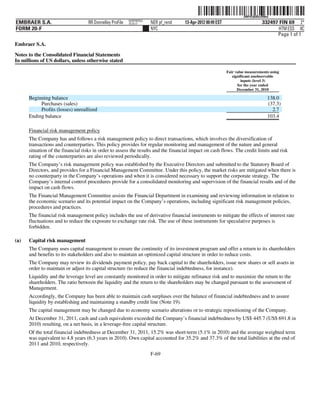
Nigeria (Nigeria)                                                                                     1          1                   —
Portugalia (Portugal)                                                                                 8          8                   —
Proteus (France)                                                                                      8          8                   —
Regional (France)                                                                                    15         15                   —
Republic Airways (USA)                                                                               60         60                   —
Rheintalflug (Austria)                                                                                3          3                   —
Rio Sul (Brazil)                                                                                     16         16                   —
Satena (Colombia)                                                                                     3          3                   —
Sichuan (China)                                                                                       5          5                   —
Skyways (Sweden)                                                                                      4          4                   —
Swiss (Switzerland)                                                                                  25         25                   —
Transtates (USA)                                                                                     22         22                   —
Total                                                                                               708        708                   —


EMBRAER 170:

                                                                                                                               Firm Order
Customer                                                                                     Firm Orders   Delivered             Backlog
Alitalia (Italy)                                                                                       6        6                    —
BA CityFlyer (UK)                                                                                      6        6                    —
Cirrus (Germany)                                                                                       1        1                    —
ECC (Ireland)(1)                                                                                       6        6                    —
Egypt Air (Egypt)                                                                                     12       12                    —
ETA Star Aviation (India)                                                                              5       —                      5
Finnair (Finland)                                                                                     10       10                    —
Gecas (USA)                                                                                            9        9                    —
JAL (Japan)                                                                                           10       10                    —
Jetscape (USA)                                                                                         1        1                    —
Lot Polish (Poland)                                                                                    6        6                    —
Petro Air (Libya)                                                                                      2        2                    —
Regional (France)                                                                                     10       10                    —
Republic Airline (USA)                                                                                48       48                    —
                                                                      74
ˆ200FVFj&BDz&dHawXŠ
                                                                                                             200FVFj&BDz&dHaw
                                                        ACXFBU-MWE-XN03
EMBRAER S.A.                     RR Donnelley ProFile   10.10.16     NER taloj0ma   13-Apr-2012 01:26 EST                332497 TX 75 4*
FORM 20-F                                                            NYC                                                       HTM ESS 0C
                                                                                                                              Page 1 of 1
                                                                                                                                Firm Order
Customer                                                                                      Firm Orders   Delivered             Backlog
Satena (Colombia)                                                                                      1          1                   —
Saudi Arabian Airlines (Saudi Arabia)                                                                 15         15                   —
Sirte Oil (Libya)                                                                                      1          1                   —
Air North                                                                                              1        —                      1
Suzuyo (Japan)                                                                                         2          2                   —
TAME (Ecuador)                                                                                         2          2                   —
US Airways (USA)                                                                                      28         28                   —
Virgin Blue (Australia)                                                                                6          6                   —
Total                                                                                                188        182                    6

(1)   Customer is Embraer’s ECC Leasing, which delivered one aircraft to Cirrus, two to Gulf Air, two to Paramount and one to
      Satena.

EMBRAER 175:

                                                                                                                                Firm Order
Customer                                                                                      Firm Orders   Delivered             Backlog
Air Canada (Canada)                                                                                   15         15                   —
ECC (Ireland)(1)                                                                                       1          1                   —
Flybe (UK)                                                                                            35          4                   31
Gecas (USA)                                                                                            5          5                   —
Jetscape (USA)                                                                                         1          1                   —
Lot Polish (Poland)                                                                                   12         12                   —
Northwest Airlines (USA)                                                                              36         36                   —
Oman Airlines                                                                                          5          3                    2
Republic Airlines (USA)                                                                               54         54                   —
Royal Jordanian (Jordan)                                                                               2          2                   —
TRIP (Brazil)                                                                                          5          5                   —
Suzuyo (Japan)                                                                                         3          3                   —
Alitália                                                                                              10        —                     10
Air Lease                                                                                              5          2                    3
Undisclosed                                                                                            1        —                     —
Total                                                                                                189        143                   46

(1)   Customer is Embraer’s ECC Leasing, which delivered one aircraft to Air Caraibes.

EMBRAER 190:

                                                                                                                                Firm Order
Customer                                                                                      Firm Orders   Delivered             Backlog
Aero Republica (Colombia)                                                                               5          5                  —
Aeromexico (Mexico)                                                                                    12          6                   6
Air Canada (Canada)                                                                                    45         45                  —
Air Caraibes (Guadalupe)                                                                                1          1                  —
Air Lease (USA)                                                                                        25         10                  15
Air Moldova (Moldova)                                                                                   1          1                  —
Augsburg (Germany)                                                                                      2          2                  —
Austral (Latin América)                                                                                20         20                  —
Azul (Brazil)                                                                                           5          5                  —
BA CityFlyer (UK)                                                                                       7          7                  —
Copa (Panama)                                                                                          15         15                  —
Finnair (Finland)                                                                                      13         12                   1
Gecas (USA)                                                                                            32         24                   8
HNA Group (China)                                                                                      50         41                   9
                                                                          75
ˆ200FVFj&BDz@feBQDŠ
                                                                                                             200FVFj&BDz@feBQ
                                                         NERPRFRS13
EMBRAER S.A.                      RR Donnelley ProFile   10.10.17     NER pf_rend   13-Apr-2012 01:17 EST                332497 TX 76 2*
FORM 20-F                                                             NYC                                                      HTM ESS 0C
                                                                                                                              Page 1 of 1
                                                                                                                                Firm Order
Customer                                                                                      Firm Orders   Delivered             Backlog
JetBlue (USA)                                                                                         88         53                    35
ECC (Ireland)(1)                                                                                       1          1                   —
Jetscape (USA)                                                                                         7          7                   —
KLM (Holland)                                                                                         22         17                     5
Kunpeng (China)                                                                                        5          5                   —
LAM (Republic of Mozambique)                                                                           3          2                     1
Lufthansa (Germany)                                                                                    9          9                   —
M1 Travel (Lebanon)                                                                                    8          8                   —
NAS Air (Saudi Arabia)                                                                                10          3                     7
NIKI (Austria)                                                                                         7          7                   —
Regional (France)                                                                                     10         10                   —
Republic (USA)                                                                                         6          2                     4
Taca (El Salvador)                                                                                    11         11                   —
TAME (Ecuador)                                                                                         3          3                   —
Trip (Brazil)                                                                                          6          3                     3
US Airways (USA)                                                                                      25         25                   —
Virgin Blue (Australia)                                                                               18         18                   —
Virgin Nigeria (Nigeria)                                                                              10          2                     8
China Southern (China)                                                                                20          7                    13
BOC (Singapore)                                                                                       15        —                      15
Aerosvit (Ukraine)                                                                                    10        —                      10
Air Astana (Euro)                                                                                      2        —                       2
Kenya Airways (Africa)                                                                                10        —                      10
CIT (USA)                                                                                             10        —                      10
Hebei (China)                                                                                          2          2                   —
Total                                                                                                551        389                   162

(1) Customer is Embraer’s ECC Leasing, which delivered one aircraft to Jet Blue (USA).

EMBRAER 195:
                                                                                                                                Firm Order
Customer                                                                                      Firm Orders   Delivered             Backlog
Azul (Brazil)                                                                                         47        28                    19
Flybe (UK)                                                                                            14        14                    —
Gecas (USA)                                                                                            7         7                    —
Globalia (Spain)                                                                                      12        12                    —
Royal Jordanian (Jordan)                                                                               2         2                    —
Lufthansa (Germany)                                                                                   34        21                    13
Montenegro (Montenegro)                                                                                1         1                    —
Jetscape (USA)                                                                                         2        —                      2
Lot Polish (Poland)                                                                                    4         3                     1
Total                                                                                                123        88                    35

     For additional information regarding trends in our business, see “Item 4B. Information on the Company—Business Overview—
Business Strategies” and “Item 5A. Operating and Financial Review and Prospects—Operating Results—Current Conditions and
Future Trends in the Commercial Airline Industry and Executive Jet Market.” For risks affecting our business, see “Item 3D. Key
Information—Risk Factors.”

5E. Off-Balance Sheet Arrangements
      In the normal course of our business, we enter into certain off-balance sheet arrangements, including guarantees, trade-in
obligations, financial and residual value guarantees and product warranty commitments. We also have a number of swap transactions
that are described in “Item 11. Quantitative and Qualitative Disclosures about Market Risk.”
                                                                       76
ˆ200FVFj&BF0uxlKw:Š
                                                                                                                   200FVFj&BF0uxlKw
                                                           NYCFBUAC350897
EMBRAER S.A.                        RR Donnelley ProFile   10.10.16         NER feucs0nd   13-Apr-2012 11:12 EST                332497 TX 77 3*
FORM 20-F                                                                   NYC                                                       HTM ESS 0C
                                                                                                                                     Page 1 of 1
      As at December 31, 2011, we recorded a US$317.5 million charge against income in connection with financial guarantees based
on our risk assessment of the AMR Corporation Chapter 11 filing. There can be no assurance that we would not be impacted again
(including in a material way) by the exercise of these trade-in options or guarantees, particularly if the current global economic
downturn continues for an extended period of time. See also Note 35 to our audited consolidated financial statements for additional
information on our off-balance sheet arrangements. In addition, see “Item 3D. Key Information—Risk Factors—Risks Relating to
Embraer—Some of our aircraft sales may be subject to financial and residual value guarantees and trade-in options that may require
us to make significant cash disbursements in the future.”

Trade-in Obligations
      In connection with the signing of purchase agreements for new aircraft, we may provide trade-in options to our customers. These
options provide a customer with the right to trade-in existing aircraft upon the purchase and acceptance of a new aircraft. Under
contractual obligations with our customers, our obligation to receive their aircraft as trade-ins arises only to the extent they accept the
delivery of certain of our new aircraft. The trade-in price for commercial aircraft is determined in the manner discussed under “Item
5A.—Operating Results—Critical Accounting Estimates—Guarantees and Trade-In Rights.” From the 18 trade-in options we had in
2010, in 2011 we accepted five aircraft for trade-in and another 12 trade-in options were cancelled. Also, in 2011, we accepted two
aircraft for trade-in pursuant to trade-in aircraft options signed in 2011. As a result, we are currently subject to trade-in options
relating to one aircraft directly tied to contractual obligations with one customer and subject to such customer actually taking delivery
of certain new aircraft. See Note 40 to our audited consolidated financial statements for further information on our trade-in options.

      We continue to monitor all trade-in commitments to anticipate any adverse economic impact they may have in our financial
condition. Based on our current evaluation and on third-parties appraisals, we believe that any aircraft accepted in connection with
trade-in commitments may be sold or leased in the market without significant profits or losses. See “Item 5A.—Operating Results—
Critical Accounting Estimates—Guarantees and Trade-In Rights.”

      We may be required to accept trade-ins at prices that are slightly above the then-market price of the aircraft, which would result
in financial loss for us when we resell the aircraft. Based on our current estimates and third-party appraisals, we believe that any
aircraft accepted for trade-in could be sold without any material gain or loss. However, there can be no assurance that we would not
experience material losses in these cases, particularly if the current global economic downturn were to exert material downward
pressures to the pre-owned aircraft market.

Guarantees
      Financial guarantees are triggered if customers do not perform their obligation to service the debt during the term of the
financing under the relevant financing arrangements. Financial guarantees provide credit support to the guaranteed party to mitigate
default-related losses. The underlying assets collateralize these guarantees. The value of the underlying assets may be adversely
affected by an economic or industry downturn. Upon an event of default, we are usually the agent for the guaranteed party for the
refurbishment and remarketing of the underlying asset. We may be entitled to a fee for such remarketing services. Typically a claim
under the guarantee shall be made only upon surrender of the underlying asset for remarketing.

     Residual value guarantees provide a third party with a specific guaranteed asset value at the end of the financing agreement. In
the event of a decrease in market value of the underlying asset, we shall bear the difference between the specific guaranteed amount
and the actual fair market value. Our exposure is mitigated by the fact that, in order to benefit from the guarantee, the guaranteed
party has to make the underlying assets meet stringent specific return conditions.
                                                                             77
ˆ200FVFj&BF0u$rzw@Š      200FVFj&BF0u$rzw
                                                           NYCFBUAC350897
EMBRAER S.A.                        RR Donnelley ProFile   10.10.16         NER feucs0nd   13-Apr-2012 11:13 EST                        332497 TX 78 3*
FORM 20-F                                                                   NYC                                                               HTM ESS 0C
                                                                                                                                             Page 1 of 1
     The following table provides quantitative data regarding guarantees we render to third parties. The maximum potential payments
represent the worst-case scenario and do not necessarily reflect the results expected by us. Estimated proceeds from performance
guarantees and underlying assets represent the anticipated values of assets we could liquidate or receive from other parties to offset
our payments under guarantees.
                                                                                                                             At December 31,
Description                                                                                                         2011          2010            2009
                                                                                                                             (in US$ millions)
Maximum financial guarantees(2)                                                                                     471.6         1,133.9        1,248.4
Maximum residual value guarantees(2)                                                                                542.2           743.4          770.8
Mutually exclusive exposure(1)                                                                                     (209.8)         (393.9)        (393.9)
Provisions and liabilities recorded                                                                                (121.2)         (143.2)        (154.1)
Off-balance sheet exposure                                                                                         682.8          1,340.2        1,471.2
Estimated proceeds from performance guarantees and underlying assets                                               896.5          1,255.9        1,478.4
(1) When an underlying asset is covered by mutually exclusive financial and residual value guarantees, the residual value guarantee
    may only be exercised if the financial guarantee has expired without having been exercised. On the other hand, if the financial
    guarantee is exercised, the residual value guarantee is automatically terminated. After a financial guarantee expires without
    being exercised, there is an average three-month period in which a guaranteed party may exercise the residual value guarantee.
    This means that our exposure to mutually exclusive financial and residual value guarantees covering a single underlying asset
    cannot be cumulative. Therefore, the maximum exposure shown in this line item is not an aggregate amount of the combined
    value of mutually exclusive financial and residual value guarantees covering a single underlying asset.
(2) As of December 31, 2011, financial guarantees provided in connection with AMR’s purchase of Embraer aircraft were fully
    accrued on our income statement (see Notes 15 and 29 to our audited consolidated financial statements) and, therefore, are not
    included as an off-balance sheet item.

      As discussed in Note 13 to our audited consolidated financial statements, as of December 31, 2011, 2010 and 2009, we
maintained escrow deposits in the total amount of US$268.4 million, US$263.6 million and US$308.9 million, respectively, in favor
of third parties for whom we have provided financial and residual value guarantees in connection with certain aircraft sales financing
structures.

Financial and Residual Value Guarantees
      We have guaranteed the financial performance of a portion of the financing for, and the residual value of, some of our aircraft
which have already been delivered. Financial guarantees are provided to financing parties to support a portion of the payment
obligations of purchasers of our aircraft under their financing arrangements to mitigate default-related losses. These guarantees are
collateralized by the financed aircraft.

     Assuming all customers supported by financial guarantees defaulted on their aircraft financing arrangements, and also assuming
we were required to pay the full aggregate amount of outstanding financial and residual value guarantees and were not able to
remarket any of the aircraft to offset our obligations, our maximum exposure under these guarantees (less provisions and liabilities)
would have been US$682.8 million as of December 31, 2011. For further discussion of these off-balance sheet arrangements, see
Note 40 to our audited consolidated financial statements.

      At December 31, 2011, we had US$268.4 million deposited in escrow accounts as collateral for financial and residual value
guarantees of certain aircraft sold by us. If the guarantor of the debt (an unrelated third party) is required to pay the creditors of such
financing arrangement or the residual value guarantee, the guarantor has the right to withdraw from the escrow account. Based on
current estimates, we believe that the proceeds from the sale or lease of the covered aircraft (based on resale value as of December 31,
2011) and from other offsetting collections, such as cash deposits, would be US$896.5 million. The deposited amounts will be
released when the financing contracts mature (from 2013 to 2021) if no default by the buyers of the aircraft occurs or the aircraft
market price is above the residual value guarantee.
     The interest earned on the escrow funds is added to the balance in escrow and is recorded as interest income by us. In order to
earn a better interest rate on such guarantee deposits, at December 31, 2011 we had US$268.4 million deposited in escrow accounts
and invested in 14-year structured notes with the depositary bank. This yield enhancement was obtained through a credit default swap
(CDS) transaction, which provides the right of
                                                                             78
ˆ200FVFj&BDz@m3DwaŠ         200FVFj&BDz@m3Dw
                                                           NERPRFRS13
EMBRAER S.A.                        RR Donnelley ProFile   10.10.17     NER pf_rend      13-Apr-2012 01:18 EST                          332497 TX 79 2*
FORM 20-F                                                               NYC                                                                   HTM ESS 0C
                                                                                                                                             Page 1 of 1
early redemption of the note in case of a credit event by us. Upon such a credit event, the note may be redeemed by the holder at the
greater of the note’s market value or its original face amount, which would result in a loss of all interest accrued on such note to date.
Credit events include obligation and payment defaults under the terms of the guarantees above specified thresholds, events related to
the restructuring of the obligations above a specified threshold, bankruptcy and a repudiation of and/or moratorium on the obligations
above a specified threshold.
      Residual value guarantees typically ensure that, at the 15th year as of the delivery date, the relevant aircraft will have a residual
market value of a percentage of the original sale price. More recently, residual value guarantees have been issued to ensure a residual
market value for the 10th year following delivery of the aircraft. Most of our residual value guarantees are subject to a limitation (a
“cap”) and, therefore, on average our guaranteed residual value is 17% of the original sale price. In the event of a decrease in the
market value of the underlying aircraft and an exercise by the purchaser of the residual value guarantee, we will bear the difference, if
any, between the guaranteed residual value and the market value of the aircraft at the time of exercise. Our exposure is mitigated by
the fact that the guaranteed party, in order to benefit from the guarantee, must make the aircraft meet specific return conditions. See
Note 13 to our audited consolidated financial statements.

     We continuously re-evaluate our risk under our guarantees and trade-in obligations based on a number of factors, including the
estimated future market value of our aircraft based on third-party appraisals, including information developed from the sale or lease of
similar aircraft in the secondary market, and the credit rating of customers.

5F. Tabular Disclosure of Contractual Obligations
    The following table and discussion provide additional disclosure regarding our material contractual obligations and commercial
commitments as of December 31, 2011:
                                                                                                  Less than                                    More than
Contractual Obligations                                                                Total       1 year        1 – 3 years    3 – 5 years     5 years
                                                                                                              (in US$ millions)
Loans and interest                                                                    2,113.9       313.7           464.9          213.3        1,122.0
Pension fund                                                                            207.5        21.7            41.3           41.3          103.2
Capital lease obligations                                                                 3.2         1.4             1.6            0.2            —
Operating leases                                                                         17.5         2.9             4.5            0.6            9.5
Purchase obligations                                                                    829.9       829.9             —             —               —
Non recourse and recourse debt                                                          462.6       312.8            31.8           44.6           73.4
Customer advances                                                                     1,070.1       856.1           179.8           32.7            1.5
Contribution from suppliers                                                               1.9         0.9             1.0           —               —
Financial guarantees                                                                    494.9       317.3            85.2           69.7           22.7
Other liabilities                                                                       161.4         5.9            37.5           70.9           47.1
Total                                                                                 5,362.9     2,662.6           847.6          473.3        1,379.4

      The above table shows the sum of the outstanding principal and anticipated interest due at maturity date. For the fixed rate loans,
the interest expenses were calculated based on the rate established in each debt contract. For the floating rate loans, the interest
expenses were calculated based on a market forecast for each period (LIBOR 6m – 12m), dated on December 31, 2011. This floating
rate exposure is managed through derivatives operations. See “Item 11. Quantitative and Qualitative Disclosures About Market Risk.”
     The above table does not reflect contractual commitments related to trade-in options and financial and residual value guarantees
discussed in “Item 5E.—Off-Balance Sheet Arrangements” above. See “Item 3D. Key Information—Risk Factors—Risks Relating to
Embraer— Some of our aircraft sales are subject to financial and residual value guarantees and trade-in options that may require us to
make significant cash disbursements in the future.”

      Purchase obligations consist of trade accounts payable and insurance payables.
                                                                         79
ˆ200FVFj&BDz@n$KQvŠ
                                                                                                              200FVFj&BDz@n$KQ
                                                           NERPRFRS13
EMBRAER S.A.                        RR Donnelley ProFile   10.10.17     NER pf_rend   13-Apr-2012 01:18 EST               332497 TX 80 2*
FORM 20-F                                                               NYC                                                     HTM ESS 0C
                                                                                                                               Page 1 of 1
    Other liabilities include taxes and payroll charges payable in the total amount of US$476.0 million at December 31, 2011. The
above table does not reflect any information about our derivative instruments, which are discussed more fully in “Item 11.
Quantitative and Qualitative Disclosures About Market Risk.”

ITEM 6.      DIRECTORS, SENIOR MANAGEMENT AND EMPLOYEES
6A. Directors and Senior Management
     We are managed by our Conselho de Administração, or Board of Directors, composed of 13 members, and our Diretoria, or
executive officers, composed of at least four and at the most 11 members (each an executive officer). We have a permanent Conselho
Fiscal, which is composed of three to five members and an equal number of alternates. Our administrative bodies must hold eight
ordinarily scheduled meeting a year.

       There are no family relationships among the members of our Board of Directors and/or our executive officers.

Board of Directors
     Our Board of Directors ordinarily meets eight times a year and extraordinarily when called by the chairman or by the majority of
members of the Board. It has responsibility, among other things, for establishing our general business policies and for electing our
executive officers and supervising their management.

      Our Board of Directors is appointed by our shareholders for a two-year term, reelection being permitted, having three reserved
seats as follows: (1) one to be appointed by the Brazilian federal government, as holder of the “golden share,” and (2) two to be
appointed by our employees. The remaining ten directors are elected in accordance with the slate voting or cumulative voting rules
contained in our bylaws. See “Item 10B. Additional Information—Memorandum and Articles of Association—Board of Directors—
Election of Board of Directors” for a detailed description of the rules and procedures regarding the nomination and election of our
Board members. There is no mandatory retirement age for our directors.

     Under the rules of the Novo Mercado, the members of our Board of Directors have agreed to comply with the Novo Mercado
Regulations and with the rules of the São Paulo Stock Exchange Arbitration Chamber before taking office, and for such purpose have
executed a Term of Agreement of Management (Termo de Anuência dos Administradores).

    Set forth below are the names, ages, positions, the year first elected and brief biographical descriptions of the members of our
Board of Directors elected at our annual shareholders’ meeting held on April 26, 2011:
                                                                                                                                 Year First
                                                                                                                                  Elected
Name                                          Age    Position                                                                    to Board
Alexandre Gonçalves Silva(*)                   67    Chairman of the Board of Directors                                              2011
Sérgio Eraldo de Salles Pinto                  47    Member of the Board of Directors                                                2009
Wilson Carlos Duarte Delfino                   65    Member of the Board of Directors                                                2004
Aprígio Eduardo de Moura Azevedo               61    Member of the Board of Directors                                                2010
Israel Vainboim                                67    Member of the Board of Directors                                                2009
Hermann Wever                                  75    Vice-chairman of the Board of Directors                                         2006
Samir Zraick                                   71    Member of the Board of Directors                                                2006
Arno Hugo Augustin Filho(*)                    51    Member of the Board of Directors                                                2012
Claudemir Marques de Almeida                   59    Member of the Board of Directors                                                2004
João Cox Neto                                  48    Member of the Board of Directors                                                2011
Josué Christiano Gomes da Silva                48    Member of the Board of Directors                                                2011
Satoshi Yokota                                 70    Member of the Board of Directors                                                2011
Vitor Paulo Camargo Gonçalves                  55    Member of the Board of Directors                                                2011
(*) Elected at our extraordinary shareholders’ meeting held on March 6, 2012.
                                                                         80
ˆ200FVFj&BDz@pxPw.Š
                                                                                                             200FVFj&BDz@pxPw
                                                          NERPRFRS13
EMBRAER S.A.                       RR Donnelley ProFile   10.10.17     NER pf_rend   13-Apr-2012 01:18 EST               332497 TX 81 2*
FORM 20-F                                                              NYC                                                     HTM ESS 0C
                                                                                                                              Page 1 of 1
      Alexandre Gonçalves Silva. Mr. Silva was elected Chairman of the Board of Directors of Embraer in March, 2012. Previously,
he has served as CEO in several top tier family, state or publicly held companies, including large multinationals. From 2001 to 2007,
Mr. Silva was CEO of GE in Brazil. In addition, Mr Silva currently participates on boards of listed companies including PDG Realty
S.A Empreendimentos e Participações, Equatorial Energy S.A, Fibria Celulose S.A and Alupar Investimento S.A. He also participates
in the board of the Pro-Bono Advice AMCHAM Brazil and is a Board of Trustees Member of the Foundation of Maria Cecilia Souto
Vidigal. Mr. Alexandre Silva holds a Bachelor of Science in Mechanical Engineering from PUC Rio de Janeiro, and is an
independent member of the Board of Directors of Embraer as of April 26, 2011.
     Sérgio Eraldo de Salles Pinto. Mr. Salles Pinto has been a member of the Board of Directors of Embraer since April 2009.
Mr. Salles Pinto has been the Executive Manager of Cia. Bozano and of Bozano Holdings since 2000, being responsible for the
administration of the companies’ funds through several financial instruments. From 1988 to 2000, he worked at several companies of
Banco Bozano, Simonsen S.A. Mr. Salles Pinto earned undergraduate degrees in Economics and Electrical Engineering from the
University Center of Brasília (UniCEUB) and the University of Brasília (UnB), respectively. He holds a Master degree in Economics
from Fundação Getulio Vargas - Rio de Janeiro (EPGE) and a Master degree in Administration from the Catholic University of Rio
de Janeiro (PUC). Mr. Salles is an independent member of the Board of Directors of Embraer.

     Wilson Carlos Duarte Delfino. Mr. Delfino has been an independent member of the Board of Directors of Embraer since 2004.
Mr. Delfino has been President and CEO of Fundação Sistel de Seguridade Social (Pension Fund of Brazilian Telecommunications
Companies’ Employees), or SISTEL, a pension fund, since January 2004, and has served as executive officer of the Planning and
Office of SISTEL from April 2000 to December 2003. From September 1993 to September 1994, Mr. Delfino served as assistant to
the chief executive officer and was responsible for the Coordination of the Committee of Investments of SISTEL. From October 1994
to March 2000, he was Manager of the Investment Analysis Department of SISTEL. He was also a member of the board of directors
of Paranapanema, a mining company, from April 1998 to April 2006, and a member of the board of directors of Perdigão S.A from
April 2004 to April 2007. Mr. Delfino was also Adjunct and Full Professor of the Production Engineering program of the São Carlos
School of Engineering of the University of São Paulo. He has an undergraduate degree in mechanical engineering from the Federal
School of Engineering in Rio de Janeiro, Brazil, a masters degree in operational research from Cornell University, a master of science
degree in system analysis from the National Institute for Space Research in São José dos Campos, Brazil and a PhD degree in
operations research and statistics from Case Western Reserve University. He is a certified board member by the Brazilian Institute of
Corporate Governance (Instituto Brasileiro de Governança Corporativa – IBGC).

      Aprígio Eduardo de Moura Azevedo. Mr. Azevedo was elected to the Board of Directors of Embraer in April 2010.
Mr. Azevedo participated in the Instructor Academic Course (MAXWELL A.FB.), the Improvement of Officers Course (EAOAR),
the Course of Command and State (ECEMAR), and the Course of High Studies of Politics and Strategy (ESG) and completed a post-
graduate program in Management of Human Resources at Catholic University of Paraná (PUC). He was Chief of Sections of Doctrine
and Education of Air Force Unities, Assistant to the Commander of the School of Officers Specialists of the Brazilian Air Force,
Assistant of the Section of Operations of the Transport Air Command, Official of the Office of the Ministry of the Brazilian Air
Force, where he was the Chief Officer of Ceremony, Chief Officer of the Section of Public Relations, Chief Officer of the Secretary
of the Minister. He was also Commander of the Group of Special Transport, Chief of the Commission of Coordination of the
Protection System of the Amazon region, General Office of Strategic Affairs and Finance of the Brazilian Air Force, Chief of the
Brazilian Air Force Procurement Commission in Washington, Chief of the Section Logistics Protection of the General Staff of the
Brazilian Air Force and President of the Coordinating Commission of the Aircraft Combat Program, Chief of the Parliamentary
Advice of the Commander of the Brazilian Air Force, Commander of the Fourth Regional Air Command, Chief of Staff of the
Commander of the Brazilian Air Force and today serves as Secretary of Finance and Economics of the Brazilian Air Force.

      Israel Vainboim. Mr. Vainboim has been a member of the Board of Directors of Embraer since April 2009. Mr. Vainboim is a
member of the Board of Directors of Itaú Unibanco Banco Múltiplo S.A., Cia. Iochpe-Maxion, the leading Brazilian manufacturer of
wheels and frames for commercial vehicles and railway freight cars, the Museu de Arte Moderna de São Paulo (Museum of Modern
Art of São Paulo), the alumni association of the Federal University of Rio de Janeiro, and a member of the Fiscal Council of the
Albert Einstein Hospital in São Paulo. He is also a member of the Board of the House of Culture of Israel in São Paulo, a member of
the International Advisory
                                                                        81
ˆ200FVFj&BDz@rS&w9Š 200FVFj&BDz@rS&w
                                                          NERPRFRS13
EMBRAER S.A.                       RR Donnelley ProFile   10.10.17     NER pf_rend   13-Apr-2012 01:18 EST                  332497 TX 82 2*
FORM 20-F                                                              NYC                                                        HTM ESS 0C
                                                                                                                                 Page 1 of 1
Council of General Atlantic Partners, located in New York, New York, Chairman of the Board of Usinas Siderurgicas de Minas
Gerais S.A. (Usiminas), a leading flat steel manufacturer, since April 2010, a member of the Consulting Board of GVT S.A. and a
member of the Consulting Board of Stanford Graduate School of Business. Mr. Vainboim was also the President of Unibanco – União
de Banco Brasileiros S.A. from 1988 to 1992, President of Unibanco Holdings S.A. from 1994 to 2007, and Chairman of the Board of
Directors and the President of the Audit Committee of Unibanco Holdings S.A. from 2007 to February 2009. Mr. Vainboim earned an
undergraduate degree in Mechanical Engineering from the Federal University of Rio de Janeiro and holds an MBA from Stanford
University. Mr. Vainboim is an independent member of the Board of Directors of Embraer.
      Hermann Wever. Since 2006, Mr. Wever has been an independent member of Embraer’s Board of Director, of which he is the
current Vice-President. Mr. Wever earned undergraduate degrees in civil and electrical engineering from Mackenzie University and a
graduate business degree from Fundação Getulio Vargas. He started his career at the industrial division of General Electric, where he
successively spearheaded the lighting, domestic appliances and heavy equipment divisions. In 1979, he implemented a joint venture
between General Electric and Villares (Vigesa), which brought hydrogenation technology from GE Canada to Brazil. In 1980, he
joined Siemens do Brasil as Vice-President of the Energy Division. In 1987, he was appointed Siemens’ CEO, a position he held until
his retirement in 2001. Mr. Wever was President of the Consulting Board of Siemens Ltda. from 2001 to 2009. Currently, he is
president of Wever Assessoria Empresarial. He has been awarded the Ordem do Rio Branco from the Brazilian Ministry of Foreign
Affairs and the Cross of the Order of Merit from the Federal Republic of Germany.

      Samir Zraick. Mr. Zraick has been a member of the Board of Directors of Embraer since 2006. Mr. Zraick was chief financial
officer of CVRD, and head of its U.S. affiliate from 1971 to 1986. He was also a Board Member of CVRD in 2000 and served as a
Special Advisor and member of CVRD’s Strategic Committee from 2001 to 2004. He was CFO and VP for Business Development of
Caemi Mineração e Metalurgia S.A., a Brazilian mining company, from 1986 to 1998. He was a member of the Board of Directors
and Chairman of the Marketing Committee of Quebec Cartier Mining, in Montreal, Quebec, from 1990 to 1999. He served as a Board
Member of Canico Resources in Vancouver, British Columbia, from July 2004 to March 2006. Mr. Zraick is also member of the
Board of Directors of Mineração e Metálicos S.A. - MMX, a Brazilian mining company, MPX Energia S.A., a Brazilian energy
company and LLX Logística S.A., a Brazilian logistics company. Mr. Zraick is an independent member of the Board of Directors of
Embraer.

     Arno Hugo Augustin Filho. Since 2007, Mr. Augustin has served as Secretary for the Brazilian Federal Treasury, and before that
he was the Secretary General of the Labor Party in the State of Rio Grande do Sul, from 2005 to 2007. During 2003 and 2004,
Mr. Augustin occupied the positions of Executive Secretary Assistant for the Ministry of Finance, Chairman of the Boards of
Directors of Caixa Econômica Federal and of the Banco da Amazônia S.A. – BASA. From 1999 to 2003, Mr. Augustin acted as
Secretary of Finance for the State of Rio Grande do Sul, and Chairman of the Board of Directors of Banco do Estado do Rio Grande
do Sul S.A, or Banrisul. From 1985 to 1998, Mr. Augustin held, among others, the following positions: Secretary of Finance for the
Municipality of Porto Alegre, Economic Advisor to the Mayor, responsible for the budget of the Municipality of Porto Alegre,
Advisor to the Labor Party Caucus, Advisor to the Finance Committee of the State Constitutional Convention, Technical Assistant
and Assistant General to the Labor Party Caucus in the General Assembly of Rio Grande do Sul, and External Public Auditor for the
Audit Court of the State of Rio Grande do Sul. Mr. Arno Augustin graduated in 1983 at the School of Economics of the Federal
University of Rio Grande do Sul, and received a master’s degree in economics from the Catholic University of Rio Grande do Sul in
2007. Mr. Arno Augustin is an independent member of the Board of Directors of Embraer since January, 2012.

     Claudemir Marques de Almeida. Mr. Almeida has been a member of the Board of Directors of Embraer since 2004.
Mr. Almeida has been an employee of Embraer since 1987, and currently holds the position of Quality Controller I at Embraer. He
previously served as a member of our Board of Directors from January 1995 to April 2001. Mr. Almeida is the representative of our
non-shareholder employees.

     João Cox Neto. Mr. Cox heads the Cox Investments & Advisory, an investment boutique with mandates for M&A, financing
and consulting services as well as interests in private equity funds. In addition, he currently serves on the Boards of Directors of Even
S.A. and Even Estácio de Sá S.A. Between 2006 and 2010, he served as president, CEO and vice chairman of Claro S.A., the second
largest mobile operator in Brazil. In 2005 he served as Vice President of Cellcom, the largest cellular operator in Israel. From April,
1999, to August, 2004, Mr. Cox served
                                                                        82
ˆ200FVFj&BDz@uuoQÈŠ
                                                                                                             200FVFj&BDz@uuoQ
                                                          NERPRFRS13
EMBRAER S.A.                       RR Donnelley ProFile   10.10.17     NER pf_rend   13-Apr-2012 01:18 EST               332497 TX 83 2*
FORM 20-F                                                              NYC                                                     HTM ESS 0C
                                                                                                                              Page 1 of 1
as Finance Vice President and Investor Relations Officer at Telemig Celular Participações and Tele Norte Celular Participações, and
shared the position of CEO of Telemig Celular and Amazonia Celular. He was also a member of the Board of Directors of several
companies in different countries (Brazil, Argentina, Holland and Israel), and has acted as advisor to the Appeals Council of the
National Financial System, or CRSFN, to the Board of the Brazilian Association of Listed Companies, or ABRASCA, and to the
Brazilian Institute of Investor Relations, or IBRI. Mr. Cox earned a degree in economics at the Federal University of Bahia and
extended his postgraduate studies in economics at the Université du Québec à Montréal and the PSC’s Oxford University. Mr. Cox is
an independent member of the Board of Directors of Embraer.
     Josué Christiano Gomes da Silva. Mr. Silva is currently president of the Society of Northern Minas Fabrics, or Coteminas, the
largest textile group in America that, through its subsidiary Springs Global, is a world leader in the bed and bath market segment. He
was a member of the Institute for Studies in Industrial Development, or IEDI, having chaired the institute from 2005 to 2009, and of
the Superior Industry Association Textile and Apparel, or ABIT, having chaired the organization from 2005 to 2007. In addition,
Mr. Silva acted as 3rd Vice-President of the Federal State Industries of Sao Paulo, or FIESP, as Vice President of the International
Textile Manufactures Federation, or ITMF, and as Vice President of the Latin America Business Council, or CEAL. Mr. Silva holds a
degree in engineering from the Federal University of Minas Gerais, a Bachelor of Law degree from the Milton Campos Law School
in Belo Horizonte, State of Minas Gerais. In addition, he also earned a Master of Business Administration (MBA) degree from
Vanderbilt University - Owen Graduate School of Management. Mr. Silva is an independent member of the Board of Directors of
Embraer.
      Satoshi Yokota. Since 1970, Mr. Yokota has served in several positions at Embraer, including as Assistant Director of Programs
and Commercial Contracts, Executive Vice President of Engineering and Development, Industrial Vice President, Executive Vice
President of Strategic Planning and Technological Development and, finally, as a consultant. Mr. Yokota currently serves as director
at TPI, Contec Fiesp and Parque Tecnologico Association SJC and as Chairman of the Institute for Research, Planning and
Administration, or IPPLAN. He is also a member of the Board of Jacto Equipamentos Agrícolas. From 2000 to 2008 he acted as
Chairman of the Board of Embraer Liebherr S.A. of Brazil, or ELEB. From 1965 to 1970 he was a researcher at the Aerospace
Technology Center, a professor of Federal university of Pará and an engineer of Paraense Transportes Aereos. Mr. Yokota is an
electrical engineer, having graduated at the Technological Institute of Aeronautics in 1964.

     Vitor Paulo Camargo Gonçalves. Mr. Gonçalves is the Director of Planning at PREVI, elected to serve until May, 2014. He
joined the Bank of Brazil in 1976, and has served as Director of the Previ Investments, Tax Advisor and Director Board. He is a
member of the board of Embraer S.A., having served on the Boards of Paranapanema S.A., Petroflex S.A., Invepar S.A. and Kepler
Weber S.A. He is also a member of the Board of ABRAPP, as representative of PREVI, and of the Board of the National Association
of Employees of Banco do Brazil, or ANABB, as well as President of the ICSS. Mr. Gonçalves graduated in Business Administration
at FGV-RJ. In addition, he holds post-graduate degrees in business management from the Dom Cabral Foundation (MG) and the
IBMEC (RJ), and in corporate governance from the IBMEC (RJ) and the IBGC. He also has a specialization degree in pension fund
management from the Wharton School in Philadelphia. Mr. Gonçalves is an independent member of the Board of Directors of
Embraer.

Committees
     Three committees were formed to assist the Board of Directors in its duties and responsibilities:
      •   Strategy Committee: which may have up to five members, but has no executive power. The primary purpose of the
          Strategic Committee is to assist the Board of Directors in its functions. The acting and the alternate members of our Board
          of Directors and Board of Executive officers may serve on this committee. The Strategy Committee’s responsibilities
          include aiding the Board of Directors in the formulation of our strategic planning. The current members of the Strategy
          Committee are Alexandre Gonçalves da Silva, Hermann H. Wever, Israel Vainboim, Josué Christiano Gomes da Silva and
          Joâo Cox Neto.
      •   Audit and Risk Committee: See “Item 6C.—Board Practices—Audit and Risk Committee” below.
                                                                        83
ˆ200FVFj&BF11Xe#wŠ
                                                                                                                   200FVFj&BF11Xe#w
                                                           NY8690AC386214
EMBRAER S.A.                        RR Donnelley ProFile   10.10.16         NER quinr0nd   13-Apr-2012 11:43 EST                332497 TX 84 3*
FORM 20-F                                                                   NYC                                                       HTM ESS 0C
                                                                                                                                     Page 1 of 1
        •   Human Resources Committee: which has up to five members appointed by our Board of Directors. The members of the
            Human Resources Committee may be members of our Board of Directors, their alternates, or our executive officers. Its
            purpose is to assist the Board of Directors in connection with human resources issues which include appoint and remove
            executive officers from office and designate their duties as provided by the bylaws, compensation and human relations
            policy, transfer of our resources to employee associations, charity and recreational entities, the private security fund and
            foundation. The current members of the Human Resources Committee are Wilson Carlos Duarte Delfino, Joâo Cox Neto,
            Alexandre Gonçalves da Silva, Vitor Paulo Camargo Gonçalves and Sérgio Eraldo de Salles Pinto.
        •   Conselho Fiscal: See “Item 6C.—Board Practices—Conselho Fiscal” below.
      In the event an executive officer serves on the Strategy Committee and the Human Resources Committee, he will only be
entitled to receive the compensation corresponding to the higher paying position. The directors appointed to serve on such
Committees and the Audit and Risks Committee may combine the compensation for each position so held.

Executive Officers
     Our executive officers are responsible for our day-to-day management. The executive officers have individual responsibilities
established by our bylaws and by the Board of Directors.

      The terms of office for members of our Board of Directors and for our executive officers is two years, with each executive
officer eligible for reelection.
       The vote of at least nine members of our Board of Directors is necessary to remove an officer.

     Our bylaws forbid any executive officer from also serving at the same time as a member of our Board of Directors. Our bylaws
contain a provision that our CEO will participate in meetings of the Board of Directors, but shall not vote on resolutions of the Board
of Directors.

      Under the rules of the Novo Mercado, our executive officers have agreed to comply with the Novo Mercado Regulations and to
the rules of the São Paulo Stock Exchange Arbitration Chamber before taking office and for such purpose have executed a Term of
Agreement of Management (Termo de Anuência dos Administradores).

      Set forth below are the names, ages, positions, the year first elected and brief biographical descriptions of our current executive
officers as of the date of this annual report:
                                                                                                                                      Year First
Name                                          Age      Position                                                                        Elected
Frederico Pinheiro Fleury Curado               50      President and Chief Executive Officer                                            1995
Mauro Kern Junior                              51      Executive Vice President – Engineering and Technology                            2007
Paulo Cesar de Souza e Silva                   57      Executive Vice President – Commercial Aviation                                   2010
Artur Aparecido V. Coutinho                    63      Chief Operating Officer                                                          2005
Luiz Carlos Siqueira Aguiar                    49      Executive Vice President – Embraer Defense and Security                          2006
Flávio Rímoli                                  53      Executive Vice-President and General Counsel                                     2007
Antônio Júlio Franco                           63      Executive Vice President – Personnel                                             2007
Paulo Penido Pinto Marques                     55      Executive Vice President – Chief Financial and Investor Relations                2011
                                                       Officer

      Frederico Pinheiro Fleury Curado. On April 23, 2007, Mr. Curado was appointed Embraer’s President and CEO. Mr. Curado
was our Executive Vice-President, Airline Market from September 1998 to April 2007, and Executive Vice-President for Planning
and Organizational Development from 1995 to August 1998. Prior to that, he held several different management positions at Embraer
in the areas of manufacturing, production, information technology and subcontracts. Mr. Curado holds a Bachelor’s degree in
Mechanical Aeronautical Engineering from
                                                                             84
ˆ200FVFj&BF0v4jQwHŠ
                                                                                                                  200FVFj&BF0v4jQw
                                                          NYCFBUAC350897
EMBRAER S.A.                       RR Donnelley ProFile   10.10.16         NER feucs0nd   13-Apr-2012 11:13 EST                332497 TX 85 3*
FORM 20-F                                                                  NYC                                                       HTM ESS 0C
                                                                                                                                    Page 1 of 1
the Instituto Tecnológico de Aeronáutica (Technological Aeronautics Institute), or ITA, and an MBA from the University of São
Paulo, or USP. Mr. Curado has been awarded the Medal of Aeronautical Merit by the Brazilian government and the Medal of Merit
by the Brazilian Association of Military Engineering.

      Mauro Kern Junior. In April 2011, Mr. Kern was appointed Embraer’s Executive Vice-President for Engineering and
Technology. Prior to this position, Mr. Kern served as Embraer’s Executive Vice-President for New Programs, Airline Market
between April, 2010, and April, 2011, and Embraer’s Executive Vice-President for the Airline Market since April 2007. He joined
Embraer in 1982 as a System Engineer. In 1984, he joined Embraer’s Equipment Division (EDE), a company specialized in landing
gear and hydraulic equipment. Mr. Kern worked for 11 years in different departments of Embraer, including engineering, marketing,
sales and customer support. In 1999, Mr. Kern joined the Program Management Office of the Embraer 170/190 program as its Chief
Engineer and Program Manager. In April 2004, Mr. Kern was appointed the Senior General Manager of the EMBRAER 170/190
program. In July 2005, Mr. Kern was appointed Embraer’s Vice-President of Airline Market Programs. Mr. Kern holds a Bachelor’s
degree in Engineering from the University of Rio Grande do Sul.

      Paulo Cesar de Souza e Silva. Since April, 2010, Mr. Silva has been acting as President—Commercial Aviation. He joined
Embraer in October, 1997, as Sales Financing Vice-President for both the civil and defense and security markets. Mr. Silva has over
24 years experience in the banking industry, serving in a number of executive positions in major international financial institutions.
Prior to joining Embraer, Mr. Silva was a Vice President in the Latin American group at Westdeutsche Landesbank, New York.
Mr. Silva is a graduate of the Mackenzie University, where he earned an Economics degree. He also holds an MBA in finance from
the Université de Lausanne.

     Artur Aparecido V. Coutinho. In 2010, Mr. Coutinho was appointed Embraer’s Executive Vice-President and Chief Operating
Officer. In 2005, he was appointed our appointed Executive Vice-President for Procurement and Industrial Operations and had been
acting in that capacity until being elected as our Chief Operating Officer. From January 2003 to March 2005, Mr. Coutinho was
Embraer’s Vice-President responsible for marketing, sales and customer support activities in North America. From February 2000 to
December 2002, he was our Vice-President for Customer Service. Prior to that, Mr. Coutinho held several different positions at
Embraer in the areas of marketing, training and quality control.

      Luiz Carlos Siqueira Aguiar. In January 2011, Mr. Aguiar was appointed Chief Executive Officer, Embraer Defense and
Security. He was our Chief Financial Officer from January 2009 to December 2010. From January 2006 to December 2008,
Mr. Aguiar was appointed Executive Vice-President of Embraer, responsible for worldwide defense market and governmental
aviation products and systems’ marketing, sales and contract administration. From February 2003 to December 2005, he was
appointed to represent Previ on the Board of Directors of various companies, including Embraer. From April 2004 to 2005, he was
appointed to represent PREVI on the Board of Directors of Embraer. He was a member of Board of Directors of SBCE, a Brazilian
insurance company, from May 2001 to February 2003, and since 2003 he is Vice-Chairman of the Board of CPFL and member of the
Finance Committee of CVRD. He was Director of Banco do Brasil from August 2000 to February 2003, and Manager of Banco do
Brasil in New York from February 1997 to August 2000.

      Flávio Rímoli. Mr. Rímoli is currently Embraer’s Executive Vice-President and General Counsel. Since May 2005, he has been
Secretary of Embraer’s Board of Directors. Mr. Rímoli has been working at Embraer for more than 31 years, having occupied
different positions, particularly in the industrial and commercial areas. He was our Senior General Manager for Contracts for the
commercial aviation market for many years and our Senior Vice-President for Commercial Aviation Market from 2002 to 2005.
Mr. Rímoli holds a Bachelor’s degree in Mechanical Engineering from the Escola de Engenharia Industrial de São José dos Campos,
a Law degree from Universidade do Vale do Paraíba, and specialization degrees in Operational Research and Corporate Law from
ITA and Fundação Getúlio Vargas, respectively.

     Antonio Júlio Franco. In April 2010, Mr. Franco was appointed Embraer’s Executive Vice-President for Personnel Planning and
Development and, prior to this position, Mr. Franco had served as Embraer’s Executive Vice-President for Organizational
Development and Personnel since 2007. Since April 2010, Mr. Franco is responsible for supporting the Chief Executive Officer in his
corporate action with respect to policies and guidelines associated with people, succession processes for all key positions,
compensation strategy, executive compensation, and for supporting the Board of Directors and its Human Resources Committee on
people related issues, and on Integration in Brazil and abroad with respect to Human resources. Before joining Embraer, Mr. Franco
worked at
                                                                            85
ˆ200FVFj&BF0vC8TQ"Š
                                                                                                                  200FVFj&BF0vC8TQ
                                                          NYCFBUAC350897
EMBRAER S.A.                       RR Donnelley ProFile   10.10.16         NER feucs0nd   13-Apr-2012 11:13 EST                332497 TX 86 3*
FORM 20-F                                                                  NYC                                                       HTM ESS 0C
                                                                                                                                    Page 1 of 1
the Odebrecht Group for 25 years. From 1999 to 2002 Mr. Franco worked as a business consultant for various Brazilian and
international companies, focusing on human resources matters. Mr. Franco joined Embraer in 2002, having worked in different
positions within the Human Resources department. Mr. Franco holds a Law degree and a Bachelor’s degree in Business
Administration.

      Paulo Penido Pinto Marques. Mr. Marques was appointed CFO and Head of Investor Relations of Embraer in July 18, 2011.
Prior to joining Embraer, he served as Executive Director of CSN between April 2009 and June 2011 as CFO and Investor Relations
Officer. Between April 2000 and April 2009 he served as Vice President of Finance, Investor Relations and Information Technology
in Usiminas. Mr. Marques was a member of the Board of Directors and Management Committee of several companies, including
Transnordestina Logistica S.A., Ita Energetica S.A., MRS Logistica S.A., Nacional Minérios S.A., Usiparts, Rio Negro and Unigal. In
addition to companies related to the steel industry, he also worked in financial institutions like J.P. Morgan, between 1995 and 2000,
as Vice President and Director of Finance and Credit Bank in Boston, from 1993 to 1995, and, between 1981 and 1993, as Vice
President and Director of several financial areas of Citibank. Paulo Penido graduated as Engineer at the Federal University of Minas
Gerais in 1980. He also has completed post-graduate courses in the areas of risk management, capital markets, corporate finance,
securitization, credit and mergers and acquisitions. On April 12, 2012, we announced that Mr. Marques would resign, effective
April 13, 2012. As of that date, Mr. Frederico Pinheiro Fleury Curado has been assigned responsibility for the financial and investor
relations area, in addition to his duties as President and CEO, until such time as a new Chief Financial and Investor Relations Officer
is identified.

6B. Compensation
Overview
      Our executive officers, directors and fiscal council members are entitled to fixed compensation. In addition, our executive
officers are eligible to participate in our executive profit sharing plan, which provides them with variable compensation that is based
on their and our performance and is limited to a percentage of our net income for the year.

     For the fiscal year ended December 31, 2011, the aggregate compensation (including benefits in kind granted) that we paid to
members of the Board of Directors, the Audit and Risk Committee, the Conselho Fiscal and the executive officers for services in all
capacities was US$22.0 million: US$4.5 million to members of the Board of Directors, US$0.4 million to members of the Conselho
Fiscal and US$17.1 million to the executive officers.

     For the fiscal year ended December 31, 2011, members of our committees, including our Audit and Risk Committee, received an
aggregate additional compensation of US$0.9 million, which is included in the US$22.0 million compensation mentioned above.
     In addition, in 2011, we contributed US$0.4 million for the payment of pension benefits to our executive officers. Members of
our Board of Directors and Conselho Fiscal do not receive such benefits. The board members, Conselho Fiscal members and
executive officers did not receive any compensation (including benefits in kind) from any of our subsidiaries. At December 31, 2011,
none of the board members, Conselho Fiscal members or executive officers had any financial or other interests in any transaction
involving us which was not in the ordinary course of our business.

     Our Board of Directors had made a proposal to be voted at our annual shareholders meeting to be held on April 26, 2012 for a
maximum amount of R$48 million to be approved as the aggregate compensation for our directors and executive officers. Our Board
of Directors has proposed to our annual shareholders meeting that the monthly compensation of our Conselho Fiscal members be
R$12,500.00 per member.

     In addition, at March 31, 2012, our board members and executive officers owned an aggregate of 734,611 common shares.

Stock Option Plan
      At a special shareholders’ meeting held on April 17, 1998, our controlling shareholders approved a stock option plan for
management and employees, including those of our subsidiaries, subject to restrictions based on continuous employment with us for
at least two years. The five-year term for the granting of options under the plan expired on May 31, 2003.
                                                                            86
ˆ200FVFj&BDz@$FvQGŠ200FVFj&BDz@$FvQ
                                                          NERPRFRS13
EMBRAER S.A.                       RR Donnelley ProFile   10.10.17     NER pf_rend   13-Apr-2012 01:18 EST                 332497 TX 87 2*
FORM 20-F                                                              NYC                                                       HTM ESS 0C
                                                                                                                                Page 1 of 1
      Under the terms of the plan, we were authorized to grant options to purchase up to 25,000,000 common shares over the five-year
period from the date of the first grant. As of the end of this five-year period, we had granted options for an aggregate of 20,237,894
common shares, including 662,894 options granted in connection with our share dividend in 2002, at a weighted average exercise
price of R$6.17 per share. The options granted to each employee vest as follows: 30% after three years from the date granted, an
additional 30% after four years and the remaining 40% after five years. Employees may exercise their options for up to seven years
from the date they are granted. At December 31, 2008, 17,892,239 of the total options granted had been exercised. Of the total
number of options granted, options to purchase an aggregate of 7,799,470 common shares have been granted to our executive officers
at a weighted average exercise price of R$4.57 per share, of which 7,057,105 were exercised during the period from June 1, 2001
through December 31, 2008. No options under this plan were exercised in 2010.

      At a special shareholders’ meeting held on January 18, 2011, our shareholders approved a second stock option plan for
management and employees, including those of our subsidiaries, subject to restrictions based on continuous employment with us for
at least two years. Our Board of Directors is empowered to choose employees and members of management who will be eligible to
receive stock options, which are to be awarded free of charge. Nevertheless, in extraordinary circumstances our Board of Directors
may grant stock options to persons employed with us for less than two years with a view to hiring and retaining strategic personnel.
Our Board of Directors is also empowered to determine the terms of the stock option contracts. This second stock option plan has an
indefinite period of duration and may be terminated at any time by our Board of Directors after which no new options may be granted.
However, options granted prior to the termination of the plan will not be affected and may be exercised subject to the terms and
conditions of the plan and respective stock option contract. Under the terms of this second stock option plan, we are authorized to
grant options to purchase up to 1.5% of our common shares. As of December 31, 2011, our executive officers owned options to
purchase an aggregate of 5,675,000 shares of our common stock at a weighted average exercise price of R$11.11 per share. On
April 30, 2011, 20% of the options owned by our executive officers vested. As of December 31, 2010, the remaining options will vest
as follows: (1) 30% on April 30, 2012; and (2) 50% on April 30, 2013. The latest exercise date for all options granted under this
second stock option plan is April 30, 2015. Our directors are not eligible for this stock option plan.

Employee Profit Sharing Plan
     We first implemented a profit sharing plan in 1998 that linked employee profit sharing to dividend payments. In December
2008, the Board of Directors approved changes to the methodology for calculating the employee profit sharing. The new program, as
amended in 2008 by our Board of Directors, is now tied to our net income, calculated in accordance with IFRS, and to individual and
business unit performance targets. Of the total amount reserved for the profit sharing program, 30% is distributed in equal parts to all
employees, while 70% is distributed proportionally to the employee’s salary. For 2011 only, the effects of the financial guarantee
provisions were disregarded in calculating the employee profit sharing amount, as described in Note 38 to our audited consolidated
financial statements.

     Under the new plan, we may pay, on a discretionary basis, additional amounts of up to 2.5% of our net income, calculated in
accordance with IFRS, to employees who have performed exceptionally. We believe that this policy encourages individual employees
to meet our production goals.

      The policy provides that this additional distribution of up to 2.5% to exceptionally performing employees, is subject to, and must
be adjusted in accordance with, certain cash flow events. Such distribution, if applicable, is made in cash after our annual general
shareholders’ meeting at which our annual financial statements are approved. For certain high level employees, two-thirds of the
distribution is distributed in cash on the same date and the remaining one-third is allocated as “virtual common shares” and payments
related thereto are made over a three-year period, using a weighted average price formula. As a result, the value of these payments is
tied to the future market performance of our common shares.

     For the 2011, 2010 and 2009 fiscal years, we distributed US$43.7 million, US$41.3 million and US$33.7 million, respectively,
to our employees under our profit sharing plan.
                                                                        87
ˆ200FVFj&BF13kxTQÁŠ
                                                                                                                  200FVFj&BF13kxTQ
                                                          NY8690AC386214
EMBRAER S.A.                       RR Donnelley ProFile   10.10.16         NER quinr0nd   13-Apr-2012 11:48 EST                332497 TX 88 3*
FORM 20-F                                                                  NYC                                                       HTM ESS 0C
                                                                                                                                    Page 1 of 1
Defined Contribution Pension Plan
     We sponsor a defined contribution pension plan for employees, the participation in which is optional. The plan is managed by
EMBRAER PREV – Sociedade de Previdência Complementar. Contributions made by us to this plan in the years ended
December 31, 2011, 2010 and 2009 were US$24.9 million, US$22.8 million and US$16.0 million, respectively. For more information
on our post-retirement benefits, see Note 27 to our audited consolidated financial statements.

6C. Board Practices
     Our Board of Directors is appointed for two-year terms. See “Item 6A.—Directors and Senior Management—Board of
Directors” for the year each of the members of our Board of Directors was first elected.
      The officers are elected by the Board of Directors. Our current executive officers were elected on April 26, 2011, with a term of
office until the meeting of our Board of Directors to be held following the annual general meeting of our shareholders on April, 2013
to approve our financial statements for the fiscal year ended December 31, 2012.
     The members of our Board of Directors and our executive officers have a uniform two-year term and are eligible for reelection.
A vote of at least nine members of our Board of Directors is necessary to remove an officer. See “Item 6A.—Directors and Senior
Management—Executive Officers” for the year each of our executive officers was first elected.
     None of our Executive Directors is party to an employment contract providing for benefits upon termination of employment. All
of our executive officers are party to an employment agreement setting forth the rights and obligations of the executive officers. If we
terminate an employment agreement with any of our executive officers, we will be required to pay a termination benefit to such
executive officer equivalent to 50% of his/her remaining annual compensation, provided that a minimum of six monthly wages of the
annual compensation is paid. Maurício Botelho has agreed to a three-year non-compete agreement, which became effective in 2007.

Audit and Risk Committee
      Our Audit and Risk Committee may have up to five members and has no executive power. On January 10, 2012 our by-laws
were amended to, among other, change the structure of our committees, resulting in the creation of the Audit and Risk Committee in
replacement of the former Risk Committee and Audit Committee. The primary purpose of the newly created Risk Committee is to
assist the Board of Directors in its functions. The acting members of our Board of Directors may serve on the committee. The Audit
and Risk Committee’s responsibilities include validation and submission to the Board of Directors of guidelines for risk policy,
verification of risk management policy compliance, supervision of activities performed by our independent auditors, monitoring the
quality and integrity of internal controls and financial statements. Our statutory “Audit and Risk Committee” complies with SOX
requirements in terms of membership, as all of its members are directors. However, it does not fully comply with the functions of a
typical U.S. audit committee, due to certain restrictions imposed by the Brazilian Corporate Law. For example, the committees of the
board of directors may not make decisions in lieu of a vote of the full board of directors and may only make a recommendation for a
decision required to be adopted by the full board, which is responsible for the ultimate vote and final decision. Our audit and risk
committee complies with Brazilian legal requirements and all of its members are independent, as defined by Brazilian law.

      Set forth below are the names, ages, the year first elected and positions of the members of our Audit and Risk Committee elected
at our annual shareholders’ meeting held on April 26, 2011 and approved by the CADE on January 23, 2012.
                                                                            88
ˆ200FVFj&BDz#3mxwHŠ
                                                                                                             200FVFj&BDz#3mxw
                                                          NERPRFRS13
EMBRAER S.A.                       RR Donnelley ProFile   10.10.17     NER pf_rend   13-Apr-2012 01:18 EST               332497 TX 89 2*
FORM 20-F                                                              NYC                                                     HTM ESS 0C
                                                                                                                              Page 1 of 1
                                                                                                                                Year First
Name                                                Age    Position                                                              Elected
Israel Vainboim                                      67    Effective member                                                         2011
Samir Zraick                                         71    Effective member                                                         2011
Vitor Paulo Comargo Gonçalves                        55    Effective member                                                         2011
Sergio Eraldo de Salles Pinto                        47    Effective member                                                         2011

Conselho Fiscal
      Under the Brazilian Corporate Law, the Conselho Fiscal is a corporate body independent of management and a company’s
external auditors. The Conselho Fiscal has not typically been equivalent to or comparable with a U.S. audit committee; its primary
responsibility has been to monitor management’s activities, review the financial statements, and report its findings to the
shareholders. In our case, our statutory Audit and Risk Committee, established in accordance with the Novo Mercado Regulations,
will serve as our equivalent of a U.S. audit committee. See “Item 6A.—Directors and Senior Management— Committees.”

      Under the Brazilian Corporate Law, the Conselho Fiscal may not contain members who are members of the Board of Directors
or the executive committee, or who are our employees or employees of a controlled company or of a company of this group, or a
spouse or relative of any member of our management. In addition, the Brazilian Corporate Law requires that Conselho Fiscal
members receive a remuneration of at least 10% of the average amount paid to each executive officer. The Brazilian Corporate Law
requires a Conselho Fiscal to be composed of a minimum of three and a maximum of five members and their respective alternates.
Under the rules of the Novo Mercado, the members of the Conselho Fiscal have agreed to comply with the Novo Mercado
Regulations and to the rules of the São Paulo Stock Exchange Arbitration Chamber before taking office and for such purpose have
executed a Term of Agreement of the Conselho Fiscal.
      Our Conselho Fiscal is composed of three to five members who are elected at the annual shareholders’ meeting, with terms
lasting until the next annual shareholders’ meeting after their election. Under the Brazilian Corporate Law, in the event a company
acquires control of another company, minority shareholders that in the aggregate hold at least 10% of the voting shares also have the
right to elect separately one member of the Conselho Fiscal. Such provision will not be applicable to us as long as we are subject to
widespread control. Set forth below are the names, ages, the year first elected and positions of the members of our Conselho Fiscal
and respective alternates, elected at our annual shareholders’ meeting held on April 26, 2011.
                                                                                                                                Year First
Name                                                Age    Position                                                              Elected
Ivan Mendes do Carmo(1)                              49    Effective member                                                         2008
Tarcísio Luiz Silva Fontenele                        49    Alternate                                                                2001
José Mauro Laxe Vilela                               64    Effective member                                                         2011
Wanderley Fernandes da Silva                         38    Alternate                                                                2011
Taiki Hirashima                                      71    Effective member                                                         2004
Carlos Alexandre Miyahira                            36    Alternate                                                                2010
Adolpho Gonçalves Nogueira                           76    Effective member                                                         2010
Maria de Jesus Tapia Rodriguez Migliorin             54    Alternate                                                                2008
Eduardo Coutinho Guerra(2)                           45    Effective member                                                         2007
Leandro Giacomazzo                                   52    Alternate                                                                2007
(1) President of the Conselho Fiscal.
(2) Vice-President of the Conselho Fiscal.
                                                                        89
ˆ200FVFj&BDz#9W5QSŠ 200FVFj&BDz#9W5Q
                                                          NERPRFRS13
EMBRAER S.A.                       RR Donnelley ProFile   10.10.17     NER pf_rend   13-Apr-2012 01:18 EST                  332497 TX 90 2*
FORM 20-F                                                              NYC                                                        HTM ESS 0C
                                                                                                                                 Page 1 of 1
6D. Employees
    The table below sets forth the number of our employees by category as of the dates indicated, which number includes the
employees of our consolidated joint ventures and subsidiaries OGMA, HEAI, ECTS, ATECH, ORBISAT and HARPIA:
                                                                                                                     At December 31,
                                                                                                              2011        2010       2009
Production Process                                                                                            6,950      8,541      8,704
Research and Development                                                                                      4,463      3,373      2,401
Customer Support                                                                                              3,035      3,026      2,928
Administrative – Production Support                                                                           2,218      2,453      2,088
Administrative – Corporate                                                                                    2,600      1,491      2,507
Total                                                                                                        19,266     18,884     18,628

      Approximately 83.0% of our workforce is employed in Brazil. Most of our technical staff is trained at leading Brazilian
engineering schools, including ITA, located in São José dos Campos. A small percentage of our employees belong to one of two labor
unions: the Sindicato dos Metalúrgicos (Union of Metallurgical Workers) and the Sindicato dos Engenheiros do Estado de São Paulo
(Union of Engineers of the State of São Paulo). Overall, union membership as a percentage of total workforce has declined
significantly in past years. At December 31, 2000, approximately 74.1% of our employees were not affiliated with any unions,
compared to 91.1% at December 31, 2011. We believe that relations with our employees are good.

     We actively support the training and professional development of our employees. We have established a program at our facility
in São José dos Campos to provide newly graduated engineers with specialized training in aerospace engineering.

6E. Share Ownership
    At December 31, 2011, our board members and executive officers owned an aggregate of 1,334,835 of our common shares.
None of the officers or directors individually own more than 1% of the outstanding common shares.

     As of December 31, 2011, our executive officers owned options to purchase an aggregate of 5,675,000 shares of our common
stock at a weighted average exercise price of R$11.11 per share.

     See “Item 6B.—Compensation—Stock Option Plan” for a description of our stock option plan applicable to our management
and employees, including those of our subsidiaries.

ITEM 7.     MAJOR SHAREHOLDERS AND RELATED PARTY TRANSACTIONS
7A. Major Shareholders
Shareholders
     We have total authorized capital of 1,000,000,000 shares, with a total aggregate of 740,465,044 common shares, including one
special “golden share” held by the Brazilian federal government, issued and outstanding as of March 31, 2012. The golden share
provides the Brazilian federal government with veto rights in certain specific circumstances. In addition, non-Brazilian shareholders
may have their voting rights restricted in certain specific circumstances. See “Item 10B. Additional Information—Memorandum and
Articles of Association—Description of Capital Stock—Voting Rights of Shares.”
                                                                        90
ˆ200FVFj&BF1i&iJQ0Š
                                                                                                                  200FVFj&BF1i&iJQ
                                                          NYCFBUAC350710
EMBRAER S.A.                       RR Donnelley ProFile   10.10.16         NER mitnc0nd   13-Apr-2012 13:13 EST                332497 TX 91 4*
FORM 20-F                                                                  NYC                                                       HTM ESS 0C
                                                                                                                                    Page 1 of 1
     The following table sets forth share ownership information for each significant shareholder that beneficially owns our equity
securities and sets forth the aggregate shareholdings on the São Paulo Stock Exchange and the New York Stock Exchange at
March 31, 2012.
                                                                                                                         Common Shares
                                                                                                                        Shares       (%)
PREVI(1)                                                                                                            77,498,901        10.47
Oppenheimer Funds(2)                                                                                                62,465,424         8.44
Thornburg Investment Management(3)                                                                                  51,844,148         7.00
Bozano Group(4)                                                                                                     28,083,989         3.79
BNDESPAR(5)                                                                                                         39,762,489         5.37
União Federal/Brazilian Federal Government(6)                                                                                1          —
Shares in company treasury                                                                                          16,425,000         2.22
Others (São Paulo Stock Exchange)                                                                                  197,143,532        26.62
Others (NYSE)                                                                                                      267,241,560        36.09
Total                                                                                                              740,465,044       100.00

(1) Banco do Brasil Employee Pension Fund, also known as PREVI, was founded in 1904 as a pension fund for the employees of
    Banco do Brasil S.A., which is controlled by the Brazilian federal government.
(2) Oppenheimer Funds is one of the U.S.’s largest asset management companies, and its controlled affiliates offer a broad range of
    products and services to individuals, corporations and institutions, including mutual funds, separately managed accounts,
    investment management for institutions, hedge fund products, qualified retirement plans and subadvisory investment-
    management services.
(3) Thornburg Investment Management is an employee-owned investment management company based in Santa Fe, New Mexico,
    with assets under management of over US$73 billion (as of December 31, 2011). The firm manages six equity funds, nine bond
    funds and separate portfolios for select institutions and individuals.
(4) Shares belonging to the Bozano Group belong to Cia. Bozano and Kadon Empreendimentos., both of which are owned and
    controlled by Julio Bozano. 36,183,989 of the shares owned by Cia. Bozano have been pledged in favor of Banco Santander
    Central Hispano, S.A. in connection with its acquisition from Cia. Bozano of substantially all of the capital stock of Banco
    Meridional S.A.
(5) BNDESPAR is a wholly-owned subsidiary of Banco Nacional de Desenvolvimento Econômico e Social–BNDES, the
    government-owned national development bank of Brazil.
(6) The Brazilian federal government holds our “golden share.”
     Other than as discussed in “Item 4A. Information on the Company—History and Development of the Company,” there have
been no significant changes in percentage ownership by any major shareholder in the past three years.
     On March 31, 2012, we had 25,962 holders of common shares, including common shares in the form of ADSs. According to the
most accurate information available to us, on March 31, 2012, an aggregate of 381,551,132 common shares in the form of ADSs were
held by 154 record holders, including DTC in the United States.

7B. Related Party Transactions
The Brazilian Federal Government
      The Brazilian federal government, through its direct and indirect stakes in us and its ownership of our “golden share,” is one of
our major shareholders. The issuance of the “golden share” was a requirement of the regulations governing our privatization in 1994
and grants the Brazilian federal government veto rights over certain military-related programs and corporate actions (such as transfers
of control and changes in our name, logo and corporate purposes). See “Item 10B. Additional Information—Memorandum and
Articles of Association—Description of Capital Stock—Voting Rights of Shares—Golden Share.” As of March 31, 2012, in addition
to the “golden share,” the Brazilian federal government owned an indirect 5.37% stake in us through the BNDESPAR, a wholly-
owned subsidiary of the Banco Nacional do Desenvolvimento Econômico e Social (the Brazilian Development Bank), which, in turn,
is controlled by the Brazilian federal government. As a result, for the purposes of this Form 20-F’s disclosure requirements, we
consider transactions between Embraer and the Brazilian federal government or its agencies as falling within the definition of”related
party transactions”.
                                                                            91
ˆ200FVFj&BDz#LDgwSŠ
                                                                                                              200FVFj&BDz#LDgw
                                                          NERPRFRS13
EMBRAER S.A.                       RR Donnelley ProFile   10.10.17     NER pf_rend   13-Apr-2012 01:18 EST                332497 TX 92 2*
FORM 20-F                                                              NYC                                                      HTM ESS 0C
                                                                                                                               Page 1 of 1
     Our transactions with the Brazilian federal government primarily involve the government’s role as:
     •    a major customer of our defense products (through the Brazilian Air Force);
     •    a source for research debt financing through technology development institutions such as the FINEP and the BNDES;
     •    an export credit agency (through the BNDES); and
     •    a source of short-term and long-term financing and a provider of asset management and commercial banking services
          (through Banco do Brasil).
      See “Item 5B. Operating and Financial Review and Prospects—Liquidity and Capital Resources—Credit Facilities and Lines of
Credit,” “Item 4B. Information on the Company—Business Overview—Aircraft Financing Arrangements,” “Item 3D. Key
Information—Risk Factors—Risks Relating to Embraer—Any decrease in Brazilian federal government-sponsored customer
financing, or increase in government-sponsored financing that benefits our competitors, may decrease the cost competitiveness of our
aircraft” and “Item 3D. Key Information—Risk Factors——Risks Relating to Embraer—The Brazilian federal government may
reduce funds available to our customers under government-sponsored financing programs.” For more information regarding our
related party transactions, see Note 15 to our audited consolidated financial statements.

A Major Customer (Brazilian Air Force)
      The Brazilian federal government, principally through the Brazilian Air Force, has been a significant customer of Embraer since
its inception. For the year ended December 31, 2011, the Brazilian federal government accounted for 3.7%, or US$213 million, of our
total revenue. In addition, as of December 31, 2011, the Brazilian Air Force owed us US$199.2 million in trade account receivables
and had a credit against us of US$208.6 million in customer advances. We expect to continue to be the primary source of new aircraft
and spare parts and services for the Brazilian federal government. For a description of our transactions with the Brazilian federal
government, see “Item 4B. Information on the Company—Business Overview—Defense and Security Business.”

Financing Source
BNDES
      We are borrowers under a number of credit facilities from the BNDES, the sole parent of BNDESPAR, one of our significant
direct shareholders and an affiliate of the Brazilian federal government. As of December 31, 2011, we had a total outstanding balance
of loans borrowed from the BNDES in the aggregate amount of US$535.3 million. For further information on the amounts, maturity
dates and interest rates of the principal loans we have with the BNDES, see “Item 5B. Operating and Financial Review and
Prospects—Liquidity and Capital Resources—Credit Facilities and Lines of Credit.”

FINEP
      We maintain credit facilities with the FINEP, which as of December 31, 2011 had a total outstanding balance of US$156.2
million at December 31, 2011. These loans were extended to us primarily to fund research and development expenses of the Phenom
100 and 300 aircraft and the Legacy 500 aircraft. For further information on the amounts, maturity dates and interest rates of the
principal loans we have with the FINEP, see “Item 5B. Operating and Financial Review and Prospects—Liquidity and Capital
Resources—Credit Facilities and Lines of Credit.”

Banco do Brasil
      Banco do Brasil is a publicly-listed, state-owned bank controlled by the Brazilian federal government. As of December 31,
2011, we maintained outstanding non-recourse and recourse debt with Banco do Brasil in the total amount of US$301.1 million,
which is recorded as a non-current liability on our balance sheet. For further information on the amounts, maturity dates and interest
rates of the principal loans we have with Banco do Brasil, see “Item 5B. Operating and Financial Review and Prospects—Liquidity
and Capital Resources—Credit Facilities and Lines of Credit.”
                                                                        92
ˆ200FVFj&BF14ikZQ$Š
                                                                                                                   200FVFj&BF14ikZQ
                                                           NYCFBUAC350710
EMBRAER S.A.                        RR Donnelley ProFile   10.10.16         NER mitnc0nd   13-Apr-2012 11:56 EST                332497 TX 93 3*
FORM 20-F                                                                   NYC                                                       HTM ESS 0C
                                                                                                                                     Page 1 of 1
Customer Financing by the BNDES
     The Brazilian federal government has been an important source of export financing for our customers through the BNDES-exim
program, managed by the BNDES. Beginning in the second half of 2007, the BNDES started providing financing to our customers on
financial terms and conditions which complied with the Aircraft Sector Understanding of the OECD. Brazil has been joined by
Canada, the United States and the European Union, among others, at the OECD, as a participant in the “Sector Understanding on
Export Credits for Civil Aircraft” that aims to assure a “level-playing field” among the airframe manufacturers and encourages
manufacturers and airlines to focus on price and quality rather than on financial packages provided under government support (see
“Item 4B. Information on the Company—Business Overview—Aircraft Financing Arrangements”).

A Service Provider (Banco do Brasil)
      At December 31, 2011, we maintained cash and cash equivalents of US$671.8 with Banco do Brasil and several of its affiliates.
At that date, we also had deposited with Banco do Brasil an amount of US$200.6 million in cash and cash equivalents, which served
as collateral for a loan extended by Banco do Brasil to one of our subsidiaries. Banco do Brasil has been a provider of regular
commercial banking and asset management services to us for many decades. These services include maintaining our checking account
and managing exclusive investment funds in which we are the sole investor.

7C. Interests of Experts and Counsel
     Not applicable.

ITEM 8.     FINANCIAL INFORMATION
8A. Consolidated Statements and Other Financial Information
     See “Item 3A. Key Information—Selected Financial Data.”

Legal Proceedings
     Labor Lawsuits. We are defendants in individual labor lawsuits, for which we are awaiting the decision of the Brazilian labor
courts. We do not believe that any liabilities related to these individual lawsuits would have a material adverse effect on our financial
condition or results of operations. See Note 26 to our audited consolidated financial statements for a further discussion of our labor
lawsuits.
     Tax Matters. We have challenged the constitutionality of certain Brazilian taxes and payroll charges, as well as modifications
and the increases in the rates and basis of calculation of such taxes and charges and have obtained writs of mandamus or injunctions
to avoid their payments or recover past payments.

      Interest on the total amount of unpaid taxes and payroll charges accrues monthly based on the Selic rate, the key lending rate of
the Central Bank, and we make an accrual to the interest income (expenses), net item of our statements of income. As of
December 31, 2011, there was a US$386.5 million provision recorded as a liability (taxes and payroll charges) on our balance sheet in
connection with litigation contingencies that we classify as representing probable losses to us. Included in this provision is a tax
litigation in which we are challenging the constitutionality of the application of the social contribution tax on export sales revenue.
The major lawsuit of this litigation is currently under review by the Supreme Court, and we are now awaiting a final and unappealable
decision from this Court. The amount of related tax accrued but not paid in connection with this particular lawsuit as of December 31,
2011 was equal to US$241.3 million. See “Item 3D. Key Information—Risk Factors—Risks Relating to Embraer—We may have to
make significant payments as a result of unfavorable outcomes of pending challenges to various taxes and payroll charges” and Note
24 and Note 26 to our audited consolidated financial statements for a further discussion of these challenges.
                                                                             93
ˆ200FVFj&BF18yjmw&Š
                                                                                                                   200FVFj&BF18yjmw
                                                           NYCFBUAC350710
EMBRAER S.A.                        RR Donnelley ProFile   10.10.16         NER mitnc0nd   13-Apr-2012 12:02 EST                332497 TX 94 4*
FORM 20-F                                                                   NYC                                                       HTM ESS 0C
                                                                                                                                     Page 1 of 1
      SEC/DOJ Investigation. We received a subpoena from the SEC, which inquired about certain operations concerning sales of
aircraft abroad. In response to this SEC-issued subpoena and associated inquiries into the possibility of non-compliance with the U.S.
Foreign Corrupt Practices Act, or FCPA, we retained outside counsel to conduct an internal investigation on transactions carried out
in three specific countries.

     The investigation remains ongoing and we, through our outside counsel, continue to cooperate fully with the SEC and U.S.
Department of Justice, which are the authorities responsible for reviewing the matter. Our management, with the support of our
outside counsel, has concluded that, as of December 31, 2011, it is still not possible to estimate the duration, scope or results of the
investigation. In the event that an illegal activity is identified or the parties enter into an agreement to settle the matter, we may be
required to pay substantial fines and/or to incur other sanctions, as provided in the FCPA. Our management, based upon the opinion
of our outside counsel, believes that, as of December 31, 2011, there is no basis for estimating reserves or quantifying any possible
contingency.
     Other Proceedings. In addition, we are involved in other legal proceedings, including tax disputes, all of which are in the
ordinary course of business.
     Our management does not believe that any of our proceedings, if adversely determined, would materially or adversely affect our
business, financial condition, or results of operations. See Note 24 and Note 26 to our audited financial statements.

Dividends and Dividend Policy
Amounts Available for Distribution
      At each annual shareholders’ meeting, the Board of Directors is required to recommend how net profits for the preceding fiscal
year are to be allocated. For purposes of the Brazilian Corporate Law, net profits are defined as net income after income taxes and
social contribution taxes for such fiscal year, net of any accumulated losses from prior fiscal years and any amounts allocated to
employees’ and management’s participation in our profits, determined under Brazilian GAAP. In accordance with the Brazilian
Corporate Law and our bylaws, the amounts available for dividend distribution are the amounts determined under Brazilian GAAP in
our parent company financial statements. Such amount for distribution is equal to our net income after taxes less any amounts
allocated from such net income after taxes to:
     •     the legal reserve;
     •     a contingency reserve for anticipated losses; and
     •     an unrealized revenue reserve.

     For further information on amounts available for distributions, see Note 28 to our audited consolidated financial statements.
     We are required to maintain a legal reserve, to which we must allocate 5% of net profits for each fiscal year until the amount for
such reserve equals 20% of our paid-in capital. However, we are not required to make any allocations to our legal reserve in respect
of any fiscal year in which it, when added to our other established capital reserves, exceeds 30% of our capital. Net losses, if any, may
be charged against the legal reserve. The balance of our legal reserve was US$131.6 million, which was equal to 9.2% of our paid-in
capital at December 31, 2011.
     The Brazilian Corporate Law also provides for two additional, discretionary allocations of net profits that are subject to approval
by the shareholders at the annual meeting. First, a percentage of net profits may be allocated to a contingency reserve for anticipated
losses that are deemed probable in future years. Any amount so allocated in a prior year must be either reversed in the fiscal year in
which the loss was anticipated if such loss does not in fact occur, or written off in the event that the anticipated loss occurs. Second, if
the amount of unrealized revenue exceeds the sum of:
     •     the legal reserve;
     •     the investment and working capital reserve;
     •     retained earnings; and
                                                                             94
ˆ200FVFj&BDz#X7Rw3Š200FVFj&BDz#X7Rw
                                                          NERPRFRS13
EMBRAER S.A.                       RR Donnelley ProFile   10.10.17     NER pf_rend   13-Apr-2012 01:18 EST                 332497 TX 95 2*
FORM 20-F                                                              NYC                                                       HTM ESS 0C
                                                                                                                                Page 1 of 1
     •    the contingency reserve for anticipated losses,

      Such excess amount may be allocated to an unrealized revenue reserve. Under the Brazilian Corporate Law, unrealized revenue
is defined as the sum of:
     •    price-level restatement of balance sheet accounts;
     •    the share of equity earnings of affiliated companies; and
     •    profits from installment sales to be received after the end of the next succeeding fiscal year.
     According to our bylaws and subject to shareholder approval, our Board of Directors may allocate to an investment and working
capital reserve up to 75% of our parent company adjusted net income after taxes under Brazilian GAAP. The reserve may not exceed
80% of our capital. The purpose of the investment and working capital reserve is to make investments in fixed assets or increase our
working capital. This reserve may also be used to amortize our debts. We may also grant a participation in our net income to our
management and employees. However, the allocation to the investment and working capital reserve or the participation of our
management and employees cannot reduce the mandatory distributable amount (discussed below). Otherwise, the amount in excess of
our capital must be used to increase our capital or be distributed as a cash dividend. The balance of the investment and working
capital reserve may be used:
     •    in the deduction of accumulated losses, whenever necessary;
     •    in the distribution of dividends, at any time;
     •    in the redemption, withdrawal, purchase or open market repurchase of shares, as authorized by law; and
     •    to increase our capital, including by means of an issuance of new shares.
     The amounts available for distribution may be further increased by a reversion of the contingency reserve for anticipated losses
constituted in prior years but not realized, or further increased or reduced as a result of the allocations of revenues to or from the
unrealized revenue reserve. The amounts available for distribution are determined on the basis of financial statements prepared in
accordance with the Brazilian Corporate Law method. We have no such contingency reserve.
     At December 31, 2011, unappropriated retained earnings of R$2,002.5 million (equivalent to US$1,573.1 million) were recorded
in our statutory parent company books under Brazilian GAAP. At December 31, 2011, such amounts are net of minimum dividends
and interest on shareholders’ equity paid or payable, as determined by the Brazilian Corporate Law. For further information, see Note
28 to our audited consolidated financial statements.

Mandatory Distribution
      The Brazilian Corporate Law generally requires that the bylaws of each Brazilian corporation specify a minimum percentage of
the amounts available for distribution by such corporation for each fiscal year that must be distributed to shareholders as dividends,
also known as the mandatory distributable amount. Under our bylaws, the mandatory distribution is based on a percentage of adjusted
net income, not lower than 25%, rather than a fixed monetary amount per share. The Brazilian Corporate Law, however, permits a
publicly held company, such as Embraer, to suspend the mandatory distribution of dividends if the Board of Directors and report of
the fiscal council to the shareholders’ meeting that the distribution would be inadvisable in view of the Embraer’s financial condition.
This suspension is subject to approval of holders of common shares. In this case, the Board of Directors shall file a justification for
such suspension with the CVM. Profits not distributed by virtue of the suspension mentioned above shall be attributed to a special
reserve and, if not absorbed by subsequent losses, shall be paid as dividends as soon as the financial condition of such company
permits such payments.
                                                                        95
ˆ200FVFj&BDz#bvfQ"Š200FVFj&BDz#bvfQ
                                                          NERPRFRS13
EMBRAER S.A.                       RR Donnelley ProFile   10.10.17     NER pf_rend   13-Apr-2012 01:18 EST                  332497 TX 96 2*
FORM 20-F                                                              NYC                                                        HTM ESS 0C
                                                                                                                                 Page 1 of 1
Payment of Dividends
      We are required by the Brazilian Corporate Law and by our bylaws to hold an annual shareholders’ meeting by the end of the
fourth month after the end of each fiscal year at which, among other things, the shareholders have to decide on the payment of an
annual dividend. The payment of annual dividends is based on our parent company financial statements prepared under Brazilian
GAAP for the relevant fiscal year. Brazilian companies, like us, are permitted to make a special distribution to shareholders referred
to as interest on shareholders’ equity, which may be distributed in lieu of dividends as part of the mandatory distributable amount.
Such payments of interest on shareholders’ equity are treated as a deductible tax expense for Brazilian income and social contribution
tax purposes. Under the Brazilian Corporate Law, dividends generally are required to be paid within 60 days following the date the
dividend was declared, unless a shareholders’ resolution sets forth another date of payment, which, in either case, must occur prior to
the end of the fiscal year in which the dividend was declared. A shareholder has a three-year period from the dividend payment date
to claim dividends (or interest payments) in respect of its shares, after which the amount of the unclaimed dividends reverts to us.

      The Brazilian Corporate Law permits a company to pay interim dividends out of preexisting and accumulated profits determined
under Brazilian GAAP for the preceding fiscal year or semester, based on financial statements approved by its shareholders.
According to our bylaws, the shareholders may declare, at any time, interim dividends based on the preexisting and accumulated
profits, provided the mandatory dividend has already been distributed to the shareholders. Our bylaws also permit us to prepare
financial statements semiannually and for shorter periods. Our Board of Directors may approve the distribution of dividends
calculated with reference to those financial statements, even before they have been approved by the shareholders. However, such
dividends cannot exceed the amount of capital reserves.

      In general, shareholders who are not residents of Brazil must register with the Central Bank to have dividends, sales proceeds or
other amounts with respect to their shares eligible to be remitted outside of Brazil. The common shares underlying our ADSs will be
held in Brazil by Banco Itaú S.A., also known as the custodian, as agent for the depositary, which will be the registered owner on the
records of the registrar for our shares. Our current registrar is Banco Itaú S.A. The depositary electronically registers the common
shares underlying our ADSs with the Central Bank and, therefore, is able to have dividends, sales proceeds or other amounts with
respect to these shares eligible to be remitted outside Brazil.
      Payments of cash dividends and distributions, if any, will be made in Brazilian currency to the custodian on behalf of the
depositary, which will then convert such proceeds into U.S. dollars and will cause such U.S. dollars to be delivered to the depositary
for distribution to holders of ADSs. Under current Brazilian law, dividends paid to shareholders who are not Brazilian residents,
including holders of ADSs, will not be subject to Brazilian withholding income tax, except for dividends declared based on profits
generated prior to December 31, 1995. See “Item 10E. Additional Information—Taxation—Material Brazilian Tax Consequences.”

History of Dividend and Interest on Shareholders’ Equity Payments and Dividend Policy
      Law No. 9,249, dated December 26, 1995, as amended, provides for distribution of interest on shareholders’ equity as an
alternative form of payment to shareholders and treat those payments as a deductible expense for purposes of calculating Brazilian
corporate income tax and social contribution on net profits. These distributions may be paid in cash. Such interest is limited to the
daily pro rata variation of the TJLP and cannot exceed the greater of:
     •    50% of net income (after the deduction of social contribution on net profits, but before taking into account the provision for
          corporate income tax and the amounts attributable to shareholders as net interest on shareholders’ equity) for the period in
          respect of which the payment is made; or
     •    50% of the sum of retained profits and profit reserves as of the beginning of the period in respect of which the payment is
          made.
      Any payment of interest on shareholders’ equity to holders of ADSs or common shares, whether or not they are Brazilian
residents, is subject to Brazilian withholding income tax at the rate of 15% or 25% if the beneficiary is resident in a tax haven
jurisdiction, that is, a country or location that does not impose any income tax or which
                                                                        96
ˆ200FVFj&BDz#dRHQ!Š       200FVFj&BDz#dRHQ
                                                          NERPRFRS13
EMBRAER S.A.                       RR Donnelley ProFile   10.10.17     NER pf_rend        13-Apr-2012 01:18 EST                        332497 TX 97 2*
FORM 20-F                                                              NYC                                                                   HTM ESS 0C
                                                                                                                                            Page 1 of 1
imposes such tax at a maximum rate of less than 20%, or in which the domestic legislation imposes restrictions on the disclosure of
the shareholding composition or the ownership of the investment (“Tax Haven Holder”). See “Item 10E. Additional Information—
Taxation—Material Brazilian Tax Consequences.” The amount paid to shareholders as interest on shareholders’ equity, net of any
withholding tax, may be included as part of any mandatory distributable amount.

     Under Brazilian law, we are obligated to distribute to shareholders an amount sufficient to ensure that the net amount received
by them, after payment by us of applicable Brazilian withholding taxes in respect of the distribution of interest on shareholders’
equity, plus the amount of declared dividends, is at least equal to the mandatory distributable amount. When we distribute interest on
net worth, and that distribution is not accounted for as part of the mandatory distribution, Brazilian withholding tax will apply. All
payments to date were accounted for as part of the mandatory distribution.
     The following table sets forth the historical payments of dividends and historical payments of interest on shareholders’ equity
we have made to our shareholders:
Date of approval                                 Period in which profits were generated                             Total amount of Distribution
                                                                                                            (in R$ millions)         (in US$ millions)(1)
March 9, 2007(2)                    First quarter of 2007                                                            43.4                          21.2
June 11, 2007(2)                    Second quarter of 2007                                                           50.0                          26.0
September 14, 2007(2)               Third quarter of 2007                                                           149.6                          81.4
December 7, 2007(2)                 Fourth quarter of 2007                                                           82.8                          46.7
March 7, 2008(1)                    Full year of 2007                                                               123.0                          69.4
March 7, 2008(2)                    First quarter of 2008                                                            65.9                          37.7
June 13, 2008(2)                    Second quarter of 2008                                                           65.4                          40.7
September 12, 2008(2)               Third quarter of 2008                                                            92.9                          48.5
December 11, 2009(2)                Fourth quarter of 2009                                                          173.7                          99.8
April 19, 2010(3)                   Full year of 2009                                                                55.2                          31.7
June 10, 2010(2)                    First quarter of 2010                                                            34.5                          19.2
September 16, 2010(2)               Third quarter of 2010                                                            21.7                          12.8
December 9, 2010(2)(4)              Fourth quarter of 2010                                                          144.7                          86.9
April 19, 2011(3)                   First quarter of 2011                                                            43.4                          26.7
July 22, 2011(3)                    Second quarter of 2011                                                           72.4                          46.4
October 17, 2011(3)                 Third quarter of 2011                                                            65.1                          35.1

(1) Translated from nominal reais into U.S. dollars at the selling exchange rates in effect on the last date of the month in which the
    dividends were approved.
(2) Represents interest on shareholders’ equity.
(3) Represents dividend payments.
(4) Amount declared in 2010 but paid in 2011.

     In 2011, we distributed and paid US$108.1 million in interest on shareholders’ equity in connection with profits generated in the
year ended December 31, 2011. Our Board of Directors declared interest on shareholders’ equity with respect to profits generated in
April, July and October of 2011 (see “Item 8A. Financial Information—Mandatory Distribution”).

      We intend to declare and pay dividends and/or interest on shareholders’ equity, as required by the Brazilian Corporate Law and
our bylaws. Our Board of Directors may approve the distribution of dividends and/or interest on shareholders’ equity, calculated
based on our semiannual or quarterly financial statements. The declaration of annual dividends, including dividends in excess of the
mandatory distribution, requires approval by the vote of the majority of the holders of our common stock. The amount of any
distributions will depend on many factors, such as our results of operations, financial condition, cash requirements, prospects and
other factors deemed relevant by our Board of Directors and shareholders. Within the context of our tax planning, we may in the
future continue to determine that it is to our benefit to distribute interest on shareholders’ equity.
                                                                        97
ˆ200FVFj&BDz#hCSQ(Š
                                                                                                             200FVFj&BDz#hCSQ
                                                          NERPRFRS13
EMBRAER S.A.                       RR Donnelley ProFile   10.10.17     NER pf_rend   13-Apr-2012 01:19 EST               332497 TX 98 2*
FORM 20-F                                                              NYC                                                     HTM ESS 0C
                                                                                                                              Page 1 of 1
8B. Significant Changes
     No significant changes or events have occurred after the close of the balance sheet date at December 31, 2011, other than the
events already described in this annual report.

ITEM 9.     THE OFFER AND LISTING
9A. Offer and Listing Details
     Our ADSs are listed on the New York Stock Exchange, or NYSE, under the symbol “ERJ.” In addition, our common shares are
traded on the São Paulo Stock Exchange under the symbol “EMBR3.” Each ADS represents four common shares.

     The reported high and low closing prices in U.S. dollars for the ADSs on the NYSE for the periods indicated are set forth in the
following table. Trading prices for the ADSs until June 2, 2006 are for the former Embraer ADSs, each of which represented four
preferred shares of former Embraer. Our ADSs began trading on the NYSE on June 5, 2006, with each ADS representing four
common shares issued by us.
                                                                                                                      Price in U.S. dollars
                                                                                                                            per ADS
                                                                                                                       High          Low
2007
       Year-end                                                                                                        51.43        39.01
2008
       Year-end                                                                                                        48.01        12.30
2009
       Year-end                                                                                                        24.65          9.75
2010
       First quarter                                                                                                   24.66        20.78
       Second quarter                                                                                                  24.71        20.01
       Third quarter                                                                                                   28.75        20.85
       Fourth quarter                                                                                                  31.25        27.27
       Year-end                                                                                                        31.25        20.01
2011
    First quarter                                                                                                      35.27        29.14
    Second quarter                                                                                                     34.38        29.94
    Third quarter                                                                                                      31.23        21.40
    Fourth quarter                                                                                                     29.19        22.97
    Year-end                                                                                                           35.27        21.40
Month ended:
    October 31, 2011                                                                                                   29.19        26.57
    November 30, 2011                                                                                                  27.93        22.97
    December 31, 2011                                                                                                  25.54        23.30
    January 31, 2012                                                                                                   27.83        25.99
    February 28, 2012                                                                                                  30.92        27.85
    March 31, 2012                                                                                                     32.28        28.42
     The tables below set forth, for the periods indicated, the reported high and low closing prices in nominal reais for the common
shares on the São Paulo Stock Exchange. Trading prices for the common shares until June 2, 2006 are for the former Embraer
common shares. Our common shares began trading on the Novo Mercado segment of the São Paulo Stock Exchange on June 5, 2006.
                                                                        98
ˆ200FVFj&BDz#jYxQiŠ
                                                                                                            200FVFj&BDz#jYxQ
                                                         NERPRFRS13
EMBRAER S.A.                      RR Donnelley ProFile   10.10.17     NER pf_rend   13-Apr-2012 01:19 EST                332497 TX 99 2*
FORM 20-F                                                             NYC                                                      HTM ESS 0C
                                                                                                                              Page 1 of 1
                                                                                                                        Nominal reais per
                                                                                                                         common share
                                                                                                                         High      Low
2007:
        Year-end                                                                                                        24.60     19.33
2008:
        Year-end                                                                                                        21.00       7.85
2009:
        Year-end                                                                                                        11.07       5.80
2010:
        First quarter                                                                                                   10.85      9.45
        Second quarter                                                                                                  10.67      9.28
        Third quarter                                                                                                   12.15      9.21
        Fourth quarter                                                                                                  12.84     11.20
        Year-end                                                                                                        12.84      9.21
2011:
    First quarter                                                                                                       14.30     11.90
    Second quarter                                                                                                      13.13     11.75
    Third quarter                                                                                                       12.05      8.54
    Fourth quarter                                                                                                      12.49     10.53
    Year-end                                                                                                            14.30      8.54
Month ended:
    October 31, 2011                                                                                                    12.49     10.95
    November 30, 2011                                                                                                   11.95     10.53
    December 31, 2011                                                                                                   11.76     10.84
    January 31, 2012                                                                                                    12.20     11.74
    February 28, 2012                                                                                                   13.13     11.95
    March 31, 2012                                                                                                      14.64     12.37

     On March 31, 2012, we had 26,491 holders of common shares, including common shares in the form of ADSs. On March 31,
2012, an aggregate of 376,905,480 common shares, including common shares in the form of ADSs, were held by 154 record holders,
including DTC in the United States.

     On March 31, 2012, the closing sale price for our common shares on the São Paulo Stock Exchange was R$14.64, which is
equivalent to US$26.84 per ADS. On the same date, the closing sale price for our ADSs on the NYSE was US$31.98. The ADSs are
issued under a deposit agreement and JPMorgan Chase Bank serves as depositary under that agreement.

9B. Plan of Distribution
     Not applicable.

9C. Markets
Trading on the São Paulo Stock Exchange
      In 2000, the São Paulo Stock Exchange was reorganized through the execution of memoranda of understanding by the Brazilian
stock exchanges. Under the memoranda, all securities are now traded only on the São Paulo Stock Exchange, with the exception of
electronically traded public debt securities and privatization auctions, which are traded on the Rio de Janeiro Stock Exchange.

     The common shares are listed and traded on the Novo Mercado segment of the São Paulo Stock Exchange. Trades in our
common shares on the São Paulo Stock Exchange settle in three business days after the trade date. Delivery of and payment for shares
is made through the facilities of the CBLC—Companhia Brasileira de Liquidação e Custódia (clearinghouse for the São Paulo Stock
Exchange), which maintains accounts for member brokerage firms.
                                                                       99
ˆ200FVFj&BDz#mzfwxŠ200FVFj&BDz#mzfw
                                                           NERPRFRS13
EMBRAER S.A.                        RR Donnelley ProFile   10.10.17     NER pf_rend   13-Apr-2012 01:19 EST                332497 TX 100 2*
FORM 20-F                                                               NYC                                                       HTM ESS 0C
                                                                                                                                  Page 1 of 1
      In order to better control volatility, the São Paulo Stock Exchange adopted a “circuit breaker” system pursuant to which trading
sessions may be suspended for a period of 30 minutes or one hour whenever the indices of this stock exchange fall below the limit of
10% and 15%, respectively, in relation to the index registered in the previous trading session.

      The São Paulo Stock Exchange is less liquid than the NYSE and other major exchanges in the world. The São Paulo Stock
Exchange had an aggregate market capitalization of approximately R$2.3 trillion, equivalent to US$1.2 trillion at December 31, 2011.
In comparison, the NYSE had a market capitalization of approximately US$11.2 trillion at the same date. Although any of the
outstanding shares of a listed company may trade on the São Paulo Stock Exchange, in most cases less than one-half of the listed
shares are actually available for trading by the public, the remainder being held by small groups of controlling persons, by
governmental entities or by one principal shareholder. At March 31, 2012, we accounted for approximately 48.5% of the market
capitalization of all listed companies on the São Paulo Stock Exchange.
     There is also significantly greater concentration in the Brazilian securities markets than in the NYSE or other major exchanges.
During the one-year period ended December 31, 2011, the ten largest companies listed on the São Paulo Stock Exchange represented
approximately 31.0% of the total market capitalization of all listed companies.
      Trading on the São Paulo Stock Exchange by non-residents of Brazil is subject to limitations under Brazilian foreign investment
legislation.

Novo Mercado Corporate Governance Practices
      In 2000, the São Paulo Stock Exchange introduced three special listing segments, known as Levels 1 and 2 of Differentiated
Corporate Governance Practices and the Novo Mercado, aiming at fostering a secondary market for securities issued by Brazilian
companies with securities listed on the São Paulo Stock Exchange, by prompting such companies to follow good practices of
corporate governance. The listing segments were designed for the trading of shares issued by companies voluntarily undertaking to
abide by corporate governance practices and disclosure requirements in addition to those already imposed by Brazilian law. These
rules generally increase shareholders’ rights and enhance the quality of information provided to shareholders.

      To become a Level 1 (Nível 1) company, in addition to the obligations imposed by current Brazilian law, an issuer must agree to
(a) ensure that shares of the issuer representing 25% of its total capital are effectively available for trading, (b) adopt offering
procedures that favor widespread ownership of shares whenever making a public offering, (c) comply with minimum quarterly
disclosure standards, (d) follow stricter disclosure policies, with regards to contracts with related parties, material contracts and
transactions made by controlling shareholders, directors and officers involving securities issued by the issuer, (e) submit any existing
shareholders’ agreements and stock option plans to the São Paulo Stock Exchange, and (f) make a schedule of corporate events
available to shareholders.
      To become a Level 2 (Nível 2) company, in addition to the obligations imposed by current Brazilian law, an issuer must agree to
(a) comply with all of the listing requirements for Level 1 companies, (b) grant tag-along rights for all shareholders in connection
with a transfer of control of the company, offering the same price paid per share for controlling block common shares and 80% of the
price paid per share of controlling block preferred shares, (c) grant voting rights to holders of preferred shares in connection with
certain corporate restructurings and related party transactions, such as (1) any transformation of the company into another corporate
form, (2) any merger, consolidation or spin-off of the company, (3) approval of any transactions between the company and its
controlling shareholder, including parties related to the controlling shareholder, (4) approval of any valuation of assets to be delivered
to the company in payment for shares issued in a capital increase, (5) appointment of an expert firm to ascertain the fair value of the
company in connection with any deregistration and delisting tender offer, and (6) any changes to these voting rights, (d) have a Board
of Directors composed of at least five members, of which 20% must be independent directors, with a term limited to two years,
(e) prepare annual financial statements in English, including cash flow statements, in accordance with international accounting
standards, such as U.S. GAAP or International Financial Reporting Standards, (f) if it elects to delist from the Level 2 segment, hold a
tender offer by the company’s controlling shareholder (the minimum price of the shares to be offered will be determined by an
appraisal process), and (g) adhere exclusively to the rules of the São Paulo Stock Exchange Arbitration Chamber for resolution of
disputes between the company and its investors.
                                                                        100
ˆ200FVFj&BDz#pD4w_Š  200FVFj&BDz#pD4w
                                                           NERPRFRS13
EMBRAER S.A.                        RR Donnelley ProFile   10.10.17     NER pf_rend   13-Apr-2012 01:19 EST                  332497 TX 101 2*
FORM 20-F                                                               NYC                                                         HTM ESS 0C
                                                                                                                                    Page 1 of 1
      To be listed on the Novo Mercado, an issuer must meet all of the requirements described above, in addition to (a) issuing only
voting shares and (b) granting tag-along rights for all shareholders in connection with a transfer of control of the company, offering
the same price paid per share for controlling block common shares. Our shares are listed on the Novo Mercado segment.

Regulation of Brazilian Securities Markets
     The Brazilian securities markets are regulated by the CVM, which has regulatory authority over stock exchanges and the
securities markets generally, and by the Central Bank, which has, among other powers, licensing authority over brokerage firms and
regulates foreign investment and foreign exchange transactions.
      Under the Brazilian Corporate Law, a corporation is either public (companhia aberta), like us, or closely held (companhia
fechada). All public companies, including us, are registered with the CVM and are subject to reporting requirements. Our shares are
listed and traded on the Novo Mercado segment of the São Paulo Stock Exchange and may be traded privately subject to limitations.
     We have the option to ask that trading in our securities on the São Paulo Stock Exchange be suspended in anticipation of a
material announcement. Trading may also be suspended on the initiative of the São Paulo Stock Exchange or the CVM, among other
reasons, based on or due to a belief that a company has provided inadequate information regarding a material event or has provided
inadequate responses to the inquiries by the CVM or the São Paulo Stock Exchange.
      Trading on the São Paulo Stock Exchange by non-residents of Brazil is subject to limitations under Brazilian foreign investment
and tax legislation. The Brazilian custodian for our common shares and the depositary for our ADSs have obtained an electronic
certificate of registration from the Central Bank to remit U.S. dollars abroad for payments of dividends, any other cash distributions,
or upon the disposition of the shares and sales proceeds thereto. In the event that a holder of ADSs exchanges ADSs for common
shares, the holder will be entitled to continue to rely on the depositary’s electronic certificate of registration for five business days
after the exchange. Thereafter, the holder may not be able to obtain and remit U.S. dollars abroad upon the disposition of the common
shares, or distributions relating to the common shares, unless the holder obtains a new electronic certificate of registration or registers
its investment in the common shares under Resolution No. 2,689.

Disclosure Requirements
      Pursuant to CVM Rule No. 358, of January 3, 2002, the CVM revised and consolidated the requirements regarding the
disclosure and use of information related to material facts and acts of publicly held companies, including the disclosure of information
on the trading and acquisition of securities issued by publicly held companies.
     These requirements include provisions that:
     •     establish the concept of a material fact that gives rise to reporting requirements. Material facts include decisions made by
           the controlling shareholders, resolutions of the general meeting of shareholders and of management of the company, or any
           other facts related to the company’s business (whether occurring within the company or otherwise somehow related
           thereto) that may influence the price of its publicly traded securities, or the decision of investors to trade such securities or
           to exercise any of such securities’ underlying rights;
     •     specify examples of facts that are considered to be material, which include, among others, the execution of shareholders’
           agreements providing for the transfer of control, the entry or withdrawal of shareholders that maintain any managing,
           financial, technological or administrative function with or contribution to the company, and any corporate restructuring
           undertaken among related companies;
                                                                        101
ˆ200FVFj&BDz#qPNQ:Š  200FVFj&BDz#qPNQ
                                                           NERPRFRS13
EMBRAER S.A.                        RR Donnelley ProFile   10.10.17     NER pf_rend   13-Apr-2012 01:19 EST                  332497 TX 102 2*
FORM 20-F                                                               NYC                                                         HTM ESS 0C
                                                                                                                                    Page 1 of 1
     •     oblige the investor relations officer, controlling shareholders, other officers, directors, members of the audit committee and
           other advisory boards to disclose material facts;
     •     require simultaneous disclosure of material facts to all markets in which the corporation’s securities are admitted for
           trading;
     •     require the acquirer of a controlling stake in a corporation to publish material facts, including its intentions as to whether or
           not to de-list the corporation’s shares, within one year;
     •     establish rules regarding disclosure requirements in the acquisition and disposal of a material stockholding stake; and
     •     restrict the use of insider information.

9D. Selling Shareholders
     Not applicable.

9E. Dilution
     Not applicable.

9F. Expenses of the Issue
     Not applicable.

ITEM 10.     ADDITIONAL INFORMATION
10A. Share Capital

     Not applicable.
10B. Memorandum and Articles of Association
     Set forth below is certain information concerning our capital stock, and a brief summary of certain significant provisions of our
bylaws, the Brazilian Corporate Law, the relevant rules and regulations of the CVM, and the relevant rules of the Novo Mercado
applicable to our capital stock. This description does not purport to be complete and is qualified by reference to our bylaws and to
Brazilian law.

Corporate Purpose
      We are a joint stock company with a principal place of business and jurisdiction in the city of São José dos Campos, São Paulo,
Brazil, governed mainly by our bylaws and the Brazilian Corporate Law. Our corporate purpose, as stated in our bylaws, is to
(1) design, build and market aircraft and aerospace materials and related accessories, components and equipment, according to the
highest standards of technology and quality, (2) perform and carry out technical activities related to the manufacturing and servicing
of aerospace materials, (3) contribute to the training of technical personnel as necessary for the aerospace industry, (4) engage in other
technological, manufacturing and business activities in connection with the aerospace industry, and to provide services therefore,
(5) design, build and trade equipment, materials, systems, software, accessories and components for the defense, security and energy
industries, as well as to perform and carry out technical activities related to such manufacturing and maintenance activities, according
to the highest standards of technology and quality, and (6) perform other technological, manufacturing and trade activities and
services related to the defense, security and energy industries.
                                                                        102
ˆ200FVFj&BDz#tr2w(Š  200FVFj&BDz#tr2w
                                                           NERPRFRS13
EMBRAER S.A.                        RR Donnelley ProFile   10.10.17     NER pf_rend   13-Apr-2012 01:19 EST                  332497 TX 103 2*
FORM 20-F                                                               NYC                                                         HTM ESS 0C
                                                                                                                                    Page 1 of 1
Description of Capital Stock
General
      As of March 31, 2012, our capital stock consisted of a total of 724,040,044 outstanding common shares, without par value,
including 16,425,000 common shares held in treasury and one special class of common share known as the “golden share,” held by
the Brazilian federal government. Our bylaws authorize the Board of Directors to increase the capital stock up to 1,000,000,000
common shares without seeking specific shareholder approval. All our outstanding shares are fully paid. Our shareholders must
approve at a shareholders’ meeting any capital increase that exceeds the above-referenced authorized amounts. Our shareholders are
not liable for further capital calls. Their liability is limited to the amount of any portion of our capital which they have subscribed but
not fully paid in.

Share Buyback
      Pursuant to our bylaws, our Board of Directors approved on December 7, 2007 a share buyback program for our common
shares, in compliance with Instrução CVM No. 10/80, for the purpose of adding value to our shareholders through the management of
our capital structure. We were authorized to buy back up to an aggregate of 16,800,000 common shares, representing approximately
2.3% of our outstanding capital, which totaled 740,465,044 common shares outstanding. The acquisition of the shares was made on
the São Paulo Stock Exchange and the common shares bought back will be kept in treasury form, and the treasury shares would not
have any political or economic rights. The program was terminated on March 31, 2008. A total of 16,800,000 shares were purchased
at an average price of R$19.06 per share. See “Item 16E. Purchases of Equity Securities by the Issuer and Affiliated Purchasers.”
      In January 23, 2012, our Board of Directors approved a new share buyback program for our common shares, in compliance with
Instrução CVM No. 10/80, for the purpose of backing the second and third Purchase of Shares Option Program, to be launched in
2012 and 2013, respectively. We were authorized to buy back up to an aggregate of 1,065,000 common shares, representing
approximately 0.15% of our outstanding capital, which totaled 740,465,044 common shares outstanding. No shares have been
acquired by us under this program. The acquisition of the shares will be made on the São Paulo Stock Exchange, and may not be
superior to 30% of the average daily volume of shares traded, and the common shares bought back will be kept in treasury, with no
political or economic rights. The program will last for one year as of the date of approval.

Common Shares
     Each common share entitles the holder thereof to one vote at our annual and special shareholders’ meetings. Pursuant to our
bylaws and the São Paulo Stock Exchange listing agreement in connection with the listing of our shares on the Novo Mercado, we
cannot issue shares without voting rights or with restricted voting rights.

      The Brazilian Corporate Law and our bylaws require that all our shareholders’ meetings be called by publication of a notice in
the Diário Oficial do Estado de São Paulo (official government publication of the State of São Paulo), and in a newspaper of general
circulation in the city in which our principal place of business is located, currently the O Vale in São José dos Campos, at least 30
days prior to the meeting, and in another newspaper of general circulation in São Paulo, where the São Paulo Stock Exchange is
located, currently the Valor Econômico. The quorum to hold general meetings of our shareholders at first call is the presence of
shareholders representing 35% of the common shares; at second call the meetings can be held with the presence of shareholders
representing 25% of the common shares; and at third call the meeting can be held with the presence of any number of shareholders.
     According to our by-laws, in order to attend a shareholders’ meeting, a shareholder must show the ownership of the shares it
intends to vote by showing an identification document and a proof of share ownership. Our shareholders may be represented at
shareholders’ meetings by (1) a proxy, issued within a one-year period prior to the meeting, (2) one of our directors or officers, (3) a
lawyer or (4) a financial institution. Investment funds must be represented by their administrator.
    According to the Brazilian Corporate Law, the common shares are entitled to dividends in proportion to their share of the
amount available for distribution. See “Item 8A. Financial Information—Consolidated Statements
                                                                        103
ˆ200FVFj&BDz#vLmwnŠ200FVFj&BDz#vLmw
                                                            NERPRFRS13
EMBRAER S.A.                         RR Donnelley ProFile   10.10.17     NER pf_rend   13-Apr-2012 01:19 EST                332497 TX 104 2*
FORM 20-F                                                                NYC                                                       HTM ESS 0C
                                                                                                                                   Page 1 of 1
and Other Financial Information—Dividends and Dividend Policy” for a more complete description of payment of dividends on our
shares. In addition, upon any liquidation of the company, the common shares are entitled to return of capital in proportion to their
share of our net worth.

     According to the Brazilian Corporate Law, neither our bylaws nor actions taken at a shareholders’ meeting may deprive a
shareholder of the following rights:
     •     the right to participate in the distribution of profits;
     •     the right to participate equally and proportionally in any remaining residual assets in the event of liquidation of the
           company;
     •     preemptive rights in the event of issuance of shares, convertible debentures or warrants, except in some specific
           circumstances under Brazilian law described in “Item 10D.—Preemptive Rights”;
     •     the right to supervise our management in accordance with Article 109 of the Brazilian Corporate Law; and
     •     the right to appraisal rights in the cases specified in the Brazilian Corporate Law, which are described in “Item 10D.—
           Redemption and Right of Withdrawal.”

Golden Share
      The golden share is held by the Federative Republic of Brazil. For a discussion of the rights to which the golden share is entitled,
see “Item 10B.—Voting Rights of Shares—Golden Share.”

Voting Rights of Shares
     Each share of common stock is generally empowered with one vote at general meetings of our shareholders. Pursuant to our
bylaws and the São Paulo Stock Exchange listing agreement in connection with the listing of our shares on the Novo Mercado, we
cannot issue shares without voting rights or with restricted voting rights.

Limitations on the Voting Rights of Certain Holders of Common Shares
     Our bylaws provide that, at any general meeting of our shareholders, no shareholder or group of shareholders, including brokers
acting on behalf of one or more holders of ADSs, may exercise votes representing more than 5% of the quantity of shares into which
our capital stock is divided. Votes that exceed this 5% threshold will not be counted.

     For purposes of our bylaws, two or more of our shareholders are considered to be a “group of shareholders” if:
     •     they are parties in a voting agreement;
     •     one of them is, directly or indirectly, a controlling shareholder or controlling parent company of the other, or the others;
     •     they are companies directly or indirectly controlled by the same person/entity, or group of persons/entities, which may or
           may not be shareholders; or
     •     they are companies, associations, foundations, cooperatives and trusts, investment funds or portfolios, universalities of
           rights or any other forms of organization or undertaking (a) with the same administrators or managers, or further (b) whose
           administrators or managers are companies that are directly or indirectly controlled by the same person/entity, or group of
           persons/entities, which may or may not be shareholders.
                                                                         104
ˆ200FVFj&BDz#wW#QhŠ       200FVFj&BDz#wW#Q
                                                            NERPRFRS13
EMBRAER S.A.                         RR Donnelley ProFile   10.10.17     NER pf_rend   13-Apr-2012 01:19 EST                      332497 TX 105 2*
FORM 20-F                                                                NYC                                                             HTM ESS 0C
                                                                                                                                         Page 1 of 1
      In the case of investment funds having a common administrator, only funds with policies of investment and of exercise of voting
rights at shareholders’ meetings that fall under the responsibility of the administrator on a discretionary basis will be considered to be
a group of shareholders.

     In addition, shareholders represented by the same proxy, administrator or representative on any account at any general meeting
of our shareholders will be considered to be a group of shareholders, except for holders of our ADSs when represented by the relevant
depositary. All signatories to a shareholders’ agreement that addresses the exercise of voting rights will also be considered to be a
group of shareholders for purposes of the foregoing limitation.

     This limitation on the voting rights of certain holders of common shares is illustrated in the following table:
                     Equity Interest of Shareholder                                              Voting Rights as a Percentage
                       or Group of Shareholders                                                      of our Capital Stock
                                  1%                                                                           1%
                                  2%                                                                           2%
                                  3%                                                                           3%
                                  4%                                                                           4%
                                  5%                                                                           5%
                                > 5%                                                                           5%

Limitation on the Voting Rights of Non-Brazilian Shareholders
     In accordance with the edital (invitation to bid) issued by the Brazilian federal government in connection with the privatization
of Embraer in 1994, voting participation of non-Brazilian holders of Embraer common shares was limited to 40% of Embraer
common shares.
      Our bylaws provide that, at any general meeting of our shareholders, non-Brazilian shareholders and groups of non-Brazilian
shareholders may not exercise voting rights representing more than two-thirds of the total votes of all of the Brazilian shareholders
present at such meeting. The total number of votes that may be exercised by Brazilian shareholders and by non-Brazilian shareholders
will be assessed after giving effect to the 5% voting limitation described above in “Item 10B.—Limitation on the Voting Rights of
Certain Holders of Common Shares” above. Votes of non-Brazilian shareholders that exceed this two-thirds threshold will not be
counted. If the total vote of non-Brazilian shareholders at any general meeting of our shareholders exceeds two-thirds of the votes that
may be exercised by the Brazilian shareholders present at such meeting, the number of votes of each non-Brazilian shareholder will
be proportionately reduced so that the total vote of non-Brazilian shareholders does not exceed two-thirds of the total votes that can
be exercised by Brazilian shareholders present at such shareholders’ meeting.

     The fraction of two-thirds effectively limits the voting rights of non-Brazilian shareholders and groups of non-Brazilian
shareholders to 40% of our total share capital. The objective of this limitation is to ensure that Brazilian shareholders constitute a
majority of the total votes cast at any general meeting of our shareholders. This limitation will effectively prevent our takeover by
non-Brazilian shareholders and limit the ability of non-Brazilian shareholders to effect control over us.

     For purposes of our bylaws, the following are considered to be “Brazilian shareholders”:
     •     Brazilian individuals, whether native or naturalized, resident in Brazil or abroad;
     •     legal private entities organized under the laws of Brazil that have their administrative head offices in Brazil and (a) do not
           have a foreign controlling parent company, unless the parent company meets the requirements of clause (b) of this item,
           and (b) are controlled, directly or indirectly, by one or more Brazilian individuals, whether native or naturalized, resident in
           Brazil or abroad; and
     •     investment funds or clubs organized under the laws of Brazil that have their administrative head office in Brazil and whose
           managers and/or quotaholders holding the majority of their quotas are persons/entities referred to above.
                                                                         105
ˆ200FVFj&BDz#xfCwLŠ 200FVFj&BDz#xfCw
                                                             NERPRFRS13
EMBRAER S.A.                          RR Donnelley ProFile   10.10.17     NER pf_rend         13-Apr-2012 01:19 EST                 332497 TX 106 2*
FORM 20-F                                                                 NYC                                                              HTM ESS 0C
                                                                                                                                           Page 1 of 1
     A Brazilian shareholder will be required to provide evidence to us and the depositary for the book-entry registry that such
shareholder satisfies the foregoing requirements and only after such evidence is given will such shareholder be included in the records
of Brazilian shareholders.

     For purposes of our bylaws, “non-Brazilian shareholders” are considered to be persons or legal entities, investment funds or
clubs and any other entities not composed of Brazilian shareholders and that cannot evidence that they satisfy the requirements to be
considered Brazilian shareholders.

     A “group of shareholders,” as defined above, will be considered to be non-Brazilian whenever one or more of its members is a
non-Brazilian shareholder.

     The effect of this limitation on the voting rights of non-Brazilian shareholders (i.e., their participation) is illustrated in the
following table, where the column “Non-Brazilian Shareholder Participation” indicates the maximum percentage of votes a non-
Brazilian shareholder may cast:
                                                                                                                       Non-Brazilian
              Brazilian Shareholder                                    Non-Brazilian                                    Shareholder
                  Participation                                   Shareholder Participation                           Participation(1)
               (% of capital stock)                                  (% of capital stock)                                   (%)
                       90                                                   10                                            10.00
                       80                                                   20                                            20.00
                       70                                                   30                                            30.00
                       60                                                   40                                            40.00
                       59                                                   41                                            39.33
                       50                                                   50                                            33.33
                       40                                                   60                                            26.67
                       30                                                   70                                            20.00
                       20                                                   80                                            13.33
                       10                                                   90                                            6.67
(1) Number of votes calculated based on two-thirds of the Brazilian shareholders’ votes.
     The tables below illustrate, in different situations, the voting system that will apply at our shareholders’ meetings.

     Example 1
     All Brazilian shareholders hold less than 5% and non-Brazilian shareholders hold a total of 40%, but without any individual
holdings higher than 5%. This example shows a situation where the general restriction for non-Brazilian shareholders does not affect
the voting ratio.
                                                                          106
ˆ200FVFj&BD!H3X=QwŠ    200FVFj&BD!H3X=Q
                                                         ACXFBU-MWE-XN03
EMBRAER S.A.                      RR Donnelley ProFile   10.10.16     NER taloj0ma     13-Apr-2012 01:46 EST                    332497 TX 107 3*
FORM 20-F                                                             NYC                                                              HTM ESS 0C
                                                                                                                                       Page 1 of 1
                                                               Effective % of        Effective % of Votes
                                           % Shares           Votes After 5%         After Non-Brazilian       % of Valid                Vote Ratio
Shareholder                                Attending          Vote Restriction           Restriction             Votes                  (Votes/Share)
Brazilian A                                        5                         5                        5               5                        1.00
Brazilian B                                        5                         5                        5               5                        1.00
Brazilian C                                        5                         5                        5               5                        1.00
Brazilian D                                        5                         5                        5               5                        1.00
Brazilian E                                        5                         5                        5               5                        1.00
Brazilian F                                        5                         5                        5               5                        1.00
Brazilian G                                        5                         5                        5               5                        1.00
Brazilian H                                        5                         5                        5               5                        1.00
Brazilian I                                        5                         5                        5               5                        1.00
Brazilian J                                        5                         5                        5               5                        1.00
Brazilian K                                        5                         5                        5               5                        1.00
Brazilian L                                        5                         5                        5               5                        1.00
Total Brazilians                                  60                        60                       60              60                        1.00
Non-Brazilians(1)                                 40                        40                       40              40(2)                     1.00
Total                                            100                       100                      100             100                        1.00

(1) Assumes that no individual non-Brazilian shareholder holds more than 5% of our capital. If a non-Brazilian shareholder holds
    more than 5% of our capital, such shareholder will also be subject to the 5% voting restriction on such holding.
(2) Two-thirds of 60 (total votes of the Brazilian shareholders after application of the 5% voting restriction) equals 40 votes.

     Example 2
     One Brazilian shareholder holds more than 5% of our capital, the other Brazilian shareholders hold 5% and non-Brazilian
shareholders hold a total of 50%, but without any individual holdings higher than 5%.
                                                                   Effective % of     Effective % of Votes
                                                                       Votes                  After
                                                % Shares           After 5% Vote         Non-Brazilian            % of Valid             Vote Ratio
Shareholder                                     Attending           Restriction            Restriction              Votes               (Votes/Share)
Brazilian A                                             20                     5                      5.0             8.57                     0.25
Brazilian B                                              5                     5                      5.0             8.57                     1.00
Brazilian C                                              5                     5                      5.0             8.57                     1.00
Brazilian D                                              5                     5                      5.0             8.57                     1.00
Brazilian E                                              5                     5                      5.0             8.57                     1.00
Brazilian F                                              5                     5                      5.0             8.57                     1.00
Brazilian G                                              5                     5                      5.0             8.57                     1.00
Total Brazilians                                        50                    35                     35.0            59.99                     1.00
Non-Brazilians(1)                                       50                    50                     23.3(2)         40.00                     0.47
Total                                                  100                    85                     58.3(2)        100.00                     0.58

(1) Assumes that no individual non-Brazilian shareholder holds more than 5% of our capital. If a non-Brazilian shareholder holds
    more than 5% of our capital, such shareholder will also be subject to the 5% voting restriction on such holding.
(2) Two-thirds of 35 (total votes of the Brazilian shareholders after application of the 5% voting restriction) equals 23 votes.

     Example 3
     No Brazilian shareholders hold more than 5% of our capital, a non-Brazilian shareholder holds 30% and other non-Brazilian
shareholders hold a total of 40%, but without any individual holdings higher than 5%.
                                                                       107
ˆ200FVFj&BDz##B9wDŠ 200FVFj&BDz##B9w
                                                          NERPRFRS13
EMBRAER S.A.                      RR Donnelley ProFile    10.10.17       NER pf_rend       13-Apr-2012 01:19 EST                 332497 TX 108 2*
FORM 20-F                                                                NYC                                                            HTM ESS 0C
                                                                                                                                        Page 1 of 1
                                                                       Effective % of      Effective % of Votes
                                                                           Votes                   After
                                                 % Shares              After 5% Vote          Non-Brazilian         % of Valid            Vote Ratio
Shareholder                                      Attending              Restriction            Restriction            Votes              (Votes/Share)
Brazilian A                                                5                         5                    5.0           10.0                    1.00
Brazilian B                                                5                         5                    5.0           10.0                    1.00
Brazilian C                                                5                         5                    5.0           10.0                    1.00
Brazilian D                                                5                         5                    5.0           10.0                    1.00
Brazilian E                                                5                         5                    5.0           10.0                    1.00
Brazilian F                                                5                         5                    5.0           10.0                    1.00
Total Brazilians                                          30                        30                   30.0           60.0                    1.00
Non-Brazilians A                                          30                         5                    2.2(2)         4.4                    0.07
Non-Brazilians(1)                                         40                        40                   17.8(2)        35.6                    0.44
Total                                                    100                        75                   50.0          100.0                    0.50

(1) Assumes that no individual non-Brazilian shareholder (except Non-Brazilian A) holds more than 5% of our capital. If a non-
    Brazilian shareholder holds more than 5% of our capital, such shareholder will also be subject to the 5% voting restriction on
    such holding.
(2) Two-thirds of 30 (total votes of the Brazilian shareholders after application of the 5% voting restriction) equals 20 votes,
    proportionally divided between Non-Brazilian A and the other non-Brazilians.

     Example 4
     Two Brazilian shareholders holding more than 5% of our capital, three Brazilian shareholders holding 5% and non-Brazilian
shareholders holding a total of 30%, but without individual holdings higher than 5%.
                                                                  Effective % of         Effective % of Votes
                                                                      Votes                      After
                                             % Shares             After 5% Vote             Non-Brazilian          % of Valid             Vote Ratio
Shareholder                                  Attending             Restriction               Restriction             Votes               (Votes/Share)
Brazilian A                                        30                           5                       5.0              12                     0.17
Brazilian B                                        25                           5                       5.0              12                     0.20
Brazilian C                                         5                           5                       5.0              12                     1.00
Brazilian D                                         5                           5                       5.0              12                     1.00
Brazilian E                                         5                           5                       5.0              12                     1.00
Total Brazilians                                   70                          25                      25.0              60                     1.00
Non-Brazilians(1)                                  30                          30                      16.7(2)           40                     0.56
Total                                             100                          55                      41.7             100                     0.42

(1) Assumes that no individual non-Brazilian shareholder (except Non-Brazilian A) holds more than 5% of our capital. If a non-
    Brazilian shareholder holds more than 5% of our capital, such shareholder will also be subject to the 5% voting restriction on
    such holding.
(2) Two-thirds of 25 (total votes of the Brazilian shareholders after application of the 5% voting restriction) equals 16.7 votes.

Shareholders’ Agreement
      In connection with the merger of former Embraer with and into Embraer approved on March 31, 2006, Cia. Bozano, PREVI and
SISTEL, the former controlling shareholders of former Embraer, terminated the shareholders’ agreement governing matters relating
to their equity ownership of former Embraer, and relinquished voting control over former Embraer in favor of all Embraer
shareholders. As of the implementation of the merger, Cia. Bozano, PREVI and SISTEL no longer have the ability to control the
outcome of matters submitted to a vote of Embraer shareholders. Our bylaws prohibit any shareholder or group of shareholders from
exercising voting control over us.
                                                                         108
ˆ200FVFj&BDz#%v3Q|Š
                                                                                                                 200FVFj&BDz#%v3Q
                                                             NERPRFRS13
EMBRAER S.A.                          RR Donnelley ProFile   10.10.17     NER pf_rend   13-Apr-2012 01:19 EST               332497 TX 109 2*
FORM 20-F                                                                 NYC                                                      HTM ESS 0C
                                                                                                                                   Page 1 of 1
Golden Share
     The golden share is held by the Federative Republic of Brazil. The golden share is entitled to the same voting rights as the
holders of common shares. In addition, the golden share entitles the holder thereof to veto rights over the following corporate actions:
     •     change of our name and corporate purpose;
     •     modification and/or application of our logo;
     •     creation and/or alteration of military programs (whether or not involving Brazil);
     •     development of third party skills in technology for military programs;
     •     discontinuance of the supply of spare parts and replacement parts for military aircraft;
     •     transfer of our control;
     •     any amendments to the list of corporate actions over which the golden share carries veto rights, including the right of the
           Brazilian federal government to appoint one member and alternate to our Board of Directors and the right of our employees
           to appoint two members and their respective alternates to our Board of Directors, and to the rights conferred to the golden
           share; and
     •     changes to certain provisions of our bylaws pertaining to voting restrictions, rights of the golden share and the mandatory
           tender offer requirements applicable to holders of 35% or more of our outstanding shares.
      The matters listed above are subject to prior approval by our Board of Directors and the approval within 30 days of the Brazilian
federal government, as holder of the golden share. Such matters are also subject to prior notice to the Brazilian Ministry of Finance.
In the absence of the approval of the Brazilian federal government within the 30-day period, the matter will be deemed to have been
approved by our Board of Directors.

Disclosure of Significant Interest
Brazilian Requirements
      Brazilian law and our bylaws provide that all shareholders or groups of shareholders will be required to disclose, through notice
to us and to the stock exchanges on which our securities are traded, the acquisition of shares that, together with those already held by
them, exceed 5% of our capital stock. A violation of this disclosure obligation could result in the suspension of rights, including
voting rights, by a resolution of shareholders at a shareholders’ meeting.

Certain U.S. Legal Requirements
      In addition, the U.S. Exchange Act imposes reporting requirements on shareholders or groups of shareholders who acquire
beneficial ownership (as such term is defined under Rule 13d-3 of the U.S. Exchange Act) of more than 5% of our common shares. In
general, such shareholders must file, within ten days after such acquisition, a report of beneficial ownership with the SEC containing
the information prescribed by the regulations under the U.S. Exchange Act. This information is also required to be sent to us and to
each U.S. securities exchange on which our common shares are traded. Shareholders should consult with their own legal advisor
regarding their reporting obligations under the U.S. Exchange Act.

Form and Transfer
      As our shares are in registered book-entry form, the transfer of shares is governed by the rules of Article 35 of the Brazilian
Corporate Law. This Article provides that a transfer of shares is effected by an entry made by Banco Itaú S.A., also known as the
registrar, in its books, by debiting the share account of the transferor and crediting the share account of the transferee. Banco Itaú S.A.
also performs all the services of safe-keeping and transfer of shares and related services for us.
                                                                          109
ˆ200FVFj&BDz$1=#wDŠ
                                                                                                              200FVFj&BDz$1=#w
                                                          NERPRFRS13
EMBRAER S.A.                       RR Donnelley ProFile   10.10.17     NER pf_rend   13-Apr-2012 01:19 EST               332497 TX 110 2*
FORM 20-F                                                              NYC                                                      HTM ESS 0C
                                                                                                                                Page 1 of 1
      Transfers of shares by a non-Brazilian shareholder are made in the same way and executed by that shareholder’s local agent on
the shareholder’s behalf except that if the original investment was registered with the Central Bank pursuant to Resolution No. 2,689,
the foreign investor must also seek amendment, if necessary, through its local agent, of the electronic registration to reflect the new
ownership.

      The São Paulo Stock Exchange operates as a central clearing system. A holder of our shares may choose, in its discretion, to
participate in this system and all shares elected to be put into this system will be deposited in the custody of the São Paulo Stock
Exchange (through a Brazilian institution duly authorized to operate by the Central Bank and having a clearing account with the São
Paulo Stock Exchange). The fact that those shares are held in the custody of the São Paulo Stock Exchange will be reflected in our
register of shareholders. Each participating shareholder will, in turn, be registered in our register of beneficial shareholders
maintained by the São Paulo Stock Exchange and will be treated in the same way as registered shareholders.

Board of Directors
     Under the Brazilian Corporate Law, the members of a company’s Board of Directors must be shareholders of the company.
There is no requirement as to the number of shares an individual must own in order to act as a member of the Board of Directors.

    According to the Brazilian Corporate Law, our officers and directors are prohibited from voting on, or acting in, matters in
which their interests conflict with ours.
     Our bylaws provide that the shareholders are responsible for determining the global remuneration of the members of our
management bodies. Our Board of Directors is responsible for dividing such remuneration among the members of management.
There are no specific provisions regarding the directors’ power to vote on their compensation in the absence of an independent
quorum.
     With respect to the borrowing powers of the Board of Directors, the Board of Directors has the power to authorize the borrowing
of funds, either in the form of bonds, notes, commercial papers or other instruments of regular use in the market. Other financing
arrangements, including bank loans, may be entered into by us upon the joint signatures of (1) two executive officers, (2) one officer
and one attorney-in-fact, or (3) two attorneys-in-fact.
      There is no requirement under the Brazilian Corporate Law or our bylaws that directors retire upon reaching a certain age. In
addition, our bylaws do not provide for the re-election of directors at staggered intervals.
    For a discussion of our Board of Directors, see “Item 6A. Directors, Senior Management and Employees—Directors and Senior
Management—Board of Directors” and “Item 6C. Directors, Senior Management and Employees—Board Practices.”

Election of Board of Directors
      The election of members of our Board of Directors, absent a request to adopt a cumulative voting system, will be conducted
under a system of slate voting whereby voting will be based on a slate of directors and no voting will be allowed on individual
candidates. According to our bylaws, the current members of the board at the time of the election will always be candidates as a slate
for a new term of office. Our Board of Directors is appointed by our shareholders for a two-year term, having three reserved seats as
follows: (1) one to be appointed by the Brazilian federal government, as holder of the “golden share” and (2) two to be appointed by
our employees. The remaining ten directors are elected in accordance with the slate voting or cumulative voting rules contained in our
bylaws. A person may participate in two or more different slates. Each shareholder may only vote on one slate and the slate that
receives the highest number of votes shall be declared elected.

      Any shareholder has a right to propose and submit other slates of members for election to the Board of Directors, other than the
slate of members provided according to our bylaws. Our bylaws also contain a provision whereby a shareholder that intends to
appoint one or more members of the Board of Directors, other than the current
                                                                       110
ˆ200FVFj&BDz@%R4wLŠ 200FVFj&BDz@%R4w
                                                           NERPRFRS12
EMBRAER S.A.                        RR Donnelley ProFile   10.10.17     NER pf_rend   13-Apr-2012 01:18 EST                332497 TX 111 2*
FORM 20-F                                                               NYC                                                       HTM ESS 0C
                                                                                                                                  Page 1 of 1
members of the Board of Directors, must notify Embraer in writing at least ten days prior to the general meeting at which the
members of the Board of Directors will be elected, providing us with the name and resume of the candidate. In case we receive such a
notification, we must disclose receipt and the contents of such notification (1) immediately, electronically, to the CVM and the São
Paulo Stock Exchange and (2) through a press release to our shareholders that must also be available on our website, within at least
eight days before the date of the general meeting.
      Alternatively, the election of members of the Board of Directors may be conducted under a system of cumulative voting.
According to the regulations of the CVM and to our bylaws, adoption of a resolution for cumulative voting depends on a written
request by shareholders representing at least 5% of our capital stock, submitted at least 48 hours in advance of the time for which the
general shareholders’ meeting has been called. Under the cumulative voting system, each share is entitled to the same number of
votes as the number of board members to be elected (subject to the restriction on shareholders holding greater than 5% of the common
shares and restrictions on non-Brazilian shareholders), and each shareholder is entitled to concentrate votes in just one member or to
distribute the votes among more than one or all of the members. Any vacant offices not filled due to a tie in the voting will be subject
to a new vote, under the same process.

Preemptive Rights
      Each of our shareholders has a general preemptive right to subscribe for shares in the event of any capital increase, or securities
convertible into shares, in proportion to its shareholding, except in the event of the grant and exercise of any option to acquire shares
of our capital stock. A period of at least 30 days following the publication of notice of the issuance of shares or securities convertible
into shares is allowed for exercise of the right, and the right is negotiable. According to the Brazilian Corporate Law and our bylaws,
the Board of Directors may, in its discretion, eliminate the preemptive rights of the shareholders in the event that we issue shares,
debentures convertible into shares, or subscription warrants that will be offered either through a stock exchange or in a public
offering, or through an exchange of shares in a public offering, the purpose of which is to acquire control of another company, as
established by law.

      In the event of a capital increase by means of the issuance of new shares, holders of ADSs, or of common shares, would, except
under the circumstances described above, have preemptive rights to subscribe to any class of our newly issued shares. However, a
holder may not be able to exercise the preemptive rights relating to the common shares underlying the ADSs unless a registration
statement under the Securities Act is effective with respect to those shares to which the rights relate or an exemption from the
registration requirements of the Securities Act is available. See “Item 3D. Key Information—Risk Factors—Risks Relating to Our
Common Shares and ADSs—Holders of our ADSs might be unable to exercise preemptive rights with respect to the common shares.”
We are not obligated to file such registration statement.

Redemption and Right of Withdrawal
     According to our bylaws, our common shares will not be redeemable.
      The Brazilian Corporate Law provides that, under limited circumstances, a shareholder has the right to withdraw his equity
interest from the company and to receive payment for the portion of shareholder’s equity attributable to his equity interest. This right
of withdrawal may be exercised by our dissenting shareholders in the event that at least half of all voting shares outstanding authorize
us to:
     •     reduce the mandatory distribution of dividends;
     •     change our corporate purpose;
     •     merge into or consolidate with another company, subject to the conditions set forth in the Brazilian Corporate Law;
     •     transfer all of our shares to another company or receive shares of another company in order to make the company whose
           shares were transferred a wholly owned subsidiary of such other company, known as incorporação de ações;
                                                                        111
ˆ200FVFj&BDz#2#2w!Š200FVFj&BDz#2#2w
                                                          NERPRFRS12
EMBRAER S.A.                       RR Donnelley ProFile   10.10.17     NER pf_rend   13-Apr-2012 01:18 EST                332497 TX 112 2*
FORM 20-F                                                              NYC                                                       HTM ESS 0C
                                                                                                                                 Page 1 of 1
     •    acquire control of another company at a price which exceeds the limits set forth in the Brazilian Corporate Law;
     •    participate in a centralized group of companies as defined under the Brazilian Corporate Law and subject to the conditions
          set forth therein; or
     •    conduct a spin-off that results in (a) a change of our corporate purposes, except if the assets and liabilities of the spun-off
          company are contributed to a company that is engaged in substantially the same activities, (b) a reduction in the mandatory
          dividend or (c) any participation in a centralized group of companies, as defined under the Brazilian Corporate Law.

      In addition, in the event that the entity resulting from a merger, incorporação de ações, as described above, or a consolidation or
a spin-off of a listed company fails to become a listed company within 120 days of the shareholders’ meeting at which such decision
was taken, the dissenting shareholders may also exercise their right of withdrawal.

      The Brazilian Corporate Law contains provisions that restrict withdrawal rights and allow companies to redeem their shares at
their economic value, subject to certain requirements. As our bylaws currently do not provide that our shares would be redeemable at
their economic value, our shares would be redeemable at their book value, determined on the basis of the last balance sheet approved
by the shareholders. If the shareholders’ meeting giving rise to withdrawal rights occurs more than 60 days after the date of the last
approved balance sheet, a shareholder may demand that its shares be valued on the basis of a new balance sheet that is as of a date
within 60 days of such shareholders’ meeting.

      According to the Brazilian Corporate Law, in events of consolidation, merger, incorporação de ações, participation in a group
of companies, and acquisition of control of another company, the right to withdraw does not apply if the shares in question meet
certain tests relating to market liquidity and float. Shareholders would not be entitled to withdraw their shares if the shares are a
component of a general stock index in Brazil or abroad and shares held by persons unaffiliated with the controlling shareholder
represent more than half of the outstanding shares of the relevant type or class.

Mechanism to Promote Dispersed Ownership of Our Shares
      Our bylaws contain provisions that have the effect of avoiding concentration of our shares in the hands of an investor or a small
group of investors, in order to promote more dispersed ownership of our shares. To this end, these provisions place certain obligations
on a shareholder or group of shareholders that becomes a holder of 35% or more of our total capital stock, or an Acquiring
Shareholder. Not later than 15 days after a shareholder becomes an Acquiring Shareholder, such shareholder must submit a request to
the Brazilian federal government, through the Ministry of Finance, to make a public tender offer to acquire all of our capital stock.
The Brazilian federal government will have full discretion to accept or deny this request. The Acquiring Shareholder may not
purchase any additional shares until the Brazilian federal government provides its opinion on the public offer. If the request is
accepted by the Brazilian federal government, the Acquiring Shareholder must make a public offer for all shares within 60 days of
acceptance. The offer must be made in accordance with the CVM and the São Paulo Stock Exchange regulations and the provisions of
our bylaws. If the request is denied by the Brazilian federal government, the Acquiring Shareholder must sell all shares such
Acquiring Shareholder owns in excess of 35% of our total capital stock within 30 days. Failure to comply with these provisions will
subject the Acquiring Shareholder to the potential suspension of all voting rights inherent to the shares held by it, if a resolution to
such effect is approved at a general meeting of our shareholders called by our management. These provisions are not applicable to
shareholders who become holders of 35% or more of our total capital stock in certain transactions specified in our bylaws as, for
example, cancellation of our common shares held in treasury.
     The public tender offer must be (1) directed to all of our shareholders, (2) made through an auction to take place on the São
Paulo Stock Exchange, (3) launched at a set price calculated in accordance with the procedure set forth below, (4) paid upfront, in
Brazilian currency, (5) made so as to assure equal treatment to all shareholders, (6) irrevocable and not subject to any changes after
publication of the bidding offer, and (6) based on a valuation report to be prepared in accordance with the rules set forth in our bylaws
and in applicable CVM rules and regulations.
                                                                       112
ˆ200FVFj&BDz#7b0w~Š
                                                                                                              200FVFj&BDz#7b0w
                                                          NERPRFRS12
EMBRAER S.A.                       RR Donnelley ProFile   10.10.17     NER pf_rend   13-Apr-2012 01:18 EST               332497 TX 113 2*
FORM 20-F                                                              NYC                                                      HTM ESS 0C
                                                                                                                                Page 1 of 1
     The price to be offered for the shares in such public tender offer shall be calculated as follows:
     •    Tender Offer Price = Value of the Share + Premium,
     where:
     •    “Tender Offer Price” corresponds to the acquisition price for each share issued by us in the public offering of shares
          provided hereunder.
     •    “Value of the Share” corresponds to the greater of:
          (1)    the highest unit quotation obtained for the shares issued by us during the 12-month period prior to the tender offer
                 among values recorded on any stock exchange on which the shares were traded;
          (2)    the highest price paid by the Acquiring Shareholder, during the 36-month period prior to the tender offer, for a share
                 or tranche of shares issued by us;
          (3)    the amount equivalent to 14.5 times our Consolidated Average EBITDA, as defined below, reduced by our net
                 consolidated indebtedness, divided by the total number of shares issued by us; or
          (4)    the amount equivalent to 0.6 times the amount of our firm backlog orders, according to the last information
                 disclosed by the latter, reduced by our net consolidated indebtedness, divided by the total number of shares issued
                 by us.
     •    “Premium” corresponds to 50% of the Value of the Share.
     •    “Consolidated EBITDA” is our consolidated operating profit before net financial expenses, income tax and social
          contribution, depreciation, depletion and amortization, as assessed based on the audited statements for our most recent
          complete fiscal year.
     •    “Average Consolidated EBITDA” is the arithmetic average of our consolidated EBITDA for the two most recent complete
          fiscal years.

      The launch of a public tender offer does not preclude us or any of our shareholders from launching a competing public tender
offer, in accordance with applicable regulations.

Arbitration
      Any disputes or controversies relating to the listing rules of the Novo Mercado, our bylaws, the Brazilian Corporate Law, the
rules published by the CMN, the Central Bank, the CVM, any shareholders’ agreement filed at our headquarters, and other rules
applicable to the Brazilian capital markets in general, must be submitted to arbitration conducted in accordance with the rules of the
São Paulo Stock Exchange Arbitration Chamber. According to Chapter 12 of such Rules, the parties may consensually agree to use
another arbitration chamber or center to resolve their disputes. Any shareholder that becomes a holder of shares representing our
control must agree to comply with the rules of the São Paulo Stock Exchange Arbitration Chamber within 30 days of the acquisition
of the shares. These provisions will not apply however, in the event of a dispute or controversy related to a dispute or controversy
deriving from the golden share.

Going Private Process
      We may become a private company only if we or our controlling shareholders conduct a public tender offer to acquire all of our
outstanding shares subject to prior approval of the public offer by the Brazilian federal government, as holder of the golden share, and
in accordance with the rules and regulations of the Brazilian Corporate Law and the CVM regulations and rules of the Novo Mercado,
if applicable. The minimum price offered for the shares in the public tender offer will correspond to the economic value of such
shares, as determined by a valuation report issued by a specialized firm.
                                                                       113
ˆ200FVFj&BDz#H9LwZŠ200FVFj&BDz#H9Lw
                                                          NERPRFRS12
EMBRAER S.A.                       RR Donnelley ProFile   10.10.17     NER pf_rend   13-Apr-2012 01:18 EST                332497 TX 114 2*
FORM 20-F                                                              NYC                                                       HTM ESS 0C
                                                                                                                                 Page 1 of 1
      The valuation report must be prepared by a specialized and independent firm of recognized experience chosen by the
shareholders representing the majority of the outstanding shares (excluding, for such purposes, the shares held by the controlling
shareholder, its partner and any dependents included in the income tax statement, should the controlling shareholders be an
individual, treasury shares, shares held by our affiliates and by other companies that are a part of our economic group, as well as
blank votes) from a list of three institutions presented by our Board of Directors. All the expenses and costs incurred in connection
with the preparation of the valuation report must be paid for by the controlling shareholder.
      Shareholders holding at least 10% of our outstanding shares may require our management to call a special meeting of our
shareholders to determine whether to perform another valuation using the same or a different valuation method. This request must be
made within 15 days following the disclosure of the price to be paid for the shares in the public offering. The shareholders who make
such request, as well as those who vote in its favor, must reimburse us for any costs involved in preparing the new valuation, if the
new valuation price is not higher than the original valuation price. If the new valuation price is higher than the original valuation
price, the public offering must be made at the higher price. If our shareholders determine to take us private and at that time we are
controlled by a shareholder holding less than 50% of our total capital stock or by a shareholder that is not a member of a group of
shareholders (as defined in its bylaws), we must conduct the public tender offer, within the limits imposed by law. In this case, we
may only purchase shares from shareholders that have voted in favor of us becoming a private company after purchasing all shares
from the other shareholders that did not vote in favor of such deliberation and that have accepted the public tender offer.

Delisting from the Novo Mercado
     At any time, we may delist our shares from the Novo Mercado, provided that shareholders representing the majority of our
shares approve the action and that at least 30 days’ written notice is given to the São Paulo Stock Exchange. The decision of the
shareholders must specify if the delisting will occur because the securities will no longer be traded on the Novo Mercado, or because
we are going private. Our delisting from the Novo Mercado will not result in the loss of our registration as a public company on the
São Paulo Stock Exchange.

      If we delist from the Novo Mercado, by decision taken at a shareholders’ meeting, any controlling shareholder or group of
controlling shareholders at the time, if any, must conduct a public offering for the acquisition of our outstanding shares, within a
period of 90 days if we delist in order for its shares to be tradable outside the Novo Mercado, or within a period of 120 days if we
delist as a result of a corporate reorganization in which the surviving company is not listed on the Novo Mercado. The price per share
shall be equivalent to the economic value of those shares as determined in a valuation report prepared by a specialized and
independent company of recognized experience, which will be chosen at a shareholders’ meeting from a list of three institutions
presented by our Board of Directors, by an absolute majority of the votes of the shareholders of our outstanding shares present at the
meeting (excluding, for such purposes, the shares held by any controlling shareholder or group of shareholders at the time, if any, its
partners and dependents included in our income tax statement, should the controlling shareholder be an individual, treasury shares,
shares held by our affiliates and by other companies that are a part of our economic group, as well as blank votes). All the expenses
and costs incurred in connection with the preparation of the valuation report must be paid by the controlling shareholder.

     If we are subject to widespread control at the time of our delisting from the Novo Mercado, either for our shares to be traded
outside the Novo Mercado or as a result of a corporate reorganization, the shareholders that voted in favor of such deliberation must
conduct a public tender offer for the acquisition of our shares.

      Pursuant to our bylaws, we may also be delisted if the São Paulo Stock Exchange decides to suspend trading of our shares on the
Novo Mercado due to our non-compliance with the Novo Mercado Regulations. In this case, the Chairman of the Board of Directors
must call a shareholders’ meeting, within two days of the determination by the São Paulo Stock Exchange, in order to replace all
members of our Board of Directors. If the Chairman of the Board of Directors does not call the shareholders’ meeting, any
shareholder may do so. The new Board of Directors will be responsible for the compliance with the requirements that resulted in the
delisting.

      Additionally, if we are delisted from the Novo Mercado (1) because a decision taken at a general meeting of our shareholders
resulted in non-compliance with the Novo Mercado Regulations, the public tender offer must be conducted by the shareholders that
voted in favor of the deliberation, or (2) as a result of our non-compliance with the Novo Mercado Regulations resulting from acts of
our management, we must conduct the public tender offer in order to become a private company, within the limits imposed by law.
                                                                       114
ˆ200FVFj&BDz#MoJw9Š
                                                                                                              200FVFj&BDz#MoJw
                                                          NERPRFRS12
EMBRAER S.A.                       RR Donnelley ProFile   10.10.17     NER pf_rend   13-Apr-2012 01:18 EST              332497 TX 115 2*
FORM 20-F                                                              NYC                                                     HTM ESS 0C
                                                                                                                               Page 1 of 1
      According to the Novo Mercado Regulations, in the event of a transfer of our shareholding control within 12 months following
our delisting from the Novo Mercado, the selling controlling shareholders and the acquirer must offer to acquire the remaining shares
for the same price and terms offered to the selling controlling shareholders, adjusted for inflation.

     If our shares are delisted from the Novo Mercado, we will not be permitted to have shares listed on the Novo Mercado for a
period of two years after the delisting date, unless there is a change in our control after our delisting from the Novo Mercado.

     According to the Novo Mercado Regulations, the São Paulo Stock Exchange may issue complementary rules to regulate the
public offering in the event of delisting in case a company has dispersed ownership.

Sarbanes Oxley Act of 2002
     We maintain control and procedures designed to ensure that we are able to collect the information required to disclose in the
report we file with the SEC, and to process, summarize and disclose the information within the periods specified in the rules of the
SEC. We have filed the relevant officer certifications under Section 404 of the U.S. Sarbanes Oxley Act of 2002 regarding internal
controls over financial reporting as Exhibits 12.1 and 12.2 to this annual report.

10C. Material Contracts
Issuance of US$400 million 6.375% Guaranteed Notes due 2017
      In October 2006, our wholly owned finance subsidiary, Embraer Overseas, issued US$400 million 6.375% guaranteed notes due
2017 and, as of December 31, 2011, US$386.5 million was outstanding (US$10.6 million in the short-term), including principal and
accrued interest. Interest will be paid semiannually. The notes are unconditionally guaranteed by us. The notes are listed on the
Luxembourg Stock Exchange. On March 30, 2007, we and Embraer Overseas commenced an exchange offer to exchange the notes
for new notes duly registered with the SEC. The exchange offer was concluded on May 18, 2007 and US$376.3 million, or 95% of
the principal amount of unregistered notes were exchanged for registered notes. The indenture under which the notes were issued
contains customary covenants and restrictions such as limitation on liens, consolidation, merger or transfer of assets.

Issuance of US$500 million 6.375% Guaranteed Notes due 2020
      In October 2009, Embraer Overseas issued US$500 million 6.375% guaranteed notes due 2020 and, as of December 31, 2011,
US$503.7 million was outstanding (US$7.3 million in the short-term), including principal and accrued interest. Interest will be paid
semiannually. The notes are unconditionally guaranteed by us. The notes have been registered with the SEC and listed on the New
York Stock Exchange. The indenture under which the notes were issued contains customary covenants and restrictions such as
limitation on liens, consolidation, merger or transfer of assets.

     For more information on additional financing arrangements, see “Item 5B. Operating and Financial Review and Prospects—
Liquidity and Capital Resources—Credit Facilities and Lines of Credit—Long-term Facilities.”

10D. Exchange Controls
      There are no restrictions on ownership of our common shares by individuals or legal entities domiciled outside Brazil. However,
the right to convert dividend payments and proceeds from the sale of common shares into foreign currency and to remit such amounts
outside Brazil is subject to restrictions under foreign investment legislation which generally requires, among other things, the
registration of the relevant investment with the Central Bank.
   Pursuant to Brazilian law, investors may invest in the common shares under Resolution No. 2,689, of January 26, 2000, of the
CMN. The rules of Resolution No. 2,689 allow foreign investors to invest in almost all
                                                                       115
ˆ200FVFj&BDz#R!uQaŠ 200FVFj&BDz#R!uQ
                                                           NERPRFRS12
EMBRAER S.A.                        RR Donnelley ProFile   10.10.17     NER pf_rend   13-Apr-2012 01:18 EST                 332497 TX 116 2*
FORM 20-F                                                               NYC                                                        HTM ESS 0C
                                                                                                                                   Page 1 of 1
financial assets and to engage in almost all transactions available in the Brazilian financial and capital markets, provided that some
requirements are fulfilled. In accordance with Resolution No. 2,689, the definition of foreign investor includes individuals, legal
entities, mutual funds and other collective investment entities domiciled or headquartered abroad.

      Pursuant to the rules, foreign investors must: (1) appoint at least one representative in Brazil with powers to perform actions
relating to the foreign investment; (2) complete the appropriate foreign investor registration form; (3) register as a foreign investor
with the CVM; and (4) register the foreign investment with the Central Bank.

      Securities and other financial assets held by foreign investors pursuant to Resolution No. 2,689 must be registered or maintained
in deposit accounts or under the custody of an entity duly licensed by the Central Bank or the CVM. In addition, securities trading is
restricted to transactions carried out in the stock exchanges or organized over-the-counter markets licensed by the CVM.

     Under Resolution No. 2,689, foreign investors registered with the CVM may buy and sell shares on the São Paulo Stock
Exchange without obtaining a separate certificate of registration for each transaction. Investors under these regulations are also
generally entitled to favorable tax treatment.

     Annex V to Resolution No. 1,289, as amended, of the CMN, also known as the Annex V Regulations, provides for the issuance
of depositary receipts in foreign markets in respect of shares of Brazilian issuers.
      In connection with the equity offerings of our common shares, an electronic registration was issued in the name of the depositary
with respect to the ADSs and is maintained by the custodian on behalf of the depositary. This electronic registration was carried out
through the Central Bank Information System-SISBACEN. Pursuant to the registration, the custodian and the depositary are able to
convert dividends and other distributions with respect to the common shares represented by ADSs into foreign currency and remit the
proceeds outside Brazil. In the event that a holder of ADSs exchanges such ADSs for common shares, the holder will be entitled to
continue to rely on the depositary’s registration for five business days after the exchange. Thereafter, a holder must seek to obtain its
own electronic registration. Unless the common shares are held pursuant to Resolution No. 2,689 by a duly registered investor or a
holder of common shares who applies for and obtains a new certificate of registration, that holder may not be able to convert into
foreign currency and remit outside Brazil the proceeds from the disposition of, or distributions with respect to, the common shares. In
addition, if the foreign investor resides in a “tax haven” jurisdiction or is not an investor registered under Resolution No. 2,689, the
investor will be subject to less favorable Brazilian tax treatment than a holder of ADSs.
     See “Item 3D. Key Information—Risk Factors—Risks Relating our Common Shares and ADSs—If holders of ADSs exchange
the ADSs for common shares, they risk losing the ability to remit foreign currency abroad and Brazilian tax advantages” and “Item
10E. Additional Information—Taxation—Material Brazilian Tax Consequences.”

10E. Taxation
      The following discussion, subject to the limitations set forth below, describes material Brazilian and United States tax
considerations relating to the ownership of our common shares or ADSs. This discussion does not purport to be a complete analysis of
all tax considerations in those countries and does not address tax treatment of shareholders under the laws of other countries.
Shareholders who are resident in countries other than Brazil and the United States, along with shareholders that are resident in those
two countries, are urged to consult with their own tax advisors as to which countries’ tax laws could be relevant to them. This
summary is based upon the tax laws of Brazil and the United States as in effect on the date of this annual report, which are subject to
change, possibly with retroactive effect, and to differing interpretations. Any change in such law may change the consequences
described below.
     Although there presently is no income tax treaty between Brazil and the United States, the tax authorities of the two countries
have had discussions that may culminate in such a treaty. No assurance can be given, however, as to if or when a treaty will enter into
force or how it will affect the U.S. holders of common shares or ADSs.
                                                                        116
ˆ200FVFj&BDz#VfnwIŠ
                                                                                                              200FVFj&BDz#Vfnw
                                                          NERPRFRS12
EMBRAER S.A.                       RR Donnelley ProFile   10.10.17     NER pf_rend   13-Apr-2012 01:18 EST               332497 TX 117 2*
FORM 20-F                                                              NYC                                                      HTM ESS 0C
                                                                                                                                Page 1 of 1
Material Brazilian Tax Consequences
     General. The following discussion summarizes the principal Brazilian tax consequences of the acquisition, ownership and
disposition of common shares or ADSs, as the case may be, by a holder that is not considered domiciled in Brazil (“Non-Brazilian
Holder”), for purposes of Brazilian taxation.

      Taxation of Dividends. Dividends, including stock dividends and other dividends paid in property, paid by us to the depositary in
respect of the ADSs, or to a non-Brazilian holder in respect of the common shares, are currently not subject to income withholding
tax, provided that they are paid out of profits generated as of January 1, 1996 (or out of reserves derived therefrom). We do not have
retained earnings generated prior to January 1, 1996 (or reserves out of such earnings).

      Taxation of Gains. According to Law No. 10,833, enacted on December 29, 2003, the sale or disposition of assets located in
Brazil, by a Non-Brazilian Holder, regardless of whether the sale or the disposition is made to another non-Brazilian resident or to a
Brazilian resident, are subject to taxation in Brazil. Accordingly, on the disposition of the common shares, which are considered
assets located in Brazil, the Non-Brazilian Holder will be subject to income tax on the gains assessed, following the rules described
below, regardless of whether the transactions are conducted in Brazil or abroad and with a Brazilian resident or not. Regarding the
ADSs, although the matter is not free from doubt, arguably the gains realized by a Non-Brazilian Holder on the disposition of ADSs
to another non-Brazilian resident are not taxed in Brazil, based on the argument that ADSs would not constitute assets located in
Brazil for purposes of Law No. 10,833/03. However, we cannot assure you of how Brazilian courts would interpret the definition of
assets located in Brazil in connection with the taxation of gains realized by a Non-Brazilian Holder on the disposition of ADSs to
another non-Brazilian resident. Thus, the gain on a disposition of ADSs by a Non-Brazilian Holder to a resident in Brazil (or even to a
non-Brazilian resident in the event that courts determine that ADSs would constitute assets located in Brazil) may be subject to
income tax in Brazil according to the rules described below for ADSs or those applicable to the disposition of common shares, when
applicable.

     As a general rule, gains assessed are the positive difference between the amount in reais realized on the sale of exchange of the
security and its acquisition cost measured in reais (without correction for inflation).

      Under Brazilian law, income tax rules on such gains can vary depending on the domicile of the Non-Brazilian Holder, the type
of registration of the investment by the Non-Brazilian Holder with the Central Bank and how the disposition is carried out, as
described below.

      The deposit of common shares in exchange for ADSs may be subject to Brazilian income tax on capital gains at the rate of 15%
or 25%, in case of a Non-Brazilian Holder located in a tax haven jurisdiction (as defined below), if the acquisition cost of the
common shares is lower than (1) the average price per common share on a Brazilian stock exchange on which the greatest number of
such shares were sold on the day of deposit or (2) if no common shares were sold on that day, the average price on the Brazilian stock
exchange on which the greatest number of common shares were sold in the 15 trading sessions immediately preceding such deposit.
In such case, the difference between the average price of the common shares, calculated as above, and the corresponding acquisition
cost, will be considered a capital gain. There are arguments to support that such taxation is not applicable in case of Non-Brazilian
Holders registered under Resolution No. 2,689/00 (“2,689 Holder”) that are not Tax Haven Holders. The withdrawal of ADSs in
exchange for common shares is not subject to Brazilian tax as far as the regulatory rules in respect to the registration of the
investment before the Central Bank are duly observed.
      Gains assessed on the disposition of common shares carried out on the Brazilian stock exchange (which includes the transactions
carried out on the organized over-the-counter market):
     •    are exempt from income tax when assessed by a Non-Brazilian Holder that is a 2,689 Holder and is not a Tax Haven
          Holder; or
     •    are subject to income tax at a rate of 15% in any other case, including the gains assessed by a Non-Brazilian Holder that
          (1) is not a 2,689 Holder; or (2) is a 2,689 Holder but a Tax Haven Holder. In these cases, a withholding income tax of
          0.005% on the sale value shall be applicable and can be later offset with the eventual income tax due on the capital gain.
                                                                       117
ˆ200FVFj&BDz#amPwFŠ200FVFj&BDz#amPw
                                                          NERPRFRS12
EMBRAER S.A.                       RR Donnelley ProFile   10.10.17     NER pf_rend   13-Apr-2012 01:18 EST               332497 TX 118 2*
FORM 20-F                                                              NYC                                                      HTM ESS 0C
                                                                                                                                Page 1 of 1
      Any other gains assessed on a disposition of the common shares that is not carried out on Brazilian stock exchanges are subject
to income tax at a rate of 15%, except for Tax Haven Holders, which, in this case, are subject to income tax at a rate of 25%. In case
the gains are related to transactions conducted on the Brazilian non-organized over-the-counter market with intermediation, the
withholding income tax of 0.005% on the sale value shall also be applicable and can be offset with the eventual income tax due on the
capital gain.
      In the case of a redemption of common shares or a capital reduction, the positive difference between the amount effectively
received by the Non-Brazilian Holder and the acquisition cost of the securities redeemed or returned, is treated as capital gain derived
from sale or exchange of common shares carried out in a Brazilian stock exchange market and is therefore subject to income tax at the
rate of 15%, or 25%, in case of Tax Haven Holders.
      Any exercise of preemptive rights relating to the common shares or ADSs will not be subject to Brazilian taxation. Any gain on
the sale or assignment of preemptive rights relating to our common shares by the depositary on behalf of holders of our ADSs or to
Non-Brazilian Holders of common shares will be subject to Brazilian income taxation according to the same rules applicable to the
sale or disposition of these shares.
      Taxation on Interest on Shareholders’ Equity. Any payment of interest on shareholders’ equity (see “Item 8A. Financial
Information—Consolidated Statements and Other Financial Information—Dividends and Dividend Policy—History of Dividend and
Interest on Shareholders’ Equity Payments and Dividend Policy”) to Non-Brazilian Holders of ADSs or common shares is subject to
Brazilian withholding income tax at the rate of 15% at the time Embraer records such liability, whether or not the effective payment
has been made at that time. In the case of Tax Haven Holders, the applicable rate of withholding income tax is 25%. For tax purposes
this interest is limited to the daily pro rata variation of the TJLP, as determined by the Central Bank from time to time, and the
amount of the deduction may not exceed the greater of:
     •    50% of net income (after the deduction of social contribution on net profits but before taking into account the provision for
          corporate income tax and the amounts attributable to shareholders as net interest on shareholders’ equity) related to the
          period in respect of which the payment is made; and
     •    50% of the sum of retained profits and profit reserves as of the date of the beginning of the period in respect of which the
          payment is made.

     The Brazilian Corporation Law establishes that interest attributed to shareholders’ equity can either be accounted for as part of
the mandatory dividend or not. In the event that the payment of such interest is accounted for as part of the mandatory dividend, we
would be required to pay an additional amount to ensure that the net amount received by the shareholders, after the income tax, plus
the amount of declared dividends, is at least equal to the minimum mandatory dividend. The distribution of interest attributed to
shareholders’ equity would be proposed by our Board of Directors and subject to subsequent declaration by the shareholders at a
general meeting.

     Taxation on Foreign Exchange Transactions. Brazilian law imposes a Tax on Foreign Exchange Transactions, or
IOF/Exchange, due on the conversion of reais into foreign currency and on the conversion of foreign currency into reais. Currently,
for most exchange transactions, the rate of IOF/Exchange is 0.38%.

      However, on the inflow of resources into Brazil for investments carried out by Non-Brazilian Holders in the Brazilian financial
and capital markets, IOF/Exchange is assessed at a 1.5% rate, except for the rate of zero percent applicable to investments related to
(a) variable yield instruments carried out in the stock, commodities and future exchanges; and (b) the acquisition of shares in a public
offering registered with the CVM, or for the underwriting of shares, provided, in both cases, that the issuer is authorized to trade its
shares at the Brazilian stock exchange. The outflow of funds related to investments carried out by Non-Brazilian Holders in the
Brazilian financial and capital markets, as well as the remittance of dividends and interest on shareholders’ equity, are subject to
IOF/Exchange at a zero percent rate.
    In any case, the Brazilian federal government may increase the rate at any time, up to 25.0%. However, any increase in rates
may only apply to future transactions.

     Tax on Transactions Involving Bonds and Securities. Brazilian law imposes a Tax on Transactions Involving Bonds and
Securities, or IOF/Bonds Tax, due on transactions involving bonds and securities, including
                                                                       118
ˆ200FVFj&BDz#eaZwhŠ  200FVFj&BDz#eaZw
                                                            NERPRFRS12
EMBRAER S.A.                         RR Donnelley ProFile   10.10.17     NER pf_rend   13-Apr-2012 01:19 EST                  332497 TX 119 2*
FORM 20-F                                                                NYC                                                         HTM ESS 0C
                                                                                                                                     Page 1 of 1
those carried out on a Brazilian stock exchange. Although the rate of IOF/Bonds Tax applicable to transactions involving common
shares is currently zero, the rate of the IOF/Bonds Tax applicable to the transfer of shares with the sole purpose of enabling the
issuance of ADSs is currently 1.5%. This rate is applied on the product of (1) the number of shares which are transferred, multiplied
by (2) the closing price for those shares on the date prior to the transfer or, if such closing price is not available on that date, the last
available closing price for those shares. The Brazilian federal government may increase the rate of the IOF/Bonds Tax at any time by
up to 1.5% per day of the transaction amount, but only in respect of future transactions.
      Other Brazilian Taxes. There are no Brazilian inheritance, gift or succession taxes applicable to the ownership, transfer or
disposition of common shares or ADSs, except for gift and inheritance taxes which are levied by some states of Brazil on gifts made
or inheritances bestowed by Non-Brazilian Holders to individuals or entities resident or domiciled or residing within such state in
Brazil. There are no Brazilian stamp, issue, registration or similar taxes or duties payable by holders of common shares or ADSs.

Material U.S. Federal Income Tax Consequences
      The following discussion, subject to the limitations and conditions set forth herein, describes the material U.S. federal income
tax consequences of the purchase, ownership and disposition of Embraer common shares and ADSs. This discussion only applies to
beneficial owners of Embraer common shares or ADSs that are “U.S. Holders” (as defined below) that hold common shares or ADSs
of Embraer as capital assets (generally for investment purposes). This discussion does not address all aspects of U.S. federal income
taxation that may be applicable to a U.S. Holder or the tax consequences to U.S. Holders subject to special treatment under U.S.
federal income tax law, including:
     •     partnerships and other entities classified as partnerships for U.S. federal income tax purposes;
     •     persons subject to the alternative minimum tax;
     •     tax-exempt entities;
     •     dealers and traders in securities or foreign currencies;
     •     insurance companies;
     •     certain financial institutions;
     •     persons who own Embraer common shares or ADSs as part of an integrated investment, including a straddle, hedging or
           conversion transaction, comprising the Embraer common shares or ADSs and one or more other positions for tax purposes;
     •     persons whose functional currency is not the U.S. dollar for U.S. federal income tax purposes;
     •     persons who actually or constructively own 10% or more of Embraer’s voting stock;
     •     persons who acquired Embraer common shares or ADSs pursuant to the exercise of any employee stock option or
           otherwise as compensation; and
     •     persons holding Embraer common shares or ADSs in connection with a trade or business conducted outside the United
           States.

     In addition, there is no discussion of state, local, or non-U.S. tax consequences of the purchase, ownership and disposition of
Embraer common shares or ADSs. The discussion is based upon the provisions of the Internal Revenue Code of 1986, as amended, or
Code, its legislative history, existing final, temporary, and proposed U.S. Treasury regulations, rulings and other pronouncements of
the U.S. Internal Revenue Service, or IRS, and judicial decisions as of the date of this annual report. Such authorities may be
repealed, revoked or modified (with possible retroactive effect) so as to result in U.S. federal income tax consequences different from
those discussed below.
                                                                         119
ˆ200FVFj&BDz#iNhwdŠ  200FVFj&BDz#iNhw
                                                            NERPRFRS12
EMBRAER S.A.                         RR Donnelley ProFile   10.10.17     NER pf_rend   13-Apr-2012 01:19 EST                  332497 TX 120 2*
FORM 20-F                                                                NYC                                                         HTM ESS 0C
                                                                                                                                     Page 1 of 1
     This discussion is also based in part on the representations of the depository and the assumption that each obligation in the
deposit agreement and any related agreement will be performed in accordance with its terms.

     Shareholders are urged to consult their own independent tax advisors concerning the U.S. federal income tax
consequences of the ownership of Embraer common shares and ADSs in light of their particular situations, as well as any
consequences arising under the laws of any other taxing jurisdiction.

      As used herein, the term “U.S. Holder” means a beneficial owner of Embraer common shares or ADSs representing Embraer
common shares that is (1) an individual who is a citizen or resident of the United States, (2) a corporation, or other entity taxable as a
corporation, created or organized in or under the laws of the United States, any State or the District of Columbia, (3) an estate the
income of which is subject to U.S. federal income taxation regardless of its source or (4) a trust (X) that is subject to the supervision
of a court within the United States and the control of one or more U.S. persons as described in Section 7701(a)(30) of the Code or
(Y) that has a valid election in effect under applicable U.S. Treasury regulations to be treated as a U.S. person. Except where
specifically described below, this discussion assumes that we are not a passive foreign investment company, or PFIC, for U.S. federal
income tax purposes.
     If a partnership (or an entity treated as a partnership for U.S. federal income tax purposes) holds Embraer common shares or
ADSs, the tax treatment of such partnership and each partner will generally depend upon the status of the partner and the activities of
the partnership. Partnerships that hold Embraer common shares or ADSs, and partners of a partnership holding such common shares
or ADSs, are urged to consult their own tax advisors regarding the consequences of the purchase, ownership and disposition of
Embraer common shares or ADSs.
      In general, for U.S. federal income tax purposes, a U.S. Holder who is a beneficial owner of an ADS will be treated as the owner
of the underlying Embraer common shares that are represented by such ADS. Deposits or withdrawals of underlying shares by U.S.
Holders for ADSs will not be subject to U.S. federal income tax.

Distributions on Embraer Common Shares or ADSs
      For U.S. federal income tax purposes, the gross amount of any distributions (including distributions of notional interest charges
attributed to shareholders’ equity) paid to U.S. Holders of Embraer common shares or ADSs (including Brazilian withholding taxes
imposed on such distributions) will be treated as a dividend, to the extent paid out of current or accumulated earnings and profits of
Embraer and its predecessor as determined under U.S. federal income tax principles. Such a dividend will be includable in the gross
income of a U.S. Holder as ordinary income on the date received by the U.S. Holder. To the extent that the amount of any distribution
exceeds Embraer’s current and accumulated earnings and profits for a taxable year (as determined under U.S. federal income tax
principles), the distribution will first be treated as a tax-free return of capital to the extent of a U.S. Holder’s adjusted tax basis in the
Embraer common shares or ADSs, and thereafter as capital gain. Because we do not expect to maintain earnings and profits in
accordance with U.S. federal income tax principles, U.S. Holders should expect that a distribution will be treated as a dividend for
U.S. federal income tax purposes.

     Dividends paid by Embraer will not be eligible for the dividends received deduction allowed to corporations under the Code.
      The amount of any cash distribution paid in reais will be included in a U.S. Holder’s gross income in an amount equal to the
U.S. dollar value of the reais calculated by reference to the exchange rate in effect on the date the dividend is received by the U.S.
Holder, in the case of Embraer common shares, and by the depository, in the case of ADSs, regardless of whether the reais are
converted into U.S. dollars. If the reais received as a dividend are not converted into U.S. dollars on the date of receipt, a U.S. Holder
will have a tax basis in the reais equal to their U.S. dollar value on the date of receipt. Any gain or loss realized on a subsequent
conversion or other disposition of the reais will be treated as U.S. source ordinary income or loss for U.S. federal income tax
purposes.

     A U.S. Holder will be entitled, subject to a number of complex limitations and conditions, to claim a U.S. foreign tax credit in
respect of any Brazilian withholding taxes imposed on dividends received on Embraer’s common shares or ADSs. U.S. Holders who
do not elect to claim a credit for foreign taxes may instead claim a deduction in respect of such Brazilian withholding taxes.
Dividends received with respect to the Embraer common shares or ADSs will be treated as foreign source income for U.S. federal
income tax purposes, and will be “passive
                                                                         120
ˆ200FVFj&BDz#k&bQhŠ200FVFj&BDz#k&bQ
                                                           NERPRFRS12
EMBRAER S.A.                        RR Donnelley ProFile   10.10.17     NER pf_rend   13-Apr-2012 01:19 EST                332497 TX 121 2*
FORM 20-F                                                               NYC                                                       HTM ESS 0C
                                                                                                                                  Page 1 of 1
category income” for purposes of calculating foreign tax credits in most cases, subject to various limitations. The rules relating to
computing foreign tax credits or deducting foreign income taxes are extremely complex, and U.S. Holders are urged to consult their
own independent tax advisors regarding the availability of foreign tax credits with respect to any Brazilian withholding taxes in
regards of dividends paid on Embraer’s common shares or ADSs.

      Subject to certain exceptions for short-term and hedged positions, the amount of dividends received by certain non-corporate
U.S. holders (including individuals) prior to January, 2013 with respect to the Embraer common shares or ADSs will be subject to
taxation at a maximum rate of 15% if the dividends represent “qualified dividend income.” Dividends paid on the Embraer common
shares or ADSs will be treated as qualified dividend income if (1) the Embraer common shares or ADSs are readily tradable on an
established securities market in the United States and (2) neither Embraer nor its predecessor was in the year prior to the year in
which the dividend was paid, and is not in the year in which the dividend is paid, a passive foreign investment company, or PFIC.
Under guidance issued by the IRS, the ADSs of Embraer should qualify as readily tradable on an established securities market in the
United States so long as they are listed on the NYSE. In the case of Embraer common shares held directly by U.S. Holders and not
underlying an ADS, it is not clear whether dividends paid with respect to such shares will represent “qualified dividend income.” U.S.
Holders holding Embraer common shares directly and not through an ADS are urged to consult their own independent tax advisors.

     Based on its audited financial statements as well as relevant market and shareholder data, Embraer believes that it was not a
PFIC for U.S. federal income tax purposes with respect to its 2011 taxable year. In addition, based on Embraer’s audited or projected
financial statements and current expectations regarding the value and nature of its assets, the sources and nature of its income, and
relevant market and shareholder data, Embraer does not anticipate becoming a PFIC for its 2012 taxable year. However, because this
determination is based on the nature of Embraer’s income and assets from time to time, involves the application of complex tax rules,
and since Embraer’s view is not binding on the courts or the IRS, no assurances can be provided that Embraer (or its predecessor) will
not be considered a PFIC for the current, or any past or future tax year. The potential application of the PFIC rules is further discussed
below.

Sale, Exchange or Other Taxable Disposition of Embraer Common Shares or ADSs
     A U.S. Holder will recognize taxable gain or loss on any sale, exchange or other taxable disposition of Embraer common shares
or ADSs in an amount equal to the difference between the amount realized on the sale, exchange or other taxable disposition and the
U.S. Holder’s adjusted tax basis (determined in U.S. dollars) in the Embraer common shares or ADSs. Such gain or loss will
generally be capital gain or loss and will be long-term capital gain or loss if the Embraer common shares or ADSs have a holding
period of more than one year. Certain non-corporate U.S. Holders (including individuals) may be eligible for preferential rates of U.S.
federal income tax in respect of long-term capital gains. The deductibility of capital losses is subject to limitations under the Code.
      Any gain or loss recognized by a U.S. Holder from the sale, exchange or taxable disposition of Embraer common shares or
ADSs generally will be gain or loss from U.S. sources for U.S. foreign tax credit purposes. Consequently, if a Brazilian withholding
tax or capital gains tax is imposed pursuant to a sale of Embraer common shares or ADSs, U.S. Holders who do not have sufficient
foreign source income might not be able to derive effective U.S. foreign tax credit benefit in respect of such Brazilian withholding tax
or capital gains tax. The rules relating to foreign tax credits, including the amount of foreign income taxes that may be claimed as a
credit in any given year, are extremely complex and subject to limitations. U.S. Holders are urged to consult their own independent
tax advisor regarding the application of the foreign tax credit rules to their particular circumstances.

     Deposits and withdrawals of Embraer common shares in exchange for ADSs will not result in the realization of gain or loss for
U.S. federal income tax purposes.

Passive Foreign Investment Company Rules
       If, during any taxable year of a non-U.S. corporation, 75% or more of the corporation’s gross income consists of certain types of
“passive” income, or the average value during a taxable year of the “passive assets” of the corporation (generally assets that generate
passive income) is 50% or more of the average value of all the corporation’s assets, the corporation will be treated as a PFIC under
U.S. federal income tax law. If a corporation is treated as a PFIC, a U.S. Holder may be subject to increased tax liability upon the sale
of its stock, or upon the
                                                                        121
ˆ200FVFj&BDz#o2vQmŠ200FVFj&BDz#o2vQ
                                                           NERPRFRS12
EMBRAER S.A.                        RR Donnelley ProFile   10.10.17     NER pf_rend   13-Apr-2012 01:19 EST                332497 TX 122 2*
FORM 20-F                                                               NYC                                                       HTM ESS 0C
                                                                                                                                  Page 1 of 1
receipt of certain dividends, unless such U.S. Holder makes an election to be taxed currently on its pro rata portion of the
corporation’s income, whether or not such income is distributed in the form of dividends, or otherwise makes a “mark-to-market”
election with respect to the corporation’s stock as permitted by the Code. In addition, as discussed above, a U.S. Holder would not be
entitled to (if otherwise eligible for) the preferential reduced rate of tax payable on certain dividend income. As stated above, although
no assurances can be given, based on Embraer’s operations, projections and business plans and the other items discussed above,
Embraer does not believe that it (or its predecessor) was or currently is a PFIC, and does not expect to become a PFIC for subsequent
taxable years.
    U.S. Holders are urged to consult their own independent tax advisors regarding the potential application of the PFIC rules to the
common shares or ADSs and the availability and advisability of making an election to avoid the adverse tax consequences of the
PFIC rules should Embraer be considered a PFIC for any taxable year.

Information Reporting and Backup Withholding
     In general, payments of dividends on Embraer common shares or ADSs, and payments of the proceeds of the sale, exchange or
other disposition of Embraer common shares or ADSs, paid within the United States or through certain U.S.-related financial
intermediaries to a U.S. Holder may be subject to information reporting and backup withholding at a current maximum rate of 28%
unless the U.S. Holder (1) is a corporation or other exempt recipient or (2) in the case of backup withholding, provides an accurate
taxpayer identification number and certifies that no loss of exemption from backup withholding has occurred. Backup withholding is
not an additional tax. The amount of any backup withholding from a payment to a U.S. Holder will be allowed as a refund or a credit
against the U.S. Holder’s U.S. federal income tax liability provided the required information is timely provided to the IRS. A U.S.
Holder generally may obtain a refund of any amounts withheld under the backup withholding rules that exceed its U.S. federal
income tax liability by filing a timely refund claim with the IRS.

      In addition, certain U.S. Holders are required to report to the IRS information relating to an interest in the shares or ADSs,
subject to exceptions (including an exception for shares or ADSs held in accounts maintained by certain financial institutions), by
attaching a complete IRS Form 8938, Statement of Specified Foreign Financial Assets, with its tax return for each year in which it
held an interest in the shares or ADSs. U.S. Holders are urged to consult their own tax advisors regarding the effect, if any, of this
information reporting requirement on their acquisition, ownership and disposition of the shares or ADSs.

10F. Dividends and Paying Agents
     Not applicable.

10G. Statements by Experts
     Not applicable.

10H. Documents on Display
     We are subject to the periodic reporting and other informational requirements of the Exchange Act. Accordingly, we are
required to file reports and other information with the SEC. You may inspect and obtain copies, at prescribed rates, of reports and
other information filed by us with the SEC at its Public Reference Room maintained at 100 F Street, N.E., Washington, D.C. 20549.
You may obtain information on the operation of the Public Reference Room by calling the SEC in the United States at 1-800-SEC-
0330. You may also inspect and copy this material at the offices of the New York Stock Exchange, Inc., 20 Broad Street, New York,
New York 10005.
      We file our annual report on Form 20-F, including our financial statements, and other reports, including our reports on Form 6-
K, electronically with the SEC. These filings are available at www.sec.gov. We also file financial statements and other periodic
reports electronically with the CVM at its website, www.cvm.gov.br. Copies of our annual reports on Form 20-F and documents
referred to in this annual report and our bylaws will be available for inspection upon request at our headquarters at Av. Brigadeiro
Faria Lima, 2170, 12227-901 São José dos Campos, São Paulo State, Brazil.
                                                                        122
ˆ200FVFj&BF4gq6QQrŠ  200FVFj&BF4gq6QQ
                                                           NY8690AC386214
EMBRAER S.A.                        RR Donnelley ProFile   10.10.16         NER mandb0nd   13-Apr-2012 17:30 EST                  332497 TX 123 7*
FORM 20-F                                                                   NYC                                                          HTM ESS 0C
                                                                                                                                         Page 1 of 1
10I. Subsidiary Information
     Not required.

ITEM 11.     QUANTITATIVE AND QUALITATIVE DISCLOSURES ABOUT MARKET RISK
      We are exposed to various market risks, primarily related to potential loss arising from adverse changes in interest rates and
foreign currency exchange rates. We have established policies and procedures to manage sensitivity to interest rate and foreign
currency exchange rate risk. These procedures include the monitoring of our levels of exposure to each market risk, including an
analysis based on forecast of future cash flows, the funding of variable rate assets with variable rate liabilities, and limiting the
amount of fixed rate assets which may be funded with floating rate liabilities. We may also use derivative financial instruments to
mitigate the effects of interest rate fluctuations and to reduce our exposure to exchange rate risk. The following sections address the
significant market risks associated with our financial activities.

Interest Rate Risk
      Our exposure to market risk for interest rate fluctuations principally relates to changes in the market interest rates of our U.S.
dollar-denominated and real-denominated monetary assets and liabilities, principally our short- and long-term debt obligations.
Increases and decreases in prevailing interest rates generally translate into increases and decreases in interest expense. Additionally,
the fair values of interest rate-sensitive instruments are also affected by general market conditions.
      Our short and long-term debt obligations totaled US$1,658.1 million at December 31, 2011 and were denominated in U.S.
dollars, Brazilian reais and Euros. Of the total amount of debt denominated in U.S. dollars (i.e., US$1,007.5 million), approximately
US$919.7 million was subject to fixed rates. The remaining floating rate U.S. dollar-denominated debt was indexed to six-month
LIBOR. Of our US$621.0 million Brazilian real-denominated debt at December 31, 2011, US$93.8 million bears interest at a variable
rate based on the TJLP, the long-term interest rate in Brazil, US$1.1 million bears interest at a variable rate based on the CDI, and
US$526.1 million bears interest at a fixed rate of 5.23% per annum. The TJLP was 6.00% per annum at December 31, 2011. Our
Euro-denominated debt totaled US$29.6 million at fixed rate at December 31, 2011.

     The table below provides information about our short-term debt obligations as of December 31, 2011 that are sensitive to
changes in interest rates and foreign currency exchange rates.
                                                                                             Weighted Average      Total Amount            Total Fair
                                                                                             Interest Rate 2011     Outstanding              Value
                                                                                                    (%)                    (in US$ millions)
Short-Term Debt
U.S. dollars (fixed rate)                                                                          6.33                    37.3                37.8
U.S. dollars (LIBOR indexed)                                                                       1.44                    25.5                25.5
Euro (fixed rate)                                                                                  0.76                     6.5                 6.5
Reais (fixed rate)                                                                                 5.23                   165.9               165.9
Reais (CDI indexed)                                                                                12.12                    0.4                 0.4
Reais (TJLP rate)                                                                                  5.55                    16.2                16.2
      Total short-term debt                                                                                               251.8               252.3
                                                                            123
ˆ200FVFj&BF4e2!RQ}Š      200FVFj&BF4e2!RQ
                                                            NY8690AC386214
EMBRAER S.A.                       RR Donnelley ProFile     10.10.16         NER mandb0nd     13-Apr-2012 17:28 EST                        332497 TX 124 7*
FORM 20-F                                                                    NYC                                                                  HTM ESS 0C
                                                                                                                                                  Page 1 of 1
     The table below provides information about our long-term debt obligations as of December 31, 2011 that are sensitive to
changes in interest rates and foreign currency exchange rates:
                                                             Weighted
                                                             Average            Total
                                                              Interest        Amount                                                  2017 and    Total Fair
                                                             Rate 2011       Outstanding     2013      2014      2015     2016       thereafter    Value
                                                                (%)
Long-Term Debt
U.S. dollars (fixed rate)                                      6.33               882.4        1.8      0.7       0.5      0.3          879.1       956.9
U.S. dollars (LIBOR indexed)                                   1.44                62.3        1.8      1.8       1.9      1.9           54.9        62.3
Euro (fixed rate)                                              0.76                23.1        0.4      1.2       5.8      6.5            9.1        23.1
Reais (fixed rate)                                             5.23               360.2      256.1     24.0      24.0     24.0           32.1       360.2
Reais (CDI indexed)                                            12.12                0.7        0.3      0.3       0.1     —               —           0.7
Reais (TJLP indexed)                                           5.55                77.6       22.3     17.3      14.5     10.1           13.4        77.6
      Total long-term debt                                                      1,406.3      282.7     45.3      46.8     42.9          988.6     1,480.8

     In order to manage our interest rate risk on our monetary liabilities, we have entered into a number of swaps, which effectively
convert US$116.6 million of our fixed interest rate, U.S. dollar-denominated debt into floating rate-based, U.S. dollar-denominated
obligations.
      The table below provides information about our short-term debt obligations as of December 31, 2011, after considering the
effects of the above mentioned derivative transactions:
                                                                                                Weighted Average          Total Amount            Total Fair
                                                                                                Interest Rate 2011         Outstanding              Value
                                                                                                       (%)                        (in US$ millions)
Short-Term Debt
U.S. dollars (fixed rate)                                                                              6.31                         37.7              38.1
U.S. dollars (LIBOR indexed)                                                                           1.35                         25.1              25.2
Euro (fixed rate)                                                                                      0.76                          6.5               6.5
Reais (fixed rate)                                                                                     4.25                        161.8             161.8
Reais (CDI indexed)                                                                                    9.03                          4.5               4.5
Reais (TJLP indexed)                                                                                   5.55                         16.2              16.2
      Total short-term debt                                                                                                        251.8             252.3

      The table below provides information about our long-term debt obligations as of December 31, 2011, after considering the
effects of the above mentioned derivative transactions:
                                                             Weighted         Total
                                                          Average Interest  Amount                                                    2017 and    Total Fair
                                                            Rate 2011      Outstanding        2013      2014     2015       2016     thereafter    Value
                                                               (%)                                         (in US$ millions)
Long-Term Debt
U.S. dollars (fixed rate)                                      6.31                  887.9      2.2      1.1       0.9      0.8         882.9       962.6
U.S. dollars (LIBOR indexed)                                   1.35                   56.8      1.5      1.5       1.5      1.5          50.8        56.8
Euro (fixed rate)                                              0.76                   23.1      0.5      1.1       5.8      6.5           9.2        23.0
Reais (fixed rate)                                             4.25                  253.6    149.3     24.0      24.0     24.0          32.3       253.5
Reais (CDI indexed)                                            9.03                  107.3    106.9      0.3       0.1     —              —         107.3
Reais (TJLP indexed)                                           5.55                   77.6     22.3     17.3      14.5     10.1          13.4        77.6
      Total long-term debt                                                         1,406.3    282.7     45.3      46.8     42.9         988.6     1,480.8

Foreign Currency Risk
      In managing our foreign currency risk, we focus on balancing our non-U.S. dollar-denominated assets against our non-U.S.
dollar-denominated liabilities plus shareholders’ equity in relation to our forecasts of future cash flows. Beyond the foreign currency
exposure related to our debt obligations as summarized above, we also
                                                                             124
ˆ200FVFj&BDz#z=JQ7Š       200FVFj&BDz#z=JQ
                                                          NERPRFRS12
EMBRAER S.A.                       RR Donnelley ProFile   10.10.17     NER pf_rend          13-Apr-2012 01:19 EST                       332497 TX 125 2*
FORM 20-F                                                              NYC                                                                     HTM ESS 0C
                                                                                                                                               Page 1 of 2
have other assets and liabilities denominated in currencies other than the U.S. dollar. These monetary assets and liabilities are
primarily cash and cash equivalents, financial assets, accounts receivable and payable, deferred income taxes, dividends and certain
other assets and liabilities and are primarily denominated in Brazilian reais. The effects on such assets and liabilities of the
appreciation or devaluation of other foreign currencies against the U.S. dollar result in foreign exchange gains (losses) recognized as
interest income (expense), net. The translation gains and losses arising from the remeasurement of our financial statements to U.S.
dollars are recognized on our Statement of Income as foreign exchange gain (loss), net.
     The table below provides information about our assets and liabilities exposed to foreign currency risk as of December 31, 2011,
as well as the derivative transactions outstanding at the same date:
                                                                                            Outstanding Amount by Year of Maturity
                                                      Total
                                                   Outstanding                                                                                  Total Fair
                                                    Amount              2012         2013         2014        2015    2016       Thereafter      Value
                                                                                               (in US$ millions)
ASSETS
Cash and cash equivalents and financial
  investments
      In reais                                            919.1         919.1         —             —         —                         —          919.1
      In Euro                                              20.2          20.2         —             —         —                         —           20.2
      In Other Currencies                                  81.5          81.5         —             —         —                         —           81.5
Trade accounts receivable
      In reais                                             55.0          55.0         —             —         —                         —           55.0
      In Euro                                              48.1          48.1         —             —         —                         —           48.1
      In Other Currencies                                   0.1           0.1         —             —         —                         —            0.1
Deferred income tax assets
      In reais                                             58.7          23.6         17.1         12.1       4.1       1.7             —           58.6
      In Euro                                              10.5          10.5         —            —          —                         —           10.5
      In Other Currencies                                   2.5           2.5         —            —          —                         —            2.5
Other assets
      In reais                                          376.7            135.2       241.5         —          —                         —         376.7
      In Euro                                            24.0             22.7         1.3         —          —                         —          24.0
      In Other Currencies                                 0.1              0.1        —            —          —                         —           0.1
Total Assets in reais                                 1,409.5          1,132.9       258.6         12.1       4.1       1.7             —       1,409.4
Total Assets in Euro                                    102.8            101.5         1.3         —          —                         —         102.8
Total Assets in Other Currencies                         85.5             85.1         0.1         —          —                         —          85.2
LIABILITIES
      Loans
      In reais                                            620.9         182.5        278.5         41.6       38.7     34.1            45.5        620.9
      In Euro                                              29.6           6.5          0.4          1.1        5.8      6.5             9.2         29.9
Accounts payable to suppliers
      In reais                                             56.7          56.7         —             —         —        —                —           56.7
      In Euro                                              65.7          65.7         —             —         —        —                            65.7
      In Other Currencies                                   0.7           0.7         —             —         —        —                —            0.7
Customer advances
      In reais                                            147.3         147.3                                                                      147.3
Other accounts payable & accrued liabilities
      In reais                                            208.2         187.9         20.3          —         —        —                —          208.2
      In Euro                                              42.9          42.9         —             —         —        —                —           42.9
      In Other Currencies                                   4.3           4.3         —             —         —        —                —            4.3
Taxes and payroll charges payable
      In reais                                            465.5         187.6        135.8         96.1       32.3     13.8             —          465.6
      In Euro                                               5.1           5.1         —            —          —                         —            5.1
Accrued taxes on income
      In reais                                              1.3            1.3        —             —         —        —                —             1.3
      In Euro                                               8.5            8.5        —             —         —        —                —             8.5
      In Other Currencies                                   1.4            1.4        —             —         —                         —             1.4
Deferred income tax liabilities
      In reais                                              8.7            3.5        2.5           1.8       0.6      0.3              —             8.7
      In Euro                                               0.3            0.3        —             —         —        —                —             0.3
Contingencies
            In reais                                       75.8          36.9         31.3          4.9        1.3      0.6              0.8        75.8
ˆ200FVFj&BDz#z=JQ7Š     200FVFj&BDz#z=JQ
                                                         NERPRFRS12
EMBRAER S.A.                      RR Donnelley ProFile   10.10.17     NER pf_rend        13-Apr-2012 01:19 EST                     332497 TX 125 2*
FORM 20-F                                                             NYC                                                                 HTM ESS 0C
                                                                                                                                          Page 2 of 2
Total liabilities in reais                           1,584.4           803.7         468.4     144.4       72.9     48.8          46.3     1,584.4
Total liabilities in Euro                              152.1           129.0           0.4       1.1        5.8      6.5           9.2       152.4
Total liabilities in Other Currencies                    6.4             6.4          —         —          —        —              —           5.7
Total exposure in reais                               (174.9)          329.2        (209.8)   (132.3)     (68.8)   (47.1)        (46.3)     (175.1)
Total exposure in Euro                                 (49.2)          (27.5)          0.9      (1.1)      (5.8)    (6.5)         (9.2)      (49.6)
Total exposure in Other Currencies                      78.7            78.6           0.1      —          —                       —          79.5
DERIVATIVE INSTRUMENTS
Cross-currency interest rate swap contracts
  (Swap URTJLP X USD Fixed)
Notional amount                                          107.0           —          107.0        —         —        —              —           2.2
Average interest paid in US$                                 9%          —           —           —         —                       —
                                                                      125
ˆ200FVFj&BDz#$ltwpŠ       200FVFj&BDz#$ltw
                                                           NERPRFRS12
EMBRAER S.A.                        RR Donnelley ProFile   10.10.17     NER pf_rend          13-Apr-2012 01:19 EST                       332497 TX 126 2*
FORM 20-F                                                               NYC                                                                     HTM ESS 0C
                                                                                                                                                Page 1 of 1
                                                                                              Outstanding Amount by Year of Maturity
                                                         Total
                                                      Outstanding                                                                                Total Fair
                                                       Amount            2012         2013         2014        2015    2016       Thereafter      Value
                                                                                                 (in US$ millions)
Average interest paid in RS$                               75.08%         —            —            —          —                         —
                                                            CDI
Swap (fixed interest into variable interest –
  US$)
Notional amount                                            159.6          9.8          10.4         10.8      10.6      14.4           103.7         28.5
Average interest paid in US$                                   6%         —            —            —         —                         —
Swap (fixed interest into variable interest –
  US$)
Notional amount                                               5.9         0.3          0.3          0.4        0.4       0.4             4.1          (0.7)
Average interest paid in US$                                 1.23%        —            —            —          —                         —
Net exposure in assets/liabilities
      In reais                                              (67.9)      329.2     (102.8)        (132.3)     (68.8)    (47.1)          (46.3)      (172.9)
      In Euro                                               (49.2)      (27.5)       0.9           (1.1)      (5.8)     (6.5)           (9.2)       (49.6)
      In Other Currencies                                    78.7        78.6        0.1           —          —                          —           79.5

Customer and Counterparty Credit Risk
      We may incur losses if counterparties to our various contracts do not pay amounts that are owed to us. In that regard, our
primary credit risk derives from the sales of aircraft, spare parts and related services to customers, including the financial obligations
related to those sales in the cases where we provide guarantees for the benefit of the providers of finance to the aircraft purchases of
our customers. We are also exposed to the credit risk of the counterparties to our financial derivative contracts.
      Financial instruments which may potentially subject us to credit risk concentration include (1) cash and cash equivalents,
(2) trade and other accounts receivable, (3) customer commercial financing, (4) advances to suppliers and (5) financial derivative
contracts. We seek to limit our credit risk associated with cash and cash equivalents by placing the investments we make with those
instruments with investment grade-rated institutions in short-term securities and mutual funds. With respect to trade accounts
receivable and customer commercial financing, we seek to limit our credit risk by performing ongoing credit evaluations. All such
customers are currently meeting their commitments with us, are operating within the established credit limits that we assign to them
and are considered by management to represent an acceptable credit risk level to us. Advances to suppliers are made only to select,
long-standing suppliers. The financial condition of those suppliers is analyzed on an ongoing basis with a view to limiting credit risk.
We address credit risk related to derivative instruments by restricting the counterparties of such derivatives to major financial
institutions.
     We may also have credit risk related to the sale of aircraft during the period in which their purchasers are finalizing the
financing arrangements for their aircraft purchases from us. In order to try to minimize these risks, customer credit analyses are
continuously monitored and we work closely with financial institutions to facilitate customer aircraft financing.

ITEM 12.     DESCRIPTION OF SECURITIES OTHER THAN EQUITY SECURITIES
12A. Debt Securities
     Not applicable.

12B. Warrants and Rights
     Not applicable.

12C. Other Securities
     Not applicable.
                                                                        126
ˆ200FVFj&BDz$1yRQNŠ  200FVFj&BDz$1yRQ
                                                          NERPRFRS12
EMBRAER S.A.                       RR Donnelley ProFile   10.10.17     NER pf_rend   13-Apr-2012 01:19 EST                  332497 TX 127 2*
FORM 20-F                                                              NYC                                                         HTM ESS 0C
                                                                                                                                   Page 1 of 1
12D. American Depositary Shares
Depositary Fees and Charges
     ADR holders will be charged a fee for each issuance of ADSs, including issuances resulting from distributions of shares, rights
and other property, and for each surrender of ADSs in exchange for deposited securities. The fee in each case is US$5.00 for each 100
ADSs (or any portion thereof) issued or surrendered.

      The following additional charges shall be incurred by ADR holders, by any party depositing or withdrawing shares or by any
party surrendering ADRs or to whom ADRs are issued (including, without limitation, issuance pursuant to a stock dividend or stock
split declared by us or an exchange of stock regarding the ADRs or the deposited securities or a distribution of ADRs), whichever is
applicable:
     •    to the extent not prohibited by the rules of any stock exchange or interdealer quotation system upon which the ADSs are
          traded, a fee of US$1.50 per ADR or ADRs for transfers of certificated or direct registration ADRs;
     •    to the extent not prohibited by the rules of any stock exchange or interdealer quotation system upon which the ADSs are
          traded, a fee of US$0.02 or less per ADS (or portion thereof) for any cash distribution made pursuant to the deposit
          agreement governing our ADSs;
     •    to the extent not prohibited by the rules of any stock exchange or interdealer quotation system upon which the ADSs are
          traded, a fee of US$0.02 per ADS (or portion thereof) per year for services performed, by the depositary in administering
          our ADR program (which fee shall be assessed against holders of ADRs as of the record date set by the depositary not
          more than once each calendar year and shall be payable in the manner described in the next succeeding provision);
     •    any other charge payable by any of the depositary, any of the depositary’s agents, including, without limitation, the
          custodian, or the agents of the depositary’s agents in connection with the servicing of our common shares or other
          deposited securities (which charge shall be assessed against registered holders of our ADRs as of the record date or dates
          set by the depositary and shall be payable at the sole discretion of the depositary by billing such registered holders or by
          deducting such charge from one or more cash dividends or other cash distributions);
     •    a fee for the distribution of securities (or the sale of securities in connection with a distribution), such fee being in an
          amount equal to the fee for the execution and delivery of ADSs which would have been charged as a result of the deposit
          of such securities (treating all such securities as if they were shares) but which securities or the net cash proceeds from the
          sale thereof are instead distributed by the depositary to those holders entitled thereto;
     •    stock transfer or other taxes and other governmental charges;
     •    cable, telex and facsimile transmission and delivery charges incurred at the request of ADR holders;
     •    transfer or registration fees for the registration of transfer of deposited securities on any applicable register in connection
          with the deposit or withdrawal of deposited securities;
     •    expenses of the depositary in connection with the conversion of foreign currency into U.S. dollars; and
     •    such fees and expenses as are incurred by the depositary (including without limitation expenses incurred in connection with
          compliance with foreign exchange control regulations or any law or regulation relating to foreign investment) in delivery
          of deposited securities or otherwise in connection with the depositary’s or its custodian’s compliance with applicable law,
          rule or regulation.
                                                                       127
ˆ200FVFj&BDz$4@lQyŠ
                                                                                                              200FVFj&BDz$4@lQ
                                                          NERPRFRS12
EMBRAER S.A.                       RR Donnelley ProFile   10.10.17      NER pf_rend   13-Apr-2012 01:19 EST              332497 TX 128 2*
FORM 20-F                                                               NYC                                                     HTM ESS 0C
                                                                                                                                Page 1 of 1
     We will pay all other charges and expenses of the depositary and any agent of the depositary (except the Brazilian custodian of
our common shares) pursuant to agreements from time to time between us and the depositary. The fees described above may be
amended from time to time.

     Only in the case of fees owed to the depositary in connection with cash distributions payable to ADS holders is JPMorgan Chase
Bank, the depositary for our ADR program, entitled to collect those fees by offsetting them against the referred cash distributions
payable to holders of our ADRs. In all other cases, JPMorgan Chase Bank will not offset fees owed to it against distributions payable
to ADR holders.

Depositary Payments for the Year December 31, 2011
     In 2011, JPMorgan Chase Bank paid US$0.5 million in connection with investor relations related expenses of Embraer incurred
in 2011 that are eligible for reimbursement from JPMorgan Chase Bank under our contractual arrangements with that entity.

                                                                       PART II

ITEM 13.     DEFAULTS, DIVIDEND ARREARAGES AND DELINQUENCIES
     No matters to report.

ITEM 14.     MATERIAL MODIFICATIONS TO THE RIGHTS OF SECURITY HOLDERS AND USE OF PROCEEDS
Material Modifications to the Rights of Security Holders
     Not applicable.

Use of Proceeds
     Not applicable.

ITEM 15.     CONTROLS AND PROCEDURES
Disclosure Controls and Procedures
      Disclosure controls and procedures refers to the controls and other procedures adopted by us that are designed to ensure that
information required to be disclosed by us in the reports that we file or submit under the Exchange Act is recorded, processed,
summarized and reported, within the time periods specified in the SEC’s rules and forms, and that such information required to be
disclosed by us in the reports that we file or submit under the Exchange Act is accumulated and communicated to our management,
including our principal executive and principal financial officers, or persons performing similar functions, as appropriate to allow
timely decisions regarding required disclosures.
      Our President and CEO, Frederico Pinheiro Fleury Curado, and our executive vice-president and chief financial and investor
relations officer, Paulo Penido Pinto Marques, after evaluating, together with management, the effectiveness of the design and
operation of our disclosure controls and procedures (as defined in Exchange Act Rules 13a-15(e) and 15d-15(e)) as of December 31,
2011, the end of the period covered by this annual report, concluded that, as of such date, our disclosure control and procedures were
effective to ensure information required to be disclosed by us in the reports that we file or submit under the Exchange Act is recorded,
processed, summarized and reported within the time periods specified in the SEC’s rules and forms, and were effective in ensuring
that such information is accumulated and communicated to our management, including our CEO and chief financial officer, as
appropriate to allow timely decisions regarding required disclosures.

Management’s Annual Report on Internal Control over Financial Reporting
     Our management is responsible for establishing and maintaining adequate internal control over financial reporting as defined in
Rules 13a-15(f) and 15d-15(f) under the Exchange Act. Our internal control over financial
                                                                         128
ˆ200FVFj&BDz$98GwÊ
                                                                                                              200FVFj&BDz$98Gw
                                                          NERPRFRS12
EMBRAER S.A.                       RR Donnelley ProFile   10.10.17     NER pf_rend   13-Apr-2012 01:19 EST               332497 TX 129 2*
FORM 20-F                                                              NYC                                                      HTM ESS 0C
                                                                                                                                Page 1 of 1
reporting is a process designed to provide reasonable assurance to our management and Board of Directors regarding the reliability of
financial reporting and the preparation of our financial statements for external purposes in accordance with generally accepted
accounting principles.

      Because of its inherent limitations, internal control over financial reporting may not prevent or detect misstatements. Effective
internal control over financial reporting cannot, and does not, provide absolute assurance of achieving our control objectives. Also,
projections of any evaluation of effectiveness to future periods are subject to the risk that controls may become inadequate because of
changes in conditions, or that the degree of compliance with the policies or procedures may deteriorate.

     Management assessed the effectiveness of our internal control over financial reporting as of December 31, 2011. In making this
assessment, our management used the criteria set forth by the Committee of Sponsoring Organizations of the Treadway Commission
(COSO) in Internal Control—Integrated Framework. Based on this assessment, our management concluded that, as of December 31,
2011, our internal control over financial reporting was effective based on those criteria.

Attestation Report of the Registered Public Accounting Firm
     The effectiveness of our internal control over financial reporting as of December 31, 2011 has been audited by
PricewaterhouseCoopers Auditores Independentes, an independent registered public accounting firm, as stated in their report which
appears herein on page F-2.

Changes in Internal Control over Financial Reporting
     Our internal audit department periodically evaluates our internal controls for the main cycles, documenting by flow charts the
processes used in each cycle, identifying opportunities and suggesting improvements for the existing control mechanisms. There was
no change in our internal control over financial reporting that occurred during the period covered by this annual report that has
materially affected, or is reasonably likely to materially affect, our internal control over financial reporting.

ITEM 16.A FINANCIAL EXPERT
     Our Board of Directors has determined that Mr. Sergio Eraldo de Salles Pinto, an effective member of our statutory Audit and
Risk Committee is an “audit committee financial expert” as defined by current SEC rules. For a discussion of the role of our Audit
and Risk Committee, see “Item 6C. Directors, Senior Management and Employees—Board Practices—Audit and Risk Committee.”

ITEM 16.B CODE OF ETHICS
     Our Board of Directors has adopted a Code of Ethics and Conduct applicable to our directors, officers and employees
worldwide, including our principal executive officer, principal financial officer and controller. A copy of our Code of Ethics and
Conduct has been filed as Exhibit 11.1 to this annual report.
                                                                       129
ˆ200FVFj&BDz$Bjyw.Š
                                                                                                              200FVFj&BDz$Bjyw
                                                          NERPRFRS12
EMBRAER S.A.                       RR Donnelley ProFile   10.10.17     NER pf_rend   13-Apr-2012 01:19 EST               332497 TX 130 2*
FORM 20-F                                                              NYC                                                      HTM ESS 0C
                                                                                                                                Page 1 of 1
ITEM 16.C PRINCIPAL ACCOUNTANT FEES AND SERVICES
     The following table sets forth by category of service the total fees for services performed by PricewaterhouseCoopers Auditores
Independentes during the fiscal years ended December 31, 2010 and 2009:
                                                                                                               Year ended December 31,
                                                                                                               2011      2010       2009
                                                                                                                  (in US$ thousands)
Audit Fees                                                                                                    3,580       2,500   2,539
Audit-Related Fees                                                                                              372         136     284
Tax Fees                                                                                                         11         —         8
All Other Fees                                                                                                  —            31     —
Total                                                                                                         3,963       2,667   2,831

Audit Fees
     Audit fees consisted of the aggregate fees billed by PricewaterhouseCoopers Auditores Independentes for 2011, 2010 and 2009
in connection with (1) the audits of our annual financial statements under Brazilian GAAP, which are published in Brazil, and our
annual financial statements under IFRS and statutory audits of our subsidiaries and (2) the issuance of a comfort letter in connection
with our 2009 offering of guaranteed notes due 2020.

Audit-Related Fees
     Audit-related fees in 2011, 2010 and 2009 consisted of the aggregate fees billed by PricewaterhouseCoopers Auditores
Independentes in connection with (1) additional analysis of our compliance with provisions of the Sarbanes-Oxley Act and (2) the
process of converting our method of reporting to IFRS.

All Other Fees
     All other audit fees refers to miscellaneous permitted services rendered by PricewaterhouseCoopers Auditores Independentes in
2011, 2010 and 2009.

Pre-Approval Policies and Procedures
      Our Board of Directors approves all audit, audit-related services, tax services and other services provided by
PricewaterhouseCoopers. Any services provided by PricewaterhouseCoopers that are not specifically included within the scope of the
audit must be pre-approved by our Board of Directors in advance of any engagement. Pursuant to Rule 2-01 of Regulation S-X, audit
committees are permitted to approve certain fees for audit-related services, tax services and other services pursuant to a de minimis
exception prior to the completion of an audit engagement. In 2011, 2010 and 2009, none of the fees paid to PricewaterhouseCoopers
Auditores Independentes were approved pursuant to the de minimis exception.

ITEM 16.D EXEMPTIONS FROM THE LISTING STANDARDS FOR AUDIT COMMITTEES
     We are in full compliance with the listing standards for audit committee pursuant to Exchange Act Rule 10A-3. For a further
discussion of our Audit and Risk Committee and the audit committee exemption, see “Item 6A. Directors, Senior Management and
Employees—Directors and Senior Management—Committees.”

ITEM 16.E PURCHASES OF EQUITY SECURITIES BY THE ISSUER AND AFFILIATED PURCHASERS
     The following table shows the results of our last share buyback program which was completed on March 31, 2008 for a total
purchase price of US$183.7 million.
                                                                       130
ˆ200FVFj&BDz$GZ1w+Š      200FVFj&BDz$GZ1w
                                                            NERPRFRS12
EMBRAER S.A.                       RR Donnelley ProFile     10.10.17     NER pf_rend        13-Apr-2012 01:19 EST                      332497 TX 131 2*
FORM 20-F                                                                NYC                                                                  HTM ESS 0C
                                                                                                                                              Page 1 of 1
                                                                                                           Total Number of            Maximum Number
                                                                                                          Shares Purchased            of Shares that May
                                                Total Number of                Average Price              as Part of Publicly          Yet Be Purchased
                                              Shares Purchased (1)           Paid per Share (2)         Announced Program (3)         Under the Program
                                                                                                  (in R$)
December 19-20, 2007                                         70,000                     11.21                          70,000                  16,730,000
January 2-31, 2008                                        7,602,100                      9.93                       7,602,100                   9,127,900
February 1-29, 2008                                       5,604,500                     11.98                       5,604,500                   3,523,400
March 3-31, 2008                                          3,523,400                     11.44                       3,523,400                         —
(1) All shares were purchased through a publicly announced program, in open-market transactions on the São Paulo Stock
    Exchange.
(2) Translated from nominal reais into U.S. dollars at the selling exchange rate in effect on each date on which purchases were
    made.
(3) The share buyback program was approved by our Board of Directors on December 7, 2007, in compliance with Instrução CVM
    No. 10/80. We were authorized to buy back up to an aggregate of 16,800,000 common shares, representing approximately 2.3%
    of our outstanding capital, which totaled 740,465,044 common shares outstanding. The program was terminated on March 31,
    2008. A total of 16,800,000 shares were purchased at an average price of U$10.93 per share.

ITEM 16.F CHANGE IN REGISTRANT’S CERTIFYING ACCOUNTANT
     Not applicable.

ITEM 16.G CORPORATE GOVERNANCE
     We are subject to NYSE corporate governance listing standards. As a foreign private issuer, the standards applicable to us are
considerably different than the standards applied to U.S. listed companies. Under the NYSE rules, we are required only to: (1) have
an audit committee or audit board, pursuant to an applicable exemption available to foreign private issuers, that meets certain
requirements, as discussed below, (2) provide prompt certification by our CEO of any material non-compliance with any corporate
governance rules and (3) provide a brief description of the significant differences between our corporate governance practices and the
NYSE corporate governance practice required to be followed by U.S. listed companies. The discussion of the significant differences
between our corporate governance practices and those required of U.S. listed companies follows below.

Majority of Independent Directors
      The NYSE rules require that a majority of the board must consist of independent directors. Independence is defined by various
criteria, including the absence of a material relationship between the director and the listed company, which independence must be
affirmatively determined by the Board of Directors. Likewise, the Novo Mercado Regulations requires that at least 20% of the
members of the Board of Directors of a company listed on the Novo Mercado segment of the São Paulo Stock Exchange be
independent. Independence of board members in accordance with the Novo Mercado Regulations is defined by criteria similar to
those set forth in the NYSE rules. However, under the Novo Mercado Regulations and Brazilian law, neither our Board of Directors
nor our management is required to test the independence of directors before their election to the board.
     With the exception of Mr. Aprígio Eduardo de Moura Azevedo (the representative of the Brazilian federal government, through
the government’s ownership of the “golden share”), Messrs. Satoshi Yokota and Claudemir Marques de Almeida (both
representatives of our employees), all the current members of our Board of Directors have declared that they are independent for
purposes of the Novo Mercado Regulations. While our directors meet the qualification requirements of the Brazilian Corporate Law,
the CVM requirements and the Novo Mercado Regulations, our Board of Directors has not determined whether our directors are
considered independent under the NYSE test for director independence.

     The Brazilian Corporate Law and our bylaws require that our directors be elected by our shareholders at a general shareholders’
meeting. The election of members of our Board of Directors, absent a request to adopt a cumulative voting system, will be conducted
under a system of slate voting whereby voting will be based on a slate
                                                                         131
ˆ200FVFj&BDz$Mtuw?Š200FVFj&BDz$Mtuw
                                                           NERPRFRS12
EMBRAER S.A.                        RR Donnelley ProFile   10.10.17     NER pf_rend   13-Apr-2012 01:19 EST                332497 TX 132 2*
FORM 20-F                                                               NYC                                                       HTM ESS 0C
                                                                                                                                  Page 1 of 1
of directors and no voting will be allowed on individual candidates. According to our bylaws, the current members of the board at the
time of the election will always be candidates as a slate for a new term of office. Our Board of Directors is appointed by our
shareholders for a two-year term, having three reserved seats as follows: (1) one to be appointed by the Brazilian federal government,
as holder of the “golden share” and (2) two to be appointed by our employees. The remaining ten directors are elected in accordance
with the slate voting or cumulative voting rules contained in our bylaws. A person may participate in two or more different slates.
Each shareholder may only vote on one slate and the slate that receives the highest number of votes shall be declared elected. See
“Item 10B. Additional Information—Memorandum and Articles of Association—Board of Directors—Election of Board of
Directors.”

Executive Sessions
      NYSE rules require that the non-management directors must meet at regularly scheduled executive sessions without
management. The Brazilian Corporate Law does not have a similar provision. According to the Brazilian Corporate Law, up to one-
third of the members of the Board of Directors can be elected from management. The remaining non-management directors are not
expressly empowered to serve as a check on management and there is no requirement that those directors meet regularly without
management. As a result, the non-management directors on our board do not typically meet in executive session.

Nominating/Corporate Governance Committee
      NYSE rules require that listed companies have a Nominating/Corporate Governance Committee composed entirely of
independent directors and governed by a written charter addressing the committee’s required purpose and detailing its required
responsibilities, which include, among other things, identifying and selecting qualified board member nominees and developing a set
of corporate governance principles applicable to the company. We are not required under applicable Brazilian law to have a
Nominating Committee/Corporate Governance Committee, and accordingly, to date, have not established such a committee. The
directors are elected by our shareholders at a general shareholders’ meeting. Our corporate governance practices are adopted by the
entire board.

Compensation Committee
     NYSE rules require that listed companies have a Compensation Committee composed entirely of independent directors and
governed by a written charter addressing the committee’s required purpose and detailing its required responsibilities, which include,
among other things, reviewing corporate goals relevant to CEO compensation, evaluating CEO performance and approving CEO
compensation levels and recommending to the board non-CEO compensation, incentive-compensation and equity-based plans. We
are not required under applicable Brazilian law to have a Compensation Committee. Under the Brazilian Corporate Law, the total
amount available for compensation of our directors and executive officers and for profit-sharing payments to our executive officers is
established by our shareholders at the annual general meeting. The Board of Directors is then responsible for determining the
individual compensation and profit sharing of each executive officer, as well as the compensation of our board and committee
members. In making such determinations, the board reviews the performance of the executive officers, including the performance of
our CEO.

Audit Committee
      NYSE rules require that listed companies have an audit committee that (1) is composed of a minimum of three independent
directors who are all financially literate, (2) meets the SEC rules regarding audit committees for listed companies, (3) has at least one
member who has accounting or financial management expertise and (4) is governed by a written charter addressing the committee’s
required purpose and detailing its required responsibilities. However, as a foreign private issuer, we need only to comply with the
requirement that the audit committee or audit board in our case, meet the SEC rules regarding audit committees for listed companies.
The Brazilian Corporate Law requires companies to have a non-permanent Conselho Fiscal composed of three to five members who
are elected at the general shareholders’ meeting. The Conselho Fiscal operates independently from management and from a
company’s external auditors. Its main function is to monitor the activities of management, examine the financial statements of each
fiscal year and provide a formal report to our shareholders.
                                                                        132
ˆ200FVFj&BF13hu5QoŠ
                                                                                                                   200FVFj&BF13hu5Q
                                                           NYCFBUAC350875
EMBRAER S.A.                        RR Donnelley ProFile   10.10.16         NER wernm0nd   13-Apr-2012 11:48 EST              332497 TX 133 3*
FORM 20-F                                                                   NYC                                                      HTM ESS 0C
                                                                                                                                     Page 1 of 1
      Embraer’s statutory “Audit and Risk Committee” complies with SOX requirements in terms of membership, as all of its
members are directors. However, it does not fully comply with the functions of a typical U.S. audit committee, due to certain
restrictions imposed by the Brazilian Corporate Law. For example, the committees of the board of directors may not make decisions
in lieu of a vote of the full board of directors and may only make a recommendation for a decision required to be adopted by the full
board, which is responsible for the ultimate vote and final decision. Our audit and risk committee complies with Brazilian legal
requirements and all of its members are independent, as defined by Brazilian law.

Shareholder Approval of Equity Compensation Plans
      NYSE rules require that shareholders be given the opportunity to vote on all equity compensation plans and material revisions
thereto, with limited exceptions. Under the Brazilian Corporate Law, shareholders must approve all stock option plans. In addition,
any issuance of new shares that exceeds our authorized share capital is subject to shareholder approval.

Corporate Governance Guidelines
     NYSE rules require that listed companies adopt and disclose corporate governance guidelines. In addition to being subject to the
Novo Mercado Regulations that include rules on corporate governance, we have not adopted any formal corporate governance
guidelines. We have adopted and observe a disclosure policy, our Policy on Publicizing Acts or Relevant Facts, which requires the
public disclosure of all relevant information pursuant to guidelines set forth by the CVM, as well as an insider trading policy, our
Policy on Securities Transactions, which, among other things, establishes black-out periods and requires insiders to inform
management of all transactions involving our securities.

Code of Business Conduct and Ethics
     NYSE rules require that listed companies adopt and disclose a code of business conduct and ethics for directors, officers and
employees, and promptly disclose any waivers of the code for directors or executive officers. Applicable Brazilian law does not have
a similar requirement. However, in April 2004, we adopted a Code of Ethics and Conduct applicable to our officers, directors and
employees worldwide, including at the subsidiary level. We believe this code substantially addresses the matters required to be
addressed pursuant to the NYSE rules. A copy of our Code of Ethics and Conduct has been filed as Exhibit 11.1 to this annual report.
For a further discussion of our Code of Ethics and Conduct, see “Item 16.B Code of Ethics.”

Internal Audit Function
      NYSE rules require that listed companies maintain an internal audit function to provide management and the audit committee
with ongoing assessments of the company’s risk management processes and system of internal control. Our internal audit function is
the responsibility of our risk and internal controls office, under the supervision of the Chief Financial Officer, assuring the necessary
independence and competence to assess the design of our internal control over financial reporting, as well as to test its effectiveness
as required by Section 404 of the Sarbanes-Oxley Act of 2002.

                                                                     PART III

ITEM 17. FINANCIAL STATEMENTS
     We have responded to Item 18 in lieu of responding to this item.

ITEM 18. FINANCIAL STATEMENTS
      Our audited consolidated financial statements, together with the Independent Registered Public Accounting Firm thereon, are
filed as part of this annual report and are located following the signature page hereof.
                                                                            133
ˆ200FVFj&BDz$Z=VwÆŠ
                                                                                                           200FVFj&BDz$Z=Vw
                                                       NERPRFRS12
EMBRAER S.A.                    RR Donnelley ProFile   10.10.17     NER pf_rend   13-Apr-2012 01:20 EST               332497 TX 134 2*
FORM 20-F                                                           NYC                                                      HTM ESS 0C
                                                                                                                             Page 1 of 1
ITEM 19. EXHIBITS
Exhibit
Number    Description

 1.1      Bylaws of Embraer approved at the Annual and Special Shareholders’ Meeting held on January 10, 2012, incorporated
          herein by reference from Form 6-K furnished on January 12, 2012. (English translation).
 2.1      Form of Amended and Restated Deposit Agreement among Embraer S.A., JP Morgan Chase Bank, N.A., as depositary,
          and the Holders from time to time of American Depositary Shares issued thereunder, including the Form of American
          Depositary Receipts, incorporated herein by reference from Exhibit 9(a)(2) to Embraer’s Registration Statement No.
          333-133162.
 2.2      Indenture, dated as of October 25, 2006, among Embraer Overseas Limited, Embraer-Empresa Brasileira de
          Aeronáutica S.A., The Bank of New York, as Trustee, Registrar, Transfer Agent, and Principal Paying Agent, and The
          Bank of New York (Luxembourg) S.A., as Luxembourg Paying Agent and Transfer Agent, incorporated herein by
          reference from Exhibit 4.1 to Embraer’s Registration Statement No. 333-141629.
 2.3      Form of Indenture, dated October 2009, among Embraer Overseas Limited, Embraer-Empresa Brasileira de Aeronáutica
          S.A. and The Bank of New York, Mellon, as Trustee, incorporated herein by reference from Exhibit 4.1 to Embraer’s
          Registration Statements Nos. 333-162103 and 333-162103-1.
 2.4      Form of First Supplemental Indenture, dated October 8, 2009, among Embraer Overseas Limited, Embraer-Empresa
          Brasileira de Aeronáutica S.A. and The Bank of New York Mellon, as Trustee, incorporated herein by reference from
          Exhibit 4.1 to Embraer’s Registration Statements Nos. 333-162103 and 333-162103-1.
 2.5      The registrant hereby agrees to furnish to the SEC, upon request, copies of instruments defining the rights of holders of
          long-term debt of the registrant and its consolidated subsidiaries and for any of its unconsolidated subsidiaries for which
          financial statements are required to be filed.
 4.1      Protocol of Merger and Justification of Embraer-Empresa Brasileira de Aeronáutica S.A. with and into Rio Han
          Empreendimentos e Participações S.A., dated as of January 19, 2006, and exhibits thereto, or Merger Agreement
          (English translation), incorporated herein by reference from Exhibit 2.1 to Embraer’s Registration Statement No. 333-
          132289.
 4.2      Lease Agreement, as amended, between Howard County and Embraer Aircraft Corporation, dated as of April 21, 1998,
          incorporated herein by reference from Exhibit 10.6 to Embraer’s Registration Statement No. 333-12220.
 4.3      Lease Agreement, as amended, between the Paris Airport and Embraer, dated as of January 1, 1999, together with an
          English translation, incorporated herein by reference from Exhibit 10.6 to Embraer’s Registration Statement No. 333-
          12220.
 8.1      List of Embraer’s subsidiaries.
11.1      Code of Ethics and Conduct, incorporated herein by reference from Exhibit 11.1 to Embraer’s Annual Report on Form
          20-F for the fiscal year ended December 31, 2003.
12.1      Rule 13a-14(a)/15d-14(a) Certification of Chief Executive Officer.
12.2      Rule 13a-14(a)/15d-14(a) Certification of Chief Financial Officer.
13.1      Section 1350 Certification of Chief Executive Officer.
13.2      Section 1350 Certification of Chief Financial Officer.
                                                                    134
ˆ200FVFj&BF0tZVSwVŠ 200FVFj&BF0tZVSw
                                                          NYCFBUAC350710
EMBRAER S.A.                       RR Donnelley ProFile   10.10.16         NER mitnc0nd   13-Apr-2012 11:10 EST                   332497 SIG 1 6*
FORM 20-F                                                                  NYC                                                         HTM ESS 0C
                                                                                                                                       Page 1 of 1
                                                                SIGNATURES
     The Registrant hereby certifies that it meets all of the requirements for filing on Form 20-F and that it has duly caused and
authorized the undersigned to sign this annual report on its behalf.

                                                                           EMBRAER S.A.

Date: April 13, 2012                                                       By:    /s/ FREDERICO PINHEIRO FLEURY CURADO
                                                                           Name: Frederico Pinheiro Fleury Curado
                                                                           Title: President and Chief Executive Officer

Date: April 13, 2012                                                       By:    /s/ PAULO PENIDO PINTO MARQUES
                                                                           Name: Paulo Penido Pinto Marques
                                                                           Title: Executive Vice - President and Chief Financial and Investor
                                                                                  Relations Officer
ˆ200FVFj&BD!2P0YwRŠ
                                                                                                       200FVFj&BD!2P0Yw
                                                     NERPRFRS3
EMBRAER S.A.                  RR Donnelley ProFile   10.10.17    NER pf_rend   13-Apr-2012 01:28 EST                332497 FIN 1 3*
FORM 20-F                                                        NYC                                                     HTM ESS 0C
                                                                                                                         Page 1 of 1


Embraer S.A.
Consolidated Financial Statements
at December 31, 2011
and Report of Independent Registered
Public Accounting Firm
                                                                 F-1
ˆ200FVFj&BD!2Wx!wÀŠ  200FVFj&BD!2Wx!w
                                                           NERPRFRS3
EMBRAER S.A.                        RR Donnelley ProFile   10.10.17    NER pf_rend   13-Apr-2012 01:28 EST                    332497 FIN 2 3*
FORM 20-F                                                              NYC                                                         HTM ESS 0C
                                                                                                                                   Page 1 of 1
Report of Independent Registered
Public Accounting Firm
To the Board of Directors and Shareholders
Embraer S.A.
In our opinion, the accompanying consolidated balance sheets and the related consolidated statements of income and comprehensive
income, of shareholders’ equity and of cash flows present fairly, in all material respects, the financial position of Embraer S.A. and its
subsidiaries at December 31, 2011 and 2010, and the results of their operations and their cash flows for each of the three years in the
period ended December 31, 2011 in conformity with International Financial Reporting Standards as issued by the International
Accounting Standards Board. Also in our opinion, the Company maintained, in all material respects, effective internal control over
financial reporting as of December 31, 2011, based on criteria established in Internal Control—Integrated Framework issued by the
Committee of Sponsoring Organizations of the Treadway Commission (COSO). The Company’s management is responsible for these
financial statements, for maintaining effective internal control over financial reporting and for its assessment of the effectiveness of
internal control over financial reporting, included in “Management’s Report on Internal Control over Financial Reporting” under
Item 15 of the Company’s Form 20-F. Our responsibility is to express opinions on these financial statements and on the Company’s
internal control over financial reporting based on our integrated audits.

We conducted our audits in accordance with the standards of the Public Company Accounting Oversight Board (United States).
Those standards require that we plan and perform the audits to obtain reasonable assurance about whether the financial statements are
free of material misstatement and whether effective internal control over financial reporting was maintained in all material respects.
Our audits of the financial statements included examining, on a test basis, evidence supporting the amounts and disclosures in the
financial statements, assessing the accounting principles used and significant estimates made by management, and evaluating the
overall financial statement presentation. Our audit of internal control over financial reporting included obtaining an understanding of
internal control over financial reporting, assessing the risk that a material weakness exists, and testing and evaluating the design and
operating effectiveness of internal control based on the assessed risk. Our audits also included performing such other procedures as
we considered necessary in the circumstances. We believe that our audits provide a reasonable basis for our opinions.

A company’s internal control over financial reporting is a process designed to provide reasonable assurance regarding the reliability
of financial reporting and the preparation of financial statements for external purposes in accordance with generally accepted
accounting principles. A company’s internal control over financial reporting includes those policies and procedures that (i) pertain to
the maintenance of records that, in reasonable detail, accurately and fairly reflect the transactions and dispositions of the assets of the
company; (ii) provide reasonable assurance that transactions are recorded as necessary to permit preparation of financial statements in
accordance with generally accepted accounting principles, and that receipts and expenditures of the company are being made only in
accordance with authorizations of management and directors of the company; and (iii) provide reasonable assurance regarding
prevention or timely detection of unauthorized acquisition, use, or disposition of the company’s assets that could have a material
effect on the financial statements.
Because of its inherent limitations, internal control over financial reporting may not prevent or detect misstatements. Also, projections
of any evaluation of effectiveness to future periods are subject to the risk that controls may become inadequate because of changes in
conditions, or that the degree of compliance with the policies or procedures may deteriorate.

São José dos Campos - Brazil
April 13, 2012

/s/ PricewaterhouseCoopers
Auditores Independentes
                                                                       F-2
ˆ200FVFj&BF4sPLxw^Š     200FVFj&BF4sPLxw
                                                      NYCFBUAC350583
EMBRAER S.A.                   RR Donnelley ProFile   10.10.16         NER saccd0nd   13-Apr-2012 17:47 EST                       332497 FIN 3 11*
FORM 20-F                                                              NYC                                                             HTM ESS 0C
                                                                                                                                       Page 1 of 1
Embraer S.A.
Consolidated Balance Sheet
In millions of US dollars

                                                                                                              Note       12.31.2011     12.31.2010
ASSETS
CURRENT
   Cash and cash equivalents                                                                                    6         1,350.2        1,393.1
   Financial assets                                                                                             7           753.6          733.5
   Trade accounts receivable, net                                                                               8           505.8          348.6
   Derivative financial instruments                                                                            39             8.2            6.8
   Customer and commercial financing                                                                            9            12.0           20.4
   Collateralized accounts receivable                                                                          10            14.9           11.6
   Inventories                                                                                                 11         2,283.4        2,193.4
   Other assets                                                                                                12           241.3          275.4
                                                                                                                          5,169.4        4,982.8
NON-CURRENT
    Trade accounts receivable                                                                                   8             0.2            0.7
    Financial assets                                                                                            7            54.7           52.1
    Customer and commercial financing                                                                           9            90.2           50.1
    Collateralized accounts receivable                                                                         10           472.7          526.6
    Inventories                                                                                                11             4.2            4.9
    Guarantee deposits                                                                                         13           471.4          464.8
    Deferred income tax                                                                                        36            65.9          139.1
    Derivative financial instruments                                                                           39            22.7           15.5
    Other assets                                                                                               12           245.4          237.1
    Investments                                                                                                14             2.8            —
    Property, plant and equipment                                                                              16         1,450.4        1,201.0
    Intangible assets                                                                                          17           808.3          716.3
                                                                                                                          3,688.9        3,408.2

TOTAL ASSETS                                                                                                              8,858.3        8,391.0

                                                                       F-3
ˆ200FVFj&BF4em==wÀŠ     200FVFj&BF4em==w
                                                          NYCFBUAC350659
EMBRAER S.A.                       RR Donnelley ProFile   10.10.16         NER greev0nd   13-Apr-2012 17:28 EST                       332497 FIN 4 7*
FORM 20-F                                                                  NYC                                                             HTM ESS 0C
                                                                                                                                           Page 1 of 1
Embraer S.A.
Consolidated Balance Sheet
In millions of US dollars

                                                                                                                  Note      12.31.2011      12.31.2010
LIABILITIES
CURRENT
   Trade accounts payable                                                                                          20          829.9           750.2
   Loans and financing                                                                                             19          251.8            72.6
   Non-recourse and recourse debt                                                                                  10          312.8           111.8
   Other payables                                                                                                  21           81.2            84.4
   Contribution from suppliers                                                                                     22            0.9             0.9
   Advances from customers                                                                                         23          856.1           779.4
   Taxes and payroll charges payable                                                                               24           89.2            79.5
   Income tax and social contribution                                                                              24           11.2            10.0
   Derivative financial instruments                                                                                39            1.0             0.8
   Provisions for contingencies                                                                                    26            5.3             7.5
   Dividends                                                                                                       28            0.1            49.4
   Unearned income                                                                                                             131.1           132.6
   Other provisions                                                                                                25          271.1           309.6
                                                                                                                             2,841.7         2,388.7
NON-CURRENT
    Loans and financing                                                                                            19        1,406.3         1,362.2
    Non-recourse and recourse debt                                                                                 10          149.8           358.5
    Other payables                                                                                                 21           14.0            27.6
    Contribution from suppliers                                                                                    22            1.0            16.8
    Advances from customers                                                                                        23          214.0           212.2
    Derivative financial instruments                                                                               39            0.2             1.4
    Taxes and payroll charges payable                                                                              24          386.8           453.3
    Deferred income tax and social contribution                                                                    36           23.0            11.4
    Financial guarantee and residual value                                                                         38          494.9           219.5
    Provisions for contingencies                                                                                   26           57.4            69.3
    Unearned income                                                                                                             84.0            88.9
    Other provisions                                                                                               25           67.4            49.7
                                                                                                                             2,898.8         2,870.8
TOTAL LIABILITIES                                                                                                            5,740.5         5,259.5
SHAREHOLDERS’ EQUITY                                                                                               28
   Capital                                                                                                                   1,438.0         1,438.0
   Treasury shares                                                                                                            (183.7)         (183.7)
   Revenue reserves                                                                                                          1,740.7         1,759.8
   Share-based remuneration                                                                                                      9.7             3.4
   Accumulated other comprehensive                                                                                               2.6            10.9
                                                                                                                             3,007.3         3,028.4
   Noncontrolling interest                                                                                                     110.5           103.1
TOTAL SHAREHOLDERS’ EQUITY                                                                                                   3,117.8         3,131.5

TOTAL LIABILITIES AND SHAREHOLDERS EQUITY                                                                                    8,858.3         8,391.0

The accompanying notes are an integral part of these consolidated financial statements.
                                                                           F-4
ˆ200FVFj&BD!vpeBw?Š          200FVFj&BD!vpeBw
                                                           NERPRFRS2
EMBRAER S.A.                        RR Donnelley ProFile   10.10.17    NER pf_rend   13-Apr-2012 02:48 EST                            332497 FIN 5 5*
FORM 20-F                                                              NYC                                                                 HTM ESS 0C
                                                                                                                                           Page 1 of 1
Embraer S.A.
Consolidated Statements of Income
Years Ended
In millions of US dollars, except earnings per share

                                                                                                Note     12.31.2011        12.31.2010       12.31.2009
Revenue                                                                                                       5,803.0        5,364.1         5,497.8
     Cost of sales and services                                                                              (4,495.9)      (4,338.1)       (4,428.4)
Gross Profit                                                                                                 1,307.1         1,026.0         1,069.4
Operating Income ( Expense )
     Administrative                                                                                           (262.5)         (197.5)         (191.3)
     Selling                                                                                                  (419.3)         (374.1)         (304.6)
     Research                                                                                                  (85.3)          (72.1)          (55.6)
     Other operating (expense) income, net                                                       32           (221.5)            9.4          (138.5)
     Equity                                                                                                     (0.3)           —               —
Operating profit before financial income (expense)                                                             318.2           391.7           379.4
      Financial income (expense), net                                                            34            (90.7)           17.5            10.2
      Foreign exchange gain (loss), net                                                          35             20.0            (1.1)          (68.8)
Profit before taxes on income                                                                                  247.5           408.1           320.8
      Income tax (expense) income                                                                36           (127.1)          (62.7)          158.1
Net income                                                                                                     120.4           345.4           478.9
Atributable to :
      Owners of Embraer                                                                                        111.6           330.2           465.2
      Noncontrolling interest                                                                                    8.8            15.2            13.7
Weighted average number of shares (in thousands)
    Basic                                                                                                    723.667        723.665         723.665
    Diluted                                                                                                  724.847        724.019         723.665
Earnings per share basic in US$                                                                  30           0.1542          0.4563          0.6428
Earnings per share diluted in US$                                                                             0.1540          0.4562          0.6428
The accompanying notes are an integral part of these consolidated financial statements.
                                                                       F-5
ˆ200FVFj&BD!2sqqw8Š       200FVFj&BD!2sqqw
                                                          NERPRFRS3
EMBRAER S.A.                       RR Donnelley ProFile   10.10.17    NER pf_rend   13-Apr-2012 01:28 EST                         332497 FIN 6 3*
FORM 20-F                                                             NYC                                                              HTM ESS 0C
                                                                                                                                       Page 1 of 1
Embraer S.A.
Consolidated Statements of Comprehensive Income
Years Ended
In millions of US dollars

                                                                                                       12.31.2011      12.31.2010       12.31.2009
Net income                                                                                                  120.4          345.4           478.9
      Other comprehensive income (expense)                                                                   (8.8)          (8.3)            4.8
      Actuarial loss on post employment benefit obligations                                                   —             (0.3)            —
      Financial instruments available for sale                                                               (0.9)           —               —
Other comprehensive income (loss), net of tax effects (i)                                                    (9.7)          (8.6)            4.8
Total of comprehensive income                                                                               110.7          336.8           483.7
Attributable to:
      Owners of Embraer                                                                                     103.3          324.0           468.6
      Noncontrolling interest                                                                                 7.4           12.8            15.1
                                                                                                            110.7          336.8           483.7

(i)   the presented amounts are net of deferred income tax.
The accompanying notes are an integral part of these consolidated financial statements.
                                                                      F-6
ˆ200FVFj&BD!2#M7Q|Š
                                         332497 FIN 7 5*
                                              HTM ESS 0C
                                              Page 1 of 2
                                                                 Embraer S.A.
                                                                 Consolidated Statements of Shareholders’ Equity
                                                                 In millions of US dollars

                                                                                                                                               Attributable to owners of Embraer
                                                                                                                                                                                               Accumulated other
                      200FVFj&BD!2#M7Q


                                                                                                                                                                                              comprehensive (loss)
                                                                                                                                          Revenue reserves                                         income
                                                                                                                                                               For                 Actuarial
                                                                                                                                                           investment             gain on post
                                                                                                                                                Additional    and                 employment Cumulative        Other                                  Total
                                                                                                      Treasury Share-based Investment Statutory proposed    working Retained        benefit    translation comprehensive           Noncontrolling Shareholders’
                                                                                              Capital Shares remuneration Subsidy      Reserve dividends     capital   earnings obligations adjustment        income        Total     interest       Equity
                                                                 At January 1, 2009           1,438.0    (183.7)        —         10.4     80.5        —       1,196.9    (100.2)          1.0        12.7           —     2,455.6            70.0      2,525.6
                                                                         Net income for the
                                                                             year              —           —            —           —         —         —           —        465.2        —             —            —      465.2           13.7          478.9
                                         13-Apr-2012 01:29 EST


                                                                             Cumulative
                                                                             translation
                                                                             adjustments -
                                                                             subisidiaries      —          —            —           —         —         —           —          —          —              3.4         —         3.4           1.4            4.8
                                                                 Total comprehensive
                                                                     income                     —          —            —           —         —         —           —        465.2        —              3.4         —      468.6           15.1          483.7
                                                                 Allocation of profits:
                                                                         Investment in
                                                                             subsidy           —           —            —           7.0       —         —           —          (7.0)      —             —            —        —              —             —
                                                                         Noncontrolling
                                                                             interest           —          —            —           —        —          —           —          —          —             —            —        —              5.2           5.2
                                         NER pf_rend


                                                                         Legal reserve         —           —            —           —        29.7       —           —        (29.7)       —             —            —        —              —             —
                                                                             Dividends(R$
                                                                             0,076 per
                                                                             share)             —          —            —           —         —         —           —        (31.7)       —             —            —       (31.7)          —            (31.7)
                                         NYC


                                                                             Interest on
                                                                             own capital
                                                                             (R$ 0.24 per
                                         NERPRFRS3


                                                                             share)            —           —            —           —         —         —           —        (99.8)       —             —            —       (99.8)          —            (99.8)
                                         10.10.17


                                                                             Reserve for
                                                                             investments
                                                                             and working
                                                                             capital            —         —             —          —         —          —          282.9    (282.9)       —              —           —         —            —              —
                                         RR Donnelley ProFile


                                                                 At December 31, 2009       1,438.0     (183.7)         —          17.4     110.2       —        1,479.8     (86.1)       1.0           16.1         —     2,792.7          90.3        2,883.0
                                                                         Net income for the
                                                                             year                —         —            —           —         —         —           —        330.2        —             —            —      330.2           15.2          345.4
                                                                             Cumulative
                                                                             translation
                                                                             adjustments -
                                                                             subisidiaries       —         —            —           —         —         —           —          —          —             (5.9)        —        (5.9)          (2.4)         (8.3)
                                                                         Other
                                                                             comprehensive
                                                                             income              —         —            —           —         —         —           —          —          (0.3)         —            —        (0.3)          —             (0.3)
                                                                 Total comprehensive
                                                                     income                      —         —            —           —         —         —           —        330.2        (0.3)         (5.9)        —      324.0           12.8          336.8
                                                                         Share-based
                                                                             remuneration        —         —             3.4        —         —         —           —          —          —             —            —         3.4           —              3.4
                                                                 Allocation of profits:
                                         EMBRAER S.A.


                                                                         Investment
                                                                             subsidy             —         —            —           8.7      —          —           —         (8.7)       —             —            —        —              —             —
                                         FORM 20-F


                                                                         Legal reserve           —         —            —           —        17.2       —           —        (17.2)       —             —            —        —              —             —
                                                                             Interest on
                                                                             own capital
                                                                             (R$ 0.28 per
                                                                             share)              —         —            —           —         —         27.2        —       (118.9)       —             —            —       (91.7)          —            (91.7)
ˆ200FVFj&BD!2#M7Q|Š
                                         332497 FIN 7 5*
                                              HTM ESS 0C
                                              Page 2 of 2
                                                                          Reserve for
                                                                          investments
                                                                          and working
                                                                          capital
                                                                          (practice
                                                                          adjustment)       —            —       —      —        —         —         (86.1)    86.1     —     —       —          —        —          —
                                                                          Reserve for
                                                                          investments
                      200FVFj&BD!2#M7Q


                                                                          and working
                                                                          capital (net
                                                                          income for the
                                                                          year)              —           —       —      —        —         —         185.4    (185.4)   —      —      —           —       —          —
                                                                 At December 31, 2010    1,438.0       (183.7)   3.4    26.1    127.4      27.2    1,579.1       —      0.7   10.2    —       3,028.4    103.1    3,131.5
                                                                         Net income for the
                                                                             year                —       —       —      —        —         —          —       111.6     —     —       —        111.6       8.8     120.4
                                                                         Cumulative
                                                                             translation
                                                                             adjustments -
                                         13-Apr-2012 01:29 EST


                                                                             subisidiaries      —        —       —      —        —         —          —         —       —     (7.4)   —          (7.4)    (1.4)      (8.8)
                                                                         Financial
                                                                             instruments
                                                                             available for
                                                                             sale                —       —       —      —        —         —          —         —       —     —       (0.9)      (0.9)    —          (0.9)
                                                                 Total comprehensive
                                                                     income                      —       —       —      —        —         —          —       111.6     —     (7.4)   (0.9)    103.3       7.4     110.7
                                                                         Share-based
                                                                             remuneration        —       —        9.7   —        —         —          —         —       —     —       —           9.7     —           9.7
                                                                         Stock options
                                                                             grants
                                         NER pf_rend


                                                                             exercised
                                                                 Allocation of profits:
                                                                         Investment
                                         NYC


                                                                             subsidy            —        —       —      6.5      —         —          —         (6.5)   —     —       —          —        —          —
                                                                         Legal reserve           —       —       —      —        4.2       —          —         (4.2)   —     —       —          —        —          —
                                                                         Interest on own
                                                                             capital (R$
                                         NERPRFRS3


                                                                             0.25 per share)    —        —       —      —        —        (27.2)      —       (106.9)   —     —       —       (134.1)     —       (134.1)
                                         10.10.17


                                                                         Reserve for
                                                                             investments
                                                                             and working
                                         RR Donnelley ProFile


                                                                             capital             —       —       —      —        —         —          (6.0)     6.0     —     —       —         —         —          —
                                                                 At December 31, 2011        1,438.0   (183.7)   13.1   32.6    131.6      —       1,573.1      —       0.7   2.8     (0.9) 3,007.3      110.5    3,117.8

                                                                 The accompanying notes are an integral part of these consolidated financial statements.
                                                                                                                                                   F-7
                                         EMBRAER S.A.
                                         FORM 20-F
ˆ200FVFj&BD!#=SywnŠ           200FVFj&BD!#=Syw
                                                                       NERPRFRS6
EMBRAER S.A.                                  RR Donnelley ProFile     10.10.17    NER pf_rend   13-Apr-2012 02:52 EST                             332497 FIN 8 8*
FORM 20-F                                                                          NYC                                                                  HTM ESS 0C
                                                                                                                                                        Page 1 of 1
Embraer S.A.
Consolidated Statements of Cash Flow
Years Ended
In millions of US dollars

                                                                                                               Note      12.31.2011       12.31.2010     12.31.2009
Operating activities
Net income                                                                                                                    120.4             345.4         478.9
Items not affecting cash and cash equivalents
        Depreciation                                                                                             16           109.3             103.0         115.2
        Amortization                                                                                             17           129.5             116.2         114.1
        Allowance (reversal) for inventory obsolescence                                                                       (12.8)             (5.6)         29.4
        Provision for market value                                                                                              5.3              62.3           6.1
        Deferred income tax and social contribution                                                              36            85.0              28.7        (186.9)
        Accrued interest                                                                                                        1.7             (10.2)         21.9
        Equity in the earnings of associates                                                                                    0.3               —            —
        Stock option                                                                                                            9.7               3.4          —
        Foreign exchange gain (loss), net                                                                        35           (13.0)              7.5          82.2
        Residual value guarantee                                                                                 38            34.4               2.7          (1.1)
        Other                                                                                                                  (5.9)             10.9          15.9
        Changes in assets and liabilities:
                Financial assets                                                                                             (124.3)            220.0        (458.7)
                Collateralized accounts receivable and accounts receivable                                                   (126.3)             (1.7)         73.1
                Customer and commercial financing                                                                             (31.8)            (17.7)         69.0
                Inventories                                                                                                   (97.9)            118.5         473.9
                Other assets                                                                                                   (8.8)            (45.9)         47.0
                Trade accounts payable                                                                                         83.8             153.3        (487.8)
                Non-recourse and recourse debt                                                                                 (7.7)            (37.3)          3.0
                Other payables                                                                                                 (8.3)            (42.9)         29.7
                Contribution from suppliers                                                                                    40.2              18.5          90.2
                Advances from customers                                                                                        85.7            (186.2)       (468.8)
                Taxes and payroll charges payable                                                                              (1.2)              7.5          (7.4)
                Financial guarantees                                                                                          241.0             (40.3)        (15.5)
                Other provisions and provisions for contingencies                                                             (21.8)             44.3         (58.5)
                Unearned income                                                                                                (6.3)             19.4          38.7
Net cash generated by operating activities                                                                                    480.2             873.8           3.6
Investing activities
        Proceeds from sale of property, plant and equipment                                                                     0.3              29.3          28.6
        Additions to property, plant and equipment                                                               16          (334.3)           (149.6)       (184.7)
        Additions to intangible assets                                                                           17          (217.4)           (178.7)       (219.4)
        Investments in associates                                                                                              (3.0)              —            —
        Business acquisitions, net of cash acquired                                                              41           (51.4)              —            —
        Investments in held to maturity securities                                                                              3.8              10.7          —
        Restricted cash reserved for construction of assets                                                                    —                  —            (2.5)
Net cash (used in) investing activities                                                                                      (602.0)           (288.3)       (378.0)
Financing activities
        Repayment of borrowings                                                                                            (2,082.7)         (1,583.4)     (1,498.5)
        Proceeds from borrowings                                                                                            2,362.5             942.8       1,474.6
        Dividends and interest on own capital                                                                                (183.4)           (161.6)         —
Net cash generated by (used in) financing activities                                                                           96.4            (802.2)        (23.9)
Effects of exchange rate changes on cash                                                                                      (17.5)             17.4         169.9
(Decrease) in cash and cash equivalents                                                                                       (42.9)           (199.3)       (228.4)
Cash and cash equivalents at the beginning of the year                                                                      1,393.1           1,592.4       1,820.7
Cash and cash equivalents at the end of the year                                                                            1,350.2           1,393.1       1,592.3

The accompanying notes are an integral part of these consolidated financial statements.
                                                                                   F-8
ˆ200FVFj&BF142zZw$Š
                                                                                                                  200FVFj&BF142zZw
                                                          NYCFBUAC350875
EMBRAER S.A.                       RR Donnelley ProFile   10.10.16         NER wernm0nd   13-Apr-2012 11:52 EST                332497 FIN 9 5*
FORM 20-F                                                                  NYC                                                      HTM ESS 0C
                                                                                                                                    Page 1 of 1
Embraer S.A.
Notes to the Consolidated Financial Statements
In millions of US dollars, unless otherwise stated

1.    Operations
      Embraer S.A. (the “Company” or “Embraer”) is a publicly-held company incorporated under the laws of the Federative
      Republic of Brazil with headquarters in São José dos Campos, State of São Paulo, Brazil. The corporate purpose of the
      Company is:
      •   The development, production and sale of jet and turboprop aircraft for civil and defense aviation, aircraft for agricultural
          use, structural components, mechanical and hydraulic systems, aviation services and technical activities related to the
          production and maintenance of aerospace material;
      •   The design, construction and sale of equipment, materials, systems, software, accessories and components to the defense,
          security and energy industries and the promotion or performance of technical activities related to production and
          maintenance, keeping the highest technological and quality standards;
      •   The performance of other technological, industrial, commercial and service activities related to the defense, security and
          energy industries; and
      •   Contribution to the formation of technical professionals necessary to the aerospace industry.
      The Company’s shares are listed on the enhanced corporate governance segment of the Stock Exchange in Brazil
      (“BM&FBOVESPA”), known as the New Market (“Novo Mercado”). The Company also has American Depositary Shares
      (evidenced by American Depositary Receipts-ADRs) which are registered with the Securities and Exchange Commission
      (“SEC”) and are listed on the New York Stock Exchange (“NYSE”). The Company has no controlling group and its capital
      comprises only common shares.
      The Company has consolidated wholly-owned and jointly controlled entities and/or commercial representation offices which
      are located in Brazil, the United States of America (“United States”), France, Spain, Portugal, China and Singapore. Their
      activities comprise sales, marketing, and after sales and maintenance services.
      The presented Financial Statements were approved by the Board of Directors of the Company on March 15, 2012.

2.    Presentation of the Financial Statements and Accounting Practices
2.1   Presentation of the financial statements
      Basis of preparation
      The consolidated financial statements have been prepared in conformity with International Financial Reporting Standards
      (“IFRS”) issued by the International Accounting Standards Board (“IASB”) which comprise (i) IFRS, (ii) the International
      Accounting Standard (“IAS”), and (iii) the International Financial Reporting Interpretations Committee (“IFRIC”) or its
      predecessor the Standing Interpretations Committee (“SIC”). For the purposes of these consolidated financial statements
      presented in accordance with IFRS there are no differences in relation to the current accounting practices adopted in Brazil
      (“Brazilian GAAP”) for the periods presented.
      These consolidated financial statements were prepared under the historical cost convention and adjusted to reflect assets and
      liabilities measured at fair value through profit or loss or marked to market when available for sale.
      The preparation of financial statements in conformity with IFRS requires the use of certain critical accounting estimates. It also
      requires management of the Company (“Management”) to exercise its judgment in the process of applying the Company’s
      accounting policies. The areas which involve a higher degree of judgment or complexity, or assumptions and estimates
      significant to the consolidated financial statements are disclosed in Note 3. The actual results may differ from these estimates
      and assumptions.
                                                                           F-9
ˆ200FVFj&BD!354iwÁŠ 200FVFj&BD!354iw
                                                          NERPRFRS3
EMBRAER S.A.                       RR Donnelley ProFile   10.10.17    NER pf_rend   13-Apr-2012 01:29 EST                  332497 FIN 10 3*
FORM 20-F                                                             NYC                                                         HTM ESS 0C
                                                                                                                                 Page 1 of 1
Embraer S.A.

Notes to the Consolidated Financial Statements
In millions of US dollars, unless otherwise stated

2.2   Summary of significant accounting policies
(a)   Consolidation
      The consolidated financial statements include the accounts of (i) the Company and all majority-owned subsidiaries in which
      the Company, directly or indirectly, has a majority of the capital of the subsidiary or has the power to direct the subsidiary’s
      financial and operating policies (ii) special purpose entities (“SPEs”) for which the Company has control, (iii) exclusive
      investment funds and (iv) joint venture, as follows:

      ELEB - Equipamentos Ltda. - “ELEB” - a wholly-owned subsidiary located in São José dos Campos, which produces and sells
      precision hydraulic and mechanical equipment for the aviation industry, mainly for Embraer aircraft.

      Embraer Aircraft Holding Inc. - “EAH” - a wholly-owned subsidiary, located in Fort Lauderdale, United States, responsible for
      corporate and institutional activities. It has the following subsidiaries also located in the United States:
      • Embraer Aircraft Customer Services, Inc. - “EACS” - located in Florida, sells spare parts and product support to customers
        in the United States, Canada and the Caribbean.
      • Embraer Aircraft Maintenance Services Inc. - “EAMS” - located in Delaware, provides maintenance services for aircraft and
        components.
      • Embraer Training Services - “ETS” - located in Dallas, United States, is responsible for corporate and institutional activities
        and has a 51% subsidiary, Embraer CAE Training Services - “ECTS”, also located in Delaware, which provides training for
        pilots, mechanics and crew.
      • Embraer Executive Jet Services, LLC - “EEJS” - located in Delaware, provides after sales support services and maintenance
        services for executive aircraft.
      • Embraer Services Inc. - “ESI” - located in Delaware, provides support in the United States for the defense and commercial
        market programs.
      • Embraer Executive Aircraft, Inc. - “EEA” - located in Delaware, has its operational base in Melbourne, Florida, United
        States where it provides final assembly and delivery of the Phenom executive jet.

      Embraer Australia PTY Ltd. - “EAL” - a wholly-owned subsidiary - located in Melbourne, Australia, provided after-sales
      support services to customers in the Australasian and Asian regions. The company is currently inactive.

      Embraer Aviation Europe SAS - “EAE” - a wholly-owned subsidiary - located in Villepinte, France, is responsible for
      corporate and institutional activities and has the following subsidiaries:
      • Embraer Aviation International SAS - “EAI” - located in Villepinte - sells parts and provides after sales support services in
        Europe, Africa and the Middle East.
      • Embraer Europe SARL - “EES” - located in Villepinte - provides sales representation for the Company in Europe, Africa
        and the Middle East.
      Embraer Credit Ltd. - “ECL” - a wholly-owned subsidiary - located in Delaware, provides support for sales operations.
      Embraer GPX Ltda - “GPX” - a subsidiary with 99,9% of its capital is held by Embraer, located in Gavião Peixoto, State of
      São Paulo, provides specialized aircraft maintenance services.

      Embraer Overseas Limited - “EOS” - a wholly-owned subsidiary - located in the Cayman Islands, B.W.I., with the sole
      objective of carrying out financial transactions, including rising and investing funds, and provides intercompany loans for
      Embraer companies.
                                                                      F-10
ˆ200FVFj&BDzt#zpwJŠ 200FVFj&BDzt#zpw
                                                          NERPRFRS3
EMBRAER S.A.                       RR Donnelley ProFile   10.10.17    NER pf_rend   13-Apr-2012 01:05 EST                  332497 FIN 11 3*
FORM 20-F                                                             NYC                                                         HTM ESS 0C
                                                                                                                                 Page 1 of 1
Embraer S.A.

Notes to the Consolidated Financial Statements
In millions of US dollars, unless otherwise stated

      Embraer Representation LLC - “ERL” - a wholly-owned subsidiary - located in Delaware - provides commercial and
      institutional representation for the Company.
      Embraer Spain Holding Co. SL - “ESH” - a wholly-owned subsidiary - located in Spain - coordinates investments in
      subsidiaries abroad, including those focused on activities that support the sale of aircraft and management of assets derived
      from these operations. ESH’s operations are carried out by the following subsidiaries:
      • ECC Investment Switzerland AG, located in Switzerland, holds 100% of the capital of the following:
         • ECC Insurance & Financial Co. Ltd. - “ECC Insurance” - located in the Cayman Islands, is an in-house insurance
           company providing cover for the financial guarantees offered to customers and/or financing agents involved in structuring
           the sales of Embraer aircraft.
         • Embraer Finance Ltd. - “EFL” - located in the Cayman Islands, assists customers in obtaining third-party financing, as
           well as providing support for some of the Company’s purchase and sale transactions.
      • Harbin Embraer Aircraft Industry Company Ltd. - “HEAI” - located in Harbin, in China, manufactures aircraft in order to
        meet the air transportation market demand in China.
      • Embraer Cataluña Co. SL - “CAT” - a wholly-owned subsidiary, located in Spain, coordinates investments in subsidiaries
        abroad, including those focused on activities that support the sale of aircraft and management of assets derived from these
        operations. CAT’s operations are carried out by the following subsidiaries:
         • Airholding SGPS, S.A. - a subsidiary with 70% of its capital held by CAT, located in Portugal. Its main activity is its
           65% participation in the voting capital of OGMA - Indústria Aeronáutica de Portugal S.A., a Portuguese aviation
           maintenance and production company. The remaining 35% of the voting capital is held by Empresa Portuguesa de Defesa
           - EMPORDEF.
         • ECC Leasing Co. Ltd. – “ECC Leasing” - located in Dublin, Ireland, leases and sells used aircraft.
         • EMBRAER CAE Training Services Ltd. - “ECUK” - located in Burges Hill, United Kingdom, provides training for
           pilots, mechanics and crew. CAT holds 51% of its capital.
         • EMBRAER Portugal - SGPS S.A. - a wholly-owned subsidiary located in Evora, Portugal, coordinates investments and
           economic activities in its subsidiaries in Portugal.
           •      EMBRAER-Portugal Estruturas Metalicas S.A - located in Évora, Portugal, manufactures, assembles, maintains
                  and sells parts, components and metal sets and carries out other technological, industrial, commercial and service
                  activities related to the metal products industry.
           •      Embraer-Portugal Estruturas em Compositos S.A. - located in Évora, Portugal manufactures, assembles and sells
                  structures based on parts and sets in composite materials and carries out other technological, industrial, commercial
                  and service activities related to the composite, non-metal products manufacturing industry.
      • Embraer (China) Aircraft Technical Services Co., Ltd – “ECA”, based in Beijing, China, provides after-sales support
        services, maintenance services and to sells parts to customers in the China.
      ECC do Brasil Cia. de Seguros - “ECC” - a wholly-owned subsidiary, located in Rio de Janeiro, Brazil, registered in the
      Private Insurance Agency - SUSEP. Its objective is to deal solely with export credit insurance. In 2007, Embraer’s Board of
      Directors approved the proposal to sell all of its shares in ECC, and in 2009, Embraer signed a contract to this effect, subject to
      approval by the Private Insurance Agency – SUSEP, which has not yet been granted. On April, 2011, SUSEP denied the
      transfer request due
                                                                      F-11
ˆ200FVFj&BDzu1ZnwcŠ 200FVFj&BDzu1Znw
                                                          NERPRFRS3
EMBRAER S.A.                       RR Donnelley ProFile   10.10.17    NER pf_rend   13-Apr-2012 01:05 EST                 332497 FIN 12 2*
FORM 20-F                                                             NYC                                                        HTM ESS 0C
                                                                                                                                Page 1 of 1
Embraer S.A.

Notes to the Consolidated Financial Statements
In millions of US dollars, unless otherwise stated

      to the fact that certain requirements were not fulfilled by the purchaser. SUSEP advised the purchaser to request a previous
      approval through administrative proceedings after fulfilling all requirements. The proceedings are ongoing.
      Indústria Aeronáutica Neiva Ltda. - “Neiva” - a wholly-owned subsidiary located in Botucatu, State of Sao Paulo, Brazil, sells
      agricultural aircraft and related parts and components.
      Embraer Defesa e Segurança Participações S.A. – a wholly-owned subsidiary, incorporated in 2011 and located in São José dos
      Campos, coordinates the investments in the Defense and Security segment and holds interests in the following companies:
         • Orbisat Indústria e Aerolevantamento S.A. – 90% of its capital is held by Embraer Defesa e Segurança Participações
           S.A., located in São José dos Campos, develops technology for remote sensing and builds air, sea and land surveillance
           radars.
         • Atech Negócios em Tecnologia S.A. – a joint venture, located in São Paulo, develops strategic solutions for command,
           control, communications, computers and intelligence and provides specialized consulting service and technical and
           logistics support in all of the following phases of a project: conceptualization, specification, development, integration,
           implementation management, installation, testing, maintenance and training.
         • Harpia Sistemas S.A. “Harpia” - located in Brasilia, Distrito Federal, Brazil, established on September 5, 2011 through a
           partnership between Embraer Defesa e Segurança Participações S.A. and AEL Sistemas (a subsidiary of Elbit Systems
           Ltd. of Israel) each owning 51% and 49% respectively. Its main activity is the development, construction, sale,
           maintenance, modernization and after-sales services of unmanned aerial vehicles (“UAV’s”). Harpia Sistemas S.A will
           also focus on marketing, development, systems integration, manufacturing, sales and after-sales support of simulators and
           modernization of avionics systems. As of December 31, 2011, this company was under the process of registration by the
           Brazilian authorities.
      Embraer Netherlands B.V. – “ENL” – a wholly-owned subsidiary incorporated in 2011, located in Holland, has as its main
      objective the coordination of the investments in the subsidiaries abroad. It wholly owns Embraer Asia Pacific PTE. Ltd.-“EAP”
      which was transferred from Embraer S.A. to Embraer Netherlands on September 26, 2011.
         • Embraer Asia Pacific PTE. Ltd. - “EAP” - a wholly-owned subsidiary, located in Singapore, created in 2006 with the
           objective of providing after-sales support services in Asia.
      Special Purpose Companies - “SPEs” - the Company organizes some of its aircraft sale financing transactions through SPEs, in
      which the Company has no direct or indirect interest. Although it has no equity interests, the Company controls all operations
      of the SPEs or takes a majority share of their risks and rewards, and the SPEs are therefore consolidated in the financial
      statements of the parent company. The consolidated SPEs, in which the Company has no control, are: PM Limited, Refine Inc.,
      RS Limited, River One Ltd. and Table Inc. Other SPEs in which Embraer has no control or continuous involvement were not
      consolidated, based on technical analyses made by Management.
      Exclusive Investment Funds - in connection with its business strategies, the Company has investments in exclusive funds,
      which are consolidated in the financial statements. The balances of marketable securities and investments maintained through
      these Funds are recorded in the Cash and cash equivalents or Financial assets accounts, taking into consideration the original
      maturities of the securities and the fund investment strategies, which anticipate the negotiation of these securities in periods
      that reflect the immediate liquidity of the amounts (Note 6 and 7).
      All intercompany accounts and transactions arising from consolidated entities have been eliminated.
                                                                      F-12
ˆ200FVFj&BDzu6X6QÆŠ  200FVFj&BDzu6X6Q
                                                           NERPRFRS3
EMBRAER S.A.                        RR Donnelley ProFile   10.10.17    NER pf_rend   13-Apr-2012 01:05 EST                  332497 FIN 13 2*
FORM 20-F                                                              NYC                                                         HTM ESS 0C
                                                                                                                                  Page 1 of 1
Embraer S.A.

Notes to the Consolidated Financial Statements
In millions of US dollars, unless otherwise stated

      (i)   Investments in associates
      Investments in associates are not consolidated in the financial statements and are accounted for using the equity method. As of
      December 31, 2011 it was mainly represented by Aero Seating Technologies LLC - “AST”, located in San Gabriel, United
      States, an associate of EAH which owns 36.7% of its share capital and mainly produces and maintains aircraft seats.
      (ii) Interest in other entities
      Interest in other entities is not consolidated in the financial statements and as of December 31, 2011 these are represented by
      AEL Systems SA - “AEL”, domiciled in Porto Alegre, Brazil, in which Embraer Defesa e Segurança Participações S.A. has a
      25% interest. Its main activities are research, development, manufacture and sales of electronic components, electronic
      equipment used in aviation and software programs. Despite its 25% interest, Embraer Defesa e Segurança Participações S.A.
      does not have significant influence in AEL, and, therefore the investment is classified as a non current financial asset,
      measured at fair value and the changes in valuation are recognized in Comprehensive income in shareholders’ equity.

(b)   Subsidiaries
      Subsidiaries are all entities (including SPEs) whose financial and operating policies can be directed by the Company and in
      which it normally holds more than half the voting shares. The existence and effect of potential voting rights that are currently
      exercisable or convertible are considered when assessing whether the Company controls another entity. Subsidiaries are fully
      consolidated from the date on which control is transferred to the Company. They are de-consolidated from the date that control
      ceases.
      Transactions with noncontrolling interests that do not result in loss of control are accounted for as equity transactions – that is,
      as transactions with the owners in their capacity as owners. The difference between fair value of any consideration paid and the
      relevant share acquired of the carrying value of net assets of the subsidiary is recorded in equity. Gains or losses on disposals to
      noncontrolling interests are also recorded in equity.
      The acquisition method is used to account for purchase of new subsidiaries. The cost of an acquisition is measured as the fair
      value of the assets received, equity instruments issued and liabilities incurred or assumed at the acquisition date. The
      acquisition-related costs are recognized as expenses in the period in which the costs are incurred and the services received.
      Identifiable assets acquired and liabilities and contingent liabilities assumed in a business combination are measured initially at
      their fair values at the acquisition date, irrespective of the extent of any noncontrolling interest. The excess of the cost of
      acquisition over the fair value of the Company’s share of the identifiable net assets acquired is recorded as goodwill. If the cost
      of acquisition is less than the fair value of the net assets of the subsidiary acquired, the difference is recognized directly in the
      statement of income.
      The accounting policies of the subsidiaries are consistent with the policies adopted by the Company.

(c)   Joint venture
      The Company’s interests in jointly controlled entities are accounted for by the proportionate consolidation method. The
      Company combines its share of the joint ventures’ individual income and expenses, assets and liabilities and cash flows on a
      line-by-line basis with similar items in the Company’s financial statements.
      The Company recognizes the portion of gains or losses on the sale of assets by the Company to the joint venture that is
      attributable to the other venturers. The Company does not recognize its share of profits or losses from the joint venture that
      result from the Company’s purchase of assets from the joint venture until it re-sells the assets to an independent party.
      However, a loss on the transaction is recognized immediately if the loss provides evidence of a reduction in the net realizable
      value of current assets, or an impairment loss.
                                                                       F-13
ˆ200FVFj&BDzuJpKwhŠ    200FVFj&BDzuJpKw
                                                           NERPRFRS3
EMBRAER S.A.                        RR Donnelley ProFile   10.10.17    NER pf_rend   13-Apr-2012 01:05 EST                    332497 FIN 14 2*
FORM 20-F                                                              NYC                                                           HTM ESS 0C
                                                                                                                                    Page 1 of 1
Embraer S.A.

Notes to the Consolidated Financial Statements
In millions of US dollars, unless otherwise stated

(d)   Functional and presentation currency
      After analyzing Embraer’s operations and businesses, particularly in relation to the factors involved in determining its
      functional currency, Management concluded that the Parent company’s functional currency is the US dollar (“US$” or
      “dollar”). This conclusion was based on an analysis of the following indicators:
      • Currency that most influences sales prices of goods and services;
      • Currency of the country whose competitive forces and regulations most determine the sales price of its goods and services;
      • Currency that most influences labor, materials and other costs of providing goods or services;
      • Currency in which the funds for financial operations are largely obtained; and
      • Currency in which revenue from operations is usually accumulated.

(e)   Transactions in foreign currencies
      Transactions in currencies other than the functional currency are translated to the functional currency, using the exchange rates
      in effect on the date of the transactions or measurement, on which the items are re-measured. Foreign exchange gains and
      losses resulting from translation using the closing rate at the end of the year, relating to monetary assets and liabilities in
      foreign currencies, are recognized in the statement of income.
      Foreign exchange gains and losses relating to monetary assets and liabilities are presented in the statement of income as
      Foreign exchange gain (loss), net.

(f)   Translation of subsidiary’s financial statements
      For subsidiaries whose functional currency is a currency other than the US dollar, asset and liability accounts are translated
      into the Company’s reporting currency using exchange rates in effect at the date of the balance sheet, and income and expense
      items are translated using average exchange rates. The resulting translation adjustments are reported in a separate component of
      shareholders’ equity, as Cumulative Translation Adjustment.

(g)   Financial Instruments
      Financial Assets
      Financial instrument assets are Financial assets acquired by the Company, principally for the purpose of selling in the short-
      term. Usually, this classification includes securities with original maturities over 90 days from the date of application.
      The Company classifies its Financial assets among the following categories: (i) measured at fair value through profit or loss,
      including assets held for trading (ii) available for sale, (iii) held to maturity (iv) loans and receivables and (v) hedge
      accounting. The classification depends on the purpose for which the financial assets were acquired. Management decides on
      the classification of its financial assets at initial recognition.
      Regular purchases and sales of financial assets are recognized on the trade date - the date on which the Company commits to
      purchase or sell the asset.
      Financial assets are initially recognized at fair value plus transaction costs for all financial assets not carried at fair value
      through profit or loss. Financial assets carried at fair value through profit or loss are initially recognized at fair value, and
      transaction costs are expensed in the statement of income.
      Financial assets are derecognized when the rights to receive cash flows from the investments have expired or have been
      transferred. Derecognition occurs if the Company has transferred substantially all risks and rewards of the asset ownership.
                                                                       F-14
ˆ200FVFj&BDzuPNHwIŠ  200FVFj&BDzuPNHw
                                                          NERPRFRS3
EMBRAER S.A.                       RR Donnelley ProFile   10.10.17    NER pf_rend   13-Apr-2012 01:05 EST                  332497 FIN 15 2*
FORM 20-F                                                             NYC                                                         HTM ESS 0C
                                                                                                                                 Page 1 of 1
Embraer S.A.

Notes to the Consolidated Financial Statements
In millions of US dollars, unless otherwise stated

      Classification and measurement
      (i)   Financial Assets measured at fair value through profit or loss
      Financial assets measured at fair value through profit or loss are those held for active and frequent trading. The assets in this
      category are classified as current assets. Gains and losses resulting from differences in the fair value of financial assets
      measured at fair value through profit or loss are presented in the statement of income in financial income in the period in which
      they occur. In this case, the differences are recorded under the same heading as the income affected by the transaction.
      The fair values of publicly quoted investments are based on the current purchase and sale prices. In the case of financial assets
      without an active market or not publicly quoted, the Company uses valuation techniques to calculate the fair value. These
      methods include comparison with recent transactions with third parties, reference to other substantially similar instruments,
      analysis of discounted cash flows and options pricing models that prioritize market information and minimize information
      generated by Management.
      (ii) Financial assets available for sale
      Financial assets available for sale are non-derivative instruments classified in this category or that are not classified in any
      other category. They are included in noncurrent assets, unless Management intends to dispose of the investment within 12
      months after the balance sheet date. Financial assets available for sale are recorded at fair value. The interest on securities
      available for sale, calculated by the effective interest rate method, is recorded in the statement of income as financial income.
      The portion corresponding to the change in fair value is posted directly to shareholders’ equity, in the Other comprehensive
      income, and realized through profit or loss on settlement when the loss is considered permanent (impairment).
      (iii) Investments held to maturity
      The investments in non-derivative instruments that the Company has the ability and intention to hold until maturity are
      classified as investments held to maturity and are measured at amortized cost.
      The Company evaluates whether there is objective evidence that a financial asset or a group of financial assets is registered
      above their recovery value. When applicable, a provision for devaluation is recognized.
      (iv) Loans and receivables
      This category includes loans granted and receivables that are non-derivative financial assets with fixed or determinable
      payments, not quoted in an active market. They are classified as current assets, except for maturities greater than 12 months
      after the end of the reporting period. These are classified as non-current assets.
      The Company’s loans and receivables comprise loans to associates, trade accounts receivable, customer financing and other
      accounts receivable.
      The Company assesses at the end of each reporting period whether there is objective evidence that a financial asset or group of
      financial assets is impaired. When applicable, a loss allowance is recorded.
      A financial asset or a group of financial assets is impaired and impairment losses are incurred only if there is objective
      evidence of impairment as a result of one or more events that occurred after the initial recognition of the asset (a ‘loss event’)
      and that loss event (or events) has an impact on the estimated future cash flows of the financial asset or group of financial
      assets that can be reliably estimated.
                                                                      F-15
ˆ200FVFj&BDzuTzFw]Š  200FVFj&BDzuTzFw
                                                          NERPRFRS3
EMBRAER S.A.                       RR Donnelley ProFile   10.10.17    NER pf_rend   13-Apr-2012 01:05 EST                  332497 FIN 16 2*
FORM 20-F                                                             NYC                                                         HTM ESS 0C
                                                                                                                                 Page 1 of 1
Embraer S.A.

Notes to the Consolidated Financial Statements
In millions of US dollars, unless otherwise stated

(h)   Cash and cash equivalents
      Cash and cash equivalents includes cash on hand, bank deposits and highly liquid short-term investments, usually maturing
      within 90 days of the investment date, readily convertible into a known amount of cash and subject to an insignificant risk of
      change in value. This classification includes repurchase agreements and Bank Deposit Certificates - CDBs with a daily
      liquidity index in the Clearing House for the Custody and Financial Settlement of Securities - CETIP.

(i)   Financial assets
      Financial instrument assets are financial assets acquired by the Company, principally for the purpose of selling or repurchasing
      in the short-term. Usually, this classification includes securities with original maturities over 90 days from the date of
      application.

(j)   Derivatives and hedge operations
      Derivatives are initially recognized at fair value on the date on which a derivatives contract is signed and are, subsequently, re-
      measured at fair value. The differences in fair value are recorded in the statement of income as Foreign Exchange Gains
      (Losses), Net, except when the derivative is designated as a hedge instrument.
      The Company holds instruments for fair value and cash flow accounting hedges:
      (i)   Fair value hedges
      Changes in the fair value of derivatives that are designated and qualify as fair value hedges are recorded in the statement of
      income, together with any changes in the fair value of the hedged asset or liability that are attributable to the hedged risk. The
      Company only applies fair value hedge accounting to hedge fixed interest risk on borrowings. Changes in the fair value of the
      hedged fixed rate borrowings attributable to interest rate risk are recognized in the statement of income within Financial
      income (expense).
      If the hedge no longer meets the criteria for hedge accounting, the adjustment to the carrying amount of a hedged item for
      which the effective interest method is used is amortized to profit or loss over the period to maturity.
      (ii) Cash flow hedges
      The effective portion of changes in the fair value of derivatives that are designated and qualified as cash flow hedges is
      recognized in Other comprehensive income. The gain or loss related to the ineffective portion is recognized immediately in the
      statement of income as Financial income (expense).
      Amounts accumulated in equity are reclassified to the statement of income in the periods when the hedged item affects profit or
      loss. However, when the forecasted transaction that is hedged results in the recognition of a non-financial asset, the gains and
      losses previously deferred in equity are transferred from equity and included in the initial measurement of the cost of the asset.
      When a hedging instrument expires or is sold, or when a hedge no longer meets the criteria for hedge accounting, any
      cumulative gain or loss existing in equity at that time remains in equity and is reclassified to profit or loss when the forecast
      transaction is ultimately in the statement of income. When a forecasted transaction is no longer expected to occur, the
      cumulative gain or loss that was reported in equity is immediately transferred to the statement of income within Financial
      income (expense).

(k)   Trade accounts receivable
      Trade accounts receivable are recognized initially at present value and include revenues recorded using the percentage-of-
      completion method, net of the respective customer advances. They are subsequently recorded at amortized cost using the
      effective interest rate method, less provision for doubtful accounts.
                                                                      F-16
ˆ200FVFj&BDzuZZCwZŠ   200FVFj&BDzuZZCw
                                                          NERPRFRS3
EMBRAER S.A.                       RR Donnelley ProFile   10.10.17    NER pf_rend   13-Apr-2012 01:05 EST                   332497 FIN 17 2*
FORM 20-F                                                             NYC                                                          HTM ESS 0C
                                                                                                                                  Page 1 of 1
Embraer S.A.

Notes to the Consolidated Financial Statements
In millions of US dollars, unless otherwise stated

      A provision for doubtful accounts of trade receivable is recorded when there is objective evidence that the Company will not
      be able to recover all the amounts owed by its customers. Significant financial difficulties of the debtor, probability of the
      debtor filing for bankruptcy or reorganization proceedings and failure to pay or default (overdue 180 days or more) are
      considered indicators that the trade receivables are impaired. The amount of the provision is the difference between the book
      value and the recoverable value. The book value of the asset is reduced by the amount of the provision, and the amount of the
      loss is recorded in the statement of income as Selling expenses. When a trade receivable is deemed totally unrecoverable, it is
      written off against a provision for trade receivables. Subsequent recovery of amounts previously written off is registered in the
      statements of income, as Selling expenses.
      The present value calculation, where applicable, is made on the date of the transaction based on an interest rate that reflects the
      timing and market conditions at the time. The Company does not record the adjustment to present value because they do not
      have a material effect on the financial statements.

(l)   Customer and commercial financing
      These relate to financing granted on the sale of certain aircraft and are measured at the amortized cost, by the effective interest
      rate method.
      The Company assesses at the end of each reporting period whether there is objective evidence that the assets are recorded at an
      amount higher than their recoverable value (impairment). When applicable, a provision is recorded to reduce the value of this
      asset.

(m)   Collateralized accounts receivable and recourse and non-recourse debt
      Certain Company sales are made under structured financing arrangements whereby an SPE purchases the aircraft, pays the
      Company the purchase price on delivery or at the end of the structured sales financing period, and transfers the purchased
      aircraft to the final customer. A financial institution finances the purchase of the aircraft by a SPE and bears part of the credit
      risk; the Company offers financial guarantees and/or residual value guarantees in favor of the institution.
      The Company classifies the risks of this transaction as non-recourse when the financing institution bears the risk and as
      recourse when the Company bears the risk (Note 10).

(n)   Inventories
      Inventories, including replacement parts and used aircraft, are stated at the lower of weighted average purchase or production
      cost or net realizable value. The cost is calculated using the weighted average cost.
      Inventories of work in process and finished goods comprise raw materials, direct labor, and general production costs and, when
      applicable, are reduced to net realizable value after deduction for costs, taxes and selling expenses.
      The Company records a valuation allowance when items are determined to be obsolete or are held in quantities that are in
      excess of projected usage based on Management’s estimate of net realizable values. Allowances are utilized if inventories are
      sold or written-off. Inventories in transit are stated at accumulated cost of each item.

(o)   Investments
      Investments in associates are recorded and valued in the Consolidated financial statements on the equity method of accounting.
      The Company’s participation in the results of associates is recorded in the income statement of the period as operating income
      (expense). In the case of exchange variations on foreign investments in a different functional currency used by the Company,
      variations in the value of the investment caused solely by exchange variations are recorded in Cumulative translation
      adjustments, in shareholders’ equity and only transferred to income of the period at the time the investment is sold or written
      off as a loss.
                                                                      F-17
ˆ200FVFj&BDzubz!QÁŠ  200FVFj&BDzubz!Q
                                                          NERPRFRS3
EMBRAER S.A.                       RR Donnelley ProFile   10.10.17    NER pf_rend   13-Apr-2012 01:05 EST                   332497 FIN 18 2*
FORM 20-F                                                             NYC                                                          HTM ESS 0C
                                                                                                                                  Page 1 of 1
Embraer S.A.

Notes to the Consolidated Financial Statements
In millions of US dollars, unless otherwise stated

      For purposes of calculating the equity adjustment, unrealized transactions between the Company and its investees are fully
      eliminated, as also for transactions between the subsidiaries. Unrealized losses are not eliminated since they are an indication
      of asset impairment.
      When necessary, the accounting practices of the investees are adjusted to bring them in line with Company’s practices.
      The investment in associates includes goodwill identified on acquisition.

(p)   Property, plant and equipment
      Property, plant and equipment are recorded at purchase, formation or construction cost, less accumulated depreciation and
      impairment losses.
      Depreciation is calculated on the straight-line method (except spare parts held in the Exchange Pool Program) based on their
      estimated useful lives. (Note 16) This considers the time over which the asset will provide a financial return for the Company,
      and is reviewed annually. Land is not depreciated.
      The Company estimates the residual value for certain aircraft and spare parts included in the Exchange Pool Program. Other
      items of property, plant and equipment do not have residual value attributed by the Company since, due to the characteristics
      and use of these assets, it is unusual to dispose of large quantities of these assets and, when this occurs, they are realized at
      insignificant values.
      Subsequent costs are included in the book value of the asset or recorded as a separate asset, as appropriate, only when it is
      likely that the item will yield future economic benefits and the cost of the item can be reliably measured. The book value of
      replacement items or parts is written off. All other repairs and maintenance costs incurred are recorded in the statement of
      income.
      Materials allocated to specific projects are capitalized in property, plant and equipment in progress and subsequently
      transferred to the final property, plant and equipment accounts.
      The cost of charges on loans obtained to finance construction of property, plant and equipment are capitalized during the
      period required to build and prepare the asset for its intended use.
      The gains and losses on disposals are determined by comparing the amount received with the book value and are reported
      under Other operating income (expenses), net in the statement of income.
      The items comprising property, plant and equipment are summarized below:
      • Land - mainly comprises areas on which the industrial, engineering and administrative buildings are located.
      • Buildings and land improvements - buildings are mainly plants, engineering departments and offices, and land
        improvements include parking lots, road systems and water and sewage networks.
      • Facilities - comprise auxiliary industrial facilities that directly or indirectly support the Company’s industrial operations, as
        well as facilities of the engineering and administrative departments.
      • Machinery and equipment - comprise the machinery and other equipment directly or indirectly used in the manufacturing
        process.
      • Furniture and fixtures - comprise furniture and fixtures used in the production, engineering and administrative departments.
      • Vehicles - comprise mainly industrial vehicles and automobiles.
      • Aircraft - comprise mainly aircraft leased to airlines, and those used by the parent company to assist in testing new projects.
                                                                      F-18
ˆ200FVFj&BDzugZyQ1Š  200FVFj&BDzugZyQ
                                                             NERPRFRS3
EMBRAER S.A.                          RR Donnelley ProFile   10.10.17    NER pf_rend   13-Apr-2012 01:05 EST                  332497 FIN 19 2*
FORM 20-F                                                                NYC                                                         HTM ESS 0C
                                                                                                                                    Page 1 of 1
Embraer S.A.

Notes to the Consolidated Financial Statements
In millions of US dollars, unless otherwise stated

      • Computers and peripherals - comprise technology equipment used mainly in the production process, engineering and
        administration.
      • Property, plant and equipment in progress - comprise construction works to expand the manufacturing plants and aircraft
        maintenance centers.
      • Spare parts pool - comprises a spare parts pool for the exclusive use of customers who are included in the Exchange Pool
        Program. This program allows these customers to exchange a damaged component for one in working condition, as defined
        in the contract. These items are depreciated based on estimated useful lives of seven to ten years and an average residual
        value of 35%, which the Company believes to be the approximate utilization time and realizable amount, respectively.

(q)   Intangible assets
      (i)     Research and development
      Research costs are recorded as expense when they are incurred. Cost on project development, mainly product development,
      including drawings, engineering designs and construction of prototypes, are recorded as intangible assets when it is probable
      that the projects will generate future benefits, taking into account their commercial and technological feasibility, availability of
      technological and financial resources and only if the cost can be reliably measured. Development costs that do not meet these
      criteria are recorded in the statements of income as research expenses, as they occur.
      Capitalized development costs begin to be amortized when the related asset is available for use (aircraft available for delivery),
      based on the number of estimated aircraft sales for each project, and the amortized amounts are appropriated to production
      cost.
      These estimates are reviewed on an annual basis or as required. In the case of inactive projects or those that are unlikely to be
      completed, the deferred costs are written off or reduced to the recoverable amount.
      Development costs previously recorded as an expense are not subsequently capitalized as an asset.
      (ii) Computer software
      Software licenses are capitalized and amortized over their estimated useful lives.
      Costs associated with maintaining computer software programs are recognized as an expense as incurred. Development costs
      that are directly attributable to identifiable and unique software, controlled by the Company and that are expected to generate
      benefits greater that exceed costs for more than one year, are recorded in intangible assets.
      (iii) Intangible assets acquired in business combinations
      Identified intangible assets acquired under business combinations are recognized as fair value at the acquisition date.
            • Goodwill - recorded in the consolidated financial statements as an intangible asset is not subject to amortization, but each
              quarter, possible impairment is tested. If it is identified that goodwill will not be recovered in its entirety, an impairment
              charge is recorded in the statement of income. Recognized impairment losses on goodwill are not reversed.
            • Trademarks - acquired in business combinations are recognized at fair value at acquisition date. Trademarks have defined
              useful lives and are amortized on the straight-line method over their estimated useful life.
                                                                         F-19
ˆ200FVFj&BDzuo=ew7Š 200FVFj&BDzuo=ew
                                                             NERPRFRS3
EMBRAER S.A.                          RR Donnelley ProFile   10.10.17    NER pf_rend   13-Apr-2012 01:05 EST                 332497 FIN 20 2*
FORM 20-F                                                                NYC                                                        HTM ESS 0C
                                                                                                                                   Page 1 of 1
Embraer S.A.

Notes to the Consolidated Financial Statements
In millions of US dollars, unless otherwise stated

            • Product development - from business combinations when these represent significant value to the Company. Product
              development assets have a defined useful life and are amortized according to the estimated useful life of the product.
            • Non-compete agreements - from business combinations as agreed with the sellers for a contractual period. These
              contracts are recorded at fair value at the acquisition date as an intangible asset and amortized over the term of the
              contract.
            • Firm orders - acquired in business combinations represent orders or production orders awaiting execution, are recorded at
              fair value and amortized over the period of delivery specified in the contracts.

(r)   Impairment
      Property, plant and equipment and other non-current assets, including intangible assets, are reviewed for impairment whenever
      events or changes in circumstances indicate that the carrying amount may not be recoverable.
      In such cases, the recoverable value is determined. An impairment loss is recognized for the amount by which the asset’s
      carrying amount exceeds its recoverable amount. The recoverable amount is the higher of an asset’s fair value less costs to sell
      and value in use.
      For intangible assets arising in the product development processes, the impairment tests are carried out irrespective of evidence
      of loss.

(s)   Others current and non-current assets
      Other current and non-current assets are stated at cost or realizable value including, when applicable accrued income.

(t)   Loans and financing
      Loans and financing are recognized initially at fair value. Loans and financing are subsequently carried at amortized cost; any
      difference between the proceeds (net of transaction costs) and the redemption value is recognized in the statement of income
      over the period of the contract using the effective interest method.
      Fees paid on the establishment of loan facilities are recognized as transaction costs of the loan to the extent that it is probable
      that some or all of the facility will be drawn down. In this case, the fee is deferred until the drawdown occurs. To the extent
      there is no evidence that it is probable that some or all of the facility will be drawn down, the transaction costs are capitalized
      as a pre-payment for credit line availability services and amortized over the period of the facility to which it relates.
      Loans and financing are registered as current liabilities, unless the Company has an unconditional right to defer the settlement
      of the liability until at least 12 months after the date of the balance sheet, at least.

(u)   Leases
      The classification of a lease depends on whether an agreement is or contains a lease, is based on the essence of the agreement
      and includes a determination as to whether (i) the fulfillment of the agreement depends on the use of one or more specific
      assets and (ii) the agreement assigns the right to use the asset.
      (i)     Aircraft leases
      Aircraft leases classified as operating leases are recorded on the balance sheet as property, plant and equipment, and
      depreciated over their estimated useful lives. The rental income (net of any subsidy granted to the lessee) is recorded by the
      straight-line method over the lease period. Aircraft leases classified as finance leases are derecognized as Company’s assets
      once the lease commences; the income and respective cost of sales are recorded at inception.
                                                                         F-20
ˆ200FVFj&BDzut4cwCŠ   200FVFj&BDzut4cw
                                                          NERPRFRS3
EMBRAER S.A.                       RR Donnelley ProFile   10.10.17    NER pf_rend   13-Apr-2012 01:05 EST                   332497 FIN 21 2*
FORM 20-F                                                             NYC                                                          HTM ESS 0C
                                                                                                                                  Page 1 of 1
Embraer S.A.

Notes to the Consolidated Financial Statements
In millions of US dollars, unless otherwise stated

      (ii) Other leases
      Other leases in which the Company holds substantially all the risks and benefits of ownership are classified as finance leases.
      Finance leases are recorded as a financed purchase, initially by recording a property, plant and equipment asset and a financial
      liability (lease). Property, plant and equipment assets purchased classified as finance leases are depreciated at the rates in Note
      16.
      Other leases in which a significant part of the risks and benefits of ownership are assumed by the lessor are classified as
      operating leases. Payments made for operating leases are appropriated to the statement of income on the straight-line method
      over the contract period.

(v)   Borrowing costs
      Borrowing costs attributable to acquisitions, buildings, production or development of qualifying assets that need a substantial
      period of time to be ready for use or sale are capitalized as part of the cost of the asset. The additional borrowing costs are
      recognized as expenses in the period when they occur. Borrowing costs include interest and other costs that the Company
      incurs in connection with funds raising.

(w)   Advances from customers
      These refer basically to advances, mostly denominated in dollar, received from customers prior to the delivery of the aircraft.

(x)   Contingent assets and liabilities, legal obligations and court-mandated escrow deposits
      Contingent assets are not recognized except when (i) the Company concludes that the gain is virtually certain or (ii) has the
      right to real guarantees or has received a favorable legal decision which cannot be appealed.
      Provision for contingencies are recorded based on the advice of the Company’s Management and its legal counsel, the nature
      of the lawsuits, legal precedent, complexity and court interpretations, whenever the loss is considered probable, when such loss
      would result in a probable outflow of resources to settle the obligations and also when the amounts involved can be measured
      with a reasonable degree of certainty.
      Contingent liabilities classified as possible losses are not recorded, but disclosed in the financial statements, and where the
      probability of loss is classified as remote, no provision or disclosure is made.
      Legal obligations result from tax liabilities which are being challenged as to their legality or constitutionality. The related
      amounts are fully provided for.
      Court-mandated escrow deposits are recorded as other assets.
      The amount recorded in the provisions is considered sufficient to cover the estimated probable losses.

(y)   Employee benefits
      (i)   Defined contribution
      The Company provides defined contribution pension plans for its employees. Since 2010, for the companies incorporated in
      Brazil, the plan has been managed by EMBRAER PREV - Sociedade de Previdência Complementar.
      (ii) Post-retirement healthcare benefits
      The Company and some of its subsidiaries provide healthcare benefits to retirees.
      The planned costs of offering post-retirement healthcare benefits and coverage for dependents are recorded as a provision
      during the period of employment.
                                                                      F-21
ˆ200FVFj&BDzuvR1wHŠ 200FVFj&BDzuvR1w
                                                          NERPRFRS3
EMBRAER S.A.                       RR Donnelley ProFile   10.10.17    NER pf_rend   13-Apr-2012 01:05 EST                 332497 FIN 22 2*
FORM 20-F                                                             NYC                                                        HTM ESS 0C
                                                                                                                                Page 1 of 1
Embraer S.A.

Notes to the Consolidated Financial Statements
In millions of US dollars, unless otherwise stated

       The Company accounts for such benefits recognizing in its balance sheet the over or under funded status of its defined benefit
       post-retirement plans, measured as the difference between the fair value of the plan assets and the benefit obligation. The
       Company also recognizes changes in the funded status of defined benefit post-retirement plans within Other comprehensive
       income, net of taxes, to the extent such changes are not recognized in earnings as components of periodic net benefit cost.
       This provision is reviewed at each reporting date. The cost of the Company’s post-retirement healthcare plan is determined
       using the projected unit credit method and several actuarial assumptions, the most significant of which are the discount rate, the
       long-term rate of return on plan assets and the medical cost trend rate.

(z)    Earnings per share
       The Company presents its basic earnings per share and diluted earnings per share in its Financial statements. Basic earnings per
       common share is computed by dividing net income attributable to owners of Embraer available to common shareholders by the
       weighted average number of common shares outstanding during the period.
       Diluted earnings per share is computed similarly to basic earnings per share except that the outstanding shares are increased to
       include the number of additional shares that would have been outstanding had the potentially dilutive shares attributable to
       stock options been issued during the respective periods, utilizing the treasury stock method.

(aa)   Share-based payment
       The Company operates an equity-settled, share-based compensation plan for directors and employees. The objective is to retain
       and attract qualified personnel who effectively contribute to the Company’s performance. The Company in return compensates
       its directors and employees through equity instruments (options). The fair value of the employee services received in exchange
       for the grant of the options is recognized as an expense. The total amount to be expensed is determined by reference to the fair
       value of the options granted.
       The total expense is recognized over the vesting period, which is the period over which all of the specified vesting conditions
       are to be satisfied. Periodically, the Company revises its estimates of the number of options that are expected to vest. It
       recognizes the impact of revisions to original estimates prospectively.

(bb) Employee profit sharing plan
       The employee profit-sharing program is linked to the Company’s net income and to performance targets. Provisions are
       recorded monthly for the amounts determined proportionally to the salaries payable. The employee profit sharing plan policy is
       described in Note 31.

(cc)   Dividends and interest on own capital
       Proposed distributions of dividends to shareholders are recorded as a liability pursuant to Brazilian Corporate Law and the
       bylaws. Any amount over and above the minimum mandatory dividends determined under Brazilian Corporate law is only
       provisioned when declared at the Shareholders’ meeting.
       Brazilian companies are permitted to pay interest on own capital to shareholders based on shareholders’ equity, and treat such
       payments as a tax deductible expense for Brazilian income tax purposes. This notional interest distribution is treated for
       accounting purposes as a deduction from shareholders’ equity in a manner similar to a dividend. A withholding tax is due and
       paid upon payments to shareholders. Interest on own capital is treated as a dividend for purposes of the mandatory dividend
       payable if so approved by the shareholders.
                                                                      F-22
ˆ200FVFj&BDzuz@&wwŠ200FVFj&BDzuz@&w
                                                          NERPRFRS3
EMBRAER S.A.                       RR Donnelley ProFile   10.10.17    NER pf_rend   13-Apr-2012 01:05 EST                332497 FIN 23 2*
FORM 20-F                                                             NYC                                                       HTM ESS 0C
                                                                                                                               Page 1 of 1
Embraer S.A.

Notes to the Consolidated Financial Statements
In millions of US dollars, unless otherwise stated

(dd) Income tax and social contribution
       Tax expenses for the period comprise current and deferred income tax. Tax is recorded in the statements of income, except to
       the extent that it relates to items recognized in Other comprehensive income or directly in Shareholders’ equity. In this case,
       the tax is also recognized in Shareholders’ equity.
       The current income tax charge is calculated at the nominal rates applicable in each country, which on a composite, in the case
       of the Brazilian operations, approximate 34%, comprising income tax of 25% and social contribution on net income of 9%.
       Deferred income tax is recognized using the liability method on temporary differences arising between the tax bases of assets
       and liabilities and their accounting values in the consolidated financial statements.
       Deferred tax assets are recorded on income tax and social contribution losses, and on temporary differences between the book
       and tax bases of assets and liabilities, when it is probable that future taxable income will be sufficient to recover these tax
       credits. This assessment is based on projections of future results of operations prepared and supported by internal assumptions
       and on future economic scenarios and are, accordingly, subject to change.
       There is no expiration date for tax loss carryforwards from the Brazilian operations; however offset is limited to 30% annual
       taxable income.

(ee)   Product warranties
       Warranty expenses relating to aircraft and spare parts are recognized at the moment of their delivery, based on the estimated
       amounts to be incurred. These estimates are based on historical factors that include warranty claims and the corresponding
       repair and replacement costs, the warranty given by the suppliers and the contractual coverage period. The warranty coverage
       period is usually between three and five years.
       In some cases, the Company might be required by the aviation certification authorities to modify the product after delivery, due
       to upgrades or performance improvements. A provision is recorded for the estimated costs of these modifications when the new
       requirements or improvements are demanded and known.
       Certain sales contracts may contain clauses guaranteeing minimum aircraft performance levels subsequent to delivery, based
       on predetermined operating targets. If the aircraft which is subject to such guarantees does not achieve the minimum
       performance indices after delivery, the Company may be obliged to reimburse its customers for the increase in operating costs
       and services incurred, based on the criteria defined in the agreements. Losses relating to such performance guarantees are
       recognized when known or when, in Management’s opinion, circumstances indicate that the aircraft is unlikely to meet the
       minimum expected performance requirement.

(ff)   Financial guarantees and residual value guarantees
       In certain cases the Company grants financial or residual value guarantees (“RVG”) as part of the aircraft financing structure.
       The guaranteed amount is based on the expected future fair value of the aircraft at a certain point in time and is subject to a
       ceiling. In the event the guarantees are executed, the Company must bear the difference, if any, between the guaranteed amount
       (when higher) and the fair market value of the respective aircraft.
       The provision for guarantees is based on statistical information and appraisals by third parties that take into consideration,
       among other factors, the future fair value of the aircraft on the maturity and within the limits guaranteed by the Company. The
       Company records a provision to cover the risk of loss on these guarantees. The estimates are reviewed when facts and
       circumstances indicate a need to review such reserves, at which time an additional provision may be recorded based on the new
       estimate of losses (Note 38).
       As the Company’s exposure to the risk decreases, the respective amount of the provision is reversed to the statements of
       income as Revenues.
                                                                      F-23
ˆ200FVFj&BDzu%a$w@Š 200FVFj&BDzu%a$w
                                                           NERPRFRS3
EMBRAER S.A.                        RR Donnelley ProFile   10.10.17    NER pf_rend   13-Apr-2012 01:05 EST                 332497 FIN 24 2*
FORM 20-F                                                              NYC                                                        HTM ESS 0C
                                                                                                                                 Page 1 of 1
Embraer S.A.

Notes to the Consolidated Financial Statements
In millions of US dollars, unless otherwise stated

       In some cases, the Company holds guarantees in the form of deposits in favor of third parties to whom financial and RVGs
       have been provided as part of aircraft financing structures (Note 13).

(gg)   Unearned income
       This refers to commitments to supply spare parts, training, technical representatives and other commitments established in
       sales contracts for aircraft already delivered, the income from which will be appropriated when the service or product is
       delivered to the customer.
       This account also includes the unearned income on the sale of certain aircraft that, because of contractual obligations, are
       accounted for as operating leases.

(hh) Other current and non-current liabilities
       These are stated at known or estimated amounts including, when applicable, accrued charges and foreign exchange
       gains/losses.

(ii)   Revenue recognition
       Revenue comprises the fair value of the remuneration received or to be received for the sale of products and services in the
       normal course of business. Revenue is presented net of taxes, returns, reductions and discounts, and in the consolidated
       financial statements, after eliminating intercompany sales.
       (i)     Revenue from aircrafts, spare parts and services
       Revenues from sales of commercial, executive and other aircraft, spare parts and services are generally recognized at the time
       of delivery or shipment, when the risks and benefits are transferred to the customer. When the sale of aircraft does not meet the
       contractual obligations at the time of the delivery related revenue is deferred and accounted for as Unearned income until the
       obligations are met.
       (ii)    Revenue with multiple element
       Revenue from aircraft sales contracts involving the supply of spare parts, training and technical representation is recognized
       when effectively realized.
       (iii)   Revenue from Exchange Pool Program
       Revenue from the Exchange Pool Program is recognized during the period of the contract and consists of a fixed charge and a
       variable charge directly related to the hours effectively flown by the aircraft under the program.
       (iv)    Revenue from construction contracts
       In the defense and government segment, a significant portion of revenues is derived from long-term development contracts, for
       which the Company recognizes revenues under the percentage of completion (“POC”) method. Such contracts contain
       provisions for price escalation based on a mix of indices related to raw material and labor cost. From time to time, the
       Company reassesses the expected margins of certain long-term contracts, adjusting revenue recognition based upon projected
       costs to completion.
       (v)     Revenue from operating leases
       The Company also recognizes the revenue from aircraft rental as operating leases, proportional to the lease period, and records
       such revenues as income by segment. Revenues are allocated to their respective segments (commercial, executive and defense
       and security).
                                                                       F-24
ˆ200FVFj&BDzv1#mQ9Š   200FVFj&BDzv1#mQ
                                                            NERPRFRS3
EMBRAER S.A.                         RR Donnelley ProFile   10.10.17    NER pf_rend   13-Apr-2012 01:05 EST                   332497 FIN 25 2*
FORM 20-F                                                               NYC                                                          HTM ESS 0C
                                                                                                                                    Page 1 of 1
Embraer S.A.

Notes to the Consolidated Financial Statements
In millions of US dollars, unless otherwise stated

(jj)   Cost of sales and services
       Cost of sales and services consist of the cost of the aircraft, spare parts and services rendered, comprising:
       (i)     Material - substantially all material cost are covered by contracts with suppliers. Prices under these contracts are
               generally adjusted based on escalation formula which reflect, in part, inflation in the United States.
       (ii)    Labor - comprises salaries and related charges, primarily in Brazilian Real.
       (iii)   Depreciation - property, plant and equipment are depreciated over their useful lives, on a straight-line basis, from five to
               48 years.
               Depreciation of aircraft classified as operating leases is recorded in Cost of sales and services, from lease inception
               using the straight-line method over the estimated asset useful lives less a residual value at the end of the lease term.
       (iv)    Amortization - Internally generated intangible assets are amortized in accordance with the estimated sales of the series
               of aircraft. Intangible assets acquired from third parties are amortized on straight-line bases over their estimated useful
               lives.
       (v)     Product warranties - The Company estimates and records a liability for guarantees obligations related to its products on
               the date of delivery of the aircraft, based on historical experience.
       (vi)    Multiple elements arrangements - The Company enters into transactions that represent multiple-element arrangements,
               such as for providing training, technical assistance, spare parts and other concessions. These costs are recognized when
               the product or service is provided to the customer.

(kk) Operating expenses and other income
       Operating expenses are basically made up of sales and marketing, administration, research, share in profit/loss of associates
       and other operating income (expenses).

(ll)   Government grants
       Refers to investment subsidies received from FINEP (Research and Projects Financing Agency) for joint development of
       technologically innovative projects, in accordance with Law 10,973/04, relating to subsidies for technological research and
       development. These amounts are recorded in the statement of income to the extent that the recourses are invested and the
       contractual milestones are met.
       Government research grants received with pre determined conditions are recorded as a reduction of research expenses.
       Subsidies are recorded the Reserve of subsidies for investment”, in shareholders’ equity, pursuant to Brazilian legislation.

(mm) Financial income and expenses
       Financial income and expenses primarily comprise earnings on short-term investments, financial charges on loans, interest on
       contested taxes and contingencies (Note 26), as well as foreign exchange gains/losses (Note 35) on assets and liabilities
       expressed in currencies other than the functional currency (dollar), on an accrual basis.
       Financial income and expenses exclude borrowing costs attributable to acquisitions, buildings or the production of qualifying
       assets that require a substantial period of time to be ready for use or sale which are capitalized as part of the cost of the asset.
                                                                        F-25
ˆ200FVFj&BDzv69HwGŠ200FVFj&BDzv69Hw
                                                          NERPRFRS3
EMBRAER S.A.                       RR Donnelley ProFile   10.10.17    NER pf_rend   13-Apr-2012 01:06 EST                332497 FIN 26 2*
FORM 20-F                                                             NYC                                                       HTM ESS 0C
                                                                                                                               Page 1 of 1
Embraer S.A.

Notes to the Consolidated Financial Statements
In millions of US dollars, unless otherwise stated

(nn) Transitional tax regime
       The Company adopted the Transitional tax regime (Regime Tributário de Transição - “RTT”) in 2008. Accordingly, for
       purposes of determining income tax e social contribution from this date onwards, the Company adopted the prerogatives set
       forth in RTT.
       The RTT will be in force until a law regulating the tax effects arising from the adoption of the new Brazilian accounting
       principles come into effect.

(oo)   Statement of Cash Flows
       The statement of cash flows was prepared on the indirect method.

(pp) Segment reporting
       Operating segment information is presented in a manner consistent with the internal reports provided to the chief operating
       decision-maker. The chief operating decision-maker, who is responsible for allocating resources among and assessing the
       performance of the operating segments and for making strategic decisions, is the Chief Executive Officer.
                                                                      F-26
ˆ200FVFj&BDzvF0mwZŠ  200FVFj&BDzvF0mw
                                                          NERPRFRS3
EMBRAER S.A.                       RR Donnelley ProFile   10.10.17    NER pf_rend   13-Apr-2012 01:06 EST                  332497 FIN 27 2*
FORM 20-F                                                             NYC                                                         HTM ESS 0C
                                                                                                                                 Page 1 of 1
Embraer S.A.

Notes to the Consolidated Financial Statements
In millions of US dollars, unless otherwise stated

3.    Critical Accounting Estimates
      The preparation of the financial statements in conformity with generally accepted accounting principles requires management
      to make estimates and adopt assumptions that affect the reported amounts of assets and liabilities, disclosure of contingent
      assets and liabilities and the fair value of financial instruments and guarantees on the balance sheet dates and the reported
      amounts of revenues and expenses during the reporting period. Actual results may differ from such estimates.
      In order to provide an understanding about how Management forms its judgments about future events, including the variables
      and assumptions underlying the estimates, and the sensitivity of those judgments to different variables and conditions, the
      estimates and assumptions that may cause a risk of material adjustment to the carrying amounts of assets and liabilities are
      addressed below:

a)    Sales and other operating revenues
      The Company recognizes revenues from sales made by the commercial, executive, aviation services and Defense and security
      business when benefits and risk of ownership are transferred to customers, which, in the case of aircraft, occurs when delivery
      is made, and, in the case of aviation services, when the service is rendered.
      The Company also recognizes rental revenue for leased aircraft, classified as operating leases on a straight-line basis over the
      lease term and, when presenting information by operating segment, rental revenue is recorded in Other related businesses line
      of the segment reporting.
      In the Defense and security segment, a significant portion of revenues is derived from long-term development contracts with
      the Brazilian and foreign governments accounted for on the POC method. These contracts contain provisions for price
      escalation based on a mix of indices related to raw material and labor cost. From time to time, the Company reassesses the
      expected margins of certain long-term contracts, adjusting revenue recognition based upon projected costs to completion. Use
      of the POC method requires the Company to estimate the total costs to be incurred on the contracts. Were the total costs to be
      incurred to come in 10% below Management’s estimates, the amount of revenue recognized in the year of 2011 would increase
      by US$ 72.7 and if the total costs were to come in by 10% above the estimate, the amount of revenue recognized would
      decrease by US$ 77.7.
      Revenue under Exchange Pool Programs is recognized monthly over the contract term and consists in part of a fixed fee and in
      part a variable fee directly related to aircraft flying hours.
      The Company enters into transactions that represent multiple-element arrangements, such as training, technical assistance,
      spare parts and others concessions, which are included in the aircraft purchase price. Multiple-element arrangements are
      assessed to determine whether they can be separated into more than one unit of accounting when all of the following criteria
      are met:
      • the delivered item has value to the client on a stand-alone basis;
      • there is objective and reliable evidence of the fair value of the undelivered item; and
      • if the arrangement includes a general right of return relative to the delivered item, delivery or performance of the
        undelivered item is considered probable and substantially under the Company’s control.
      If these criteria are not met, the arrangement is accounted for as a single unit of accounting, which results in revenue being
      deferred until the earlier of when such criteria are met or when the last completed element is delivered. If these criteria are met
      for each element and there is objective and reliable evidence of fair value for all units of accounting in an arrangement, the
      arrangement consideration is allocated to the separate units of accounting based on each unit’s relative fair value.

b)    Product warranties
      Generally, aircraft sales are accompanied by a standard warranty for systems, accessories, equipment, parts and software
      manufactured by the Company and/or by the Company’s risk-sharing partners and
                                                                      F-27
ˆ200FVFj&BDzvKFJQ3Š    200FVFj&BDzvKFJQ
                                                           NERPRFRS3
EMBRAER S.A.                        RR Donnelley ProFile   10.10.17    NER pf_rend   13-Apr-2012 01:06 EST                    332497 FIN 28 2*
FORM 20-F                                                              NYC                                                           HTM ESS 0C
                                                                                                                                    Page 1 of 1
Embraer S.A.

Notes to the Consolidated Financial Statements
In millions of US dollars, unless otherwise stated

      supplies. The Company recognizes warranty expenses, as Cost of sales and services, at the time of sale based on the estimated
      warranty costs anticipated to be incurred. These estimates are based on a number of factors, including historical warranty
      claims and cost experience, the type and duration of the warranty coverage, volume and mix of aircraft sold and in service and
      warranty coverage available from the related suppliers. Actual product warranty costs may have different patterns from past
      experience, mainly when a new family of aircraft enters service, which could require the Company to increase the product
      warranty reserve. The warranty period is three years for spare parts and five years for components that are a part of the aircraft
      when sold.

c)    Guarantees and residual value
      The Company may offer financial and residual value guarantees. The Company reviews the value of these commitments
      relative to the aircraft’s anticipated future fair value and, in the case of financial guarantees, the creditworthiness of the obligor.
      Provisions and losses are recorded when and if payments become probable and are reasonably estimable. The Company
      estimates future fair value using third-party appraisals of aircraft valuations, including information developed from the sale or
      lease of similar aircraft in the secondary market. The Company evaluates the creditworthiness of obligors for which it provides
      credit guarantees by analyzing a number of factors, including third-party credit ratings and the estimated obligors’ borrowing
      costs.

d)    Residual interests in aircraft
      In structured financing arrangements, an entity purchases an aircraft from the Company, pays the full purchase price on
      delivery or at the conclusion of the sales financing structure, and leases the related aircraft to the ultimate customer. A third-
      party financial institution facilitates the financing of the aircraft and a portion of the credit risk remains with that third party.
      Although it has no equity investee interests, the Company controls the SPEs operations or takes a majority share of their risks
      and rewards. When the Company no longer holds control, the assets and liabilities related to the aircraft are deconsolidated
      from the Company’s balance sheet.
      The Company evaluates control characteristics over the SPE principally based on a qualitative assessment. This includes a
      review of the SPE’s capital structure, contractual relationships and terms, nature of the SPE’s operations and purpose, nature of
      the SPE’s interests issued, and the Company’s interests in the entity which either create or absorb variability. The Company
      evaluates the design of the SPE and the related risks the entity and the variable interest holders are exposed to in evaluating
      consolidation. In a few cases, when it is unclear from a qualitative standpoint if the Company has control over the SPE, it uses
      a quantitative analysis to calculate the probability-weighted expected losses and probability-weighted expected residual returns
      using cash flow and statistical risk measurement modeling.

e)    Impairment
      Long-lived assets held for use are subject to an impairment assessment if facts and circumstances indicate that the carrying
      value is no longer recoverable based upon the discounted future cash flows of the asset or its net realizable value. Assets are
      grouped based on families of aircraft produced by the Company, which are the Company’s cash-generating units (“CGU”).
      Assumptions are used to determine the expected discounted cash flows including the forecasts of future cash flows and the net
      realizable values, which are based on the best estimates of future sales and operating costs, primarily on existing firm orders,
      expected future orders, contracts with suppliers and general market conditions. Changes in these forecasts could significantly
      change the amount of impairment recorded, if any. The Company registers the net accounting value of the underlying assets if
      the sum of the expected future cash flows or the net realizable value is less than accounting value.

f)    Fair value of financial instruments
      The fair value of financial instruments that are not traded in an active market is determined by using valuation techniques. The
      Company uses its judgment to select a variety of methods and make assumptions that are mainly based on market conditions
      existing at the end of each reporting period.
                                                                       F-28
ˆ200FVFj&BF4o8Q$QcŠ
                                                                                                                  200FVFj&BF4o8Q$Q
                                                          NYCFBUAC350659
EMBRAER S.A.                       RR Donnelley ProFile   10.10.16         NER greev0nd   13-Apr-2012 17:34 EST              332497 FIN 29 3*
FORM 20-F                                                                  NYC                                                      HTM ESS 0C
                                                                                                                                   Page 1 of 1
Embraer S.A.

Notes to the Consolidated Financial Statements
In millions of US dollars, unless otherwise stated

g)    Income taxes
      The Company is subject to income taxes in multiple jurisdictions. Significant judgment is required in determining the
      worldwide provision for income taxes. There are many transactions and calculations for which the ultimate tax determination is
      uncertain. The Company recognizes liabilities based on estimates of whether additional taxes will be due. When the final tax
      outcome of these matters is different from the amounts that were initially recorded, such differences will impact the current and
      deferred income tax assets and liabilities in the period in which such determination is made.
      Because the majority of the Company’s tax basis is in Brazilian Real and its functional currency is the dollar, the income tax
      expense line item is highly sensitive to the effects of changes in exchange rates particularly from changes in its non-monetary
      assets.
      Had the Real devalued or appreciated by 10% against the dollar in relation to the actual exchange rate as at December 31,
      2011, the Deferred income tax expense would have higher or lower by approximately US$ 112.0.

4.    Accounting pronouncements not yet adopted
      The following standards and amendments to the existing standards have been issued and are mandatory for accounting periods
      beginning on or after January 1, 2013 and for subsequent periods. These standards and amendments have not been early
      adopted by the Company.
      - IAS 19, “Employee benefits”, was revised in June 2011. The main changes are (i) elimination of the corridor approach,
      (ii) recognition of actuarial gains or losses in Other comprehensive income as they occur, (iii) immediate recognition of past
      services in the income statement and (iv) substitution of expected participation cost and return over the plan assets for a net
      participation amount. The Company does not expect this change to impact the financial statements. The standard will be
      effective as of January 1, 2013.
      - IFRS 9, “Financial Instruments”, approaches the financial assets and liabilities’ classification, measurement and recognition.
      IFRS 9 was issued in November 2009 and October 2010 and replaces IAS 39 as it relates to classification and measurement of
      financial instruments. IFRS 9 requires the financial assets to be measured at fair value or amortized cost. The designation is
      made at the time of initial recognition. The classification depends on both the entity’s business model and the cash flow
      characteristics of the financial instrument. Regarding financial liabilities, the standard does not change most of the established
      demands in IAS 39. The main change in IAS 39 states that, in the event the company opts to adopt the fair value model for
      financial liabilities, the portion of change in fair value due to credit risk should be posted in Other comprehensive results,
      instead being posted in the income statement, except when there is an accounting mismatch. The Company is analyzing the
      impacts of this standard in its financial statements. The standard will be effective as of January 1, 2015.
      - IFRS 10, “Consolidated Financial Statements” relies on existing concepts, stating that “control” is the main indicator of
      whether an entity should or should not be consolidated in the consolidated financial statements of the parent company. The
      standard provides additional instructions to determine control. The Company does not expect this change to impact its financial
      statements. This standard will be effective as of January 1, 2013.
      - IFRS 11, “Joint Arrangements” was issued in May 2011. The standard provides more realistic considerations regarding joint
      arrangements focusing more on contractual rights and obligations than on the contractual legal formats. There are two types of
      joint arrangements: (i) joint operations which describe a situation when an operator has assets and contractual obligations and,
      as a consequence, it recognizes its share in the assets and liabilities, revenues and expenses and (ii) joint control - situation
      when an operator has the right over the contractual net assets and as a consequence it recognizes the investment using the
      equity method. The proportional consolidation method will no longer be allowed for joint control operations. The standard will
      be effective as of January 1, 2013 from which time the
                                                                           F-29
ˆ200FVFj&BDzvQd3QeŠ      200FVFj&BDzvQd3Q
                                                          NERPRFRS3
EMBRAER S.A.                       RR Donnelley ProFile   10.10.17      NER pf_rend         13-Apr-2012 01:06 EST                       332497 FIN 30 2*
FORM 20-F                                                               NYC                                                                    HTM ESS 0C
                                                                                                                                              Page 1 of 1
Embraer S.A.

Notes to the Consolidated Financial Statements
In millions of US dollars, unless otherwise stated

      Company will no longer consolidate its joint operation in Atech Negócios em Tecnologia S.A. (Note 14). This change will not
      affect the net income of the Company, but will affect the income statement classification as the interest in change in equity will
      be recorded in Equity in earnings of associates.
      - IFRS 12, “Disclosure of interest in other entities” addresses the disclosure demands for all types of interests held in other
      entities, including joint arrangements, associates, interests with a specific intent and other interests not registered in the
      financial statements. The Company is analyzing the impacts of this standard in its financial statements. The standard will be
      effective as of January 1, 2013.
      - IFRS 13, “Fair value measurement” was released in May 2011 and its objective is to improve the consistency and decrease
      the level of complexity of fair value measurements, by providing a more accurate and single source of fair value measurement
      as well as additional disclosure requirements. The demands, largely aligned with US GAAP (United States Generally Accepted
      Principles), do not expand the fair value measurement applicability, but provide orientations on how to apply it when IFRS and
      US GAAP demand it. The Company is analyzing the impacts of this standard in its financial statements. The standard will be
      effective as of January 1, 2013.

5.    Financial Instruments
          a)     Financial instruments by category:
                                                                                                                                        12.31.2011
                                                                 Assets measured at
                                                  Loans and      fair value through     Available for   Investments held     Hedge
                                           Note   receivables       profit or loss          sale           to maturity     accounting      Total

      Cash and cash equivalents               6           —                  1,350.2            —                    —          —        1,350.2
      Financial assets                        7           —                    748.1            8.3                 51.9        —          808.3
      Collateralized accounts
      receivable                            10        487.6                     —               —                   —           —           487.6
      Trade accounts receivable              8        506.0                     —               —                   —           —           506.0
      Customer and commercial
      financing                              9        102.2                    —                —                   —           —           102.2
      Derivative financial instruments      39         —                       28.8             —                   —           —            28.8
      Derivative Instrument -
      Designated as fair value hedge                    —                       —               —                    —           2.1         2.1
                                                    1,095.8                  2,127.1            8.3                 51.9         2.1     3,285.2

                                                                                                                                        12.31.2010
                                                                                             Assets measured at
                                                                              Loans and      fair value through     Investments held
                                                                      Note    receivables       profit or loss        to maturity          Total
      Cash and cash equivalents                                         6           —                   1,393.1               —          1,393.1
      Financial assets                                                  7           —                     724.6               61.0         785.6
      Collateralized accounts receivable                               10         538.2                    —                  —            538.2
      Trade accounts receivable                                         8         349.3                    —                  —            349.3
      Customer and commercial financing                                 9          70.5                    —                  —             70.5
      Derivative financial instruments                                 39           —                      22.3               —             22.3
                                                                                  958.0                 2,140.0               61.0       3,159.0

                                                                        F-30
ˆ200FVFj&BDzvWaWw1Š    200FVFj&BDzvWaWw
                                                            NERPRFRS3
EMBRAER S.A.                         RR Donnelley ProFile   10.10.17    NER pf_rend   13-Apr-2012 01:06 EST                   332497 FIN 31 2*
FORM 20-F                                                               NYC                                                          HTM ESS 0C
                                                                                                                                    Page 1 of 1
Embraer S.A.

Notes to the Consolidated Financial Statements
In millions of US dollars, unless otherwise stated

            b)    Credit rating of financial instruments:
                                                                                                              12.31.2011      12.31.2010
      Cash and cash equivalents                                                                                 1,350.2        1,393.1
      Financial assets                                                                                            808.3          785.6
      Total                                                                                                     2,158.5        2,178.7
      Based on external appraisal:
      AAA                                                                                                       1,870.2        1,825.4
      AA                                                                                                          126.0          233.1
      A                                                                                                           156.6          120.2
      BBB                                                                                                           5.7            —
      Total                                                                                                     2,158.5        2,178.7

                                                                                                              12.31.2011      12.31.2010
      Collateralized accounts receivable                                                                         487.6           538.2
      Trade accounts receivable, net                                                                             506.0           349.3
      Customer and commercial financing                                                                          102.2            70.5
      Total                                                                                                    1,095.8           958.0
      Based on internal appraisal:
      Group 1                                                                                                      1.2             2.0
      Group 2                                                                                                    103.6           176.4
      Group 3                                                                                                    991.0           779.6
      Total                                                                                                    1,095.8           958.0
      Group 1 : New customers (less than one year)
      Group 2 : Customers (more than one year) impaired
      Group 3 : Customers (more than one year) not impaired

6.    Cash and cash equivalents
                                                                                                              12.31.2011      12.31.2010
      Cash and banks                                                                                              134.8          102.7
      Cash equivalents
           Repurchase agreements (i)                                                                               68.5          506.3
           Private securities (ii)                                                                                320.1          181.4
           Fixed deposits (iii)                                                                                   752.9          381.6
           Investment funds (iv)                                                                                   73.9          221.1
                                                                                                                1,350.2        1,393.1
      The average annual interest rates as at December 31, 2011, for financial investments in Real and in dollar were 11.84% and
      1.37% (10.05% and 1.58% p.a. as at December 31, 2010), respectively.
      At December 31, 2011 and 2010, the cash equivalents denominated in Real comprised:
      (i)    These refer to purchases of assets, mainly government securities, with the commitment to repurchase at a rate previously
             established by the parties, generally with a one-day term;
      (ii) These refer mainly to Bank Deposit Certificates - CDBs, issued by Brazilian financial institutions with original maturities
           of 90 days or less or for which there are no penalties or other restrictions for early redemption;
                                                                        F-31
ˆ200FVFj&BDzvZdpw]Š       200FVFj&BDzvZdpw
                                                          NERPRFRS3
EMBRAER S.A.                       RR Donnelley ProFile   10.10.17    NER pf_rend       13-Apr-2012 01:06 EST                        332497 FIN 32 2*
FORM 20-F                                                             NYC                                                                   HTM ESS 0C
                                                                                                                                           Page 1 of 1
Embraer S.A.

Notes to the Consolidated Financial Statements
In millions of US dollars, unless otherwise stated

      (iii) Fixed-term deposits with highly-rated financial institutions with terms of less than 90 days; and
      (iv) Money Market Funds comprising portfolios of securities issued by international institutions abroad with a low risk of
           change in value and with daily liquidity.

7.    Financial Assets
                                                                           12.31.2011                                   12.31.2010
                                                          Held for    Held to      Available                Held for      Held to
                                                          Trading     maturity      for sale     Total      Trading      maturity       Total
      Financial instruments
           Public securities                               457.9         —             —        457.9           339.7        2.3        342.0
           Private securities                               52.2         —             —         52.2            20.3        —           20.3
           Money market funds                               30.0         —             —         30.0           117.8        —          117.8
           Investment funds                                207.6         —             —        207.6           234.0        —          234.0
           Public securities(i)                              —           13.4          —         13.4            12.3       21.7         34.0
           Other                                             0.4         38.5          8.3       47.2             0.5       37.0         37.5
                                                           748.1         51.9          8.3      808.3           724.6       61.0        785.6
      Current Assets                                       748.1          5.5          —        753.6           724.6        8.9        733.5
      Non-current assets                                     —           46.4          8.3       54.7            —          52.1         52.1
      At December 31, 2011 and 2010, the financial assets were comprised of treasury securities and securities of exclusive
      investment funds. The portfolios of the exclusive investment funds in Brazil were mainly comprised of highly liquid Federal
      government securities and Brazilian financial institution securities, measured at their realizable values. The funds are
      exclusively for the benefit of the Company and are managed by third parties who charge a monthly commission. The
      investments are marked to market daily at fair value through profit or loss, as the Company classifies these investments as held
      for trading.
      At December 31, 2011 and 2010, the portfolios of the exclusive investment funds abroad was comprised of securities issued by
      institutions abroad with a low level risk of change in value and with daily liquidity, measured at their realizable values.
      These private money market funds have no significant financial obligations. The financial obligations are restricted to asset
      management, custody fees, audit fees and similar expenses. No assets from the Company were used as guarantee of these
      obligations and the fund creditors have no right to recourse against the general credit of the Company.
      (i)   Securities issued by the Brazilian Government, classified as trading securities.
      Held to maturity securities are receivables that represent securities issued by the Brazilian Government, comprising National
      Treasury Bills - NTN, denominated in US dollars, acquired by the Company from its customers as an adjustment of the interest
      rates payable by the Export Financing Program (“PROEX”) between the 11th and 15th year after the sale of the respective
      aircraft, recorded at present value, since the Company intends and has the ability to hold them in portfolio to maturity.
                                                                      F-32
ˆ200FVFj&BDzvdzcwÆŠ      200FVFj&BDzvdzcw
                                                         NERPRFRS3
EMBRAER S.A.                      RR Donnelley ProFile   10.10.17    NER pf_rend   13-Apr-2012 01:06 EST                      332497 FIN 33 2*
FORM 20-F                                                            NYC                                                             HTM ESS 0C
                                                                                                                                    Page 1 of 1
Embraer S.A.

Notes to the Consolidated Financial Statements
In millions of US dollars, unless otherwise stated

8.    Trade Accounts Receivable, Net
                                                                                                           12.31.2011         12.31.2010
      Foreign customers                                                                                       328.0               309.5
      Brazilian Air Force (i)                                                                                 199.2                64.0
      Domestic customers                                                                                       19.1                12.7
                                                                                                              546.3               386.2
      Provision for doubtful accounts                                                                         (40.3)              (36.9)
                                                                                                              506.0               349.3
      Less - current portion                                                                                  505.8               348.6
      Long - term portion                                                                                       0.2                 0.7
      (i)   Brazilian Air Force is considered a related party to the Company.
      Unbilled accounts receivables recognized under the POC method for Defense and security segment totaled US$ 106.5 at
      December 31, 2011 and revenues recorded in 2011 were US$ 368.1.
      At December 31, 2010 the receivables and revenues were US$ 134.5 and US$ 455.4, respectively. The accounts receivable
      balances are net of the respective customer advances.
      At December, 31 2011, the accounts receivable of US$ 402.4 (US$ 172.8 at December 31, 2010) were fully performing.
      At December 31, 2011, the accounts receivable of US$ 103.6 (US$ 176.5 at December 31, 2010) are overdue, but not
      impaired. These accounts relate to independent customers with no recent default history. The analysis of past due accounts
      receivable is presented below:
                                                                                                           12.31.2011         12.31.2010
      Up to 90 days                                                                                            45.0               153.7
      From 91 to 180 days                                                                                      22.8                13.3
      More than 180 days                                                                                       35.8                 9.5
                                                                                                              103.6               176.5
      The accounts receivable denominated in the following currencies are:
                                                                                                           12.31.2011         12.31.2010
      Reais                                                                                                    55.0                44.7
      U.S. dollars                                                                                            402.8               252.7
      Euros                                                                                                    48.1                51.5
      Other                                                                                                     0.1                 0.4
                                                                                                              506.0               349.3
      The changes to the allowance for doubtful accounts are summarized as follows:
                                                                                          12.31.2011       12.31.2010         12.31.2009
      Beginning balance                                                                       (36.9)           (38.0)             (35.4)
           Foreign exchange variation                                                           1.0              1.5               (0.9)
           Additions                                                                           (5.7)           (14.4)              (5.1)
           Reversal                                                                             0.9              1.3                2.2
           Disposals                                                                            0.4             12.7                1.2
      Ending balance                                                                          (40.3)           (36.9)             (38.0)
      The maximum exposure to credit risk at the latest balance sheet date is the carrying value of each class of accounts receivable.
      The Company does not hold any collateral as security.
                                                                     F-33
ˆ200FVFj&BDzvfthQ6Š      200FVFj&BDzvfthQ
                                                          NERPRFRS3
EMBRAER S.A.                       RR Donnelley ProFile   10.10.17    NER pf_rend   13-Apr-2012 01:06 EST                       332497 FIN 34 2*
FORM 20-F                                                             NYC                                                              HTM ESS 0C
                                                                                                                                      Page 1 of 1
Embraer S.A.

Notes to the Consolidated Financial Statements
In millions of US dollars, unless otherwise stated

9.    Customer and Commercial Financing
      Customer and commercial financing refer to the partial financing of certain sales of new aircraft by the Company, at average
      interest rates at December 31, 2011 of 5.16% p.a. (December 31, 2010 – 6.31% p.a.), secured by the aircraft covered by the
      financing and at present value when applicable. The maturities are monthly, quarterly and half-yearly, classified as follows:
                                                                                                            12.31.2011          12.31.2010

      Current portion                                                                                           12.0                    20.4
      Long - term portion                                                                                       90.2                    50.1
           Total                                                                                               102.2                    70.5

      At December 31, 2011 and 2010, the total value of customer and commercial financing were fully performing.
      At December 31, 2011, the long-term maturities of the financing of accounts receivable are as follows:
      Year
      2013                                                                                                                              13.2
      2014                                                                                                                              10.6
      2015                                                                                                                              15.0
      2016                                                                                                                              20.0
      2017                                                                                                                               4.1
      Thereafter 2017                                                                                                                   27.3
                                                                                                                                        90.2

10.   Collateralized Accounts Receivable and Recourse and Non-Recourse Debt
      (a)    Collateralized accounts receivable
                                                                                                              12.31.2011        12.31.2010

      Minimum lease payments receivable                                                                          366.9             455.3
      Estimated residual value of leased assets                                                                  458.4             458.4
      Unearned income                                                                                           (337.7)           (375.5)
      Investment in sales-type lease                                                                             487.6             538.2
      Less - current portion                                                                                      14.9              11.6
      Long - term portion                                                                                        472.7             526.6

      At December 31, 2011, the maturities of the amounts classified as non-current assets are as follows:
      Year
      2013                                                                                                                              14.0
      2014                                                                                                                              11.6
      2015                                                                                                                              10.6
      2016                                                                                                                              14.4
      2017                                                                                                                              30.2
      Thereafter 2017                                                                                                                  391.9
                                                                                                                                       472.7

                                                                      F-34
ˆ200FVFj&BF4ap$SwjŠ     200FVFj&BF4ap$Sw
                                                            NYCFBUAC350980
EMBRAER S.A.                         RR Donnelley ProFile   10.10.16         NER brzoj0nd   13-Apr-2012 17:24 EST                     332497 FIN 35 4*
FORM 20-F                                                                    NYC                                                             HTM ESS 0C
                                                                                                                                            Page 1 of 1
Embraer S.A.

Notes to the Consolidated Financial Statements
In millions of US dollars, unless otherwise stated

      (b) Recourse and Non-Recourse Debt
                                                                                                                    12.31.2011        12.31.2010

      Recourse Debt                                                                                                    437.2              443.2
      Non Recourse Debt                                                                                                 25.4               27.1
                                                                                                                       462.6              470.3
      Less - current portion                                                                                           312.8              111.8
      Long - term portion                                                                                              149.8              358.5

      At December 31, 2011, the maturities of the amounts classified as non-current liabilities are as follows:
      Year
      2013                                                                                                                                 10.4
      2014                                                                                                                                 10.8
      2015                                                                                                                                 10.6
      2016                                                                                                                                 14.4
      2017                                                                                                                                 30.2
      Thereafter 2017                                                                                                                      73.4
                                                                                                                                          149.8

11.   Inventories
                                                                                                                     12.31.2011       12.31.2010

      Finished goods (i)                                                                                                257.6            253.6
      Work-in-process                                                                                                   792.6            709.4
      Raw materials                                                                                                     708.6            752.5
      Spare parts                                                                                                       359.3            322.0
      Aircraft available for sales (ii)                                                                                 125.2            132.8
      Consumption materials                                                                                              24.3             19.8
      Inventory in transit                                                                                              167.7            209.1
      Advances to suppliers                                                                                              56.1             35.2
      Provision for obsolescence (iii)                                                                                 (140.1)          (152.9)
      Provision for adjustment to market value (iv)                                                                     (63.7)           (83.2)
                                                                                                                      2,287.6          2,198.3
      Less - current portion                                                                                          2,283.4          2,193.4
      Long - term portion                                                                                                 4.2              4.9

      (i)     The following aircraft were held in inventory at:
            • December, 31, 2011: 1 EMBRAER 175, 2 EMBRAER 190, 1 Legacy 600, 3 Legacy 650, 4 Phenom 100, 3 Phenom 300,
              2 Lineage and 4 Ipanema; and
            • December, 31, 2010: 3 EMBRAER 190, 1 EMBRAER 195, 1 Legacy 600, 1 Legacy 650, 5 Phenom 100, 6 Phenom 300,
              2 Lineage and 1 Ipanema.
      Through to March 15, 2012, the Company delivered one EMBRAER 190, one EMBRAER 175, one Phenom 100 and one
      Phenom 300 of the aircraft in inventory at December 31, 2011,
      (ii) The used aircraft available for sale were as follows:
             • December, 31, 2011: 1 EMB 120, 2 ERJ 145, 2 Legacy 600, 2 EMBRAER 170, 1 EMBRAER 175, 3 EMBRAER 190
               and 1 Phenom 300; and
                                                                             F-35
ˆ200FVFj&BDzvnuMwBŠ    200FVFj&BDzvnuMw
                                                           NERPRFRS3
EMBRAER S.A.                        RR Donnelley ProFile   10.10.17    NER pf_rend   13-Apr-2012 01:06 EST                    332497 FIN 36 2*
FORM 20-F                                                              NYC                                                           HTM ESS 0C
                                                                                                                                    Page 1 of 1
Embraer S.A.

Notes to the Consolidated Financial Statements
In millions of US dollars, unless otherwise stated

           • December, 31, 2010: 1 EMB 120, 1 Legacy 600, 2 EMBRAER 170, 1 EMBRAER 175, 3 EMBRAER 190 and 25
             Citation Ultra.
     (iii) A provision was recorded for items without activity for over two years and with no planned use in the production program,
           as well as to cover expected losses from excess inventories or obsolete work in process, except for inventories of spare
           parts, for which the provision is based on technical obsolescence of items without activity for over six years.
     Changes to the provision for obsolescence were as follows:
                                                                                               12.31.2011    12.31.2010        12.31.2009

     Beginning balance                                                                           (152.9)        (159.4)          (128.9)
           Additions                                                                              (12.7)         (16.0)           (35.8)
           Disposals                                                                               22.3           20.2              1.0
           Reversals                                                                                3.0            1.4              5.4
           Foreign exchange loss(gain)                                                              0.2            0.9             (1.1)
     Ending balance                                                                              (140.1)        (152.9)          (159.4)
     Less - current portion                                                                      (140.1)        (152.9)          (159.4)
     Long - term portion                                                                            —             —                 —

     Disposals refer to write-offs of scrap materials.
     (iv) Refers to the provision recorded for adjustments to the realizable value of used aircraft. Changes in market value were as
          follows:
                                                                                             12.31.2011      12.31.2010        12.31.2009

     Beginning balance                                                                           (83.2)         (34.2)                (28.1)
           Additions (i)                                                                          (6.1)         (49.0)                 (6.4)
           Disposals (ii)                                                                         22.2            —                     —
           Reversals                                                                               3.4            —                     0.3
     Ending balance                                                                              (63.7)         (83.2)                (34.2)
     Less - current portion                                                                      (63.7)         (83.2)                (34.2)
     Long - term portion                                                                           —              —                     —

     (i)   Refers mainly to adjustments to the realizable value of pre production series aircraft.
     (ii) Refers to aircraft sales that occurred in 2011 and their disposals.
     At December 31, 2011 and 2010, US$ 11.9 and US$ 13.4, respectively, of items in inventories had been pledged in guarantee of
     loans and financing.
                                                                       F-36
ˆ200FVFj&BDzvv4CQ/Š    200FVFj&BDzvv4CQ
                                                           NERPRFRS3
EMBRAER S.A.                        RR Donnelley ProFile   10.10.17    NER pf_rend   13-Apr-2012 01:06 EST                    332497 FIN 37 2*
FORM 20-F                                                              NYC                                                           HTM ESS 0C
                                                                                                                                    Page 1 of 1
Embraer S.A.

Notes to the Consolidated Financial Statements
In millions of US dollars, unless otherwise stated

12. Other assets
                                                                                                             12.31.2011         12.31.2010

     Taxes recoverable (i)                                                                                      171.2                 185.9
     Court-mandated escrow deposits (ii)                                                                        174.5                 184.5
     Credit with suppliers (iii)                                                                                 39.0                  26.8
     Prepaid expenses                                                                                            34.0                  28.4
     Advances to employees                                                                                       14.2                  15.7
     Indemnity assets (iv)                                                                                       15.4                   —
     Advances of commissions                                                                                      6.2                   1.2
     Prepaid Insurance                                                                                            2.8                   9.4
     Advances for services rendered                                                                               4.1                   3.9
     Restricted cash                                                                                              1.8                  28.7
     Collateral pledge                                                                                            0.8                   5.5
     Compulsory loan                                                                                              0.8                   0.8
     Other                                                                                                       21.9                  21.7
                                                                                                                486.7                 512.5
     Less - current portion                                                                                     241.3                 275.4
     Long - term portion                                                                                        245.4                 237.1
     (i)   Taxes recoverable:
                                                                                                             12.31.2011         12.31.2010
     ICMS (State Value-added Tax) and IPI (Excise Tax)                                                           59.4                  39.9
     Income tax and contribution for social security on net income withheld                                      72.1                 100.8
     PIS (Social Integration Program) and COFINS (Contribution for Social Security)                              34.0                  34.6
     Others                                                                                                       5.7                  10.6
                                                                                                                171.2                 185.9
     Less - Current portion                                                                                     124.5                 149.4
     Long - term portion                                                                                         46.7                  36.5
     (ii) Court-mandated escrow deposits relate to amounts deposited in connection with pending legal actions, substantially
          income tax and social contribution assessed on export revenues. There is a corresponding accrual in the Company’s
          liabilities (Note 24).
     (iii) Refers to rework carried out on products supplied by third parties, which will be reimbursed in accordance with contractual
           agreements.
     (iv) Assets recorded in a business combination, when the Company has negotiated the right of offset from the sellers, for
          possible future liabilities.

13. Guarantee deposits
                                                                                                             12.31.2011         12.31.2010

     Financing arrangements and residual value guarantees (i)                                                   268.4                 263.6
     Sales financing structure guarantees (ii)                                                                  200.6                 199.1
     Others guarantees                                                                                            2.4                   2.1
                                                                                                                471.4                 464.8
     Long - term portion                                                                                        471.4                 464.8
     (i)   US dollar amounts deposited in an escrow account as collateral for the financing of certain aircraft sold. If the guarantor of
           the debt (unrelated party) is required to pay the lender, the guarantor will be entitled to the amount in the escrow account.
           The amount deposited will be released at maturity of the financing contracts (between 2013 and 2021) if the aircraft
           purchaser does not default on the loan. The interest on the escrow account is added to the principal and recognized by the
           Company as Financial income.
                                                                       F-37
ˆ200FVFj&BDzvy7=Q&Š
                                                                                                              200FVFj&BDzvy7=Q
                                                           NERPRFRS3
EMBRAER S.A.                        RR Donnelley ProFile   10.10.17    NER pf_rend   13-Apr-2012 01:06 EST                332497 FIN 38 2*
FORM 20-F                                                              NYC                                                       HTM ESS 0C
                                                                                                                                Page 1 of 1
Embraer S.A.

Notes to the Consolidated Financial Statements
In millions of US dollars, unless otherwise stated

     In 2004, seeking to ensure profitability compatible with the term of the guarantee, the Company invested US$ 123.4 in
     structured notes. In the event of default by Embraer, the maturity dates of these notes will be accelerated and the notes would be
     realized at market value, limited to a minimum of the amounts originally invested. Any amount by which the market value
     exceeds the amount invested will be paid to the Company in the form of bonds, or loans of that amount. Events of default that
     could result in early maturity of the notes include, among other: (a) insolvency of Embraer or filing for reorganization
     proceedings; and (b) default or restructuring of the Embraer debt in financing agreements. In 2010 the amount of US$ 26.4 of
     principal was transferred to long-term deposits as such amount is no longer bound by the guarantee. Accrued interest is added to
     the principal and recognized by the Company as Financial income.
     (ii) Financial investments denominated in US dollars and held by third-party financial institutions as a pledge under a specific
          sale financing structure. These investments earn interest at the annual LIBOR rate.

14. Business combination
     (i)   Interest acquired in subsidiaries
     On May 13, 2011, the Company, through Embraer Defesa e Segurança Participações S.A., acquired a 90% of interest in Orbisat
     interest for US$ 25.7, in cash. Orbisat owns technologies that complement the Company’s capacity to provide important
     solutions for development and manufacture of systems for monitoring and air defense, worldwide.
                                                                                                               Assets and liabilities,
     Orbisat                                                                                                    net as of 05.13.11

     Cash and cash equivalents                                                                                                     0.5
     Trade accounts receivable                                                                                                     0.5
     Inventories                                                                                                                   0.2
     Intangible assets from business combination                                                                                  22.4
     Property, plant and equipament                                                                                               13.5
     Other assets                                                                                                                 11.2
     Loans and financing                                                                                                         (14.9)
     Suppliers                                                                                                                    (0.9)
     Advances from customers                                                                                                      (3.4)
     Taxes and payroll charges payable                                                                                            (2.0)
     Deferred income tax and social contribuition                                                                                 (2.0)
     Other liabilities                                                                                                           (16.1)
     Fair value of assets and liabilities, net                                                                                     9.0
     Noncontrolling interest                                                                                                      (0.9)
     Amount paid for 90% of the interest                                                                                         (25.7)
     Goodwill                                                                                                                    (17.6)

     At the initial accounting measurement, concluded in December 31, 2011, the Company identified intangible assets related to
     technology developments and customer portfolio that amount to US$ 22.4, both supported by external consulting appraisals.
     The goodwill of US$ 17.6 mainly reflects the expected synergy of with Embraer Defesa e Segurança Participações S.A.
     promoting the Company’s Defense and security sement through integrating management system technology and to diversifying
     its business as also other defense area sales to the Brazilian Government. The Company expects to optimize the tax opportunities
     available from the goodwill to the extent permitted by law.
     Orbisat presented net revenues of US$ 36.3 and US$ 6.4 of loss during 2011 and US$ 21.9 of revenues and US$ 0.7 of loss for
     the period between the acquisition date and the year-end.
                                                                       F-38
ˆ200FVFj&BD&y%LRQmŠ
                                                                                                                   200FVFj&BD&y%LRQ
                                                           NYCFBUAC350897
EMBRAER S.A.                        RR Donnelley ProFile   10.10.16         NER feucs0nd   13-Apr-2012 08:47 EST              332497 FIN 39 3*
FORM 20-F                                                                   NYC                                                      HTM ESS 0C
                                                                                                                                    Page 1 of 1
Embraer S.A.

Notes to the Consolidated Financial Statements
In millions of US dollars, unless otherwise stated

     (ii) Interest acquired in jointly controlled entities
     On April 1, 2011, the Company, through Embraer Defesa e Segurança Participações S.A., acquired 50% of Atech for US$ 22.6.
     Contingent payments were agreed during the negotiations and are conditioned to EBITDA (Earnings Before Interest, Taxes,
     Depreciation and Amortization) performance from 2010 and 2012. In 2010 Atech exceeded the EBITDA target and,
     consequently, the Company made a contingent payment of US$ 4.7. For 2011, Atech did not attain the EBITDA target.
     Therefore the Company recognized an accounts receivable that when added to the expected 2012 EBITDA performance resulted
     in an amount of US$ 5.4.
     The synergy arising from this alliance seeks to ensure greater customer satisfaction in the long run, through broader solutions for
     complex systems.
                                                                                                                    Assets and liabilities,
     Atech                                                                                                          net as of 04.01.11 (i)

     Cash and cash equivalents                                                                                                          1.6
     Trade accounts receivable                                                                                                          0.8
     Intangible assets from business combination                                                                                        2.1
     Other assets                                                                                                                       7.8
     Suppliers                                                                                                                         (0.5)
     Advances from customers                                                                                                           (2.0)
     Trade accounts payable                                                                                                            (0.6)
     Deferred income tax and social contribuition                                                                                      (0.6)
     Other liabilities                                                                                                                 (6.9)
     Fair value of assets and liabilities, net                                                                                          1.7
     Amount paid for 50% of the interest                                                                                              (23.3)
     Contingent payments                                                                                                                0.7
     Goodwill                                                                                                                         (20.9)
     (i)     The above amounts represent 50% (acquired interest) of Atech financial statements
     At the initial accounting measurement, concluded in December 31, 2011, the Company identified intangible assets related to
     customer portfolio of US$ 2.1, both supported by external consulting appraisal.
     The goodwill of US$ 20.9 mainly reflects Atech capacity to develop products and services in the area of command, control,
     computer, communications, and intelligence (C4I) systems. The Company expects to optimize the tax opportunities available
     from the goodwill to the extent permitted by law.
     Atech presented net revenues and net income of US$ 18.7 and US$ 1.5, respectively, during 2011 and US$ 12.1 of revenues and
     US$ 0.6 of net income between the acquisition date and the year end.
     The Company does not have any capital commitments to purchase or sell Atech interest and Atech did not have any capital
     commitments to purchase or sell interests in other entities.
     (iii) Interest acquisition in associates
     On August 4, 2011, through Embraer Aircraft Holding Inc., the Company signed a contract to acquire 36.7% of the interest in
     AST – Aero Seating Technologies LLC, a company domiciled in the United States, for US$ 3.0.
     (iv) Interest acquisition in other entities
     On August 19, 2011, through Embraer Defesa e Segurança Participações S.A., the Company acquired a 25% of the interest in
     AEL Sistemas S.A., a subsidiary of Elbit Systems Ltd., which is domiciled in Israel. Pursuant to the contract, the Company does
     not have influence over AEL management, and, therefore the investment is measured as a financial instrument.
                                                                            F-39
ˆ200FVFj&BD!7QF6w)Š           200FVFj&BD!7QF6w
                                                          RRWIN-XENP143
EMBRAER S.A.                       RR Donnelley ProFile   10.10.16        NER bernc0ma    13-Apr-2012 01:32 EST                           332497 FIN 40 3*
FORM 20-F                                                                 NYC                                                                    HTM ESS 0C
                                                                                                                                                Page 1 of 1
Embraer S.A.

Notes to the Consolidated Financial Statements
In millions of US dollars, unless otherwise stated

15. Related Party Transactions
     (a)   Related party transactions
                                                                                                                                          12.31.2011
                                                                        Current                Non current            Financial
                                                                 Assets     Liabilities    Assets    Liabilities       Results          Profit (Loss)
      Aero Seating Technologies LLC (AST)                          —              —         —               1.5            —                      —
      Banco do Brasil S.A.                                       671.8           301.1     200.6            —             16.8                    —
      Banco Nacional de Desenvolvimento Econômico
      e Social – BNDES                                             0.1           167.2      —             368.1          (23.1)                 —
      Brazilian Air Force                                        199.2           208.6      —              —               —                  213.0
      Empresa Portuguesa de Defesa – EMPORDEF                      —              —         —              —               —                    —
      Financiadora de Estudo e Projetos – FINEP                    —              24.1      —             132.1           (1.0)                 —
                                                                 871.1           701.0     200.6          501.7           (7.3)               213.0

                                                                                                                                          12.31.2010
                                                                        Current                Non current            Financial
                                                                 Assets     Liabilities    Assets    Liabilities       Results          Profit (Loss)
      Banco do Brasil S.A.                                       360.0            98.8     198.9          198.9           11.1                    —
      Banco Nacional de Desenvolvimento Econômico
      e Social – BNDES                                             0.2             4.8      —             342.2          (19.8)                 —
      Brazilian Air Force                                         64.0           160.0      —               9.9            —                  205.1
      Empresa Portuguesa de Defesa – EMPORDEF                      —              —         —               7.8            —                    —
      Financiadora de Estudo e Projetos – FINEP                    —              16.1      —              37.3           (0.5)                 —
                                                                 424.2           279.7     198.9          596.1           (9.2)               205.1

                                                                                                                                          12.31.2009
                                                                                                                   Financial
                                                                                                                    Results             Profit (Loss)
      Banco do Brasil S.A.                                                                                            13.0                      —
      Banco Nacional de Desenvolvimento Econômico e Social – BNDES                                                   (47.0)                     —
      Brazilian Air Force                                                                                              —                      215.3
      Empresa Portuguesa de Defesa – EMPORDEF                                                                          —                        —
      Financiadora de Estudo e Projetos – FINEP                                                                       (0.9)                     —
                                                                                                                     (34.9)                   215.3

     (b) Brazilian Federal Government
     The Brazilian federal government, through its direct and indirect interests and holds a “golden share” of our capital stock, is a
     significant shareholder. At December 31, 2011, in addition to its “golden share”, the Brazilian federal government held an
     indirect 5.37% stake in the Company’s capital through the BNDESPAR, a wholly-owned subsidiary of the Banco Nacional do
     Desenvolvimento Econômico e Social - BNDES (the Brazilian Development Bank, or “BNDES”), which, in turn, is controlled
     by the Brazilian federal government. As a result, transactions between Embraer and the Brazilian federal government or its
     agencies come within the definition of related party transactions.
           The Brazilian government plays a key role in the Company’s business activities, including as:
             •   a major customer of defense products (through the Brazilian Air Force);
             •   a source for research and development debt financing through technology development institutions such as the
                 FINEP and the BNDES;
             •   an export credit agency (through the BNDES); and
             •   a source of short-term and long-term financing and a provider of asset management and commercial banking
                 services (through Banco do Brasil).
                                                                          F-40
ˆ200FVFj&BD&z2Z!w2Š      200FVFj&BD&z2Z!w
                                                            NYCFBUAC350897
EMBRAER S.A.                         RR Donnelley ProFile   10.10.16         NER feucs0nd   13-Apr-2012 08:48 EST                        332497 FIN 41 3*
FORM 20-F                                                                    NYC                                                                HTM ESS 0C
                                                                                                                                               Page 1 of 1
Embraer S.A.

Notes to the Consolidated Financial Statements
In millions of US dollars, unless otherwise stated

      (c)    Remuneration of key Management personnel as of December 31:
                                                                                                                    12.31.2011           12.31.2010
       Short-term benefits (i)                                                                                          16.6                   16.3
       Stock option program                                                                                              4.6                    1.9
       Labor contract termination                                                                                        0.4                    —
       Total remuneration                                                                                               21.6                   18.2
       (i)    Include salaries and social security contributions, profit sharing, bonus and severance pay.
       Key Management includes members of the statutory Board of Directors and Executive Directors.
       In 2011 and 2010, no post-retirement or long-term benefits were paid.

16.    Property, Plant and Equipment
       (i)    Review of useful lives of property, plant and equipment
       In December 2011, the Company reviewed its estimate of the residual value and useful lives of property, plant and equipment
       and concluded there was no change, when comparing to the lives used in 2010. The useful lives of property, plant and
       equipment as of December 31, 2011 are as follows:
                                                                                                                                 Average useful life
       Class of assets                                                                                                                (years)
       Buldings and improvements                                                                                                                 29
       Installations                                                                                                                           20.5
       Machinery and equipment                                                                                                                   11
       Furniture and fixtures                                                                                                                   7.5
       Vehicles                                                                                                                                 9.5
       Aircraft                                                                                                                                12.5
       Computers and peripherals                                                                                                                  5
       Tooling                                                                                                                                   10
       Other assets                                                                                                                               5
       Exchange pool program assets                                                                                                             8.5
                                                                             F-41
ˆ200FVFj&BF04Pp%wbŠ
                                          332497 FIN 42 5*
                                                 HTM ESS 0C
                                                Page 1 of 1
                                                                  Embraer S.A.

                                                                  Notes to the Consolidated Financial Statements
                                                                  In millions of US dollars, unless otherwise stated

                                                                                                                                                           2011
                      200FVFj&BF04Pp%w


                                                                                                                                                                                                                               Exchange
                                                                                                                                            Machinery   Furniture                             Computers                          pool
                                                                                                             Buldings and                      and         and                                    and                 Other    program     Construction
                                                                                                     Land   improvements    Installations   equipment    fixtures   Vehicles   Aircraft (i)   peripherals   Tooling   assets    assets    in progress (ii)    Total
                                                                  Cost
                                                                  At December 31, 2010               11.1         394.4          124.9         438.7        44.9      13.2         472.3          115.1      274.3     3.2       179.6             40.0      2,111.7
                                                                  Additions                          —              0.1            0.2          21.1         4.4       0.7          66.7           18.0       10.3    10.3       105.4             97.1        334.3
                                                                  Additions - business combination   —              —              —            23.3         0.2      —              3.3            1.3       —        0.1         —                0.4         28.6
                                                                  Disposals                          —              —              —            (4.2)       (1.0)     (0.3)          —             (1.9)      —        —           —                —           (7.4)
                                          13-Apr-2012 09:08 EST


                                                                  Impairment                         —              —              —            —            —        —             (2.6)           —         —        —           —                —           (2.6)
                                                                  Reclassifications*                 —             34.4            0.6           3.9         0.7       0.4         (62.0)         (11.6)      21.0    (5.7)       77.1            (43.7)        15.1
                                                                  Translation adjustments            —             (0.5)          (0.3)         (2.7)       (1.4)     —             (0.5)          (0.1)      —       (0.1)      (10.8)            (0.4)       (16.8)
                                                                  At December 31, 2011               11.1         428.4          125.4         480.1        47.8      14.0         477.2          120.8      305.6     7.8       351.3             93.4      2,462.9
                                                                  Accumulated depreciation
                                                                  At December 31, 2010               —           (117.6)          (82.6)      (278.5)      (26.7)    (10.3)        (91.0)         (98.7) (129.4) (1.1)           (74.8)             —         (910.7)
                                                                  Depreciation                       —             (9.9)           (2.4)       (17.3)       (1.8)     (0.6)        (36.4)          (4.3) (16.6) (0.1)            (19.9)             —         (109.3)
                                                                  Depreciation - business
                                          NER wernm0nd


                                                                  combination                        —             —                —          (14.4)        —        —             —              (0.7)   —           —           —                —           (15.1)
                                                                  Disposals                          —             —                —            4.0         0.6       0.3           0.5            1.5    —           —           —                —             6.9
                                                                  Impairment                         —             —                —           —            —        —             —               —      —           —           —                —            —
                                          NYC


                                                                  Reclassifications*                 —             —                —           —            —        —              5.9            —      —           —           —                —             5.9
                                         NYCFBUAC350875


                                                                  Translation adjustments            —             (0.1)            —            5.1         0.2       0.1          (0.1)           0.1    —           —           4.5              —             9.8
                                                                  At December 31, 2011               —           (127.6)          (85.0)      (301.1)      (27.7)    (10.5)       (121.1)        (102.1) (146.0)       (1.2)     (90.2)             —        (1,012.5)
                                         10.10.16


                                                                  Net
                                                                  At December 31, 2010               11.1         276.8            42.3        160.2        18.2        2.9        381.3           16.4      144.9      2.1      104.8              40.0     1,201.0
                                          RR Donnelley ProFile


                                                                  At December 31, 2011               11.1         300.8            40.4        179.0        20.1        3.5        356.1           18.7      159.6      6.6      261.1              93.4     1,450.4
                                                                                                                                                            F-42
                                          EMBRAER S.A.
                                          FORM 20-F
ˆ200FVFj&BF02R6awUŠ
                                          332497 FIN 43 3*
                                                 HTM ESS 0C
                                                Page 1 of 1
                                                                  Embraer S.A.

                                                                  Notes to the Consolidated Financial Statements
                                                                  In millions of US dollars, unless otherwise stated

                                                                                                                                                           2010
                      200FVFj&BF02R6aw


                                                                                                                                                                                                                                Exchange
                                                                                                                                             Machinery   Furniture                             Computers                          pool
                                                                                                              Buldings and                      and          and                                   and                 Other    program     Construction
                                                                                                     Land    improvements    Installations   equipment    fixtures   Vehicles   Aircraft (i)   peripherals   Tooling   assets    assets    in progress (ii)    Total
                                                                  Cost
                                                                  At December 31, 2009                11.1         389.8          122.3         459.2       43.9       13.2         375.8          108.8      264.2      2.5      132.5              16.0 1,939.3
                                                                  Additions                            —             1.7           —             22.8        1.5        0.1          29.0           12.3       10.1      0.4       47.1              24.6   149.6
                                                                  Disposals                            —             —             —            (31.0)      (1.0)      (0.3)        (17.5)          (0.6)       —       (2.3)       —                 —     (52.7)
                                                                  Impairment                           —             —             —              —          —          —           (13.3)           —          —       —           —                 —     (13.3)
                                          13-Apr-2012 09:05 EST


                                                                  Reclassifications*                   —             3.4            2.6          (5.0)       0.9        0.5          98.3           (4.8)       —        3.0        —                (0.6)   98.3
                                                                  Translation adjustments              —            (0.5)          —             (7.3)      (0.4)      (0.3)          —             (0.6)       —       (0.4)       —                 —      (9.5)
                                                                  At December 31, 2010                11.1         394.4          124.9         438.7       44.9       13.2         472.3          115.1      274.3      3.2      179.6              40.0 2,111.7
                                                                  Accumulated depreciation
                                                                  At December 31, 2009                —           (108.6)          (80.4)      (281.4)      (25.6)    (10.2)        (76.3)         (93.4) (108.8) (1.1)           (52.2)             —        (838.0)
                                                                  Depreciation                        —             (9.2)           (2.2)       (13.5)       (2.2)     (0.5)        (25.3)          (6.9) (20.6) —                (22.6)             —        (103.0)
                                                                  Disposals                           —              —               —            9.6         0.8       0.3           9.7            0.6    —     —                 —                —          21.0
                                                                  Impairment                          —              —               —           —            —        —              —              —      —     —                 —                —          —
                                          NER wernm0nd


                                                                  Reclassifications*                  —              —               —           —            —        —              0.9            —      —     —                 —                —           0.9
                                                                  Translation adjustments             —              0.2             —            6.8         0.3       0.1           —              1.0    —     —                 —                —           8.4
                                                                  At December 31, 2010                —           (117.6)          (82.6)      (278.5)      (26.7)    (10.3)        (91.0)         (98.7) (129.4) (1.1)           (74.8)             —        (910.7)
                                          NYC
                                         NYCFBUAC350875


                                                                  Net
                                                                  At December 31, 2009                11.1         281.2            41.9        177.8       18.3         3.0        299.5           15.4      155.4      1.4       80.3              16.0     1,101.3
                                         10.10.16


                                                                  At December 31, 2010                11.1         276.8            42.3        160.2       18.2         2.9        381.3           16.4      144.9      2.1      104.8              40.0     1,201.0
                                                                                                                                                           F-43
                                          RR Donnelley ProFile
                                          EMBRAER S.A.
                                          FORM 20-F
ˆ200FVFj&BF06h5pQ}Š
                                          332497 FIN 44 4*
                                                 HTM ESS 0C
                                                Page 1 of 1
                                                                  Embraer S.A.

                                                                  Notes to the Consolidated Financial Statements
                                                                  In millions of US dollars, unless otherwise stated

                                                                                                                                                              2009
                      200FVFj&BF06h5pQ


                                                                                                                                                                                                                                  Exchange
                                                                                                                                               Machinery   Furniture                             Computers                          pool
                                                                                                                Buldings and                      and         and                                    and                 Other    program     Construction
                                                                                                        Land   improvements    Installations   equipment    fixtures   Vehicles   Aircraft (i)   peripherals   Tooling   assets    assets    in progress (ii)    Total
                                                                  Cost
                                                                  At January 1, 2009                     9.0         335.8          102.5         407.8        41.8      12.6         338.0          105.7      253.9      2.5      114.2             74.4 1,798.2
                                                                  Additions                              2.0          20.1            0.3          33.6         2.2       0.7          69.3            4.6       10.3     18.7       18.3              4.6   184.7
                                                                  Disposals                             —              —              —           (12.8)       (0.7)     (0.6)        (30.0)          (1.7)      —        (0.6)       —               (1.5)  (47.9)
                                                                  Impairment                            —              —              —            —            —        —              —              —         —        —           —                —      —
                                          13-Apr-2012 09:14 EST


                                                                  Reclassifications*                     0.1          32.7           19.1          28.7         0.4       0.4          (1.5)          (0.1)      —       (18.1)       —              (61.7)   —
                                                                  Translation adjustments               —              1.2            0.4           1.9         0.2       0.1           —              0.3       —        —           —                0.2     4.3
                                                                  At December 31, 2009                  11.1         389.8          122.3         459.2        43.9      13.2         375.8          108.8      264.2      2.5      132.5             16.0 1,939.3
                                                                  Accumulated depreciation
                                                                  At January 1, 2009                     —           (93.9)          (72.8)      (258.5)      (23.4)     (9.7)        (60.3)         (88.0) (92.0)        (1.1)     (38.9)             —        (738.6)
                                                                  Depreciation                           —           (14.5)           (7.5)       (34.3)       (2.7)     (0.8)        (19.2)          (6.1) (16.8)        —         (13.3)             —        (115.2)
                                                                  Disposals                              —             —               —           13.5         0.7       0.4           3.2            1.6    —           —           —                —          19.4
                                                                  Impairment                             —             —               —           —            —        —              —              —      —           —           —                —          —
                                          NER feucs0nd


                                                                  Reclassifications*                     —             —               —           —            —        —              —              —      —           —           —                —          —
                                                                  Translation adjustments                —            (0.2)           (0.1)        (2.1)       (0.2)     (0.1)          —             (0.9)   —           —           —                —          (3.6)
                                                                  At December 31, 2009                   —          (108.6)          (80.4)      (281.4)      (25.6)    (10.2)        (76.3)         (93.4) (108.8)       (1.1)     (52.2)             —        (838.0)
                                          NYC


                                                                  Net
                                         NYCFBUAC350897


                                                                  At January 1, 2009                     9.0         241.9            29.7        149.3        18.4        2.9        277.7           17.7      161.9      1.4       75.3              74.4     1,059.6
                                                                  At December 31, 2009                  11.1         281.2            41.9        177.8        18.3        3.0        299.5           15.4      155.4      1.4       80.3              16.0     1,101.3
                                         10.10.16


                                                                          *        Non-cash transactions. In 2011 this amount relates to aircraft owned by Embraer’s subsidiary ECC Leasing. The balances relating to the aircraft were
                                                                                   reclassified to inventory as they are available for sale.
                                          RR Donnelley ProFile


                                                                          (i)      The aircraft are used for testing, shuttle and operational leasing and are adjusted to the fair value, when applicable. The following aircraft are held:
                                                                                 • December, 31, 2011: 1 EMB 120, 24 ERJ 145, 7 EMBRAER 170, 2 EMBRAER 175, 2 EMBRAER 190, 1 Phenom 100 and 2 Phenon 300;
                                                                                 • December, 31, 2010: 5 EMB 120, 28 ERJ 145, 6 EMBRAER 170, 1 EMBRAER 175, 1 EMBRAER 190, 2 Phenom 100 and 2 other models;
                                                                          At 2011 year end, 35 aircraft were available for operational leasing, five for testing new aircrafts and one for corporate employee transportation.
                                                                          (ii)     Refers mainly to construction works to expand the manufacturing plants and aircraft maintenance centers.
                                                                                                                                                               F-44
                                          EMBRAER S.A.
                                          FORM 20-F
ˆ200FVFj&BF4bHhqQSŠ         200FVFj&BF4bHhqQ
                                                          NYCFBUAC350980
EMBRAER S.A.                      RR Donnelley ProFile    10.10.16         NER brzoj0nd         13-Apr-2012 17:24 EST                         332497 FIN 45 6*
FORM 20-F                                                                  NYC                                                                       HTM ESS 0C
                                                                                                                                                    Page 1 of 2
Embraer S.A.

Notes to the Consolidated Financial Statements
In millions of US dollars, unless otherwise stated

      Depreciation expenses of US$ 77.4 (US$ 77.3 and US$ 101.4 in 2010 and 2009, respectively) were charged to Cost of sales,
      US$ 21.4 (US$ 9.2 and US$ 5.7 in 2010 and 2009, respectively) to Selling expenses and US$ 10.6 (US$ 7.2 and US$ 8.1 in
      2010 and 2009, respectively) to Administrative expenses.
      In 2011, there were no financial expenses capitalized. At December 31, 2010, these totaled US$ 0.1 at on a weighted average
      capitalization rate of 4.05% p.a.
      At December 31, 2011, US$ 279.4 of property, plant and equipment were encumbered to loans and financing guarantees and
      labor contingencies.

17.   Intangible Assets
      Internally developed intangible assets refers to the costs incurred in developing programs for each new aircraft, including
      support services, production labor, materials and direct labor allocated to the construction of prototype aircraft or significant
      components and also applications of advanced technologies that aim to make the aircraft lighter, quieter, more comfortable and
      efficient in consumption of energy and emissions, in addition to being projected and manufactured in less time and with better
      use of resources.
                                                                                            12.31.2011
                                              Internally developed                                 Acquired from third party
                                     Commercial Executive Defense and                                                           Business
                                      Aviation      Aviation       Security          Other      Development     Software      combination       Total
      Intangible cost
      At December 31, 2010                959.8          553.1               25.1      3.5              —        130.6               —         1,672.1
      Additions                            15.3          190.9                0.9     (2.3)             —         12.6               —           217.4
      Contributions from suppliers         (1.0)         (84.8)               —       —                 —         —                  —           (85.8)
      Additions - business
      combination                           —             —                   —       5.0              23.0             0.5         38.5          67.0
      Disposals                             —             —                   —       —                                                           —
      Impairment                            —             —                   —       —                                                           —
      Translation adjustments               —             —                   —       —                (8.3)      —                 —             (8.3)
      At December 31, 2011                974.1          659.2               26.0     6.2              14.7      143.7              38.5       1,862.4
      Amortization accumulated
      At December 31, 2010               (694.1)         (141.3)            (23.3)    (1.7)             —         (95.4)             —           (955.8)
      Amortization                        (71.9)          (47.9)             (0.2)    (0.1)             (1.7)      (7.7)             —           (129.5)
      Amortization of contribution
      from suppliers                       23.4             6.4               —       —                 —         —                  —            29.8
      Disposals                             0.1             0.6               —       —                 —         —                  —             0.7
      Translation adjustments               —              —                  —        0.9               0.2      (0.4)              —             0.7
      At December 31, 2011               (742.5)         (182.2)            (23.5)    (0.9)             (1.5)   (103.5)              —        (1,054.1)
      Intangible net
      At December 31, 2010                265.7          411.8                1.8         1.8           —          35.2             —             716.3
      At December 31, 2011                231.6          477.0                2.5         5.3          13.2        40.2             38.5          808.3
ˆ200FVFj&BF4bHhqQSŠ      200FVFj&BF4bHhqQ
                                                      NYCFBUAC350980
EMBRAER S.A.                   RR Donnelley ProFile   10.10.16         NER brzoj0nd      13-Apr-2012 17:24 EST                       332497 FIN 45 6*
FORM 20-F                                                              NYC                                                                  HTM ESS 0C
                                                                                                                                           Page 2 of 2

                                                                                                12.31.2010
                                                          Internally developed                          Acquired from third party
                                                        Commercial     Executive        Defense and
                                                         Aviation       Aviation         Security        Other         Software         Total
    Intangible cost
    At December 31, 2009                                      945.4           505.2           24.6          4.6            122.3      1,602.1
    Additions                                                  16.8           144.9            0.5         —                16.5        178.7
    Contributions from suppliers                               (2.4)          (97.0)           —           —                 —          (99.4)
    Disposals                                                   —               —              —           (1.1)            (8.2)        (9.3)
    Impairment                                                  —               —              —           —                 —           —
    Translation adjustments                                     —               —              —           —                 —           —
    At December 31, 2010                                      959.8           553.1           25.1          3.5            130.6      1,672.1

    Amortization accumulated
    At December 31, 2009                                    (662.1)            (97.5)        (20.2)        (1.9)           (94.9)       (876.6)
    Additions                                                                                                                             —
    Disposals                                                  —                 —             —            0.3              6.8           7.1
    Amortization                                             (52.1)            (53.6)         (3.1)        (0.1)            (7.3)       (116.2)
    Amortization of contribution from suppliers               20.1               9.8           —           —                —             29.9
    Impairment                                                 —                 —             —           —                —             —
    Translation adjustments                                    —                 —             —           —                —             —
    At December 31, 2010                                    (694.1)           (141.3)        (23.3)        (1.7)           (95.4)       (955.8)
    Intangible net
    At December 31, 2009                                      283.3           407.7            4.4          2.7             27.4         725.5
    At December 31, 2010                                      265.7           411.8            1.8          1.8             35.2         716.3
                                                                       F-45
ˆ200FVFj&BF4bDeXQÅŠ           200FVFj&BF4bDeXQ
                                                           NYCFBUAC351228
EMBRAER S.A.                        RR Donnelley ProFile   10.10.16         NER wynnm0nd      13-Apr-2012 17:24 EST                            332497 FIN 46 5*
FORM 20-F                                                                   NYC                                                                       HTM ESS 0C
                                                                                                                                                     Page 1 of 1
Embraer S.A.

Notes to the Consolidated Financial Statements
In millions of US dollars, unless otherwise stated

                                                                             12.31.2009
                                                                Internally developed                         Acquired from third party
                                                                                            Defense and
                                                             Commercial        Executive     Security            Others        Software           Total
       Intangible cost
       At January 1, 2009                                          942.2           416.6           24.2            12.4             101.0       1,496.4
       Additions                                                    19.3           184.3            0.4             1.3              14.1         219.4
       Contributions from suppliers                                 (6.8)          (95.4)           —               —                —           (102.2)
       Disposals                                                    (9.3)           (0.3)           —              (9.1)              7.2         (11.5)
       At December 31, 2009                                        945.4           505.2           24.6             4.6             122.3       1,602.1
       Amortization acumulated
       At January 01, 2009                                       (624.8)           (78.4)         (19.7)            (4.2)           (79.4)       (806.5)
       Disposals                                                    9.2              —              —                6.1             (6.7)          8.6
       Amortization                                               (73.4)           (27.6)          (0.5)            (3.8)            (8.8)       (114.1)
       Amortization of contribution from suppliers                 26.9              8.5            —               —                —             35.4
       At December 31, 2009                                      (662.1)           (97.5)         (20.2)            (1.9)           (94.9)       (876.6)

       Intangible net
       At January 1, 2009                                          317.4           338.2            4.5              8.2             21.6          689.9
       At December 31, 2009                                        283.3           407.7            4.4              2.7             27.4          725.5

18.    Financial Liabilities by Category
                                                                                                                                               12.31.2011
                                                                                      Liabilities mensured at        Financial liabilities
                                                                                     fair value through profit          measured at
                                                                            Note               or loss                 amortised cost             Total

       Loans and financing                                                   19                        —                       1,655.2          1,655.2
       Trade accounts payable and others liabilities (i)                                               —                       1,387.7          1,387.7
       Financial guarantee and of residual value                             38                       119.6                      375.3            494.9
       Leasing                                                               19                        —                           2.9              2.9
       Derivative financial instruments                                      39                         1.2                        —                1.2
                                                                                                      120.8                    3,421.1          3,541.9

                                                                                                                                               12.31.2010
                                                                                      Liabilities mensured at        Financial liabilities
                                                                                     fair value through profit          measured at
                                                                            Note               or loss                 amortised cost             Total

       Loans and financing                                                   19                         —                      1,431.1          1,431.1
       Trade accounts payable and others liabilities (i)                                                —                      1,332.5          1,332.5
       Financial guarantee and of residual value                             37                         11.0                     208.5            219.5
       Leasing                                                               19                         —                          3.7              3.7
       Derivative financial instruments                                      39                          2.2                       —                2.2
                                                                                                        13.2                   2,975.8          2,989.0
      (i)   The amount refers to trade accounts payable, other accounts payable and non-recourse and recourse debt.
                                                                            F-46
ˆ200FVFj&BF4beG7Q7Š   200FVFj&BF4beG7Q
                                                              NYCFBUAC351228
EMBRAER S.A.                          RR Donnelley ProFile    10.10.16         NER wynnm0nd   13-Apr-2012 17:25 EST                    332497 FIN 47 10*
FORM 20-F                                                                      NYC                                                            HTM ESS 0C
                                                                                                                                             Page 1 of 1
Embraer S.A.

Notes to the Consolidated Financial Statements
In millions of US dollars, unless otherwise stated

19.    Loans and Financing
                                                                           Contractual                Effective
                                                     Currency            interest rate - %        interest rate - %   Maturity   12.31.2011    12.31.2010

Other currencies:
Working Capital                                                       1.00% to 6.38%            1.00% to 6.72%
                                                       US$          LIBOR 1M + 0.50%          LIBOR 1M + 0.50%                       933.8          949.3
                                                                         to 1.10%                  to 1.10%
                                                       Euro         Euribor 6M + 1.75%         Euribor 6M + 1.75%      2020           29.6           10.1
                                                                        1.5% to 2.68%            1.5% to 2.68%
Project development                                    US$                     6.87%                  6.87%            2015             1.1           1.4
Property, plant and equipment                                            2.62%                   2.62% LIBOR
                                                       US$                                                             2035           70.8           71.3
                                                                    LIBOR 1M + 2.44%              1M + 2.44%
Finance leasing                                                      6.16% to 7.95%             6.16% to 7.95%
                                                       US$         LIBOR 12M + 2.54%          LIBOR 12M + 2.54%        2014             1.8           2.2
                                                                        to 3.40%                   to 3.40%
In local currency:                                                                                                                  1,037.1     1,034.3
Export Financing                                        R$              4.5% to 9.0%              4.5% to 9.0%         2013          405.1          331.4
Project development                                                   TJLP + 1.92% to           TJLP + 1.92% to
                                                        R$                 5.0%                      5.0%              2018          214.8           67.6
                                                                       3.5% to 4.5%              3.5% to 4.5%
Finance leasing                                                        CDI + 0.49% to            CDI + 0.49% to
                                                        R$                                                             2015             1.1           1.5
                                                                           2.46%                     2.46%
                                                                                                                                      621.0       400.5
                                                                                                                                    1,658.1     1,434.8

Less - current portion                                                                                                                251.8        72.6
Long - term portion                                                                                                                 1,406.3     1,362.2

       In October 2006, the Company’s wholly-owned finance subsidiary Embraer Overseas Limited, which only performs financial
       operations, issued US$ 400.0 in Guaranteed Notes at 6.375% p.a. due on January 24, 2017 in an offering subsequently registered with
       the SEC. In October 2009, Embraer Overseas Limited issued US$ 500.0 of 6.375% p.a. guaranteed notes due on January 15, 2020.
       Both Notes are fully and unconditionally guaranteed by the Company and, accordingly, are presented in the Company’s balance sheet
       as third party transactions.
       The separate financial statements of Embraer Overseas Limited are not provided, in reliance on Rule 3-10 of Regulation S-X. The
       issuer Embraer Overseas Limited is a fully-owned finance subsidiary of the Company and the Company has fully and unconditionally
       guarantees the securities. There are no significant restrictions on the ability of the parent company to obtain funds from its subsidiaries
       by dividend or loan.
       The Company has a standby syndicated credit line of US$ 1,000 for drawn down through September 2012. The maintenance cost is
       included in the Financial expense. As of December 31, 2011 and 2010, the Company had not drawn down any funds from this facility.
       The Company has the following undrawn borrowing facilities:
                                                                                                                       12.31.2011      12.31.2010
       Floating :
       - Maturing within one year                                                                                       1,000.0            —
       - Maturing more than one year                                                                                        —           1,000.0
                                                                                                                        1,000.0         1,000.0
       On March 31, 2011, the Company signed financing agreements with BNDES and FINEP, both in Real, for development projects. The
       agreements will mature in April 2018. Disbursements of US$ 170.5 were made between August and December 2011.
                                                                               F-47
ˆ200FVFj&BDzhdX=w1Š       200FVFj&BDzhdX=w
                                                          NERPRFRS3
EMBRAER S.A.                       RR Donnelley ProFile   10.10.17    NER pf_rend   13-Apr-2012 00:48 EST                       332497 FIN 48 2*
FORM 20-F                                                             NYC                                                              HTM ESS 0C
                                                                                                                                      Page 1 of 1
Embraer S.A.

Notes to the Consolidated Financial Statements
In millions of US dollars, unless otherwise stated

      On March 8, 2012, the Company signed a contract for a non-reimbursable revolving credit line with four Brazilian prime
      financial institutions for R$ 1,000, equivalent to US$ 533 million, with the maturity date on March 8, 2015. Each institution
      provided in equals of R$ 250 million, allowing the Company to disburse the entire amount or in smaller amounts, between
      March 9, 2012 and February 7, 2015. The maintenance costs will be included in the financial result of Company.
      At December 31, 2011, the long-term financing agreements will mature by year as follows:
      Year
      2013                                                                                                                         282.7
      2014                                                                                                                          45.3
      2015                                                                                                                          46.8
      2016                                                                                                                          42.9
      Thereafter 2016                                                                                                              988.6
                                                                                                                                 1,406.3

(a)   Currency analysis
      Total debt is denominated in the following currencies:
                                                                                                               12.31.2011       12.31.2010
      Loans
      US dollar                                                                                                 1,007.5          1,024.2
      Brazilian Real                                                                                              621.0            400.5
      Euro                                                                                                         29.6             10.1
                                                                                                                1,658.1          1,434.8

(b)   Capital lease obligations
      The leasing operations are guaranteed by the assets under lease and their breakdown by maturity is shown below:
                                                                                                            12.31.2011         12.31.2010
      Less than one year                                                                                          1.4                   1.7
      More than one year and less than five years                                                                 1.8                   2.6
                                                                                                                  3.2                   4.3
      Less-Implicit interest                                                                                     (0.3)                  (0.6)
      Capital lease obligation                                                                                    2.9                    3.7

      The present value of capital lease obligations, following:
      Less than one year                                                                                          1.3                   1.6
      More than one year and less than five years                                                                 1.6                   2.1
                                                                                                                  2.9                   3.7

(c)   Interest and guarantees
      The Real loans (38.0% of the total at December 31, 2011) are subject to fixed interest or interest based on the Brazilian Long-
      term Interest Rate (“TJLP”). The weighted average rate at December 31, 2011 was 5.14% p.a. (4.24% p.a. at December 31,
      2010).
      The US dollar loans at December 31, 2011 (61.6% of the total at December 31, 2011) are mainly subject to fixed interest. The
      weighted average rate was 5.91% p.a. (5.89% p.a. at December 31, 2010). The Euro loans (0.4% from total at December 31,
      2011) are subject to annual weighted interest rates of 0.74% p.a. (2.23% p.a. at December 31, 2010).
                                                                      F-48
ˆ200FVFj&BDzhfo%w%Š     200FVFj&BDzhfo%w
                                                         NERPRFRS3
EMBRAER S.A.                      RR Donnelley ProFile   10.10.17    NER pf_rend   13-Apr-2012 00:48 EST                     332497 FIN 49 2*
FORM 20-F                                                            NYC                                                            HTM ESS 0C
                                                                                                                                   Page 1 of 1
Embraer S.A.

Notes to the Consolidated Financial Statements
In millions of US dollars, unless otherwise stated

      The effective rates on the foreign currency financing, which includes the financial structuring costs incurred and already paid,
      result in an average effective weighted rate equivalent to LIBOR + 4.41% p.a. at December 31, 2011 (LIBOR + 3.13% p.a. in
      December 31, 2010).
      Real estate, machinery, equipment, commercial pledges and bank guarantees totaling US$ 385.8 (US$ 111.8 in 2010) were
      provided as collateral for loans.

(d)   Restrictive clauses
      The long-term financing agreements are subject to restrictive clauses, in line with normal market practices, which establish
      control over the degree of leverage through the ratio of total consolidated indebtedness/EBITDA (Earnings Before Interest,
      Taxes, Depreciation and Amortization, as defined), as well as limits for debt service cover based on the EBITDA/net financial
      expense. Agreements also include customary restrictions on the creation of new encumbrances on assets, change of control of
      the Company, sale of assets and payment of dividends in excess of the minimum mandatory dividend in the event of default on
      the financing, and transactions with affiliated companies. As of December 31, 2011, the Company was in compliance with all
      the restrictive clauses.

20.   Trade Accounts Payable
                                                                                                           12.31.2011        12.31.2010

      Foreign suppliers:                                                                                      490.0             389.3
      Risk partners (i)                                                                                       258.9             300.9
      Domestic suppliers                                                                                       81.0              60.0
                                                                                                              829.9             750.2
      Less - current portion                                                                                  829.9             750.2
      Long - term portion                                                                                       —                 —
      (i) The Company’s risk-sharing suppliers /partners develop and produce significant aircraft components, including engines,
      hydraulic components, avionics, wings, tail sections, interiors, and parts of fuselage, among others. Certain contracts between
      the Company and these risk partners are long-term and include deferral of payments for components and systems until a
      negotiated term after delivery. Once the risk partners have been selected and the aircraft development and production program
      has commenced, changing suppliers is more challenging. For example, in the case of engines, the aircraft is specially designed
      to accommodate a given component, which cannot be easily replaced by another supplier without incurring delays and
      significant additional expense. This dependence makes the Company vulnerable to the performance, quality and financial
      position of its risk partners.
      The total amount by currency is presented in Financial Instruments (Note 39(d)).
                                                                     F-49
ˆ200FVFj&BDzhhJiw2Š       200FVFj&BDzhhJiw
                                                            NERPRFRS3
EMBRAER S.A.                         RR Donnelley ProFile   10.10.17    NER pf_rend   13-Apr-2012 00:48 EST                       332497 FIN 50 2*
FORM 20-F                                                               NYC                                                              HTM ESS 0C
                                                                                                                                        Page 1 of 1
Embraer S.A.

Notes to the Consolidated Financial Statements
In millions of US dollars, unless otherwise stated

21.   Other Payables
                                                                                                              12.31.2011          12.31.2010

      Other accounts payable (i)                                                                                   45.5                39.3
      Contractual obligations (ii)                                                                                 29.6                29.2
      Security deposit                                                                                              6.9                10.1
      Insurance                                                                                                     6.4                 6.4
      Commercial incentives                                                                                         3.9                12.9
      Accrued materials (iii)                                                                                       1.5                 1.6
      Financial credit (iv)                                                                                         1.4                 2.0
      Brazilian Air Force (v)                                                                                      —                    2.7
      Related party (vi)                                                                                           —                    7.8
                                                                                                                   95.2               112.0
      Less - current portion                                                                                       81.2                84.4
      Long - term portion                                                                                          14.0                27.6
          (i)     Expenses incurred in December, for payment in the following month;
          (ii)    Represents mainly amounts provided to cover maintenance costs of aircraft under operating under lease agreements;
          (iii)   Accessories or components to be installed in aircraft already delivered, in accordance with the contracts;
          (iv)    Amounts provided to compensate customers for certain financing costs;
          (v)     The Brazilian Air Force is a related party; and
          (vi)    Refers mainly to the intercompany loan between OGMA and EMPORDEF, an OGMA shareholder.

22.   Contribution from Suppliers
                                                                                                              12.31.2011          12.31.2010

      Less - current portion                                                                                        0.9                    0.9
      Long - term portion                                                                                           1.0                   16.8
      Total                                                                                                         1.9                   17.7
      The Company has agreements with risk-sharing suppliers/partners to assure their participation in research and development
      activities in exchange for cash contributions payable to the Company. The related supply agreements condition the Company’s
      right to such contributions on its meeting certain performance milestones, including successful certification of the aircraft, first
      delivery deadlines and minimum number of aircraft deliveries. The Company records such contributions as a liability when
      received and as a reduction to intangible assets when contractual milestones are achieved as it has no ongoing obligation.

23.   Advances from Customers
                                                                                                                 12.31.2011       12.31.2010

      Denominated in U.S. dollars                                                                                   922.8             854.4
      Denominated in Reais                                                                                          147.3             137.2
                                                                                                                  1,070.1             991.6
      Less - current portion                                                                                        856.1             779.4
      Long - term portion                                                                                           214.0             212.2

                                                                        F-50
ˆ200FVFj&BD!88dqwjŠ     200FVFj&BD!88dqw
                                                          NERPRFRS9
EMBRAER S.A.                       RR Donnelley ProFile   10.10.17    NER pf_rend   13-Apr-2012 01:34 EST                     332497 FIN 51 4*
FORM 20-F                                                             NYC                                                            HTM ESS 0C
                                                                                                                                    Page 1 of 1
Embraer S.A.

Notes to the Consolidated Financial Statements
In millions of US dollars, unless otherwise stated

24.   Taxes and Payroll Charges Payable and Income Tax Social Contribution
                                                                                                            12.31.2011        12.31.2010

      Social contribution on net income (i)                                                                    250.1              308.5
      INSS (social security contribution) (ii)                                                                 136.4              125.2
      Refinanced taxes                                                                                          45.5               19.6
      IRRF (Income tax withholding income tax)                                                                  17.7               27.7
      FGTS (Government Employee Severance Indemnity Fund)                                                        7.2                7.4
      PIS and COFINS (iii)                                                                                       5.6               29.4
      Others                                                                                                    13.5               15.0
                                                                                                               476.0              532.8
      Income tax and social contribution                                                                        11.2               10.0
                                                                                                               487.2              542.8
      Less - current portion                                                                                   100.4               89.5
      Long-term portion                                                                                        386.8              453.3

      The Company is challenging, through both administrative and judicial proceedings, the constitutionality, of the tax base for
      purposes of its calculation and expansion, as well as the rate increase on certain taxes, social contributions and charges, with
      the aim of ensuring its right to withhold payment or recover amounts paid in previous years. By means of administrative and
      judicial proceedings, the Company has obtained injunctions and similar measures to suspend collection or offset payment of
      taxes and social contributions and charges. Provisions have been recorded for the amount of taxes not collected (suspended)
      due to preliminary legal decisions, and updated based on changes in the SELIC interest rate until that the final and definitive
      decision is obtained and are comprised mainly of the following issues:
          (i)     The Company is claiming constitutional immunity for the social contribution on exports and the right to recognize
                  IPI credit on exempt purchases, which are taxed at a zero rate or non taxed. The social contribution on exports
                  lawsuit is with the Federal Supreme Court, awaiting judgment of an Extraordinary Appeal, in which a suspensive
                  effect was granted in the Company’s favor. Additionally the Company included part of the administrative processes
                  of social contribution of 2001 in the Tax Amnesty and Refinancing program established by Provisional Measure
                  No. 449, later converted into Law No. 11941/09 (“REFIS”). The application to the program resulted in the reversal
                  of US$ 9.6 reflected in the Financial income (expense). From the amount involved of US$ 241.3 in the year ended
                  in 2011, the Company has made court-mandated escrow deposits of US$ 97.1 (Note 12).
                  The payment in installments was claimed in May 2011 and includes income tax totaling US$ 33.9, the outstanding
                  balance of which as of December 31, 2011 was US$ 20.0.
          (ii)    This refers to the increase in the work-related accident insurance (“SAT”) rate. The Company is challenging the
                  legality of the levy and absence of technical criteria for such rates since 1995, the liability for which is suspended
                  following a lower court decision in a civil suit. The amount involved US$ 103.0 at December 31, 2011 (2010 – US$
                  106.3).
                  On February 18, 2009, the Company filed a suit contesting the payment of social security on dismissal notices paid.
                  As a result of a lower court injunction in favor of the Company, the amounts relating to notices to be paid were
                  excluded from the calculation base for the employer’s social security contribution and a provision was recorded,
                  pending a definitive successful outcome of the court case. The process was judged in favor of the Company by the
                  Federal Court 3rd Region and is awaiting judgment on the Federal Union appeal. The amount involved at
                  December 31, 2011 is US$ 8.2 (December 31, 2010 – US$ 6.9).
          (iii)   This refers to contributions to the PIS/PASEP fund (Social Integration Program / Public Servant Fund) which the
                  Company is contesting for certain periods. The dispute involving the calculation was based on the non-cumulative
                  system, which was included under the terms of Law 11,941/09, and the suit was consequently discontinued. The
                                                                      F-51
ˆ200FVFj&BF06XsdwPŠ      200FVFj&BF06Xsdw
                                                         NY8690AC386214
EMBRAER S.A.                      RR Donnelley ProFile   10.10.16         NER quinr0nd        13-Apr-2012 09:13 EST                       332497 FIN 52 3*
FORM 20-F                                                                 NYC                                                                    HTM ESS 0C
                                                                                                                                                Page 1 of 1
Embraer S.A.

Notes to the Consolidated Financial Statements
In millions of US dollars, unless otherwise stated

                Company continues to contest by lawsuit the criteria for the benefits application related to the payments
                installments. The other dispute relates to the addition of the exchange rate gains/losses in the PASEP basis for
                calculation. The amount involved in the suit is US$ 5.1.
                The amount of US$ 23.7, related to the provision for COFINS, was included in the administrative process to pay
                certain tax debts in installments, established by the Law No. 11941/09, in May 2011. The remaining balance is US$
                18.4.
      The provisions for the above cases will remain open until a final unappealable decision is received.

25.   Other Provisions
                                                                                                                        12.31.2011        12.31.2010

      Provisions related to payroll                                                                                         171.9             154.6
      Product warranty (i)                                                                                                  115.8             128.7
      Employee profit-sharing program                                                                                        33.4              43.0
      Post-retirement benefits (Note 26)                                                                                      4.4              12.9
      Other                                                                                                                  13.0              20.1
                                                                                                                            338.5             359.3
      Less - current portion                                                                                                271.1             309.6
      Long - term portion                                                                                                    67.4              49.7
          (i)   Recorded to cover the expenditures related to products, including warranties and contractual obligations to
                implement improvements to aircraft delivered to meet performance targets.
                In 2011, the Company reassessed its estimate of provisions for product warranty programs related to the Executive
                aviation programs. This reassessment occurred upon the Company reviewing the historical data from the Legacy
                program. As a result of this review, the Company reversed in 2011, US$ 13.4 of the total amount of the provision
                for product warranty. As a result of this review, for the aircraft delivered in 2011 the amount recorded was US$ 0.7
                less than that would have been recognized under the former criteria.
      The activity in the provision account was as follows:
                                     Accrued payroll
                                       and related          Accrued employee              Product       Post retirement
                                        charges               profit sharing             warranties        benefits           Others          Total
      At January 1, 2009                      125.0                         30.5            117.6                     2.8       11.0          286.9
           Additions                           71.3                         59.9             97.5                     0.1       33.2          262.0
           Used/payments                        —                          (33.1)           (36.1)                    —        (16.8)         (86.0)
           Reversals                          (86.2)                       (22.3)           (56.9)                    —        (10.3)        (175.7)
           Translation
           adjustments                         23.3                          3.2              0.1                 —              2.3           28.9
      At December 31, 2009                    133.4                         38.2            122.2                  2.9          19.4          316.1
           Additions                           75.2                         57.8             65.2                 10.0          13.7          221.9
           Used/payments                      (59.4)                        (5.4)           (50.1)                —            (10.2)        (125.1)
           Reversals                            —                          (50.4)            (8.6)                —             (0.6)         (59.6)
           Translation
           adjustments                          5.4                          2.8              —                   —             (2.2)           6.0
      At December 31, 2010                    154.6                         43.0            128.7                 12.9          20.1          359.3
           Additions                          230.7                         27.8            387.0                  1.1           2.3          648.9
           Used/payments                     (191.0)                        (3.0)           (75.5)                (9.6)          —           (279.1)
           Reversals                            —                          (32.6)          (324.4)                —             (9.4)        (366.4)
           Translation
           adjustments                        (22.4)                        (1.8)            —                        —          —            (24.2)
      At December 31, 2011                    171.9                         33.4            115.8                     4.4       13.0          338.5

                                                                          F-52
ˆ200FVFj&BDzhtYyw&Š        200FVFj&BDzhtYyw
                                                         NERPRFRS3
EMBRAER S.A.                      RR Donnelley ProFile   10.10.17    NER pf_rend   13-Apr-2012 00:48 EST                         332497 FIN 53 2*
FORM 20-F                                                            NYC                                                                HTM ESS 0C
                                                                                                                                       Page 1 of 1
Embraer S.A.

Notes to the Consolidated Financial Statements
In millions of US dollars, unless otherwise stated

26.   Provisions for contingencies
      The Company had the following provision for contingencies:
                                                                                                            12.31.2011           12.31.2010

      Labor related                                                                                             36.2                    46.1
      Tax related                                                                                               25.8                    30.7
      Civil related                                                                                              0.7                     —
                                                                                                                62.7                    76.8
      Less - current portion                                                                                     5.3                     7.5
      Long - term portion                                                                                       57.4                    69.3
      The activity in the provision for contingencies account was as follows:
                                                                                                   Labor       Tax       Civil      Total
      At January 1, 2009                                                                            23.0       20.3       6.1        49.4
           Additions                                                                                 7.8       —         —            7.8
           Interest                                                                                  3.3        0.8      —            4.1
           Monetary adjustments                                                                     —          —         —           —
           Payments                                                                                 (1.5)      (0.7)     (6.1)       (8.3)
           Reversals                                                                                (6.9)      —         —           (6.9)
           Translation adjustments                                                                   7.2        7.5      —           14.7
      At December 31, 2009                                                                          32.9       27.9      —           60.8
           Additions                                                                                 6.4        0.6      —            7.0
           Interest                                                                                  4.7        0.4      —            5.1
           Payments                                                                                  2.2        1.8      —            4.0
           Reversals                                                                                (0.6)      —         —           (0.6)
           Translation adjustments                                                                   0.5       —         —            0.5
      At December 31, 2010                                                                          46.1       30.7      —           76.8
           Additions                                                                                 6.6       —         —            6.6
           Interest                                                                                  9.6        1.1      —           10.7
           Reclassifications                                                                        (0.7)      (0.1)      0.8        —
           Payments                                                                                 (1.9)      (2.9)     —           (4.8)
           Reversal                                                                                (18.9)      (2.9)     —          (21.8)
           Translation adjustments                                                                  (4.6)      (0.1)     (0.1)       (4.8)
      At December 31, 2011                                                                          36.2       25.8       0.7        62.7

      The Company is party to labor and tax lawsuits and is contesting these cases at both the administrative and judicial levels. The
      lawsuits are supported by judicial deposits, when applicable and recorded in Other assets. The provisions for probable losses in
      these lawsuits are estimated and updated by Management, based on the advice of the Company’s external legal counsel.
      The nature of the obligations is summarized below:
          (i)   Labor contingencies
      The labor contingencies relate to claims brought by trade unions representing the employees or individual claims in which
      former employees claim overtime, productivity, reinstatement, allowances, backdating of salary increases and readjustments.
      The principal claims pending were filed by the trade union in 1991, seeking to backdate a salary increase given by the
      Company in January and February 1991 to November and December 1990. By September 30, 2009, approximately 97% of the
      employees and former employees had made settlements with the Company. Another lawsuit claims price-level restatement of
      the Verão and Collor 1 economic plans on the 40% FGTS penalty paid to employees employed by the Company between
      February 1989 and April 1990 and dismissed between 1989 and June 2003. In September 2007, the Company signed an
      agreement that provided for payments to begin in October 2007. By December 31, 2011, the Company had made payments to
      85% of the former employees.
                                                                     F-53
ˆ200FVFj&BDzhxL1w@Š
                                                                                                             200FVFj&BDzhxL1w
                                                          NERPRFRS3
EMBRAER S.A.                       RR Donnelley ProFile   10.10.17    NER pf_rend   13-Apr-2012 00:48 EST               332497 FIN 54 2*
FORM 20-F                                                             NYC                                                      HTM ESS 0C
                                                                                                                              Page 1 of 1
Embraer S.A.

Notes to the Consolidated Financial Statements
In millions of US dollars, unless otherwise stated

      The total amount of these lawsuits awaiting judgment is estimated at approximately US$ 53.3, of which US$ 36.2 is
      provisioned as the losses are considered probable. The proceedings are at various levels. Based on the advice of the Company’s
      legal advisors and the success of certain judgments and negotiations that are expected to occur, the provisioned amount is
      considered adequate by Management to cover probable losses in these cases. The likelihood of a negative outcome related to
      the remaining amount of US$ 17.1 is considered possible by the Company’s legal advisors and, for this reason, no related
      provision has been recorded in the financial statements.
          (ii)   Tax
      The principal tax lawsuits in progress are as follows:
      •   Social security contributions - the Company was notified by the authorities for not withholding social security
          contributions from service providers. These lawsuits are at the 2nd court level. The Company was also notified to pay
          additional allowances for work environment risks. This lawsuit is at the 1st court level. The amount involved in these
          lawsuits, for which a full provision has been recorded, is US$ 12.7.
      •   FUNDAF - Special Fund for Development and Improvement of Inspection Activities (FUNDAF) - in March 2005, an
          Assessment and Penalty Notice (AIIM) was filed against the Company, demanding payment of the contribution. As a result
          of this new notification, the Company filed a tax debt annulment lawsuit at the 1st court level, which was partially judged
          in Company’s favor. The lawsuit is at the 2nd court level. The amount involved in this case at December 31, 2011 is US$
          5.9, for which a full provision has been recorded.
      •   Import duty - Refers to an AIIM filed as a result of an alleged breach of the maximum period for complying with drawback
          and disputes concerning product tax classifications. These lawsuits are at the 2nd and 1st court levels, respectively. The
          amount involved in these lawsuits at December 31, 2011, for which a full provision has been recorded, is US$ 2.9. This
          amount is net of the judicial deposits of the same amount.
      •   CIDE - Between January and September 2002, the Company paid the Economic Domain Intervention Contribution (CIDE)
          charged on royalties, technical services and technical assistance, without having altered the calculation base. After a first
          inspection of this period and a favorable ruling at the administrative level with regard to the facts contested, the Federal
          Revenue Secretariat notified the Company to pay the difference on the calculation base charged in the above period. The
          Company filed a defense to the administrative lawsuit, which is currently at the Federal Revenue Judgment Office awaiting
          a hearing at the 1st level. The amount involved is US$ 2.7 at December 31, 2011.
      There are other tax lawsuits in progress which total US$ 1.6 at December 31, 2011.

      Possible contingent liabilities
      In response to a tax assessment notice filed by the Brazilian Federal Revenue Authorities in June 2010 and September 2011,
      the Company is contesting the basis of calculation, the rates of taxes charged on certain remittances abroad and also the
      accounting and recognition of an indemnity received in a contractual dissolution. The amount involved at December 31, 2011
      is US$ 181.5. The Company filed a defense challenging the notification within the legal timeframe and is awaiting the revenue
      office’s assessment and judgment of its defense. The likelihood of a negative outcome in this dispute is considered possible by
      the Company’s legal advisors and, for this reason, no provision has been recorded in the financial statements.
      The Company received a subpoena from the SEC, which inquired about certain operations concerning sales of aircraft abroad.
      In response to this SEC-issued subpoena and associated inquiries into the possibility of non-compliance with the U. S. Foreign
      Corrupt Practices Act (“FCPA”), the Company retained outside counsel to conduct an internal investigation on transactions
      carried out in three specific countries.
                                                                      F-54
ˆ200FVFj&BDzh!nqQFŠ       200FVFj&BDzh!nqQ
                                                          NERPRFRS3
EMBRAER S.A.                       RR Donnelley ProFile   10.10.17    NER pf_rend   13-Apr-2012 00:48 EST                        332497 FIN 55 2*
FORM 20-F                                                             NYC                                                               HTM ESS 0C
                                                                                                                                       Page 1 of 1
Embraer S.A.

Notes to the Consolidated Financial Statements
In millions of US dollars, unless otherwise stated

      The investigation remains ongoing and the Company, through its outside counsel, continues to cooperate fully with the
      authorities responsible for reviewing the matter (SEC and US Department of Justice). Management, with the support of the
      Company’s outside counsel, has concluded that, as of December 31, 2011, it is still not possible to estimate the duration, scope
      or results of the investigation. In the event that an illegal activity is identified or the parties enter into an agreement to bring
      finality to the matter, the Company may be required to pay substantial fines, as provided in the FCPA. Management, based
      upon the opinion of the Company’s outside counsel, understands that, as of December 31, 2011, there is no basis for estimating
      reserves or quantifying any possible contingency.

27.   Post-Retirement Benefits
      (a)   Defined contribution pension plan
      The Company and certain subsidiaries sponsor a defined contribution pension plan for their employees, in which participation
      is optional. Contributions by the Company’s to the plan for the years ended December 31, 2011 and 2010 were US$ 28.4 and
      US$ 22.8, respectively.
      (b) Post-retirement healthcare benefits provided by the Parent company
      Until November 2011, the Company and its Brazilian subsidiaries maintained a healthcare plan for retired Brazilian employees,
      considered a post-employment benefit, for which it had made an accrual of US$ 9.6 on December 31, 2010, based on actuarial
      studies.
      Beginning in December 2011, the Company amended the plan and changed the method of the plan benefits are charged to
      employees, now based on the employees’ age groups. This action has mitigated the Company’s exposure regarding this benefit
      and allowed the reversal of the provision made in 2010, as there is no actuarial obligation at the date of the amendment in the
      plan. This reversal was recorded in Selling expenses, Administrative expenses and Cost of sales and services.
      (c)   Post-retirement healthcare benefits provided by subsidiaries
      EAH sponsors post-retirement medical care which was modified in 2007. Employees hired since 2007 do not have the right to
      this benefit. The expected cost for the benefited employees and their dependents is accrued based on actuarial valuations.
      The change in the post-retirement benefits for the years ended December 31, 2011 and 2010 is summarized as follows:
                                                                                                                Other Post retirement
                                                                                                                       Benefits
                                                                                                            12.31.2011          12.31.2010
      Benefits Obligations - beginning of the year                                                                4.6                    4.2
           Interest cost                                                                                          0.3                    0.3
           Actuarial loss                                                                                         0.8                    0.3
           Benefits paid to participants                                                                         (0.2)                  (0.2)
      Benefits Obligations - end of year                                                                          5.5                   4.6

                                                                      F-55
ˆ200FVFj&BDzh#HVQVŠ       200FVFj&BDzh#HVQ
                                                          NERPRFRS3
EMBRAER S.A.                       RR Donnelley ProFile   10.10.17    NER pf_rend   13-Apr-2012 00:48 EST                       332497 FIN 56 2*
FORM 20-F                                                             NYC                                                              HTM ESS 0C
                                                                                                                                      Page 1 of 1
Embraer S.A.

Notes to the Consolidated Financial Statements
In millions of US dollars, unless otherwise stated

      The changes in plan assets for the years ended were as follows:
                                                                                                                Other Post retirement
                                                                                                                       Benefits
                                                                                                            12.31.2011          12.31.2010
      Fair value of plan assets - beginning of the year                                                           1.3                    1.4
            Actual return on plan assets                                                                         —                       0.1
            Benefits paid to participants                                                                        (0.2)                  (0.2)
      Fair value of plan assets - end of year                                                                     1.1                    1.3

      The fair value of the plan assets is measured based on Level 1 inputs in accordance with the accounting standard for fair value
      measurements. There has been no change since the prior year in the valuation techniques and level of inputs. The net prepaid
      (accrued) benefit cost as of December 31, 2011 and 2010 is included in other provisions (Note 25) and its components are
      summarized as follows:
                                                                                                                Other Post retirement
                                                                                                                       Benefits
                                                                                                            12.31.2011          12.31.2010
      Accrued cost - Funded status                                                                               (4.4)                  (3.3)
                                                                                                                 (4.4)                  (3.3)

      The principal actuarial assumptions utilized at December 31, 2011 and 2010 were as follows:
                                                                                                                Other Post retirement
                                                                                                                     Benefits (%)
                                                                                                                %                   %
                                                                                                            12.31.2011          12.31.2010

      Average discount rate                                                                                      5.25                   5.75
      Net periodic benefit cost                                                                                  4.50                   5.25
      Expected return on plan assets                                                                             7.75                   7.75
      Rate of compensation increase                                                                              5.50                   5.50
      The components of net periodic benefit cost were as follows:
                                                                                                            12.31.2011          12.31.2010
      Service cost                                                                                               (0.1)                  (0.1)
      Interest cost                                                                                              (0.3)                  (0.2)
      Expected return on plan assets                                                                              0.1                    0.1
      Amortization of prior service cost                                                                          0.2                    0.2
      Amortization of loss                                                                                       (0.1)                  (0.1)
      Net periodic (benefit)                                                                                     (0.2)                  (0.1)
      Net (benefit)                                                                                              (0.3)                  (0.1)

      The net benefit cost (benefit) is included in selling expenses and in administrative expenses.
                                                                      F-56
ˆ200FVFj&BD&zVb0Q)Š     200FVFj&BD&zVb0Q
                                                          NYCFBUAC350875
EMBRAER S.A.                       RR Donnelley ProFile   10.10.16         NER wernm0nd   13-Apr-2012 08:49 EST                     332497 FIN 57 3*
FORM 20-F                                                                  NYC                                                             HTM ESS 0C
                                                                                                                                          Page 1 of 1
Embraer S.A.

Notes to the Consolidated Financial Statements
In millions of US dollars, unless otherwise stated

      The composition of plan assets at December 31, 2011 and 2010 was as follows:
                                                                                                            12.31.2011            12.31.2010
      Mutual funds invested primarily in stocks                                                                    68%                   60%
      Mutual funds invested primarily in bonds                                                                     31%                   37%
      Other - cash                                                                                                  1%                    3%
                                                                                                                  100%                  100%

      The benefit payments, which reflect expected future service, are expected to be paid to participants under the post-retirement
      medical plan as follows:
                                                                                                                             Other benefits
      Year                                                                                                                 post retirement(%)
      2012                                                                                                                                  0.3
      2013                                                                                                                                  0.3
      2014                                                                                                                                  0.3
      2015                                                                                                                                  0.3
      2016                                                                                                                                  0.3
      2017 - 2021                                                                                                                           1.6
                                                                                                                                            3.1

      For measurement purposes, an annual rate of increase in the per capita cost of covered health and dental care benefits of 7%
      was assumed. The rate is expected to decrease to 5% in 2012. Assumed health care cost trend rates have a significant effect on
      the amounts reported for the postretirement health care plan. A one percentage point change in assumed health care cost trend
      rates would not have material effects on the post-retirement benefit.

28.   Shareholders’ equity
(a)   Capital
      The authorized capital is divided into 1,000,000,000 common shares. The Company’s subscribed and paid up capital at
      December 31, 2011 is US$ 1,438.0 and comprises 740,465,044 common shares, without par value, of which 16,798,400 shares
      are held in Treasury.

(b)   Brazilian Government Golden share
      The Federal Government holds one “golden share” with the same voting rights as other holders of common shares but which
      grants it certain additional rights as established in article 9 of the Company’s bylaws, including veto rights over decisions
      pertaining to the following matters:
      I - Change of the Company’s name or its corporate objective;
      II - Alteration and/or application of the Company’s logo;
      III - Creation and/or modification of military programs (whether or not the Federal Republic of Brazil is involved);
      IV - Training third parties in technology for military programs;
      V - Interruption of the supply of maintenance and spare parts for military aircraft;
      VI - Transfer of control of the Company’s stock control;
      VII - Any changes in (i) article 9 of the Company’s bylaws, article 4, the main clause of art. 10, articles 11, 14 e 15, sub-item
      III of art. 18, paragraphs 1 and 2 of art. 27, sub-item X of art. 33, sub-item XII of art. 39 or Chapter VII of the Company’s
      bylaws, or (ii) the rights attributed by the bylaws to the special class share.
                                                                           F-57
ˆ200FVFj&BD!0mxWQTŠ          200FVFj&BD!0mxWQ
                                                          RRWIN-XENP141
EMBRAER S.A.                       RR Donnelley ProFile   10.10.16        NER laser0ma   13-Apr-2012 01:28 EST                          332497 FIN 58 3*
FORM 20-F                                                                 NYC                                                                  HTM ESS 0C
                                                                                                                                              Page 1 of 1
Embraer S.A.

Notes to the Consolidated Financial Statements
In millions of US dollars, unless otherwise stated

(c)   Treasury Shares
      Treasury shares comprised, as of December 31, 2011, 16,798,400 common shares purchased and held in Treasury during
      which time their voting and economic rights will be suspended. The activity of Treasury shares is shown below:
                                                                                                                                      Share value
                                                                                               USD                Quantity              (USD)
      In the beggining of the year (i)                                                       183,743             16,800,000                10.94
      Used for stock option plan (ii)                                                            (18)                (1,600)               10.94
                                                                                                 —                      —                    —
      At December 31, 2011                                                                   183,725             16,798,400                10.94
      (i)   Relates to 16,800,000 common shares mainly acquired on April 4, 2008, amounting to US$ 183.7, charged to the Reserve
            for investment and working capital as approved by the Board of Directors on December 7, 2007.
      (ii) The beneficiaries of the shares used in the share-based compensation plan include the Statutory Board of Directors,
           Executive Directors and certain employees (Note 29).
      At December 31, 2011 the market value of the shares held in Treasury was US$ 105.3 (2010 - US$ 119.0).

(d)   Investment subsidy reserve
      This reserve was formed pursuant to article 195-A of Brazilian Corporate Law (as amended by Law 11,638, of 2007) and
      corresponds to the appropriation of part of the retained earnings derived from government subsidies received for investments in
      research and development by the Company and is recognized in the statements of income in the same line item of the realized
      investments.
      These subsidies are not included in the calculation of the minimum mandatory dividends.

(e)   Statutory reserve
      The statutory reserve is recorded annually as an appropriation of 5% of the net income for the year. The reserve may not
      exceed 20% of capital, or 30% of capital and capital reserves.

(f)   Interest on own cap
20 F Final English 2011

20 F Final English 2011

  • 1.
    ˆ200FVFj&BF2cyw2wDŠ 200FVFj&BF2cyw2w NYCFBUAC350924 EMBRAER S.A. RR Donnelley ProFile 10.10.16 NER dormr0nd 13-Apr-2012 14:40 EST 332497 FS 1 8* FORM 20-F NYC HTM ESS 0C Page 1 of 1 As filed with the Securities and Exchange Commission on April 13, 2012 UNITED STATES SECURITIES AND EXCHANGE COMMISSION Washington, DC 20549 FORM 20-F ANNUAL REPORT PURSUANT TO SECTION 13 OR 15(d) OF THE SECURITIES EXCHANGE ACT OF 1934 For the fiscal year ended December 31, 2011 Commission file number 001-15102 EMBRAER S.A. (Exact name of Registrant as specified in its charter) EMBRAER Inc. (Translation of Registrant’s name into English) Federative Republic of Brazil (Jurisdiction of incorporation) Avenida Brigadeiro Faria Lima, 2170 12227-901 São José dos Campos, São Paulo, Brazil (Address of principal executive offices) André Gaia Head of Investor Relations (55) 12 3927 4404 investor.relations@embraer.com (Name, Telephone, E-mail and/or facsimile number and Address of Company Contact Person) Securities registered or to be registered pursuant to Section 12(b) of the Act. Title of each class: Name of each exchange on which registered Common shares, without par value (represented by, and traded only in the form of, American Depositary Shares (evidenced by American Depositary Receipts), with each American Depositary Share representing four common shares) New York Stock Exchange US$500,000,000 6.375% Guaranteed Notes due 2020 of Embraer Overseas Ltd. Guaranteed by Embraer S.A. New York Stock Exchange Securities registered or to be registered pursuant to Section 12(g) of the Act. None. Securities for which there is a reporting obligation pursuant to Section 15(d) of the Act. Title of each class US$500,000,000 6.375% Guaranteed Notes due 2017 of Embraer Overseas Ltd. Guaranteed by Embraer S.A. Number of outstanding shares of each of the issuer’s classes of capital or common stock as of December 31, 2011: 740,465,044 common shares, without par value Indicate by check mark if the registrant is a well-known seasoned issuer, as defined in Rule 405 of the Securities Act. Yes ⌧ No If this report is an annual or transition report, indicate by check mark if the registrant is not required to file reports pursuant to Section 13 or 15 (d) of the Securities Exchange Act of 1934. Yes No ⌧ Indicate by check mark whether the registrant (1) has filed all reports required to be filed by Section 13 or 15(d) of the Securities Exchange Act of 1934 during the preceding 12 months (or for such shorter period that the registrant was required to file such reports), and (2) has been subject to such filing requirements for the past 90 days. Yes No⌧ Indicate by check mark whether the registrant is a large accelerated filer, an accelerated filer, or a non-accelerated filer. See definition of “accelerated filer and large accelerated filer” in Rule 12b-2 of the Exchange Act. Large Accelerated Filer ⌧ Accelerated Filer Non-accelerated filer Indicate by check mark which basis of accounting the registrant has used to prepare the financial statements included in this filing: U.S. GAAP International Financial Reporting Standards as issued by the International Accounting Standards Board ⌧ Other Indicate by check mark which financial statement item the registrant has elected to follow. Item 17 Item 18 ⌧ If this is an annual report, indicate by check mark whether the registrant is a shell company (as defined in Rule 12b-2 of the Exchange Act). Yes No ⌧
  • 2.
    ˆ200FVFj&BDzzt7#Q+Š 200FVFj&BDzzt7#Q NERPRFRS16 EMBRAER S.A. RR Donnelley ProFile 10.10.17 NER pf_rend 13-Apr-2012 01:15 EST 332497 TOC 1 2* FORM 20-F START PAGE NYC HTM ESS 0C Page 1 of 1 TABLE OF CONTENTS Page Part I ITEM 1. IDENTITY OF DIRECTORS, SENIOR MANAGEMENT AND ADVISERS 4 ITEM 2. OFFER STATISTICS AND EXPECTED TIMETABLE 4 ITEM 3. KEY INFORMATION 4 3A. Selected Financial Data 4 3B. Capitalization and Indebtedness 7 3C. Reasons for the Offer and Use of Proceeds 7 3D. Risk Factors 8 ITEM 4. INFORMATION ON THE COMPANY 19 4A. History and Development of the Company 19 4B. Business Overview 23 4C. Organizational Structure 45 4D. Property, Plant and Equipment 45 ITEM 4.A UNRESOLVED STAFF COMMENTS 48 ITEM 5. OPERATING AND FINANCIAL REVIEW AND PROSPECTS 48 5A. Operating Results 49 5B. Liquidity and Capital Resources 68 5C. Research 72 5D. Trend Information 73 5E. Off-Balance Sheet Arrangements 76 5F. Tabular Disclosure of Contractual Obligations 79 ITEM 6. DIRECTORS, SENIOR MANAGEMENT AND EMPLOYEES 80 6A. Directors and Senior Management 80 6B. Compensation 86 6C. Board Practices 88 6D. Employees 90 6E. Share Ownership 90 ITEM 7. MAJOR SHAREHOLDERS AND RELATED PARTY TRANSACTIONS 90 7A. Major Shareholders 90 7B. Related Party Transactions 91 7C. Interests of Experts and Counsel 93 ITEM 8. FINANCIAL INFORMATION 93 8A. Consolidated Statements and Other Financial Information 93 8B. Significant Changes 98 ITEM 9. THE OFFER AND LISTING 98 9A. Offer and Listing Details 98 9B. Plan of Distribution 99 9C. Markets 99 9D. Selling Shareholders 102 9E. Dilution 102 9F. Expenses of the Issue 102 ITEM 10. ADDITIONAL INFORMATION 102 10A. Share Capital 102 10B. Memorandum and Articles of Association 102 10C. Material Contracts 115 10D. Exchange Controls 115 10E. Taxation 116 10F. Dividends and Paying Agents 122 10G. Statements by Experts 122 10H. Documents on Display 122 i
  • 3.
    ˆ200FVFj&BDzzvVWQ/Š 200FVFj&BDzzvVWQ NERPRFRS16 EMBRAER S.A. RR Donnelley ProFile 10.10.17 NER pf_rend 13-Apr-2012 01:15 EST 332497 TOC 2 3* FORM 20-F NYC HTM ESS 0C Page 1 of 1 10I. Subsidiary Information 123 ITEM 11. QUANTITATIVE AND QUALITATIVE DISCLOSURES ABOUT MARKET RISK 123 ITEM 12. DESCRIPTION OF SECURITIES OTHER THAN EQUITY SECURITIES 126 12A. Debt Securities 126 12B. Warrants and Rights 126 12C. Other Securities 126 12D. American Depositary Shares 127 Part II ITEM 13. DEFAULTS, DIVIDEND ARREARAGES AND DELINQUENCIES 128 ITEM 14. MATERIAL MODIFICATIONS TO THE RIGHTS OF SECURITY HOLDERS AND USE OF PROCEEDS 128 ITEM 15. CONTROLS AND PROCEDURES 128 ITEM 16.A FINANCIAL EXPERT 129 ITEM 16.B CODE OF ETHICS 129 ITEM 16.C PRINCIPAL ACCOUNTANT FEES AND SERVICES 130 ITEM 16.D EXEMPTIONS FROM THE LISTING STANDARDS FOR AUDIT COMMITTEES 130 ITEM 16.E PURCHASES OF EQUITY SECURITIES BY THE ISSUER AND AFFILIATED PURCHASERS 130 ITEM 16.F CHANGE IN REGISTRANT’S CERTIFYING ACCOUNTANT 131 ITEM 16.G CORPORATE GOVERNANCE 131 Part III ITEM 17. FINANCIAL STATEMENTS 133 ITEM 18. FINANCIAL STATEMENTS 133 ITEM 19. EXHIBITS 134 ii
  • 4.
    ˆ200FVFj&BF0rk46QgŠ 200FVFj&BF0rk46Q NYCFBUAC350875 EMBRAER S.A. RR Donnelley ProFile 10.10.16 NER wernm0nd 13-Apr-2012 10:58 EST 332497 TX 1 4* FORM 20-F NYC HTM ESS 0C Page 1 of 1 INTRODUCTION In this annual report, “Embraer,” “we,” “us” or “our” refer to Embraer S.A. All references herein to the “real,” “reais” or “R$” are to the Brazilian real, the official currency of Brazil. All references to “US$,” “dollars” or “U.S. dollars” are to United States dollars. Presentation of Financial and Other Data Financial Data Our audited consolidated financial statements at December 31, 2011 and 2010 and for each of the years ended December 31, 2011, 2010, and 2009 are included in this annual report. Our consolidated financial statements have been prepared in accordance with International Financial Reporting Standards, or IFRS, as issued by the International Accounting Standards Board, or IASB. Our financial statements for the year ended December 31, 2010 are our first annual financial statements that comply with IFRS as issued by the IASB. As permitted by the applicable rules, when making the transition from U.S. GAAP to IFRS, we did not include in this annual report our financial statements as of and for the years ended December 31, 2008 and 2007, as they were prepared in accordance with U.S. GAAP and not IFRS. After analyzing our operations and businesses with regard to the applicability of International Accounting Standards, or IAS, 21 – “The Effects of Changes in Foreign Exchange Rates,” particularly in relation to the factors involved in determining our functional currency, management concluded that our functional currency is the U.S. dollar. This conclusion was based on an analysis of the following factors, as set forth in IAS 21: (1) the currency that mainly influences the sale prices of our goods and services, (2) the currency of the countries whose competitive forces mainly determine the sale prices of our goods and services, (3) the currency that mainly influences prices of raw materials and other costs involved in providing our goods and services, (4) the currency in which the funds for financial operations are principally obtained, and (5) the currency in which revenue from operations is usually received. Items included in the financial statements of each of our subsidiaries are measured using the currency of the primary economic environment in which such subsidiary operates. Our audited consolidated financial statements included elsewhere in this annual report are presented in U.S. dollars, which is our presentation currency. Our financial statements and financial data presented herein and prepared in accordance with IFRS do not reflect the effects of inflation. In our 2011, 2010 and 2009 financial statements, gains or losses resulting from the remeasurement of the monetary items and from foreign currency transactions have been reported in the consolidated statement of income as single line items. For certain purposes, such as providing reports to our Brazilian shareholders, filing financial statements with the Comissão de Valores Mobiliários (Brazilian securities commission), or CVM, and determining dividend payments and other distributions and tax liabilities in Brazil, we have prepared, and will continue to be required to prepare, financial statements in accordance with Law No. 6,404 of December 15, 1976, as amended, or Brazilian Corporate Law. Effective 2008, significant changes were introduced to the accounting aspects of the Brazilian Corporate Law by Law 11,638 of December 28, 2007. In addition, in 2008 certain changes to the accounting principles, as well as other changes to the accounting practices adopted in Brazil, or Brazilian GAAP, were introduced by the Comitê de Pronunciamentos Contábeis (Brazilian Accounting Standards Setting Board), and have become effective in 2010. These changes to the accounting aspects of the Brazilian Corporate Law and Brazilian GAAP impacted our parent company financial statements as of and for the years ended December 31, 2011, 2010 and 2009 and the basis of our distribution of minimum mandatory dividends. Other than that, such changes had no effect on our consolidated financial statements prepared in accordance with IFRS that are included elsewhere in this annual report. Our parent company financial statements as of and for the years ended December 31, 2011, 2010 and 2009 which are prepared in accordance with the Brazilian Corporate Law, which are not included in this annual report, differ from those prepared in accordance with IFRS. 1
  • 5.
    ˆ200FVFj&BF0tcGbwsŠ 200FVFj&BF0tcGbw NYCFBUAC350875 EMBRAER S.A. RR Donnelley ProFile 10.10.16 NER wernm0nd 13-Apr-2012 11:10 EST 332497 TX 2 3* FORM 20-F NYC HTM ESS 0C Page 1 of 1 As a result of the listing of our common shares on the Novo Mercado segment of the BM&FBOVESPA S.A.—Bolsa de Valores, Mercadorias e Futuros de São Paulo, or São Paulo Stock Exchange, since January 2009 we are required to translate into English our quarterly and annual financial statements. Other Data and Backlog In this annual report: • some of the financial data reflects the effect of rounding; • aircraft ranges are indicated in nautical miles; • one nautical mile is equal to approximately 1.15 ordinary or “statute” miles, or approximately 1.85 kilometers; • aircraft speeds are indicated in nautical miles per hour, or knots, or in Mach, which is a measure of the speed of sound; • the term “regional jet” refers to narrow body jet aircraft with 30-60 passenger seats; • the term “mid-capacity jet” refers to jet aircraft with 70-120 passenger seats. All of our regional and mid-capacity jet aircraft are sold in the commercial aviation segment; • the term “commercial aircraft,” as it applies to Embraer, refers to our regional jets and mid-capacity jets; • the terms “entry-level jet” and “light jet” refer to executive jets that carry from six to eight passengers and up to nine passengers, respectively, that are designed for short take-off distances; • the term “ultra-large jet” refers to executive jets that have longer range and over-sized cabin space and carry, on average, 19 passengers; and • the term “executive jets,” as it applies to Embraer, refers to our aircraft sold to companies, including fractional ownership companies, charter companies and air-taxi companies and high net-worth individuals. We calculate the value of our backlog by considering all firm orders that have not yet been delivered. A firm order is a firm commitment from a customer, represented by a signed contract and customarily accompanied by a down payment, for which we have reserved a place on one of our production lines. Every time we refer to our backlog in this annual report, we make reference only to firm orders and not to options. We also include the number of aircraft sold by our defense and security segment to state-owned airlines in our commercial aircraft backlog. Special Note Regarding Forward-Looking Statements This annual report includes forward-looking statements, within the meaning of Section 27A of the U.S. Securities Act of 1933, as amended, or the Securities Act, and Section 21E of the U.S. Securities Exchange Act of 1934, as amended, or the Exchange Act, principally in Items 3 through 5 and Item 11 of this annual report. We have based these forward-looking statements largely on our current expectations and projections about future events, industry and financial trends affecting our business. These forward-looking statements are subject to risks, uncertainties and assumptions, including, among other things: • general economic, political and business conditions, both in Brazil and in our markets; • changes in competitive conditions and in the general level of demand for our products; • management’s expectations and estimates concerning our future financial performance, financing plans and programs, and the effects of competition; 2
  • 6.
    ˆ200FVFj&BDzzly4wNŠ200FVFj&BDzzly4w NERPRFRS9 EMBRAER S.A. RR Donnelley ProFile 10.10.17 NER pf_rend 13-Apr-2012 01:15 EST 332497 TX 3 2* FORM 20-F NYC HTM ESS 0C Page 1 of 1 • the effects of customers canceling, modifying and/or rescheduling contractual orders; • the effect of changing priorities or reductions in the Brazilian federal government or international government defense budgets on our revenues; • continued successful development and marketing of the EMBRAER 170/190 jet family, our line of executive jets (including the Phenom 100, Phenom 300, Lineage 1000, Legacy 450 and Legacy 500) and our defense aircraft; • our level of indebtedness; • anticipated trends in our industry, including but not limited to the continuation of long-term trends in passenger traffic and revenue yields in the airline industry; • our short- and long-term outlook for the 30-120 seat commercial airline market; • our expenditure plans; • inflation and fluctuations in exchange rates; • the impact of volatile fuel prices and the airline industry’s response; • our ability to develop and deliver our products on a timely basis; • availability of sales financing for our existing and potential customers; • existing and future governmental regulation; • our relationship with our workforce; and • other risk factors as set forth under “Item 3D. Key Information—Risk Factors.” The words “believe,” “may,” “will,” “forecast,” “estimate,” “plan,” “continue,” “anticipate,” “intend,” “expect” and similar words are intended to identify forward-looking statements. We undertake no obligation to update publicly or revise any forward- looking statements because of new information, future events or other factors. In light of these risks and uncertainties, the forward- looking events and circumstances discussed in this annual report might not occur. Our actual results and performance could differ substantially from those anticipated in our forward-looking statements. As a result of various factors such as those risks described in “Item 3D. Key Information—Risk Factors,” undue reliance should not be placed on these forward-looking statements. 3
  • 7.
    ˆ200FVFj&BDzzn1NQrŠ 200FVFj&BDzzn1NQ NERPRFRS9 EMBRAER S.A. RR Donnelley ProFile 10.10.17 NER pf_rend 13-Apr-2012 01:15 EST 332497 TX 4 2* FORM 20-F NYC HTM ESS 0C Page 1 of 1 PART I ITEM 1. IDENTITY OF DIRECTORS, SENIOR MANAGEMENT AND ADVISERS Not applicable. ITEM 2. OFFER STATISTICS AND EXPECTED TIMETABLE Not applicable. ITEM 3. KEY INFORMATION 3A. Selected Financial Data The following table presents our selected financial and other data at and for each of the periods indicated. Selected financial data as of December 31, 2011 and 2010 and for each of the years ended December 31, 2011, 2010 and 2009 have been derived from our audited consolidated IFRS financial statements which are included elsewhere in this annual report. You should read this selected financial data in conjunction with our audited consolidated financial statements and related notes thereto included elsewhere in this annual report. Year ended December 31, 2011 2010 2009 (in US$ millions) Consolidated Statements of Income Data Revenue 5,803.0 5,364.1 5,497.8 Cost of sales and services (4,495.9) (4,338.1) (4,428.4) Gross profit 1,307.1 1,026.0 1,069.4 Operating income (expense) Administrative (262.5) (197.5) (191.3) Selling (419.3) (374.1) (304.6) Research (85.3) (72.1) (55.6) Other operating (expense) income, net (221.5) 9.4 (138.5) Equity (0.3) — — Operating profit before financial income (expense) 318.2 391.7 379.4 Financial income (expenses), net (90.7) 17.5 10.2 Foreign exchange gain (loss), net 20.0 (1.1) (68.8) Profit before taxes on income 247.5 408.1 320.8 Income tax (expense) benefit (127.1) (62.7) 158.1 Net income 120.4 345.4 478.9 Attributable to: Owners of Embraer 111.6 330.2 465.2 Noncontrolling interest 8.8 15.2 13.7 Year ended December 31, 2011 2010 2009 (in US$) Earnings per Share – Basic Net income attributable to owners of Embraer 111.6 330.2 465.2 Weighted average number of shares (in thousands) 723,667 723,665 723,665 Basic earnings per share – U.S. dollars 0.1542 0.4563 0.6428 4
  • 8.
    ˆ200FVFj&BDzzpMtQHŠ 200FVFj&BDzzpMtQ NERPRFRS9 EMBRAER S.A. RR Donnelley ProFile 10.10.17 NER pf_rend 13-Apr-2012 01:15 EST 332497 TX 5 2* FORM 20-F NYC HTM ESS 0C Page 1 of 1 Year ended December 31, 2011 2010 2009 (in US$) Earnings per Share – Diluted Net income attributable to owners of Embraer 111.6 330.2 465.2 Weighted average number of shares (in thousands) – diluted 723,667 723,665 723,665 Dilution – issuance of stock options (in thousands) 1,180 354 — Weighted average number of shares (in thousands) 724,847 724,019 723,665 Diluted earnings per share 0.1540 0.4562 0.6428 At December 31, At January 1, 2011 2010 2009 2009 (in US$ millions) Consolidated Balance Sheet Data Cash and cash equivalents 1,350.2 1,393.1 1,592.4 1,820.7 Financial assets 753.6 733.5 953.8 380.8 Other current assets 3,065.6 2,856.2 3,096.5 3,669.0 Property, plant and equipment 1,450.4 1,201.0 1,101.3 1,059.6 Intangible assets 808.3 716.3 725.5 689.9 Other long-term assets 1,430.2 1,490.9 1,420.0 1,331.2 Total assets 8,858.3 8,391.0 8,889.5 8,951.2 Short-term loans and financing 251.8 72.6 592.4 539.0 Other current payables 2,589.9 2,316.1 2,158.2 2,986.9 Long-term loans and financing 1,406.3 1,362.2 1,465.9 1,300.8 Other long-term liabilities 1,492.5 1,508.6 1,790.0 1,598.9 Company shareholders’ equity 3,007.3 3,028.4 2,792.7 2,455.6 Noncontrolling interest 110.5 103.1 90.3 70.0 Total shareholders’ equity 3,1117.8 3,131.5 2,883.0 2,525.6 Total liabilities and shareholders’ equity 8,858.3 8,391.0 8,889.5 8,951.2 Year ended December 31, 2011 2010 2009 (in US$ millions) Other Consolidated Financial Data Net cash generated by operating activities 480.2 873.8 3.6 Net cash used in investing activities (602.0) (288.3) (378.0) Net cash generated by (used in) financing activities 96.4 (802.2) (23.9) Depreciation and amortization 238.8 219.2 229.3 At and for the year ended December 31, 2011 2010 2009 Other Data: Aircraft delivered during period: To the Commercial Aviation Market ERJ 145 2 6 7 EMBRAER 170 1 9 / 2(1) 22 EMBRAER 175 10 8 11 EMBRAER 190 68 58 62 EMBRAER 195 24 17 20 To the Defense and Security Market EMB 120 Brasília — — — Legacy 600 — 1 — Phenom 100 — — 4 EMB 145 — — — EMB 135 — 1 1 EMBRAER 170 — — — EMBRAER 190 — — 2 5
  • 9.
    ˆ200FVFj&BF0tfKvwbŠ 200FVFj&BF0tfKvw NYCFBUAC350875 EMBRAER S.A. RR Donnelley ProFile 10.10.16 NER wernm0nd 13-Apr-2012 11:10 EST 332497 TX 6 3* FORM 20-F NYC HTM ESS 0C Page 1 of 1 At and for the year ended December 31, 2011 2010 2009 Other Data: EMB 145 AEW&C/RS/MP — — — EMB 312 Tucano/AL-X/ Super Tucano — — 26 To the Executive Aviation Market Legacy 600/650 13 10 18 EMBRAER 175 Shuttle — — 3 Phenom 100 41 100 93 Phenom 300 42 26 1 Lineage 1000 3 8 3 To the General Aviation Market Light Propeller Aircraft 54 — 34 Total delivered 258 246 304 Aircraft in backlog at the end of period: In the Commercial Aviation Market EMB 120 Brasília — — — ERJ 145 — 2 8 ERJ 135 — — — ERJ 140 — — — EMBRAER 170 6 10 17 EMBRAER 175 46 40 15 EMBRAER 190 162 157 185 EMBRAER 195 35 41 40 In the Defense and Security Market EMB 145 AEW&C/RS/MP 3 3 3 EMB 312 Tucano/EMB 314/EP Super Tucano 24 16 57 EMB 145 — — — EMB 135 — — 1 Legacy 600/Phenom 100 — — — EMBRAER 170/ EMBRAER 190 — — — In the Executive Aviation Market Legacy 450/500/600/650/Phenom 100/300/Lineage 1000/EMBRAER 170/190 Shuttle 421 551 737 In the General Aviation Market Light Propeller Aircraft — — — Total backlog (in aircraft) 697 820 1,063 Total backlog (in millions) US$15,441.2 US$15,543.2 US$16,634.8 (1) Figures appearing after a forward slash (/) refer to aircraft delivered under operating leases. Exchange Rates Prior to March 4, 2005, there were two principal legal foreign exchange markets in Brazil: • the commercial rate exchange market, and • the floating rate exchange market. Most trade and financial foreign exchange transactions were carried out on the commercial rate exchange market. These included the purchase or sale of shares or payment of dividends or interest with respect to shares. Foreign currencies could be purchased only in the commercial exchange market through a Brazilian bank authorized to buy and sell currency in these markets. In both markets, rates were freely negotiated. Resolution No. 3,265 by the Conselho Monetário Nacional (National Monetary Council), or CMN, dated March 4, 2005, consolidated the foreign exchange markets into one single foreign exchange market, effective as of March 14, 2005. All foreign exchange transactions are now carried out through institutions authorized to operate in 6
  • 10.
    ˆ200FVFj&BF0sfDKw@Š 200FVFj&BF0sfDKw NYCFBUAC350875 EMBRAER S.A. RR Donnelley ProFile 10.10.16 NER wernm0nd 13-Apr-2012 11:05 EST 332497 TX 7 3* FORM 20-F NYC HTM ESS 0C Page 1 of 1 the consolidated market and are subject to registration with the electronic registration system of the Central Bank of Brazil, or Central Bank. Foreign exchange rates continue to be freely negotiated, but may be influenced by Central Bank intervention. Since 1999, the Central Bank has allowed the real/U.S. dollar exchange rate to float freely, and during that period, the real/U.S. dollar exchange rate has fluctuated considerably. In the past, the Central Bank has intervened occasionally to control unstable movements in foreign exchange rates. We cannot predict whether the Central Bank or the Brazilian federal government will continue to let the real float freely or will intervene in the exchange rate market through a currency band system or otherwise. The real may depreciate or appreciate against the U.S. dollar substantially in the future. See “Item 3D. Key Information—Risk Factors—Risks Relating to Brazil.” The following table sets forth the selling exchange rate, expressed in reais per U.S. dollar, for the periods indicated: Exchange Rate of Reais to US$1.00 Low High Average(1) Period-end Year ended December 31, 2007 1.7325 2.1556 1.9500 1.7713 2008 1.5593 2.5004 1.8346 2.3370 2009 1.7024 2.4218 1.9957 1.7412 2010 1.6554 1.8811 1.7601 1.6662 2011 1.5345 1.9016 1.6709 1.8758 Exchange Rate of Reais to US$1.00 Low High Average(2) Period-end Month/period ended November 30, 2011 1.7270 1.8937 1.7905 1.8109 December 31, 2011 1.7830 1.8758 1.8369 1.8758 January 31, 2012 1.7389 1.8683 1.7897 1.7391 February 29, 2012 1.7024 1.7376 1.7179 1.7012 March 31, 2012 1.7152 1.8334 1.8221 1.8221 April 2012 (through April 10, 2012) 1.8314 1.8317 1.7755 1.8317 Source: Central Bank. (1) Represents the average of the exchange rates on the last day of each month during the relevant periods. (2) Represents the average of the exchange rates during the relevant periods. We will pay any cash dividends and make any other cash distributions with respect to the common shares in reais. Accordingly, exchange rate fluctuations may affect the U.S. dollar amounts received by the holders of American Depositary Shares, or ADSs, upon the conversion into U.S. dollars by the depositary of our ADS program of such distributions for payment to holders of ADSs. Fluctuations in the exchange rate between the real and the U.S. dollar may also affect the U.S. dollar equivalent of the real price of our common shares on the São Paulo Stock Exchange. 3B. Capitalization and Indebtedness Not applicable. 3C. Reasons for the Offer and Use of Proceeds Not applicable. 7
  • 11.
    ˆ200FVFj&BF0tkhiwAŠ 200FVFj&BF0tkhiw NYCFBUAC350875 EMBRAER S.A. RR Donnelley ProFile 10.10.16 NER wernm0nd 13-Apr-2012 11:10 EST 332497 TX 8 3* FORM 20-F NYC HTM ESS 0C Page 1 of 1 3D. Risk Factors Risks Relating to Embraer A downturn in commercial aviation may reduce our sales and revenue, and, consequently, our profitability, in any given year. We expect that a substantial portion of our sales in the near future will be derived from sales of commercial aircraft, particularly the EMBRAER 170/190 jet family. Historically, the market for commercial aircraft has been cyclical due to a variety of factors that are both external and internal to the air travel industry, including general economic conditions. The commercial airline industry has been negatively impacted by a number of factors. For example, in 2004, we reduced scheduled deliveries from 160 to 145 aircraft following US Airways’ second Chapter 11 filing in September 2004. Moreover, in 2004 we re-evaluated our risk exposure related to aircraft valuations and customer credit risk, which resulted in charges to income of US$16.0 million. In 2011, AMR Corporation, or AMR, the parent company of American Airlines, which currently operates a fleet of 216 ERJ 145 family aircraft through its wholly-owned subsidiary, American Eagle, filed for a Chapter 11 bankruptcy. As a result of the expected fleet adjustments that will take place at AMR, we have provisioned a total of US$317.5 million to account for expected expenses related to obligations from financial guarantees and residual value guarantees for these 216 aircraft. See “Item 5E. Operating and Financial Review and Prospects—Off-Balance Sheet Arrangements.” Although the U.S. and world economies showed some signs of recovery starting in 2004, many airlines continued to face increased competition, escalating insurance costs, increased security costs, credit downgrades, liquidity concerns and bankruptcy, and later sharply higher fuel costs. In the second half of 2007, the economies of the U.S. and many other countries began to experience downturns which were characterized by, among other factors, instability in securities’ value and capital markets, instability of currencies, a widespread reduction in demand, sharp reductions in the availability of credit and inflationary pressure. By the second half of 2008, the additional effects of the severe economic downturns in our markets included significant reductions in air travel and contractions in corporate and personal spending which, as a result, have negatively impacted our product lines. Additional impacts of such downturns on the air transport industry have included a decrease in orders of executive jets and a decrease in the volume of financing available to our customers for aircraft purchases, particularly in the commercial and executive aviation segments (see “Item 4B. Information on The Company—Business Overview—Aircraft Financing Arrangements”). A continued downturn in general economic conditions could result in further reductions in air travel and decreased orders from our customers for our aircraft. Our customers could also defer or cancel their purchases of our aircraft. We cannot, at this time, predict the magnitude or duration of the impact that the above events will have on the air transport industry as a whole and on our business in particular. In February 2009, we had to lay off approximately 20% of our labor force as part of our efforts to reposition Embraer in view of the global economic downturn. The cost of these layoffs was US$61.3 million. In addition, we also experienced cancellations of 60 aircraft orders by several of our customers (for more information on aircraft cancellations, see “Item 3D. —Our aircraft sales are subject to cancellation provisions that may reduce our cash flows”). We cannot guarantee that material cancellations will not occur in the future or that our other businesses will not be affected. Material cancellations, delays or decreases in the number of aircraft delivered in any year in the future would likely reduce our revenue and backlog. We depend on key customers and key suppliers, the loss of any of which could harm our business. Commercial aircraft. As of December 31, 2011, 41% of our firm orders in backlog for the EMBRAER 170/190 jet family were from Flybe, in the U.K., JetBlue Airways and Air Lease, in the U.S., and Azul, a Brazilian airline founded in 2008. We believe that we will continue to depend on a number of key customers, the loss of any one of which could reduce our sales and reduce our market share. Fewer sales could reduce our profitability. 8
  • 12.
    ˆ200FVFj&BF0tnLcQ,Š 200FVFj&BF0tnLcQ NYCFBUAC350875 EMBRAER S.A. RR Donnelley ProFile 10.10.16 NER wernm0nd 13-Apr-2012 11:10 EST 332497 TX 9 3* FORM 20-F NYC HTM ESS 0C Page 1 of 1 Increasingly, due to the global economic slowdown, the commercial airline industry is seeking to reduce costs and increase efficiency, and is experiencing a consolidation process through mergers and acquisitions and alliances through code-sharing arrangements. Although it is expected that such consolidations and alliances may result in the creation of more stable and competitive airlines, they may also have the effect of reducing the number of existing and potential customers and, possibly, the number of purchases of our aircraft. Defense aircraft. The Força Aérea Brasileira, or Brazilian Air Force, is our largest customer of defense aircraft products. Revenue arising from sales to the Brazilian federal government accounted for 25.0% of our defense and security revenue for the year ended December 31, 2011. A decrease in defense spending by the Brazilian federal government due to defense spending cuts, general budgetary constraints or other factors that are out of our control could decrease our defense and security revenue. We cannot assure you that the Brazilian federal government will continue to purchase aircraft or services from us in the future at the same rate or at all. Key suppliers. Our risk-sharing partners develop and manufacture significant portions of our aircraft, including the engines, hydraulic components, avionics, interior and parts of the fuselage and tail. Once risk-sharing partners have been selected and program development and aircraft production have begun, it is difficult to substitute these partners. In some cases, the aircraft are designed specifically to accommodate a particular component, such as the engine, which cannot be substituted by another manufacturer without significant delays and expense. This dependence makes us susceptible to the risks of performance, product quality and financial condition of these risk-sharing partners. We cannot assure you that we will not experience significant delays in obtaining key equipment in our manufacturing process in the future. A large number of the equipment employed by the aircraft industry is subject to export control regulations and, as such, deliveries are dependent on suppliers having secured the applicable export licenses. In 2007, deliveries of equipment for one of our defense products were temporarily suspended due to export control requirements. Although we work closely with, and monitor the production process of, our risk-sharing partners and major suppliers, the failure of our risk-sharing partners and other major suppliers to meet our performance specifications, quality standards or delivery schedules or to comply with regulatory requirements (including export control requirements) could affect our ability to deliver new aircraft to customers in a timely manner. Our aircraft sales are subject to cancellation provisions that may reduce our cash flow. A portion of our aircraft firm orders is subject to significant contingencies, both before and after delivery. Prior to delivery, some of our purchase contracts may be terminated, or all or a portion of a particular firm order may be canceled, for different reasons, including: • extended delays in delivering aircraft or failure to obtain certification of the aircraft or otherwise meet performance milestones and other requirements; • failure of a customer to honor its aircraft purchases; or • production rate shortfalls. Our customers may also reschedule deliveries or cancel orders, particularly during an economic downturn. In 2011 we had an unusually high liquidated damages revenue, of approximately US$67.1 million, compared to US$30.4 million in 2010, which were recognized in other operating (expenses) income, net, due to the termination of certain aircraft sales contracts. Although these cancellations occurred primarily in our executive aviation business, we cannot guarantee that in the future we will not experience material cancellations in our other aircraft segments. Material cancellations, delays or decreases in the number of aircraft delivered in any year in the future would likely reduce our sales and revenue, and, consequently, our profitability, for that year. A substantial number of cancellations or extensions of delivery schedules could reduce our sales and revenue for a given year, which in turn would reduce our cash flow and backlog. 9
  • 13.
    ˆ200FVFj&BF0tsH!wSŠ 200FVFj&BF0tsH!w NYCFBUAC350875 EMBRAER S.A. RR Donnelley ProFile 10.10.16 NER wernm0nd 13-Apr-2012 11:10 EST 332497 TX 10 3* FORM 20-F NYC HTM ESS 0C Page 1 of 1 Some of our aircraft sales may be subject to financial and residual value guarantees and trade-in options that may require us to make significant cash disbursements in the future. We have in the past guaranteed, and may in the future guarantee, the financial performance of a portion of the financing for, and the residual value of, some of our aircraft that have already been delivered. Financial guarantees are provided to financing parties to support a portion of the payment obligations of purchasers of our aircraft under their financing arrangements to mitigate default- related losses. These guarantees are collateralized by the financed aircraft. Residual value guarantees typically ensure that, at the 15th year as of the aircraft delivery date, the relevant aircraft will have a residual market value equal to a percentage of the original sale price. More recently, residual value guarantees have been issued to ensure a residual market value for the 10th year following delivery of the aircraft. Most of our residual value guarantees are subject to a limitation (a “cap”) and, therefore, on average, our residual value guarantee exposure is limited to 17% of the original sale price. In the event of an exercise by a purchaser of its residual value guarantee, we will bear the difference, if any, between the guaranteed residual value and the market value of the aircraft at the time of exercise. Assuming all customers who are supported by off-balance sheet financial guarantees defaulted on their aircraft financing arrangements, and also assuming we were required to pay the full aggregate amount of outstanding financial and residual value guarantees and were unable to remarket any of the aircraft to offset our obligations, our maximum exposure under these guarantees (less provisions and liabilities) would have been US$682.8 million as of December 31, 2011. As a result, we would be obligated to make substantial payments that may not be recoverable through proceeds from aircraft sales or leases, particularly if in the future we are not able to remarket any of the aircraft to offset our obligations or financing defaults occur with respect to a significant portion of our aircraft. The value of the underlying aircraft is more likely to decrease and third parties are more likely to default during economic downturns. For further discussion of these off-balance sheet arrangements, see Note 40 to our audited consolidated financial statements. In addition, in connection with the execution of purchase agreements for new aircraft, we may provide trade-in options to our customers. These options provide customers with the right to trade in existing Embraer aircraft upon the purchase and acceptance of a new aircraft. From the 18 trade-in options we had in 2010, in 2011 we accepted five aircraft for trade-in and another 12 trade-in options were cancelled. Also, in 2011, we accepted two aircraft for trade-in pursuant to trade-in aircraft options signed in 2011. As a result, we are currently subject to trade-in options relating to one aircraft, as a result of trade-ins tied to contractual obligations with customers and to their taking delivery of certain new aircraft. In addition, other aircraft may become subject to trade-in due to new sales agreements. The trade-in price is determined in the manner discussed under “Item 5A. Operating and Financial Review and Prospects—Operating Results—Critical Accounting Estimates—Guarantees and Trade-In Rights” for commercial and executive aircraft. We may be required to accept trade-ins at prices that are above the market price of the aircraft, which would result in financial loss for us when we remarket the aircraft. We continuously re-evaluate our risk related to financial guarantees and trade-in obligations based on a number of factors, including the estimated future market value of our aircraft based on third-party appraisals, based on information on similar aircraft remarketing in the secondary market, and the credit rating of the customers. In this regard, based on our risk assessment of Mesa’s Chapter 11 filing, in 2009 we reserved US$74.4 million of collateral in the form of cash deposited in escrow, in recognition of estimated losses that at the time we had classified as probable with respect to financial guarantees extended by us in connection with sales of our aircraft to Mesa. As a result of the AMR Chapter 11 filing in 2011, and related exposure from financial guarantees and residual value guarantee obligations, we made a total net provision of US$360.7 million related to these obligations. Of this amount, US$107.4 million is accounted for under financial (expenses) income, net, and, therefore, does not impact our operating margin. The remaining US$253.3 million is accounted for under other operating income (expenses), net, and, therefore, impacted our operating margin for the year. Considering the potential impacts to the regional aircraft secondary market and aircraft values that may come as a result of an increase in aircraft availability due to the AMR restructuring process, we also revised existing provisions, which also relate to our financial guarantee and residual value guarantee obligations, and the net effect of such revisions was negative US$43.2 million. It should be noted that, among other things (such as residual value guarantee related provisions), these revisions include an additional provision related to the Mesa Air Group 10
  • 14.
    ˆ200FVFj&BF0tvMGw)Š 200FVFj&BF0tvMGw NYCFBUAC350875 EMBRAER S.A. RR Donnelley ProFile 10.10.16 NER wernm0nd 13-Apr-2012 11:10 EST 332497 TX 11 3* FORM 20-F NYC HTM ESS 0C Page 1 of 1 bankruptcy process that occurred in 2010. This additional provision was as a result of the latest market developments in the 50-seat segment and the expectation that the Mesa aircraft will be remarketed in the coming months. It is important to note that with this additional provision for the Mesa Air Group obligations, we have now provisioned for the maximum potential expenses related to such obligations and, therefore, no additional provisions are expected for these guarantees. For further information, see Note 40 to our audited consolidated financial statements. Any future decrease in the market value of the aircraft covered by trade-in rights or financial guarantees would decrease our ability to recover the amounts payable to satisfy our obligations and cause us to incur additional charges to income. If we are required to pay amounts related to such guarantees, we may not have sufficient cash or other financial resources available to do so and may need to seek financing to fund these payments. We cannot assure you that the then-prevailing market conditions would allow us to resell or lease the underlying aircraft at its anticipated fair value or in a timely manner. Consequently, honoring our financial guarantee or trade-in obligations could require us to make significant cash disbursements in a given year, which, in turn, would reduce our cash flow in that year. Any decrease in Brazilian federal government-sponsored customer financing, or increase in government-sponsored financing that benefits our competitors, may decrease the cost-competitiveness of our aircraft. Historically, when purchasing our aircraft, our customers have benefited from export financing incentives provided by Brazilian government-sponsored export programs. The most important of these government programs was a system of interest rate adjustments called the Programa de Financiamento às Exportações (the Export Financing Program), or ProEx. As a result of past disputes between the Canadian and Brazilian governments at the World Trade Organization, or WTO, regarding the granting of export subsidies relating to sales of aircraft, the Brazilian federal government ultimately amended ProEx, so that any ProEx payments would not decrease the effective interest rate below the interest rate permitted by the WTO, and the Canadian government has also made changes to its financing arrangements for sales of aircraft by Bombardier, Inc., or Bombardier, a Canadian aircraft manufacturer. Although ProEx is currently in compliance with WTO rules, other export financing programs available to our customers may be subject to challenge in the future. If, in the future, ProEx or another similar Brazilian export financing program is not available, or if the terms of the ProEx are substantially changed such that our customers’ export financing costs become higher than those offered by other export credit agencies, or ECAs, that support our competitors exports, our competitiveness in the commercial jet market could decrease. In July 2007, Brazil and the Organization for Economic Co-operation and Development, or OECD, countries entered into an agreement known as the Aircraft Sector Understanding to establish a “level-playing field” for official financing support for aircraft exports. Export Credit Agencies, or ECAs, from signatory countries are required to offer the same basic financial terms and conditions when financing sales of aircraft that compete with those produced by the jet manufacturers of their respective countries. The effect of the agreement is to encourage aircraft purchasers to focus on the price and quality of aircraft products offered by aircraft manufacturers rather than on the financial packages offered by their respective governments. As a result of the above agreement, financing support by the Brazilian federal government to the potential purchasers of our aircraft will contain similar terms and conditions offered to such purchasers by The Boeing Company, or Boeing, Airbus S.A.S., or Airbus, Bombardier or any other competitor from a signatory country to the Aircraft Sector Understanding of the OECD. By the end of 2007, the Banco Nacional de Desenvolvimento Econômico e Social (Brazilian Social and Economic Development Bank), or BNDES, started to offer financing to our customers under terms and conditions required by the OECD’s Aircraft Sector Understanding. To the extent we do not continue to maintain the pricing advantage and quality of our aircraft, our future sales may be negatively affected. In addition, aircraft manufacturers from countries which are not signatories to the agreement may be able to offer financing packages which will negatively affect the cost competitiveness of our products. Any future government subsidies supporting any of our major competitors may cause the cost-competitiveness of our aircraft to suffer and our sales to decline. 11
  • 15.
    ˆ200FVFj&BF1hL9VwÇŠ 200FVFj&BF1hL9Vw NYCFBUAC350875 EMBRAER S.A. RR Donnelley ProFile 10.10.16 NER wernm0nd 13-Apr-2012 13:09 EST 332497 TX 12 4* FORM 20-F NYC HTM ESS 0C Page 1 of 1 The Brazilian federal government may reduce funds available to our customers under government-sponsored financing programs. From 2004 through 2011, approximately 18.0% of the total value of our export deliveries was subject to financing support by the BNDES and the Export Guarantee Fund (Fundo de Garantia à Exportação), or FGE, a special fund linked to the Ministry of Finance and managed by the BNDES to foster exports. We cannot ensure that the Brazilian federal government will continue to provide sufficient funding for the financing of our aircraft or that other sources of funding will be available to our customers. The loss or significant reduction of funds available to customers, without an adequate substitute, could lead to fewer deliveries and result in lower profitability for us. We may face a number of challenges resulting from the development of new products and the possible pursuit of strategic growth opportunities. As we continue to develop new products, we may need to reallocate existing resources and coordinate with new suppliers and risk-sharing partners. From time to time, there is significant competition within the aviation industry for skilled personnel in general and engineers in particular. To the extent such competition reoccurs, we may be unable to recruit and retain the necessary number of highly skilled engineers and other personnel we require. Failure to coordinate our resources in a timely manner or to attract and retain skilled personnel could slow down our development efforts and cause delays in production and deliveries of our aircraft, which would delay recognition of revenue. We may pursue strategic growth opportunities, including joint ventures, acquisitions or other transactions, to expand our business or enhance our products and technology. We may face a number of challenges, including difficulties in identifying appropriate candidates, assimilating their operations and personnel and maintaining internal standards and controls, as well as the diversion of our management’s focus from our ongoing business. We cannot assure you that we will be able to meet these challenges or that our business will not face disruptions. We may have to refund cash contributions in connection with the production or development of the EMBRAER 170/190 jet family and the Legacy 450/500 jet family if certain milestones for each of these aircraft are not reached. We have arrangements with our risk-sharing partners, pursuant to which they have contributed to us, in cash, a total of US$652.4 million through December 31, 2011. Cash contributions do not have to be refunded by us to the risk-sharing partners if we fulfill certain milestones agreed with our risk-sharing partners. An amount of US$650.5 million of these cash contributions had become nonrefundable through 2011. If we cancel the production of the Phenoms 100/300 family or any aircraft in the EMBRAER 170/190 family, or if we cancel the development of the Legacy 450/500 family, because we are unable to obtain certification or for other nonmarket related reasons, we may be obligated to refund US$1.9 million of the total cash contributions already received. The Legacy 500 executive jet is expected to enter into service in late 2013, and the Legacy 450 is expected to enter service one year after the Legacy 500. If we are unable to meet certain milestones agreed with our risk-sharing partners, we may be required to refund cash contributions for which we have not established provisions. We face significant international competition, which may adversely affect our market share. The worldwide commercial aircraft manufacturing industry is highly competitive. We are one of the leading manufacturers of commercial aircraft (i.e., regional and mid-capacity aircraft) in the world, along with Boeing, Airbus and Bombardier, all of which are large international companies. Certain of these competitors may have greater financial, marketing and other resources than we have. Although we have attained a significant share of the market for our commercial aircraft products, we cannot assure you that we will be able to maintain this market share. Our ability to maintain this market share and remain competitive in the commercial aircraft manufacturing market over the long-term requires continued technological and performance enhancement to our products. Our primary competitor in the regional and mid-capacity jet markets is Bombardier Inc., a Canadian company, which has significant technological capabilities and financial and marketing resources and, in some instances, benefits from government-sponsored product development subsidies. These companies also may have significant technological capabilities and greater financial and marketing resources than us. Additionally, Chinese, Russian and Japanese companies are developing mid-capacity jets and already have firm orders in backlog. 12
  • 16.
    ˆ200FVFj&BF1hNuNQ?Š 200FVFj&BF1hNuNQ NYCFBUAC350875 EMBRAER S.A. RR Donnelley ProFile 10.10.16 NER wernm0nd 13-Apr-2012 13:09 EST 332497 TX 13 3* FORM 20-F NYC HTM ESS 0C Page 1 of 1 We also face significant competition from companies with longer operating histories and established reputations in this industry. Also, some of our competitors in the business jet market may reach the market with their product before we do, allowing them to establish a customer base and making our efforts to gain greater market share more difficult. Recently, some of the most traditional manufacturers have been engaging in aggressive sales and marketing strategies, such as lowering sales prices, offering additional service packages and targeting advertisement to specific consumers. In addition, we have also been facing significant competition from sales of slightly used or almost new pre-owned aircraft. We cannot assure you that we will continue to increase our market share in the business jet market segment as we have been able to do in the past, or that we will not experience a reduction in our current market share in this segment. We may have to make significant payments as a result of unfavorable outcomes of pending challenges to various taxes and payroll charges. We have challenged the constitutionality of certain Brazilian taxes and payroll charges, as well as modifications and increases in the rates and basis of calculation of such taxes and charges. Interest on the total amount of these unpaid taxes and payroll charges accrues monthly based on the Selic rate, the principal lending rate of the Central Bank, and we make an accrual as part of the financial expenses, net item in our statements of income. As of December 31, 2011, there was a US$386.5 million provision recorded as a liability (taxes and payroll charges) on our balance sheet in connection with litigation contingencies that we classify as representing probable losses to us. We are awaiting a final decision in these proceedings. We cannot assure you that we will prevail in these proceedings or that we will not have to pay significant amounts, including interest, to the Brazilian federal government in the future as payment for these liabilities. Risks Relating to the Commercial Airline Industry Scope clause restrictions in airline pilot contracts may limit demand for regional and mid-capacity jets in the U.S. market. A key limiting factor in demand for regional and mid-capacity jets is the existence of scope clauses contained in airline pilot contracts. These scope clauses are union-negotiated restrictions on the number and/or size of regional and mid-capacity jets that a particular carrier may operate. Current scope clause restrictions, which are more prevalent in the United States, include restrictions on the number of seats, weight of aircraft and number of 60-90 seat commercial aircraft in an airline’s fleet operated by regional carriers. As a result, our opportunities for near-term growth in the U.S. regional jet market in the 60-90 seat categories may be limited. The continuation or further tightening of scope clauses could also lead some of our customers who have purchased options to acquire our regional and mid-capacity jets not to exercise those options. We cannot assure you that current restrictions will be lessened, or will not be expanded, including by amending these scope clauses to cover larger-sized commercial aircraft. Furthermore, although scope clauses are less prevalent outside the United States, we cannot assure you that scope clauses will not become more prevalent or restrictive, or that some other form of restriction will not take effect, in Europe or in other markets. We are subject to stringent certification requirements and regulation, which may prevent or delay our obtaining certification in a timely manner. Our civil aviation products are subject to regulation in Brazil and in each jurisdiction where our customers are located. The aviation authority in Brazil known as the Agência Nacional de Aviação Civil - ANAC (National Civil Aviation Agency), or Brazilian Aviation Authority, as well as in other countries in which our customers are located, most notably the U.S. Federal Aviation Administration, or the FAA, and the European Aviation Safety Agency, or the EASA, must certify our civil aviation products before we can deliver them to our customers in those regions. We cannot assure you that we will be able to obtain certification of our aircraft on a timely basis or at all. We also believe that environmental requirements, such as reduction of greenhouse gas emissions, are becoming one of the main drivers of airline fleet decisions and will influence future aircraft developments. If we fail to obtain a required certification from an aviation authority for any of our aircraft, that aviation authority can prohibit the use of that aircraft within its jurisdiction until certification has been obtained. In addition, complying with the requirements of the certification and other regulatory authorities can be both expensive and time-consuming. 13
  • 17.
    ˆ200FVFj&BDz!2SaQ9Š 200FVFj&BDz!2SaQ NERPRFRS9 EMBRAER S.A. RR Donnelley ProFile 10.10.17 NER pf_rend 13-Apr-2012 01:15 EST 332497 TX 14 2* FORM 20-F NYC HTM ESS 0C Page 1 of 1 Changes in government regulations and certification procedures could also delay our start of production as well as entry of a new product into a new market. Despite our continuous efforts to strictly observe and comply with all certifications and other regulatory requirements, we cannot predict how future laws or changes in the interpretation, administration or enforcement of laws will affect us. We may be required to spend significantly more money to comply with these laws or to respond to these changes. Any catastrophic events involving our aircraft could adversely affect our reputation and future sales of our aircraft, as well as the market price of the common shares and the ADSs. We believe that our reputation and the safety record of our aircraft are important selling points for our products. We design our aircraft with backup systems for major functions and appropriate safety margins for structural components. However, the safe operation of our aircraft depends to a significant degree on a number of factors largely outside our control, including our customers’ proper maintenance and repair of our aircraft and pilot skill. The occurrence of one or more catastrophic events involving one of our aircraft could adversely affect our reputation and future sales, as well as the market price of our common shares and the ADSs. Risks Relating to Brazil Brazilian political and economic conditions have a direct impact on our business and the trading price of our common shares and ADSs. The Brazilian federal government has frequently intervened in the Brazilian economy and occasionally has made drastic changes in policy and regulations. The Brazilian federal government’s actions to control inflation and affect other policies and regulations have often involved, among other measures, increases in interest rates, changes in tax policies, price controls, currency devaluations, capital controls and limits on imports. Our business, financial condition, results of operations and the trading price of the common shares and the ADSs may be adversely affected by changes in policy or regulations at the federal, state or municipal level involving or affecting factors such as: • interest rates; • monetary policies; • exchange controls and restrictions on remittances abroad (such as those that were imposed in 1989 and early 1990); • currency fluctuations; • inflation; • liquidity of domestic capital and lending markets; • tax policies; and • other political, diplomatic, social and economic developments in or affecting Brazil. Uncertainty over whether the Brazilian federal government will implement changes in policy or regulation affecting these or other factors in the future may contribute to economic uncertainty in Brazil and to heightened volatility in the Brazilian securities markets and securities issued abroad by Brazilian companies. Historically, the political scenario in Brazil has influenced the performance of the Brazilian economy. In particular, political crises have affected the confidence of investors and the public in general, which adversely affected the economic development in Brazil. In addition, 2010 was an election year in Brazil and a new president, along with state governors and members of congress, were elected. Although the transition of power in the last decade has been less disruptive to the overall Brazilian economic scenario than in prior periods, we cannot ensure that a new administration would not implement new government policies that would not be disruptive to Brazil’s relative economic stability that has prevailed in recent years. 14
  • 18.
    ˆ200FVFj&BF0pXcZw]Š 200FVFj&BF0pXcZw NYCFBUAC350897 EMBRAER S.A. RR Donnelley ProFile 10.10.16 NER feucs0nd 13-Apr-2012 10:47 EST 332497 TX 15 3* FORM 20-F NYC HTM ESS 0C Page 1 of 1 These and other future developments in the Brazilian economy and governmental policies may adversely affect us and our business and results of operations and may adversely affect the trading price of our common shares and ADSs. Inflation and government efforts to combat inflation may contribute significantly to economic uncertainty in Brazil and to heightened volatility in the Brazilian securities markets and, consequently, may adversely affect the market value of our common shares and ADSs. Brazil experienced extremely high rates of inflation during the decade of the 1980s and in the early part of the 1990s. Since 1994, Brazil’s inflation has been under control. More recently, Brazil’s annual rate of inflation was 4.5%, 5.9%, 4.3%, 5.9%, and 6.5%, from 2007 through 2011, respectively, as measured by the Índice Nacional de Preços ao Consumidor Amplo (National Consumer Price Index), or IPCA. Although inflation rates in Brazil are under control to a certain extent, there continues to be some inflationary pressure as a result of the strong expansion of the Brazilian economy in recent years. Among the effects of such inflationary pressure, labor costs have risen in the past couple of years. More recently, the Brazilian government has taken certain fiscal actions in order to keep inflation under control. Future Brazilian federal government actions, including interest rate decreases, intervention in the foreign exchange market and actions to adjust or fix value of the real may trigger increases in inflation. If Brazil experiences high inflation again in the future, our operating expenses and borrowing costs may increase, our operating and net margins may decrease and, if investor confidence decreases, the price of our common shares and ADSs may fall. Exchange rate instability may adversely affect our financial condition and results of operations and the market price of our common shares and ADSs. Although most of our revenue and debt is U.S. dollar-denominated, the relationship of the real to the value of the U.S. dollar, and the rate of depreciation of the real relative to the prevailing rate of inflation, may adversely affect us. As a result of inflationary pressures, among other factors, the Brazilian currency has devalued periodically during the last four decades. Throughout this period, the Brazilian federal government has implemented various economic plans and utilized a number of exchange rate policies, including sudden devaluations, periodic mini-devaluations during which the frequency of adjustments has ranged from daily to monthly, floating exchange rate systems, exchange controls and dual exchange rate markets. Although over long periods depreciation of the Brazilian currency generally has correlated with the rate of inflation in Brazil, devaluation over shorter periods has resulted in significant fluctuations in the exchange rate between the Brazilian currency and the U.S. dollar and other currencies. For example, in 2002, the real to U.S. dollar exchange rate increased by 52.3% due in part to political uncertainty surrounding the Brazilian presidential elections and the global economic slowdown. Although the R$ to US$ exchange rate decreased by 18.2%, 8.1%, 11.8%, 8.7%, and 17.2% in 2003, 2004, 2005, 2006, and 2007, respectively, in 2008 it appreciated by 31.9%, mainly as a result of the global economic crisis. In 2009 and 2010, the real to U.S. dollar exchange rate decreased 25.5% and 4.3%, respectively, mainly as the effects of the global economic crisis on the Brazilian economy appeared to be less severe than in other parts of the world. In 2011, such rate increased another 12.6%, a trend that persisted in the first months of 2012. No assurance can be given that the real will not appreciate or depreciate significantly against the U.S. dollar in the future. Historically, depreciations in the real relative to the U.S. dollar have also created additional inflationary pressures in Brazil by generally increasing the price of imported products and requiring recessionary government policies to curb aggregate demand. On the other hand, appreciation of the real against the U.S. dollar may lead to a deterioration of the current account and the balance of payments, as well as dampen export-driven growth. Depreciations generally curtail access to foreign financial markets and may prompt government intervention, including recessionary governmental policies. Depreciations of the real relative to the U.S. dollar would also reduce the U.S. dollar value of distributions and dividends on our ADSs and may also reduce the market value of our common shares and ADSs. 15
  • 19.
    ˆ200FVFj&BF0p=FSQAŠ 200FVFj&BF0p=FSQ NYCFBUAC350897 EMBRAER S.A. RR Donnelley ProFile 10.10.16 NER feucs0nd 13-Apr-2012 10:47 EST 332497 TX 16 3* FORM 20-F NYC HTM ESS 0C Page 1 of 1 Appreciation of the real against the U.S. dollar may also have an adverse impact on the competitiveness of our products, as approximately 25% of our total costs are incurred and denominated in reais. Therefore, appreciations of the real against the U.S. dollar or other currencies increases the costs of our products when measured in U.S dollars, and may result in a decrease in our margins. In addition, because taxes on income are largely determined and paid in reais based on our Brazilian tax books, the income tax expense (benefit) line item of our income statement, which has the U.S. dollar as our functional currency, is significantly impacted by appreciations of the real relative to the U.S. dollar to the extent we must record deferred taxes resulting from exchange rate fluctuations on the reported basis of our nonmonetary assets (principally property, plant and equipment and intangible assets). Economic developments and investor perceptions of risk in other countries, including both in developed or emerging market economies, may adversely affect the trading price of Brazilian securities, including our common shares and ADSs. The market value of securities of Brazilian issuers is affected in varying degrees by economic and market conditions in other countries, including in developed countries, such as the United States, and in emerging market countries. Although economic conditions in such countries may differ significantly from economic conditions in Brazil, the reaction of investors to developments in these other countries may have an adverse effect on the market value of securities of Brazilian issuers. For example, the 2008 global economic crisis has had an impact on many economies and capital markets around the world. This crisis was evidenced by instability in the value of securities and capital markets, stock and credit market volatility, instability of most currencies, unavailability of credit, higher interest rates, a widespread reduction in demand, a general economic slowdown and other factors that could adversely affect our financial condition and diminish investors’ interest in securities of Brazilian issuers, including ours. Future crises in other countries could adversely affect the trading price of our common shares and ADSs, diminish investor interest in securities of Brazilian issuers, including our common shares and ADSs, and make it more difficult for us to access the capital markets and finance our operations on acceptable terms or at all. Risks Relating to Our Common Shares and ADSs If holders of our ADSs exchange the ADSs for common shares, they risk losing the ability to remit foreign currency abroad and Brazilian tax advantages. The Brazilian custodian for the common shares has obtained an electronic certificate of registration from the Central Bank permitting it to remit foreign currency abroad for payments of dividends and other distributions relating to the common shares or upon the disposition of the common shares. If holders of ADSs decide to exchange their ADSs for the underlying common shares, they will be entitled to continue to rely on the custodian’s electronic certificate of registration for five business days from the date of exchange. Thereafter, such holders of ADSs may not be able to obtain and remit foreign currency abroad upon the disposition of, or distributions relating to, the common shares unless they obtain their own electronic certificate of registration or register their investment in the common shares pursuant to Resolution No. 2,689, which entitles certain foreign investors to buy and sell securities on the São Paulo Stock Exchange. Holders who do not qualify under Resolution No. 2,689 will generally be subject to less favorable tax treatment on gains with respect to the common shares. If holders of ADSs attempt to obtain their own electronic certificate of registration, they may incur expenses or suffer delays in the application process, which could delay their ability to receive dividends or distributions relating to the common shares or delay the return of their capital in a timely manner. In addition, we cannot assure you that the custodian’s electronic certificate of registration or any certificate of foreign capital registration obtained by a holder of ADSs will not be affected by future legislative or other regulatory changes, or that additional restrictions applicable to such holder, to the disposition of the underlying common shares or to the repatriation of the proceeds from such disposition, will not be imposed in the future. 16
  • 20.
    ˆ200FVFj&BF0pbyKwdŠ 200FVFj&BF0pbyKw NYCFBUAC350897 EMBRAER S.A. RR Donnelley ProFile 10.10.16 NER feucs0nd 13-Apr-2012 10:48 EST 332497 TX 17 3* FORM 20-F NYC HTM ESS 0C Page 1 of 1 The Brazilian federal government has veto power over change of control, change of name, trademark or corporate purpose and over the creation or alteration of our defense and security programs, and its interests could conflict with the interests of the holders of our common shares or ADSs. The Brazilian federal government holds one share of a special class of our common stock called a “golden share,” which carries veto power over change of control, change of our name, trademark or corporate purpose and over the creation or alteration of our defense and security programs (whether or not the Brazilian federal government participates in such programs). Moreover, the Brazilian federal government may have an interest in vetoing transactions that may be in the interest of the holders of our common shares or ADSs. For example, in 2010, we changed our corporate name to Embraer S.A. and altered our bylaws to allow us to enter the defense and security market segments, which actions required the approval of the Brazilian federal government. We cannot assure you that we will be able to obtain approvals from the Brazilian federal government in the future to effect important corporate changes, such as those carried out in 2010, or other important corporate changes that may be required in the future. Our bylaws contain provisions that could discourage our acquisition or prevent or delay transactions that you may favor. Our bylaws contain provisions that have the effect of avoiding the concentration of our common shares in the hands of a small group of investors so as to promote the dispersed ownership of such shares. These provisions require any shareholder or group of shareholders that acquires or becomes the holder of (1) 35% or more of the total shares issued by us or (2) other rights over shares issued by us that represent more than 35% of our capital, to submit to the Brazilian federal government a request for making a public tender offer to purchase all of our shares on the terms specified in our bylaws. If the request is approved, such shareholder or group of shareholders must commence the public tender offer to purchase all of our shares within 60 days of the date of approval. If the request is refused, such shareholder or group of shareholders must sell all of such shareholder’s shares that exceed the 35% limit within 30 days, so that the holding of such shareholder or group of shareholders falls below 35% of our capital stock. These provisions may have anti-takeover effects and may discourage, delay or prevent a merger or acquisition, including transactions in which our shareholders might otherwise receive a premium for their common shares and ADSs. These provisions can only be altered or overridden with the approval of our Board of Directors and our shareholders in a shareholders’ meeting convened for this purpose and, with the consent of the Brazilian federal government, as holder of the golden share. The absence of a single, controlling shareholder or group of controlling shareholders may render us susceptible to shareholder disputes or other unanticipated developments. The absence of a single, controlling shareholder or group of controlling shareholders may create difficulties for our shareholders to approve certain transactions, because, among other things, the minimum quorum required by law for the approval of certain matters may not be reached. We and our shareholders may not be afforded the same protections provided by the Brazilian Corporate Law against abusive measures taken by other shareholders and, as a result, may not be compensated for any losses incurred. Any sudden and unexpected changes in our management team, changes in our corporate policies or strategic direction, takeover attempts or any disputes among shareholders regarding their respective rights may adversely affect our business and results of operations. Our bylaws contain provisions that limit the voting rights of certain shareholders including non-Brazilian shareholders. Our bylaws contain provisions that limit the rights of a shareholder or group of shareholders, including brokers acting on behalf of one or more holders of ADSs, to exercise voting rights in respect of more than 5% of the outstanding shares of our capital stock at any general meeting of shareholders. See “Item 10B. Additional Information—Memorandum and Articles of Association— Description of Capital Stock—Voting Rights of Shares—Limitations on the Voting Rights of Certain Holders of Common Shares.” Our bylaws also contain provisions that limit the right of non-Brazilian shareholders to exercise voting rights in respect of more than two-thirds of the voting rights that may be exercised by Brazilian shareholders present at any general meeting of shareholders. This limitation will effectively prevent our takeover by non-Brazilian shareholders and limit the ability of non-Brazilian shareholders to effect control over us. See “Item 10B. Additional Information—Memorandum and Articles of Association—Description of Capital Stock—Voting Rights of Shares—Limitations on the Voting Rights of Non-Brazilian Shareholders.” 17
  • 21.
    ˆ200FVFj&BF0tCo6Q|Š 200FVFj&BF0tCo6Q NY8690AC386214 EMBRAER S.A. RR Donnelley ProFile 10.10.16 NER quinr0nd 13-Apr-2012 11:09 EST 332497 TX 18 5* FORM 20-F NYC HTM ESS 0C Page 1 of 1 Holders of ADSs may not be able to exercise their voting rights. Holder of ADSs may only exercise their voting rights with respect to the underlying common shares in accordance with the provisions of the deposit agreement governing our ADSs. Under the deposit agreement, ADS holders must vote the common shares underlying their ADSs by giving voting instructions to the depositary. Upon receipt of the voting instructions from the ADS holder, the depositary will vote the underlying common shares in accordance with these instructions. Otherwise, ADS holders will not be able to exercise their right to vote unless they surrender the ADS for cancellation in exchange for the common shares. Pursuant to our bylaws, the first call for a shareholders’ meeting must be published at least 30 days in advance of the meeting, the second call must be published at least 15 days in advance of the meeting, and the third call, if necessary, must be published at least eight days in advance of the meeting. When a shareholders’ meeting is convened, holders of ADSs may not receive sufficient advance notice to surrender the ADS in exchange for the underlying common shares to allow them to vote with respect to any specific matter. In addition, the depositary has no obligation to notify ADS holders of an upcoming vote or distribute voting cards and related materials to ADS holders, unless we specifically instruct the depositary to do so. If we ask the depositary to seek voting instructions from ADS holders, the depositary will notify ADS holders of the upcoming vote and will arrange to deliver proxy cards to such holders. We cannot ensure that ADS holders will receive proxy cards in time to allow them to instruct the depositary to vote the shares underlying their ADSs. In addition, the depositary and its agents are not responsible for failing to carry out voting instructions or for an untimely solicitation of voting instructions. As a result, holders of ADSs may not be able to fully exercise their voting rights. The relative illiquidity and volatility of the Brazilian securities markets may substantially limit the ability of holders of our common shares or the ADSs to sell the common shares underlying ADSs at the price and time they desire. Investing in securities, such as the common shares or the ADSs, of issuers from emerging market countries, including Brazil, involves a higher degree of risk than investing in securities of issuers from more developed countries. The Brazilian securities markets are substantially smaller, less liquid, more concentrated and more volatile than major securities markets in the United States and other jurisdictions, and are not as highly regulated or supervised as some of these other markets. The relatively small market capitalization and illiquidity of the Brazilian equity markets may substantially limit the ability of holders of our common shares or ADSs to sell the common shares or the ADSs at the price and time desired. There is also significantly greater concentration in the Brazilian securities markets than in major securities markets in the United States. See “Item 9C. The Offer and Listing—Markets—Trading on the São Paulo Stock Exchange.” The sale of a substantial number of common shares, or the belief that this may occur, could decrease the trading price of the common shares and the ADSs; holders of our common shares and/or ADSs may not be able to sell their securities at or above the price they paid for them. Sales of a substantial number of common shares, or the belief that this may occur, could decrease the trading price of our common shares and ADSs. As a consequence of sales by existing shareholders, the market price of the common shares and, by extension, the ADSs may decrease significantly. As a result, the holders of the ADSs and/or common shares may not be able to sell their securities at or above the price they paid for them. Holders of our ADSs might be unable to exercise preemptive rights with respect to the common shares. Holders of our ADSs may not be able to exercise the preemptive rights relating to the common shares underlying their ADSs unless a registration statement under the Securities Act is effective with respect to those rights or an exemption from the registration requirements of the Securities Act is available. We are not obligated to file a registration statement with respect to the shares or other securities relating to these preemptive rights, and we 18
  • 22.
    ˆ200FVFj&BF0pmdxwmŠ 200FVFj&BF0pmdxw NYCFBUAC350897 EMBRAER S.A. RR Donnelley ProFile 10.10.16 NER feucs0nd 13-Apr-2012 10:49 EST 332497 TX 19 3* FORM 20-F NYC HTM ESS 0C Page 1 of 1 cannot assure holders of our ADSs that we will file any such registration statement. Unless we file a registration statement or an exemption from registration applies, holders of our ADSs may receive only the net proceeds from the sale of their preemptive rights by the depositary or, if the preemptive rights cannot be sold, the rights will be allowed to lapse. Judgments of Brazilian courts with respect to our common shares will be payable only in reais. If proceedings are brought in the courts of Brazil seeking to enforce our obligations in respect of the common shares, we will not be required to discharge our obligations in a currency other than reais. Under Brazilian exchange control limitations, an obligation in Brazil to pay amounts denominated in a currency other than reais may only be satisfied in Brazilian currency at the exchange rate, as determined by the Central Bank, in effect on the date the judgment is obtained, and such amounts are then adjusted to reflect exchange rate variations through the effective payment date. The then prevailing exchange rate may not afford non-Brazilian investors with full compensation for any claim arising out of or related to our obligations under the common shares or the ADSs. ITEM 4. INFORMATION ON THE COMPANY 4A. History and Development of the Company Overview Embraer S.A. is a joint stock company duly incorporated under the laws of Brazil with an indefinite term of duration. Originally formed in 1969 by the Brazilian federal government, we were privatized in 1994. In connection with our privatization, we were transformed into a publicly-held corporation and we are subject to the provisions of the Brazilian Corporate Law. Our principal executive offices are located at Avenida Brigadeiro Faria Lima, 2170, 12227-901 São José dos Campos, São Paulo State, Brazil. Our telephone number is 55-12-3927-4404. Our agent for service of process in the United States is National Registered Agents, Inc., with offices at 875 Avenue of the Americas, Suite 501, New York, New York 10001. We have grown from a government-controlled company established to develop and produce aircraft for the Brazilian Air Force into a publicly-held company that produces aircraft for commercial and executive aviation and for defense and security purposes. As part of our evolution, we have obtained, developed and enhanced our engineering and technological capabilities through our own development of products for the Brazilian Air Force and through joint product development with foreign companies on specific projects. We have applied these capabilities that we gained from our defense business to develop our commercial aviation business. Our first regional aircraft was the Bandeirante, a 19-passenger twin-engine non-pressurized turboprop aircraft initially designed to service the transport needs of the Brazilian Air Force. This aircraft was certified in 1973. The Bandeirante was followed by the EMB 120 Brasília, which was certified in 1985 and is a high performance, pressurized turboprop commercial aircraft seating up to 30 passengers that was designed to serve the longer routes and higher passenger traffic of the growing regional aircraft market. Drawing upon the design of the EMB 120 Brasília and the jet technology acquired in our development of the AM-X, a jet strike bomber for the Brazilian Air Force, we developed the ERJ 145 regional jet family, our first jet product for commercial use. This family comprises three aircraft, which seat up to 37, 44 and 50 passengers. The first member of the ERJ 145 family, the ERJ 145, was certified in 1996. We have expanded our jet product line with the development of the EMBRAER 170/190 jet family, which has the capacity to seat between 70 and 118 passengers and was designed to serve the aircraft market’s trend towards larger, higher volume and longer range jets. The first member of this family, the EMBRAER 170, was certified in February 2004 and its derivatives, the EMBRAER 175, and the EMBRAER 190, were certified in December 2004 and August 2005, respectively. The certification of the EMBRAER 195 was granted in June 2006. We are also marketing and selling the Legacy 450, Legacy 500 and Legacy 600, a line of executive jets in the mid-light, mid-size and super midsize categories, and the Phenom 100, Phenom 300 and Lineage 1000, which are products in the entry-level, light and ultra-large categories, respectively. In addition, in 2009 we presented the new Legacy 650, a large executive jet that will be positioned in our executive jet portfolio between the Legacy 600 and the Lineage 1000. In the defense and security market, we offer a line of intelligence, surveillance and reconnaissance aircraft based on the ERJ 145 regional jet platform. 19
  • 23.
    ˆ200FVFj&BF0tdRrQxŠ 200FVFj&BF0tdRrQ NY8690AC386214 EMBRAER S.A. RR Donnelley ProFile 10.10.16 NER quinr0nd 13-Apr-2012 11:10 EST 332497 TX 20 4* FORM 20-F NYC HTM ESS 0C Page 1 of 1 On November 19, 2010, our shareholders approved a change to our corporate name from Embraer – Empresa Brasileira de Aeronáutica S.A. to Embraer S.A., as well as the addition of capabilities and the broadening of the scope of our defense business unit to allow such business unit to manufacture and trade equipment, materials, systems, software, accessories and components for the defense, security and energy industries, as well as to perform technical activities and services related to these areas. As a result, our bylaws were amended to reflect the addition of these activities to our corporate purposes. Strategic Alliances and Growth Opportunities We intend to review strategic growth opportunities, which may include joint ventures and acquisitions, and other strategic transactions, as well as enhance our existing relationships with significant world players in the aerospace and defense and security industries, including any members of the groups or companies below. Strategic Alliances European Aerospace and Defense Group On November 5, 1999, a group consisting of (1) Aerospatiale Matra, currently known as European Aeronautic, Defense and Space Company N.V., or EADS, (2) Dassault Aviation, (3) Thomson-CSF, currently referred to by its trade name ThalesTM, and (4) Société Nationale d’Étude et de Construction de Moteurs d’Aviation, or Safran, all of which we refer to collectively as the European Aerospace and Defense Group, purchased 20% of our outstanding common stock from our existing common shareholders at that time. Most of the common stock purchased by the European Aerospace and Defense Group was owned by our former controlling shareholders. Because the members of the European Aerospace and Defense Group were, at the time, considered by our former controlling shareholders to be strategic partners of Embraer, they were granted the right, as a group, to appoint two members to our Board of Directors. However, as a result of the termination of the shareholders’ agreement among our former controlling shareholders as part of our 2006 corporate reorganization, the European Aerospace and Defense Group no longer has the right to appoint members to our Board of Directors, other than pursuant to the general right provided for in the Brazilian Corporate Law. In addition, under Brazilian law the European Aerospace and Defense Group is no longer recognized as a group for voting purposes nor considered to be a strategic shareholder of Embraer. ThalesTM sold all of its shares in October 2006, and EADS sold all of its shares in a secondary offering in February 2007. Our alliance with the European Aerospace and Defense Group allowed us to develop several business opportunities. For example, our alliance with the European Aerospace and Defense Group led us, together with EADS, to acquire a 65% interest in OGMA-Indústria Aeronáutica de Portugal S.A., or OGMA, and also resulted in the integration by us of the ThalesTM mission systems and electronic equipment in some of our EMB 145 AEW&C aircraft, as well as in commercial transactions for the purchase by us of certain equipment and services from the members of the European Aerospace and Defense Group in the ordinary course of our business. AEL Sistemas In April 2011, we and AEL Sistemas, a subsidiary of the Israeli company Elbit Systems Ltd., announced the execution of a strategic agreement with the purpose of evaluating joint exploration prospects for unmanned aerial systems (UAS), including the potential creation of a company to explore this segment with a majority participation of our defense and security business unit. AVIC In April 2011, we entered into a framework agreement with AVIC for the implementation of a Legacy 600/650 production line in China, taking advantage of the infrastructure, financial resources and workforce of Harbin Embraer Aircraft Industry Company Ltd., or HEAI, our joint venture company with Harbin Aircraft Industry (Group) Co., Ltd. and Hafei Aviation Industry Co., Ltd., both subsidiaries of AVIC. This industrial cooperation program will focus on the production of the Legacy 600/650 family in China and aims to serve the growing demand of the Chinese executive aviation market. 20
  • 24.
    ˆ200FVFj&BF0p#$lQ&Š 200FVFj&BF0p#$lQ NYCFBUAC350897 EMBRAER S.A. RR Donnelley ProFile 10.10.16 NER feucs0nd 13-Apr-2012 10:49 EST 332497 TX 21 3* FORM 20-F NYC HTM ESS 0C Page 1 of 1 Boeing In April 2012, we entered into a cooperation agreement with Boeing, in which we agreed to pursue several areas of cooperation, including commercial aircraft features that enhance safety and efficiency, research and technology and sustainable aviation biofuels. Joint Ventures HEAI In December 2002, we formed HEAI, a joint venture company with Harbin Aircraft Industry (Group) Co., Ltd. and Hafei Aviation Industry Co., Ltd., both subsidiaries of AVIC, to provide for the manufacture, sale and after-sale support of the ERJ 145 regional jet family. We own 51% of the equity of HEAI. We have granted HEAI a license for the exclusive rights to produce, sell and provide support for the ERJ 145 regional jet family in the Chinese markets, and we contributed US$12.4 million in cash, tooling and inventory to the joint venture. Our joint venture partners have contributed the land use rights in Harbin, China, and contributed US$10.8 million in cash and facilities to the joint venture. The roll-out of the first ERJ 145 manufactured by the joint venture occurred in December 2003, and the joint venture entered into its first sales contract for six aircraft with China Southern Airlines in February 2004. In October 2007, the 1,000th jet of the ERJ 145 family was delivered by Harbin Embraer Aircraft Industry Co. Ltd. AIRHOLDINGS In March 2005, a consortium formed by us and EADS acquired 65% of OGMA’s shares through a newly created holding company, named AIRHOLDING, SGPS, S.A., or AIRHOLDING. At that time we held 99% of the equity in the referred holding company and EADS held the remaining 1%. Further, in March 2006, EADS exercised its option to increase its interest to 30% of the equity in the referred holding company. We acquired 100% of EADS stake in OGMA pursuant to an agreement signed on January 27, 2012. With this new agreement, Embraer acquires control over AIRHOLDING’s 65% stake in OGMA, while the Portuguese government holds the remaining 35% through the Empresa Portuguesa de Defesa–EMPORDEF (Portuguese Defense Company). OGMA is a major representative of the aviation industry in Europe, offering services that include the maintenance, repair and overhaul of civil and military aircraft, engines and parts, assembly of structural components and engineering support. CAE In October 2006, we entered into an agreement with the Canadian company CAE Inc., or CAE, to form a global training joint venture, which will provide comprehensive pilot and ground crew training to customers of the Phenom 100 entry-level jet and Phenom 300 light jet aircraft. This training program has already started to be offered at CAE SimuFlite in Dallas, Texas, following the commencement of operation of the Phenom 100 in 2008, and has expanded to Burgess Hill in the U.K. in 2009. This joint venture is expected to provide entitlement training and post-entitlement training for pilots, maintenance technicians and dispatch personnel. Liebherr Aerospace In July 2008, we acquired for US$20.0 million a 40% interest owned by Liebherr Aerospace SAS, or Liebherr, in ELEB– Equipamentos Ltda., or ELEB, a 60%/40% joint venture that we formed with Liebherr in 1999. ELEB is an aerospace system and component manufacturer and its main products include landing gear systems, hydraulics and electro-mechanical sub-assemblies, such as actuators, valves, accumulators and pylons. OrbiSat In May 2011, we executed a US$25.7 million contract to purchase a 90% stake in the capital stock of the radar business of OrbiSat da Amazônia S.A., or OrbiSat, a Brazilian company that created a radar business in 2002 to develop state-of-the-art technology for air, sea and land remote sensing and aerial surveillance. This is the first acquisition made by our recently created defense and security business unit. 21
  • 25.
    ˆ200FVFj&BF4cHNzw>Š 200FVFj&BF4cHNzw NYCFBUAC351228 EMBRAER S.A. RR Donnelley ProFile 10.10.16 NER wynnm0nd 13-Apr-2012 17:26 EST 332497 TX 22 4* FORM 20-F NYC HTM ESS 0C Page 1 of 1 Atech In April 2011, we announced the acquisition for US$23.3 million of 50% of the capital stock of Atech Negócios em Tecnologias S.A., or Atech, with the purpose of increasing our capacity for developing products and services in the area of Command, Control, Communications, Computer and Intelligence, or C4I, systems and improving our capabilities of providing integrated systems for the defense and security, command and control, air defense and air traffic control markets. AEL & Harpia In April 2011, Embraer Defense and Security and AEL Sistemas, a subsidiary of the Israeli company Elbit Systems Ltd., announced the execution of a strategic agreement envisaging the evaluation of joint exploration of unmanned aerial systems, including the potential creation of a company with majority participation of Embraer’s defense and security department to work in the segment. In September 2011, Embraer’s defense and security department and AEL Sistemas formalized this partnership and created a new company, Harpia Sistemas S.A., to focus on unmanned aerial systems market. We hold 51% of Harpia’s capital, and AEL holds the remaining 49%. Harpia’s activities will involve marketing, development, systems integration, manufacture, sales, and after-sale support for unmanned aerial systems, as well as simulators and the modernization of avionics systems. The company aims to provide broader solutions for complex systems, with a view to increasing the market share of Brazilian made products in the national defense and security market. As a part of this partnership, and for the purpose of participating in the process of transferring technology to Brazil, we acquired 25% of AEL’s capital for R$5.0 million. Telebras In November 2011, Embraer and Telecomunicações Brasileiras S.A., or Telebras, announced the signature of a memorandum of understanding for the purpose of forming a company, of which Embraer will hold a 51% stake and Telebras 49%, to work with the Brazilian federal government in order to meet the needs of Brazil’s plan for satellite development, including the National Broadband Program and strategic defense and governmental communications. Capital Expenditures (Property, Plant and Equipment and Development) We include our investments in both development and property, plant and equipment as part of our capital expenditures. As part of our transition to IFRS, in 2010 we have started to capitalize our expenditures related to product development projects as non-current intangible assets on our balance sheet when it is probable that the relevant projects will generate future benefits, taking into account their commercial and technological feasibility and availability of technological and financial resources and only if their cost can be reliably measured. We amortize such assets in the form of charges to cost of sales and services on our income statement, based on the total estimated number of aircraft to be delivered for each new product development project. We also capitalize expenditures related to property, plant and equipment as non-current assets on our balance sheet and depreciate such assets in the form of charges to cost of sales and services on our income statement. For information on how we amortize our intangible assets and depreciate our property, plant and equipment, see “Item 5A. Operating and Financial Review and Prospects—Operating Results— Principal Operating Data and Components of Our Statement of Income—Cost of Sales and Services.” Most of our development expenditures are associated with the development of new products either for the commercial or executive aviation segments. Development expenditures totaled US$207.1 million in 2011, US$162.2 million in 2010 and US$204.0 million in 2009, inclusive of cash contributions from risk-sharing partners. The increase in development expenditures in 2011 relative to 2010 is mainly a result of executive aviation. The decrease in development expenditures in 2010 relative to 2009 was mainly a result of fewer aircraft certifications in 2010, while additional development expenditures were required in 2009 in preparation of the certification of the Phenom 300 in that year. 22
  • 26.
    ˆ200FVFj&BF0qKe2Q_Š 200FVFj&BF0qKe2Q NYCFBUAC350897 EMBRAER S.A. RR Donnelley ProFile 10.10.16 NER feucs0nd 13-Apr-2012 10:51 EST 332497 TX 23 3* FORM 20-F NYC HTM ESS 0C Page 1 of 1 We also receive funds from risk-sharing partners to fund our cash costs for our commercial and executive aircraft development programs. Cash contributions provided by risk-sharing partners totaled US$85.8 million in 2011, US$99.4 million in 2010 and US$102.2 million in 2009. The decrease in cash contributions from risk-sharing partners in 2011 relative to 2010 is explained mainly by the contribution schedule agreed with our risk sharing partners. The reduction in cash contributions from risk-sharing partners in 2010 relative to 2009 is mainly a result of fewer such contributions in 2010 due to the certification of the Phenom 300 and the fulfillment of other contractual milestones under our risk-sharing arrangements in 2009. This reduction in cash contributions from risk-sharing partners was partially offset by contributions to the Legacy 450/500 program in 2010. See “Item 5C. Operating and Financial Review and Prospects—Research.” Our main ongoing project is the development of the Legacy 450/500 executive jets. An estimated US$750.0 million is expected to be invested overall in property, plant and equipment and development for the Legacy 450/500 programs, which were launched by us in April 2008. The Legacy 500 executive jet is expected to enter into service in late 2013 and the Legacy 450 is expected to enter service one year after the Legacy 500. Our total disbursements in capital expenditures related to property, plant and equipment were US$162.2 million in 2011, US$73.5 million in 2010 and US$97.1 million in 2009. These investments are related mainly to (1) construction of new facilities and (2) improvements and modifications to our plants and production facilities for the production of new aircraft models. In 2012, we expect to invest approximately US$650.0 million in capital expenditures for research, product development and property, plant and equipment. Of this amount, approximately US$450.0 million will be invested in our research and product development activities, exclusive of contributions of risk-sharing partners, and US$200 million will be invested in property, plant and equipment. The US$200 million capital expenditures to be disbursed in connection with property, plant and equipment are primarily related to (1) improvements to our existing facilities, (2) the construction of the Melbourne, Florida plant, which was started in May 2008, and (3) the construction of two plants in Evora, Portugal, which was started in July 2008. We expect to invest approximately 77% of our budgeted US$650.0 million capital expenditures for 2012 in Brazil, most of which will be invested in research and development activities. The remaining 23% of our capital expenditures will be invested abroad, mainly on property, plant and equipment at our new industrial facilities in the cities of Melbourne, Florida and Evora, Portugal. We do not expect to receive relevant amounts of cash contributions from the risk-sharing partners in 2012. Our capital expenditures are generally financed by funds provided by operations, borrowings under our credit arrangements, cash contributions from risk-sharing partners, advance payments from customers and, to a lesser extent, capital increases to meet these needs. See “Item 5B. Operating and Financial Review and Prospects—Liquidity and Capital Resources—Overview” and “Item 5C. Operating and Financial Review and Prospects—Research”. We incur few development expenditures for defense and security programs, as those are primarily funded by the Brazilian federal government and other government customers under long-term development contracts. 4B. Business Overview We are one of the leading manufacturers of commercial aircraft (i.e., regional and mid-capacity jets) in the world, based on 2011 revenue arising from sales of commercial aircraft, and have a global customer base. Our focus is achieving customer satisfaction with a range of products and services addressing the commercial airline, executive jet and defense and security markets. Our commercial aviation business, including aviation-related services, accounted for 64.0% of our revenue in 2011. We are the leading supplier of defense aircraft to the Brazilian Air Force, based on number of aircraft sold, and we have sold aircraft to armed forces in Europe, Asia and Latin America. Our defense and security business, including aviation related services, accounted for 14.7% of our revenue in 2011. We have developed a line of executive jets based on one of our regional jet platforms and launched new executive jets in the entry-level, light, ultra-large and mid-light/mid-size categories: the Phenom 100/300 family, the Lineage 1000 and the Legacy 450/500 family, respectively. Our executive jet business, including aviation related services, accounted for 19.2% of our revenue in 2011. Providing high quality customer support is a key element of our customer focus and is critical to our ability to maintain long- term customer relationships. Our aviation services 23
  • 27.
    ˆ200FVFj&BF1h=yNw^Š 200FVFj&BF1h=yNw NYCFBUAC350875 EMBRAER S.A. RR Donnelley ProFile 10.10.16 NER wernm0nd 13-Apr-2012 13:11 EST 332497 TX 24 5* FORM 20-F NYC HTM ESS 0C Page 1 of 1 business accounted for 11.3% of our revenue in 2011. Other related businesses accounted for 2.1% of our revenue in 2011. For the year ended December 31, 2011, we generated revenue of US$5,803.0 million, of which approximately 90% was U.S. dollar- denominated. At December 31, 2011, we had a total firm order backlog of US$15.4 billion, which included 249 firm orders for commercial aircraft. Our Strengths We believe that our primary strengths are: Leading Commercial Aircraft Manufacturer with a Global Customer Base. We are a leading manufacturer of 30-120 seat jets, based on the number of aircraft sold, with a strong global customer base. We have sold our regional and mid-capacity jets to more than 70 customers on the five continents of the world. Our customers include some of the largest and most significant regional and low-cost airlines and commercial carriers in the world. Aircraft Design; Cost and Operating Efficiency. We conceive, develop and manufacture aircraft to provide our customers with reduced operating, maintenance and training costs due to the similarity and efficiency in design and the commonality of parts within a jet family. These similarities enable us to significantly reduce our design, development and production costs and pass these savings along to our customers in our sales price. These similarities also reduce the development time of our aircraft. Strategic Risk-Sharing Partners. With respect to our commercial and executive aircraft, we developed strategic relationships with key risk-sharing partners. These risk-sharing partners develop and manufacture significant portions of the systems and components of our aircraft and contribute their own funds to develop these systems and components, thereby reducing our development expenses. These risk-sharing partners also fund a portion of our development expenses through direct contributions of cash or materials. We believe that these strategic relationships enable us to lower our development expenses and risks, improve our operating efficiency, enhance the quality of our products and reduce the number of our suppliers, thereby providing us with flexibility of our production process. Funded Development of Defense Products. Historically, development expenditures related to defense aircraft have been funded in large part by certain of our customers, which in this business segment includes the governments of different countries. These customers have had an important role in our engineering and industrial development. In addition, we use well-proven platforms developed for the commercial aviation segment as a solution for certain defense products. We also sell to other military forces the proven defense products developed for the air forces of certain countries. Flexibility of Production to Meet Market Demands. We believe the flexibility of our production processes and our operating structure, including our risk-sharing partnerships, allow us to increase or decrease our production in response to market demand. Experienced and Highly Skilled Workforce. Our employees are experienced and highly skilled. As of December 31, 2011, engineers comprised 25.1% of our workforce. Due to the high level of knowledge and skill of our employees, and our continuous training programs, we are able to efficiently pursue new programs and provide our customers with differentiated technical expertise and guidance. Continued Focus on Customer Satisfaction and Services. We strongly believe that a long-term relationship with our customer base is essential to our growth strategy. Providing an appropriate services portfolio for different market segments and fleet ages is a key element of our customer focus and an important tool for maintaining long-term relationships with our customers and product competitiveness. As the number of our aircraft in operation continues to grow, we have further increased our commitment to providing our customers with an appropriate level of after-sale support, including technical assistance, training, maintenance, spare parts and other related services. This is evidenced, for example, by the worldwide expansion of our customer support facilities and our service centers network. See “Item 4B.—Customer Support and Services.” We offer our customers several facilities for aircraft maintenance, repair and overhaul services, or MROs, around the world. We own and operate eight service centers, located in the U.S., Portugal, Brazil and France. In 24
  • 28.
    ˆ200FVFj&BF13wmGw*Š 200FVFj&BF13wmGw NYCFBUAC350924 EMBRAER S.A. RR Donnelley ProFile 10.10.16 NER dormr0nd 13-Apr-2012 11:49 EST 332497 TX 25 4* FORM 20-F NYC HTM ESS 0C Page 1 of 1 addition, our customers can rely on more than 50 authorized third-party centers located worldwide to meet their maintenance needs. For further information on our support and services network, see “—Customer Support and Services.” Business Strategies With a view to continue growing our business and increasing our profitability, we intend to continue to offer our customers cost- effective, high quality, and reliable aircraft and services. The key elements of our strategy are the following: Continuing to Market Our Commercial Aircraft. We are fully committed to continuing to market our ERJ 145 regional jet family and to aggressively market our mid-capacity aircraft, the EMBRAER 170/190 jet family. As of December 31, 2011, we had approximately 890 units of the ERJ 145 jet in commercial operation. We believe a significant market opportunity exists for the EMBRAER 170/190 jet family with regional airlines that are seeking to expand their fleet, as well as increase their penetration in higher density markets and add longer routes. We also believe that the EMBRAER 170/190 jet family will be popular with major low-cost airlines that are right-sizing their fleet in order to adjust capacity to meet demand in less dense routes. As of December 31, 2011, we were leaders in the 61-120 seat category in terms of number of aircraft sold. Additionally, we believe that our commercial aircraft will provide us with significant opportunities to increase our competitiveness by offering our customers a full range of jets in the 30-120 seat category. Strengthening Our Position in the Executive Jet Market. We believe that the executive jet market provides us with significant growth opportunities. We expect to offer products in all categories of the executive jet market, from the entry-level to the ultra-large categories. We developed the Legacy 600, a super midsize jet, the Phenom 100, an entry-level jet, the Phenom 300, a light jet, and the Lineage 1000, an ultra-large jet, and are developing the Legacy 450 and the Legacy 500, executive jets in the mid-light and mid-size categories, respectively. In addition, in 2010 we made the first delivery of the Legacy 650, a large executive jet that is positioned in our executive jet portfolio between the Legacy 600 and the Lineage 1000. We have endeavored to understand and respond to market and customer needs, in an effort to continuously improve the product and customer support for our executive jets. Continue to Pursue Market Niche Opportunities in the Defense and Security Market. We currently offer products for transportation, training, light-attack, intelligence, surveillance and reconnaissance. Since our products offer multi-mission capabilities at a competitive price and are designed to be operated in any environment at low operating costs, we believe our products meet the needs of governments in countering present threats which are a global concern, such as terrorism, drug dealing and weapon smuggling. Continued Focus on Customer Satisfaction and Support. We believe that our focus on customer satisfaction is fundamental to our entrepreneurial success and our business strategy. Providing high quality customer support and services is a key element of our customer focus and it is critical to our ability to maintain long-term relationships with our customers and keep our products competitive in the market. As the number of our aircraft in operation continues to grow, and our executive aviation business expands, we have further increased our commitment to providing our customers with an appropriate level of after-sale support, including technical assistance, training, maintenance, spare parts and other related services. This is evidenced, for example, by the expansion of our customer support and services base. We offer our customers several MROs around the world. We own and operate eight service centers, located in the U.S., Portugal, Brazil and France. In addition, our customers can rely on more than 50 authorized third-party centers located around the world to comply with their maintenance needs. For further information on our support and services network, see “—Customer Support and Services.” Continue to Motivate Our Employees and Improve Our Production Processes and Managerial Practices. We are constantly seeking to exceed our customers’ expectations. In order to achieve this goal, we must, on a daily basis, continuously seek to implement the most efficient production processes and best managerial practices. Because the success of our products and services is ultimately a combination of the contribution of our employees and the production processes we have developed over the years, we recognize that we must continue to motivate our employees and refine our production processes. To that effect, we have implemented, and intend to further develop, 25
  • 29.
    ˆ200FVFj&BDz!hSkwKŠ 200FVFj&BDz!hSkw NERPRFRS9 EMBRAER S.A. RR Donnelley ProFile 10.10.17 NER pf_rend 13-Apr-2012 01:16 EST 332497 TX 26 2* FORM 20-F NYC HTM ESS 0C Page 1 of 1 corporate programs based on a “lean manufacturing” philosophy, such as the Embraer Enterprise Excellence Program, that are designed to strengthen our internal culture of excellence and improve the efficiency of our operations. Commercial Aviation Business We design, develop and manufacture a variety of commercial aircraft. Our commercial aviation business is our primary business, accounting for 64.0% of our revenue for the year ended December 31, 2011. Products We developed the ERJ 145, a 50-passenger twin jet-powered regional aircraft, introduced in 1996, to address the growing demand among regional airlines for medium-range, jet-powered aircraft. After less than two years of development, the ERJ 135, a 37- seat regional jet based on the ERJ 145, was introduced in July 1999. In addition, we developed the 44-seat ERJ 140 as part of the ERJ 145 regional jet family, which we began delivering in the second half of 2001. We believe that the ERJ 145 regional jet family provides the comfort, range and speed of a jet at costs comparable to turboprop aircraft. We are continuing to develop the EMBRAER 170/190 jet family, our 70-124 seat platform, to serve the trend in the commercial airline market toward larger, faster and longer range jets and to further diversify our strength in the jet market. We continue to analyze new aircraft demand in the jet market to determine potentially successful modifications to aircraft we already produce. ERJ 145 Regional Jet Family The ERJ 145 is a twin jet-powered regional aircraft accommodating up to 50 passengers. This jet was developed in response to the increasing demand from the regional airline industry for an aircraft that offered more speed, comfort and capacity than a turboprop. The ERJ 145 was certified by the Brazilian Aviation Authority in November 1996, the FAA in December 1996, the European aviation authority in May 1997, the Australian aviation authority in June 1998 and the Civil Aviation Administration of China, or CAAC, in December 2000. We began delivering the ERJ 145 in December 1996. In October 2007, we delivered our 1,000th ERJ 145 aircraft, manufactured by Harbin Embraer Aircraft Industry Co. Ltd. to the HNA Group. The development of the ERJ 145 aircraft was partially based on the EMB 120 Brasília and has approximately 30% commonality in terms of parts and components with that aircraft, including the nose section and cabin. The ERJ 145 has a maximum cruising speed of Mach.78, or 450 knots, and a maximum fully loaded range of 1,060 nautical miles in its standard version. The ERJ 145 is equipped with engines built by Rolls-Royce Allison. These engines are designed to operate 10,000 flight hours between major overhauls and operate at a low fuel cost. In addition, the ERJ 145 is equipped with sophisticated flight instruments, such as engine-indication instruments, crew-alert systems and digital flight control systems produced by Honeywell. The ERJ 145 is also available in a long-range, or LR, version, and, in response to customer requests, we have developed an extra-long-range, or XR, version of the aircraft. The ERJ 145 LR features a larger fuel tank, more powerful engines and greater range than the standard version. The ERJ 145 LR, which was certified by the Brazilian Aviation Authority, the FAA and the European aviation authority in 1998, and by the CAAC in November 2000, uses engines that deliver 15% more thrust, allowing the fully loaded aircraft to operate on routes of up to 1,550 nautical miles. The ERJ 145 XR features a new and updated turbofan engine, increased capacity fuel tanks and winglets. The ERJ 145 XR, which was certified by the Brazilian Aviation Authority in August 2002 and by the FAA in October 2002, offers reduced fuel consumption, a maximum, fully loaded range of 2,000 nautical miles and enhanced operational capabilities for hot weather and high altitudes. Deliveries of the ERJ 145 LR began in February 1998, and deliveries of the ERJ 145 XR began in October 2002. The ERJ 135 is a 37-seat regional jet based on the same design as the ERJ 145 and is manufactured on the same production line. The ERJ 135 has approximately 96% commonality in terms of parts and components with the ERJ 145, resulting in reduced spare- parts requirements and permitting the utilization of the same ground support equipment for customers that use both aircraft. The ERJ 135 was certified by the Brazilian Aviation Authority in June 1999, by the FAA in July 1999 and by the European aviation authority in October 1999. Deliveries of the ERJ 135 began in July 1999. 26
  • 30.
    ˆ200FVFj&BF0qiXyQÈŠ 200FVFj&BF0qiXyQ NYCFBUAC350897 EMBRAER S.A. RR Donnelley ProFile 10.10.16 NER feucs0nd 13-Apr-2012 10:53 EST 332497 TX 27 3* FORM 20-F NYC HTM ESS 0C Page 1 of 1 The ERJ 135 has a maximum operating speed of Mach.78, or 450 knots, and a maximum fully loaded range of 1,330 nautical miles in its standard version. The ERJ 135 uses the same engines, sophisticated flight instruments, digital flight control systems and body design as the ERJ 145. The ERJ 135’s fuselage is 11.6 feet shorter than the ERJ 145’s. The ERJ 135 is also available in a LR version, with maximum fully loaded range of l,700 nautical miles. The LR version received certification simultaneously with the standard version and began deliveries in August 1999. We developed the ERJ 140 in response to customer requests. The ERJ 140 is a 44-seat regional jet based on the same design as the ERJ 135 and is manufactured on the same production line as the ERJ 145 and ERJ 135. The ERJ 140 has approximately 96% commonality with the ERJ 145 and ERJ 135, providing our customers with significant maintenance and operational benefits. The ERJ 140 was certified by the Brazilian Aviation Authority in June 2001 and by the FAA in July 2001. The ERJ 140 has a maximum fully loaded range of 1,230 nautical miles in its standard version. The ERJ 140 is available in LR version, with maximum fully loaded range of 1,630 nautical miles. We began delivering the ERJ 140 in August 2001. The ERJ 145 regional jet family allows for standardized pilot certification and maintenance procedures. EMBRAER 170/190 Jet Family The EMBRAER 170/190 jet family provides our customers with a choice of four aircraft in the mid-capacity passenger range. The EMBRAER 170 is a 70-78 seat jet and the EMBRAER 175 is a 78-88 seat jet, while the EMBRAER 190 is a 98-114 seat jet and the EMBRAER 195 is a 108-124 seat jet. The EMBRAER 170 was certified by the Brazilian Aviation Authority, the FAA, the Joint aviation authority of Europe (the former advisory organization that made certification recommendations to non-EU national authorities), or JAA, the EASA and the authority of Poland in February 2004, and deliveries of the EMBRAER 170 began in March 2004. The EMBRAER 175 was certified by the Brazilian Aviation Authority in December 2004, by the EASA in January 2005, by TCCA, the Canadian certification authority, in July 2005 and by the FAA in August 2006. The EMBRAER 190 was certified by the Brazilian Aviation Authority in August 2005, by the FAA in September 2005 and by the EASA in June 2006. The EMBRAER 195 was certified by the Brazilian Aviation Authority in June 2006, by the EASA in July 2006 and by the FAA in June 2007. We designed the EMBRAER 170/190 jet family to maximize the benefits of commonality. Aircraft in the family share approximately 86% of the same components. The high level of commonality in this jet family lowered our development expenses and shortened our development period. We believe that this commonality leads to significant savings to our customers in the form of easier training, less expensive parts and maintenance and lower operational costs. Due to differences in size and weight, the EMBRAER 170/190 jet family does not share the same wing design. This new mid-capacity jet family has engines fixed under its main wings—a design intended to enhance power, improve fuel economy and minimize turnaround times. All of the aircraft models of this family are powered by engines manufactured by General Electric and contain state-of-the-art avionics manufactured by Honeywell. The EMBRAER 170/190 jet family’s principal features are: • Performance. All four jets in the EMBRAER 170/190 jet family have a maximum cruising speed of Mach.82. The EMBRAER 170 and the EMBRAER 175 have maximum fully loaded ranges of 1,700 and 1,600 nautical miles, respectively, and each is available in the long-range version, with maximum fully loaded ranges of 2,100 and 2,000 nautical miles, respectively. The EMBRAER 190 and EMBRAER 195 have maximum fully loaded ranges of 1,700 and 1,500 nautical miles, respectively, and each is available in the long-range version with maximum fully loaded ranges of 2,400 and 2,200 nautical miles, respectively. • Ground servicing. The underwing engine design and the existence of four doors, two in the front and two in the back, provide for enhanced accessibility and efficiency of ground services. • Cabin and cargo space. We have enhanced passenger safety and comfort in the EMBRAER 170/190 jet family. The aircraft’s “double-bubble” design enables a four-abreast cabin, a wide aisle, greater interior space and headroom and a larger baggage compartment than the existing mid-capacity jets of our competitors, including those mid-capacity jets that are in the development stage. 27
  • 31.
    ˆ200FVFj&BDz!oicQ7Š 200FVFj&BDz!oicQ NERPRFRS9 EMBRAER S.A. RR Donnelley ProFile 10.10.17 NER pf_rend 13-Apr-2012 01:16 EST 332497 TX 28 2* FORM 20-F NYC HTM ESS 0C Page 1 of 1 EMB 120 Brasília The EMB 120 Brasília is a pressurized twin wing-mounted turboprop aircraft that accommodates up to 30 passengers. The EMB 120 Brasília was developed in response to the commercial airline industry’s demand for a high-speed and fuel-efficient 30-seat regional aircraft. The EMB 120 Brasília was certified by the FAA in May 1985 and by the Brazilian Aviation Authority in July 1985. Since its introduction in 1985 we have delivered 352 EMB 120 Brasílias for the regional market and six EMB 120 Brasílias for the defense and security market. We currently manufacture the EMB 120 Brasília only upon customer request. Customers We believe we have a diverse, global customer base, mainly in the commercial airline market in Europe, the Middle East, Africa, Asia (particularly China) and the Americas. Our major customers for commercial aircraft include some of the largest regional, low-cost and mainline airlines in the world. As of December 31, 2011, our largest customers, by firm orders, were Express Jet, American Eagle, JetBlue Airways, Flybe, US Airways, Republic Airlines, Azul, HNA Group, Lufthansa, Air Canada, Air Lease, GECAS, KLM, Virgin Australia and Regional (a subsidiary of Air France). For a discussion of these significant customer relationships, see “Item 3D. Key Information—Risk Factors—Risks Relating to Embraer—We depend on key customers and key suppliers, the loss of any of which could harm our business.” We generally sell our commercial aircraft pursuant to contracts with our customers on a fixed-price basis, adjusted by an escalation formula that reflects, in part, inflation in the United States. These contracts generally include an option for our customers to purchase additional aircraft for a fixed price option, subject to adjustment based on the same escalation formula. In addition, our contracts include a product support package to cover the entry into service of our aircraft, as well as a general warranty for such aircraft. Other provisions for specific aircraft performance and design requirements are negotiated with our customers. Finally, some of our contracts contain cancellation provisions and trade-in options and financial and residual value guarantees. See “Item 3D. Key Information—Risk Factors—Risks Relating to Embraer—Some of our aircraft sales may be subject to financial and residual value guarantees and trade-in options that may require us to make significant cash disbursements in the future” for a more detailed discussion of these provisions. Sales and Marketing Our current marketing strategy is based upon our assessment of the worldwide commercial airline market and our assessment of the current and future needs of our customers. We actively market our aircraft to international airlines and regional affiliates of major global airlines through our regional offices in the United States, Europe and Asia. Our success depends, to a significant extent, on our ability to discern our customers’ needs, including needs for customer service and product support, and to fill those needs in a timely and efficient manner while maintaining the high quality of our products. Our market and airline analysts focus on the long-term trends of the market, competitive analysis, product-enhancement planning and airline analysis. In terms of direct marketing to our customers, we rely heavily on the media, as well as participating in air shows and other cost-effective events that enhance customer awareness and brand recognition. We have regional sales offices in Le Bourget, France; Fort Lauderdale, Florida; Beijing, China; and Singapore. Production, New Orders and Options Prior to starting production or development of a new project, we secure letters of intent representing future orders for a significant number of aircraft. We typically begin taking orders and building a backlog two years before we begin producing a new aircraft model, aiming to receive a significant number of orders before we deliver the initial aircraft. Once an order is taken, we reserve a place for that order on the production line, ensuring that we will maintain production sufficient to meet demand. Once a place is reserved on the production line, we are able to give customers delivery dates for their orders. 28
  • 32.
    ˆ200FVFj&BF0quKnw"Š 200FVFj&BF0quKnw NYCFBUAC350897 EMBRAER S.A. RR Donnelley ProFile 10.10.16 NER feucs0nd 13-Apr-2012 10:54 EST 332497 TX 29 3* FORM 20-F NYC HTM ESS 0C Page 1 of 1 We include an order in backlog once we have received a firm commitment, represented by a signed contract. Our backlog excludes options and letters of intent for which definitive contracts have not been executed. For the sales of our commercial aircraft, we customarily receive a deposit upon signing of the purchase agreement and progress payments in the amount of 5% of the sales price of the aircraft 18 months before scheduled delivery, another 5% twelve months before scheduled delivery and another 5% six months before scheduled delivery. For the EMBRAER 170/190 jet family, we receive an additional 5% progress payment 24 months before scheduled delivery. We typically receive the remaining amount of the sales price upon delivery of the aircraft. The deposits and the progress payments are for the most part nonrefundable in the event orders are cancelled. Our options generally provide our customers the right to purchase an aircraft in the future at a fixed price and on a specified delivery date, subject to escalation provisions, under a purchase agreement. Once a customer decides to exercise an option, we account for it as a firm order. Occasionally, we have extended the exercise date for our options and renegotiated the delivery schedule of firm orders, as well as allowed customers to convert their firm orders or options for one aircraft into firm orders or options for another aircraft within the same commercial aircraft family. Competition We generally face competition from major manufacturers in the international aircraft market. Each category of our products faces competition of a different nature and generally from different companies. Some of our competitors have greater financial, marketing and other resources than we do. 30-60–seat category The main competitors of the ERJ 145 regional jet family are: • the CRJ-100/200/440 (in October 2005, Bombardier announced its plans to stop manufacturing the CRJ-100/200/440 aircraft); • the ATR-42, a 50-seat turboprop manufactured by ATR, a joint project of Italy’s Alenia Aeronautica and EADS; and • the Q-300, a 50-seat turboprop manufactured by Bombardier, the production of which Bombardier discontinued in May 2009. Given the success of our regional jet family, the maturity of this market segment and the significant entry barriers in this segment, due mainly to the high development expenses of a new model and the extensive and time-consuming development cycle of a new jet, we believe that we are well-positioned to maintain our market share in the 30-60–seat category with our ERJ 145 regional jet family. 61-90–seat and 91-120–seat categories We currently face our strongest competition in the 61-90– and 91-120–seat categories. We currently compete against the following aircraft in these categories: • ATR-72, a 64-seat turboprop produced by ATR; • Q-400, a 72-seat turboprop produced by Bombardier; • CRJ-700, CRJ-900 and CRJ-1000, 70-seat, 85-seat and 98-seat regional jets produced by Bombardier, respectively; • A318, a 100-plus-seat jet produced by Airbus; • 737-600, a 100-plus-seat jet produced by Boeing; and • SSJ100, a 95-seat regional jet produced by Sukhoi. 29
  • 33.
    ˆ200FVFj&BDz!y@nwKŠ 200FVFj&BDz!y@nw NERPRFRS9 EMBRAER S.A. RR Donnelley ProFile 10.10.17 NER pf_rend 13-Apr-2012 01:17 EST 332497 TX 30 2* FORM 20-F NYC HTM ESS 0C Page 1 of 1 We expect new developments in this market segment from current and new competitors, including: • Bombardier’s CSeries jet launched in 2008, which seats 110 to 130 passengers, and is expected to enter into service by 2014; • COMAC’s ARJ21, a 90- to 105-seat regional jet, with the 90-seat version officially scheduled to enter into service in 2012; and • Mitsubishi Heavy Industries’ MRJ, a 75- to 92-seat regional jet launched in March 2008, which is expected to enter into service by 2015. The key competitive factors in the markets in which we participate include design and technological strength, aircraft operational costs, price of aircraft, including financing costs, customer service and manufacturing efficiency. We believe that we will be able to compete favorably on the basis of our aircraft performance, efficiency, low operating costs, product development experience, global customer base, market acceptance, cabin design and aircraft price. Defense and Security Business In 2011, Embraer added capabilities and broadened the scope of its corporate unit dedicated to the defense and security market. The creation of the new Embraer defense and security unit is an important step towards consolidating Embraer as a key supplier of defense and security solutions for the Brazilian federal government, as well as other governments worldwide. We conceive, design, develop, manufacture and support a wide range of integrated solutions for the defense and security market. Our products include training/light attack aircraft, aerial surveillance platforms, military transport aircraft, government transport aircraft and Command, Control, Communications, Computer, Intelligence, Surveillance and Reconnaissance systems, or C4ISR systems. We offer a complete portfolio of customer services, ranging from maintenance and material solutions to complete Contractor Logistic Support programs. As of December 31, 2011, we had sold more than 1,150 defense aircraft, including government transport aircraft, to more than 25 armed forces and operators worldwide. We are also the leading supplier of defense aircraft to the Brazilian Air Force based on the total number of aircraft in its fleet. Our defense and security business accounted for 14.7% of our revenue for the year ended December 31, 2011. Products C4ISR Systems Embraer has developed three cost-effective, reliable and flexible special-mission aircraft based on the ERJ 145 regional aircraft platform: the EMB 145 Airborne Early Warning and Control, or AEW&C, the EMB 145 Multi Intel and the EMB 145 Maritime Patrol, or MP. Since its first delivery, a total of 15 such aircraft have been manufactured for the Brazilian, Mexican and Greek Air Forces. We believe EMB 145 AEW&C is the most advanced and affordable Airborne Early Warning and Control aircraft available in the market. It combines Embraer’s reliable and cost-effective ERJ 145 regional airplane platform with a unique, high-performance, multi-mode active phased-array AEW radar, a powerful C4I system and a comprehensive set of support systems such as self- protection and communications, including data links. The EMB 145 AEW&C is operational in the Brazilian, Mexican and Greek Air Forces. In addition, in 2008 we executed a contract with the Indian Air Force to sell them three units of our EMB 145 AEW&C aircraft. In December 2011, Embraer performed the maiden flight of the first of three EMB 145 AEW&C aircraft ordered by the Indian government. The other two such aircraft are currently being assembled in compliance with the delivery schedule for this contract. The EMB 145 Multi Intel, also known as the EMB 145 Remote Sensing/Airborne Ground Surveillance, or RS/AGS, aircraft is designed to accomplish electronic and reconnaissance missions. It features state-of-the-art sensors for Image Intelligence (IMINT), Signal Intelligence (SIGINT), and Measurement and Signature Intelligence (MASINT), and is capable of providing real-time imagery and signals intelligence over ground objectives. It is 30
  • 34.
    ˆ200FVFj&BDz!$z6QUŠ 200FVFj&BDz!$z6Q NERPRFRS9 EMBRAER S.A. RR Donnelley ProFile 10.10.17 NER pf_rend 13-Apr-2012 01:17 EST 332497 TX 31 2* FORM 20-F NYC HTM ESS 0C Page 1 of 1 equipped with extensive sensor suites ranging from high-performance synthetic aperture radar to electro-optical sensors, and includes communications and electronic exploitation systems capable of gathering complete intelligence information. The EMB 145 Multi Intel is currently operational in the Brazilian Air Force. The EMB 145 MP aircraft is designed to address coastal and blue-water threats. The EMB 145 MP is designed to carry out maritime patrol by using maritime and ground surveillance radar and electro-optical sensors, as well as dedicated communications and surveillance equipment. In the ASW configuration, the EMB 145 MP is designed to carry out anti-submarine warfare missions. The EMB 145 MP is operational in the Mexican Air Force. Embraer also develops and integrates state-of-the-art C4ISR systems for defense customers that require accurate information on a real-time basis. Our C4ISR systems operate in all three of our EMB aircraft. The information provided by C4ISR systems seeks to give top defense organizations the capability to collect, process and disseminate an uninterrupted flow of accurate and timely data that enables them to make better decisions and act faster and more effectively. We believe that the entry of Embraer in the C4ISR systems sector is made possible by Embraer’s technical understanding of several key topics such as knowledge management, visualization technologies, decision-making tools and concept-development methodologies. One practical example of Embraer’s contributions to the CS4ISR field is the definition and development of a datalink protocol delivered to the Brazilian Air Force in 2009. Training and Light Attack – Super Tucano The Super Tucano, designated as A-29 by the Brazilian Air Force, is a single-engine, multipurpose, military turboprop that combines effective training and operational capabilities with low acquisition and operating costs. It is an evolution of the EMB-312 Tucano, a prior trainer aircraft with a proven track record, of which 620 units were sold to 15 air forces around the world. It offers solutions for basic to advanced weapons training, such as in-flight virtual training. It also offers operational capabilities required for border surveillance, close air support operations and counterinsurgency (COIN), missions. It offers avionics comparable to those of fourth generation fighter jets, ejection seats, an onboard oxygen-generating system and outstanding external load capability. The Super Tucano is used for advanced pilot training and for surveillance operations in the Amazon region of Brazil in connection with the Brazilian federal government’s Sistema de Vigilância da Amazônia – SIVAM (System for the Surveillance of the Amazon) program. The Super Tucano is still one of the highlights of our defense and security business unit due to its versatility, its excellent performance for training and operational missions and its competitive pricing, together with its low operating and maintenance costs. The Super Tucano currently has 182 firm orders, out of which 158 aircraft have already been delivered. Throughout 2011, eight Super Tucanos were delivered, two to the Brazilian Air Force, three to the Ecuadorian Air Force and three to an undisclosed customer. In 2011, we delivered the 91st unit out of the 99 Super Tucano backlog to the Brazilian Air Force. We also completed deliveries of 18 units purchased by the Ecuadorian Air Force. In 2011, we had an outstanding contract with the Indonesian Air Force for eight Super Tucano aircraft. This sale represents the entry of the Super Tucano in the Asia Pacific market. Also in 2011, a contract to supply two Super Tucanos was signed with a new client. These aircraft are scheduled for delivery in 2012. Military Transport – KC-390 In April 2009, Embraer signed the KC-390 development contract with the Brazilian Air Force. This new jet will meet the needs of the Brazilian Air Force, and will be in compliance with the new National Defense Strategy. The first flight of the KC-390 prototype is expected to occur in 2014, and initial deliveries are expected for 2016. Development expenditures associated with the KC-390 will be borne by the Brazilian Air Force. The KC-390 development program is ongoing and on schedule. In 2011, the key suppliers and partners were selected to supply important systems, such as DRS training & control systems and the cargo handling & control system. These key suppliers and partners includes: • ELEB, an Embraer industrial unit, which will develop and manufacture the landing gear; 31
  • 35.
    ˆ200FVFj&BDz!&tBw^Š200FVFj&BDz!&tBw NERPRFRS9 EMBRAER S.A. RR Donnelley ProFile 10.10.17 NER pf_rend 13-Apr-2012 01:17 EST 332497 TX 32 2* FORM 20-F NYC HTM ESS 0C Page 1 of 1 • Aero Vodochody, which will supply the rear fuselage II section and crew and parachutist doors, among other parts; • FAdeA, which will manufacture aerostructure parts; • AEL, which will supply the mission computer, Head-Up Display and other systems; • Rockwell Collins, which will supply the avionics systems; • Liebherr Aerospace, which will supply the environmental and cabin pressure control systems; • the multinational consortium IAE, which will supply the engines; and • Esterline Control Systems, which will supply the autothrottle system, among others parts. Following the selection of suppliers described above, the Brazilian company, AEL Sistemas, was selected to supply three more components to the KC-390 jet: the Self-Protection System (SPS); the Directed Infrared Countermeasures (DIRCM); and the Head-Up Display (HUD). Embraer Defense and Security signed a partnership contract with our subsidiary OGMA – Indústria Aeronáutica de Portugal and the Portuguese company EEA – Empresa de Engenharia Aeronáutica. According to this agreement EEA will develop the engineering project for the KC-390’s components, which will be manufactured by OGMA. The KC-390 program already has 52 purchase intentions: 28 aircraft for the Brazilian Air Force, 12 for the Colombian Air Force, six for the Chilean Air Force, two for the Argentinean Air Force, two for the Portuguese Air Force and two for the Air Force of the Czech Republic. This jet will have a cargo bay equipped with an aft ramp to transport a wide variety of cargo, including armored vehicles, and will be equipped with the most modern systems for handling and launching cargos. The KC-390 can be refueled in flight and can be used for in-flight or on-ground refueling of other aircraft. The cargo bay will allow configurations for Medical Evacuation (MEDEVAC) missions. The technical advances of the KC-390 include fly-by-wire technology, which lessens pilots’ work load by optimizing mission results and increasing safety and the capability for operating on short and rustic runways. Government Transport Aircraft We are marketing our wide line of commercial and executive jets, as well as derivatives of these airplanes, to defense customers. For example, in 2008, we delivered one Legacy 600 to the Ecuadorian government and in 2009 we delivered two modified versions of the EMBRAER 190 commercial aircraft to the Brazilian Air Force to serve as the presidential aircraft. These aircraft have a spacious and comfortable cabin, including space for meetings and a private area for the Brazilian president. In 2009, Embraer also delivered two ERJ 135s to the Thai Armed Forces for VIP transport and four Phenom 100s to the Pakistani Air Force. In 2010, two other aircraft for the transportation of authorities were delivered: an ERJ 135 to the Thai Navy and a Legacy 600 to the government of Panama. In addition to these governments, our base of customers operating Embraer jets for the transportation of authorities includes Belgium, Greece, Colombia, Angola, Nigeria and India. Modernization Programs We offer military aircraft modernization services and we currently have three ongoing programs contracted with the Brazilian Air Force and Brazilian Navy. The first program, known as F-5BR and signed in 2000, is focused on performing structural and electronics upgrades for 46 F-5 fighter jets. As the prime contractor, we are responsible for integrating the multi-mode radar, the advanced navigation and attack systems, and the enhanced self-protection systems into the existing aircraft platform. In 2011, four modernized F-5 fighter jets were delivered, with three 32
  • 36.
    ˆ200FVFj&BF0q$3HQ*Š 200FVFj&BF0q$3HQ NYCFBUAC350897 EMBRAER S.A. RR Donnelley ProFile 10.10.16 NER feucs0nd 13-Apr-2012 10:55 EST 332497 TX 33 3* FORM 20-F NYC HTM ESS 0C Page 1 of 1 remaining aircraft to be delivered in 2012. In continuation of this contract, in the beginning of 2011 we signed a contract with the Brazilian Air Force to modernize 11 additional F-5 fighters jets and to supply one more flight simulator for these fighters. The first delivery of this second group of upgraded jets is scheduled for 2013. The second program with the Brazilian Air Force, known as the A-1M modernization program, focuses on modernizing the AMX. The goal of this modernization project is to keep the fleet of 43 AMX jets on active duty for another 20 years. By the end of 2011, ten AMX jets were already at our facilities to start revitalization activities and subsequent modernization for this third program. The deliveries will begin in 2013. The third modernization program is to upgrade 12 A-4 Skyhawk (AF-1 Brazilian Navy Designation) aircraft of the Brazilian Navy with a view to incorporating new technology for these aircraft, including new avionics, radars, power production and autonomous oxygen generating systems. We reached an important milestone at the end of 2011 with the completion of the project configuration phase. The deliveries will begin in 2013. Defense Customer Support and Services Our defense and security customer service portfolio involves Material Support, Training, Field Support, Technical Support and MRO–Maintenance, Repair and Overhaul. Our Customer Support and Services department provide the support and services required by our customers for aircraft operational success, ensuring readiness and sustained mission capability. The provision of world-class support and services to our customers is essential to our business strategy and the maintenance of enduring relationships with customers. In 2011, our sales efforts resulted in new services contracts for the air forces of Brazil, Mexico, Colombia, Peru, Argentina, Thailand and other government operators from Ecuador, Panama, Colombia and Equatorial Guinea. These services included supplies, repairs, technical assistance, training, technical publications, aircraft upgrades and supply chain management. Competition Our military aircraft face rigorous competition from various manufacturers from different countries in each market segment. The Super Tucano competes in the basic/advanced training market with the Pilatus PC-9M (basic) and the PC-21 (advanced) aircraft from Switzerland, the Beechcraft T-6A/B (basic/advanced) from the U.S., and the Korea Aerospace Industries’ KT-1 (basic). In the Light Attack market, the Super Tucano competes with the Beechcraft AT-6 and Korea Aerospace Industries’ KO-1. In the special mission aircraft market, which includes Airborne Early Warning & Control, Remote Sensing, Airborne Ground Surveillance, Maritime Patrol, Anti-Surface Warfare and Multi-mission Aircraft, there are several platforms with a wide range of sensor combinations that compete with our products: the Bombardier Global Express, Boeing 737, Northrop Grumman E-2C/D Hawkeye, Gulfstream G550, SAAB 2000, Alenia ATR 42 and 72, EADS CASA CN-235 and C-295, and the Bombardier Dash 8, among others. In the military transport segment, our competitors include the Lockheed Martin C-130, the Airbus A400M, the Alenia C-27J and the CASA C-295. Executive Aviation Business We developed a line of executive jets: the Legacy 600, a super midsize jet, followed by the Phenom 100, an entry-level jet and the Phenom 300, a light jet. The Lineage 1000, an ultra-large jet, was added as the largest executive jet in our executive jet portfolio and, during 2008, we launched the Legacy 450 and Legacy 500, a mid-light and a mid-size jet, respectively, that we believe will establish our executive jet portfolio as one of the most comprehensive in the executive aviation industry. The Legacy 450 and 500 development program continues on track, with more than 650 employees fully engaged in these projects, and in December, 2011, we performed the roll-out of the Legacy 500 from our production hangar at the São José dos Campos headquarters, in Brazil. This milestone allowed development and test engineers to perform important ground tests prior to the aircraft’s first flight, 33
  • 37.
    ˆ200FVFj&BDz@6khwXŠ200FVFj&BDz@6khw NERPRFRS9 EMBRAER S.A. RR Donnelley ProFile 10.10.17 NER pf_rend 13-Apr-2012 01:17 EST 332497 TX 34 2* FORM 20-F NYC HTM ESS 0C Page 1 of 1 scheduled for the third quarter of 2012. In 2009, we presented the new Legacy 650, a large executive jet that will be positioned in our executive jet portfolio between the Legacy 600 and the Lineage 1000. In 2010, the Legacy 650 received its certification and began operating in November 2010. We are marketing our executive jets to companies, including fractional ownership companies, charter companies and high-net- worth individuals. Our executive aviation segment accounted for 19.2% of our revenue for the year ended December 31, 2011, resulting from the delivery of 13 Legacy 600/650 jets, 41 Phenom 100 jets, 42 Phenom 300 jets and 3 Lineage 1000. On December 31, 2011, our firm orders in backlog for our executive jets totaled US$4.47 billion. In May 2005, we launched the Phenom 100 and Phenom 300, which are executive jets in the entry-level and light jet categories, respectively. The Phenom 100 carries from six to eight people and is powered by Pratt & Whitney Canada’s PW617F engines. It has entered into service in the second half of 2008. The Phenom 300 carries up to nine people and has a larger fuselage and wingspan and longer range than the Phenom 100. It is powered by Pratt & Whitney Canada’s PW535E engines and has entered into service in the second half of 2009. Pratt & Whitney Canada, Garmin and Eaton were our risk-sharing partners for this program. In May 2006, we launched the Lineage 1000, an ultra-large executive jet based on the EMBRAER 190 commercial jet platform. The Lineage 1000 is configured to accommodate up to 19 people in a total cabin volume of 4,085 cubic feet (115.7 cubic meters), and is powered by GE CF34-10E7 engines. The Lineage 1000 entered into service in the first half of 2009. In April 2008, we formally launched two new programs in the medium jet categories, namely the mid-light Legacy 450 jet, with a 2,300 nautical mile range, and the mid-size Legacy 500 jet, with a 3,000 nautical mile range. Both programs were approved by our Board of Directors in March 2008. The Legacy 450/500 jets are positioned in our executive jets portfolio between the Phenom 300 and the Legacy 600/650. In October 2009, we presented the new Legacy 650 jet at the 62nd Annual Meeting and Convention of the National Business Aviation Association, in Orlando, Florida. The Legacy 650 is a large category jet based on the successful platform of the super midsize Legacy 600 and will have a longer range for up to 14 passengers. The Legacy 650 may fly up to 3,900 nautical miles nonstop with four passengers or 3,800 nautical miles with eight passengers, that is approximately 500 nautical miles more than the Legacy 600’s range. The competitors of the Legacy 600 and the Legacy 650 include aircraft produced by Dassault Aviation, Bombardier, Gulfstream and Hawker Beechcraft. Phenom 100 and Phenom 300 competitors in the entry-level and light jet categories include Cessna Aircraft Co. and Hawker. Boeing and Airbus are the main competitors for the Lineage 1000 ultra-large jet. We include an executive jet order in backlog once we have received a firm commitment, represented by a signed contract and the customer. We customarily receive a deposit at the time of order and progress payments totaling 15% to 30% of the aircraft price; the full payment of the balance is due upon delivery. Aviation Services Business We provide after-sales customer support and services for the fleet of our commercial, executive and defense customers. Activities in this segment include sales, inventory pooling programs, MRO services, customer training and other product support services. Revenues for the aviation services segment accounted for 11.3% of our revenue for the year ended December 31, 2011. This business is expected to continue to grow as the number of our aircraft in service increases. Our customers require aircraft manufacturers and their suppliers to maintain adequate spare parts and ground support equipment inventories for a period of ten years after the production of the last aircraft of the same type, or until fewer than five aircraft are operated in scheduled commercial air transport service. We also established pooling programs that allows customers to exchange used parts for new or refurbished parts, such as our POOL – Flight Hour Program (for commercial aviation customers), and total support programs like our EEC – Embraer Executive Care, a total care program that includes parts exchange and complete service and maintenance packages. 34
  • 38.
    ˆ200FVFj&BDzsfBawÆŠ 200FVFj&BDzsfBaw NERPRFRS6 EMBRAER S.A. RR Donnelley ProFile 10.10.17 NER pf_rend 13-Apr-2012 01:04 EST 332497 TX 35 2* FORM 20-F NYC HTM ESS 0C Page 1 of 1 We expect to enhance customer support and services offered to the executive aviation segment. In this respect, we have added four wholly-owned service centers since 2007, and are revamping the authorized service center network for executive jets. At the end of 2011, we had 59 service centers to support our executive jet fleet. In 2006, we entered into an agreement with CAE to form a global training joint venture, to provide comprehensive pilot and ground crew training to customers of the Phenom 100 entry-level jet and Phenom 300 light jet aircraft. The initial training program has started to be offered at CAE SimuFlite in Dallas, Texas, as the Phenom 100 started to operate in 2008, and has expanded to Burgess Hill in the U.K. in 2009. This joint venture provides entitlement training and post-entitlement training for pilots, maintenance technicians and dispatch personnel. We also plan to continue to invest in parts inventory and logistics worldwide as our executive aircraft fleet continues to grow. In 2010, we expanded our support and services package to the Phenom 300 and the new Legacy 650, and also plan to offer our services in new regions, particularly in Asia. In 2011, we expanded our support and services package to the Legacy 600/650 and Lineage into China. Other Related Businesses We provide structural parts and mechanical and hydraulic systems to Sikorsky Corporation for its production of helicopters. We also manufacture, on a limited basis and upon customer request, general aviation propeller aircraft, such as executive planes and crop dusters, also known as light aircraft. Our other related businesses accounted for 2.1% of our revenue for the year ended December 31, 2011. Subcontracting We provide subcontracting services to Sikorsky Corporation in connection with the development and manufacture of the landing gear, fuel system and fuel tanks for the S-92 Helibus helicopter. We also act as a risk-sharing partner to Sikorsky. These contracts expire in 2015. General Aviation Aircraft We build general aviation propeller aircraft. These aircraft include a six-passenger aircraft that is produced only on demand for use by corporations and by air-taxi companies. We have delivered a total of 2,326 of these aircraft, and the last delivery of this type of aircraft was in 2000. We also developed a crop duster aircraft pursuant to specifications of the Brazilian Ministry of Agriculture. These aircraft are produced only on demand. Through December 31, 2011, we had delivered a total of 1,169 of these aircraft, including 54 in 2011. Aircraft Operating Lease Activities In order to provide better financial support to our commercial activities, as well as to manage and reduce financial risks related to the marketing of aircraft, we created, in September 2002, two wholly-owned subsidiaries: ECC Leasing and ECC-Insurance & Financial Co. Ltd. The mission of ECC Leasing is to manage and remarket Embraer’s aircraft portfolio, which as a result of contractual obligations, may be acquired by us as trade-in transactions. We also provide re-marketing services to third parties looking to sell their Embraer manufactured aircraft. The consolidated pre-owned aircraft business, through ECC Leasing in Ireland, has contributed accumulated net income of US$15.8 million from its inception, through December 31, 2011. We have successfully completed sales campaigns for new aircraft, where the acceptance of trade-in aircraft as part of payment were accepted. We have also generated additional revenues through the sale and lease of aircraft received as trade-ins. Furthermore, leasing operations involving EMBRAER170, EMBRAER175 and EMBRAER 190 pre-series aircraft, contributed to the current results. Since its establishment in 2002, ECC Leasing and one other Embraer wholly-owned subsidiary managed a portfolio composed of 118 aircraft, of which 25 are under operating leases, 17 are available or under lease/sale negotiations, seven are performing flight tests at Embraer, and 69 were sold to airlines, corporations and government entities in North America, South America, Asia and Europe. The 25 Citation Ultra acquired by ECC Leasing in 2010 as a result of trade-in options under an agreement executed with NetJets Inc. were sold in the second quarter of 2011. 35
  • 39.
    ˆ200FVFj&BDzsmVSQ_Š 200FVFj&BDzsmVSQ NERPRFRS6 EMBRAER S.A. RR Donnelley ProFile 10.10.17 NER pf_rend 13-Apr-2012 01:04 EST 332497 TX 36 2* FORM 20-F NYC HTM ESS 0C Page 1 of 1 All sale and leasing transactions were executed based on market rates, thereby helping to sustain the present and future values of our products. In addition, we continue to actively work with third parties to facilitate the placement of their aircraft. The continued improvement in financial performance is directly related to ECC Leasing’s ability to re-market aircraft in its existing portfolio with similar conditions as those currently in place, as well as to sell aircraft to operators, leasing companies and/or financial institutions, at values close to market rates and without any guarantee from Embraer. Furthermore, we believe the results of ECC Leasing and ECC-Insurance & Financial Co. Ltd will be largely dependent on market conditions, aircraft availability levels and the demand for regional jets in the 37- to 50-seat category. Although new markets such as Eastern Europe and Latin America are important, the risks related to operator’s credit and asset repossession will continue to require an adequate financial evaluation by Embraer. As more pre-owned aircraft begin to trade in the market, Embraer and ECC Leasing have created the “Embraer Lifetime Programme” to better support our customers. The program will allow customers to select from a wide array of services, including, among other things, training, spare parts, technical support, engine programs, technical representation, maintenance and overhaul coverage. Customers who opt into this program will pay us periodic fees, so that we can provide them with scheduled and unscheduled maintenance, support and repair services, among other things. The program will allow us to continuously improve the level of support we offer to our pre-owned aircraft customers. We believe this program represents an innovative approach, which offers our customers an attractive combination of pre-owned aircraft backed by Embraer’s comprehensive support package. Markets The following table sets forth our revenue by line of business and geographic region of the end users of our aircraft for the periods indicated: Year ended December 31, 2010 2009 2011 (reclassified) (reclassified) (in US$ millions) Commercial Aviation North America 705.5 347.3 796.8 Latin America (except Brazil) 540.2 426.7 157.9(1) Asia Pacific 1,049.9 773.4 815.8 Brazil 277.6 230.0 282.8 Europe 1,012.5 1,374.1 1,463.8 Others 128.4 106.4 268.6 Total 3,714.1 3,257.9 3,785.7 Executive Aviation North America 359.6 293.6 326.0 Latin America (except Brazil) 83.9 123.5 47.7 Asia Pacific 155.0 294.7 240.7 Brazil 206.8 211.5 80.8 Europe 281.0 241.2 186.9 Others 27.4 45.0 54.8 Total 1,113.7 1,209.5 936.9 Defense and Security North America 27.6 24.1 14.3 Latin America (except Brazil) 15.5 276.9 185.3 Asia Pacific 145.2 123.0 78.6 Brazil 458.2 221.9 216.2 36
  • 40.
    ˆ200FVFj&BF0r39xQ~Š 200FVFj&BF0r39xQ NYCFBUAC350897 EMBRAER S.A. RR Donnelley ProFile 10.10.16 NER feucs0nd 13-Apr-2012 10:56 EST 332497 TX 37 3* FORM 20-F NYC HTM ESS 0C Page 1 of 1 Year ended December 31, 2010 2009 2011 (reclassified) (reclassified) (in US$ millions) Europe 175.9 129.7 158.2 Others 29.5 46.2 25.2 Total 851.9 821.8 677.8 Other Related Businesses North America 93.5 52.9 43.9 Latin America (except Brazil) 0.1 0.3 0.6 Asia Pacific 0.6 2.5 17.2 Brazil 27.7 17.1 10.2 Europe 1.3 1.6 21.7 Others 0.1 0.5 3.8 Total 123.3 74.9 97.4 (1) Includes deliveries to Azul. Suppliers and Components; Risk-Sharing Arrangements We do not manufacture all of the parts and components used in the production of our aircraft. More than 80% of the production costs of our aircraft consist of materials and equipment purchased from our risk-sharing partners and other major suppliers. Risk- sharing arrangements with suppliers of key components enable us to focus on our core business: design, development, manufacture and sale of aircraft and systems for the commercial aviation, executive aviation, and defense and security segments. Risk-sharing arrangements are those in which suppliers are responsible for the design, development and manufacture of major components or systems of our aircraft, such as wings, tail or fuselage. Our risk-sharing partners, therefore, must invest their own money in development and share the risk and success of our products with us. In our commercial and executive aviation businesses, we rely on risk-sharing partners to supply vital components of our aircraft, such as the engines, hydraulic components, avionics, interior and parts of the fuselage and portions of the tail. We select suppliers on the basis of, among other factors, technical performance and quality of their products, production capacity, prior relationship and financial condition. We have had continuing relationships with most of our major suppliers since production of the Bandeirante aircraft began in 1975. In addition, we have entered into purchase agreements with our major suppliers, which cover our requirements for five to ten years of production. These contracts contain pricing formulas that take into consideration the various factors that affect the business of our suppliers, and help us mitigate the effects of price volatility (which in some cases can be significant) of the materials, parts and components that are required for our operating activities. We are not obligated to purchase a minimum amount of materials annually under any of these supply contracts. Our ongoing supplier relationships depend on cooperation, performance and the maintenance of competitive pricing. Once we select our risk-sharing partners, and program development and aircraft production begins, it is difficult to substitute these partners. In some cases, our aircraft are designed specifically to accommodate a particular component, such as the engines, which cannot be substituted by another manufacturer without significant delay and expense. This dependence makes us susceptible to the performance, quality and financial condition of these risk-sharing partners. See “Item 3D. Key Information—Risk Factors—Risks Relating to Embraer—We depend on key customers and key suppliers, the loss of any of which could harm our business.” ERJ 145 Regional Jet Family Risk-sharing partners. We entered into risk-sharing arrangements with the following four suppliers in connection with the development and production of the ERJ 145 regional jet family: • Aernnova Aerospace S.A., or Aernnova, a Spanish company owned by Iberdrola S.A., a European power utility, and Banco Bilbao Vizcaya, a large Spanish financial institution, supplies the wings, engine nacelles and main landing-gear doors; 37
  • 41.
    ˆ200FVFj&BDzsx5%QtŠ 200FVFj&BDzsx5%Q NERPRFRS6 EMBRAER S.A. RR Donnelley ProFile 10.10.17 NER pf_rend 13-Apr-2012 01:04 EST 332497 TX 38 2* FORM 20-F NYC HTM ESS 0C Page 1 of 1 • Sonaca S.A.—Société Nationale de Constructions Aerospatiales, a Belgian company, supplies portions of the central and rear fuselages, the service, main and baggage doors and engine pylons; • ENAER—Empresa Nacional de Aeronáutica, a Chilean company, supplies the vertical fin, horizontal stabilizers and elevators; and • C&D Aerospace, Inc., a U.S. company, supplies the cabin and cargo compartment interiors. Our risk-sharing partners generally receive payment for supplied components within three to five months after delivery of the components to us. The partnering relationship with these suppliers results in lower production costs and higher product quality for the ERJ 145 regional jet family. In addition, our line of executive jets benefits from the risk-sharing arrangements with Aernnova, Sonaca and ENAER. The interior of the Legacy 600 executive jet is provided by The Nordam Group, Inc., Duncan Aviation Inc. and us. Other major suppliers. We have also entered into other agreements with numerous European, American, Canadian and Brazilian suppliers to provide key components for a number of our products, including the ERJ 145 regional jet family. These supply arrangements cover systems and components such as engines, avionics, landing gear and flight control systems. Our major suppliers include, among other companies, Rolls-Royce Allison, Parker Hannifin Corp., or Parker, BF Goodrich Co., United Technologies Corp. – Hamilton Sundstrand Division, Honeywell, Rosemount Aerospace and Alcoa Inc. EMBRAER 170/190 Jet Family We are continuing to improve the EMBRAER 170/190 jet family, together with risk-sharing partners that supply key systems for the aircraft. Our supplier arrangements for the EMBRAER 170/190 jet family differ from the ERJ 145 regional jet family in that we use fewer suppliers. In the EMBRAER 170/190 jet family, each risk-sharing partner is responsible for the development and production of aircraft systems, such as the landing gear, the hydraulic system and the flight control system, rather than individual components, and fewer components are supplied by companies that are not risk-sharing partners. The assumption of responsibility for systems by our risk-sharing partners lowers our capital expenditures, which thereby decreases our development risks and increases our operating efficiency by reducing the number of suppliers per product and cutting production costs. It also shortens development and production time. The primary risk-sharing partners for the EMBRAER 170/190 jet family are the following: • General Electric, which supplies CF34-8E/l0E turbofan engines, and designs, develops and manufactures the engine nacelles; • Honeywell, which supplies the avionics systems; • Liebherr, which is responsible for designing, developing and manufacturing the landing gear assemblies; • Hamilton Sundstrand, a U.S. company and a wholly-owned subsidiary of United Technologies Corp., which develops and produces the aircraft’s tail core, auxiliary power unit, electrical systems and the air management system; • Sonaca, which is responsible for the aircraft’s wing slats; • Aernnova, which is responsible for the rear fuselage and the vertical and horizontal tail surfaces; • Latecoere, a French company, which manufactures two of the three fuselage sections; • C&D Aerospace, which designs, develops and manufactures the aircraft interior; and 38
  • 42.
    ˆ200FVFj&BDzs$f0wGŠ 200FVFj&BDzs$f0w NERPRFRS6 EMBRAER S.A. RR Donnelley ProFile 10.10.17 NER pf_rend 13-Apr-2012 01:04 EST 332497 TX 39 2* FORM 20-F NYC HTM ESS 0C Page 1 of 1 • Grimes Aerospace Company, a U.S. company and a wholly-owned subsidiary of AlliedSignal Inc., which develops and manufactures the exterior and cockpit lighting. In addition, some of the risk-sharing partners for the EMBRAER 170/190 jet family have assumed a broader role in other aspects of the program by providing sales financing and residual guarantees, rather than simply supplying us with aircraft components. To prepare for the expected production increase for the EMBRAER 190 and EMBRAER 195 aircraft, on June 1, 2006 we entered into an agreement with KHI and KAB, under which they transferred to us assets required for the final assembly of the wings of the EMBRAER 190 and EMBRAER 195 aircraft and paid us compensation of US$57 million. As a result, we began assembling the wings of the EMBRAER 190 and EMBRAER 195 aircraft. KHI will continue producing the wing control surfaces and the main landing gear doors for these aircraft. However, our agreement with KHI and KAB does not cover the production of parts for the EMBRAER 170 and EMBRAER 175 aircraft. Executive Jets The risk-sharing partners for the Legacy 600 and the Lineage 1000 are the same as those for our ERJ 145 jet family and EMBRAER 170/190 jet family, respectively. The main risk-sharing partners for the Legacy 450/500 jet family are the BMW Group, Honeywell, Rockwell Collins, Héroux-Devtek, Goodrich, B/E Aerospace and Parker, and the main risk-sharing partners for the Legacy 650 include Rolls-Royce and Honeywell. The risk-sharing partners for the Phenom 100 and Phenom 300 jets are Pratt & Whitney Canada, the supplier of the engines, Garmin, the supplier of the avionic systems, and Eaton Corporation, the supplier of hydraulic systems. Cash contributions for the development of the EMBRAER 170/190 jet family and our Phenom 100 and Phenom 300 aircraft We have arrangements with our risk-sharing partners pursuant to which they have contributed to us, in cash, a total of US$652.4 million through December 31, 2011. Cash contributions become nonrefundable upon the fulfillment of certain developmental milestones. The amount of US$651.4 million of these cash contributions had become nonrefundable through December 31, 2011. If we cancel the production of the Phenom 100/300 family or any aircraft in the EMBRAER 170/190 family, or if we cancel the development of the Legacy 450/500 family, because we are unable to obtain certification or for other non-market related reasons, we may be obligated to refund US$1.0 million of the total cash contributions already received. The Phenom 100 and the Phenom 300 were certified in 2008 and 2009, respectively. The Legacy 500 executive jet is expected to enter into service in late 2013 and the Legacy 450 is expected to enter service one year after the Legacy 500. We generally do not need to refund these contributions as a result of insufficient market demand. We believe that these financial commitments are a strong endorsement of our aircraft design and our ability to execute our business plan. Customer Support and Services Customer satisfaction is critical to our success. Our goal is to best serve our customers and, with this goal in mind, we are constantly seeking to support our customers and develop services for the enhancement of airline operations, the optimization of operating costs and the maximization of aircraft availability. We are working on further developing our portfolio of services for Commercial Aviation customers, which comprises the following areas: • Field Support, which provides conveniently accessible team assistance for all operational and technical issues in order to maximize customer performance; • Technical Support, which serves technical needs through analytics, engineering expertise, and real-time fleet monitoring; • Flight Operations, which supports the efficiency and safety of airline operations through tailored solutions, consulting, supervision, and training resources; 39
  • 43.
    ˆ200FVFj&BDzt10pQ6Š 200FVFj&BDzt10pQ NERPRFRS6 EMBRAER S.A. RR Donnelley ProFile 10.10.17 NER pf_rend 13-Apr-2012 01:04 EST 332497 TX 40 2* FORM 20-F NYC HTM ESS 0C Page 1 of 1 • Aircraft Modification, which provides total execution and coordination of system upgrades for improved fleet performance and cabin modifications for enhanced onboard amenities; • Materials, which ensures availability and economy in parts and materials management for both scheduled and unscheduled maintenance; • Maintenance, which provides optimized maintenance solutions based on best practices for efficiency, safety, and effectiveness; • Training, which prepares crew, maintenance technicians, and operations personnel for the highest levels of competence; and • eSolutions, which deploys the internet as the core communication channel for 24/7 collaboration and information exchange. We have a worldwide presence, with five regional units strategically positioned around the globe in order to provide us with greater agility in understanding the needs and desires of our customers, respecting the cultural diversity of the different regions where our customers are based. Our regional units are located as follows: • Fort Lauderdale, Florida, which supports our customers in North America; • Villepinte, France, which supports our customers in Europe, Africa and the Middle East; • Singapore, which supports our customers in the Asia Pacific region; • Beijing, China, which supports our customers in China; and • São José dos Campos, Brazil, which supports our customers in Latin America. All units mentioned above have the following infrastructure: • a spare parts distribution center; • technical and material field support teams with field engineers and customer account managers; • warranty and repair administration offices; and • services sales managers. Our headquarters in São José dos Campos also offers the following services: • spare parts customer response center available 24 hours a day, seven days a week; • spare parts planning and material engineering; • technical support, known as the Embraer Fleet Technical Center available 24 hours a day, seven days a week; • flight operations support; • maintenance support engineering; • business development; • technical publications development; and • other customer maintenance training (such as a mechanic training program offered through major training providers worldwide). 40
  • 44.
    ˆ200FVFj&BDzt4XYwŠ200FVFj&BDzt4XYw NERPRFRS6 EMBRAER S.A. RR Donnelley ProFile 10.10.17 NER pf_rend 13-Apr-2012 01:04 EST 332497 TX 41 2* FORM 20-F NYC HTM ESS 0C Page 1 of 1 In addition, we also have spare parts distribution centers in Louisville, Kentucky and Dubai, UAE. Beyond parts fulfillment and simple rental plans, we also provide innovative programs for material planning, logistics, and acquisitions, such as: • Fleet-Hour Pool Program; • Parts Consignment Program; • Embraer Collaborative Inventory Plan (ECIP); • Embraer Parts Exchange Program (EPEP); • Customer Stock Optimization; We also own and operate MRO facilities to support commercial aviation customers around the world, including in: • Nashville, Tennessee, where we have a Embraer Aircraft Maintenance Services (EAMS); • Alverca, Portugal, that we refer to as OGMA, which we began to operate in March 2005; • Gavião Peixoto, in the State of São Paulo, Brazil, where we have a dedicated service center for defense customers; • São José dos Campos, in the State of São Paulo, Brazil; • Fort Lauderdale, Florida; • Mesa, Arizona; • Le Bourget, France; and • Bradley, Connecticut. The first three of the above MROs render services to various types of aircraft, including executive aircraft, while the last four of the above MROs serve only the executive aircraft fleet. Our authorized service center network is also expanding. At December 31, 2011 we had 59 authorized service centers worldwide for our executive jet fleet in operation. The Embraer network of MROs is expanding with our recent additions of third-party centers that have been authorized by us for the support of the commercial aviation aircraft fleet. As of December 31, 2011, these centers are • TAP Maintenance & Engineering, in Porto Alegre, in the State of Rio Grande do Sul, Brazil; • FlyBe Aviation Services, in Exeter, United Kingdom; • Tianjin Airlines, in Tianjin, China; • National Airways Corporation, or NAC, in Johannesburg, South Africa; • REGIONAL – Compagnie Aérienne Européenne, in Clermont-Ferrand, France; • Atlantic Air Industries (AAI), in Toulouse, France, with a subsidiary in Casablanca, Morocco; • LOTAMS – LOT Aircraft Maintenance Services, in Warsaw, Poland; 41
  • 45.
    ˆ200FVFj&BDztBBlQ7Š200FVFj&BDztBBlQ NERPRFRS6 EMBRAER S.A. RR Donnelley ProFile 10.10.17 NER pf_rend 13-Apr-2012 01:04 EST 332497 TX 42 2* FORM 20-F NYC HTM ESS 0C Page 1 of 1 • Egyptair Maintenance & Engineering, in Cairo, Egypt. As of December 31, 2011, there were three other third-party owned MRO centers around the world currently undergoing our qualification process. We intend to continue providing our customers with high quality customer support by expanding our presence worldwide, both through our own operations and through agreements with established and reputable authorized service centers. We constantly monitor customer satisfaction levels and keep open communication channels with them in order to understand customer needs and define the most appropriate actions for the continuous improvement of our customer support. To do so, we make use of the following tools and forums: • a full customer experience survey performed yearly for the executive jet customers, aimed at the development of action plans that will allow us to provide effective responses to our clients; • a customer satisfaction assessment performed bi-monthly, which aims to develop action plans to allow us to provide effective responses to our clients; • a customer support satisfaction survey performed every other year in order to identify the competitive position of EMBRAER; • specific action plans and commitments with each customer, known as Customer Integrated Action Plans; • teamwork and systematic identification and integrated action plans to solve problems affecting us, our suppliers and customers; • periodic dedicated meetings at the customer’s headquarters; • Embraer Operators’ Conferences that take place yearly in the various regions of the world where we have customer operators; • a maintenance cost workshop that occurs yearly, where operators share best maintenance practices and discuss cost reduction initiatives; • events organized by customers, including the Operators’ Maintenance Forum and the European Customer Community Conference; • interactive forums for discussions in the web portal FlyEmbraer, to foster the exchange of experiences among customers and Embraer; and • an internal program named ECE (Excellence in Customer Experience), aiming to address changes in the Services & Support area of Commercial Aviation division, in order to elevate Embraer’s commercial aviation business performance, covering contemporary and future market needs, with the purpose of obtaining the highest levels of customer experience in the commercial aviation industry. Aircraft Financing Arrangements We generally do not provide long-term financing directly to our customers. Instead, we assist our customers in obtaining financing arrangements from different sources, including capital providers such as leasing companies, commercial banks, capital markets and the BNDES’s FGE. In addition, we have been working together with customers to develop new sources of funds, especially from nontraditional financing sources. We are also looking for long-term relationships and expect to broaden the alternatives available to support our clients’ financing needs. Airlines may sometimes require short-term bridge financing prior to arranging long-term debt financing because, for the airlines, a quick delivery of the aircraft may be crucial to access the markets, and long-term funding may not be available for them at the time of delivery. On a case-by-case basis, we have provided interim financing, at market rates, to customers who already have their financing arrangement structured or who are in the process of negotiating such arrangements. 42
  • 46.
    ˆ200FVFj&BF0r8y4w9Š 200FVFj&BF0r8y4w NYCFBUAC350897 EMBRAER S.A. RR Donnelley ProFile 10.10.16 NER feucs0nd 13-Apr-2012 10:56 EST 332497 TX 43 3* FORM 20-F NYC HTM ESS 0C Page 1 of 1 Although we foresee leasing companies and capital markets-related sources increasing their already-significant participation in aircraft financing in the coming years, we expect that export credit agencies will continue to play an important role in aircraft financing in 2012, helping fulfill the financing needs of the commercial aviation industry as a whole. The BNDES-exim Program of financing, which is sponsored by the Brazilian federal government, provides Embraer’s customers with direct financing on financial terms and conditions which comply with the Aircraft Sector Understanding of the OECD. In 2011, approximately 37% of our commercial aviation deliveries were supported by the BNDES-exim Program. Brazilian official support only accounted for 18% of the total deliveries for the EJets program since its launch in 2004. In 2011, Embraer delivered two additional aircraft through the “Pure Cover” Brazilian Export Credit Line. With this custom- made structured transaction, the lender benefits from a 100% guarantee issued by the Secretary of Foreign Affairs (Secretaria de Assuntos Internacionais) of the Brazilian Ministry of Finance, through the Brazilian Export Credit Insurance Agency (Seguradora Brasileira de Crédito à Exportação S.A.), or SBCE, which manages the export credit guarantee system on behalf of the Brazilian federal government. This financing structure will further enhance the credit available to Embraer’s customers, since it increases access to international financing institutions, as well as to a broader range of capital markets investors. See “Item 3D. Key Information—Risk Factors—Risks Relating to Embraer—A downturn in commercial aviation may reduce our sales and revenue, and, consequently, our profitability, in any given year” and “Item 3D. Key Information—Risk Factors—Risks Relating to Embraer—The Brazilian federal government may reduce amounts available to our customers under government- sponsored financing programs.” Intellectual Property Our intellectual property, which includes designs, trade secrets, know-how and trademarks, is important to our business. We hold trademarks over our name and symbol and the names of our aircraft, some of which are registered and some of which are in the process of registration in a number of countries, including Brazil, the United States, Canada, Singapore, Hong Kong, China, European Union and Japan. At December 31, 2011, we had more than 450 trademarks. Our trademarks are generally renewed at the end of their validity period, which usually runs from ten years from the date of application for registration. We do not believe that the loss of any of our trademarks would have a material impact on our business or results of operations. We develop our intellectual property in our research, development and production process. Under the agreements we have with some of our suppliers and risk-sharing partners, they grant us access to information and technology necessary to better develop, manufacture and market our products. We aim to protect our intellectual property rights resulting from investments in technical research and development and in the form of inventions, industrial design, brands or computer programs. We hold patents relating to our manufacturing technology. Currently, we hold registered patents from the appropriate registries in Brazil, the United States, the European Union, Russia, Japan and China in connection with aircraft interior design. We require that our suppliers and risk-sharing partners respect the intellectual property rights of third parties, and we believe that we have the necessary intellectual property rights to conduct our business and operations. Government Regulation and Aircraft Certification We are subject to regulation by regulatory aviation agencies, both in Brazil and abroad. These agencies principally regulate the type design of aircraft and their manufacturing. Besides certification in Brazil, we must obtain certification in each jurisdiction in which our aircraft operate commercially. The competent authority for the certification of our aircraft in Brazil is the Agência Nacional de Aviação Civil (National Civil Aviation Agency), created in 2005 under the Ministry of Defense to regulate, supervise and certify aircraft, aircraft parts, manufacturers and operations. The aviation authorities in other countries include the FAA in the United States, and the EASA for the European Union. Some countries simply validate and complement original certification of the Brazilian Aviation 43
  • 47.
    ˆ200FVFj&BDztL#DwDŠ200FVFj&BDztL#Dw NERPRFRS6 EMBRAER S.A. RR Donnelley ProFile 10.10.17 NER pf_rend 13-Apr-2012 01:04 EST 332497 TX 44 2* FORM 20-F NYC HTM ESS 0C Page 1 of 1 Authority or of the FAA or the EASA, in accordance with their own rules. The Brazilian Aviation Authority has a bilateral certification agreement with the FAA and European Union, under which the FAA and the EASA certification requirements are covered by the Brazilian certification process. This cooperation among regulatory authorities leads to faster certification. Once an aircraft is certified by the Brazilian Aviation Authority, and validated by the FAA and/or the EASA, some authorities, such as those in Australia and Mexico, may opt to ratify the product certification instead of running a full domestic validation process. Other countries, such as Canada, require compliance with their own specific national requirements before certification. Aircraft certification is a continuous process. The Brazilian Aviation Authority must approve any change in the type design of any of our aircraft. Significant changes may require a separate validation/certification by other authorities as specified in their regulations and bilateral agreements. Changes in the aircraft certification requirements do not require recertification of an aircraft already certified, but significant safety improvements may be imposed by the authorities through operational rules or airworthiness directives. The certification history of our aircraft is as follows: • The ERJ 145 was certified to operate in the United States and Brazil in the last quarter of 1996, Europe in the second quarter of 1997, Australia in June 1998 and, for the LR version, China in November 2000. • The ERJ 145 XR version was certified by the Brazilian Aviation Authority in August 2002 and the FAA in October 2002. • The ERJ 135 was certified by the Brazilian Aviation Authority in June 1999, the FAA in July 1999 and the European aviation authority in October 1999. • The ERJ 140 was certified by the Brazilian Aviation Authority in June 2001 and the FAA in July 2001. • The Legacy 600 executive jet was certified by the Brazilian Aviation Authority in December 2001, the JAA in July 2002 and the FAA in August 2002. • The Legacy 650 executive jet was certified by the Brazilian Aviation Authority in September 2010, by the EASA in October 2010, by the FAA in February 2011 and by the CAAC in December 2011. • The EMBRAER 170 was certified by the Brazilian Aviation Authority, the FAA, the JAA, the EASA and the authority of Poland in February 2004, and deliveries of the EMBRAER 170 began in March 2004. • The EMBRAER 175 was certified by the Brazilian Aviation Authority in December 2004, the EASA in January 2005, TCCA, the Canadian certification authority, in July 2005 and the FAA in August 2006. • The EMBRAER 190 was certified by the Brazilian Aviation Authority in August 2005, the FAA in September 2005 and the EASA in June 2006. • The EMBRAER 195 was certified by the Brazilian Aviation Authority in June 2006, the EASA in July 2006 and the FAA in August 2007. • The Phenom 100 entry level executive jet was certified by the Brazilian Aviation Authority and the FAA in December 2008, the EASA in April 2009 and by the Ukraine in October 2011. • The Lineage 1000 executive jet was certified by the Brazilian Aviation Authority, the FAA and the EASA in December 2008, and by the IDGCA in April 2011. 44
  • 48.
    ˆ200FVFj&BDztR8qQ_Š 200FVFj&BDztR8qQ NERPRFRS6 EMBRAER S.A. RR Donnelley ProFile 10.10.17 NER pf_rend 13-Apr-2012 01:04 EST 332497 TX 45 2* FORM 20-F NYC HTM ESS 0C Page 1 of 1 • The Brazilian Aviation Authority and the FAA certified the Phenom 300 light executive jet in December 2009 and it was certified by the EASA in April 2010 and by Mexico in October 2011. • The Legacy 650 large executive jet received certification from the CAAC in December 2011, from the FAA in February 2011, and from the EASA and the Brazilian Aviation Authority in October 2010. Seasonality No material portion of our business is considered to be seasonal in any material respect. 4C. Organizational Structure Our operations are conducted by Embraer S.A. as the controlling and principal operating company. We have a number of direct and indirect subsidiaries, none of which are considered significant. A complete list of our subsidiaries is filed as Exhibit 8.1 to this annual report. 4D. Property, Plant and Equipment We own our headquarters and plant, located in São José dos Campos. Significant portions of our facilities in São José dos Campos are subject to mortgages held by the IFC – International Finance Corporation. We lease, own or have the right to use the following properties: Approximate Owned/ Lease Location Purpose Square Footage Leased Expiration São José dos Campos, SP, Brazil Headquarters, principal assembly 5,902,102 Owned — facility and support center São José dos Campos, SP, Brazil Assembly facility 3,658,884 Owned — (Eugênio de Mello) Botucatu, SP, Brazil Assembly facility 222,000 Owned — Harbin, China Assembly facility 258,067 Owned(1) — Gavião Peixoto, SP, Brazil Testing and assembly facilities 191,648,512 N/A(2) — Alverca, Portugal Aircraft maintenance and support 417,000 Leased 2035 center São Paulo, SP, Brazil Administrative offices 5,963 Leased 2013 São Paulo, SP, Brazil Administrative offices 5,245 Leased 2012 Fort Lauderdale, Florida Support center 91,500 Leased 2030 Nashville, Tennessee Aircraft maintenance and support 316,128 Leased 2018 center (renewable through 2028) Le Bourget, France Aircraft maintenance and support 33,500 Leased 2013 center Villepinte, France Representative offices and support center 70,202 Leased 2014 Beijing, China Representative offices 3,444 Leased 2013 Singapore Representative offices and support center 5,910 Leased 2013 Mesa, Arizona Aircraft maintenance and support 46,500 Land is 2026 center leased. (renewable Buildings are through 2036) leasehold improvements owned by Embraer 45
  • 49.
    ˆ200FVFj&BDztTtjw}Š 200FVFj&BDztTtjw NERPRFRS6 EMBRAER S.A. RR Donnelley ProFile 10.10.17 NER pf_rend 13-Apr-2012 01:04 EST 332497 TX 46 2* FORM 20-F NYC HTM ESS 0C Page 1 of 1 Approximate Owned/ Lease Location Purpose Square Footage Leased Expiration Windsor-Locks, Connecticut Aircraft maintenance and support center 46,500 Land is 2026 leased. (renewable Buildings are through leasehold 2036) improvements owned by Embraer Fort Lauderdale, Florida Aircraft maintenance and support center 54,000 Land is 2030 leased. (renewable Buildings are through leasehold 2035) improvements owned by Embraer Melbourne, Florida Assembly facility (under construction) 181,000 Land is 2038 leased. (renewable Buildings are through leasehold 2058) improvements owned by Embraer Dallas, Texas Training center for pilots and aircraft 8,564 Leased 2022 maintenance personnel Burgess Hill, UK Training center for pilots and aircraft 8,500 Leased 2022 maintenance personnel Evora, Portugal Manufacturing facility for metallic 964,511 Owned — aeronautical structures (under construction) Evora, Portugal Manufacturing facility for aeronautical 1,519,832 Owned — structures in composite (under construction) Dublin, Ireland Administrative offices 220 Leased 2016 Amsterdam, Holland Management of Embraer’s investment 121 Leased 2014 abroad (1) The land is owned pursuant to a land use rights certificate. (2) We currently have a temporary authorization from the State of São Paulo to use the land and expect to receive a concession for the land as soon as legal formalities are satisfied. The facilities are owned by Embraer. In 2008, we announced construction of a new 150,000 square foot state-of-the-art facility that will house a final assembly line – the first Embraer final assembly line in the U.S. – at the Melbourne International Airport in Melbourne, Florida. It will be capable of producing both the Phenom 100 and the Phenom 300 executive jet models, and includes a paint shop and a delivery and customer design center. This production facility was inaugurated in 2011, and the delivery and customer design center commenced operations in 2011. In 2008, we also announced plans for implementing two new industrial units dedicated to manufacturing complex airframe structures, one focused on metallic assemblies and the other on composites, both of which are to be located in the city of Evora, Portugal. The units are scheduled to begin operations in 2012. 46
  • 50.
    ˆ200FVFj&BDztcfCQ@Š 200FVFj&BDztcfCQ NERPRFRS6 EMBRAER S.A. RR Donnelley ProFile 10.10.17 NER pf_rend 13-Apr-2012 01:04 EST 332497 TX 47 2* FORM 20-F NYC HTM ESS 0C Page 1 of 1 For a discussion of our capital expenditures relating to property, plant and equipment, see “Item 4A.—History and Development of the Company—Capital Expenditures (Property, Plant and Equipment and Development).” Production The manufacture of an aircraft consists of three principal stages: production of primary parts, assembly of major components and final assembly. Primary parts include metal sheets and plates (produced from die-cast molds, stretch forming or various chemical treatments), parts produced using computerized and non-computerized machines, and prefabricated parts. The primary parts are then assembled, or mated, with one another to produce the aircraft’s major components, which are in turn joined to create the aircraft’s basic structure. In the final assembly stage, the aircraft’s various operating systems (such as wiring and electronics) are installed into the structure and tested. Production facilities for our commercial, executive and defense aircraft are located in São José dos Campos in the State of São Paulo, Brazil. We reduced the production time of aircraft in the ERJ 145 family from eight months in 1996 to 3.1 months in 2004. From December 31, 1999 to December 31, 2000, we increased our production from 12 to 16 ERJ 145 family aircraft per month. At March 31, 2001, our production rate was 16 aircraft per month. In response to decreased market demand after the September 11, 2001 terrorist attacks and the related global economic slowdown, we decreased our production to 11 aircraft per month and, in 2005, decreased it further to nine aircraft per month. Production time for our EMBRAER 170 aircraft has been reduced from approximately seven months at the beginning of its production in March 2004 to approximately four months at the end of 2005. We have the flexibility to increase production in the future in response to increased demand. We achieved the production rate of 14 aircraft per month at the end of 2008 for the EMBRAER 170/190 jet family, due to the reorganization of some industrial processes, and the implementation of a third shift in our workforce. In addition, in June 2006, we entered into an agreement with KHI and KAB, pursuant to which we began assembling the wings of the EMBRAER 190 and EMBRAER 195 aircraft in order to meet demand for these types of aircraft. See “Item 4B.— Business Overview—Commercial Aviation Business—Products—EMBRAER 170/190 Jet Family.” To accommodate our production of the ERJ 145 regional jet family and our EMBRAER 170/190 jet family, as well as any production of our executive jets, we have expanded our production facilities and acquired new facilities and will continue to coordinate with our risk-sharing partners to accommodate any future production needs. We built a new facility in Gavião Peixoto, in the State of São Paulo, Brazil, to enhance our flight-testing capabilities and provide a final assembly line for our defense aircraft and of our executive jets. This facility has been operational since November 2002 and consists of a test runway and other features to handle the assembly of our defense programs, an MRO facility, and the Phenom’s production hangar in Gavião Peixoto. We are also conducting our flight tests for the EMBRAER 170/190 jet family and have a fully operational executive jet interior factory at Gavião Peixoto. In September 2000, we purchased a new facility in São José dos Campos in the State of São Paulo, Brazil, where we currently manufacture small parts and components for our aircraft. Our China joint venture has constructed a production facility for the ERJ 145 jet family in Harbin, China. Environmental Matters Most environmental regulation in Brazil is established at the state rather than at the federal or municipal level, with environmental authorities in most states granting operating permits to individual facilities rather than through general regulations. We have all material permits required to operate our business. The terms of these operating permits are reviewed every year and, as of December 31, 2011, we were in compliance with our permits. In addition, we adhere internally to international ISO 14000 environmental standards. In 2011, 2010 and 2009 we invested US$5 million, US$4.1 million and US$4.5 million, respectively, in environmental projects and we expect to spend approximately US$5.5 million on environmental projects in 2012 for the modification of existing facilities relating to environmental compliance and improvements. In addition, certain developments in current or proposed carbon emission reduction laws and regulations could in the future indirectly affect our business and results. Currently, aircraft manufacturers are not directly affected by the existing environmental regulatory framework. However, in 2010 the International Civil Aviation Organization, through its Environmental Protection Committee, began to develop carbon emission standards for 47
  • 51.
    ˆ200FVFj&BDzte=HwŠ 200FVFj&BDzte=Hw NERPRFRS6 EMBRAER S.A. RR Donnelley ProFile 10.10.17 NER pf_rend 13-Apr-2012 01:04 EST 332497 TX 48 2* FORM 20-F NYC HTM ESS 0C Page 1 of 1 airplanes. The study of these standards is being carried out concurrently with the implementation of local or regional regulations aimed at limiting carbon emissions, such as those adopted by the European Union, with its emissions market (EU ETS – European Union Emissions Trading System). This system establishes goals for emissions reduction by aviation companies. Depending on the compensatory payments and limits imposed, as well as on the cost of carbon equivalents, regulations of this nature may impact the growth potential of the air transportation industry as a whole, due to: (1) the internalization of carbon emission-related costs by air transportation companies, which would reduce their profit margins and, consequently, cut down the demand for new aircraft; or (2) higher prices of air tickets, charged by air transportation companies in an attempt to pass emission-related costs along to their passengers, who would in turn seek alternative means of transportation, reducing the demand for air travel and, as a consequence, causing aircraft sales to decline. The effects of either scenario would likely be a decrease in demand for new aircraft in the affected markets, thereby negatively affecting our results. For information on how climate change may affect our commercial aircraft segment, see “Item 5A. Operating and Financial Review and Prospects—Operating Results—Current Conditions and Future Trends in the Commercial Airline Industry and Executive Jet Market—Commercial Aircraft.” OGMA During the process of due diligence prior to the acquisition of OGMA, we identified certain industrial processes that did not fully meet environmental and occupational safety standards. As part of the negotiations, it was agreed with Empresa Portuguesa de Defesa–EMPORDEF (Portuguese Defense Company), the seller, that (1) Embraer would spend €1.9 million, the amount estimated by € the parties to be the amount necessary to bring the industrial processes into environmental and occupational safety compliance over a three-year period, (2) the seller would indemnify OGMA for any losses due to environmental claims over the same three-year period, (3) Embraer’s liability for pre-acquisition environmental claims would be limited to €4.1 million, and (4) any liability for other pre- € acquisition environmental and occupational safety claims in excess of €4.1 million would be paid by the seller. € Insurance We insure all of our plants and equipment for loss and replacement. We also carry insurance to cover all potential damages to our own fleet of aircraft, including those occurring during commercial and demonstration flights. In addition, we maintain a comprehensive aviation products liability policy, which covers damage arising out of the manufacture, distribution, sale and servicing of our aircraft and parts. We also carry natural disaster and business interruption insurance covering property damage and the related loss of gross income, as defined in the policy, and additional expenses, such as those incurred by us to offset the loss of production and delivery of aircraft due to partial or total interruption of our business because of material losses caused by an accident. We consider the amounts of our insurance coverage to be typical for a company of our size and adequate to meet all foreseeable risks associated with our operations. We also maintain officers’ and directors’ liability insurance in the total amount of US$100 million. This insurance covers our officers and directors for liabilities resulting from wrongful acts, including any act or omission committed or attempted by any officer or director acting in his or her capacity as officer or director or any matter claimed against an officer or director solely by reason of his or her serving in such capacity. ITEM 4.A UNRESOLVED STAFF COMMENTS We have no unresolved staff comments. ITEM 5. OPERATING AND FINANCIAL REVIEW AND PROSPECTS This discussion should be read in conjunction with our audited consolidated financial statements and notes thereto and other financial information included elsewhere in this annual report. This annual report contains forward-looking statements that involve risks and uncertainties. Our actual results may differ materially from those discussed in the forward-looking statements as a result of various factors, including, without limitation, those set forth in “Item 3D. Key Information—Risk Factors” and the matters set forth in this annual report generally. 48
  • 52.
    ˆ200FVFj&BDzth!%Q4Š 200FVFj&BDzth!%Q NERPRFRS6 EMBRAER S.A. RR Donnelley ProFile 10.10.17 NER pf_rend 13-Apr-2012 01:05 EST 332497 TX 49 2* FORM 20-F NYC HTM ESS 0C Page 1 of 1 Except as otherwise indicated, all consolidated financial information in this annual report has been prepared in accordance with IFRS as issued by IASB and presented in U.S. dollars, while, for local purposes, our consolidated financial statements are also prepared in IFRS but are presented in reais. For certain purposes, such as providing reports to our shareholders located in Brazil, filing financial statements with the CVM, and determining dividend payments and other distributions and tax liabilities in Brazil, we have prepared and will continue to be required to prepare parent company financial statements in accordance with Brazilian GAAP, presented in reais. 5A. Operating Results Current Conditions and Future Trends in the Commercial Airline Industry and Executive Jet Market The following discussion is based largely upon our current expectations about future events, and trends affecting our business, actual results for our industry and performance could differ substantially. See “Introduction—Special Note Regarding Forward-Looking Statements.” For factors which could affect our industry in the future and our own future performance, see “Item 3D. Key Information—Risk Factors.” Commercial Aircraft The fundamental drivers of air travel growth are a combination of economic growth and the increasing propensity to travel due to increased trade, globalization and improved airline services, driven by liberalization of air traffic rights between countries. As the air transportation industry continues its recovery from the 2008 financial crisis, selected world regions lead the return to growth in the industry and appear likely to emerge as economic powerhouses. In 2011, according to data provided by the International Air Transport Association, or IATA, passenger demand increased 5.9%, despite weak economic conditions in western economies, while the airline industry achieved net profit of US$6.9 billion. International demand increased by 6.9%, with Europe achieving the second fastest growth rates, behind Latin America. Domestic markets increased on a global basis by 4.2%, with Brazil, India and China showing double-digit growth. For 2012, the industry should face some challenges, with profit forecast at US$3.5 billion, according to IATA. European airlines are likely to be hardest hit by the economic recession in their home markets and losses are expected. North American airlines show varying performance, as capacity cuts provide protection to profitability, as do airlines in Asia where, in particular, China’s expanding domestic market generated significant profits through high load factors. The trend to replace aging fleets and trim excess capacity that was evident in North America and Europe in the last few years is now spreading towards the south and east. All eyes are on airlines in Latin America, China, the Middle East and Asia, as they discover the potential of regional flying to build their networks, right-size their fleets with smaller-gauge equipment and achieve higher levels of efficiency. We believe that from 2011 to 2030, world air travel demand should grow an average of 5% per year in terms of passenger kilometers flown. However, economic downturns, fuel price increases, natural disasters and credit shortages might impair the ability of commercial airlines, including certain of our customers, to finance aircraft acquisitions (see “Item 4B. Information on the Company—Business Overview—Aircraft Financing Arrangements”). The world’s economies have been recovering from the recession at differing paces. Emerging markets are driving economic growth, fueled by the impressive growth of China and other Asian countries. Developed countries are growing at a much slower rate. In the long-term, the key trend is the shift in global power from West to East and, to some extent, to the South. We expect China to lead growth in air travel in the next 20 years in terms of passenger kilometers flown, with an average annual rate of around 7%, followed by Latin America and the Middle East. We expect that demand in Asia, Africa and the Commonwealth of Independent States will grow around 6%, and that growth in the North American and European markets will remain around 3% and 4%, respectively, in all cases in terms of passenger kilometers flown. In North America, airlines have operated in a difficult environment of a mature market with lower yields, generating negative financial results. Main strategies have been focused on cost reductions, increased productivity and consolidation aiming at higher efficiency through better match of market demand with more adequate aircraft capacity. We believe that airlines are cautiously optimistic, as the industry is better positioned in comparison to the period immediately after the 2008 world financial crisis, after having undergone significant capacity rationalization and is experiencing a recent upside revenue trend. Focusing on profitability share and not on capacity share will position airlines to sustain better financial results and stability through business cycles. Regional airlines continue to provide essential hub feeder and capacity adjustments to network carriers. Low-cost airlines are no longer increasing their share in the domestic market as quickly as in the past, mainly because of the maturity of the market and the current business model focused on use of single type of aircraft. 49
  • 53.
    ˆ200FVFj&BDztmyQw*Š 200FVFj&BDztmyQw NERPRFRS6 EMBRAER S.A. RR Donnelley ProFile 10.10.17 NER pf_rend 13-Apr-2012 01:05 EST 332497 TX 50 2* FORM 20-F NYC HTM ESS 0C Page 1 of 1 In Europe, the revenue environment will remain under pressure as a result of the economic scenario. Regional carriers are supporting network airlines’ adjustments of capacity and frequency of service by replacing larger aircraft. Environment, noise and greenhouse gas emissions issues are expected to dominate the regulatory agenda and will shape the development of new technologies in European air transportation. The aviation industry is now subject to the Emissions Trade System, or ETS, and to the imposition of other taxes such as the Airport Passenger Duty (APD). Airlines are expected to replace aging aircraft to reduce overall costs and avoid green taxes. Air transport growth will not be uniform across the European continent. In Eastern European countries, where markets are less mature, we expect there will be stronger demand since these economies should develop faster than countries in Western Europe. Airport capacity restrictions, competition from non-European hubs, introduction of the ETS, higher fuel prices and intermodal travel should promote more efficient use of resources by European airlines. Consolidation, improvement of intra-European connectivity and international expansion will be the key drivers of the European airline industry. Latin America’s relevance is increasing in the global economy and geopolitics due to some fundamental macroeconomic reforms promoted over the past decade. We believe that passenger demand in the Latin American air transport industry remains positive, led mainly by economic growth and social policies that helped the region to achieve a robust level of business development, increased foreign investment and success in the gradual reduction of poverty. A growing middle class is demanding different services, such as discretionary expenditures in air travel. Airlines have introduced more fuel-efficient and right-sized aircraft in order to expand the intra-regional aviation system. As the region becomes more integrated through the development of an intra-regional network, there will be an opportunity for up to 120-seat jets to increase network connectivity and expand service to secondary airports. Optimism for the Asia Pacific region is strongly correlated to the robust economic growth of China and India, but it also reflects other fast-growing markets such as Indonesia, Malaysia, Thailand, the Philippines and Vietnam. Increasing economic cooperation, leading to trade expansion within the region, is fostering not only accelerated development of local economies but also the need for intra-regional air transportation links. Overall, Asia Pacific economic prosperity, combined with robust population growth, economic decentralization and rapid rates of urbanization, will support strong local demand for air travel (especially by the middle class), which, together with air service liberalization, is expected to drive air transport demand growth. The role of regional aviation in Asia Pacific/China is not limited to matching capacity to demand, but also relates to national integration. Regional aviation provides access to smaller communities in countries like Australia, China and Indonesia. The Chinese government also understands the importance of this role and is implementing new policies to promote greater regional aviation development in the country. The regional fleet is still comprised mainly of high-capacity narrow-body aircraft, which restricts adequate deployment to medium- and low-density markets. Liberalization policies in some sub-regions tend to encourage the development of intra-regional air transport, which may generate major opportunities for regional aviation in the coming years. Just a decade ago, the Middle East had a small share of world air traffic, with its airlines operating mostly in local markets. Today, Middle Eastern carriers have become global players, driven by the emergence of global hubs with high frequency flights connecting long-haul East-West passengers. Strong interest in business and tourism, together with a sizeable expatriate workforce, has promoted the development of intra-regional markets. Intra-Middle Eastern flights have increased significantly in the past years with the acquisition of new smaller aircraft to feed international hubs and cover underserved markets. In Africa, regional integration and growing foreign direct investment are fostering regional aviation through new links among capitals and improved levels of service. Challenges in infrastructure, lack of financing and a highly regulated environment are being addressed, although at a slower pace than required, restricting the air transport development. As a result of liberalization in some countries, some airlines are introducing new aircraft and expanding their intra-regional system, which helps support the regional aviation development. The air transport industry in the Commonwealth of Independent States is diverse, consisting of aged fleets belonging to several small, state-owned airlines. In Russia, import taxes represent a significant barrier for airlines that intend to renew their fleet with Western aircraft. Airline consolidation is in progress in the region and is focused on the improvement of air transport system efficiency. Opportunities for regional aviation rely on the replacement of the old and inefficient fleet of the former Soviet Union. 50
  • 54.
    ˆ200FVFj&BDztsG9wZŠ 200FVFj&BDztsG9w NERPRFRS6 EMBRAER S.A. RR Donnelley ProFile 10.10.17 NER pf_rend 13-Apr-2012 01:05 EST 332497 TX 51 2* FORM 20-F NYC HTM ESS 0C Page 1 of 1 We estimate a global demand for around 7,200 jets in the 30- to 120-seat-capacity category over the next 20 years, which may generate global sales of new aircraft of around US$320 billion. The 30 to 120-seat segment plays an important role in aviation, providing flexibility to airlines to deal with the volatility of the market, complementing larger aircraft operation with appropriate capacity, as well as allowing airlines to open new low- to medium-density markets. The 30- to 60-seat-capacity category has been impacted by high fuel prices and an environment of low yields. However, this category is still essential for the North American hub-feeding system and will support regional aviation development in some other world regions, such as the Commonwealth of Independent States, Africa and Latin America. The 61- to 120-seat capacity category has been providing much needed flexibility and efficiency improvements to airlines by right-sizing larger jets, replacing aging aircraft, developing new markets, expanding from smaller regional jets and supporting the natural growth of regional airlines on high-demand routes operated by smaller jets. We believe that environmental requirements, such as reduction of greenhouse gas emissions, are becoming one of the main drivers of airline fleet decisions and will influence future aircraft developments. We estimate that around 700 units of the current 30- to 120-seat fleet in service are over 20 years old, and should soon be replaced by new jets, such as Embraer’s commercial aircraft, with a view to reducing the impact of such emissions on the environment. Executive Aircraft Market Overview 2011 was marked by new signs of recession, mainly from Europe, where various countries experienced sovereign debt repayment issues. The global economic slowdown which has affected the executive aviation market since mid-2008 resulted in one of the most severe reductions in world sales of its history, surpassing the impacts caused by the recession of the 1980s and the September 2001 terrorist attacks. The recovery of new jet sales is being threatened by the combination of low economic activity, the lack of attractive financing alternatives, low consumer confidence and a large supply of slightly used or almost new pre-owned aircraft at very competitive prices. Currently, there are almost 700 executive jets aged up to ten years for sale, negotiated at an average discount of 30%, when compared to what we consider to be the fair market value for those aircraft. These factors, in addition to the uncertainties surrounding economies worldwide, make it more difficult to foresee a demand upsurging in the short- to mid-term period. The North American market still does not show relevant signs of recovery, although corporate profits – one of the main recovery drivers for new executive jets sales – reached new historic levels in the second quarter of 2011. However, investors are still disappointed that other drivers, such as GDP and stock markets, have not yet shown clear signs of recovery. Thus, we understand that corporations will continue to be more reluctant to spend on travel alternatives, at least in the short-term. We may not see many order cancellations and postponement during 2012, as sales have already shown some momentum. However, we expect that market sales will remain flat until 2014, within the revenue range of US$16 billion to US$17 billion per year. Over the next ten years, according to our internal research, market forecasts indicate that 8,000 aircraft will be delivered, totaling US$205 billion in the period. We estimate compound annual revenue growth for the executive jet segment from 2012 to 2021 to reach 4.3%. In terms of units delivered, growth expectancy will reach 3.4%. The expectations for 2012 are that deliveries will be slightly greater than 2011 in terms of units and revenues, but there are considerable risks due to uncertainties regarding global economic recovery. We believe that a sales recovery in the executive jet market may begin only in the second quarter of 2012 and, as result, executive jet manufacturers will continue to adjust production capacity and product pricing. 51
  • 55.
    ˆ200FVFj&BDztvjyQ,Š 200FVFj&BDztvjyQ NERPRFRS6 EMBRAER S.A. RR Donnelley ProFile 10.10.17 NER pf_rend 13-Apr-2012 01:05 EST 332497 TX 52 2* FORM 20-F NYC HTM ESS 0C Page 1 of 1 Emerging markets are demonstrating counter-cyclical behavior in the executive jets market. While global demand cools, Brazil and China are increasing their share of business jet deliveries. Demand from those markets, though increasing, is still small when compared to that of the two main markets, the U.S. and Europe. In terms of units, it is expected that the U.S. will remain as the biggest market for the executive business aviation and will be responsible for 40% of the predicted total industry revenue for the next ten years, followed by Europe, Africa and the Middle East, which is expected to account for 33% of revenues. Latin America, Asia-Pacific and China are expected to show the highest growth rates in deliveries in the medium-to-long terms. Lighter jet categories have generally been well accepted, particularly in Latin America, as they are more suitable to local needs. Thus, we believe that sales of light and entry-level jets will be key to sustaining the expected growth in Latin America. While the Latin American growth stems mainly from substitution of the turboprop fleet, we believe that Asian growth rates will be sustained by the region’s economic performance and by the prospect of diminishing regulatory and fiscal barriers, which, until now, have dampened demand. These factors should favor demand for aircraft with larger cabins and longer ranges within the region. Although China has experienced a recent growth in demand based on overall strong economic performance in the region, the tight government control over air space and the lack of a sufficient civilian airport infrastructure are still major hurdles that we believe will continue to hamper the Chinese executive aviation market in the short-term. In the medium term, the Chinese market is poised to grow, fueled by the growing consumption levels of Chinese high net worth individuals and the globalization of Chinese conglomerates. Our Executive Aircraft Overview We continued to make solid progress throughout 2011, achieving important milestones in each program of our product portfolio and advancing in the development of our integrated solutions for the executive aviation market. Since launching the Phenom 100, Phenom 300 and Lineage 1000, we have continued to evaluate and explore opportunities in the executive aviation market. In April 2008, we formally launched the mid-light Legacy 450 jet and the mid-size Legacy 500 jet. The Legacy 450/500 jets will be positioned in our executive jets portfolio between the Phenom 300 and the Legacy 600/650. In February 2011, according to data released by GAMA, Embraer was the company that stood out in the executive aviation market in 2010. We delivered 145 executive jets during the year, an increase of 23 aircraft over 2009, the highest increase in absolute terms among all manufacturers. Embraer’s 2010 market share reached 19%, meaning that almost one in every five executive jets delivered worldwide was produced by Embraer. In July 2011, Embraer and Minsheng Financial Leasing Co., Ltd., a subsidiary of China Minsheng Banking Co., Ltd., and one of the largest financial institutions providing executive jet leasing services in China, signed a Memorandum of Understanding in a ceremony held at Embraer’s headquarters in São José dos Campos. According to this memorandum of understanding, Minsheng Financial Leasing intends to purchase up to 20 of Embraer’s full line of executive jets. The deal is expected to be fully converted into firm orders in the next five years Legacy 600/650 In October 2009, we presented the new Legacy 650 jet at the 62nd Annual Meeting and Convention of the National Business Aviation Association, in Orlando, Florida. The large executive jet category Legacy 650 is based on the successful platform of the super midsize Legacy 600, having a longer range for up to 14 passengers. The Legacy 650 can fly up to 3,900 nautical miles nonstop with four passengers, or 3,800 nautical miles with eight passengers, meaning approximately 500 nautical miles farther than the Legacy 600. In February and December 2011, Embraer’s Legacy 650 large executive jet received certification from the FAA and CAAC, respectively. In October 2010, Brazilian Aviation Authority and the EASA had already granted their certifications. 52
  • 56.
    ˆ200FVFj&BF0rFY2wFŠ 200FVFj&BF0rFY2w NYCFBUAC350897 EMBRAER S.A. RR Donnelley ProFile 10.10.16 NER feucs0nd 13-Apr-2012 10:56 EST 332497 TX 53 3* FORM 20-F NYC HTM ESS 0C Page 1 of 1 In March 2011, Embraer’s Legacy 650 large executive jet demonstrated its range capability by completing a round trip between São Paulo and Fort Lauderdale/Hollywood International Airport. In May 2011, Embraer and Comlux The Aviation Group announced a contract for the acquisition of three large Legacy 650 executive jets for the Fly Comlux Division in Kazakhstan. The agreement was announced at the 11th Annual European Business Aviation Convention & Exhibition, or EBACE 2011, in Geneva, Switzerland, and includes options for another four aircraft. The total value of the deal, at list price, comes to US$90.7 million, and could reach US$211.7 million if all options are confirmed. In October 2011, Embraer signed a firm order for 13 Legacy 650 executive jets with China’s Minsheng Financial Leasing Co., Ltd., in a ceremony held at the 64th Annual NBAA Meeting & Convention, in Las Vegas, Nevada. The first aircraft was delivered by the end of 2011, with the remainder scheduled for delivery within the next four years. In the same month, Embraer announced that movie star Jackie Chan would soon join the family of Legacy 650 customers and become a brand ambassador of Embraer’s executive jets. In December 2011, Embraer’s large Legacy 650 executive jet was type certified by the CAAC with the revised Validation Type Certificate Data Sheet, which paved the way for customers to register and operate the Legacy 650 in China. The Legacy 600/650 family has entered its tenth year of production and still has broad market acceptance, mainly among customers in Europe. Deliveries of the Legacy 600/650 increased to 16 units in 2011 from 10 units in 2010. With a fleet of 190 jets in 37 countries, the Legacy 600/650 is expected to capture a good portion of the super midsize and large jets market. Legacy 450 and Legacy 500 An estimated US$750 million is expected to be invested in property, plant and equipment and development expenditures for the new Legacy 500 and Legacy 450 models. The Legacy 500 executive jet is expected to enter into service in late 2013 and the Legacy 450 is expected to enter service one year after the Legacy 500. We believe that these two aircraft programs will help strengthen our position in the market and set our portfolio as one of the most comprehensive of the executive aviation industry. In June 2011, Embraer participated in the Cannes Airshow 2011, held in France. Embraer exhibited the newest full-scale mock- up of the midsize Legacy 500, alongside the entry level Phenom 100 and the Phenom 300 executive light jet. In July 2011, Embraer achieved another milestone in its development of the new Legacy 500 midsize executive jet, with the joining of the aircraft’s three fuselage sections: cockpit, center fuselage and aft fuselage. The Legacy 500 final assembly will take place at Embraer’s facilities in São José dos Campos. In August 2011, Embraer participated in the eighth Latin American Business Conference and Exhibition at Congonhas Airport (CGH) in the city of São Paulo, Brazil. We showed the midsize Legacy 500 mock-up with a near-production interior, along with the entry-level Phenom 100, the light Phenom 300, and the large Legacy 650 executive jets. In December 2011, Embraer rolled out its Legacy 500 from the production hangar at the São José dos Campos headquarters. This milestone allowed development and test engineers to perform important ground tests, prior to the aircraft’s first flight, which is scheduled for the third quarter of 2012. Phenom 100 and Phenom 300 The Phenom 100 executive jet, an entry-level jet, ranked first in the list of the most delivered aircraft in 2010. Together with other executive jets of Embraer’s portfolio, we believe that the Phenom 100’s qualities contributed to Embraer’s increased market share in this segment, one of the largest in terms of delivered units in the executive aviation industry according to GAMA. 53
  • 57.
    ˆ200FVFj&BDzu3SsQpŠ 200FVFj&BDzu3SsQ NERPRFRS6 EMBRAER S.A. RR Donnelley ProFile 10.10.17 NER pf_rend 13-Apr-2012 01:05 EST 332497 TX 54 2* FORM 20-F NYC HTM ESS 0C Page 1 of 1 In January 2011, the Phenom 300 was certified by the Brazilian Aviation Authority, the FAA and the EASA to use synthetic vision technology from Garmin (Synthetic Vision Technology ™ - SVT). This aircraft is the first in the entry-level jet category to offer this advanced functionality in the cockpit. A series of accomplishments were made by the Phenom family in February 2011. The Phenom 300 light jet earned a reputation as a game changer in its first year of operation. The editors of Flying Magazine announced that the executive jet was granted their Choice Award as one of the year’s most remarkable accomplishments, in terms of vision, innovation and determination. At the end of each year, Flying Magazine editors traditionally review all aircraft, avionics, pilot services and equipment in search of a fully certified and outstanding operational-within-the-year product. The award is not presented to theoretical projects; it is intended to show the nominee’s value in the real world of flying. In the same month, Embraer signed a contract for the sale of one Phenom 300 jet to Amil Assistência Médica, a major Brazilian health care plan operator. This was the first Medical Evacuation (MEDEVAC) version of the Phenom 300 executive jet, and it commenced operations in Brazil in May 2011. Moreover, Embraer received certification from the Brazilian Aviation Authority and the EASA for the belted toilet of its entry level Phenom 100 executive jet. This feature further improves the jet’s flexibility, since customers who select this option will be able to carry up to seven occupants. In March 2011, the Phenom jets received the Prodigy™ flight deck, powered by Garmin avionics, which can be used to provide two-way short message service (SMS) and e-mail texting on the Phenom 100 and Phenom 300 executive jets. In May 2011, Embraer and Portugal’s Ricon Group announced a contract for the acquisition of one Phenom 300 executive jet for its newly created subsidiary Everjets. The agreement was announced at the EBACE 2011 event in Geneva, Switzerland. The deal also includes an option for a second unit of the same type. In the same month, Embraer delivered its 200th Phenom 100 jet in a ceremony held at our headquarters in São José dos Campos. The aircraft was received by U.S.-based Swift Aviation Group, Inc., from Phoenix, Arizona, a private company that provides a wide array of aviation services such as aircraft charter and charter sales management, among others. In July 2011, Embraer received type certification from Australia’s Civil Aviation Safety Authority, or CASA, for the Phenom 300 light jet to operate in that country. In September 2011, Embraer received type acceptance for its Phenom 300 light executive jet from India’s Directorate General of Civil Aviation, or IDGCA. In addition, the model was also certified by the FAA for the optional belted lavatory seat, an option that has been widely requested by customers. In October 2011, Embraer received certification for the Phenom 300 light executive jet to operate in Mexico and for the Phenom 100 entry-level jet to operate in the Ukraine. In December 2011, Embraer delivered the first entry level Phenom 100 jet produced in its new U.S. assembly plant to longtime customer Executive AirShare during a ceremony held in Melbourne, Florida. By the end of 2011, the Phenom 100 fleet consisted of 239 units distributed in 25 countries. In the same period, the Phenom 300 fleet was composed of 69 units distributed in 13 countries. Lineage 1000 Launched in May 2006, the Lineage 1000 is the largest and most refined executive jet in Embraer’s portfolio. The aircraft is based on the EMBRAER 190 commercial jet, which was certified in August 2005. The Lineage 1000 represents the fourth family of our executive jets, and currently operates in seven countries. In 2011, we delivered three Lineage 1000 aircraft to our executive aviation customers. 54
  • 58.
    ˆ200FVFj&BDzu96&w=Š 200FVFj&BDzu96&w NERPRFRS6 EMBRAER S.A. RR Donnelley ProFile 10.10.17 NER pf_rend 13-Apr-2012 01:05 EST 332497 TX 55 2* FORM 20-F NYC HTM ESS 0C Page 1 of 1 In April 2011, Embraer received from the IDGCA the type certification for its ultra-large Lineage 1000 executive jet. This certification complements the type certifications already awarded to the aircraft by the Brazilian Aviation Authority and the EASA in December 2008, as well as by the FAA in January 2009. In August 2011, Embraer’s ultra-large Lineage 1000 executive jet received the type certification from the CAAC, which paved the way to register and operate the Linage 1000 in China, and marked an important step for Embraer’s commitment to the Chinese executive aviation market. By the end of 2011, the Lineage 1000 fleet was composed of 14 units distributed in seven countries. Customer Service Centers Network for the Executive Aviation We have further developed our customer support and services structure to enhance our customers’ satisfaction in operating our executive jets. In 2011, we completed the certification of approximately 20 new authorized service centers in Brazil, India, U.A.E., U.S., Australia, Russia and Indonesia. We also celebrated the second anniversary of our Executive Jets Service Center in São José dos Campos, Brazil, and expanded its operation to a larger hangar. In 2010, we reinforced our partnership with Inflite, in UK, by signing an agreement to extend its maintenance capabilities to the ultra-large Lineage 1000 executive jet. Our owned service center in Fort Lauderdale and Mesa in the United States have both received for the third time the FAA Diamond award, a certificate of excellence related to maintenance technician training. In 2009, we announced our new Customer Support Contact Center dedicated to executive jets and offering complete and timely assistance for their operational, technical and maintenance needs. This Customer Support Contact Center is based at Embraer’s headquarters, in São José dos Campos. Its priority is to minimize downtime, from the customer’s first contact to the final solution, by quickly and efficiently applying appropriate resources to critical needs, thus assuring that customers have expert assistance anywhere in the world. Embraer’s executive jets customer support and services structure is ready for the Phenom 300’s entry into service and to support operations of the Phenom 100, the Legacy 600, the Legacy 650 and the Lineage 1000 operations. The Embraer executive jets service centers network currently consists of 59 authorized service centers, including five centers owned by us. Brazilian Economic Environment Despite recent signs of mild economic recovery, the global economic slowdown, including the events negatively affecting the commercial and executive airline industry and the U.S., has adversely affected the global and Brazilian economies and securities markets, and has resulted in: • increased volatility in the market price of securities; • significant decline in corporate earnings estimates; • substantial losses in important industries, including the air transport and insurance industries; and • significant erosion of consumer confidence. As discussed below, any uncertainty surrounding the U.S., Brazilian and global economies could result in the Brazilian federal government changing existing laws or regulations or imposing new ones, and/or the Central Bank changing base interest rates, which could adversely affect our operations. The Brazilian federal government has frequently intervened in the Brazilian economy and occasionally made drastic changes in policy and regulations. The Brazilian federal government’s actions to control inflation and affect other policies and regulations have often involved, among other measures, increases in interest rates, changes in tax policies, price controls, currency devaluations, capital controls and limits on imports. For example, the 55
  • 59.
    ˆ200FVFj&BDzuG4SQLŠ 200FVFj&BDzuG4SQ NERPRFRS6 EMBRAER S.A. RR Donnelley ProFile 10.10.17 NER pf_rend 13-Apr-2012 01:05 EST 332497 TX 56 2* FORM 20-F NYC HTM ESS 0C Page 1 of 1 Brazilian federal government has the authority, when a serious imbalance in Brazil’s balance of payments occurs, to impose restrictions on the remittance to foreign investors of the proceeds of their investments in Brazil and on the conversion of Brazilian currency into foreign currencies. Changes in Brazil’s monetary, credit, tariff and other policies could adversely affect our business, as could inflation, currency and interest-rate fluctuations, social instability and other political, economic or diplomatic developments in Brazil, as well as the Brazilian federal government’s response to such developments. Rapid changes in Brazilian political and economic conditions that have occurred and may occur in the future will require a continued assessment of the risks associated with our activities and the adjustment of our business and operating strategy accordingly. Future developments in Brazilian federal government policies, including changes in the current policy and incentives adopted for financing the export of Brazilian goods, or in the Brazilian economy, over which we have no control, may have a material adverse effect on our business. Brazilian economic conditions may also be negatively affected by economic and political conditions elsewhere, particularly in other Latin American and emerging-market countries. Although economic conditions in such countries may differ significantly from economic conditions in Brazil, the reaction of investors to developments in such countries may have an adverse effect on the market value of securities of Brazilian issuers. For example, the recent uncertainty in the economies of U.S. and other OECD countries has caused a retraction of credit on a worldwide basis, significant volatility in the international capital markets (including Brazil) and diminished investor interest in securities of Brazilian issuers, including ours. Crises in other emerging-market countries also have at times significantly affected the availability of credit in the Brazilian economy and resulted in considerable outflows of funds and declines in the amount of foreign currency invested in Brazil. In 2007, Brazil’s GDP increased 5.4%, and the real appreciated 17.2% against the U.S. dollar, to R$1.7713 per US$1.00 at December 31, 2007. Inflation in 2007, as measured by the IPCA, was 4.46%, and the CDI average was 11.9% in the same period. In 2008, Brazil’s GDP increased 4.8% and the real exchange rate decreased by 31.9% against the U.S. dollar, to R$2.3370 per US$1.00 at December 31, 2008. Inflation in 2008, as measured by the IPCA, was 5.90% and the average CDI interest rate was 12.0% in the same period. In 2009, the Brazilian economy demonstrated resilience to the economic crisis in comparison with certain other countries. Several macroeconomic indicators improved during the year, and despite the deceleration of GDP growth for 2009, the Central Bank reported in its Focus Report published on January 8, 2010 its expectation of only a small decrease in Brazilian GDP of 0.3% in 2009. In addition, solid macroeconomic conditions and greater economic stability allowed the Central Bank to return to the strategy of reducing interest rates, with the effective cumulative SELIC rate reaching 8.75% by the end of July 2009, its lowest historical level. Similarly, the real strengthened and appreciated by 25.5% against the U.S. dollar during 2009. According to the Central Bank, international reserves remained above US$200 billion throughout the year (US$238 billion as of December 31, 2009), which represented a significant increase relative to the end of 2008. In 2010, the Brazilian GDP increased 7.5%. The real continued its appreciation trend of 2009, having advanced 4.3% against the U.S. dollar. Brazilian international reserves were higher in 2010 than in 2009, having increased to US$288.6 billion as of December 31, 2010 from US$239.1 billion as of December 31, 2009. In 2011, Brazil’s GDP increased 2.7%. The real appreciated against the U.S. dollar in the first several months of 2011, but began to depreciate in August of 2011, reaching R$1.88 per US$1.00 on December 31, 2011, representing a 12.6% depreciation against the U.S. dollar. The Brazilian economy was characterized by continued inflation during the year 2011, but fears of a global economic slowdown prompted the Central Bank to begin reducing the SELIC rate near the end of the period. The SELIC rate was at 11.0% on December 31, 2011. Inflation in 2011, as measured by the IPCA was 6.50% and the CDI average was 9.3% in the same period. According to the Focus report published by the Central Bank on April 5, 2012, positive growth of 3.2% is estimated for Brazilian GDP in 2012 and an inflation rate of 5.06% is expected for the same year. 56
  • 60.
    ˆ200FVFj&BDzuLJ@w3Š 200FVFj&BDzuLJ@w NERPRFRS6 EMBRAER S.A. RR Donnelley ProFile 10.10.17 NER pf_rend 13-Apr-2012 01:05 EST 332497 TX 57 2* FORM 20-F NYC HTM ESS 0C Page 1 of 1 Effects of Inflation and Currency Exchange Fluctuations Until the adoption of the Real Plan in 1994, Brazil had for many years experienced very high, and generally unpredictable, rates of inflation and steady devaluation of its currency relative to the U.S. dollar. The following table sets forth, for the periods shown, more recent rates of inflation in Brazil, as measured by the IPCA and published annually by the Instituto Brasileiro de Geografia e Estatística - IBGE, and the fluctuation of the real against the U.S. dollar as measured by comparing the daily exchange rates published by the Central Bank on the last day of each period: 2011 2010 2009 2008 2007 Inflation (National Consumer Price Index) 6.5% 5.91% 4.31% 5.90% 4.46% Exchange Rate Variation (R$/US$) (12.6)% 4.3% 25.5% (31.9)% 17.2% Inflation and exchange-rate variations have had, and may continue to have, substantial effects on our financial condition and results of operations. Inflation and exchange-rate variations affect our monetary assets and liabilities denominated in reais. The value of such assets and liabilities as expressed in U.S. dollars declines when the real devalues against the U.S. dollar and increases when the real appreciates. In periods of devaluation of the real, we report (a) a remeasurement loss on real-denominated monetary assets and (b) a remeasurement gain on real-denominated monetary liabilities. Critical Accounting Estimates The preparation of financial statements requires management to make estimates and adopt assumptions that affect the reported amounts of assets and liabilities, the disclosure of contingent assets and liabilities and the fair value of financial instruments on the balance sheet dates and the reported amounts of revenues and expenses during the reporting period. Significant estimates for which changes in the near term are considered reasonably possible and that may a material impact on the financial statements. Therefore, in connection with the preparation of the financial statements included in this annual report, we have relied on variables and assumptions derived from historical experience and various other factors that we deemed reasonable and relevant. Although we review these estimates and assumptions in the ordinary course of business, the presentation of our financial condition and results of operation often requires us to make judgments regarding the effects of matters that are inherently uncertain. Actual results may differ from those estimated under different variables, assumptions or conditions. Note 3 to our audited consolidated financial statements includes a summary of the significant accounting policies applied in the preparation of these financial statements. In order to provide an understanding about how management forms its judgments about future events, including the variables and assumptions underlying the estimates, and the sensitivity of those judgments to different variables and conditions, we have included below a discussion of our more significant accounting policies. Sales and Other Operating Revenues We recognize revenues from sales made by the commercial and executive business segments when benefits and risks of ownership are transferred to customers, which, in the case of aircraft, occurs when delivery is made, and, in the case of services, when the service is provided to the customer. Services revenues are included in their respective aviation business segment revenue, because provision of services related to each business unit is managed within each business unit. We also recognize rental revenue for leased aircraft, classified as operating leases on a straight-line basis over the lease term and, when presenting information by operating segment, we record such rental revenue under the respective business unit (commercial or executive) as it relates to the used aircraft type. In the defense and security segment, a significant portion of revenues is derived from long-term development contracts with Brazilian and foreign governments, for which we recognize revenues based on the percentage-of-completion, or POC, method. These contracts contain provisions for price escalation based on a mix of indices related to raw material and labor cost. From time to time, we reassess the expected margins of certain long-term contracts, adjusting revenue recognition based upon projected costs to completion. Use of the POC method requires us to estimate the total costs to be incurred on the contracts. Were the total costs to be incurred to 57
  • 61.
    ˆ200FVFj&BDzuSp%QIŠ 200FVFj&BDzuSp%Q NERPRFRS6 EMBRAER S.A. RR Donnelley ProFile 10.10.17 NER pf_rend 13-Apr-2012 01:05 EST 332497 TX 58 2* FORM 20-F NYC HTM ESS 0C Page 1 of 1 fall by 10% from management’s estimates, the amount of revenue recognized in the year would be increased by US$72.7 million and if the total costs were to rise by 10%, the amount of revenue recognized in the year would be decreased by US$77.7 million. Revenue under exchange pool programs is recognized monthly over the contract term and consists partly of a fixed fee and partly of a variable fee directly related to actual flight hours of the covered aircraft. We enter into transactions that represent multiple-element arrangements, such as training, technical assistance, spare parts and others concessions, which are included in the aircraft purchase price. Multiple-element arrangements are assessed to determine whether they can be separated into more than one unit of accounting if all of the following criteria are met: • the delivered item has value to the client on a stand-alone basis; • there is objective and reliable evidence of the fair value of the undelivered item; and • if the arrangement includes a general right of return relative to the delivered item, delivery or performance of the undelivered item is considered probable and substantially under our control. If these criteria are not met, the arrangement is accounted for as one unit of accounting, which results in revenue being deferred until the earlier of when such criteria are met or when the last undelivered element is delivered. If these criteria are met for each element and there is objective and reliable evidence of fair value for all units of accounting in an arrangement, the arrangement consideration is allocated to the separate units of accounting based on each unit’s relative fair value. Product Warranties Generally, aircraft sales are accompanied by a standard warranty for systems, accessories, equipment, parts and software manufactured by us and/or by our risk-sharing partners and suppliers. We recognize warranty expense, as cost of sales and services, at the time of sale based on the estimated amounts of warranty costs anticipated to be incurred. These estimates are based on a number of factors, including historical warranty claims and cost experience, the type and duration of the warranty coverage, volume and mix of aircraft sold and in service and warranty coverage available from the related suppliers. Actual product warranty costs may have different patterns from past experience, mainly when a new family of aircraft enters service, which could require us to increase the product warranty reserve. The warranty period is three years for spare parts and five years for components that are a part of the aircraft when sold. Guarantees and Trade-in Rights We may provide financial and residual value guarantees and trade-in rights related to our aircraft. We review the value of these commitments relative to the aircraft’s anticipated future fair value and, in the case of financial guarantees, the creditworthiness of the obligor. Provisions and losses are recorded when and if payments become probable and are reasonably estimable. We estimate future fair value using third-party appraisals of aircraft valuations, including information developed from the sale or lease of similar aircraft in the secondary market. We evaluate the creditworthiness of obligors for which we provide credit guarantees by analyzing a number of factors, including third-party credit ratings and the estimated obligors’ borrowing costs. All guarantee financial contracts, including third-party guarantees, are recorded on Embraer’s balance sheet at fair value. The accounting policy for guarantees has the general effect of delaying recognition of a portion of the revenue for product sales that are accompanied by certain third-party guarantees. See “Item 3D. Key Information–Risk Factors–Risks Relating to Embraer–Some of our aircraft sales may be subject to financial and residual value guarantees and trade-in options that may require us to make significant cash disbursements in the future.” Sale of Residual Interests in Aircraft In structured financing arrangements, an entity purchases an aircraft from us, pays us the full purchase price on delivery or at the conclusion of the sales financing structure, and leases the related aircraft to the ultimate customer. A third-party financial institution facilitates the financing of an aircraft, and a portion of the credit risk remains with that third party. 58
  • 62.
    ˆ200FVFj&BDzuYN#Q9Š 200FVFj&BDzuYN#Q NERPRFRS6 EMBRAER S.A. RR Donnelley ProFile 10.10.17 NER pf_rend 13-Apr-2012 01:05 EST 332497 TX 59 2* FORM 20-F NYC HTM ESS 0C Page 1 of 1 We apply the accounting guidance for consolidation of variable interest entities, or VIEs, and consolidate special purpose entities, or SPEs, in which we have a variable interest that will absorb a majority of the entity’s expected losses if they occur, receive a majority of the entity’s expected residual returns if they occur, or both. Although we have no equity interests on the SPEs, we control their operations or take a majority interest position in their risks and rewards. Accordingly, the SPEs owned by third parties where we have control are consolidated. When we no longer hold control, the assets and liabilities related to the aircraft are deconsolidated from our balance sheet. We evaluate control over the SPE principally based on a qualitative assessment of the SPE. This includes a review of the SPE’s capital structure, contractual relationships and terms, nature of the SPE’s operations and purpose, nature of the SPE’s interests issued, and their interests in the entity which either create or absorb variability. We evaluate the design of the SPE and the related risks the entity and the variable interest holders are exposed to in evaluating consolidation. In limited cases, when it is unclear from a qualitative standpoint if who has control over the SPE, we use a quantitative analysis to calculate the probability-weighted expected losses and probability-weighted expected residual returns using cash flow and statistical risk measurement modeling. Impairment Long-lived assets held for use are subject to an impairment assessment if facts and circumstances indicate that the carrying value is no longer recoverable based upon the discounted future cash flows of the asset or its net realizable value. Assets are grouped based on families of aircraft, which are our cash-generating units. We use assumptions to determine the expected discounted cash flows, including the forecasts of future cash flows and the net realizable values, which are based on our best estimate of future sales and operating costs, which depends primarily on existing firm orders, expected future orders, contracts with suppliers and general market conditions. Changes in these forecasts could significantly change the amount of impairment recorded, if any. We register the net accounting value of the underlying assets if the sum of the expected future cash flows or the net realizable value is less than accounting value. These reviews to date have not indicated the need to recognize any impairment. Fair Value of Financial Instruments The fair value of financial instruments that are not traded in an active market is determined by using valuation techniques. We use our judgment to select a variety of methods and make assumptions that are mainly based on market conditions existing at the end of each reporting period. Income Taxes We are subject to income taxes in numerous jurisdictions. Significant judgment is required in determining the worldwide provision for income taxes. There are many transactions and calculations for which the ultimate tax determination is uncertain. We recognize liabilities based on estimates of whether additional taxes will be due. Where the final tax outcome of these matters is different from the amounts that were initially recorded, such differences will impact the current and deferred income tax assets and liabilities in the period in which such determination is made. Because the majority of the our tax basis is in reais and our functional currency is the U.S. dollar, the income tax expense line item is highly sensitive to the effects of changes in exchange rates particularly from the comparative bases of its nonmonetary assets. As at December 31, 2011, if the real depreciated or appreciated by 10% against the U.S. dollar, the deferred income tax expense would have increased by approximately US$112.0 million or decreased by US$112.0 million, respectively. 59
  • 63.
    ˆ200FVFj&BDzu=hWQtŠ 200FVFj&BDzu=hWQ NERPRFRS6 EMBRAER S.A. RR Donnelley ProFile 10.10.17 NER pf_rend 13-Apr-2012 01:05 EST 332497 TX 60 2* FORM 20-F NYC HTM ESS 0C Page 1 of 1 Principal Operating Data and Components of Our Statement of Income Operating Data The following chart sets forth statistical data for our deliveries and backlog of our aircraft at the end of the respective periods. Deliveries consist of aircraft that have been delivered to customers and for which the corresponding revenue has been recognized. Our backlog consists of all firm orders that have not yet been delivered. A firm order is a contractual commitment from a customer, customarily accompanied by a down payment, for which we have reserved a place on one of our production lines. See “Item 5D.— Trend Information” for certain information on our firm orders and options. At and for the year ended December 31, 2011 2010 2009 Commercial Aviation Deliveries 105 100 122 ERJ 145 2 6 7 EMBRAER 170(1) 1 9/2 22 EMBRAER 175 10 8 11 EMBRAER 190 68 58 62 EMBRAER 195 24 17 20 Defense and Security(2) Deliveries — 2 7 Executive Aviation Deliveries 99 144 115 Other Operating Information Total Backlog (in millions) US$15,441.2 US$15,543.2 US$16,634.8 (1) Figures appearing after a forward slash (/) refer to aircraft delivered under operating leases. (2) Includes only aircraft delivered to state-owned airlines and for government transportation and, therefore, excludes deliveries of Tucano family aircraft, as such aircraft are not for transportation purposes. Revenue We generate revenue primarily from sales of commercial and executive aircraft products. We also generate revenue from the sale of defense aircraft and systems. Of total revenues, 85.4 % are generated through aircraft sales. Revenue arising from the sale of commercial and executive aircraft is denominated in U.S. dollars. In 2011, total defense and security revenue included 46.2% of revenue denominated in foreign currency, predominantly in U.S. dollars, and 53.2% denominated in Brazilian reais. In addition, we generate revenue from our aviation services which include after-sales support (including the sale of spare parts, maintenance and repair, training and other product support services). In 2011, total aviation services revenue included 90.1% of revenue denominated in U.S. dollars and other foreign currencies and 9.9% in Brazilian reais. Finally, we generate revenue from our other related businesses, which include single-source supply of structural parts and mechanical and hydraulic systems to other aircraft manufacturers. We generally recognize revenue for the sale of our commercial and executive aircraft when the aircraft is delivered to the customer. We customarily receive a deposit upon signing of the purchase agreement for the sale of our commercial aircraft and progress payments in the amount of 5% of the sales price of the aircraft 18 months, 12 months and six months before scheduled delivery. We receive a 5% deposit upon signing of a purchase agreement for our executive aircraft and an additional deposit of 30% to 50% of the purchase price prior to delivery, depending on the specific terms of the purchase agreement and the aircraft sold. For the EMBRAER 170/190 jet family, we receive an additional 5% progress payment 24 months before scheduled delivery. We typically receive the remaining amount of the sales price upon delivery. Payments in advance of delivery are recorded under advances from customers as a liability on our balance sheet and, when we deliver the aircraft, these payments are recorded against trade account receivables of such aircraft. See “Item 5A.—Operating Results—Critical Accounting Estimates—Sales and Other Operating Revenues.” 60
  • 64.
    ˆ200FVFj&BF1hfgcQRŠ 200FVFj&BF1hfgcQ NYCFBUAC350710 EMBRAER S.A. RR Donnelley ProFile 10.10.16 NER mitnc0nd 13-Apr-2012 13:11 EST 332497 TX 61 5* FORM 20-F NYC HTM ESS 0C Page 1 of 1 Our sales contracts with our customers typically include adjustments to the purchase price of the aircraft based on an escalation formula which is based on a mix of indices related to raw material and labor costs. The deposits, progress payments and option payments are nonrefundable for the most part. Once a customer decides to exercise an option, we account for it as a firm order, and we begin to receive progress payments and recognize revenue upon delivery as discussed above. We recognize revenue from the sale of our defense aircraft, including the research and development for specific programs, in accordance with the percentage of completion method. Certain contracts contain provisions for the redetermination of price based upon future economic conditions. Our defense customers continue to provide customer advances, which are converted into revenue as we fulfill pre-determined stages of completion of the project, such as conception, development and design, and engineering, systems integration and customization. These installments are nonrefundable for the most part. Cost of Sales and Services Cost of sales and services consist of the cost of the aircraft, spare parts and services rendered, comprising: • Raw materials. Substantially all materials costs are covered by contracts with suppliers. Prices under these contracts are generally adjusted based on an escalation formula which reflects, in part, inflation in the United States. • Labor. These costs are primarily real-denominated. • Depreciation. Property, plant and equipment is depreciated over their useful lives, ranging from five to 48 years, on a straight-line basis. On average, property, plant and equipment is depreciated over 16 years. Depreciation of aircraft under operating leases is recorded in cost of sales and services from the beginning of the lease term using the straight-line method over the estimated useful life and considering a residual value at the end of the lease term. • Amortization: Internally-generated intangible assets are amortized in accordance with the estimated sales of the series of aircraft. Intangible assets acquired from third parties are amortized on straight-line bases over the estimated useful lives of the assets. In accordance with the accounting standard for contingencies, we accrue a liability for the obligations associated with product warranties at the aircraft delivery date, which is estimated based on historical experience and recorded in cost of sales and services. We enter into transactions that represent multiple-element arrangements, such as training, technical assistance, spare parts and other concessions. These costs are recognized when the product or service is provided to the customer. Recent Developments In January 27, 2012, we signed an agreement to acquire 30% of the shares representing the capital of AIRHOLDING, from EADS. AIRHOLDING is a consortium formed in 2005 by Embraer and EADS, incorporated in Portugal with the specific purpose of holding a 65% stake in OGMA. Under this new agreement, Embraer acquired control over AIRHOLDING, while the Portuguese government holds the remaining 35% of the shares of OGMA through EMPORDEF – Portuguese Defense Company. In December, 2011, the U.S. Air Force, or USAF, announced that it had selected the Super Tucano for the Light Air Support (LAS) program. The aircraft would be supplied in partnership with Sierra Nevada Corporation (SNC) as the prime contractor. However, in February, 2012, the USAF set aside the awarded contract. We will await further clarification in connection with this issue in order to determine the next steps to be taken. In April 2012, we entered into a cooperation agreement with Boeing, in which we agreed to pursue several areas of cooperation, including commercial aircraft features that enhance safety and efficiency, research and technology and sustainable aviation biofuels. 61
  • 65.
    ˆ200FVFj&BF0sxa9w}Š 200FVFj&BF0sxa9w NYCFBUAC350897 EMBRAER S.A. RR Donnelley ProFile 10.10.16 NER feucs0nd 13-Apr-2012 11:06 EST 332497 TX 62 3* FORM 20-F NYC HTM ESS 0C Page 1 of 2 Backlog Overview We continue to implement improvements to our industrial processes, reaffirming the commitment made to our shareholders, customers and suppliers. We currently maintain our estimates to deliver 105 commercial aircraft, 75 light executive jets and 15 large executive jets during 2012. Results of Operations The following table presents statement of income data by business segment for the periods indicated: Year ended December 31, 2010 2009 2011 (reclassified) (reclassified) (in US$ millions) Revenue Commercial aviation 3,714.1 3,257.9 3,785.7 Executive aviation 1,113.7 1,209.5 936.9 Defense and security 851.9 821.8 677.8 Other related businesses 123.3 74.9 97.4 Total 5,803.0 5,364.1 5,497.8 Cost of sales and services Commercial aviation (2,895.8) (2,680.8) (3,072.2) Executive aviation (882.5) (987.3) (750.8) Defense and security (644.5) (599.5) (520.1) Other related businesses (73.1) (70.5) (85.3) Total (4,495.9) (4,338.1) (4,428.4) Gross profit Commercial aviation 818.3 577.1 713.5 Executive aviation 231.2 222.2 186.1 Defense and security 207.4 222.3 157.7 Other related businesses 50.2 4.4 12.1 Total 1,307.1 1,026.0 1,069.4 Operating expenses Commercial aviation (672.5) (345.3) (400.0) Executive aviation (174.8) (142.3) (172.9) Defense and security (125.5) (115.6) (89.6) Other related businesses (16.1) (31.1) (27.5) Total (988.9) (634.3) (690.0) Operating profit before finance income (expense) 318.2 391.7 379.4 The following table sets forth statement of income information, and such information as a percentage of our revenue, for the periods indicated: Year ended December 31, 2011 2010 2009 (in US$ millions, except percentages) Consolidated Statements of Income Revenue 5,803.0 100.0% 5,364.1 100.0% 5,497.8 100.0% Cost of sales and services (4,495.9) 77.5 (4,338.1) 80.9 (4,428.4) 80.5 Gross profit 1,307.1 22.5 1,026.0 19.1 1,069.4 19.5 Operating income (expense) Administrative (262.5) 4.5 (197.5) 3.7 (191.3) 3.5 Selling (419.3) 7.2 (374.1) 7.0 (304.6) 5.5 Research (85.3) 1.5 (72.1) 1.3 (55.6) 1.0 Other operating (expense) income, net (221.5) 3.8 9.4 0.2 (138.5) 2.5 Equity (0.3) — — — — — Operating profit before financial income (expense) 318.2 5.5 391.7 7.3 379.4 6.9 Financial expenses, net (90.7) 1.6 17.5 0.3 10.2 0.2 Foreign exchange gain (loss), net 20.0 0.3 (1.1) — (68.8) 1.3 Profit before taxes on income 247.5 4.3 408.1 7.6 320.8 5.8
  • 66.
    ˆ200FVFj&BF0sxa9w}Š 200FVFj&BF0sxa9w NYCFBUAC350897 EMBRAER S.A. RR Donnelley ProFile 10.10.16 NER feucs0nd 13-Apr-2012 11:06 EST 332497 TX 62 3* FORM 20-F NYC HTM ESS 0C Page 2 of 2 Income taxes expense (benefit) (127.1) 2.2 (62.7) 1.2 158.1 2.9 Net income 120.4 2.1 345.4 6.4 478.9 8.7 Attributable to: Owners of Embraer 111.6 1.9 330.2 6.2 465.2 8.5 Noncontrolling interest 8.8 0.2 15.2 0.2 13.7 0.2 62
  • 67.
    ˆ200FVFj&BDzul3wQ5Š200FVFj&BDzul3wQ NERPRFRS6 EMBRAER S.A. RR Donnelley ProFile 10.10.17 NER pf_rend 13-Apr-2012 01:05 EST 332497 TX 63 2* FORM 20-F NYC HTM ESS 0C Page 1 of 1 2011 Compared with 2010 Revenue Revenue increased 8.2%, to US$5,803.0 million in 2011 from US$5,364.1 million in 2010. Revenue in the commercial aviation segment increased 14.0%, to US$3,714.1 million in 2011 from US$3,257.9 million in 2010. Executive aviation revenues decreased 7.9%, to US$1,113.7 million in 2011, from US$ 1,209.5 million in 2010. Defense and security revenues increased by 3.7%, to US$851.9 million in 2011 from US$821.8 million in 2010. Other related businesses revenue increased 64.6%, to US$123.3 million in 2011 from US$74.9 million in 2010. Total service revenues, included in our commercial aviation, executive aviation and defense and security segments, described above, reached US$657.4 million in 2011, compared to US$563.7 million in 2010. The increase in revenue in the commercial aviation segment is primarily a consequence of increased deliveries in this segment in 2011, coupled with a better product mix. We delivered 105 commercial aircraft in 2011 as compared to 100 aircraft in that segment in 2010, an increase of 5 commercial aircraft, or 5%. We delivered a total of 92 EMBRAER 190/195 aircraft in 2011, compared to 75 aircraft of the same models in 2010. The increase in the number of deliveries in the commercial aviation segment in 2011 reflects the market recovery that continued to take place in this segment through 2011. On the other hand, the decrease in executive aviation revenues is a result of the continued pressures faced in this segment throughout 2011, which resulted in a reduction of 31.3% in deliveries of executive jets in 2011, or 45 jets, to 99 executive jets in 2011 (including 13 Legacy 600/650, 41 Phenom 100, 42 Phenom 300 and three Lineage 1000) from 144 in 2010 (including 10 Legacy 600/650, 100 Phenom 100, 26 Phenom 300, eight Lineage 1000 and Embraer 190 Shuttle). As a consequence of the aircraft deliveries that took place in 2011, coupled with the on- going utilization of the installed fleet, revenues from services increased 16.6% in 2011 when compared to 2010. Defense and security revenues remained stable, primarily as a result of the mix of revenues from the business. In 2010, we delivered an unusually high number of Super Tucano aircraft, which came down to a more normal level in 2011. However, this decrease was offset by an increase in revenues from other products in this segment, primarily the KC-390. Cost of Sales and Services Cost of sales and services increased 3.6%, to US$4,495.9 million in 2011 from US$4,338.1 million in 2010, below the 8.2% increase in revenue during 2011. Cost of sales and services as a percentage of revenue decreased to 77.5% in 2011, from 80.9% in 2010. These reductions in cost of sales and services are a result of a more favorable product and revenue mix in 2011, as well as our ongoing efforts to improve efficiency and productivity. Cost of sales and services in the commercial aviation segment increased 8.0%, to US$2,895.8 million in 2011 from US$2680.8 million in 2010, in line with the increase of 14.0% in revenues in this segment, since most of our commercial aviation costs are variable. Cost of sales and services in the executive aviation segment was reduced by 10.6%, to US$882.5 million in 2011 from US$987.3 million in 2010, in line with the 7.9% decrease in revenues for this segment, since most of our executive aviation costs are variable. Cost of sales and services in the defense segment increased slightly by 7.5% to US$644.5 million in 2011 from US$599.5 million in 2010, while revenues in this segment increased by 3.7%. This increase comes primarily as a result of the different revenue and product mix 63
  • 68.
    ˆ200FVFj&BF0u65XwCŠ 200FVFj&BF0u65Xw NYCFBUAC350924 EMBRAER S.A. RR Donnelley ProFile 10.10.16 NER dormr0nd 13-Apr-2012 11:11 EST 332497 TX 64 3* FORM 20-F NYC HTM ESS 0C Page 1 of 1 delivered in this segment. Cost of sales and services in other related businesses increased 3.7%, to US$73.1 million in 2011 from US$70.5 million in 2010, while revenues for this segment increased 64.6%. Total cost of sales and services related to revenues from services, which are included in the revenue of our commercial aviation, executive aviation and defense and security segments, described above, totaled US$411.8 million in 2011, compared to US$403.5 million in 2010. Gross Profit As a result of the foregoing factors, our gross profit increased 27.4%, to US$1,307.1 million in 2011 from US$1,026.0 million in 2010. Our gross margin also increased to 22.5% in 2011 from 19.1% in 2010. Operating Income (Expense) As further discussed below, operating expense increased 55.9%, to US$988.9 million in 2011 from US$634.3 million in 2010. Operating expenses as a percentage of revenue increased to 17% in 2011 from 11.8% in 2010. This increase comes primarily as a result of non-recurring events, which totaled US$317.5 million in 2011, related to provisions of financial guarantees and residual value guarantee obligations and the effects from the American Airlines Chapter 11 filing in these obligations (see Note 38 to our audited consolidated financial statements for further information on these non-recurring events). Furthermore, we continued to make investments throughout 2011 to develop our customer support network, especially in the executive aviation segment, and have implemented changes in the defense and security organization, as well as intensified our efforts to define the product strategy in our commercial aviation segment, all of which impacted our Selling and Administrative expenses for the year. In addition to the events mentioned above, this increase was also caused by the increase in real denominated expenses (primarily labor expenses), resulting from the appreciation of the real against the U.S. dollar of 12.6%, coupled with an increase of approximately 10% in wages at the end of 2010, as result of the annual settlement between the labor union and our company. See “Item 5A. Operating and Financial Review and Prospects—Operating Results—Brazilian Economic Environment.” Administrative. Administrative expenses increased, by 32.9%, to US$262.5 million in 2011 from US$197.5 million in 2010, primarily as a result of the items mentioned above. Research. Research expenses increased 18.3%, to US$85.3 million in 2011 from US$72.1 million in 2010. This increase is explained mainly by additional research efforts related to product strategy services, primarily in the commercial aviation segment as well as the impact explained under Operating Income (expense). Selling. Selling expenses increased 12.1%, to US$419.3 million in 2011 from US$374.1 million in 2010. This increase is due mainly to Embraer’s efforts to take advantage of market improvements to generate sales, and as our worldwide fleet continued to grow through 2011, mainly in the executive aviation market, its customer support infrastructure was scaled upwards to support such fleet growth. Additionally, selling expenses were affected by the number of aircraft deliveries and product mix. Other operating (expense) income, net. Other operating (expense) income, net decreased to net other operating expense of US$221.5 million in 2011 from net other operating income of US$9.4 million in 2010, primarily due to the effects of the non- recurring events in connection with the provisions of financial guarantees and residual value guarantee obligations and the effects from the American Airlines Chapter 11 bankruptcy filing in these obligations See Note 38 to our audited consolidated financial statements for further information on these non-recurring events. Equity. In August of 2011, through our wholly-owned subsidiary in the United States of America, Embraer Aircraft Holding, Inc., we acquired a non-controlling stake in Aero Seating Technologies LLC (AST). Since we do not hold a controlling stake, under IFRS, we do not consolidate AST’s results and are required to show these results under equity method. Therefore, there are no comparative figures for equity in 2010 and 2009. In 2011, equity totaled negative US$0.3 million. 64
  • 69.
    ˆ200FVFj&BF0s$grwKŠ 200FVFj&BF0s$grw NYCFBUAC350897 EMBRAER S.A. RR Donnelley ProFile 10.10.16 NER feucs0nd 13-Apr-2012 11:07 EST 332497 TX 65 3* FORM 20-F NYC HTM ESS 0C Page 1 of 1 Operating Profit before financial income (expense) As a result of the foregoing factors, our consolidated operating profit decreased 18.7%, to US$318.2 million in 2011 from US$391.7 million in 2010. Our operating margin decreased to 5.5% in 2011 from 7.3% in 2010. Operating profit by segment for 2011 for the commercial aviation, executive aviation, defense and security and others segments was US$145.8 million, US$56.4 million and US$81.9 million and US$34.1 million, respectively. For 2010, the respective operating profit (loss) for these segments was US$231.8 million, US$79.9 million, US$106.7 million and negative US$26.7 million. See Note 42 to our audited consolidated financial statements for operating profit by segment. Total operating profit related to revenues from services, which are included in the revenue of our commercial aviation, executive aviation and defense and security segments described above, totaled US$245.6 million and US$160.3 million for 2011 and 2010, respectively. Financial Income (Expense), Net Financial income (expense), net, decreased to net financial expense of US$90.7 million in 2011 compared to net financial income of US$17.5 million in 2010, a 518.3% decrease in net financial income (expense), primarily as a result of the effects of the non-recurring events in connection with the provisions of residual value guarantee obligations mainly related to the American Airlines Chapter 11 bankruptcy filing. See Note 38 to our audited consolidated financial statements for further information on these non-recurring events. If not for such non-recurring events, our 2011 financial income (expense), net, would have been a net financial income of US$16.7 million. Foreign Exchange Gain (Loss), Net Foreign exchange gain, net increased to US$20.0 million in 2011 from a net foreign exchange loss of US$1.1 million in 2010, reflecting net foreign exchange rate changes on monetary assets and liabilities denominated in other currencies which are translated into our functional currency, the U.S. dollar. Profit Before Taxes on Income As a result of the foregoing factors, profit before taxes on income decreased 39.3%, to US$247.7 million in 2011 from US$408.1 million in 2010. Income Taxes Benefit (Expense) Income taxes represented an expense of US$127.1 million in 2011, compared to an expense of US$62.7 million in 2010, mainly as a result of the effects of foreign exchange changes on our nonmonetary assets. Our effective tax rate increased to 51.4% in 2011 compared to an effective tax credit rate of 15.4% of our profit before taxes on income in 2010, due to the impact of the exchange rate variation on the tax base of non-monetary assets (inventories, property, plant and equipment and intangible assets) unrealized at the year-end and the tax on profits of overseas subsidiaries. Net Income As a result of the foregoing factors, our net income after taxes decreased 65.1% to US$120.4 million in 2011 from US$345.4 million in 2010. As a percent of revenue, net income after taxes decreased to 2.1% in 2011 from 6.4% in 2010. 2010 Compared with 2009 In 2011, we changed our segment presentation to absorb our Aviation Services segment back into our business segments: Commercial aviation, Executive aviation and Defense and security. The operating leases previously allocated to Others were also aggregated to the business units. This change was made to report the results of operations of the business segments in a manner consistent with the manner that we have managed them as from 2011. Prior year presentations have been restated to reflect these classifications. The 65
  • 70.
    ˆ200FVFj&BDzuuFsQCŠ200FVFj&BDzuuFsQ NERPRFRS6 EMBRAER S.A. RR Donnelley ProFile 10.10.17 NER pf_rend 13-Apr-2012 01:05 EST 332497 TX 66 2* FORM 20-F NYC HTM ESS 0C Page 1 of 1 amounts that are not directly recorded to the business segments are allocated based on the criteria deemed appropriate by our management. For further information, see Note 42 to our audited consolidated financial statements. Revenue Revenue decreased 2.4% to US$5,364.1 million in 2010 from US$5,497.8 million in 2009. Revenue in the commercial aviation segment decreased 13.9% to US$3,257.9 in 2010 from US$3,785.7 million in 2009. Revenue in the executive aviation segment increased 29.1% to US$1,209.5 in 2010 from US$936.9 million in 2009. Defense revenue increased 21.2% to US$821.8 in 2010 from US$677.8 million in 2009. Other related businesses revenue decreased 23.1% to US$74.9 in 2010 from US$97.4 million in 2009. Total service revenues, included in our commercial aviation, executive aviation and defense and security segments, described above, reached US$567.3 million, compared to US$604.6 million in 2009. The decrease in revenue in the commercial aviation revenue is primarily a consequence of reduced deliveries in this segment in 2010. We delivered 100 commercial aircraft in 2010 as compared to 122 aircraft in that segment in 2009, a decrease of 22 commercial aircraft, or 18%. The decrease in the number of deliveries in the commercial aviation segment in 2010 reflects the effects of the recent financial crisis and its ongoing impacts on the global airline business, which in turn affected demand for commercial aircraft. The increase in executive aviation revenue resulted from a 25.2% increase in deliveries of executive jets in 2010, or 29 jets, to 144 executive jets in 2010 (including 10 Legacy 600/650, 100 Phenom 100, 26 Phenom 300 and five Lineage 1000 and three Embraer 190 Shuttle) from 115 in 2009 (including 18 Legacy 600, 93 Phenom 100, one Phenom 300 and three Lineage 1000). The increase in defense and security revenue is mainly a result of an atypical delivery schedule for Super Tucanos in 2010, resulting in more Super Tucanos being delivered in that year than in previous years. Cost of Sales and Services Cost of sales decreased 2.0% to US$4,338.1 million in 2010 from US$4,428.4 million in 2009, in line with the 2.4% decrease in revenue during 2010. Cost of sales and services as a percentage of revenue increased slightly to 80.9% in 2010 from 80.5% in 2009. Cost of sales and services in the commercial aviation segment decreased 12.7% to US$2,680.8 million in 2010 from US$3,072.2 million in 2009, in line with the reduction in sales for this segment, since most of our commercial aviation costs are variable. Cost of sales and services in the executive aviation segment increased 31.5% to US$987.3 million in 2010 from US$750.8 million in 2009. This increase in cost of sales and services at a higher rate than the increase in revenue in the executive aviation segment is mainly a result of the addition of new aircraft (particularly the Phenom 300) to our executive aviation assembly line, which is associated with an inherent assembly learning curve that is overcome with time, as the production process of this aircraft becomes more efficient. An increase in deliveries of the Lineage 1000 and Embraer 190 shuttle also contributed to the increase in cost of sales and services in the executive aviation segment. Cost of sales and services in the defense segment increased 15.3% to US$599.5 million in 2010 from US$520.1 million in 2009, which is also a result of higher Super Tucano deliveries in 2010. Cost of sales and services in other related businesses decreased 17.4% to US$70.5 million in 2010 from US$85.3 million in 2009 in line with the decrease in revenue from that business segment. Total cost of sales and services related to revenues from services, which are included in the revenue of our commercial aviation, executive aviation and defense and security segments, described above, totaled US$403.5 million in 2010, compared to US$427.4 million in 2009. Gross Profit As a result of the foregoing, factors our gross profit decreased 4.1% to US$1,026.0 million in 2010 from US$1,069.4 million in 2009. Our gross margin slightly decreased to 19.1% in 2010 from 19.5% in 2009. Operating Income (Expense) As further explained below, operating expense decreased 8.1% to US$634.3 million in 2010 from US$690.0 million in 2009. Operating expenses as a percentage of revenue decreased to 11.8% in 2010 from 12.6% in 2009. See Note 42 to our audited consolidated financial statements for operating profit by segment. The operating profit for services decreased 9.5% to US$160.3 in 2010 from US$177.2 in 2009. 66
  • 71.
    ˆ200FVFj&BF0t2#ew1Š 200FVFj&BF0t2#ew NYCFBUAC350897 EMBRAER S.A. RR Donnelley ProFile 10.10.16 NER feucs0nd 13-Apr-2012 11:07 EST 332497 TX 67 3* FORM 20-F NYC HTM ESS 0C Page 1 of 1 Administrative. Administrative expenses increased slightly, 3.2%, to US$197.5 million in 2010 from US$191.3 million in 2009. This increase is mainly caused by increased costs associated with the appreciation of the real against the U.S. dollar, which were partially offset by cost reduction attributable to more efficient administrative routines. Research. Research expenses increased 29.7% to US$72.1 million in 2010 from US$55.6 million in 2009. This increase is explained mainly because research projects entered into experimental stages, which demand more resources. Selling. Selling expenses increased 22.8% to US$374.1 million in 2010 from US$304.6 million in 2009. This increase is due mainly to Embraer’s efforts to take advantage of market improvements to generate sales, and as our worldwide fleet continued to grow through 2010, mainly in the executive aviation market, its customer support infrastructure was scaled upwards to support such fleet growth. Other operating (expense) income, net. Other operating (expense) income, net increased to net other operating income of US$9.4 million in 2010 from net other operating expense of US$138.5 million in 2009, mainly due to the fact that in 2010 there was no similar charge against income as the US$103 million provision made by us in connection with the Mesa Air Group bankruptcy Chapter 11 filling in January 2010 for which the impairment charge was recorded in 2009. See Note 38 to our audited consolidated financial statements. Operating Profit before financial income (expense) As a result of the foregoing factors, operating profit increased 3.2% to US$391.7 million in 2010 from US$379.4 million in 2009. Our operating margin increased to 7.3% in 2010 from 6.9% in 2009. Operating profit (loss) by segment for 2010 for the commercial aviation, executive aviation, defense and security and others segments was US$231.8 million, US$79.9 million and US$106.7 million and negative US$26.7 million, respectively. For 2009, the respective operating profit (loss) by segment was US$313.5 million, US$13.2 million, US$68.1 million and negative US$15.4 million. See Note 42 to our audited consolidated financial statements for operating profit by segment. Total operating profit related to revenues from services, which is included in the revenue of our commercial aviation, executive aviation and defense and security segments described above, totaled US$160.3 million and US$177.2 million for 2010 and 2009, respectively. Financial Expense, Net Financial expense, net, increased to net financial income of US$17.5 million in 2010 compared to net financial income of US$10.2 million in 2009, a 71.6% increase in net financial income, primarily as a result of (1) the effective management of our indebtedness, resulting in a 66.9% decrease in our short-term loans and financings to a weighted averaged of US$235.6 million in short-term loans and financings during 2010 from a weighted average of US$711.4 million during 2009, thereby further reducing our financial expenses in 2010, (2) the appreciation of the real relative to the U.S. dollar in 2010, which enhanced our financial income from our investment of real-denominated cash and cash equivalents in 2010 and (3) higher interest rates in Brazil in 2010 which provided additional financial income on our investments of our cash and cash equivalents. Foreign Exchange Gain (Loss), Net Foreign exchange loss, net decreased to US$1.1 million in 2010 from a net foreign exchange loss of US$68.8 million in 2009, reflecting net foreign exchange rate changes on monetary assets and liabilities denominated in other currencies which are translated into our functional currency, the U.S. dollar. Profit Before Taxes on Income As a result of the foregoing factors, profit before taxes on income increased 27.2% to US$408.1 million in 2010 from US$320.8 million in 2009. 67
  • 72.
    ˆ200FVFj&BF0uK9YQpŠ 200FVFj&BF0uK9YQ NYCFBUAC350897 EMBRAER S.A. RR Donnelley ProFile 10.10.16 NER feucs0nd 13-Apr-2012 11:11 EST 332497 TX 68 4* FORM 20-F NYC HTM ESS 0C Page 1 of 1 Income Taxes Benefit (Expense) Income taxes represented an expense of US$62.7 million in 2010 compared to a tax credit of US$158.1 million in 2009, mainly as a result of the effects of foreign exchange changes on our nonmonetary assets. Our effective tax rate increased to 15.4% in 2010 compared to an effective tax credit rate of 49.3% of our profit before taxes on income in 2009. Net Income As a result of the foregoing factors, our net income after taxes decreased 27.9% to US$345.4 million in 2010 from US$478.9 million in 2009. As a percent of revenue, net income after taxes decreased to 6.4% in 2010 from 8.7% in 2009. 5B. Liquidity and Capital Resources Overview Our liquidity needs arise principally from research, capital expenditures, principal and interest payments on our debt, working capital requirements and distributions to shareholders. We generally rely on funds provided by operations, borrowings under our credit arrangements, cash contributions from risk-sharing partners, advance payments from customers and, to a lesser extent, issuance of debt and equity securities in the capital markets in order to meet these needs. For further information, see “Item 4B. Information on the Company—Business Overview—Suppliers and Components; Risk-Sharing Arrangements” and “Item 4B. Information on the Company—Business Overview—Commercial Aviation Business—Production, New Orders and Options” and “—Credit Facilities and Lines of Credit.” As of the date of this annual report, we believe that our traditional sources of funds are sufficient to meet our foreseeable working capital requirements, including to (1) continue to improve the EMBRAER 170/190 jet family, the Phenom 100, the Phenom 300 and the Lineage 1000 executive jets, (2) further develop our new Legacy 450/500/650 executive jets, (3) make other planned capital expenditures and (4) pay dividends and interest on shareholders’ equity. At this point, our access to liquidity sources has not been materially impacted by the current credit environment, and we do not expect that such access will be materially impacted in the near future. However, there can be no assurance that our traditional sources of funds, or that the cost or availability of our credit facilities or future borrowing sources, will not be materially impacted by the ongoing market disruptions. Our customers may reschedule deliveries, fail to exercise options or cancel firm orders as a result of the economic downturn and the financial volatility in the commercial airline industry. In addition, our risk-sharing partners’ cash contributions are refundable under certain limited circumstances and we may need to find replacement sources of capital. Net Cash Generated by Operating Activities and Working Capital 2011 In 2011, net cash generated by operating activities was US$480.2 million, compared to net cash generated by operating activities of US$873.8 million in 2010. The decrease in the inflow of cash generated by operating activities in 2011 is primarily a result of lower net income and changes in financial assets of US$124.3 million. We had working capital of US$2,327.7 million at December 31, 2011 and US$2,594.1 million at December 31, 2010. Our working capital needs decreased in 2011, as a result of an increase in loans and financing coupled with an increase in non-recourse and recourse debt. 2010 In 2010, net cash generated by operating activities was US$873.8 million compared to net cash generated by operating activities of US$3.6 million in 2009. The increase in the inflow of cash generated by operating activities in 2010 is primarily a result of a reduction in financial assets variations (especially U.S.-indexed investments), a reduction in inventory and an increase in trade accounts payable. 68
  • 73.
    ˆ200FVFj&BF13n!nQJŠ 200FVFj&BF13n!nQ NYCFBUAC350583 EMBRAER S.A. RR Donnelley ProFile 10.10.16 NER cokea0nd 13-Apr-2012 11:48 EST 332497 TX 69 4* FORM 20-F NYC HTM ESS 0C Page 1 of 1 We had working capital of US$2,594.1 million at December 31, 2010 and US$2,892.1 million at December 31, 2009. Our working capital needs decreased in 2010, for the same reasons that explain the increase in cash inflow from operating activities in 2010, as previously explained. Net Cash Used in Investing Activities 2011 In 2011, net cash used in investing activities was US$602.0 million, compared to net cash used in investing activities of US$288.3 million in 2010. We experienced an outflow of cash to investing activities in 2011, mainly as a result of a increase in investments in intangible assets and property, plant and equipment. 2010 In 2010, net cash used in investing activities was US$288.3 million compared to net cash used in investing activities of US$378.0 million in 2009. We experienced an outflow of cash to investing activities in 2010 mainly as a result of a decrease in investments in intangible assets and property, plant and equipment. Net Cash Generated by (Used in) Financing Activities and Total Debt 2011 In 2011, net cash generated by financing activities was US$96.4 million, compared to net cash used in financing activities of US$802.2 million in 2010. During 2011, we raised new financings of US$2,362.5 million compared to new borrowings of US$942.8 million in 2010. Furthermore, we also repaid US$2,082.7 million of our indebtedness in 2011 compared to debt repayments in the aggregate amount of US$1,583.4 million in 2010. In 2011, we distributed US$183.4 million in interest on shareholders’ equity or dividends compared to US$161.6 million in 2010. In 2011, like in 2010, we did not spend any amounts in connection with share buyback programs. At December 31, 2011, we had total debt of US$1,658.1 million under our financing arrangements described below, 84.8% of which was long-term debt and 15.2% of which consisted of short-term debt. In comparison, we had total debt of US$1,434.8 million at December 31, 2010, consisting of 94.9% of long-term debt. Our total debt increase in 2011 in comparison with 2010, largely due to an increase in expenditures related to research and product development coupled with capital expenditures. 2010 In 2010, net cash used in financing activities was US$802.2 million compared to net cash used in financing activities of US$23.9 million in 2009. During 2010, we raised new financings of US$942.8 million compared to new borrowings of US$1,474.6 million in 2009. Furthermore, we also repaid US$1,583.4 million of our indebtedness in 2010 compared to debt repayments in the aggregate amount of US$1,498.5 million in 2009. In 2010, we distributed US$161.6 million in interest on shareholders’ equity or dividends compared to no such distributions in 2009. In 2010, like in 2009, we did not spend any amounts in connection with share buyback programs. At December 31, 2010, we had total debt of US$1,434.8 million under our financing arrangements described below, 94.9% of which was long-term debt and 5.1% of which consisted of short-term debt. In comparison, we had total debt of US$2,058.3 million at December 31, 2009, consisting of 71.2% of long-term debt. Our total debt decreased in 2010 in comparison with 2009 largely due to short-term debts payments and the renegotiation, in September 2010, of the our standby syndicated credit line. The renegotiation involved the prepayment of US$250 million borrowed in March and April 2009, which was originally scheduled to expire in March and April 2011, respectively. 69
  • 74.
    ˆ200FVFj&BDzu&kFQwŠ 200FVFj&BDzu&kFQ NERPRFRS6 EMBRAER S.A. RR Donnelley ProFile 10.10.17 NER pf_rend 13-Apr-2012 01:05 EST 332497 TX 70 2* FORM 20-F NYC HTM ESS 0C Page 1 of 1 Credit Facilities and Lines of Credit Long-term Facilities In October 2006, our wholly owned finance subsidiary, Embraer Overseas Limited, or Embraer Overseas, issued US$400 million 6.375% guaranteed notes due 2017 and, as of December 31, 2011, US$386.5 million was outstanding (US$10.6 million in the short-term), including principal and accrued interest. Interest will be paid semiannually. The notes are unconditionally guaranteed by us. The notes have been listed on the Luxembourg Stock Exchange. On April 5, 2007, we and Embraer Overseas commenced an exchange offer to exchange the notes for new notes registered with the SEC. The exchange offer was successfully completed as of May 18, 2007 and, as a consequence, US$376.3 million or approximately 95% of the notes were registered. The indenture under which the notes were issued contains customary covenants and restrictions such as limitation on liens, consolidation, merger or transfer of assets. By December 31, 2011, Embraer had repurchased and canceled 19,908 (5.0%) of these bonds, totaling US$15.2 million, with a face value of US$19.9 million. These bonds were purchased by Embraer Overseas through open market transactions. In November 2006, December 2007 and October 2008, we entered into certain credit facilities in the aggregate amount of US$60.0 million with the FINEP to support the research and development expenses of the Phenom 100 and Phenom 300 aircraft, which were totally disbursed in 2007. The facility bears interest at TJLP plus 5.0% per annum and is fully secured by a pledge of certain machines and equipment and by a bank standby letter of credit. The credit facility is repayable from December 2008 to December 2015. As of December 31, 2011, we had outstanding US$33.2 million under our credit facilities with the FINEP, of which US$12.7 million is due in the short-term, including principal and accrued interest. The FINEP credit facilities are denominated in reais, and amounts appearing herein have been converted into U.S. dollars, our functional currency, for purposes of preparing our IFRS financial statements. In August and September 2009, August 2010 and June 2011, we entered into various credit agreements with the BNDES for a long-term pre-export credit financing. At December 31, 2011, we have US$405.1 million outstanding under these arrangements, of which US$165.2 million is due in the short-term, including principal and accrued interest, bearing a fixed interest rate of 4.5% to 9.0% per annum with final maturity on June 17, 2013. These BNDES credit facilities are denominated in reais, and amounts appearing herein have been converted into U.S. dollars, our functional currency, for purposes of preparing our IFRS financial statements. In October 2009, Embraer Overseas issued US$500 million 6.375% guaranteed notes due 2020 and, as of December 31, 2011, US$503.7 million was outstanding (US$7.3 million in the short-term), including principal and accrued interest. Interest will be paid semiannually. The notes are unconditionally guaranteed by us. The notes have been registered with the SEC and listed on the New York Stock Exchange. The indenture under which the notes were issued contains customary covenants and restrictions such as limitation on liens, consolidation, merger or transfer of assets. We may from time to time seek to retire or purchase our outstanding debt, including our guaranteed notes due 2017 and 2020, through cash purchases and/or exchanges for other securities, in open market purchases, privately negotiated transactions or otherwise. Such repurchases or exchanges, if any, will depend on prevailing market conditions, our liquidity requirements, contractual restrictions and other factors. The amounts involved may be material, and notes repurchased may be cancelled or resold, but will only be resold in compliance with applicable requirements or exemptions under the relevant securities laws. In September 2010, we renegotiated the stand by credit agreements that we had entered into in August 2006 with Banco BNP Paribas, in each case as administrative agent for the lenders, in an aggregate amount of US$1.0 billion. Each drawdown is fully repayable in two years from the borrowing date. The first loan, a secured export finance with two years availability period expiring in September 2012, has not yet been disbursed and provides for US$500.0 million in loans for export purposes. The loan shall bear interest on the outstanding principal amount thereof for each interest period at a rate per annum equal to LIBOR for such interest period plus 1.65% per annum. The other loan, a working capital facility credit agreement, segregated in two tranches with two-year availability periods expiring in September, 2012, provides US$500.0 million as working capital, and has also not yet been disbursed. This working capital credit facility will bear interest on the outstanding principal amount thereof for each interest period at a rate per annum equal to LIBOR for such interest period plus 1.85% per annum. We record the 70
  • 75.
    ˆ200FVFj&BF1iBGLQEŠ 200FVFj&BF1iBGLQ NYCFBUAC350710 EMBRAER S.A. RR Donnelley ProFile 10.10.16 NER mitnc0nd 13-Apr-2012 13:12 EST 332497 TX 71 3* FORM 20-F NYC HTM ESS 0C Page 1 of 1 commitment fees for these credit facilities as a financial expense. Both loans contain customary covenants and restrictions, including, but not limited to, those that require us to maintain defined debt liquidity and interest expense coverage ratios. As at December 31, 2011, no disbursement had been made under these facilities. In March 2011, we entered into certain credit facilities with the FINEP in the aggregate amount of US$50.0 million, to support the research and development expenses of the Legacy 500 aircraft, all of which were totally disbursed in 2011. The facility bears interest at 3.5% per annum and is fully secured by a pledge of certain machines and equipment and by a bank standby letter of credit. The credit facility is repayable from May 2013 to April 2018. As of December 31, 2011, we had US$50.1 million outstanding under our credit facilities with the FINEP, of which US$0.1 million is due in the short-term, including principal and accrued interest. The FINEP credit facilities are denominated in reais, and amounts appearing herein have been converted into U.S. dollars, our functional currency, for purposes of preparing our IFRS financial statements. In March 2011, we entered into certain credit facilities with the BNDES in the aggregate amount of US$247.9 million, to support the research and development expenses of the Legacy 500 aircraft, including conceptual study and project and development, which were totally disbursed in 2013. The facility bears interest at TJLP plus 1.92% and 3.5% to 4.5% per annum and is fully secured by a pledge of certain machines and equipment and by a bank standby letter of credit. The credit facility is repayable from May 2013 to April 2018. As of December 31, 2011, we had US$121.4 million outstanding under our credit facilities with the BNDES, of which US$0.9 million is due in the short-term, including principal and accrued interest. The BNDES credit facilities are denominated in reais, and amounts appearing herein have been converted into U.S. dollars, our functional currency, for purposes of preparing our IFRS financial statements. In March 2012, we signed a contract for a non-reimbursable revolving credit line with four financial institutions of the Brazilian market in the total aggregate amount of R$1 billion, equivalent to US$533 million, with maturity on March 8, 2015. Each institution committed R$250 million, and we may disburse up to the total amount between March 9, 2012 and February 7, 2015. This working capital credit facility will bear interest on the disbursed outstanding principal amount at a rate per annum equal to the CDI (Brazilian Federal Government Rate) plus 1.30% per annum. The maintenance costs will be included in the financial result of Company. We have various other long-term loans and credit agreements with aggregate outstanding borrowings of US$114.9 million at December 31, 2011. See Note 19 to our audited consolidated financial statements for further information on these financing arrangements. Some of our long-term financing agreements include customary covenants and restrictions, including those that require us to maintain: (1) a maximum leverage ratio, calculated as net debt to earnings before interest, taxes, depreciation and amortization, or EBITDA, of 3.5:1 and (2) a minimum net debt service coverage ratio, calculated as EBITDA to financial expenses, of 2.25:1. Other restrictions included in our long-term financings include negative pledge covenants and restrictions on significant changes in control, sales of substantially all of our assets, dividend payments during events of default and certain transactions with our affiliates. As of December 31, 2011, we were in compliance with all restrictive covenants contained in our financing agreements. At December 31, 2011, US$215.6 million of our total debt was secured by a combination of mortgages on certain of our real estate, liens on certain of our machinery and equipment and by an escrow account. Short-term Facilities We have various short-term loans and credit agreements with aggregate outstanding borrowings of US$251.8 million at December 31, 2011. See Note 19 to our audited consolidated financial statements for further information on our short-term financing arrangements. Accounting Pronouncements Not Yet Adopted The following standards and amendments to the existing standards have been issued and are mandatory for accounting periods beginning on or after January 1, 2013 and for subsequent periods. These standards and amendments have not been early adopted by us. 71
  • 76.
    ˆ200FVFj&BDzv7kzwŠ 200FVFj&BDzv7kzw NERPRFRS6 EMBRAER S.A. RR Donnelley ProFile 10.10.17 NER pf_rend 13-Apr-2012 01:06 EST 332497 TX 72 2* FORM 20-F NYC HTM ESS 0C Page 1 of 1 In June 2011, the IASB issued a revised accounting standard on “Employee benefits”, or IAS 19. The main changes included in this standard are (i) elimination of the corridor approach, (ii) recognition of actuarial gains or losses in Other comprehensive income as they occur, (iii) immediate recognition of past services in the income statement and (iv) substitution of expected participation cost and return over the plan assets for a net participation amount. This new accounting standard applies as from January 1, 2013. We do not expect this change impact the financial statements. In November 2009 and October 2010 the IASB issued a new accounting standard on “Financial Instruments” IFRS 9, This standard is the first step in the process of substitution of IAS 39 “Financial instruments : Recognition and Measurement.” IFRS 9 introduces new requirements for classification and measurement of financial assets. IFRS 9 requires the financial assets to be measured at fair value or amortized cost. The designation is made at the time of initial recognition. The classification depends on both the entity’s business model and the cash flow characteristics of the financial instrument. Regarding financial liabilities, the standard does not change most of the established demands in IAS 39. The main change in IAS 39 states that, in case the company opts to adopt the fair value model for financial liabilities, the portion of change in fair value due to credit risk should be posted in Other comprehensive results, instead being posted in the income statement, except when there is an accounting mismatch. We are analyzing the impacts of this standard on our financial statements. The standard will be effective as of January 1, 2015. In May 2011 the IAS issued a new accounting standard on “Consolidated Financial Statements,” IFRS 10, reling on existing concepts, stating that “control” is the main indicator of whether an entity should or should not be consolidated in the consolidated financial statements of the parent company. The standard provides additional instructions to determine control. We do not expect this change to impact our financial statements. This standard will be effective as of January 1, 2013. In May 2011 the IAS issued a new accounting standard on “Joint Arrangements,” IFRS 11. The standard provides considerations regarding joint arrangements, focusing more on contractual rights and obligations than on the contractual legal formats. There are two types of joint arrangements: (i) joint operations, a situation in which an operator has assets and contractual obligations and, as a consequence, it recognizes its share in the assets and liabilities, revenues and expenses and (ii) joint control, a situation in which an operator has the right over the contractual net assets and as a consequence it recognizes the investment using the equity method. The proportional consolidation method will no longer be allowed for joint control operations. This standard will be effective as of January 1, 2013, as of which we will no longer consolidate the joint operation Atech Negócios em Tecnologia S.A. (Note 14). This change will not change our net result, but will affect the intermediate items of the income statement that will instead be presented in equity results. In May 2011 the IAS issued a new accounting standard on “Disclosure of interest in other entities,” IFRS 12, which addresses the disclosure demands for all types of interests held in other entities, including joint arrangements, associates, interests with a specific intent and other interests not registered in the financial statements. We are analyzing the impacts of this standard in its financial statements. This standard will be effective as of January 1, 2013. In May 2011 the IAS issued a new accounting standard on “Fair value measurement,” IFRS 13. The objective of this standard is to improve the consistency and decrease the level of complexity of fair value measurements, by providing a more accurate and single source of fair value measurement as well as additional disclosure requirements. The provision, largely aligned with US GAAP (United States Generally Accepted Accounting Principles), does not expand the applicability of fair value measurement, but provides orientation on their application when IFRS and US GAAP require it. We are analyzing the impacts of this standard on our financial statements. This standard will be effective as of January 1, 2013. 5C. Research We incur research expenses related to the creation of new technologies that may be applied to our aircraft in the future. Such expenses are not associated with any particular aircraft and include the implementation of quality assurance initiatives, improvements to the productivity of production lines and studies to determine the latest developments in technology and quality standards. Under IFRS, research costs are expensed as incurred in the research line item of our statement of income. 72
  • 77.
    ˆ200FVFj&BDz@V7pQpŠ 200FVFj&BDz@V7pQ NERPRFRS13 EMBRAER S.A. RR Donnelley ProFile 10.10.17 NER pf_rend 13-Apr-2012 01:17 EST 332497 TX 73 2* FORM 20-F NYC HTM ESS 0C Page 1 of 1 Research expenses totaled US$85.3 million in 2011 and US$72.1 million in 2010. This increase in research expenses in 2011 is a result of a larger number of research projects that entered into their experimental stages in 2011, thereby demanding more research resources. In 2012, we expect to invest approximately US$100 million in our research activities. For information on our capital expenditures, comprising investments in development and property, plant and equipment, see “Item 4A. Information on the Company—History and Development of the Company—Capital Expenditures (Property, Plant and Equipment and Development).” 5D. Trend Information The following table summarizes our order book for the commercial aviation segment at December 31, 2011. Our total firm order backlog at that date, including executive jets and defense aircraft, was US$15.4 billion. Firm Firm Order Commercial Aviation Orders Options Deliveries Backlog EMB 120 Brasília 352 — 352 — ERJ 135 108 — 108 — ERJ 140 74 — 74 — ERJ 145 704 — 704 — EMBRAER 170 184 22 178 6 EMBRAER 175 189 290 143 46 EMBRAER 190 548 355 386 162 EMBRAER 195 123 28 88 35 The following tables set forth our commercial aviation order book at December 31, 2011 by aircraft type, customer and country. ERJ 135: Firm Order Customer Firm Orders Delivered Backlog American Eagle (USA) 40 40 — British Midland (UK) 3 3 — City Airline AB (Sweden) 2 2 — ExpressJet (USA) 30 30 — Flandair (France) 3 3 — Jet Magic (Ireland) 1 1 — Luxair (Luxembourg) 2 2 — Pan Européenne (France) 1 1 — Proteus (France) 3 3 — Regional Airlines (France) 3 3 — Republic Airways (USA) 15 15 — South Africa Airlink (South Africa) 5 5 — Total 108 108 — ERJ 140: Firm Order Customer Firm Orders Delivered Backlog American Eagle (USA) 59 59 — Republic Airways (USA) 15 15 — Total 74 74 — 73
  • 78.
    ˆ200FVFj&BDz@ZNLwÁŠ 200FVFj&BDz@ZNLw NERPRFRS13 EMBRAER S.A. RR Donnelley ProFile 10.10.17 NER pf_rend 13-Apr-2012 01:17 EST 332497 TX 74 2* FORM 20-F NYC HTM ESS 0C Page 1 of 1 ERJ 145: Firm Order Customer Firm Orders Delivered Backlog Aerolitoral (Mexico) 5 5 — Air Caraibes (Guadalupe) 2 2 — Alitalia (Italy) 14 14 — American Eagle (USA) 118 118 — Axon (Greece) 3 3 — British Midland (UK) 9 9 — British Regional Airlines (UK) 23 23 — Brymon (UK) 7 7 — China Southern (China) 6 6 — China Eastern Jiangsu (China) 5 5 — China Eastern Wuhan (China) 5 5 — Cirrus (Germany) 1 1 — ExpressJet (USA) 245 245 — ERA (Spain) 2 2 — Flandre Air (France) 5 5 — GECAS (PB Air - Thailand) 2 2 — HNA Group (China) 25 25 — KLM EXEL (Holland) 2 2 — Lot Polish (Poland) 14 14 — Luxair (Luxembourg) 9 9 — Mesa (USA) 36 36 — Nigeria (Nigeria) 1 1 — Portugalia (Portugal) 8 8 — Proteus (France) 8 8 — Regional (France) 15 15 — Republic Airways (USA) 60 60 — Rheintalflug (Austria) 3 3 — Rio Sul (Brazil) 16 16 — Satena (Colombia) 3 3 — Sichuan (China) 5 5 — Skyways (Sweden) 4 4 — Swiss (Switzerland) 25 25 — Transtates (USA) 22 22 — Total 708 708 — EMBRAER 170: Firm Order Customer Firm Orders Delivered Backlog Alitalia (Italy) 6 6 — BA CityFlyer (UK) 6 6 — Cirrus (Germany) 1 1 — ECC (Ireland)(1) 6 6 — Egypt Air (Egypt) 12 12 — ETA Star Aviation (India) 5 — 5 Finnair (Finland) 10 10 — Gecas (USA) 9 9 — JAL (Japan) 10 10 — Jetscape (USA) 1 1 — Lot Polish (Poland) 6 6 — Petro Air (Libya) 2 2 — Regional (France) 10 10 — Republic Airline (USA) 48 48 — 74
  • 79.
    ˆ200FVFj&BDz&dHawXŠ 200FVFj&BDz&dHaw ACXFBU-MWE-XN03 EMBRAER S.A. RR Donnelley ProFile 10.10.16 NER taloj0ma 13-Apr-2012 01:26 EST 332497 TX 75 4* FORM 20-F NYC HTM ESS 0C Page 1 of 1 Firm Order Customer Firm Orders Delivered Backlog Satena (Colombia) 1 1 — Saudi Arabian Airlines (Saudi Arabia) 15 15 — Sirte Oil (Libya) 1 1 — Air North 1 — 1 Suzuyo (Japan) 2 2 — TAME (Ecuador) 2 2 — US Airways (USA) 28 28 — Virgin Blue (Australia) 6 6 — Total 188 182 6 (1) Customer is Embraer’s ECC Leasing, which delivered one aircraft to Cirrus, two to Gulf Air, two to Paramount and one to Satena. EMBRAER 175: Firm Order Customer Firm Orders Delivered Backlog Air Canada (Canada) 15 15 — ECC (Ireland)(1) 1 1 — Flybe (UK) 35 4 31 Gecas (USA) 5 5 — Jetscape (USA) 1 1 — Lot Polish (Poland) 12 12 — Northwest Airlines (USA) 36 36 — Oman Airlines 5 3 2 Republic Airlines (USA) 54 54 — Royal Jordanian (Jordan) 2 2 — TRIP (Brazil) 5 5 — Suzuyo (Japan) 3 3 — Alitália 10 — 10 Air Lease 5 2 3 Undisclosed 1 — — Total 189 143 46 (1) Customer is Embraer’s ECC Leasing, which delivered one aircraft to Air Caraibes. EMBRAER 190: Firm Order Customer Firm Orders Delivered Backlog Aero Republica (Colombia) 5 5 — Aeromexico (Mexico) 12 6 6 Air Canada (Canada) 45 45 — Air Caraibes (Guadalupe) 1 1 — Air Lease (USA) 25 10 15 Air Moldova (Moldova) 1 1 — Augsburg (Germany) 2 2 — Austral (Latin América) 20 20 — Azul (Brazil) 5 5 — BA CityFlyer (UK) 7 7 — Copa (Panama) 15 15 — Finnair (Finland) 13 12 1 Gecas (USA) 32 24 8 HNA Group (China) 50 41 9 75
  • 80.
    ˆ200FVFj&BDz@feBQDŠ 200FVFj&BDz@feBQ NERPRFRS13 EMBRAER S.A. RR Donnelley ProFile 10.10.17 NER pf_rend 13-Apr-2012 01:17 EST 332497 TX 76 2* FORM 20-F NYC HTM ESS 0C Page 1 of 1 Firm Order Customer Firm Orders Delivered Backlog JetBlue (USA) 88 53 35 ECC (Ireland)(1) 1 1 — Jetscape (USA) 7 7 — KLM (Holland) 22 17 5 Kunpeng (China) 5 5 — LAM (Republic of Mozambique) 3 2 1 Lufthansa (Germany) 9 9 — M1 Travel (Lebanon) 8 8 — NAS Air (Saudi Arabia) 10 3 7 NIKI (Austria) 7 7 — Regional (France) 10 10 — Republic (USA) 6 2 4 Taca (El Salvador) 11 11 — TAME (Ecuador) 3 3 — Trip (Brazil) 6 3 3 US Airways (USA) 25 25 — Virgin Blue (Australia) 18 18 — Virgin Nigeria (Nigeria) 10 2 8 China Southern (China) 20 7 13 BOC (Singapore) 15 — 15 Aerosvit (Ukraine) 10 — 10 Air Astana (Euro) 2 — 2 Kenya Airways (Africa) 10 — 10 CIT (USA) 10 — 10 Hebei (China) 2 2 — Total 551 389 162 (1) Customer is Embraer’s ECC Leasing, which delivered one aircraft to Jet Blue (USA). EMBRAER 195: Firm Order Customer Firm Orders Delivered Backlog Azul (Brazil) 47 28 19 Flybe (UK) 14 14 — Gecas (USA) 7 7 — Globalia (Spain) 12 12 — Royal Jordanian (Jordan) 2 2 — Lufthansa (Germany) 34 21 13 Montenegro (Montenegro) 1 1 — Jetscape (USA) 2 — 2 Lot Polish (Poland) 4 3 1 Total 123 88 35 For additional information regarding trends in our business, see “Item 4B. Information on the Company—Business Overview— Business Strategies” and “Item 5A. Operating and Financial Review and Prospects—Operating Results—Current Conditions and Future Trends in the Commercial Airline Industry and Executive Jet Market.” For risks affecting our business, see “Item 3D. Key Information—Risk Factors.” 5E. Off-Balance Sheet Arrangements In the normal course of our business, we enter into certain off-balance sheet arrangements, including guarantees, trade-in obligations, financial and residual value guarantees and product warranty commitments. We also have a number of swap transactions that are described in “Item 11. Quantitative and Qualitative Disclosures about Market Risk.” 76
  • 81.
    ˆ200FVFj&BF0uxlKw:Š 200FVFj&BF0uxlKw NYCFBUAC350897 EMBRAER S.A. RR Donnelley ProFile 10.10.16 NER feucs0nd 13-Apr-2012 11:12 EST 332497 TX 77 3* FORM 20-F NYC HTM ESS 0C Page 1 of 1 As at December 31, 2011, we recorded a US$317.5 million charge against income in connection with financial guarantees based on our risk assessment of the AMR Corporation Chapter 11 filing. There can be no assurance that we would not be impacted again (including in a material way) by the exercise of these trade-in options or guarantees, particularly if the current global economic downturn continues for an extended period of time. See also Note 35 to our audited consolidated financial statements for additional information on our off-balance sheet arrangements. In addition, see “Item 3D. Key Information—Risk Factors—Risks Relating to Embraer—Some of our aircraft sales may be subject to financial and residual value guarantees and trade-in options that may require us to make significant cash disbursements in the future.” Trade-in Obligations In connection with the signing of purchase agreements for new aircraft, we may provide trade-in options to our customers. These options provide a customer with the right to trade-in existing aircraft upon the purchase and acceptance of a new aircraft. Under contractual obligations with our customers, our obligation to receive their aircraft as trade-ins arises only to the extent they accept the delivery of certain of our new aircraft. The trade-in price for commercial aircraft is determined in the manner discussed under “Item 5A.—Operating Results—Critical Accounting Estimates—Guarantees and Trade-In Rights.” From the 18 trade-in options we had in 2010, in 2011 we accepted five aircraft for trade-in and another 12 trade-in options were cancelled. Also, in 2011, we accepted two aircraft for trade-in pursuant to trade-in aircraft options signed in 2011. As a result, we are currently subject to trade-in options relating to one aircraft directly tied to contractual obligations with one customer and subject to such customer actually taking delivery of certain new aircraft. See Note 40 to our audited consolidated financial statements for further information on our trade-in options. We continue to monitor all trade-in commitments to anticipate any adverse economic impact they may have in our financial condition. Based on our current evaluation and on third-parties appraisals, we believe that any aircraft accepted in connection with trade-in commitments may be sold or leased in the market without significant profits or losses. See “Item 5A.—Operating Results— Critical Accounting Estimates—Guarantees and Trade-In Rights.” We may be required to accept trade-ins at prices that are slightly above the then-market price of the aircraft, which would result in financial loss for us when we resell the aircraft. Based on our current estimates and third-party appraisals, we believe that any aircraft accepted for trade-in could be sold without any material gain or loss. However, there can be no assurance that we would not experience material losses in these cases, particularly if the current global economic downturn were to exert material downward pressures to the pre-owned aircraft market. Guarantees Financial guarantees are triggered if customers do not perform their obligation to service the debt during the term of the financing under the relevant financing arrangements. Financial guarantees provide credit support to the guaranteed party to mitigate default-related losses. The underlying assets collateralize these guarantees. The value of the underlying assets may be adversely affected by an economic or industry downturn. Upon an event of default, we are usually the agent for the guaranteed party for the refurbishment and remarketing of the underlying asset. We may be entitled to a fee for such remarketing services. Typically a claim under the guarantee shall be made only upon surrender of the underlying asset for remarketing. Residual value guarantees provide a third party with a specific guaranteed asset value at the end of the financing agreement. In the event of a decrease in market value of the underlying asset, we shall bear the difference between the specific guaranteed amount and the actual fair market value. Our exposure is mitigated by the fact that, in order to benefit from the guarantee, the guaranteed party has to make the underlying assets meet stringent specific return conditions. 77
  • 82.
    ˆ200FVFj&BF0u$rzw@Š 200FVFj&BF0u$rzw NYCFBUAC350897 EMBRAER S.A. RR Donnelley ProFile 10.10.16 NER feucs0nd 13-Apr-2012 11:13 EST 332497 TX 78 3* FORM 20-F NYC HTM ESS 0C Page 1 of 1 The following table provides quantitative data regarding guarantees we render to third parties. The maximum potential payments represent the worst-case scenario and do not necessarily reflect the results expected by us. Estimated proceeds from performance guarantees and underlying assets represent the anticipated values of assets we could liquidate or receive from other parties to offset our payments under guarantees. At December 31, Description 2011 2010 2009 (in US$ millions) Maximum financial guarantees(2) 471.6 1,133.9 1,248.4 Maximum residual value guarantees(2) 542.2 743.4 770.8 Mutually exclusive exposure(1) (209.8) (393.9) (393.9) Provisions and liabilities recorded (121.2) (143.2) (154.1) Off-balance sheet exposure 682.8 1,340.2 1,471.2 Estimated proceeds from performance guarantees and underlying assets 896.5 1,255.9 1,478.4 (1) When an underlying asset is covered by mutually exclusive financial and residual value guarantees, the residual value guarantee may only be exercised if the financial guarantee has expired without having been exercised. On the other hand, if the financial guarantee is exercised, the residual value guarantee is automatically terminated. After a financial guarantee expires without being exercised, there is an average three-month period in which a guaranteed party may exercise the residual value guarantee. This means that our exposure to mutually exclusive financial and residual value guarantees covering a single underlying asset cannot be cumulative. Therefore, the maximum exposure shown in this line item is not an aggregate amount of the combined value of mutually exclusive financial and residual value guarantees covering a single underlying asset. (2) As of December 31, 2011, financial guarantees provided in connection with AMR’s purchase of Embraer aircraft were fully accrued on our income statement (see Notes 15 and 29 to our audited consolidated financial statements) and, therefore, are not included as an off-balance sheet item. As discussed in Note 13 to our audited consolidated financial statements, as of December 31, 2011, 2010 and 2009, we maintained escrow deposits in the total amount of US$268.4 million, US$263.6 million and US$308.9 million, respectively, in favor of third parties for whom we have provided financial and residual value guarantees in connection with certain aircraft sales financing structures. Financial and Residual Value Guarantees We have guaranteed the financial performance of a portion of the financing for, and the residual value of, some of our aircraft which have already been delivered. Financial guarantees are provided to financing parties to support a portion of the payment obligations of purchasers of our aircraft under their financing arrangements to mitigate default-related losses. These guarantees are collateralized by the financed aircraft. Assuming all customers supported by financial guarantees defaulted on their aircraft financing arrangements, and also assuming we were required to pay the full aggregate amount of outstanding financial and residual value guarantees and were not able to remarket any of the aircraft to offset our obligations, our maximum exposure under these guarantees (less provisions and liabilities) would have been US$682.8 million as of December 31, 2011. For further discussion of these off-balance sheet arrangements, see Note 40 to our audited consolidated financial statements. At December 31, 2011, we had US$268.4 million deposited in escrow accounts as collateral for financial and residual value guarantees of certain aircraft sold by us. If the guarantor of the debt (an unrelated third party) is required to pay the creditors of such financing arrangement or the residual value guarantee, the guarantor has the right to withdraw from the escrow account. Based on current estimates, we believe that the proceeds from the sale or lease of the covered aircraft (based on resale value as of December 31, 2011) and from other offsetting collections, such as cash deposits, would be US$896.5 million. The deposited amounts will be released when the financing contracts mature (from 2013 to 2021) if no default by the buyers of the aircraft occurs or the aircraft market price is above the residual value guarantee. The interest earned on the escrow funds is added to the balance in escrow and is recorded as interest income by us. In order to earn a better interest rate on such guarantee deposits, at December 31, 2011 we had US$268.4 million deposited in escrow accounts and invested in 14-year structured notes with the depositary bank. This yield enhancement was obtained through a credit default swap (CDS) transaction, which provides the right of 78
  • 83.
    ˆ200FVFj&BDz@m3DwaŠ 200FVFj&BDz@m3Dw NERPRFRS13 EMBRAER S.A. RR Donnelley ProFile 10.10.17 NER pf_rend 13-Apr-2012 01:18 EST 332497 TX 79 2* FORM 20-F NYC HTM ESS 0C Page 1 of 1 early redemption of the note in case of a credit event by us. Upon such a credit event, the note may be redeemed by the holder at the greater of the note’s market value or its original face amount, which would result in a loss of all interest accrued on such note to date. Credit events include obligation and payment defaults under the terms of the guarantees above specified thresholds, events related to the restructuring of the obligations above a specified threshold, bankruptcy and a repudiation of and/or moratorium on the obligations above a specified threshold. Residual value guarantees typically ensure that, at the 15th year as of the delivery date, the relevant aircraft will have a residual market value of a percentage of the original sale price. More recently, residual value guarantees have been issued to ensure a residual market value for the 10th year following delivery of the aircraft. Most of our residual value guarantees are subject to a limitation (a “cap”) and, therefore, on average our guaranteed residual value is 17% of the original sale price. In the event of a decrease in the market value of the underlying aircraft and an exercise by the purchaser of the residual value guarantee, we will bear the difference, if any, between the guaranteed residual value and the market value of the aircraft at the time of exercise. Our exposure is mitigated by the fact that the guaranteed party, in order to benefit from the guarantee, must make the aircraft meet specific return conditions. See Note 13 to our audited consolidated financial statements. We continuously re-evaluate our risk under our guarantees and trade-in obligations based on a number of factors, including the estimated future market value of our aircraft based on third-party appraisals, including information developed from the sale or lease of similar aircraft in the secondary market, and the credit rating of customers. 5F. Tabular Disclosure of Contractual Obligations The following table and discussion provide additional disclosure regarding our material contractual obligations and commercial commitments as of December 31, 2011: Less than More than Contractual Obligations Total 1 year 1 – 3 years 3 – 5 years 5 years (in US$ millions) Loans and interest 2,113.9 313.7 464.9 213.3 1,122.0 Pension fund 207.5 21.7 41.3 41.3 103.2 Capital lease obligations 3.2 1.4 1.6 0.2 — Operating leases 17.5 2.9 4.5 0.6 9.5 Purchase obligations 829.9 829.9 — — — Non recourse and recourse debt 462.6 312.8 31.8 44.6 73.4 Customer advances 1,070.1 856.1 179.8 32.7 1.5 Contribution from suppliers 1.9 0.9 1.0 — — Financial guarantees 494.9 317.3 85.2 69.7 22.7 Other liabilities 161.4 5.9 37.5 70.9 47.1 Total 5,362.9 2,662.6 847.6 473.3 1,379.4 The above table shows the sum of the outstanding principal and anticipated interest due at maturity date. For the fixed rate loans, the interest expenses were calculated based on the rate established in each debt contract. For the floating rate loans, the interest expenses were calculated based on a market forecast for each period (LIBOR 6m – 12m), dated on December 31, 2011. This floating rate exposure is managed through derivatives operations. See “Item 11. Quantitative and Qualitative Disclosures About Market Risk.” The above table does not reflect contractual commitments related to trade-in options and financial and residual value guarantees discussed in “Item 5E.—Off-Balance Sheet Arrangements” above. See “Item 3D. Key Information—Risk Factors—Risks Relating to Embraer— Some of our aircraft sales are subject to financial and residual value guarantees and trade-in options that may require us to make significant cash disbursements in the future.” Purchase obligations consist of trade accounts payable and insurance payables. 79
  • 84.
    ˆ200FVFj&BDz@n$KQvŠ 200FVFj&BDz@n$KQ NERPRFRS13 EMBRAER S.A. RR Donnelley ProFile 10.10.17 NER pf_rend 13-Apr-2012 01:18 EST 332497 TX 80 2* FORM 20-F NYC HTM ESS 0C Page 1 of 1 Other liabilities include taxes and payroll charges payable in the total amount of US$476.0 million at December 31, 2011. The above table does not reflect any information about our derivative instruments, which are discussed more fully in “Item 11. Quantitative and Qualitative Disclosures About Market Risk.” ITEM 6. DIRECTORS, SENIOR MANAGEMENT AND EMPLOYEES 6A. Directors and Senior Management We are managed by our Conselho de Administração, or Board of Directors, composed of 13 members, and our Diretoria, or executive officers, composed of at least four and at the most 11 members (each an executive officer). We have a permanent Conselho Fiscal, which is composed of three to five members and an equal number of alternates. Our administrative bodies must hold eight ordinarily scheduled meeting a year. There are no family relationships among the members of our Board of Directors and/or our executive officers. Board of Directors Our Board of Directors ordinarily meets eight times a year and extraordinarily when called by the chairman or by the majority of members of the Board. It has responsibility, among other things, for establishing our general business policies and for electing our executive officers and supervising their management. Our Board of Directors is appointed by our shareholders for a two-year term, reelection being permitted, having three reserved seats as follows: (1) one to be appointed by the Brazilian federal government, as holder of the “golden share,” and (2) two to be appointed by our employees. The remaining ten directors are elected in accordance with the slate voting or cumulative voting rules contained in our bylaws. See “Item 10B. Additional Information—Memorandum and Articles of Association—Board of Directors— Election of Board of Directors” for a detailed description of the rules and procedures regarding the nomination and election of our Board members. There is no mandatory retirement age for our directors. Under the rules of the Novo Mercado, the members of our Board of Directors have agreed to comply with the Novo Mercado Regulations and with the rules of the São Paulo Stock Exchange Arbitration Chamber before taking office, and for such purpose have executed a Term of Agreement of Management (Termo de Anuência dos Administradores). Set forth below are the names, ages, positions, the year first elected and brief biographical descriptions of the members of our Board of Directors elected at our annual shareholders’ meeting held on April 26, 2011: Year First Elected Name Age Position to Board Alexandre Gonçalves Silva(*) 67 Chairman of the Board of Directors 2011 Sérgio Eraldo de Salles Pinto 47 Member of the Board of Directors 2009 Wilson Carlos Duarte Delfino 65 Member of the Board of Directors 2004 Aprígio Eduardo de Moura Azevedo 61 Member of the Board of Directors 2010 Israel Vainboim 67 Member of the Board of Directors 2009 Hermann Wever 75 Vice-chairman of the Board of Directors 2006 Samir Zraick 71 Member of the Board of Directors 2006 Arno Hugo Augustin Filho(*) 51 Member of the Board of Directors 2012 Claudemir Marques de Almeida 59 Member of the Board of Directors 2004 João Cox Neto 48 Member of the Board of Directors 2011 Josué Christiano Gomes da Silva 48 Member of the Board of Directors 2011 Satoshi Yokota 70 Member of the Board of Directors 2011 Vitor Paulo Camargo Gonçalves 55 Member of the Board of Directors 2011 (*) Elected at our extraordinary shareholders’ meeting held on March 6, 2012. 80
  • 85.
    ˆ200FVFj&BDz@pxPw.Š 200FVFj&BDz@pxPw NERPRFRS13 EMBRAER S.A. RR Donnelley ProFile 10.10.17 NER pf_rend 13-Apr-2012 01:18 EST 332497 TX 81 2* FORM 20-F NYC HTM ESS 0C Page 1 of 1 Alexandre Gonçalves Silva. Mr. Silva was elected Chairman of the Board of Directors of Embraer in March, 2012. Previously, he has served as CEO in several top tier family, state or publicly held companies, including large multinationals. From 2001 to 2007, Mr. Silva was CEO of GE in Brazil. In addition, Mr Silva currently participates on boards of listed companies including PDG Realty S.A Empreendimentos e Participações, Equatorial Energy S.A, Fibria Celulose S.A and Alupar Investimento S.A. He also participates in the board of the Pro-Bono Advice AMCHAM Brazil and is a Board of Trustees Member of the Foundation of Maria Cecilia Souto Vidigal. Mr. Alexandre Silva holds a Bachelor of Science in Mechanical Engineering from PUC Rio de Janeiro, and is an independent member of the Board of Directors of Embraer as of April 26, 2011. Sérgio Eraldo de Salles Pinto. Mr. Salles Pinto has been a member of the Board of Directors of Embraer since April 2009. Mr. Salles Pinto has been the Executive Manager of Cia. Bozano and of Bozano Holdings since 2000, being responsible for the administration of the companies’ funds through several financial instruments. From 1988 to 2000, he worked at several companies of Banco Bozano, Simonsen S.A. Mr. Salles Pinto earned undergraduate degrees in Economics and Electrical Engineering from the University Center of Brasília (UniCEUB) and the University of Brasília (UnB), respectively. He holds a Master degree in Economics from Fundação Getulio Vargas - Rio de Janeiro (EPGE) and a Master degree in Administration from the Catholic University of Rio de Janeiro (PUC). Mr. Salles is an independent member of the Board of Directors of Embraer. Wilson Carlos Duarte Delfino. Mr. Delfino has been an independent member of the Board of Directors of Embraer since 2004. Mr. Delfino has been President and CEO of Fundação Sistel de Seguridade Social (Pension Fund of Brazilian Telecommunications Companies’ Employees), or SISTEL, a pension fund, since January 2004, and has served as executive officer of the Planning and Office of SISTEL from April 2000 to December 2003. From September 1993 to September 1994, Mr. Delfino served as assistant to the chief executive officer and was responsible for the Coordination of the Committee of Investments of SISTEL. From October 1994 to March 2000, he was Manager of the Investment Analysis Department of SISTEL. He was also a member of the board of directors of Paranapanema, a mining company, from April 1998 to April 2006, and a member of the board of directors of Perdigão S.A from April 2004 to April 2007. Mr. Delfino was also Adjunct and Full Professor of the Production Engineering program of the São Carlos School of Engineering of the University of São Paulo. He has an undergraduate degree in mechanical engineering from the Federal School of Engineering in Rio de Janeiro, Brazil, a masters degree in operational research from Cornell University, a master of science degree in system analysis from the National Institute for Space Research in São José dos Campos, Brazil and a PhD degree in operations research and statistics from Case Western Reserve University. He is a certified board member by the Brazilian Institute of Corporate Governance (Instituto Brasileiro de Governança Corporativa – IBGC). Aprígio Eduardo de Moura Azevedo. Mr. Azevedo was elected to the Board of Directors of Embraer in April 2010. Mr. Azevedo participated in the Instructor Academic Course (MAXWELL A.FB.), the Improvement of Officers Course (EAOAR), the Course of Command and State (ECEMAR), and the Course of High Studies of Politics and Strategy (ESG) and completed a post- graduate program in Management of Human Resources at Catholic University of Paraná (PUC). He was Chief of Sections of Doctrine and Education of Air Force Unities, Assistant to the Commander of the School of Officers Specialists of the Brazilian Air Force, Assistant of the Section of Operations of the Transport Air Command, Official of the Office of the Ministry of the Brazilian Air Force, where he was the Chief Officer of Ceremony, Chief Officer of the Section of Public Relations, Chief Officer of the Secretary of the Minister. He was also Commander of the Group of Special Transport, Chief of the Commission of Coordination of the Protection System of the Amazon region, General Office of Strategic Affairs and Finance of the Brazilian Air Force, Chief of the Brazilian Air Force Procurement Commission in Washington, Chief of the Section Logistics Protection of the General Staff of the Brazilian Air Force and President of the Coordinating Commission of the Aircraft Combat Program, Chief of the Parliamentary Advice of the Commander of the Brazilian Air Force, Commander of the Fourth Regional Air Command, Chief of Staff of the Commander of the Brazilian Air Force and today serves as Secretary of Finance and Economics of the Brazilian Air Force. Israel Vainboim. Mr. Vainboim has been a member of the Board of Directors of Embraer since April 2009. Mr. Vainboim is a member of the Board of Directors of Itaú Unibanco Banco Múltiplo S.A., Cia. Iochpe-Maxion, the leading Brazilian manufacturer of wheels and frames for commercial vehicles and railway freight cars, the Museu de Arte Moderna de São Paulo (Museum of Modern Art of São Paulo), the alumni association of the Federal University of Rio de Janeiro, and a member of the Fiscal Council of the Albert Einstein Hospital in São Paulo. He is also a member of the Board of the House of Culture of Israel in São Paulo, a member of the International Advisory 81
  • 86.
    ˆ200FVFj&BDz@rS&w9Š 200FVFj&BDz@rS&w NERPRFRS13 EMBRAER S.A. RR Donnelley ProFile 10.10.17 NER pf_rend 13-Apr-2012 01:18 EST 332497 TX 82 2* FORM 20-F NYC HTM ESS 0C Page 1 of 1 Council of General Atlantic Partners, located in New York, New York, Chairman of the Board of Usinas Siderurgicas de Minas Gerais S.A. (Usiminas), a leading flat steel manufacturer, since April 2010, a member of the Consulting Board of GVT S.A. and a member of the Consulting Board of Stanford Graduate School of Business. Mr. Vainboim was also the President of Unibanco – União de Banco Brasileiros S.A. from 1988 to 1992, President of Unibanco Holdings S.A. from 1994 to 2007, and Chairman of the Board of Directors and the President of the Audit Committee of Unibanco Holdings S.A. from 2007 to February 2009. Mr. Vainboim earned an undergraduate degree in Mechanical Engineering from the Federal University of Rio de Janeiro and holds an MBA from Stanford University. Mr. Vainboim is an independent member of the Board of Directors of Embraer. Hermann Wever. Since 2006, Mr. Wever has been an independent member of Embraer’s Board of Director, of which he is the current Vice-President. Mr. Wever earned undergraduate degrees in civil and electrical engineering from Mackenzie University and a graduate business degree from Fundação Getulio Vargas. He started his career at the industrial division of General Electric, where he successively spearheaded the lighting, domestic appliances and heavy equipment divisions. In 1979, he implemented a joint venture between General Electric and Villares (Vigesa), which brought hydrogenation technology from GE Canada to Brazil. In 1980, he joined Siemens do Brasil as Vice-President of the Energy Division. In 1987, he was appointed Siemens’ CEO, a position he held until his retirement in 2001. Mr. Wever was President of the Consulting Board of Siemens Ltda. from 2001 to 2009. Currently, he is president of Wever Assessoria Empresarial. He has been awarded the Ordem do Rio Branco from the Brazilian Ministry of Foreign Affairs and the Cross of the Order of Merit from the Federal Republic of Germany. Samir Zraick. Mr. Zraick has been a member of the Board of Directors of Embraer since 2006. Mr. Zraick was chief financial officer of CVRD, and head of its U.S. affiliate from 1971 to 1986. He was also a Board Member of CVRD in 2000 and served as a Special Advisor and member of CVRD’s Strategic Committee from 2001 to 2004. He was CFO and VP for Business Development of Caemi Mineração e Metalurgia S.A., a Brazilian mining company, from 1986 to 1998. He was a member of the Board of Directors and Chairman of the Marketing Committee of Quebec Cartier Mining, in Montreal, Quebec, from 1990 to 1999. He served as a Board Member of Canico Resources in Vancouver, British Columbia, from July 2004 to March 2006. Mr. Zraick is also member of the Board of Directors of Mineração e Metálicos S.A. - MMX, a Brazilian mining company, MPX Energia S.A., a Brazilian energy company and LLX Logística S.A., a Brazilian logistics company. Mr. Zraick is an independent member of the Board of Directors of Embraer. Arno Hugo Augustin Filho. Since 2007, Mr. Augustin has served as Secretary for the Brazilian Federal Treasury, and before that he was the Secretary General of the Labor Party in the State of Rio Grande do Sul, from 2005 to 2007. During 2003 and 2004, Mr. Augustin occupied the positions of Executive Secretary Assistant for the Ministry of Finance, Chairman of the Boards of Directors of Caixa Econômica Federal and of the Banco da Amazônia S.A. – BASA. From 1999 to 2003, Mr. Augustin acted as Secretary of Finance for the State of Rio Grande do Sul, and Chairman of the Board of Directors of Banco do Estado do Rio Grande do Sul S.A, or Banrisul. From 1985 to 1998, Mr. Augustin held, among others, the following positions: Secretary of Finance for the Municipality of Porto Alegre, Economic Advisor to the Mayor, responsible for the budget of the Municipality of Porto Alegre, Advisor to the Labor Party Caucus, Advisor to the Finance Committee of the State Constitutional Convention, Technical Assistant and Assistant General to the Labor Party Caucus in the General Assembly of Rio Grande do Sul, and External Public Auditor for the Audit Court of the State of Rio Grande do Sul. Mr. Arno Augustin graduated in 1983 at the School of Economics of the Federal University of Rio Grande do Sul, and received a master’s degree in economics from the Catholic University of Rio Grande do Sul in 2007. Mr. Arno Augustin is an independent member of the Board of Directors of Embraer since January, 2012. Claudemir Marques de Almeida. Mr. Almeida has been a member of the Board of Directors of Embraer since 2004. Mr. Almeida has been an employee of Embraer since 1987, and currently holds the position of Quality Controller I at Embraer. He previously served as a member of our Board of Directors from January 1995 to April 2001. Mr. Almeida is the representative of our non-shareholder employees. João Cox Neto. Mr. Cox heads the Cox Investments & Advisory, an investment boutique with mandates for M&A, financing and consulting services as well as interests in private equity funds. In addition, he currently serves on the Boards of Directors of Even S.A. and Even Estácio de Sá S.A. Between 2006 and 2010, he served as president, CEO and vice chairman of Claro S.A., the second largest mobile operator in Brazil. In 2005 he served as Vice President of Cellcom, the largest cellular operator in Israel. From April, 1999, to August, 2004, Mr. Cox served 82
  • 87.
    ˆ200FVFj&BDz@uuoQÈŠ 200FVFj&BDz@uuoQ NERPRFRS13 EMBRAER S.A. RR Donnelley ProFile 10.10.17 NER pf_rend 13-Apr-2012 01:18 EST 332497 TX 83 2* FORM 20-F NYC HTM ESS 0C Page 1 of 1 as Finance Vice President and Investor Relations Officer at Telemig Celular Participações and Tele Norte Celular Participações, and shared the position of CEO of Telemig Celular and Amazonia Celular. He was also a member of the Board of Directors of several companies in different countries (Brazil, Argentina, Holland and Israel), and has acted as advisor to the Appeals Council of the National Financial System, or CRSFN, to the Board of the Brazilian Association of Listed Companies, or ABRASCA, and to the Brazilian Institute of Investor Relations, or IBRI. Mr. Cox earned a degree in economics at the Federal University of Bahia and extended his postgraduate studies in economics at the Université du Québec à Montréal and the PSC’s Oxford University. Mr. Cox is an independent member of the Board of Directors of Embraer. Josué Christiano Gomes da Silva. Mr. Silva is currently president of the Society of Northern Minas Fabrics, or Coteminas, the largest textile group in America that, through its subsidiary Springs Global, is a world leader in the bed and bath market segment. He was a member of the Institute for Studies in Industrial Development, or IEDI, having chaired the institute from 2005 to 2009, and of the Superior Industry Association Textile and Apparel, or ABIT, having chaired the organization from 2005 to 2007. In addition, Mr. Silva acted as 3rd Vice-President of the Federal State Industries of Sao Paulo, or FIESP, as Vice President of the International Textile Manufactures Federation, or ITMF, and as Vice President of the Latin America Business Council, or CEAL. Mr. Silva holds a degree in engineering from the Federal University of Minas Gerais, a Bachelor of Law degree from the Milton Campos Law School in Belo Horizonte, State of Minas Gerais. In addition, he also earned a Master of Business Administration (MBA) degree from Vanderbilt University - Owen Graduate School of Management. Mr. Silva is an independent member of the Board of Directors of Embraer. Satoshi Yokota. Since 1970, Mr. Yokota has served in several positions at Embraer, including as Assistant Director of Programs and Commercial Contracts, Executive Vice President of Engineering and Development, Industrial Vice President, Executive Vice President of Strategic Planning and Technological Development and, finally, as a consultant. Mr. Yokota currently serves as director at TPI, Contec Fiesp and Parque Tecnologico Association SJC and as Chairman of the Institute for Research, Planning and Administration, or IPPLAN. He is also a member of the Board of Jacto Equipamentos Agrícolas. From 2000 to 2008 he acted as Chairman of the Board of Embraer Liebherr S.A. of Brazil, or ELEB. From 1965 to 1970 he was a researcher at the Aerospace Technology Center, a professor of Federal university of Pará and an engineer of Paraense Transportes Aereos. Mr. Yokota is an electrical engineer, having graduated at the Technological Institute of Aeronautics in 1964. Vitor Paulo Camargo Gonçalves. Mr. Gonçalves is the Director of Planning at PREVI, elected to serve until May, 2014. He joined the Bank of Brazil in 1976, and has served as Director of the Previ Investments, Tax Advisor and Director Board. He is a member of the board of Embraer S.A., having served on the Boards of Paranapanema S.A., Petroflex S.A., Invepar S.A. and Kepler Weber S.A. He is also a member of the Board of ABRAPP, as representative of PREVI, and of the Board of the National Association of Employees of Banco do Brazil, or ANABB, as well as President of the ICSS. Mr. Gonçalves graduated in Business Administration at FGV-RJ. In addition, he holds post-graduate degrees in business management from the Dom Cabral Foundation (MG) and the IBMEC (RJ), and in corporate governance from the IBMEC (RJ) and the IBGC. He also has a specialization degree in pension fund management from the Wharton School in Philadelphia. Mr. Gonçalves is an independent member of the Board of Directors of Embraer. Committees Three committees were formed to assist the Board of Directors in its duties and responsibilities: • Strategy Committee: which may have up to five members, but has no executive power. The primary purpose of the Strategic Committee is to assist the Board of Directors in its functions. The acting and the alternate members of our Board of Directors and Board of Executive officers may serve on this committee. The Strategy Committee’s responsibilities include aiding the Board of Directors in the formulation of our strategic planning. The current members of the Strategy Committee are Alexandre Gonçalves da Silva, Hermann H. Wever, Israel Vainboim, Josué Christiano Gomes da Silva and Joâo Cox Neto. • Audit and Risk Committee: See “Item 6C.—Board Practices—Audit and Risk Committee” below. 83
  • 88.
    ˆ200FVFj&BF11Xe#wŠ 200FVFj&BF11Xe#w NY8690AC386214 EMBRAER S.A. RR Donnelley ProFile 10.10.16 NER quinr0nd 13-Apr-2012 11:43 EST 332497 TX 84 3* FORM 20-F NYC HTM ESS 0C Page 1 of 1 • Human Resources Committee: which has up to five members appointed by our Board of Directors. The members of the Human Resources Committee may be members of our Board of Directors, their alternates, or our executive officers. Its purpose is to assist the Board of Directors in connection with human resources issues which include appoint and remove executive officers from office and designate their duties as provided by the bylaws, compensation and human relations policy, transfer of our resources to employee associations, charity and recreational entities, the private security fund and foundation. The current members of the Human Resources Committee are Wilson Carlos Duarte Delfino, Joâo Cox Neto, Alexandre Gonçalves da Silva, Vitor Paulo Camargo Gonçalves and Sérgio Eraldo de Salles Pinto. • Conselho Fiscal: See “Item 6C.—Board Practices—Conselho Fiscal” below. In the event an executive officer serves on the Strategy Committee and the Human Resources Committee, he will only be entitled to receive the compensation corresponding to the higher paying position. The directors appointed to serve on such Committees and the Audit and Risks Committee may combine the compensation for each position so held. Executive Officers Our executive officers are responsible for our day-to-day management. The executive officers have individual responsibilities established by our bylaws and by the Board of Directors. The terms of office for members of our Board of Directors and for our executive officers is two years, with each executive officer eligible for reelection. The vote of at least nine members of our Board of Directors is necessary to remove an officer. Our bylaws forbid any executive officer from also serving at the same time as a member of our Board of Directors. Our bylaws contain a provision that our CEO will participate in meetings of the Board of Directors, but shall not vote on resolutions of the Board of Directors. Under the rules of the Novo Mercado, our executive officers have agreed to comply with the Novo Mercado Regulations and to the rules of the São Paulo Stock Exchange Arbitration Chamber before taking office and for such purpose have executed a Term of Agreement of Management (Termo de Anuência dos Administradores). Set forth below are the names, ages, positions, the year first elected and brief biographical descriptions of our current executive officers as of the date of this annual report: Year First Name Age Position Elected Frederico Pinheiro Fleury Curado 50 President and Chief Executive Officer 1995 Mauro Kern Junior 51 Executive Vice President – Engineering and Technology 2007 Paulo Cesar de Souza e Silva 57 Executive Vice President – Commercial Aviation 2010 Artur Aparecido V. Coutinho 63 Chief Operating Officer 2005 Luiz Carlos Siqueira Aguiar 49 Executive Vice President – Embraer Defense and Security 2006 Flávio Rímoli 53 Executive Vice-President and General Counsel 2007 Antônio Júlio Franco 63 Executive Vice President – Personnel 2007 Paulo Penido Pinto Marques 55 Executive Vice President – Chief Financial and Investor Relations 2011 Officer Frederico Pinheiro Fleury Curado. On April 23, 2007, Mr. Curado was appointed Embraer’s President and CEO. Mr. Curado was our Executive Vice-President, Airline Market from September 1998 to April 2007, and Executive Vice-President for Planning and Organizational Development from 1995 to August 1998. Prior to that, he held several different management positions at Embraer in the areas of manufacturing, production, information technology and subcontracts. Mr. Curado holds a Bachelor’s degree in Mechanical Aeronautical Engineering from 84
  • 89.
    ˆ200FVFj&BF0v4jQwHŠ 200FVFj&BF0v4jQw NYCFBUAC350897 EMBRAER S.A. RR Donnelley ProFile 10.10.16 NER feucs0nd 13-Apr-2012 11:13 EST 332497 TX 85 3* FORM 20-F NYC HTM ESS 0C Page 1 of 1 the Instituto Tecnológico de Aeronáutica (Technological Aeronautics Institute), or ITA, and an MBA from the University of São Paulo, or USP. Mr. Curado has been awarded the Medal of Aeronautical Merit by the Brazilian government and the Medal of Merit by the Brazilian Association of Military Engineering. Mauro Kern Junior. In April 2011, Mr. Kern was appointed Embraer’s Executive Vice-President for Engineering and Technology. Prior to this position, Mr. Kern served as Embraer’s Executive Vice-President for New Programs, Airline Market between April, 2010, and April, 2011, and Embraer’s Executive Vice-President for the Airline Market since April 2007. He joined Embraer in 1982 as a System Engineer. In 1984, he joined Embraer’s Equipment Division (EDE), a company specialized in landing gear and hydraulic equipment. Mr. Kern worked for 11 years in different departments of Embraer, including engineering, marketing, sales and customer support. In 1999, Mr. Kern joined the Program Management Office of the Embraer 170/190 program as its Chief Engineer and Program Manager. In April 2004, Mr. Kern was appointed the Senior General Manager of the EMBRAER 170/190 program. In July 2005, Mr. Kern was appointed Embraer’s Vice-President of Airline Market Programs. Mr. Kern holds a Bachelor’s degree in Engineering from the University of Rio Grande do Sul. Paulo Cesar de Souza e Silva. Since April, 2010, Mr. Silva has been acting as President—Commercial Aviation. He joined Embraer in October, 1997, as Sales Financing Vice-President for both the civil and defense and security markets. Mr. Silva has over 24 years experience in the banking industry, serving in a number of executive positions in major international financial institutions. Prior to joining Embraer, Mr. Silva was a Vice President in the Latin American group at Westdeutsche Landesbank, New York. Mr. Silva is a graduate of the Mackenzie University, where he earned an Economics degree. He also holds an MBA in finance from the Université de Lausanne. Artur Aparecido V. Coutinho. In 2010, Mr. Coutinho was appointed Embraer’s Executive Vice-President and Chief Operating Officer. In 2005, he was appointed our appointed Executive Vice-President for Procurement and Industrial Operations and had been acting in that capacity until being elected as our Chief Operating Officer. From January 2003 to March 2005, Mr. Coutinho was Embraer’s Vice-President responsible for marketing, sales and customer support activities in North America. From February 2000 to December 2002, he was our Vice-President for Customer Service. Prior to that, Mr. Coutinho held several different positions at Embraer in the areas of marketing, training and quality control. Luiz Carlos Siqueira Aguiar. In January 2011, Mr. Aguiar was appointed Chief Executive Officer, Embraer Defense and Security. He was our Chief Financial Officer from January 2009 to December 2010. From January 2006 to December 2008, Mr. Aguiar was appointed Executive Vice-President of Embraer, responsible for worldwide defense market and governmental aviation products and systems’ marketing, sales and contract administration. From February 2003 to December 2005, he was appointed to represent Previ on the Board of Directors of various companies, including Embraer. From April 2004 to 2005, he was appointed to represent PREVI on the Board of Directors of Embraer. He was a member of Board of Directors of SBCE, a Brazilian insurance company, from May 2001 to February 2003, and since 2003 he is Vice-Chairman of the Board of CPFL and member of the Finance Committee of CVRD. He was Director of Banco do Brasil from August 2000 to February 2003, and Manager of Banco do Brasil in New York from February 1997 to August 2000. Flávio Rímoli. Mr. Rímoli is currently Embraer’s Executive Vice-President and General Counsel. Since May 2005, he has been Secretary of Embraer’s Board of Directors. Mr. Rímoli has been working at Embraer for more than 31 years, having occupied different positions, particularly in the industrial and commercial areas. He was our Senior General Manager for Contracts for the commercial aviation market for many years and our Senior Vice-President for Commercial Aviation Market from 2002 to 2005. Mr. Rímoli holds a Bachelor’s degree in Mechanical Engineering from the Escola de Engenharia Industrial de São José dos Campos, a Law degree from Universidade do Vale do Paraíba, and specialization degrees in Operational Research and Corporate Law from ITA and Fundação Getúlio Vargas, respectively. Antonio Júlio Franco. In April 2010, Mr. Franco was appointed Embraer’s Executive Vice-President for Personnel Planning and Development and, prior to this position, Mr. Franco had served as Embraer’s Executive Vice-President for Organizational Development and Personnel since 2007. Since April 2010, Mr. Franco is responsible for supporting the Chief Executive Officer in his corporate action with respect to policies and guidelines associated with people, succession processes for all key positions, compensation strategy, executive compensation, and for supporting the Board of Directors and its Human Resources Committee on people related issues, and on Integration in Brazil and abroad with respect to Human resources. Before joining Embraer, Mr. Franco worked at 85
  • 90.
    ˆ200FVFj&BF0vC8TQ"Š 200FVFj&BF0vC8TQ NYCFBUAC350897 EMBRAER S.A. RR Donnelley ProFile 10.10.16 NER feucs0nd 13-Apr-2012 11:13 EST 332497 TX 86 3* FORM 20-F NYC HTM ESS 0C Page 1 of 1 the Odebrecht Group for 25 years. From 1999 to 2002 Mr. Franco worked as a business consultant for various Brazilian and international companies, focusing on human resources matters. Mr. Franco joined Embraer in 2002, having worked in different positions within the Human Resources department. Mr. Franco holds a Law degree and a Bachelor’s degree in Business Administration. Paulo Penido Pinto Marques. Mr. Marques was appointed CFO and Head of Investor Relations of Embraer in July 18, 2011. Prior to joining Embraer, he served as Executive Director of CSN between April 2009 and June 2011 as CFO and Investor Relations Officer. Between April 2000 and April 2009 he served as Vice President of Finance, Investor Relations and Information Technology in Usiminas. Mr. Marques was a member of the Board of Directors and Management Committee of several companies, including Transnordestina Logistica S.A., Ita Energetica S.A., MRS Logistica S.A., Nacional Minérios S.A., Usiparts, Rio Negro and Unigal. In addition to companies related to the steel industry, he also worked in financial institutions like J.P. Morgan, between 1995 and 2000, as Vice President and Director of Finance and Credit Bank in Boston, from 1993 to 1995, and, between 1981 and 1993, as Vice President and Director of several financial areas of Citibank. Paulo Penido graduated as Engineer at the Federal University of Minas Gerais in 1980. He also has completed post-graduate courses in the areas of risk management, capital markets, corporate finance, securitization, credit and mergers and acquisitions. On April 12, 2012, we announced that Mr. Marques would resign, effective April 13, 2012. As of that date, Mr. Frederico Pinheiro Fleury Curado has been assigned responsibility for the financial and investor relations area, in addition to his duties as President and CEO, until such time as a new Chief Financial and Investor Relations Officer is identified. 6B. Compensation Overview Our executive officers, directors and fiscal council members are entitled to fixed compensation. In addition, our executive officers are eligible to participate in our executive profit sharing plan, which provides them with variable compensation that is based on their and our performance and is limited to a percentage of our net income for the year. For the fiscal year ended December 31, 2011, the aggregate compensation (including benefits in kind granted) that we paid to members of the Board of Directors, the Audit and Risk Committee, the Conselho Fiscal and the executive officers for services in all capacities was US$22.0 million: US$4.5 million to members of the Board of Directors, US$0.4 million to members of the Conselho Fiscal and US$17.1 million to the executive officers. For the fiscal year ended December 31, 2011, members of our committees, including our Audit and Risk Committee, received an aggregate additional compensation of US$0.9 million, which is included in the US$22.0 million compensation mentioned above. In addition, in 2011, we contributed US$0.4 million for the payment of pension benefits to our executive officers. Members of our Board of Directors and Conselho Fiscal do not receive such benefits. The board members, Conselho Fiscal members and executive officers did not receive any compensation (including benefits in kind) from any of our subsidiaries. At December 31, 2011, none of the board members, Conselho Fiscal members or executive officers had any financial or other interests in any transaction involving us which was not in the ordinary course of our business. Our Board of Directors had made a proposal to be voted at our annual shareholders meeting to be held on April 26, 2012 for a maximum amount of R$48 million to be approved as the aggregate compensation for our directors and executive officers. Our Board of Directors has proposed to our annual shareholders meeting that the monthly compensation of our Conselho Fiscal members be R$12,500.00 per member. In addition, at March 31, 2012, our board members and executive officers owned an aggregate of 734,611 common shares. Stock Option Plan At a special shareholders’ meeting held on April 17, 1998, our controlling shareholders approved a stock option plan for management and employees, including those of our subsidiaries, subject to restrictions based on continuous employment with us for at least two years. The five-year term for the granting of options under the plan expired on May 31, 2003. 86
  • 91.
    ˆ200FVFj&BDz@$FvQGŠ200FVFj&BDz@$FvQ NERPRFRS13 EMBRAER S.A. RR Donnelley ProFile 10.10.17 NER pf_rend 13-Apr-2012 01:18 EST 332497 TX 87 2* FORM 20-F NYC HTM ESS 0C Page 1 of 1 Under the terms of the plan, we were authorized to grant options to purchase up to 25,000,000 common shares over the five-year period from the date of the first grant. As of the end of this five-year period, we had granted options for an aggregate of 20,237,894 common shares, including 662,894 options granted in connection with our share dividend in 2002, at a weighted average exercise price of R$6.17 per share. The options granted to each employee vest as follows: 30% after three years from the date granted, an additional 30% after four years and the remaining 40% after five years. Employees may exercise their options for up to seven years from the date they are granted. At December 31, 2008, 17,892,239 of the total options granted had been exercised. Of the total number of options granted, options to purchase an aggregate of 7,799,470 common shares have been granted to our executive officers at a weighted average exercise price of R$4.57 per share, of which 7,057,105 were exercised during the period from June 1, 2001 through December 31, 2008. No options under this plan were exercised in 2010. At a special shareholders’ meeting held on January 18, 2011, our shareholders approved a second stock option plan for management and employees, including those of our subsidiaries, subject to restrictions based on continuous employment with us for at least two years. Our Board of Directors is empowered to choose employees and members of management who will be eligible to receive stock options, which are to be awarded free of charge. Nevertheless, in extraordinary circumstances our Board of Directors may grant stock options to persons employed with us for less than two years with a view to hiring and retaining strategic personnel. Our Board of Directors is also empowered to determine the terms of the stock option contracts. This second stock option plan has an indefinite period of duration and may be terminated at any time by our Board of Directors after which no new options may be granted. However, options granted prior to the termination of the plan will not be affected and may be exercised subject to the terms and conditions of the plan and respective stock option contract. Under the terms of this second stock option plan, we are authorized to grant options to purchase up to 1.5% of our common shares. As of December 31, 2011, our executive officers owned options to purchase an aggregate of 5,675,000 shares of our common stock at a weighted average exercise price of R$11.11 per share. On April 30, 2011, 20% of the options owned by our executive officers vested. As of December 31, 2010, the remaining options will vest as follows: (1) 30% on April 30, 2012; and (2) 50% on April 30, 2013. The latest exercise date for all options granted under this second stock option plan is April 30, 2015. Our directors are not eligible for this stock option plan. Employee Profit Sharing Plan We first implemented a profit sharing plan in 1998 that linked employee profit sharing to dividend payments. In December 2008, the Board of Directors approved changes to the methodology for calculating the employee profit sharing. The new program, as amended in 2008 by our Board of Directors, is now tied to our net income, calculated in accordance with IFRS, and to individual and business unit performance targets. Of the total amount reserved for the profit sharing program, 30% is distributed in equal parts to all employees, while 70% is distributed proportionally to the employee’s salary. For 2011 only, the effects of the financial guarantee provisions were disregarded in calculating the employee profit sharing amount, as described in Note 38 to our audited consolidated financial statements. Under the new plan, we may pay, on a discretionary basis, additional amounts of up to 2.5% of our net income, calculated in accordance with IFRS, to employees who have performed exceptionally. We believe that this policy encourages individual employees to meet our production goals. The policy provides that this additional distribution of up to 2.5% to exceptionally performing employees, is subject to, and must be adjusted in accordance with, certain cash flow events. Such distribution, if applicable, is made in cash after our annual general shareholders’ meeting at which our annual financial statements are approved. For certain high level employees, two-thirds of the distribution is distributed in cash on the same date and the remaining one-third is allocated as “virtual common shares” and payments related thereto are made over a three-year period, using a weighted average price formula. As a result, the value of these payments is tied to the future market performance of our common shares. For the 2011, 2010 and 2009 fiscal years, we distributed US$43.7 million, US$41.3 million and US$33.7 million, respectively, to our employees under our profit sharing plan. 87
  • 92.
    ˆ200FVFj&BF13kxTQÁŠ 200FVFj&BF13kxTQ NY8690AC386214 EMBRAER S.A. RR Donnelley ProFile 10.10.16 NER quinr0nd 13-Apr-2012 11:48 EST 332497 TX 88 3* FORM 20-F NYC HTM ESS 0C Page 1 of 1 Defined Contribution Pension Plan We sponsor a defined contribution pension plan for employees, the participation in which is optional. The plan is managed by EMBRAER PREV – Sociedade de Previdência Complementar. Contributions made by us to this plan in the years ended December 31, 2011, 2010 and 2009 were US$24.9 million, US$22.8 million and US$16.0 million, respectively. For more information on our post-retirement benefits, see Note 27 to our audited consolidated financial statements. 6C. Board Practices Our Board of Directors is appointed for two-year terms. See “Item 6A.—Directors and Senior Management—Board of Directors” for the year each of the members of our Board of Directors was first elected. The officers are elected by the Board of Directors. Our current executive officers were elected on April 26, 2011, with a term of office until the meeting of our Board of Directors to be held following the annual general meeting of our shareholders on April, 2013 to approve our financial statements for the fiscal year ended December 31, 2012. The members of our Board of Directors and our executive officers have a uniform two-year term and are eligible for reelection. A vote of at least nine members of our Board of Directors is necessary to remove an officer. See “Item 6A.—Directors and Senior Management—Executive Officers” for the year each of our executive officers was first elected. None of our Executive Directors is party to an employment contract providing for benefits upon termination of employment. All of our executive officers are party to an employment agreement setting forth the rights and obligations of the executive officers. If we terminate an employment agreement with any of our executive officers, we will be required to pay a termination benefit to such executive officer equivalent to 50% of his/her remaining annual compensation, provided that a minimum of six monthly wages of the annual compensation is paid. Maurício Botelho has agreed to a three-year non-compete agreement, which became effective in 2007. Audit and Risk Committee Our Audit and Risk Committee may have up to five members and has no executive power. On January 10, 2012 our by-laws were amended to, among other, change the structure of our committees, resulting in the creation of the Audit and Risk Committee in replacement of the former Risk Committee and Audit Committee. The primary purpose of the newly created Risk Committee is to assist the Board of Directors in its functions. The acting members of our Board of Directors may serve on the committee. The Audit and Risk Committee’s responsibilities include validation and submission to the Board of Directors of guidelines for risk policy, verification of risk management policy compliance, supervision of activities performed by our independent auditors, monitoring the quality and integrity of internal controls and financial statements. Our statutory “Audit and Risk Committee” complies with SOX requirements in terms of membership, as all of its members are directors. However, it does not fully comply with the functions of a typical U.S. audit committee, due to certain restrictions imposed by the Brazilian Corporate Law. For example, the committees of the board of directors may not make decisions in lieu of a vote of the full board of directors and may only make a recommendation for a decision required to be adopted by the full board, which is responsible for the ultimate vote and final decision. Our audit and risk committee complies with Brazilian legal requirements and all of its members are independent, as defined by Brazilian law. Set forth below are the names, ages, the year first elected and positions of the members of our Audit and Risk Committee elected at our annual shareholders’ meeting held on April 26, 2011 and approved by the CADE on January 23, 2012. 88
  • 93.
    ˆ200FVFj&BDz#3mxwHŠ 200FVFj&BDz#3mxw NERPRFRS13 EMBRAER S.A. RR Donnelley ProFile 10.10.17 NER pf_rend 13-Apr-2012 01:18 EST 332497 TX 89 2* FORM 20-F NYC HTM ESS 0C Page 1 of 1 Year First Name Age Position Elected Israel Vainboim 67 Effective member 2011 Samir Zraick 71 Effective member 2011 Vitor Paulo Comargo Gonçalves 55 Effective member 2011 Sergio Eraldo de Salles Pinto 47 Effective member 2011 Conselho Fiscal Under the Brazilian Corporate Law, the Conselho Fiscal is a corporate body independent of management and a company’s external auditors. The Conselho Fiscal has not typically been equivalent to or comparable with a U.S. audit committee; its primary responsibility has been to monitor management’s activities, review the financial statements, and report its findings to the shareholders. In our case, our statutory Audit and Risk Committee, established in accordance with the Novo Mercado Regulations, will serve as our equivalent of a U.S. audit committee. See “Item 6A.—Directors and Senior Management— Committees.” Under the Brazilian Corporate Law, the Conselho Fiscal may not contain members who are members of the Board of Directors or the executive committee, or who are our employees or employees of a controlled company or of a company of this group, or a spouse or relative of any member of our management. In addition, the Brazilian Corporate Law requires that Conselho Fiscal members receive a remuneration of at least 10% of the average amount paid to each executive officer. The Brazilian Corporate Law requires a Conselho Fiscal to be composed of a minimum of three and a maximum of five members and their respective alternates. Under the rules of the Novo Mercado, the members of the Conselho Fiscal have agreed to comply with the Novo Mercado Regulations and to the rules of the São Paulo Stock Exchange Arbitration Chamber before taking office and for such purpose have executed a Term of Agreement of the Conselho Fiscal. Our Conselho Fiscal is composed of three to five members who are elected at the annual shareholders’ meeting, with terms lasting until the next annual shareholders’ meeting after their election. Under the Brazilian Corporate Law, in the event a company acquires control of another company, minority shareholders that in the aggregate hold at least 10% of the voting shares also have the right to elect separately one member of the Conselho Fiscal. Such provision will not be applicable to us as long as we are subject to widespread control. Set forth below are the names, ages, the year first elected and positions of the members of our Conselho Fiscal and respective alternates, elected at our annual shareholders’ meeting held on April 26, 2011. Year First Name Age Position Elected Ivan Mendes do Carmo(1) 49 Effective member 2008 Tarcísio Luiz Silva Fontenele 49 Alternate 2001 José Mauro Laxe Vilela 64 Effective member 2011 Wanderley Fernandes da Silva 38 Alternate 2011 Taiki Hirashima 71 Effective member 2004 Carlos Alexandre Miyahira 36 Alternate 2010 Adolpho Gonçalves Nogueira 76 Effective member 2010 Maria de Jesus Tapia Rodriguez Migliorin 54 Alternate 2008 Eduardo Coutinho Guerra(2) 45 Effective member 2007 Leandro Giacomazzo 52 Alternate 2007 (1) President of the Conselho Fiscal. (2) Vice-President of the Conselho Fiscal. 89
  • 94.
    ˆ200FVFj&BDz#9W5QSŠ 200FVFj&BDz#9W5Q NERPRFRS13 EMBRAER S.A. RR Donnelley ProFile 10.10.17 NER pf_rend 13-Apr-2012 01:18 EST 332497 TX 90 2* FORM 20-F NYC HTM ESS 0C Page 1 of 1 6D. Employees The table below sets forth the number of our employees by category as of the dates indicated, which number includes the employees of our consolidated joint ventures and subsidiaries OGMA, HEAI, ECTS, ATECH, ORBISAT and HARPIA: At December 31, 2011 2010 2009 Production Process 6,950 8,541 8,704 Research and Development 4,463 3,373 2,401 Customer Support 3,035 3,026 2,928 Administrative – Production Support 2,218 2,453 2,088 Administrative – Corporate 2,600 1,491 2,507 Total 19,266 18,884 18,628 Approximately 83.0% of our workforce is employed in Brazil. Most of our technical staff is trained at leading Brazilian engineering schools, including ITA, located in São José dos Campos. A small percentage of our employees belong to one of two labor unions: the Sindicato dos Metalúrgicos (Union of Metallurgical Workers) and the Sindicato dos Engenheiros do Estado de São Paulo (Union of Engineers of the State of São Paulo). Overall, union membership as a percentage of total workforce has declined significantly in past years. At December 31, 2000, approximately 74.1% of our employees were not affiliated with any unions, compared to 91.1% at December 31, 2011. We believe that relations with our employees are good. We actively support the training and professional development of our employees. We have established a program at our facility in São José dos Campos to provide newly graduated engineers with specialized training in aerospace engineering. 6E. Share Ownership At December 31, 2011, our board members and executive officers owned an aggregate of 1,334,835 of our common shares. None of the officers or directors individually own more than 1% of the outstanding common shares. As of December 31, 2011, our executive officers owned options to purchase an aggregate of 5,675,000 shares of our common stock at a weighted average exercise price of R$11.11 per share. See “Item 6B.—Compensation—Stock Option Plan” for a description of our stock option plan applicable to our management and employees, including those of our subsidiaries. ITEM 7. MAJOR SHAREHOLDERS AND RELATED PARTY TRANSACTIONS 7A. Major Shareholders Shareholders We have total authorized capital of 1,000,000,000 shares, with a total aggregate of 740,465,044 common shares, including one special “golden share” held by the Brazilian federal government, issued and outstanding as of March 31, 2012. The golden share provides the Brazilian federal government with veto rights in certain specific circumstances. In addition, non-Brazilian shareholders may have their voting rights restricted in certain specific circumstances. See “Item 10B. Additional Information—Memorandum and Articles of Association—Description of Capital Stock—Voting Rights of Shares.” 90
  • 95.
    ˆ200FVFj&BF1i&iJQ0Š 200FVFj&BF1i&iJQ NYCFBUAC350710 EMBRAER S.A. RR Donnelley ProFile 10.10.16 NER mitnc0nd 13-Apr-2012 13:13 EST 332497 TX 91 4* FORM 20-F NYC HTM ESS 0C Page 1 of 1 The following table sets forth share ownership information for each significant shareholder that beneficially owns our equity securities and sets forth the aggregate shareholdings on the São Paulo Stock Exchange and the New York Stock Exchange at March 31, 2012. Common Shares Shares (%) PREVI(1) 77,498,901 10.47 Oppenheimer Funds(2) 62,465,424 8.44 Thornburg Investment Management(3) 51,844,148 7.00 Bozano Group(4) 28,083,989 3.79 BNDESPAR(5) 39,762,489 5.37 União Federal/Brazilian Federal Government(6) 1 — Shares in company treasury 16,425,000 2.22 Others (São Paulo Stock Exchange) 197,143,532 26.62 Others (NYSE) 267,241,560 36.09 Total 740,465,044 100.00 (1) Banco do Brasil Employee Pension Fund, also known as PREVI, was founded in 1904 as a pension fund for the employees of Banco do Brasil S.A., which is controlled by the Brazilian federal government. (2) Oppenheimer Funds is one of the U.S.’s largest asset management companies, and its controlled affiliates offer a broad range of products and services to individuals, corporations and institutions, including mutual funds, separately managed accounts, investment management for institutions, hedge fund products, qualified retirement plans and subadvisory investment- management services. (3) Thornburg Investment Management is an employee-owned investment management company based in Santa Fe, New Mexico, with assets under management of over US$73 billion (as of December 31, 2011). The firm manages six equity funds, nine bond funds and separate portfolios for select institutions and individuals. (4) Shares belonging to the Bozano Group belong to Cia. Bozano and Kadon Empreendimentos., both of which are owned and controlled by Julio Bozano. 36,183,989 of the shares owned by Cia. Bozano have been pledged in favor of Banco Santander Central Hispano, S.A. in connection with its acquisition from Cia. Bozano of substantially all of the capital stock of Banco Meridional S.A. (5) BNDESPAR is a wholly-owned subsidiary of Banco Nacional de Desenvolvimento Econômico e Social–BNDES, the government-owned national development bank of Brazil. (6) The Brazilian federal government holds our “golden share.” Other than as discussed in “Item 4A. Information on the Company—History and Development of the Company,” there have been no significant changes in percentage ownership by any major shareholder in the past three years. On March 31, 2012, we had 25,962 holders of common shares, including common shares in the form of ADSs. According to the most accurate information available to us, on March 31, 2012, an aggregate of 381,551,132 common shares in the form of ADSs were held by 154 record holders, including DTC in the United States. 7B. Related Party Transactions The Brazilian Federal Government The Brazilian federal government, through its direct and indirect stakes in us and its ownership of our “golden share,” is one of our major shareholders. The issuance of the “golden share” was a requirement of the regulations governing our privatization in 1994 and grants the Brazilian federal government veto rights over certain military-related programs and corporate actions (such as transfers of control and changes in our name, logo and corporate purposes). See “Item 10B. Additional Information—Memorandum and Articles of Association—Description of Capital Stock—Voting Rights of Shares—Golden Share.” As of March 31, 2012, in addition to the “golden share,” the Brazilian federal government owned an indirect 5.37% stake in us through the BNDESPAR, a wholly- owned subsidiary of the Banco Nacional do Desenvolvimento Econômico e Social (the Brazilian Development Bank), which, in turn, is controlled by the Brazilian federal government. As a result, for the purposes of this Form 20-F’s disclosure requirements, we consider transactions between Embraer and the Brazilian federal government or its agencies as falling within the definition of”related party transactions”. 91
  • 96.
    ˆ200FVFj&BDz#LDgwSŠ 200FVFj&BDz#LDgw NERPRFRS13 EMBRAER S.A. RR Donnelley ProFile 10.10.17 NER pf_rend 13-Apr-2012 01:18 EST 332497 TX 92 2* FORM 20-F NYC HTM ESS 0C Page 1 of 1 Our transactions with the Brazilian federal government primarily involve the government’s role as: • a major customer of our defense products (through the Brazilian Air Force); • a source for research debt financing through technology development institutions such as the FINEP and the BNDES; • an export credit agency (through the BNDES); and • a source of short-term and long-term financing and a provider of asset management and commercial banking services (through Banco do Brasil). See “Item 5B. Operating and Financial Review and Prospects—Liquidity and Capital Resources—Credit Facilities and Lines of Credit,” “Item 4B. Information on the Company—Business Overview—Aircraft Financing Arrangements,” “Item 3D. Key Information—Risk Factors—Risks Relating to Embraer—Any decrease in Brazilian federal government-sponsored customer financing, or increase in government-sponsored financing that benefits our competitors, may decrease the cost competitiveness of our aircraft” and “Item 3D. Key Information—Risk Factors——Risks Relating to Embraer—The Brazilian federal government may reduce funds available to our customers under government-sponsored financing programs.” For more information regarding our related party transactions, see Note 15 to our audited consolidated financial statements. A Major Customer (Brazilian Air Force) The Brazilian federal government, principally through the Brazilian Air Force, has been a significant customer of Embraer since its inception. For the year ended December 31, 2011, the Brazilian federal government accounted for 3.7%, or US$213 million, of our total revenue. In addition, as of December 31, 2011, the Brazilian Air Force owed us US$199.2 million in trade account receivables and had a credit against us of US$208.6 million in customer advances. We expect to continue to be the primary source of new aircraft and spare parts and services for the Brazilian federal government. For a description of our transactions with the Brazilian federal government, see “Item 4B. Information on the Company—Business Overview—Defense and Security Business.” Financing Source BNDES We are borrowers under a number of credit facilities from the BNDES, the sole parent of BNDESPAR, one of our significant direct shareholders and an affiliate of the Brazilian federal government. As of December 31, 2011, we had a total outstanding balance of loans borrowed from the BNDES in the aggregate amount of US$535.3 million. For further information on the amounts, maturity dates and interest rates of the principal loans we have with the BNDES, see “Item 5B. Operating and Financial Review and Prospects—Liquidity and Capital Resources—Credit Facilities and Lines of Credit.” FINEP We maintain credit facilities with the FINEP, which as of December 31, 2011 had a total outstanding balance of US$156.2 million at December 31, 2011. These loans were extended to us primarily to fund research and development expenses of the Phenom 100 and 300 aircraft and the Legacy 500 aircraft. For further information on the amounts, maturity dates and interest rates of the principal loans we have with the FINEP, see “Item 5B. Operating and Financial Review and Prospects—Liquidity and Capital Resources—Credit Facilities and Lines of Credit.” Banco do Brasil Banco do Brasil is a publicly-listed, state-owned bank controlled by the Brazilian federal government. As of December 31, 2011, we maintained outstanding non-recourse and recourse debt with Banco do Brasil in the total amount of US$301.1 million, which is recorded as a non-current liability on our balance sheet. For further information on the amounts, maturity dates and interest rates of the principal loans we have with Banco do Brasil, see “Item 5B. Operating and Financial Review and Prospects—Liquidity and Capital Resources—Credit Facilities and Lines of Credit.” 92
  • 97.
    ˆ200FVFj&BF14ikZQ$Š 200FVFj&BF14ikZQ NYCFBUAC350710 EMBRAER S.A. RR Donnelley ProFile 10.10.16 NER mitnc0nd 13-Apr-2012 11:56 EST 332497 TX 93 3* FORM 20-F NYC HTM ESS 0C Page 1 of 1 Customer Financing by the BNDES The Brazilian federal government has been an important source of export financing for our customers through the BNDES-exim program, managed by the BNDES. Beginning in the second half of 2007, the BNDES started providing financing to our customers on financial terms and conditions which complied with the Aircraft Sector Understanding of the OECD. Brazil has been joined by Canada, the United States and the European Union, among others, at the OECD, as a participant in the “Sector Understanding on Export Credits for Civil Aircraft” that aims to assure a “level-playing field” among the airframe manufacturers and encourages manufacturers and airlines to focus on price and quality rather than on financial packages provided under government support (see “Item 4B. Information on the Company—Business Overview—Aircraft Financing Arrangements”). A Service Provider (Banco do Brasil) At December 31, 2011, we maintained cash and cash equivalents of US$671.8 with Banco do Brasil and several of its affiliates. At that date, we also had deposited with Banco do Brasil an amount of US$200.6 million in cash and cash equivalents, which served as collateral for a loan extended by Banco do Brasil to one of our subsidiaries. Banco do Brasil has been a provider of regular commercial banking and asset management services to us for many decades. These services include maintaining our checking account and managing exclusive investment funds in which we are the sole investor. 7C. Interests of Experts and Counsel Not applicable. ITEM 8. FINANCIAL INFORMATION 8A. Consolidated Statements and Other Financial Information See “Item 3A. Key Information—Selected Financial Data.” Legal Proceedings Labor Lawsuits. We are defendants in individual labor lawsuits, for which we are awaiting the decision of the Brazilian labor courts. We do not believe that any liabilities related to these individual lawsuits would have a material adverse effect on our financial condition or results of operations. See Note 26 to our audited consolidated financial statements for a further discussion of our labor lawsuits. Tax Matters. We have challenged the constitutionality of certain Brazilian taxes and payroll charges, as well as modifications and the increases in the rates and basis of calculation of such taxes and charges and have obtained writs of mandamus or injunctions to avoid their payments or recover past payments. Interest on the total amount of unpaid taxes and payroll charges accrues monthly based on the Selic rate, the key lending rate of the Central Bank, and we make an accrual to the interest income (expenses), net item of our statements of income. As of December 31, 2011, there was a US$386.5 million provision recorded as a liability (taxes and payroll charges) on our balance sheet in connection with litigation contingencies that we classify as representing probable losses to us. Included in this provision is a tax litigation in which we are challenging the constitutionality of the application of the social contribution tax on export sales revenue. The major lawsuit of this litigation is currently under review by the Supreme Court, and we are now awaiting a final and unappealable decision from this Court. The amount of related tax accrued but not paid in connection with this particular lawsuit as of December 31, 2011 was equal to US$241.3 million. See “Item 3D. Key Information—Risk Factors—Risks Relating to Embraer—We may have to make significant payments as a result of unfavorable outcomes of pending challenges to various taxes and payroll charges” and Note 24 and Note 26 to our audited consolidated financial statements for a further discussion of these challenges. 93
  • 98.
    ˆ200FVFj&BF18yjmw&Š 200FVFj&BF18yjmw NYCFBUAC350710 EMBRAER S.A. RR Donnelley ProFile 10.10.16 NER mitnc0nd 13-Apr-2012 12:02 EST 332497 TX 94 4* FORM 20-F NYC HTM ESS 0C Page 1 of 1 SEC/DOJ Investigation. We received a subpoena from the SEC, which inquired about certain operations concerning sales of aircraft abroad. In response to this SEC-issued subpoena and associated inquiries into the possibility of non-compliance with the U.S. Foreign Corrupt Practices Act, or FCPA, we retained outside counsel to conduct an internal investigation on transactions carried out in three specific countries. The investigation remains ongoing and we, through our outside counsel, continue to cooperate fully with the SEC and U.S. Department of Justice, which are the authorities responsible for reviewing the matter. Our management, with the support of our outside counsel, has concluded that, as of December 31, 2011, it is still not possible to estimate the duration, scope or results of the investigation. In the event that an illegal activity is identified or the parties enter into an agreement to settle the matter, we may be required to pay substantial fines and/or to incur other sanctions, as provided in the FCPA. Our management, based upon the opinion of our outside counsel, believes that, as of December 31, 2011, there is no basis for estimating reserves or quantifying any possible contingency. Other Proceedings. In addition, we are involved in other legal proceedings, including tax disputes, all of which are in the ordinary course of business. Our management does not believe that any of our proceedings, if adversely determined, would materially or adversely affect our business, financial condition, or results of operations. See Note 24 and Note 26 to our audited financial statements. Dividends and Dividend Policy Amounts Available for Distribution At each annual shareholders’ meeting, the Board of Directors is required to recommend how net profits for the preceding fiscal year are to be allocated. For purposes of the Brazilian Corporate Law, net profits are defined as net income after income taxes and social contribution taxes for such fiscal year, net of any accumulated losses from prior fiscal years and any amounts allocated to employees’ and management’s participation in our profits, determined under Brazilian GAAP. In accordance with the Brazilian Corporate Law and our bylaws, the amounts available for dividend distribution are the amounts determined under Brazilian GAAP in our parent company financial statements. Such amount for distribution is equal to our net income after taxes less any amounts allocated from such net income after taxes to: • the legal reserve; • a contingency reserve for anticipated losses; and • an unrealized revenue reserve. For further information on amounts available for distributions, see Note 28 to our audited consolidated financial statements. We are required to maintain a legal reserve, to which we must allocate 5% of net profits for each fiscal year until the amount for such reserve equals 20% of our paid-in capital. However, we are not required to make any allocations to our legal reserve in respect of any fiscal year in which it, when added to our other established capital reserves, exceeds 30% of our capital. Net losses, if any, may be charged against the legal reserve. The balance of our legal reserve was US$131.6 million, which was equal to 9.2% of our paid-in capital at December 31, 2011. The Brazilian Corporate Law also provides for two additional, discretionary allocations of net profits that are subject to approval by the shareholders at the annual meeting. First, a percentage of net profits may be allocated to a contingency reserve for anticipated losses that are deemed probable in future years. Any amount so allocated in a prior year must be either reversed in the fiscal year in which the loss was anticipated if such loss does not in fact occur, or written off in the event that the anticipated loss occurs. Second, if the amount of unrealized revenue exceeds the sum of: • the legal reserve; • the investment and working capital reserve; • retained earnings; and 94
  • 99.
    ˆ200FVFj&BDz#X7Rw3Š200FVFj&BDz#X7Rw NERPRFRS13 EMBRAER S.A. RR Donnelley ProFile 10.10.17 NER pf_rend 13-Apr-2012 01:18 EST 332497 TX 95 2* FORM 20-F NYC HTM ESS 0C Page 1 of 1 • the contingency reserve for anticipated losses, Such excess amount may be allocated to an unrealized revenue reserve. Under the Brazilian Corporate Law, unrealized revenue is defined as the sum of: • price-level restatement of balance sheet accounts; • the share of equity earnings of affiliated companies; and • profits from installment sales to be received after the end of the next succeeding fiscal year. According to our bylaws and subject to shareholder approval, our Board of Directors may allocate to an investment and working capital reserve up to 75% of our parent company adjusted net income after taxes under Brazilian GAAP. The reserve may not exceed 80% of our capital. The purpose of the investment and working capital reserve is to make investments in fixed assets or increase our working capital. This reserve may also be used to amortize our debts. We may also grant a participation in our net income to our management and employees. However, the allocation to the investment and working capital reserve or the participation of our management and employees cannot reduce the mandatory distributable amount (discussed below). Otherwise, the amount in excess of our capital must be used to increase our capital or be distributed as a cash dividend. The balance of the investment and working capital reserve may be used: • in the deduction of accumulated losses, whenever necessary; • in the distribution of dividends, at any time; • in the redemption, withdrawal, purchase or open market repurchase of shares, as authorized by law; and • to increase our capital, including by means of an issuance of new shares. The amounts available for distribution may be further increased by a reversion of the contingency reserve for anticipated losses constituted in prior years but not realized, or further increased or reduced as a result of the allocations of revenues to or from the unrealized revenue reserve. The amounts available for distribution are determined on the basis of financial statements prepared in accordance with the Brazilian Corporate Law method. We have no such contingency reserve. At December 31, 2011, unappropriated retained earnings of R$2,002.5 million (equivalent to US$1,573.1 million) were recorded in our statutory parent company books under Brazilian GAAP. At December 31, 2011, such amounts are net of minimum dividends and interest on shareholders’ equity paid or payable, as determined by the Brazilian Corporate Law. For further information, see Note 28 to our audited consolidated financial statements. Mandatory Distribution The Brazilian Corporate Law generally requires that the bylaws of each Brazilian corporation specify a minimum percentage of the amounts available for distribution by such corporation for each fiscal year that must be distributed to shareholders as dividends, also known as the mandatory distributable amount. Under our bylaws, the mandatory distribution is based on a percentage of adjusted net income, not lower than 25%, rather than a fixed monetary amount per share. The Brazilian Corporate Law, however, permits a publicly held company, such as Embraer, to suspend the mandatory distribution of dividends if the Board of Directors and report of the fiscal council to the shareholders’ meeting that the distribution would be inadvisable in view of the Embraer’s financial condition. This suspension is subject to approval of holders of common shares. In this case, the Board of Directors shall file a justification for such suspension with the CVM. Profits not distributed by virtue of the suspension mentioned above shall be attributed to a special reserve and, if not absorbed by subsequent losses, shall be paid as dividends as soon as the financial condition of such company permits such payments. 95
  • 100.
    ˆ200FVFj&BDz#bvfQ"Š200FVFj&BDz#bvfQ NERPRFRS13 EMBRAER S.A. RR Donnelley ProFile 10.10.17 NER pf_rend 13-Apr-2012 01:18 EST 332497 TX 96 2* FORM 20-F NYC HTM ESS 0C Page 1 of 1 Payment of Dividends We are required by the Brazilian Corporate Law and by our bylaws to hold an annual shareholders’ meeting by the end of the fourth month after the end of each fiscal year at which, among other things, the shareholders have to decide on the payment of an annual dividend. The payment of annual dividends is based on our parent company financial statements prepared under Brazilian GAAP for the relevant fiscal year. Brazilian companies, like us, are permitted to make a special distribution to shareholders referred to as interest on shareholders’ equity, which may be distributed in lieu of dividends as part of the mandatory distributable amount. Such payments of interest on shareholders’ equity are treated as a deductible tax expense for Brazilian income and social contribution tax purposes. Under the Brazilian Corporate Law, dividends generally are required to be paid within 60 days following the date the dividend was declared, unless a shareholders’ resolution sets forth another date of payment, which, in either case, must occur prior to the end of the fiscal year in which the dividend was declared. A shareholder has a three-year period from the dividend payment date to claim dividends (or interest payments) in respect of its shares, after which the amount of the unclaimed dividends reverts to us. The Brazilian Corporate Law permits a company to pay interim dividends out of preexisting and accumulated profits determined under Brazilian GAAP for the preceding fiscal year or semester, based on financial statements approved by its shareholders. According to our bylaws, the shareholders may declare, at any time, interim dividends based on the preexisting and accumulated profits, provided the mandatory dividend has already been distributed to the shareholders. Our bylaws also permit us to prepare financial statements semiannually and for shorter periods. Our Board of Directors may approve the distribution of dividends calculated with reference to those financial statements, even before they have been approved by the shareholders. However, such dividends cannot exceed the amount of capital reserves. In general, shareholders who are not residents of Brazil must register with the Central Bank to have dividends, sales proceeds or other amounts with respect to their shares eligible to be remitted outside of Brazil. The common shares underlying our ADSs will be held in Brazil by Banco Itaú S.A., also known as the custodian, as agent for the depositary, which will be the registered owner on the records of the registrar for our shares. Our current registrar is Banco Itaú S.A. The depositary electronically registers the common shares underlying our ADSs with the Central Bank and, therefore, is able to have dividends, sales proceeds or other amounts with respect to these shares eligible to be remitted outside Brazil. Payments of cash dividends and distributions, if any, will be made in Brazilian currency to the custodian on behalf of the depositary, which will then convert such proceeds into U.S. dollars and will cause such U.S. dollars to be delivered to the depositary for distribution to holders of ADSs. Under current Brazilian law, dividends paid to shareholders who are not Brazilian residents, including holders of ADSs, will not be subject to Brazilian withholding income tax, except for dividends declared based on profits generated prior to December 31, 1995. See “Item 10E. Additional Information—Taxation—Material Brazilian Tax Consequences.” History of Dividend and Interest on Shareholders’ Equity Payments and Dividend Policy Law No. 9,249, dated December 26, 1995, as amended, provides for distribution of interest on shareholders’ equity as an alternative form of payment to shareholders and treat those payments as a deductible expense for purposes of calculating Brazilian corporate income tax and social contribution on net profits. These distributions may be paid in cash. Such interest is limited to the daily pro rata variation of the TJLP and cannot exceed the greater of: • 50% of net income (after the deduction of social contribution on net profits, but before taking into account the provision for corporate income tax and the amounts attributable to shareholders as net interest on shareholders’ equity) for the period in respect of which the payment is made; or • 50% of the sum of retained profits and profit reserves as of the beginning of the period in respect of which the payment is made. Any payment of interest on shareholders’ equity to holders of ADSs or common shares, whether or not they are Brazilian residents, is subject to Brazilian withholding income tax at the rate of 15% or 25% if the beneficiary is resident in a tax haven jurisdiction, that is, a country or location that does not impose any income tax or which 96
  • 101.
    ˆ200FVFj&BDz#dRHQ!Š 200FVFj&BDz#dRHQ NERPRFRS13 EMBRAER S.A. RR Donnelley ProFile 10.10.17 NER pf_rend 13-Apr-2012 01:18 EST 332497 TX 97 2* FORM 20-F NYC HTM ESS 0C Page 1 of 1 imposes such tax at a maximum rate of less than 20%, or in which the domestic legislation imposes restrictions on the disclosure of the shareholding composition or the ownership of the investment (“Tax Haven Holder”). See “Item 10E. Additional Information— Taxation—Material Brazilian Tax Consequences.” The amount paid to shareholders as interest on shareholders’ equity, net of any withholding tax, may be included as part of any mandatory distributable amount. Under Brazilian law, we are obligated to distribute to shareholders an amount sufficient to ensure that the net amount received by them, after payment by us of applicable Brazilian withholding taxes in respect of the distribution of interest on shareholders’ equity, plus the amount of declared dividends, is at least equal to the mandatory distributable amount. When we distribute interest on net worth, and that distribution is not accounted for as part of the mandatory distribution, Brazilian withholding tax will apply. All payments to date were accounted for as part of the mandatory distribution. The following table sets forth the historical payments of dividends and historical payments of interest on shareholders’ equity we have made to our shareholders: Date of approval Period in which profits were generated Total amount of Distribution (in R$ millions) (in US$ millions)(1) March 9, 2007(2) First quarter of 2007 43.4 21.2 June 11, 2007(2) Second quarter of 2007 50.0 26.0 September 14, 2007(2) Third quarter of 2007 149.6 81.4 December 7, 2007(2) Fourth quarter of 2007 82.8 46.7 March 7, 2008(1) Full year of 2007 123.0 69.4 March 7, 2008(2) First quarter of 2008 65.9 37.7 June 13, 2008(2) Second quarter of 2008 65.4 40.7 September 12, 2008(2) Third quarter of 2008 92.9 48.5 December 11, 2009(2) Fourth quarter of 2009 173.7 99.8 April 19, 2010(3) Full year of 2009 55.2 31.7 June 10, 2010(2) First quarter of 2010 34.5 19.2 September 16, 2010(2) Third quarter of 2010 21.7 12.8 December 9, 2010(2)(4) Fourth quarter of 2010 144.7 86.9 April 19, 2011(3) First quarter of 2011 43.4 26.7 July 22, 2011(3) Second quarter of 2011 72.4 46.4 October 17, 2011(3) Third quarter of 2011 65.1 35.1 (1) Translated from nominal reais into U.S. dollars at the selling exchange rates in effect on the last date of the month in which the dividends were approved. (2) Represents interest on shareholders’ equity. (3) Represents dividend payments. (4) Amount declared in 2010 but paid in 2011. In 2011, we distributed and paid US$108.1 million in interest on shareholders’ equity in connection with profits generated in the year ended December 31, 2011. Our Board of Directors declared interest on shareholders’ equity with respect to profits generated in April, July and October of 2011 (see “Item 8A. Financial Information—Mandatory Distribution”). We intend to declare and pay dividends and/or interest on shareholders’ equity, as required by the Brazilian Corporate Law and our bylaws. Our Board of Directors may approve the distribution of dividends and/or interest on shareholders’ equity, calculated based on our semiannual or quarterly financial statements. The declaration of annual dividends, including dividends in excess of the mandatory distribution, requires approval by the vote of the majority of the holders of our common stock. The amount of any distributions will depend on many factors, such as our results of operations, financial condition, cash requirements, prospects and other factors deemed relevant by our Board of Directors and shareholders. Within the context of our tax planning, we may in the future continue to determine that it is to our benefit to distribute interest on shareholders’ equity. 97
  • 102.
    ˆ200FVFj&BDz#hCSQ(Š 200FVFj&BDz#hCSQ NERPRFRS13 EMBRAER S.A. RR Donnelley ProFile 10.10.17 NER pf_rend 13-Apr-2012 01:19 EST 332497 TX 98 2* FORM 20-F NYC HTM ESS 0C Page 1 of 1 8B. Significant Changes No significant changes or events have occurred after the close of the balance sheet date at December 31, 2011, other than the events already described in this annual report. ITEM 9. THE OFFER AND LISTING 9A. Offer and Listing Details Our ADSs are listed on the New York Stock Exchange, or NYSE, under the symbol “ERJ.” In addition, our common shares are traded on the São Paulo Stock Exchange under the symbol “EMBR3.” Each ADS represents four common shares. The reported high and low closing prices in U.S. dollars for the ADSs on the NYSE for the periods indicated are set forth in the following table. Trading prices for the ADSs until June 2, 2006 are for the former Embraer ADSs, each of which represented four preferred shares of former Embraer. Our ADSs began trading on the NYSE on June 5, 2006, with each ADS representing four common shares issued by us. Price in U.S. dollars per ADS High Low 2007 Year-end 51.43 39.01 2008 Year-end 48.01 12.30 2009 Year-end 24.65 9.75 2010 First quarter 24.66 20.78 Second quarter 24.71 20.01 Third quarter 28.75 20.85 Fourth quarter 31.25 27.27 Year-end 31.25 20.01 2011 First quarter 35.27 29.14 Second quarter 34.38 29.94 Third quarter 31.23 21.40 Fourth quarter 29.19 22.97 Year-end 35.27 21.40 Month ended: October 31, 2011 29.19 26.57 November 30, 2011 27.93 22.97 December 31, 2011 25.54 23.30 January 31, 2012 27.83 25.99 February 28, 2012 30.92 27.85 March 31, 2012 32.28 28.42 The tables below set forth, for the periods indicated, the reported high and low closing prices in nominal reais for the common shares on the São Paulo Stock Exchange. Trading prices for the common shares until June 2, 2006 are for the former Embraer common shares. Our common shares began trading on the Novo Mercado segment of the São Paulo Stock Exchange on June 5, 2006. 98
  • 103.
    ˆ200FVFj&BDz#jYxQiŠ 200FVFj&BDz#jYxQ NERPRFRS13 EMBRAER S.A. RR Donnelley ProFile 10.10.17 NER pf_rend 13-Apr-2012 01:19 EST 332497 TX 99 2* FORM 20-F NYC HTM ESS 0C Page 1 of 1 Nominal reais per common share High Low 2007: Year-end 24.60 19.33 2008: Year-end 21.00 7.85 2009: Year-end 11.07 5.80 2010: First quarter 10.85 9.45 Second quarter 10.67 9.28 Third quarter 12.15 9.21 Fourth quarter 12.84 11.20 Year-end 12.84 9.21 2011: First quarter 14.30 11.90 Second quarter 13.13 11.75 Third quarter 12.05 8.54 Fourth quarter 12.49 10.53 Year-end 14.30 8.54 Month ended: October 31, 2011 12.49 10.95 November 30, 2011 11.95 10.53 December 31, 2011 11.76 10.84 January 31, 2012 12.20 11.74 February 28, 2012 13.13 11.95 March 31, 2012 14.64 12.37 On March 31, 2012, we had 26,491 holders of common shares, including common shares in the form of ADSs. On March 31, 2012, an aggregate of 376,905,480 common shares, including common shares in the form of ADSs, were held by 154 record holders, including DTC in the United States. On March 31, 2012, the closing sale price for our common shares on the São Paulo Stock Exchange was R$14.64, which is equivalent to US$26.84 per ADS. On the same date, the closing sale price for our ADSs on the NYSE was US$31.98. The ADSs are issued under a deposit agreement and JPMorgan Chase Bank serves as depositary under that agreement. 9B. Plan of Distribution Not applicable. 9C. Markets Trading on the São Paulo Stock Exchange In 2000, the São Paulo Stock Exchange was reorganized through the execution of memoranda of understanding by the Brazilian stock exchanges. Under the memoranda, all securities are now traded only on the São Paulo Stock Exchange, with the exception of electronically traded public debt securities and privatization auctions, which are traded on the Rio de Janeiro Stock Exchange. The common shares are listed and traded on the Novo Mercado segment of the São Paulo Stock Exchange. Trades in our common shares on the São Paulo Stock Exchange settle in three business days after the trade date. Delivery of and payment for shares is made through the facilities of the CBLC—Companhia Brasileira de Liquidação e Custódia (clearinghouse for the São Paulo Stock Exchange), which maintains accounts for member brokerage firms. 99
  • 104.
    ˆ200FVFj&BDz#mzfwxŠ200FVFj&BDz#mzfw NERPRFRS13 EMBRAER S.A. RR Donnelley ProFile 10.10.17 NER pf_rend 13-Apr-2012 01:19 EST 332497 TX 100 2* FORM 20-F NYC HTM ESS 0C Page 1 of 1 In order to better control volatility, the São Paulo Stock Exchange adopted a “circuit breaker” system pursuant to which trading sessions may be suspended for a period of 30 minutes or one hour whenever the indices of this stock exchange fall below the limit of 10% and 15%, respectively, in relation to the index registered in the previous trading session. The São Paulo Stock Exchange is less liquid than the NYSE and other major exchanges in the world. The São Paulo Stock Exchange had an aggregate market capitalization of approximately R$2.3 trillion, equivalent to US$1.2 trillion at December 31, 2011. In comparison, the NYSE had a market capitalization of approximately US$11.2 trillion at the same date. Although any of the outstanding shares of a listed company may trade on the São Paulo Stock Exchange, in most cases less than one-half of the listed shares are actually available for trading by the public, the remainder being held by small groups of controlling persons, by governmental entities or by one principal shareholder. At March 31, 2012, we accounted for approximately 48.5% of the market capitalization of all listed companies on the São Paulo Stock Exchange. There is also significantly greater concentration in the Brazilian securities markets than in the NYSE or other major exchanges. During the one-year period ended December 31, 2011, the ten largest companies listed on the São Paulo Stock Exchange represented approximately 31.0% of the total market capitalization of all listed companies. Trading on the São Paulo Stock Exchange by non-residents of Brazil is subject to limitations under Brazilian foreign investment legislation. Novo Mercado Corporate Governance Practices In 2000, the São Paulo Stock Exchange introduced three special listing segments, known as Levels 1 and 2 of Differentiated Corporate Governance Practices and the Novo Mercado, aiming at fostering a secondary market for securities issued by Brazilian companies with securities listed on the São Paulo Stock Exchange, by prompting such companies to follow good practices of corporate governance. The listing segments were designed for the trading of shares issued by companies voluntarily undertaking to abide by corporate governance practices and disclosure requirements in addition to those already imposed by Brazilian law. These rules generally increase shareholders’ rights and enhance the quality of information provided to shareholders. To become a Level 1 (Nível 1) company, in addition to the obligations imposed by current Brazilian law, an issuer must agree to (a) ensure that shares of the issuer representing 25% of its total capital are effectively available for trading, (b) adopt offering procedures that favor widespread ownership of shares whenever making a public offering, (c) comply with minimum quarterly disclosure standards, (d) follow stricter disclosure policies, with regards to contracts with related parties, material contracts and transactions made by controlling shareholders, directors and officers involving securities issued by the issuer, (e) submit any existing shareholders’ agreements and stock option plans to the São Paulo Stock Exchange, and (f) make a schedule of corporate events available to shareholders. To become a Level 2 (Nível 2) company, in addition to the obligations imposed by current Brazilian law, an issuer must agree to (a) comply with all of the listing requirements for Level 1 companies, (b) grant tag-along rights for all shareholders in connection with a transfer of control of the company, offering the same price paid per share for controlling block common shares and 80% of the price paid per share of controlling block preferred shares, (c) grant voting rights to holders of preferred shares in connection with certain corporate restructurings and related party transactions, such as (1) any transformation of the company into another corporate form, (2) any merger, consolidation or spin-off of the company, (3) approval of any transactions between the company and its controlling shareholder, including parties related to the controlling shareholder, (4) approval of any valuation of assets to be delivered to the company in payment for shares issued in a capital increase, (5) appointment of an expert firm to ascertain the fair value of the company in connection with any deregistration and delisting tender offer, and (6) any changes to these voting rights, (d) have a Board of Directors composed of at least five members, of which 20% must be independent directors, with a term limited to two years, (e) prepare annual financial statements in English, including cash flow statements, in accordance with international accounting standards, such as U.S. GAAP or International Financial Reporting Standards, (f) if it elects to delist from the Level 2 segment, hold a tender offer by the company’s controlling shareholder (the minimum price of the shares to be offered will be determined by an appraisal process), and (g) adhere exclusively to the rules of the São Paulo Stock Exchange Arbitration Chamber for resolution of disputes between the company and its investors. 100
  • 105.
    ˆ200FVFj&BDz#pD4w_Š 200FVFj&BDz#pD4w NERPRFRS13 EMBRAER S.A. RR Donnelley ProFile 10.10.17 NER pf_rend 13-Apr-2012 01:19 EST 332497 TX 101 2* FORM 20-F NYC HTM ESS 0C Page 1 of 1 To be listed on the Novo Mercado, an issuer must meet all of the requirements described above, in addition to (a) issuing only voting shares and (b) granting tag-along rights for all shareholders in connection with a transfer of control of the company, offering the same price paid per share for controlling block common shares. Our shares are listed on the Novo Mercado segment. Regulation of Brazilian Securities Markets The Brazilian securities markets are regulated by the CVM, which has regulatory authority over stock exchanges and the securities markets generally, and by the Central Bank, which has, among other powers, licensing authority over brokerage firms and regulates foreign investment and foreign exchange transactions. Under the Brazilian Corporate Law, a corporation is either public (companhia aberta), like us, or closely held (companhia fechada). All public companies, including us, are registered with the CVM and are subject to reporting requirements. Our shares are listed and traded on the Novo Mercado segment of the São Paulo Stock Exchange and may be traded privately subject to limitations. We have the option to ask that trading in our securities on the São Paulo Stock Exchange be suspended in anticipation of a material announcement. Trading may also be suspended on the initiative of the São Paulo Stock Exchange or the CVM, among other reasons, based on or due to a belief that a company has provided inadequate information regarding a material event or has provided inadequate responses to the inquiries by the CVM or the São Paulo Stock Exchange. Trading on the São Paulo Stock Exchange by non-residents of Brazil is subject to limitations under Brazilian foreign investment and tax legislation. The Brazilian custodian for our common shares and the depositary for our ADSs have obtained an electronic certificate of registration from the Central Bank to remit U.S. dollars abroad for payments of dividends, any other cash distributions, or upon the disposition of the shares and sales proceeds thereto. In the event that a holder of ADSs exchanges ADSs for common shares, the holder will be entitled to continue to rely on the depositary’s electronic certificate of registration for five business days after the exchange. Thereafter, the holder may not be able to obtain and remit U.S. dollars abroad upon the disposition of the common shares, or distributions relating to the common shares, unless the holder obtains a new electronic certificate of registration or registers its investment in the common shares under Resolution No. 2,689. Disclosure Requirements Pursuant to CVM Rule No. 358, of January 3, 2002, the CVM revised and consolidated the requirements regarding the disclosure and use of information related to material facts and acts of publicly held companies, including the disclosure of information on the trading and acquisition of securities issued by publicly held companies. These requirements include provisions that: • establish the concept of a material fact that gives rise to reporting requirements. Material facts include decisions made by the controlling shareholders, resolutions of the general meeting of shareholders and of management of the company, or any other facts related to the company’s business (whether occurring within the company or otherwise somehow related thereto) that may influence the price of its publicly traded securities, or the decision of investors to trade such securities or to exercise any of such securities’ underlying rights; • specify examples of facts that are considered to be material, which include, among others, the execution of shareholders’ agreements providing for the transfer of control, the entry or withdrawal of shareholders that maintain any managing, financial, technological or administrative function with or contribution to the company, and any corporate restructuring undertaken among related companies; 101
  • 106.
    ˆ200FVFj&BDz#qPNQ:Š 200FVFj&BDz#qPNQ NERPRFRS13 EMBRAER S.A. RR Donnelley ProFile 10.10.17 NER pf_rend 13-Apr-2012 01:19 EST 332497 TX 102 2* FORM 20-F NYC HTM ESS 0C Page 1 of 1 • oblige the investor relations officer, controlling shareholders, other officers, directors, members of the audit committee and other advisory boards to disclose material facts; • require simultaneous disclosure of material facts to all markets in which the corporation’s securities are admitted for trading; • require the acquirer of a controlling stake in a corporation to publish material facts, including its intentions as to whether or not to de-list the corporation’s shares, within one year; • establish rules regarding disclosure requirements in the acquisition and disposal of a material stockholding stake; and • restrict the use of insider information. 9D. Selling Shareholders Not applicable. 9E. Dilution Not applicable. 9F. Expenses of the Issue Not applicable. ITEM 10. ADDITIONAL INFORMATION 10A. Share Capital Not applicable. 10B. Memorandum and Articles of Association Set forth below is certain information concerning our capital stock, and a brief summary of certain significant provisions of our bylaws, the Brazilian Corporate Law, the relevant rules and regulations of the CVM, and the relevant rules of the Novo Mercado applicable to our capital stock. This description does not purport to be complete and is qualified by reference to our bylaws and to Brazilian law. Corporate Purpose We are a joint stock company with a principal place of business and jurisdiction in the city of São José dos Campos, São Paulo, Brazil, governed mainly by our bylaws and the Brazilian Corporate Law. Our corporate purpose, as stated in our bylaws, is to (1) design, build and market aircraft and aerospace materials and related accessories, components and equipment, according to the highest standards of technology and quality, (2) perform and carry out technical activities related to the manufacturing and servicing of aerospace materials, (3) contribute to the training of technical personnel as necessary for the aerospace industry, (4) engage in other technological, manufacturing and business activities in connection with the aerospace industry, and to provide services therefore, (5) design, build and trade equipment, materials, systems, software, accessories and components for the defense, security and energy industries, as well as to perform and carry out technical activities related to such manufacturing and maintenance activities, according to the highest standards of technology and quality, and (6) perform other technological, manufacturing and trade activities and services related to the defense, security and energy industries. 102
  • 107.
    ˆ200FVFj&BDz#tr2w(Š 200FVFj&BDz#tr2w NERPRFRS13 EMBRAER S.A. RR Donnelley ProFile 10.10.17 NER pf_rend 13-Apr-2012 01:19 EST 332497 TX 103 2* FORM 20-F NYC HTM ESS 0C Page 1 of 1 Description of Capital Stock General As of March 31, 2012, our capital stock consisted of a total of 724,040,044 outstanding common shares, without par value, including 16,425,000 common shares held in treasury and one special class of common share known as the “golden share,” held by the Brazilian federal government. Our bylaws authorize the Board of Directors to increase the capital stock up to 1,000,000,000 common shares without seeking specific shareholder approval. All our outstanding shares are fully paid. Our shareholders must approve at a shareholders’ meeting any capital increase that exceeds the above-referenced authorized amounts. Our shareholders are not liable for further capital calls. Their liability is limited to the amount of any portion of our capital which they have subscribed but not fully paid in. Share Buyback Pursuant to our bylaws, our Board of Directors approved on December 7, 2007 a share buyback program for our common shares, in compliance with Instrução CVM No. 10/80, for the purpose of adding value to our shareholders through the management of our capital structure. We were authorized to buy back up to an aggregate of 16,800,000 common shares, representing approximately 2.3% of our outstanding capital, which totaled 740,465,044 common shares outstanding. The acquisition of the shares was made on the São Paulo Stock Exchange and the common shares bought back will be kept in treasury form, and the treasury shares would not have any political or economic rights. The program was terminated on March 31, 2008. A total of 16,800,000 shares were purchased at an average price of R$19.06 per share. See “Item 16E. Purchases of Equity Securities by the Issuer and Affiliated Purchasers.” In January 23, 2012, our Board of Directors approved a new share buyback program for our common shares, in compliance with Instrução CVM No. 10/80, for the purpose of backing the second and third Purchase of Shares Option Program, to be launched in 2012 and 2013, respectively. We were authorized to buy back up to an aggregate of 1,065,000 common shares, representing approximately 0.15% of our outstanding capital, which totaled 740,465,044 common shares outstanding. No shares have been acquired by us under this program. The acquisition of the shares will be made on the São Paulo Stock Exchange, and may not be superior to 30% of the average daily volume of shares traded, and the common shares bought back will be kept in treasury, with no political or economic rights. The program will last for one year as of the date of approval. Common Shares Each common share entitles the holder thereof to one vote at our annual and special shareholders’ meetings. Pursuant to our bylaws and the São Paulo Stock Exchange listing agreement in connection with the listing of our shares on the Novo Mercado, we cannot issue shares without voting rights or with restricted voting rights. The Brazilian Corporate Law and our bylaws require that all our shareholders’ meetings be called by publication of a notice in the Diário Oficial do Estado de São Paulo (official government publication of the State of São Paulo), and in a newspaper of general circulation in the city in which our principal place of business is located, currently the O Vale in São José dos Campos, at least 30 days prior to the meeting, and in another newspaper of general circulation in São Paulo, where the São Paulo Stock Exchange is located, currently the Valor Econômico. The quorum to hold general meetings of our shareholders at first call is the presence of shareholders representing 35% of the common shares; at second call the meetings can be held with the presence of shareholders representing 25% of the common shares; and at third call the meeting can be held with the presence of any number of shareholders. According to our by-laws, in order to attend a shareholders’ meeting, a shareholder must show the ownership of the shares it intends to vote by showing an identification document and a proof of share ownership. Our shareholders may be represented at shareholders’ meetings by (1) a proxy, issued within a one-year period prior to the meeting, (2) one of our directors or officers, (3) a lawyer or (4) a financial institution. Investment funds must be represented by their administrator. According to the Brazilian Corporate Law, the common shares are entitled to dividends in proportion to their share of the amount available for distribution. See “Item 8A. Financial Information—Consolidated Statements 103
  • 108.
    ˆ200FVFj&BDz#vLmwnŠ200FVFj&BDz#vLmw NERPRFRS13 EMBRAER S.A. RR Donnelley ProFile 10.10.17 NER pf_rend 13-Apr-2012 01:19 EST 332497 TX 104 2* FORM 20-F NYC HTM ESS 0C Page 1 of 1 and Other Financial Information—Dividends and Dividend Policy” for a more complete description of payment of dividends on our shares. In addition, upon any liquidation of the company, the common shares are entitled to return of capital in proportion to their share of our net worth. According to the Brazilian Corporate Law, neither our bylaws nor actions taken at a shareholders’ meeting may deprive a shareholder of the following rights: • the right to participate in the distribution of profits; • the right to participate equally and proportionally in any remaining residual assets in the event of liquidation of the company; • preemptive rights in the event of issuance of shares, convertible debentures or warrants, except in some specific circumstances under Brazilian law described in “Item 10D.—Preemptive Rights”; • the right to supervise our management in accordance with Article 109 of the Brazilian Corporate Law; and • the right to appraisal rights in the cases specified in the Brazilian Corporate Law, which are described in “Item 10D.— Redemption and Right of Withdrawal.” Golden Share The golden share is held by the Federative Republic of Brazil. For a discussion of the rights to which the golden share is entitled, see “Item 10B.—Voting Rights of Shares—Golden Share.” Voting Rights of Shares Each share of common stock is generally empowered with one vote at general meetings of our shareholders. Pursuant to our bylaws and the São Paulo Stock Exchange listing agreement in connection with the listing of our shares on the Novo Mercado, we cannot issue shares without voting rights or with restricted voting rights. Limitations on the Voting Rights of Certain Holders of Common Shares Our bylaws provide that, at any general meeting of our shareholders, no shareholder or group of shareholders, including brokers acting on behalf of one or more holders of ADSs, may exercise votes representing more than 5% of the quantity of shares into which our capital stock is divided. Votes that exceed this 5% threshold will not be counted. For purposes of our bylaws, two or more of our shareholders are considered to be a “group of shareholders” if: • they are parties in a voting agreement; • one of them is, directly or indirectly, a controlling shareholder or controlling parent company of the other, or the others; • they are companies directly or indirectly controlled by the same person/entity, or group of persons/entities, which may or may not be shareholders; or • they are companies, associations, foundations, cooperatives and trusts, investment funds or portfolios, universalities of rights or any other forms of organization or undertaking (a) with the same administrators or managers, or further (b) whose administrators or managers are companies that are directly or indirectly controlled by the same person/entity, or group of persons/entities, which may or may not be shareholders. 104
  • 109.
    ˆ200FVFj&BDz#wW#QhŠ 200FVFj&BDz#wW#Q NERPRFRS13 EMBRAER S.A. RR Donnelley ProFile 10.10.17 NER pf_rend 13-Apr-2012 01:19 EST 332497 TX 105 2* FORM 20-F NYC HTM ESS 0C Page 1 of 1 In the case of investment funds having a common administrator, only funds with policies of investment and of exercise of voting rights at shareholders’ meetings that fall under the responsibility of the administrator on a discretionary basis will be considered to be a group of shareholders. In addition, shareholders represented by the same proxy, administrator or representative on any account at any general meeting of our shareholders will be considered to be a group of shareholders, except for holders of our ADSs when represented by the relevant depositary. All signatories to a shareholders’ agreement that addresses the exercise of voting rights will also be considered to be a group of shareholders for purposes of the foregoing limitation. This limitation on the voting rights of certain holders of common shares is illustrated in the following table: Equity Interest of Shareholder Voting Rights as a Percentage or Group of Shareholders of our Capital Stock 1% 1% 2% 2% 3% 3% 4% 4% 5% 5% > 5% 5% Limitation on the Voting Rights of Non-Brazilian Shareholders In accordance with the edital (invitation to bid) issued by the Brazilian federal government in connection with the privatization of Embraer in 1994, voting participation of non-Brazilian holders of Embraer common shares was limited to 40% of Embraer common shares. Our bylaws provide that, at any general meeting of our shareholders, non-Brazilian shareholders and groups of non-Brazilian shareholders may not exercise voting rights representing more than two-thirds of the total votes of all of the Brazilian shareholders present at such meeting. The total number of votes that may be exercised by Brazilian shareholders and by non-Brazilian shareholders will be assessed after giving effect to the 5% voting limitation described above in “Item 10B.—Limitation on the Voting Rights of Certain Holders of Common Shares” above. Votes of non-Brazilian shareholders that exceed this two-thirds threshold will not be counted. If the total vote of non-Brazilian shareholders at any general meeting of our shareholders exceeds two-thirds of the votes that may be exercised by the Brazilian shareholders present at such meeting, the number of votes of each non-Brazilian shareholder will be proportionately reduced so that the total vote of non-Brazilian shareholders does not exceed two-thirds of the total votes that can be exercised by Brazilian shareholders present at such shareholders’ meeting. The fraction of two-thirds effectively limits the voting rights of non-Brazilian shareholders and groups of non-Brazilian shareholders to 40% of our total share capital. The objective of this limitation is to ensure that Brazilian shareholders constitute a majority of the total votes cast at any general meeting of our shareholders. This limitation will effectively prevent our takeover by non-Brazilian shareholders and limit the ability of non-Brazilian shareholders to effect control over us. For purposes of our bylaws, the following are considered to be “Brazilian shareholders”: • Brazilian individuals, whether native or naturalized, resident in Brazil or abroad; • legal private entities organized under the laws of Brazil that have their administrative head offices in Brazil and (a) do not have a foreign controlling parent company, unless the parent company meets the requirements of clause (b) of this item, and (b) are controlled, directly or indirectly, by one or more Brazilian individuals, whether native or naturalized, resident in Brazil or abroad; and • investment funds or clubs organized under the laws of Brazil that have their administrative head office in Brazil and whose managers and/or quotaholders holding the majority of their quotas are persons/entities referred to above. 105
  • 110.
    ˆ200FVFj&BDz#xfCwLŠ 200FVFj&BDz#xfCw NERPRFRS13 EMBRAER S.A. RR Donnelley ProFile 10.10.17 NER pf_rend 13-Apr-2012 01:19 EST 332497 TX 106 2* FORM 20-F NYC HTM ESS 0C Page 1 of 1 A Brazilian shareholder will be required to provide evidence to us and the depositary for the book-entry registry that such shareholder satisfies the foregoing requirements and only after such evidence is given will such shareholder be included in the records of Brazilian shareholders. For purposes of our bylaws, “non-Brazilian shareholders” are considered to be persons or legal entities, investment funds or clubs and any other entities not composed of Brazilian shareholders and that cannot evidence that they satisfy the requirements to be considered Brazilian shareholders. A “group of shareholders,” as defined above, will be considered to be non-Brazilian whenever one or more of its members is a non-Brazilian shareholder. The effect of this limitation on the voting rights of non-Brazilian shareholders (i.e., their participation) is illustrated in the following table, where the column “Non-Brazilian Shareholder Participation” indicates the maximum percentage of votes a non- Brazilian shareholder may cast: Non-Brazilian Brazilian Shareholder Non-Brazilian Shareholder Participation Shareholder Participation Participation(1) (% of capital stock) (% of capital stock) (%) 90 10 10.00 80 20 20.00 70 30 30.00 60 40 40.00 59 41 39.33 50 50 33.33 40 60 26.67 30 70 20.00 20 80 13.33 10 90 6.67 (1) Number of votes calculated based on two-thirds of the Brazilian shareholders’ votes. The tables below illustrate, in different situations, the voting system that will apply at our shareholders’ meetings. Example 1 All Brazilian shareholders hold less than 5% and non-Brazilian shareholders hold a total of 40%, but without any individual holdings higher than 5%. This example shows a situation where the general restriction for non-Brazilian shareholders does not affect the voting ratio. 106
  • 111.
    ˆ200FVFj&BD!H3X=QwŠ 200FVFj&BD!H3X=Q ACXFBU-MWE-XN03 EMBRAER S.A. RR Donnelley ProFile 10.10.16 NER taloj0ma 13-Apr-2012 01:46 EST 332497 TX 107 3* FORM 20-F NYC HTM ESS 0C Page 1 of 1 Effective % of Effective % of Votes % Shares Votes After 5% After Non-Brazilian % of Valid Vote Ratio Shareholder Attending Vote Restriction Restriction Votes (Votes/Share) Brazilian A 5 5 5 5 1.00 Brazilian B 5 5 5 5 1.00 Brazilian C 5 5 5 5 1.00 Brazilian D 5 5 5 5 1.00 Brazilian E 5 5 5 5 1.00 Brazilian F 5 5 5 5 1.00 Brazilian G 5 5 5 5 1.00 Brazilian H 5 5 5 5 1.00 Brazilian I 5 5 5 5 1.00 Brazilian J 5 5 5 5 1.00 Brazilian K 5 5 5 5 1.00 Brazilian L 5 5 5 5 1.00 Total Brazilians 60 60 60 60 1.00 Non-Brazilians(1) 40 40 40 40(2) 1.00 Total 100 100 100 100 1.00 (1) Assumes that no individual non-Brazilian shareholder holds more than 5% of our capital. If a non-Brazilian shareholder holds more than 5% of our capital, such shareholder will also be subject to the 5% voting restriction on such holding. (2) Two-thirds of 60 (total votes of the Brazilian shareholders after application of the 5% voting restriction) equals 40 votes. Example 2 One Brazilian shareholder holds more than 5% of our capital, the other Brazilian shareholders hold 5% and non-Brazilian shareholders hold a total of 50%, but without any individual holdings higher than 5%. Effective % of Effective % of Votes Votes After % Shares After 5% Vote Non-Brazilian % of Valid Vote Ratio Shareholder Attending Restriction Restriction Votes (Votes/Share) Brazilian A 20 5 5.0 8.57 0.25 Brazilian B 5 5 5.0 8.57 1.00 Brazilian C 5 5 5.0 8.57 1.00 Brazilian D 5 5 5.0 8.57 1.00 Brazilian E 5 5 5.0 8.57 1.00 Brazilian F 5 5 5.0 8.57 1.00 Brazilian G 5 5 5.0 8.57 1.00 Total Brazilians 50 35 35.0 59.99 1.00 Non-Brazilians(1) 50 50 23.3(2) 40.00 0.47 Total 100 85 58.3(2) 100.00 0.58 (1) Assumes that no individual non-Brazilian shareholder holds more than 5% of our capital. If a non-Brazilian shareholder holds more than 5% of our capital, such shareholder will also be subject to the 5% voting restriction on such holding. (2) Two-thirds of 35 (total votes of the Brazilian shareholders after application of the 5% voting restriction) equals 23 votes. Example 3 No Brazilian shareholders hold more than 5% of our capital, a non-Brazilian shareholder holds 30% and other non-Brazilian shareholders hold a total of 40%, but without any individual holdings higher than 5%. 107
  • 112.
    ˆ200FVFj&BDz##B9wDŠ 200FVFj&BDz##B9w NERPRFRS13 EMBRAER S.A. RR Donnelley ProFile 10.10.17 NER pf_rend 13-Apr-2012 01:19 EST 332497 TX 108 2* FORM 20-F NYC HTM ESS 0C Page 1 of 1 Effective % of Effective % of Votes Votes After % Shares After 5% Vote Non-Brazilian % of Valid Vote Ratio Shareholder Attending Restriction Restriction Votes (Votes/Share) Brazilian A 5 5 5.0 10.0 1.00 Brazilian B 5 5 5.0 10.0 1.00 Brazilian C 5 5 5.0 10.0 1.00 Brazilian D 5 5 5.0 10.0 1.00 Brazilian E 5 5 5.0 10.0 1.00 Brazilian F 5 5 5.0 10.0 1.00 Total Brazilians 30 30 30.0 60.0 1.00 Non-Brazilians A 30 5 2.2(2) 4.4 0.07 Non-Brazilians(1) 40 40 17.8(2) 35.6 0.44 Total 100 75 50.0 100.0 0.50 (1) Assumes that no individual non-Brazilian shareholder (except Non-Brazilian A) holds more than 5% of our capital. If a non- Brazilian shareholder holds more than 5% of our capital, such shareholder will also be subject to the 5% voting restriction on such holding. (2) Two-thirds of 30 (total votes of the Brazilian shareholders after application of the 5% voting restriction) equals 20 votes, proportionally divided between Non-Brazilian A and the other non-Brazilians. Example 4 Two Brazilian shareholders holding more than 5% of our capital, three Brazilian shareholders holding 5% and non-Brazilian shareholders holding a total of 30%, but without individual holdings higher than 5%. Effective % of Effective % of Votes Votes After % Shares After 5% Vote Non-Brazilian % of Valid Vote Ratio Shareholder Attending Restriction Restriction Votes (Votes/Share) Brazilian A 30 5 5.0 12 0.17 Brazilian B 25 5 5.0 12 0.20 Brazilian C 5 5 5.0 12 1.00 Brazilian D 5 5 5.0 12 1.00 Brazilian E 5 5 5.0 12 1.00 Total Brazilians 70 25 25.0 60 1.00 Non-Brazilians(1) 30 30 16.7(2) 40 0.56 Total 100 55 41.7 100 0.42 (1) Assumes that no individual non-Brazilian shareholder (except Non-Brazilian A) holds more than 5% of our capital. If a non- Brazilian shareholder holds more than 5% of our capital, such shareholder will also be subject to the 5% voting restriction on such holding. (2) Two-thirds of 25 (total votes of the Brazilian shareholders after application of the 5% voting restriction) equals 16.7 votes. Shareholders’ Agreement In connection with the merger of former Embraer with and into Embraer approved on March 31, 2006, Cia. Bozano, PREVI and SISTEL, the former controlling shareholders of former Embraer, terminated the shareholders’ agreement governing matters relating to their equity ownership of former Embraer, and relinquished voting control over former Embraer in favor of all Embraer shareholders. As of the implementation of the merger, Cia. Bozano, PREVI and SISTEL no longer have the ability to control the outcome of matters submitted to a vote of Embraer shareholders. Our bylaws prohibit any shareholder or group of shareholders from exercising voting control over us. 108
  • 113.
    ˆ200FVFj&BDz#%v3Q|Š 200FVFj&BDz#%v3Q NERPRFRS13 EMBRAER S.A. RR Donnelley ProFile 10.10.17 NER pf_rend 13-Apr-2012 01:19 EST 332497 TX 109 2* FORM 20-F NYC HTM ESS 0C Page 1 of 1 Golden Share The golden share is held by the Federative Republic of Brazil. The golden share is entitled to the same voting rights as the holders of common shares. In addition, the golden share entitles the holder thereof to veto rights over the following corporate actions: • change of our name and corporate purpose; • modification and/or application of our logo; • creation and/or alteration of military programs (whether or not involving Brazil); • development of third party skills in technology for military programs; • discontinuance of the supply of spare parts and replacement parts for military aircraft; • transfer of our control; • any amendments to the list of corporate actions over which the golden share carries veto rights, including the right of the Brazilian federal government to appoint one member and alternate to our Board of Directors and the right of our employees to appoint two members and their respective alternates to our Board of Directors, and to the rights conferred to the golden share; and • changes to certain provisions of our bylaws pertaining to voting restrictions, rights of the golden share and the mandatory tender offer requirements applicable to holders of 35% or more of our outstanding shares. The matters listed above are subject to prior approval by our Board of Directors and the approval within 30 days of the Brazilian federal government, as holder of the golden share. Such matters are also subject to prior notice to the Brazilian Ministry of Finance. In the absence of the approval of the Brazilian federal government within the 30-day period, the matter will be deemed to have been approved by our Board of Directors. Disclosure of Significant Interest Brazilian Requirements Brazilian law and our bylaws provide that all shareholders or groups of shareholders will be required to disclose, through notice to us and to the stock exchanges on which our securities are traded, the acquisition of shares that, together with those already held by them, exceed 5% of our capital stock. A violation of this disclosure obligation could result in the suspension of rights, including voting rights, by a resolution of shareholders at a shareholders’ meeting. Certain U.S. Legal Requirements In addition, the U.S. Exchange Act imposes reporting requirements on shareholders or groups of shareholders who acquire beneficial ownership (as such term is defined under Rule 13d-3 of the U.S. Exchange Act) of more than 5% of our common shares. In general, such shareholders must file, within ten days after such acquisition, a report of beneficial ownership with the SEC containing the information prescribed by the regulations under the U.S. Exchange Act. This information is also required to be sent to us and to each U.S. securities exchange on which our common shares are traded. Shareholders should consult with their own legal advisor regarding their reporting obligations under the U.S. Exchange Act. Form and Transfer As our shares are in registered book-entry form, the transfer of shares is governed by the rules of Article 35 of the Brazilian Corporate Law. This Article provides that a transfer of shares is effected by an entry made by Banco Itaú S.A., also known as the registrar, in its books, by debiting the share account of the transferor and crediting the share account of the transferee. Banco Itaú S.A. also performs all the services of safe-keeping and transfer of shares and related services for us. 109
  • 114.
    ˆ200FVFj&BDz$1=#wDŠ 200FVFj&BDz$1=#w NERPRFRS13 EMBRAER S.A. RR Donnelley ProFile 10.10.17 NER pf_rend 13-Apr-2012 01:19 EST 332497 TX 110 2* FORM 20-F NYC HTM ESS 0C Page 1 of 1 Transfers of shares by a non-Brazilian shareholder are made in the same way and executed by that shareholder’s local agent on the shareholder’s behalf except that if the original investment was registered with the Central Bank pursuant to Resolution No. 2,689, the foreign investor must also seek amendment, if necessary, through its local agent, of the electronic registration to reflect the new ownership. The São Paulo Stock Exchange operates as a central clearing system. A holder of our shares may choose, in its discretion, to participate in this system and all shares elected to be put into this system will be deposited in the custody of the São Paulo Stock Exchange (through a Brazilian institution duly authorized to operate by the Central Bank and having a clearing account with the São Paulo Stock Exchange). The fact that those shares are held in the custody of the São Paulo Stock Exchange will be reflected in our register of shareholders. Each participating shareholder will, in turn, be registered in our register of beneficial shareholders maintained by the São Paulo Stock Exchange and will be treated in the same way as registered shareholders. Board of Directors Under the Brazilian Corporate Law, the members of a company’s Board of Directors must be shareholders of the company. There is no requirement as to the number of shares an individual must own in order to act as a member of the Board of Directors. According to the Brazilian Corporate Law, our officers and directors are prohibited from voting on, or acting in, matters in which their interests conflict with ours. Our bylaws provide that the shareholders are responsible for determining the global remuneration of the members of our management bodies. Our Board of Directors is responsible for dividing such remuneration among the members of management. There are no specific provisions regarding the directors’ power to vote on their compensation in the absence of an independent quorum. With respect to the borrowing powers of the Board of Directors, the Board of Directors has the power to authorize the borrowing of funds, either in the form of bonds, notes, commercial papers or other instruments of regular use in the market. Other financing arrangements, including bank loans, may be entered into by us upon the joint signatures of (1) two executive officers, (2) one officer and one attorney-in-fact, or (3) two attorneys-in-fact. There is no requirement under the Brazilian Corporate Law or our bylaws that directors retire upon reaching a certain age. In addition, our bylaws do not provide for the re-election of directors at staggered intervals. For a discussion of our Board of Directors, see “Item 6A. Directors, Senior Management and Employees—Directors and Senior Management—Board of Directors” and “Item 6C. Directors, Senior Management and Employees—Board Practices.” Election of Board of Directors The election of members of our Board of Directors, absent a request to adopt a cumulative voting system, will be conducted under a system of slate voting whereby voting will be based on a slate of directors and no voting will be allowed on individual candidates. According to our bylaws, the current members of the board at the time of the election will always be candidates as a slate for a new term of office. Our Board of Directors is appointed by our shareholders for a two-year term, having three reserved seats as follows: (1) one to be appointed by the Brazilian federal government, as holder of the “golden share” and (2) two to be appointed by our employees. The remaining ten directors are elected in accordance with the slate voting or cumulative voting rules contained in our bylaws. A person may participate in two or more different slates. Each shareholder may only vote on one slate and the slate that receives the highest number of votes shall be declared elected. Any shareholder has a right to propose and submit other slates of members for election to the Board of Directors, other than the slate of members provided according to our bylaws. Our bylaws also contain a provision whereby a shareholder that intends to appoint one or more members of the Board of Directors, other than the current 110
  • 115.
    ˆ200FVFj&BDz@%R4wLŠ 200FVFj&BDz@%R4w NERPRFRS12 EMBRAER S.A. RR Donnelley ProFile 10.10.17 NER pf_rend 13-Apr-2012 01:18 EST 332497 TX 111 2* FORM 20-F NYC HTM ESS 0C Page 1 of 1 members of the Board of Directors, must notify Embraer in writing at least ten days prior to the general meeting at which the members of the Board of Directors will be elected, providing us with the name and resume of the candidate. In case we receive such a notification, we must disclose receipt and the contents of such notification (1) immediately, electronically, to the CVM and the São Paulo Stock Exchange and (2) through a press release to our shareholders that must also be available on our website, within at least eight days before the date of the general meeting. Alternatively, the election of members of the Board of Directors may be conducted under a system of cumulative voting. According to the regulations of the CVM and to our bylaws, adoption of a resolution for cumulative voting depends on a written request by shareholders representing at least 5% of our capital stock, submitted at least 48 hours in advance of the time for which the general shareholders’ meeting has been called. Under the cumulative voting system, each share is entitled to the same number of votes as the number of board members to be elected (subject to the restriction on shareholders holding greater than 5% of the common shares and restrictions on non-Brazilian shareholders), and each shareholder is entitled to concentrate votes in just one member or to distribute the votes among more than one or all of the members. Any vacant offices not filled due to a tie in the voting will be subject to a new vote, under the same process. Preemptive Rights Each of our shareholders has a general preemptive right to subscribe for shares in the event of any capital increase, or securities convertible into shares, in proportion to its shareholding, except in the event of the grant and exercise of any option to acquire shares of our capital stock. A period of at least 30 days following the publication of notice of the issuance of shares or securities convertible into shares is allowed for exercise of the right, and the right is negotiable. According to the Brazilian Corporate Law and our bylaws, the Board of Directors may, in its discretion, eliminate the preemptive rights of the shareholders in the event that we issue shares, debentures convertible into shares, or subscription warrants that will be offered either through a stock exchange or in a public offering, or through an exchange of shares in a public offering, the purpose of which is to acquire control of another company, as established by law. In the event of a capital increase by means of the issuance of new shares, holders of ADSs, or of common shares, would, except under the circumstances described above, have preemptive rights to subscribe to any class of our newly issued shares. However, a holder may not be able to exercise the preemptive rights relating to the common shares underlying the ADSs unless a registration statement under the Securities Act is effective with respect to those shares to which the rights relate or an exemption from the registration requirements of the Securities Act is available. See “Item 3D. Key Information—Risk Factors—Risks Relating to Our Common Shares and ADSs—Holders of our ADSs might be unable to exercise preemptive rights with respect to the common shares.” We are not obligated to file such registration statement. Redemption and Right of Withdrawal According to our bylaws, our common shares will not be redeemable. The Brazilian Corporate Law provides that, under limited circumstances, a shareholder has the right to withdraw his equity interest from the company and to receive payment for the portion of shareholder’s equity attributable to his equity interest. This right of withdrawal may be exercised by our dissenting shareholders in the event that at least half of all voting shares outstanding authorize us to: • reduce the mandatory distribution of dividends; • change our corporate purpose; • merge into or consolidate with another company, subject to the conditions set forth in the Brazilian Corporate Law; • transfer all of our shares to another company or receive shares of another company in order to make the company whose shares were transferred a wholly owned subsidiary of such other company, known as incorporação de ações; 111
  • 116.
    ˆ200FVFj&BDz#2#2w!Š200FVFj&BDz#2#2w NERPRFRS12 EMBRAER S.A. RR Donnelley ProFile 10.10.17 NER pf_rend 13-Apr-2012 01:18 EST 332497 TX 112 2* FORM 20-F NYC HTM ESS 0C Page 1 of 1 • acquire control of another company at a price which exceeds the limits set forth in the Brazilian Corporate Law; • participate in a centralized group of companies as defined under the Brazilian Corporate Law and subject to the conditions set forth therein; or • conduct a spin-off that results in (a) a change of our corporate purposes, except if the assets and liabilities of the spun-off company are contributed to a company that is engaged in substantially the same activities, (b) a reduction in the mandatory dividend or (c) any participation in a centralized group of companies, as defined under the Brazilian Corporate Law. In addition, in the event that the entity resulting from a merger, incorporação de ações, as described above, or a consolidation or a spin-off of a listed company fails to become a listed company within 120 days of the shareholders’ meeting at which such decision was taken, the dissenting shareholders may also exercise their right of withdrawal. The Brazilian Corporate Law contains provisions that restrict withdrawal rights and allow companies to redeem their shares at their economic value, subject to certain requirements. As our bylaws currently do not provide that our shares would be redeemable at their economic value, our shares would be redeemable at their book value, determined on the basis of the last balance sheet approved by the shareholders. If the shareholders’ meeting giving rise to withdrawal rights occurs more than 60 days after the date of the last approved balance sheet, a shareholder may demand that its shares be valued on the basis of a new balance sheet that is as of a date within 60 days of such shareholders’ meeting. According to the Brazilian Corporate Law, in events of consolidation, merger, incorporação de ações, participation in a group of companies, and acquisition of control of another company, the right to withdraw does not apply if the shares in question meet certain tests relating to market liquidity and float. Shareholders would not be entitled to withdraw their shares if the shares are a component of a general stock index in Brazil or abroad and shares held by persons unaffiliated with the controlling shareholder represent more than half of the outstanding shares of the relevant type or class. Mechanism to Promote Dispersed Ownership of Our Shares Our bylaws contain provisions that have the effect of avoiding concentration of our shares in the hands of an investor or a small group of investors, in order to promote more dispersed ownership of our shares. To this end, these provisions place certain obligations on a shareholder or group of shareholders that becomes a holder of 35% or more of our total capital stock, or an Acquiring Shareholder. Not later than 15 days after a shareholder becomes an Acquiring Shareholder, such shareholder must submit a request to the Brazilian federal government, through the Ministry of Finance, to make a public tender offer to acquire all of our capital stock. The Brazilian federal government will have full discretion to accept or deny this request. The Acquiring Shareholder may not purchase any additional shares until the Brazilian federal government provides its opinion on the public offer. If the request is accepted by the Brazilian federal government, the Acquiring Shareholder must make a public offer for all shares within 60 days of acceptance. The offer must be made in accordance with the CVM and the São Paulo Stock Exchange regulations and the provisions of our bylaws. If the request is denied by the Brazilian federal government, the Acquiring Shareholder must sell all shares such Acquiring Shareholder owns in excess of 35% of our total capital stock within 30 days. Failure to comply with these provisions will subject the Acquiring Shareholder to the potential suspension of all voting rights inherent to the shares held by it, if a resolution to such effect is approved at a general meeting of our shareholders called by our management. These provisions are not applicable to shareholders who become holders of 35% or more of our total capital stock in certain transactions specified in our bylaws as, for example, cancellation of our common shares held in treasury. The public tender offer must be (1) directed to all of our shareholders, (2) made through an auction to take place on the São Paulo Stock Exchange, (3) launched at a set price calculated in accordance with the procedure set forth below, (4) paid upfront, in Brazilian currency, (5) made so as to assure equal treatment to all shareholders, (6) irrevocable and not subject to any changes after publication of the bidding offer, and (6) based on a valuation report to be prepared in accordance with the rules set forth in our bylaws and in applicable CVM rules and regulations. 112
  • 117.
    ˆ200FVFj&BDz#7b0w~Š 200FVFj&BDz#7b0w NERPRFRS12 EMBRAER S.A. RR Donnelley ProFile 10.10.17 NER pf_rend 13-Apr-2012 01:18 EST 332497 TX 113 2* FORM 20-F NYC HTM ESS 0C Page 1 of 1 The price to be offered for the shares in such public tender offer shall be calculated as follows: • Tender Offer Price = Value of the Share + Premium, where: • “Tender Offer Price” corresponds to the acquisition price for each share issued by us in the public offering of shares provided hereunder. • “Value of the Share” corresponds to the greater of: (1) the highest unit quotation obtained for the shares issued by us during the 12-month period prior to the tender offer among values recorded on any stock exchange on which the shares were traded; (2) the highest price paid by the Acquiring Shareholder, during the 36-month period prior to the tender offer, for a share or tranche of shares issued by us; (3) the amount equivalent to 14.5 times our Consolidated Average EBITDA, as defined below, reduced by our net consolidated indebtedness, divided by the total number of shares issued by us; or (4) the amount equivalent to 0.6 times the amount of our firm backlog orders, according to the last information disclosed by the latter, reduced by our net consolidated indebtedness, divided by the total number of shares issued by us. • “Premium” corresponds to 50% of the Value of the Share. • “Consolidated EBITDA” is our consolidated operating profit before net financial expenses, income tax and social contribution, depreciation, depletion and amortization, as assessed based on the audited statements for our most recent complete fiscal year. • “Average Consolidated EBITDA” is the arithmetic average of our consolidated EBITDA for the two most recent complete fiscal years. The launch of a public tender offer does not preclude us or any of our shareholders from launching a competing public tender offer, in accordance with applicable regulations. Arbitration Any disputes or controversies relating to the listing rules of the Novo Mercado, our bylaws, the Brazilian Corporate Law, the rules published by the CMN, the Central Bank, the CVM, any shareholders’ agreement filed at our headquarters, and other rules applicable to the Brazilian capital markets in general, must be submitted to arbitration conducted in accordance with the rules of the São Paulo Stock Exchange Arbitration Chamber. According to Chapter 12 of such Rules, the parties may consensually agree to use another arbitration chamber or center to resolve their disputes. Any shareholder that becomes a holder of shares representing our control must agree to comply with the rules of the São Paulo Stock Exchange Arbitration Chamber within 30 days of the acquisition of the shares. These provisions will not apply however, in the event of a dispute or controversy related to a dispute or controversy deriving from the golden share. Going Private Process We may become a private company only if we or our controlling shareholders conduct a public tender offer to acquire all of our outstanding shares subject to prior approval of the public offer by the Brazilian federal government, as holder of the golden share, and in accordance with the rules and regulations of the Brazilian Corporate Law and the CVM regulations and rules of the Novo Mercado, if applicable. The minimum price offered for the shares in the public tender offer will correspond to the economic value of such shares, as determined by a valuation report issued by a specialized firm. 113
  • 118.
    ˆ200FVFj&BDz#H9LwZŠ200FVFj&BDz#H9Lw NERPRFRS12 EMBRAER S.A. RR Donnelley ProFile 10.10.17 NER pf_rend 13-Apr-2012 01:18 EST 332497 TX 114 2* FORM 20-F NYC HTM ESS 0C Page 1 of 1 The valuation report must be prepared by a specialized and independent firm of recognized experience chosen by the shareholders representing the majority of the outstanding shares (excluding, for such purposes, the shares held by the controlling shareholder, its partner and any dependents included in the income tax statement, should the controlling shareholders be an individual, treasury shares, shares held by our affiliates and by other companies that are a part of our economic group, as well as blank votes) from a list of three institutions presented by our Board of Directors. All the expenses and costs incurred in connection with the preparation of the valuation report must be paid for by the controlling shareholder. Shareholders holding at least 10% of our outstanding shares may require our management to call a special meeting of our shareholders to determine whether to perform another valuation using the same or a different valuation method. This request must be made within 15 days following the disclosure of the price to be paid for the shares in the public offering. The shareholders who make such request, as well as those who vote in its favor, must reimburse us for any costs involved in preparing the new valuation, if the new valuation price is not higher than the original valuation price. If the new valuation price is higher than the original valuation price, the public offering must be made at the higher price. If our shareholders determine to take us private and at that time we are controlled by a shareholder holding less than 50% of our total capital stock or by a shareholder that is not a member of a group of shareholders (as defined in its bylaws), we must conduct the public tender offer, within the limits imposed by law. In this case, we may only purchase shares from shareholders that have voted in favor of us becoming a private company after purchasing all shares from the other shareholders that did not vote in favor of such deliberation and that have accepted the public tender offer. Delisting from the Novo Mercado At any time, we may delist our shares from the Novo Mercado, provided that shareholders representing the majority of our shares approve the action and that at least 30 days’ written notice is given to the São Paulo Stock Exchange. The decision of the shareholders must specify if the delisting will occur because the securities will no longer be traded on the Novo Mercado, or because we are going private. Our delisting from the Novo Mercado will not result in the loss of our registration as a public company on the São Paulo Stock Exchange. If we delist from the Novo Mercado, by decision taken at a shareholders’ meeting, any controlling shareholder or group of controlling shareholders at the time, if any, must conduct a public offering for the acquisition of our outstanding shares, within a period of 90 days if we delist in order for its shares to be tradable outside the Novo Mercado, or within a period of 120 days if we delist as a result of a corporate reorganization in which the surviving company is not listed on the Novo Mercado. The price per share shall be equivalent to the economic value of those shares as determined in a valuation report prepared by a specialized and independent company of recognized experience, which will be chosen at a shareholders’ meeting from a list of three institutions presented by our Board of Directors, by an absolute majority of the votes of the shareholders of our outstanding shares present at the meeting (excluding, for such purposes, the shares held by any controlling shareholder or group of shareholders at the time, if any, its partners and dependents included in our income tax statement, should the controlling shareholder be an individual, treasury shares, shares held by our affiliates and by other companies that are a part of our economic group, as well as blank votes). All the expenses and costs incurred in connection with the preparation of the valuation report must be paid by the controlling shareholder. If we are subject to widespread control at the time of our delisting from the Novo Mercado, either for our shares to be traded outside the Novo Mercado or as a result of a corporate reorganization, the shareholders that voted in favor of such deliberation must conduct a public tender offer for the acquisition of our shares. Pursuant to our bylaws, we may also be delisted if the São Paulo Stock Exchange decides to suspend trading of our shares on the Novo Mercado due to our non-compliance with the Novo Mercado Regulations. In this case, the Chairman of the Board of Directors must call a shareholders’ meeting, within two days of the determination by the São Paulo Stock Exchange, in order to replace all members of our Board of Directors. If the Chairman of the Board of Directors does not call the shareholders’ meeting, any shareholder may do so. The new Board of Directors will be responsible for the compliance with the requirements that resulted in the delisting. Additionally, if we are delisted from the Novo Mercado (1) because a decision taken at a general meeting of our shareholders resulted in non-compliance with the Novo Mercado Regulations, the public tender offer must be conducted by the shareholders that voted in favor of the deliberation, or (2) as a result of our non-compliance with the Novo Mercado Regulations resulting from acts of our management, we must conduct the public tender offer in order to become a private company, within the limits imposed by law. 114
  • 119.
    ˆ200FVFj&BDz#MoJw9Š 200FVFj&BDz#MoJw NERPRFRS12 EMBRAER S.A. RR Donnelley ProFile 10.10.17 NER pf_rend 13-Apr-2012 01:18 EST 332497 TX 115 2* FORM 20-F NYC HTM ESS 0C Page 1 of 1 According to the Novo Mercado Regulations, in the event of a transfer of our shareholding control within 12 months following our delisting from the Novo Mercado, the selling controlling shareholders and the acquirer must offer to acquire the remaining shares for the same price and terms offered to the selling controlling shareholders, adjusted for inflation. If our shares are delisted from the Novo Mercado, we will not be permitted to have shares listed on the Novo Mercado for a period of two years after the delisting date, unless there is a change in our control after our delisting from the Novo Mercado. According to the Novo Mercado Regulations, the São Paulo Stock Exchange may issue complementary rules to regulate the public offering in the event of delisting in case a company has dispersed ownership. Sarbanes Oxley Act of 2002 We maintain control and procedures designed to ensure that we are able to collect the information required to disclose in the report we file with the SEC, and to process, summarize and disclose the information within the periods specified in the rules of the SEC. We have filed the relevant officer certifications under Section 404 of the U.S. Sarbanes Oxley Act of 2002 regarding internal controls over financial reporting as Exhibits 12.1 and 12.2 to this annual report. 10C. Material Contracts Issuance of US$400 million 6.375% Guaranteed Notes due 2017 In October 2006, our wholly owned finance subsidiary, Embraer Overseas, issued US$400 million 6.375% guaranteed notes due 2017 and, as of December 31, 2011, US$386.5 million was outstanding (US$10.6 million in the short-term), including principal and accrued interest. Interest will be paid semiannually. The notes are unconditionally guaranteed by us. The notes are listed on the Luxembourg Stock Exchange. On March 30, 2007, we and Embraer Overseas commenced an exchange offer to exchange the notes for new notes duly registered with the SEC. The exchange offer was concluded on May 18, 2007 and US$376.3 million, or 95% of the principal amount of unregistered notes were exchanged for registered notes. The indenture under which the notes were issued contains customary covenants and restrictions such as limitation on liens, consolidation, merger or transfer of assets. Issuance of US$500 million 6.375% Guaranteed Notes due 2020 In October 2009, Embraer Overseas issued US$500 million 6.375% guaranteed notes due 2020 and, as of December 31, 2011, US$503.7 million was outstanding (US$7.3 million in the short-term), including principal and accrued interest. Interest will be paid semiannually. The notes are unconditionally guaranteed by us. The notes have been registered with the SEC and listed on the New York Stock Exchange. The indenture under which the notes were issued contains customary covenants and restrictions such as limitation on liens, consolidation, merger or transfer of assets. For more information on additional financing arrangements, see “Item 5B. Operating and Financial Review and Prospects— Liquidity and Capital Resources—Credit Facilities and Lines of Credit—Long-term Facilities.” 10D. Exchange Controls There are no restrictions on ownership of our common shares by individuals or legal entities domiciled outside Brazil. However, the right to convert dividend payments and proceeds from the sale of common shares into foreign currency and to remit such amounts outside Brazil is subject to restrictions under foreign investment legislation which generally requires, among other things, the registration of the relevant investment with the Central Bank. Pursuant to Brazilian law, investors may invest in the common shares under Resolution No. 2,689, of January 26, 2000, of the CMN. The rules of Resolution No. 2,689 allow foreign investors to invest in almost all 115
  • 120.
    ˆ200FVFj&BDz#R!uQaŠ 200FVFj&BDz#R!uQ NERPRFRS12 EMBRAER S.A. RR Donnelley ProFile 10.10.17 NER pf_rend 13-Apr-2012 01:18 EST 332497 TX 116 2* FORM 20-F NYC HTM ESS 0C Page 1 of 1 financial assets and to engage in almost all transactions available in the Brazilian financial and capital markets, provided that some requirements are fulfilled. In accordance with Resolution No. 2,689, the definition of foreign investor includes individuals, legal entities, mutual funds and other collective investment entities domiciled or headquartered abroad. Pursuant to the rules, foreign investors must: (1) appoint at least one representative in Brazil with powers to perform actions relating to the foreign investment; (2) complete the appropriate foreign investor registration form; (3) register as a foreign investor with the CVM; and (4) register the foreign investment with the Central Bank. Securities and other financial assets held by foreign investors pursuant to Resolution No. 2,689 must be registered or maintained in deposit accounts or under the custody of an entity duly licensed by the Central Bank or the CVM. In addition, securities trading is restricted to transactions carried out in the stock exchanges or organized over-the-counter markets licensed by the CVM. Under Resolution No. 2,689, foreign investors registered with the CVM may buy and sell shares on the São Paulo Stock Exchange without obtaining a separate certificate of registration for each transaction. Investors under these regulations are also generally entitled to favorable tax treatment. Annex V to Resolution No. 1,289, as amended, of the CMN, also known as the Annex V Regulations, provides for the issuance of depositary receipts in foreign markets in respect of shares of Brazilian issuers. In connection with the equity offerings of our common shares, an electronic registration was issued in the name of the depositary with respect to the ADSs and is maintained by the custodian on behalf of the depositary. This electronic registration was carried out through the Central Bank Information System-SISBACEN. Pursuant to the registration, the custodian and the depositary are able to convert dividends and other distributions with respect to the common shares represented by ADSs into foreign currency and remit the proceeds outside Brazil. In the event that a holder of ADSs exchanges such ADSs for common shares, the holder will be entitled to continue to rely on the depositary’s registration for five business days after the exchange. Thereafter, a holder must seek to obtain its own electronic registration. Unless the common shares are held pursuant to Resolution No. 2,689 by a duly registered investor or a holder of common shares who applies for and obtains a new certificate of registration, that holder may not be able to convert into foreign currency and remit outside Brazil the proceeds from the disposition of, or distributions with respect to, the common shares. In addition, if the foreign investor resides in a “tax haven” jurisdiction or is not an investor registered under Resolution No. 2,689, the investor will be subject to less favorable Brazilian tax treatment than a holder of ADSs. See “Item 3D. Key Information—Risk Factors—Risks Relating our Common Shares and ADSs—If holders of ADSs exchange the ADSs for common shares, they risk losing the ability to remit foreign currency abroad and Brazilian tax advantages” and “Item 10E. Additional Information—Taxation—Material Brazilian Tax Consequences.” 10E. Taxation The following discussion, subject to the limitations set forth below, describes material Brazilian and United States tax considerations relating to the ownership of our common shares or ADSs. This discussion does not purport to be a complete analysis of all tax considerations in those countries and does not address tax treatment of shareholders under the laws of other countries. Shareholders who are resident in countries other than Brazil and the United States, along with shareholders that are resident in those two countries, are urged to consult with their own tax advisors as to which countries’ tax laws could be relevant to them. This summary is based upon the tax laws of Brazil and the United States as in effect on the date of this annual report, which are subject to change, possibly with retroactive effect, and to differing interpretations. Any change in such law may change the consequences described below. Although there presently is no income tax treaty between Brazil and the United States, the tax authorities of the two countries have had discussions that may culminate in such a treaty. No assurance can be given, however, as to if or when a treaty will enter into force or how it will affect the U.S. holders of common shares or ADSs. 116
  • 121.
    ˆ200FVFj&BDz#VfnwIŠ 200FVFj&BDz#Vfnw NERPRFRS12 EMBRAER S.A. RR Donnelley ProFile 10.10.17 NER pf_rend 13-Apr-2012 01:18 EST 332497 TX 117 2* FORM 20-F NYC HTM ESS 0C Page 1 of 1 Material Brazilian Tax Consequences General. The following discussion summarizes the principal Brazilian tax consequences of the acquisition, ownership and disposition of common shares or ADSs, as the case may be, by a holder that is not considered domiciled in Brazil (“Non-Brazilian Holder”), for purposes of Brazilian taxation. Taxation of Dividends. Dividends, including stock dividends and other dividends paid in property, paid by us to the depositary in respect of the ADSs, or to a non-Brazilian holder in respect of the common shares, are currently not subject to income withholding tax, provided that they are paid out of profits generated as of January 1, 1996 (or out of reserves derived therefrom). We do not have retained earnings generated prior to January 1, 1996 (or reserves out of such earnings). Taxation of Gains. According to Law No. 10,833, enacted on December 29, 2003, the sale or disposition of assets located in Brazil, by a Non-Brazilian Holder, regardless of whether the sale or the disposition is made to another non-Brazilian resident or to a Brazilian resident, are subject to taxation in Brazil. Accordingly, on the disposition of the common shares, which are considered assets located in Brazil, the Non-Brazilian Holder will be subject to income tax on the gains assessed, following the rules described below, regardless of whether the transactions are conducted in Brazil or abroad and with a Brazilian resident or not. Regarding the ADSs, although the matter is not free from doubt, arguably the gains realized by a Non-Brazilian Holder on the disposition of ADSs to another non-Brazilian resident are not taxed in Brazil, based on the argument that ADSs would not constitute assets located in Brazil for purposes of Law No. 10,833/03. However, we cannot assure you of how Brazilian courts would interpret the definition of assets located in Brazil in connection with the taxation of gains realized by a Non-Brazilian Holder on the disposition of ADSs to another non-Brazilian resident. Thus, the gain on a disposition of ADSs by a Non-Brazilian Holder to a resident in Brazil (or even to a non-Brazilian resident in the event that courts determine that ADSs would constitute assets located in Brazil) may be subject to income tax in Brazil according to the rules described below for ADSs or those applicable to the disposition of common shares, when applicable. As a general rule, gains assessed are the positive difference between the amount in reais realized on the sale of exchange of the security and its acquisition cost measured in reais (without correction for inflation). Under Brazilian law, income tax rules on such gains can vary depending on the domicile of the Non-Brazilian Holder, the type of registration of the investment by the Non-Brazilian Holder with the Central Bank and how the disposition is carried out, as described below. The deposit of common shares in exchange for ADSs may be subject to Brazilian income tax on capital gains at the rate of 15% or 25%, in case of a Non-Brazilian Holder located in a tax haven jurisdiction (as defined below), if the acquisition cost of the common shares is lower than (1) the average price per common share on a Brazilian stock exchange on which the greatest number of such shares were sold on the day of deposit or (2) if no common shares were sold on that day, the average price on the Brazilian stock exchange on which the greatest number of common shares were sold in the 15 trading sessions immediately preceding such deposit. In such case, the difference between the average price of the common shares, calculated as above, and the corresponding acquisition cost, will be considered a capital gain. There are arguments to support that such taxation is not applicable in case of Non-Brazilian Holders registered under Resolution No. 2,689/00 (“2,689 Holder”) that are not Tax Haven Holders. The withdrawal of ADSs in exchange for common shares is not subject to Brazilian tax as far as the regulatory rules in respect to the registration of the investment before the Central Bank are duly observed. Gains assessed on the disposition of common shares carried out on the Brazilian stock exchange (which includes the transactions carried out on the organized over-the-counter market): • are exempt from income tax when assessed by a Non-Brazilian Holder that is a 2,689 Holder and is not a Tax Haven Holder; or • are subject to income tax at a rate of 15% in any other case, including the gains assessed by a Non-Brazilian Holder that (1) is not a 2,689 Holder; or (2) is a 2,689 Holder but a Tax Haven Holder. In these cases, a withholding income tax of 0.005% on the sale value shall be applicable and can be later offset with the eventual income tax due on the capital gain. 117
  • 122.
    ˆ200FVFj&BDz#amPwFŠ200FVFj&BDz#amPw NERPRFRS12 EMBRAER S.A. RR Donnelley ProFile 10.10.17 NER pf_rend 13-Apr-2012 01:18 EST 332497 TX 118 2* FORM 20-F NYC HTM ESS 0C Page 1 of 1 Any other gains assessed on a disposition of the common shares that is not carried out on Brazilian stock exchanges are subject to income tax at a rate of 15%, except for Tax Haven Holders, which, in this case, are subject to income tax at a rate of 25%. In case the gains are related to transactions conducted on the Brazilian non-organized over-the-counter market with intermediation, the withholding income tax of 0.005% on the sale value shall also be applicable and can be offset with the eventual income tax due on the capital gain. In the case of a redemption of common shares or a capital reduction, the positive difference between the amount effectively received by the Non-Brazilian Holder and the acquisition cost of the securities redeemed or returned, is treated as capital gain derived from sale or exchange of common shares carried out in a Brazilian stock exchange market and is therefore subject to income tax at the rate of 15%, or 25%, in case of Tax Haven Holders. Any exercise of preemptive rights relating to the common shares or ADSs will not be subject to Brazilian taxation. Any gain on the sale or assignment of preemptive rights relating to our common shares by the depositary on behalf of holders of our ADSs or to Non-Brazilian Holders of common shares will be subject to Brazilian income taxation according to the same rules applicable to the sale or disposition of these shares. Taxation on Interest on Shareholders’ Equity. Any payment of interest on shareholders’ equity (see “Item 8A. Financial Information—Consolidated Statements and Other Financial Information—Dividends and Dividend Policy—History of Dividend and Interest on Shareholders’ Equity Payments and Dividend Policy”) to Non-Brazilian Holders of ADSs or common shares is subject to Brazilian withholding income tax at the rate of 15% at the time Embraer records such liability, whether or not the effective payment has been made at that time. In the case of Tax Haven Holders, the applicable rate of withholding income tax is 25%. For tax purposes this interest is limited to the daily pro rata variation of the TJLP, as determined by the Central Bank from time to time, and the amount of the deduction may not exceed the greater of: • 50% of net income (after the deduction of social contribution on net profits but before taking into account the provision for corporate income tax and the amounts attributable to shareholders as net interest on shareholders’ equity) related to the period in respect of which the payment is made; and • 50% of the sum of retained profits and profit reserves as of the date of the beginning of the period in respect of which the payment is made. The Brazilian Corporation Law establishes that interest attributed to shareholders’ equity can either be accounted for as part of the mandatory dividend or not. In the event that the payment of such interest is accounted for as part of the mandatory dividend, we would be required to pay an additional amount to ensure that the net amount received by the shareholders, after the income tax, plus the amount of declared dividends, is at least equal to the minimum mandatory dividend. The distribution of interest attributed to shareholders’ equity would be proposed by our Board of Directors and subject to subsequent declaration by the shareholders at a general meeting. Taxation on Foreign Exchange Transactions. Brazilian law imposes a Tax on Foreign Exchange Transactions, or IOF/Exchange, due on the conversion of reais into foreign currency and on the conversion of foreign currency into reais. Currently, for most exchange transactions, the rate of IOF/Exchange is 0.38%. However, on the inflow of resources into Brazil for investments carried out by Non-Brazilian Holders in the Brazilian financial and capital markets, IOF/Exchange is assessed at a 1.5% rate, except for the rate of zero percent applicable to investments related to (a) variable yield instruments carried out in the stock, commodities and future exchanges; and (b) the acquisition of shares in a public offering registered with the CVM, or for the underwriting of shares, provided, in both cases, that the issuer is authorized to trade its shares at the Brazilian stock exchange. The outflow of funds related to investments carried out by Non-Brazilian Holders in the Brazilian financial and capital markets, as well as the remittance of dividends and interest on shareholders’ equity, are subject to IOF/Exchange at a zero percent rate. In any case, the Brazilian federal government may increase the rate at any time, up to 25.0%. However, any increase in rates may only apply to future transactions. Tax on Transactions Involving Bonds and Securities. Brazilian law imposes a Tax on Transactions Involving Bonds and Securities, or IOF/Bonds Tax, due on transactions involving bonds and securities, including 118
  • 123.
    ˆ200FVFj&BDz#eaZwhŠ 200FVFj&BDz#eaZw NERPRFRS12 EMBRAER S.A. RR Donnelley ProFile 10.10.17 NER pf_rend 13-Apr-2012 01:19 EST 332497 TX 119 2* FORM 20-F NYC HTM ESS 0C Page 1 of 1 those carried out on a Brazilian stock exchange. Although the rate of IOF/Bonds Tax applicable to transactions involving common shares is currently zero, the rate of the IOF/Bonds Tax applicable to the transfer of shares with the sole purpose of enabling the issuance of ADSs is currently 1.5%. This rate is applied on the product of (1) the number of shares which are transferred, multiplied by (2) the closing price for those shares on the date prior to the transfer or, if such closing price is not available on that date, the last available closing price for those shares. The Brazilian federal government may increase the rate of the IOF/Bonds Tax at any time by up to 1.5% per day of the transaction amount, but only in respect of future transactions. Other Brazilian Taxes. There are no Brazilian inheritance, gift or succession taxes applicable to the ownership, transfer or disposition of common shares or ADSs, except for gift and inheritance taxes which are levied by some states of Brazil on gifts made or inheritances bestowed by Non-Brazilian Holders to individuals or entities resident or domiciled or residing within such state in Brazil. There are no Brazilian stamp, issue, registration or similar taxes or duties payable by holders of common shares or ADSs. Material U.S. Federal Income Tax Consequences The following discussion, subject to the limitations and conditions set forth herein, describes the material U.S. federal income tax consequences of the purchase, ownership and disposition of Embraer common shares and ADSs. This discussion only applies to beneficial owners of Embraer common shares or ADSs that are “U.S. Holders” (as defined below) that hold common shares or ADSs of Embraer as capital assets (generally for investment purposes). This discussion does not address all aspects of U.S. federal income taxation that may be applicable to a U.S. Holder or the tax consequences to U.S. Holders subject to special treatment under U.S. federal income tax law, including: • partnerships and other entities classified as partnerships for U.S. federal income tax purposes; • persons subject to the alternative minimum tax; • tax-exempt entities; • dealers and traders in securities or foreign currencies; • insurance companies; • certain financial institutions; • persons who own Embraer common shares or ADSs as part of an integrated investment, including a straddle, hedging or conversion transaction, comprising the Embraer common shares or ADSs and one or more other positions for tax purposes; • persons whose functional currency is not the U.S. dollar for U.S. federal income tax purposes; • persons who actually or constructively own 10% or more of Embraer’s voting stock; • persons who acquired Embraer common shares or ADSs pursuant to the exercise of any employee stock option or otherwise as compensation; and • persons holding Embraer common shares or ADSs in connection with a trade or business conducted outside the United States. In addition, there is no discussion of state, local, or non-U.S. tax consequences of the purchase, ownership and disposition of Embraer common shares or ADSs. The discussion is based upon the provisions of the Internal Revenue Code of 1986, as amended, or Code, its legislative history, existing final, temporary, and proposed U.S. Treasury regulations, rulings and other pronouncements of the U.S. Internal Revenue Service, or IRS, and judicial decisions as of the date of this annual report. Such authorities may be repealed, revoked or modified (with possible retroactive effect) so as to result in U.S. federal income tax consequences different from those discussed below. 119
  • 124.
    ˆ200FVFj&BDz#iNhwdŠ 200FVFj&BDz#iNhw NERPRFRS12 EMBRAER S.A. RR Donnelley ProFile 10.10.17 NER pf_rend 13-Apr-2012 01:19 EST 332497 TX 120 2* FORM 20-F NYC HTM ESS 0C Page 1 of 1 This discussion is also based in part on the representations of the depository and the assumption that each obligation in the deposit agreement and any related agreement will be performed in accordance with its terms. Shareholders are urged to consult their own independent tax advisors concerning the U.S. federal income tax consequences of the ownership of Embraer common shares and ADSs in light of their particular situations, as well as any consequences arising under the laws of any other taxing jurisdiction. As used herein, the term “U.S. Holder” means a beneficial owner of Embraer common shares or ADSs representing Embraer common shares that is (1) an individual who is a citizen or resident of the United States, (2) a corporation, or other entity taxable as a corporation, created or organized in or under the laws of the United States, any State or the District of Columbia, (3) an estate the income of which is subject to U.S. federal income taxation regardless of its source or (4) a trust (X) that is subject to the supervision of a court within the United States and the control of one or more U.S. persons as described in Section 7701(a)(30) of the Code or (Y) that has a valid election in effect under applicable U.S. Treasury regulations to be treated as a U.S. person. Except where specifically described below, this discussion assumes that we are not a passive foreign investment company, or PFIC, for U.S. federal income tax purposes. If a partnership (or an entity treated as a partnership for U.S. federal income tax purposes) holds Embraer common shares or ADSs, the tax treatment of such partnership and each partner will generally depend upon the status of the partner and the activities of the partnership. Partnerships that hold Embraer common shares or ADSs, and partners of a partnership holding such common shares or ADSs, are urged to consult their own tax advisors regarding the consequences of the purchase, ownership and disposition of Embraer common shares or ADSs. In general, for U.S. federal income tax purposes, a U.S. Holder who is a beneficial owner of an ADS will be treated as the owner of the underlying Embraer common shares that are represented by such ADS. Deposits or withdrawals of underlying shares by U.S. Holders for ADSs will not be subject to U.S. federal income tax. Distributions on Embraer Common Shares or ADSs For U.S. federal income tax purposes, the gross amount of any distributions (including distributions of notional interest charges attributed to shareholders’ equity) paid to U.S. Holders of Embraer common shares or ADSs (including Brazilian withholding taxes imposed on such distributions) will be treated as a dividend, to the extent paid out of current or accumulated earnings and profits of Embraer and its predecessor as determined under U.S. federal income tax principles. Such a dividend will be includable in the gross income of a U.S. Holder as ordinary income on the date received by the U.S. Holder. To the extent that the amount of any distribution exceeds Embraer’s current and accumulated earnings and profits for a taxable year (as determined under U.S. federal income tax principles), the distribution will first be treated as a tax-free return of capital to the extent of a U.S. Holder’s adjusted tax basis in the Embraer common shares or ADSs, and thereafter as capital gain. Because we do not expect to maintain earnings and profits in accordance with U.S. federal income tax principles, U.S. Holders should expect that a distribution will be treated as a dividend for U.S. federal income tax purposes. Dividends paid by Embraer will not be eligible for the dividends received deduction allowed to corporations under the Code. The amount of any cash distribution paid in reais will be included in a U.S. Holder’s gross income in an amount equal to the U.S. dollar value of the reais calculated by reference to the exchange rate in effect on the date the dividend is received by the U.S. Holder, in the case of Embraer common shares, and by the depository, in the case of ADSs, regardless of whether the reais are converted into U.S. dollars. If the reais received as a dividend are not converted into U.S. dollars on the date of receipt, a U.S. Holder will have a tax basis in the reais equal to their U.S. dollar value on the date of receipt. Any gain or loss realized on a subsequent conversion or other disposition of the reais will be treated as U.S. source ordinary income or loss for U.S. federal income tax purposes. A U.S. Holder will be entitled, subject to a number of complex limitations and conditions, to claim a U.S. foreign tax credit in respect of any Brazilian withholding taxes imposed on dividends received on Embraer’s common shares or ADSs. U.S. Holders who do not elect to claim a credit for foreign taxes may instead claim a deduction in respect of such Brazilian withholding taxes. Dividends received with respect to the Embraer common shares or ADSs will be treated as foreign source income for U.S. federal income tax purposes, and will be “passive 120
  • 125.
    ˆ200FVFj&BDz#k&bQhŠ200FVFj&BDz#k&bQ NERPRFRS12 EMBRAER S.A. RR Donnelley ProFile 10.10.17 NER pf_rend 13-Apr-2012 01:19 EST 332497 TX 121 2* FORM 20-F NYC HTM ESS 0C Page 1 of 1 category income” for purposes of calculating foreign tax credits in most cases, subject to various limitations. The rules relating to computing foreign tax credits or deducting foreign income taxes are extremely complex, and U.S. Holders are urged to consult their own independent tax advisors regarding the availability of foreign tax credits with respect to any Brazilian withholding taxes in regards of dividends paid on Embraer’s common shares or ADSs. Subject to certain exceptions for short-term and hedged positions, the amount of dividends received by certain non-corporate U.S. holders (including individuals) prior to January, 2013 with respect to the Embraer common shares or ADSs will be subject to taxation at a maximum rate of 15% if the dividends represent “qualified dividend income.” Dividends paid on the Embraer common shares or ADSs will be treated as qualified dividend income if (1) the Embraer common shares or ADSs are readily tradable on an established securities market in the United States and (2) neither Embraer nor its predecessor was in the year prior to the year in which the dividend was paid, and is not in the year in which the dividend is paid, a passive foreign investment company, or PFIC. Under guidance issued by the IRS, the ADSs of Embraer should qualify as readily tradable on an established securities market in the United States so long as they are listed on the NYSE. In the case of Embraer common shares held directly by U.S. Holders and not underlying an ADS, it is not clear whether dividends paid with respect to such shares will represent “qualified dividend income.” U.S. Holders holding Embraer common shares directly and not through an ADS are urged to consult their own independent tax advisors. Based on its audited financial statements as well as relevant market and shareholder data, Embraer believes that it was not a PFIC for U.S. federal income tax purposes with respect to its 2011 taxable year. In addition, based on Embraer’s audited or projected financial statements and current expectations regarding the value and nature of its assets, the sources and nature of its income, and relevant market and shareholder data, Embraer does not anticipate becoming a PFIC for its 2012 taxable year. However, because this determination is based on the nature of Embraer’s income and assets from time to time, involves the application of complex tax rules, and since Embraer’s view is not binding on the courts or the IRS, no assurances can be provided that Embraer (or its predecessor) will not be considered a PFIC for the current, or any past or future tax year. The potential application of the PFIC rules is further discussed below. Sale, Exchange or Other Taxable Disposition of Embraer Common Shares or ADSs A U.S. Holder will recognize taxable gain or loss on any sale, exchange or other taxable disposition of Embraer common shares or ADSs in an amount equal to the difference between the amount realized on the sale, exchange or other taxable disposition and the U.S. Holder’s adjusted tax basis (determined in U.S. dollars) in the Embraer common shares or ADSs. Such gain or loss will generally be capital gain or loss and will be long-term capital gain or loss if the Embraer common shares or ADSs have a holding period of more than one year. Certain non-corporate U.S. Holders (including individuals) may be eligible for preferential rates of U.S. federal income tax in respect of long-term capital gains. The deductibility of capital losses is subject to limitations under the Code. Any gain or loss recognized by a U.S. Holder from the sale, exchange or taxable disposition of Embraer common shares or ADSs generally will be gain or loss from U.S. sources for U.S. foreign tax credit purposes. Consequently, if a Brazilian withholding tax or capital gains tax is imposed pursuant to a sale of Embraer common shares or ADSs, U.S. Holders who do not have sufficient foreign source income might not be able to derive effective U.S. foreign tax credit benefit in respect of such Brazilian withholding tax or capital gains tax. The rules relating to foreign tax credits, including the amount of foreign income taxes that may be claimed as a credit in any given year, are extremely complex and subject to limitations. U.S. Holders are urged to consult their own independent tax advisor regarding the application of the foreign tax credit rules to their particular circumstances. Deposits and withdrawals of Embraer common shares in exchange for ADSs will not result in the realization of gain or loss for U.S. federal income tax purposes. Passive Foreign Investment Company Rules If, during any taxable year of a non-U.S. corporation, 75% or more of the corporation’s gross income consists of certain types of “passive” income, or the average value during a taxable year of the “passive assets” of the corporation (generally assets that generate passive income) is 50% or more of the average value of all the corporation’s assets, the corporation will be treated as a PFIC under U.S. federal income tax law. If a corporation is treated as a PFIC, a U.S. Holder may be subject to increased tax liability upon the sale of its stock, or upon the 121
  • 126.
    ˆ200FVFj&BDz#o2vQmŠ200FVFj&BDz#o2vQ NERPRFRS12 EMBRAER S.A. RR Donnelley ProFile 10.10.17 NER pf_rend 13-Apr-2012 01:19 EST 332497 TX 122 2* FORM 20-F NYC HTM ESS 0C Page 1 of 1 receipt of certain dividends, unless such U.S. Holder makes an election to be taxed currently on its pro rata portion of the corporation’s income, whether or not such income is distributed in the form of dividends, or otherwise makes a “mark-to-market” election with respect to the corporation’s stock as permitted by the Code. In addition, as discussed above, a U.S. Holder would not be entitled to (if otherwise eligible for) the preferential reduced rate of tax payable on certain dividend income. As stated above, although no assurances can be given, based on Embraer’s operations, projections and business plans and the other items discussed above, Embraer does not believe that it (or its predecessor) was or currently is a PFIC, and does not expect to become a PFIC for subsequent taxable years. U.S. Holders are urged to consult their own independent tax advisors regarding the potential application of the PFIC rules to the common shares or ADSs and the availability and advisability of making an election to avoid the adverse tax consequences of the PFIC rules should Embraer be considered a PFIC for any taxable year. Information Reporting and Backup Withholding In general, payments of dividends on Embraer common shares or ADSs, and payments of the proceeds of the sale, exchange or other disposition of Embraer common shares or ADSs, paid within the United States or through certain U.S.-related financial intermediaries to a U.S. Holder may be subject to information reporting and backup withholding at a current maximum rate of 28% unless the U.S. Holder (1) is a corporation or other exempt recipient or (2) in the case of backup withholding, provides an accurate taxpayer identification number and certifies that no loss of exemption from backup withholding has occurred. Backup withholding is not an additional tax. The amount of any backup withholding from a payment to a U.S. Holder will be allowed as a refund or a credit against the U.S. Holder’s U.S. federal income tax liability provided the required information is timely provided to the IRS. A U.S. Holder generally may obtain a refund of any amounts withheld under the backup withholding rules that exceed its U.S. federal income tax liability by filing a timely refund claim with the IRS. In addition, certain U.S. Holders are required to report to the IRS information relating to an interest in the shares or ADSs, subject to exceptions (including an exception for shares or ADSs held in accounts maintained by certain financial institutions), by attaching a complete IRS Form 8938, Statement of Specified Foreign Financial Assets, with its tax return for each year in which it held an interest in the shares or ADSs. U.S. Holders are urged to consult their own tax advisors regarding the effect, if any, of this information reporting requirement on their acquisition, ownership and disposition of the shares or ADSs. 10F. Dividends and Paying Agents Not applicable. 10G. Statements by Experts Not applicable. 10H. Documents on Display We are subject to the periodic reporting and other informational requirements of the Exchange Act. Accordingly, we are required to file reports and other information with the SEC. You may inspect and obtain copies, at prescribed rates, of reports and other information filed by us with the SEC at its Public Reference Room maintained at 100 F Street, N.E., Washington, D.C. 20549. You may obtain information on the operation of the Public Reference Room by calling the SEC in the United States at 1-800-SEC- 0330. You may also inspect and copy this material at the offices of the New York Stock Exchange, Inc., 20 Broad Street, New York, New York 10005. We file our annual report on Form 20-F, including our financial statements, and other reports, including our reports on Form 6- K, electronically with the SEC. These filings are available at www.sec.gov. We also file financial statements and other periodic reports electronically with the CVM at its website, www.cvm.gov.br. Copies of our annual reports on Form 20-F and documents referred to in this annual report and our bylaws will be available for inspection upon request at our headquarters at Av. Brigadeiro Faria Lima, 2170, 12227-901 São José dos Campos, São Paulo State, Brazil. 122
  • 127.
    ˆ200FVFj&BF4gq6QQrŠ 200FVFj&BF4gq6QQ NY8690AC386214 EMBRAER S.A. RR Donnelley ProFile 10.10.16 NER mandb0nd 13-Apr-2012 17:30 EST 332497 TX 123 7* FORM 20-F NYC HTM ESS 0C Page 1 of 1 10I. Subsidiary Information Not required. ITEM 11. QUANTITATIVE AND QUALITATIVE DISCLOSURES ABOUT MARKET RISK We are exposed to various market risks, primarily related to potential loss arising from adverse changes in interest rates and foreign currency exchange rates. We have established policies and procedures to manage sensitivity to interest rate and foreign currency exchange rate risk. These procedures include the monitoring of our levels of exposure to each market risk, including an analysis based on forecast of future cash flows, the funding of variable rate assets with variable rate liabilities, and limiting the amount of fixed rate assets which may be funded with floating rate liabilities. We may also use derivative financial instruments to mitigate the effects of interest rate fluctuations and to reduce our exposure to exchange rate risk. The following sections address the significant market risks associated with our financial activities. Interest Rate Risk Our exposure to market risk for interest rate fluctuations principally relates to changes in the market interest rates of our U.S. dollar-denominated and real-denominated monetary assets and liabilities, principally our short- and long-term debt obligations. Increases and decreases in prevailing interest rates generally translate into increases and decreases in interest expense. Additionally, the fair values of interest rate-sensitive instruments are also affected by general market conditions. Our short and long-term debt obligations totaled US$1,658.1 million at December 31, 2011 and were denominated in U.S. dollars, Brazilian reais and Euros. Of the total amount of debt denominated in U.S. dollars (i.e., US$1,007.5 million), approximately US$919.7 million was subject to fixed rates. The remaining floating rate U.S. dollar-denominated debt was indexed to six-month LIBOR. Of our US$621.0 million Brazilian real-denominated debt at December 31, 2011, US$93.8 million bears interest at a variable rate based on the TJLP, the long-term interest rate in Brazil, US$1.1 million bears interest at a variable rate based on the CDI, and US$526.1 million bears interest at a fixed rate of 5.23% per annum. The TJLP was 6.00% per annum at December 31, 2011. Our Euro-denominated debt totaled US$29.6 million at fixed rate at December 31, 2011. The table below provides information about our short-term debt obligations as of December 31, 2011 that are sensitive to changes in interest rates and foreign currency exchange rates. Weighted Average Total Amount Total Fair Interest Rate 2011 Outstanding Value (%) (in US$ millions) Short-Term Debt U.S. dollars (fixed rate) 6.33 37.3 37.8 U.S. dollars (LIBOR indexed) 1.44 25.5 25.5 Euro (fixed rate) 0.76 6.5 6.5 Reais (fixed rate) 5.23 165.9 165.9 Reais (CDI indexed) 12.12 0.4 0.4 Reais (TJLP rate) 5.55 16.2 16.2 Total short-term debt 251.8 252.3 123
  • 128.
    ˆ200FVFj&BF4e2!RQ}Š 200FVFj&BF4e2!RQ NY8690AC386214 EMBRAER S.A. RR Donnelley ProFile 10.10.16 NER mandb0nd 13-Apr-2012 17:28 EST 332497 TX 124 7* FORM 20-F NYC HTM ESS 0C Page 1 of 1 The table below provides information about our long-term debt obligations as of December 31, 2011 that are sensitive to changes in interest rates and foreign currency exchange rates: Weighted Average Total Interest Amount 2017 and Total Fair Rate 2011 Outstanding 2013 2014 2015 2016 thereafter Value (%) Long-Term Debt U.S. dollars (fixed rate) 6.33 882.4 1.8 0.7 0.5 0.3 879.1 956.9 U.S. dollars (LIBOR indexed) 1.44 62.3 1.8 1.8 1.9 1.9 54.9 62.3 Euro (fixed rate) 0.76 23.1 0.4 1.2 5.8 6.5 9.1 23.1 Reais (fixed rate) 5.23 360.2 256.1 24.0 24.0 24.0 32.1 360.2 Reais (CDI indexed) 12.12 0.7 0.3 0.3 0.1 — — 0.7 Reais (TJLP indexed) 5.55 77.6 22.3 17.3 14.5 10.1 13.4 77.6 Total long-term debt 1,406.3 282.7 45.3 46.8 42.9 988.6 1,480.8 In order to manage our interest rate risk on our monetary liabilities, we have entered into a number of swaps, which effectively convert US$116.6 million of our fixed interest rate, U.S. dollar-denominated debt into floating rate-based, U.S. dollar-denominated obligations. The table below provides information about our short-term debt obligations as of December 31, 2011, after considering the effects of the above mentioned derivative transactions: Weighted Average Total Amount Total Fair Interest Rate 2011 Outstanding Value (%) (in US$ millions) Short-Term Debt U.S. dollars (fixed rate) 6.31 37.7 38.1 U.S. dollars (LIBOR indexed) 1.35 25.1 25.2 Euro (fixed rate) 0.76 6.5 6.5 Reais (fixed rate) 4.25 161.8 161.8 Reais (CDI indexed) 9.03 4.5 4.5 Reais (TJLP indexed) 5.55 16.2 16.2 Total short-term debt 251.8 252.3 The table below provides information about our long-term debt obligations as of December 31, 2011, after considering the effects of the above mentioned derivative transactions: Weighted Total Average Interest Amount 2017 and Total Fair Rate 2011 Outstanding 2013 2014 2015 2016 thereafter Value (%) (in US$ millions) Long-Term Debt U.S. dollars (fixed rate) 6.31 887.9 2.2 1.1 0.9 0.8 882.9 962.6 U.S. dollars (LIBOR indexed) 1.35 56.8 1.5 1.5 1.5 1.5 50.8 56.8 Euro (fixed rate) 0.76 23.1 0.5 1.1 5.8 6.5 9.2 23.0 Reais (fixed rate) 4.25 253.6 149.3 24.0 24.0 24.0 32.3 253.5 Reais (CDI indexed) 9.03 107.3 106.9 0.3 0.1 — — 107.3 Reais (TJLP indexed) 5.55 77.6 22.3 17.3 14.5 10.1 13.4 77.6 Total long-term debt 1,406.3 282.7 45.3 46.8 42.9 988.6 1,480.8 Foreign Currency Risk In managing our foreign currency risk, we focus on balancing our non-U.S. dollar-denominated assets against our non-U.S. dollar-denominated liabilities plus shareholders’ equity in relation to our forecasts of future cash flows. Beyond the foreign currency exposure related to our debt obligations as summarized above, we also 124
  • 129.
    ˆ200FVFj&BDz#z=JQ7Š 200FVFj&BDz#z=JQ NERPRFRS12 EMBRAER S.A. RR Donnelley ProFile 10.10.17 NER pf_rend 13-Apr-2012 01:19 EST 332497 TX 125 2* FORM 20-F NYC HTM ESS 0C Page 1 of 2 have other assets and liabilities denominated in currencies other than the U.S. dollar. These monetary assets and liabilities are primarily cash and cash equivalents, financial assets, accounts receivable and payable, deferred income taxes, dividends and certain other assets and liabilities and are primarily denominated in Brazilian reais. The effects on such assets and liabilities of the appreciation or devaluation of other foreign currencies against the U.S. dollar result in foreign exchange gains (losses) recognized as interest income (expense), net. The translation gains and losses arising from the remeasurement of our financial statements to U.S. dollars are recognized on our Statement of Income as foreign exchange gain (loss), net. The table below provides information about our assets and liabilities exposed to foreign currency risk as of December 31, 2011, as well as the derivative transactions outstanding at the same date: Outstanding Amount by Year of Maturity Total Outstanding Total Fair Amount 2012 2013 2014 2015 2016 Thereafter Value (in US$ millions) ASSETS Cash and cash equivalents and financial investments In reais 919.1 919.1 — — — — 919.1 In Euro 20.2 20.2 — — — — 20.2 In Other Currencies 81.5 81.5 — — — — 81.5 Trade accounts receivable In reais 55.0 55.0 — — — — 55.0 In Euro 48.1 48.1 — — — — 48.1 In Other Currencies 0.1 0.1 — — — — 0.1 Deferred income tax assets In reais 58.7 23.6 17.1 12.1 4.1 1.7 — 58.6 In Euro 10.5 10.5 — — — — 10.5 In Other Currencies 2.5 2.5 — — — — 2.5 Other assets In reais 376.7 135.2 241.5 — — — 376.7 In Euro 24.0 22.7 1.3 — — — 24.0 In Other Currencies 0.1 0.1 — — — — 0.1 Total Assets in reais 1,409.5 1,132.9 258.6 12.1 4.1 1.7 — 1,409.4 Total Assets in Euro 102.8 101.5 1.3 — — — 102.8 Total Assets in Other Currencies 85.5 85.1 0.1 — — — 85.2 LIABILITIES Loans In reais 620.9 182.5 278.5 41.6 38.7 34.1 45.5 620.9 In Euro 29.6 6.5 0.4 1.1 5.8 6.5 9.2 29.9 Accounts payable to suppliers In reais 56.7 56.7 — — — — — 56.7 In Euro 65.7 65.7 — — — — 65.7 In Other Currencies 0.7 0.7 — — — — — 0.7 Customer advances In reais 147.3 147.3 147.3 Other accounts payable & accrued liabilities In reais 208.2 187.9 20.3 — — — — 208.2 In Euro 42.9 42.9 — — — — — 42.9 In Other Currencies 4.3 4.3 — — — — — 4.3 Taxes and payroll charges payable In reais 465.5 187.6 135.8 96.1 32.3 13.8 — 465.6 In Euro 5.1 5.1 — — — — 5.1 Accrued taxes on income In reais 1.3 1.3 — — — — — 1.3 In Euro 8.5 8.5 — — — — — 8.5 In Other Currencies 1.4 1.4 — — — — 1.4 Deferred income tax liabilities In reais 8.7 3.5 2.5 1.8 0.6 0.3 — 8.7 In Euro 0.3 0.3 — — — — — 0.3 Contingencies In reais 75.8 36.9 31.3 4.9 1.3 0.6 0.8 75.8
  • 130.
    ˆ200FVFj&BDz#z=JQ7Š 200FVFj&BDz#z=JQ NERPRFRS12 EMBRAER S.A. RR Donnelley ProFile 10.10.17 NER pf_rend 13-Apr-2012 01:19 EST 332497 TX 125 2* FORM 20-F NYC HTM ESS 0C Page 2 of 2 Total liabilities in reais 1,584.4 803.7 468.4 144.4 72.9 48.8 46.3 1,584.4 Total liabilities in Euro 152.1 129.0 0.4 1.1 5.8 6.5 9.2 152.4 Total liabilities in Other Currencies 6.4 6.4 — — — — — 5.7 Total exposure in reais (174.9) 329.2 (209.8) (132.3) (68.8) (47.1) (46.3) (175.1) Total exposure in Euro (49.2) (27.5) 0.9 (1.1) (5.8) (6.5) (9.2) (49.6) Total exposure in Other Currencies 78.7 78.6 0.1 — — — 79.5 DERIVATIVE INSTRUMENTS Cross-currency interest rate swap contracts (Swap URTJLP X USD Fixed) Notional amount 107.0 — 107.0 — — — — 2.2 Average interest paid in US$ 9% — — — — — 125
  • 131.
    ˆ200FVFj&BDz#$ltwpŠ 200FVFj&BDz#$ltw NERPRFRS12 EMBRAER S.A. RR Donnelley ProFile 10.10.17 NER pf_rend 13-Apr-2012 01:19 EST 332497 TX 126 2* FORM 20-F NYC HTM ESS 0C Page 1 of 1 Outstanding Amount by Year of Maturity Total Outstanding Total Fair Amount 2012 2013 2014 2015 2016 Thereafter Value (in US$ millions) Average interest paid in RS$ 75.08% — — — — — CDI Swap (fixed interest into variable interest – US$) Notional amount 159.6 9.8 10.4 10.8 10.6 14.4 103.7 28.5 Average interest paid in US$ 6% — — — — — Swap (fixed interest into variable interest – US$) Notional amount 5.9 0.3 0.3 0.4 0.4 0.4 4.1 (0.7) Average interest paid in US$ 1.23% — — — — — Net exposure in assets/liabilities In reais (67.9) 329.2 (102.8) (132.3) (68.8) (47.1) (46.3) (172.9) In Euro (49.2) (27.5) 0.9 (1.1) (5.8) (6.5) (9.2) (49.6) In Other Currencies 78.7 78.6 0.1 — — — 79.5 Customer and Counterparty Credit Risk We may incur losses if counterparties to our various contracts do not pay amounts that are owed to us. In that regard, our primary credit risk derives from the sales of aircraft, spare parts and related services to customers, including the financial obligations related to those sales in the cases where we provide guarantees for the benefit of the providers of finance to the aircraft purchases of our customers. We are also exposed to the credit risk of the counterparties to our financial derivative contracts. Financial instruments which may potentially subject us to credit risk concentration include (1) cash and cash equivalents, (2) trade and other accounts receivable, (3) customer commercial financing, (4) advances to suppliers and (5) financial derivative contracts. We seek to limit our credit risk associated with cash and cash equivalents by placing the investments we make with those instruments with investment grade-rated institutions in short-term securities and mutual funds. With respect to trade accounts receivable and customer commercial financing, we seek to limit our credit risk by performing ongoing credit evaluations. All such customers are currently meeting their commitments with us, are operating within the established credit limits that we assign to them and are considered by management to represent an acceptable credit risk level to us. Advances to suppliers are made only to select, long-standing suppliers. The financial condition of those suppliers is analyzed on an ongoing basis with a view to limiting credit risk. We address credit risk related to derivative instruments by restricting the counterparties of such derivatives to major financial institutions. We may also have credit risk related to the sale of aircraft during the period in which their purchasers are finalizing the financing arrangements for their aircraft purchases from us. In order to try to minimize these risks, customer credit analyses are continuously monitored and we work closely with financial institutions to facilitate customer aircraft financing. ITEM 12. DESCRIPTION OF SECURITIES OTHER THAN EQUITY SECURITIES 12A. Debt Securities Not applicable. 12B. Warrants and Rights Not applicable. 12C. Other Securities Not applicable. 126
  • 132.
    ˆ200FVFj&BDz$1yRQNŠ 200FVFj&BDz$1yRQ NERPRFRS12 EMBRAER S.A. RR Donnelley ProFile 10.10.17 NER pf_rend 13-Apr-2012 01:19 EST 332497 TX 127 2* FORM 20-F NYC HTM ESS 0C Page 1 of 1 12D. American Depositary Shares Depositary Fees and Charges ADR holders will be charged a fee for each issuance of ADSs, including issuances resulting from distributions of shares, rights and other property, and for each surrender of ADSs in exchange for deposited securities. The fee in each case is US$5.00 for each 100 ADSs (or any portion thereof) issued or surrendered. The following additional charges shall be incurred by ADR holders, by any party depositing or withdrawing shares or by any party surrendering ADRs or to whom ADRs are issued (including, without limitation, issuance pursuant to a stock dividend or stock split declared by us or an exchange of stock regarding the ADRs or the deposited securities or a distribution of ADRs), whichever is applicable: • to the extent not prohibited by the rules of any stock exchange or interdealer quotation system upon which the ADSs are traded, a fee of US$1.50 per ADR or ADRs for transfers of certificated or direct registration ADRs; • to the extent not prohibited by the rules of any stock exchange or interdealer quotation system upon which the ADSs are traded, a fee of US$0.02 or less per ADS (or portion thereof) for any cash distribution made pursuant to the deposit agreement governing our ADSs; • to the extent not prohibited by the rules of any stock exchange or interdealer quotation system upon which the ADSs are traded, a fee of US$0.02 per ADS (or portion thereof) per year for services performed, by the depositary in administering our ADR program (which fee shall be assessed against holders of ADRs as of the record date set by the depositary not more than once each calendar year and shall be payable in the manner described in the next succeeding provision); • any other charge payable by any of the depositary, any of the depositary’s agents, including, without limitation, the custodian, or the agents of the depositary’s agents in connection with the servicing of our common shares or other deposited securities (which charge shall be assessed against registered holders of our ADRs as of the record date or dates set by the depositary and shall be payable at the sole discretion of the depositary by billing such registered holders or by deducting such charge from one or more cash dividends or other cash distributions); • a fee for the distribution of securities (or the sale of securities in connection with a distribution), such fee being in an amount equal to the fee for the execution and delivery of ADSs which would have been charged as a result of the deposit of such securities (treating all such securities as if they were shares) but which securities or the net cash proceeds from the sale thereof are instead distributed by the depositary to those holders entitled thereto; • stock transfer or other taxes and other governmental charges; • cable, telex and facsimile transmission and delivery charges incurred at the request of ADR holders; • transfer or registration fees for the registration of transfer of deposited securities on any applicable register in connection with the deposit or withdrawal of deposited securities; • expenses of the depositary in connection with the conversion of foreign currency into U.S. dollars; and • such fees and expenses as are incurred by the depositary (including without limitation expenses incurred in connection with compliance with foreign exchange control regulations or any law or regulation relating to foreign investment) in delivery of deposited securities or otherwise in connection with the depositary’s or its custodian’s compliance with applicable law, rule or regulation. 127
  • 133.
    ˆ200FVFj&BDz$4@lQyŠ 200FVFj&BDz$4@lQ NERPRFRS12 EMBRAER S.A. RR Donnelley ProFile 10.10.17 NER pf_rend 13-Apr-2012 01:19 EST 332497 TX 128 2* FORM 20-F NYC HTM ESS 0C Page 1 of 1 We will pay all other charges and expenses of the depositary and any agent of the depositary (except the Brazilian custodian of our common shares) pursuant to agreements from time to time between us and the depositary. The fees described above may be amended from time to time. Only in the case of fees owed to the depositary in connection with cash distributions payable to ADS holders is JPMorgan Chase Bank, the depositary for our ADR program, entitled to collect those fees by offsetting them against the referred cash distributions payable to holders of our ADRs. In all other cases, JPMorgan Chase Bank will not offset fees owed to it against distributions payable to ADR holders. Depositary Payments for the Year December 31, 2011 In 2011, JPMorgan Chase Bank paid US$0.5 million in connection with investor relations related expenses of Embraer incurred in 2011 that are eligible for reimbursement from JPMorgan Chase Bank under our contractual arrangements with that entity. PART II ITEM 13. DEFAULTS, DIVIDEND ARREARAGES AND DELINQUENCIES No matters to report. ITEM 14. MATERIAL MODIFICATIONS TO THE RIGHTS OF SECURITY HOLDERS AND USE OF PROCEEDS Material Modifications to the Rights of Security Holders Not applicable. Use of Proceeds Not applicable. ITEM 15. CONTROLS AND PROCEDURES Disclosure Controls and Procedures Disclosure controls and procedures refers to the controls and other procedures adopted by us that are designed to ensure that information required to be disclosed by us in the reports that we file or submit under the Exchange Act is recorded, processed, summarized and reported, within the time periods specified in the SEC’s rules and forms, and that such information required to be disclosed by us in the reports that we file or submit under the Exchange Act is accumulated and communicated to our management, including our principal executive and principal financial officers, or persons performing similar functions, as appropriate to allow timely decisions regarding required disclosures. Our President and CEO, Frederico Pinheiro Fleury Curado, and our executive vice-president and chief financial and investor relations officer, Paulo Penido Pinto Marques, after evaluating, together with management, the effectiveness of the design and operation of our disclosure controls and procedures (as defined in Exchange Act Rules 13a-15(e) and 15d-15(e)) as of December 31, 2011, the end of the period covered by this annual report, concluded that, as of such date, our disclosure control and procedures were effective to ensure information required to be disclosed by us in the reports that we file or submit under the Exchange Act is recorded, processed, summarized and reported within the time periods specified in the SEC’s rules and forms, and were effective in ensuring that such information is accumulated and communicated to our management, including our CEO and chief financial officer, as appropriate to allow timely decisions regarding required disclosures. Management’s Annual Report on Internal Control over Financial Reporting Our management is responsible for establishing and maintaining adequate internal control over financial reporting as defined in Rules 13a-15(f) and 15d-15(f) under the Exchange Act. Our internal control over financial 128
  • 134.
    ˆ200FVFj&BDz$98GwÊ 200FVFj&BDz$98Gw NERPRFRS12 EMBRAER S.A. RR Donnelley ProFile 10.10.17 NER pf_rend 13-Apr-2012 01:19 EST 332497 TX 129 2* FORM 20-F NYC HTM ESS 0C Page 1 of 1 reporting is a process designed to provide reasonable assurance to our management and Board of Directors regarding the reliability of financial reporting and the preparation of our financial statements for external purposes in accordance with generally accepted accounting principles. Because of its inherent limitations, internal control over financial reporting may not prevent or detect misstatements. Effective internal control over financial reporting cannot, and does not, provide absolute assurance of achieving our control objectives. Also, projections of any evaluation of effectiveness to future periods are subject to the risk that controls may become inadequate because of changes in conditions, or that the degree of compliance with the policies or procedures may deteriorate. Management assessed the effectiveness of our internal control over financial reporting as of December 31, 2011. In making this assessment, our management used the criteria set forth by the Committee of Sponsoring Organizations of the Treadway Commission (COSO) in Internal Control—Integrated Framework. Based on this assessment, our management concluded that, as of December 31, 2011, our internal control over financial reporting was effective based on those criteria. Attestation Report of the Registered Public Accounting Firm The effectiveness of our internal control over financial reporting as of December 31, 2011 has been audited by PricewaterhouseCoopers Auditores Independentes, an independent registered public accounting firm, as stated in their report which appears herein on page F-2. Changes in Internal Control over Financial Reporting Our internal audit department periodically evaluates our internal controls for the main cycles, documenting by flow charts the processes used in each cycle, identifying opportunities and suggesting improvements for the existing control mechanisms. There was no change in our internal control over financial reporting that occurred during the period covered by this annual report that has materially affected, or is reasonably likely to materially affect, our internal control over financial reporting. ITEM 16.A FINANCIAL EXPERT Our Board of Directors has determined that Mr. Sergio Eraldo de Salles Pinto, an effective member of our statutory Audit and Risk Committee is an “audit committee financial expert” as defined by current SEC rules. For a discussion of the role of our Audit and Risk Committee, see “Item 6C. Directors, Senior Management and Employees—Board Practices—Audit and Risk Committee.” ITEM 16.B CODE OF ETHICS Our Board of Directors has adopted a Code of Ethics and Conduct applicable to our directors, officers and employees worldwide, including our principal executive officer, principal financial officer and controller. A copy of our Code of Ethics and Conduct has been filed as Exhibit 11.1 to this annual report. 129
  • 135.
    ˆ200FVFj&BDz$Bjyw.Š 200FVFj&BDz$Bjyw NERPRFRS12 EMBRAER S.A. RR Donnelley ProFile 10.10.17 NER pf_rend 13-Apr-2012 01:19 EST 332497 TX 130 2* FORM 20-F NYC HTM ESS 0C Page 1 of 1 ITEM 16.C PRINCIPAL ACCOUNTANT FEES AND SERVICES The following table sets forth by category of service the total fees for services performed by PricewaterhouseCoopers Auditores Independentes during the fiscal years ended December 31, 2010 and 2009: Year ended December 31, 2011 2010 2009 (in US$ thousands) Audit Fees 3,580 2,500 2,539 Audit-Related Fees 372 136 284 Tax Fees 11 — 8 All Other Fees — 31 — Total 3,963 2,667 2,831 Audit Fees Audit fees consisted of the aggregate fees billed by PricewaterhouseCoopers Auditores Independentes for 2011, 2010 and 2009 in connection with (1) the audits of our annual financial statements under Brazilian GAAP, which are published in Brazil, and our annual financial statements under IFRS and statutory audits of our subsidiaries and (2) the issuance of a comfort letter in connection with our 2009 offering of guaranteed notes due 2020. Audit-Related Fees Audit-related fees in 2011, 2010 and 2009 consisted of the aggregate fees billed by PricewaterhouseCoopers Auditores Independentes in connection with (1) additional analysis of our compliance with provisions of the Sarbanes-Oxley Act and (2) the process of converting our method of reporting to IFRS. All Other Fees All other audit fees refers to miscellaneous permitted services rendered by PricewaterhouseCoopers Auditores Independentes in 2011, 2010 and 2009. Pre-Approval Policies and Procedures Our Board of Directors approves all audit, audit-related services, tax services and other services provided by PricewaterhouseCoopers. Any services provided by PricewaterhouseCoopers that are not specifically included within the scope of the audit must be pre-approved by our Board of Directors in advance of any engagement. Pursuant to Rule 2-01 of Regulation S-X, audit committees are permitted to approve certain fees for audit-related services, tax services and other services pursuant to a de minimis exception prior to the completion of an audit engagement. In 2011, 2010 and 2009, none of the fees paid to PricewaterhouseCoopers Auditores Independentes were approved pursuant to the de minimis exception. ITEM 16.D EXEMPTIONS FROM THE LISTING STANDARDS FOR AUDIT COMMITTEES We are in full compliance with the listing standards for audit committee pursuant to Exchange Act Rule 10A-3. For a further discussion of our Audit and Risk Committee and the audit committee exemption, see “Item 6A. Directors, Senior Management and Employees—Directors and Senior Management—Committees.” ITEM 16.E PURCHASES OF EQUITY SECURITIES BY THE ISSUER AND AFFILIATED PURCHASERS The following table shows the results of our last share buyback program which was completed on March 31, 2008 for a total purchase price of US$183.7 million. 130
  • 136.
    ˆ200FVFj&BDz$GZ1w+Š 200FVFj&BDz$GZ1w NERPRFRS12 EMBRAER S.A. RR Donnelley ProFile 10.10.17 NER pf_rend 13-Apr-2012 01:19 EST 332497 TX 131 2* FORM 20-F NYC HTM ESS 0C Page 1 of 1 Total Number of Maximum Number Shares Purchased of Shares that May Total Number of Average Price as Part of Publicly Yet Be Purchased Shares Purchased (1) Paid per Share (2) Announced Program (3) Under the Program (in R$) December 19-20, 2007 70,000 11.21 70,000 16,730,000 January 2-31, 2008 7,602,100 9.93 7,602,100 9,127,900 February 1-29, 2008 5,604,500 11.98 5,604,500 3,523,400 March 3-31, 2008 3,523,400 11.44 3,523,400 — (1) All shares were purchased through a publicly announced program, in open-market transactions on the São Paulo Stock Exchange. (2) Translated from nominal reais into U.S. dollars at the selling exchange rate in effect on each date on which purchases were made. (3) The share buyback program was approved by our Board of Directors on December 7, 2007, in compliance with Instrução CVM No. 10/80. We were authorized to buy back up to an aggregate of 16,800,000 common shares, representing approximately 2.3% of our outstanding capital, which totaled 740,465,044 common shares outstanding. The program was terminated on March 31, 2008. A total of 16,800,000 shares were purchased at an average price of U$10.93 per share. ITEM 16.F CHANGE IN REGISTRANT’S CERTIFYING ACCOUNTANT Not applicable. ITEM 16.G CORPORATE GOVERNANCE We are subject to NYSE corporate governance listing standards. As a foreign private issuer, the standards applicable to us are considerably different than the standards applied to U.S. listed companies. Under the NYSE rules, we are required only to: (1) have an audit committee or audit board, pursuant to an applicable exemption available to foreign private issuers, that meets certain requirements, as discussed below, (2) provide prompt certification by our CEO of any material non-compliance with any corporate governance rules and (3) provide a brief description of the significant differences between our corporate governance practices and the NYSE corporate governance practice required to be followed by U.S. listed companies. The discussion of the significant differences between our corporate governance practices and those required of U.S. listed companies follows below. Majority of Independent Directors The NYSE rules require that a majority of the board must consist of independent directors. Independence is defined by various criteria, including the absence of a material relationship between the director and the listed company, which independence must be affirmatively determined by the Board of Directors. Likewise, the Novo Mercado Regulations requires that at least 20% of the members of the Board of Directors of a company listed on the Novo Mercado segment of the São Paulo Stock Exchange be independent. Independence of board members in accordance with the Novo Mercado Regulations is defined by criteria similar to those set forth in the NYSE rules. However, under the Novo Mercado Regulations and Brazilian law, neither our Board of Directors nor our management is required to test the independence of directors before their election to the board. With the exception of Mr. Aprígio Eduardo de Moura Azevedo (the representative of the Brazilian federal government, through the government’s ownership of the “golden share”), Messrs. Satoshi Yokota and Claudemir Marques de Almeida (both representatives of our employees), all the current members of our Board of Directors have declared that they are independent for purposes of the Novo Mercado Regulations. While our directors meet the qualification requirements of the Brazilian Corporate Law, the CVM requirements and the Novo Mercado Regulations, our Board of Directors has not determined whether our directors are considered independent under the NYSE test for director independence. The Brazilian Corporate Law and our bylaws require that our directors be elected by our shareholders at a general shareholders’ meeting. The election of members of our Board of Directors, absent a request to adopt a cumulative voting system, will be conducted under a system of slate voting whereby voting will be based on a slate 131
  • 137.
    ˆ200FVFj&BDz$Mtuw?Š200FVFj&BDz$Mtuw NERPRFRS12 EMBRAER S.A. RR Donnelley ProFile 10.10.17 NER pf_rend 13-Apr-2012 01:19 EST 332497 TX 132 2* FORM 20-F NYC HTM ESS 0C Page 1 of 1 of directors and no voting will be allowed on individual candidates. According to our bylaws, the current members of the board at the time of the election will always be candidates as a slate for a new term of office. Our Board of Directors is appointed by our shareholders for a two-year term, having three reserved seats as follows: (1) one to be appointed by the Brazilian federal government, as holder of the “golden share” and (2) two to be appointed by our employees. The remaining ten directors are elected in accordance with the slate voting or cumulative voting rules contained in our bylaws. A person may participate in two or more different slates. Each shareholder may only vote on one slate and the slate that receives the highest number of votes shall be declared elected. See “Item 10B. Additional Information—Memorandum and Articles of Association—Board of Directors—Election of Board of Directors.” Executive Sessions NYSE rules require that the non-management directors must meet at regularly scheduled executive sessions without management. The Brazilian Corporate Law does not have a similar provision. According to the Brazilian Corporate Law, up to one- third of the members of the Board of Directors can be elected from management. The remaining non-management directors are not expressly empowered to serve as a check on management and there is no requirement that those directors meet regularly without management. As a result, the non-management directors on our board do not typically meet in executive session. Nominating/Corporate Governance Committee NYSE rules require that listed companies have a Nominating/Corporate Governance Committee composed entirely of independent directors and governed by a written charter addressing the committee’s required purpose and detailing its required responsibilities, which include, among other things, identifying and selecting qualified board member nominees and developing a set of corporate governance principles applicable to the company. We are not required under applicable Brazilian law to have a Nominating Committee/Corporate Governance Committee, and accordingly, to date, have not established such a committee. The directors are elected by our shareholders at a general shareholders’ meeting. Our corporate governance practices are adopted by the entire board. Compensation Committee NYSE rules require that listed companies have a Compensation Committee composed entirely of independent directors and governed by a written charter addressing the committee’s required purpose and detailing its required responsibilities, which include, among other things, reviewing corporate goals relevant to CEO compensation, evaluating CEO performance and approving CEO compensation levels and recommending to the board non-CEO compensation, incentive-compensation and equity-based plans. We are not required under applicable Brazilian law to have a Compensation Committee. Under the Brazilian Corporate Law, the total amount available for compensation of our directors and executive officers and for profit-sharing payments to our executive officers is established by our shareholders at the annual general meeting. The Board of Directors is then responsible for determining the individual compensation and profit sharing of each executive officer, as well as the compensation of our board and committee members. In making such determinations, the board reviews the performance of the executive officers, including the performance of our CEO. Audit Committee NYSE rules require that listed companies have an audit committee that (1) is composed of a minimum of three independent directors who are all financially literate, (2) meets the SEC rules regarding audit committees for listed companies, (3) has at least one member who has accounting or financial management expertise and (4) is governed by a written charter addressing the committee’s required purpose and detailing its required responsibilities. However, as a foreign private issuer, we need only to comply with the requirement that the audit committee or audit board in our case, meet the SEC rules regarding audit committees for listed companies. The Brazilian Corporate Law requires companies to have a non-permanent Conselho Fiscal composed of three to five members who are elected at the general shareholders’ meeting. The Conselho Fiscal operates independently from management and from a company’s external auditors. Its main function is to monitor the activities of management, examine the financial statements of each fiscal year and provide a formal report to our shareholders. 132
  • 138.
    ˆ200FVFj&BF13hu5QoŠ 200FVFj&BF13hu5Q NYCFBUAC350875 EMBRAER S.A. RR Donnelley ProFile 10.10.16 NER wernm0nd 13-Apr-2012 11:48 EST 332497 TX 133 3* FORM 20-F NYC HTM ESS 0C Page 1 of 1 Embraer’s statutory “Audit and Risk Committee” complies with SOX requirements in terms of membership, as all of its members are directors. However, it does not fully comply with the functions of a typical U.S. audit committee, due to certain restrictions imposed by the Brazilian Corporate Law. For example, the committees of the board of directors may not make decisions in lieu of a vote of the full board of directors and may only make a recommendation for a decision required to be adopted by the full board, which is responsible for the ultimate vote and final decision. Our audit and risk committee complies with Brazilian legal requirements and all of its members are independent, as defined by Brazilian law. Shareholder Approval of Equity Compensation Plans NYSE rules require that shareholders be given the opportunity to vote on all equity compensation plans and material revisions thereto, with limited exceptions. Under the Brazilian Corporate Law, shareholders must approve all stock option plans. In addition, any issuance of new shares that exceeds our authorized share capital is subject to shareholder approval. Corporate Governance Guidelines NYSE rules require that listed companies adopt and disclose corporate governance guidelines. In addition to being subject to the Novo Mercado Regulations that include rules on corporate governance, we have not adopted any formal corporate governance guidelines. We have adopted and observe a disclosure policy, our Policy on Publicizing Acts or Relevant Facts, which requires the public disclosure of all relevant information pursuant to guidelines set forth by the CVM, as well as an insider trading policy, our Policy on Securities Transactions, which, among other things, establishes black-out periods and requires insiders to inform management of all transactions involving our securities. Code of Business Conduct and Ethics NYSE rules require that listed companies adopt and disclose a code of business conduct and ethics for directors, officers and employees, and promptly disclose any waivers of the code for directors or executive officers. Applicable Brazilian law does not have a similar requirement. However, in April 2004, we adopted a Code of Ethics and Conduct applicable to our officers, directors and employees worldwide, including at the subsidiary level. We believe this code substantially addresses the matters required to be addressed pursuant to the NYSE rules. A copy of our Code of Ethics and Conduct has been filed as Exhibit 11.1 to this annual report. For a further discussion of our Code of Ethics and Conduct, see “Item 16.B Code of Ethics.” Internal Audit Function NYSE rules require that listed companies maintain an internal audit function to provide management and the audit committee with ongoing assessments of the company’s risk management processes and system of internal control. Our internal audit function is the responsibility of our risk and internal controls office, under the supervision of the Chief Financial Officer, assuring the necessary independence and competence to assess the design of our internal control over financial reporting, as well as to test its effectiveness as required by Section 404 of the Sarbanes-Oxley Act of 2002. PART III ITEM 17. FINANCIAL STATEMENTS We have responded to Item 18 in lieu of responding to this item. ITEM 18. FINANCIAL STATEMENTS Our audited consolidated financial statements, together with the Independent Registered Public Accounting Firm thereon, are filed as part of this annual report and are located following the signature page hereof. 133
  • 139.
    ˆ200FVFj&BDz$Z=VwÆŠ 200FVFj&BDz$Z=Vw NERPRFRS12 EMBRAER S.A. RR Donnelley ProFile 10.10.17 NER pf_rend 13-Apr-2012 01:20 EST 332497 TX 134 2* FORM 20-F NYC HTM ESS 0C Page 1 of 1 ITEM 19. EXHIBITS Exhibit Number Description 1.1 Bylaws of Embraer approved at the Annual and Special Shareholders’ Meeting held on January 10, 2012, incorporated herein by reference from Form 6-K furnished on January 12, 2012. (English translation). 2.1 Form of Amended and Restated Deposit Agreement among Embraer S.A., JP Morgan Chase Bank, N.A., as depositary, and the Holders from time to time of American Depositary Shares issued thereunder, including the Form of American Depositary Receipts, incorporated herein by reference from Exhibit 9(a)(2) to Embraer’s Registration Statement No. 333-133162. 2.2 Indenture, dated as of October 25, 2006, among Embraer Overseas Limited, Embraer-Empresa Brasileira de Aeronáutica S.A., The Bank of New York, as Trustee, Registrar, Transfer Agent, and Principal Paying Agent, and The Bank of New York (Luxembourg) S.A., as Luxembourg Paying Agent and Transfer Agent, incorporated herein by reference from Exhibit 4.1 to Embraer’s Registration Statement No. 333-141629. 2.3 Form of Indenture, dated October 2009, among Embraer Overseas Limited, Embraer-Empresa Brasileira de Aeronáutica S.A. and The Bank of New York, Mellon, as Trustee, incorporated herein by reference from Exhibit 4.1 to Embraer’s Registration Statements Nos. 333-162103 and 333-162103-1. 2.4 Form of First Supplemental Indenture, dated October 8, 2009, among Embraer Overseas Limited, Embraer-Empresa Brasileira de Aeronáutica S.A. and The Bank of New York Mellon, as Trustee, incorporated herein by reference from Exhibit 4.1 to Embraer’s Registration Statements Nos. 333-162103 and 333-162103-1. 2.5 The registrant hereby agrees to furnish to the SEC, upon request, copies of instruments defining the rights of holders of long-term debt of the registrant and its consolidated subsidiaries and for any of its unconsolidated subsidiaries for which financial statements are required to be filed. 4.1 Protocol of Merger and Justification of Embraer-Empresa Brasileira de Aeronáutica S.A. with and into Rio Han Empreendimentos e Participações S.A., dated as of January 19, 2006, and exhibits thereto, or Merger Agreement (English translation), incorporated herein by reference from Exhibit 2.1 to Embraer’s Registration Statement No. 333- 132289. 4.2 Lease Agreement, as amended, between Howard County and Embraer Aircraft Corporation, dated as of April 21, 1998, incorporated herein by reference from Exhibit 10.6 to Embraer’s Registration Statement No. 333-12220. 4.3 Lease Agreement, as amended, between the Paris Airport and Embraer, dated as of January 1, 1999, together with an English translation, incorporated herein by reference from Exhibit 10.6 to Embraer’s Registration Statement No. 333- 12220. 8.1 List of Embraer’s subsidiaries. 11.1 Code of Ethics and Conduct, incorporated herein by reference from Exhibit 11.1 to Embraer’s Annual Report on Form 20-F for the fiscal year ended December 31, 2003. 12.1 Rule 13a-14(a)/15d-14(a) Certification of Chief Executive Officer. 12.2 Rule 13a-14(a)/15d-14(a) Certification of Chief Financial Officer. 13.1 Section 1350 Certification of Chief Executive Officer. 13.2 Section 1350 Certification of Chief Financial Officer. 134
  • 140.
    ˆ200FVFj&BF0tZVSwVŠ 200FVFj&BF0tZVSw NYCFBUAC350710 EMBRAER S.A. RR Donnelley ProFile 10.10.16 NER mitnc0nd 13-Apr-2012 11:10 EST 332497 SIG 1 6* FORM 20-F NYC HTM ESS 0C Page 1 of 1 SIGNATURES The Registrant hereby certifies that it meets all of the requirements for filing on Form 20-F and that it has duly caused and authorized the undersigned to sign this annual report on its behalf. EMBRAER S.A. Date: April 13, 2012 By: /s/ FREDERICO PINHEIRO FLEURY CURADO Name: Frederico Pinheiro Fleury Curado Title: President and Chief Executive Officer Date: April 13, 2012 By: /s/ PAULO PENIDO PINTO MARQUES Name: Paulo Penido Pinto Marques Title: Executive Vice - President and Chief Financial and Investor Relations Officer
  • 141.
    ˆ200FVFj&BD!2P0YwRŠ 200FVFj&BD!2P0Yw NERPRFRS3 EMBRAER S.A. RR Donnelley ProFile 10.10.17 NER pf_rend 13-Apr-2012 01:28 EST 332497 FIN 1 3* FORM 20-F NYC HTM ESS 0C Page 1 of 1 Embraer S.A. Consolidated Financial Statements at December 31, 2011 and Report of Independent Registered Public Accounting Firm F-1
  • 142.
    ˆ200FVFj&BD!2Wx!wÀŠ 200FVFj&BD!2Wx!w NERPRFRS3 EMBRAER S.A. RR Donnelley ProFile 10.10.17 NER pf_rend 13-Apr-2012 01:28 EST 332497 FIN 2 3* FORM 20-F NYC HTM ESS 0C Page 1 of 1 Report of Independent Registered Public Accounting Firm To the Board of Directors and Shareholders Embraer S.A. In our opinion, the accompanying consolidated balance sheets and the related consolidated statements of income and comprehensive income, of shareholders’ equity and of cash flows present fairly, in all material respects, the financial position of Embraer S.A. and its subsidiaries at December 31, 2011 and 2010, and the results of their operations and their cash flows for each of the three years in the period ended December 31, 2011 in conformity with International Financial Reporting Standards as issued by the International Accounting Standards Board. Also in our opinion, the Company maintained, in all material respects, effective internal control over financial reporting as of December 31, 2011, based on criteria established in Internal Control—Integrated Framework issued by the Committee of Sponsoring Organizations of the Treadway Commission (COSO). The Company’s management is responsible for these financial statements, for maintaining effective internal control over financial reporting and for its assessment of the effectiveness of internal control over financial reporting, included in “Management’s Report on Internal Control over Financial Reporting” under Item 15 of the Company’s Form 20-F. Our responsibility is to express opinions on these financial statements and on the Company’s internal control over financial reporting based on our integrated audits. We conducted our audits in accordance with the standards of the Public Company Accounting Oversight Board (United States). Those standards require that we plan and perform the audits to obtain reasonable assurance about whether the financial statements are free of material misstatement and whether effective internal control over financial reporting was maintained in all material respects. Our audits of the financial statements included examining, on a test basis, evidence supporting the amounts and disclosures in the financial statements, assessing the accounting principles used and significant estimates made by management, and evaluating the overall financial statement presentation. Our audit of internal control over financial reporting included obtaining an understanding of internal control over financial reporting, assessing the risk that a material weakness exists, and testing and evaluating the design and operating effectiveness of internal control based on the assessed risk. Our audits also included performing such other procedures as we considered necessary in the circumstances. We believe that our audits provide a reasonable basis for our opinions. A company’s internal control over financial reporting is a process designed to provide reasonable assurance regarding the reliability of financial reporting and the preparation of financial statements for external purposes in accordance with generally accepted accounting principles. A company’s internal control over financial reporting includes those policies and procedures that (i) pertain to the maintenance of records that, in reasonable detail, accurately and fairly reflect the transactions and dispositions of the assets of the company; (ii) provide reasonable assurance that transactions are recorded as necessary to permit preparation of financial statements in accordance with generally accepted accounting principles, and that receipts and expenditures of the company are being made only in accordance with authorizations of management and directors of the company; and (iii) provide reasonable assurance regarding prevention or timely detection of unauthorized acquisition, use, or disposition of the company’s assets that could have a material effect on the financial statements. Because of its inherent limitations, internal control over financial reporting may not prevent or detect misstatements. Also, projections of any evaluation of effectiveness to future periods are subject to the risk that controls may become inadequate because of changes in conditions, or that the degree of compliance with the policies or procedures may deteriorate. São José dos Campos - Brazil April 13, 2012 /s/ PricewaterhouseCoopers Auditores Independentes F-2
  • 143.
    ˆ200FVFj&BF4sPLxw^Š 200FVFj&BF4sPLxw NYCFBUAC350583 EMBRAER S.A. RR Donnelley ProFile 10.10.16 NER saccd0nd 13-Apr-2012 17:47 EST 332497 FIN 3 11* FORM 20-F NYC HTM ESS 0C Page 1 of 1 Embraer S.A. Consolidated Balance Sheet In millions of US dollars Note 12.31.2011 12.31.2010 ASSETS CURRENT Cash and cash equivalents 6 1,350.2 1,393.1 Financial assets 7 753.6 733.5 Trade accounts receivable, net 8 505.8 348.6 Derivative financial instruments 39 8.2 6.8 Customer and commercial financing 9 12.0 20.4 Collateralized accounts receivable 10 14.9 11.6 Inventories 11 2,283.4 2,193.4 Other assets 12 241.3 275.4 5,169.4 4,982.8 NON-CURRENT Trade accounts receivable 8 0.2 0.7 Financial assets 7 54.7 52.1 Customer and commercial financing 9 90.2 50.1 Collateralized accounts receivable 10 472.7 526.6 Inventories 11 4.2 4.9 Guarantee deposits 13 471.4 464.8 Deferred income tax 36 65.9 139.1 Derivative financial instruments 39 22.7 15.5 Other assets 12 245.4 237.1 Investments 14 2.8 — Property, plant and equipment 16 1,450.4 1,201.0 Intangible assets 17 808.3 716.3 3,688.9 3,408.2 TOTAL ASSETS 8,858.3 8,391.0 F-3
  • 144.
    ˆ200FVFj&BF4em==wÀŠ 200FVFj&BF4em==w NYCFBUAC350659 EMBRAER S.A. RR Donnelley ProFile 10.10.16 NER greev0nd 13-Apr-2012 17:28 EST 332497 FIN 4 7* FORM 20-F NYC HTM ESS 0C Page 1 of 1 Embraer S.A. Consolidated Balance Sheet In millions of US dollars Note 12.31.2011 12.31.2010 LIABILITIES CURRENT Trade accounts payable 20 829.9 750.2 Loans and financing 19 251.8 72.6 Non-recourse and recourse debt 10 312.8 111.8 Other payables 21 81.2 84.4 Contribution from suppliers 22 0.9 0.9 Advances from customers 23 856.1 779.4 Taxes and payroll charges payable 24 89.2 79.5 Income tax and social contribution 24 11.2 10.0 Derivative financial instruments 39 1.0 0.8 Provisions for contingencies 26 5.3 7.5 Dividends 28 0.1 49.4 Unearned income 131.1 132.6 Other provisions 25 271.1 309.6 2,841.7 2,388.7 NON-CURRENT Loans and financing 19 1,406.3 1,362.2 Non-recourse and recourse debt 10 149.8 358.5 Other payables 21 14.0 27.6 Contribution from suppliers 22 1.0 16.8 Advances from customers 23 214.0 212.2 Derivative financial instruments 39 0.2 1.4 Taxes and payroll charges payable 24 386.8 453.3 Deferred income tax and social contribution 36 23.0 11.4 Financial guarantee and residual value 38 494.9 219.5 Provisions for contingencies 26 57.4 69.3 Unearned income 84.0 88.9 Other provisions 25 67.4 49.7 2,898.8 2,870.8 TOTAL LIABILITIES 5,740.5 5,259.5 SHAREHOLDERS’ EQUITY 28 Capital 1,438.0 1,438.0 Treasury shares (183.7) (183.7) Revenue reserves 1,740.7 1,759.8 Share-based remuneration 9.7 3.4 Accumulated other comprehensive 2.6 10.9 3,007.3 3,028.4 Noncontrolling interest 110.5 103.1 TOTAL SHAREHOLDERS’ EQUITY 3,117.8 3,131.5 TOTAL LIABILITIES AND SHAREHOLDERS EQUITY 8,858.3 8,391.0 The accompanying notes are an integral part of these consolidated financial statements. F-4
  • 145.
    ˆ200FVFj&BD!vpeBw?Š 200FVFj&BD!vpeBw NERPRFRS2 EMBRAER S.A. RR Donnelley ProFile 10.10.17 NER pf_rend 13-Apr-2012 02:48 EST 332497 FIN 5 5* FORM 20-F NYC HTM ESS 0C Page 1 of 1 Embraer S.A. Consolidated Statements of Income Years Ended In millions of US dollars, except earnings per share Note 12.31.2011 12.31.2010 12.31.2009 Revenue 5,803.0 5,364.1 5,497.8 Cost of sales and services (4,495.9) (4,338.1) (4,428.4) Gross Profit 1,307.1 1,026.0 1,069.4 Operating Income ( Expense ) Administrative (262.5) (197.5) (191.3) Selling (419.3) (374.1) (304.6) Research (85.3) (72.1) (55.6) Other operating (expense) income, net 32 (221.5) 9.4 (138.5) Equity (0.3) — — Operating profit before financial income (expense) 318.2 391.7 379.4 Financial income (expense), net 34 (90.7) 17.5 10.2 Foreign exchange gain (loss), net 35 20.0 (1.1) (68.8) Profit before taxes on income 247.5 408.1 320.8 Income tax (expense) income 36 (127.1) (62.7) 158.1 Net income 120.4 345.4 478.9 Atributable to : Owners of Embraer 111.6 330.2 465.2 Noncontrolling interest 8.8 15.2 13.7 Weighted average number of shares (in thousands) Basic 723.667 723.665 723.665 Diluted 724.847 724.019 723.665 Earnings per share basic in US$ 30 0.1542 0.4563 0.6428 Earnings per share diluted in US$ 0.1540 0.4562 0.6428 The accompanying notes are an integral part of these consolidated financial statements. F-5
  • 146.
    ˆ200FVFj&BD!2sqqw8Š 200FVFj&BD!2sqqw NERPRFRS3 EMBRAER S.A. RR Donnelley ProFile 10.10.17 NER pf_rend 13-Apr-2012 01:28 EST 332497 FIN 6 3* FORM 20-F NYC HTM ESS 0C Page 1 of 1 Embraer S.A. Consolidated Statements of Comprehensive Income Years Ended In millions of US dollars 12.31.2011 12.31.2010 12.31.2009 Net income 120.4 345.4 478.9 Other comprehensive income (expense) (8.8) (8.3) 4.8 Actuarial loss on post employment benefit obligations — (0.3) — Financial instruments available for sale (0.9) — — Other comprehensive income (loss), net of tax effects (i) (9.7) (8.6) 4.8 Total of comprehensive income 110.7 336.8 483.7 Attributable to: Owners of Embraer 103.3 324.0 468.6 Noncontrolling interest 7.4 12.8 15.1 110.7 336.8 483.7 (i) the presented amounts are net of deferred income tax. The accompanying notes are an integral part of these consolidated financial statements. F-6
  • 147.
    ˆ200FVFj&BD!2#M7Q|Š 332497 FIN 7 5* HTM ESS 0C Page 1 of 2 Embraer S.A. Consolidated Statements of Shareholders’ Equity In millions of US dollars Attributable to owners of Embraer Accumulated other 200FVFj&BD!2#M7Q comprehensive (loss) Revenue reserves income For Actuarial investment gain on post Additional and employment Cumulative Other Total Treasury Share-based Investment Statutory proposed working Retained benefit translation comprehensive Noncontrolling Shareholders’ Capital Shares remuneration Subsidy Reserve dividends capital earnings obligations adjustment income Total interest Equity At January 1, 2009 1,438.0 (183.7) — 10.4 80.5 — 1,196.9 (100.2) 1.0 12.7 — 2,455.6 70.0 2,525.6 Net income for the year — — — — — — — 465.2 — — — 465.2 13.7 478.9 13-Apr-2012 01:29 EST Cumulative translation adjustments - subisidiaries — — — — — — — — — 3.4 — 3.4 1.4 4.8 Total comprehensive income — — — — — — — 465.2 — 3.4 — 468.6 15.1 483.7 Allocation of profits: Investment in subsidy — — — 7.0 — — — (7.0) — — — — — — Noncontrolling interest — — — — — — — — — — — — 5.2 5.2 NER pf_rend Legal reserve — — — — 29.7 — — (29.7) — — — — — — Dividends(R$ 0,076 per share) — — — — — — — (31.7) — — — (31.7) — (31.7) NYC Interest on own capital (R$ 0.24 per NERPRFRS3 share) — — — — — — — (99.8) — — — (99.8) — (99.8) 10.10.17 Reserve for investments and working capital — — — — — — 282.9 (282.9) — — — — — — RR Donnelley ProFile At December 31, 2009 1,438.0 (183.7) — 17.4 110.2 — 1,479.8 (86.1) 1.0 16.1 — 2,792.7 90.3 2,883.0 Net income for the year — — — — — — — 330.2 — — — 330.2 15.2 345.4 Cumulative translation adjustments - subisidiaries — — — — — — — — — (5.9) — (5.9) (2.4) (8.3) Other comprehensive income — — — — — — — — (0.3) — — (0.3) — (0.3) Total comprehensive income — — — — — — — 330.2 (0.3) (5.9) — 324.0 12.8 336.8 Share-based remuneration — — 3.4 — — — — — — — — 3.4 — 3.4 Allocation of profits: EMBRAER S.A. Investment subsidy — — — 8.7 — — — (8.7) — — — — — — FORM 20-F Legal reserve — — — — 17.2 — — (17.2) — — — — — — Interest on own capital (R$ 0.28 per share) — — — — — 27.2 — (118.9) — — — (91.7) — (91.7)
  • 148.
    ˆ200FVFj&BD!2#M7Q|Š 332497 FIN 7 5* HTM ESS 0C Page 2 of 2 Reserve for investments and working capital (practice adjustment) — — — — — — (86.1) 86.1 — — — — — — Reserve for investments 200FVFj&BD!2#M7Q and working capital (net income for the year) — — — — — — 185.4 (185.4) — — — — — — At December 31, 2010 1,438.0 (183.7) 3.4 26.1 127.4 27.2 1,579.1 — 0.7 10.2 — 3,028.4 103.1 3,131.5 Net income for the year — — — — — — — 111.6 — — — 111.6 8.8 120.4 Cumulative translation adjustments - 13-Apr-2012 01:29 EST subisidiaries — — — — — — — — — (7.4) — (7.4) (1.4) (8.8) Financial instruments available for sale — — — — — — — — — — (0.9) (0.9) — (0.9) Total comprehensive income — — — — — — — 111.6 — (7.4) (0.9) 103.3 7.4 110.7 Share-based remuneration — — 9.7 — — — — — — — — 9.7 — 9.7 Stock options grants NER pf_rend exercised Allocation of profits: Investment NYC subsidy — — — 6.5 — — — (6.5) — — — — — — Legal reserve — — — — 4.2 — — (4.2) — — — — — — Interest on own capital (R$ NERPRFRS3 0.25 per share) — — — — — (27.2) — (106.9) — — — (134.1) — (134.1) 10.10.17 Reserve for investments and working RR Donnelley ProFile capital — — — — — — (6.0) 6.0 — — — — — — At December 31, 2011 1,438.0 (183.7) 13.1 32.6 131.6 — 1,573.1 — 0.7 2.8 (0.9) 3,007.3 110.5 3,117.8 The accompanying notes are an integral part of these consolidated financial statements. F-7 EMBRAER S.A. FORM 20-F
  • 149.
    ˆ200FVFj&BD!#=SywnŠ 200FVFj&BD!#=Syw NERPRFRS6 EMBRAER S.A. RR Donnelley ProFile 10.10.17 NER pf_rend 13-Apr-2012 02:52 EST 332497 FIN 8 8* FORM 20-F NYC HTM ESS 0C Page 1 of 1 Embraer S.A. Consolidated Statements of Cash Flow Years Ended In millions of US dollars Note 12.31.2011 12.31.2010 12.31.2009 Operating activities Net income 120.4 345.4 478.9 Items not affecting cash and cash equivalents Depreciation 16 109.3 103.0 115.2 Amortization 17 129.5 116.2 114.1 Allowance (reversal) for inventory obsolescence (12.8) (5.6) 29.4 Provision for market value 5.3 62.3 6.1 Deferred income tax and social contribution 36 85.0 28.7 (186.9) Accrued interest 1.7 (10.2) 21.9 Equity in the earnings of associates 0.3 — — Stock option 9.7 3.4 — Foreign exchange gain (loss), net 35 (13.0) 7.5 82.2 Residual value guarantee 38 34.4 2.7 (1.1) Other (5.9) 10.9 15.9 Changes in assets and liabilities: Financial assets (124.3) 220.0 (458.7) Collateralized accounts receivable and accounts receivable (126.3) (1.7) 73.1 Customer and commercial financing (31.8) (17.7) 69.0 Inventories (97.9) 118.5 473.9 Other assets (8.8) (45.9) 47.0 Trade accounts payable 83.8 153.3 (487.8) Non-recourse and recourse debt (7.7) (37.3) 3.0 Other payables (8.3) (42.9) 29.7 Contribution from suppliers 40.2 18.5 90.2 Advances from customers 85.7 (186.2) (468.8) Taxes and payroll charges payable (1.2) 7.5 (7.4) Financial guarantees 241.0 (40.3) (15.5) Other provisions and provisions for contingencies (21.8) 44.3 (58.5) Unearned income (6.3) 19.4 38.7 Net cash generated by operating activities 480.2 873.8 3.6 Investing activities Proceeds from sale of property, plant and equipment 0.3 29.3 28.6 Additions to property, plant and equipment 16 (334.3) (149.6) (184.7) Additions to intangible assets 17 (217.4) (178.7) (219.4) Investments in associates (3.0) — — Business acquisitions, net of cash acquired 41 (51.4) — — Investments in held to maturity securities 3.8 10.7 — Restricted cash reserved for construction of assets — — (2.5) Net cash (used in) investing activities (602.0) (288.3) (378.0) Financing activities Repayment of borrowings (2,082.7) (1,583.4) (1,498.5) Proceeds from borrowings 2,362.5 942.8 1,474.6 Dividends and interest on own capital (183.4) (161.6) — Net cash generated by (used in) financing activities 96.4 (802.2) (23.9) Effects of exchange rate changes on cash (17.5) 17.4 169.9 (Decrease) in cash and cash equivalents (42.9) (199.3) (228.4) Cash and cash equivalents at the beginning of the year 1,393.1 1,592.4 1,820.7 Cash and cash equivalents at the end of the year 1,350.2 1,393.1 1,592.3 The accompanying notes are an integral part of these consolidated financial statements. F-8
  • 150.
    ˆ200FVFj&BF142zZw$Š 200FVFj&BF142zZw NYCFBUAC350875 EMBRAER S.A. RR Donnelley ProFile 10.10.16 NER wernm0nd 13-Apr-2012 11:52 EST 332497 FIN 9 5* FORM 20-F NYC HTM ESS 0C Page 1 of 1 Embraer S.A. Notes to the Consolidated Financial Statements In millions of US dollars, unless otherwise stated 1. Operations Embraer S.A. (the “Company” or “Embraer”) is a publicly-held company incorporated under the laws of the Federative Republic of Brazil with headquarters in São José dos Campos, State of São Paulo, Brazil. The corporate purpose of the Company is: • The development, production and sale of jet and turboprop aircraft for civil and defense aviation, aircraft for agricultural use, structural components, mechanical and hydraulic systems, aviation services and technical activities related to the production and maintenance of aerospace material; • The design, construction and sale of equipment, materials, systems, software, accessories and components to the defense, security and energy industries and the promotion or performance of technical activities related to production and maintenance, keeping the highest technological and quality standards; • The performance of other technological, industrial, commercial and service activities related to the defense, security and energy industries; and • Contribution to the formation of technical professionals necessary to the aerospace industry. The Company’s shares are listed on the enhanced corporate governance segment of the Stock Exchange in Brazil (“BM&FBOVESPA”), known as the New Market (“Novo Mercado”). The Company also has American Depositary Shares (evidenced by American Depositary Receipts-ADRs) which are registered with the Securities and Exchange Commission (“SEC”) and are listed on the New York Stock Exchange (“NYSE”). The Company has no controlling group and its capital comprises only common shares. The Company has consolidated wholly-owned and jointly controlled entities and/or commercial representation offices which are located in Brazil, the United States of America (“United States”), France, Spain, Portugal, China and Singapore. Their activities comprise sales, marketing, and after sales and maintenance services. The presented Financial Statements were approved by the Board of Directors of the Company on March 15, 2012. 2. Presentation of the Financial Statements and Accounting Practices 2.1 Presentation of the financial statements Basis of preparation The consolidated financial statements have been prepared in conformity with International Financial Reporting Standards (“IFRS”) issued by the International Accounting Standards Board (“IASB”) which comprise (i) IFRS, (ii) the International Accounting Standard (“IAS”), and (iii) the International Financial Reporting Interpretations Committee (“IFRIC”) or its predecessor the Standing Interpretations Committee (“SIC”). For the purposes of these consolidated financial statements presented in accordance with IFRS there are no differences in relation to the current accounting practices adopted in Brazil (“Brazilian GAAP”) for the periods presented. These consolidated financial statements were prepared under the historical cost convention and adjusted to reflect assets and liabilities measured at fair value through profit or loss or marked to market when available for sale. The preparation of financial statements in conformity with IFRS requires the use of certain critical accounting estimates. It also requires management of the Company (“Management”) to exercise its judgment in the process of applying the Company’s accounting policies. The areas which involve a higher degree of judgment or complexity, or assumptions and estimates significant to the consolidated financial statements are disclosed in Note 3. The actual results may differ from these estimates and assumptions. F-9
  • 151.
    ˆ200FVFj&BD!354iwÁŠ 200FVFj&BD!354iw NERPRFRS3 EMBRAER S.A. RR Donnelley ProFile 10.10.17 NER pf_rend 13-Apr-2012 01:29 EST 332497 FIN 10 3* FORM 20-F NYC HTM ESS 0C Page 1 of 1 Embraer S.A. Notes to the Consolidated Financial Statements In millions of US dollars, unless otherwise stated 2.2 Summary of significant accounting policies (a) Consolidation The consolidated financial statements include the accounts of (i) the Company and all majority-owned subsidiaries in which the Company, directly or indirectly, has a majority of the capital of the subsidiary or has the power to direct the subsidiary’s financial and operating policies (ii) special purpose entities (“SPEs”) for which the Company has control, (iii) exclusive investment funds and (iv) joint venture, as follows: ELEB - Equipamentos Ltda. - “ELEB” - a wholly-owned subsidiary located in São José dos Campos, which produces and sells precision hydraulic and mechanical equipment for the aviation industry, mainly for Embraer aircraft. Embraer Aircraft Holding Inc. - “EAH” - a wholly-owned subsidiary, located in Fort Lauderdale, United States, responsible for corporate and institutional activities. It has the following subsidiaries also located in the United States: • Embraer Aircraft Customer Services, Inc. - “EACS” - located in Florida, sells spare parts and product support to customers in the United States, Canada and the Caribbean. • Embraer Aircraft Maintenance Services Inc. - “EAMS” - located in Delaware, provides maintenance services for aircraft and components. • Embraer Training Services - “ETS” - located in Dallas, United States, is responsible for corporate and institutional activities and has a 51% subsidiary, Embraer CAE Training Services - “ECTS”, also located in Delaware, which provides training for pilots, mechanics and crew. • Embraer Executive Jet Services, LLC - “EEJS” - located in Delaware, provides after sales support services and maintenance services for executive aircraft. • Embraer Services Inc. - “ESI” - located in Delaware, provides support in the United States for the defense and commercial market programs. • Embraer Executive Aircraft, Inc. - “EEA” - located in Delaware, has its operational base in Melbourne, Florida, United States where it provides final assembly and delivery of the Phenom executive jet. Embraer Australia PTY Ltd. - “EAL” - a wholly-owned subsidiary - located in Melbourne, Australia, provided after-sales support services to customers in the Australasian and Asian regions. The company is currently inactive. Embraer Aviation Europe SAS - “EAE” - a wholly-owned subsidiary - located in Villepinte, France, is responsible for corporate and institutional activities and has the following subsidiaries: • Embraer Aviation International SAS - “EAI” - located in Villepinte - sells parts and provides after sales support services in Europe, Africa and the Middle East. • Embraer Europe SARL - “EES” - located in Villepinte - provides sales representation for the Company in Europe, Africa and the Middle East. Embraer Credit Ltd. - “ECL” - a wholly-owned subsidiary - located in Delaware, provides support for sales operations. Embraer GPX Ltda - “GPX” - a subsidiary with 99,9% of its capital is held by Embraer, located in Gavião Peixoto, State of São Paulo, provides specialized aircraft maintenance services. Embraer Overseas Limited - “EOS” - a wholly-owned subsidiary - located in the Cayman Islands, B.W.I., with the sole objective of carrying out financial transactions, including rising and investing funds, and provides intercompany loans for Embraer companies. F-10
  • 152.
    ˆ200FVFj&BDzt#zpwJŠ 200FVFj&BDzt#zpw NERPRFRS3 EMBRAER S.A. RR Donnelley ProFile 10.10.17 NER pf_rend 13-Apr-2012 01:05 EST 332497 FIN 11 3* FORM 20-F NYC HTM ESS 0C Page 1 of 1 Embraer S.A. Notes to the Consolidated Financial Statements In millions of US dollars, unless otherwise stated Embraer Representation LLC - “ERL” - a wholly-owned subsidiary - located in Delaware - provides commercial and institutional representation for the Company. Embraer Spain Holding Co. SL - “ESH” - a wholly-owned subsidiary - located in Spain - coordinates investments in subsidiaries abroad, including those focused on activities that support the sale of aircraft and management of assets derived from these operations. ESH’s operations are carried out by the following subsidiaries: • ECC Investment Switzerland AG, located in Switzerland, holds 100% of the capital of the following: • ECC Insurance & Financial Co. Ltd. - “ECC Insurance” - located in the Cayman Islands, is an in-house insurance company providing cover for the financial guarantees offered to customers and/or financing agents involved in structuring the sales of Embraer aircraft. • Embraer Finance Ltd. - “EFL” - located in the Cayman Islands, assists customers in obtaining third-party financing, as well as providing support for some of the Company’s purchase and sale transactions. • Harbin Embraer Aircraft Industry Company Ltd. - “HEAI” - located in Harbin, in China, manufactures aircraft in order to meet the air transportation market demand in China. • Embraer Cataluña Co. SL - “CAT” - a wholly-owned subsidiary, located in Spain, coordinates investments in subsidiaries abroad, including those focused on activities that support the sale of aircraft and management of assets derived from these operations. CAT’s operations are carried out by the following subsidiaries: • Airholding SGPS, S.A. - a subsidiary with 70% of its capital held by CAT, located in Portugal. Its main activity is its 65% participation in the voting capital of OGMA - Indústria Aeronáutica de Portugal S.A., a Portuguese aviation maintenance and production company. The remaining 35% of the voting capital is held by Empresa Portuguesa de Defesa - EMPORDEF. • ECC Leasing Co. Ltd. – “ECC Leasing” - located in Dublin, Ireland, leases and sells used aircraft. • EMBRAER CAE Training Services Ltd. - “ECUK” - located in Burges Hill, United Kingdom, provides training for pilots, mechanics and crew. CAT holds 51% of its capital. • EMBRAER Portugal - SGPS S.A. - a wholly-owned subsidiary located in Evora, Portugal, coordinates investments and economic activities in its subsidiaries in Portugal. • EMBRAER-Portugal Estruturas Metalicas S.A - located in Évora, Portugal, manufactures, assembles, maintains and sells parts, components and metal sets and carries out other technological, industrial, commercial and service activities related to the metal products industry. • Embraer-Portugal Estruturas em Compositos S.A. - located in Évora, Portugal manufactures, assembles and sells structures based on parts and sets in composite materials and carries out other technological, industrial, commercial and service activities related to the composite, non-metal products manufacturing industry. • Embraer (China) Aircraft Technical Services Co., Ltd – “ECA”, based in Beijing, China, provides after-sales support services, maintenance services and to sells parts to customers in the China. ECC do Brasil Cia. de Seguros - “ECC” - a wholly-owned subsidiary, located in Rio de Janeiro, Brazil, registered in the Private Insurance Agency - SUSEP. Its objective is to deal solely with export credit insurance. In 2007, Embraer’s Board of Directors approved the proposal to sell all of its shares in ECC, and in 2009, Embraer signed a contract to this effect, subject to approval by the Private Insurance Agency – SUSEP, which has not yet been granted. On April, 2011, SUSEP denied the transfer request due F-11
  • 153.
    ˆ200FVFj&BDzu1ZnwcŠ 200FVFj&BDzu1Znw NERPRFRS3 EMBRAER S.A. RR Donnelley ProFile 10.10.17 NER pf_rend 13-Apr-2012 01:05 EST 332497 FIN 12 2* FORM 20-F NYC HTM ESS 0C Page 1 of 1 Embraer S.A. Notes to the Consolidated Financial Statements In millions of US dollars, unless otherwise stated to the fact that certain requirements were not fulfilled by the purchaser. SUSEP advised the purchaser to request a previous approval through administrative proceedings after fulfilling all requirements. The proceedings are ongoing. Indústria Aeronáutica Neiva Ltda. - “Neiva” - a wholly-owned subsidiary located in Botucatu, State of Sao Paulo, Brazil, sells agricultural aircraft and related parts and components. Embraer Defesa e Segurança Participações S.A. – a wholly-owned subsidiary, incorporated in 2011 and located in São José dos Campos, coordinates the investments in the Defense and Security segment and holds interests in the following companies: • Orbisat Indústria e Aerolevantamento S.A. – 90% of its capital is held by Embraer Defesa e Segurança Participações S.A., located in São José dos Campos, develops technology for remote sensing and builds air, sea and land surveillance radars. • Atech Negócios em Tecnologia S.A. – a joint venture, located in São Paulo, develops strategic solutions for command, control, communications, computers and intelligence and provides specialized consulting service and technical and logistics support in all of the following phases of a project: conceptualization, specification, development, integration, implementation management, installation, testing, maintenance and training. • Harpia Sistemas S.A. “Harpia” - located in Brasilia, Distrito Federal, Brazil, established on September 5, 2011 through a partnership between Embraer Defesa e Segurança Participações S.A. and AEL Sistemas (a subsidiary of Elbit Systems Ltd. of Israel) each owning 51% and 49% respectively. Its main activity is the development, construction, sale, maintenance, modernization and after-sales services of unmanned aerial vehicles (“UAV’s”). Harpia Sistemas S.A will also focus on marketing, development, systems integration, manufacturing, sales and after-sales support of simulators and modernization of avionics systems. As of December 31, 2011, this company was under the process of registration by the Brazilian authorities. Embraer Netherlands B.V. – “ENL” – a wholly-owned subsidiary incorporated in 2011, located in Holland, has as its main objective the coordination of the investments in the subsidiaries abroad. It wholly owns Embraer Asia Pacific PTE. Ltd.-“EAP” which was transferred from Embraer S.A. to Embraer Netherlands on September 26, 2011. • Embraer Asia Pacific PTE. Ltd. - “EAP” - a wholly-owned subsidiary, located in Singapore, created in 2006 with the objective of providing after-sales support services in Asia. Special Purpose Companies - “SPEs” - the Company organizes some of its aircraft sale financing transactions through SPEs, in which the Company has no direct or indirect interest. Although it has no equity interests, the Company controls all operations of the SPEs or takes a majority share of their risks and rewards, and the SPEs are therefore consolidated in the financial statements of the parent company. The consolidated SPEs, in which the Company has no control, are: PM Limited, Refine Inc., RS Limited, River One Ltd. and Table Inc. Other SPEs in which Embraer has no control or continuous involvement were not consolidated, based on technical analyses made by Management. Exclusive Investment Funds - in connection with its business strategies, the Company has investments in exclusive funds, which are consolidated in the financial statements. The balances of marketable securities and investments maintained through these Funds are recorded in the Cash and cash equivalents or Financial assets accounts, taking into consideration the original maturities of the securities and the fund investment strategies, which anticipate the negotiation of these securities in periods that reflect the immediate liquidity of the amounts (Note 6 and 7). All intercompany accounts and transactions arising from consolidated entities have been eliminated. F-12
  • 154.
    ˆ200FVFj&BDzu6X6QÆŠ 200FVFj&BDzu6X6Q NERPRFRS3 EMBRAER S.A. RR Donnelley ProFile 10.10.17 NER pf_rend 13-Apr-2012 01:05 EST 332497 FIN 13 2* FORM 20-F NYC HTM ESS 0C Page 1 of 1 Embraer S.A. Notes to the Consolidated Financial Statements In millions of US dollars, unless otherwise stated (i) Investments in associates Investments in associates are not consolidated in the financial statements and are accounted for using the equity method. As of December 31, 2011 it was mainly represented by Aero Seating Technologies LLC - “AST”, located in San Gabriel, United States, an associate of EAH which owns 36.7% of its share capital and mainly produces and maintains aircraft seats. (ii) Interest in other entities Interest in other entities is not consolidated in the financial statements and as of December 31, 2011 these are represented by AEL Systems SA - “AEL”, domiciled in Porto Alegre, Brazil, in which Embraer Defesa e Segurança Participações S.A. has a 25% interest. Its main activities are research, development, manufacture and sales of electronic components, electronic equipment used in aviation and software programs. Despite its 25% interest, Embraer Defesa e Segurança Participações S.A. does not have significant influence in AEL, and, therefore the investment is classified as a non current financial asset, measured at fair value and the changes in valuation are recognized in Comprehensive income in shareholders’ equity. (b) Subsidiaries Subsidiaries are all entities (including SPEs) whose financial and operating policies can be directed by the Company and in which it normally holds more than half the voting shares. The existence and effect of potential voting rights that are currently exercisable or convertible are considered when assessing whether the Company controls another entity. Subsidiaries are fully consolidated from the date on which control is transferred to the Company. They are de-consolidated from the date that control ceases. Transactions with noncontrolling interests that do not result in loss of control are accounted for as equity transactions – that is, as transactions with the owners in their capacity as owners. The difference between fair value of any consideration paid and the relevant share acquired of the carrying value of net assets of the subsidiary is recorded in equity. Gains or losses on disposals to noncontrolling interests are also recorded in equity. The acquisition method is used to account for purchase of new subsidiaries. The cost of an acquisition is measured as the fair value of the assets received, equity instruments issued and liabilities incurred or assumed at the acquisition date. The acquisition-related costs are recognized as expenses in the period in which the costs are incurred and the services received. Identifiable assets acquired and liabilities and contingent liabilities assumed in a business combination are measured initially at their fair values at the acquisition date, irrespective of the extent of any noncontrolling interest. The excess of the cost of acquisition over the fair value of the Company’s share of the identifiable net assets acquired is recorded as goodwill. If the cost of acquisition is less than the fair value of the net assets of the subsidiary acquired, the difference is recognized directly in the statement of income. The accounting policies of the subsidiaries are consistent with the policies adopted by the Company. (c) Joint venture The Company’s interests in jointly controlled entities are accounted for by the proportionate consolidation method. The Company combines its share of the joint ventures’ individual income and expenses, assets and liabilities and cash flows on a line-by-line basis with similar items in the Company’s financial statements. The Company recognizes the portion of gains or losses on the sale of assets by the Company to the joint venture that is attributable to the other venturers. The Company does not recognize its share of profits or losses from the joint venture that result from the Company’s purchase of assets from the joint venture until it re-sells the assets to an independent party. However, a loss on the transaction is recognized immediately if the loss provides evidence of a reduction in the net realizable value of current assets, or an impairment loss. F-13
  • 155.
    ˆ200FVFj&BDzuJpKwhŠ 200FVFj&BDzuJpKw NERPRFRS3 EMBRAER S.A. RR Donnelley ProFile 10.10.17 NER pf_rend 13-Apr-2012 01:05 EST 332497 FIN 14 2* FORM 20-F NYC HTM ESS 0C Page 1 of 1 Embraer S.A. Notes to the Consolidated Financial Statements In millions of US dollars, unless otherwise stated (d) Functional and presentation currency After analyzing Embraer’s operations and businesses, particularly in relation to the factors involved in determining its functional currency, Management concluded that the Parent company’s functional currency is the US dollar (“US$” or “dollar”). This conclusion was based on an analysis of the following indicators: • Currency that most influences sales prices of goods and services; • Currency of the country whose competitive forces and regulations most determine the sales price of its goods and services; • Currency that most influences labor, materials and other costs of providing goods or services; • Currency in which the funds for financial operations are largely obtained; and • Currency in which revenue from operations is usually accumulated. (e) Transactions in foreign currencies Transactions in currencies other than the functional currency are translated to the functional currency, using the exchange rates in effect on the date of the transactions or measurement, on which the items are re-measured. Foreign exchange gains and losses resulting from translation using the closing rate at the end of the year, relating to monetary assets and liabilities in foreign currencies, are recognized in the statement of income. Foreign exchange gains and losses relating to monetary assets and liabilities are presented in the statement of income as Foreign exchange gain (loss), net. (f) Translation of subsidiary’s financial statements For subsidiaries whose functional currency is a currency other than the US dollar, asset and liability accounts are translated into the Company’s reporting currency using exchange rates in effect at the date of the balance sheet, and income and expense items are translated using average exchange rates. The resulting translation adjustments are reported in a separate component of shareholders’ equity, as Cumulative Translation Adjustment. (g) Financial Instruments Financial Assets Financial instrument assets are Financial assets acquired by the Company, principally for the purpose of selling in the short- term. Usually, this classification includes securities with original maturities over 90 days from the date of application. The Company classifies its Financial assets among the following categories: (i) measured at fair value through profit or loss, including assets held for trading (ii) available for sale, (iii) held to maturity (iv) loans and receivables and (v) hedge accounting. The classification depends on the purpose for which the financial assets were acquired. Management decides on the classification of its financial assets at initial recognition. Regular purchases and sales of financial assets are recognized on the trade date - the date on which the Company commits to purchase or sell the asset. Financial assets are initially recognized at fair value plus transaction costs for all financial assets not carried at fair value through profit or loss. Financial assets carried at fair value through profit or loss are initially recognized at fair value, and transaction costs are expensed in the statement of income. Financial assets are derecognized when the rights to receive cash flows from the investments have expired or have been transferred. Derecognition occurs if the Company has transferred substantially all risks and rewards of the asset ownership. F-14
  • 156.
    ˆ200FVFj&BDzuPNHwIŠ 200FVFj&BDzuPNHw NERPRFRS3 EMBRAER S.A. RR Donnelley ProFile 10.10.17 NER pf_rend 13-Apr-2012 01:05 EST 332497 FIN 15 2* FORM 20-F NYC HTM ESS 0C Page 1 of 1 Embraer S.A. Notes to the Consolidated Financial Statements In millions of US dollars, unless otherwise stated Classification and measurement (i) Financial Assets measured at fair value through profit or loss Financial assets measured at fair value through profit or loss are those held for active and frequent trading. The assets in this category are classified as current assets. Gains and losses resulting from differences in the fair value of financial assets measured at fair value through profit or loss are presented in the statement of income in financial income in the period in which they occur. In this case, the differences are recorded under the same heading as the income affected by the transaction. The fair values of publicly quoted investments are based on the current purchase and sale prices. In the case of financial assets without an active market or not publicly quoted, the Company uses valuation techniques to calculate the fair value. These methods include comparison with recent transactions with third parties, reference to other substantially similar instruments, analysis of discounted cash flows and options pricing models that prioritize market information and minimize information generated by Management. (ii) Financial assets available for sale Financial assets available for sale are non-derivative instruments classified in this category or that are not classified in any other category. They are included in noncurrent assets, unless Management intends to dispose of the investment within 12 months after the balance sheet date. Financial assets available for sale are recorded at fair value. The interest on securities available for sale, calculated by the effective interest rate method, is recorded in the statement of income as financial income. The portion corresponding to the change in fair value is posted directly to shareholders’ equity, in the Other comprehensive income, and realized through profit or loss on settlement when the loss is considered permanent (impairment). (iii) Investments held to maturity The investments in non-derivative instruments that the Company has the ability and intention to hold until maturity are classified as investments held to maturity and are measured at amortized cost. The Company evaluates whether there is objective evidence that a financial asset or a group of financial assets is registered above their recovery value. When applicable, a provision for devaluation is recognized. (iv) Loans and receivables This category includes loans granted and receivables that are non-derivative financial assets with fixed or determinable payments, not quoted in an active market. They are classified as current assets, except for maturities greater than 12 months after the end of the reporting period. These are classified as non-current assets. The Company’s loans and receivables comprise loans to associates, trade accounts receivable, customer financing and other accounts receivable. The Company assesses at the end of each reporting period whether there is objective evidence that a financial asset or group of financial assets is impaired. When applicable, a loss allowance is recorded. A financial asset or a group of financial assets is impaired and impairment losses are incurred only if there is objective evidence of impairment as a result of one or more events that occurred after the initial recognition of the asset (a ‘loss event’) and that loss event (or events) has an impact on the estimated future cash flows of the financial asset or group of financial assets that can be reliably estimated. F-15
  • 157.
    ˆ200FVFj&BDzuTzFw]Š 200FVFj&BDzuTzFw NERPRFRS3 EMBRAER S.A. RR Donnelley ProFile 10.10.17 NER pf_rend 13-Apr-2012 01:05 EST 332497 FIN 16 2* FORM 20-F NYC HTM ESS 0C Page 1 of 1 Embraer S.A. Notes to the Consolidated Financial Statements In millions of US dollars, unless otherwise stated (h) Cash and cash equivalents Cash and cash equivalents includes cash on hand, bank deposits and highly liquid short-term investments, usually maturing within 90 days of the investment date, readily convertible into a known amount of cash and subject to an insignificant risk of change in value. This classification includes repurchase agreements and Bank Deposit Certificates - CDBs with a daily liquidity index in the Clearing House for the Custody and Financial Settlement of Securities - CETIP. (i) Financial assets Financial instrument assets are financial assets acquired by the Company, principally for the purpose of selling or repurchasing in the short-term. Usually, this classification includes securities with original maturities over 90 days from the date of application. (j) Derivatives and hedge operations Derivatives are initially recognized at fair value on the date on which a derivatives contract is signed and are, subsequently, re- measured at fair value. The differences in fair value are recorded in the statement of income as Foreign Exchange Gains (Losses), Net, except when the derivative is designated as a hedge instrument. The Company holds instruments for fair value and cash flow accounting hedges: (i) Fair value hedges Changes in the fair value of derivatives that are designated and qualify as fair value hedges are recorded in the statement of income, together with any changes in the fair value of the hedged asset or liability that are attributable to the hedged risk. The Company only applies fair value hedge accounting to hedge fixed interest risk on borrowings. Changes in the fair value of the hedged fixed rate borrowings attributable to interest rate risk are recognized in the statement of income within Financial income (expense). If the hedge no longer meets the criteria for hedge accounting, the adjustment to the carrying amount of a hedged item for which the effective interest method is used is amortized to profit or loss over the period to maturity. (ii) Cash flow hedges The effective portion of changes in the fair value of derivatives that are designated and qualified as cash flow hedges is recognized in Other comprehensive income. The gain or loss related to the ineffective portion is recognized immediately in the statement of income as Financial income (expense). Amounts accumulated in equity are reclassified to the statement of income in the periods when the hedged item affects profit or loss. However, when the forecasted transaction that is hedged results in the recognition of a non-financial asset, the gains and losses previously deferred in equity are transferred from equity and included in the initial measurement of the cost of the asset. When a hedging instrument expires or is sold, or when a hedge no longer meets the criteria for hedge accounting, any cumulative gain or loss existing in equity at that time remains in equity and is reclassified to profit or loss when the forecast transaction is ultimately in the statement of income. When a forecasted transaction is no longer expected to occur, the cumulative gain or loss that was reported in equity is immediately transferred to the statement of income within Financial income (expense). (k) Trade accounts receivable Trade accounts receivable are recognized initially at present value and include revenues recorded using the percentage-of- completion method, net of the respective customer advances. They are subsequently recorded at amortized cost using the effective interest rate method, less provision for doubtful accounts. F-16
  • 158.
    ˆ200FVFj&BDzuZZCwZŠ 200FVFj&BDzuZZCw NERPRFRS3 EMBRAER S.A. RR Donnelley ProFile 10.10.17 NER pf_rend 13-Apr-2012 01:05 EST 332497 FIN 17 2* FORM 20-F NYC HTM ESS 0C Page 1 of 1 Embraer S.A. Notes to the Consolidated Financial Statements In millions of US dollars, unless otherwise stated A provision for doubtful accounts of trade receivable is recorded when there is objective evidence that the Company will not be able to recover all the amounts owed by its customers. Significant financial difficulties of the debtor, probability of the debtor filing for bankruptcy or reorganization proceedings and failure to pay or default (overdue 180 days or more) are considered indicators that the trade receivables are impaired. The amount of the provision is the difference between the book value and the recoverable value. The book value of the asset is reduced by the amount of the provision, and the amount of the loss is recorded in the statement of income as Selling expenses. When a trade receivable is deemed totally unrecoverable, it is written off against a provision for trade receivables. Subsequent recovery of amounts previously written off is registered in the statements of income, as Selling expenses. The present value calculation, where applicable, is made on the date of the transaction based on an interest rate that reflects the timing and market conditions at the time. The Company does not record the adjustment to present value because they do not have a material effect on the financial statements. (l) Customer and commercial financing These relate to financing granted on the sale of certain aircraft and are measured at the amortized cost, by the effective interest rate method. The Company assesses at the end of each reporting period whether there is objective evidence that the assets are recorded at an amount higher than their recoverable value (impairment). When applicable, a provision is recorded to reduce the value of this asset. (m) Collateralized accounts receivable and recourse and non-recourse debt Certain Company sales are made under structured financing arrangements whereby an SPE purchases the aircraft, pays the Company the purchase price on delivery or at the end of the structured sales financing period, and transfers the purchased aircraft to the final customer. A financial institution finances the purchase of the aircraft by a SPE and bears part of the credit risk; the Company offers financial guarantees and/or residual value guarantees in favor of the institution. The Company classifies the risks of this transaction as non-recourse when the financing institution bears the risk and as recourse when the Company bears the risk (Note 10). (n) Inventories Inventories, including replacement parts and used aircraft, are stated at the lower of weighted average purchase or production cost or net realizable value. The cost is calculated using the weighted average cost. Inventories of work in process and finished goods comprise raw materials, direct labor, and general production costs and, when applicable, are reduced to net realizable value after deduction for costs, taxes and selling expenses. The Company records a valuation allowance when items are determined to be obsolete or are held in quantities that are in excess of projected usage based on Management’s estimate of net realizable values. Allowances are utilized if inventories are sold or written-off. Inventories in transit are stated at accumulated cost of each item. (o) Investments Investments in associates are recorded and valued in the Consolidated financial statements on the equity method of accounting. The Company’s participation in the results of associates is recorded in the income statement of the period as operating income (expense). In the case of exchange variations on foreign investments in a different functional currency used by the Company, variations in the value of the investment caused solely by exchange variations are recorded in Cumulative translation adjustments, in shareholders’ equity and only transferred to income of the period at the time the investment is sold or written off as a loss. F-17
  • 159.
    ˆ200FVFj&BDzubz!QÁŠ 200FVFj&BDzubz!Q NERPRFRS3 EMBRAER S.A. RR Donnelley ProFile 10.10.17 NER pf_rend 13-Apr-2012 01:05 EST 332497 FIN 18 2* FORM 20-F NYC HTM ESS 0C Page 1 of 1 Embraer S.A. Notes to the Consolidated Financial Statements In millions of US dollars, unless otherwise stated For purposes of calculating the equity adjustment, unrealized transactions between the Company and its investees are fully eliminated, as also for transactions between the subsidiaries. Unrealized losses are not eliminated since they are an indication of asset impairment. When necessary, the accounting practices of the investees are adjusted to bring them in line with Company’s practices. The investment in associates includes goodwill identified on acquisition. (p) Property, plant and equipment Property, plant and equipment are recorded at purchase, formation or construction cost, less accumulated depreciation and impairment losses. Depreciation is calculated on the straight-line method (except spare parts held in the Exchange Pool Program) based on their estimated useful lives. (Note 16) This considers the time over which the asset will provide a financial return for the Company, and is reviewed annually. Land is not depreciated. The Company estimates the residual value for certain aircraft and spare parts included in the Exchange Pool Program. Other items of property, plant and equipment do not have residual value attributed by the Company since, due to the characteristics and use of these assets, it is unusual to dispose of large quantities of these assets and, when this occurs, they are realized at insignificant values. Subsequent costs are included in the book value of the asset or recorded as a separate asset, as appropriate, only when it is likely that the item will yield future economic benefits and the cost of the item can be reliably measured. The book value of replacement items or parts is written off. All other repairs and maintenance costs incurred are recorded in the statement of income. Materials allocated to specific projects are capitalized in property, plant and equipment in progress and subsequently transferred to the final property, plant and equipment accounts. The cost of charges on loans obtained to finance construction of property, plant and equipment are capitalized during the period required to build and prepare the asset for its intended use. The gains and losses on disposals are determined by comparing the amount received with the book value and are reported under Other operating income (expenses), net in the statement of income. The items comprising property, plant and equipment are summarized below: • Land - mainly comprises areas on which the industrial, engineering and administrative buildings are located. • Buildings and land improvements - buildings are mainly plants, engineering departments and offices, and land improvements include parking lots, road systems and water and sewage networks. • Facilities - comprise auxiliary industrial facilities that directly or indirectly support the Company’s industrial operations, as well as facilities of the engineering and administrative departments. • Machinery and equipment - comprise the machinery and other equipment directly or indirectly used in the manufacturing process. • Furniture and fixtures - comprise furniture and fixtures used in the production, engineering and administrative departments. • Vehicles - comprise mainly industrial vehicles and automobiles. • Aircraft - comprise mainly aircraft leased to airlines, and those used by the parent company to assist in testing new projects. F-18
  • 160.
    ˆ200FVFj&BDzugZyQ1Š 200FVFj&BDzugZyQ NERPRFRS3 EMBRAER S.A. RR Donnelley ProFile 10.10.17 NER pf_rend 13-Apr-2012 01:05 EST 332497 FIN 19 2* FORM 20-F NYC HTM ESS 0C Page 1 of 1 Embraer S.A. Notes to the Consolidated Financial Statements In millions of US dollars, unless otherwise stated • Computers and peripherals - comprise technology equipment used mainly in the production process, engineering and administration. • Property, plant and equipment in progress - comprise construction works to expand the manufacturing plants and aircraft maintenance centers. • Spare parts pool - comprises a spare parts pool for the exclusive use of customers who are included in the Exchange Pool Program. This program allows these customers to exchange a damaged component for one in working condition, as defined in the contract. These items are depreciated based on estimated useful lives of seven to ten years and an average residual value of 35%, which the Company believes to be the approximate utilization time and realizable amount, respectively. (q) Intangible assets (i) Research and development Research costs are recorded as expense when they are incurred. Cost on project development, mainly product development, including drawings, engineering designs and construction of prototypes, are recorded as intangible assets when it is probable that the projects will generate future benefits, taking into account their commercial and technological feasibility, availability of technological and financial resources and only if the cost can be reliably measured. Development costs that do not meet these criteria are recorded in the statements of income as research expenses, as they occur. Capitalized development costs begin to be amortized when the related asset is available for use (aircraft available for delivery), based on the number of estimated aircraft sales for each project, and the amortized amounts are appropriated to production cost. These estimates are reviewed on an annual basis or as required. In the case of inactive projects or those that are unlikely to be completed, the deferred costs are written off or reduced to the recoverable amount. Development costs previously recorded as an expense are not subsequently capitalized as an asset. (ii) Computer software Software licenses are capitalized and amortized over their estimated useful lives. Costs associated with maintaining computer software programs are recognized as an expense as incurred. Development costs that are directly attributable to identifiable and unique software, controlled by the Company and that are expected to generate benefits greater that exceed costs for more than one year, are recorded in intangible assets. (iii) Intangible assets acquired in business combinations Identified intangible assets acquired under business combinations are recognized as fair value at the acquisition date. • Goodwill - recorded in the consolidated financial statements as an intangible asset is not subject to amortization, but each quarter, possible impairment is tested. If it is identified that goodwill will not be recovered in its entirety, an impairment charge is recorded in the statement of income. Recognized impairment losses on goodwill are not reversed. • Trademarks - acquired in business combinations are recognized at fair value at acquisition date. Trademarks have defined useful lives and are amortized on the straight-line method over their estimated useful life. F-19
  • 161.
    ˆ200FVFj&BDzuo=ew7Š 200FVFj&BDzuo=ew NERPRFRS3 EMBRAER S.A. RR Donnelley ProFile 10.10.17 NER pf_rend 13-Apr-2012 01:05 EST 332497 FIN 20 2* FORM 20-F NYC HTM ESS 0C Page 1 of 1 Embraer S.A. Notes to the Consolidated Financial Statements In millions of US dollars, unless otherwise stated • Product development - from business combinations when these represent significant value to the Company. Product development assets have a defined useful life and are amortized according to the estimated useful life of the product. • Non-compete agreements - from business combinations as agreed with the sellers for a contractual period. These contracts are recorded at fair value at the acquisition date as an intangible asset and amortized over the term of the contract. • Firm orders - acquired in business combinations represent orders or production orders awaiting execution, are recorded at fair value and amortized over the period of delivery specified in the contracts. (r) Impairment Property, plant and equipment and other non-current assets, including intangible assets, are reviewed for impairment whenever events or changes in circumstances indicate that the carrying amount may not be recoverable. In such cases, the recoverable value is determined. An impairment loss is recognized for the amount by which the asset’s carrying amount exceeds its recoverable amount. The recoverable amount is the higher of an asset’s fair value less costs to sell and value in use. For intangible assets arising in the product development processes, the impairment tests are carried out irrespective of evidence of loss. (s) Others current and non-current assets Other current and non-current assets are stated at cost or realizable value including, when applicable accrued income. (t) Loans and financing Loans and financing are recognized initially at fair value. Loans and financing are subsequently carried at amortized cost; any difference between the proceeds (net of transaction costs) and the redemption value is recognized in the statement of income over the period of the contract using the effective interest method. Fees paid on the establishment of loan facilities are recognized as transaction costs of the loan to the extent that it is probable that some or all of the facility will be drawn down. In this case, the fee is deferred until the drawdown occurs. To the extent there is no evidence that it is probable that some or all of the facility will be drawn down, the transaction costs are capitalized as a pre-payment for credit line availability services and amortized over the period of the facility to which it relates. Loans and financing are registered as current liabilities, unless the Company has an unconditional right to defer the settlement of the liability until at least 12 months after the date of the balance sheet, at least. (u) Leases The classification of a lease depends on whether an agreement is or contains a lease, is based on the essence of the agreement and includes a determination as to whether (i) the fulfillment of the agreement depends on the use of one or more specific assets and (ii) the agreement assigns the right to use the asset. (i) Aircraft leases Aircraft leases classified as operating leases are recorded on the balance sheet as property, plant and equipment, and depreciated over their estimated useful lives. The rental income (net of any subsidy granted to the lessee) is recorded by the straight-line method over the lease period. Aircraft leases classified as finance leases are derecognized as Company’s assets once the lease commences; the income and respective cost of sales are recorded at inception. F-20
  • 162.
    ˆ200FVFj&BDzut4cwCŠ 200FVFj&BDzut4cw NERPRFRS3 EMBRAER S.A. RR Donnelley ProFile 10.10.17 NER pf_rend 13-Apr-2012 01:05 EST 332497 FIN 21 2* FORM 20-F NYC HTM ESS 0C Page 1 of 1 Embraer S.A. Notes to the Consolidated Financial Statements In millions of US dollars, unless otherwise stated (ii) Other leases Other leases in which the Company holds substantially all the risks and benefits of ownership are classified as finance leases. Finance leases are recorded as a financed purchase, initially by recording a property, plant and equipment asset and a financial liability (lease). Property, plant and equipment assets purchased classified as finance leases are depreciated at the rates in Note 16. Other leases in which a significant part of the risks and benefits of ownership are assumed by the lessor are classified as operating leases. Payments made for operating leases are appropriated to the statement of income on the straight-line method over the contract period. (v) Borrowing costs Borrowing costs attributable to acquisitions, buildings, production or development of qualifying assets that need a substantial period of time to be ready for use or sale are capitalized as part of the cost of the asset. The additional borrowing costs are recognized as expenses in the period when they occur. Borrowing costs include interest and other costs that the Company incurs in connection with funds raising. (w) Advances from customers These refer basically to advances, mostly denominated in dollar, received from customers prior to the delivery of the aircraft. (x) Contingent assets and liabilities, legal obligations and court-mandated escrow deposits Contingent assets are not recognized except when (i) the Company concludes that the gain is virtually certain or (ii) has the right to real guarantees or has received a favorable legal decision which cannot be appealed. Provision for contingencies are recorded based on the advice of the Company’s Management and its legal counsel, the nature of the lawsuits, legal precedent, complexity and court interpretations, whenever the loss is considered probable, when such loss would result in a probable outflow of resources to settle the obligations and also when the amounts involved can be measured with a reasonable degree of certainty. Contingent liabilities classified as possible losses are not recorded, but disclosed in the financial statements, and where the probability of loss is classified as remote, no provision or disclosure is made. Legal obligations result from tax liabilities which are being challenged as to their legality or constitutionality. The related amounts are fully provided for. Court-mandated escrow deposits are recorded as other assets. The amount recorded in the provisions is considered sufficient to cover the estimated probable losses. (y) Employee benefits (i) Defined contribution The Company provides defined contribution pension plans for its employees. Since 2010, for the companies incorporated in Brazil, the plan has been managed by EMBRAER PREV - Sociedade de Previdência Complementar. (ii) Post-retirement healthcare benefits The Company and some of its subsidiaries provide healthcare benefits to retirees. The planned costs of offering post-retirement healthcare benefits and coverage for dependents are recorded as a provision during the period of employment. F-21
  • 163.
    ˆ200FVFj&BDzuvR1wHŠ 200FVFj&BDzuvR1w NERPRFRS3 EMBRAER S.A. RR Donnelley ProFile 10.10.17 NER pf_rend 13-Apr-2012 01:05 EST 332497 FIN 22 2* FORM 20-F NYC HTM ESS 0C Page 1 of 1 Embraer S.A. Notes to the Consolidated Financial Statements In millions of US dollars, unless otherwise stated The Company accounts for such benefits recognizing in its balance sheet the over or under funded status of its defined benefit post-retirement plans, measured as the difference between the fair value of the plan assets and the benefit obligation. The Company also recognizes changes in the funded status of defined benefit post-retirement plans within Other comprehensive income, net of taxes, to the extent such changes are not recognized in earnings as components of periodic net benefit cost. This provision is reviewed at each reporting date. The cost of the Company’s post-retirement healthcare plan is determined using the projected unit credit method and several actuarial assumptions, the most significant of which are the discount rate, the long-term rate of return on plan assets and the medical cost trend rate. (z) Earnings per share The Company presents its basic earnings per share and diluted earnings per share in its Financial statements. Basic earnings per common share is computed by dividing net income attributable to owners of Embraer available to common shareholders by the weighted average number of common shares outstanding during the period. Diluted earnings per share is computed similarly to basic earnings per share except that the outstanding shares are increased to include the number of additional shares that would have been outstanding had the potentially dilutive shares attributable to stock options been issued during the respective periods, utilizing the treasury stock method. (aa) Share-based payment The Company operates an equity-settled, share-based compensation plan for directors and employees. The objective is to retain and attract qualified personnel who effectively contribute to the Company’s performance. The Company in return compensates its directors and employees through equity instruments (options). The fair value of the employee services received in exchange for the grant of the options is recognized as an expense. The total amount to be expensed is determined by reference to the fair value of the options granted. The total expense is recognized over the vesting period, which is the period over which all of the specified vesting conditions are to be satisfied. Periodically, the Company revises its estimates of the number of options that are expected to vest. It recognizes the impact of revisions to original estimates prospectively. (bb) Employee profit sharing plan The employee profit-sharing program is linked to the Company’s net income and to performance targets. Provisions are recorded monthly for the amounts determined proportionally to the salaries payable. The employee profit sharing plan policy is described in Note 31. (cc) Dividends and interest on own capital Proposed distributions of dividends to shareholders are recorded as a liability pursuant to Brazilian Corporate Law and the bylaws. Any amount over and above the minimum mandatory dividends determined under Brazilian Corporate law is only provisioned when declared at the Shareholders’ meeting. Brazilian companies are permitted to pay interest on own capital to shareholders based on shareholders’ equity, and treat such payments as a tax deductible expense for Brazilian income tax purposes. This notional interest distribution is treated for accounting purposes as a deduction from shareholders’ equity in a manner similar to a dividend. A withholding tax is due and paid upon payments to shareholders. Interest on own capital is treated as a dividend for purposes of the mandatory dividend payable if so approved by the shareholders. F-22
  • 164.
    ˆ200FVFj&BDzuz@&wwŠ200FVFj&BDzuz@&w NERPRFRS3 EMBRAER S.A. RR Donnelley ProFile 10.10.17 NER pf_rend 13-Apr-2012 01:05 EST 332497 FIN 23 2* FORM 20-F NYC HTM ESS 0C Page 1 of 1 Embraer S.A. Notes to the Consolidated Financial Statements In millions of US dollars, unless otherwise stated (dd) Income tax and social contribution Tax expenses for the period comprise current and deferred income tax. Tax is recorded in the statements of income, except to the extent that it relates to items recognized in Other comprehensive income or directly in Shareholders’ equity. In this case, the tax is also recognized in Shareholders’ equity. The current income tax charge is calculated at the nominal rates applicable in each country, which on a composite, in the case of the Brazilian operations, approximate 34%, comprising income tax of 25% and social contribution on net income of 9%. Deferred income tax is recognized using the liability method on temporary differences arising between the tax bases of assets and liabilities and their accounting values in the consolidated financial statements. Deferred tax assets are recorded on income tax and social contribution losses, and on temporary differences between the book and tax bases of assets and liabilities, when it is probable that future taxable income will be sufficient to recover these tax credits. This assessment is based on projections of future results of operations prepared and supported by internal assumptions and on future economic scenarios and are, accordingly, subject to change. There is no expiration date for tax loss carryforwards from the Brazilian operations; however offset is limited to 30% annual taxable income. (ee) Product warranties Warranty expenses relating to aircraft and spare parts are recognized at the moment of their delivery, based on the estimated amounts to be incurred. These estimates are based on historical factors that include warranty claims and the corresponding repair and replacement costs, the warranty given by the suppliers and the contractual coverage period. The warranty coverage period is usually between three and five years. In some cases, the Company might be required by the aviation certification authorities to modify the product after delivery, due to upgrades or performance improvements. A provision is recorded for the estimated costs of these modifications when the new requirements or improvements are demanded and known. Certain sales contracts may contain clauses guaranteeing minimum aircraft performance levels subsequent to delivery, based on predetermined operating targets. If the aircraft which is subject to such guarantees does not achieve the minimum performance indices after delivery, the Company may be obliged to reimburse its customers for the increase in operating costs and services incurred, based on the criteria defined in the agreements. Losses relating to such performance guarantees are recognized when known or when, in Management’s opinion, circumstances indicate that the aircraft is unlikely to meet the minimum expected performance requirement. (ff) Financial guarantees and residual value guarantees In certain cases the Company grants financial or residual value guarantees (“RVG”) as part of the aircraft financing structure. The guaranteed amount is based on the expected future fair value of the aircraft at a certain point in time and is subject to a ceiling. In the event the guarantees are executed, the Company must bear the difference, if any, between the guaranteed amount (when higher) and the fair market value of the respective aircraft. The provision for guarantees is based on statistical information and appraisals by third parties that take into consideration, among other factors, the future fair value of the aircraft on the maturity and within the limits guaranteed by the Company. The Company records a provision to cover the risk of loss on these guarantees. The estimates are reviewed when facts and circumstances indicate a need to review such reserves, at which time an additional provision may be recorded based on the new estimate of losses (Note 38). As the Company’s exposure to the risk decreases, the respective amount of the provision is reversed to the statements of income as Revenues. F-23
  • 165.
    ˆ200FVFj&BDzu%a$w@Š 200FVFj&BDzu%a$w NERPRFRS3 EMBRAER S.A. RR Donnelley ProFile 10.10.17 NER pf_rend 13-Apr-2012 01:05 EST 332497 FIN 24 2* FORM 20-F NYC HTM ESS 0C Page 1 of 1 Embraer S.A. Notes to the Consolidated Financial Statements In millions of US dollars, unless otherwise stated In some cases, the Company holds guarantees in the form of deposits in favor of third parties to whom financial and RVGs have been provided as part of aircraft financing structures (Note 13). (gg) Unearned income This refers to commitments to supply spare parts, training, technical representatives and other commitments established in sales contracts for aircraft already delivered, the income from which will be appropriated when the service or product is delivered to the customer. This account also includes the unearned income on the sale of certain aircraft that, because of contractual obligations, are accounted for as operating leases. (hh) Other current and non-current liabilities These are stated at known or estimated amounts including, when applicable, accrued charges and foreign exchange gains/losses. (ii) Revenue recognition Revenue comprises the fair value of the remuneration received or to be received for the sale of products and services in the normal course of business. Revenue is presented net of taxes, returns, reductions and discounts, and in the consolidated financial statements, after eliminating intercompany sales. (i) Revenue from aircrafts, spare parts and services Revenues from sales of commercial, executive and other aircraft, spare parts and services are generally recognized at the time of delivery or shipment, when the risks and benefits are transferred to the customer. When the sale of aircraft does not meet the contractual obligations at the time of the delivery related revenue is deferred and accounted for as Unearned income until the obligations are met. (ii) Revenue with multiple element Revenue from aircraft sales contracts involving the supply of spare parts, training and technical representation is recognized when effectively realized. (iii) Revenue from Exchange Pool Program Revenue from the Exchange Pool Program is recognized during the period of the contract and consists of a fixed charge and a variable charge directly related to the hours effectively flown by the aircraft under the program. (iv) Revenue from construction contracts In the defense and government segment, a significant portion of revenues is derived from long-term development contracts, for which the Company recognizes revenues under the percentage of completion (“POC”) method. Such contracts contain provisions for price escalation based on a mix of indices related to raw material and labor cost. From time to time, the Company reassesses the expected margins of certain long-term contracts, adjusting revenue recognition based upon projected costs to completion. (v) Revenue from operating leases The Company also recognizes the revenue from aircraft rental as operating leases, proportional to the lease period, and records such revenues as income by segment. Revenues are allocated to their respective segments (commercial, executive and defense and security). F-24
  • 166.
    ˆ200FVFj&BDzv1#mQ9Š 200FVFj&BDzv1#mQ NERPRFRS3 EMBRAER S.A. RR Donnelley ProFile 10.10.17 NER pf_rend 13-Apr-2012 01:05 EST 332497 FIN 25 2* FORM 20-F NYC HTM ESS 0C Page 1 of 1 Embraer S.A. Notes to the Consolidated Financial Statements In millions of US dollars, unless otherwise stated (jj) Cost of sales and services Cost of sales and services consist of the cost of the aircraft, spare parts and services rendered, comprising: (i) Material - substantially all material cost are covered by contracts with suppliers. Prices under these contracts are generally adjusted based on escalation formula which reflect, in part, inflation in the United States. (ii) Labor - comprises salaries and related charges, primarily in Brazilian Real. (iii) Depreciation - property, plant and equipment are depreciated over their useful lives, on a straight-line basis, from five to 48 years. Depreciation of aircraft classified as operating leases is recorded in Cost of sales and services, from lease inception using the straight-line method over the estimated asset useful lives less a residual value at the end of the lease term. (iv) Amortization - Internally generated intangible assets are amortized in accordance with the estimated sales of the series of aircraft. Intangible assets acquired from third parties are amortized on straight-line bases over their estimated useful lives. (v) Product warranties - The Company estimates and records a liability for guarantees obligations related to its products on the date of delivery of the aircraft, based on historical experience. (vi) Multiple elements arrangements - The Company enters into transactions that represent multiple-element arrangements, such as for providing training, technical assistance, spare parts and other concessions. These costs are recognized when the product or service is provided to the customer. (kk) Operating expenses and other income Operating expenses are basically made up of sales and marketing, administration, research, share in profit/loss of associates and other operating income (expenses). (ll) Government grants Refers to investment subsidies received from FINEP (Research and Projects Financing Agency) for joint development of technologically innovative projects, in accordance with Law 10,973/04, relating to subsidies for technological research and development. These amounts are recorded in the statement of income to the extent that the recourses are invested and the contractual milestones are met. Government research grants received with pre determined conditions are recorded as a reduction of research expenses. Subsidies are recorded the Reserve of subsidies for investment”, in shareholders’ equity, pursuant to Brazilian legislation. (mm) Financial income and expenses Financial income and expenses primarily comprise earnings on short-term investments, financial charges on loans, interest on contested taxes and contingencies (Note 26), as well as foreign exchange gains/losses (Note 35) on assets and liabilities expressed in currencies other than the functional currency (dollar), on an accrual basis. Financial income and expenses exclude borrowing costs attributable to acquisitions, buildings or the production of qualifying assets that require a substantial period of time to be ready for use or sale which are capitalized as part of the cost of the asset. F-25
  • 167.
    ˆ200FVFj&BDzv69HwGŠ200FVFj&BDzv69Hw NERPRFRS3 EMBRAER S.A. RR Donnelley ProFile 10.10.17 NER pf_rend 13-Apr-2012 01:06 EST 332497 FIN 26 2* FORM 20-F NYC HTM ESS 0C Page 1 of 1 Embraer S.A. Notes to the Consolidated Financial Statements In millions of US dollars, unless otherwise stated (nn) Transitional tax regime The Company adopted the Transitional tax regime (Regime Tributário de Transição - “RTT”) in 2008. Accordingly, for purposes of determining income tax e social contribution from this date onwards, the Company adopted the prerogatives set forth in RTT. The RTT will be in force until a law regulating the tax effects arising from the adoption of the new Brazilian accounting principles come into effect. (oo) Statement of Cash Flows The statement of cash flows was prepared on the indirect method. (pp) Segment reporting Operating segment information is presented in a manner consistent with the internal reports provided to the chief operating decision-maker. The chief operating decision-maker, who is responsible for allocating resources among and assessing the performance of the operating segments and for making strategic decisions, is the Chief Executive Officer. F-26
  • 168.
    ˆ200FVFj&BDzvF0mwZŠ 200FVFj&BDzvF0mw NERPRFRS3 EMBRAER S.A. RR Donnelley ProFile 10.10.17 NER pf_rend 13-Apr-2012 01:06 EST 332497 FIN 27 2* FORM 20-F NYC HTM ESS 0C Page 1 of 1 Embraer S.A. Notes to the Consolidated Financial Statements In millions of US dollars, unless otherwise stated 3. Critical Accounting Estimates The preparation of the financial statements in conformity with generally accepted accounting principles requires management to make estimates and adopt assumptions that affect the reported amounts of assets and liabilities, disclosure of contingent assets and liabilities and the fair value of financial instruments and guarantees on the balance sheet dates and the reported amounts of revenues and expenses during the reporting period. Actual results may differ from such estimates. In order to provide an understanding about how Management forms its judgments about future events, including the variables and assumptions underlying the estimates, and the sensitivity of those judgments to different variables and conditions, the estimates and assumptions that may cause a risk of material adjustment to the carrying amounts of assets and liabilities are addressed below: a) Sales and other operating revenues The Company recognizes revenues from sales made by the commercial, executive, aviation services and Defense and security business when benefits and risk of ownership are transferred to customers, which, in the case of aircraft, occurs when delivery is made, and, in the case of aviation services, when the service is rendered. The Company also recognizes rental revenue for leased aircraft, classified as operating leases on a straight-line basis over the lease term and, when presenting information by operating segment, rental revenue is recorded in Other related businesses line of the segment reporting. In the Defense and security segment, a significant portion of revenues is derived from long-term development contracts with the Brazilian and foreign governments accounted for on the POC method. These contracts contain provisions for price escalation based on a mix of indices related to raw material and labor cost. From time to time, the Company reassesses the expected margins of certain long-term contracts, adjusting revenue recognition based upon projected costs to completion. Use of the POC method requires the Company to estimate the total costs to be incurred on the contracts. Were the total costs to be incurred to come in 10% below Management’s estimates, the amount of revenue recognized in the year of 2011 would increase by US$ 72.7 and if the total costs were to come in by 10% above the estimate, the amount of revenue recognized would decrease by US$ 77.7. Revenue under Exchange Pool Programs is recognized monthly over the contract term and consists in part of a fixed fee and in part a variable fee directly related to aircraft flying hours. The Company enters into transactions that represent multiple-element arrangements, such as training, technical assistance, spare parts and others concessions, which are included in the aircraft purchase price. Multiple-element arrangements are assessed to determine whether they can be separated into more than one unit of accounting when all of the following criteria are met: • the delivered item has value to the client on a stand-alone basis; • there is objective and reliable evidence of the fair value of the undelivered item; and • if the arrangement includes a general right of return relative to the delivered item, delivery or performance of the undelivered item is considered probable and substantially under the Company’s control. If these criteria are not met, the arrangement is accounted for as a single unit of accounting, which results in revenue being deferred until the earlier of when such criteria are met or when the last completed element is delivered. If these criteria are met for each element and there is objective and reliable evidence of fair value for all units of accounting in an arrangement, the arrangement consideration is allocated to the separate units of accounting based on each unit’s relative fair value. b) Product warranties Generally, aircraft sales are accompanied by a standard warranty for systems, accessories, equipment, parts and software manufactured by the Company and/or by the Company’s risk-sharing partners and F-27
  • 169.
    ˆ200FVFj&BDzvKFJQ3Š 200FVFj&BDzvKFJQ NERPRFRS3 EMBRAER S.A. RR Donnelley ProFile 10.10.17 NER pf_rend 13-Apr-2012 01:06 EST 332497 FIN 28 2* FORM 20-F NYC HTM ESS 0C Page 1 of 1 Embraer S.A. Notes to the Consolidated Financial Statements In millions of US dollars, unless otherwise stated supplies. The Company recognizes warranty expenses, as Cost of sales and services, at the time of sale based on the estimated warranty costs anticipated to be incurred. These estimates are based on a number of factors, including historical warranty claims and cost experience, the type and duration of the warranty coverage, volume and mix of aircraft sold and in service and warranty coverage available from the related suppliers. Actual product warranty costs may have different patterns from past experience, mainly when a new family of aircraft enters service, which could require the Company to increase the product warranty reserve. The warranty period is three years for spare parts and five years for components that are a part of the aircraft when sold. c) Guarantees and residual value The Company may offer financial and residual value guarantees. The Company reviews the value of these commitments relative to the aircraft’s anticipated future fair value and, in the case of financial guarantees, the creditworthiness of the obligor. Provisions and losses are recorded when and if payments become probable and are reasonably estimable. The Company estimates future fair value using third-party appraisals of aircraft valuations, including information developed from the sale or lease of similar aircraft in the secondary market. The Company evaluates the creditworthiness of obligors for which it provides credit guarantees by analyzing a number of factors, including third-party credit ratings and the estimated obligors’ borrowing costs. d) Residual interests in aircraft In structured financing arrangements, an entity purchases an aircraft from the Company, pays the full purchase price on delivery or at the conclusion of the sales financing structure, and leases the related aircraft to the ultimate customer. A third- party financial institution facilitates the financing of the aircraft and a portion of the credit risk remains with that third party. Although it has no equity investee interests, the Company controls the SPEs operations or takes a majority share of their risks and rewards. When the Company no longer holds control, the assets and liabilities related to the aircraft are deconsolidated from the Company’s balance sheet. The Company evaluates control characteristics over the SPE principally based on a qualitative assessment. This includes a review of the SPE’s capital structure, contractual relationships and terms, nature of the SPE’s operations and purpose, nature of the SPE’s interests issued, and the Company’s interests in the entity which either create or absorb variability. The Company evaluates the design of the SPE and the related risks the entity and the variable interest holders are exposed to in evaluating consolidation. In a few cases, when it is unclear from a qualitative standpoint if the Company has control over the SPE, it uses a quantitative analysis to calculate the probability-weighted expected losses and probability-weighted expected residual returns using cash flow and statistical risk measurement modeling. e) Impairment Long-lived assets held for use are subject to an impairment assessment if facts and circumstances indicate that the carrying value is no longer recoverable based upon the discounted future cash flows of the asset or its net realizable value. Assets are grouped based on families of aircraft produced by the Company, which are the Company’s cash-generating units (“CGU”). Assumptions are used to determine the expected discounted cash flows including the forecasts of future cash flows and the net realizable values, which are based on the best estimates of future sales and operating costs, primarily on existing firm orders, expected future orders, contracts with suppliers and general market conditions. Changes in these forecasts could significantly change the amount of impairment recorded, if any. The Company registers the net accounting value of the underlying assets if the sum of the expected future cash flows or the net realizable value is less than accounting value. f) Fair value of financial instruments The fair value of financial instruments that are not traded in an active market is determined by using valuation techniques. The Company uses its judgment to select a variety of methods and make assumptions that are mainly based on market conditions existing at the end of each reporting period. F-28
  • 170.
    ˆ200FVFj&BF4o8Q$QcŠ 200FVFj&BF4o8Q$Q NYCFBUAC350659 EMBRAER S.A. RR Donnelley ProFile 10.10.16 NER greev0nd 13-Apr-2012 17:34 EST 332497 FIN 29 3* FORM 20-F NYC HTM ESS 0C Page 1 of 1 Embraer S.A. Notes to the Consolidated Financial Statements In millions of US dollars, unless otherwise stated g) Income taxes The Company is subject to income taxes in multiple jurisdictions. Significant judgment is required in determining the worldwide provision for income taxes. There are many transactions and calculations for which the ultimate tax determination is uncertain. The Company recognizes liabilities based on estimates of whether additional taxes will be due. When the final tax outcome of these matters is different from the amounts that were initially recorded, such differences will impact the current and deferred income tax assets and liabilities in the period in which such determination is made. Because the majority of the Company’s tax basis is in Brazilian Real and its functional currency is the dollar, the income tax expense line item is highly sensitive to the effects of changes in exchange rates particularly from changes in its non-monetary assets. Had the Real devalued or appreciated by 10% against the dollar in relation to the actual exchange rate as at December 31, 2011, the Deferred income tax expense would have higher or lower by approximately US$ 112.0. 4. Accounting pronouncements not yet adopted The following standards and amendments to the existing standards have been issued and are mandatory for accounting periods beginning on or after January 1, 2013 and for subsequent periods. These standards and amendments have not been early adopted by the Company. - IAS 19, “Employee benefits”, was revised in June 2011. The main changes are (i) elimination of the corridor approach, (ii) recognition of actuarial gains or losses in Other comprehensive income as they occur, (iii) immediate recognition of past services in the income statement and (iv) substitution of expected participation cost and return over the plan assets for a net participation amount. The Company does not expect this change to impact the financial statements. The standard will be effective as of January 1, 2013. - IFRS 9, “Financial Instruments”, approaches the financial assets and liabilities’ classification, measurement and recognition. IFRS 9 was issued in November 2009 and October 2010 and replaces IAS 39 as it relates to classification and measurement of financial instruments. IFRS 9 requires the financial assets to be measured at fair value or amortized cost. The designation is made at the time of initial recognition. The classification depends on both the entity’s business model and the cash flow characteristics of the financial instrument. Regarding financial liabilities, the standard does not change most of the established demands in IAS 39. The main change in IAS 39 states that, in the event the company opts to adopt the fair value model for financial liabilities, the portion of change in fair value due to credit risk should be posted in Other comprehensive results, instead being posted in the income statement, except when there is an accounting mismatch. The Company is analyzing the impacts of this standard in its financial statements. The standard will be effective as of January 1, 2015. - IFRS 10, “Consolidated Financial Statements” relies on existing concepts, stating that “control” is the main indicator of whether an entity should or should not be consolidated in the consolidated financial statements of the parent company. The standard provides additional instructions to determine control. The Company does not expect this change to impact its financial statements. This standard will be effective as of January 1, 2013. - IFRS 11, “Joint Arrangements” was issued in May 2011. The standard provides more realistic considerations regarding joint arrangements focusing more on contractual rights and obligations than on the contractual legal formats. There are two types of joint arrangements: (i) joint operations which describe a situation when an operator has assets and contractual obligations and, as a consequence, it recognizes its share in the assets and liabilities, revenues and expenses and (ii) joint control - situation when an operator has the right over the contractual net assets and as a consequence it recognizes the investment using the equity method. The proportional consolidation method will no longer be allowed for joint control operations. The standard will be effective as of January 1, 2013 from which time the F-29
  • 171.
    ˆ200FVFj&BDzvQd3QeŠ 200FVFj&BDzvQd3Q NERPRFRS3 EMBRAER S.A. RR Donnelley ProFile 10.10.17 NER pf_rend 13-Apr-2012 01:06 EST 332497 FIN 30 2* FORM 20-F NYC HTM ESS 0C Page 1 of 1 Embraer S.A. Notes to the Consolidated Financial Statements In millions of US dollars, unless otherwise stated Company will no longer consolidate its joint operation in Atech Negócios em Tecnologia S.A. (Note 14). This change will not affect the net income of the Company, but will affect the income statement classification as the interest in change in equity will be recorded in Equity in earnings of associates. - IFRS 12, “Disclosure of interest in other entities” addresses the disclosure demands for all types of interests held in other entities, including joint arrangements, associates, interests with a specific intent and other interests not registered in the financial statements. The Company is analyzing the impacts of this standard in its financial statements. The standard will be effective as of January 1, 2013. - IFRS 13, “Fair value measurement” was released in May 2011 and its objective is to improve the consistency and decrease the level of complexity of fair value measurements, by providing a more accurate and single source of fair value measurement as well as additional disclosure requirements. The demands, largely aligned with US GAAP (United States Generally Accepted Principles), do not expand the fair value measurement applicability, but provide orientations on how to apply it when IFRS and US GAAP demand it. The Company is analyzing the impacts of this standard in its financial statements. The standard will be effective as of January 1, 2013. 5. Financial Instruments a) Financial instruments by category: 12.31.2011 Assets measured at Loans and fair value through Available for Investments held Hedge Note receivables profit or loss sale to maturity accounting Total Cash and cash equivalents 6 — 1,350.2 — — — 1,350.2 Financial assets 7 — 748.1 8.3 51.9 — 808.3 Collateralized accounts receivable 10 487.6 — — — — 487.6 Trade accounts receivable 8 506.0 — — — — 506.0 Customer and commercial financing 9 102.2 — — — — 102.2 Derivative financial instruments 39 — 28.8 — — — 28.8 Derivative Instrument - Designated as fair value hedge — — — — 2.1 2.1 1,095.8 2,127.1 8.3 51.9 2.1 3,285.2 12.31.2010 Assets measured at Loans and fair value through Investments held Note receivables profit or loss to maturity Total Cash and cash equivalents 6 — 1,393.1 — 1,393.1 Financial assets 7 — 724.6 61.0 785.6 Collateralized accounts receivable 10 538.2 — — 538.2 Trade accounts receivable 8 349.3 — — 349.3 Customer and commercial financing 9 70.5 — — 70.5 Derivative financial instruments 39 — 22.3 — 22.3 958.0 2,140.0 61.0 3,159.0 F-30
  • 172.
    ˆ200FVFj&BDzvWaWw1Š 200FVFj&BDzvWaWw NERPRFRS3 EMBRAER S.A. RR Donnelley ProFile 10.10.17 NER pf_rend 13-Apr-2012 01:06 EST 332497 FIN 31 2* FORM 20-F NYC HTM ESS 0C Page 1 of 1 Embraer S.A. Notes to the Consolidated Financial Statements In millions of US dollars, unless otherwise stated b) Credit rating of financial instruments: 12.31.2011 12.31.2010 Cash and cash equivalents 1,350.2 1,393.1 Financial assets 808.3 785.6 Total 2,158.5 2,178.7 Based on external appraisal: AAA 1,870.2 1,825.4 AA 126.0 233.1 A 156.6 120.2 BBB 5.7 — Total 2,158.5 2,178.7 12.31.2011 12.31.2010 Collateralized accounts receivable 487.6 538.2 Trade accounts receivable, net 506.0 349.3 Customer and commercial financing 102.2 70.5 Total 1,095.8 958.0 Based on internal appraisal: Group 1 1.2 2.0 Group 2 103.6 176.4 Group 3 991.0 779.6 Total 1,095.8 958.0 Group 1 : New customers (less than one year) Group 2 : Customers (more than one year) impaired Group 3 : Customers (more than one year) not impaired 6. Cash and cash equivalents 12.31.2011 12.31.2010 Cash and banks 134.8 102.7 Cash equivalents Repurchase agreements (i) 68.5 506.3 Private securities (ii) 320.1 181.4 Fixed deposits (iii) 752.9 381.6 Investment funds (iv) 73.9 221.1 1,350.2 1,393.1 The average annual interest rates as at December 31, 2011, for financial investments in Real and in dollar were 11.84% and 1.37% (10.05% and 1.58% p.a. as at December 31, 2010), respectively. At December 31, 2011 and 2010, the cash equivalents denominated in Real comprised: (i) These refer to purchases of assets, mainly government securities, with the commitment to repurchase at a rate previously established by the parties, generally with a one-day term; (ii) These refer mainly to Bank Deposit Certificates - CDBs, issued by Brazilian financial institutions with original maturities of 90 days or less or for which there are no penalties or other restrictions for early redemption; F-31
  • 173.
    ˆ200FVFj&BDzvZdpw]Š 200FVFj&BDzvZdpw NERPRFRS3 EMBRAER S.A. RR Donnelley ProFile 10.10.17 NER pf_rend 13-Apr-2012 01:06 EST 332497 FIN 32 2* FORM 20-F NYC HTM ESS 0C Page 1 of 1 Embraer S.A. Notes to the Consolidated Financial Statements In millions of US dollars, unless otherwise stated (iii) Fixed-term deposits with highly-rated financial institutions with terms of less than 90 days; and (iv) Money Market Funds comprising portfolios of securities issued by international institutions abroad with a low risk of change in value and with daily liquidity. 7. Financial Assets 12.31.2011 12.31.2010 Held for Held to Available Held for Held to Trading maturity for sale Total Trading maturity Total Financial instruments Public securities 457.9 — — 457.9 339.7 2.3 342.0 Private securities 52.2 — — 52.2 20.3 — 20.3 Money market funds 30.0 — — 30.0 117.8 — 117.8 Investment funds 207.6 — — 207.6 234.0 — 234.0 Public securities(i) — 13.4 — 13.4 12.3 21.7 34.0 Other 0.4 38.5 8.3 47.2 0.5 37.0 37.5 748.1 51.9 8.3 808.3 724.6 61.0 785.6 Current Assets 748.1 5.5 — 753.6 724.6 8.9 733.5 Non-current assets — 46.4 8.3 54.7 — 52.1 52.1 At December 31, 2011 and 2010, the financial assets were comprised of treasury securities and securities of exclusive investment funds. The portfolios of the exclusive investment funds in Brazil were mainly comprised of highly liquid Federal government securities and Brazilian financial institution securities, measured at their realizable values. The funds are exclusively for the benefit of the Company and are managed by third parties who charge a monthly commission. The investments are marked to market daily at fair value through profit or loss, as the Company classifies these investments as held for trading. At December 31, 2011 and 2010, the portfolios of the exclusive investment funds abroad was comprised of securities issued by institutions abroad with a low level risk of change in value and with daily liquidity, measured at their realizable values. These private money market funds have no significant financial obligations. The financial obligations are restricted to asset management, custody fees, audit fees and similar expenses. No assets from the Company were used as guarantee of these obligations and the fund creditors have no right to recourse against the general credit of the Company. (i) Securities issued by the Brazilian Government, classified as trading securities. Held to maturity securities are receivables that represent securities issued by the Brazilian Government, comprising National Treasury Bills - NTN, denominated in US dollars, acquired by the Company from its customers as an adjustment of the interest rates payable by the Export Financing Program (“PROEX”) between the 11th and 15th year after the sale of the respective aircraft, recorded at present value, since the Company intends and has the ability to hold them in portfolio to maturity. F-32
  • 174.
    ˆ200FVFj&BDzvdzcwÆŠ 200FVFj&BDzvdzcw NERPRFRS3 EMBRAER S.A. RR Donnelley ProFile 10.10.17 NER pf_rend 13-Apr-2012 01:06 EST 332497 FIN 33 2* FORM 20-F NYC HTM ESS 0C Page 1 of 1 Embraer S.A. Notes to the Consolidated Financial Statements In millions of US dollars, unless otherwise stated 8. Trade Accounts Receivable, Net 12.31.2011 12.31.2010 Foreign customers 328.0 309.5 Brazilian Air Force (i) 199.2 64.0 Domestic customers 19.1 12.7 546.3 386.2 Provision for doubtful accounts (40.3) (36.9) 506.0 349.3 Less - current portion 505.8 348.6 Long - term portion 0.2 0.7 (i) Brazilian Air Force is considered a related party to the Company. Unbilled accounts receivables recognized under the POC method for Defense and security segment totaled US$ 106.5 at December 31, 2011 and revenues recorded in 2011 were US$ 368.1. At December 31, 2010 the receivables and revenues were US$ 134.5 and US$ 455.4, respectively. The accounts receivable balances are net of the respective customer advances. At December, 31 2011, the accounts receivable of US$ 402.4 (US$ 172.8 at December 31, 2010) were fully performing. At December 31, 2011, the accounts receivable of US$ 103.6 (US$ 176.5 at December 31, 2010) are overdue, but not impaired. These accounts relate to independent customers with no recent default history. The analysis of past due accounts receivable is presented below: 12.31.2011 12.31.2010 Up to 90 days 45.0 153.7 From 91 to 180 days 22.8 13.3 More than 180 days 35.8 9.5 103.6 176.5 The accounts receivable denominated in the following currencies are: 12.31.2011 12.31.2010 Reais 55.0 44.7 U.S. dollars 402.8 252.7 Euros 48.1 51.5 Other 0.1 0.4 506.0 349.3 The changes to the allowance for doubtful accounts are summarized as follows: 12.31.2011 12.31.2010 12.31.2009 Beginning balance (36.9) (38.0) (35.4) Foreign exchange variation 1.0 1.5 (0.9) Additions (5.7) (14.4) (5.1) Reversal 0.9 1.3 2.2 Disposals 0.4 12.7 1.2 Ending balance (40.3) (36.9) (38.0) The maximum exposure to credit risk at the latest balance sheet date is the carrying value of each class of accounts receivable. The Company does not hold any collateral as security. F-33
  • 175.
    ˆ200FVFj&BDzvfthQ6Š 200FVFj&BDzvfthQ NERPRFRS3 EMBRAER S.A. RR Donnelley ProFile 10.10.17 NER pf_rend 13-Apr-2012 01:06 EST 332497 FIN 34 2* FORM 20-F NYC HTM ESS 0C Page 1 of 1 Embraer S.A. Notes to the Consolidated Financial Statements In millions of US dollars, unless otherwise stated 9. Customer and Commercial Financing Customer and commercial financing refer to the partial financing of certain sales of new aircraft by the Company, at average interest rates at December 31, 2011 of 5.16% p.a. (December 31, 2010 – 6.31% p.a.), secured by the aircraft covered by the financing and at present value when applicable. The maturities are monthly, quarterly and half-yearly, classified as follows: 12.31.2011 12.31.2010 Current portion 12.0 20.4 Long - term portion 90.2 50.1 Total 102.2 70.5 At December 31, 2011 and 2010, the total value of customer and commercial financing were fully performing. At December 31, 2011, the long-term maturities of the financing of accounts receivable are as follows: Year 2013 13.2 2014 10.6 2015 15.0 2016 20.0 2017 4.1 Thereafter 2017 27.3 90.2 10. Collateralized Accounts Receivable and Recourse and Non-Recourse Debt (a) Collateralized accounts receivable 12.31.2011 12.31.2010 Minimum lease payments receivable 366.9 455.3 Estimated residual value of leased assets 458.4 458.4 Unearned income (337.7) (375.5) Investment in sales-type lease 487.6 538.2 Less - current portion 14.9 11.6 Long - term portion 472.7 526.6 At December 31, 2011, the maturities of the amounts classified as non-current assets are as follows: Year 2013 14.0 2014 11.6 2015 10.6 2016 14.4 2017 30.2 Thereafter 2017 391.9 472.7 F-34
  • 176.
    ˆ200FVFj&BF4ap$SwjŠ 200FVFj&BF4ap$Sw NYCFBUAC350980 EMBRAER S.A. RR Donnelley ProFile 10.10.16 NER brzoj0nd 13-Apr-2012 17:24 EST 332497 FIN 35 4* FORM 20-F NYC HTM ESS 0C Page 1 of 1 Embraer S.A. Notes to the Consolidated Financial Statements In millions of US dollars, unless otherwise stated (b) Recourse and Non-Recourse Debt 12.31.2011 12.31.2010 Recourse Debt 437.2 443.2 Non Recourse Debt 25.4 27.1 462.6 470.3 Less - current portion 312.8 111.8 Long - term portion 149.8 358.5 At December 31, 2011, the maturities of the amounts classified as non-current liabilities are as follows: Year 2013 10.4 2014 10.8 2015 10.6 2016 14.4 2017 30.2 Thereafter 2017 73.4 149.8 11. Inventories 12.31.2011 12.31.2010 Finished goods (i) 257.6 253.6 Work-in-process 792.6 709.4 Raw materials 708.6 752.5 Spare parts 359.3 322.0 Aircraft available for sales (ii) 125.2 132.8 Consumption materials 24.3 19.8 Inventory in transit 167.7 209.1 Advances to suppliers 56.1 35.2 Provision for obsolescence (iii) (140.1) (152.9) Provision for adjustment to market value (iv) (63.7) (83.2) 2,287.6 2,198.3 Less - current portion 2,283.4 2,193.4 Long - term portion 4.2 4.9 (i) The following aircraft were held in inventory at: • December, 31, 2011: 1 EMBRAER 175, 2 EMBRAER 190, 1 Legacy 600, 3 Legacy 650, 4 Phenom 100, 3 Phenom 300, 2 Lineage and 4 Ipanema; and • December, 31, 2010: 3 EMBRAER 190, 1 EMBRAER 195, 1 Legacy 600, 1 Legacy 650, 5 Phenom 100, 6 Phenom 300, 2 Lineage and 1 Ipanema. Through to March 15, 2012, the Company delivered one EMBRAER 190, one EMBRAER 175, one Phenom 100 and one Phenom 300 of the aircraft in inventory at December 31, 2011, (ii) The used aircraft available for sale were as follows: • December, 31, 2011: 1 EMB 120, 2 ERJ 145, 2 Legacy 600, 2 EMBRAER 170, 1 EMBRAER 175, 3 EMBRAER 190 and 1 Phenom 300; and F-35
  • 177.
    ˆ200FVFj&BDzvnuMwBŠ 200FVFj&BDzvnuMw NERPRFRS3 EMBRAER S.A. RR Donnelley ProFile 10.10.17 NER pf_rend 13-Apr-2012 01:06 EST 332497 FIN 36 2* FORM 20-F NYC HTM ESS 0C Page 1 of 1 Embraer S.A. Notes to the Consolidated Financial Statements In millions of US dollars, unless otherwise stated • December, 31, 2010: 1 EMB 120, 1 Legacy 600, 2 EMBRAER 170, 1 EMBRAER 175, 3 EMBRAER 190 and 25 Citation Ultra. (iii) A provision was recorded for items without activity for over two years and with no planned use in the production program, as well as to cover expected losses from excess inventories or obsolete work in process, except for inventories of spare parts, for which the provision is based on technical obsolescence of items without activity for over six years. Changes to the provision for obsolescence were as follows: 12.31.2011 12.31.2010 12.31.2009 Beginning balance (152.9) (159.4) (128.9) Additions (12.7) (16.0) (35.8) Disposals 22.3 20.2 1.0 Reversals 3.0 1.4 5.4 Foreign exchange loss(gain) 0.2 0.9 (1.1) Ending balance (140.1) (152.9) (159.4) Less - current portion (140.1) (152.9) (159.4) Long - term portion — — — Disposals refer to write-offs of scrap materials. (iv) Refers to the provision recorded for adjustments to the realizable value of used aircraft. Changes in market value were as follows: 12.31.2011 12.31.2010 12.31.2009 Beginning balance (83.2) (34.2) (28.1) Additions (i) (6.1) (49.0) (6.4) Disposals (ii) 22.2 — — Reversals 3.4 — 0.3 Ending balance (63.7) (83.2) (34.2) Less - current portion (63.7) (83.2) (34.2) Long - term portion — — — (i) Refers mainly to adjustments to the realizable value of pre production series aircraft. (ii) Refers to aircraft sales that occurred in 2011 and their disposals. At December 31, 2011 and 2010, US$ 11.9 and US$ 13.4, respectively, of items in inventories had been pledged in guarantee of loans and financing. F-36
  • 178.
    ˆ200FVFj&BDzvv4CQ/Š 200FVFj&BDzvv4CQ NERPRFRS3 EMBRAER S.A. RR Donnelley ProFile 10.10.17 NER pf_rend 13-Apr-2012 01:06 EST 332497 FIN 37 2* FORM 20-F NYC HTM ESS 0C Page 1 of 1 Embraer S.A. Notes to the Consolidated Financial Statements In millions of US dollars, unless otherwise stated 12. Other assets 12.31.2011 12.31.2010 Taxes recoverable (i) 171.2 185.9 Court-mandated escrow deposits (ii) 174.5 184.5 Credit with suppliers (iii) 39.0 26.8 Prepaid expenses 34.0 28.4 Advances to employees 14.2 15.7 Indemnity assets (iv) 15.4 — Advances of commissions 6.2 1.2 Prepaid Insurance 2.8 9.4 Advances for services rendered 4.1 3.9 Restricted cash 1.8 28.7 Collateral pledge 0.8 5.5 Compulsory loan 0.8 0.8 Other 21.9 21.7 486.7 512.5 Less - current portion 241.3 275.4 Long - term portion 245.4 237.1 (i) Taxes recoverable: 12.31.2011 12.31.2010 ICMS (State Value-added Tax) and IPI (Excise Tax) 59.4 39.9 Income tax and contribution for social security on net income withheld 72.1 100.8 PIS (Social Integration Program) and COFINS (Contribution for Social Security) 34.0 34.6 Others 5.7 10.6 171.2 185.9 Less - Current portion 124.5 149.4 Long - term portion 46.7 36.5 (ii) Court-mandated escrow deposits relate to amounts deposited in connection with pending legal actions, substantially income tax and social contribution assessed on export revenues. There is a corresponding accrual in the Company’s liabilities (Note 24). (iii) Refers to rework carried out on products supplied by third parties, which will be reimbursed in accordance with contractual agreements. (iv) Assets recorded in a business combination, when the Company has negotiated the right of offset from the sellers, for possible future liabilities. 13. Guarantee deposits 12.31.2011 12.31.2010 Financing arrangements and residual value guarantees (i) 268.4 263.6 Sales financing structure guarantees (ii) 200.6 199.1 Others guarantees 2.4 2.1 471.4 464.8 Long - term portion 471.4 464.8 (i) US dollar amounts deposited in an escrow account as collateral for the financing of certain aircraft sold. If the guarantor of the debt (unrelated party) is required to pay the lender, the guarantor will be entitled to the amount in the escrow account. The amount deposited will be released at maturity of the financing contracts (between 2013 and 2021) if the aircraft purchaser does not default on the loan. The interest on the escrow account is added to the principal and recognized by the Company as Financial income. F-37
  • 179.
    ˆ200FVFj&BDzvy7=Q&Š 200FVFj&BDzvy7=Q NERPRFRS3 EMBRAER S.A. RR Donnelley ProFile 10.10.17 NER pf_rend 13-Apr-2012 01:06 EST 332497 FIN 38 2* FORM 20-F NYC HTM ESS 0C Page 1 of 1 Embraer S.A. Notes to the Consolidated Financial Statements In millions of US dollars, unless otherwise stated In 2004, seeking to ensure profitability compatible with the term of the guarantee, the Company invested US$ 123.4 in structured notes. In the event of default by Embraer, the maturity dates of these notes will be accelerated and the notes would be realized at market value, limited to a minimum of the amounts originally invested. Any amount by which the market value exceeds the amount invested will be paid to the Company in the form of bonds, or loans of that amount. Events of default that could result in early maturity of the notes include, among other: (a) insolvency of Embraer or filing for reorganization proceedings; and (b) default or restructuring of the Embraer debt in financing agreements. In 2010 the amount of US$ 26.4 of principal was transferred to long-term deposits as such amount is no longer bound by the guarantee. Accrued interest is added to the principal and recognized by the Company as Financial income. (ii) Financial investments denominated in US dollars and held by third-party financial institutions as a pledge under a specific sale financing structure. These investments earn interest at the annual LIBOR rate. 14. Business combination (i) Interest acquired in subsidiaries On May 13, 2011, the Company, through Embraer Defesa e Segurança Participações S.A., acquired a 90% of interest in Orbisat interest for US$ 25.7, in cash. Orbisat owns technologies that complement the Company’s capacity to provide important solutions for development and manufacture of systems for monitoring and air defense, worldwide. Assets and liabilities, Orbisat net as of 05.13.11 Cash and cash equivalents 0.5 Trade accounts receivable 0.5 Inventories 0.2 Intangible assets from business combination 22.4 Property, plant and equipament 13.5 Other assets 11.2 Loans and financing (14.9) Suppliers (0.9) Advances from customers (3.4) Taxes and payroll charges payable (2.0) Deferred income tax and social contribuition (2.0) Other liabilities (16.1) Fair value of assets and liabilities, net 9.0 Noncontrolling interest (0.9) Amount paid for 90% of the interest (25.7) Goodwill (17.6) At the initial accounting measurement, concluded in December 31, 2011, the Company identified intangible assets related to technology developments and customer portfolio that amount to US$ 22.4, both supported by external consulting appraisals. The goodwill of US$ 17.6 mainly reflects the expected synergy of with Embraer Defesa e Segurança Participações S.A. promoting the Company’s Defense and security sement through integrating management system technology and to diversifying its business as also other defense area sales to the Brazilian Government. The Company expects to optimize the tax opportunities available from the goodwill to the extent permitted by law. Orbisat presented net revenues of US$ 36.3 and US$ 6.4 of loss during 2011 and US$ 21.9 of revenues and US$ 0.7 of loss for the period between the acquisition date and the year-end. F-38
  • 180.
    ˆ200FVFj&BD&y%LRQmŠ 200FVFj&BD&y%LRQ NYCFBUAC350897 EMBRAER S.A. RR Donnelley ProFile 10.10.16 NER feucs0nd 13-Apr-2012 08:47 EST 332497 FIN 39 3* FORM 20-F NYC HTM ESS 0C Page 1 of 1 Embraer S.A. Notes to the Consolidated Financial Statements In millions of US dollars, unless otherwise stated (ii) Interest acquired in jointly controlled entities On April 1, 2011, the Company, through Embraer Defesa e Segurança Participações S.A., acquired 50% of Atech for US$ 22.6. Contingent payments were agreed during the negotiations and are conditioned to EBITDA (Earnings Before Interest, Taxes, Depreciation and Amortization) performance from 2010 and 2012. In 2010 Atech exceeded the EBITDA target and, consequently, the Company made a contingent payment of US$ 4.7. For 2011, Atech did not attain the EBITDA target. Therefore the Company recognized an accounts receivable that when added to the expected 2012 EBITDA performance resulted in an amount of US$ 5.4. The synergy arising from this alliance seeks to ensure greater customer satisfaction in the long run, through broader solutions for complex systems. Assets and liabilities, Atech net as of 04.01.11 (i) Cash and cash equivalents 1.6 Trade accounts receivable 0.8 Intangible assets from business combination 2.1 Other assets 7.8 Suppliers (0.5) Advances from customers (2.0) Trade accounts payable (0.6) Deferred income tax and social contribuition (0.6) Other liabilities (6.9) Fair value of assets and liabilities, net 1.7 Amount paid for 50% of the interest (23.3) Contingent payments 0.7 Goodwill (20.9) (i) The above amounts represent 50% (acquired interest) of Atech financial statements At the initial accounting measurement, concluded in December 31, 2011, the Company identified intangible assets related to customer portfolio of US$ 2.1, both supported by external consulting appraisal. The goodwill of US$ 20.9 mainly reflects Atech capacity to develop products and services in the area of command, control, computer, communications, and intelligence (C4I) systems. The Company expects to optimize the tax opportunities available from the goodwill to the extent permitted by law. Atech presented net revenues and net income of US$ 18.7 and US$ 1.5, respectively, during 2011 and US$ 12.1 of revenues and US$ 0.6 of net income between the acquisition date and the year end. The Company does not have any capital commitments to purchase or sell Atech interest and Atech did not have any capital commitments to purchase or sell interests in other entities. (iii) Interest acquisition in associates On August 4, 2011, through Embraer Aircraft Holding Inc., the Company signed a contract to acquire 36.7% of the interest in AST – Aero Seating Technologies LLC, a company domiciled in the United States, for US$ 3.0. (iv) Interest acquisition in other entities On August 19, 2011, through Embraer Defesa e Segurança Participações S.A., the Company acquired a 25% of the interest in AEL Sistemas S.A., a subsidiary of Elbit Systems Ltd., which is domiciled in Israel. Pursuant to the contract, the Company does not have influence over AEL management, and, therefore the investment is measured as a financial instrument. F-39
  • 181.
    ˆ200FVFj&BD!7QF6w)Š 200FVFj&BD!7QF6w RRWIN-XENP143 EMBRAER S.A. RR Donnelley ProFile 10.10.16 NER bernc0ma 13-Apr-2012 01:32 EST 332497 FIN 40 3* FORM 20-F NYC HTM ESS 0C Page 1 of 1 Embraer S.A. Notes to the Consolidated Financial Statements In millions of US dollars, unless otherwise stated 15. Related Party Transactions (a) Related party transactions 12.31.2011 Current Non current Financial Assets Liabilities Assets Liabilities Results Profit (Loss) Aero Seating Technologies LLC (AST) — — — 1.5 — — Banco do Brasil S.A. 671.8 301.1 200.6 — 16.8 — Banco Nacional de Desenvolvimento Econômico e Social – BNDES 0.1 167.2 — 368.1 (23.1) — Brazilian Air Force 199.2 208.6 — — — 213.0 Empresa Portuguesa de Defesa – EMPORDEF — — — — — — Financiadora de Estudo e Projetos – FINEP — 24.1 — 132.1 (1.0) — 871.1 701.0 200.6 501.7 (7.3) 213.0 12.31.2010 Current Non current Financial Assets Liabilities Assets Liabilities Results Profit (Loss) Banco do Brasil S.A. 360.0 98.8 198.9 198.9 11.1 — Banco Nacional de Desenvolvimento Econômico e Social – BNDES 0.2 4.8 — 342.2 (19.8) — Brazilian Air Force 64.0 160.0 — 9.9 — 205.1 Empresa Portuguesa de Defesa – EMPORDEF — — — 7.8 — — Financiadora de Estudo e Projetos – FINEP — 16.1 — 37.3 (0.5) — 424.2 279.7 198.9 596.1 (9.2) 205.1 12.31.2009 Financial Results Profit (Loss) Banco do Brasil S.A. 13.0 — Banco Nacional de Desenvolvimento Econômico e Social – BNDES (47.0) — Brazilian Air Force — 215.3 Empresa Portuguesa de Defesa – EMPORDEF — — Financiadora de Estudo e Projetos – FINEP (0.9) — (34.9) 215.3 (b) Brazilian Federal Government The Brazilian federal government, through its direct and indirect interests and holds a “golden share” of our capital stock, is a significant shareholder. At December 31, 2011, in addition to its “golden share”, the Brazilian federal government held an indirect 5.37% stake in the Company’s capital through the BNDESPAR, a wholly-owned subsidiary of the Banco Nacional do Desenvolvimento Econômico e Social - BNDES (the Brazilian Development Bank, or “BNDES”), which, in turn, is controlled by the Brazilian federal government. As a result, transactions between Embraer and the Brazilian federal government or its agencies come within the definition of related party transactions. The Brazilian government plays a key role in the Company’s business activities, including as: • a major customer of defense products (through the Brazilian Air Force); • a source for research and development debt financing through technology development institutions such as the FINEP and the BNDES; • an export credit agency (through the BNDES); and • a source of short-term and long-term financing and a provider of asset management and commercial banking services (through Banco do Brasil). F-40
  • 182.
    ˆ200FVFj&BD&z2Z!w2Š 200FVFj&BD&z2Z!w NYCFBUAC350897 EMBRAER S.A. RR Donnelley ProFile 10.10.16 NER feucs0nd 13-Apr-2012 08:48 EST 332497 FIN 41 3* FORM 20-F NYC HTM ESS 0C Page 1 of 1 Embraer S.A. Notes to the Consolidated Financial Statements In millions of US dollars, unless otherwise stated (c) Remuneration of key Management personnel as of December 31: 12.31.2011 12.31.2010 Short-term benefits (i) 16.6 16.3 Stock option program 4.6 1.9 Labor contract termination 0.4 — Total remuneration 21.6 18.2 (i) Include salaries and social security contributions, profit sharing, bonus and severance pay. Key Management includes members of the statutory Board of Directors and Executive Directors. In 2011 and 2010, no post-retirement or long-term benefits were paid. 16. Property, Plant and Equipment (i) Review of useful lives of property, plant and equipment In December 2011, the Company reviewed its estimate of the residual value and useful lives of property, plant and equipment and concluded there was no change, when comparing to the lives used in 2010. The useful lives of property, plant and equipment as of December 31, 2011 are as follows: Average useful life Class of assets (years) Buldings and improvements 29 Installations 20.5 Machinery and equipment 11 Furniture and fixtures 7.5 Vehicles 9.5 Aircraft 12.5 Computers and peripherals 5 Tooling 10 Other assets 5 Exchange pool program assets 8.5 F-41
  • 183.
    ˆ200FVFj&BF04Pp%wbŠ 332497 FIN 42 5* HTM ESS 0C Page 1 of 1 Embraer S.A. Notes to the Consolidated Financial Statements In millions of US dollars, unless otherwise stated 2011 200FVFj&BF04Pp%w Exchange Machinery Furniture Computers pool Buldings and and and and Other program Construction Land improvements Installations equipment fixtures Vehicles Aircraft (i) peripherals Tooling assets assets in progress (ii) Total Cost At December 31, 2010 11.1 394.4 124.9 438.7 44.9 13.2 472.3 115.1 274.3 3.2 179.6 40.0 2,111.7 Additions — 0.1 0.2 21.1 4.4 0.7 66.7 18.0 10.3 10.3 105.4 97.1 334.3 Additions - business combination — — — 23.3 0.2 — 3.3 1.3 — 0.1 — 0.4 28.6 Disposals — — — (4.2) (1.0) (0.3) — (1.9) — — — — (7.4) 13-Apr-2012 09:08 EST Impairment — — — — — — (2.6) — — — — — (2.6) Reclassifications* — 34.4 0.6 3.9 0.7 0.4 (62.0) (11.6) 21.0 (5.7) 77.1 (43.7) 15.1 Translation adjustments — (0.5) (0.3) (2.7) (1.4) — (0.5) (0.1) — (0.1) (10.8) (0.4) (16.8) At December 31, 2011 11.1 428.4 125.4 480.1 47.8 14.0 477.2 120.8 305.6 7.8 351.3 93.4 2,462.9 Accumulated depreciation At December 31, 2010 — (117.6) (82.6) (278.5) (26.7) (10.3) (91.0) (98.7) (129.4) (1.1) (74.8) — (910.7) Depreciation — (9.9) (2.4) (17.3) (1.8) (0.6) (36.4) (4.3) (16.6) (0.1) (19.9) — (109.3) Depreciation - business NER wernm0nd combination — — — (14.4) — — — (0.7) — — — — (15.1) Disposals — — — 4.0 0.6 0.3 0.5 1.5 — — — — 6.9 Impairment — — — — — — — — — — — — — NYC Reclassifications* — — — — — — 5.9 — — — — — 5.9 NYCFBUAC350875 Translation adjustments — (0.1) — 5.1 0.2 0.1 (0.1) 0.1 — — 4.5 — 9.8 At December 31, 2011 — (127.6) (85.0) (301.1) (27.7) (10.5) (121.1) (102.1) (146.0) (1.2) (90.2) — (1,012.5) 10.10.16 Net At December 31, 2010 11.1 276.8 42.3 160.2 18.2 2.9 381.3 16.4 144.9 2.1 104.8 40.0 1,201.0 RR Donnelley ProFile At December 31, 2011 11.1 300.8 40.4 179.0 20.1 3.5 356.1 18.7 159.6 6.6 261.1 93.4 1,450.4 F-42 EMBRAER S.A. FORM 20-F
  • 184.
    ˆ200FVFj&BF02R6awUŠ 332497 FIN 43 3* HTM ESS 0C Page 1 of 1 Embraer S.A. Notes to the Consolidated Financial Statements In millions of US dollars, unless otherwise stated 2010 200FVFj&BF02R6aw Exchange Machinery Furniture Computers pool Buldings and and and and Other program Construction Land improvements Installations equipment fixtures Vehicles Aircraft (i) peripherals Tooling assets assets in progress (ii) Total Cost At December 31, 2009 11.1 389.8 122.3 459.2 43.9 13.2 375.8 108.8 264.2 2.5 132.5 16.0 1,939.3 Additions — 1.7 — 22.8 1.5 0.1 29.0 12.3 10.1 0.4 47.1 24.6 149.6 Disposals — — — (31.0) (1.0) (0.3) (17.5) (0.6) — (2.3) — — (52.7) Impairment — — — — — — (13.3) — — — — — (13.3) 13-Apr-2012 09:05 EST Reclassifications* — 3.4 2.6 (5.0) 0.9 0.5 98.3 (4.8) — 3.0 — (0.6) 98.3 Translation adjustments — (0.5) — (7.3) (0.4) (0.3) — (0.6) — (0.4) — — (9.5) At December 31, 2010 11.1 394.4 124.9 438.7 44.9 13.2 472.3 115.1 274.3 3.2 179.6 40.0 2,111.7 Accumulated depreciation At December 31, 2009 — (108.6) (80.4) (281.4) (25.6) (10.2) (76.3) (93.4) (108.8) (1.1) (52.2) — (838.0) Depreciation — (9.2) (2.2) (13.5) (2.2) (0.5) (25.3) (6.9) (20.6) — (22.6) — (103.0) Disposals — — — 9.6 0.8 0.3 9.7 0.6 — — — — 21.0 Impairment — — — — — — — — — — — — — NER wernm0nd Reclassifications* — — — — — — 0.9 — — — — — 0.9 Translation adjustments — 0.2 — 6.8 0.3 0.1 — 1.0 — — — — 8.4 At December 31, 2010 — (117.6) (82.6) (278.5) (26.7) (10.3) (91.0) (98.7) (129.4) (1.1) (74.8) — (910.7) NYC NYCFBUAC350875 Net At December 31, 2009 11.1 281.2 41.9 177.8 18.3 3.0 299.5 15.4 155.4 1.4 80.3 16.0 1,101.3 10.10.16 At December 31, 2010 11.1 276.8 42.3 160.2 18.2 2.9 381.3 16.4 144.9 2.1 104.8 40.0 1,201.0 F-43 RR Donnelley ProFile EMBRAER S.A. FORM 20-F
  • 185.
    ˆ200FVFj&BF06h5pQ}Š 332497 FIN 44 4* HTM ESS 0C Page 1 of 1 Embraer S.A. Notes to the Consolidated Financial Statements In millions of US dollars, unless otherwise stated 2009 200FVFj&BF06h5pQ Exchange Machinery Furniture Computers pool Buldings and and and and Other program Construction Land improvements Installations equipment fixtures Vehicles Aircraft (i) peripherals Tooling assets assets in progress (ii) Total Cost At January 1, 2009 9.0 335.8 102.5 407.8 41.8 12.6 338.0 105.7 253.9 2.5 114.2 74.4 1,798.2 Additions 2.0 20.1 0.3 33.6 2.2 0.7 69.3 4.6 10.3 18.7 18.3 4.6 184.7 Disposals — — — (12.8) (0.7) (0.6) (30.0) (1.7) — (0.6) — (1.5) (47.9) Impairment — — — — — — — — — — — — — 13-Apr-2012 09:14 EST Reclassifications* 0.1 32.7 19.1 28.7 0.4 0.4 (1.5) (0.1) — (18.1) — (61.7) — Translation adjustments — 1.2 0.4 1.9 0.2 0.1 — 0.3 — — — 0.2 4.3 At December 31, 2009 11.1 389.8 122.3 459.2 43.9 13.2 375.8 108.8 264.2 2.5 132.5 16.0 1,939.3 Accumulated depreciation At January 1, 2009 — (93.9) (72.8) (258.5) (23.4) (9.7) (60.3) (88.0) (92.0) (1.1) (38.9) — (738.6) Depreciation — (14.5) (7.5) (34.3) (2.7) (0.8) (19.2) (6.1) (16.8) — (13.3) — (115.2) Disposals — — — 13.5 0.7 0.4 3.2 1.6 — — — — 19.4 Impairment — — — — — — — — — — — — — NER feucs0nd Reclassifications* — — — — — — — — — — — — — Translation adjustments — (0.2) (0.1) (2.1) (0.2) (0.1) — (0.9) — — — — (3.6) At December 31, 2009 — (108.6) (80.4) (281.4) (25.6) (10.2) (76.3) (93.4) (108.8) (1.1) (52.2) — (838.0) NYC Net NYCFBUAC350897 At January 1, 2009 9.0 241.9 29.7 149.3 18.4 2.9 277.7 17.7 161.9 1.4 75.3 74.4 1,059.6 At December 31, 2009 11.1 281.2 41.9 177.8 18.3 3.0 299.5 15.4 155.4 1.4 80.3 16.0 1,101.3 10.10.16 * Non-cash transactions. In 2011 this amount relates to aircraft owned by Embraer’s subsidiary ECC Leasing. The balances relating to the aircraft were reclassified to inventory as they are available for sale. RR Donnelley ProFile (i) The aircraft are used for testing, shuttle and operational leasing and are adjusted to the fair value, when applicable. The following aircraft are held: • December, 31, 2011: 1 EMB 120, 24 ERJ 145, 7 EMBRAER 170, 2 EMBRAER 175, 2 EMBRAER 190, 1 Phenom 100 and 2 Phenon 300; • December, 31, 2010: 5 EMB 120, 28 ERJ 145, 6 EMBRAER 170, 1 EMBRAER 175, 1 EMBRAER 190, 2 Phenom 100 and 2 other models; At 2011 year end, 35 aircraft were available for operational leasing, five for testing new aircrafts and one for corporate employee transportation. (ii) Refers mainly to construction works to expand the manufacturing plants and aircraft maintenance centers. F-44 EMBRAER S.A. FORM 20-F
  • 186.
    ˆ200FVFj&BF4bHhqQSŠ 200FVFj&BF4bHhqQ NYCFBUAC350980 EMBRAER S.A. RR Donnelley ProFile 10.10.16 NER brzoj0nd 13-Apr-2012 17:24 EST 332497 FIN 45 6* FORM 20-F NYC HTM ESS 0C Page 1 of 2 Embraer S.A. Notes to the Consolidated Financial Statements In millions of US dollars, unless otherwise stated Depreciation expenses of US$ 77.4 (US$ 77.3 and US$ 101.4 in 2010 and 2009, respectively) were charged to Cost of sales, US$ 21.4 (US$ 9.2 and US$ 5.7 in 2010 and 2009, respectively) to Selling expenses and US$ 10.6 (US$ 7.2 and US$ 8.1 in 2010 and 2009, respectively) to Administrative expenses. In 2011, there were no financial expenses capitalized. At December 31, 2010, these totaled US$ 0.1 at on a weighted average capitalization rate of 4.05% p.a. At December 31, 2011, US$ 279.4 of property, plant and equipment were encumbered to loans and financing guarantees and labor contingencies. 17. Intangible Assets Internally developed intangible assets refers to the costs incurred in developing programs for each new aircraft, including support services, production labor, materials and direct labor allocated to the construction of prototype aircraft or significant components and also applications of advanced technologies that aim to make the aircraft lighter, quieter, more comfortable and efficient in consumption of energy and emissions, in addition to being projected and manufactured in less time and with better use of resources. 12.31.2011 Internally developed Acquired from third party Commercial Executive Defense and Business Aviation Aviation Security Other Development Software combination Total Intangible cost At December 31, 2010 959.8 553.1 25.1 3.5 — 130.6 — 1,672.1 Additions 15.3 190.9 0.9 (2.3) — 12.6 — 217.4 Contributions from suppliers (1.0) (84.8) — — — — — (85.8) Additions - business combination — — — 5.0 23.0 0.5 38.5 67.0 Disposals — — — — — Impairment — — — — — Translation adjustments — — — — (8.3) — — (8.3) At December 31, 2011 974.1 659.2 26.0 6.2 14.7 143.7 38.5 1,862.4 Amortization accumulated At December 31, 2010 (694.1) (141.3) (23.3) (1.7) — (95.4) — (955.8) Amortization (71.9) (47.9) (0.2) (0.1) (1.7) (7.7) — (129.5) Amortization of contribution from suppliers 23.4 6.4 — — — — — 29.8 Disposals 0.1 0.6 — — — — — 0.7 Translation adjustments — — — 0.9 0.2 (0.4) — 0.7 At December 31, 2011 (742.5) (182.2) (23.5) (0.9) (1.5) (103.5) — (1,054.1) Intangible net At December 31, 2010 265.7 411.8 1.8 1.8 — 35.2 — 716.3 At December 31, 2011 231.6 477.0 2.5 5.3 13.2 40.2 38.5 808.3
  • 187.
    ˆ200FVFj&BF4bHhqQSŠ 200FVFj&BF4bHhqQ NYCFBUAC350980 EMBRAER S.A. RR Donnelley ProFile 10.10.16 NER brzoj0nd 13-Apr-2012 17:24 EST 332497 FIN 45 6* FORM 20-F NYC HTM ESS 0C Page 2 of 2 12.31.2010 Internally developed Acquired from third party Commercial Executive Defense and Aviation Aviation Security Other Software Total Intangible cost At December 31, 2009 945.4 505.2 24.6 4.6 122.3 1,602.1 Additions 16.8 144.9 0.5 — 16.5 178.7 Contributions from suppliers (2.4) (97.0) — — — (99.4) Disposals — — — (1.1) (8.2) (9.3) Impairment — — — — — — Translation adjustments — — — — — — At December 31, 2010 959.8 553.1 25.1 3.5 130.6 1,672.1 Amortization accumulated At December 31, 2009 (662.1) (97.5) (20.2) (1.9) (94.9) (876.6) Additions — Disposals — — — 0.3 6.8 7.1 Amortization (52.1) (53.6) (3.1) (0.1) (7.3) (116.2) Amortization of contribution from suppliers 20.1 9.8 — — — 29.9 Impairment — — — — — — Translation adjustments — — — — — — At December 31, 2010 (694.1) (141.3) (23.3) (1.7) (95.4) (955.8) Intangible net At December 31, 2009 283.3 407.7 4.4 2.7 27.4 725.5 At December 31, 2010 265.7 411.8 1.8 1.8 35.2 716.3 F-45
  • 188.
    ˆ200FVFj&BF4bDeXQÅŠ 200FVFj&BF4bDeXQ NYCFBUAC351228 EMBRAER S.A. RR Donnelley ProFile 10.10.16 NER wynnm0nd 13-Apr-2012 17:24 EST 332497 FIN 46 5* FORM 20-F NYC HTM ESS 0C Page 1 of 1 Embraer S.A. Notes to the Consolidated Financial Statements In millions of US dollars, unless otherwise stated 12.31.2009 Internally developed Acquired from third party Defense and Commercial Executive Security Others Software Total Intangible cost At January 1, 2009 942.2 416.6 24.2 12.4 101.0 1,496.4 Additions 19.3 184.3 0.4 1.3 14.1 219.4 Contributions from suppliers (6.8) (95.4) — — — (102.2) Disposals (9.3) (0.3) — (9.1) 7.2 (11.5) At December 31, 2009 945.4 505.2 24.6 4.6 122.3 1,602.1 Amortization acumulated At January 01, 2009 (624.8) (78.4) (19.7) (4.2) (79.4) (806.5) Disposals 9.2 — — 6.1 (6.7) 8.6 Amortization (73.4) (27.6) (0.5) (3.8) (8.8) (114.1) Amortization of contribution from suppliers 26.9 8.5 — — — 35.4 At December 31, 2009 (662.1) (97.5) (20.2) (1.9) (94.9) (876.6) Intangible net At January 1, 2009 317.4 338.2 4.5 8.2 21.6 689.9 At December 31, 2009 283.3 407.7 4.4 2.7 27.4 725.5 18. Financial Liabilities by Category 12.31.2011 Liabilities mensured at Financial liabilities fair value through profit measured at Note or loss amortised cost Total Loans and financing 19 — 1,655.2 1,655.2 Trade accounts payable and others liabilities (i) — 1,387.7 1,387.7 Financial guarantee and of residual value 38 119.6 375.3 494.9 Leasing 19 — 2.9 2.9 Derivative financial instruments 39 1.2 — 1.2 120.8 3,421.1 3,541.9 12.31.2010 Liabilities mensured at Financial liabilities fair value through profit measured at Note or loss amortised cost Total Loans and financing 19 — 1,431.1 1,431.1 Trade accounts payable and others liabilities (i) — 1,332.5 1,332.5 Financial guarantee and of residual value 37 11.0 208.5 219.5 Leasing 19 — 3.7 3.7 Derivative financial instruments 39 2.2 — 2.2 13.2 2,975.8 2,989.0 (i) The amount refers to trade accounts payable, other accounts payable and non-recourse and recourse debt. F-46
  • 189.
    ˆ200FVFj&BF4beG7Q7Š 200FVFj&BF4beG7Q NYCFBUAC351228 EMBRAER S.A. RR Donnelley ProFile 10.10.16 NER wynnm0nd 13-Apr-2012 17:25 EST 332497 FIN 47 10* FORM 20-F NYC HTM ESS 0C Page 1 of 1 Embraer S.A. Notes to the Consolidated Financial Statements In millions of US dollars, unless otherwise stated 19. Loans and Financing Contractual Effective Currency interest rate - % interest rate - % Maturity 12.31.2011 12.31.2010 Other currencies: Working Capital 1.00% to 6.38% 1.00% to 6.72% US$ LIBOR 1M + 0.50% LIBOR 1M + 0.50% 933.8 949.3 to 1.10% to 1.10% Euro Euribor 6M + 1.75% Euribor 6M + 1.75% 2020 29.6 10.1 1.5% to 2.68% 1.5% to 2.68% Project development US$ 6.87% 6.87% 2015 1.1 1.4 Property, plant and equipment 2.62% 2.62% LIBOR US$ 2035 70.8 71.3 LIBOR 1M + 2.44% 1M + 2.44% Finance leasing 6.16% to 7.95% 6.16% to 7.95% US$ LIBOR 12M + 2.54% LIBOR 12M + 2.54% 2014 1.8 2.2 to 3.40% to 3.40% In local currency: 1,037.1 1,034.3 Export Financing R$ 4.5% to 9.0% 4.5% to 9.0% 2013 405.1 331.4 Project development TJLP + 1.92% to TJLP + 1.92% to R$ 5.0% 5.0% 2018 214.8 67.6 3.5% to 4.5% 3.5% to 4.5% Finance leasing CDI + 0.49% to CDI + 0.49% to R$ 2015 1.1 1.5 2.46% 2.46% 621.0 400.5 1,658.1 1,434.8 Less - current portion 251.8 72.6 Long - term portion 1,406.3 1,362.2 In October 2006, the Company’s wholly-owned finance subsidiary Embraer Overseas Limited, which only performs financial operations, issued US$ 400.0 in Guaranteed Notes at 6.375% p.a. due on January 24, 2017 in an offering subsequently registered with the SEC. In October 2009, Embraer Overseas Limited issued US$ 500.0 of 6.375% p.a. guaranteed notes due on January 15, 2020. Both Notes are fully and unconditionally guaranteed by the Company and, accordingly, are presented in the Company’s balance sheet as third party transactions. The separate financial statements of Embraer Overseas Limited are not provided, in reliance on Rule 3-10 of Regulation S-X. The issuer Embraer Overseas Limited is a fully-owned finance subsidiary of the Company and the Company has fully and unconditionally guarantees the securities. There are no significant restrictions on the ability of the parent company to obtain funds from its subsidiaries by dividend or loan. The Company has a standby syndicated credit line of US$ 1,000 for drawn down through September 2012. The maintenance cost is included in the Financial expense. As of December 31, 2011 and 2010, the Company had not drawn down any funds from this facility. The Company has the following undrawn borrowing facilities: 12.31.2011 12.31.2010 Floating : - Maturing within one year 1,000.0 — - Maturing more than one year — 1,000.0 1,000.0 1,000.0 On March 31, 2011, the Company signed financing agreements with BNDES and FINEP, both in Real, for development projects. The agreements will mature in April 2018. Disbursements of US$ 170.5 were made between August and December 2011. F-47
  • 190.
    ˆ200FVFj&BDzhdX=w1Š 200FVFj&BDzhdX=w NERPRFRS3 EMBRAER S.A. RR Donnelley ProFile 10.10.17 NER pf_rend 13-Apr-2012 00:48 EST 332497 FIN 48 2* FORM 20-F NYC HTM ESS 0C Page 1 of 1 Embraer S.A. Notes to the Consolidated Financial Statements In millions of US dollars, unless otherwise stated On March 8, 2012, the Company signed a contract for a non-reimbursable revolving credit line with four Brazilian prime financial institutions for R$ 1,000, equivalent to US$ 533 million, with the maturity date on March 8, 2015. Each institution provided in equals of R$ 250 million, allowing the Company to disburse the entire amount or in smaller amounts, between March 9, 2012 and February 7, 2015. The maintenance costs will be included in the financial result of Company. At December 31, 2011, the long-term financing agreements will mature by year as follows: Year 2013 282.7 2014 45.3 2015 46.8 2016 42.9 Thereafter 2016 988.6 1,406.3 (a) Currency analysis Total debt is denominated in the following currencies: 12.31.2011 12.31.2010 Loans US dollar 1,007.5 1,024.2 Brazilian Real 621.0 400.5 Euro 29.6 10.1 1,658.1 1,434.8 (b) Capital lease obligations The leasing operations are guaranteed by the assets under lease and their breakdown by maturity is shown below: 12.31.2011 12.31.2010 Less than one year 1.4 1.7 More than one year and less than five years 1.8 2.6 3.2 4.3 Less-Implicit interest (0.3) (0.6) Capital lease obligation 2.9 3.7 The present value of capital lease obligations, following: Less than one year 1.3 1.6 More than one year and less than five years 1.6 2.1 2.9 3.7 (c) Interest and guarantees The Real loans (38.0% of the total at December 31, 2011) are subject to fixed interest or interest based on the Brazilian Long- term Interest Rate (“TJLP”). The weighted average rate at December 31, 2011 was 5.14% p.a. (4.24% p.a. at December 31, 2010). The US dollar loans at December 31, 2011 (61.6% of the total at December 31, 2011) are mainly subject to fixed interest. The weighted average rate was 5.91% p.a. (5.89% p.a. at December 31, 2010). The Euro loans (0.4% from total at December 31, 2011) are subject to annual weighted interest rates of 0.74% p.a. (2.23% p.a. at December 31, 2010). F-48
  • 191.
    ˆ200FVFj&BDzhfo%w%Š 200FVFj&BDzhfo%w NERPRFRS3 EMBRAER S.A. RR Donnelley ProFile 10.10.17 NER pf_rend 13-Apr-2012 00:48 EST 332497 FIN 49 2* FORM 20-F NYC HTM ESS 0C Page 1 of 1 Embraer S.A. Notes to the Consolidated Financial Statements In millions of US dollars, unless otherwise stated The effective rates on the foreign currency financing, which includes the financial structuring costs incurred and already paid, result in an average effective weighted rate equivalent to LIBOR + 4.41% p.a. at December 31, 2011 (LIBOR + 3.13% p.a. in December 31, 2010). Real estate, machinery, equipment, commercial pledges and bank guarantees totaling US$ 385.8 (US$ 111.8 in 2010) were provided as collateral for loans. (d) Restrictive clauses The long-term financing agreements are subject to restrictive clauses, in line with normal market practices, which establish control over the degree of leverage through the ratio of total consolidated indebtedness/EBITDA (Earnings Before Interest, Taxes, Depreciation and Amortization, as defined), as well as limits for debt service cover based on the EBITDA/net financial expense. Agreements also include customary restrictions on the creation of new encumbrances on assets, change of control of the Company, sale of assets and payment of dividends in excess of the minimum mandatory dividend in the event of default on the financing, and transactions with affiliated companies. As of December 31, 2011, the Company was in compliance with all the restrictive clauses. 20. Trade Accounts Payable 12.31.2011 12.31.2010 Foreign suppliers: 490.0 389.3 Risk partners (i) 258.9 300.9 Domestic suppliers 81.0 60.0 829.9 750.2 Less - current portion 829.9 750.2 Long - term portion — — (i) The Company’s risk-sharing suppliers /partners develop and produce significant aircraft components, including engines, hydraulic components, avionics, wings, tail sections, interiors, and parts of fuselage, among others. Certain contracts between the Company and these risk partners are long-term and include deferral of payments for components and systems until a negotiated term after delivery. Once the risk partners have been selected and the aircraft development and production program has commenced, changing suppliers is more challenging. For example, in the case of engines, the aircraft is specially designed to accommodate a given component, which cannot be easily replaced by another supplier without incurring delays and significant additional expense. This dependence makes the Company vulnerable to the performance, quality and financial position of its risk partners. The total amount by currency is presented in Financial Instruments (Note 39(d)). F-49
  • 192.
    ˆ200FVFj&BDzhhJiw2Š 200FVFj&BDzhhJiw NERPRFRS3 EMBRAER S.A. RR Donnelley ProFile 10.10.17 NER pf_rend 13-Apr-2012 00:48 EST 332497 FIN 50 2* FORM 20-F NYC HTM ESS 0C Page 1 of 1 Embraer S.A. Notes to the Consolidated Financial Statements In millions of US dollars, unless otherwise stated 21. Other Payables 12.31.2011 12.31.2010 Other accounts payable (i) 45.5 39.3 Contractual obligations (ii) 29.6 29.2 Security deposit 6.9 10.1 Insurance 6.4 6.4 Commercial incentives 3.9 12.9 Accrued materials (iii) 1.5 1.6 Financial credit (iv) 1.4 2.0 Brazilian Air Force (v) — 2.7 Related party (vi) — 7.8 95.2 112.0 Less - current portion 81.2 84.4 Long - term portion 14.0 27.6 (i) Expenses incurred in December, for payment in the following month; (ii) Represents mainly amounts provided to cover maintenance costs of aircraft under operating under lease agreements; (iii) Accessories or components to be installed in aircraft already delivered, in accordance with the contracts; (iv) Amounts provided to compensate customers for certain financing costs; (v) The Brazilian Air Force is a related party; and (vi) Refers mainly to the intercompany loan between OGMA and EMPORDEF, an OGMA shareholder. 22. Contribution from Suppliers 12.31.2011 12.31.2010 Less - current portion 0.9 0.9 Long - term portion 1.0 16.8 Total 1.9 17.7 The Company has agreements with risk-sharing suppliers/partners to assure their participation in research and development activities in exchange for cash contributions payable to the Company. The related supply agreements condition the Company’s right to such contributions on its meeting certain performance milestones, including successful certification of the aircraft, first delivery deadlines and minimum number of aircraft deliveries. The Company records such contributions as a liability when received and as a reduction to intangible assets when contractual milestones are achieved as it has no ongoing obligation. 23. Advances from Customers 12.31.2011 12.31.2010 Denominated in U.S. dollars 922.8 854.4 Denominated in Reais 147.3 137.2 1,070.1 991.6 Less - current portion 856.1 779.4 Long - term portion 214.0 212.2 F-50
  • 193.
    ˆ200FVFj&BD!88dqwjŠ 200FVFj&BD!88dqw NERPRFRS9 EMBRAER S.A. RR Donnelley ProFile 10.10.17 NER pf_rend 13-Apr-2012 01:34 EST 332497 FIN 51 4* FORM 20-F NYC HTM ESS 0C Page 1 of 1 Embraer S.A. Notes to the Consolidated Financial Statements In millions of US dollars, unless otherwise stated 24. Taxes and Payroll Charges Payable and Income Tax Social Contribution 12.31.2011 12.31.2010 Social contribution on net income (i) 250.1 308.5 INSS (social security contribution) (ii) 136.4 125.2 Refinanced taxes 45.5 19.6 IRRF (Income tax withholding income tax) 17.7 27.7 FGTS (Government Employee Severance Indemnity Fund) 7.2 7.4 PIS and COFINS (iii) 5.6 29.4 Others 13.5 15.0 476.0 532.8 Income tax and social contribution 11.2 10.0 487.2 542.8 Less - current portion 100.4 89.5 Long-term portion 386.8 453.3 The Company is challenging, through both administrative and judicial proceedings, the constitutionality, of the tax base for purposes of its calculation and expansion, as well as the rate increase on certain taxes, social contributions and charges, with the aim of ensuring its right to withhold payment or recover amounts paid in previous years. By means of administrative and judicial proceedings, the Company has obtained injunctions and similar measures to suspend collection or offset payment of taxes and social contributions and charges. Provisions have been recorded for the amount of taxes not collected (suspended) due to preliminary legal decisions, and updated based on changes in the SELIC interest rate until that the final and definitive decision is obtained and are comprised mainly of the following issues: (i) The Company is claiming constitutional immunity for the social contribution on exports and the right to recognize IPI credit on exempt purchases, which are taxed at a zero rate or non taxed. The social contribution on exports lawsuit is with the Federal Supreme Court, awaiting judgment of an Extraordinary Appeal, in which a suspensive effect was granted in the Company’s favor. Additionally the Company included part of the administrative processes of social contribution of 2001 in the Tax Amnesty and Refinancing program established by Provisional Measure No. 449, later converted into Law No. 11941/09 (“REFIS”). The application to the program resulted in the reversal of US$ 9.6 reflected in the Financial income (expense). From the amount involved of US$ 241.3 in the year ended in 2011, the Company has made court-mandated escrow deposits of US$ 97.1 (Note 12). The payment in installments was claimed in May 2011 and includes income tax totaling US$ 33.9, the outstanding balance of which as of December 31, 2011 was US$ 20.0. (ii) This refers to the increase in the work-related accident insurance (“SAT”) rate. The Company is challenging the legality of the levy and absence of technical criteria for such rates since 1995, the liability for which is suspended following a lower court decision in a civil suit. The amount involved US$ 103.0 at December 31, 2011 (2010 – US$ 106.3). On February 18, 2009, the Company filed a suit contesting the payment of social security on dismissal notices paid. As a result of a lower court injunction in favor of the Company, the amounts relating to notices to be paid were excluded from the calculation base for the employer’s social security contribution and a provision was recorded, pending a definitive successful outcome of the court case. The process was judged in favor of the Company by the Federal Court 3rd Region and is awaiting judgment on the Federal Union appeal. The amount involved at December 31, 2011 is US$ 8.2 (December 31, 2010 – US$ 6.9). (iii) This refers to contributions to the PIS/PASEP fund (Social Integration Program / Public Servant Fund) which the Company is contesting for certain periods. The dispute involving the calculation was based on the non-cumulative system, which was included under the terms of Law 11,941/09, and the suit was consequently discontinued. The F-51
  • 194.
    ˆ200FVFj&BF06XsdwPŠ 200FVFj&BF06Xsdw NY8690AC386214 EMBRAER S.A. RR Donnelley ProFile 10.10.16 NER quinr0nd 13-Apr-2012 09:13 EST 332497 FIN 52 3* FORM 20-F NYC HTM ESS 0C Page 1 of 1 Embraer S.A. Notes to the Consolidated Financial Statements In millions of US dollars, unless otherwise stated Company continues to contest by lawsuit the criteria for the benefits application related to the payments installments. The other dispute relates to the addition of the exchange rate gains/losses in the PASEP basis for calculation. The amount involved in the suit is US$ 5.1. The amount of US$ 23.7, related to the provision for COFINS, was included in the administrative process to pay certain tax debts in installments, established by the Law No. 11941/09, in May 2011. The remaining balance is US$ 18.4. The provisions for the above cases will remain open until a final unappealable decision is received. 25. Other Provisions 12.31.2011 12.31.2010 Provisions related to payroll 171.9 154.6 Product warranty (i) 115.8 128.7 Employee profit-sharing program 33.4 43.0 Post-retirement benefits (Note 26) 4.4 12.9 Other 13.0 20.1 338.5 359.3 Less - current portion 271.1 309.6 Long - term portion 67.4 49.7 (i) Recorded to cover the expenditures related to products, including warranties and contractual obligations to implement improvements to aircraft delivered to meet performance targets. In 2011, the Company reassessed its estimate of provisions for product warranty programs related to the Executive aviation programs. This reassessment occurred upon the Company reviewing the historical data from the Legacy program. As a result of this review, the Company reversed in 2011, US$ 13.4 of the total amount of the provision for product warranty. As a result of this review, for the aircraft delivered in 2011 the amount recorded was US$ 0.7 less than that would have been recognized under the former criteria. The activity in the provision account was as follows: Accrued payroll and related Accrued employee Product Post retirement charges profit sharing warranties benefits Others Total At January 1, 2009 125.0 30.5 117.6 2.8 11.0 286.9 Additions 71.3 59.9 97.5 0.1 33.2 262.0 Used/payments — (33.1) (36.1) — (16.8) (86.0) Reversals (86.2) (22.3) (56.9) — (10.3) (175.7) Translation adjustments 23.3 3.2 0.1 — 2.3 28.9 At December 31, 2009 133.4 38.2 122.2 2.9 19.4 316.1 Additions 75.2 57.8 65.2 10.0 13.7 221.9 Used/payments (59.4) (5.4) (50.1) — (10.2) (125.1) Reversals — (50.4) (8.6) — (0.6) (59.6) Translation adjustments 5.4 2.8 — — (2.2) 6.0 At December 31, 2010 154.6 43.0 128.7 12.9 20.1 359.3 Additions 230.7 27.8 387.0 1.1 2.3 648.9 Used/payments (191.0) (3.0) (75.5) (9.6) — (279.1) Reversals — (32.6) (324.4) — (9.4) (366.4) Translation adjustments (22.4) (1.8) — — — (24.2) At December 31, 2011 171.9 33.4 115.8 4.4 13.0 338.5 F-52
  • 195.
    ˆ200FVFj&BDzhtYyw&Š 200FVFj&BDzhtYyw NERPRFRS3 EMBRAER S.A. RR Donnelley ProFile 10.10.17 NER pf_rend 13-Apr-2012 00:48 EST 332497 FIN 53 2* FORM 20-F NYC HTM ESS 0C Page 1 of 1 Embraer S.A. Notes to the Consolidated Financial Statements In millions of US dollars, unless otherwise stated 26. Provisions for contingencies The Company had the following provision for contingencies: 12.31.2011 12.31.2010 Labor related 36.2 46.1 Tax related 25.8 30.7 Civil related 0.7 — 62.7 76.8 Less - current portion 5.3 7.5 Long - term portion 57.4 69.3 The activity in the provision for contingencies account was as follows: Labor Tax Civil Total At January 1, 2009 23.0 20.3 6.1 49.4 Additions 7.8 — — 7.8 Interest 3.3 0.8 — 4.1 Monetary adjustments — — — — Payments (1.5) (0.7) (6.1) (8.3) Reversals (6.9) — — (6.9) Translation adjustments 7.2 7.5 — 14.7 At December 31, 2009 32.9 27.9 — 60.8 Additions 6.4 0.6 — 7.0 Interest 4.7 0.4 — 5.1 Payments 2.2 1.8 — 4.0 Reversals (0.6) — — (0.6) Translation adjustments 0.5 — — 0.5 At December 31, 2010 46.1 30.7 — 76.8 Additions 6.6 — — 6.6 Interest 9.6 1.1 — 10.7 Reclassifications (0.7) (0.1) 0.8 — Payments (1.9) (2.9) — (4.8) Reversal (18.9) (2.9) — (21.8) Translation adjustments (4.6) (0.1) (0.1) (4.8) At December 31, 2011 36.2 25.8 0.7 62.7 The Company is party to labor and tax lawsuits and is contesting these cases at both the administrative and judicial levels. The lawsuits are supported by judicial deposits, when applicable and recorded in Other assets. The provisions for probable losses in these lawsuits are estimated and updated by Management, based on the advice of the Company’s external legal counsel. The nature of the obligations is summarized below: (i) Labor contingencies The labor contingencies relate to claims brought by trade unions representing the employees or individual claims in which former employees claim overtime, productivity, reinstatement, allowances, backdating of salary increases and readjustments. The principal claims pending were filed by the trade union in 1991, seeking to backdate a salary increase given by the Company in January and February 1991 to November and December 1990. By September 30, 2009, approximately 97% of the employees and former employees had made settlements with the Company. Another lawsuit claims price-level restatement of the Verão and Collor 1 economic plans on the 40% FGTS penalty paid to employees employed by the Company between February 1989 and April 1990 and dismissed between 1989 and June 2003. In September 2007, the Company signed an agreement that provided for payments to begin in October 2007. By December 31, 2011, the Company had made payments to 85% of the former employees. F-53
  • 196.
    ˆ200FVFj&BDzhxL1w@Š 200FVFj&BDzhxL1w NERPRFRS3 EMBRAER S.A. RR Donnelley ProFile 10.10.17 NER pf_rend 13-Apr-2012 00:48 EST 332497 FIN 54 2* FORM 20-F NYC HTM ESS 0C Page 1 of 1 Embraer S.A. Notes to the Consolidated Financial Statements In millions of US dollars, unless otherwise stated The total amount of these lawsuits awaiting judgment is estimated at approximately US$ 53.3, of which US$ 36.2 is provisioned as the losses are considered probable. The proceedings are at various levels. Based on the advice of the Company’s legal advisors and the success of certain judgments and negotiations that are expected to occur, the provisioned amount is considered adequate by Management to cover probable losses in these cases. The likelihood of a negative outcome related to the remaining amount of US$ 17.1 is considered possible by the Company’s legal advisors and, for this reason, no related provision has been recorded in the financial statements. (ii) Tax The principal tax lawsuits in progress are as follows: • Social security contributions - the Company was notified by the authorities for not withholding social security contributions from service providers. These lawsuits are at the 2nd court level. The Company was also notified to pay additional allowances for work environment risks. This lawsuit is at the 1st court level. The amount involved in these lawsuits, for which a full provision has been recorded, is US$ 12.7. • FUNDAF - Special Fund for Development and Improvement of Inspection Activities (FUNDAF) - in March 2005, an Assessment and Penalty Notice (AIIM) was filed against the Company, demanding payment of the contribution. As a result of this new notification, the Company filed a tax debt annulment lawsuit at the 1st court level, which was partially judged in Company’s favor. The lawsuit is at the 2nd court level. The amount involved in this case at December 31, 2011 is US$ 5.9, for which a full provision has been recorded. • Import duty - Refers to an AIIM filed as a result of an alleged breach of the maximum period for complying with drawback and disputes concerning product tax classifications. These lawsuits are at the 2nd and 1st court levels, respectively. The amount involved in these lawsuits at December 31, 2011, for which a full provision has been recorded, is US$ 2.9. This amount is net of the judicial deposits of the same amount. • CIDE - Between January and September 2002, the Company paid the Economic Domain Intervention Contribution (CIDE) charged on royalties, technical services and technical assistance, without having altered the calculation base. After a first inspection of this period and a favorable ruling at the administrative level with regard to the facts contested, the Federal Revenue Secretariat notified the Company to pay the difference on the calculation base charged in the above period. The Company filed a defense to the administrative lawsuit, which is currently at the Federal Revenue Judgment Office awaiting a hearing at the 1st level. The amount involved is US$ 2.7 at December 31, 2011. There are other tax lawsuits in progress which total US$ 1.6 at December 31, 2011. Possible contingent liabilities In response to a tax assessment notice filed by the Brazilian Federal Revenue Authorities in June 2010 and September 2011, the Company is contesting the basis of calculation, the rates of taxes charged on certain remittances abroad and also the accounting and recognition of an indemnity received in a contractual dissolution. The amount involved at December 31, 2011 is US$ 181.5. The Company filed a defense challenging the notification within the legal timeframe and is awaiting the revenue office’s assessment and judgment of its defense. The likelihood of a negative outcome in this dispute is considered possible by the Company’s legal advisors and, for this reason, no provision has been recorded in the financial statements. The Company received a subpoena from the SEC, which inquired about certain operations concerning sales of aircraft abroad. In response to this SEC-issued subpoena and associated inquiries into the possibility of non-compliance with the U. S. Foreign Corrupt Practices Act (“FCPA”), the Company retained outside counsel to conduct an internal investigation on transactions carried out in three specific countries. F-54
  • 197.
    ˆ200FVFj&BDzh!nqQFŠ 200FVFj&BDzh!nqQ NERPRFRS3 EMBRAER S.A. RR Donnelley ProFile 10.10.17 NER pf_rend 13-Apr-2012 00:48 EST 332497 FIN 55 2* FORM 20-F NYC HTM ESS 0C Page 1 of 1 Embraer S.A. Notes to the Consolidated Financial Statements In millions of US dollars, unless otherwise stated The investigation remains ongoing and the Company, through its outside counsel, continues to cooperate fully with the authorities responsible for reviewing the matter (SEC and US Department of Justice). Management, with the support of the Company’s outside counsel, has concluded that, as of December 31, 2011, it is still not possible to estimate the duration, scope or results of the investigation. In the event that an illegal activity is identified or the parties enter into an agreement to bring finality to the matter, the Company may be required to pay substantial fines, as provided in the FCPA. Management, based upon the opinion of the Company’s outside counsel, understands that, as of December 31, 2011, there is no basis for estimating reserves or quantifying any possible contingency. 27. Post-Retirement Benefits (a) Defined contribution pension plan The Company and certain subsidiaries sponsor a defined contribution pension plan for their employees, in which participation is optional. Contributions by the Company’s to the plan for the years ended December 31, 2011 and 2010 were US$ 28.4 and US$ 22.8, respectively. (b) Post-retirement healthcare benefits provided by the Parent company Until November 2011, the Company and its Brazilian subsidiaries maintained a healthcare plan for retired Brazilian employees, considered a post-employment benefit, for which it had made an accrual of US$ 9.6 on December 31, 2010, based on actuarial studies. Beginning in December 2011, the Company amended the plan and changed the method of the plan benefits are charged to employees, now based on the employees’ age groups. This action has mitigated the Company’s exposure regarding this benefit and allowed the reversal of the provision made in 2010, as there is no actuarial obligation at the date of the amendment in the plan. This reversal was recorded in Selling expenses, Administrative expenses and Cost of sales and services. (c) Post-retirement healthcare benefits provided by subsidiaries EAH sponsors post-retirement medical care which was modified in 2007. Employees hired since 2007 do not have the right to this benefit. The expected cost for the benefited employees and their dependents is accrued based on actuarial valuations. The change in the post-retirement benefits for the years ended December 31, 2011 and 2010 is summarized as follows: Other Post retirement Benefits 12.31.2011 12.31.2010 Benefits Obligations - beginning of the year 4.6 4.2 Interest cost 0.3 0.3 Actuarial loss 0.8 0.3 Benefits paid to participants (0.2) (0.2) Benefits Obligations - end of year 5.5 4.6 F-55
  • 198.
    ˆ200FVFj&BDzh#HVQVŠ 200FVFj&BDzh#HVQ NERPRFRS3 EMBRAER S.A. RR Donnelley ProFile 10.10.17 NER pf_rend 13-Apr-2012 00:48 EST 332497 FIN 56 2* FORM 20-F NYC HTM ESS 0C Page 1 of 1 Embraer S.A. Notes to the Consolidated Financial Statements In millions of US dollars, unless otherwise stated The changes in plan assets for the years ended were as follows: Other Post retirement Benefits 12.31.2011 12.31.2010 Fair value of plan assets - beginning of the year 1.3 1.4 Actual return on plan assets — 0.1 Benefits paid to participants (0.2) (0.2) Fair value of plan assets - end of year 1.1 1.3 The fair value of the plan assets is measured based on Level 1 inputs in accordance with the accounting standard for fair value measurements. There has been no change since the prior year in the valuation techniques and level of inputs. The net prepaid (accrued) benefit cost as of December 31, 2011 and 2010 is included in other provisions (Note 25) and its components are summarized as follows: Other Post retirement Benefits 12.31.2011 12.31.2010 Accrued cost - Funded status (4.4) (3.3) (4.4) (3.3) The principal actuarial assumptions utilized at December 31, 2011 and 2010 were as follows: Other Post retirement Benefits (%) % % 12.31.2011 12.31.2010 Average discount rate 5.25 5.75 Net periodic benefit cost 4.50 5.25 Expected return on plan assets 7.75 7.75 Rate of compensation increase 5.50 5.50 The components of net periodic benefit cost were as follows: 12.31.2011 12.31.2010 Service cost (0.1) (0.1) Interest cost (0.3) (0.2) Expected return on plan assets 0.1 0.1 Amortization of prior service cost 0.2 0.2 Amortization of loss (0.1) (0.1) Net periodic (benefit) (0.2) (0.1) Net (benefit) (0.3) (0.1) The net benefit cost (benefit) is included in selling expenses and in administrative expenses. F-56
  • 199.
    ˆ200FVFj&BD&zVb0Q)Š 200FVFj&BD&zVb0Q NYCFBUAC350875 EMBRAER S.A. RR Donnelley ProFile 10.10.16 NER wernm0nd 13-Apr-2012 08:49 EST 332497 FIN 57 3* FORM 20-F NYC HTM ESS 0C Page 1 of 1 Embraer S.A. Notes to the Consolidated Financial Statements In millions of US dollars, unless otherwise stated The composition of plan assets at December 31, 2011 and 2010 was as follows: 12.31.2011 12.31.2010 Mutual funds invested primarily in stocks 68% 60% Mutual funds invested primarily in bonds 31% 37% Other - cash 1% 3% 100% 100% The benefit payments, which reflect expected future service, are expected to be paid to participants under the post-retirement medical plan as follows: Other benefits Year post retirement(%) 2012 0.3 2013 0.3 2014 0.3 2015 0.3 2016 0.3 2017 - 2021 1.6 3.1 For measurement purposes, an annual rate of increase in the per capita cost of covered health and dental care benefits of 7% was assumed. The rate is expected to decrease to 5% in 2012. Assumed health care cost trend rates have a significant effect on the amounts reported for the postretirement health care plan. A one percentage point change in assumed health care cost trend rates would not have material effects on the post-retirement benefit. 28. Shareholders’ equity (a) Capital The authorized capital is divided into 1,000,000,000 common shares. The Company’s subscribed and paid up capital at December 31, 2011 is US$ 1,438.0 and comprises 740,465,044 common shares, without par value, of which 16,798,400 shares are held in Treasury. (b) Brazilian Government Golden share The Federal Government holds one “golden share” with the same voting rights as other holders of common shares but which grants it certain additional rights as established in article 9 of the Company’s bylaws, including veto rights over decisions pertaining to the following matters: I - Change of the Company’s name or its corporate objective; II - Alteration and/or application of the Company’s logo; III - Creation and/or modification of military programs (whether or not the Federal Republic of Brazil is involved); IV - Training third parties in technology for military programs; V - Interruption of the supply of maintenance and spare parts for military aircraft; VI - Transfer of control of the Company’s stock control; VII - Any changes in (i) article 9 of the Company’s bylaws, article 4, the main clause of art. 10, articles 11, 14 e 15, sub-item III of art. 18, paragraphs 1 and 2 of art. 27, sub-item X of art. 33, sub-item XII of art. 39 or Chapter VII of the Company’s bylaws, or (ii) the rights attributed by the bylaws to the special class share. F-57
  • 200.
    ˆ200FVFj&BD!0mxWQTŠ 200FVFj&BD!0mxWQ RRWIN-XENP141 EMBRAER S.A. RR Donnelley ProFile 10.10.16 NER laser0ma 13-Apr-2012 01:28 EST 332497 FIN 58 3* FORM 20-F NYC HTM ESS 0C Page 1 of 1 Embraer S.A. Notes to the Consolidated Financial Statements In millions of US dollars, unless otherwise stated (c) Treasury Shares Treasury shares comprised, as of December 31, 2011, 16,798,400 common shares purchased and held in Treasury during which time their voting and economic rights will be suspended. The activity of Treasury shares is shown below: Share value USD Quantity (USD) In the beggining of the year (i) 183,743 16,800,000 10.94 Used for stock option plan (ii) (18) (1,600) 10.94 — — — At December 31, 2011 183,725 16,798,400 10.94 (i) Relates to 16,800,000 common shares mainly acquired on April 4, 2008, amounting to US$ 183.7, charged to the Reserve for investment and working capital as approved by the Board of Directors on December 7, 2007. (ii) The beneficiaries of the shares used in the share-based compensation plan include the Statutory Board of Directors, Executive Directors and certain employees (Note 29). At December 31, 2011 the market value of the shares held in Treasury was US$ 105.3 (2010 - US$ 119.0). (d) Investment subsidy reserve This reserve was formed pursuant to article 195-A of Brazilian Corporate Law (as amended by Law 11,638, of 2007) and corresponds to the appropriation of part of the retained earnings derived from government subsidies received for investments in research and development by the Company and is recognized in the statements of income in the same line item of the realized investments. These subsidies are not included in the calculation of the minimum mandatory dividends. (e) Statutory reserve The statutory reserve is recorded annually as an appropriation of 5% of the net income for the year. The reserve may not exceed 20% of capital, or 30% of capital and capital reserves. (f) Interest on own cap