World Governments
 Kings are a biblical idea
 The Israelites wanted an earthly king, against God’s wishes
 1 Samuel 8:4-10, 19
4 So all the elders of Israel gathered together and came to Samuel at Ramah. 5 They said to him, “You are old, and
your sons do not follow your ways; now appoint a king to lead us, such as all the other nations have.”
6 But when they said, “Give us a king to lead us,” this displeased Samuel; so he prayed to the LORD.7 And
the LORD told him: “Listen to all that the people are saying to you; it is not you they have rejected, but they have
rejected me as their king. 8 As they have done from the day I brought them up out of Egypt until this day,
forsaking me and serving other gods, so they are doing to you. 9 Now listen to them; but warn them solemnly and
let them know what the king who will reign over them will claim as his rights.”
10 Samuel told all the words of the LORD to the people who were asking him for a king.
19 But the people refused to listen to Samuel. “No!” they said. “We want a king over us. 20 Then we will be like all the
other nations, with a king to lead us and to go out before us and fight our battles.”
Biblical Perspective
 Monarchy
 Federation
 Democracy
 Republic
 Constitution
 Dictatorship
 Anarchy
Research these words to find out
how they related to government
and find examples of countries
relating to each.
Research the
following
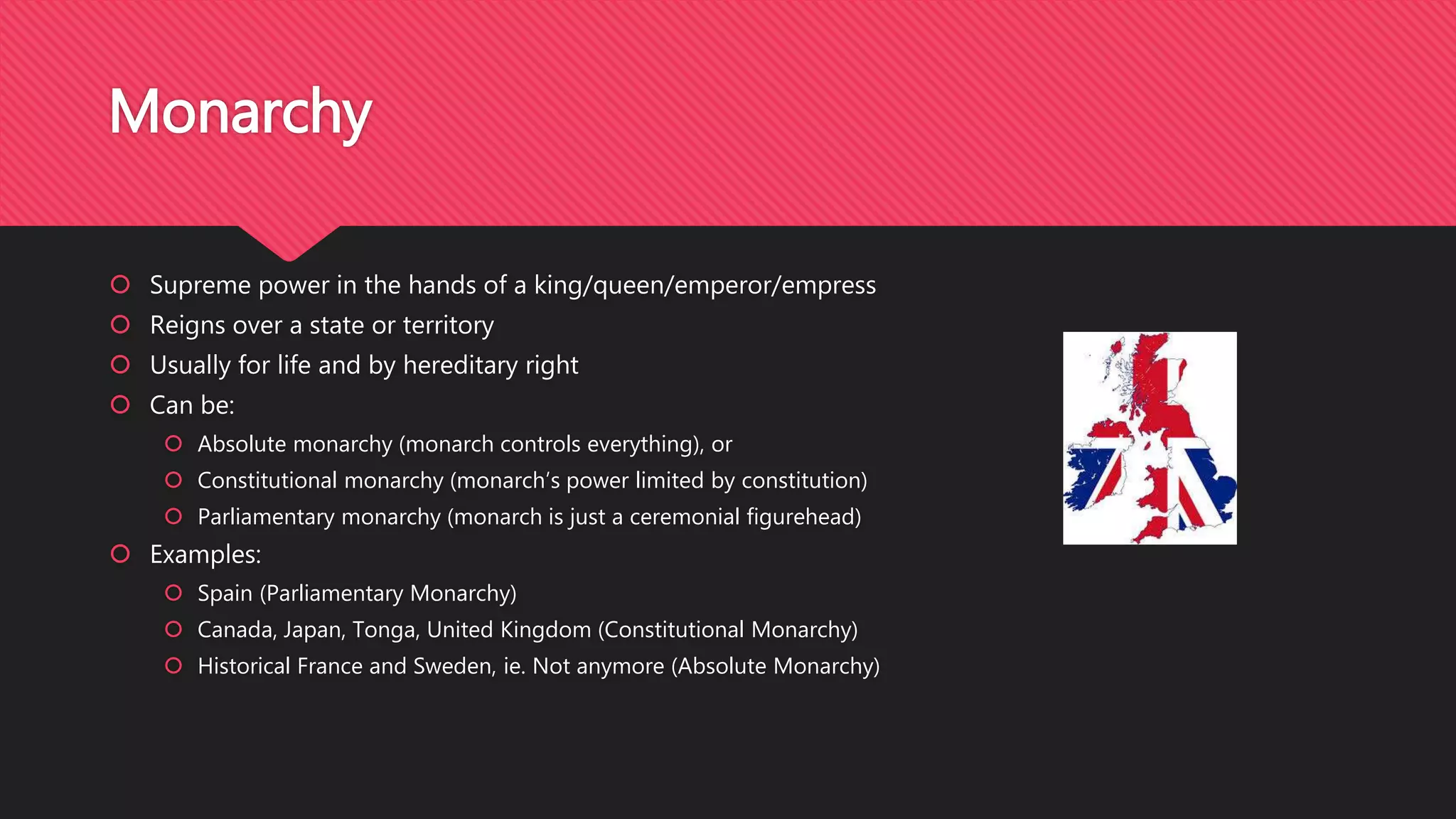
 Supreme power in the hands of a king/queen/emperor/empress
 Reigns over a state or territory
 Usually for life and by hereditary right
 Can be:
 Absolute monarchy (monarch controls everything), or
 Constitutional monarchy (monarch’s power limited by constitution)
 Parliamentary monarchy (monarch is just a ceremonial figurehead)
 Examples:
 Spain (Parliamentary Monarchy)
 Canada, Japan, Tonga, United Kingdom (Constitutional Monarchy)
 Historical France and Sweden, ie. Not anymore (Absolute Monarchy)
Monarchy
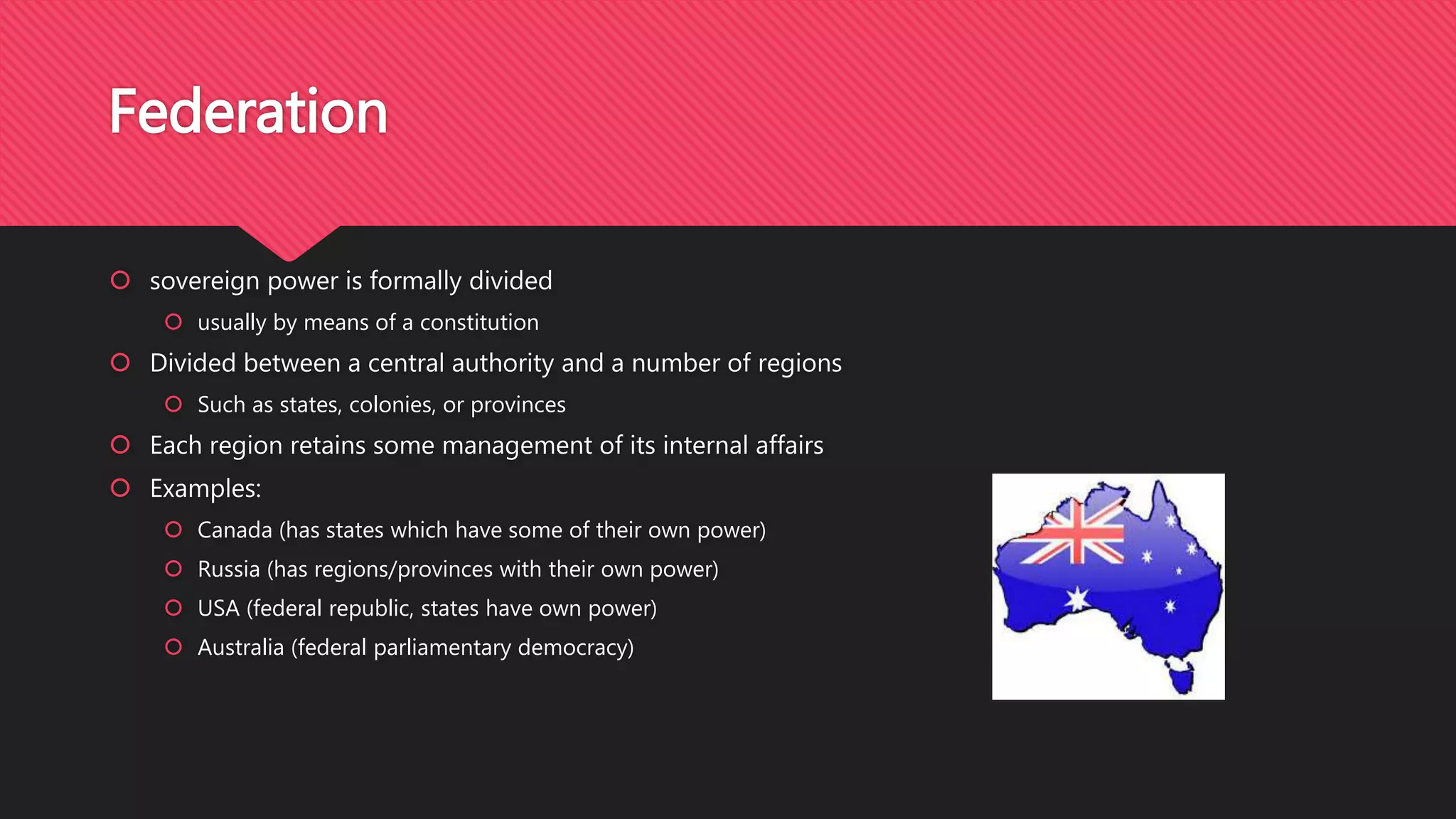
 sovereign power is formally divided
 usually by means of a constitution
 Divided between a central authority and a number of regions
 Such as states, colonies, or provinces
 Each region retains some management of its internal affairs
 Examples:
 Canada (has states which have some of their own power)
 Russia (has regions/provinces with their own power)
 USA (federal republic, states have own power)
 Australia (federal parliamentary democracy)
Federation
 Parliamentary Democracy: parliament selects the
government according to party strength as expressed
in elections
 Constitutional Democracy: sovereign power of the
people is spelled out in a governing constitution
 Democratic Republic: supreme power rests in the body
of citizens entitled to vote for officers and
representatives responsible to them
 Supreme power is retained by the people
 Usually exercised indirectly through a system of
representation and delegated authority
 They have elections to vote for their leaders
 Periodically renewed
 Such as a Prime Minister being in for 4 years
 Examples:
 Australia, Canada, PNG, New Zealand, Samoa
(Parliamentary Democracy – we have states and our
government is chosen based on the political party
people vote for)
 Nepal (democratic republic)
 Ghana, Panama, Sierra Leone (Constitutional
Democracy)
Democracy
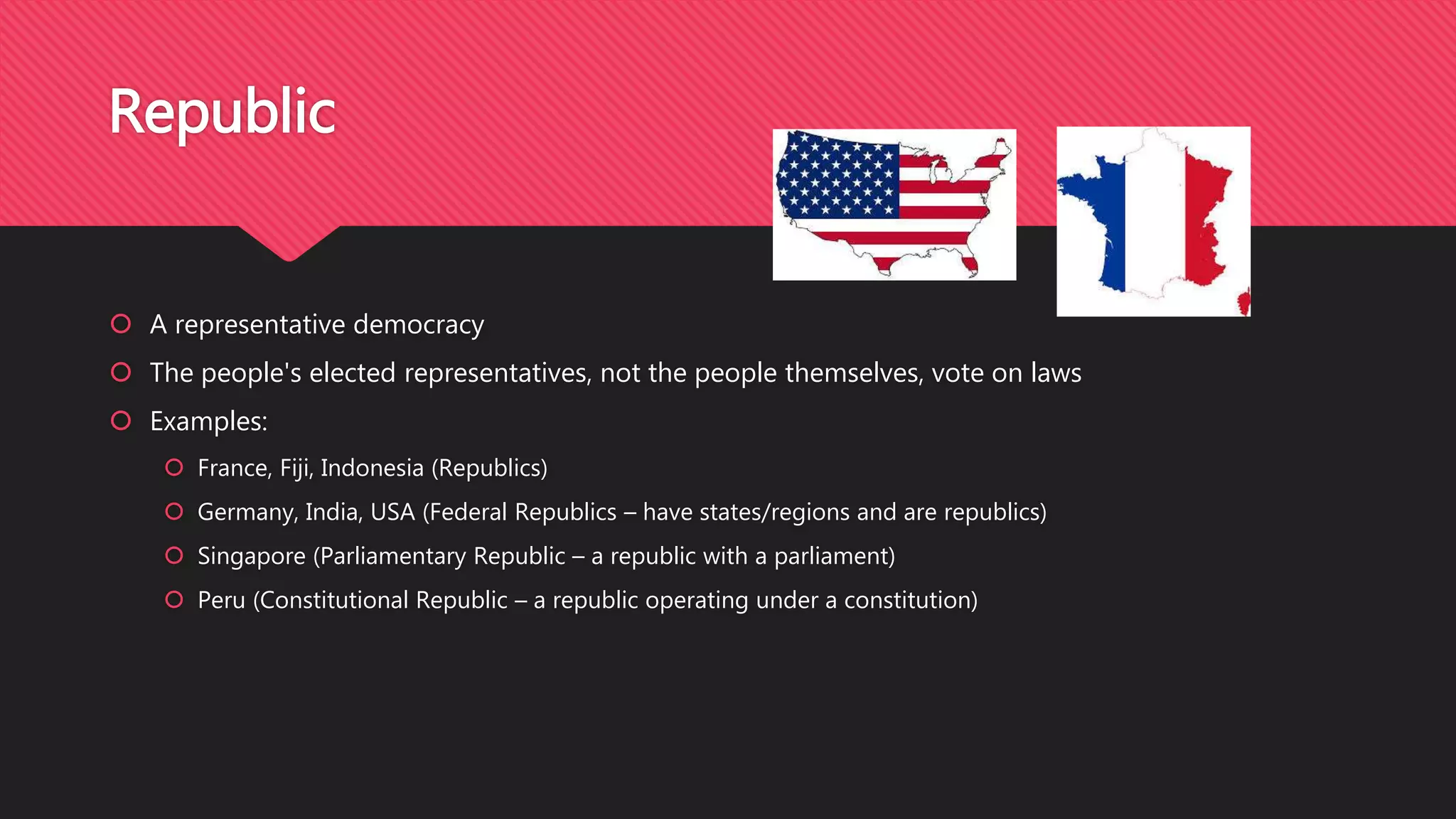
 A representative democracy
 The people's elected representatives, not the people themselves, vote on laws
 Examples:
 France, Fiji, Indonesia (Republics)
 Germany, India, USA (Federal Republics – have states/regions and are republics)
 Singapore (Parliamentary Republic – a republic with a parliament)
 Peru (Constitutional Republic – a republic operating under a constitution)
Republic
 Constitutional governments operate under an authoritative document (constitution)
 Constitution sets forth the system of fundamental laws/principles determining the nature, functions,
and limits of that government
 Constitutional democracy - the sovereign power of the people is spelled out in a governing
constitution (such as in Australia)
 Constitutional monarchy - monarch is guided by a constitution whereby rights, duties, and
responsibilities are spelled out in written law or by custom
Constitution
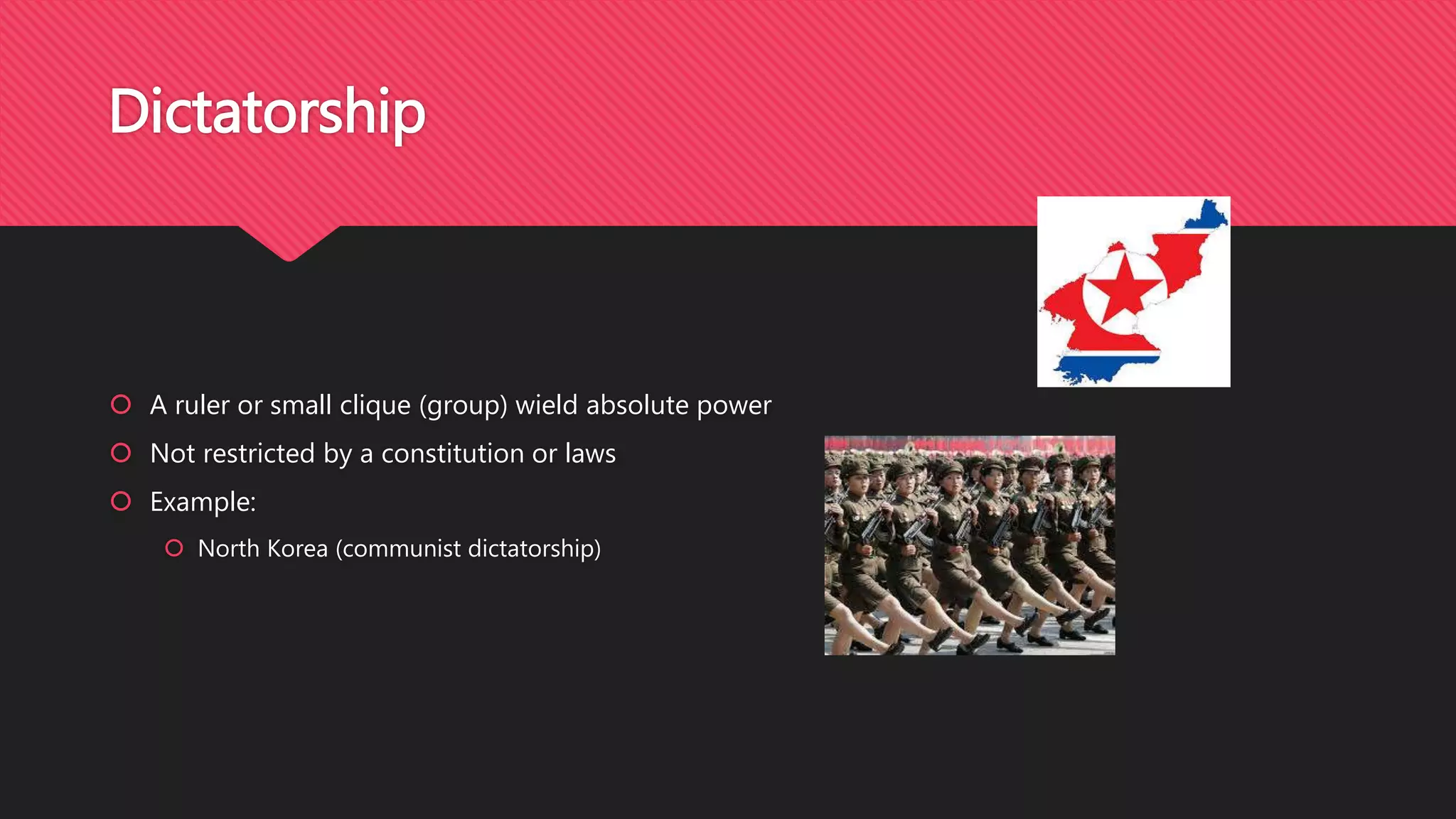
 A ruler or small clique (group) wield absolute power
 Not restricted by a constitution or laws
 Example:
 North Korea (communist dictatorship)
Dictatorship
 A condition of lawlessness or political disorder brought
about by the absence of governmental authority
 Example:
 Somalia during their civil war (1991-2006)
 No government existed, so regions turned to their own way to
solve problems
 Often a transitional phase between governments
 Albania in 1997
 Citizens could get away with anything after people lost their
money in scams
Anarchy
 Daniel 5:5-6,10-30
 1 Samuel 8:4-20
 Romans 13:1-7What does the Bible say about
leadership and government?
Look at the following verses and
comment on what they say.

2 World Governments

  • 1.
  • 2.
     Kings area biblical idea  The Israelites wanted an earthly king, against God’s wishes  1 Samuel 8:4-10, 19 4 So all the elders of Israel gathered together and came to Samuel at Ramah. 5 They said to him, “You are old, and your sons do not follow your ways; now appoint a king to lead us, such as all the other nations have.” 6 But when they said, “Give us a king to lead us,” this displeased Samuel; so he prayed to the LORD.7 And the LORD told him: “Listen to all that the people are saying to you; it is not you they have rejected, but they have rejected me as their king. 8 As they have done from the day I brought them up out of Egypt until this day, forsaking me and serving other gods, so they are doing to you. 9 Now listen to them; but warn them solemnly and let them know what the king who will reign over them will claim as his rights.” 10 Samuel told all the words of the LORD to the people who were asking him for a king. 19 But the people refused to listen to Samuel. “No!” they said. “We want a king over us. 20 Then we will be like all the other nations, with a king to lead us and to go out before us and fight our battles.” Biblical Perspective
  • 3.
     Monarchy  Federation Democracy  Republic  Constitution  Dictatorship  Anarchy Research these words to find out how they related to government and find examples of countries relating to each. Research the following
  • 4.
     Supreme powerin the hands of a king/queen/emperor/empress  Reigns over a state or territory  Usually for life and by hereditary right  Can be:  Absolute monarchy (monarch controls everything), or  Constitutional monarchy (monarch’s power limited by constitution)  Parliamentary monarchy (monarch is just a ceremonial figurehead)  Examples:  Spain (Parliamentary Monarchy)  Canada, Japan, Tonga, United Kingdom (Constitutional Monarchy)  Historical France and Sweden, ie. Not anymore (Absolute Monarchy) Monarchy
  • 5.
     sovereign poweris formally divided  usually by means of a constitution  Divided between a central authority and a number of regions  Such as states, colonies, or provinces  Each region retains some management of its internal affairs  Examples:  Canada (has states which have some of their own power)  Russia (has regions/provinces with their own power)  USA (federal republic, states have own power)  Australia (federal parliamentary democracy) Federation
  • 6.
     Parliamentary Democracy:parliament selects the government according to party strength as expressed in elections  Constitutional Democracy: sovereign power of the people is spelled out in a governing constitution  Democratic Republic: supreme power rests in the body of citizens entitled to vote for officers and representatives responsible to them  Supreme power is retained by the people  Usually exercised indirectly through a system of representation and delegated authority  They have elections to vote for their leaders  Periodically renewed  Such as a Prime Minister being in for 4 years  Examples:  Australia, Canada, PNG, New Zealand, Samoa (Parliamentary Democracy – we have states and our government is chosen based on the political party people vote for)  Nepal (democratic republic)  Ghana, Panama, Sierra Leone (Constitutional Democracy) Democracy
  • 7.
     A representativedemocracy  The people's elected representatives, not the people themselves, vote on laws  Examples:  France, Fiji, Indonesia (Republics)  Germany, India, USA (Federal Republics – have states/regions and are republics)  Singapore (Parliamentary Republic – a republic with a parliament)  Peru (Constitutional Republic – a republic operating under a constitution) Republic
  • 8.
     Constitutional governmentsoperate under an authoritative document (constitution)  Constitution sets forth the system of fundamental laws/principles determining the nature, functions, and limits of that government  Constitutional democracy - the sovereign power of the people is spelled out in a governing constitution (such as in Australia)  Constitutional monarchy - monarch is guided by a constitution whereby rights, duties, and responsibilities are spelled out in written law or by custom Constitution
  • 9.
     A ruleror small clique (group) wield absolute power  Not restricted by a constitution or laws  Example:  North Korea (communist dictatorship) Dictatorship
  • 10.
     A conditionof lawlessness or political disorder brought about by the absence of governmental authority  Example:  Somalia during their civil war (1991-2006)  No government existed, so regions turned to their own way to solve problems  Often a transitional phase between governments  Albania in 1997  Citizens could get away with anything after people lost their money in scams Anarchy
  • 11.
     Daniel 5:5-6,10-30 1 Samuel 8:4-20  Romans 13:1-7What does the Bible say about leadership and government? Look at the following verses and comment on what they say.