The formationof the gospels
Gosp
The word “Gospel” is from Old English term
gōdspel, from gōd, good + spell, tale derived from
the Greek term 'eu (good) - angelion (message).
In Latin it became 'evangelium' means “Good
News”.
gospelWhat is
it?
It is not a very common word in ancient Greek. It
originally referred to “news of a victory in a battle”.
The GOSPELS are good news for they provide
accounts of the victory of Jesus, through His Death
and Resurrection, over all powers of opposed to
God.
gospelWhat is
it?
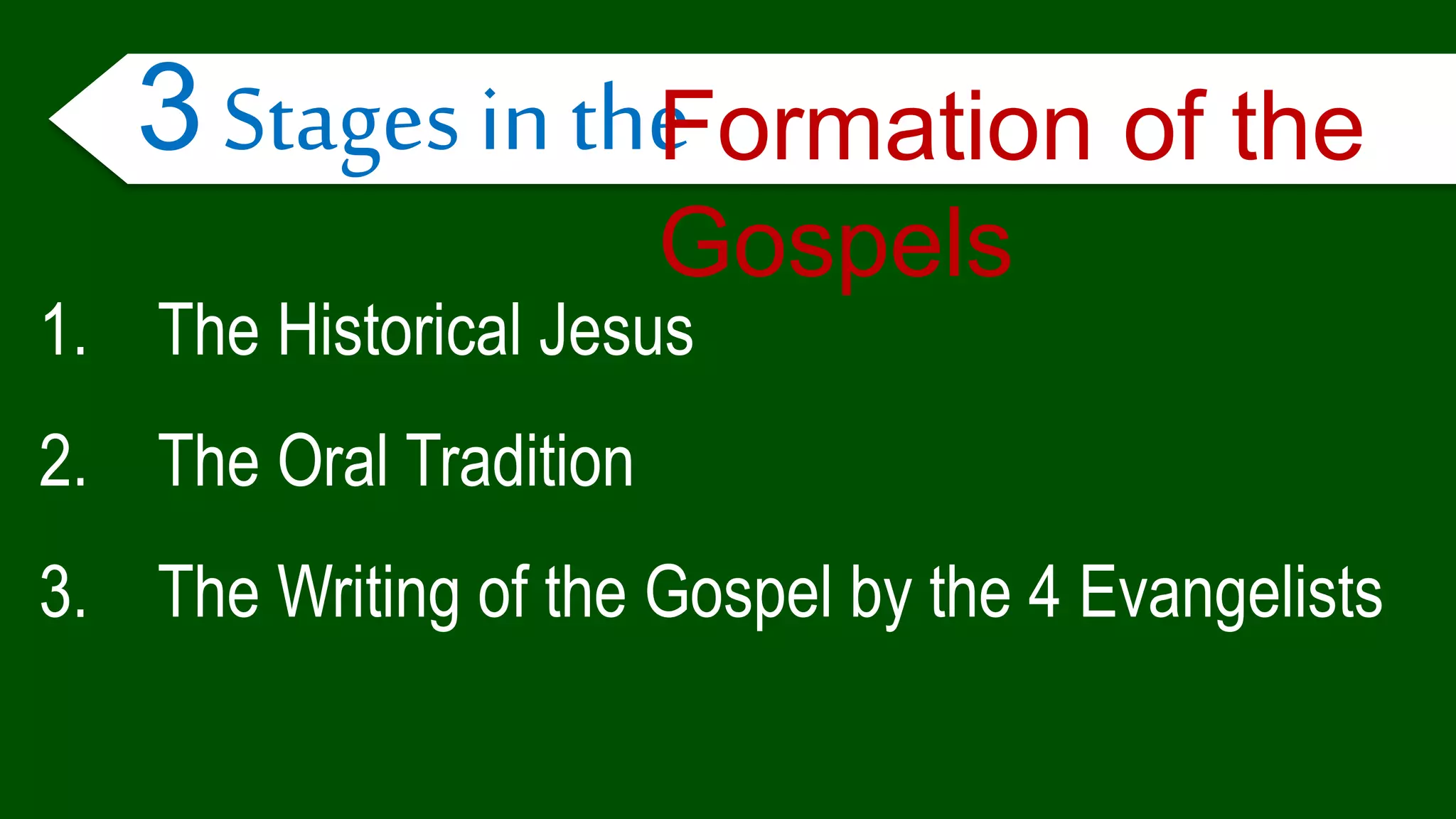
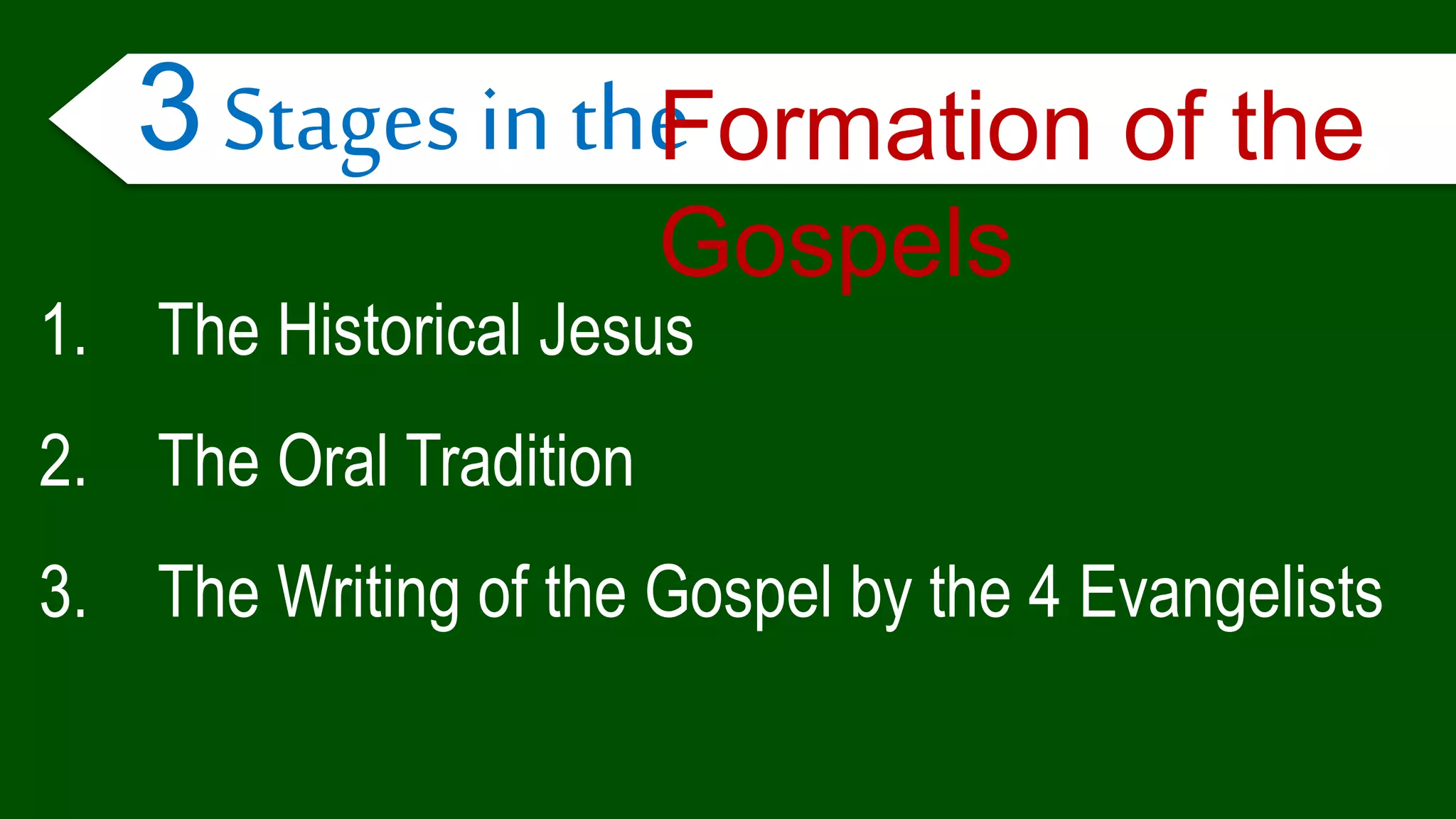
1. The Historical Jesus
2. The Oral Tradition
3. The Writing of the Gospel by the 4 Evangelists
3 Stages in theFormation of the
Gospels
1. The Historical Jesus
2. The Oral Tradition
3. The Writing of the Gospel by the 4 Evangelists
3 Stages in theFormation of the
Gospels
Jesus taught, healed, and worked miracles from
one place to another. He died on the cross, rose
from the dead and ascended to Heaven and His
followers witnessed and remembered these
things.
the historical Jes
us
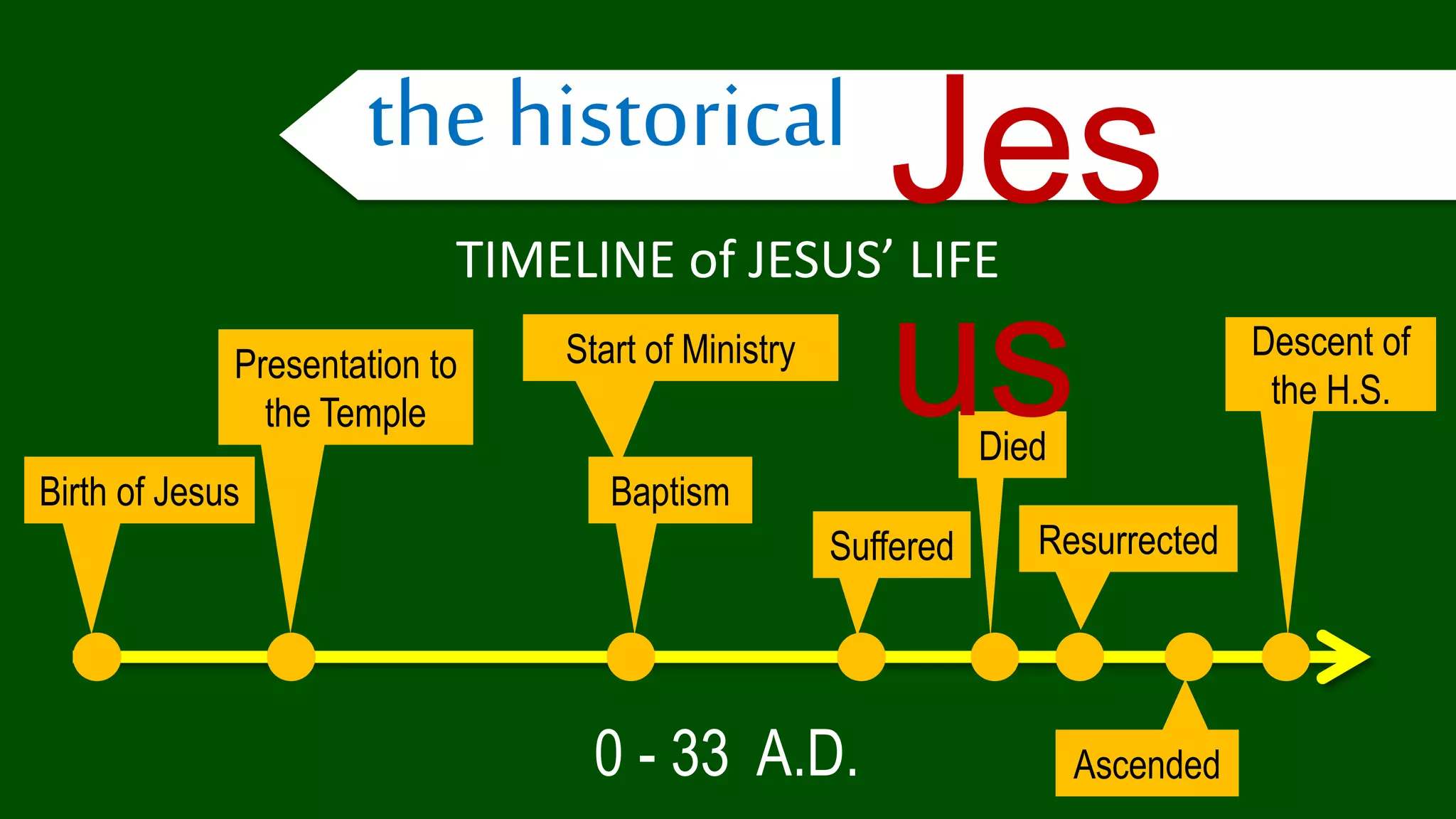
TIMELINE of JESUS’ LIFE
Start of Ministry
the historical
0 - 33 A.D.
Birth of Jesus
Presentation to
the Temple
Baptism
Suffered
Died
Resurrected
Ascended
Descent of
the H.S.
Jes
us
After the ascension of Jesus, the Holy Spirit
descended upon His Apostles and they handed on
the deeds and words of Jesus through preaching
and teaching.
the oralTraditi
on
They now had a better understanding of what He
did and said. They could look back on the whole
story of Jesus’ life, from the beginning of his
ministry to his ascension.
the oralTraditi
on
The Gospels were written by the Four Evangelists
in 65-70 A.D. From all the stories and memories
about Jesus, passed down by word of mouth or
already written down, each evangelist selected
what was suitable for his purpose.
The writing of the gospel by the
Four
Evangelists
At times the evangelist would combine, summarize, or
explain these traditions. The end result of this work was a
written Gospel. Each evangelist composed his Gospel
with skill and creativity, but always in such a way as to tell
us the honest truth about Jesus.
The writing of the gospel by the
Four
Evangelists
Some pointsAbout the
GospelsThe four gospels of Matthew, Mark, Luke and John, were
not the only gospels that have been written.
Many others tried to compose lives of Christ. None of
these were inspired, as they were the work of individuals
and not of the whole Church. We call such gospels which
have not been inspired, the 'Apocryphal Gospels'.
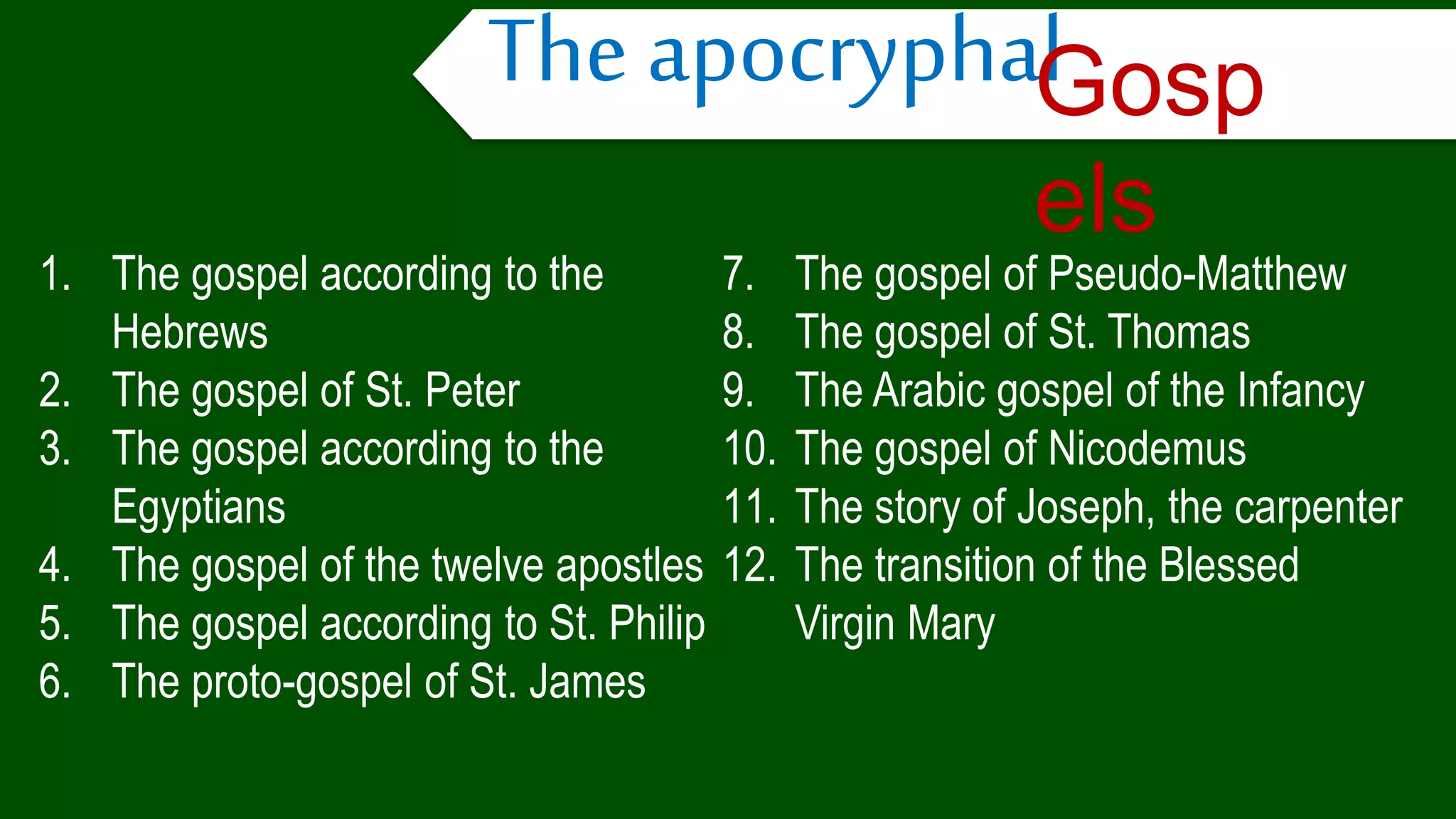
1. The gospel according to the
Hebrews
2. The gospel of St. Peter
3. The gospel according to the
Egyptians
4. The gospel of the twelve apostles
5. The gospel according to St. Philip
6. The proto-gospel of St. James
7. The gospel of Pseudo-Matthew
8. The gospel of St. Thomas
9. The Arabic gospel of the Infancy
10. The gospel of Nicodemus
11. The story of Joseph, the carpenter
12. The transition of the Blessed
Virgin Mary
The apocryphalGosp
els
The Formation of the Gospels

The Formation of the Gospels

  • 1.
    The formationof thegospels Gosp
  • 2.
    The word “Gospel”is from Old English term gōdspel, from gōd, good + spell, tale derived from the Greek term 'eu (good) - angelion (message). In Latin it became 'evangelium' means “Good News”. gospelWhat is it?
  • 3.
    It is nota very common word in ancient Greek. It originally referred to “news of a victory in a battle”. The GOSPELS are good news for they provide accounts of the victory of Jesus, through His Death and Resurrection, over all powers of opposed to God. gospelWhat is it?
  • 4.
    1. The HistoricalJesus 2. The Oral Tradition 3. The Writing of the Gospel by the 4 Evangelists 3 Stages in theFormation of the Gospels
  • 5.
    1. The HistoricalJesus 2. The Oral Tradition 3. The Writing of the Gospel by the 4 Evangelists 3 Stages in theFormation of the Gospels
  • 6.
    Jesus taught, healed,and worked miracles from one place to another. He died on the cross, rose from the dead and ascended to Heaven and His followers witnessed and remembered these things. the historical Jes us
  • 7.
    TIMELINE of JESUS’LIFE Start of Ministry the historical 0 - 33 A.D. Birth of Jesus Presentation to the Temple Baptism Suffered Died Resurrected Ascended Descent of the H.S. Jes us
  • 8.
    After the ascensionof Jesus, the Holy Spirit descended upon His Apostles and they handed on the deeds and words of Jesus through preaching and teaching. the oralTraditi on
  • 9.
    They now hada better understanding of what He did and said. They could look back on the whole story of Jesus’ life, from the beginning of his ministry to his ascension. the oralTraditi on
  • 10.
    The Gospels werewritten by the Four Evangelists in 65-70 A.D. From all the stories and memories about Jesus, passed down by word of mouth or already written down, each evangelist selected what was suitable for his purpose. The writing of the gospel by the Four Evangelists
  • 11.
    At times theevangelist would combine, summarize, or explain these traditions. The end result of this work was a written Gospel. Each evangelist composed his Gospel with skill and creativity, but always in such a way as to tell us the honest truth about Jesus. The writing of the gospel by the Four Evangelists
  • 12.
    Some pointsAbout the GospelsThefour gospels of Matthew, Mark, Luke and John, were not the only gospels that have been written. Many others tried to compose lives of Christ. None of these were inspired, as they were the work of individuals and not of the whole Church. We call such gospels which have not been inspired, the 'Apocryphal Gospels'.
  • 13.
    1. The gospelaccording to the Hebrews 2. The gospel of St. Peter 3. The gospel according to the Egyptians 4. The gospel of the twelve apostles 5. The gospel according to St. Philip 6. The proto-gospel of St. James 7. The gospel of Pseudo-Matthew 8. The gospel of St. Thomas 9. The Arabic gospel of the Infancy 10. The gospel of Nicodemus 11. The story of Joseph, the carpenter 12. The transition of the Blessed Virgin Mary The apocryphalGosp els