Tectonic plates
Aims:
To know the characteristics of earth’s layers, the different plates,
and how they move
Wednesday 16 April 2025
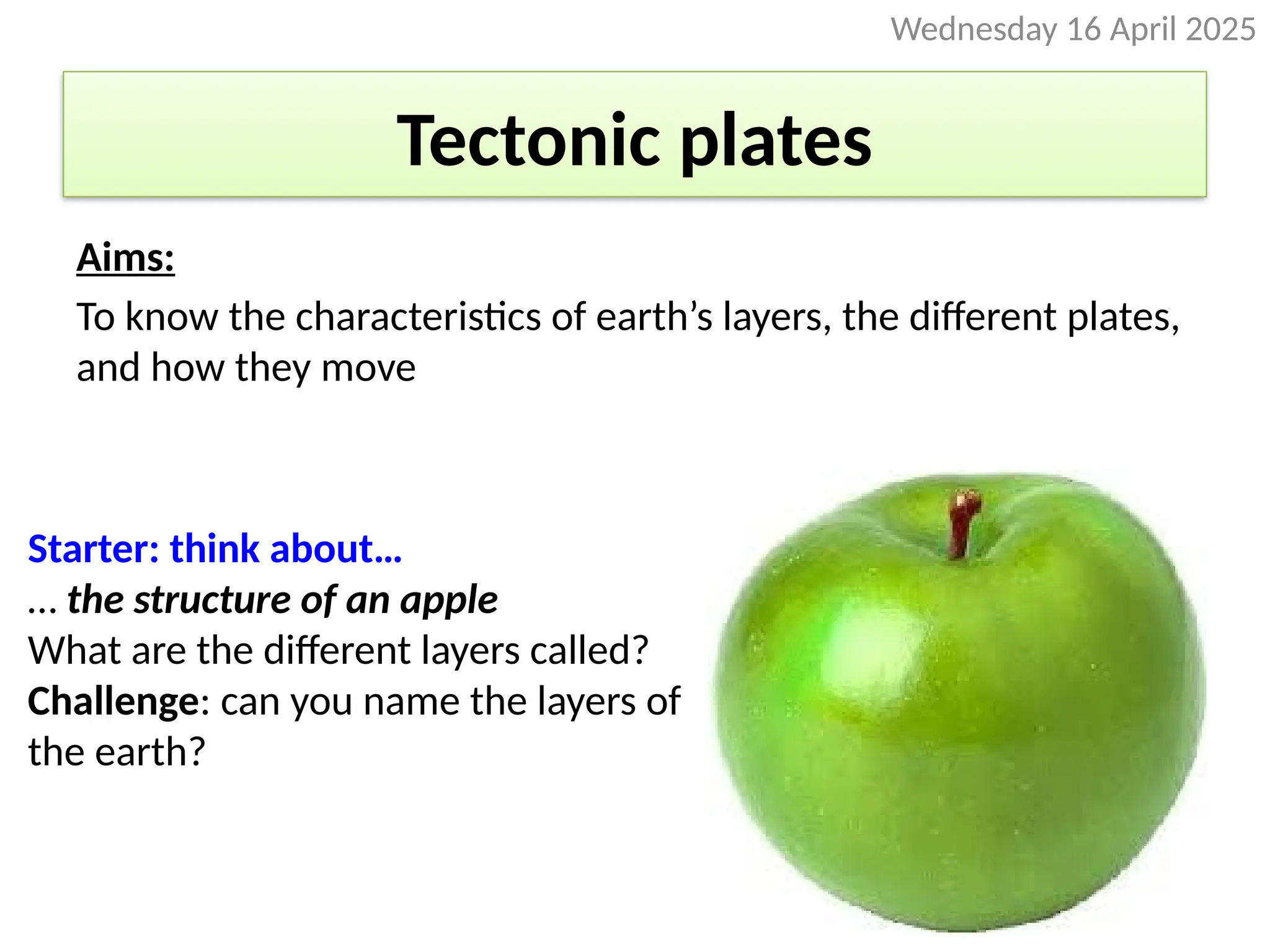
Starter: think about…
… the structure of an apple
What are the different layers called?
Challenge: can you name the layers of
the earth?
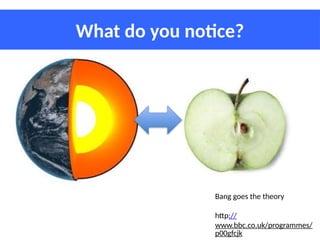
What do you notice?
Bang goes the theory
http://
www.bbc.co.uk/programmes/
p00gfcjk
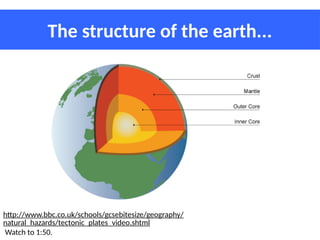
The structure of the earth...
http://www.bbc.co.uk/schools/gcsebitesize/geography/
natural_hazards/tectonic_plates_video.shtml
Watch to 1:50.
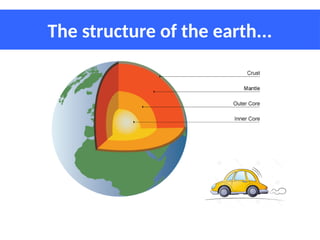
The structure of the earth...
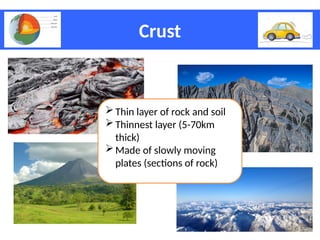
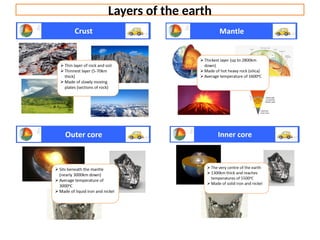
Crust
Thin layer of rock and soil
Thinnest layer (5-70km
thick)
Made of slowly moving
plates (sections of rock)
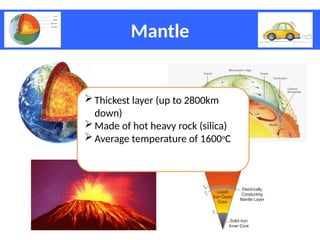
Mantle
Thickest layer (up to 2800km
down)
Made of hot heavy rock (silica)
Average temperature of 1600o
C
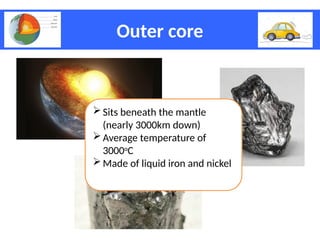
Outer core
Sits beneath the mantle
(nearly 3000km down)
Average temperature of
3000o
C
Made of liquid iron and nickel
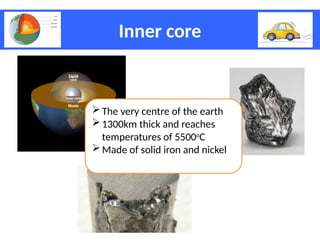
Inner core
The very centre of the earth
1300km thick and reaches
temperatures of 5500o
C
Made of solid iron and nickel
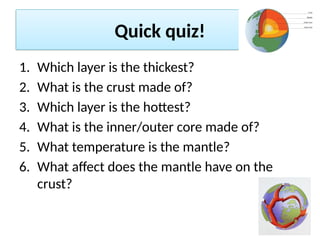
Quick quiz!
1. Which layer is the thickest?
2. What is the crust made of?
3. Which layer is the hottest?
4. What is the inner/outer core made of?
5. What temperature is the mantle?
6. What affect does the mantle have on the
crust?
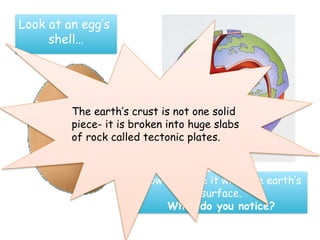
Look at an egg’s
shell…
Now compare it with the earth’s
surface.
What do you notice?
The earth’s crust is not one solid
piece- it is broken into huge slabs
of rock called tectonic plates.
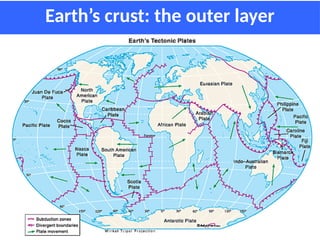
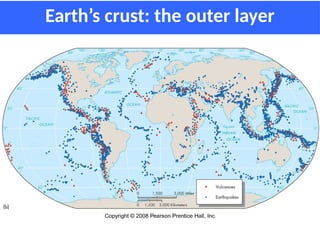
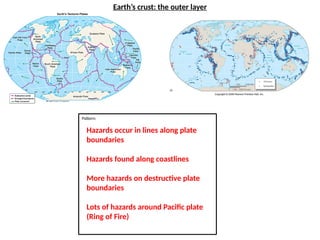
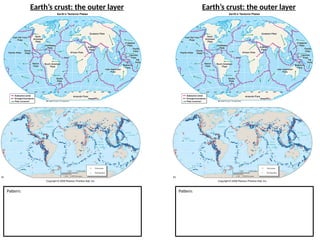
Earth’s crust: the outer layer
Pattern:
Hazards occur in lines along plate
boundaries
Hazards found along coastlines
More hazards on destructive plate
boundaries
Lots of hazards around Pacific plate
(Ring of Fire)
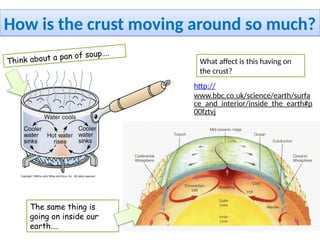
How is the crust moving around so much?
http://
www.bbc.co.uk/science/earth/surfa
ce_and_interior/inside_the_earth#p
00fztvj
Think about a pan of soup….
The same thing is
going on inside our
earth….
What affect is this having on
the crust?
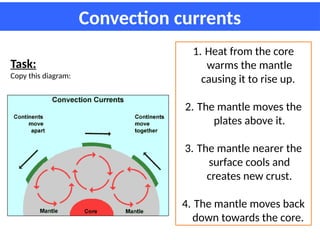
Convection currents
Task:
Copy this diagram:
1. Heat from the core
warms the mantle
causing it to rise up.
2. The mantle moves the
plates above it.
3. The mantle nearer the
surface cools and
creates new crust.
4. The mantle moves back
down towards the core.
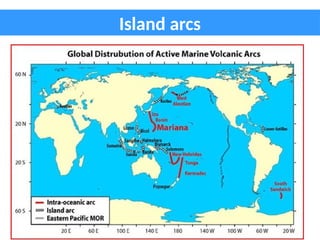
Island arcs
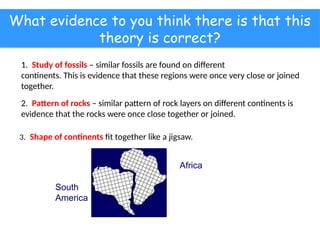
1. Study of fossils – similar fossils are found on different
continents. This is evidence that these regions were once very close or joined
together.
3. Shape of continents fit together like a jigsaw.
Africa
South
America
2. Pattern of rocks – similar pattern of rock layers on different continents is
evidence that the rocks were once close together or joined.
What evidence to you think there is that this
theory is correct?
Summary quiz!
1. Which is the thickest layer of the earth?
2. What is the outer core made of?
3. How hot is the hottest layer of the earth?
4. Where are tectonic hazards found?
5. Name one tectonic plate.
6. Why do you think volcanoes and earthquakes
happen…?
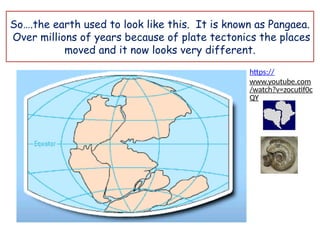
So….the earth used to look like this. It is known as Pangaea.
Over millions of years because of plate tectonics the places
moved and it now looks very different.
https://
www.youtube.com
/watch?v=zocutif0c
QY
To print
Layers of the earth
Earth’s crust: the outer layer
Pattern:
Earth’s crust: the outer layer
Pattern:
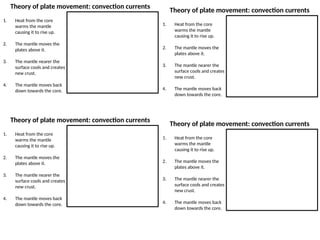
Theory of plate movement: convection currents
1. Heat from the core
warms the mantle
causing it to rise up.
2. The mantle moves the
plates above it.
3. The mantle nearer the
surface cools and creates
new crust.
4. The mantle moves back
down towards the core.
Theory of plate movement: convection currents
1. Heat from the core
warms the mantle
causing it to rise up.
2. The mantle moves the
plates above it.
3. The mantle nearer the
surface cools and creates
new crust.
4. The mantle moves back
down towards the core.
Theory of plate movement: convection currents
1. Heat from the core
warms the mantle
causing it to rise up.
2. The mantle moves the
plates above it.
3. The mantle nearer the
surface cools and creates
new crust.
4. The mantle moves back
down towards the core.
Theory of plate movement: convection currents
1. Heat from the core
warms the mantle
causing it to rise up.
2. The mantle moves the
plates above it.
3. The mantle nearer the
surface cools and creates
new crust.
4. The mantle moves back
down towards the core.
Hot spot theory and island arcs
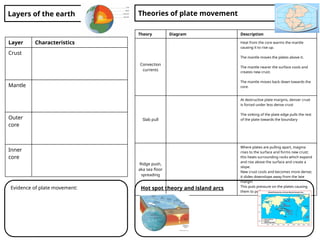
Layers of the earth
Layer Characteristics
Crust
Mantle
Outer
core
Inner
core
Theories of plate movement
Theory Diagram Description
Convection
currents
Heat from the core warms the mantle
causing it to rise up.
The mantle moves the plates above it.
The mantle nearer the surface cools and
creates new crust.
The mantle moves back down towards the
core.
Slab pull
At destructive plate margins, denser crust
is forced under less dense crust
The sinking of the plate edge pulls the rest
of the plate towards the boundary
Ridge push,
aka sea floor
spreading
Where plates are pulling apart, magma
rises to the surface and forms new crust;
this heats surrounding rocks which expand
and rise above the surface and create a
slope.
New crust cools and becomes more dense;
it slides downslope away from the late
margin
This puts pressure on the plates causing
them to pull apart
Evidence of plate movement:

2.-Plate-tectonics.Learn more about sciencepptx

  • 1.
    Tectonic plates Aims: To knowthe characteristics of earth’s layers, the different plates, and how they move Wednesday 16 April 2025 Starter: think about… … the structure of an apple What are the different layers called? Challenge: can you name the layers of the earth?
  • 2.
    What do younotice? Bang goes the theory http:// www.bbc.co.uk/programmes/ p00gfcjk
  • 3.
    The structure ofthe earth... http://www.bbc.co.uk/schools/gcsebitesize/geography/ natural_hazards/tectonic_plates_video.shtml Watch to 1:50.
  • 4.
    The structure ofthe earth...
  • 5.
    Crust Thin layer ofrock and soil Thinnest layer (5-70km thick) Made of slowly moving plates (sections of rock)
  • 6.
    Mantle Thickest layer (upto 2800km down) Made of hot heavy rock (silica) Average temperature of 1600o C
  • 7.
    Outer core Sits beneaththe mantle (nearly 3000km down) Average temperature of 3000o C Made of liquid iron and nickel
  • 8.
    Inner core The verycentre of the earth 1300km thick and reaches temperatures of 5500o C Made of solid iron and nickel
  • 9.
    Quick quiz! 1. Whichlayer is the thickest? 2. What is the crust made of? 3. Which layer is the hottest? 4. What is the inner/outer core made of? 5. What temperature is the mantle? 6. What affect does the mantle have on the crust?
  • 10.
    Look at anegg’s shell… Now compare it with the earth’s surface. What do you notice? The earth’s crust is not one solid piece- it is broken into huge slabs of rock called tectonic plates.
  • 11.
  • 12.
  • 13.
    Earth’s crust: theouter layer Pattern: Hazards occur in lines along plate boundaries Hazards found along coastlines More hazards on destructive plate boundaries Lots of hazards around Pacific plate (Ring of Fire)
  • 14.
    How is thecrust moving around so much? http:// www.bbc.co.uk/science/earth/surfa ce_and_interior/inside_the_earth#p 00fztvj Think about a pan of soup…. The same thing is going on inside our earth…. What affect is this having on the crust?
  • 15.
    Convection currents Task: Copy thisdiagram: 1. Heat from the core warms the mantle causing it to rise up. 2. The mantle moves the plates above it. 3. The mantle nearer the surface cools and creates new crust. 4. The mantle moves back down towards the core.
  • 16.
  • 17.
    1. Study offossils – similar fossils are found on different continents. This is evidence that these regions were once very close or joined together. 3. Shape of continents fit together like a jigsaw. Africa South America 2. Pattern of rocks – similar pattern of rock layers on different continents is evidence that the rocks were once close together or joined. What evidence to you think there is that this theory is correct?
  • 18.
    Summary quiz! 1. Whichis the thickest layer of the earth? 2. What is the outer core made of? 3. How hot is the hottest layer of the earth? 4. Where are tectonic hazards found? 5. Name one tectonic plate. 6. Why do you think volcanoes and earthquakes happen…?
  • 19.
    So….the earth usedto look like this. It is known as Pangaea. Over millions of years because of plate tectonics the places moved and it now looks very different. https:// www.youtube.com /watch?v=zocutif0c QY
  • 20.
  • 21.
  • 22.
    Earth’s crust: theouter layer Pattern: Earth’s crust: the outer layer Pattern:
  • 23.
    Theory of platemovement: convection currents 1. Heat from the core warms the mantle causing it to rise up. 2. The mantle moves the plates above it. 3. The mantle nearer the surface cools and creates new crust. 4. The mantle moves back down towards the core. Theory of plate movement: convection currents 1. Heat from the core warms the mantle causing it to rise up. 2. The mantle moves the plates above it. 3. The mantle nearer the surface cools and creates new crust. 4. The mantle moves back down towards the core. Theory of plate movement: convection currents 1. Heat from the core warms the mantle causing it to rise up. 2. The mantle moves the plates above it. 3. The mantle nearer the surface cools and creates new crust. 4. The mantle moves back down towards the core. Theory of plate movement: convection currents 1. Heat from the core warms the mantle causing it to rise up. 2. The mantle moves the plates above it. 3. The mantle nearer the surface cools and creates new crust. 4. The mantle moves back down towards the core.
  • 24.
    Hot spot theoryand island arcs Layers of the earth Layer Characteristics Crust Mantle Outer core Inner core Theories of plate movement Theory Diagram Description Convection currents Heat from the core warms the mantle causing it to rise up. The mantle moves the plates above it. The mantle nearer the surface cools and creates new crust. The mantle moves back down towards the core. Slab pull At destructive plate margins, denser crust is forced under less dense crust The sinking of the plate edge pulls the rest of the plate towards the boundary Ridge push, aka sea floor spreading Where plates are pulling apart, magma rises to the surface and forms new crust; this heats surrounding rocks which expand and rise above the surface and create a slope. New crust cools and becomes more dense; it slides downslope away from the late margin This puts pressure on the plates causing them to pull apart Evidence of plate movement:

Editor's Notes

  • #8 Power of the Planet Volcano – earth;s creation – 9 mins to 10m 30
  • #14 Power of the planet – 14.30 - 20
  • #15 http://www.bbc.co.uk/science/earth/surface_and_interior/inside_the_earth#p00fztvj