A. Types of Feed
The market offers three forms of
feed.
1. Starter Feed
2. Grower Feed
3. Finisher Feed
The proportion of nutrients in the
feed differs in each form. Changing
the proportion of nutrients is
necessary to address the chicken's
needs at different stages of
development. The change from one
ration to another will take place
slowly so as not to disrupt the
chicken's usual feeding behavior.
Always allow at least one week of
transition period.
1. Starter Feed.
A starter feed is given to 10 to
20 kgs. weaners until the pigs
are about three months old
and weigh 30 to 35 kgs. A
starter feed contains 18
percent crude protein (CP) and
3,250 kilocalories (Kca/j) of
digestible energy (DE).
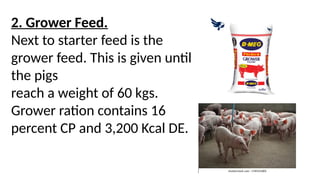
2. Grower Feed.
Next to starter feed is the
grower feed. This is given until
the pigs
reach a weight of 60 kgs.
Grower ration contains 16
percent CP and 3,200 Kcal DE.
3. Finisher Feed.
At 60 kgs, the pigs‘ ration is
shifted to finisher feed. It is
given to finisher pig up to 80
to 90 kgs ready for the market.
The ration contains 14
percent
CP with 3,200 Kcal DE.
B. Feeding Methods
1. Restricted Feeding.
2. Ad Libitum Feeding.
3. Combination of Ad Libitum
and Restricted Feeding
1. Restricted Feeding.
the amount of feed givenis controlled or limited
to a certain amount just to satisfy the appetite of
the pig.
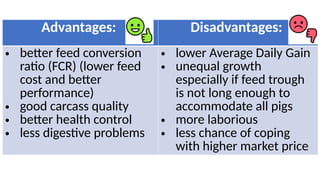
Advantages: Disadvantages:
• better feed conversion
ratio (FCR) (lower feed
cost and better
performance)
• good carcass quality
• better health control
• less digestive problems
• lower Average Daily Gain
• unequal growth
especially if feed trough
is not long enough to
accommodate all pigs
• more laborious
• less chance of coping
with higher market price
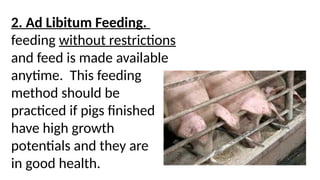
2. Ad Libitum Feeding.
feeding without restrictions
and feed is made available
anytime. This feeding
method should be
practiced if pigs finished
have high growth
potentials and they are
in good health.
Advantages: Disadvantages:
• higher ADG is achieved
• less feed competition
• less laborious
• thicker backfat
• higher feed conversion
ration (higher feed cost)
• more digestive problems
in younger pigs
• less control on health
problems
3. Combination of Ad Libitum and
Restricted Feeding
Pigs are fed ad libitum until they
reach the weight of 50 kgs. And fed restricted until
they are marketed. With this feeding method, the
growth potential of the animal can be maximized
during its first 50 kgs. of growth. Restriction is
practiced to reduce backfat thickness with a
corresponding increase in lean cut yield.
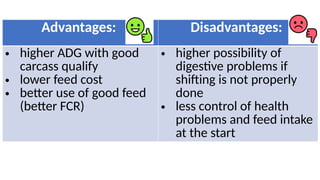
Advantages: Disadvantages:
• higher ADG with good
carcass qualify
• lower feed cost
• better use of good feed
(better FCR)
• higher possibility of
digestive problems if
shifting is not properly
done
• less control of health
problems and feed intake
at the start
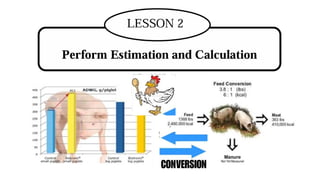
What is the Feed Conversion Ratio (FCR)?
The FCR is simply the amount of feed it takes to
grow a kilogram of pig/chicken.
 The weight of feed intake divided by weight gained
by the animal.
 Lower FCR values indicate higher efficiency.
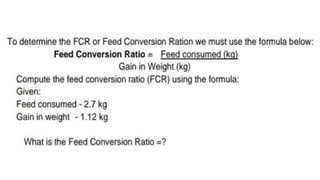
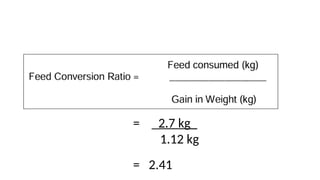
To determine the FCR or Feed Conversion Ration we must
use the formula below:
= _4 kg_
1 kg
= 4
= _2.7 kg_
1.12 kg
= 2.41
What is the Feed Conversion Ratio (FCR)?
The FCR is simply the amount of feed it takes to grow a kilogram of
chicken/pig.
= __621 kg__
259 kg
= 2.3976
= 2.40
 This means that when a feed has a low FCR, it takes
less feed to produce one kilogram of meat.
 A low FCR is a good indication of a high-quality feed.
Why is FCR important?
 It allows for an estimate of the feed
that will be required in the growing
cycle.
 Knowing how much feed will be
needed then allows a farmer to
determine the profitability of a
swine/poultry enterprise.
 This means that FCR allows the
farmer to make wise choices in
selecting and using feed to maximize
profitability.
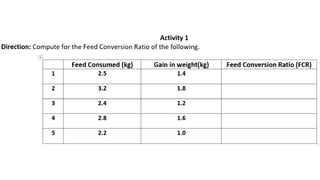
Direction: Compute for the Feed Conversion Ratio of the following.
1.
= __2.5 kg__
1.4 kg
= 1.79
2.
= __3.2 kg__
1.8 kg
= 1.78
3.
= __2.4 kg__
1.2 kg
= 2
4.
= __2.8 kg__
1.6 kg
= 1.75
5.
= __2.2 kg__
1 kg
= 2.2
Feed
Consumed
Gain in Weight Feed
Conversion
Ratio (FCR)
1.) 1 kg .8 kg
2.) 1.8 kg 1.2 kg
3.) 2 kg 1.5 kg
4.) 2.2 kg 1.8 kg
5.) 2.5 3 kg

2. Perform Calculation and Estimation.pptx

  • 4.
    A. Types ofFeed The market offers three forms of feed. 1. Starter Feed 2. Grower Feed 3. Finisher Feed
  • 5.
    The proportion ofnutrients in the feed differs in each form. Changing the proportion of nutrients is necessary to address the chicken's needs at different stages of development. The change from one ration to another will take place slowly so as not to disrupt the chicken's usual feeding behavior. Always allow at least one week of transition period.
  • 6.
    1. Starter Feed. Astarter feed is given to 10 to 20 kgs. weaners until the pigs are about three months old and weigh 30 to 35 kgs. A starter feed contains 18 percent crude protein (CP) and 3,250 kilocalories (Kca/j) of digestible energy (DE).
  • 7.
    2. Grower Feed. Nextto starter feed is the grower feed. This is given until the pigs reach a weight of 60 kgs. Grower ration contains 16 percent CP and 3,200 Kcal DE.
  • 8.
    3. Finisher Feed. At60 kgs, the pigs‘ ration is shifted to finisher feed. It is given to finisher pig up to 80 to 90 kgs ready for the market. The ration contains 14 percent CP with 3,200 Kcal DE.
  • 9.
    B. Feeding Methods 1.Restricted Feeding. 2. Ad Libitum Feeding. 3. Combination of Ad Libitum and Restricted Feeding
  • 10.
    1. Restricted Feeding. theamount of feed givenis controlled or limited to a certain amount just to satisfy the appetite of the pig.
  • 11.
    Advantages: Disadvantages: • betterfeed conversion ratio (FCR) (lower feed cost and better performance) • good carcass quality • better health control • less digestive problems • lower Average Daily Gain • unequal growth especially if feed trough is not long enough to accommodate all pigs • more laborious • less chance of coping with higher market price
  • 12.
    2. Ad LibitumFeeding. feeding without restrictions and feed is made available anytime. This feeding method should be practiced if pigs finished have high growth potentials and they are in good health.
  • 13.
    Advantages: Disadvantages: • higherADG is achieved • less feed competition • less laborious • thicker backfat • higher feed conversion ration (higher feed cost) • more digestive problems in younger pigs • less control on health problems
  • 14.
    3. Combination ofAd Libitum and Restricted Feeding Pigs are fed ad libitum until they reach the weight of 50 kgs. And fed restricted until they are marketed. With this feeding method, the growth potential of the animal can be maximized during its first 50 kgs. of growth. Restriction is practiced to reduce backfat thickness with a corresponding increase in lean cut yield.
  • 15.
    Advantages: Disadvantages: • higherADG with good carcass qualify • lower feed cost • better use of good feed (better FCR) • higher possibility of digestive problems if shifting is not properly done • less control of health problems and feed intake at the start
  • 16.
    What is theFeed Conversion Ratio (FCR)? The FCR is simply the amount of feed it takes to grow a kilogram of pig/chicken.  The weight of feed intake divided by weight gained by the animal.  Lower FCR values indicate higher efficiency.
  • 17.
    To determine theFCR or Feed Conversion Ration we must use the formula below: = _4 kg_ 1 kg = 4
  • 19.
    = _2.7 kg_ 1.12kg = 2.41
  • 20.
    What is theFeed Conversion Ratio (FCR)? The FCR is simply the amount of feed it takes to grow a kilogram of chicken/pig. = __621 kg__ 259 kg = 2.3976 = 2.40
  • 21.
     This meansthat when a feed has a low FCR, it takes less feed to produce one kilogram of meat.  A low FCR is a good indication of a high-quality feed.
  • 22.
    Why is FCRimportant?  It allows for an estimate of the feed that will be required in the growing cycle.  Knowing how much feed will be needed then allows a farmer to determine the profitability of a swine/poultry enterprise.  This means that FCR allows the farmer to make wise choices in selecting and using feed to maximize profitability.
  • 24.
    Direction: Compute forthe Feed Conversion Ratio of the following. 1. = __2.5 kg__ 1.4 kg = 1.79
  • 25.
  • 26.
  • 27.
  • 28.
  • 29.
    Feed Consumed Gain in WeightFeed Conversion Ratio (FCR) 1.) 1 kg .8 kg 2.) 1.8 kg 1.2 kg 3.) 2 kg 1.5 kg 4.) 2.2 kg 1.8 kg 5.) 2.5 3 kg