Lecture 2: Introduction
Dr. Ameer Gouda
Contents
1. Layering and Reference Models
2. Encapsulation and PDU
Why Using Layer Models
 To visualize the interaction between various protocols,
it is common to use a layered model.
 Benefits of doing so:
Helps break down network function.
Create standard for equipment manufacturing.
Allows vendors to focus in specialized areas of the network.
Reference Models
Reference models describe the layers in a network
architecture as follows:
 OSI reference model (7 layer model)»
 TCP/IP reference model (Protocol model 4/5)»
 Model used for this text »
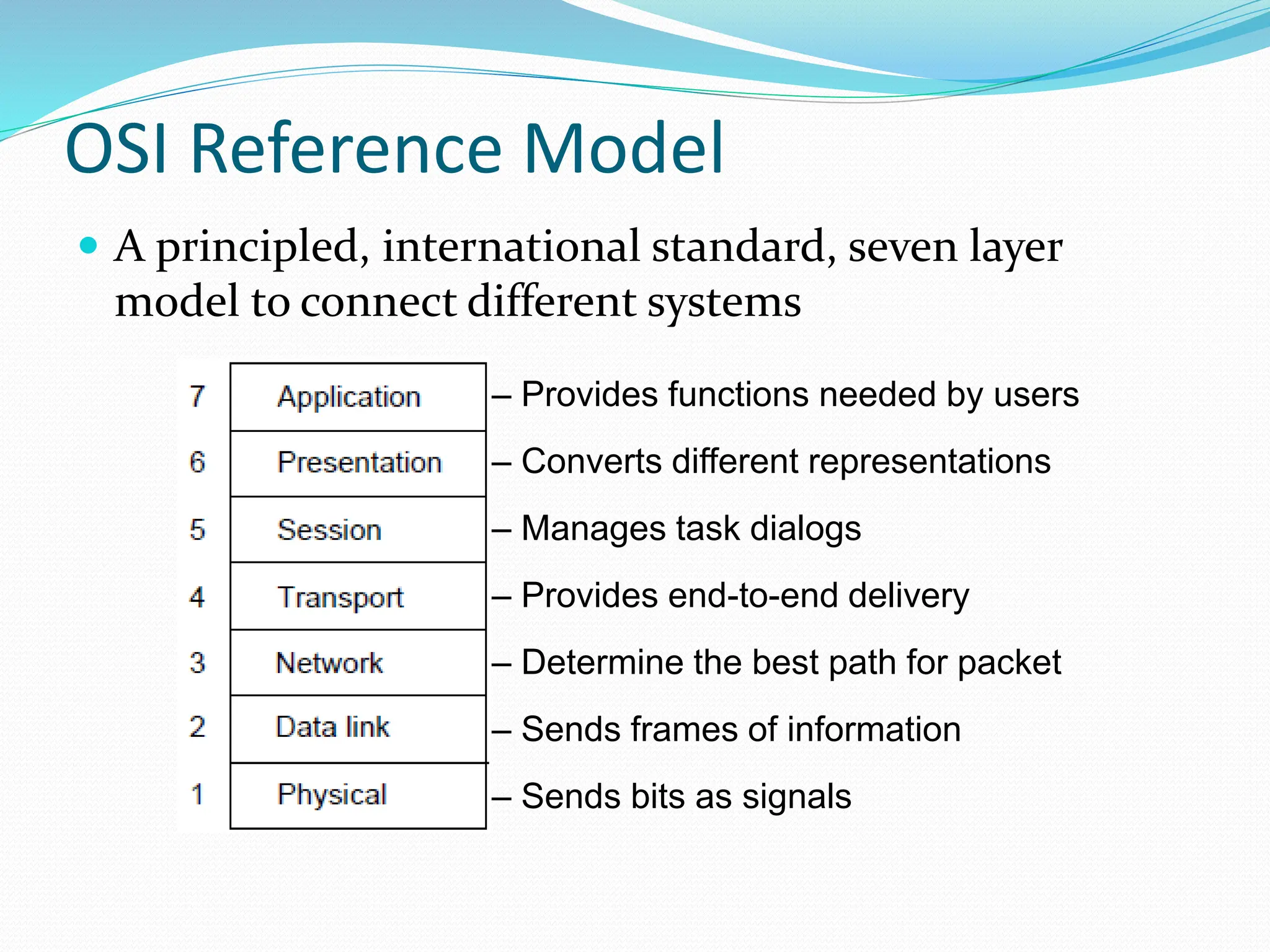
OSI Reference Model
 A principled, international standard, seven layer
model to connect different systems
– Provides functions needed by users
– Converts different representations
– Manages task dialogs
– Provides end-to-end delivery
– Determine the best path for packet
– Sends frames of information
– Sends bits as signals
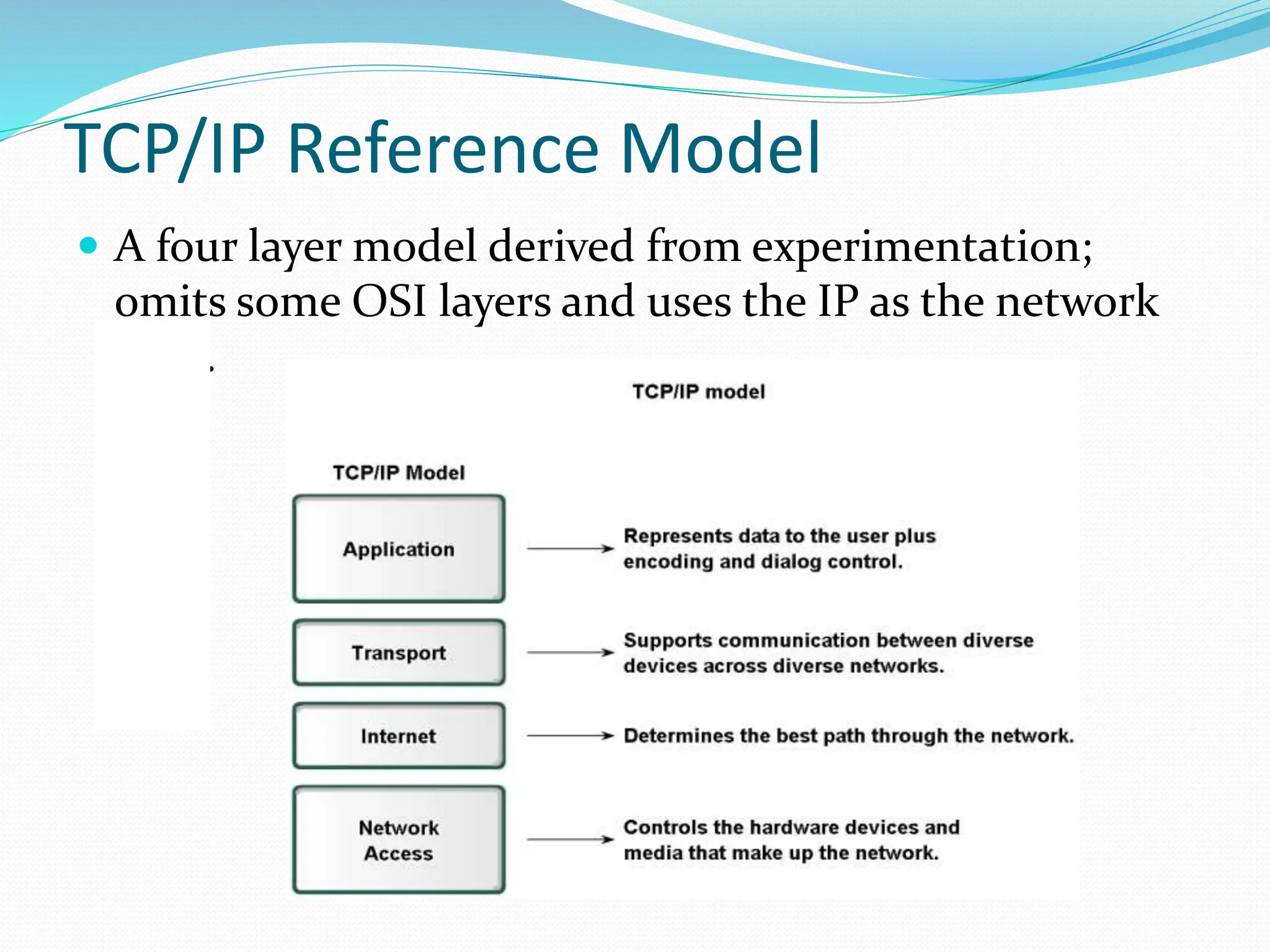
TCP/IP Reference Model
 A four layer model derived from experimentation;
omits some OSI layers and uses the IP as the network
layer.
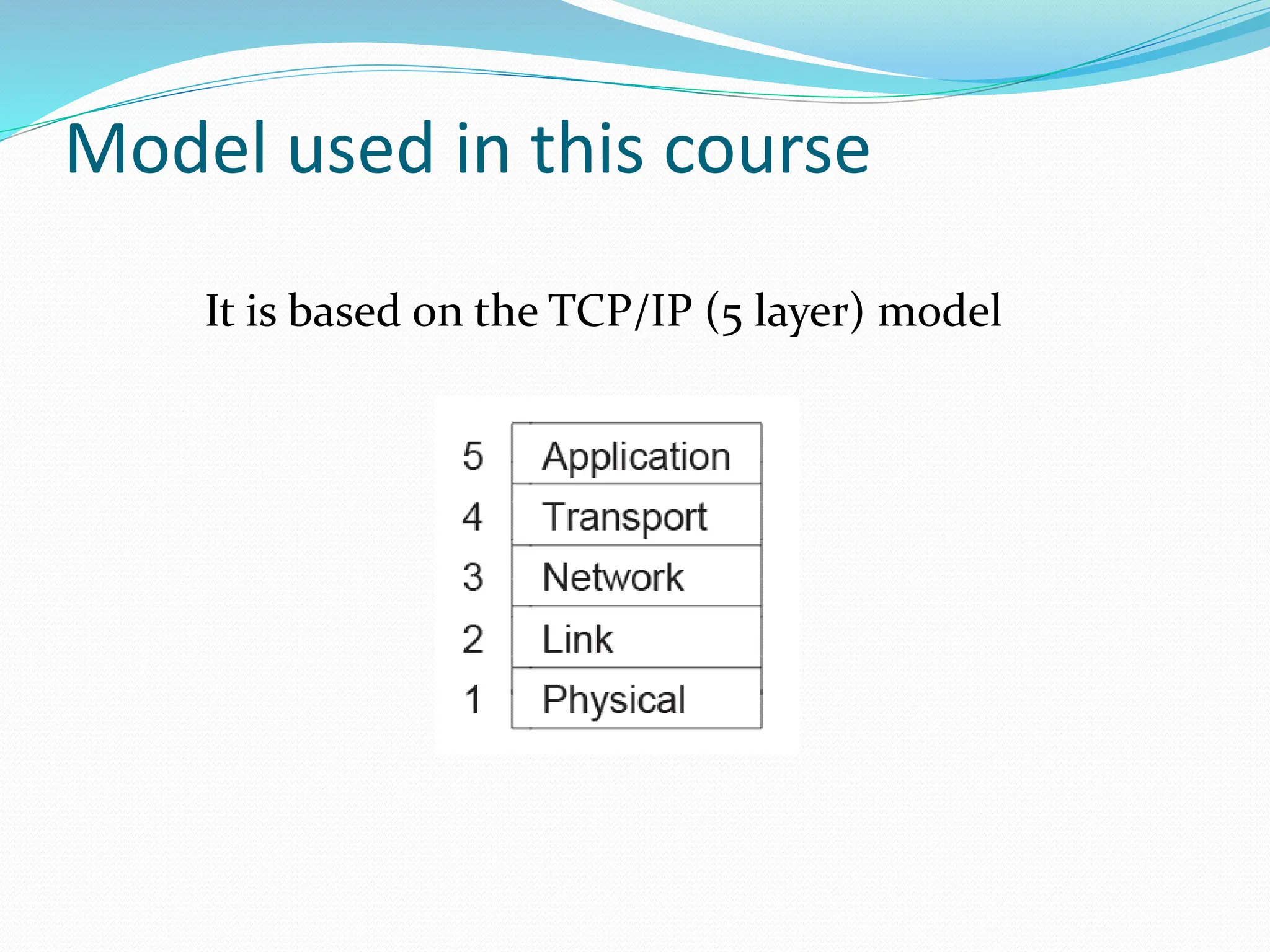
Model used in this course
It is based on the TCP/IP (5 layer) model
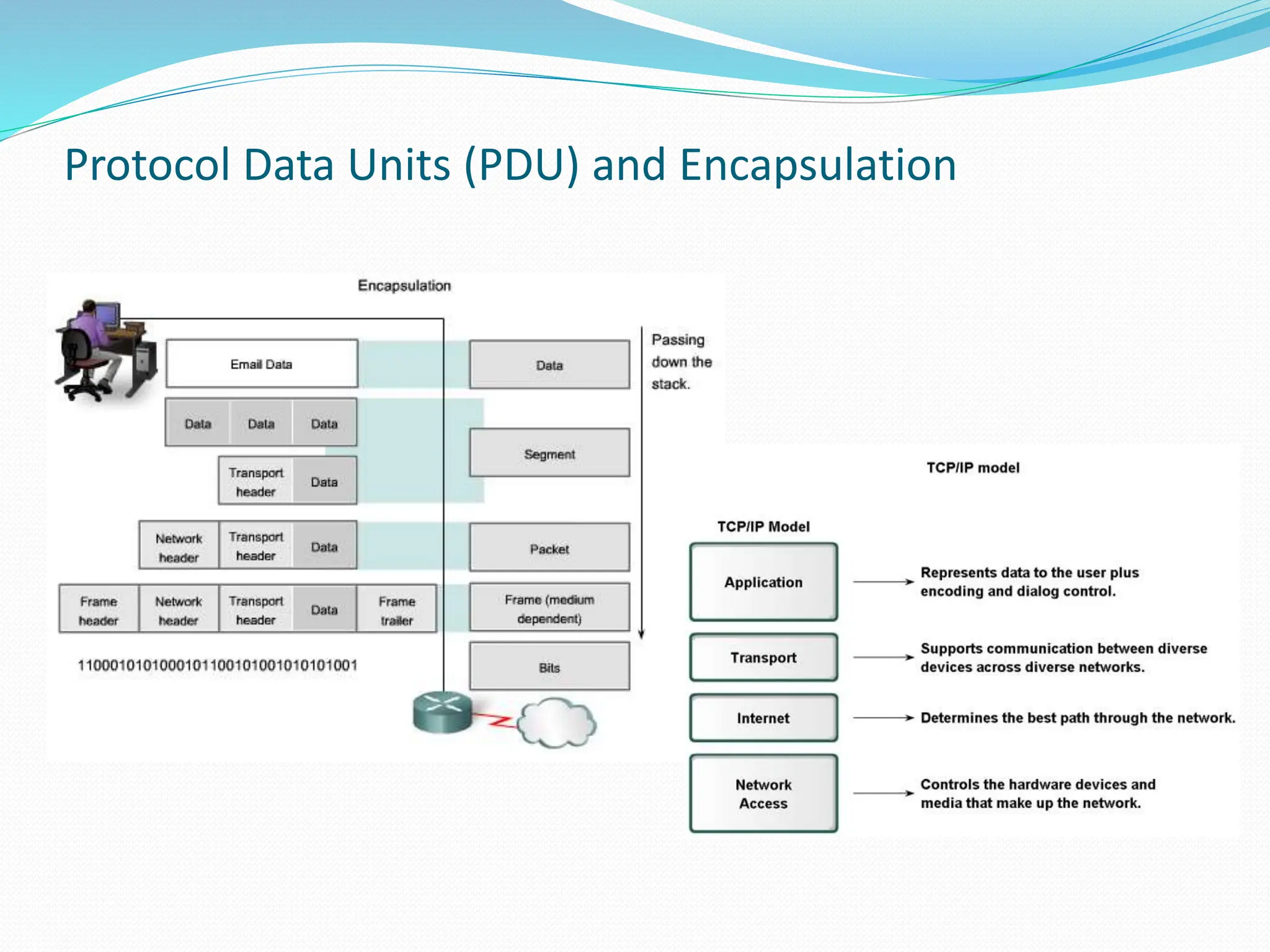
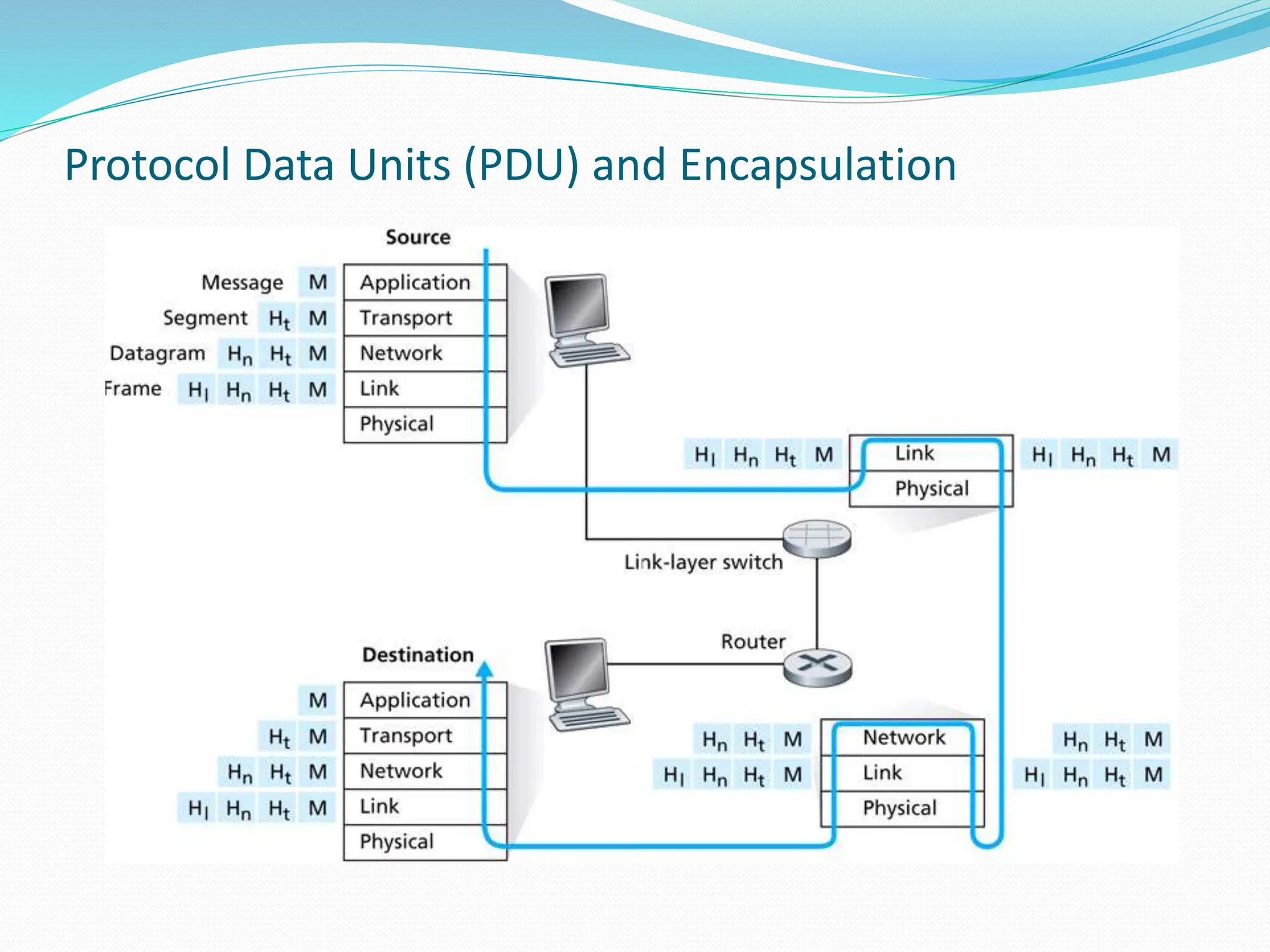
Protocol Data Units (PDU) and Encapsulation

2- Lec 2 - Introduction to Computer Networks.pptx.pptx

  • 1.
  • 2.
    Contents 1. Layering andReference Models 2. Encapsulation and PDU
  • 3.
    Why Using LayerModels  To visualize the interaction between various protocols, it is common to use a layered model.  Benefits of doing so: Helps break down network function. Create standard for equipment manufacturing. Allows vendors to focus in specialized areas of the network.
  • 4.
    Reference Models Reference modelsdescribe the layers in a network architecture as follows:  OSI reference model (7 layer model)»  TCP/IP reference model (Protocol model 4/5)»  Model used for this text »
  • 5.
    OSI Reference Model A principled, international standard, seven layer model to connect different systems – Provides functions needed by users – Converts different representations – Manages task dialogs – Provides end-to-end delivery – Determine the best path for packet – Sends frames of information – Sends bits as signals
  • 6.
    TCP/IP Reference Model A four layer model derived from experimentation; omits some OSI layers and uses the IP as the network layer.
  • 7.
    Model used inthis course It is based on the TCP/IP (5 layer) model
  • 8.
    Protocol Data Units(PDU) and Encapsulation
  • 9.
    Protocol Data Units(PDU) and Encapsulation