{
OSI MODEL
Open System Interconnection
1st Year ICS: Chapter 2
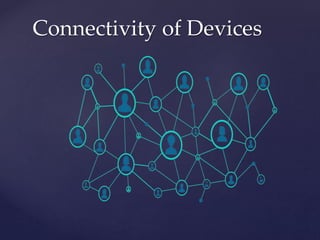
Connectivity of Devices
 A conceptual framework
 Standardizes and describes the functions of a
telecommunications or networking system.
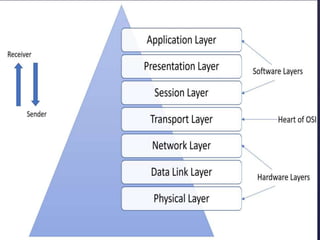
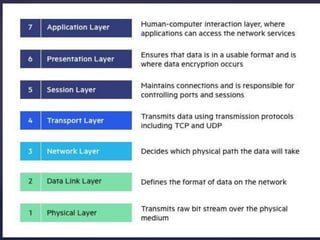
 It divides network communication into seven
distinct layers
 Each responsible for specific functions and
protocols.
Introduction of OSI
PART
1
 It was developed by International Standard
Organization(ISO) in 1983.
 It was develop to allow different network to
communication with each other even their
architecture are different.
Introduction of OSI
(Cont…)
Working of Layers
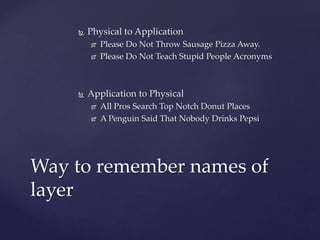
 Physical to Application
 Please Do Not Throw Sausage Pizza Away.
 Please Do Not Teach Stupid People Acronyms
 Application to Physical
 All Pros Search Top Notch Donut Places
 A Penguin Said That Nobody Drinks Pepsi
Way to remember names of
layer
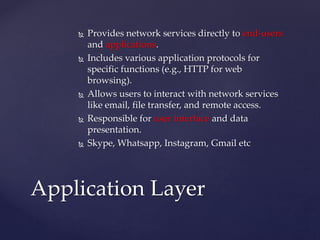
 Provides network services directly to end-users
and applications.
 Includes various application protocols for
specific functions (e.g., HTTP for web
browsing).
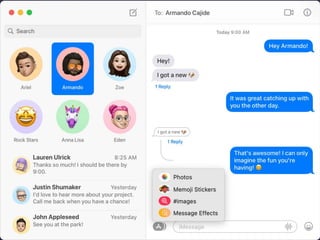
 Allows users to interact with network services
like email, file transfer, and remote access.
 Responsible for user interface and data
presentation.
 Skype, Whatsapp, Instagram, Gmail etc
Application Layer
 FTP:
 File Transfer protocol: use to transfer files
 SMTP:
 Simple mail transfer protocol: use to forward
email from one device to another.
 HTTP or HTTPS:
 hyperText Transport Protocol Secured: it is used
in connecting server and client.
Protocols in Application
Layer
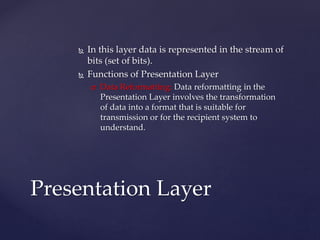
 In this layer data is represented in the stream of
bits (set of bits).
 Functions of Presentation Layer
 Data Reformatting: Data reformatting in the
Presentation Layer involves the transformation
of data into a format that is suitable for
transmission or for the recipient system to
understand.
Presentation Layer
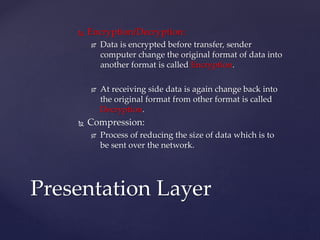
 Encryption/Decryption:
 Data is encrypted before transfer, sender
computer change the original format of data into
another format is called Encryption.
 At receiving side data is again change back into
the original format from other format is called
Decryption.
 Compression:
 Process of reducing the size of data which is to
be sent over the network.
Presentation Layer
 Session is an exchange of messages between
computer.
 Establishes, Control and manages user
connection.
 It synchronize the data transfer with
checkpoints.
 It check the data after each checkpoints. If
failure occurs, it retransmit data from last check
point.
Session Layer
 If the checkpoint is set to 10 pages. A computer
sending 100 pages. If a failure occurs at 55
pages. It will retransmit data from page 51,
because last checkpoint was set to page 50.
Session Layer
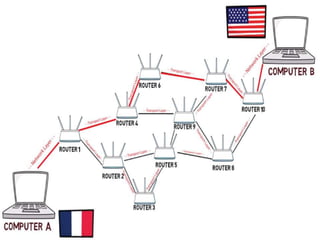
 Is responsible for end-to-end connection
between two devices.
 Take data from session layer and divide them
into smaller chunks, these chunks called
“packets”.
 In transport layer, the process of dividing data
in the form of small packets to transfer data
effectively is called “Packet Switching”
 These packets are again reassembled at
receiving side and become a file.
 The TCP works in the Transport layer.
Transport Layer
1st year OSI Model .pptx

1st year OSI Model .pptx

  • 1.
    { OSI MODEL Open SystemInterconnection 1st Year ICS: Chapter 2
  • 2.
  • 3.
     A conceptualframework  Standardizes and describes the functions of a telecommunications or networking system.  It divides network communication into seven distinct layers  Each responsible for specific functions and protocols. Introduction of OSI PART 1
  • 4.
     It wasdeveloped by International Standard Organization(ISO) in 1983.  It was develop to allow different network to communication with each other even their architecture are different. Introduction of OSI (Cont…)
  • 5.
  • 7.
     Physical toApplication  Please Do Not Throw Sausage Pizza Away.  Please Do Not Teach Stupid People Acronyms  Application to Physical  All Pros Search Top Notch Donut Places  A Penguin Said That Nobody Drinks Pepsi Way to remember names of layer
  • 8.
     Provides networkservices directly to end-users and applications.  Includes various application protocols for specific functions (e.g., HTTP for web browsing).  Allows users to interact with network services like email, file transfer, and remote access.  Responsible for user interface and data presentation.  Skype, Whatsapp, Instagram, Gmail etc Application Layer
  • 9.
     FTP:  FileTransfer protocol: use to transfer files  SMTP:  Simple mail transfer protocol: use to forward email from one device to another.  HTTP or HTTPS:  hyperText Transport Protocol Secured: it is used in connecting server and client. Protocols in Application Layer
  • 11.
     In thislayer data is represented in the stream of bits (set of bits).  Functions of Presentation Layer  Data Reformatting: Data reformatting in the Presentation Layer involves the transformation of data into a format that is suitable for transmission or for the recipient system to understand. Presentation Layer
  • 12.
     Encryption/Decryption:  Datais encrypted before transfer, sender computer change the original format of data into another format is called Encryption.  At receiving side data is again change back into the original format from other format is called Decryption.  Compression:  Process of reducing the size of data which is to be sent over the network. Presentation Layer
  • 13.
     Session isan exchange of messages between computer.  Establishes, Control and manages user connection.  It synchronize the data transfer with checkpoints.  It check the data after each checkpoints. If failure occurs, it retransmit data from last check point. Session Layer
  • 14.
     If thecheckpoint is set to 10 pages. A computer sending 100 pages. If a failure occurs at 55 pages. It will retransmit data from page 51, because last checkpoint was set to page 50. Session Layer
  • 15.
     Is responsiblefor end-to-end connection between two devices.  Take data from session layer and divide them into smaller chunks, these chunks called “packets”.  In transport layer, the process of dividing data in the form of small packets to transfer data effectively is called “Packet Switching”  These packets are again reassembled at receiving side and become a file.  The TCP works in the Transport layer. Transport Layer