The Challenges of 
Implementing Health IT 
Margaret Hoisington
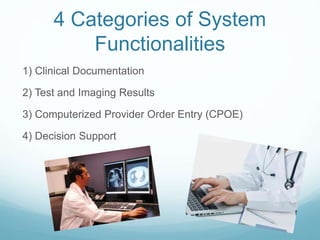
4 Categories of System 
Functionalities 
1) Clinical Documentation 
2) Test and Imaging Results 
3) Computerized Provider Order Entry (CPOE) 
4) Decision Support
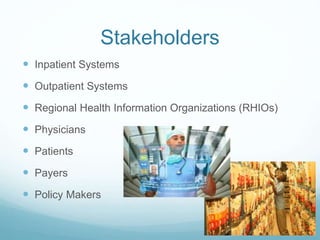
Stakeholders 
 Inpatient Systems 
 Outpatient Systems 
 Regional Health Information Organizations (RHIOs) 
 Physicians 
 Patients 
 Payers 
 Policy Makers
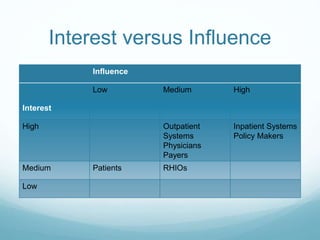
Interest versus Influence 
Influence 
Low Medium High 
Interest 
High Outpatient 
Systems 
Physicians 
Payers 
Inpatient Systems 
Policy Makers 
Medium Patients RHIOs 
Low
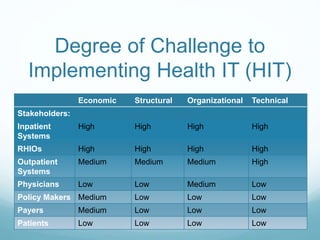
Degree of Challenge to 
Implementing Health IT (HIT) 
Economic Structural Organizational Technical 
Stakeholders: 
Inpatient 
Systems 
High High High High 
RHIOs High High High High 
Outpatient 
Medium Medium Medium High 
Systems 
Physicians Low Low Medium Low 
Policy Makers Medium Low Low Low 
Payers Medium Low Low Low 
Patients Low Low Low Low
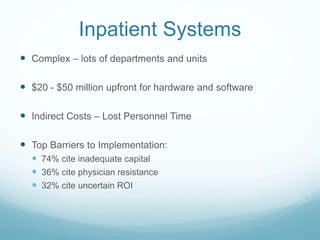
Inpatient Systems 
 Complex – lots of departments and units 
 $20 - $50 million upfront for hardware and software 
 Indirect Costs – Lost Personnel Time 
 Top Barriers to Implementation: 
 74% cite inadequate capital 
 36% cite physician resistance 
 32% cite uncertain ROI
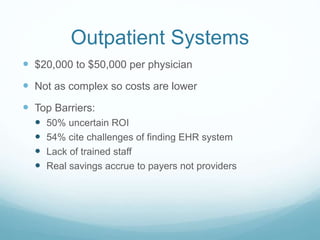
Outpatient Systems 
 $20,000 to $50,000 per physician 
 Not as complex so costs are lower 
 Top Barriers: 
 50% uncertain ROI 
 54% cite challenges of finding EHR system 
 Lack of trained staff 
 Real savings accrue to payers not providers
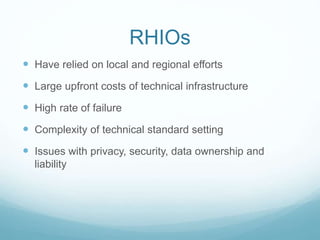
RHIOs 
 Have relied on local and regional efforts 
 Large upfront costs of technical infrastructure 
 High rate of failure 
 Complexity of technical standard setting 
 Issues with privacy, security, data ownership and 
liability
Physicians 
 Face longer hours and/or 
decreased efficiency from 
implementation 
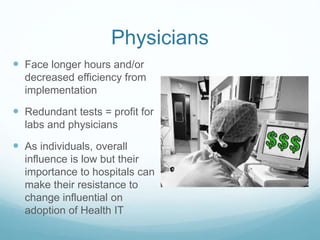
 Redundant tests = profit for 
labs and physicians 
 As individuals, overall 
influence is low but their 
importance to hospitals can 
make their resistance to 
change influential on 
adoption of Health IT
Patients, Payers and Policy Makers 
 Overall, present the least amount of challenge to 
implementation 
 Would incur least amount of cost and highest savings 
 Higher cost efficient and quality healthcare is in their 
best interest
Conclusion 
 Due to the complexity of a Health IT system with all the 
desired functionalities, it will be expensive 
 The exchange of information between different systems 
is an important part of making this system beneficial 
and cost-effective but also adds significantly to the 
upfront costs 
 Incentives and rewards need to be structured to 
support the objectives of Health IT 
 Standards need to be set and agreed upon for the 
system to function properly
The End

Challenges of Implementing Health IT

  • 1.
    The Challenges of Implementing Health IT Margaret Hoisington
  • 2.
    4 Categories ofSystem Functionalities 1) Clinical Documentation 2) Test and Imaging Results 3) Computerized Provider Order Entry (CPOE) 4) Decision Support
  • 3.
    Stakeholders  InpatientSystems  Outpatient Systems  Regional Health Information Organizations (RHIOs)  Physicians  Patients  Payers  Policy Makers
  • 4.
    Interest versus Influence Influence Low Medium High Interest High Outpatient Systems Physicians Payers Inpatient Systems Policy Makers Medium Patients RHIOs Low
  • 5.
    Degree of Challengeto Implementing Health IT (HIT) Economic Structural Organizational Technical Stakeholders: Inpatient Systems High High High High RHIOs High High High High Outpatient Medium Medium Medium High Systems Physicians Low Low Medium Low Policy Makers Medium Low Low Low Payers Medium Low Low Low Patients Low Low Low Low
  • 6.
    Inpatient Systems Complex – lots of departments and units  $20 - $50 million upfront for hardware and software  Indirect Costs – Lost Personnel Time  Top Barriers to Implementation:  74% cite inadequate capital  36% cite physician resistance  32% cite uncertain ROI
  • 7.
    Outpatient Systems $20,000 to $50,000 per physician  Not as complex so costs are lower  Top Barriers:  50% uncertain ROI  54% cite challenges of finding EHR system  Lack of trained staff  Real savings accrue to payers not providers
  • 8.
    RHIOs  Haverelied on local and regional efforts  Large upfront costs of technical infrastructure  High rate of failure  Complexity of technical standard setting  Issues with privacy, security, data ownership and liability
  • 9.
    Physicians  Facelonger hours and/or decreased efficiency from implementation  Redundant tests = profit for labs and physicians  As individuals, overall influence is low but their importance to hospitals can make their resistance to change influential on adoption of Health IT
  • 10.
    Patients, Payers andPolicy Makers  Overall, present the least amount of challenge to implementation  Would incur least amount of cost and highest savings  Higher cost efficient and quality healthcare is in their best interest
  • 11.
    Conclusion  Dueto the complexity of a Health IT system with all the desired functionalities, it will be expensive  The exchange of information between different systems is an important part of making this system beneficial and cost-effective but also adds significantly to the upfront costs  Incentives and rewards need to be structured to support the objectives of Health IT  Standards need to be set and agreed upon for the system to function properly
  • 12.