High Performance
Collaboration
Leadership, Teamwork, and
Negotiation
The Leader Growth Mindset
Natasha R. Williams- Centene Corporation
Lymari Castro- National Security Agency (NSA)
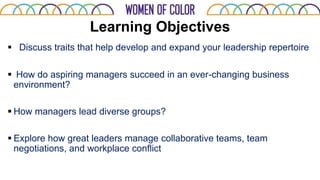
Learning Objectives
 Discuss traits that help develop and expand your leadership repertoire
 How do aspiring managers succeed in an ever-changing business
environment?
 How managers lead diverse groups?
 Explore how great leaders manage collaborative teams, team
negotiations, and workplace conflict
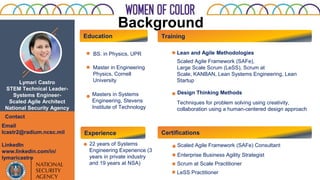
Background
Lymari Castro
STEM Technical Leader-
Systems Engineer-
Scaled Agile Architect
National Security Agency
Contact
Training
BS. in Physics, UPR Lean and Agile Methodologies
Scaled Agile Framework (SAFe),
Large Scale Scrum (LeSS), Scrum at
Scale, KANBAN, Lean Systems Engineering, Lean
Startup
Design Thinking Methods
Techniques for problem solving using creativity,
collaboration using a human-centered design approach
Email
lcastr2@radium.ncsc.mil
LinkedIn
www.linkedin.com/in/
lymaricastro
Master in Engineering
Physics, Cornell
University
Masters in Systems
Engineering, Stevens
Institute of Technology
22 years of Systems
Engineering Experience (3
years in private industry
and 19 years at NSA)
Experience
Education
Certifications
Scaled Agile Framework (SAFe) Consultant
Enterprise Business Agility Strategist
Scrum at Scale Practitioner
LeSS Practitioner
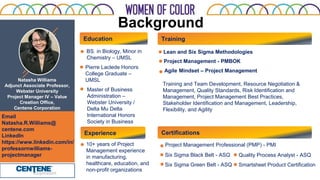
Background
Natasha Williams
Adjunct Associate Professor,
Webster University
Project Manager IV – Value
Creation Office,
Centene Corporation
Training
BS. in Biology, Minor in
Chemistry – UMSL
Lean and Six Sigma Methodologies
Agile Mindset – Project Management
Email
Natasha.R.Williams@
centene.com
LinkedIn
https://www.linkedin.com/in/
professornwilliams-
projectmanager
Master of Business
Administration –
Webster University /
Delta Mu Delta
International Honors
Society in Business
10+ years of Project
Management experience
in manufacturing,
healthcare, education, and
non-profit organizations
Experience
Education
Certifications
Project Management Professional (PMP) - PMI
Six Sigma Green Belt - ASQ Smartsheet Product Certification
Pierre Laclede Honors
College Graduate –
UMSL
Six Sigma Black Belt - ASQ Quality Process Analyst - ASQ
Project Management - PMBOK
Training and Team Development, Resource Negotiation &
Management, Quality Standards, Risk Identification and
Management, Project Management Best Practices,
Stakeholder Identification and Management, Leadership,
Flexibility, and Agility
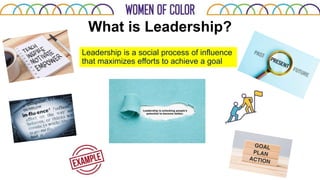
What is Leadership?
Leadership is a social process of influence
that maximizes efforts to achieve a goal
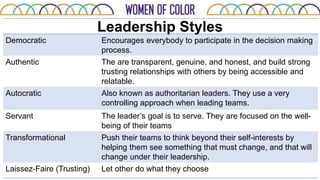
Leadership Styles
Democratic Encourages everybody to participate in the decision making
process.
Authentic The are transparent, genuine, and honest, and build strong
trusting relationships with others by being accessible and
relatable.
Autocratic Also known as authoritarian leaders. They use a very
controlling approach when leading teams.
Servant The leader’s goal is to serve. They are focused on the well-
being of their teams
Transformational Push their teams to think beyond their self-interests by
helping them see something that must change, and that will
change under their leadership.
Laissez-Faire (Trusting) Let other do what they choose
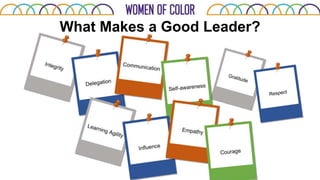
What Makes a Good Leader?
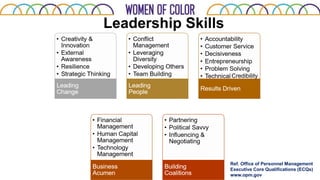
Leadership Skills
Ref. Office of Personnel Management
Executive Core Qualifications (ECQs)
www.opm.gov
Credibility
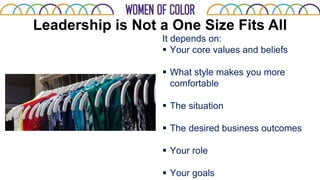
Leadership is Not a One Size Fits All
It depends on:
 Your core values and beliefs
 What style makes you more
comfortable
 The situation
 The desired business outcomes
 Your role
 Your goals
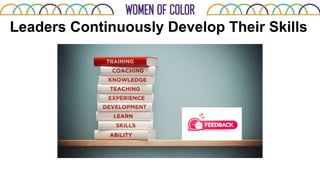
Leaders Continuously Develop Their Skills
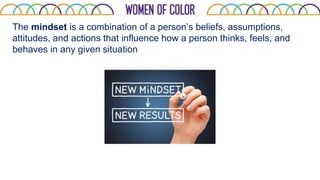
The mindset is a combination of a person’s beliefs, assumptions,
attitudes, and actions that influence how a person thinks, feels, and
behaves in any given situation
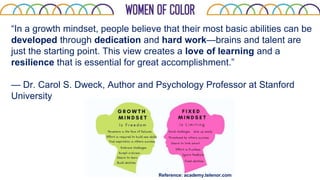
“In a growth mindset, people believe that their most basic abilities can be
developed through dedication and hard work—brains and talent are
just the starting point. This view creates a love of learning and a
resilience that is essential for great accomplishment.”
— Dr. Carol S. Dweck, Author and Psychology Professor at Stanford
University
Reference: academy.telenor.com
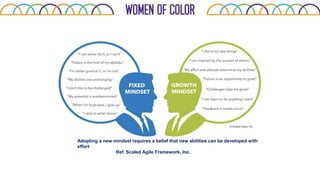
Ref. Scaled Agile Framework, Inc.
Adopting a new mindset requires a belief that new abilities can be developed with
effort
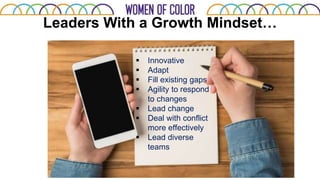
Leaders With a Growth Mindset…
 Innovative
 Adapt
 Fill existing gaps
 Agility to respond
to changes
 Lead change
 Deal with conflict
more effectively
 Lead diverse
teams
How to Develop a Growth Mindset?
 Conferences
 Training
 Reading
 Coaching
 Professional development programs
 Rotational Assignments
 Stretch Assignments (Out of comfort zone assignments)
 External Assignments
 Lessons Learned
 Feedback (from team, 360 assessments, performance assessments)
 Work styles assessments
Poll: What things are you currently
doing that exhibit a growth mindset?
Your mindset impacts how you lead your
teams, how you make decisions, how
things get done, and how your team
behaves!
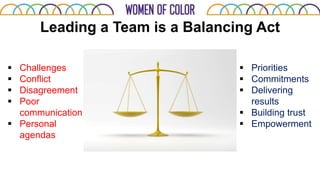
Leading a Team is a Balancing Act
 Challenges
 Conflict
 Disagreement
 Poor
communication
 Personal
agendas
 Priorities
 Commitments
 Delivering
results
 Building trust
 Empowerment
Reasons for Low Team Morale
 Inconsistency
 Micro-management
 Not enough development of team skills
 Unclear priorities
 Not clear processes
 Failing to provide feedback
 Lack of empowerment
 Lack of creativity and innovation
 Not feeling valued
 Lack of trust
 Failing to recognize the work of team members
 Not removing impediments or roadblocks in a timely manner
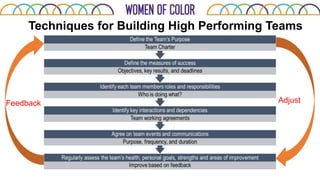
Techniques for Building High Performing Teams
Feedback Adjust
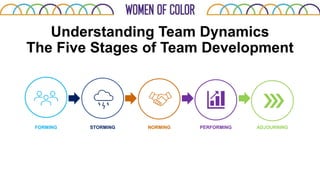
Understanding Team Dynamics
The Five Stages of Team Development
FORMING STORMING NORMING PERFORMING ADJOURNING
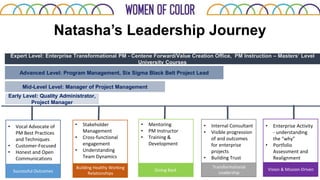
Natasha’s Leadership Journey
Early Level: Quality Administrator,
Project Manager
Mid-Level Level: Manager of Project Management
Advanced Level: Program Management, Six Sigma Black Belt Project Lead
Expert Level: Enterprise Transformational PM - Centene Forward/Value Creation Office, PM Instruction – Masters’ Level
University Courses
• Vocal Advocate of
PM Best Practices
and Techniques
• Customer-Focused
• Honest and Open
Communications
Team Dynamics
Successful Outcomes
• Stakeholder
Management
• Cross-functional
engagement
• Understanding
Team Dynamics
Building Healthy Working
Relationships
• Mentoring
• PM Instructor
• Training &
Development
Giving Back
• Internal Consultant
• Visible progression
of and outcomes
for enterprise
projects
• Building Trust
Transformational
Leadership
• Enterprise Activity
- understanding
the “why”
• Portfolio
Assessment and
Realignment
Vision & Mission-Driven
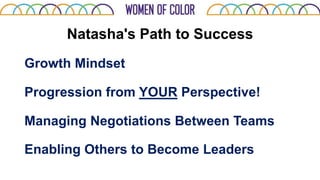
Growth Mindset
Progression from YOUR Perspective!
Managing Negotiations Between Teams
Enabling Others to Become Leaders
Natasha's Path to Success
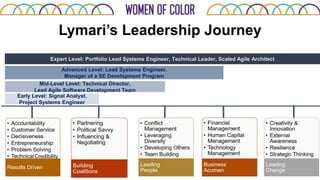
Lymari’s Leadership Journey
Early Level: Signal Analyst,
Project Systems Engineer
Mid-Level Level: Technical Director,
Lead Agile Software Development Team
Advanced Level: Lead Systems Engineer,
Manager of a SE Development Program
Expert Level: Portfolio Lead Systems Engineer, Technical Leader, Scaled Agile Architect
Credibility
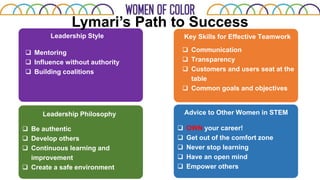
Leadership Style
 Mentoring
 Influence without authority
 Building coalitions
Leadership Philosophy
 Be authentic
 Develop others
 Continuous learning and
improvement
 Create a safe environment
Key Skills for Effective Teamwork
 Communication
 Transparency
 Customers and users seat at the
table
 Common goals and objectives
Advice to Other Women in STEM
 OWN your career!
 Get out of the comfort zone
 Never stop learning
 Have an open mind
 Empower others
Lymari’s Path to Success
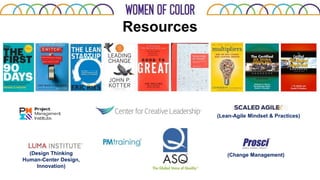
Resources
(Design Thinking
Human-Center Design,
Innovation)
(Lean-Agile Mindset & Practices)
(Change Management)
What have I learned today that I can apply next
week with my team?
What I would like to learn as I continue to grow
and develop myself as a leader?
Self-Reflection
Lymari Castro
National Security Agency
lcastr2@radium.ncsc.mil
www.linkedin.com/in/
lymaricastro
Natasha R. Williams
Centene Corporation
Natasha.R.Williams@centene.com
www.linkedin.com/in/
professornwilliams-projectmanager

1109 High-Performance Collaboration

  • 2.
    High Performance Collaboration Leadership, Teamwork,and Negotiation The Leader Growth Mindset Natasha R. Williams- Centene Corporation Lymari Castro- National Security Agency (NSA)
  • 3.
    Learning Objectives  Discusstraits that help develop and expand your leadership repertoire  How do aspiring managers succeed in an ever-changing business environment?  How managers lead diverse groups?  Explore how great leaders manage collaborative teams, team negotiations, and workplace conflict
  • 4.
    Background Lymari Castro STEM TechnicalLeader- Systems Engineer- Scaled Agile Architect National Security Agency Contact Training BS. in Physics, UPR Lean and Agile Methodologies Scaled Agile Framework (SAFe), Large Scale Scrum (LeSS), Scrum at Scale, KANBAN, Lean Systems Engineering, Lean Startup Design Thinking Methods Techniques for problem solving using creativity, collaboration using a human-centered design approach Email lcastr2@radium.ncsc.mil LinkedIn www.linkedin.com/in/ lymaricastro Master in Engineering Physics, Cornell University Masters in Systems Engineering, Stevens Institute of Technology 22 years of Systems Engineering Experience (3 years in private industry and 19 years at NSA) Experience Education Certifications Scaled Agile Framework (SAFe) Consultant Enterprise Business Agility Strategist Scrum at Scale Practitioner LeSS Practitioner
  • 5.
    Background Natasha Williams Adjunct AssociateProfessor, Webster University Project Manager IV – Value Creation Office, Centene Corporation Training BS. in Biology, Minor in Chemistry – UMSL Lean and Six Sigma Methodologies Agile Mindset – Project Management Email Natasha.R.Williams@ centene.com LinkedIn https://www.linkedin.com/in/ professornwilliams- projectmanager Master of Business Administration – Webster University / Delta Mu Delta International Honors Society in Business 10+ years of Project Management experience in manufacturing, healthcare, education, and non-profit organizations Experience Education Certifications Project Management Professional (PMP) - PMI Six Sigma Green Belt - ASQ Smartsheet Product Certification Pierre Laclede Honors College Graduate – UMSL Six Sigma Black Belt - ASQ Quality Process Analyst - ASQ Project Management - PMBOK Training and Team Development, Resource Negotiation & Management, Quality Standards, Risk Identification and Management, Project Management Best Practices, Stakeholder Identification and Management, Leadership, Flexibility, and Agility
  • 6.
    What is Leadership? Leadershipis a social process of influence that maximizes efforts to achieve a goal
  • 7.
    Leadership Styles Democratic Encourageseverybody to participate in the decision making process. Authentic The are transparent, genuine, and honest, and build strong trusting relationships with others by being accessible and relatable. Autocratic Also known as authoritarian leaders. They use a very controlling approach when leading teams. Servant The leader’s goal is to serve. They are focused on the well- being of their teams Transformational Push their teams to think beyond their self-interests by helping them see something that must change, and that will change under their leadership. Laissez-Faire (Trusting) Let other do what they choose
  • 8.
    What Makes aGood Leader?
  • 9.
    Leadership Skills Ref. Officeof Personnel Management Executive Core Qualifications (ECQs) www.opm.gov Credibility
  • 10.
    Leadership is Nota One Size Fits All It depends on:  Your core values and beliefs  What style makes you more comfortable  The situation  The desired business outcomes  Your role  Your goals
  • 11.
  • 12.
    The mindset isa combination of a person’s beliefs, assumptions, attitudes, and actions that influence how a person thinks, feels, and behaves in any given situation
  • 13.
    “In a growthmindset, people believe that their most basic abilities can be developed through dedication and hard work—brains and talent are just the starting point. This view creates a love of learning and a resilience that is essential for great accomplishment.” — Dr. Carol S. Dweck, Author and Psychology Professor at Stanford University Reference: academy.telenor.com
  • 14.
    Ref. Scaled AgileFramework, Inc. Adopting a new mindset requires a belief that new abilities can be developed with effort
  • 15.
    Leaders With aGrowth Mindset…  Innovative  Adapt  Fill existing gaps  Agility to respond to changes  Lead change  Deal with conflict more effectively  Lead diverse teams
  • 16.
    How to Developa Growth Mindset?  Conferences  Training  Reading  Coaching  Professional development programs  Rotational Assignments  Stretch Assignments (Out of comfort zone assignments)  External Assignments  Lessons Learned  Feedback (from team, 360 assessments, performance assessments)  Work styles assessments
  • 17.
    Poll: What thingsare you currently doing that exhibit a growth mindset?
  • 18.
    Your mindset impactshow you lead your teams, how you make decisions, how things get done, and how your team behaves!
  • 19.
    Leading a Teamis a Balancing Act  Challenges  Conflict  Disagreement  Poor communication  Personal agendas  Priorities  Commitments  Delivering results  Building trust  Empowerment
  • 20.
    Reasons for LowTeam Morale  Inconsistency  Micro-management  Not enough development of team skills  Unclear priorities  Not clear processes  Failing to provide feedback  Lack of empowerment  Lack of creativity and innovation  Not feeling valued  Lack of trust  Failing to recognize the work of team members  Not removing impediments or roadblocks in a timely manner
  • 21.
    Techniques for BuildingHigh Performing Teams Feedback Adjust
  • 22.
    Understanding Team Dynamics TheFive Stages of Team Development FORMING STORMING NORMING PERFORMING ADJOURNING
  • 23.
    Natasha’s Leadership Journey EarlyLevel: Quality Administrator, Project Manager Mid-Level Level: Manager of Project Management Advanced Level: Program Management, Six Sigma Black Belt Project Lead Expert Level: Enterprise Transformational PM - Centene Forward/Value Creation Office, PM Instruction – Masters’ Level University Courses • Vocal Advocate of PM Best Practices and Techniques • Customer-Focused • Honest and Open Communications Team Dynamics Successful Outcomes • Stakeholder Management • Cross-functional engagement • Understanding Team Dynamics Building Healthy Working Relationships • Mentoring • PM Instructor • Training & Development Giving Back • Internal Consultant • Visible progression of and outcomes for enterprise projects • Building Trust Transformational Leadership • Enterprise Activity - understanding the “why” • Portfolio Assessment and Realignment Vision & Mission-Driven
  • 24.
    Growth Mindset Progression fromYOUR Perspective! Managing Negotiations Between Teams Enabling Others to Become Leaders Natasha's Path to Success
  • 25.
    Lymari’s Leadership Journey EarlyLevel: Signal Analyst, Project Systems Engineer Mid-Level Level: Technical Director, Lead Agile Software Development Team Advanced Level: Lead Systems Engineer, Manager of a SE Development Program Expert Level: Portfolio Lead Systems Engineer, Technical Leader, Scaled Agile Architect Credibility
  • 26.
    Leadership Style  Mentoring Influence without authority  Building coalitions Leadership Philosophy  Be authentic  Develop others  Continuous learning and improvement  Create a safe environment Key Skills for Effective Teamwork  Communication  Transparency  Customers and users seat at the table  Common goals and objectives Advice to Other Women in STEM  OWN your career!  Get out of the comfort zone  Never stop learning  Have an open mind  Empower others Lymari’s Path to Success
  • 27.
  • 28.
    What have Ilearned today that I can apply next week with my team? What I would like to learn as I continue to grow and develop myself as a leader? Self-Reflection
  • 29.
    Lymari Castro National SecurityAgency lcastr2@radium.ncsc.mil www.linkedin.com/in/ lymaricastro Natasha R. Williams Centene Corporation Natasha.R.Williams@centene.com www.linkedin.com/in/ professornwilliams-projectmanager