Download to read offline

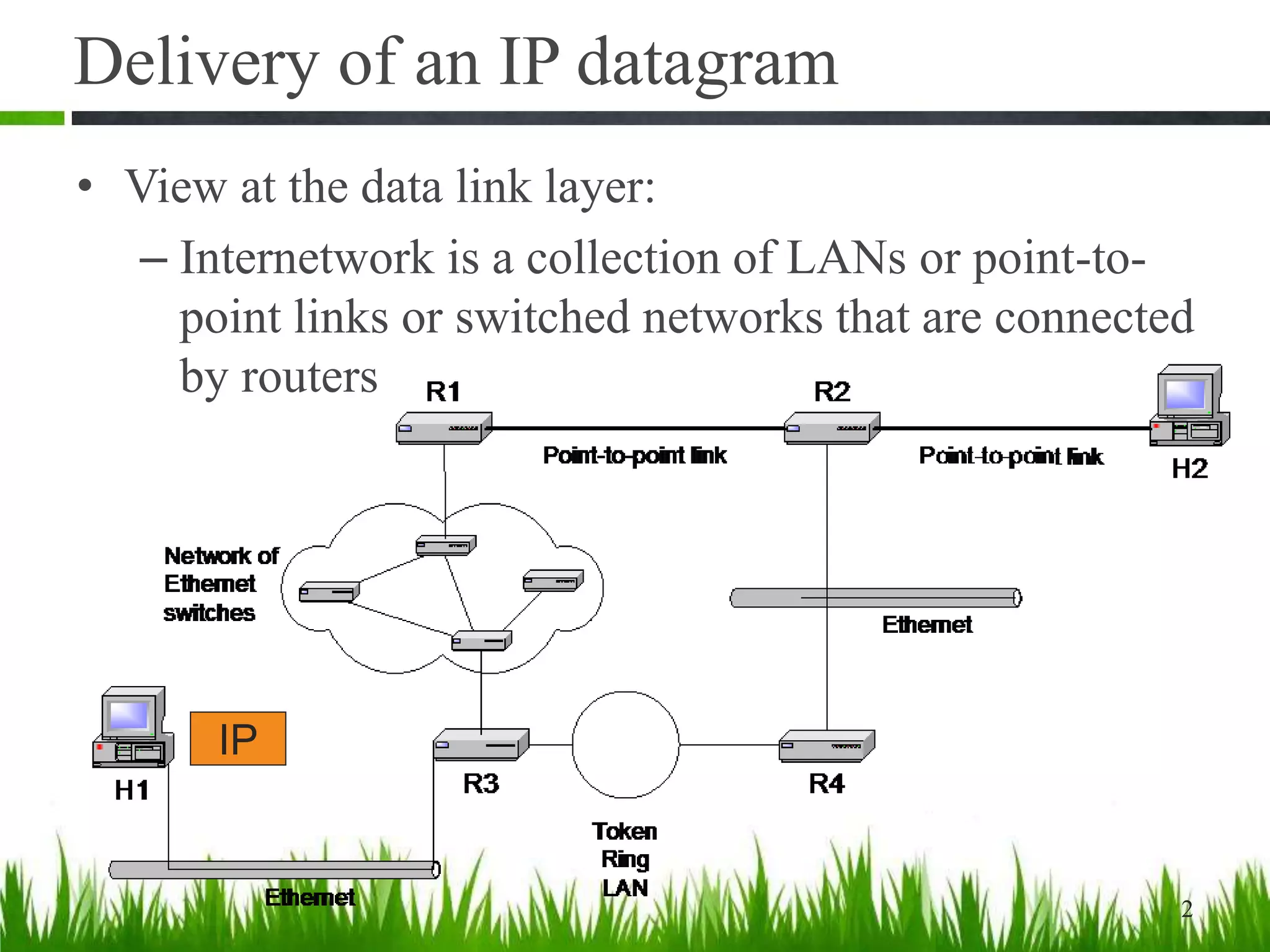
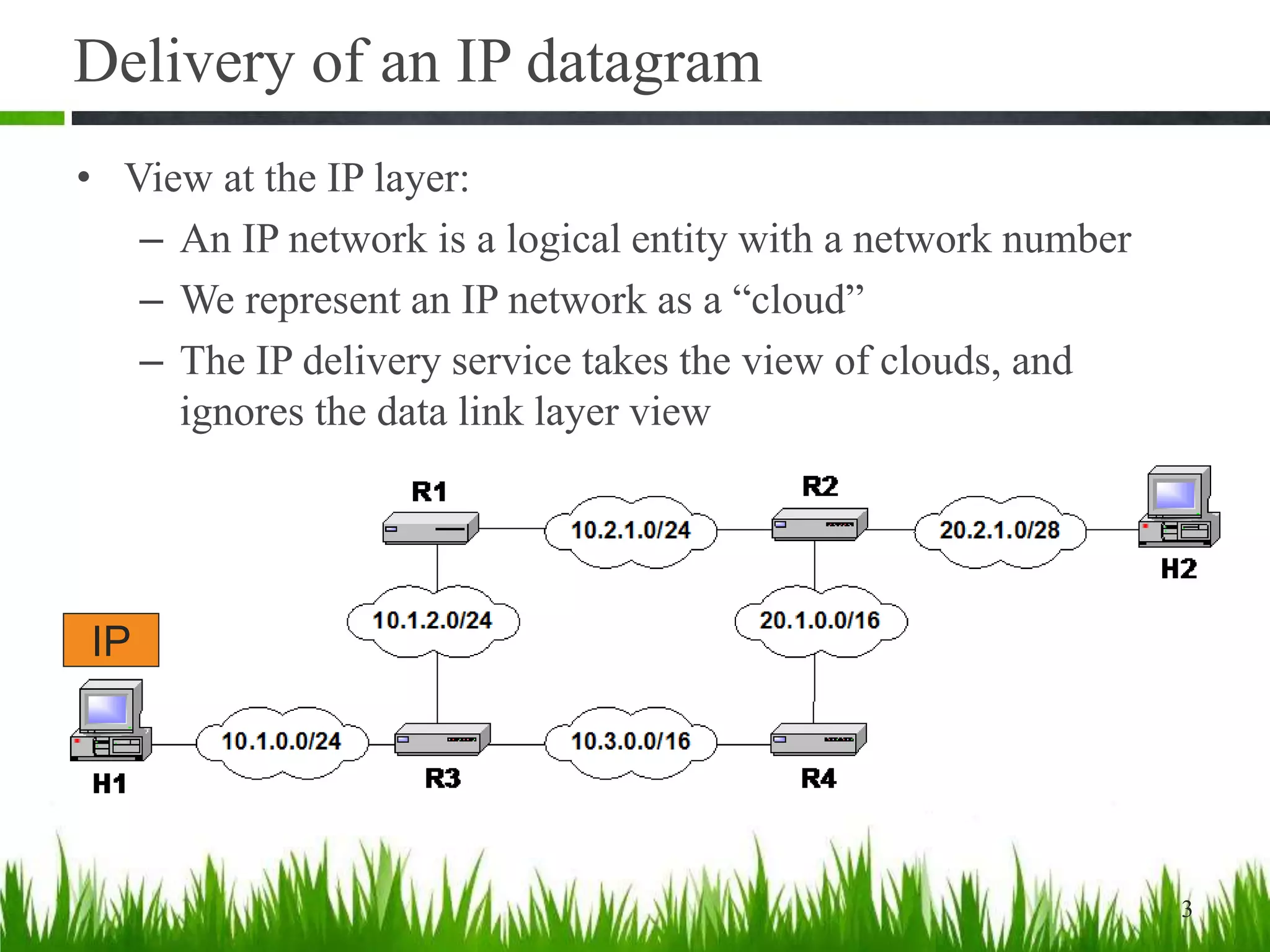
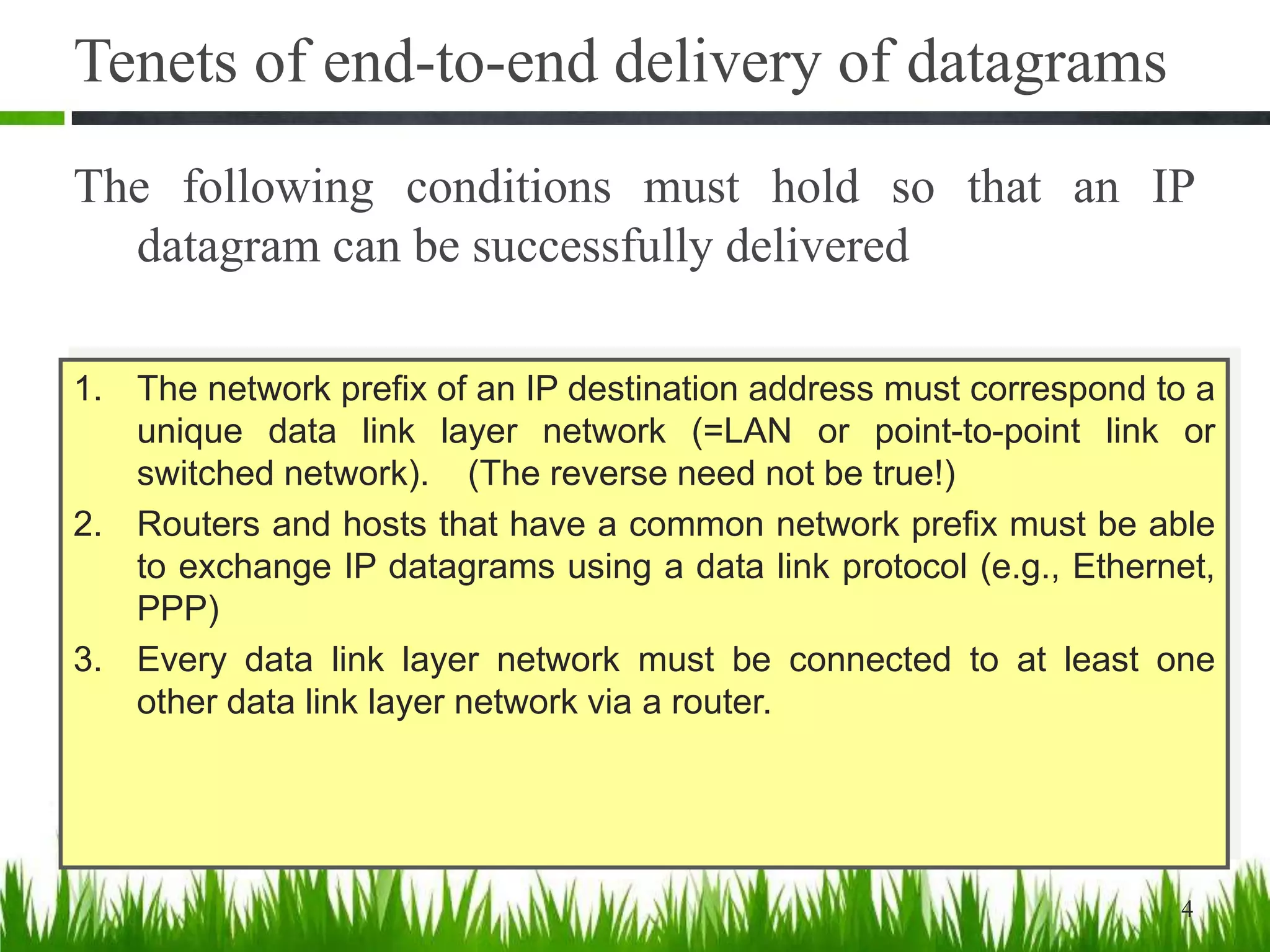
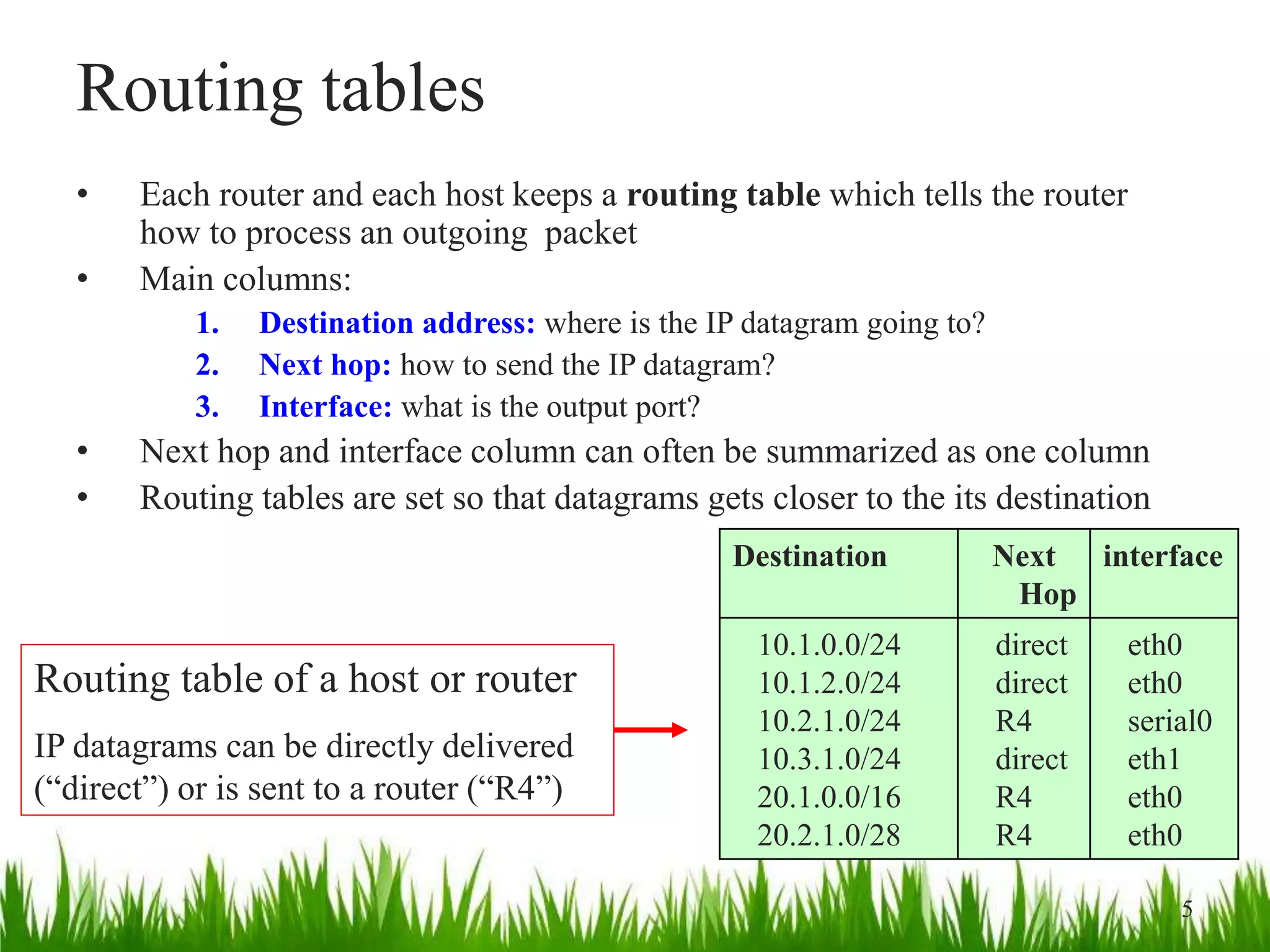
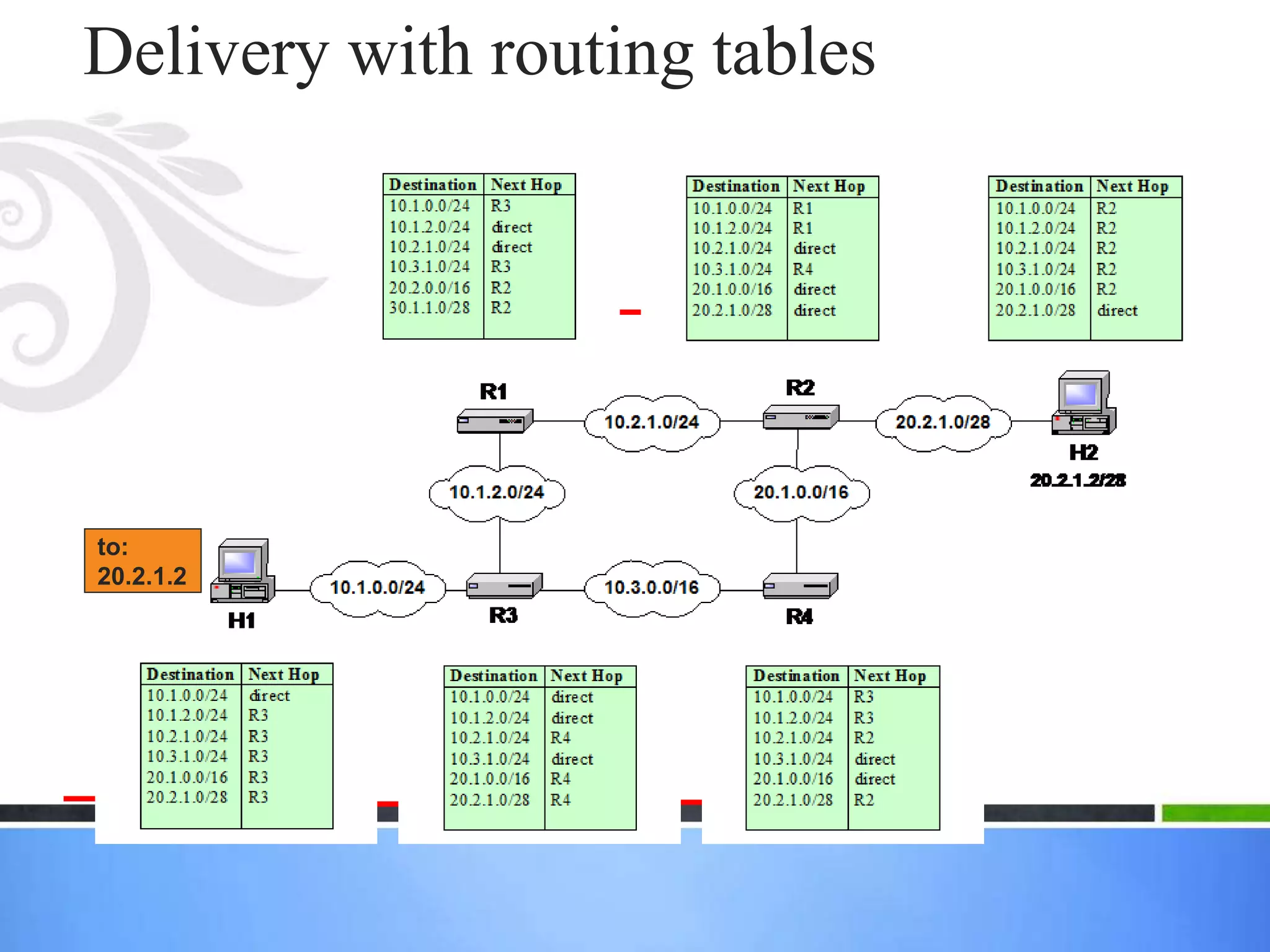
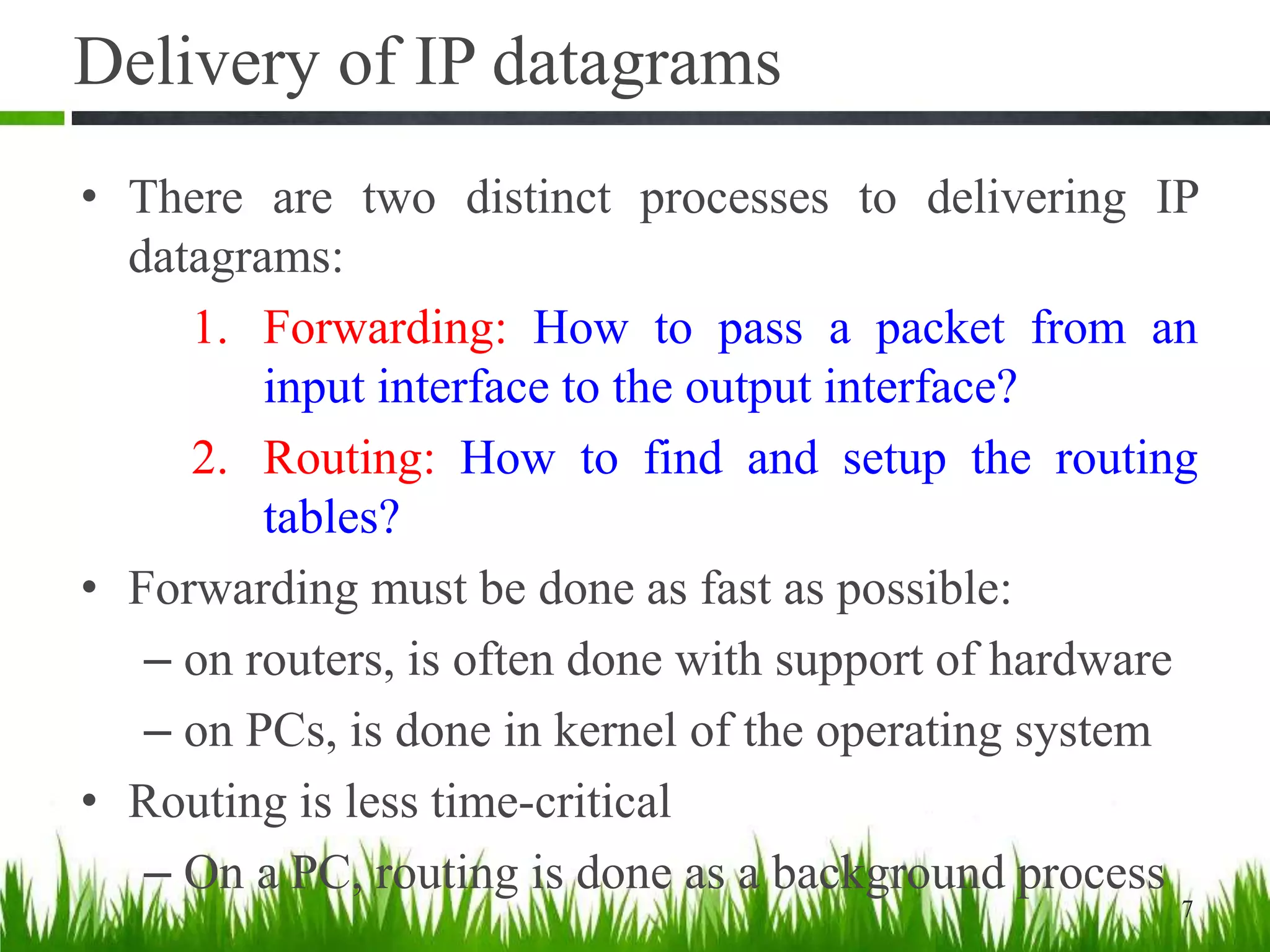
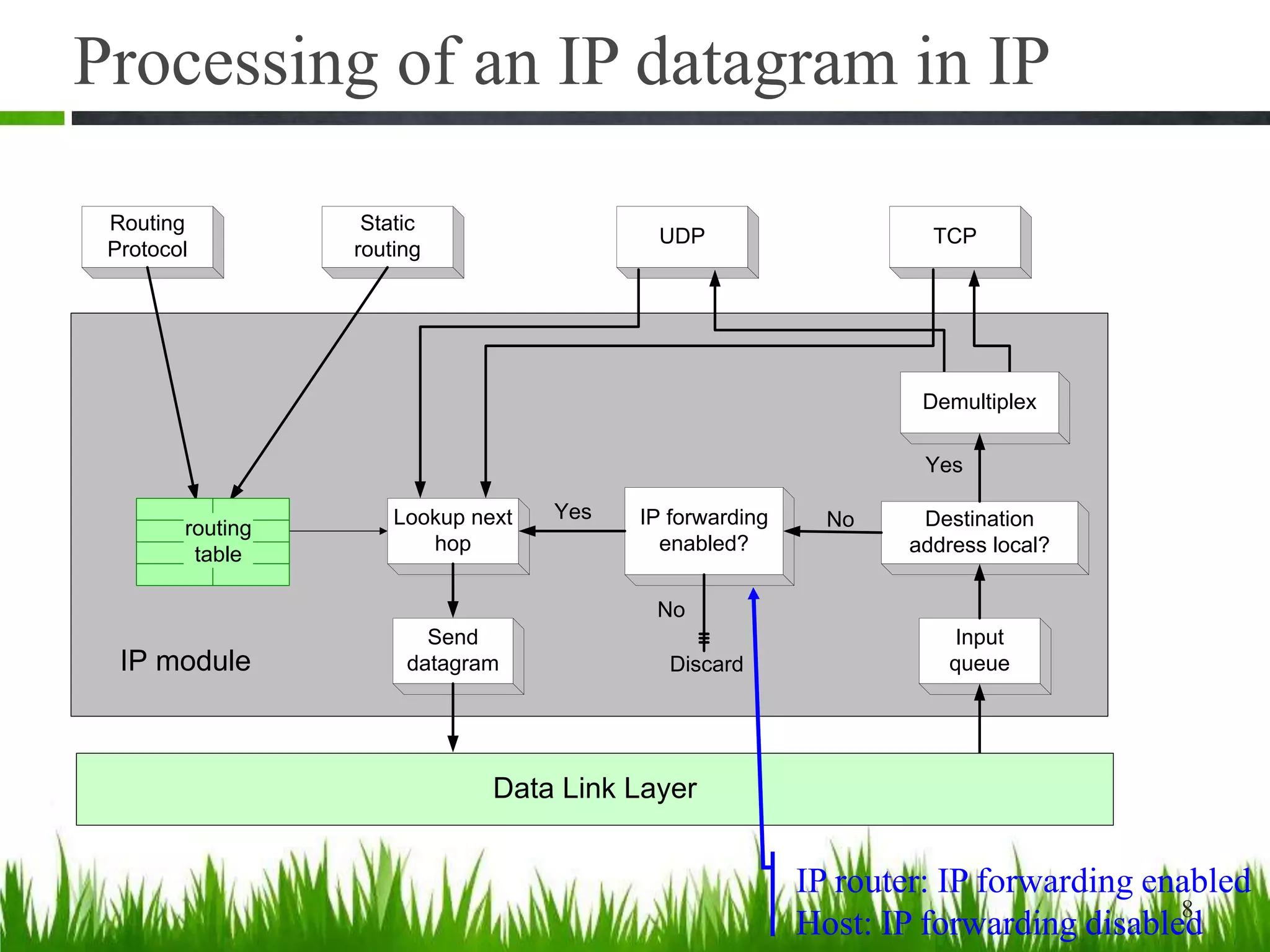
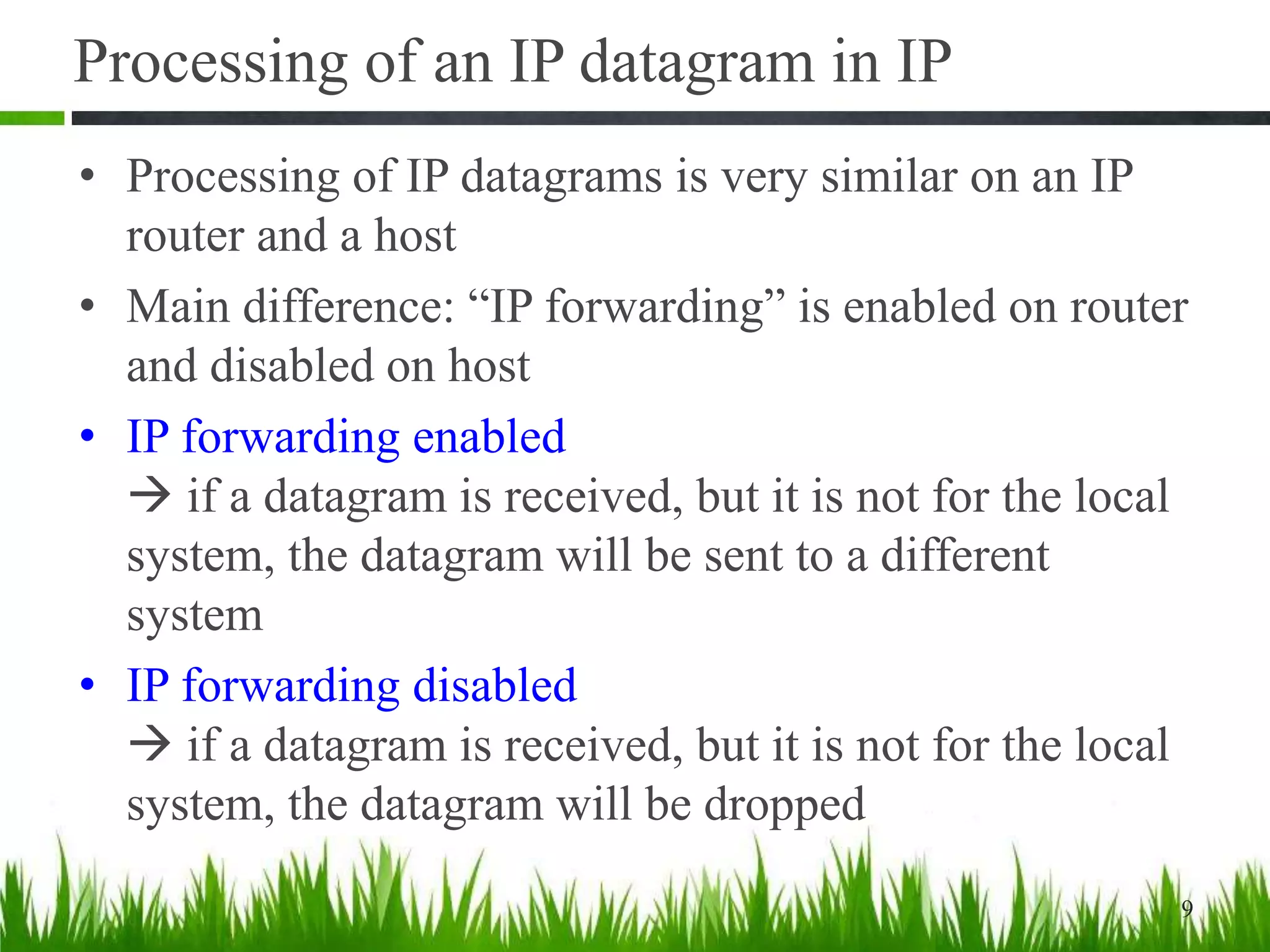
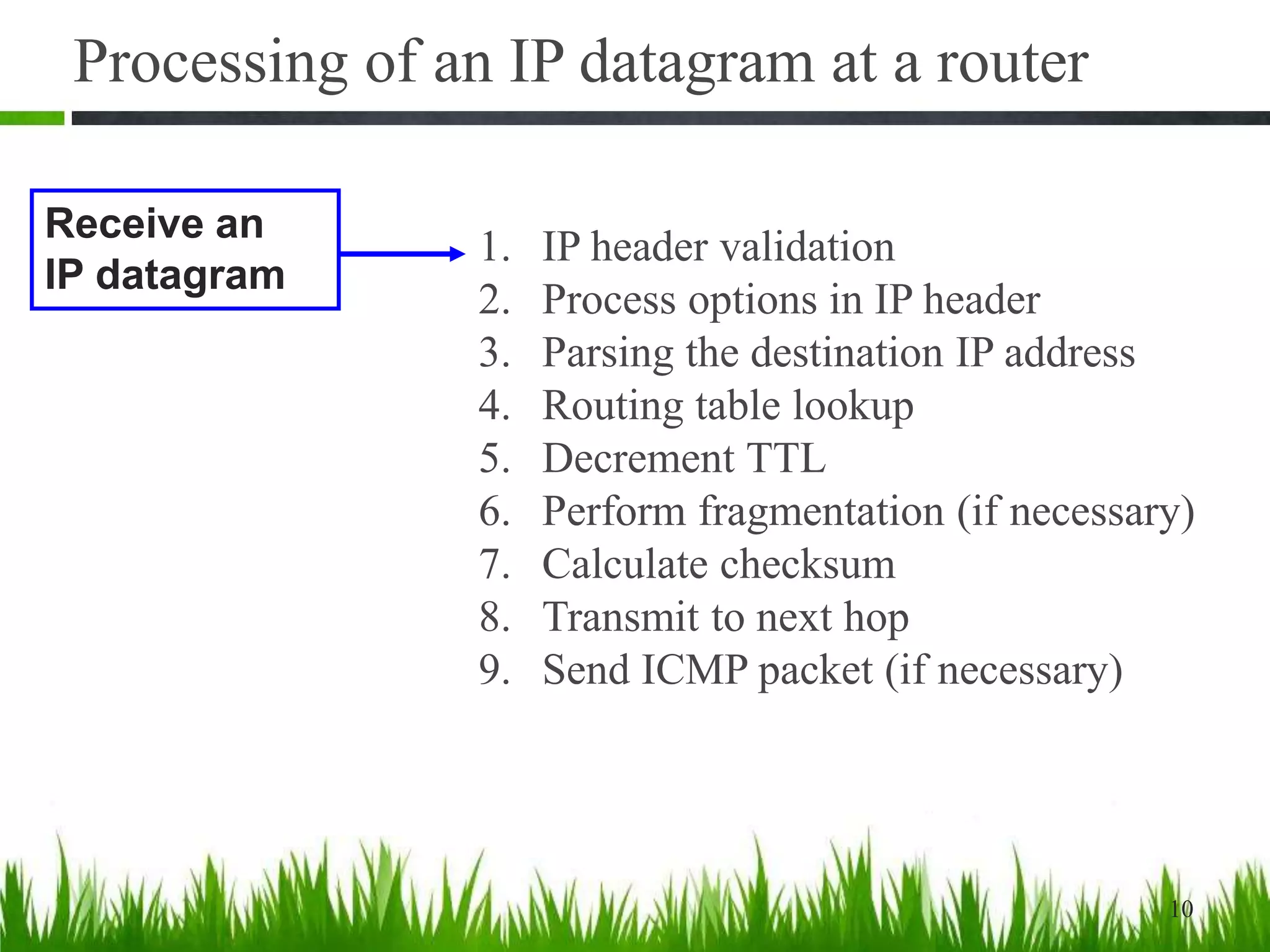
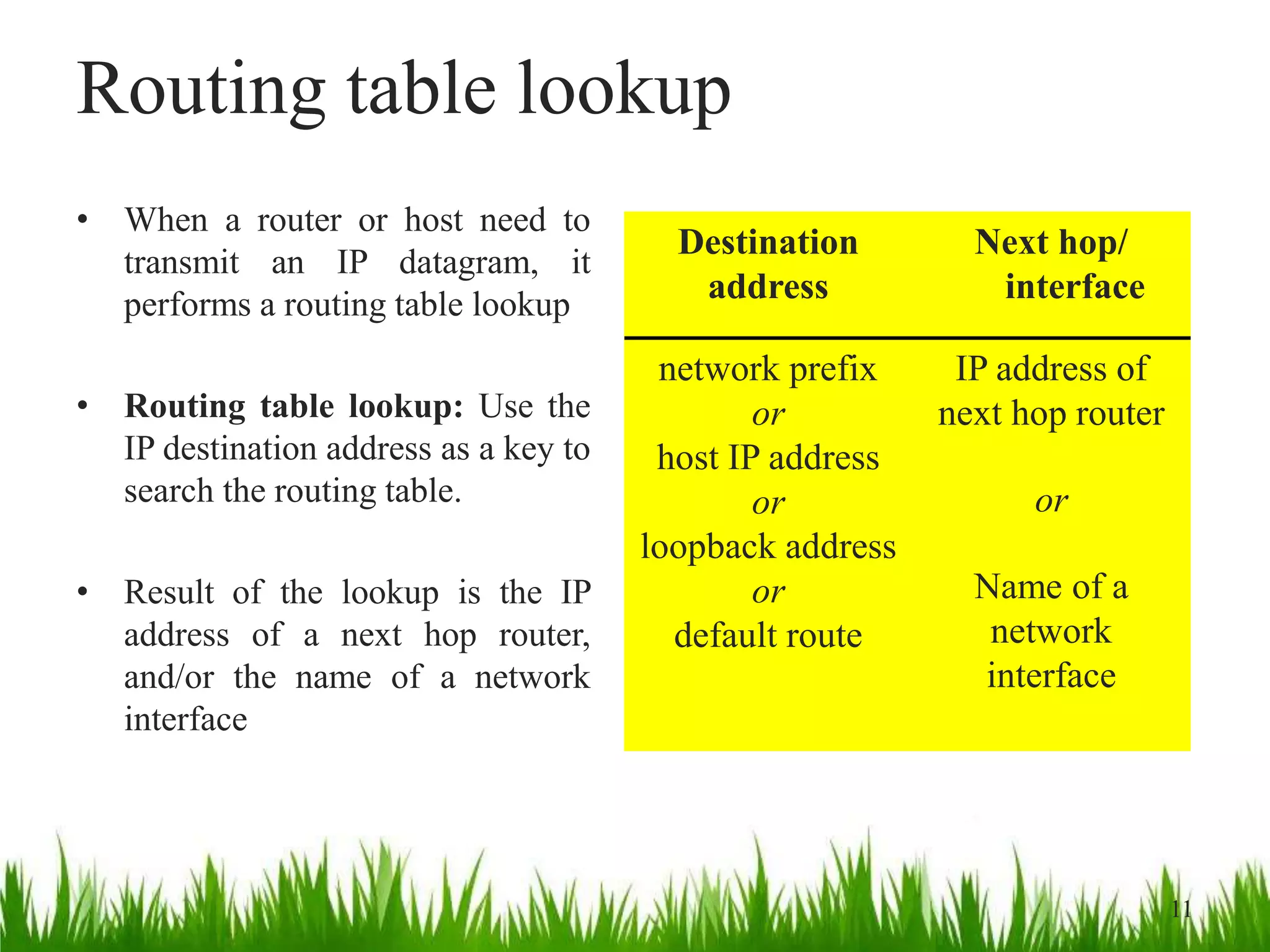
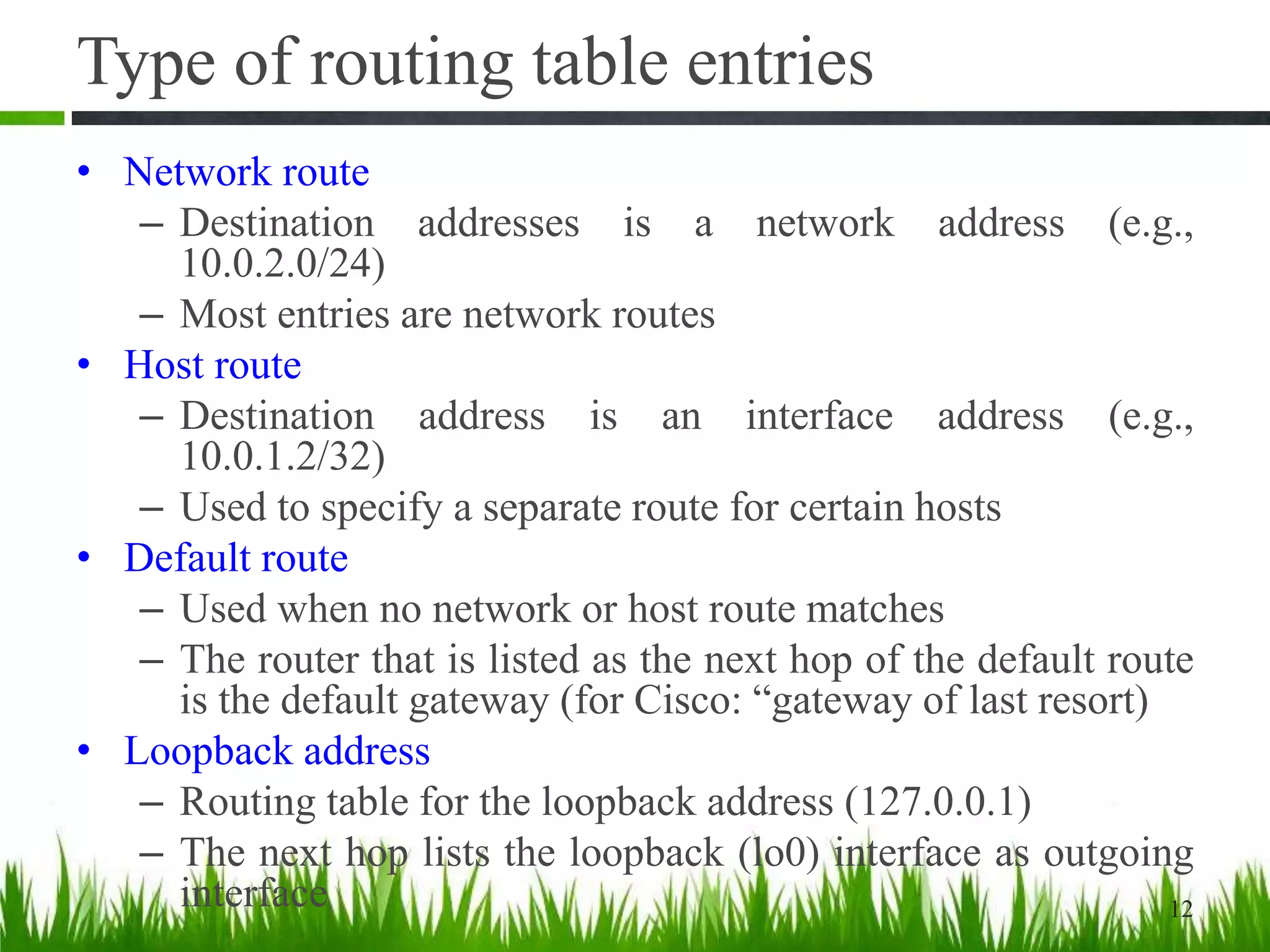
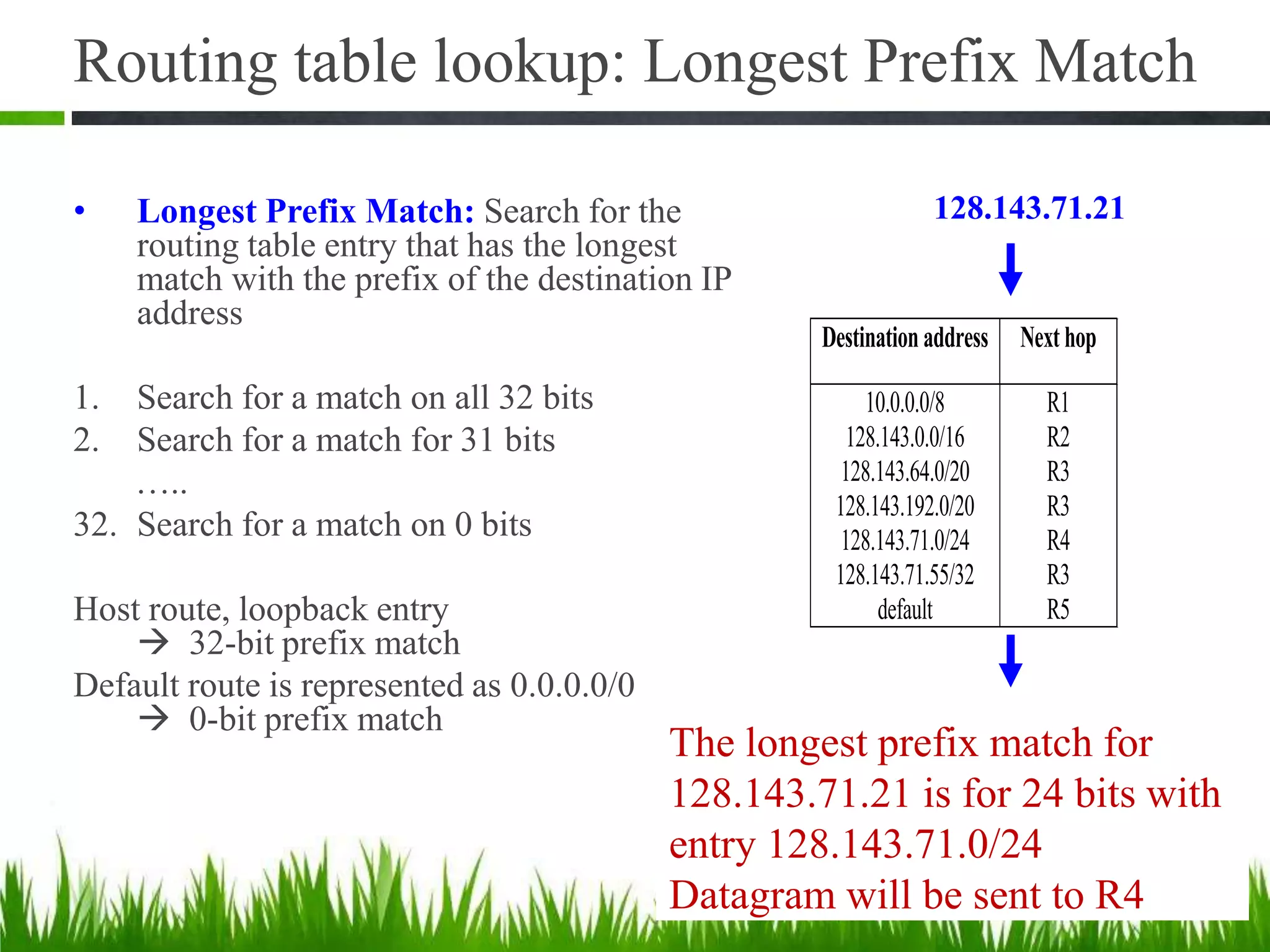
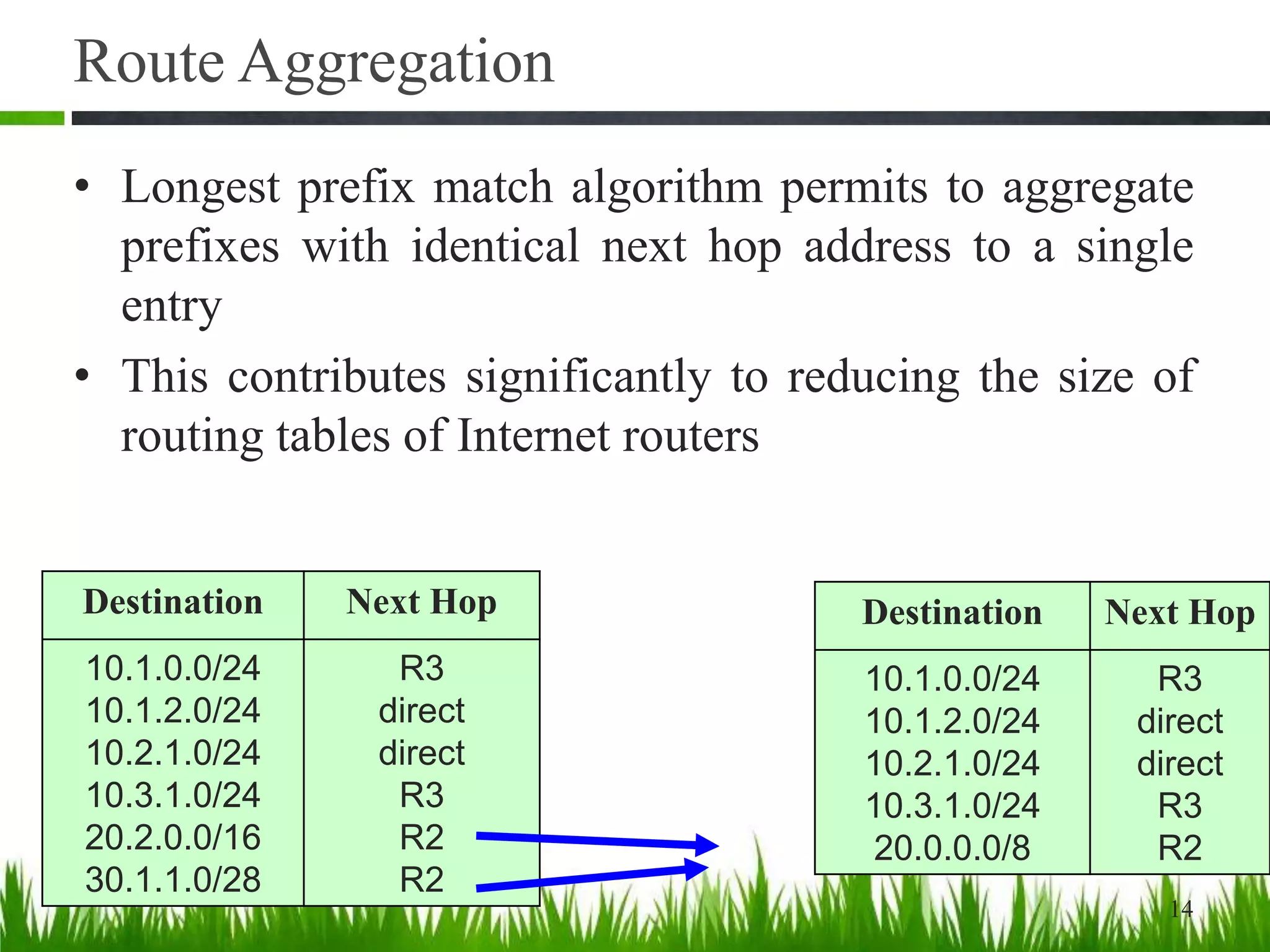
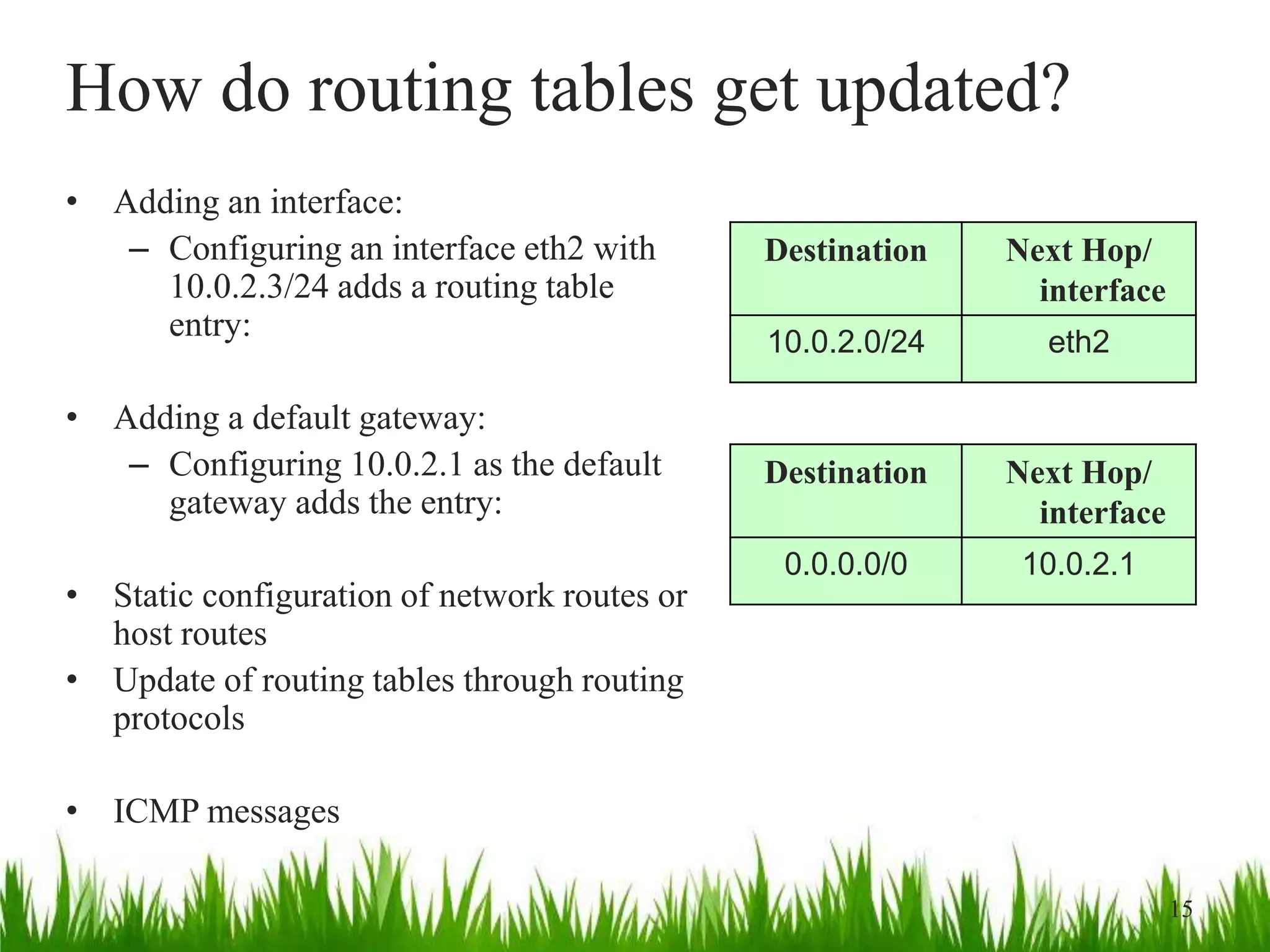
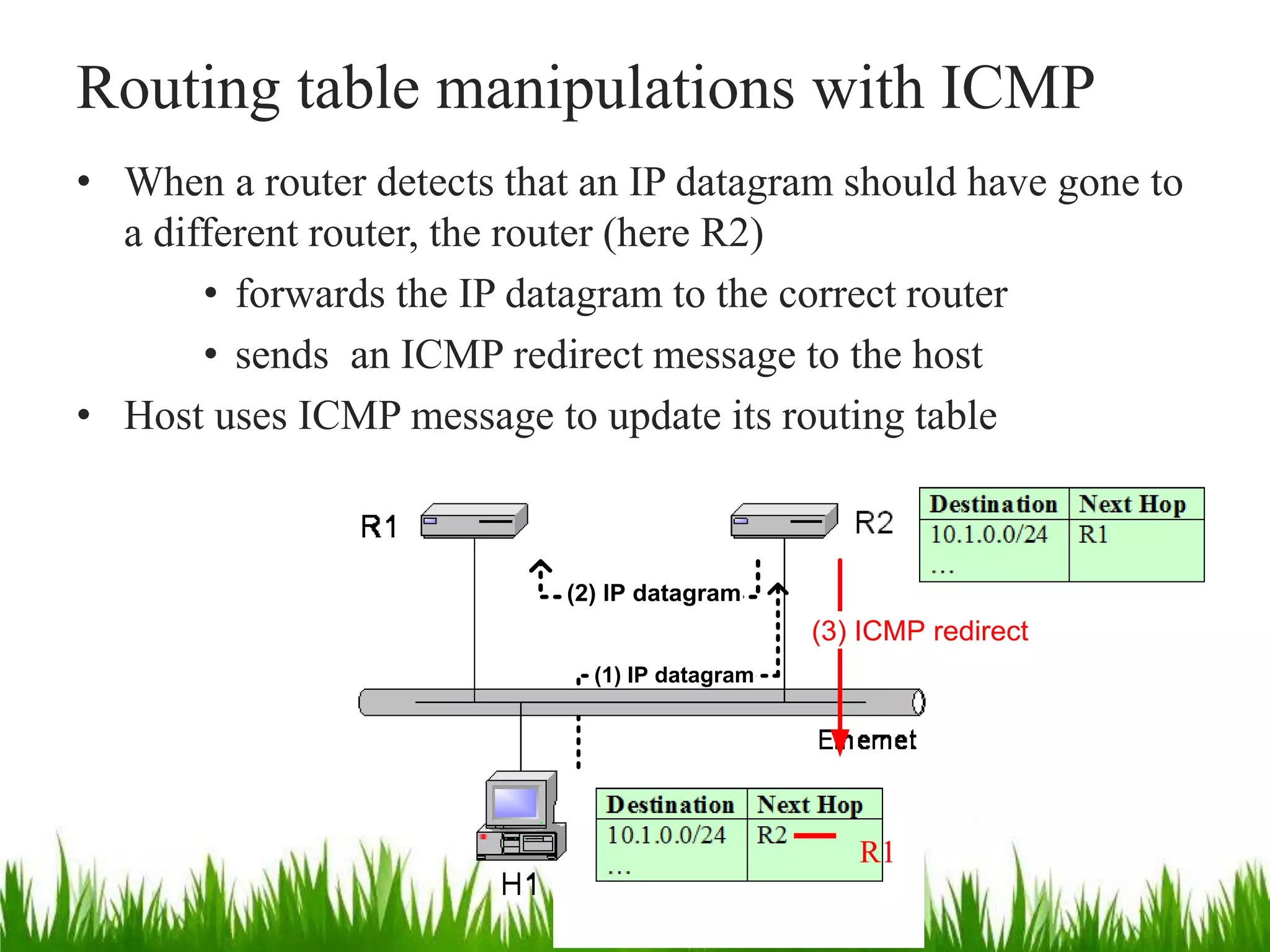
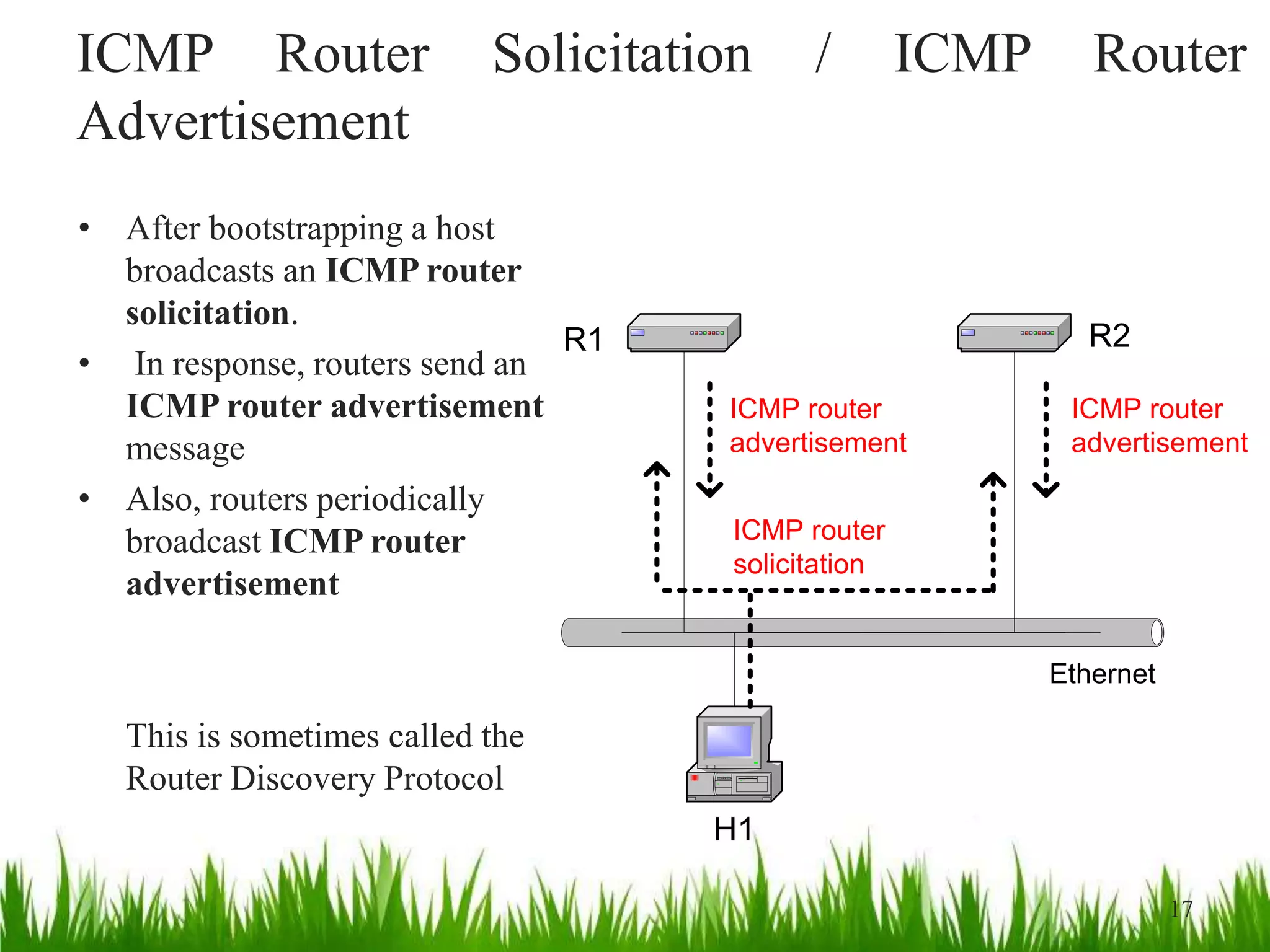


This document discusses IP forwarding and the delivery of IP datagrams. It covers: - IP networks are logical entities represented as "clouds" that ignore the underlying data link layers. - For successful delivery, each data link network must connect to another via a router and network prefixes must correspond to unique data link networks. - Routers and hosts use routing tables to determine the next hop for outgoing datagrams based on destination address and interface. - IP forwarding processes incoming datagrams, looking them up in routing tables to determine the outgoing interface. It is enabled on routers and disabled on hosts. - The longest prefix match is used for routing table lookups to determine the most specific match. Route aggregation reduces routing table


![07 coms 525 tcpip - udp [autosaved]](https://cdn.slidesharecdn.com/ss_thumbnails/07-coms525tcpip-udpautosaved-200102103428-thumbnail.jpg?width=640&height=640&fit=bounds)


