Downloaded 17 times


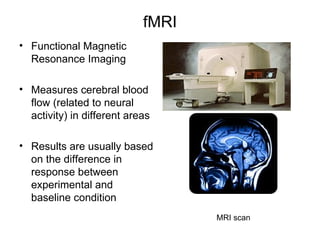
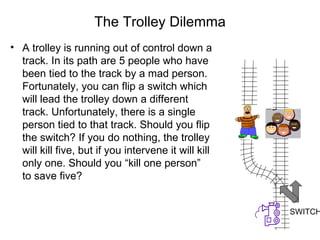



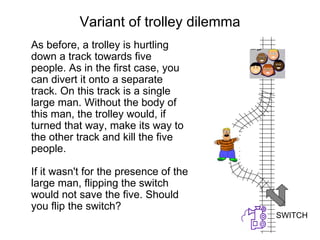
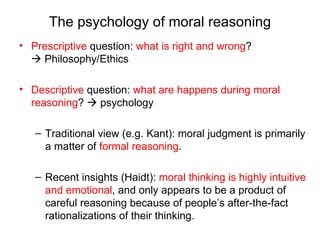
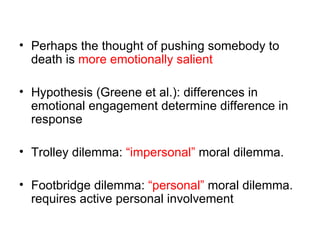
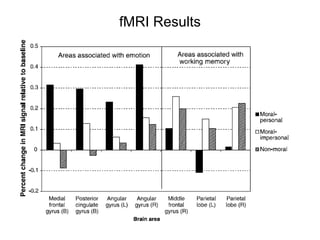
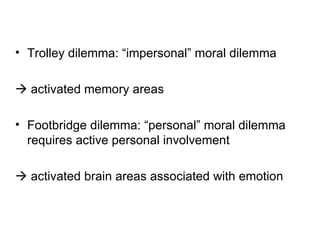
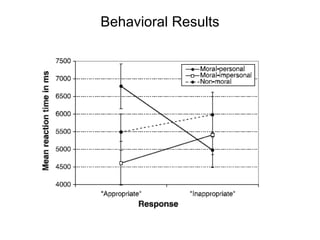
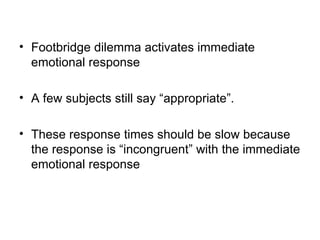

1) A study used fMRI to examine brain activity during moral reasoning tasks. It found greater activation of emotional brain areas for personal moral dilemmas that required direct personal force, compared to impersonal dilemmas. 2) Response times were slower for subjects who said it was appropriate to sacrifice one life to save others in a personal dilemma, suggesting their response went against an initial emotional reaction. 3) The results do not determine correct moral reasoning, but provide insight into the intuitive emotional processes involved in making moral judgments.


