Light and Shadow
Light and shadow are fundamental
elements of visual perception. They work in
tandem to define form, create depth, and
evoke mood.
EM
by Erwin Mapalad
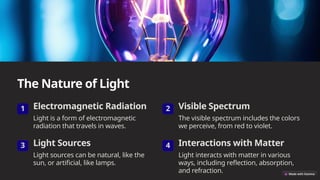
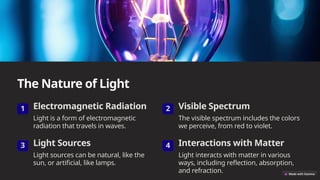
The Nature of Light
1 Electromagnetic Radiation
Light is a form of electromagnetic
radiation that travels in waves.
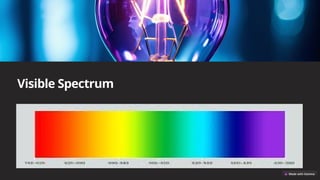
2 Visible Spectrum
The visible spectrum includes the colors
we perceive, from red to violet.
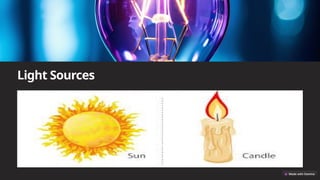
3 Light Sources
Light sources can be natural, like the
sun, or artificial, like lamps.
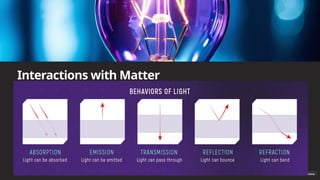
4 Interactions with Matter
Light interacts with matter in various
ways, including reflection, absorption,
and refraction.
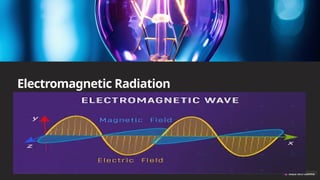
Electromagnetic Radiation
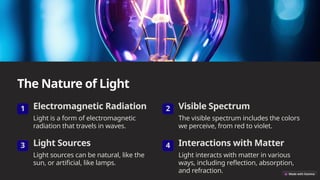
The Nature of Light
1 Electromagnetic Radiation
Light is a form of electromagnetic
radiation that travels in waves.
2 Visible Spectrum
The visible spectrum includes the colors
we perceive, from red to violet.
3 Light Sources
Light sources can be natural, like the
sun, or artificial, like lamps.
4 Interactions with Matter
Light interacts with matter in various
ways, including reflection, absorption,
and refraction.
Visible Spectrum
The Nature of Light
1 Electromagnetic Radiation
Light is a form of electromagnetic
radiation that travels in waves.
2 Visible Spectrum
The visible spectrum includes the colors
we perceive, from red to violet.
3 Light Sources
Light sources can be natural, like the
sun, or artificial, like lamps.
4 Interactions with Matter
Light interacts with matter in various
ways, including reflection, absorption,
and refraction.
Light Sources
The Nature of Light
1 Electromagnetic Radiation
Light is a form of electromagnetic
radiation that travels in waves.
2 Visible Spectrum
The visible spectrum includes the colors
we perceive, from red to violet.
3 Light Sources
Light sources can be natural, like the
sun, or artificial, like lamps.
4 Interactions with Matter
Light interacts with matter in various
ways, including reflection, absorption,
and refraction.
Interactions with Matter
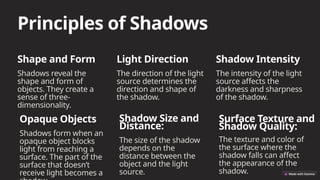
Principles of Shadows
Shape and Form
Shadows reveal the
shape and form of
objects. They create a
sense of three-
dimensionality.
Light Direction
The direction of the light
source determines the
direction and shape of
the shadow.
Shadow Intensity
The intensity of the light
source affects the
darkness and sharpness
of the shadow.
Surface Texture and
Shadow Quality:
The texture and color of
the surface where the
shadow falls can affect
the appearance of the
shadow.
Shadow Size and
Distance:
The size of the shadow
depends on the
distance between the
object and the light
source.
Opaque Objects
Shadows form when an
opaque object blocks
light from reaching a
surface. The part of the
surface that doesn’t
receive light becomes a
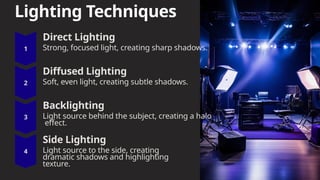
Lighting Techniques
Direct Lighting
Strong, focused light, creating sharp shadows.
Diffused Lighting
Soft, even light, creating subtle shadows.
Backlighting
Light source behind the subject, creating a halo
effect.
Side Lighting
Light source to the side, creating
dramatic shadows and highlighting
texture.
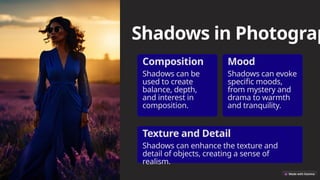
Shadows in Photograp
Composition
Shadows can be
used to create
balance, depth,
and interest in
composition.
Mood
Shadows can evoke
specific moods,
from mystery and
drama to warmth
and tranquility.
Texture and Detail
Shadows can enhance the texture and
detail of objects, creating a sense of
realism.
Shadows in Art and Design
Art Movement Use of Light and
Shadow
Renaissance Chiaroscuro, dramatic
contrasts
Impressionism Playful, dappled shadows
Surrealism Distorted and
unexpected
shadows
Manipulating Light and
Shadow
1 Reflectors
Used to bounce light onto the subject, softening shadows.
2 Diffusers
Spread light over a wider area, reducing contrast.
3 Light Modifiers
Shape and direct light, creating specific effects.
Conclusion: The Power of
Light and Shadow
Understanding
Light and shadow are essential for
visual understanding.
Artistic Expression
They are powerful tools for artistic
expression.
Photography
They are fundamental elements of
photography.
Design
They influence design decisions
across various fields.

10. Light and Shadow. Grade 8 presentation about Light and Shadow

  • 1.
    Light and Shadow Lightand shadow are fundamental elements of visual perception. They work in tandem to define form, create depth, and evoke mood. EM by Erwin Mapalad
  • 2.
    The Nature ofLight 1 Electromagnetic Radiation Light is a form of electromagnetic radiation that travels in waves. 2 Visible Spectrum The visible spectrum includes the colors we perceive, from red to violet. 3 Light Sources Light sources can be natural, like the sun, or artificial, like lamps. 4 Interactions with Matter Light interacts with matter in various ways, including reflection, absorption, and refraction.
  • 3.
  • 4.
    The Nature ofLight 1 Electromagnetic Radiation Light is a form of electromagnetic radiation that travels in waves. 2 Visible Spectrum The visible spectrum includes the colors we perceive, from red to violet. 3 Light Sources Light sources can be natural, like the sun, or artificial, like lamps. 4 Interactions with Matter Light interacts with matter in various ways, including reflection, absorption, and refraction.
  • 5.
  • 6.
    The Nature ofLight 1 Electromagnetic Radiation Light is a form of electromagnetic radiation that travels in waves. 2 Visible Spectrum The visible spectrum includes the colors we perceive, from red to violet. 3 Light Sources Light sources can be natural, like the sun, or artificial, like lamps. 4 Interactions with Matter Light interacts with matter in various ways, including reflection, absorption, and refraction.
  • 7.
  • 8.
    The Nature ofLight 1 Electromagnetic Radiation Light is a form of electromagnetic radiation that travels in waves. 2 Visible Spectrum The visible spectrum includes the colors we perceive, from red to violet. 3 Light Sources Light sources can be natural, like the sun, or artificial, like lamps. 4 Interactions with Matter Light interacts with matter in various ways, including reflection, absorption, and refraction.
  • 9.
  • 10.
    Principles of Shadows Shapeand Form Shadows reveal the shape and form of objects. They create a sense of three- dimensionality. Light Direction The direction of the light source determines the direction and shape of the shadow. Shadow Intensity The intensity of the light source affects the darkness and sharpness of the shadow. Surface Texture and Shadow Quality: The texture and color of the surface where the shadow falls can affect the appearance of the shadow. Shadow Size and Distance: The size of the shadow depends on the distance between the object and the light source. Opaque Objects Shadows form when an opaque object blocks light from reaching a surface. The part of the surface that doesn’t receive light becomes a
  • 11.
    Lighting Techniques Direct Lighting Strong,focused light, creating sharp shadows. Diffused Lighting Soft, even light, creating subtle shadows. Backlighting Light source behind the subject, creating a halo effect. Side Lighting Light source to the side, creating dramatic shadows and highlighting texture.
  • 12.
    Shadows in Photograp Composition Shadowscan be used to create balance, depth, and interest in composition. Mood Shadows can evoke specific moods, from mystery and drama to warmth and tranquility. Texture and Detail Shadows can enhance the texture and detail of objects, creating a sense of realism.
  • 13.
    Shadows in Artand Design Art Movement Use of Light and Shadow Renaissance Chiaroscuro, dramatic contrasts Impressionism Playful, dappled shadows Surrealism Distorted and unexpected shadows
  • 14.
    Manipulating Light and Shadow 1Reflectors Used to bounce light onto the subject, softening shadows. 2 Diffusers Spread light over a wider area, reducing contrast. 3 Light Modifiers Shape and direct light, creating specific effects.
  • 15.
    Conclusion: The Powerof Light and Shadow Understanding Light and shadow are essential for visual understanding. Artistic Expression They are powerful tools for artistic expression. Photography They are fundamental elements of photography. Design They influence design decisions across various fields.