Marketing Channels &
    Distribution
The Importance of Marketing Channels

• Intermediaries make distribution and selling
  processes more efficient.

• Intermediaries offers supply chain partners
  more than they could achieve on their own.
  –   Market Exposure
  –   Technical Knowledge/Information Sharing
  –   Operational Specialization
  –   Scale of operation
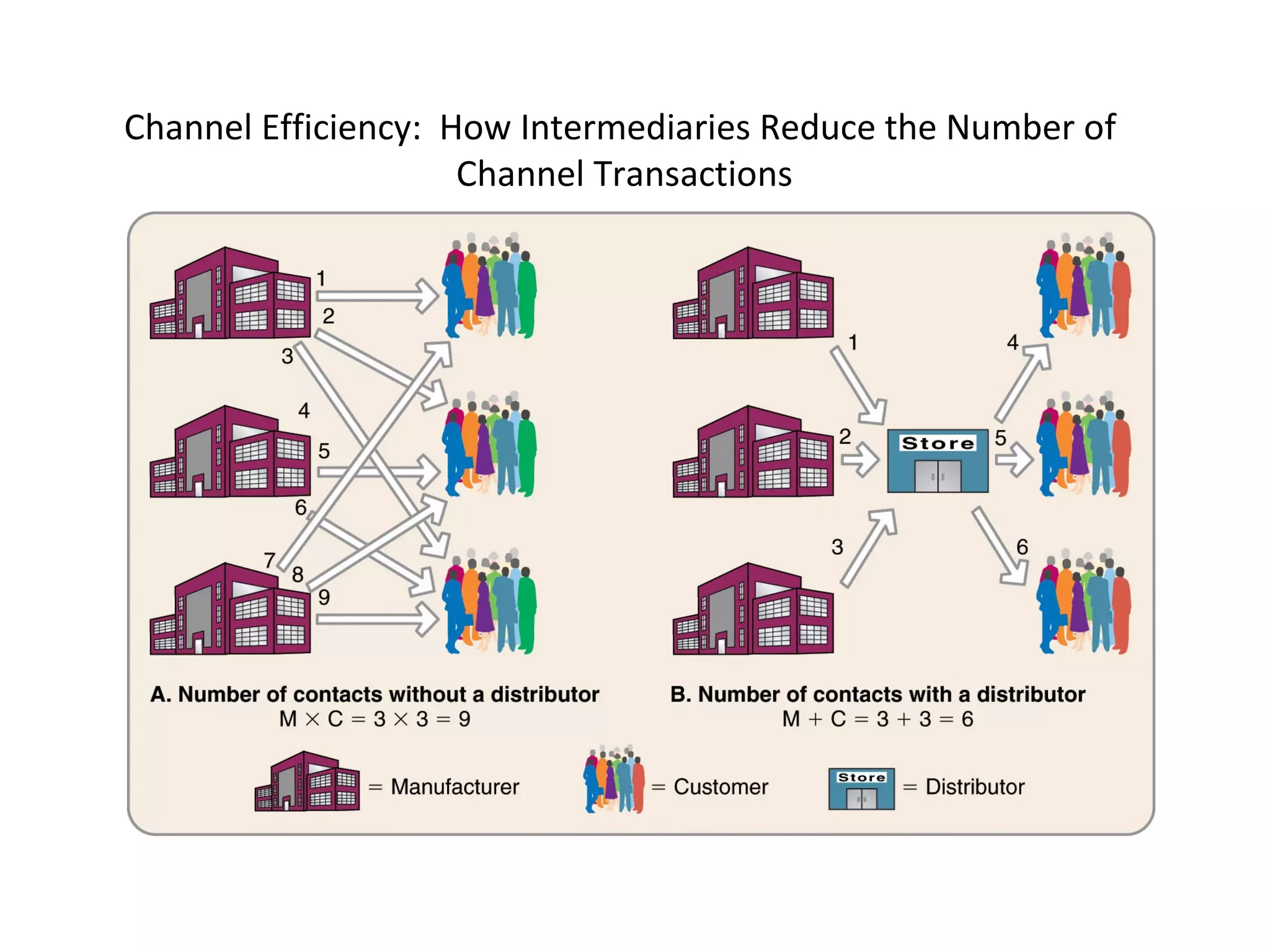
Channel Efficiency: How Intermediaries Reduce the Number of
                     Channel Transactions
Other Key Channel Functions
•   Matching Needs with Products
•   Physical distribution & Logistics
•   Financing
•   Risk taking
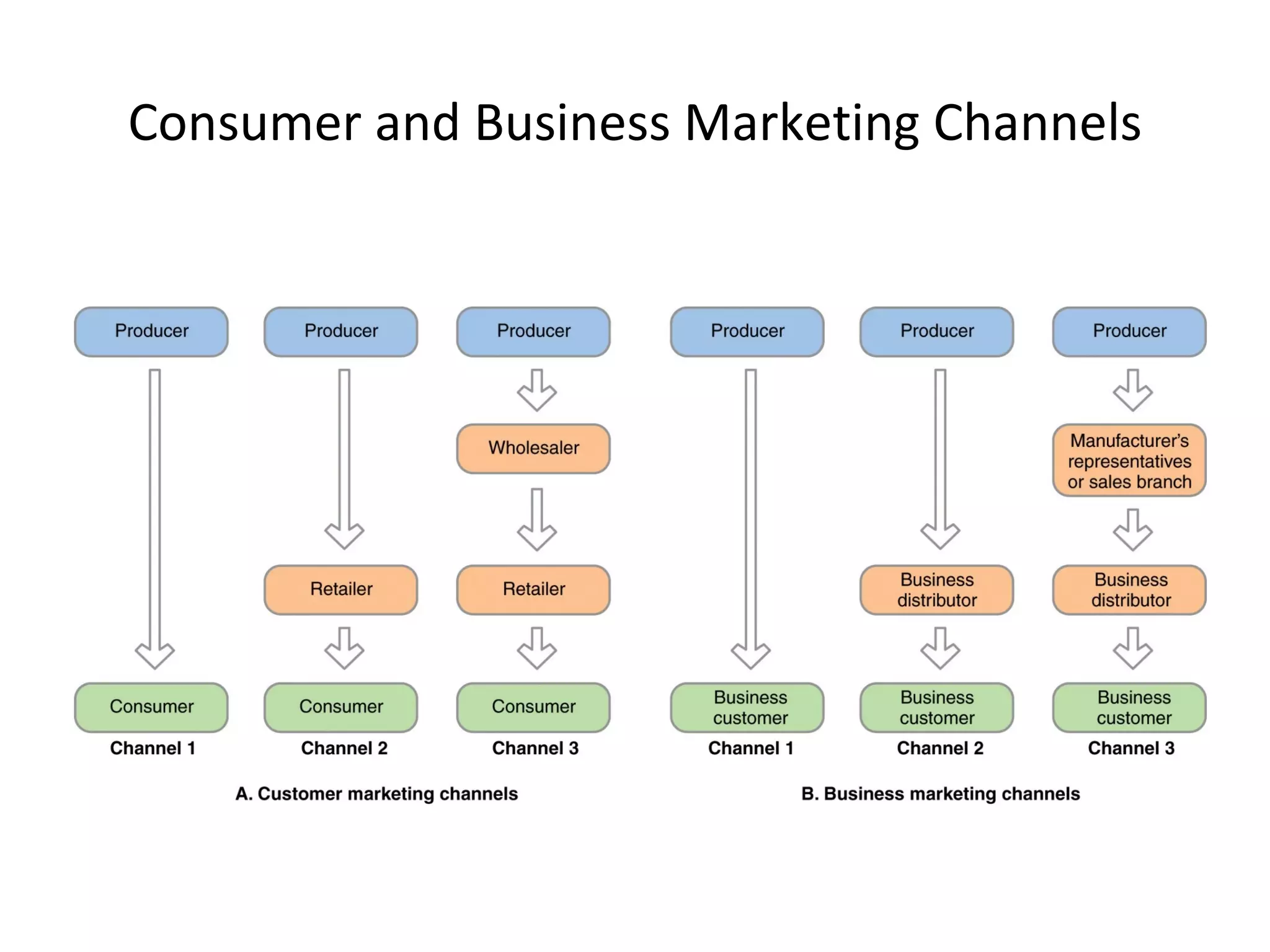
Consumer and Business Marketing Channels
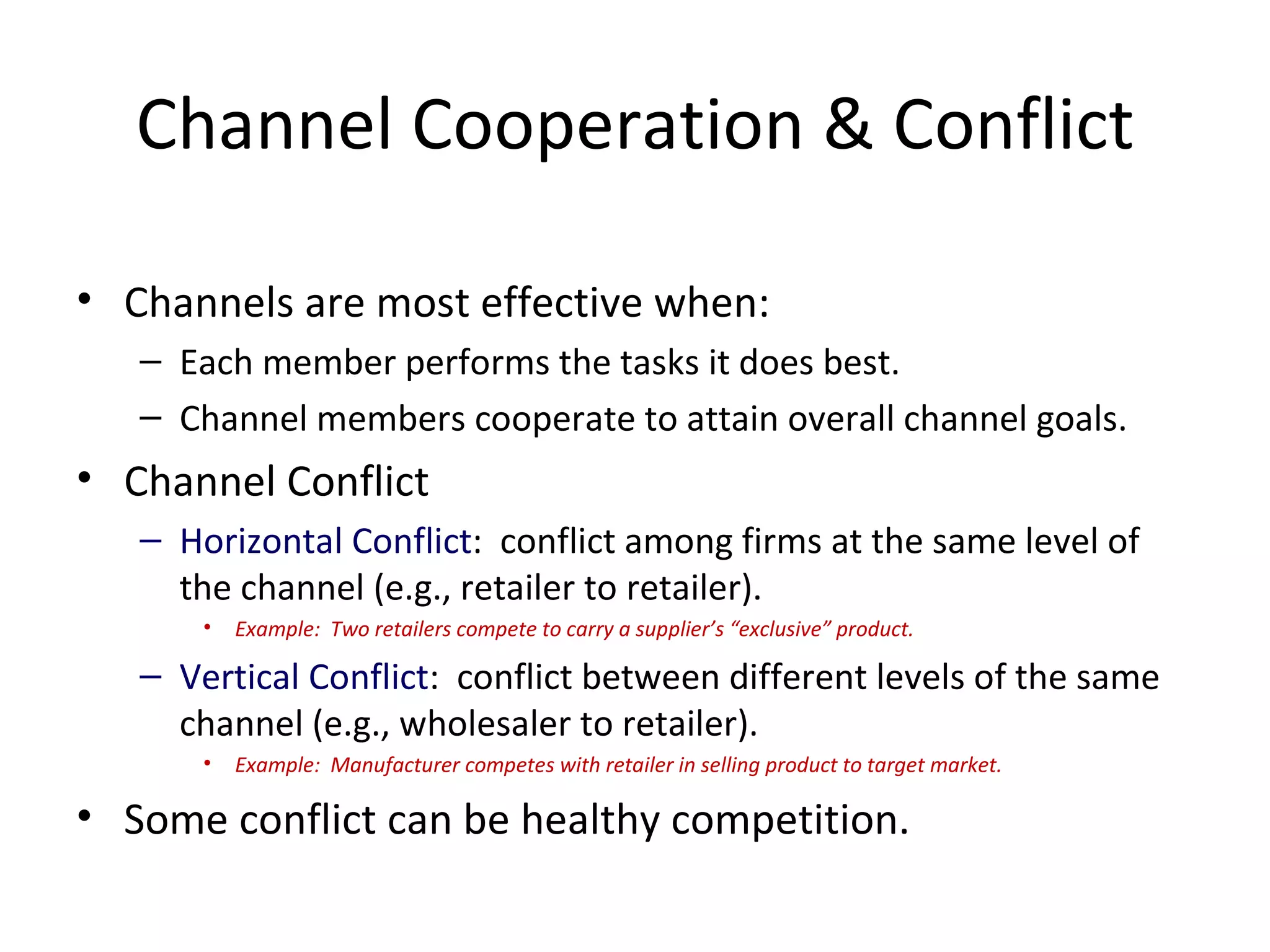
Channel Cooperation & Conflict

• Channels are most effective when:
   – Each member performs the tasks it does best.
   – Channel members cooperate to attain overall channel goals.
• Channel Conflict
   – Horizontal Conflict: conflict among firms at the same level of
     the channel (e.g., retailer to retailer).
       •   Example: Two retailers compete to carry a supplier’s “exclusive” product.

   – Vertical Conflict: conflict between different levels of the same
     channel (e.g., wholesaler to retailer).
       •   Example: Manufacturer competes with retailer in selling product to target market.

• Some conflict can be healthy competition.
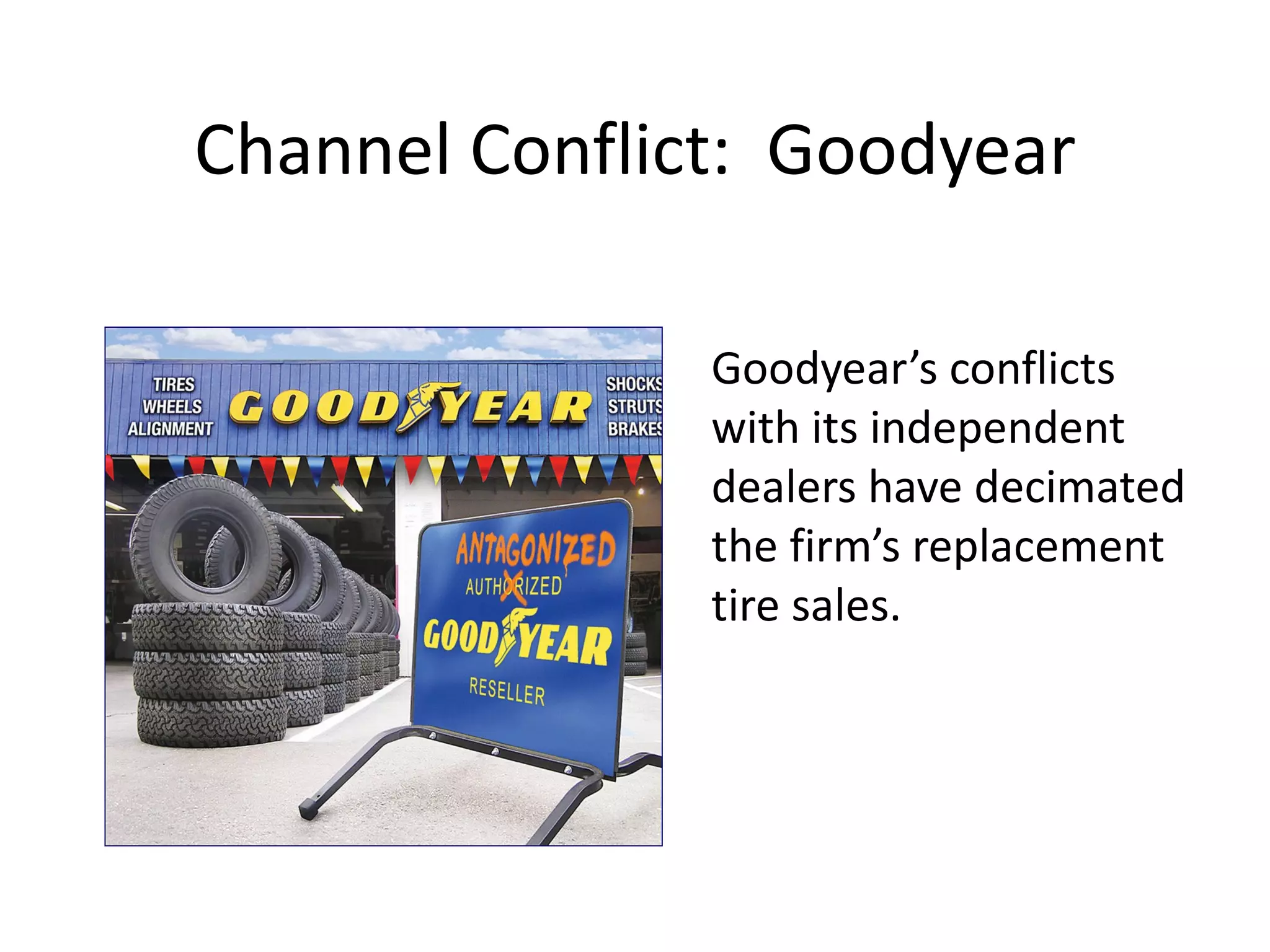
Channel Conflict: Goodyear

               Goodyear’s conflicts
               with its independent
               dealers have decimated
               the firm’s replacement
               tire sales.
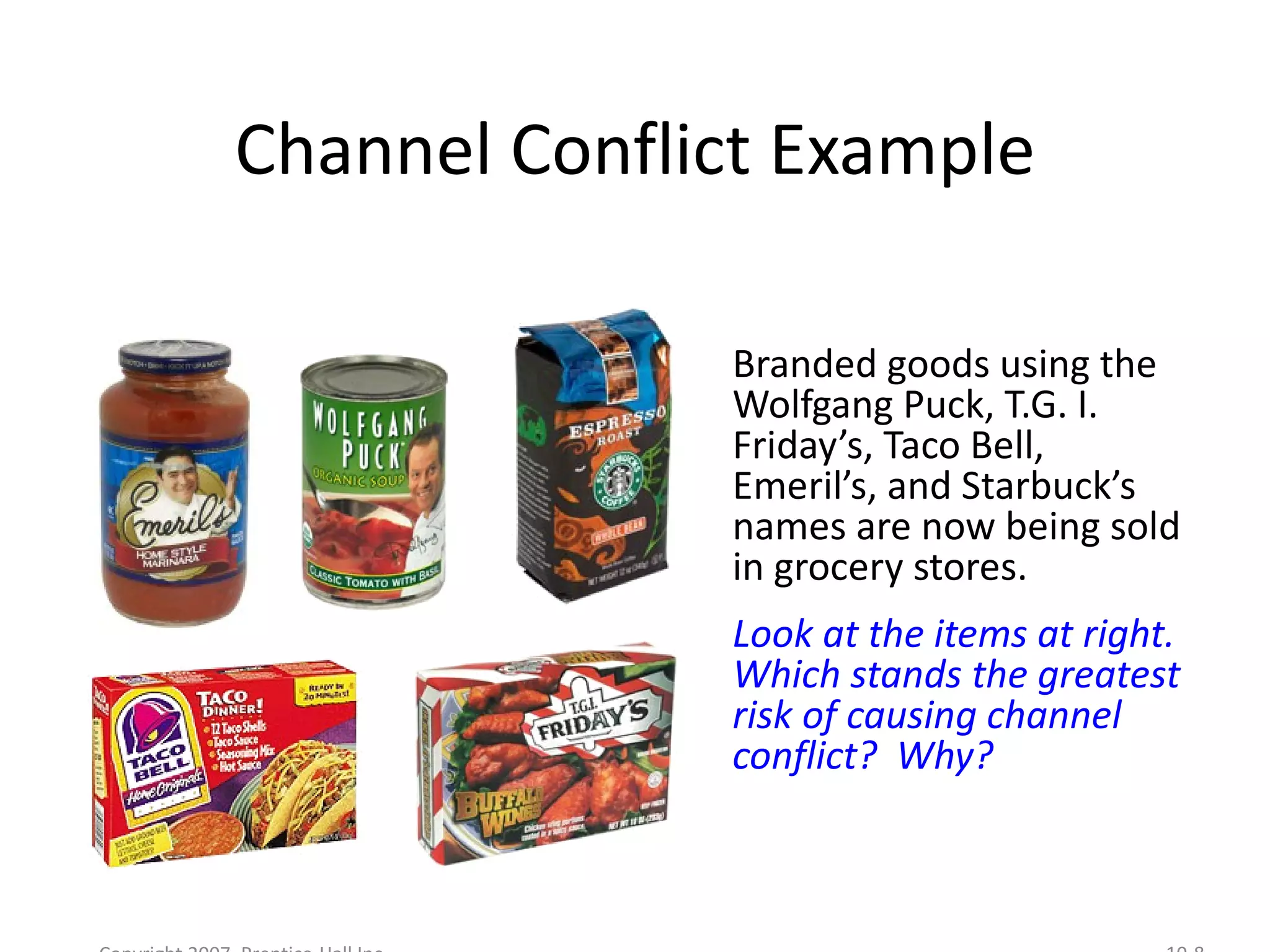
Channel Conflict Example

              Branded goods using the
              Wolfgang Puck, T.G. I.
              Friday’s, Taco Bell,
              Emeril’s, and Starbuck’s
              names are now being sold
              in grocery stores.
              Look at the items at right.
              Which stands the greatest
              risk of causing channel
              conflict? Why?
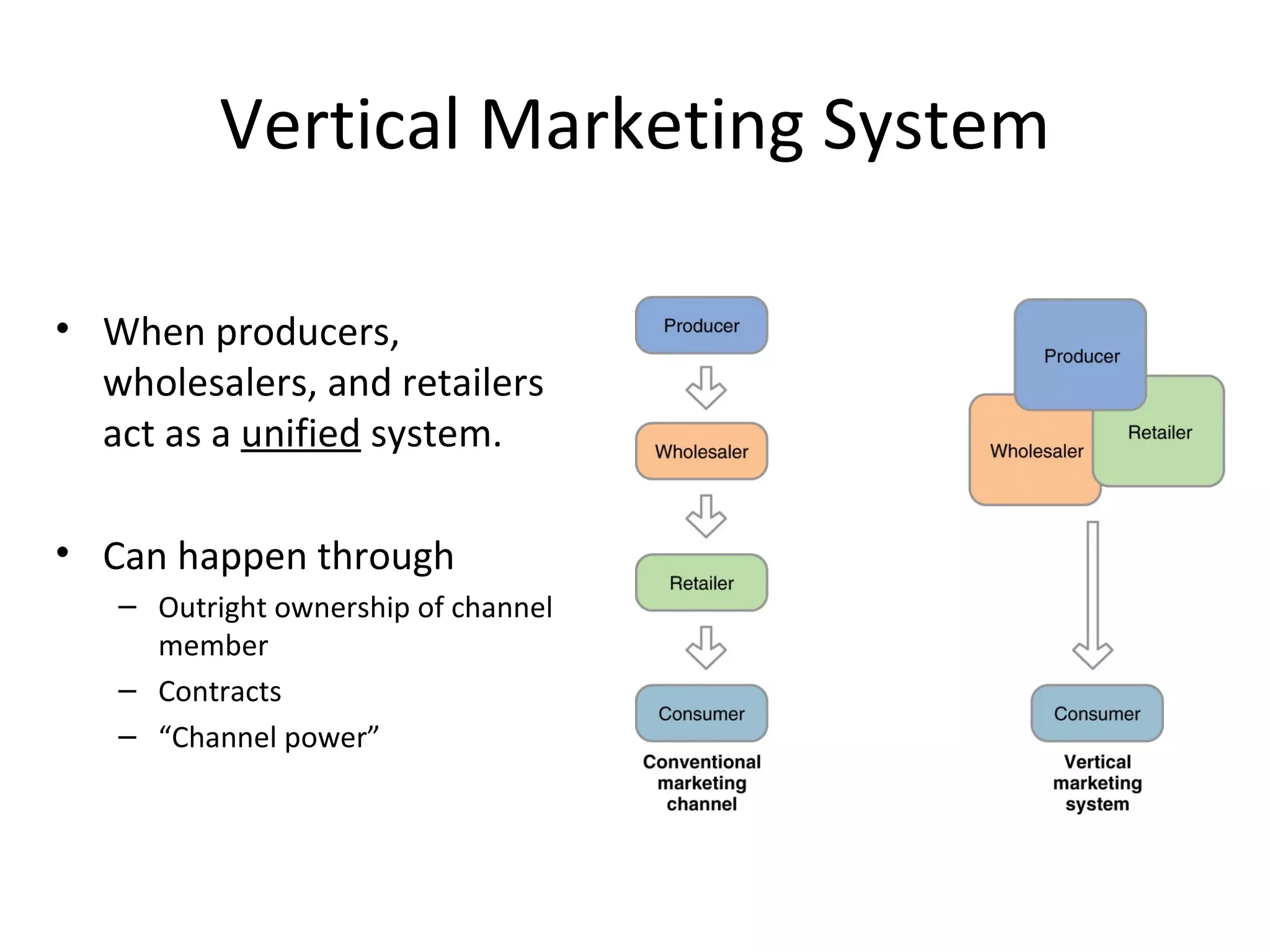
Vertical Marketing System

• When producers,
  wholesalers, and retailers
  act as a unified system.

• Can happen through
   – Outright ownership of channel
     member
   – Contracts
   – “Channel power”
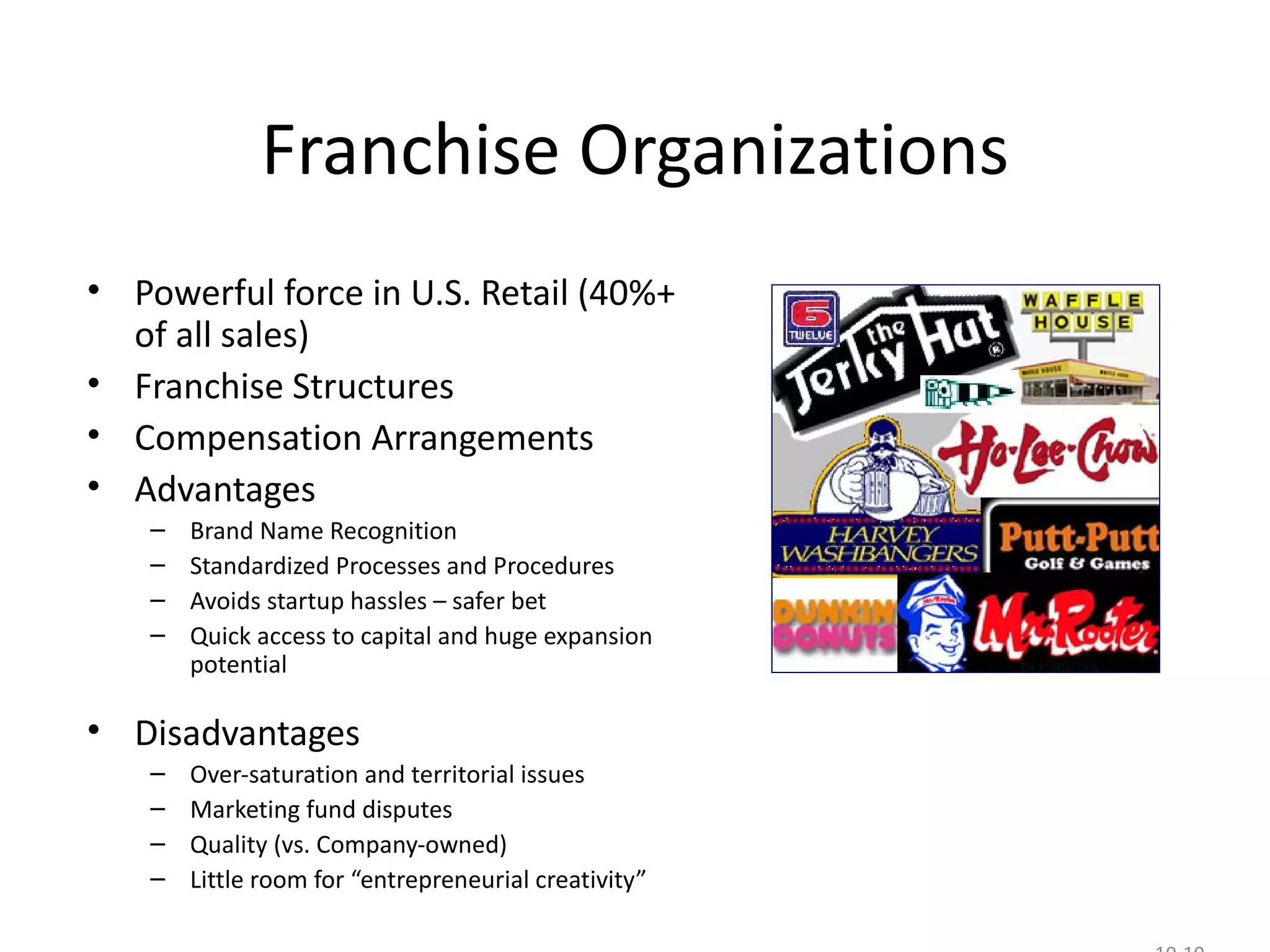
Franchise Organizations
• Powerful force in U.S. Retail (40%+
  of all sales)
• Franchise Structures
• Compensation Arrangements
• Advantages
   –   Brand Name Recognition
   –   Standardized Processes and Procedures
   –   Avoids startup hassles – safer bet
   –   Quick access to capital and huge expansion
       potential

• Disadvantages
   –   Over-saturation and territorial issues
   –   Marketing fund disputes
   –   Quality (vs. Company-owned)
   –   Little room for “entrepreneurial creativity”
Channel Innovations
• Horizontal Marketing System
   – Two or more companies at one channel level join together
     to achieve a marketing goal.
      • Joint Ventures
      • Alliances and Partnerships
      • Co-Marketing, Co-Distribution and Co-Branding

• Multichannel Distribution System
   – Reaching customer segments through multiple marketing
     channels. (i.e. hybrid system)
      • Example: You can buy Starbucks coffee from Starbucks’ stores or
        from the Supermarket
      • Problems with MDSs?
Disintermediation

   Occurs when producers sidestep
intermediaries and sell directly to final
buyers, or when radically new types of
    channel intermediaries displace
           traditional ones.


  The Internet has made the disintermediation of
        many traditional retailers possible.
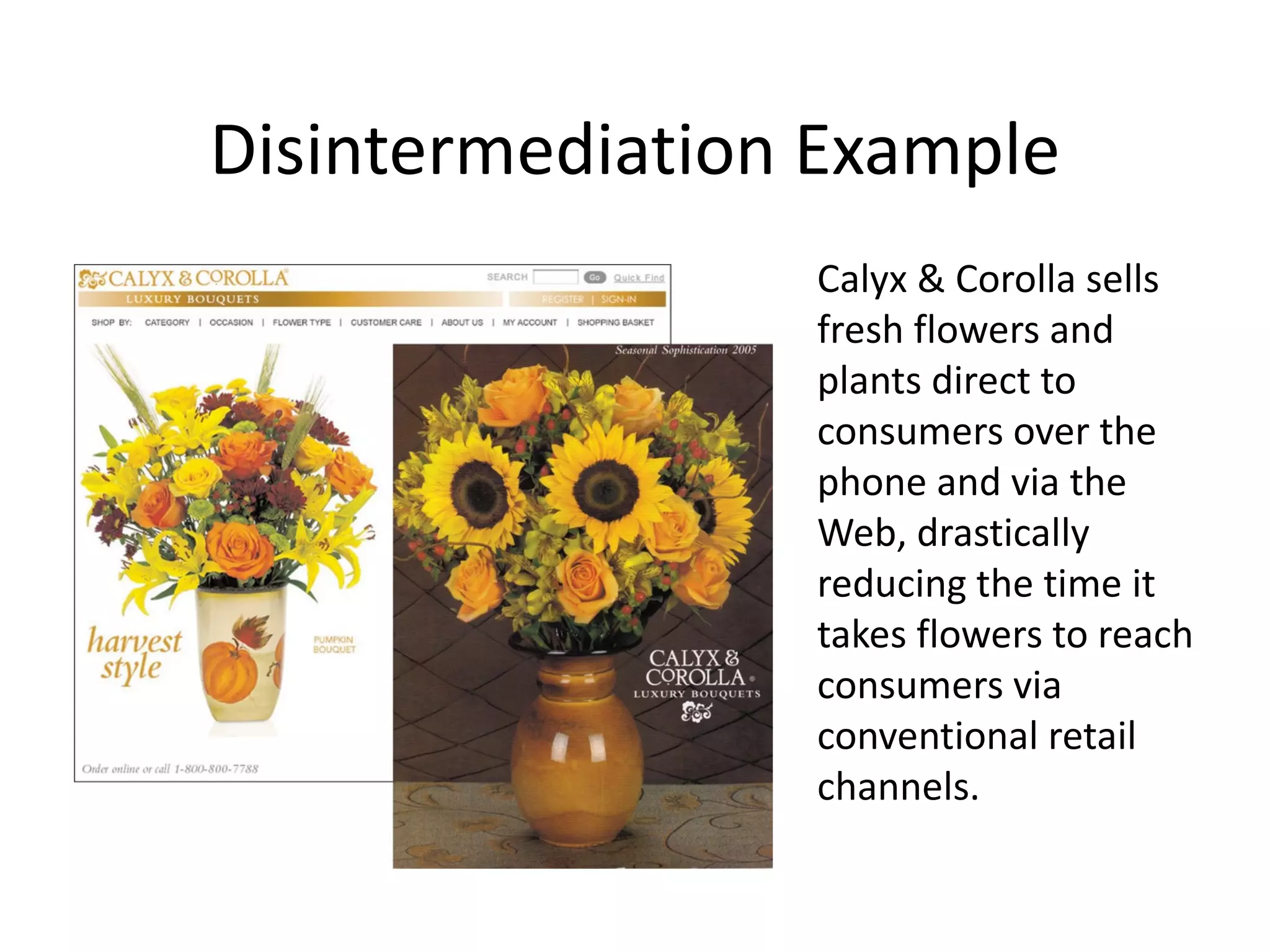
Disintermediation Example
                 Calyx & Corolla sells
                 fresh flowers and
                 plants direct to
                 consumers over the
                 phone and via the
                 Web, drastically
                 reducing the time it
                 takes flowers to reach
                 consumers via
                 conventional retail
                 channels.
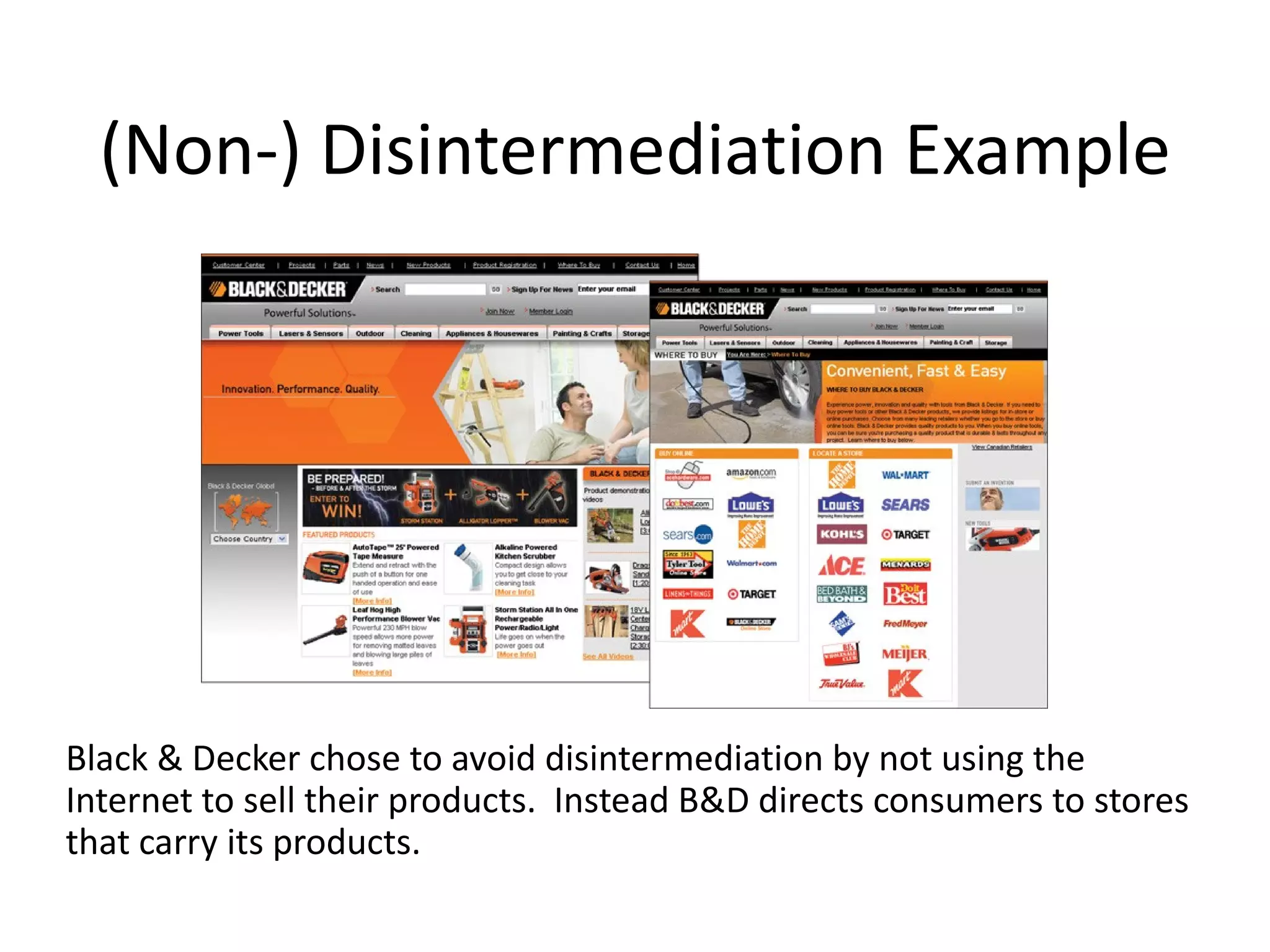
(Non-) Disintermediation Example


Black & Decker chose to avoid disintermediation by not using the
Internet to sell their products. Instead B&D directs consumers to stores
that carry its products.
Outsourcing Distribution
• Company sales force vs. Manufacturer’s Rep
  – Company sales force
     • Employed directly by the firm in outside or inside sales
       capacity.
  – Manufacturer’s agency/representative
     • Independent firms whose sales people handle several
       companies’ products simultaneously


    Primarily a question of size and life cycle stage.
Distribution Strategy Alternatives
• How many intermediaries?
  – Intensive distribution
      • Stock product in as many outlets as possible.
  – Exclusive distribution
      • Granting a limited number of outlets the exclusive right
        to sell product.
  – Selective distribution
      • Somewhere in between Intensive and Exclusive
        Distribution.

     Does the company always get to choose?
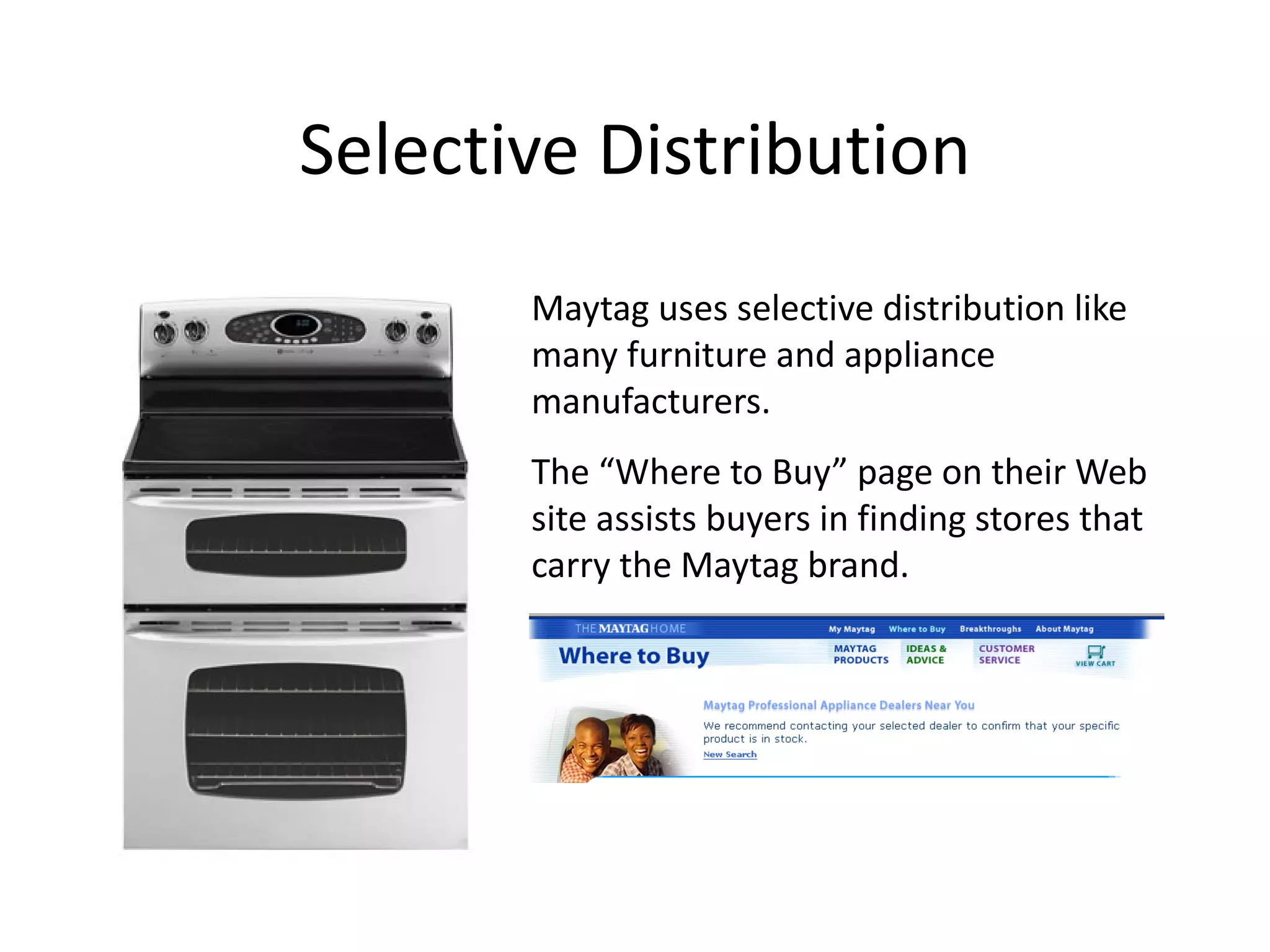
Selective Distribution
       Maytag uses selective distribution like
       many furniture and appliance
       manufacturers.
       The “Where to Buy” page on their Web
       site assists buyers in finding stores that
       carry the Maytag brand.
International Channel Decisions
• Every country has its own unique distribution system
  that has evolved over time.
• Examples
   – Japan:
      • complex, multi-layered distribution systems
      • hard for Western firms to penetrate.
   – India and China:
      • inefficient distribution systems despite their enormous size.
      • “separate countries” within a country
      • Poorer but improving transportation infrastructures
Public Policy and Distribution

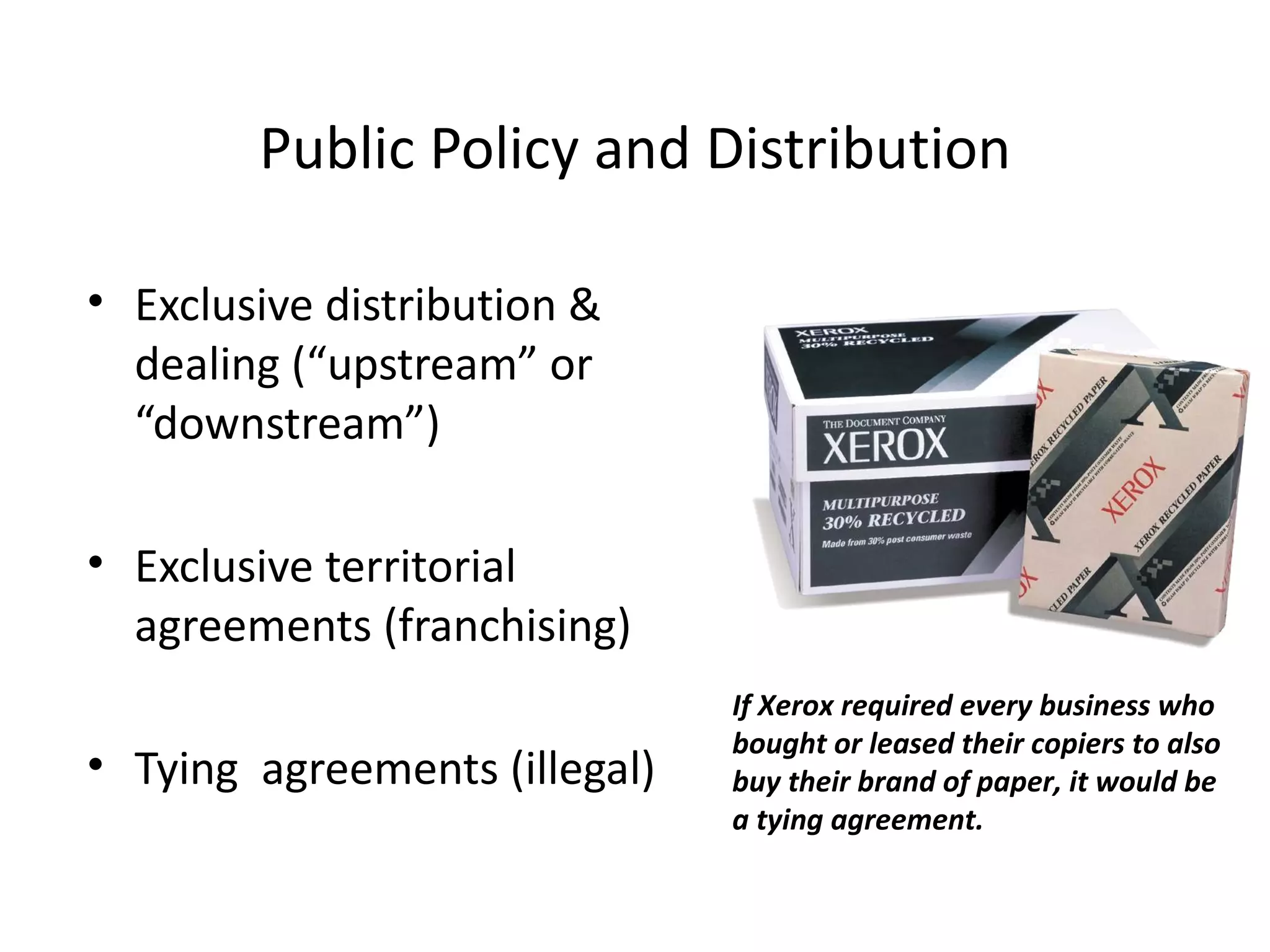
• Exclusive distribution &
  dealing (“upstream” or
  “downstream”)

• Exclusive territorial
  agreements (franchising)
                               If Xerox required every business who
                               bought or leased their copiers to also
• Tying agreements (illegal)   buy their brand of paper, it would be
                               a tying agreement.
Marketing Logistics
• Definition: The physical flow of goods,
  services, and related information from points
  of origin to points of consumption.
• Includes:
  – Inbound distribution
  – Outbound distribution
  – Reverse distribution
Inventory Management
• Must strike a balance
  between
   – too much and too little
     inventory
   – buffers and shortages
   – carrying costs and
     ordering/setup costs

• Just-in-time inventory
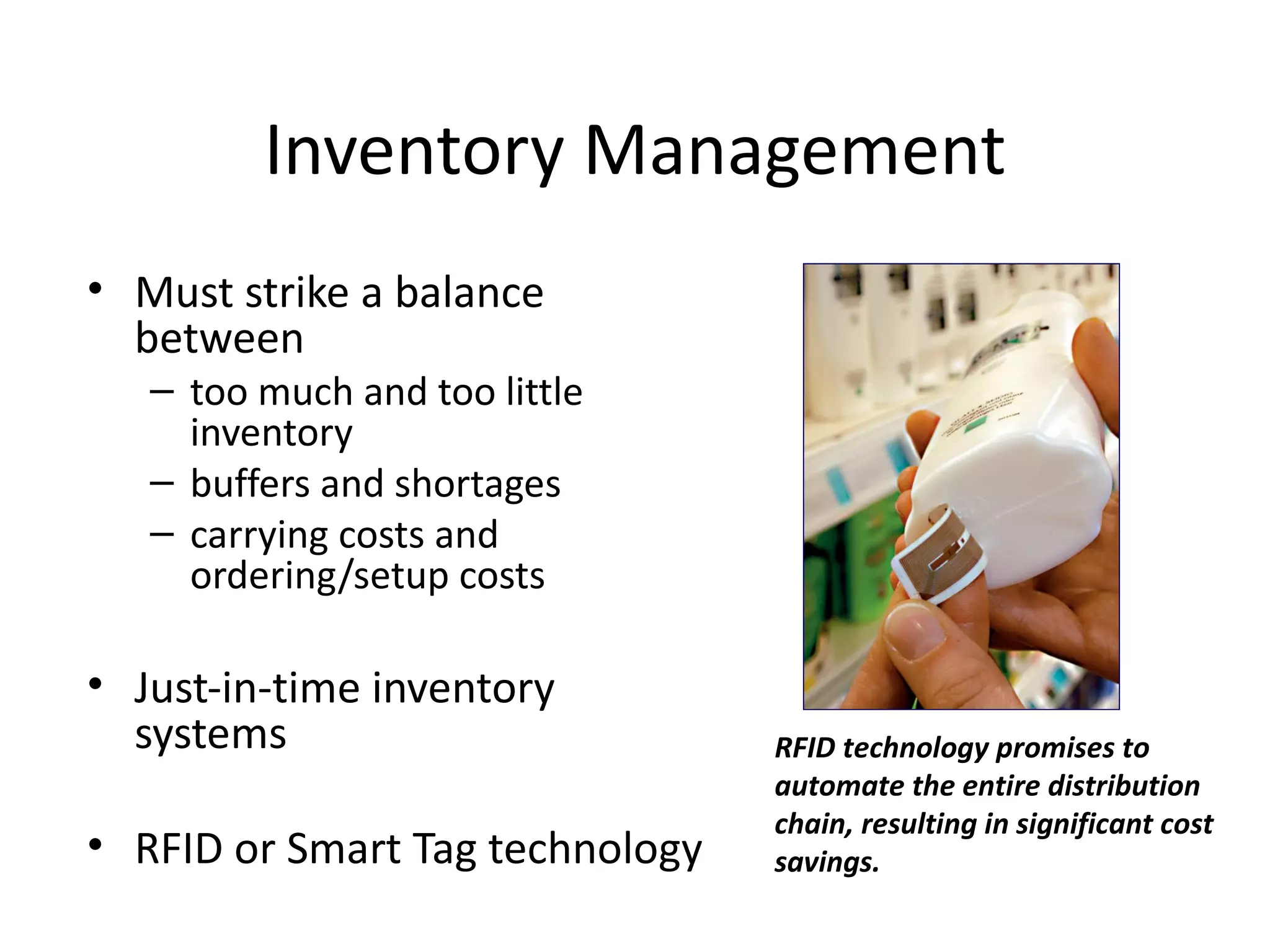
  systems                        RFID technology promises to
                                 automate the entire distribution
                                 chain, resulting in significant cost
• RFID or Smart Tag technology   savings.
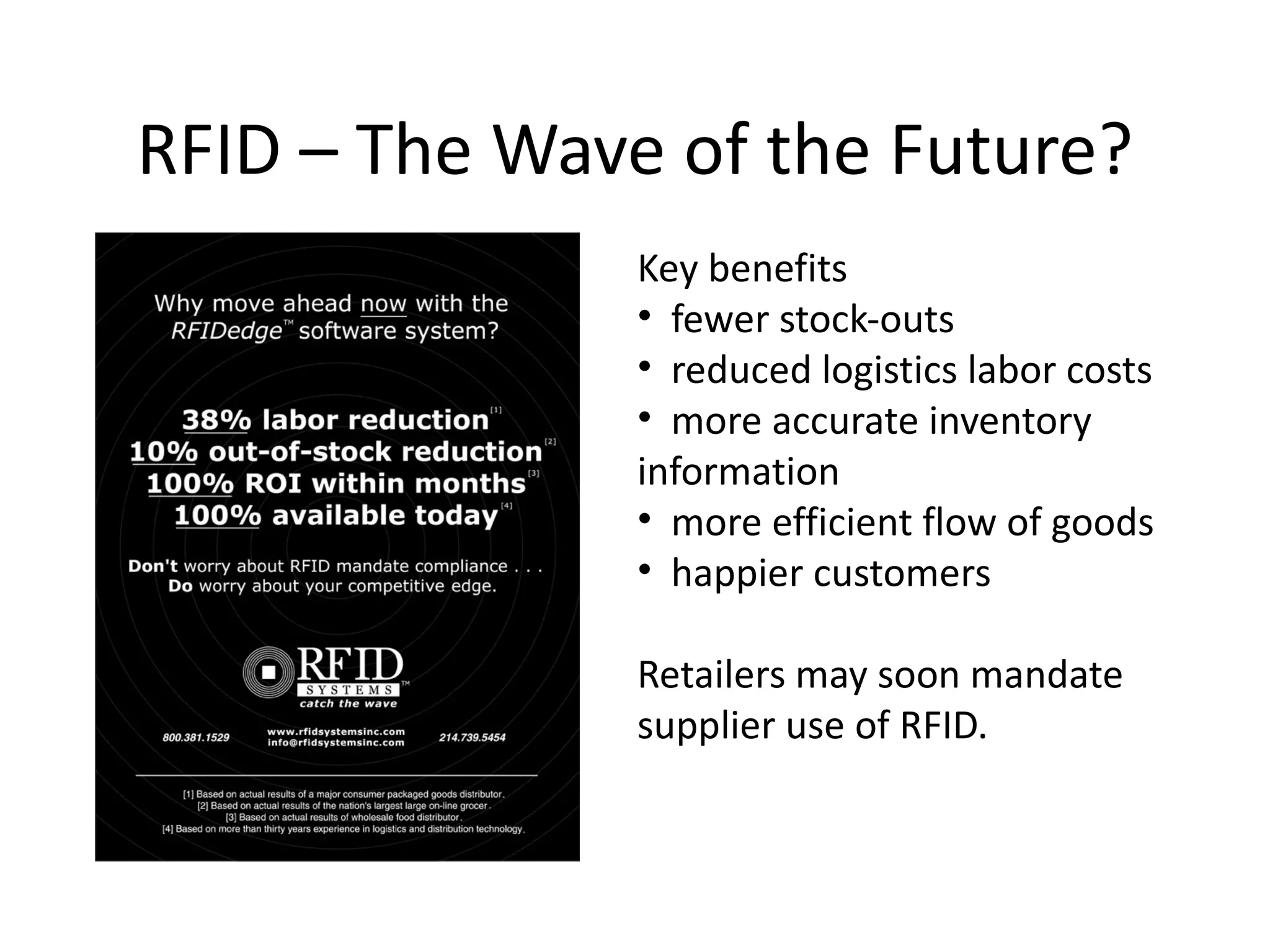
RFID – The Wave of the Future?
               Key benefits
               • fewer stock-outs
               • reduced logistics labor costs
               • more accurate inventory
               information
               • more efficient flow of goods
               • happier customers

               Retailers may soon mandate
               supplier use of RFID.
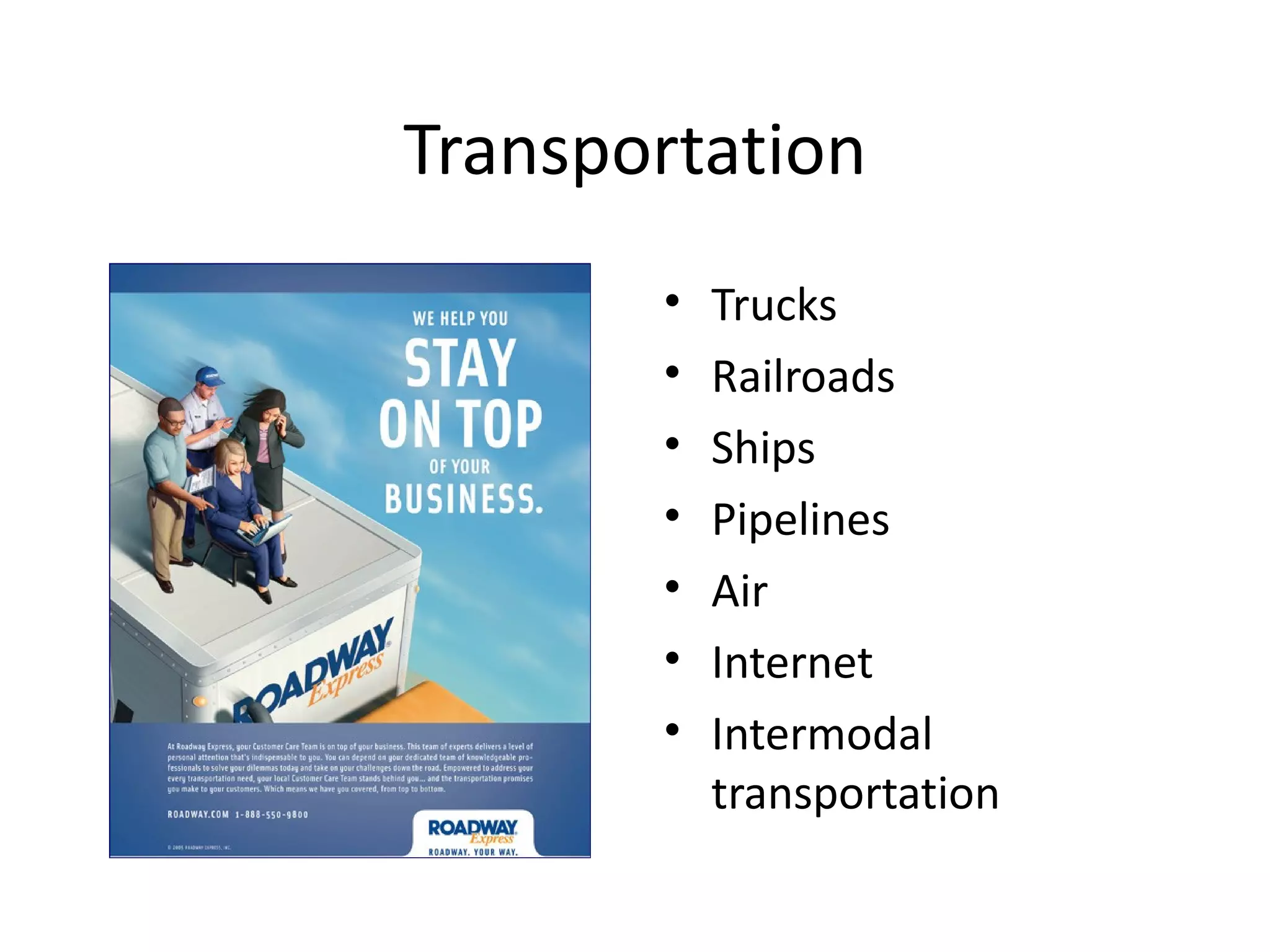
Transportation
       •   Trucks
       •   Railroads
       •   Ships
       •   Pipelines
       •   Air
       •   Internet
       •   Intermodal
           transportation
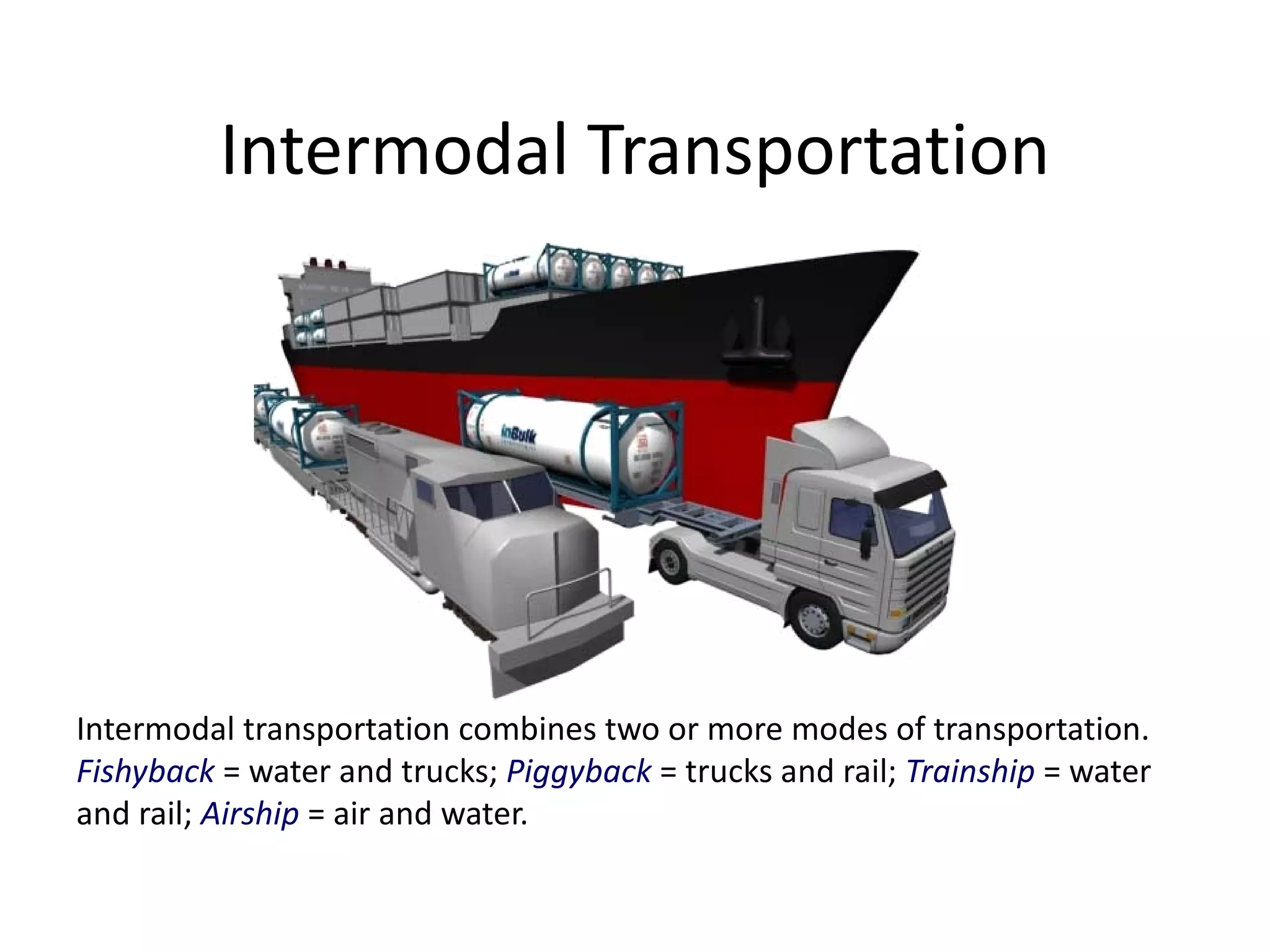
Intermodal Transportation


Intermodal transportation combines two or more modes of transportation.
Fishyback = water and trucks; Piggyback = trucks and rail; Trainship = water
and rail; Airship = air and water.
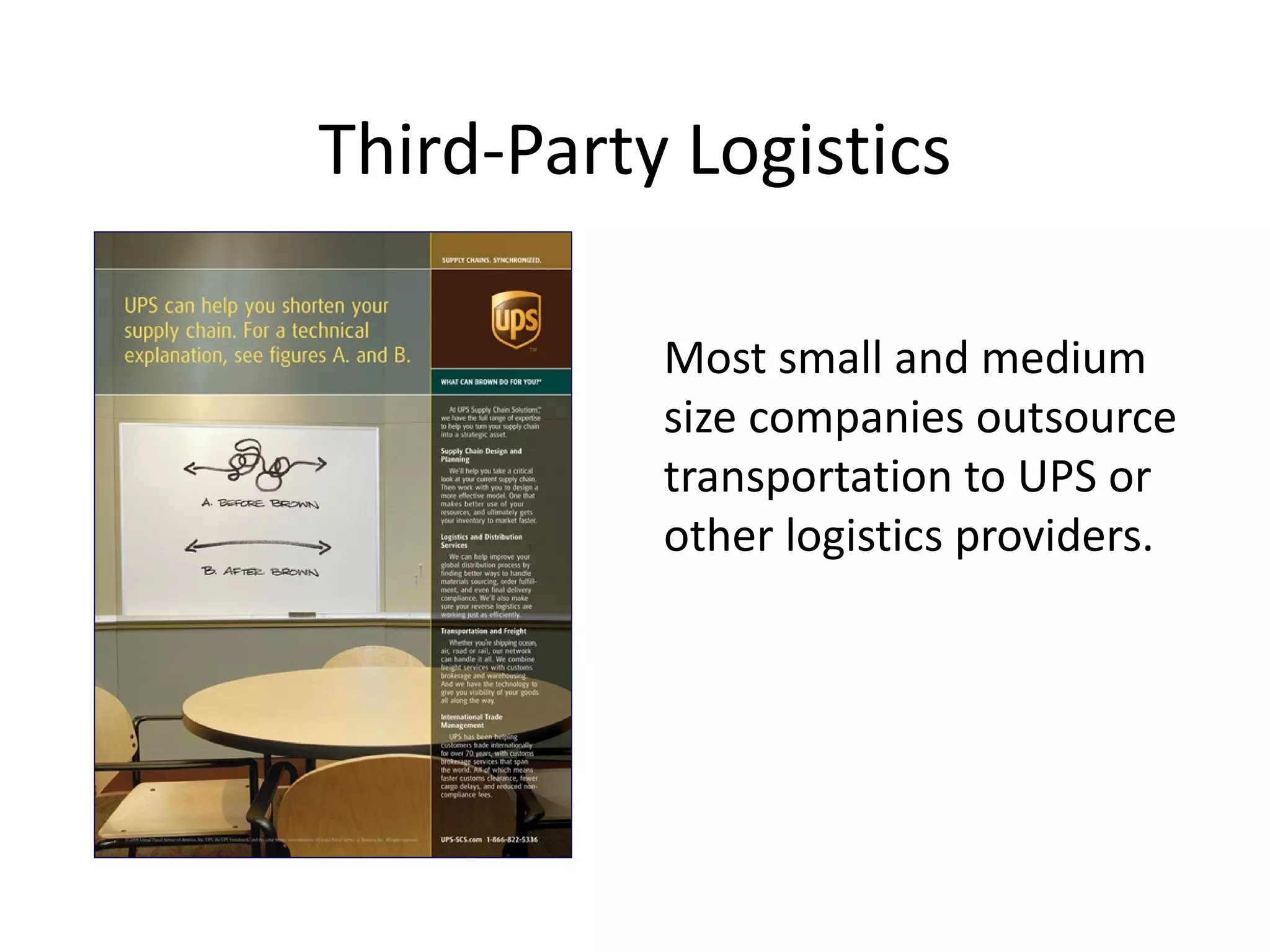
Third-Party Logistics

           Most small and medium
           size companies outsource
           transportation to UPS or
           other logistics providers.

10 channels

  • 1.
  • 2.
    The Importance ofMarketing Channels • Intermediaries make distribution and selling processes more efficient. • Intermediaries offers supply chain partners more than they could achieve on their own. – Market Exposure – Technical Knowledge/Information Sharing – Operational Specialization – Scale of operation
  • 3.
    Channel Efficiency: HowIntermediaries Reduce the Number of Channel Transactions
  • 4.
    Other Key ChannelFunctions • Matching Needs with Products • Physical distribution & Logistics • Financing • Risk taking
  • 5.
    Consumer and BusinessMarketing Channels
  • 6.
    Channel Cooperation &Conflict • Channels are most effective when: – Each member performs the tasks it does best. – Channel members cooperate to attain overall channel goals. • Channel Conflict – Horizontal Conflict: conflict among firms at the same level of the channel (e.g., retailer to retailer). • Example: Two retailers compete to carry a supplier’s “exclusive” product. – Vertical Conflict: conflict between different levels of the same channel (e.g., wholesaler to retailer). • Example: Manufacturer competes with retailer in selling product to target market. • Some conflict can be healthy competition.
  • 7.
    Channel Conflict: Goodyear Goodyear’s conflicts with its independent dealers have decimated the firm’s replacement tire sales.
  • 8.
    Channel Conflict Example Branded goods using the Wolfgang Puck, T.G. I. Friday’s, Taco Bell, Emeril’s, and Starbuck’s names are now being sold in grocery stores. Look at the items at right. Which stands the greatest risk of causing channel conflict? Why?
  • 9.
    Vertical Marketing System •When producers, wholesalers, and retailers act as a unified system. • Can happen through – Outright ownership of channel member – Contracts – “Channel power”
  • 10.
    Franchise Organizations • Powerfulforce in U.S. Retail (40%+ of all sales) • Franchise Structures • Compensation Arrangements • Advantages – Brand Name Recognition – Standardized Processes and Procedures – Avoids startup hassles – safer bet – Quick access to capital and huge expansion potential • Disadvantages – Over-saturation and territorial issues – Marketing fund disputes – Quality (vs. Company-owned) – Little room for “entrepreneurial creativity”
  • 11.
    Channel Innovations • HorizontalMarketing System – Two or more companies at one channel level join together to achieve a marketing goal. • Joint Ventures • Alliances and Partnerships • Co-Marketing, Co-Distribution and Co-Branding • Multichannel Distribution System – Reaching customer segments through multiple marketing channels. (i.e. hybrid system) • Example: You can buy Starbucks coffee from Starbucks’ stores or from the Supermarket • Problems with MDSs?
  • 12.
    Disintermediation Occurs when producers sidestep intermediaries and sell directly to final buyers, or when radically new types of channel intermediaries displace traditional ones. The Internet has made the disintermediation of many traditional retailers possible.
  • 13.
    Disintermediation Example Calyx & Corolla sells fresh flowers and plants direct to consumers over the phone and via the Web, drastically reducing the time it takes flowers to reach consumers via conventional retail channels.
  • 14.
    (Non-) Disintermediation Example Black& Decker chose to avoid disintermediation by not using the Internet to sell their products. Instead B&D directs consumers to stores that carry its products.
  • 15.
    Outsourcing Distribution • Companysales force vs. Manufacturer’s Rep – Company sales force • Employed directly by the firm in outside or inside sales capacity. – Manufacturer’s agency/representative • Independent firms whose sales people handle several companies’ products simultaneously Primarily a question of size and life cycle stage.
  • 16.
    Distribution Strategy Alternatives •How many intermediaries? – Intensive distribution • Stock product in as many outlets as possible. – Exclusive distribution • Granting a limited number of outlets the exclusive right to sell product. – Selective distribution • Somewhere in between Intensive and Exclusive Distribution. Does the company always get to choose?
  • 17.
    Selective Distribution Maytag uses selective distribution like many furniture and appliance manufacturers. The “Where to Buy” page on their Web site assists buyers in finding stores that carry the Maytag brand.
  • 18.
    International Channel Decisions •Every country has its own unique distribution system that has evolved over time. • Examples – Japan: • complex, multi-layered distribution systems • hard for Western firms to penetrate. – India and China: • inefficient distribution systems despite their enormous size. • “separate countries” within a country • Poorer but improving transportation infrastructures
  • 19.
    Public Policy andDistribution • Exclusive distribution & dealing (“upstream” or “downstream”) • Exclusive territorial agreements (franchising) If Xerox required every business who bought or leased their copiers to also • Tying agreements (illegal) buy their brand of paper, it would be a tying agreement.
  • 20.
    Marketing Logistics • Definition:The physical flow of goods, services, and related information from points of origin to points of consumption. • Includes: – Inbound distribution – Outbound distribution – Reverse distribution
  • 21.
    Inventory Management • Muststrike a balance between – too much and too little inventory – buffers and shortages – carrying costs and ordering/setup costs • Just-in-time inventory systems RFID technology promises to automate the entire distribution chain, resulting in significant cost • RFID or Smart Tag technology savings.
  • 22.
    RFID – TheWave of the Future? Key benefits • fewer stock-outs • reduced logistics labor costs • more accurate inventory information • more efficient flow of goods • happier customers Retailers may soon mandate supplier use of RFID.
  • 23.
    Transportation • Trucks • Railroads • Ships • Pipelines • Air • Internet • Intermodal transportation
  • 24.
    Intermodal Transportation Intermodal transportationcombines two or more modes of transportation. Fishyback = water and trucks; Piggyback = trucks and rail; Trainship = water and rail; Airship = air and water.
  • 25.
    Third-Party Logistics Most small and medium size companies outsource transportation to UPS or other logistics providers.