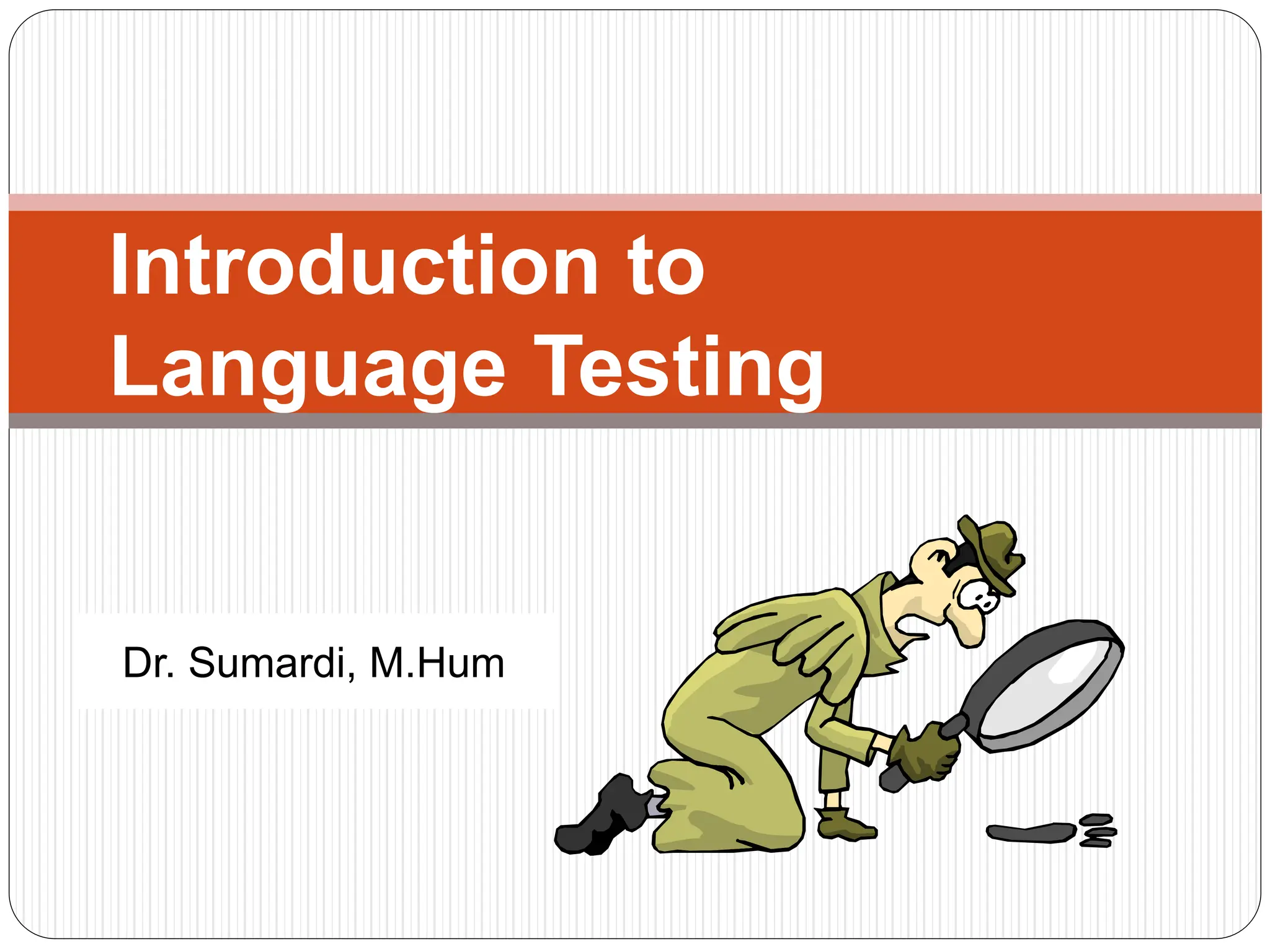
Introduction to
Language Testing
Dr. Sumardi, M.Hum
1. Objectives of this course
After you have completed the study of this course you will
be:
 familiar with the background of language testing
 aware of the fact that testing is an important part of every
teaching
and learning experience
 aware that both experienced and inexperienced teachers of
English as a Foreign Language (EFL) need to improve their
skills in constructing and administering classroom tests
 able to understand how testing helps students create
positive attitudes towards your class and able to identify the
main issues of language testing
 able to define and differentiate the terms of test,
measurement,
assessment and evaluation
 recognize that assessment, measurement, evaluation
and
 As a teacher, why does
he/she need to test the
students?
 What is expected to emerge
from a teaching and learning
process?
 What is an important
2. Introduction ...
 A successful learning process can be
seen from the extent of all students
are able to master the competencies
to be achieved.
 A competence is the main indicator
that is expected to emerge from each
of the language learning process.
 Competences: the realm of cognitive,
affective, and psychomotor
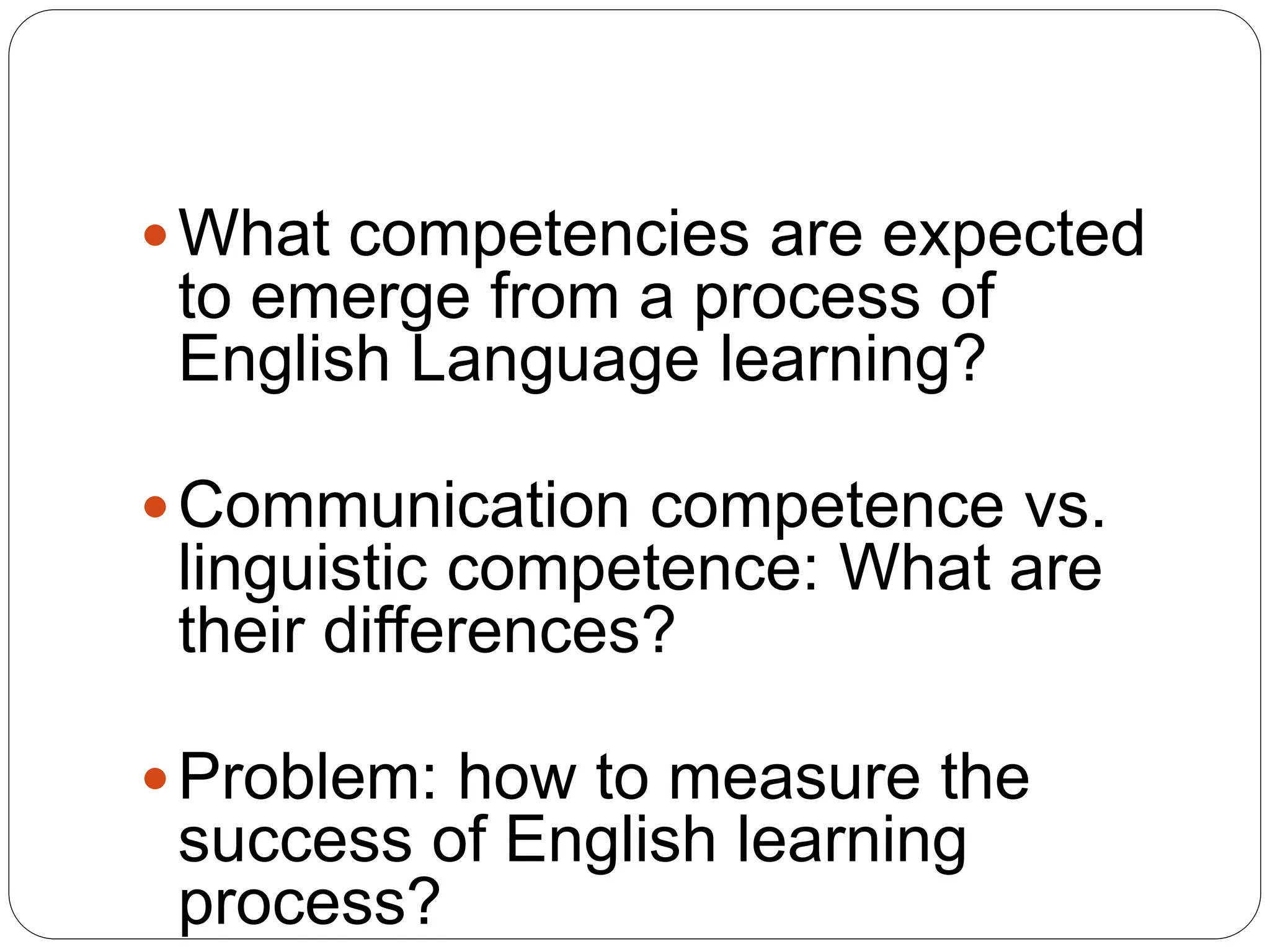
What competencies are expected
to emerge from a process of
English Language learning?
Communication competence vs.
linguistic competence: What are
their differences?
Problem: how to measure the
success of English learning
process?
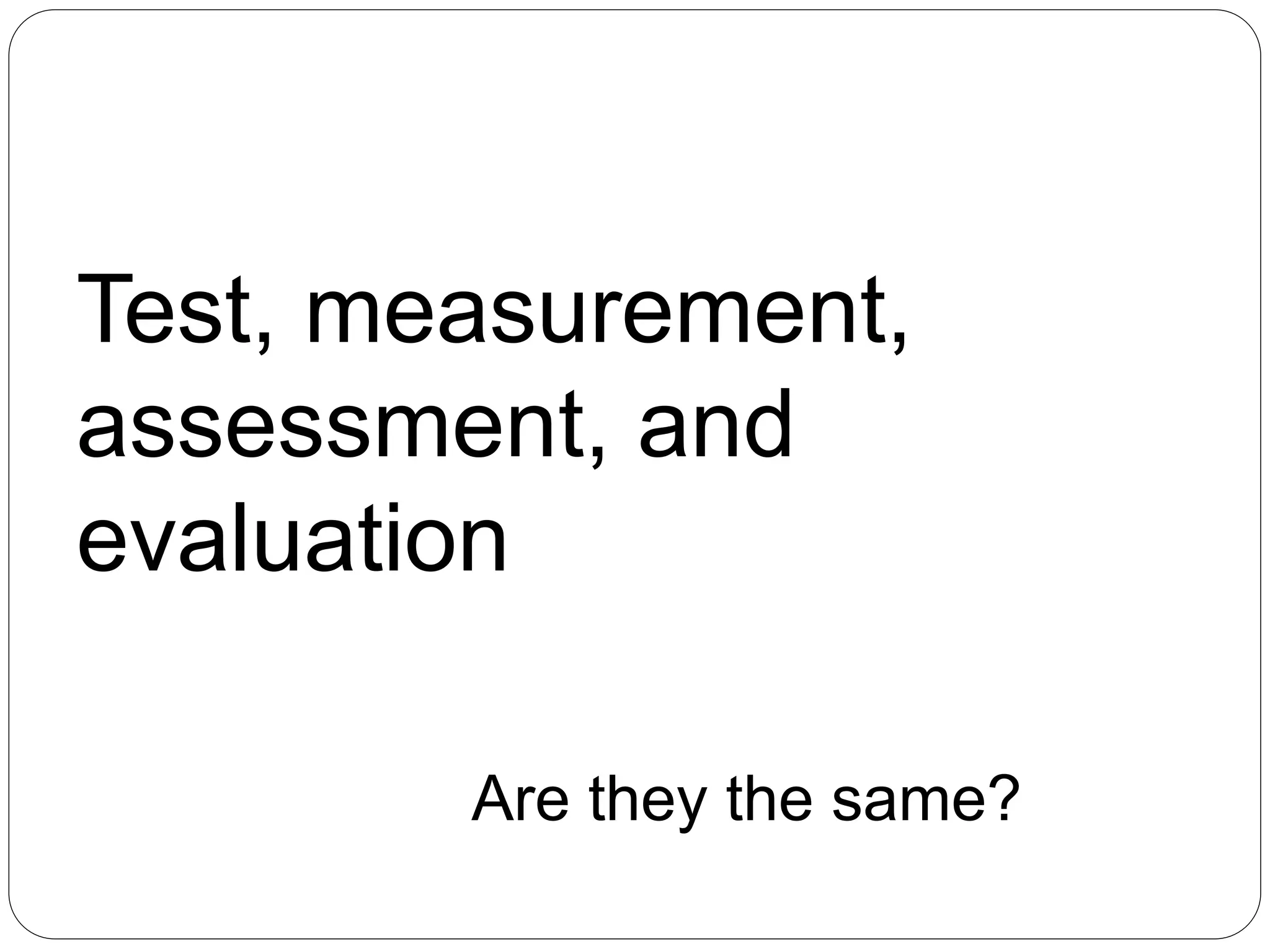
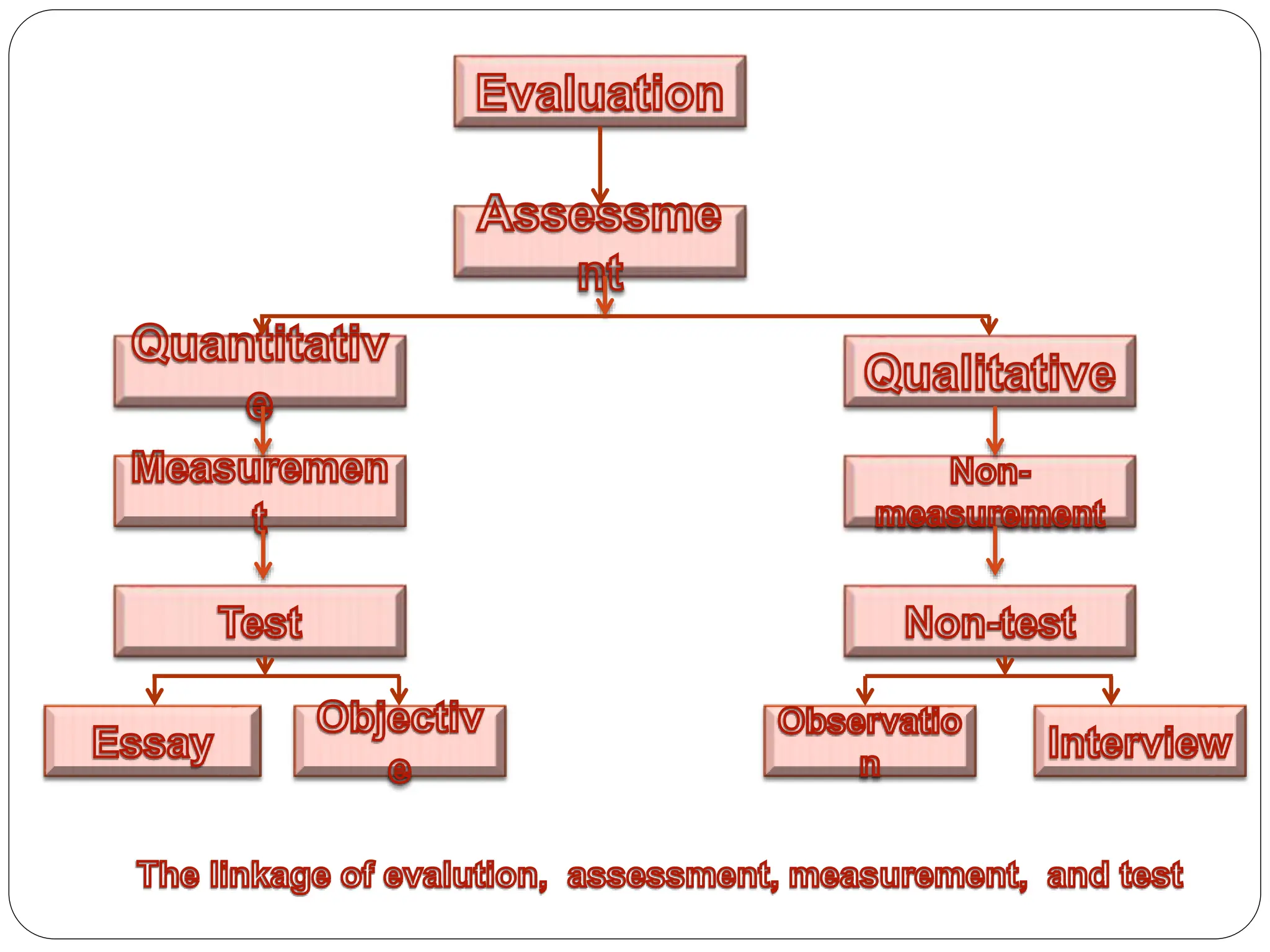
Test, measurement,
assessment, and
evaluation
Are they the same?
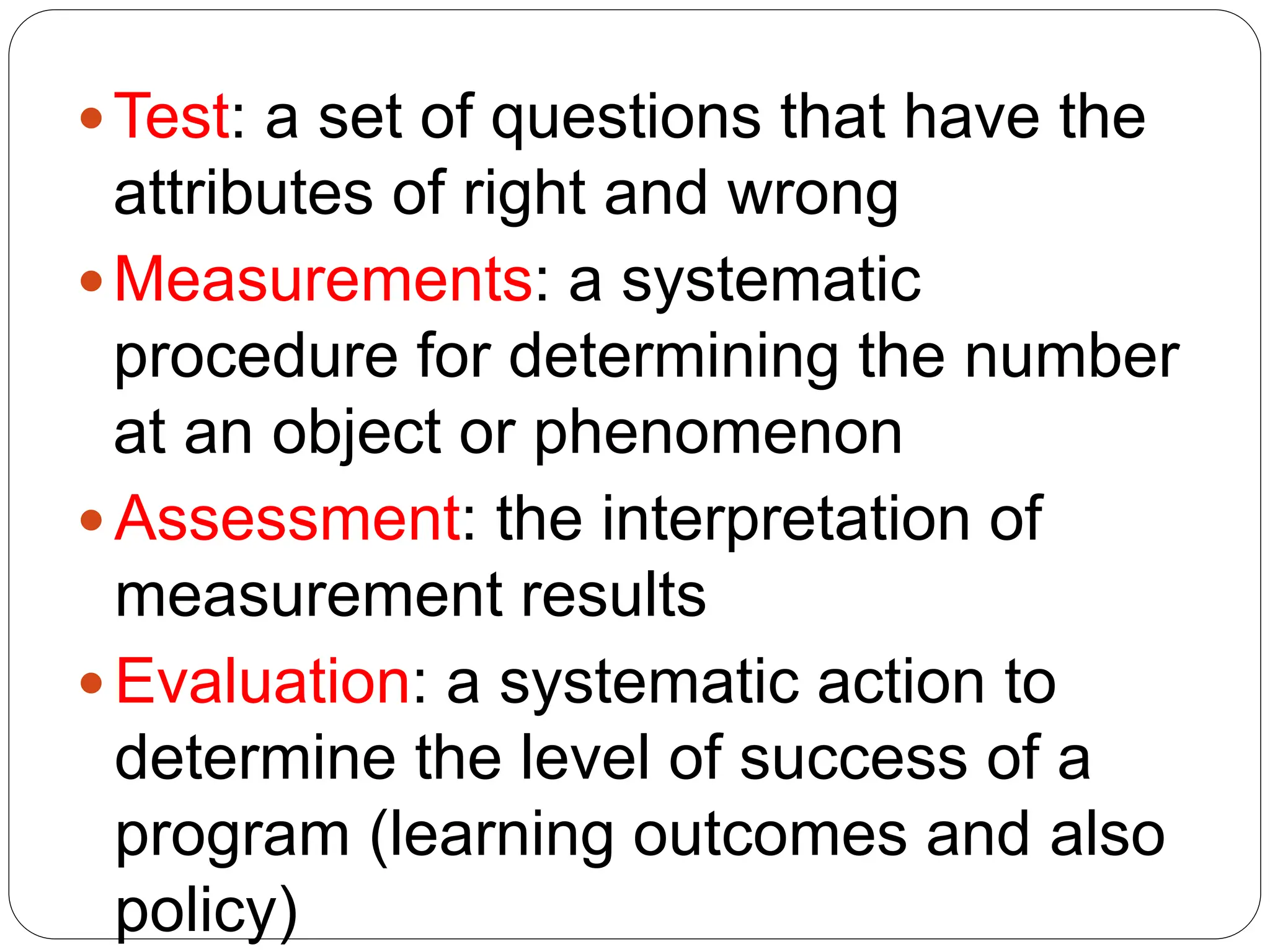
Test: a set of questions that have the
attributes of right and wrong
Measurements: a systematic
procedure for determining the number
at an object or phenomenon
 Assessment: the interpretation of
measurement results
 Evaluation: a systematic action to
determine the level of success of a
program (learning outcomes and also
policy)
Illustration ...
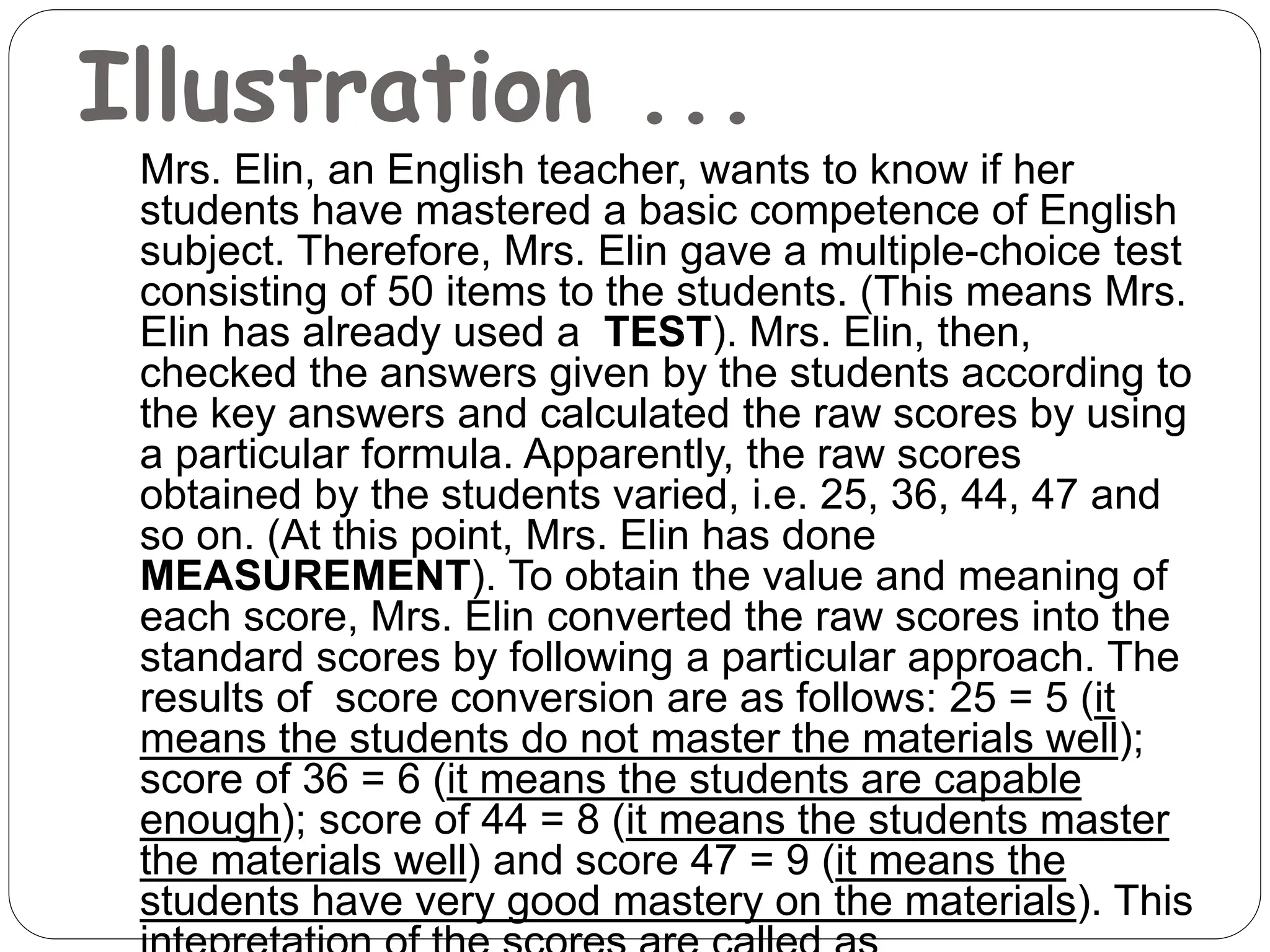
Mrs. Elin, an English teacher, wants to know if her
students have mastered a basic competence of English
subject. Therefore, Mrs. Elin gave a multiple-choice test
consisting of 50 items to the students. (This means Mrs.
Elin has already used a TEST). Mrs. Elin, then,
checked the answers given by the students according to
the key answers and calculated the raw scores by using
a particular formula. Apparently, the raw scores
obtained by the students varied, i.e. 25, 36, 44, 47 and
so on. (At this point, Mrs. Elin has done
MEASUREMENT). To obtain the value and meaning of
each score, Mrs. Elin converted the raw scores into the
standard scores by following a particular approach. The
results of score conversion are as follows: 25 = 5 (it
means the students do not master the materials well);
score of 36 = 6 (it means the students are capable
enough); score of 44 = 8 (it means the students master
the materials well) and score 47 = 9 (it means the
students have very good mastery on the materials). This
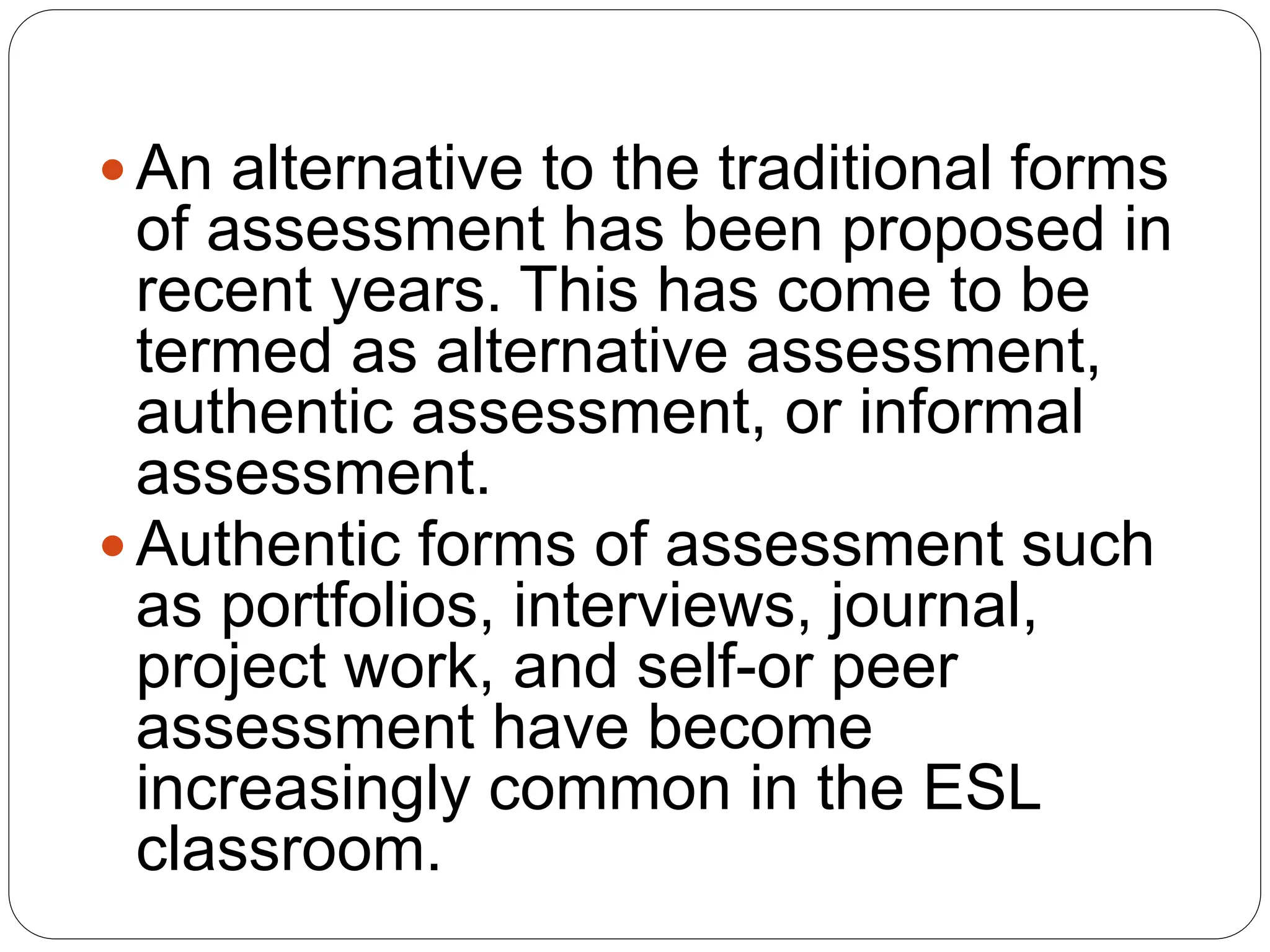
 An alternative to the traditional forms
of assessment has been proposed in
recent years. This has come to be
termed as alternative assessment,
authentic assessment, or informal
assessment.
 Authentic forms of assessment such
as portfolios, interviews, journal,
project work, and self-or peer
assessment have become
increasingly common in the ESL
classroom.
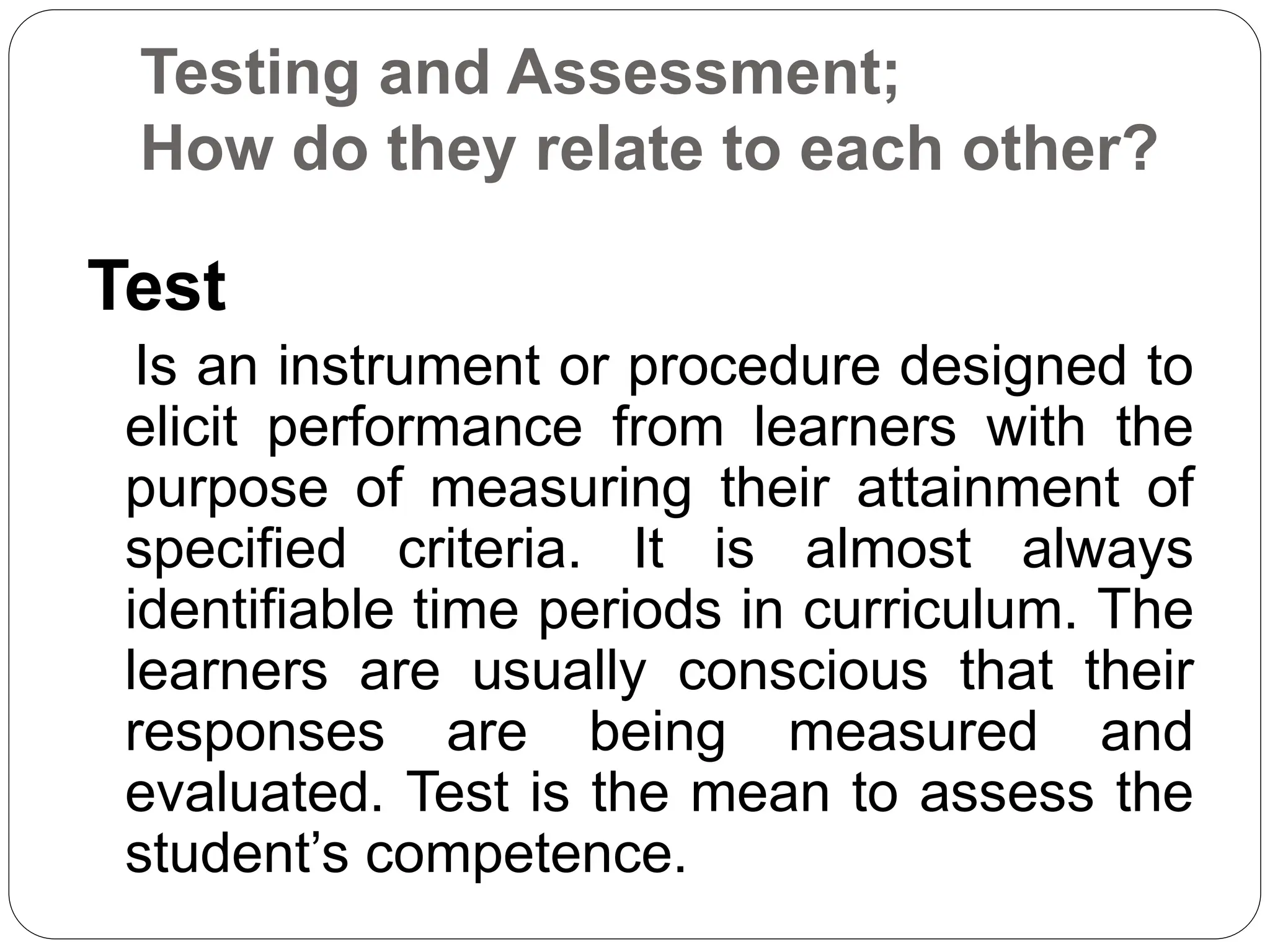
Testing and Assessment;
How do they relate to each other?
Test
Is an instrument or procedure designed to
elicit performance from learners with the
purpose of measuring their attainment of
specified criteria. It is almost always
identifiable time periods in curriculum. The
learners are usually conscious that their
responses are being measured and
evaluated. Test is the mean to assess the
student’s competence.
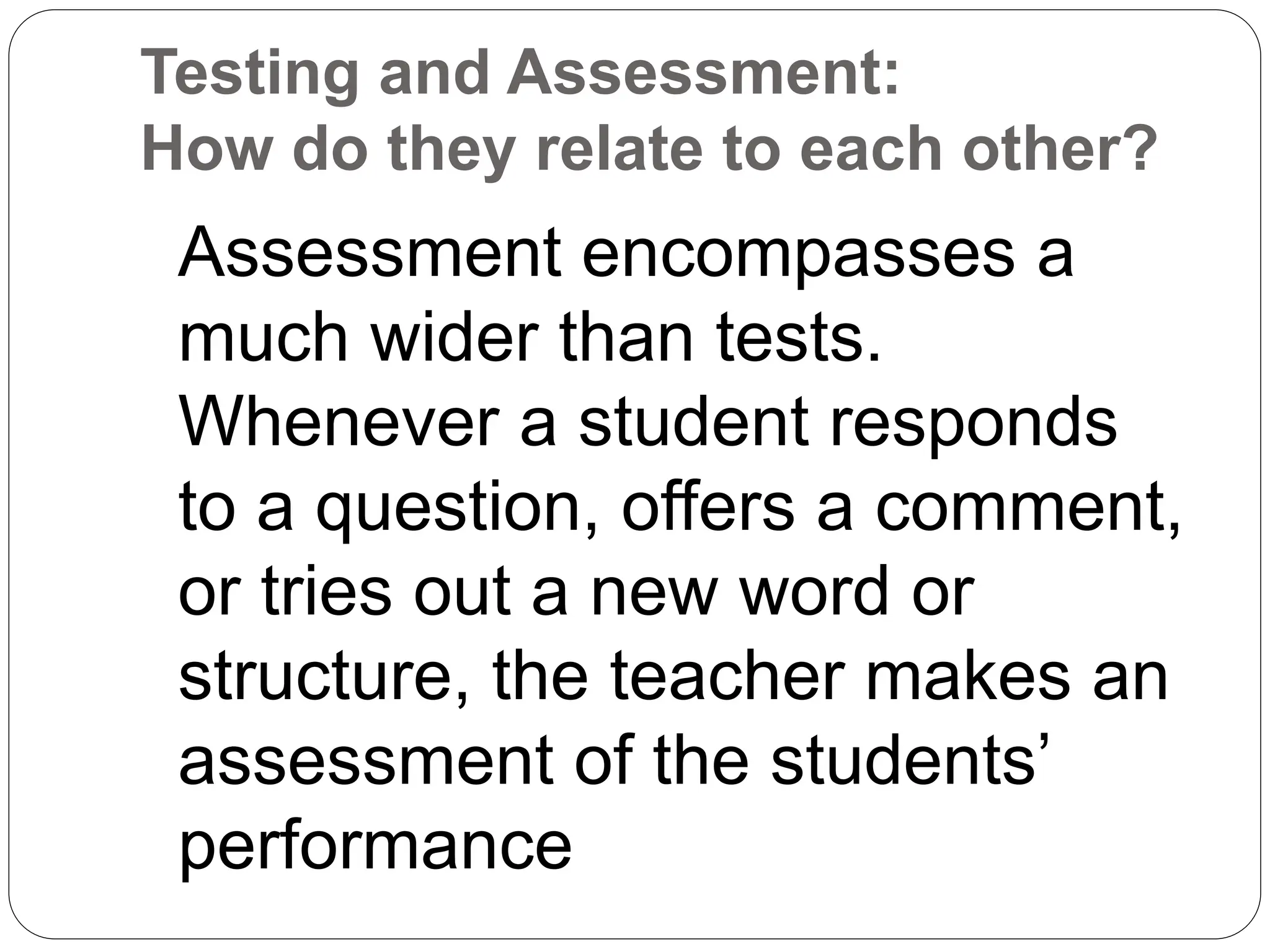
Testing and Assessment:
How do they relate to each other?
Assessment encompasses a
much wider than tests.
Whenever a student responds
to a question, offers a comment,
or tries out a new word or
structure, the teacher makes an
assessment of the students’
performance
ASSESSMENT
 Sommer (1989)
 The process of finding out who the
students are, what their abilities are,
what they need to know, and how they
perceive the learning will affect them.
Assessment places the needs of the
students at the center of the teacher’s
planning.
Testing and Assessment:
How do they relate to each other?
The Difference with Traditional
Assessment “( Gracfa  Pearson,
1994,p.357)”
 Alternative assessment is different from
that of traditional testing in that it actually
asks students to show what they can do.
The main goal of alternative assessment is
to “ gather evidence about how students
are approaching, processing and
completing real-life tasks in a particular
domain”.
INFORMAL v.s. FORMAL
ASSESSMENT
INFORMAL/FORMATIVE EVALUATION:
involved in all incidental, unplanned
evaluative coaching and feedback on
tasks designed to elicit performance, but
not for the purpose of recording results
and making fixed judgments about a
student’s competence. It implies the
observation of the process of learning
INFORMAL v.s. FORMAL
ASSESSMENT
FORMAL ASSESSMENT / SUMMATIVE
TEST: Exercises or experiences
specifically designed to tap into a
storehouse of skills and knowledge,
usually within a relatively short time limit.
They are systematic, planned sampling
techniques constructed to give teacher
and student an appraisal of students
achievement.
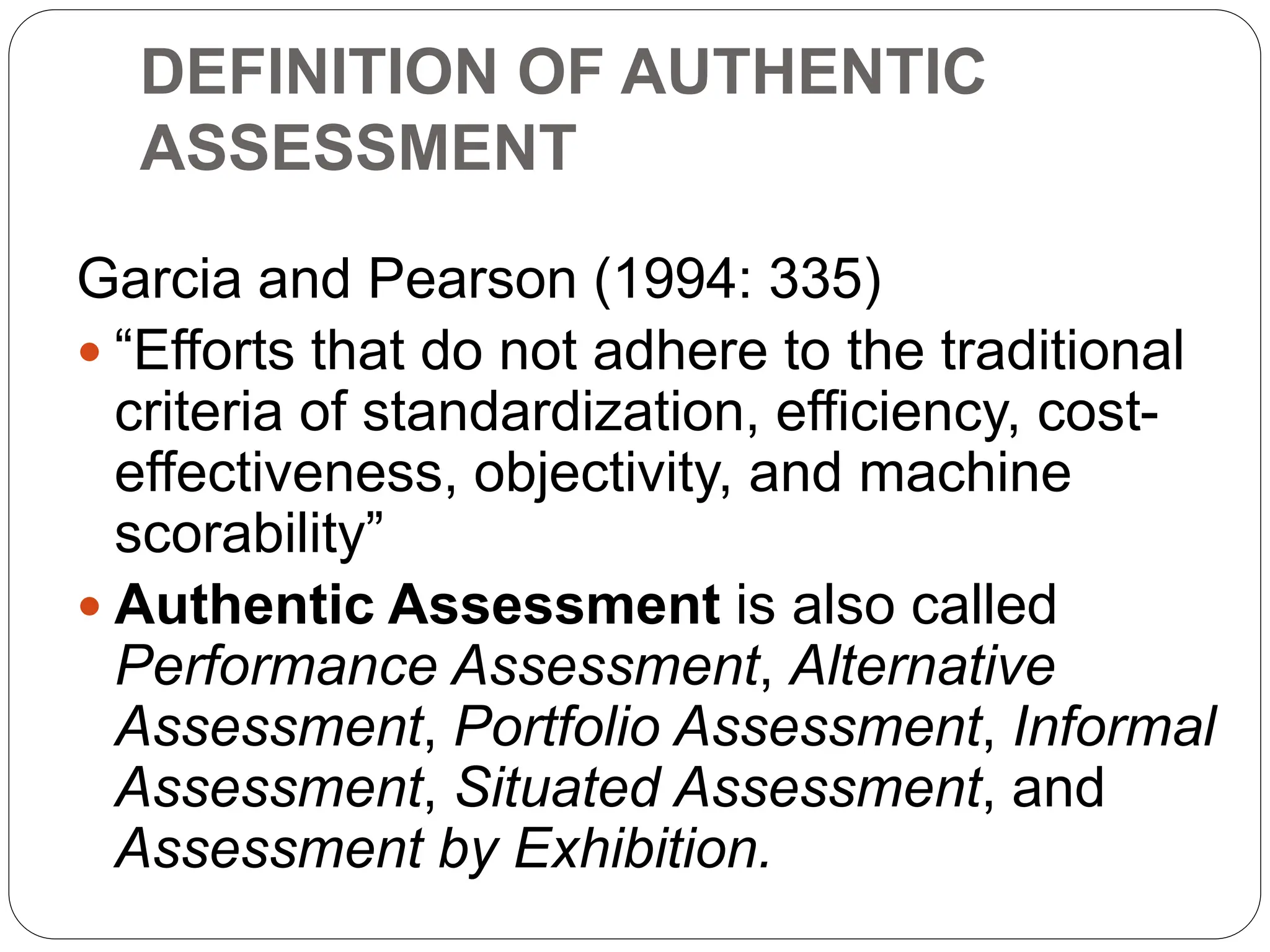
DEFINITION OF AUTHENTIC
ASSESSMENT
Garcia and Pearson (1994: 335)
 “Efforts that do not adhere to the traditional
criteria of standardization, efficiency, cost-
effectiveness, objectivity, and machine
scorability”
 Authentic Assessment is also called
Performance Assessment, Alternative
Assessment, Portfolio Assessment, Informal
Assessment, Situated Assessment, and
Assessment by Exhibition.
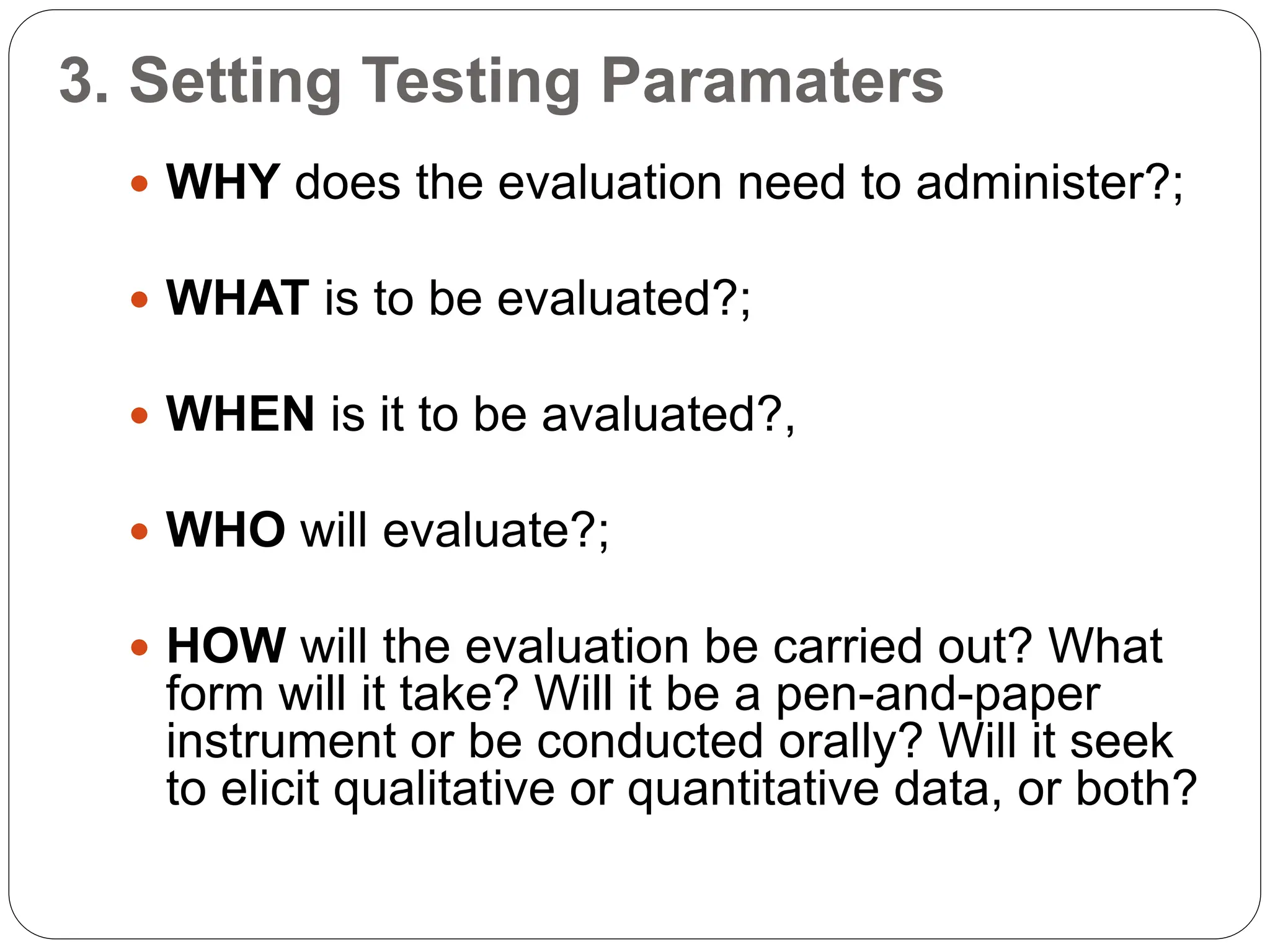
3. Setting Testing Paramaters
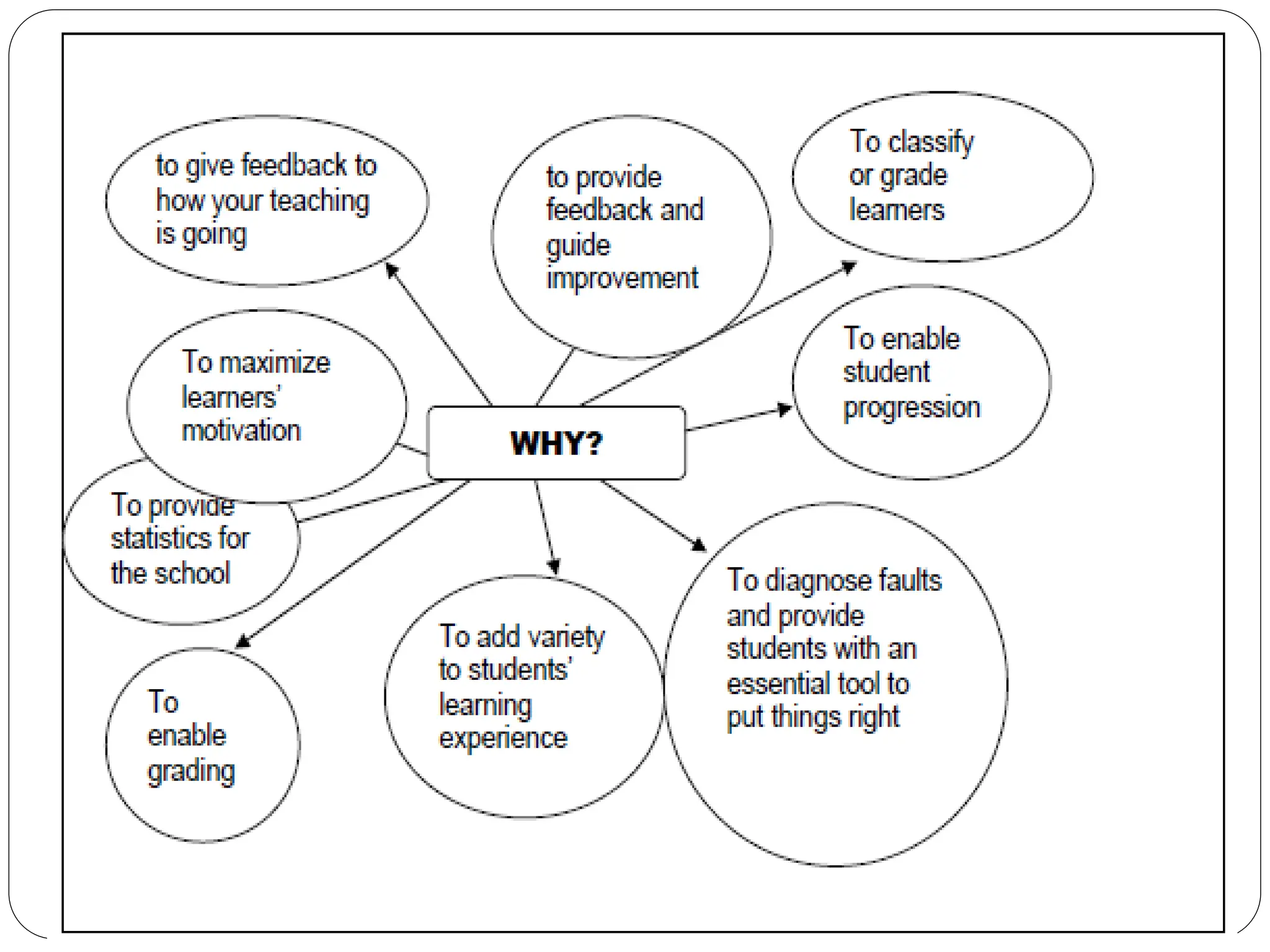
 WHY does the evaluation need to administer?;
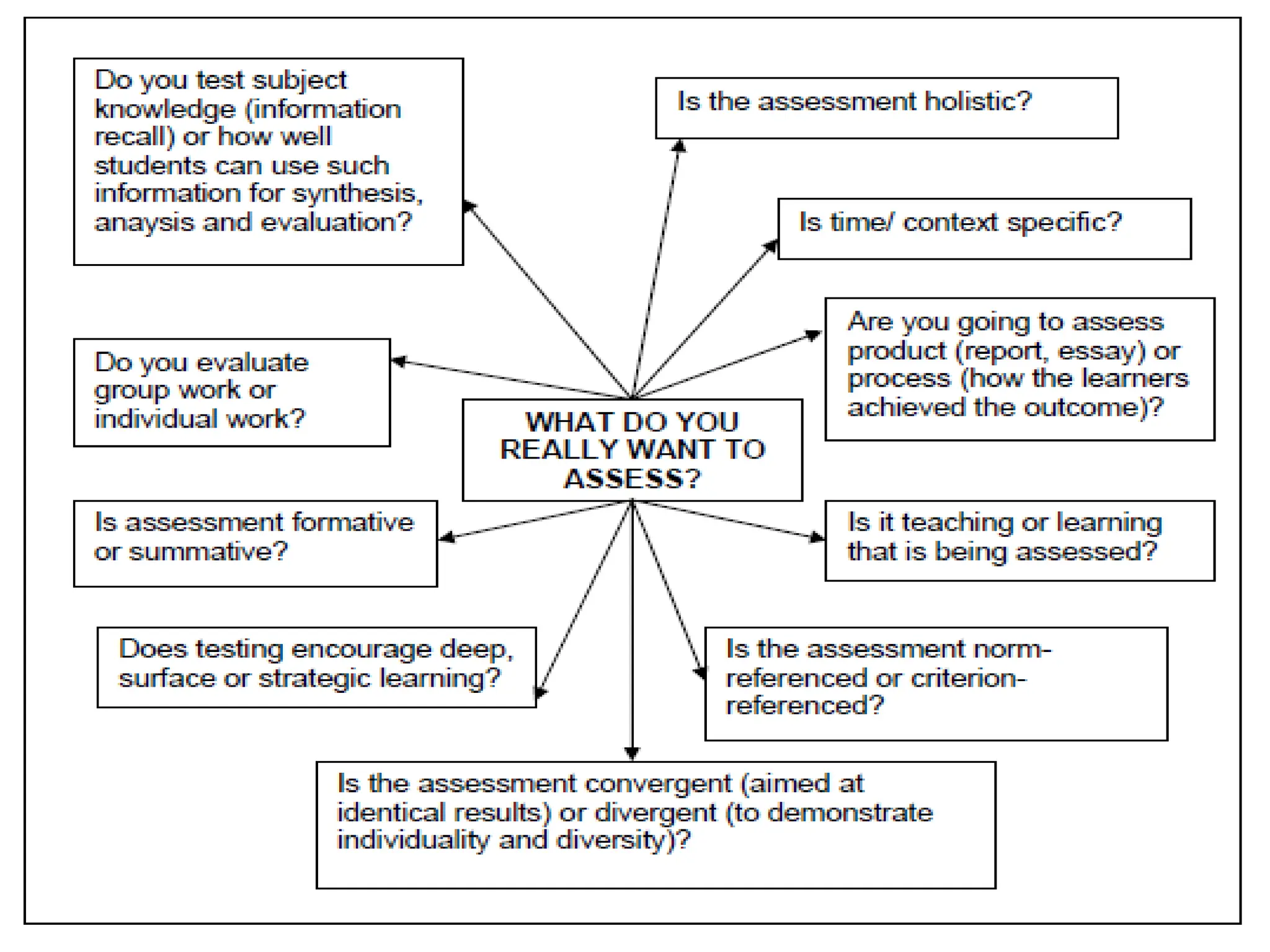
 WHAT is to be evaluated?;
 WHEN is it to be avaluated?,
 WHO will evaluate?;
 HOW will the evaluation be carried out? What
form will it take? Will it be a pen-and-paper
instrument or be conducted orally? Will it seek
to elicit qualitative or quantitative data, or both?
4. Participants in Testing
The participants in language
testing are the:
Tester
Test taker/the testee
Test user
a. Tester
The tester may be:
 A foreign language teacher who designs,
administers, and
interprets tests given to his own learners
 A group of people responsible for developing tests
requirements
 A private or governmental testing agency (PALSO in
Greece;
ETS – the Educational Testing Service in New
Jersey, USA;
CITO in Holland or BSNP in Indonesia.
 Other organizations/ international meetings: the
annual Language Testing Research Colloquium,
The Scientific Commission on Language Tests
b. The test taker / the testee
The Test Takers may be:
 Students in schools and universities
 Applicants for positions that require
foreign language abilities
 People seeking certification of
language proficiency for their jobs
c. The test user
The test users are the individual or institution that make
use of
 The interpretation of scores e.g. foreign language
teachers (to encourage and monitor learning, for
personal feedback)
 The Ministry of Education and culture uses tests to
ensure that the National Curriculum is followed and to
assess the standards achieved in school work
 Foreign universities (American or British) use language
tests (TOEFL or Cambridge Examination) to assess the
proficiency and predict if applicants can attend
successfully a programme of instruction in English
 Public and private institutions assess the linguistic
competence of those employees who need a foreign
language in their work
 Foreign language teaching schools use tests for
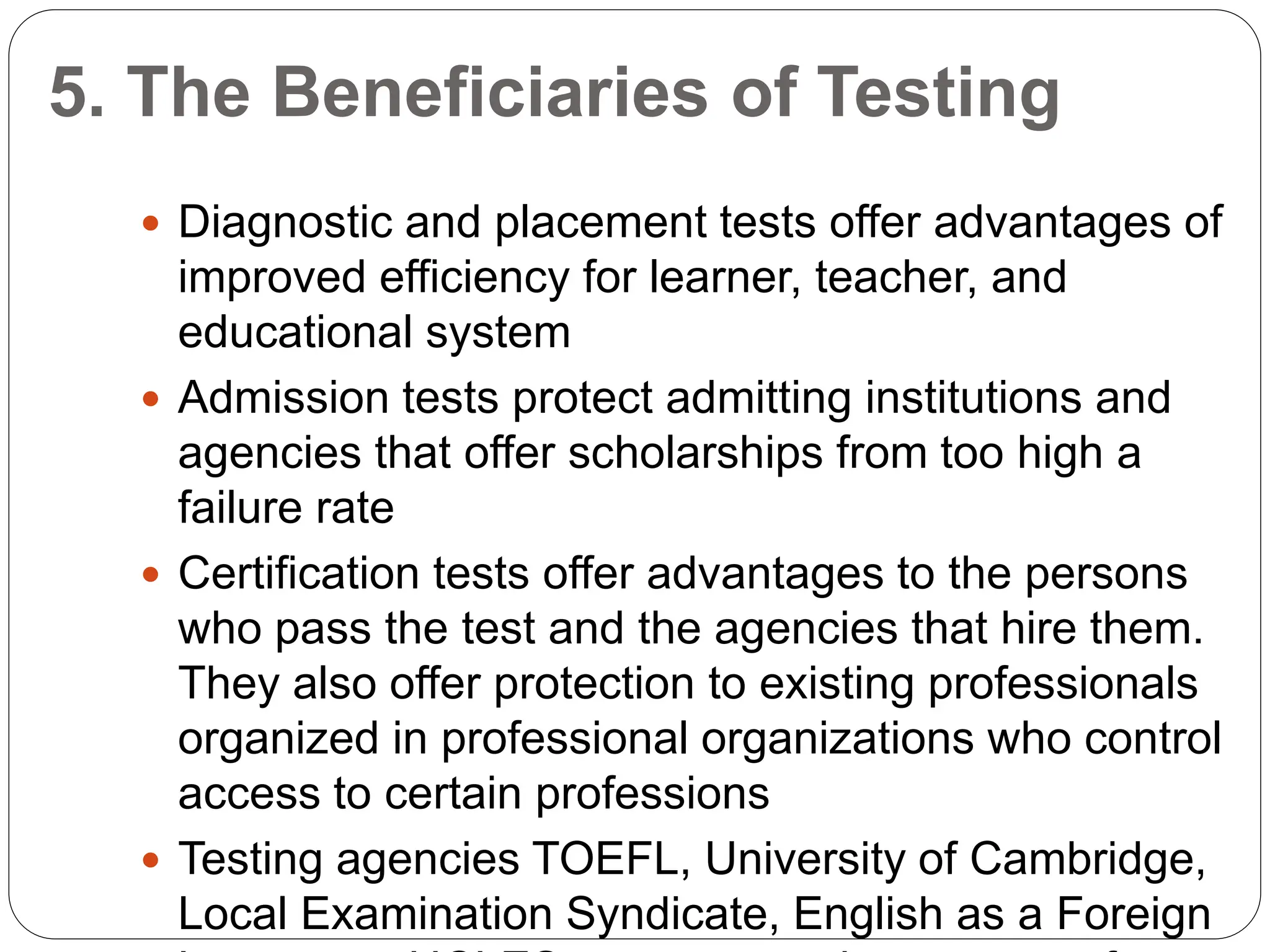
5. The Beneficiaries of Testing
 Diagnostic and placement tests offer advantages of
improved efficiency for learner, teacher, and
educational system
 Admission tests protect admitting institutions and
agencies that offer scholarships from too high a
failure rate
 Certification tests offer advantages to the persons
who pass the test and the agencies that hire them.
They also offer protection to existing professionals
organized in professional organizations who control
access to certain professions
 Testing agencies TOEFL, University of Cambridge,
Local Examination Syndicate, English as a Foreign
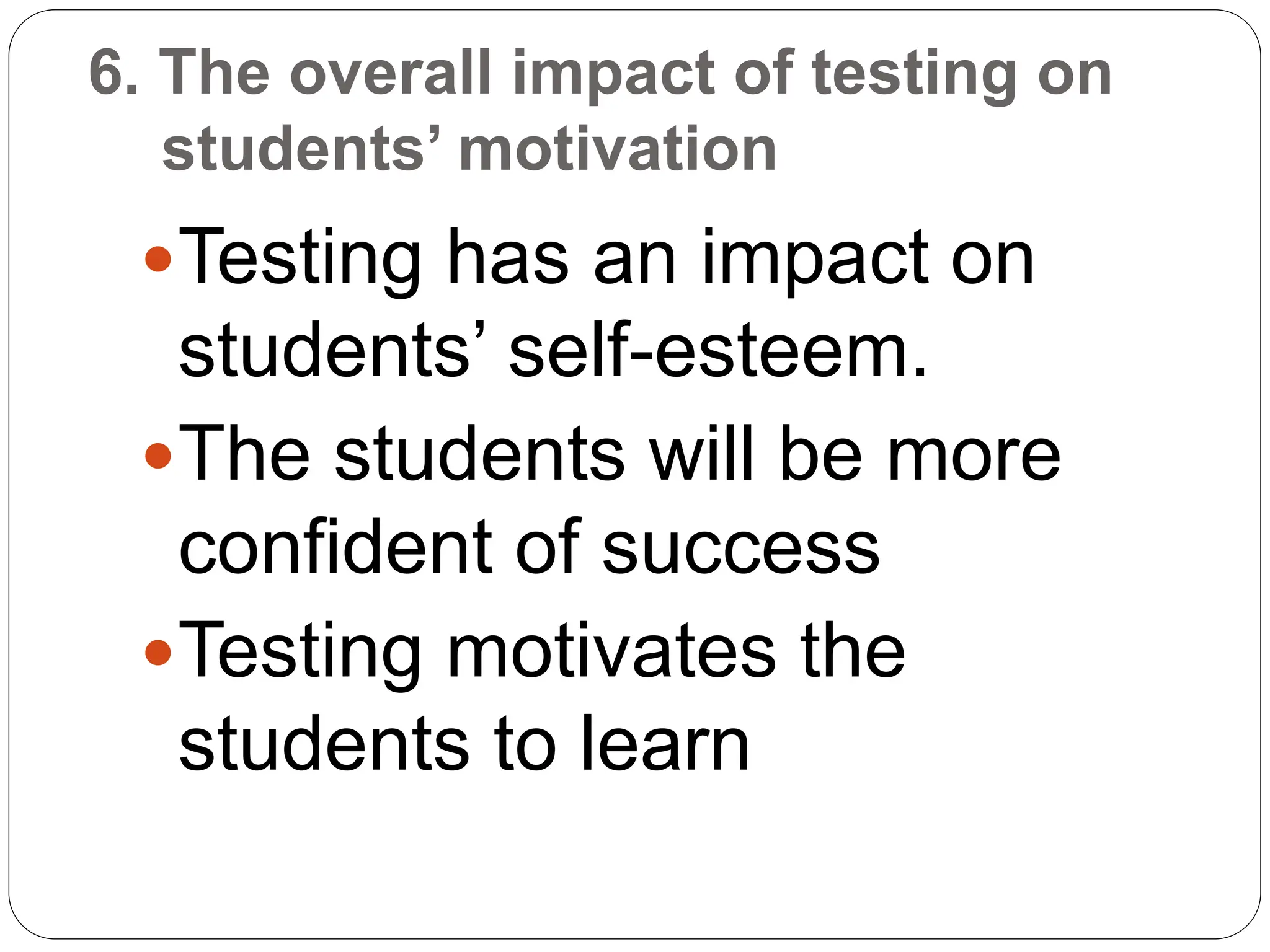
6. The overall impact of testing on
students’ motivation
Testing has an impact on
students’ self-esteem.
The students will be more
confident of success
Testing motivates the
students to learn
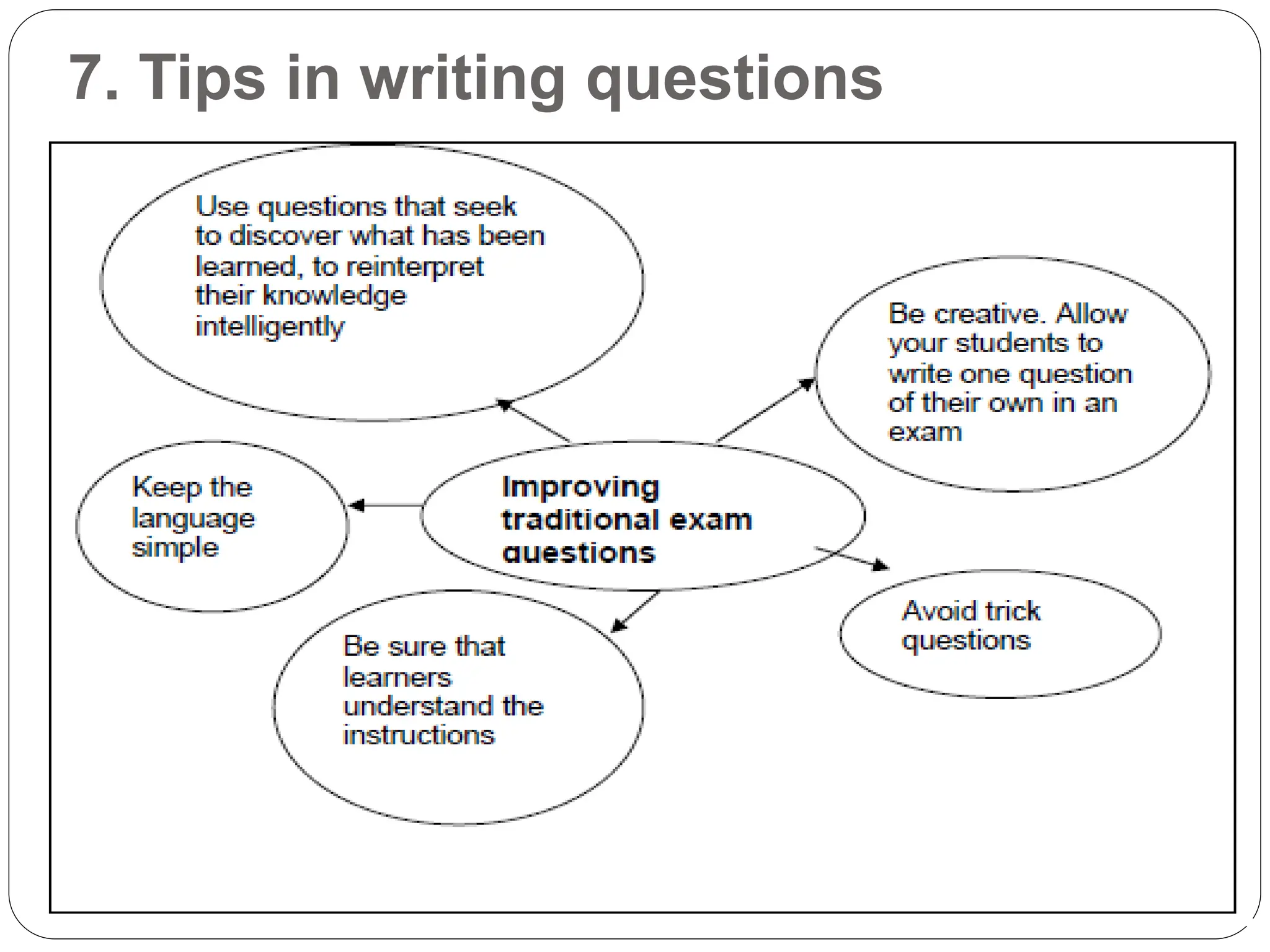
7. Tips in writing questions
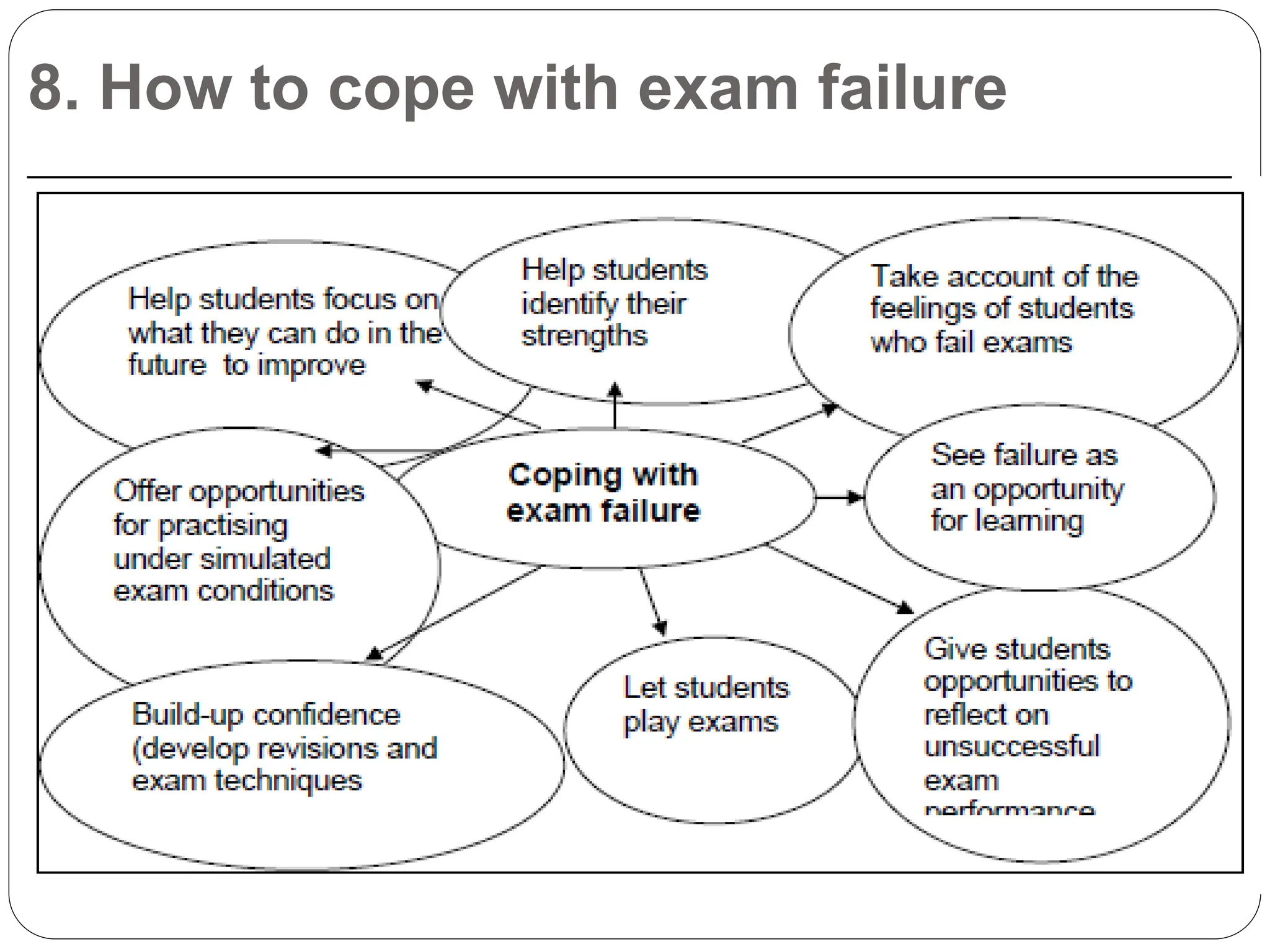
8. How to cope with exam failure
1. Introduction to Language Testing.pptx

1. Introduction to Language Testing.pptx

  • 1.
  • 2.
    1. Objectives ofthis course After you have completed the study of this course you will be:  familiar with the background of language testing  aware of the fact that testing is an important part of every teaching and learning experience  aware that both experienced and inexperienced teachers of English as a Foreign Language (EFL) need to improve their skills in constructing and administering classroom tests  able to understand how testing helps students create positive attitudes towards your class and able to identify the main issues of language testing  able to define and differentiate the terms of test, measurement, assessment and evaluation  recognize that assessment, measurement, evaluation and
  • 3.
     As ateacher, why does he/she need to test the students?  What is expected to emerge from a teaching and learning process?  What is an important
  • 4.
    2. Introduction ... A successful learning process can be seen from the extent of all students are able to master the competencies to be achieved.  A competence is the main indicator that is expected to emerge from each of the language learning process.  Competences: the realm of cognitive, affective, and psychomotor
  • 5.
    What competencies areexpected to emerge from a process of English Language learning? Communication competence vs. linguistic competence: What are their differences? Problem: how to measure the success of English learning process?
  • 6.
  • 7.
    Test: a setof questions that have the attributes of right and wrong Measurements: a systematic procedure for determining the number at an object or phenomenon  Assessment: the interpretation of measurement results  Evaluation: a systematic action to determine the level of success of a program (learning outcomes and also policy)
  • 8.
    Illustration ... Mrs. Elin,an English teacher, wants to know if her students have mastered a basic competence of English subject. Therefore, Mrs. Elin gave a multiple-choice test consisting of 50 items to the students. (This means Mrs. Elin has already used a TEST). Mrs. Elin, then, checked the answers given by the students according to the key answers and calculated the raw scores by using a particular formula. Apparently, the raw scores obtained by the students varied, i.e. 25, 36, 44, 47 and so on. (At this point, Mrs. Elin has done MEASUREMENT). To obtain the value and meaning of each score, Mrs. Elin converted the raw scores into the standard scores by following a particular approach. The results of score conversion are as follows: 25 = 5 (it means the students do not master the materials well); score of 36 = 6 (it means the students are capable enough); score of 44 = 8 (it means the students master the materials well) and score 47 = 9 (it means the students have very good mastery on the materials). This
  • 10.
     An alternativeto the traditional forms of assessment has been proposed in recent years. This has come to be termed as alternative assessment, authentic assessment, or informal assessment.  Authentic forms of assessment such as portfolios, interviews, journal, project work, and self-or peer assessment have become increasingly common in the ESL classroom.
  • 11.
    Testing and Assessment; Howdo they relate to each other? Test Is an instrument or procedure designed to elicit performance from learners with the purpose of measuring their attainment of specified criteria. It is almost always identifiable time periods in curriculum. The learners are usually conscious that their responses are being measured and evaluated. Test is the mean to assess the student’s competence.
  • 12.
    Testing and Assessment: Howdo they relate to each other? Assessment encompasses a much wider than tests. Whenever a student responds to a question, offers a comment, or tries out a new word or structure, the teacher makes an assessment of the students’ performance
  • 13.
    ASSESSMENT  Sommer (1989) The process of finding out who the students are, what their abilities are, what they need to know, and how they perceive the learning will affect them. Assessment places the needs of the students at the center of the teacher’s planning. Testing and Assessment: How do they relate to each other?
  • 14.
    The Difference withTraditional Assessment “( Gracfa  Pearson, 1994,p.357)”  Alternative assessment is different from that of traditional testing in that it actually asks students to show what they can do. The main goal of alternative assessment is to “ gather evidence about how students are approaching, processing and completing real-life tasks in a particular domain”.
  • 15.
    INFORMAL v.s. FORMAL ASSESSMENT INFORMAL/FORMATIVEEVALUATION: involved in all incidental, unplanned evaluative coaching and feedback on tasks designed to elicit performance, but not for the purpose of recording results and making fixed judgments about a student’s competence. It implies the observation of the process of learning
  • 16.
    INFORMAL v.s. FORMAL ASSESSMENT FORMALASSESSMENT / SUMMATIVE TEST: Exercises or experiences specifically designed to tap into a storehouse of skills and knowledge, usually within a relatively short time limit. They are systematic, planned sampling techniques constructed to give teacher and student an appraisal of students achievement.
  • 17.
    DEFINITION OF AUTHENTIC ASSESSMENT Garciaand Pearson (1994: 335)  “Efforts that do not adhere to the traditional criteria of standardization, efficiency, cost- effectiveness, objectivity, and machine scorability”  Authentic Assessment is also called Performance Assessment, Alternative Assessment, Portfolio Assessment, Informal Assessment, Situated Assessment, and Assessment by Exhibition.
  • 18.
    3. Setting TestingParamaters  WHY does the evaluation need to administer?;  WHAT is to be evaluated?;  WHEN is it to be avaluated?,  WHO will evaluate?;  HOW will the evaluation be carried out? What form will it take? Will it be a pen-and-paper instrument or be conducted orally? Will it seek to elicit qualitative or quantitative data, or both?
  • 21.
    4. Participants inTesting The participants in language testing are the: Tester Test taker/the testee Test user
  • 22.
    a. Tester The testermay be:  A foreign language teacher who designs, administers, and interprets tests given to his own learners  A group of people responsible for developing tests requirements  A private or governmental testing agency (PALSO in Greece; ETS – the Educational Testing Service in New Jersey, USA; CITO in Holland or BSNP in Indonesia.  Other organizations/ international meetings: the annual Language Testing Research Colloquium, The Scientific Commission on Language Tests
  • 23.
    b. The testtaker / the testee The Test Takers may be:  Students in schools and universities  Applicants for positions that require foreign language abilities  People seeking certification of language proficiency for their jobs
  • 24.
    c. The testuser The test users are the individual or institution that make use of  The interpretation of scores e.g. foreign language teachers (to encourage and monitor learning, for personal feedback)  The Ministry of Education and culture uses tests to ensure that the National Curriculum is followed and to assess the standards achieved in school work  Foreign universities (American or British) use language tests (TOEFL or Cambridge Examination) to assess the proficiency and predict if applicants can attend successfully a programme of instruction in English  Public and private institutions assess the linguistic competence of those employees who need a foreign language in their work  Foreign language teaching schools use tests for
  • 25.
    5. The Beneficiariesof Testing  Diagnostic and placement tests offer advantages of improved efficiency for learner, teacher, and educational system  Admission tests protect admitting institutions and agencies that offer scholarships from too high a failure rate  Certification tests offer advantages to the persons who pass the test and the agencies that hire them. They also offer protection to existing professionals organized in professional organizations who control access to certain professions  Testing agencies TOEFL, University of Cambridge, Local Examination Syndicate, English as a Foreign
  • 26.
    6. The overallimpact of testing on students’ motivation Testing has an impact on students’ self-esteem. The students will be more confident of success Testing motivates the students to learn
  • 27.
    7. Tips inwriting questions
  • 28.
    8. How tocope with exam failure