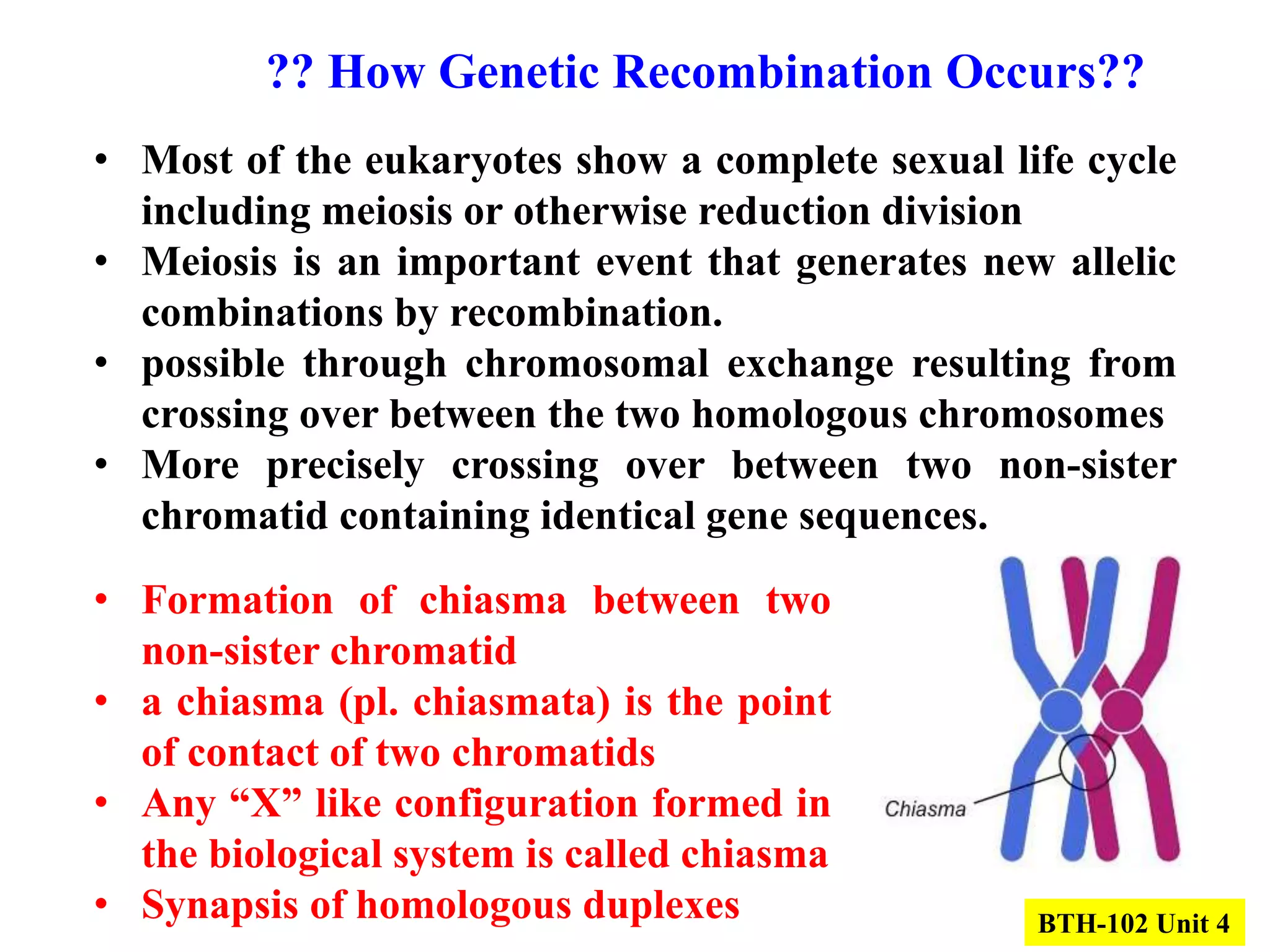
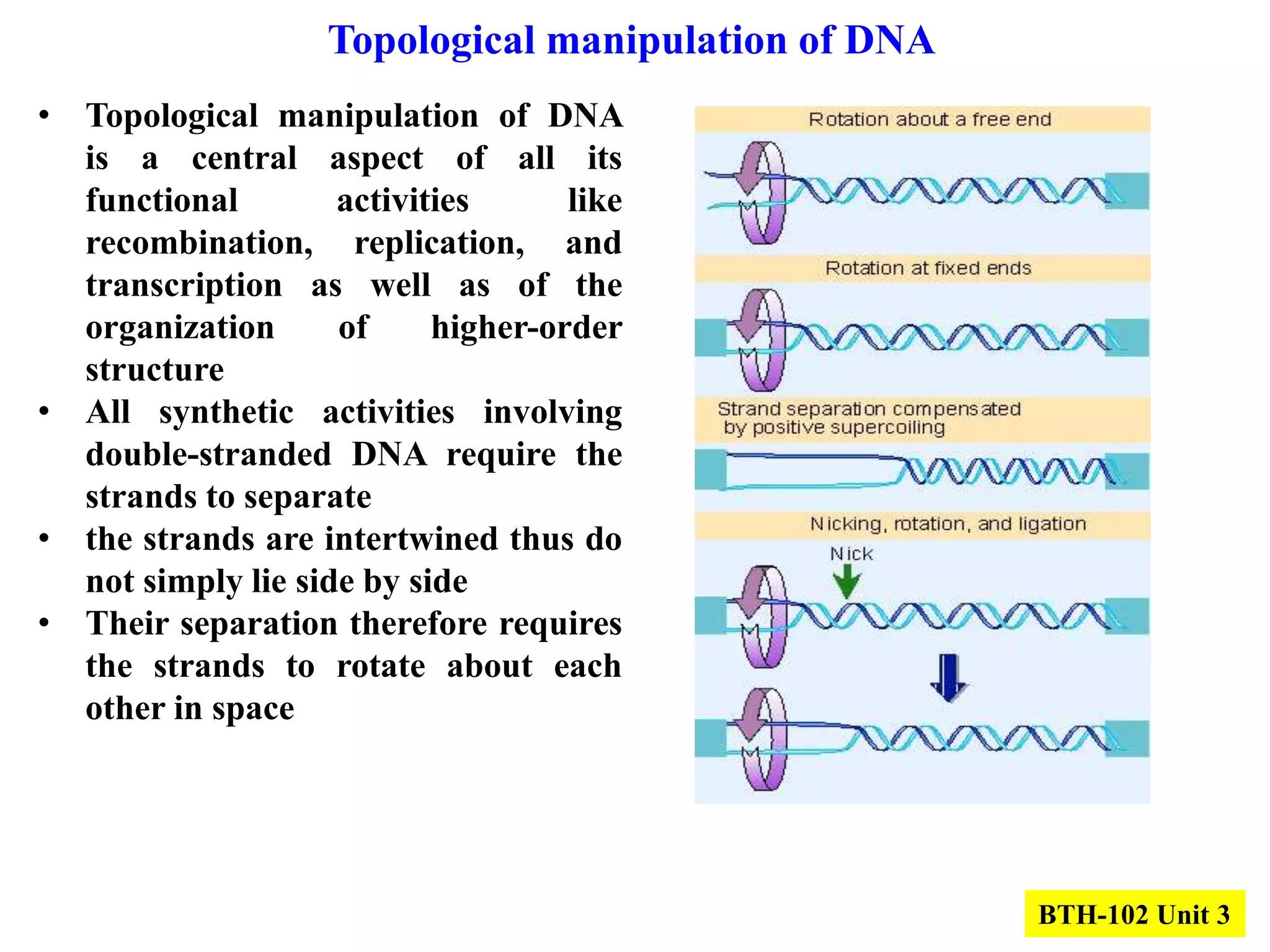
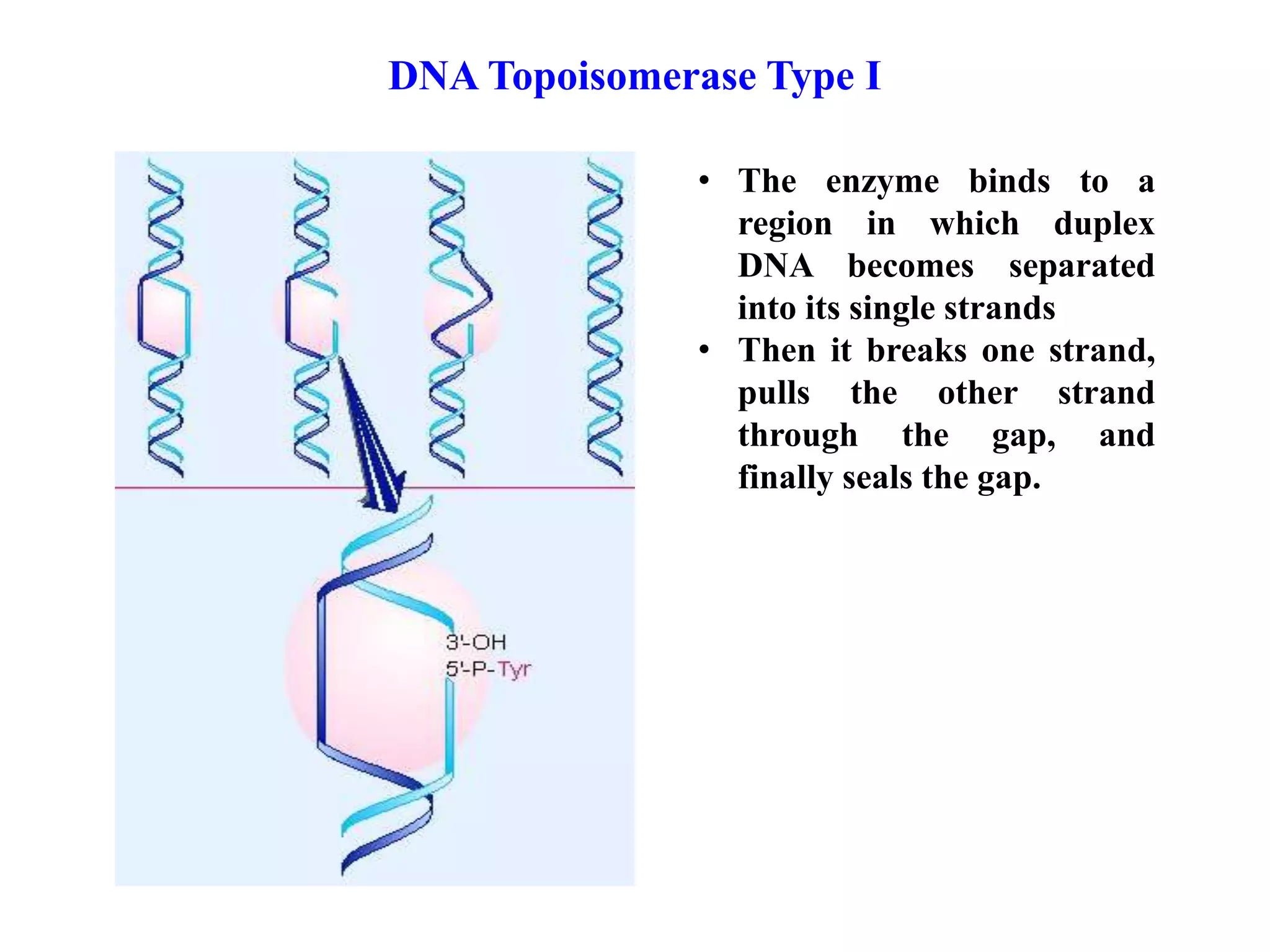
Genetic recombination occurs through meiosis to generate genetic variation which allows organisms to adapt to environmental changes over time. During meiosis, homologous chromosomes pair up and may undergo crossing over, where segments are exchanged between non-sister chromatids. This leads to new combinations of alleles in the offspring. There are three main theories that describe the mechanisms underlying genetic recombination: breakage and reunion, breakage and copying, and complete copy choice. Topological manipulation of DNA through processes like supercoiling is important for allowing the strands to separate during recombination, and DNA topoisomerases introduce negative supercoils to relax the DNA strands.