Desired Learning Objectives
Whatis critical thinking?
What is the difference between
thinking and critical thinking?
How can we effectively utilize critical
thinking skill in problem solving?
How far critical thinking is
helpful in real life?
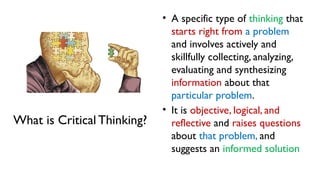
What is CriticalThinking?
• A specific type of thinking that
starts right from a problem
and involves actively and
skillfully collecting, analyzing,
evaluating and synthesizing
information about that
particular problem.
• It is objective, logical, and
reflective and raises questions
about that problem, and
suggests an informed solution
The Power ofAsking Questions
What is the
problem?
Why is the
problem important
to solve?
What is the most
effective solution?
14.
Critical Thinking inAction
• Possible Solutions:
– Install new equipment to
speed up the production
process
– Raise prices during peak
hours to reduce demand
– Reconfigure the restaurant's
layout to enable more
customers to order at once
A fast-food restaurant is experiencing long
lines and wait times during peak hours.
#9 What ? → Why ? → How it can be Solved ?
{Fire (heat + fuel +oxygen)}
out of the box thinking (available resources, limits, biases)
#10 Cultivates Better Decision Making: Critical thinking helps you weigh all options and angles before making a decision. It allows you to make informed choices based on fact rather than merely opinion or bias.
Encourages Innovation: By critically evaluating problems, you can spot new opportunities and inventive solutions that wouldn't be immediately apparent. This mentality can help you change directions and achieve your goals with confidence.
Fosters Better Communication: By learning how to think critically, individuals can more effectively communicate their ideas and opinions and consider others' perspectives and alternate points of view.
Improves Problem-Solving Skills: Critical thinking helps individuals solve problems at their roots, identify the causes, and develop effective solutions to overcome them.
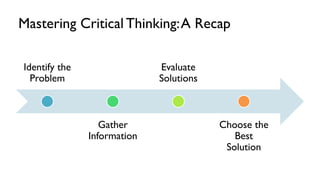
#11 Identify the Problem: Begin by clarifying and defining the problem. This means breaking it down into parts, questioning assumptions and reframing it in different ways to develop a deeper understanding.
Collect Relevant Information: Once you understand the problem, gather the necessary information to brainstorm solutions. This should include data, research, brainstorming, and insights from others with relevant experience.
Evaluate Possible Solutions: Assess all potential solutions by considering their strengths and weaknesses. To do this effectively, you'll need to develop criteria that are relevant to the specific situation.
Select the Best Solution: Based on the evaluation, choose the most viable solution and develop a plan to implement it. Revisit the plan at regular intervals to ensure it remains effective and adjust course as needed.
#12 Effective Teamwork: Teamwork thrives when team members can critically evaluate problems and establish a plan that highlights everyone's strengths and weaknesses.
Collaboration in the Workplace: In the office, workers can put the critical thinking skills to work when they collaborate to solve long-term and short-term goals.
Data Analysis: Effective data analysis requires critical thinking abilities to identify trends, patterns, and insights that may not be immediately obvious.
#13 What is the problem?
It is important to start by defining the problem and exploring it from different angles. Only then can you begin developing solutions that address the root cause of the issue rather than merely treating the symptoms.
Why is the problem important to solve?
Understanding the 'why' behind the problem can help you assess which solutions make the most sense for the particular situation
What is the most effective solution?
This question is often the most challenging, requiring analysis and imagination. The ability to think outside of the box for effective solutions will set critical thinkers apart from the rest.
#15 Purchasing Decisions: When shopping, critical thinking helps you evaluate product features, compare prices, and make informed choices based on quality, value, and your specific needs.
Maintenance of Automobiles: Preventive and corrective maintenance of an automobile requires critical thinking to evaluate the symptoms of a problem and identify the underlying cause.
Organizational Consensus: Organizations are like machines that require critical thinking when assigning roles and responsibilities, cultivating accurate communication (upward and downward), and ensuring that everyone is committed to the same goals.
#16 Step-1 Critical thinking begins with understanding the problem in-depth, breaking it into smaller components and examining it from multiple angles.
Step-2 Collect as much information as possible from various sources, including research, brainstorming, and insights from colleagues.
Step-3 Assess the potential solutions based on criteria relevant to the situation.
Step-4 Based on the evaluation, select the best solution and develop a plan to implement it.





![References
[1] https://www.goodreads.com/author/quotes/9810.Albert_Einstein accessed 7/15/2023 at 08:56 PM
[2] https://www.ukactive.com/blog/the-art-of-training-the-mind-to-think/ accessed 7/15/2023 at 09:00 PM
Polya , G. (1945). How to Solve It. New Jersey: Princeton University Press.](https://image.slidesharecdn.com/1-250328162032-3eff5842/85/1-Critical-thinking-pptx-exploring-y-to-think-18-320.jpg)


