Hawwa Shiuna Musthafa
              Department of Education, Bangalore University


 M.Ed (Master of Education)(Educational Administration & Educational Leadership
B.Ed (Bachelor of Education) (Specializing in Teaching of Social Sciences and English.
    B.A (Bachelor of Arts) (Auxiliary subjects: Psychology, English and Sociology.
CRITICAL
THINKING


   BY: MS. HAWWA SHIUNA
ARE YOU CONVINCED????
•   EVERY DAY SITUATIONS:
•   YOU SHOULD GO TO BED EARLY
•   YOU SHOULD BECOME A DOCTOR
•   YOU SHOULD STUDY
•   YOU SHOULDN’T PLAY TOO MUCH
•   DONT CLIMB UP THE WALL YOU WILL FALL
•   YOU ARE FAT
•   SHOULD I BUY A CAR?
WRONG DECISIONS??!!!
• ARE YOU TIRED OF MAKING WRONG
  DECISIONS??
• BLAMING OTHERS FOR YOUR WRONG
  DECISIONS???
• INFLUENCED BY OTHERS???
• CANT MAKE UP MY MIND!!!!!
• I AM CONFUSED!!!
• WHAT SHOULD I DO!!!!!!!!!!!!!!
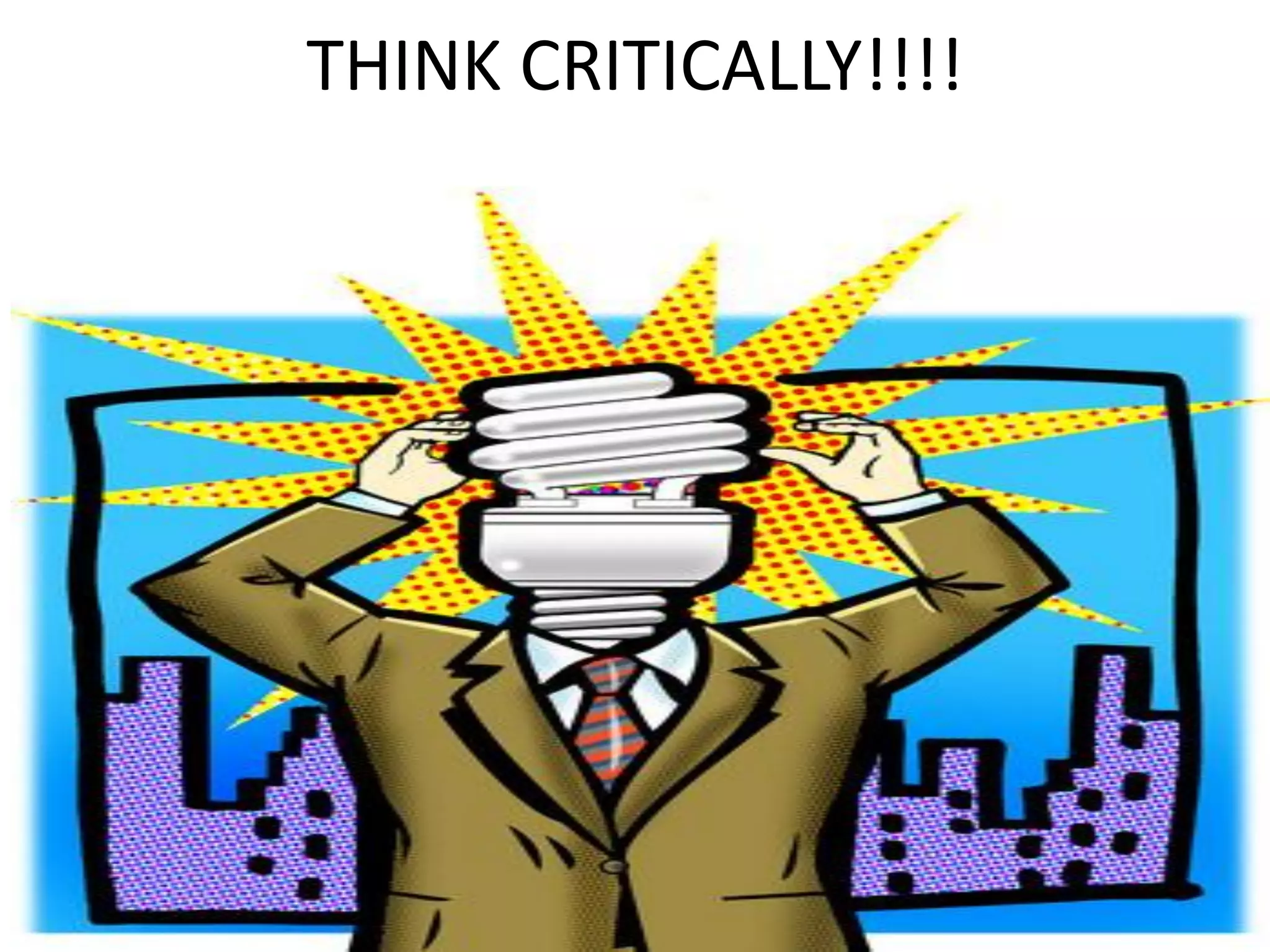
THINK CRITICALLY!!!!
LET US UNDERSTAND WHAT IS
              THINKING ??
• Activity of the brain.
• Potential for communication
• 2 activities:-
   – Gathering Information (Perception)
   – Processing Information (Cognition)
• The action of using one's mind to produce thoughts
• Thinking involves mentally manipulating information,
  as when we form concepts, solve problems, reason,
  and make decisions
SO NOW WHAT IS CRITICAL
             THINKING?!
• Critical thinking involves asking questions,
  defining a problem, examining evidence,
  analyzing assumptions and biases, avoiding
  emotional reasoning, avoiding
  oversimplification, considering other
  interpretations, and tolerating ambiguity
• In short, it “literally thinking about something
  from many angles.
Why is it important to develop your
       critical thinking skills? „

• In order to make informed decisions and
  effectively problem solve in all areas of your
  life
• „„To avoid making big mistakes that you will
  regret in the future regret in the future
• „„To use the knowledge gained from positive
  experiences so that you can create more
  positive experiences
WHEN DO YOU USE CRITICAL
    THINKING OUTSIDE OF COLLEGE?
• „„When deciding whether or not you can
  afford to buy something
• „„Deciding who to date/Marry
• „„Deciding who to vote for in the next
  election
• „„When thinking about how a big decision
  that will affect your life
“Reading without reflecting is like eating without
                         digesting”
•   In a very real sense CT is pervasive.
•   There is hardly a time or a place where it would not
    seem to be of use.
•   Have purposes in mind.
•   Wonder what’s true and what’s not.
•   What to believe and what to reject.
CORE CRITICAL THINKING SKILLS
•Conceptualizing— developing a “mind
picture”

• Applying—putting conceptual info to use

• Analyzing—closely examining tearing apart or
breaking down to really look at

• Synthesizing—pulling things together in a well-
organized logical way

• Evaluating—making decisions       about;
reviewing; assessing; etc.
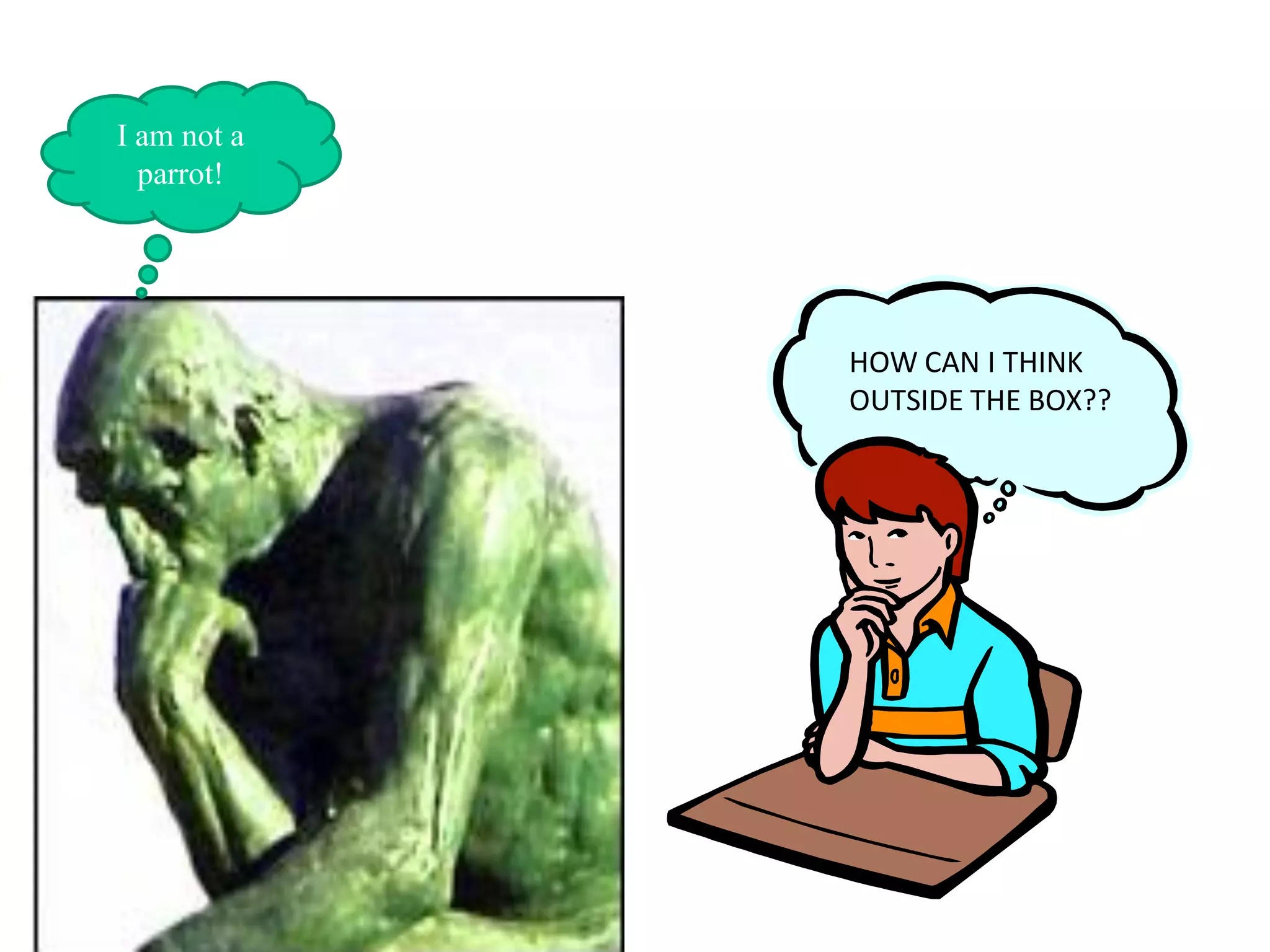
I am not a
  parrot!


             HOW CAN I THINK
             OUTSIDE THE BOX??
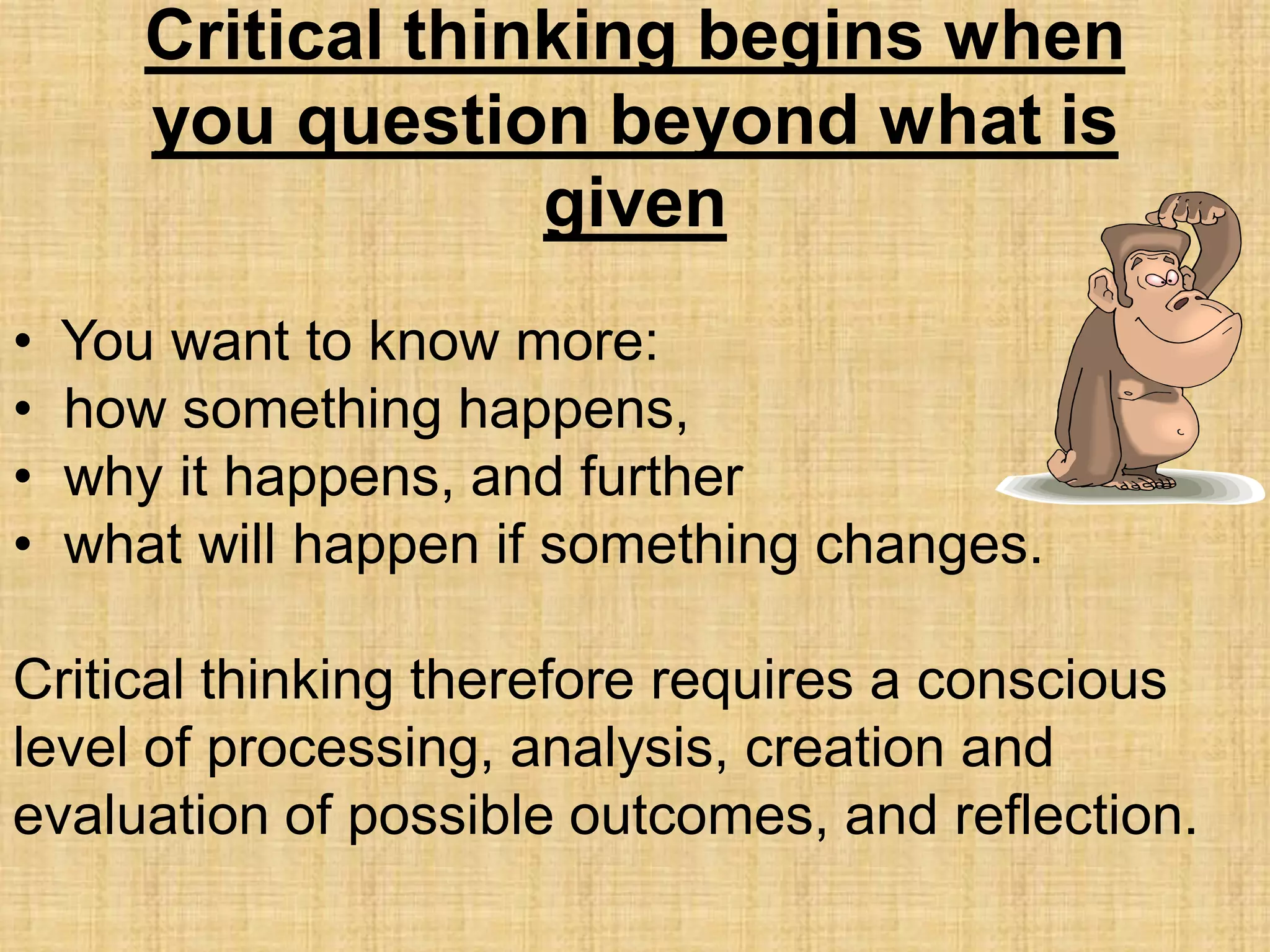
Critical thinking begins when
       you question beyond what is
                    given
•   You want to know more:
•   how something happens,
•   why it happens, and further
•   what will happen if something changes.

Critical thinking therefore requires a conscious
level of processing, analysis, creation and
evaluation of possible outcomes, and reflection.
Critical thinkers….
They are interested in knowing all
 there is about a topic. They look
  for new and better ways to do
   everything. They are not the
     person who will settle for
  ―…because that is the way we
       have always done it.‖
        Critical thinkers are curious
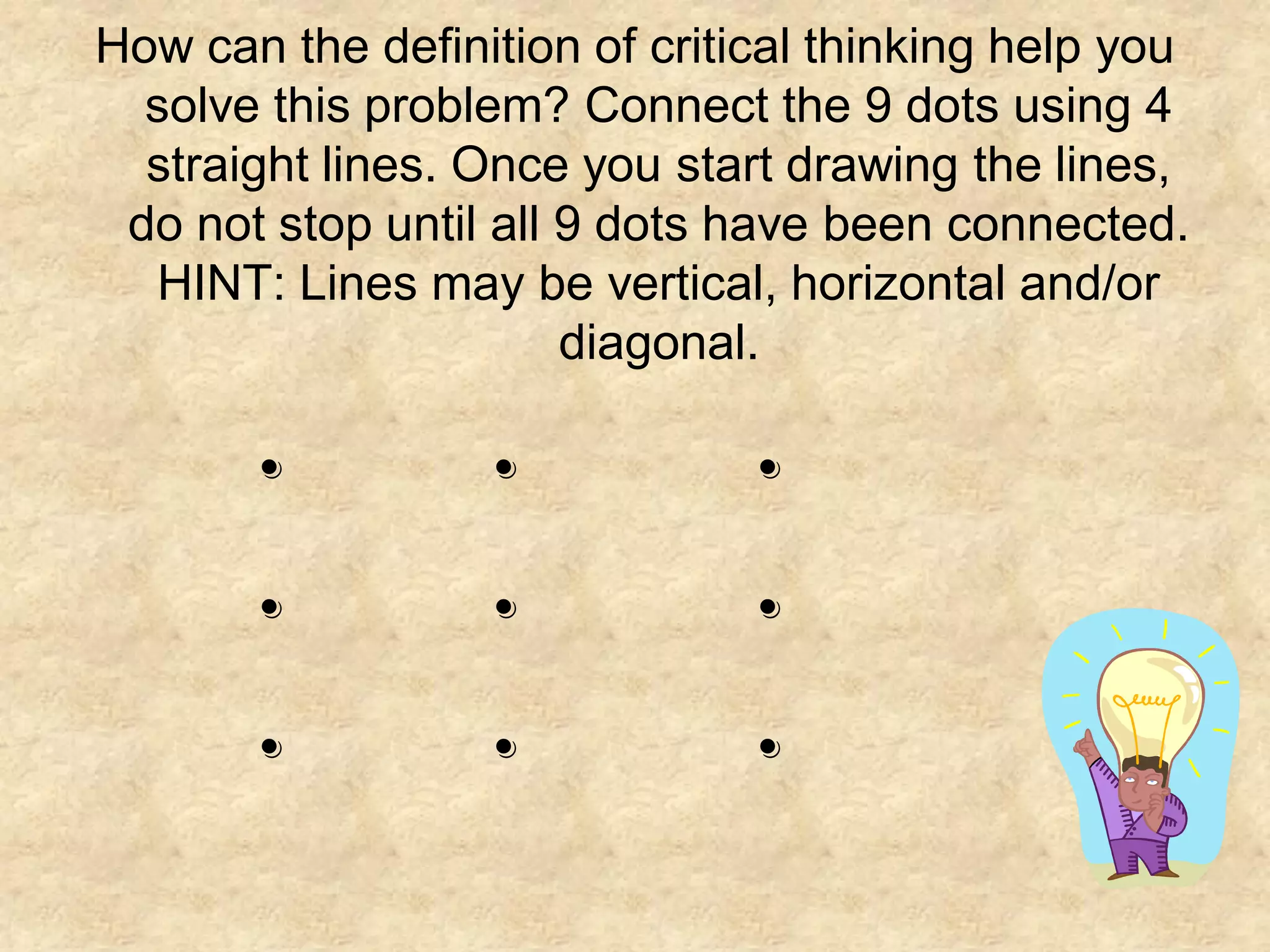
How can the definition of critical thinking help you
  solve this problem? Connect the 9 dots using 4
  straight lines. Once you start drawing the lines,
 do not stop until all 9 dots have been connected.
  HINT: Lines may be vertical, horizontal and/or
                       diagonal.

       .          .            .
       .          .            .
       .          .            .
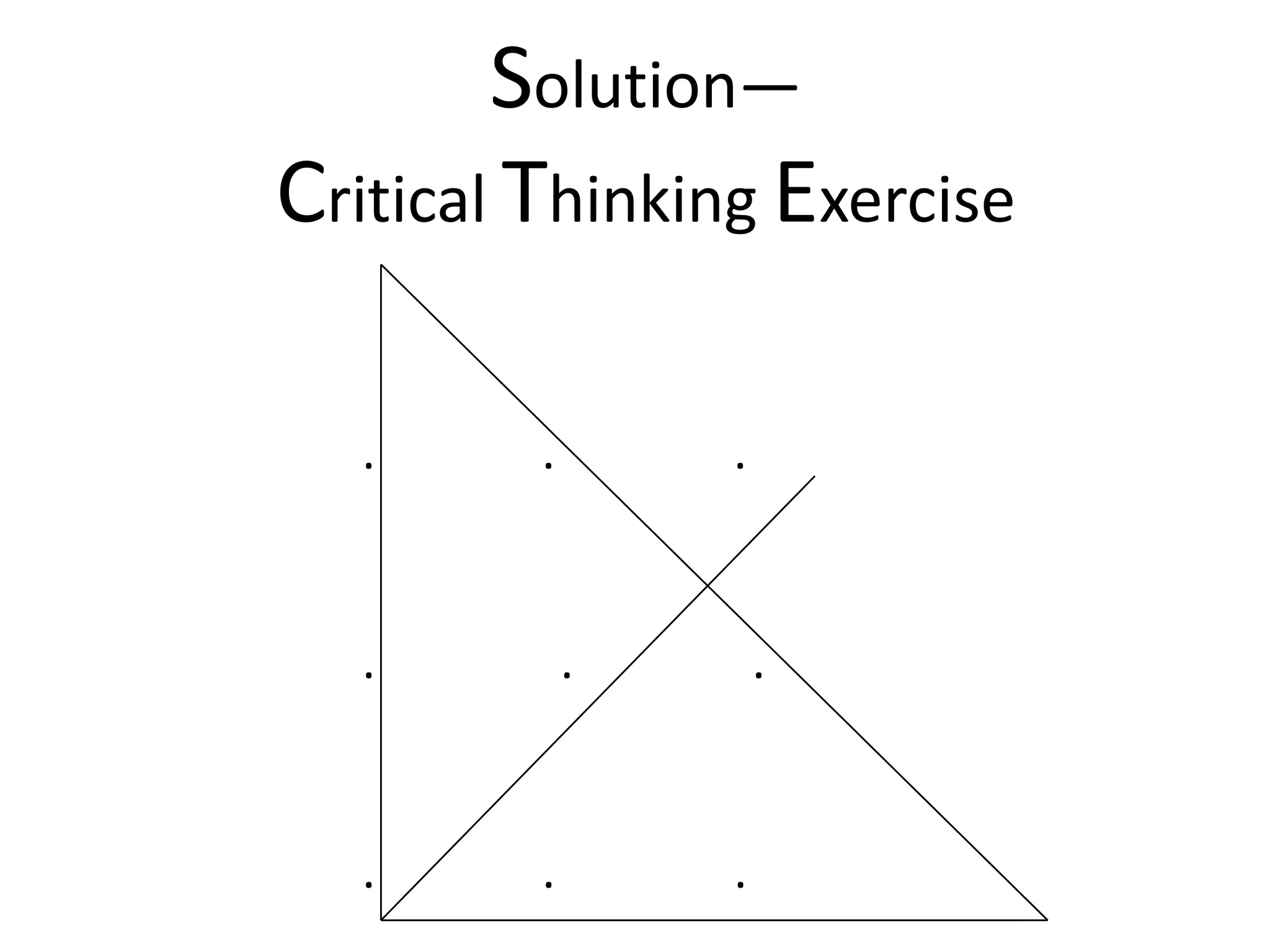
Solution—
Critical Thinking Exercise

   .     .       .


   .         .       .


   .     .       .
Why Is Critical Thinking Important
               It . . .

• . . . underlies reading, writing, listening and speaking—basic
  elements of communication

• . . . plays an important part in social change. . .
  institutions in any society—courts, governments, schools,
  businesses—are the products of critical thinking

• . . . plays a major role in technological advances
• . . . blazes a path to freedom from half-truths and deceptions
Who Uses Critical Thinking
• Parents
• Nurses
• Doctors
• Athletic coaches
• Teachers/Professors
• Air Traffic Controllers
• Military Commanders
• Lawyers, Judges
• Supervisors
• Day Care Workers
Therefore CT is…
• Critical thinking is “higher level” thinking”
• It often requires us to think ―outside the box‖
• Many occupations/careers require critical
  thinking
• The things we enjoy in everyday society are the
  result of critical thinking
• By adopting certain habits and behaviors we can
 learn to think critically.
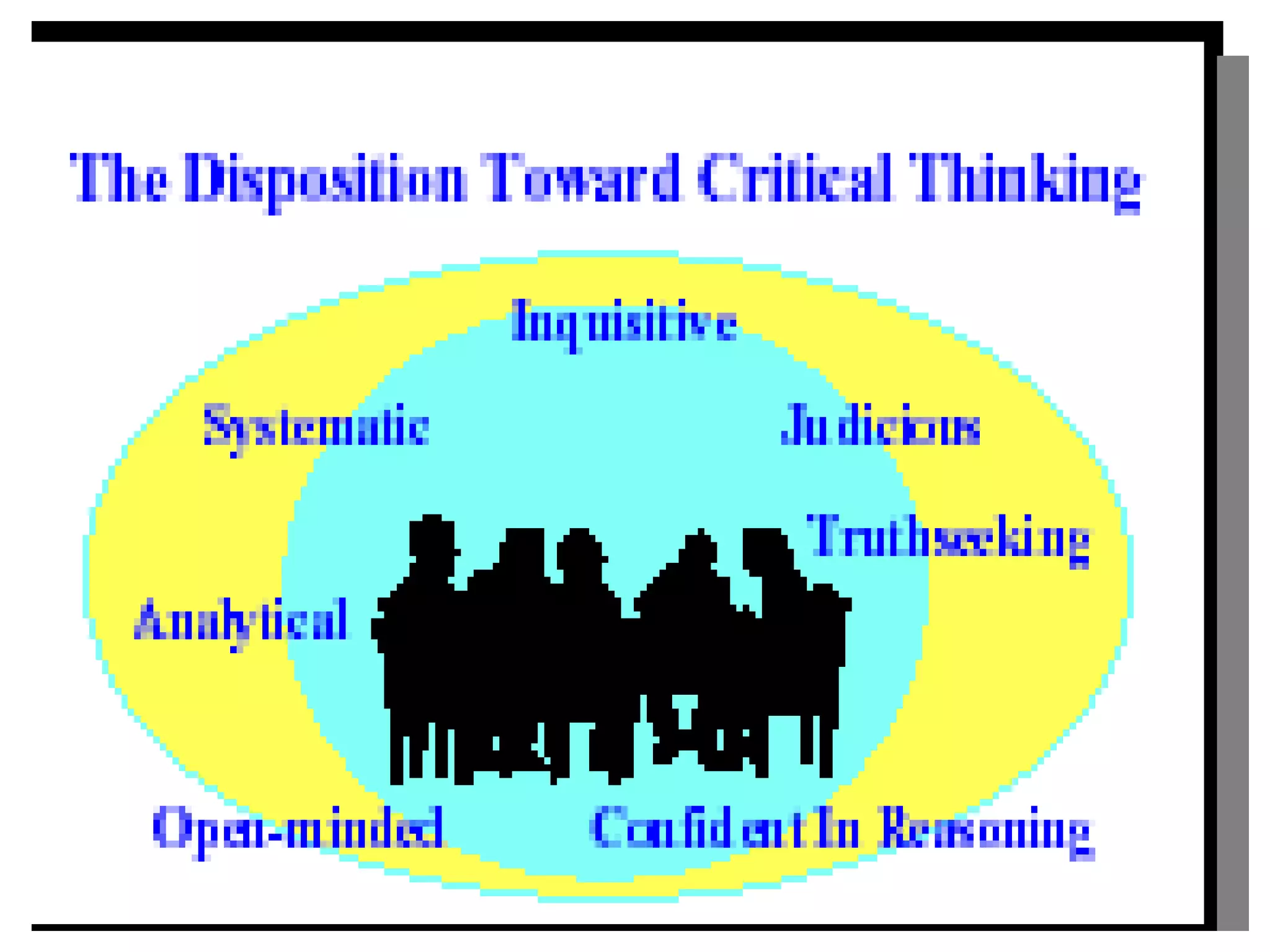
Critical Thinking Dispositions

        Trying to be well informed
             Staying focused
     Willing to evaluate alternatives
      Taking a supportable position
            Seeking precision
Proceeding in a logical and orderly manner
    Being sensitive to others’ positions
Introduction to critical thinking

Introduction to critical thinking

  • 1.
    Hawwa Shiuna Musthafa Department of Education, Bangalore University M.Ed (Master of Education)(Educational Administration & Educational Leadership B.Ed (Bachelor of Education) (Specializing in Teaching of Social Sciences and English. B.A (Bachelor of Arts) (Auxiliary subjects: Psychology, English and Sociology.
  • 2.
    CRITICAL THINKING BY: MS. HAWWA SHIUNA
  • 3.
    ARE YOU CONVINCED???? • EVERY DAY SITUATIONS: • YOU SHOULD GO TO BED EARLY • YOU SHOULD BECOME A DOCTOR • YOU SHOULD STUDY • YOU SHOULDN’T PLAY TOO MUCH • DONT CLIMB UP THE WALL YOU WILL FALL • YOU ARE FAT • SHOULD I BUY A CAR?
  • 4.
    WRONG DECISIONS??!!! • AREYOU TIRED OF MAKING WRONG DECISIONS?? • BLAMING OTHERS FOR YOUR WRONG DECISIONS??? • INFLUENCED BY OTHERS??? • CANT MAKE UP MY MIND!!!!! • I AM CONFUSED!!! • WHAT SHOULD I DO!!!!!!!!!!!!!!
  • 5.
  • 6.
    LET US UNDERSTANDWHAT IS THINKING ?? • Activity of the brain. • Potential for communication • 2 activities:- – Gathering Information (Perception) – Processing Information (Cognition) • The action of using one's mind to produce thoughts • Thinking involves mentally manipulating information, as when we form concepts, solve problems, reason, and make decisions
  • 7.
    SO NOW WHATIS CRITICAL THINKING?! • Critical thinking involves asking questions, defining a problem, examining evidence, analyzing assumptions and biases, avoiding emotional reasoning, avoiding oversimplification, considering other interpretations, and tolerating ambiguity • In short, it “literally thinking about something from many angles.
  • 8.
    Why is itimportant to develop your critical thinking skills? „ • In order to make informed decisions and effectively problem solve in all areas of your life • „„To avoid making big mistakes that you will regret in the future regret in the future • „„To use the knowledge gained from positive experiences so that you can create more positive experiences
  • 9.
    WHEN DO YOUUSE CRITICAL THINKING OUTSIDE OF COLLEGE? • „„When deciding whether or not you can afford to buy something • „„Deciding who to date/Marry • „„Deciding who to vote for in the next election • „„When thinking about how a big decision that will affect your life
  • 12.
    “Reading without reflectingis like eating without digesting” • In a very real sense CT is pervasive. • There is hardly a time or a place where it would not seem to be of use. • Have purposes in mind. • Wonder what’s true and what’s not. • What to believe and what to reject.
  • 13.
    CORE CRITICAL THINKINGSKILLS •Conceptualizing— developing a “mind picture” • Applying—putting conceptual info to use • Analyzing—closely examining tearing apart or breaking down to really look at • Synthesizing—pulling things together in a well- organized logical way • Evaluating—making decisions about; reviewing; assessing; etc.
  • 15.
    I am nota parrot! HOW CAN I THINK OUTSIDE THE BOX??
  • 16.
    Critical thinking beginswhen you question beyond what is given • You want to know more: • how something happens, • why it happens, and further • what will happen if something changes. Critical thinking therefore requires a conscious level of processing, analysis, creation and evaluation of possible outcomes, and reflection.
  • 17.
    Critical thinkers…. They areinterested in knowing all there is about a topic. They look for new and better ways to do everything. They are not the person who will settle for ―…because that is the way we have always done it.‖ Critical thinkers are curious
  • 18.
    How can thedefinition of critical thinking help you solve this problem? Connect the 9 dots using 4 straight lines. Once you start drawing the lines, do not stop until all 9 dots have been connected. HINT: Lines may be vertical, horizontal and/or diagonal. . . . . . . . . .
  • 19.
  • 20.
    Why Is CriticalThinking Important It . . . • . . . underlies reading, writing, listening and speaking—basic elements of communication • . . . plays an important part in social change. . . institutions in any society—courts, governments, schools, businesses—are the products of critical thinking • . . . plays a major role in technological advances • . . . blazes a path to freedom from half-truths and deceptions
  • 21.
    Who Uses CriticalThinking • Parents • Nurses • Doctors • Athletic coaches • Teachers/Professors • Air Traffic Controllers • Military Commanders • Lawyers, Judges • Supervisors • Day Care Workers
  • 22.
    Therefore CT is… •Critical thinking is “higher level” thinking” • It often requires us to think ―outside the box‖ • Many occupations/careers require critical thinking • The things we enjoy in everyday society are the result of critical thinking • By adopting certain habits and behaviors we can learn to think critically.
  • 23.
    Critical Thinking Dispositions Trying to be well informed Staying focused Willing to evaluate alternatives Taking a supportable position Seeking precision Proceeding in a logical and orderly manner Being sensitive to others’ positions