INTRODUCTION TO CELL BIOLOGY
By
Dr. Thirunahari Ugandhar
Associate Professor of Botany
Department of Botany
Kakatiya Govt College (A) Hanamkonda
Cell – The Basic Unit of Life
The word cell comes from the Latin cella,
meaning "small room." It is the smallest
structural and functional unit of life. All
living organisms are made up of cells—
either a single cell (unicellular) or many
cells (multicellular).
Discovery: In 1665, Robert Hooke
discovered cells while observing a cork
under a microscope. He saw small
compartments and named them "cells,"
marking the beginning of cell biology or
cytology.
Cell Biology is the study of cells, including
their structure, function, organelles, life
cycle, interactions, division, and death.
Definition:
A cell is the basic structural and
functional unit of all living organisms.
Just as bricks build a house, cells build
the body of an organism.
• Cells vary in size (1–100 micrometres)
and contain structures like the plasma
membrane, organelles, and often a
nucleus.
•Cell Theory – Key Points
•Basic Unit: The cell is the
fundamental structural and
functional unit of all living
organisms.
•Origin: All cells arise from
the division of pre-existing
cells (reproduction).
•Genetic Material: Each cell
contains genetic material that
is inherited during cell
division.
•Functions: Vital functions like
growth, repair, movement,
digestion, communication,
and immunity occur within
cells.
•Structure-Function Link:
Cell activities depend on
subcellular structures like the
plasma membrane,
organelles, and the nucleus
(if present).
Importance of Cell Biology
• Helps differentiate between living and non-living organisms.
• Explores the diversity of life, from single-celled organisms (like
bacteria and protozoa) to multicelled ones (plants, animals, fungi).
• Closely linked to fields like genetics, biochemistry, molecular
biology, immunology, developmental biology, tissue culture,
biotechnology, and microbiology.
• Aids in understanding key life processes such as growth,
metabolism, differentiation, and more.
• Gave rise to applied fields such as:
• Cytogenetics
• Cytotaxonomy
• Cell physiology
• Cytochemistry
• Cytoecology
• Cytopathology
• Molecular biology
• These fields have major applications in medicine and
agriculture.
1. Cytogenetics: Studies the structure and behavior of
chromosomes to understand heredity, variation, evolution, and
differentiation. Useful in plant and animal breeding, decoding
the genetic code, and developing improved crop varieties.
• Explains how traits are inherited and how genetic variations
originate.
2. Cytotaxonomy: focuses on the classification of organisms
based on their chromosomal characteristics, like number,
size, and shape.
• Helps determine the taxonomic position of a species using
cellular data.
• Bridges cytology with taxonomy for better biological
classification.
3. Cell Physiology: Studies life functions at the cellular level:
nutrition, metabolism, growth, reproduction, and
differentiation.
• Helps in understanding normal and abnormal cell activities.
• Key to exploring how cells function and respond to various
conditions.
4. Cytopathology
• Deals with diseases caused by abnormal cell
activities, like cancer or viral infections.
• Studies how toxic chemicals and pathogens affect
cells and tissues.
• Plays a major role in medical diagnosis and
treatment.
5. Cytochemistry
• Studies the chemical composition of cells using
microscopy and staining techniques.
• Identifies the presence of key biomolecules like
carbohydrates, proteins, lipids, DNA, and RNA.
• Important for understanding the molecular
makeup of cells.
• Introduction to Cells All plants and animals are made up
of one or more cells.
• Cells are the basic structural and functional units of life,
like the building blocks of organisms.
• Loewy and Siekevitz (1963) defined a cell as “a unit of an
organism delimited by a plasma membrane and capable
of self-reproduction.”
• Size of Cells Cell size ranges from 0.1 µm to 175,000 µm
(175 mm). Smallest cell: Mycoplasma gallisepticum (a
bacterium) – 0.1 µm in diameter.
• Largest cell: Ostrich egg – about 175 mm in diameter.
• Longest cells: Human muscle and nerve cells – up to 3.5
feet in length.
• Shape of Cells Cells have various shapes: spherical,
cuboidal, cylindrical, flat, oval, discoidal, elongated, etc.
• Shape depends on the function and the organ in which
the cell occurs.
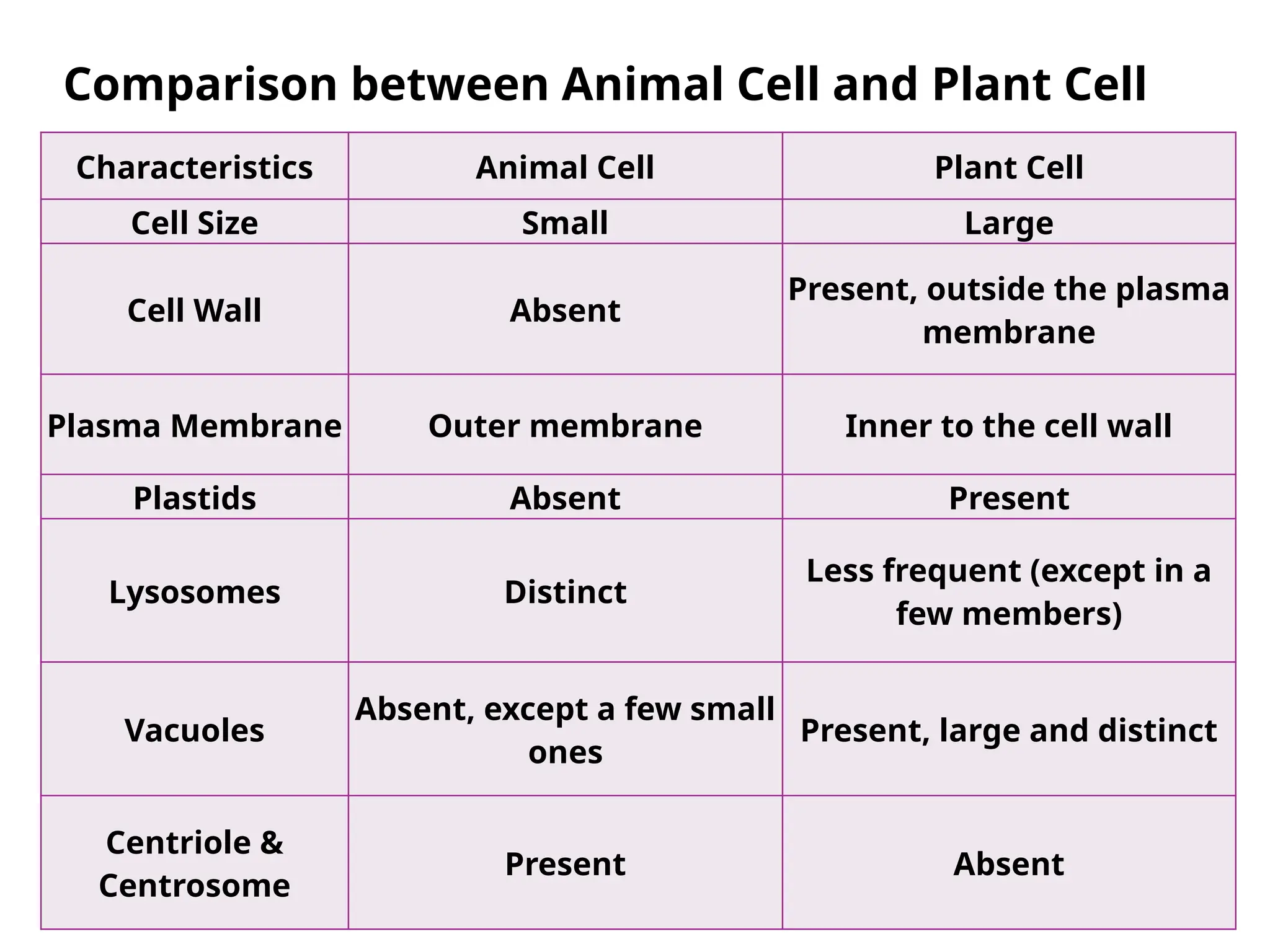
Comparison between Animal Cell and Plant Cell
Characteristics Animal Cell Plant Cell
Cell Size Small Large
Cell Wall Absent
Present, outside the plasma
membrane
Plasma Membrane Outer membrane Inner to the cell wall
Plastids Absent Present
Lysosomes Distinct
Less frequent (except in a
few members)
Vacuoles
Absent, except a few small
ones
Present, large and distinct
Centriole &
Centrosome
Present Absent
Characteristics Prokaryotic Cell Eukaryotic Cell
Cell Size Small, 1–10 µm Large, 10–100 µm
Cell Wall Usually present; chemically complex
Present in plant cells and fungi;
chemically simple
Nucleus Absent (has a nucleoid) Present
Nuclear Membrane Absent Present
Cytoplasm No streaming movement Exhibits streaming movement
Chromosomes
Only one; contains DNA without
proteins
More than one; contains DNA with
proteins
DNA Arrangement Circular Linear
Respiratory System In plasma membrane (mesosomes) In mitochondria
Mitochondria Absent Present
Endoplasmic Reticulum & Golgi
Complex
Absent Present
Plasmids Present Very rarely found
Ribosomes Small, 70S type Large, 80S type
Lysosomes & Centrosomes Absent Present
Vacuoles Absent Present
Mitosis Does not occur Occurs
Exocytosis & Endocytosis Absent Present
Comparison between Prokaryotic Cell and Eukaryotic
Cell
Meaning of Cell Wall:
The cell wall is the outer, rigid, protective, supportive, and
semi-transparent covering found in plant cells, fungi, and
some protists. It was first observed by Robert Hooke in 1665
while studying cork cells under a microscope.
• The thickness of the cell wall varies from 0.1 µm to 10 µm
depending on the type of cell.
• It is a non-living extracellular secretion or matrix, closely
attached to the plasma membrane.
• Despite being non-living, the cell wall is metabolically active
and capable of growth.
The cell wall plays an essential role in:
• Providing mechanical strength and support
• Protecting the cell from mechanical damage and pathogens
• Maintaining the shape of the cell
• Regulating water intake through osmosis.
Chemical Composition of
Cell Wall:
1. Matrix: Water— 60%.
Hemicellulose— 5-
15% Pectic Substances-
2-8%. Lipids-0.5-3.0%.
Proteins— 1-2%
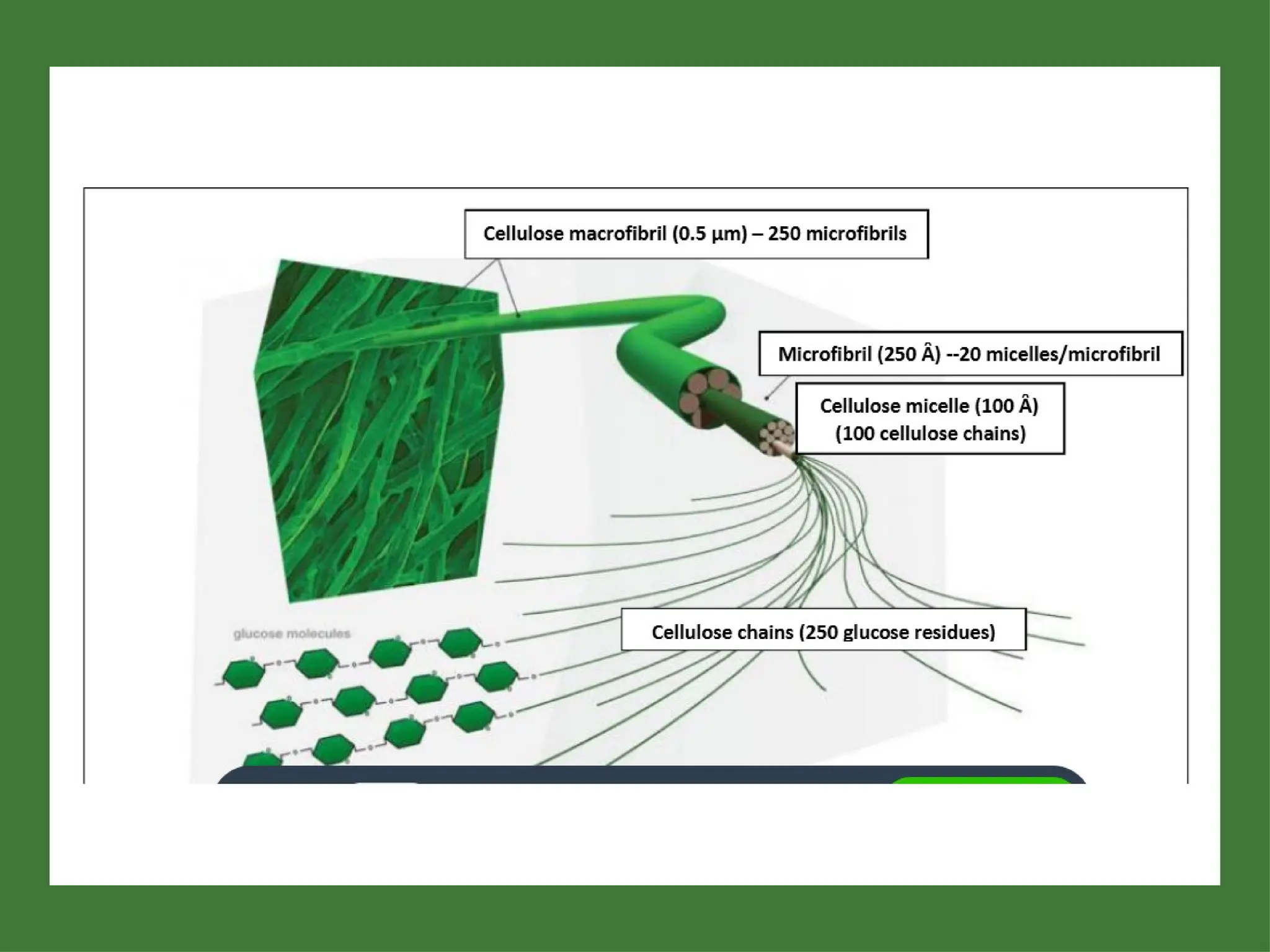
2. Micro fibrils:
Cellulose/fungus
cellulose— 10-15%.
3. Other Ingredients:
lignin, cutin, suberin,
silica (silicon dioxide),
minerals (e.g., iron,
calcium, carbonate),
waxes, tannins, resins,
gum— variable.
Structure of Plant Cell Wall
• It is derived from the living protoplast.
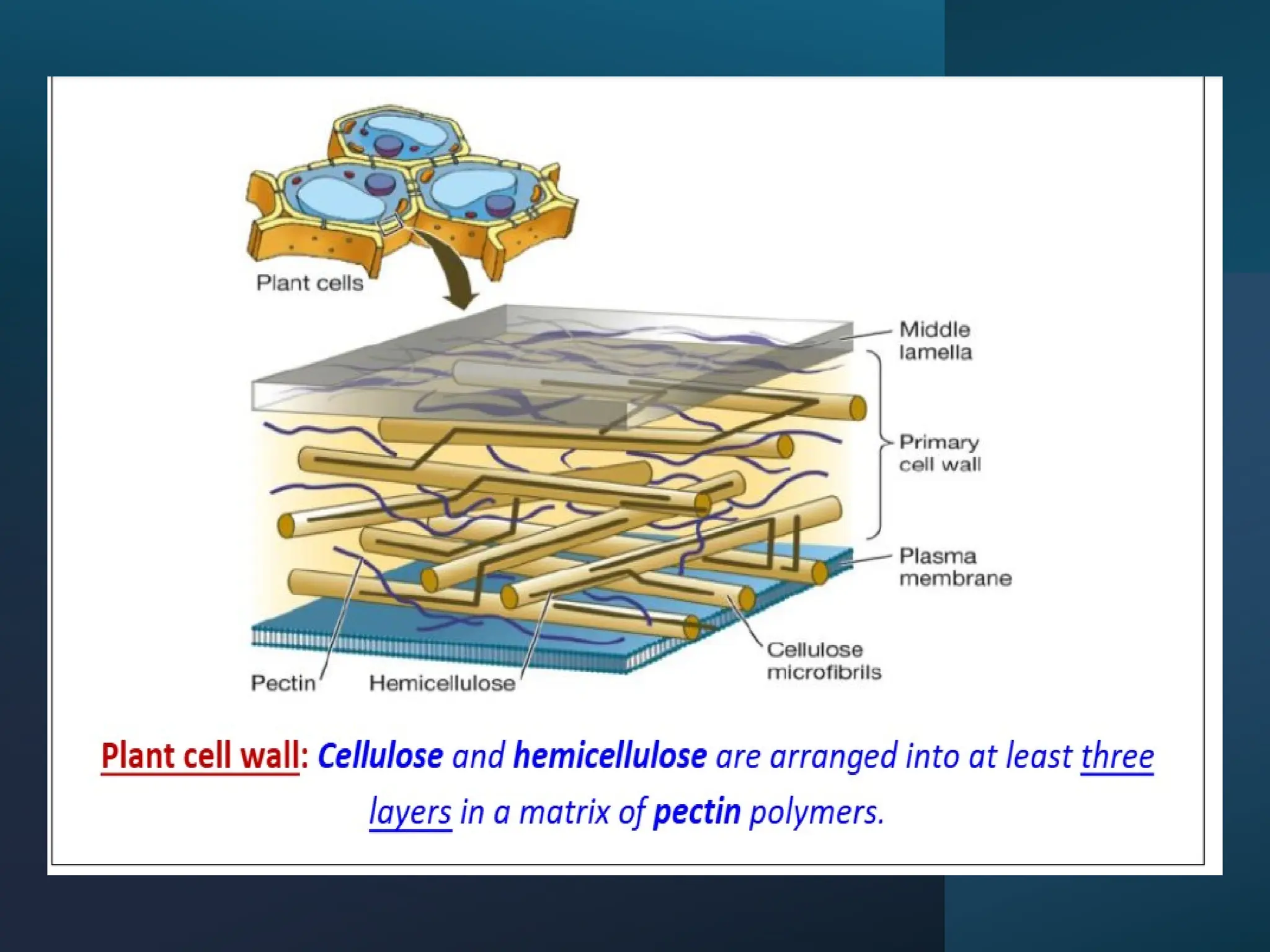
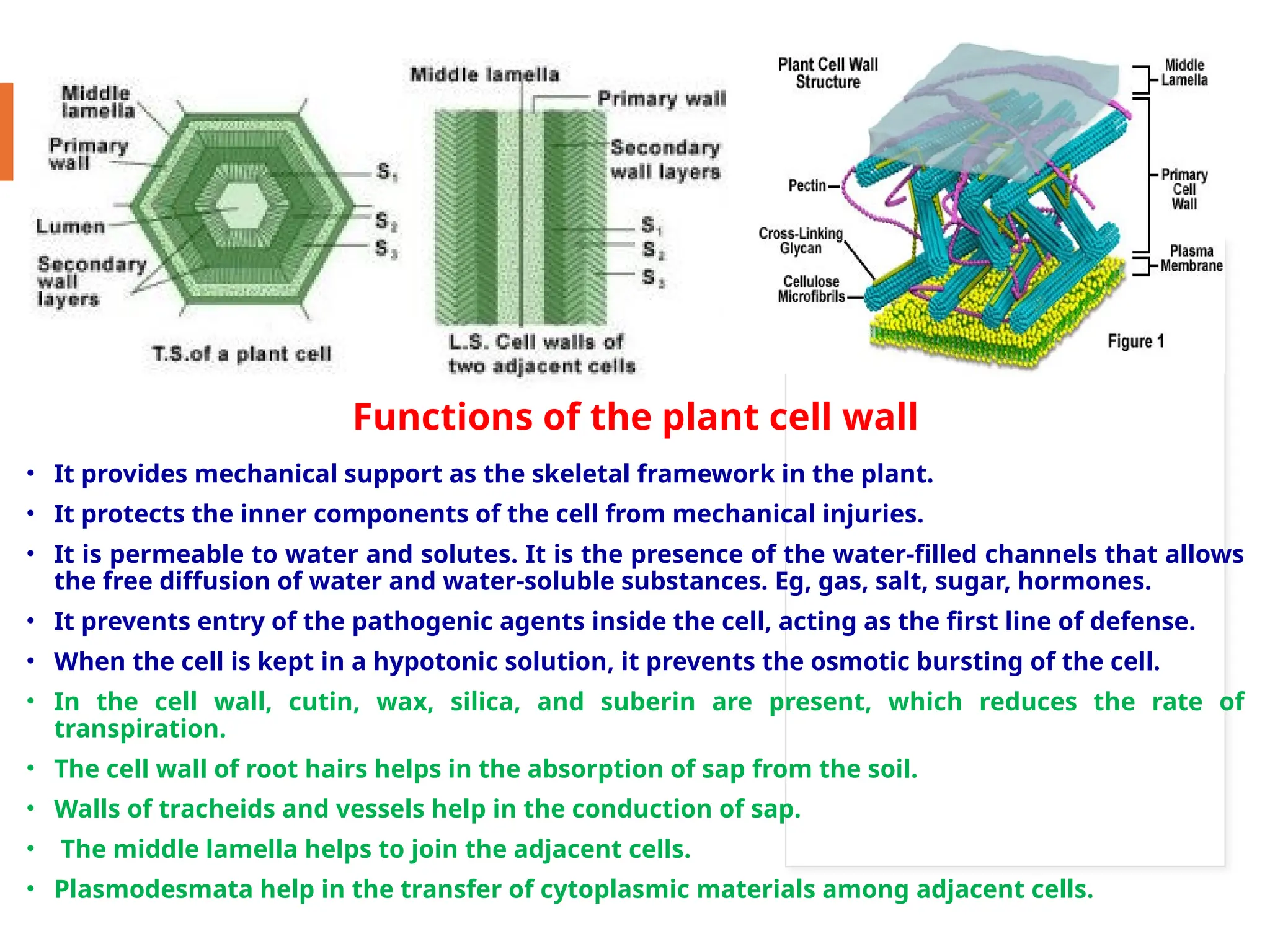
• It consists of the middle lamella, primary cell wall, plasmodesmata, secondary cell wall,
and pits.
Middle lamella
• After the cytokinesis, it is the first-formed layer.
• It is present in between the two adjacent cells.
• It is made up of calcium and magnesium pectate.
• It helps to join the two adjacent cells.
• Primary cell wall
• It is the first-formed cell wall.
• It is present on the inner side of the middle lamella.
• It is the thin and permeable layer that can be expanded.
• Cutin and cutin waxes are present in some epidermal cells of the leaf and stem. It makes
the primary cell wall impermeable.
• It is formed before the growth and development of the cell.
• It is made up of matrix and microfibrils.
• Matrix is made up of water, hemicelluloses, pectin, lipids, and proteins.
• Microfibrils are embedded in the gel-like matrix.
• The primary cell wall of the plant is made of cellulose.
• In the fungi, chitin makes the primary cell wall, and in bacteria murein makes it.
• Primary cell wall forms the only cell wall in the immature meristematic and
parenchymatous cells.
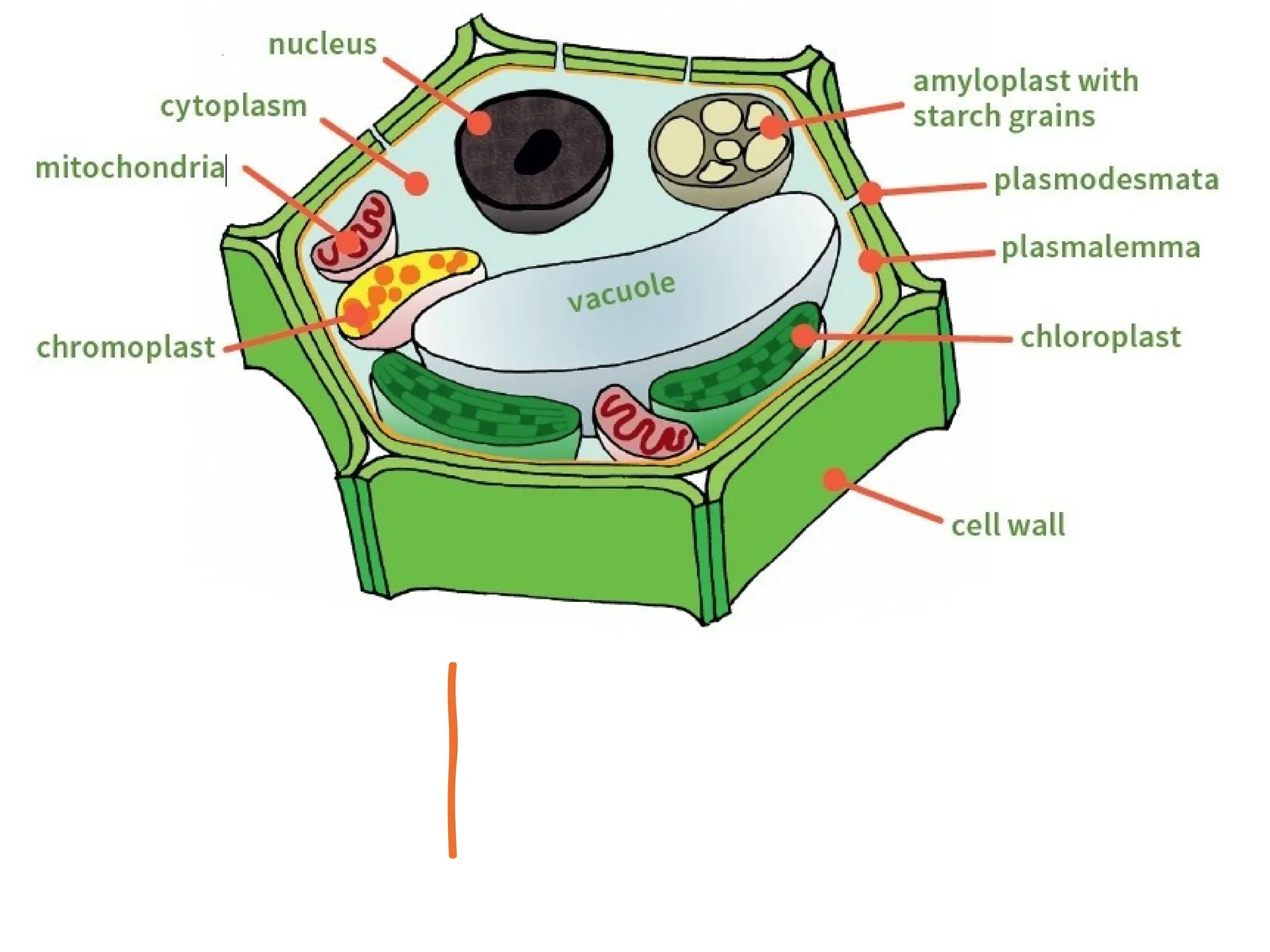
Plasmodesma (plural: plasmodesmata)
• Plasmodesmata are cytoplasmic or protoplasmic
bridges present in the primary cell wall of adjacent
cells.
• They form a protoplasmic continuum called symplast.
• They transfer cytoplasmic materials among adjacent
cells.
Secondary cell wall
• The secondary cell wall is situated
inner to the primary cell wall.
• This is the thick layer, permeable,
and cannot be expanded.
• It forms after the growth and
development of the cell.
• It is present in the cells of the
thick-walled dead tissue of the
plant. Eg: Cells of sclerenchyma,
tracheids, and vessels.
• It is differentiated into the outer
layer (S1), middle layer (S2), and
inner layer (S3).
• Each layer is made up of a matrix
and microfibrils.
• The chemical composition of the
matrix is almost similar to the
matrix of the primary cell.
• Microfibrils of the secondary cell
wall is made up of cellulose and
lignin.
• Some chemicals like suberin,
silica, wax, resins, oils, etc. are
also deposited in the secondary
cell wall.
Pits
• In the secondary cell wall, pits are the unthickened areas or depressed areas.
• A pit consists of a pit cavity or pit chamber and pit membrane.
• The pit membrane consists of the primary cell wall and middle lamella.
• The pit membrane is permeable.
• So, the pit helps in the rapid translocation of materials between two adjacent cells.
Tertiary cell wall
• In some plant cells, there is another cell wall beneath the secondary cell wall. It is known as the
tertiary cell wall.
• The morphology, chemistry, and staining properties of the tertiary cell wall are different from the
primary and secondary cell walls.
• In the tertiary cell wall, xylan is also present it.
Functions of the plant cell wall
• It provides mechanical support as the skeletal framework in the plant.
• It protects the inner components of the cell from mechanical injuries.
• It is permeable to water and solutes. It is the presence of the water-filled channels that allows
the free diffusion of water and water-soluble substances. Eg, gas, salt, sugar, hormones.
• It prevents entry of the pathogenic agents inside the cell, acting as the first line of defense.
• When the cell is kept in a hypotonic solution, it prevents the osmotic bursting of the cell.
• In the cell wall, cutin, wax, silica, and suberin are present, which reduces the rate of
transpiration.
• The cell wall of root hairs helps in the absorption of sap from the soil.
• Walls of tracheids and vessels help in the conduction of sap.
• The middle lamella helps to join the adjacent cells.
• Plasmodesmata help in the transfer of cytoplasmic materials among adjacent cells.
•A cell is the basic structural and functional unit of _______.
Answer: life
•The branch of biology that studies the structure and function of cells is called _______.
Answer: Cell Biology
•The term “cell” was first coined by _______ in 1665.
Answer: Robert Hooke
•Prokaryotic cells lack a true _______.
Answer: nucleus
•The fluid content inside the cell membrane but outside the nucleus is called _______.
Answer: cytoplasm
•The _______ is a selectively permeable membrane that surrounds the cell.
Answer: plasma membrane
•Plant cells have a rigid outer covering called the _______.
Answer: cell wall
•The site of energy production in eukaryotic cells is the _______.
Answer: mitochondrion
•The smallest known cells belong to the genus _______.
Answer: Mycoplasma
•The genetic material of prokaryotes is located in a region called the _______.
Answer: nucleoid
•The jelly-like substance that fills the cell and supports organelles is called _______.
Answer: cytosol
•The double membrane-bound organelle responsible for photosynthesis in plant cells is the _______.
Answer: chloroplast
•The _______ is responsible for packaging and transporting materials in the cell.
Answer: Golgi apparatus
•Ribosomes are responsible for the synthesis of _______.
Answer: proteins
•The process by which a cell divides to form two identical daughter cells is called _______.
Answer: mitosis
1. Cell  wall  Structure.pptx Dr Thirunahari Ugandhar

1. Cell wall Structure.pptx Dr Thirunahari Ugandhar

  • 1.
    INTRODUCTION TO CELLBIOLOGY By Dr. Thirunahari Ugandhar Associate Professor of Botany Department of Botany Kakatiya Govt College (A) Hanamkonda
  • 20.
    Cell – TheBasic Unit of Life The word cell comes from the Latin cella, meaning "small room." It is the smallest structural and functional unit of life. All living organisms are made up of cells— either a single cell (unicellular) or many cells (multicellular). Discovery: In 1665, Robert Hooke discovered cells while observing a cork under a microscope. He saw small compartments and named them "cells," marking the beginning of cell biology or cytology. Cell Biology is the study of cells, including their structure, function, organelles, life cycle, interactions, division, and death. Definition: A cell is the basic structural and functional unit of all living organisms. Just as bricks build a house, cells build the body of an organism. • Cells vary in size (1–100 micrometres) and contain structures like the plasma membrane, organelles, and often a nucleus.
  • 21.
    •Cell Theory –Key Points •Basic Unit: The cell is the fundamental structural and functional unit of all living organisms. •Origin: All cells arise from the division of pre-existing cells (reproduction). •Genetic Material: Each cell contains genetic material that is inherited during cell division. •Functions: Vital functions like growth, repair, movement, digestion, communication, and immunity occur within cells. •Structure-Function Link: Cell activities depend on subcellular structures like the plasma membrane, organelles, and the nucleus (if present).
  • 22.
    Importance of CellBiology • Helps differentiate between living and non-living organisms. • Explores the diversity of life, from single-celled organisms (like bacteria and protozoa) to multicelled ones (plants, animals, fungi). • Closely linked to fields like genetics, biochemistry, molecular biology, immunology, developmental biology, tissue culture, biotechnology, and microbiology. • Aids in understanding key life processes such as growth, metabolism, differentiation, and more. • Gave rise to applied fields such as: • Cytogenetics • Cytotaxonomy • Cell physiology • Cytochemistry • Cytoecology • Cytopathology • Molecular biology • These fields have major applications in medicine and agriculture.
  • 23.
    1. Cytogenetics: Studiesthe structure and behavior of chromosomes to understand heredity, variation, evolution, and differentiation. Useful in plant and animal breeding, decoding the genetic code, and developing improved crop varieties. • Explains how traits are inherited and how genetic variations originate. 2. Cytotaxonomy: focuses on the classification of organisms based on their chromosomal characteristics, like number, size, and shape. • Helps determine the taxonomic position of a species using cellular data. • Bridges cytology with taxonomy for better biological classification. 3. Cell Physiology: Studies life functions at the cellular level: nutrition, metabolism, growth, reproduction, and differentiation. • Helps in understanding normal and abnormal cell activities. • Key to exploring how cells function and respond to various conditions.
  • 24.
    4. Cytopathology • Dealswith diseases caused by abnormal cell activities, like cancer or viral infections. • Studies how toxic chemicals and pathogens affect cells and tissues. • Plays a major role in medical diagnosis and treatment. 5. Cytochemistry • Studies the chemical composition of cells using microscopy and staining techniques. • Identifies the presence of key biomolecules like carbohydrates, proteins, lipids, DNA, and RNA. • Important for understanding the molecular makeup of cells.
  • 25.
    • Introduction toCells All plants and animals are made up of one or more cells. • Cells are the basic structural and functional units of life, like the building blocks of organisms. • Loewy and Siekevitz (1963) defined a cell as “a unit of an organism delimited by a plasma membrane and capable of self-reproduction.” • Size of Cells Cell size ranges from 0.1 µm to 175,000 µm (175 mm). Smallest cell: Mycoplasma gallisepticum (a bacterium) – 0.1 µm in diameter. • Largest cell: Ostrich egg – about 175 mm in diameter. • Longest cells: Human muscle and nerve cells – up to 3.5 feet in length. • Shape of Cells Cells have various shapes: spherical, cuboidal, cylindrical, flat, oval, discoidal, elongated, etc. • Shape depends on the function and the organ in which the cell occurs.
  • 26.
    Comparison between AnimalCell and Plant Cell Characteristics Animal Cell Plant Cell Cell Size Small Large Cell Wall Absent Present, outside the plasma membrane Plasma Membrane Outer membrane Inner to the cell wall Plastids Absent Present Lysosomes Distinct Less frequent (except in a few members) Vacuoles Absent, except a few small ones Present, large and distinct Centriole & Centrosome Present Absent
  • 27.
    Characteristics Prokaryotic CellEukaryotic Cell Cell Size Small, 1–10 µm Large, 10–100 µm Cell Wall Usually present; chemically complex Present in plant cells and fungi; chemically simple Nucleus Absent (has a nucleoid) Present Nuclear Membrane Absent Present Cytoplasm No streaming movement Exhibits streaming movement Chromosomes Only one; contains DNA without proteins More than one; contains DNA with proteins DNA Arrangement Circular Linear Respiratory System In plasma membrane (mesosomes) In mitochondria Mitochondria Absent Present Endoplasmic Reticulum & Golgi Complex Absent Present Plasmids Present Very rarely found Ribosomes Small, 70S type Large, 80S type Lysosomes & Centrosomes Absent Present Vacuoles Absent Present Mitosis Does not occur Occurs Exocytosis & Endocytosis Absent Present Comparison between Prokaryotic Cell and Eukaryotic Cell
  • 31.
    Meaning of CellWall: The cell wall is the outer, rigid, protective, supportive, and semi-transparent covering found in plant cells, fungi, and some protists. It was first observed by Robert Hooke in 1665 while studying cork cells under a microscope. • The thickness of the cell wall varies from 0.1 µm to 10 µm depending on the type of cell. • It is a non-living extracellular secretion or matrix, closely attached to the plasma membrane. • Despite being non-living, the cell wall is metabolically active and capable of growth. The cell wall plays an essential role in: • Providing mechanical strength and support • Protecting the cell from mechanical damage and pathogens • Maintaining the shape of the cell • Regulating water intake through osmosis.
  • 32.
    Chemical Composition of CellWall: 1. Matrix: Water— 60%. Hemicellulose— 5- 15% Pectic Substances- 2-8%. Lipids-0.5-3.0%. Proteins— 1-2% 2. Micro fibrils: Cellulose/fungus cellulose— 10-15%. 3. Other Ingredients: lignin, cutin, suberin, silica (silicon dioxide), minerals (e.g., iron, calcium, carbonate), waxes, tannins, resins, gum— variable.
  • 34.
    Structure of PlantCell Wall • It is derived from the living protoplast. • It consists of the middle lamella, primary cell wall, plasmodesmata, secondary cell wall, and pits. Middle lamella • After the cytokinesis, it is the first-formed layer. • It is present in between the two adjacent cells. • It is made up of calcium and magnesium pectate. • It helps to join the two adjacent cells. • Primary cell wall • It is the first-formed cell wall. • It is present on the inner side of the middle lamella. • It is the thin and permeable layer that can be expanded. • Cutin and cutin waxes are present in some epidermal cells of the leaf and stem. It makes the primary cell wall impermeable. • It is formed before the growth and development of the cell. • It is made up of matrix and microfibrils. • Matrix is made up of water, hemicelluloses, pectin, lipids, and proteins. • Microfibrils are embedded in the gel-like matrix. • The primary cell wall of the plant is made of cellulose. • In the fungi, chitin makes the primary cell wall, and in bacteria murein makes it. • Primary cell wall forms the only cell wall in the immature meristematic and parenchymatous cells.
  • 36.
    Plasmodesma (plural: plasmodesmata) •Plasmodesmata are cytoplasmic or protoplasmic bridges present in the primary cell wall of adjacent cells. • They form a protoplasmic continuum called symplast. • They transfer cytoplasmic materials among adjacent cells.
  • 37.
    Secondary cell wall •The secondary cell wall is situated inner to the primary cell wall. • This is the thick layer, permeable, and cannot be expanded. • It forms after the growth and development of the cell. • It is present in the cells of the thick-walled dead tissue of the plant. Eg: Cells of sclerenchyma, tracheids, and vessels. • It is differentiated into the outer layer (S1), middle layer (S2), and inner layer (S3). • Each layer is made up of a matrix and microfibrils. • The chemical composition of the matrix is almost similar to the matrix of the primary cell. • Microfibrils of the secondary cell wall is made up of cellulose and lignin. • Some chemicals like suberin, silica, wax, resins, oils, etc. are also deposited in the secondary cell wall.
  • 38.
    Pits • In thesecondary cell wall, pits are the unthickened areas or depressed areas. • A pit consists of a pit cavity or pit chamber and pit membrane. • The pit membrane consists of the primary cell wall and middle lamella. • The pit membrane is permeable. • So, the pit helps in the rapid translocation of materials between two adjacent cells. Tertiary cell wall • In some plant cells, there is another cell wall beneath the secondary cell wall. It is known as the tertiary cell wall. • The morphology, chemistry, and staining properties of the tertiary cell wall are different from the primary and secondary cell walls. • In the tertiary cell wall, xylan is also present it.
  • 40.
    Functions of theplant cell wall • It provides mechanical support as the skeletal framework in the plant. • It protects the inner components of the cell from mechanical injuries. • It is permeable to water and solutes. It is the presence of the water-filled channels that allows the free diffusion of water and water-soluble substances. Eg, gas, salt, sugar, hormones. • It prevents entry of the pathogenic agents inside the cell, acting as the first line of defense. • When the cell is kept in a hypotonic solution, it prevents the osmotic bursting of the cell. • In the cell wall, cutin, wax, silica, and suberin are present, which reduces the rate of transpiration. • The cell wall of root hairs helps in the absorption of sap from the soil. • Walls of tracheids and vessels help in the conduction of sap. • The middle lamella helps to join the adjacent cells. • Plasmodesmata help in the transfer of cytoplasmic materials among adjacent cells.
  • 41.
    •A cell isthe basic structural and functional unit of _______. Answer: life •The branch of biology that studies the structure and function of cells is called _______. Answer: Cell Biology •The term “cell” was first coined by _______ in 1665. Answer: Robert Hooke •Prokaryotic cells lack a true _______. Answer: nucleus •The fluid content inside the cell membrane but outside the nucleus is called _______. Answer: cytoplasm •The _______ is a selectively permeable membrane that surrounds the cell. Answer: plasma membrane •Plant cells have a rigid outer covering called the _______. Answer: cell wall •The site of energy production in eukaryotic cells is the _______. Answer: mitochondrion •The smallest known cells belong to the genus _______. Answer: Mycoplasma •The genetic material of prokaryotes is located in a region called the _______. Answer: nucleoid •The jelly-like substance that fills the cell and supports organelles is called _______. Answer: cytosol •The double membrane-bound organelle responsible for photosynthesis in plant cells is the _______. Answer: chloroplast •The _______ is responsible for packaging and transporting materials in the cell. Answer: Golgi apparatus •Ribosomes are responsible for the synthesis of _______. Answer: proteins •The process by which a cell divides to form two identical daughter cells is called _______. Answer: mitosis