#1 Basic Cost Terms and Concepts Basic Cost Terms and Concepts.pptx
1.
Week 1
Basic CostTerms and Concepts
Cost and Investment Management
1
Laboratorium PSMI 2025
Departemen Teknik Sistem dan Industri
Institut Teknologi Sepuluh Nopember (ITS)
2.
Learning Objectives
1. Explainwhat is meant by the word cost.
2. Distinguish among product costs, period
costs, and expenses.
6
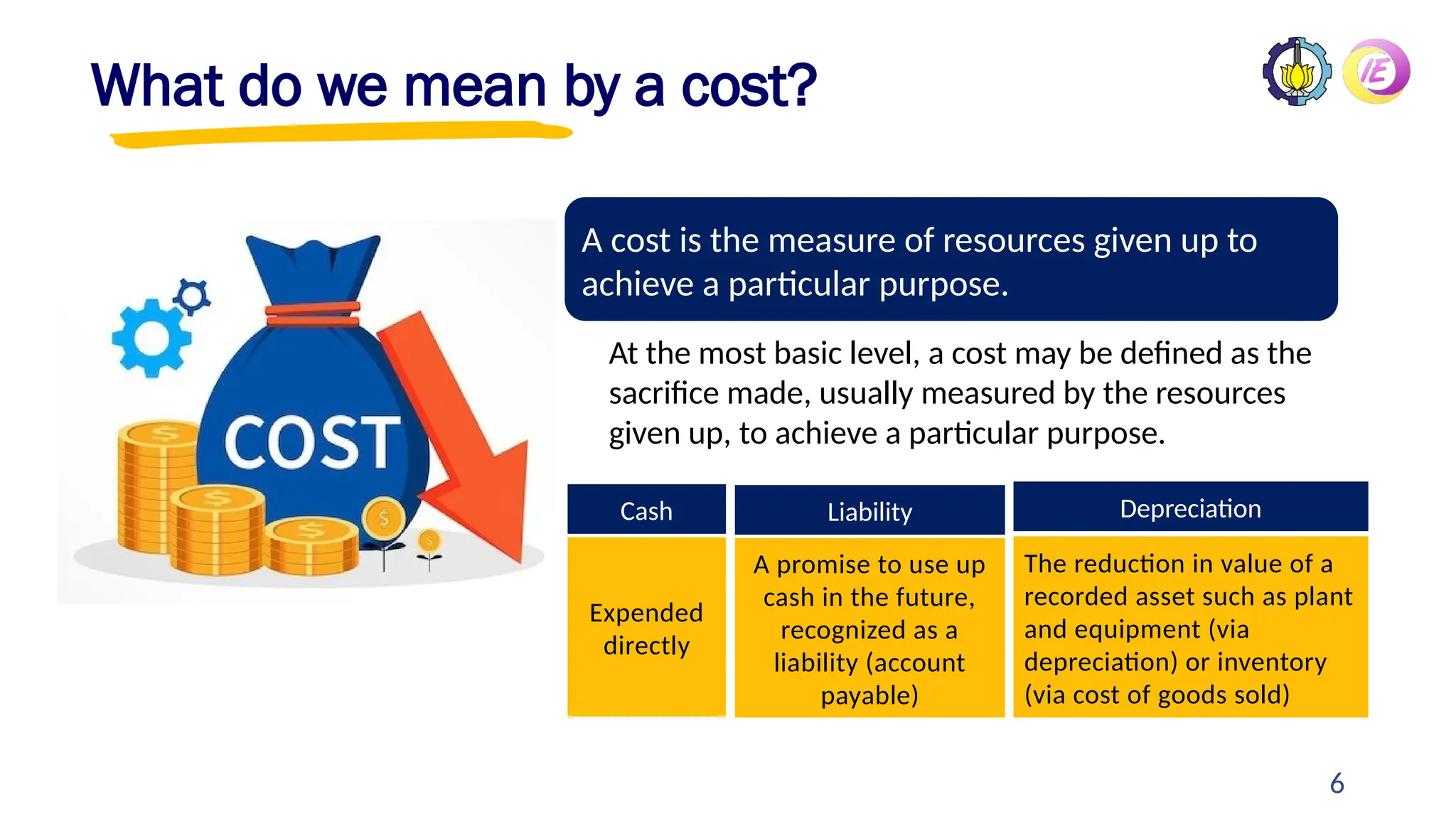
What do wemean by a cost?
At the most basic level, a cost may be defined as the
sacrifice made, usually measured by the resources
given up, to achieve a particular purpose.
A cost is the measure of resources given up to
achieve a particular purpose.
Expended
directly
The reduction in value of a
recorded asset such as plant
and equipment (via
depreciation) or inventory
(via cost of goods sold)
Cash Depreciation
A promise to use up
cash in the future,
recognized as a
liability (account
payable)
Liability
7.
9
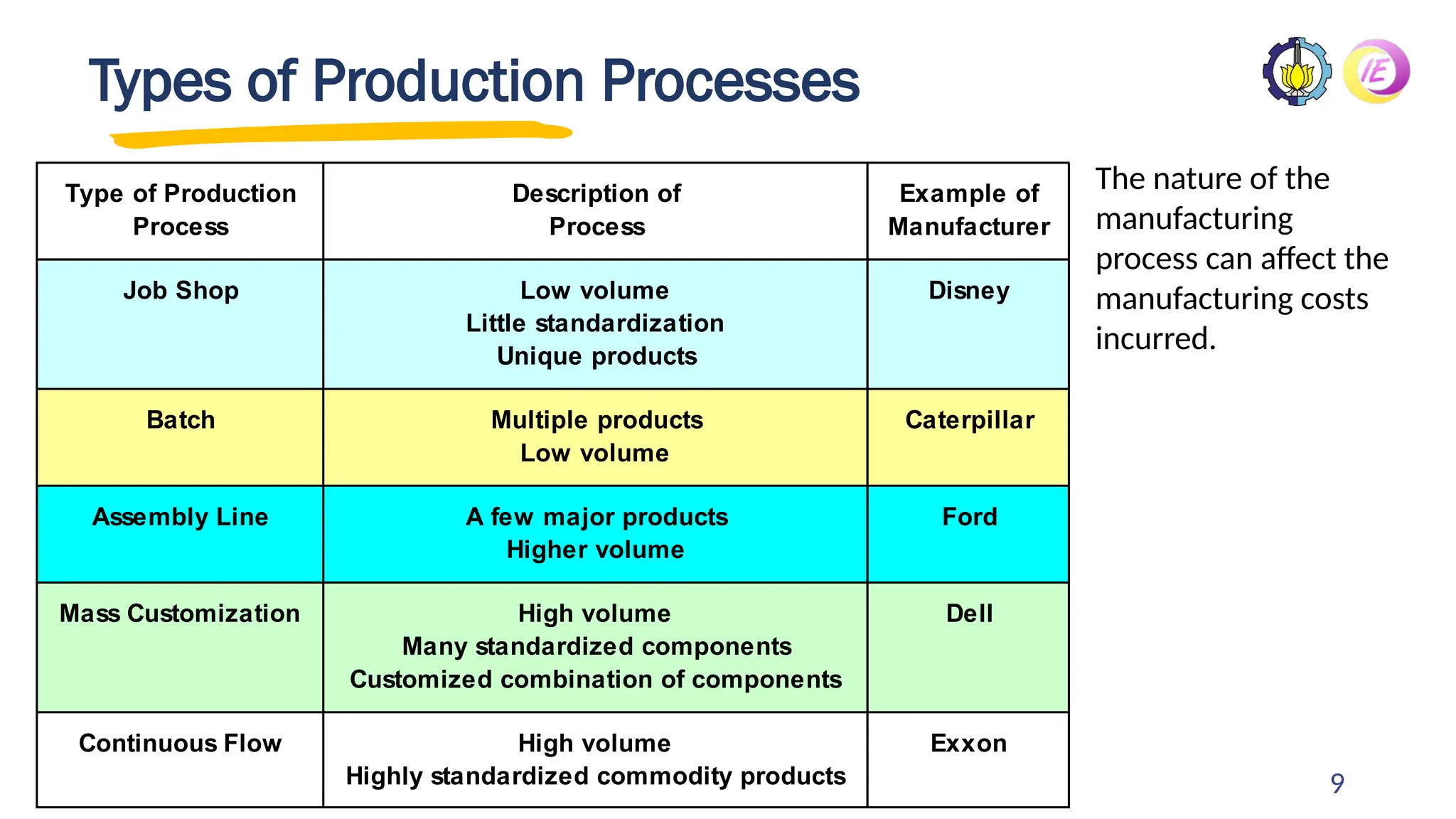
Types of ProductionProcesses
Type of Production Description of Example of
Process Process Manufacturer
Job Shop Low volume Disney
Little standardization
Unique products
Batch Multiple products Caterpillar
Low volume
Assembly Line A few major products Ford
Higher volume
Mass Customization High volume Dell
Many standardized components
Customized combination of components
Continuous Flow High volume Exxon
Highly standardized commodity products
The nature of the
manufacturing
process can affect the
manufacturing costs
incurred.
11
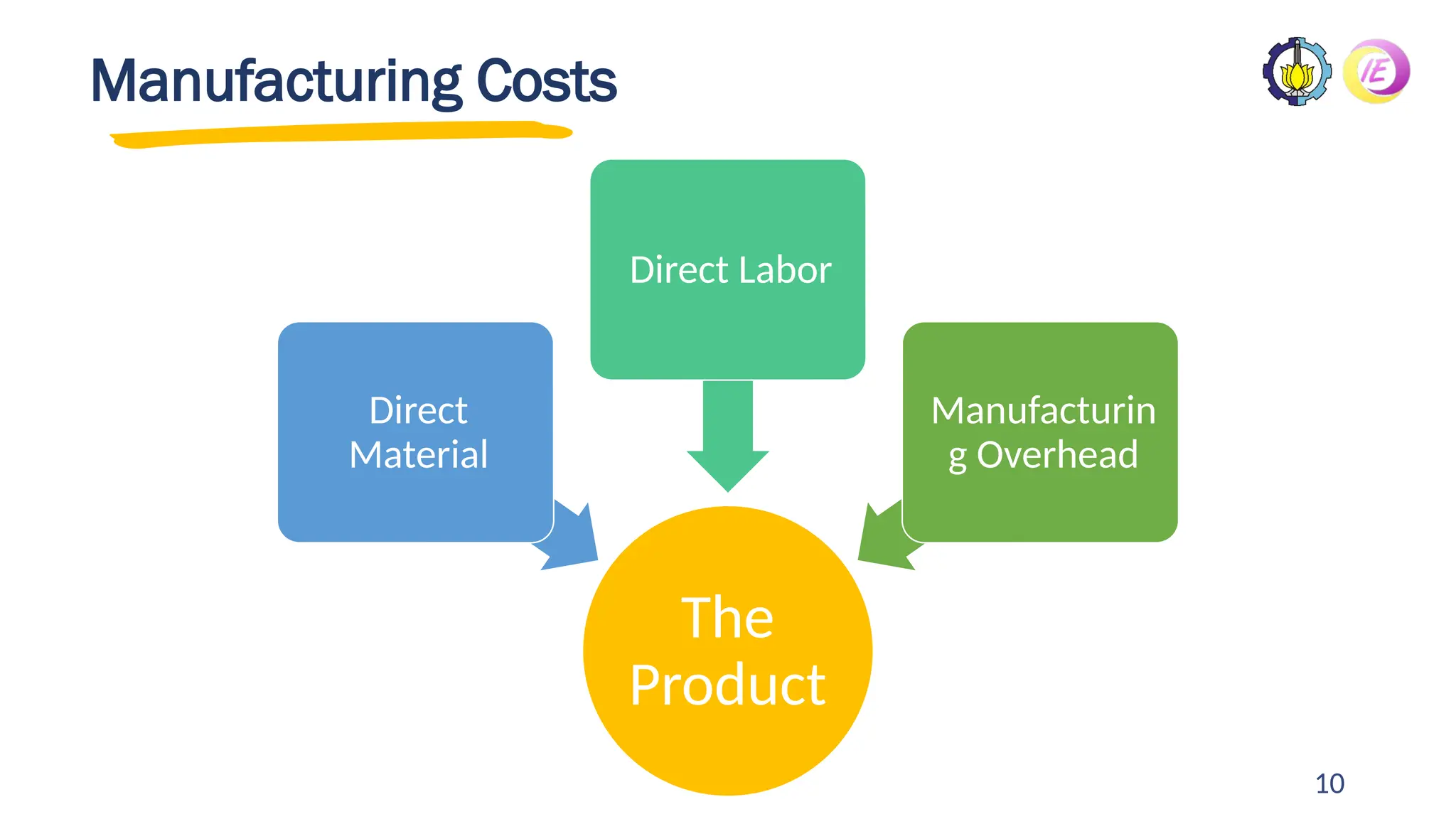
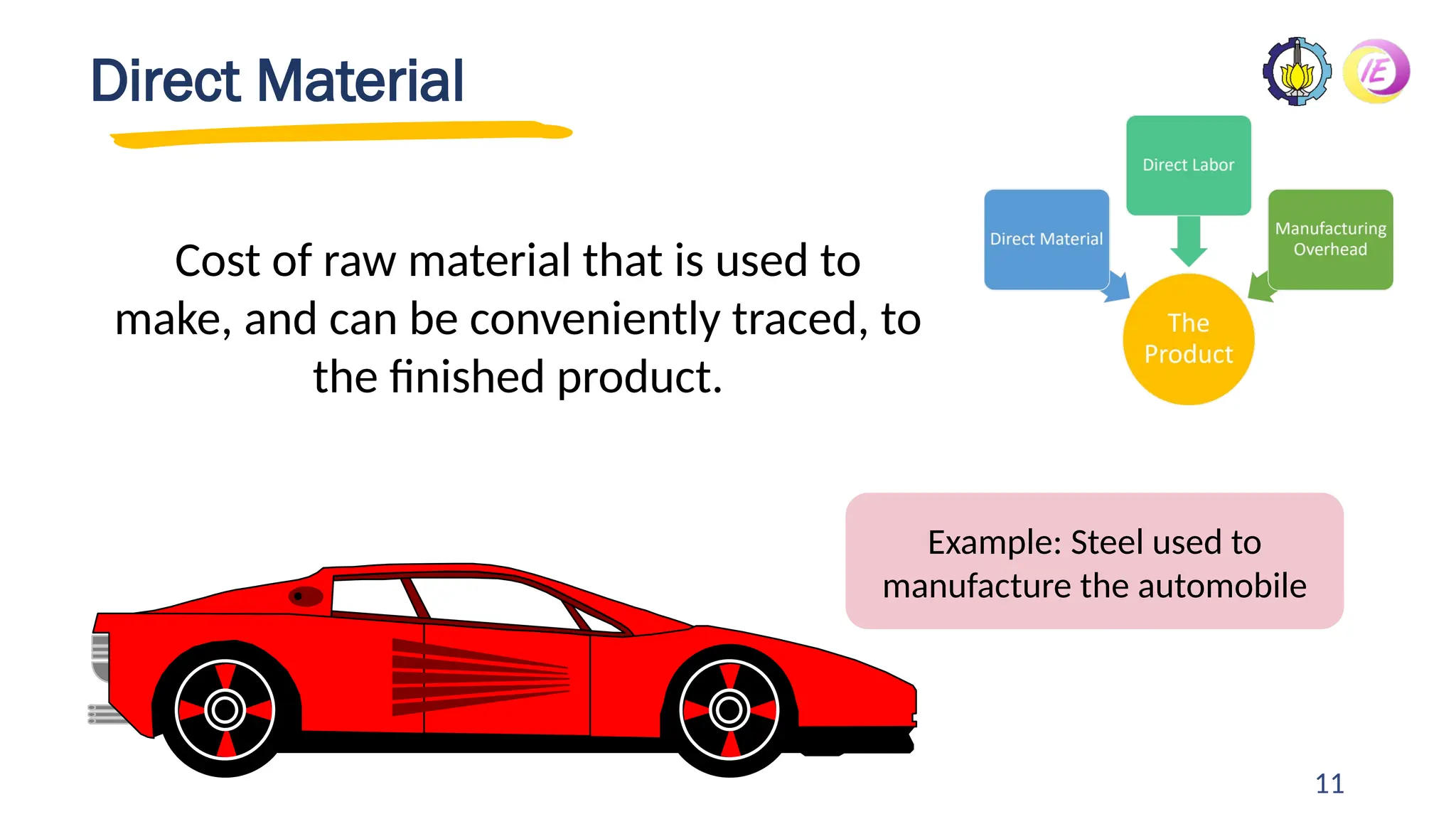
Direct Material
Cost ofraw material that is used to
make, and can be conveniently traced, to
the finished product.
Example: Steel used to
manufacture the automobile
10.
12
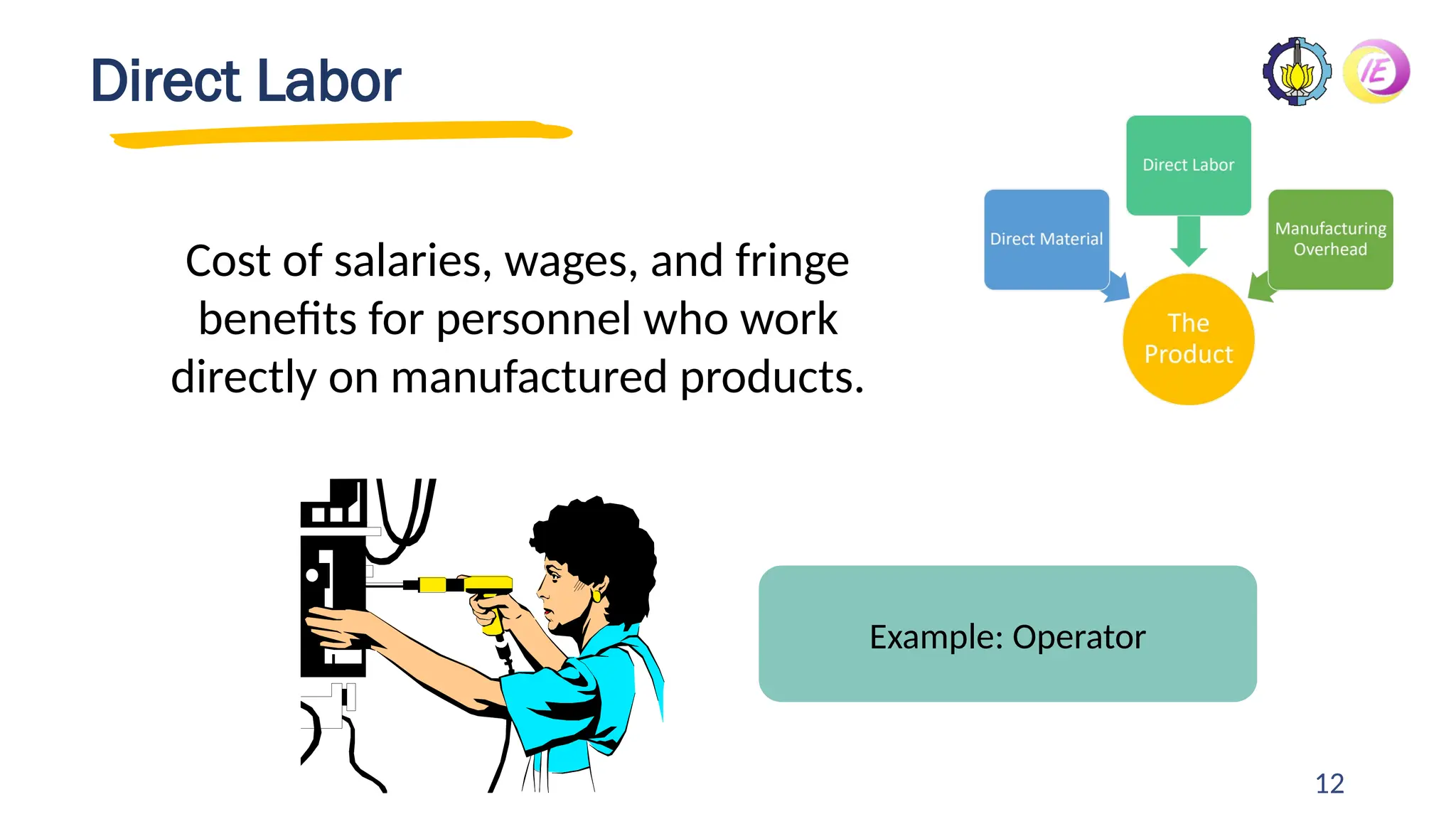
Direct Labor
Cost ofsalaries, wages, and fringe
benefits for personnel who work
directly on manufactured products.
Example: Operator
11.
13
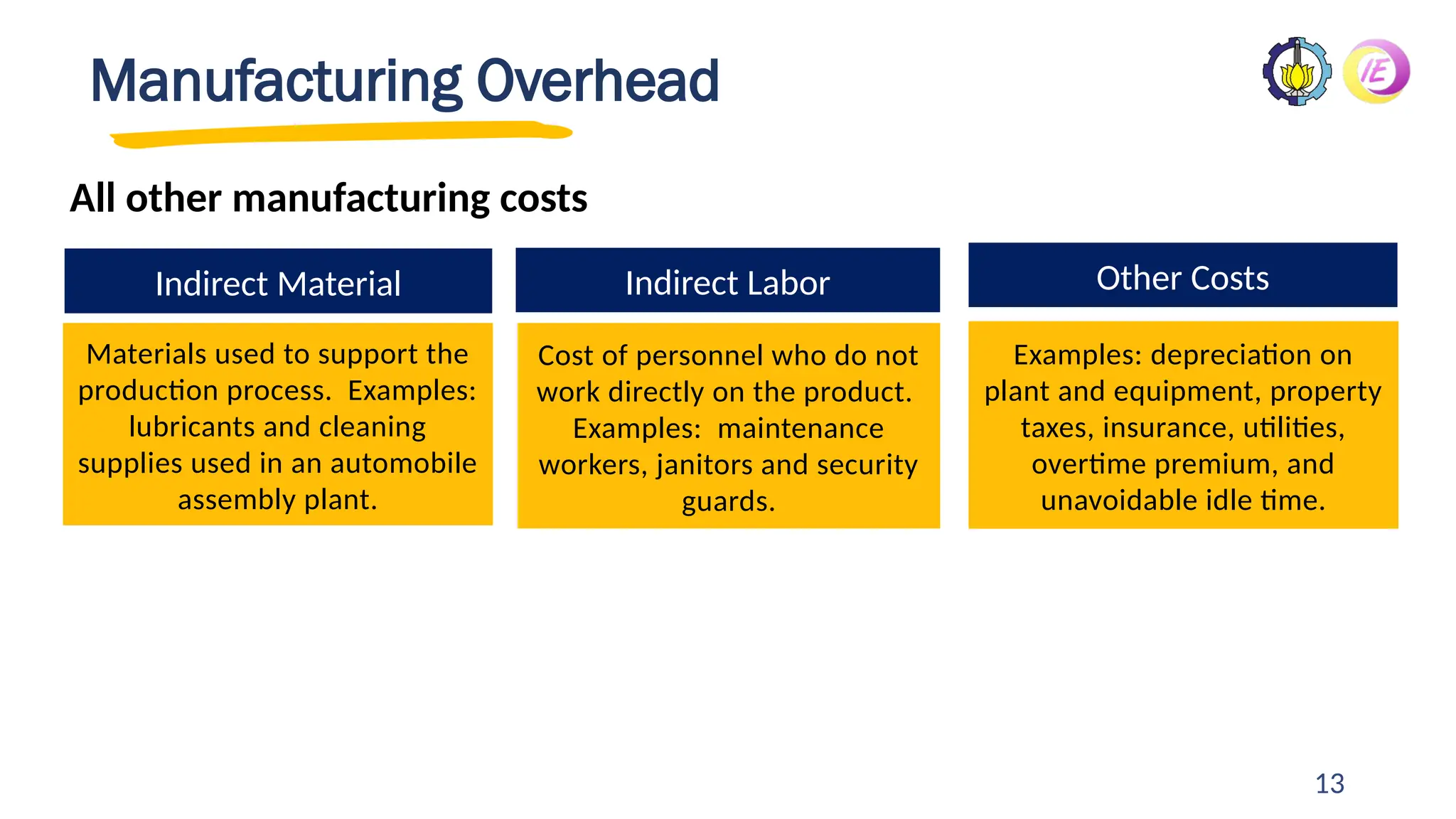
Manufacturing Overhead
All othermanufacturing costs
Materials used to support the
production process. Examples:
lubricants and cleaning
supplies used in an automobile
assembly plant.
Examples: depreciation on
plant and equipment, property
taxes, insurance, utilities,
overtime premium, and
unavoidable idle time.
Indirect Material Other Costs
Cost of personnel who do not
work directly on the product.
Examples: maintenance
workers, janitors and security
guards.
Indirect Labor
12.
14
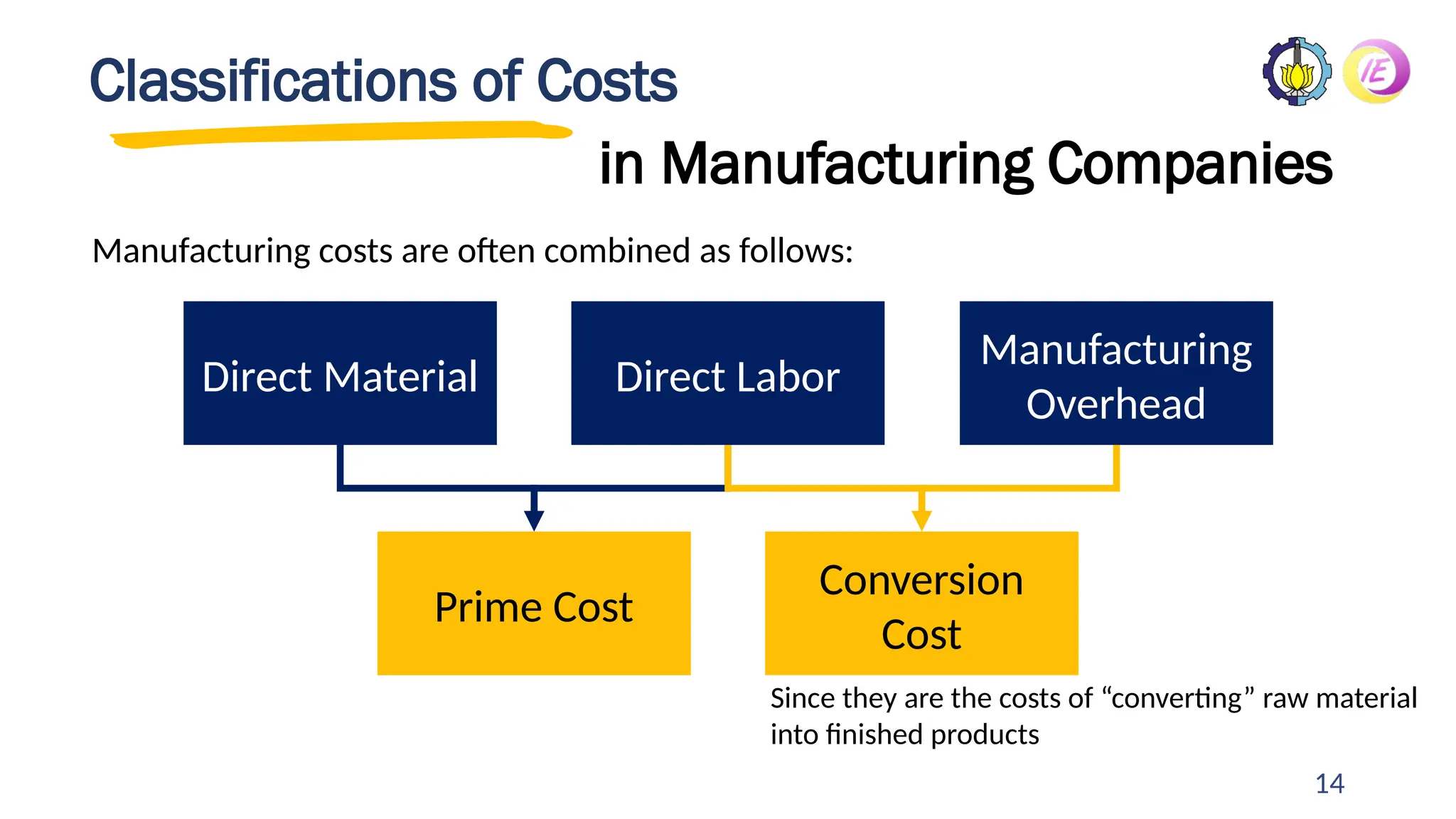
Classifications of Costs
inManufacturing Companies
Manufacturing costs are often combined as follows:
Direct Material Direct Labor
Manufacturing
Overhead
Prime Cost
Conversion
Cost
Since they are the costs of “converting” raw material
into finished products
13.
15
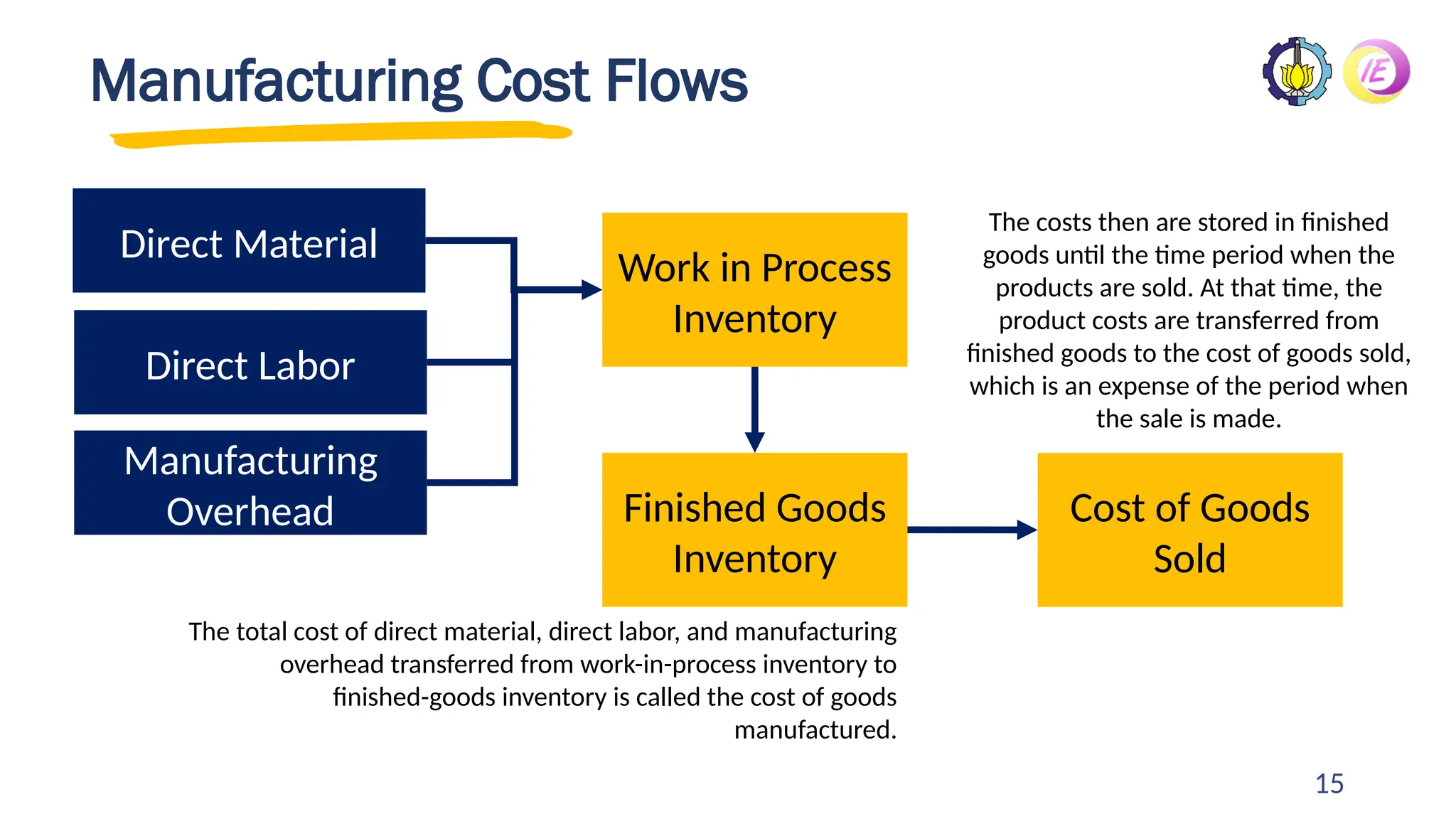
Manufacturing Cost Flows
Workin Process
Inventory
Direct Material
Direct Labor
Manufacturing
Overhead Finished Goods
Inventory
Cost of Goods
Sold
The total cost of direct material, direct labor, and manufacturing
overhead transferred from work-in-process inventory to
finished-goods inventory is called the cost of goods
manufactured.
The costs then are stored in finished
goods until the time period when the
products are sold. At that time, the
product costs are transferred from
finished goods to the cost of goods sold,
which is an expense of the period when
the sale is made.
14.
16
Cost Drivers
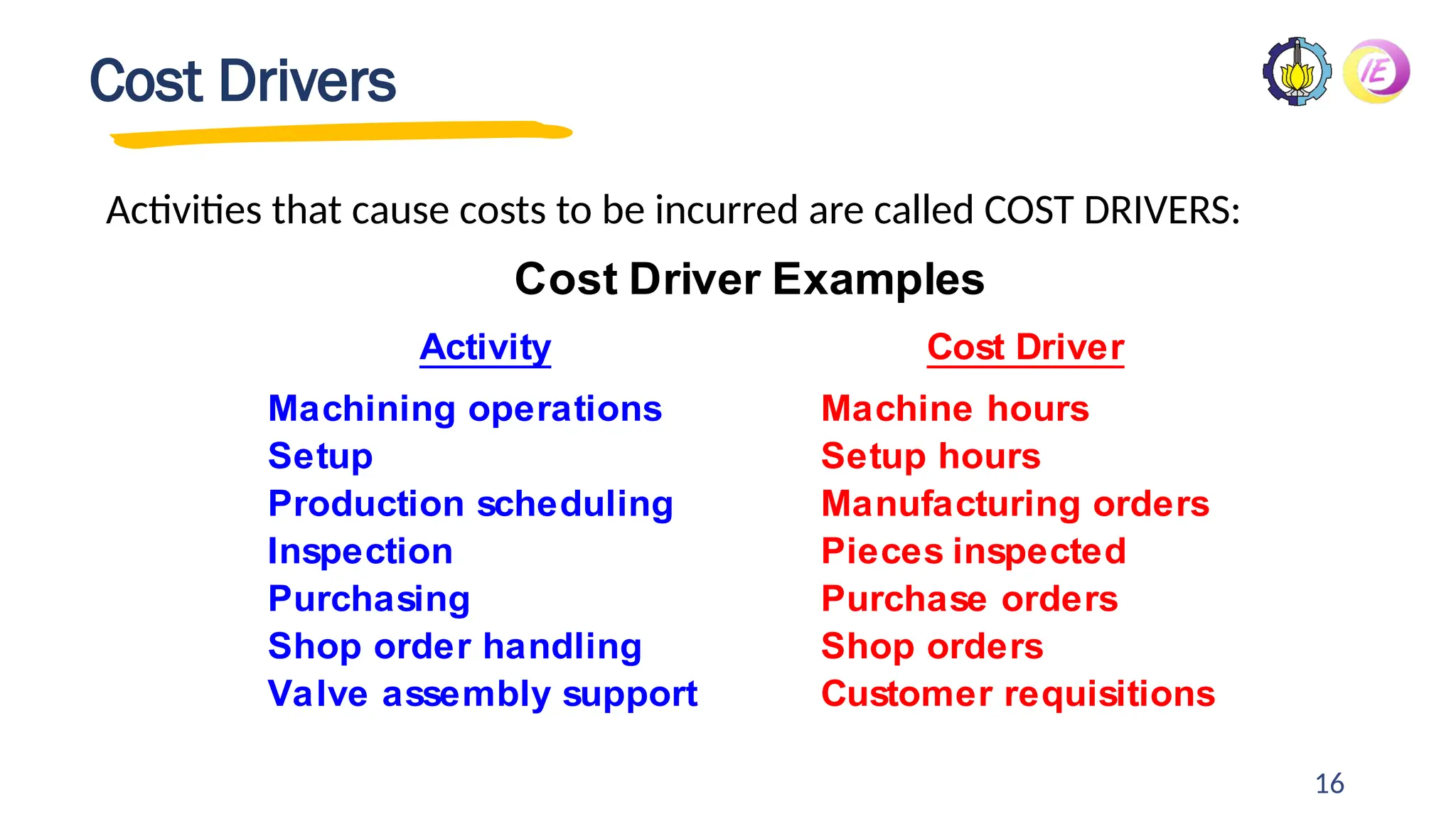
Activities thatcause costs to be incurred are called COST DRIVERS:
Cost Driver Examples
Activity Cost Driver
Machining operations Machine hours
Setup Setup hours
Production scheduling Manufacturing orders
Inspection Pieces inspected
Purchasing Purchase orders
Shop order handling Shop orders
Valve assembly support Customer requisitions
15.
17
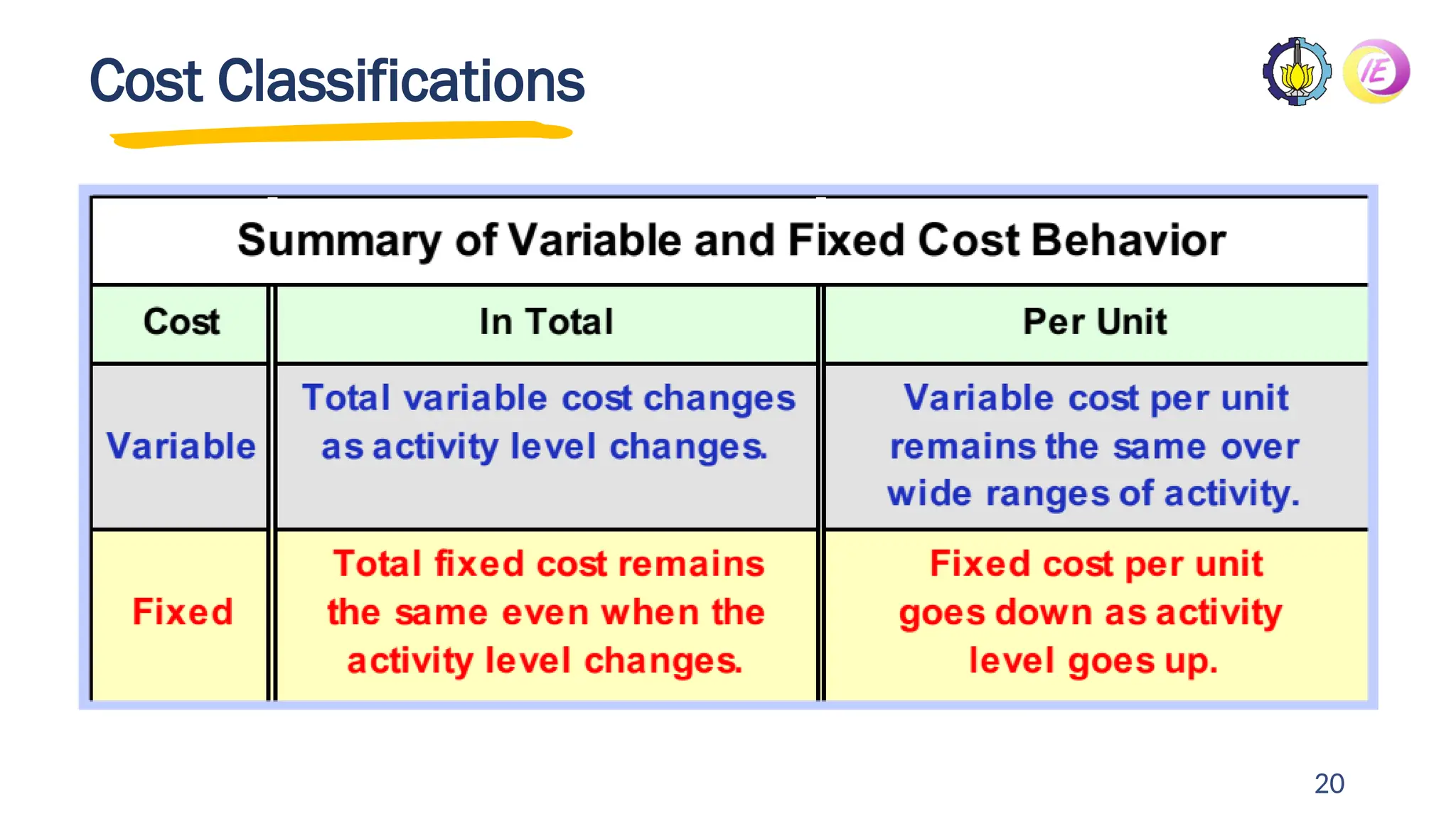
Cost Classifications
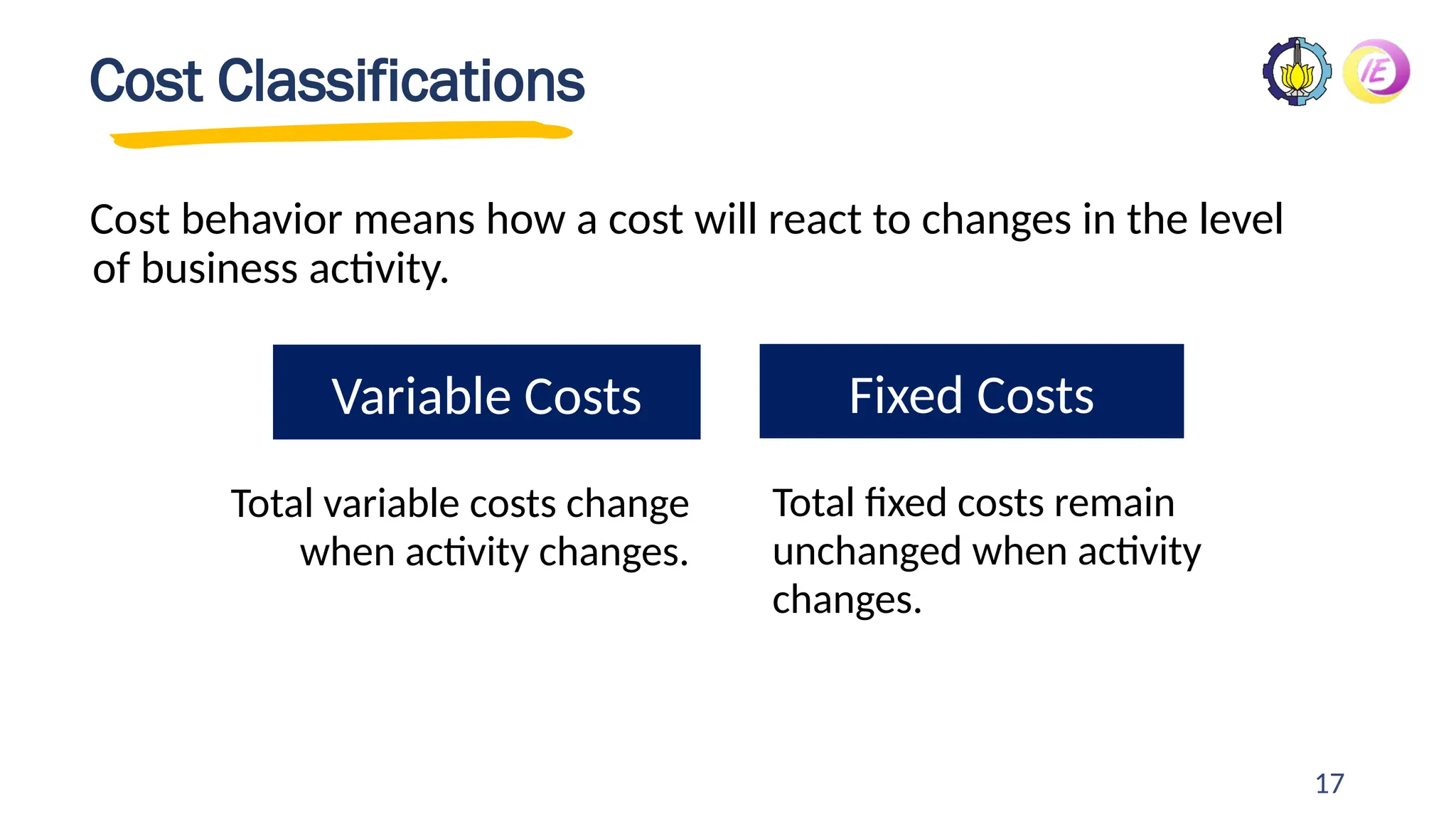
Cost behaviormeans how a cost will react to changes in the level
of business activity.
Variable Costs Fixed Costs
Total variable costs change
when activity changes.
Total fixed costs remain
unchanged when activity
changes.
16.
18
Variable Cost
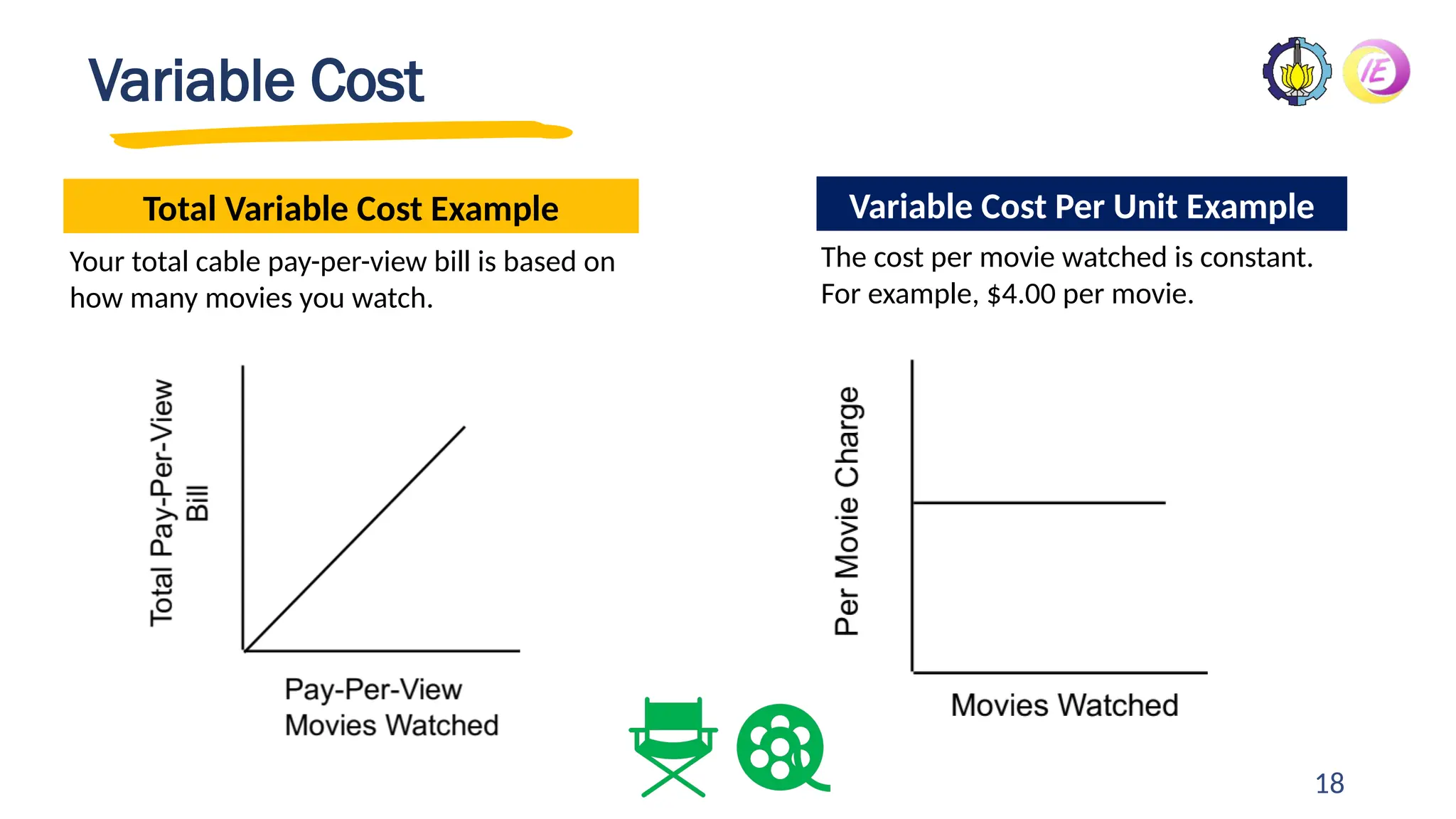
Your totalcable pay-per-view bill is based on
how many movies you watch.
The cost per movie watched is constant.
For example, $4.00 per movie.
Total Variable Cost Example Variable Cost Per Unit Example
17.
19
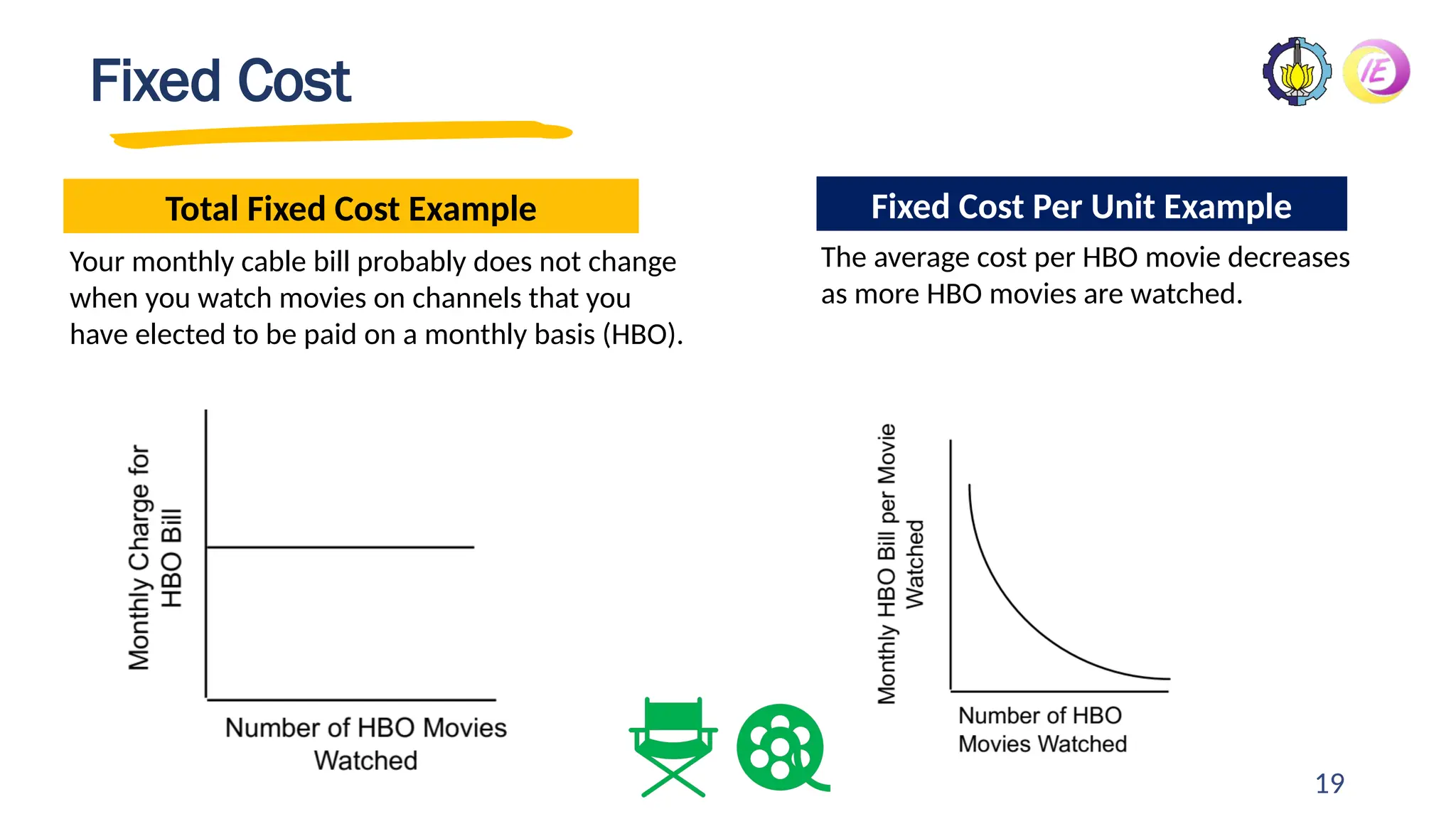
Fixed Cost
Your monthlycable bill probably does not change
when you watch movies on channels that you
have elected to be paid on a monthly basis (HBO).
The average cost per HBO movie decreases
as more HBO movies are watched.
Total Fixed Cost Example Fixed Cost Per Unit Example
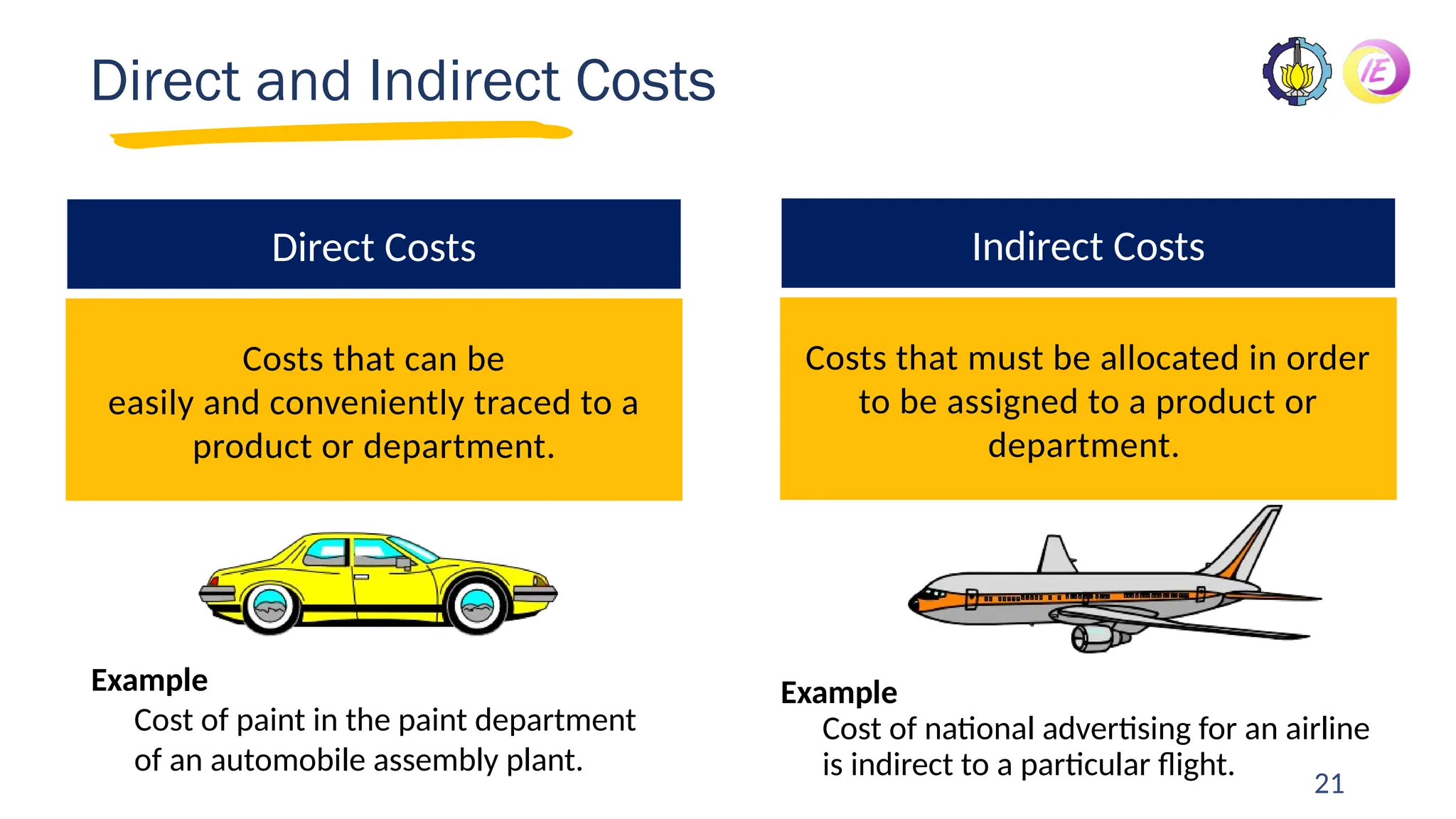
21
Example
Cost of nationaladvertising for an airline
is indirect to a particular flight.
Direct and Indirect Costs
Costs that can be
easily and conveniently traced to a
product or department.
Direct Costs
Costs that must be allocated in order
to be assigned to a product or
department.
Indirect Costs
Example
Cost of paint in the paint department
of an automobile assembly plant.
23
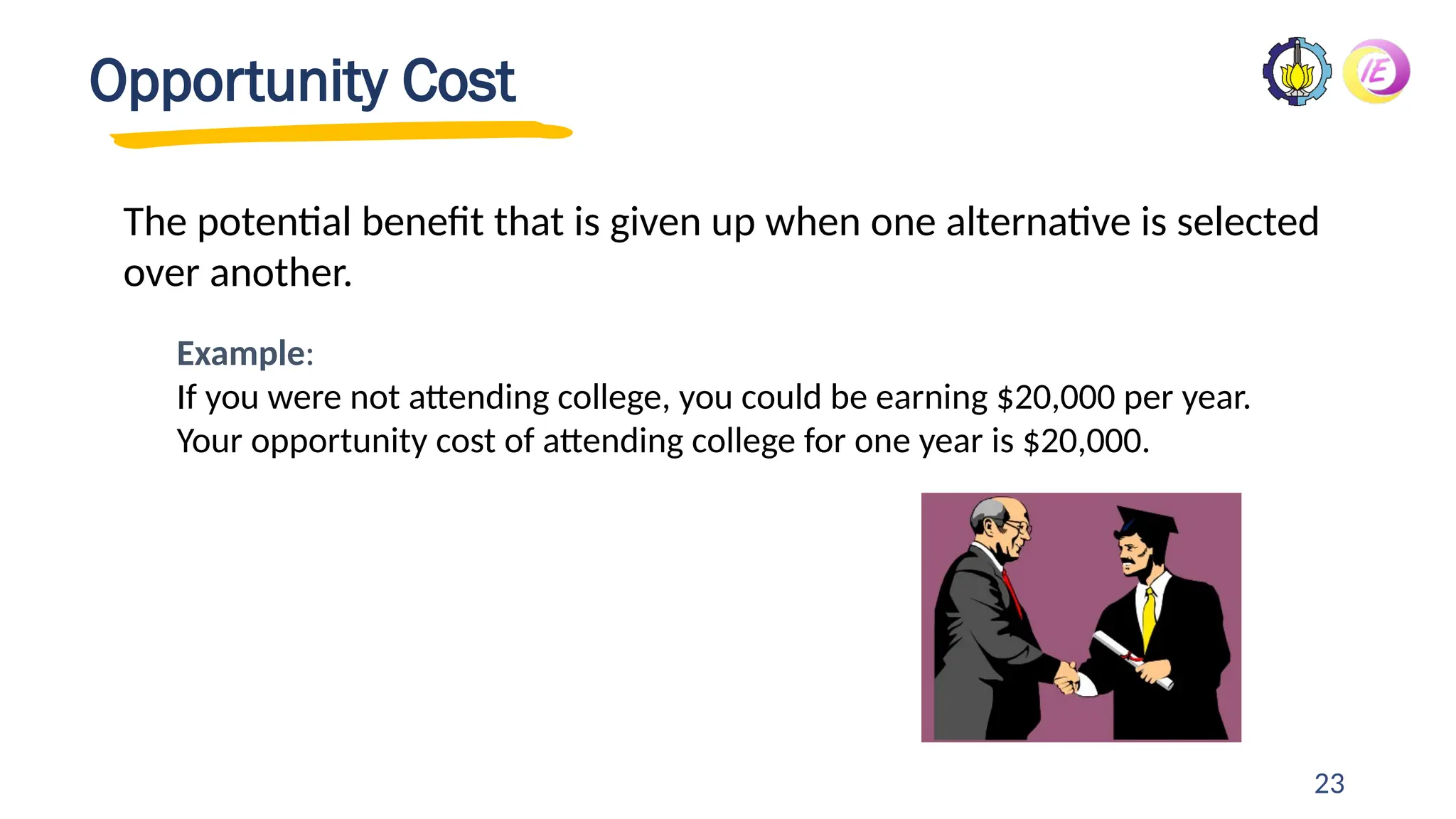
Opportunity Cost
The potentialbenefit that is given up when one alternative is selected
over another.
Example:
If you were not attending college, you could be earning $20,000 per year.
Your opportunity cost of attending college for one year is $20,000.
22.
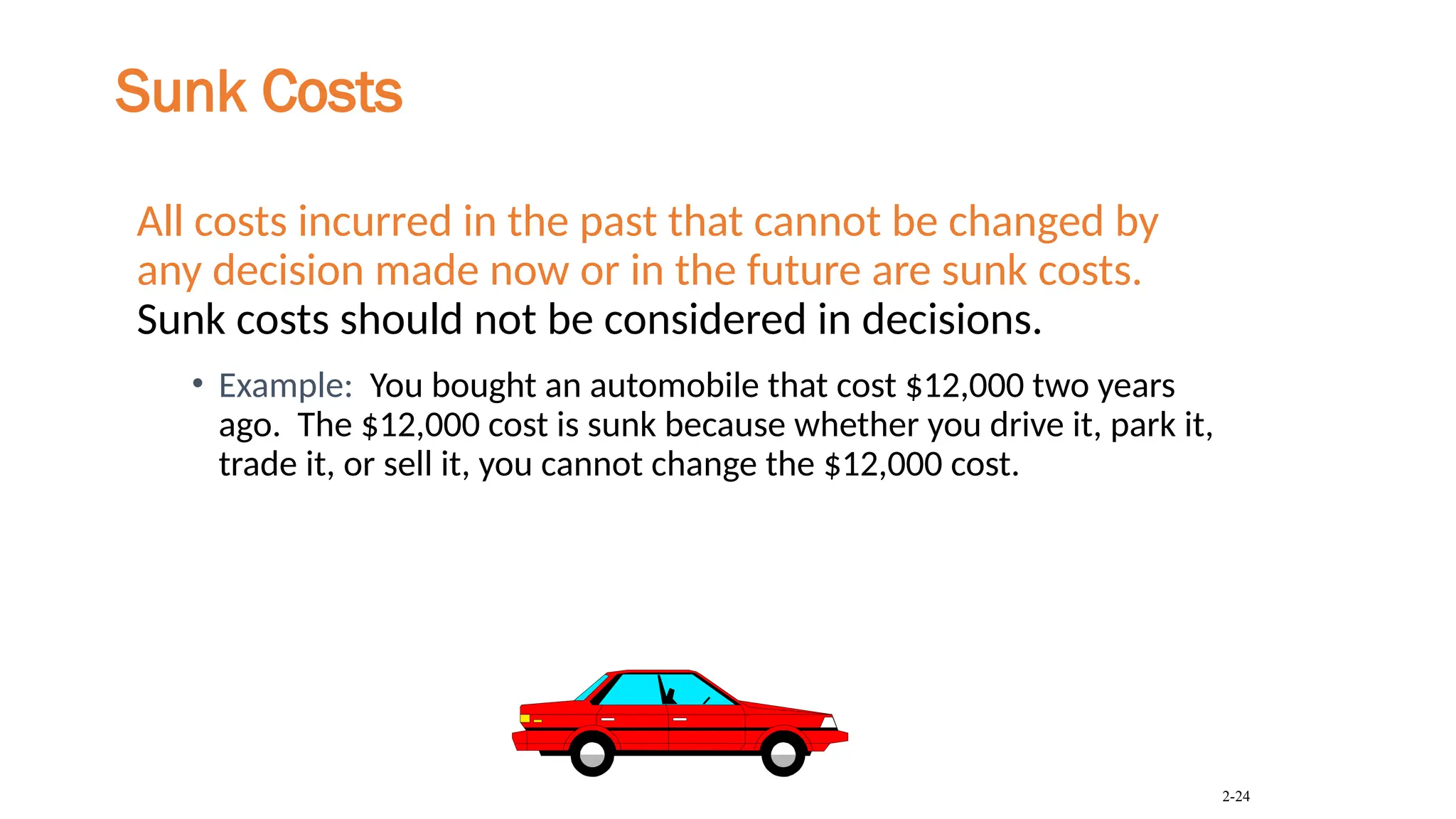
Sunk Costs
All costsincurred in the past that cannot be changed by
any decision made now or in the future are sunk costs.
Sunk costs should not be considered in decisions.
• Example: You bought an automobile that cost $12,000 two years
ago. The $12,000 cost is sunk because whether you drive it, park it,
trade it, or sell it, you cannot change the $12,000 cost.
2-24
23.
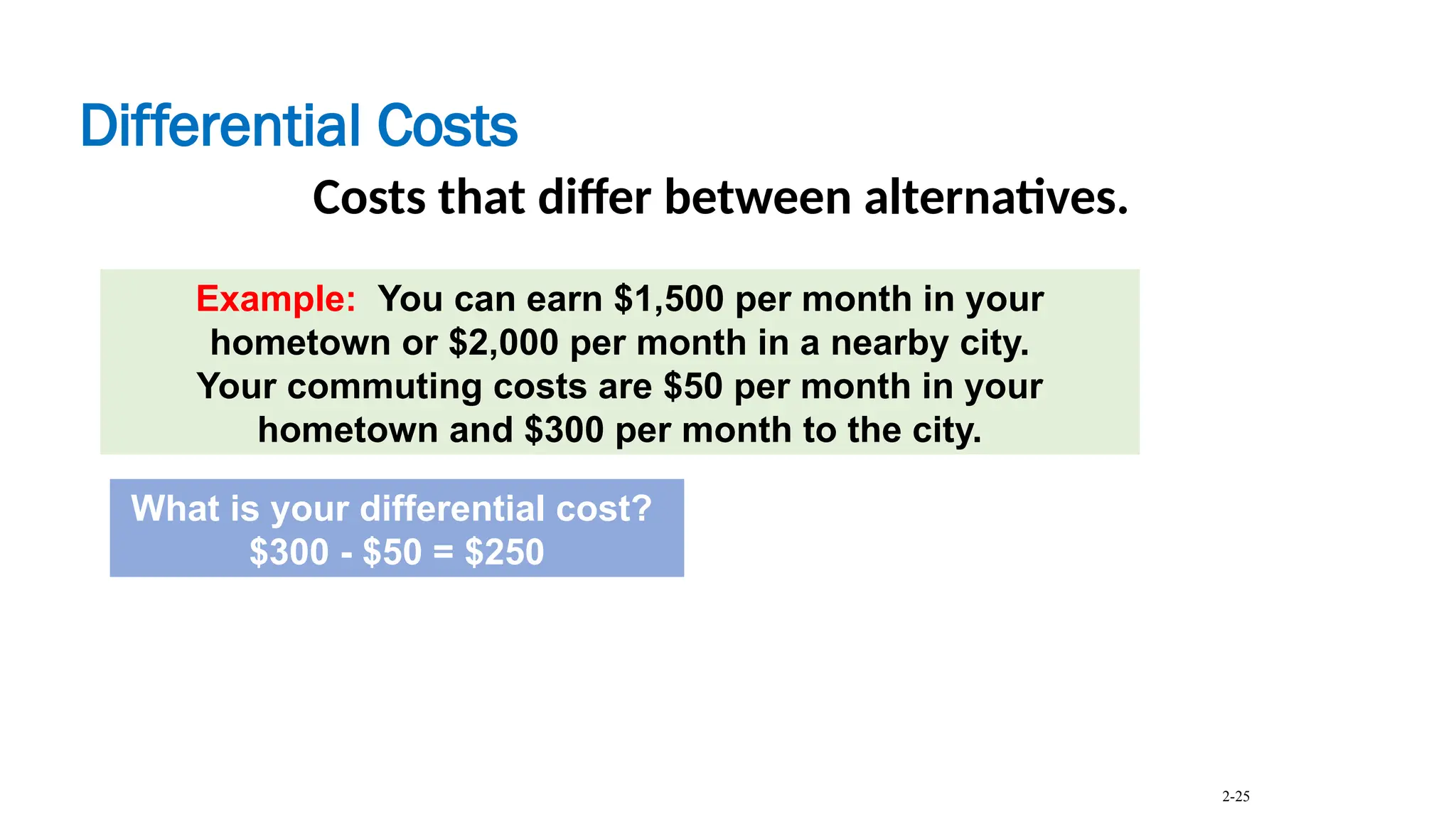
Differential Costs
Costs thatdiffer between alternatives.
Example: You can earn $1,500 per month in your
hometown or $2,000 per month in a nearby city.
Your commuting costs are $50 per month in your
hometown and $300 per month to the city.
What is your differential cost?
$300 - $50 = $250
2-25
24.
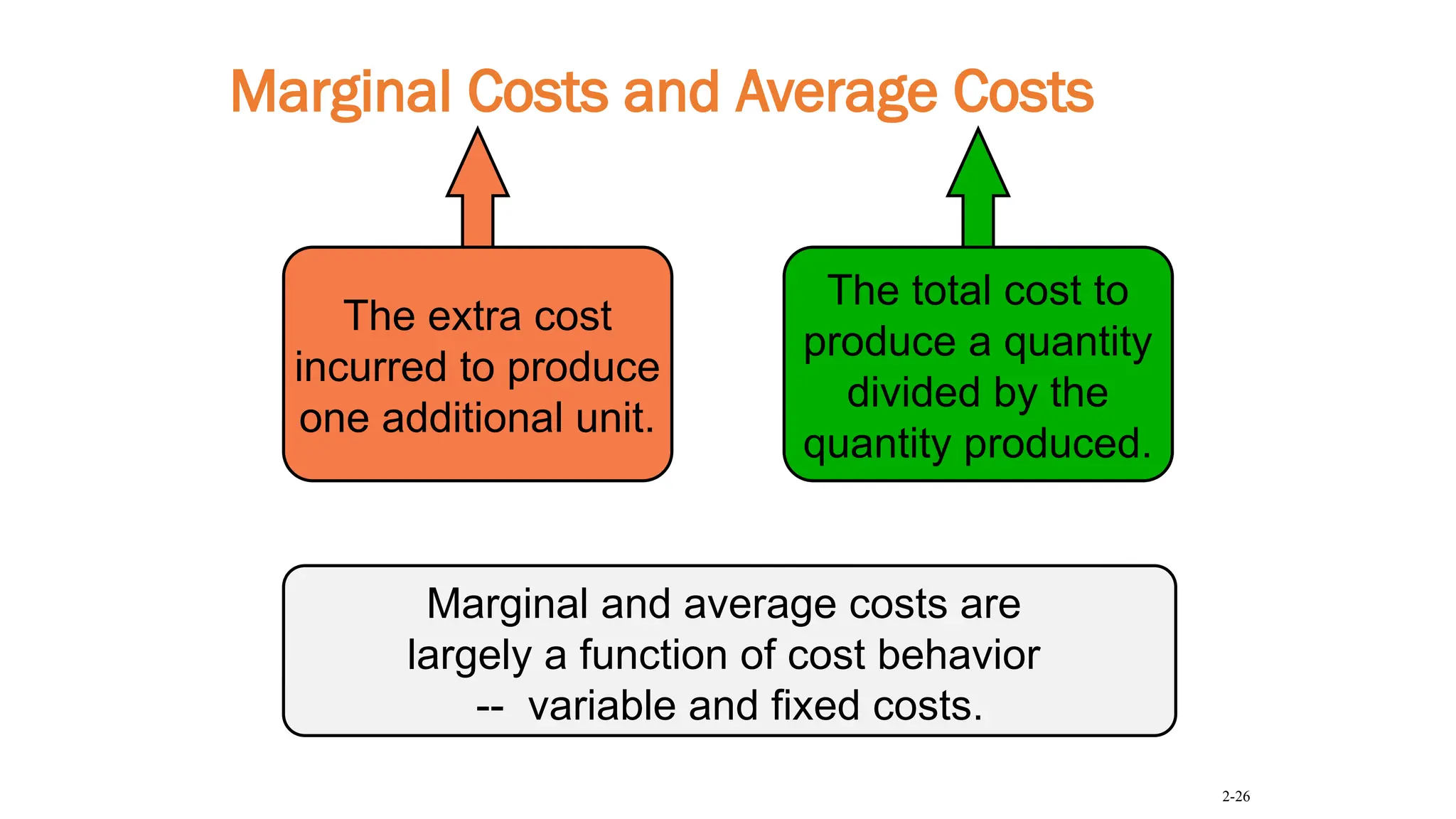
Marginal Costs andAverage Costs
The extra cost
incurred to produce
one additional unit.
The total cost to
produce a quantity
divided by the
quantity produced.
Marginal and average costs are
largely a function of cost behavior
-- variable and fixed costs.
2-26
25.
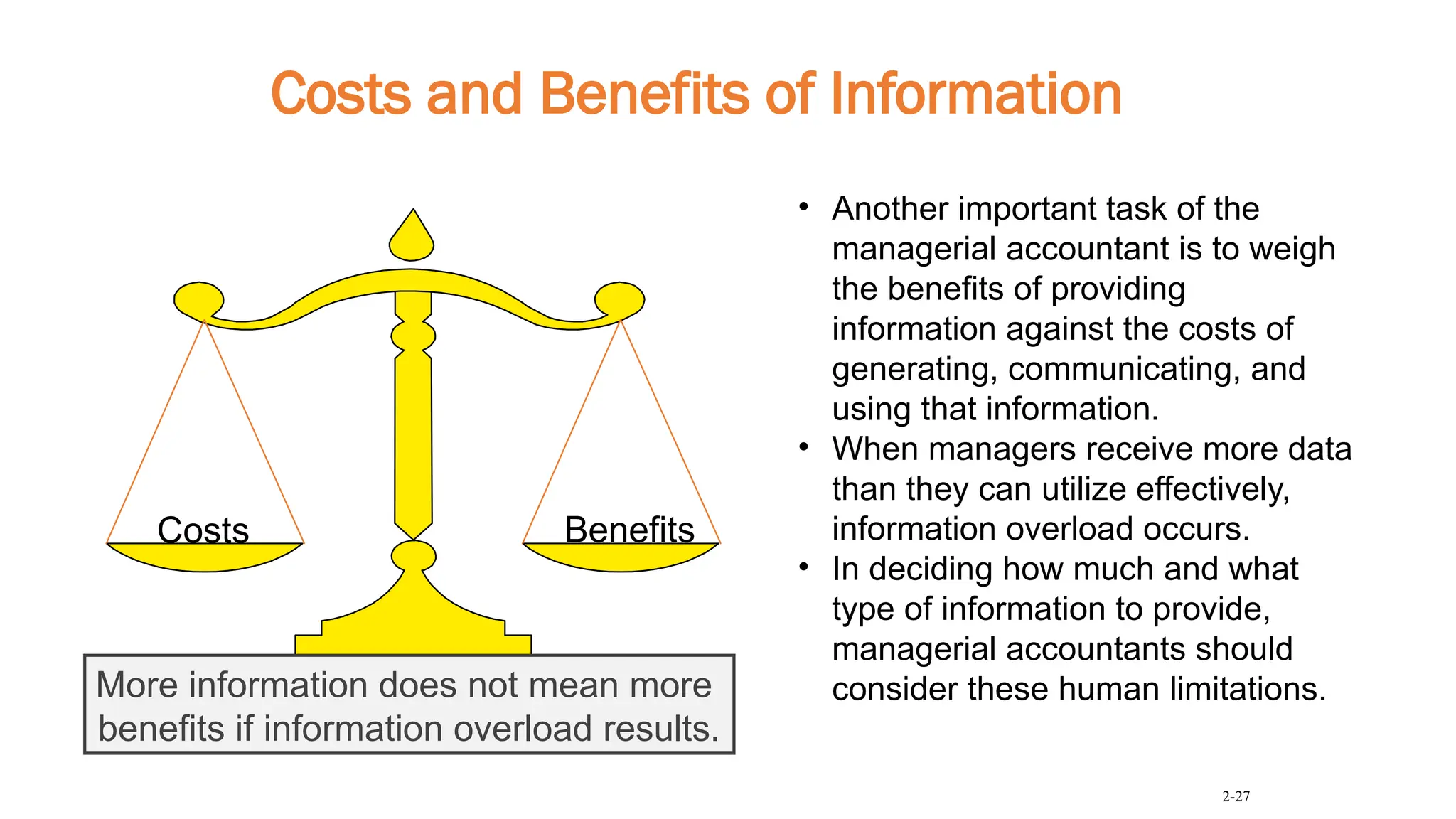
Costs and Benefitsof Information
Costs Benefits
More information does not mean more
benefits if information overload results.
2-27
• Another important task of the
managerial accountant is to weigh
the benefits of providing
information against the costs of
generating, communicating, and
using that information.
• When managers receive more data
than they can utilize effectively,
information overload occurs.
• In deciding how much and what
type of information to provide,
managerial accountants should
consider these human limitations.
Editor's Notes
#9 Production processes can be classified into five generic types. The nature of the manufacturing process can affect the manufacturing costs incurred. The management team is in a better position to control these costs if the relationship of the production process to the types of costs incurred is understood. (LO4)
#15 As direct material is consumed in production, its cost is added to work-in-process inventory. Similarly, the costs of direct labor and manufacturing overhead are accumulated in work in process. (LO5)
When products are finished, their costs are transferred from work-in-process inventory to finished-goods inventory. The total cost of direct material, direct labor, and manufacturing overhead transferred from work-in-process inventory to finished-goods inventory is called the cost of goods manufactured. (LO5)
The costs then are stored in finished goods until the time period when the products are sold. At that time, the product costs are transferred from finished goods to cost of goods sold, which is an expense of the period when the sale is made.
#24 Sunk costs are costs that have been incurred in the past. Consequently, they do not affect future costs and cannot be changed by any current or future action. (LO10)
#25 A differential cost is the amount by which the cost differs under two alternative actions. (LO10)
#26 A special case of the differential-cost concept is the marginal cost, which is the extra cost incurred when one additional unit is produced. Marginal costs typically differ across different ranges of production quantities because the efficiency of the production process changes. (LO10)
#27 Another important task of the managerial accountant is to weigh the benefits of providing information against the costs of generating, communicating, and using that information. When managers receive more data than they can utilize effectively, information overload occurs. In deciding how much and what type of information to provide, managerial accountants should consider these human limitations. (LO10)