CREATION:
GENESIS AS
FOUNDATION—
PART 2
Lesson 9
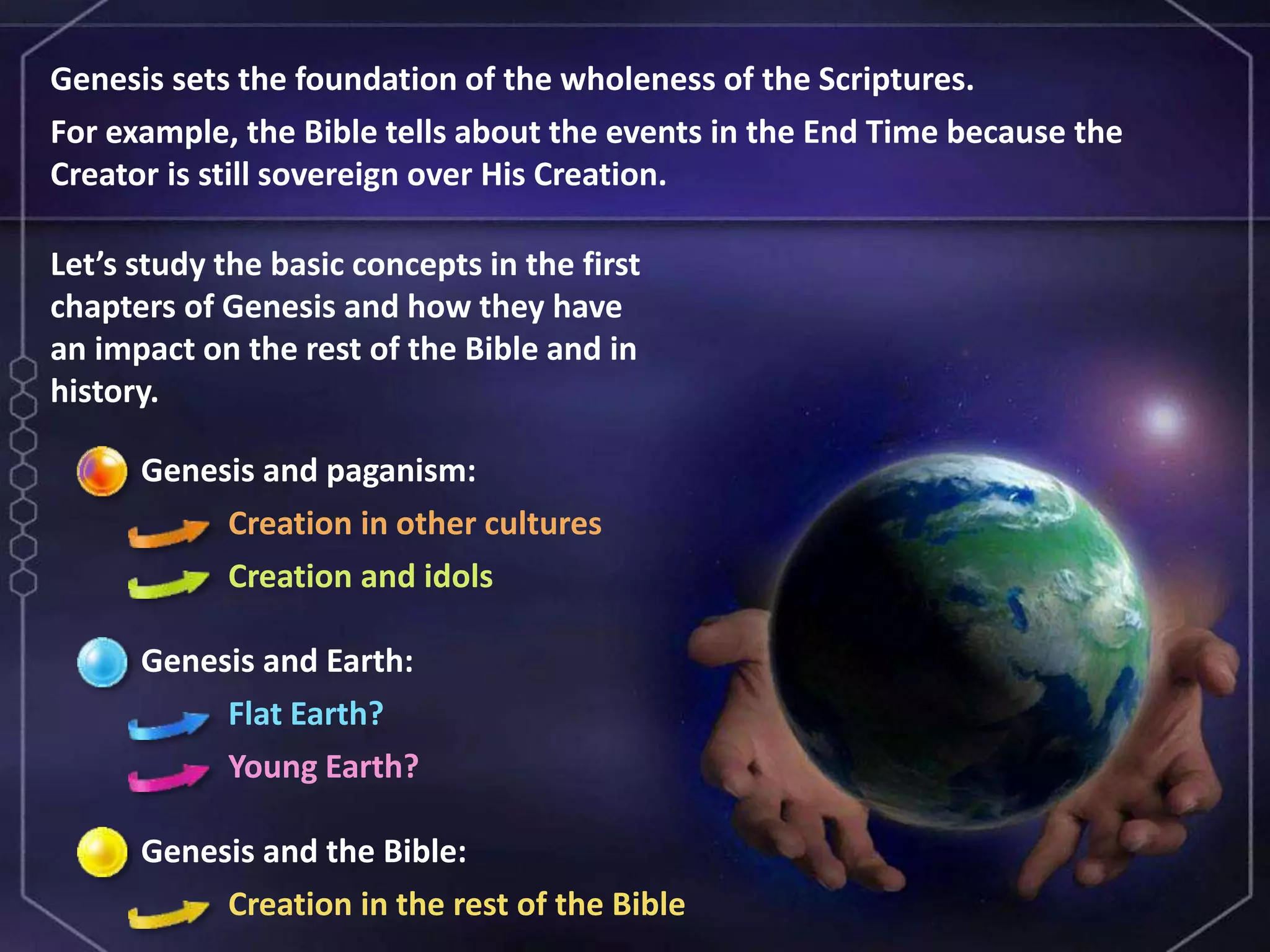
Genesis and paganism:
Creation in other cultures
Creation and idols
Genesis and Earth:
Flat Earth?
Young Earth?
Genesis and the Bible:
Creation in the rest of the Bible
Genesis sets the foundation of the wholeness of the Scriptures.
For example, the Bible tells about the events in the End Time because the
Creator is still sovereign over His Creation.
Let’s study the basic concepts in the first
chapters of Genesis and how they have
an impact on the rest of the Bible and in
history.
Genesis 1-2 is not the only account of creation
of mankind. There are other accounts like the
Atra-Hasis epic, which tells the Akkadian
conception of creation. Egyptians and Greeks
also had their own creation stories.
All of them have some common elements
with Genesis (for example, the use of clay),
but also great differences.
In non-Biblical stories, mankind was created
as a selfish act, or because of competition
between gods. This is an idolatrous perversion
of the truth.
Only Genesis introduces the creation of mankind as a
result of the love of an omnipotent God, with no
selfishness at all.
In many cultures, the Sun and the Moon were gods
who took part in the creation of Earth and mankind.
For example, Egyptians believed the Sun (Ra) created
all forms of life. Therefore, those celestial bodies were
worshipped by almost all the cultures in ancient times.
Why are the Sun and the Moon not mentioned by name?
Genesis makes it clear: God created them for a specific function,
they were just lights with no life at all.
There are not several gods in
Creation who we should worship.
There’s no chance and there are no
whims. Everything was created with
a purpose (Isaiah 45:5, 18). Only
God, our Creator, is worthy of our
worship.
“He shakes the earth out of its place, and its pillars tremble.”
(Job 9:6)
Some people believe that Earth is flat because of reading some
passages like the one in Job literally. As if it was sustained by pillars
and limited by four literal angles (see Revelation 7:1).
However, the book of Job also explains that Earth is
hanging on nothing (Job 26:7). We must take into account
that many of these expressions are using poetic speech.
Although we know
Earth is round and not
flat (Pr. 8:27; Is. 40:22),
we still use the four
cardinal points.
We also say that the Sun rises and sets, although we know that Earth is the one moving
around the Sun. We’re not using a scientific register when using those expressions.
Likewise, there are descriptions in the Bible that use a common registry instead of a
scientific one.
There are several genealogy records in the Bible that cover the period between
Adam and Abraham: Genesis 5 and 11, 1 Chronicles 1:1-27 and Luke 3:23-38.
Both names and ages are given, so we can calculate how much time passed
between Adam and Abraham.
X
years
Y
years
Z
years
If we add those years, we can find out when
Abraham lived.
According to Jewish traditions, Creation took place
at 3760 BC. Therefore, Gregorian year 2020 is
Hebrew year 5780. This is not a 100% reliable
date, but we can have a rough idea of how old
Earth is.
“‘A’ lived ‘X’ years, and begot ‘B’. After he
begot ‘B’, ‘A’ lived ‘Y’ years, and had sons and
daughters. So all the days of ‘A’ were ‘Z’ years;
and he died.” (see Genesis 5:6-8).
The first 11 chapters of Genesis are referenced many times by Jesus and the
Apostles in the New Testament (Mt. 19:4-5; Mr. 10:6-9; Lk. 11:50-51; Jn. 1:1-3; Acts
14:15; Ro. 1:20; 2Co. 4:6; Eph. 3:9; 1Tm. 2:12-15; Jm. 3:9; Jud. 11, 14; Rev. 2:7;
3:14; 22:2-3).
God’s creating power is mentioned frequently in the Old
Testament. For example, the book of Isaiah contains more
than 10 references to God as Creator.
(Is. 42:5; 43:1, 7, 15, 21; 45:8; 54:16, 56:7; 57:16; 65:17, 18).
There are also mentions to Creation as the
foundation of doctrines as important as sin or
redemption (Romans 5:12-19).
The Bible would lose its cohesion and
reliability without the foundation of Genesis.
“We are dependent on the Bible for a knowledge
of the early history of our world, of the creation
of man, and of his fall. Remove the Word of God,
and what can we expect but to be left to fables
and conjectures and to that enfeebling of the
intellect which is the sure result of entertaining
error.
We need the authentic history of the origin of the
earth, of the fall of Lucifer, and of the
introduction of sin into the world. Without the
Bible, we should be bewildered by false theories.
The mind would be subjected to the tyranny of
superstition and falsehood. But, having in our
possession an authentic history of the beginning
of the world, we need not hamper ourselves with
human conjectures and unreliable theories.”
E.G.W. (Mind, Character, and Personality, vol. 2, cp. 82, p. 742)
HOW TO
INTERPRET
THE BIBLE
THIS SERVICE IS FREE AND
YOU CAN USE IT Slideshare.net/chucho1943
We invite you to
download and study
each one of the 13
lessons about this
serie:

09 genesis creation 2

  • 1.
  • 3.
    Genesis and paganism: Creationin other cultures Creation and idols Genesis and Earth: Flat Earth? Young Earth? Genesis and the Bible: Creation in the rest of the Bible Genesis sets the foundation of the wholeness of the Scriptures. For example, the Bible tells about the events in the End Time because the Creator is still sovereign over His Creation. Let’s study the basic concepts in the first chapters of Genesis and how they have an impact on the rest of the Bible and in history.
  • 4.
    Genesis 1-2 isnot the only account of creation of mankind. There are other accounts like the Atra-Hasis epic, which tells the Akkadian conception of creation. Egyptians and Greeks also had their own creation stories. All of them have some common elements with Genesis (for example, the use of clay), but also great differences. In non-Biblical stories, mankind was created as a selfish act, or because of competition between gods. This is an idolatrous perversion of the truth. Only Genesis introduces the creation of mankind as a result of the love of an omnipotent God, with no selfishness at all.
  • 5.
    In many cultures,the Sun and the Moon were gods who took part in the creation of Earth and mankind. For example, Egyptians believed the Sun (Ra) created all forms of life. Therefore, those celestial bodies were worshipped by almost all the cultures in ancient times. Why are the Sun and the Moon not mentioned by name? Genesis makes it clear: God created them for a specific function, they were just lights with no life at all. There are not several gods in Creation who we should worship. There’s no chance and there are no whims. Everything was created with a purpose (Isaiah 45:5, 18). Only God, our Creator, is worthy of our worship.
  • 6.
    “He shakes theearth out of its place, and its pillars tremble.” (Job 9:6) Some people believe that Earth is flat because of reading some passages like the one in Job literally. As if it was sustained by pillars and limited by four literal angles (see Revelation 7:1). However, the book of Job also explains that Earth is hanging on nothing (Job 26:7). We must take into account that many of these expressions are using poetic speech. Although we know Earth is round and not flat (Pr. 8:27; Is. 40:22), we still use the four cardinal points. We also say that the Sun rises and sets, although we know that Earth is the one moving around the Sun. We’re not using a scientific register when using those expressions. Likewise, there are descriptions in the Bible that use a common registry instead of a scientific one.
  • 7.
    There are severalgenealogy records in the Bible that cover the period between Adam and Abraham: Genesis 5 and 11, 1 Chronicles 1:1-27 and Luke 3:23-38. Both names and ages are given, so we can calculate how much time passed between Adam and Abraham. X years Y years Z years If we add those years, we can find out when Abraham lived. According to Jewish traditions, Creation took place at 3760 BC. Therefore, Gregorian year 2020 is Hebrew year 5780. This is not a 100% reliable date, but we can have a rough idea of how old Earth is. “‘A’ lived ‘X’ years, and begot ‘B’. After he begot ‘B’, ‘A’ lived ‘Y’ years, and had sons and daughters. So all the days of ‘A’ were ‘Z’ years; and he died.” (see Genesis 5:6-8).
  • 8.
    The first 11chapters of Genesis are referenced many times by Jesus and the Apostles in the New Testament (Mt. 19:4-5; Mr. 10:6-9; Lk. 11:50-51; Jn. 1:1-3; Acts 14:15; Ro. 1:20; 2Co. 4:6; Eph. 3:9; 1Tm. 2:12-15; Jm. 3:9; Jud. 11, 14; Rev. 2:7; 3:14; 22:2-3). God’s creating power is mentioned frequently in the Old Testament. For example, the book of Isaiah contains more than 10 references to God as Creator. (Is. 42:5; 43:1, 7, 15, 21; 45:8; 54:16, 56:7; 57:16; 65:17, 18). There are also mentions to Creation as the foundation of doctrines as important as sin or redemption (Romans 5:12-19). The Bible would lose its cohesion and reliability without the foundation of Genesis.
  • 9.
    “We are dependenton the Bible for a knowledge of the early history of our world, of the creation of man, and of his fall. Remove the Word of God, and what can we expect but to be left to fables and conjectures and to that enfeebling of the intellect which is the sure result of entertaining error. We need the authentic history of the origin of the earth, of the fall of Lucifer, and of the introduction of sin into the world. Without the Bible, we should be bewildered by false theories. The mind would be subjected to the tyranny of superstition and falsehood. But, having in our possession an authentic history of the beginning of the world, we need not hamper ourselves with human conjectures and unreliable theories.” E.G.W. (Mind, Character, and Personality, vol. 2, cp. 82, p. 742)
  • 10.
    HOW TO INTERPRET THE BIBLE THISSERVICE IS FREE AND YOU CAN USE IT Slideshare.net/chucho1943 We invite you to download and study each one of the 13 lessons about this serie: