Strategy
Finding a Pathway
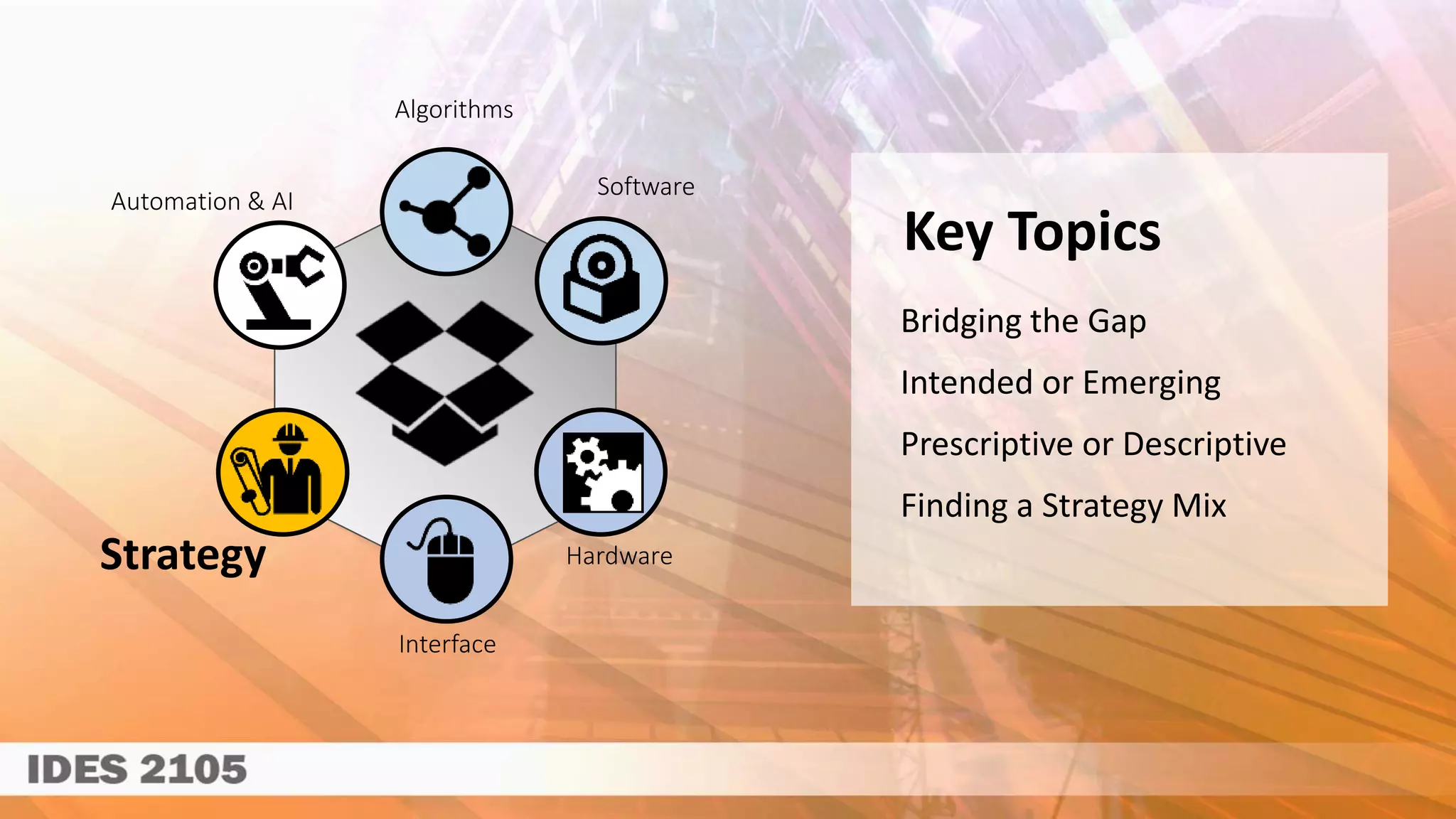
Algorithms
Hardware
Software
Strategy
Interface
Automation & AI
Key Topics
Bridging the Gap
Intended or Emerging
Prescriptive or Descriptive
Finding a Strategy Mix
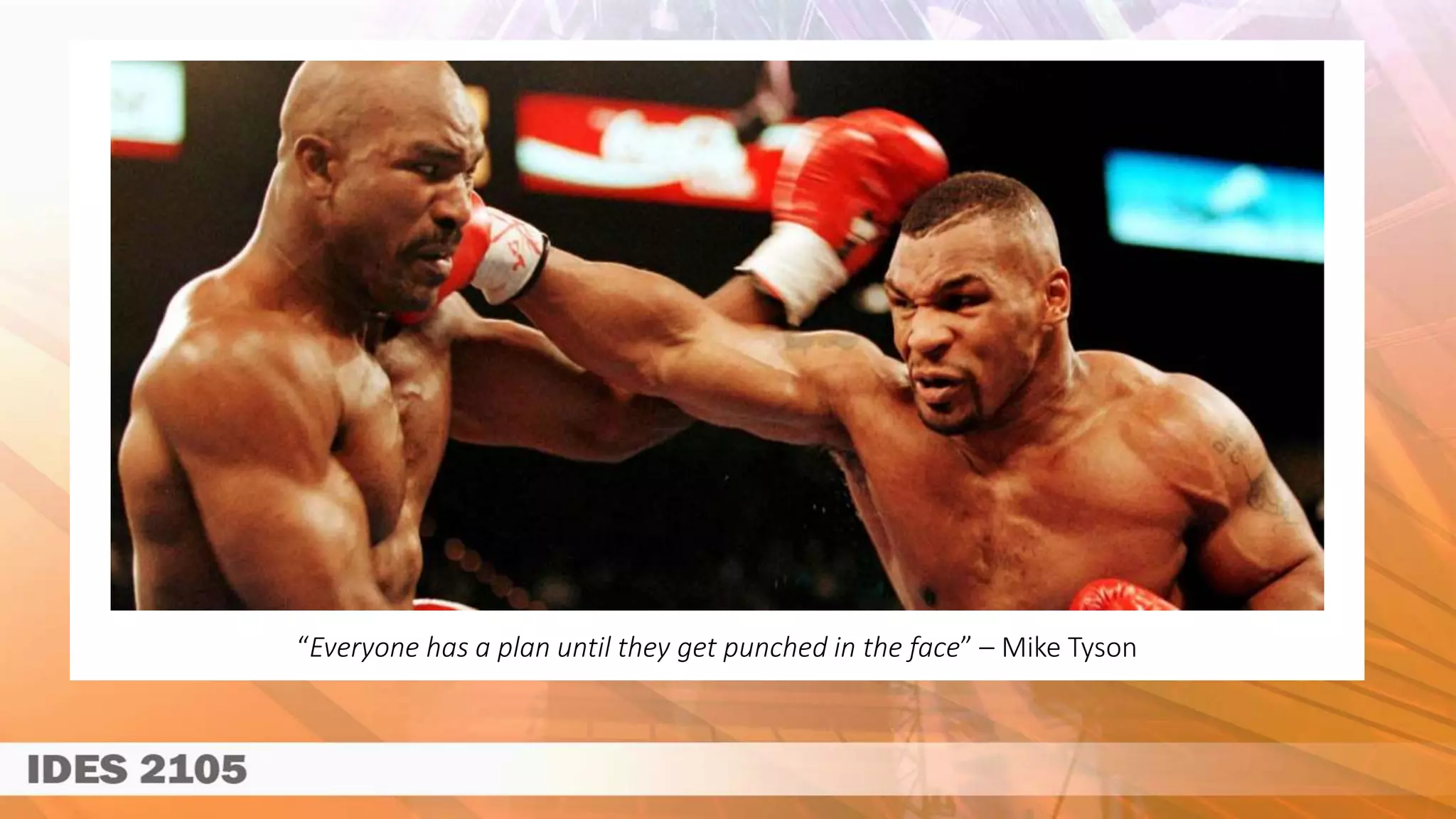
“Everyone has a plan until they get punched in the face” – Mike Tyson
Source: The Thrilling Adventures of Lovelace and Babbage: The (Mostly) True Story of the First Computer by Sydney Padua
Deliberate: Plan & Implement Emergent: Adapt & Improvise
Mintzberg’s 5Ps of Strategy
Perspective
Influence of organizational culture and
collective thinking on the strategic decision
making of the company
Plan
Strategy is developed in advance and with
purpose
Position
How the organization relates to its competitive
environment and what it can do to make its
products unique in the marketplace
Pattern
What was successful in the past can lead to
success in the future
Ploy
A way to outsmart the competition (buy a patent
to block others)
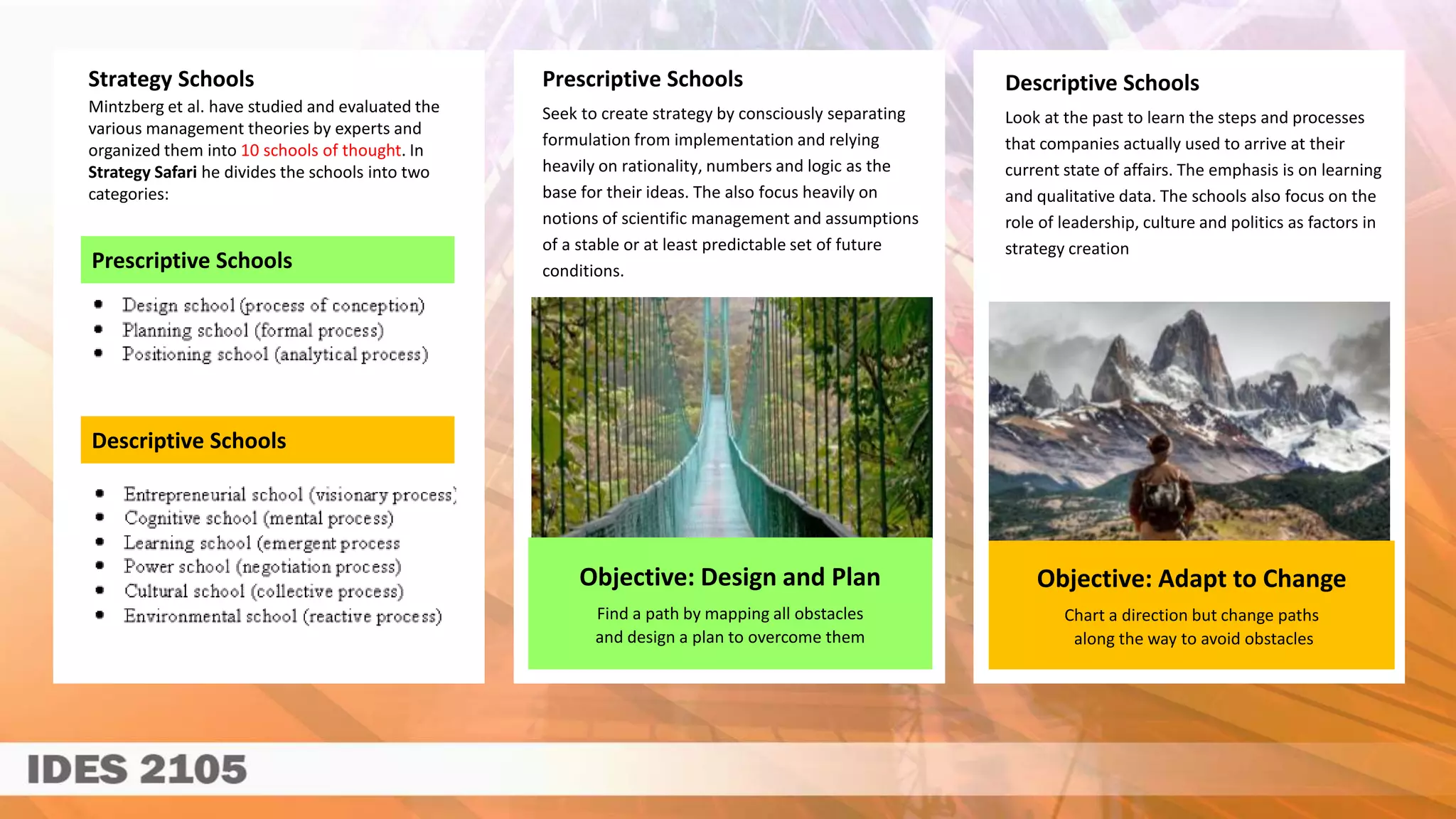
Objective: Adapt to Change
Chart a direction but change paths
along the way to avoid obstacles
Prescriptive Schools
Descriptive Schools
Objective: Design and Plan
Find a path by mapping all obstacles
and design a plan to overcome them
Prescriptive Schools
Seek to create strategy by consciously separating
formulation from implementation and relying
heavily on rationality, numbers and logic as the
base for their ideas. The also focus heavily on
notions of scientific management and assumptions
of a stable or at least predictable set of future
conditions.
Descriptive Schools
Look at the past to learn the steps and processes
that companies actually used to arrive at their
current state of affairs. The emphasis is on learning
and qualitative data. The schools also focus on the
role of leadership, culture and politics as factors in
strategy creation
Strategy Schools
Mintzberg et al. have studied and evaluated the
various management theories by experts and
organized them into 10 schools of thought. In
Strategy Safari he divides the schools into two
categories:
Sony’s BETA Bet Paradox
Premise: most strategies are built
on specific beliefs about an
unpredictable future, but current
strategic approaches force leaders
to commit to an inflexible strategy
regardless of how the future might
unfold.
Example: in the 1990s Sony
developed BETA tapes as an optimal
solution for home video recorder;
however, the technology was
proprietary and expensive paving
the way for VHS as consumers opted
for the cheaper and lower quality
format. In the end Sony was
committed to its BETA strategy from
which it could not deviate.
Uncertainty
Cone
Knowledge
Funnel
Uncertainty
Cone
VHS
BETA
SONY
JVC
Present Future
Emergent Strategy Deliberate Strategy
As time moves on the number of
suitable choices decreases
As time moves on the number of
possible scenarios increases
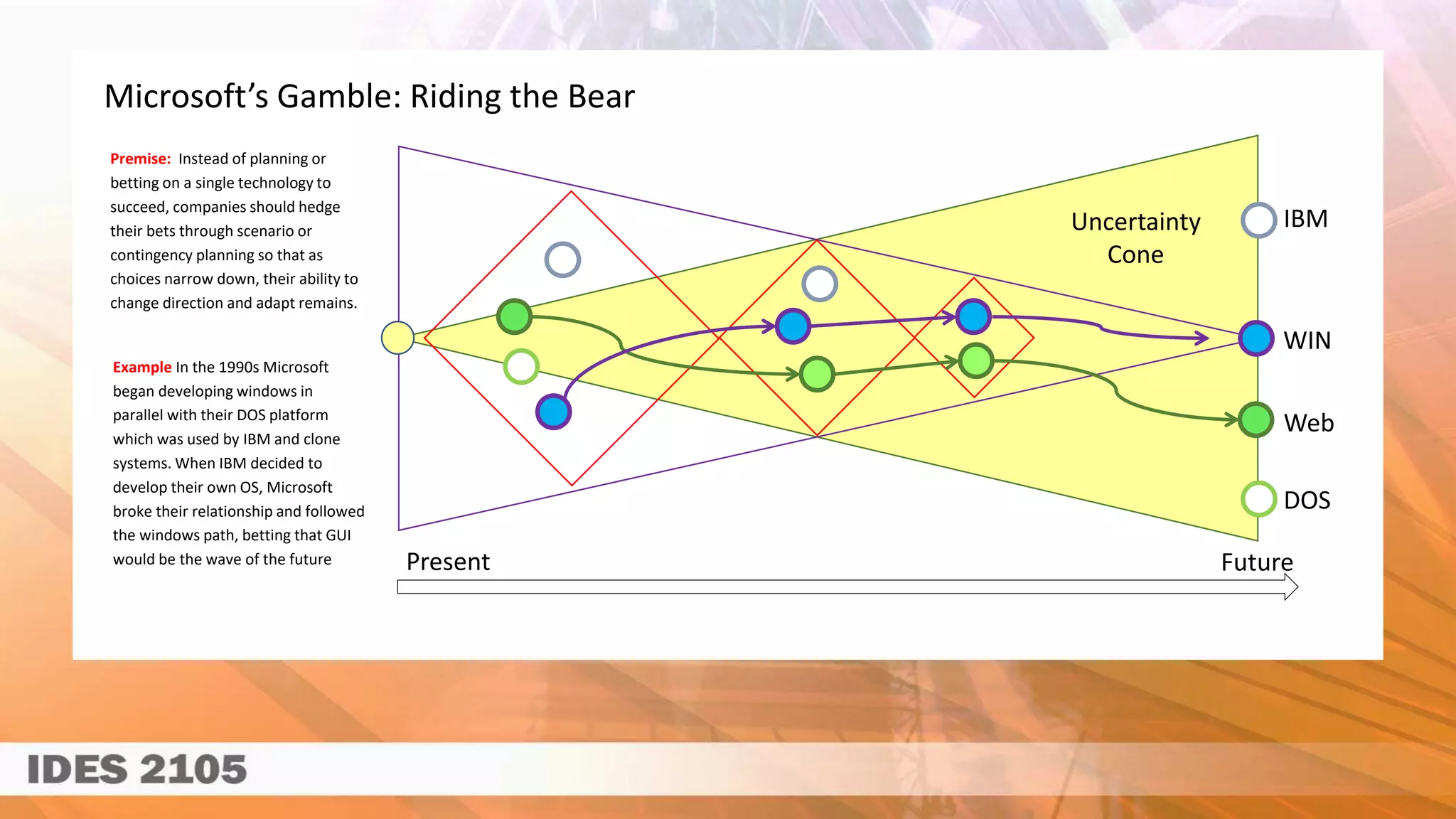
Microsoft’s Gamble: Riding the Bear
Premise: Instead of planning or
betting on a single technology to
succeed, companies should hedge
their bets through scenario or
contingency planning so that as
choices narrow down, their ability to
change direction and adapt remains.
Example In the 1990s Microsoft
began developing windows in
parallel with their DOS platform
which was used by IBM and clone
systems. When IBM decided to
develop their own OS, Microsoft
broke their relationship and followed
the windows path, betting that GUI
would be the wave of the future Present Future
Uncertainty
Cone
Uncertainty
Cone
WIN
Web
DOS
IBM
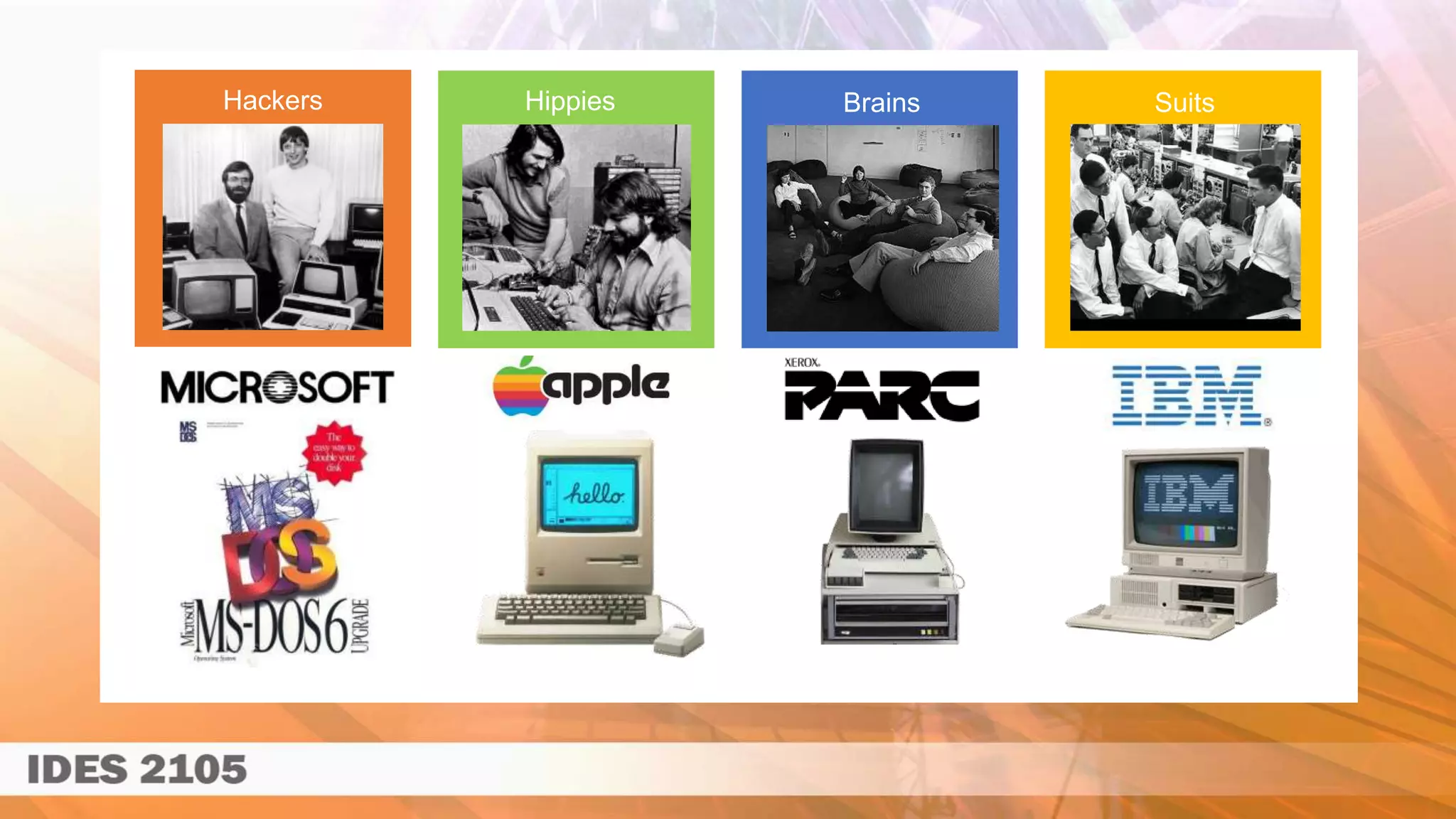
Hackers Hippies Suits
Brains
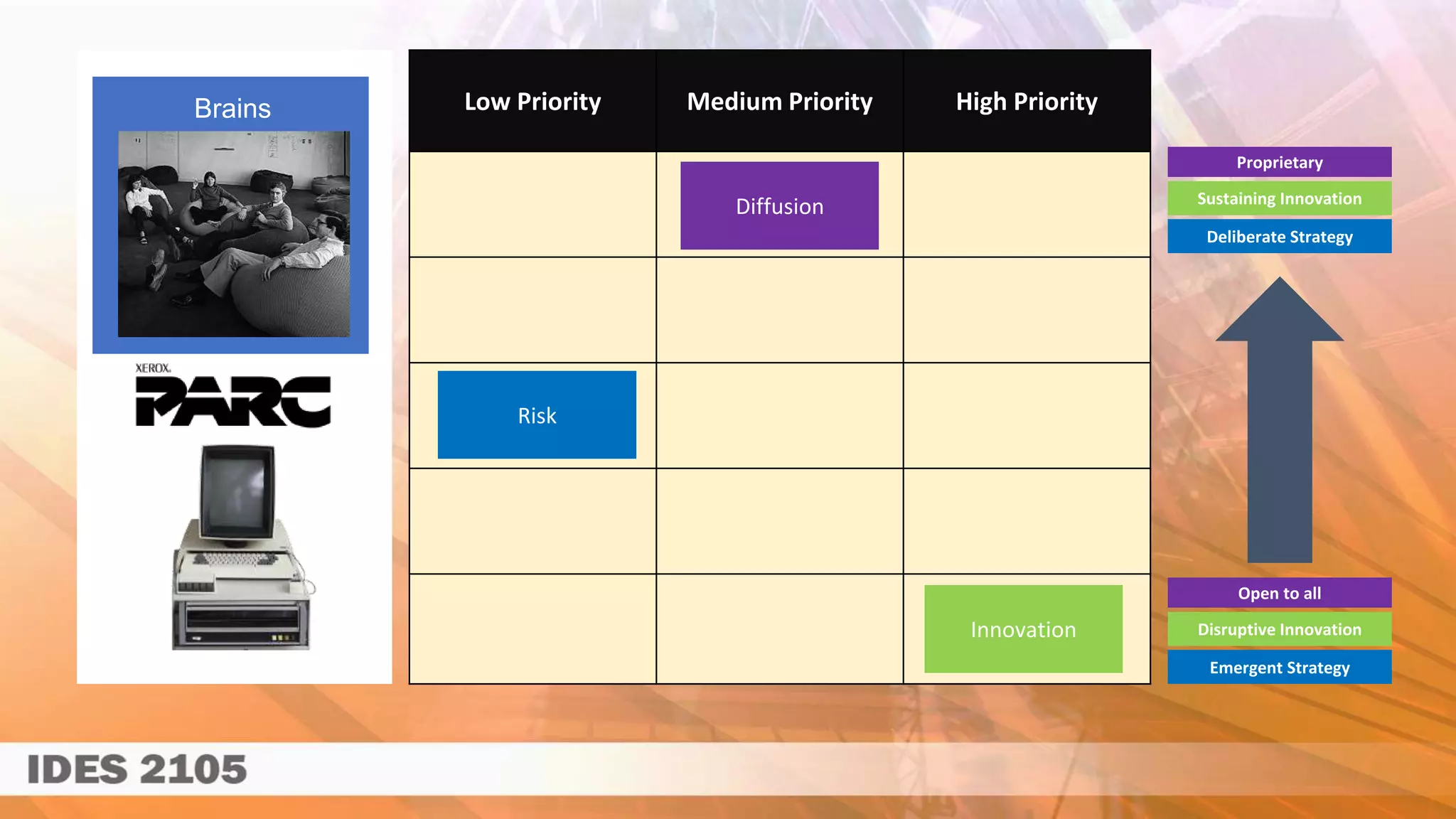
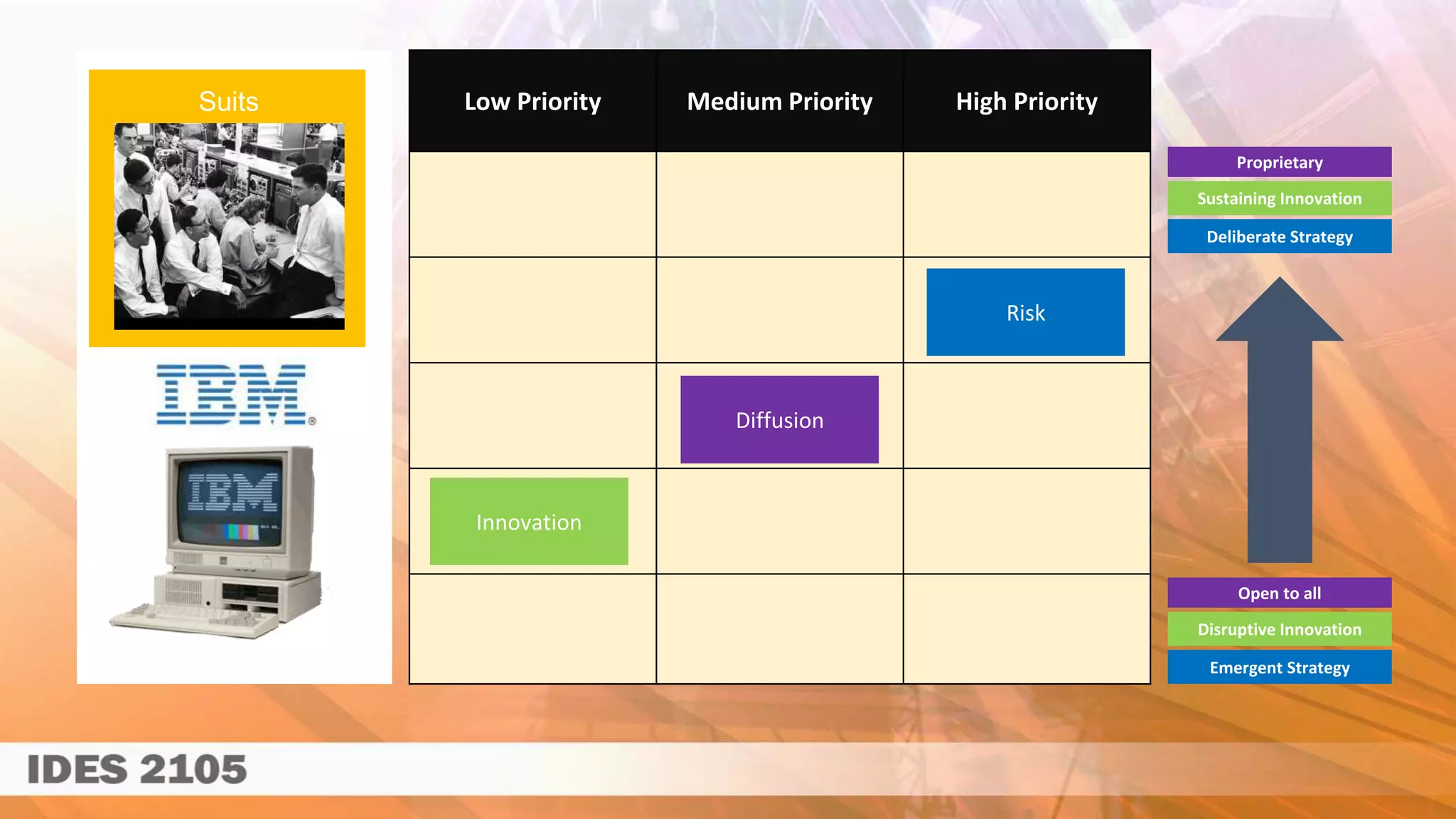
Low Priority Medium Priority High Priority
Innovator Dilemma: Sustaining
Risk Strategy: Deliberate
Diffusion of innovation: Proprietary
Innovator Dilemma: Disruptive
Risk Strategy: Emergent
Diffusion of innovation: Open
Diffusion of
Knowledge
Innovation Type
Risk Strategy
Strategy Mix
Hackers Low Priority Medium Priority High Priority
Sustaining Innovation
Deliberate Strategy
Proprietary
Disruptive Innovation
Emergent Strategy
Open to all
Diffusion
Innovation
Risk
Low Priority Medium Priority High Priority
Diffusion
Innovation
Risk
Hippies
Sustaining Innovation
Deliberate Strategy
Proprietary
Disruptive Innovation
Emergent Strategy
Open to all
Low Priority Medium Priority High Priority
Diffusion
Innovation
Risk
Brains
Sustaining Innovation
Deliberate Strategy
Proprietary
Disruptive Innovation
Emergent Strategy
Open to all
Low Priority Medium Priority High Priority
Diffusion
Innovation
Risk
Suits
Sustaining Innovation
Deliberate Strategy
Proprietary
Disruptive Innovation
Emergent Strategy
Open to all

05 strategy

  • 1.
  • 2.
    Algorithms Hardware Software Strategy Interface Automation & AI KeyTopics Bridging the Gap Intended or Emerging Prescriptive or Descriptive Finding a Strategy Mix
  • 3.
    “Everyone has aplan until they get punched in the face” – Mike Tyson
  • 4.
    Source: The ThrillingAdventures of Lovelace and Babbage: The (Mostly) True Story of the First Computer by Sydney Padua
  • 5.
    Source: The ThrillingAdventures of Lovelace and Babbage: The (Mostly) True Story of the First Computer by Sydney Padua
  • 6.
    Deliberate: Plan &Implement Emergent: Adapt & Improvise
  • 8.
    Mintzberg’s 5Ps ofStrategy Perspective Influence of organizational culture and collective thinking on the strategic decision making of the company Plan Strategy is developed in advance and with purpose Position How the organization relates to its competitive environment and what it can do to make its products unique in the marketplace Pattern What was successful in the past can lead to success in the future Ploy A way to outsmart the competition (buy a patent to block others)
  • 9.
    Objective: Adapt toChange Chart a direction but change paths along the way to avoid obstacles Prescriptive Schools Descriptive Schools Objective: Design and Plan Find a path by mapping all obstacles and design a plan to overcome them Prescriptive Schools Seek to create strategy by consciously separating formulation from implementation and relying heavily on rationality, numbers and logic as the base for their ideas. The also focus heavily on notions of scientific management and assumptions of a stable or at least predictable set of future conditions. Descriptive Schools Look at the past to learn the steps and processes that companies actually used to arrive at their current state of affairs. The emphasis is on learning and qualitative data. The schools also focus on the role of leadership, culture and politics as factors in strategy creation Strategy Schools Mintzberg et al. have studied and evaluated the various management theories by experts and organized them into 10 schools of thought. In Strategy Safari he divides the schools into two categories:
  • 10.
    Sony’s BETA BetParadox Premise: most strategies are built on specific beliefs about an unpredictable future, but current strategic approaches force leaders to commit to an inflexible strategy regardless of how the future might unfold. Example: in the 1990s Sony developed BETA tapes as an optimal solution for home video recorder; however, the technology was proprietary and expensive paving the way for VHS as consumers opted for the cheaper and lower quality format. In the end Sony was committed to its BETA strategy from which it could not deviate. Uncertainty Cone Knowledge Funnel Uncertainty Cone VHS BETA SONY JVC Present Future
  • 11.
    Emergent Strategy DeliberateStrategy As time moves on the number of suitable choices decreases As time moves on the number of possible scenarios increases
  • 12.
    Microsoft’s Gamble: Ridingthe Bear Premise: Instead of planning or betting on a single technology to succeed, companies should hedge their bets through scenario or contingency planning so that as choices narrow down, their ability to change direction and adapt remains. Example In the 1990s Microsoft began developing windows in parallel with their DOS platform which was used by IBM and clone systems. When IBM decided to develop their own OS, Microsoft broke their relationship and followed the windows path, betting that GUI would be the wave of the future Present Future Uncertainty Cone Uncertainty Cone WIN Web DOS IBM
  • 13.
  • 14.
    Low Priority MediumPriority High Priority Innovator Dilemma: Sustaining Risk Strategy: Deliberate Diffusion of innovation: Proprietary Innovator Dilemma: Disruptive Risk Strategy: Emergent Diffusion of innovation: Open Diffusion of Knowledge Innovation Type Risk Strategy Strategy Mix
  • 15.
    Hackers Low PriorityMedium Priority High Priority Sustaining Innovation Deliberate Strategy Proprietary Disruptive Innovation Emergent Strategy Open to all Diffusion Innovation Risk
  • 16.
    Low Priority MediumPriority High Priority Diffusion Innovation Risk Hippies Sustaining Innovation Deliberate Strategy Proprietary Disruptive Innovation Emergent Strategy Open to all
  • 17.
    Low Priority MediumPriority High Priority Diffusion Innovation Risk Brains Sustaining Innovation Deliberate Strategy Proprietary Disruptive Innovation Emergent Strategy Open to all
  • 18.
    Low Priority MediumPriority High Priority Diffusion Innovation Risk Suits Sustaining Innovation Deliberate Strategy Proprietary Disruptive Innovation Emergent Strategy Open to all