SPACE INFECTIONS 
CLINICAL FEATURES & TREATMENT 
Dr V.RAMKUMAR 
CONSULTANT DENTAL&FACIOMAXILLARY SURGEON 
REG N0:4118-TAMILNADU-INDIA(ASIA)
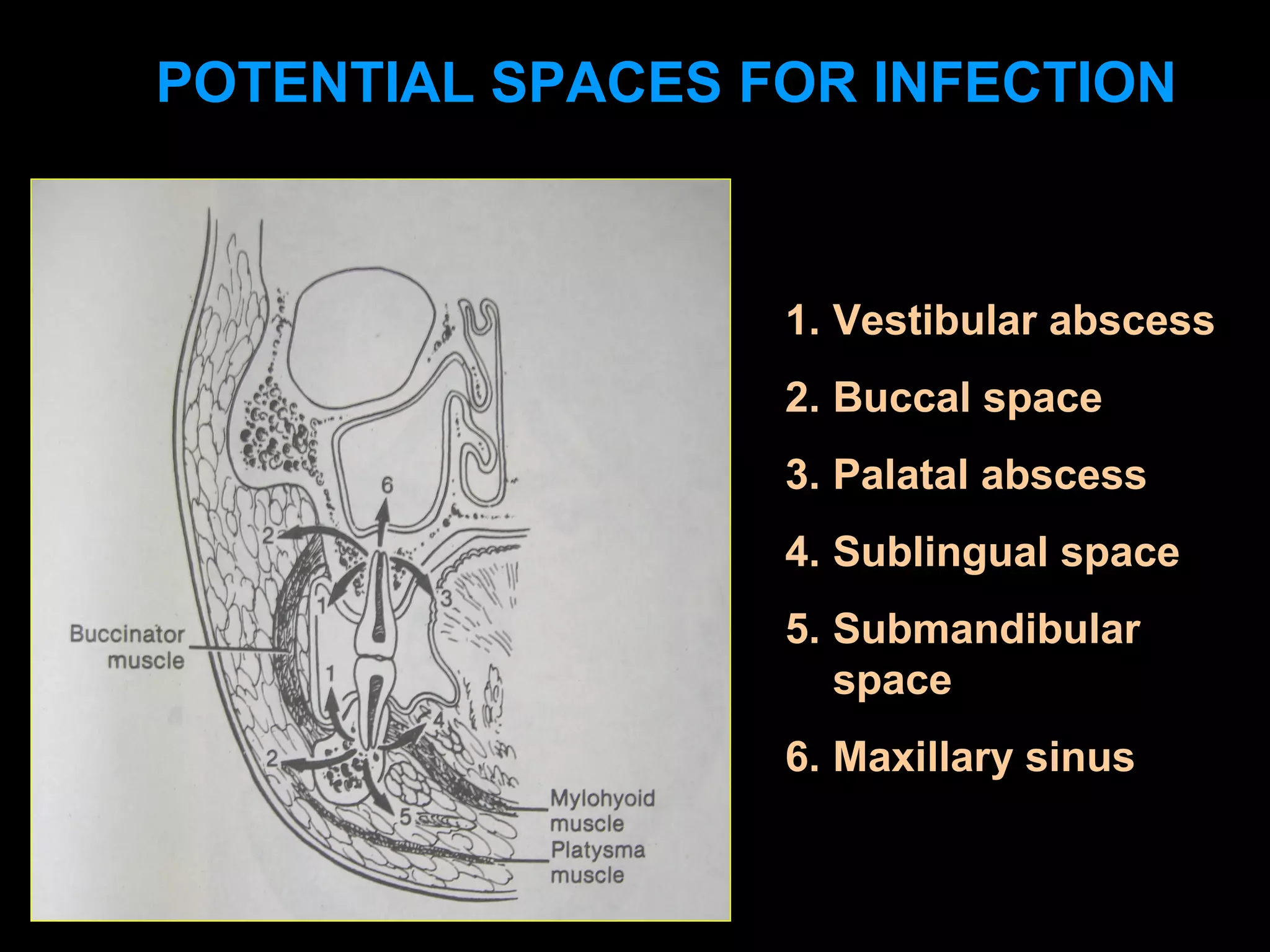
POTENTIAL SPACES FOR INFECTION 
1. Vestibular abscess 
2. Buccal space 
3. Palatal abscess 
4. Sublingual space 
5. Submandibular 
space 
6. Maxillary sinus
BUCCINATOR & ODONTOGENIC 
INFECTION 
In maxilla Above the attachment 
Root apex Extraoral 
Below the 
attachment 
Intraoral swelling 
(In Mandible it is vice versa)
MYLOHYOID & ODONTOGENIC 
INFECTIONS 
Anteriors Posteriors 
(Root apex below) (Root apex below) 
Intraoral Extraoral 
(Floor of the mouth) (submandibular)
SUBLINGUAL SPACE 
SUBMANDIBULAR SPACE
SUBMASSETRIC SPACE 
(MASSETER & ODONTOGENIC INFECTION) 
3- Layers (superficial, middle and deep) 
Infection spreads between these three layers 
Swelling less, pain is more 
(Infection is usually caused by impacted mandibular, 
pulpally or periodontally involved third molars)
PTERYGOMANDIBULAR SPACE 
Prime muscles of mastication 
Infection 
Trismus 
(usually because of impacted tooth and 
contaminated injection in to the space)
TEMPORAL SPACE 
(Superficial and Deep Temporal space 
with Buccal space) 
Dumb-bell shaped swelling 
Trismus 
(usually through PSA nerve blocks, infection from maxillary 
molars, spread of infection from other spaces)
HIGHWAY TO DANGER 
• Pterygoid plexus 
• Lincon’s highway 
• Multispace infections
THE DANGER ZONES 
• Cavernous sinus thrombosis 
• Ludwig’s Angina (Multispace infection) 
• Mediastinitis
ROOT CAUSE FOR DANGER 
• Brain infection 
• Respiratory obstruction 
• Descending neck infection (mediastinitis, 
pericarditis)
LUDWIG’S ANGINA 
(Sublingual, Submental and Sub mandibular 
space infection) 
Swelling in the floor of the mouth 
Lifting of the tongue 
Obstruction of airway 
Creating an emergency situation
Ludwig’s Angina 
Maintain Airway 
(Tracheostomy) 
Control Infection 
Medically Surgically 
(Systemic Antibiotics) (Tube Drain)
CAVERNOUS SINUS THROMBOSIS 
Pterygoid plexus 
Infraorbital fissure 
Terminal part of inferior ophthalmic vein 
Superior orbital fissure 
Cavernous sinus 
(Thrombosis)
MANAGEMENT 
Antibiotic crossing blood brain barrier 
(Chloramphenicol, Ciprofloxacin) 
Anticoagulant therapy 
(To prevent venous thrombosis)
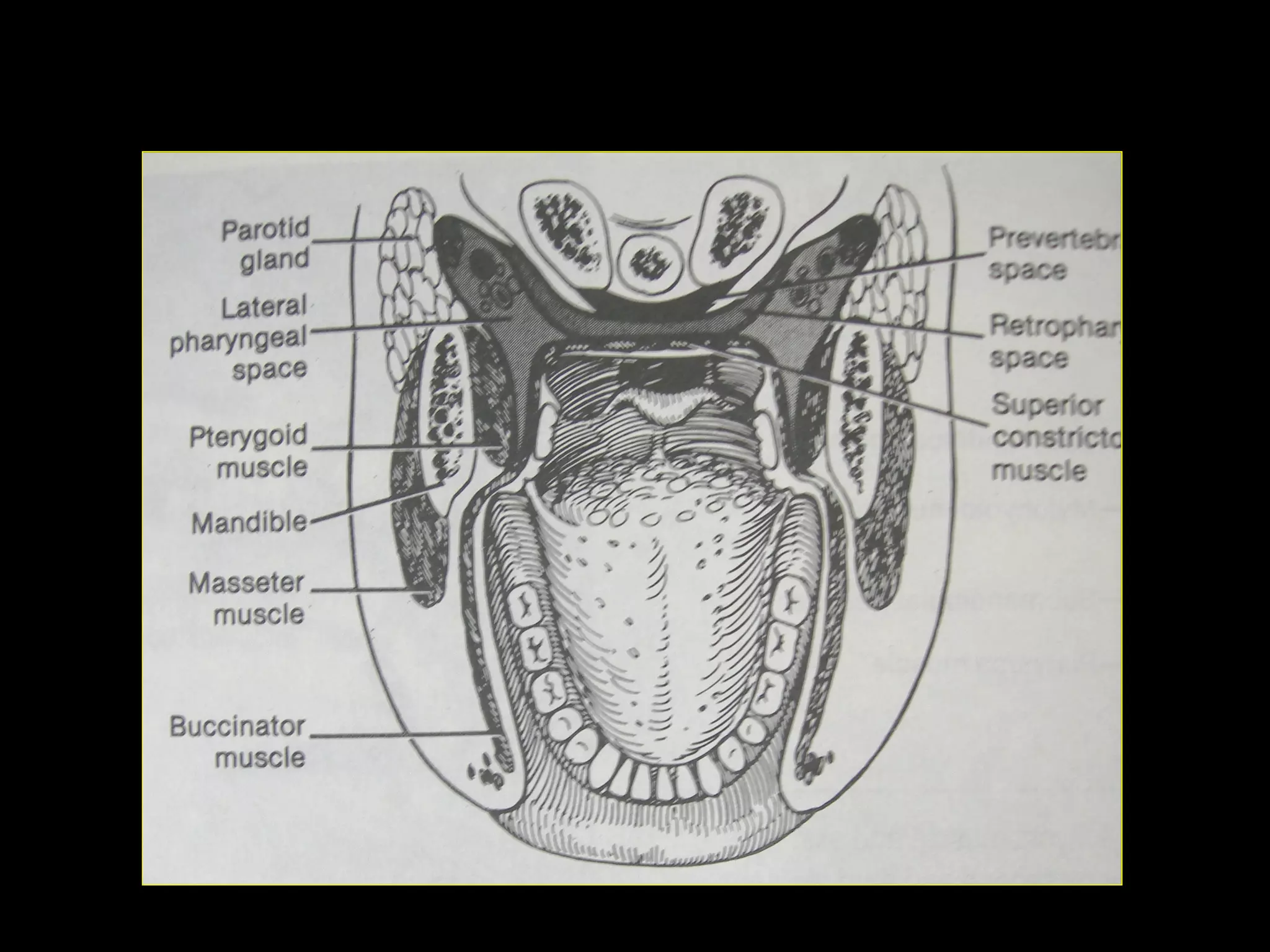
RETROPHARYNGEAL SPACE 
Retropharyngeal space 
Danger space 
(space between the alar and prevertebral layer 
of the deep cervical fascia) 
Mediastinitis/ Carotid sheath infection 
(FATAL)
MANAGEMENT 
Incision and Drainage 
(along the anterior border of he sternocleidomastoid 
muscle at the level of the hyoid bone and the middle 
third respectively)
DESCENDING NECK INFECTION 
Superficial Deep 
Mediastinitis Acute necrotizing fascitis 
(malnourished & immuno-compromised 
patients) 
Pericarditis 
(Stridor - fatal)
MANAGEMENT 
DESCENDING NECK INFECTION 
Acute necrotizing fascitis Deep 
Control infection 
(Appropriate systemic antibiotics) 
Debridement, local antibiotic dressing, reconstruction 
of the necrosed skin with graft or flap
If retropharyngeal space is 
involved, posterosuperior 
mediastinum may also become 
infected secondarily. If 
prevertebral space is infected, 
the inferior boundary is 
diaphragm, so entire 
mediastinum is at risk.
TREATMENT OF SPACE INFECTION 
• Empirical antibiotic therapy 
• Incision and Drainage 
• Culture and Sensitivity 
• Appropriate antibiotic therapy 
• Removal of the cause (teeth if odontogenic) 
• Supportive therapy 
• Physiotherapy (to improve mouth opening)
INCISION & DRAINAGE 
(Principle & Technique)
PRINCIPLE OF 
ANTIBIOTIC THERAPY 
• Identification of causative organism 
• Determination of antibiotic sensitivity 
• Use of specific narrow spectrum antibiotic 
• Use of least toxic antibiotic 
• Patient drug history 
• Use of bactericidal rather than bacteriostatic drug
PRINCIPLE OF 
ANTIBIOTIC ADMINISTRATION 
• Proper dosage 
• Proper time interval 
• Proper route of administration 
• Combination antibiotic therapy 
• Patient monitoring 
– Response to treatment 
– Development of adverse reaction 
– Superinfection and recurrent infection
THERAPEUTIC USE OF ANTIBIOTICS IN 
MAXILLOFACIAL INFECTION 
• Penicillin 
– Acute dentoalveolar abscess 
– Cellulitis 
– Acute pericoronitis 
• Osteomyelitis 
– Culture sensitivity 
– Antibiotic therapy is for longer period 
• Infected soft tissue wounds 
– Wound debridement with topical antibiotic 
– Amoxycillin with clavulanic acid 
– Metronidazole for anaerobic infection
THANK YOU

02.space infections clinical features & treatment

  • 1.
    SPACE INFECTIONS CLINICALFEATURES & TREATMENT Dr V.RAMKUMAR CONSULTANT DENTAL&FACIOMAXILLARY SURGEON REG N0:4118-TAMILNADU-INDIA(ASIA)
  • 2.
    POTENTIAL SPACES FORINFECTION 1. Vestibular abscess 2. Buccal space 3. Palatal abscess 4. Sublingual space 5. Submandibular space 6. Maxillary sinus
  • 3.
    BUCCINATOR & ODONTOGENIC INFECTION In maxilla Above the attachment Root apex Extraoral Below the attachment Intraoral swelling (In Mandible it is vice versa)
  • 5.
    MYLOHYOID & ODONTOGENIC INFECTIONS Anteriors Posteriors (Root apex below) (Root apex below) Intraoral Extraoral (Floor of the mouth) (submandibular)
  • 6.
  • 7.
    SUBMASSETRIC SPACE (MASSETER& ODONTOGENIC INFECTION) 3- Layers (superficial, middle and deep) Infection spreads between these three layers Swelling less, pain is more (Infection is usually caused by impacted mandibular, pulpally or periodontally involved third molars)
  • 9.
    PTERYGOMANDIBULAR SPACE Primemuscles of mastication Infection Trismus (usually because of impacted tooth and contaminated injection in to the space)
  • 11.
    TEMPORAL SPACE (Superficialand Deep Temporal space with Buccal space) Dumb-bell shaped swelling Trismus (usually through PSA nerve blocks, infection from maxillary molars, spread of infection from other spaces)
  • 13.
    HIGHWAY TO DANGER • Pterygoid plexus • Lincon’s highway • Multispace infections
  • 14.
    THE DANGER ZONES • Cavernous sinus thrombosis • Ludwig’s Angina (Multispace infection) • Mediastinitis
  • 15.
    ROOT CAUSE FORDANGER • Brain infection • Respiratory obstruction • Descending neck infection (mediastinitis, pericarditis)
  • 16.
    LUDWIG’S ANGINA (Sublingual,Submental and Sub mandibular space infection) Swelling in the floor of the mouth Lifting of the tongue Obstruction of airway Creating an emergency situation
  • 17.
    Ludwig’s Angina MaintainAirway (Tracheostomy) Control Infection Medically Surgically (Systemic Antibiotics) (Tube Drain)
  • 19.
    CAVERNOUS SINUS THROMBOSIS Pterygoid plexus Infraorbital fissure Terminal part of inferior ophthalmic vein Superior orbital fissure Cavernous sinus (Thrombosis)
  • 20.
    MANAGEMENT Antibiotic crossingblood brain barrier (Chloramphenicol, Ciprofloxacin) Anticoagulant therapy (To prevent venous thrombosis)
  • 22.
    RETROPHARYNGEAL SPACE Retropharyngealspace Danger space (space between the alar and prevertebral layer of the deep cervical fascia) Mediastinitis/ Carotid sheath infection (FATAL)
  • 24.
    MANAGEMENT Incision andDrainage (along the anterior border of he sternocleidomastoid muscle at the level of the hyoid bone and the middle third respectively)
  • 25.
    DESCENDING NECK INFECTION Superficial Deep Mediastinitis Acute necrotizing fascitis (malnourished & immuno-compromised patients) Pericarditis (Stridor - fatal)
  • 26.
    MANAGEMENT DESCENDING NECKINFECTION Acute necrotizing fascitis Deep Control infection (Appropriate systemic antibiotics) Debridement, local antibiotic dressing, reconstruction of the necrosed skin with graft or flap
  • 27.
    If retropharyngeal spaceis involved, posterosuperior mediastinum may also become infected secondarily. If prevertebral space is infected, the inferior boundary is diaphragm, so entire mediastinum is at risk.
  • 28.
    TREATMENT OF SPACEINFECTION • Empirical antibiotic therapy • Incision and Drainage • Culture and Sensitivity • Appropriate antibiotic therapy • Removal of the cause (teeth if odontogenic) • Supportive therapy • Physiotherapy (to improve mouth opening)
  • 29.
    INCISION & DRAINAGE (Principle & Technique)
  • 31.
    PRINCIPLE OF ANTIBIOTICTHERAPY • Identification of causative organism • Determination of antibiotic sensitivity • Use of specific narrow spectrum antibiotic • Use of least toxic antibiotic • Patient drug history • Use of bactericidal rather than bacteriostatic drug
  • 32.
    PRINCIPLE OF ANTIBIOTICADMINISTRATION • Proper dosage • Proper time interval • Proper route of administration • Combination antibiotic therapy • Patient monitoring – Response to treatment – Development of adverse reaction – Superinfection and recurrent infection
  • 33.
    THERAPEUTIC USE OFANTIBIOTICS IN MAXILLOFACIAL INFECTION • Penicillin – Acute dentoalveolar abscess – Cellulitis – Acute pericoronitis • Osteomyelitis – Culture sensitivity – Antibiotic therapy is for longer period • Infected soft tissue wounds – Wound debridement with topical antibiotic – Amoxycillin with clavulanic acid – Metronidazole for anaerobic infection
  • 34.