Contextualization of Data
DATA?
Point of View
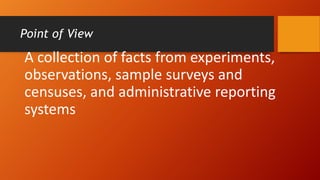
A collection of facts from experiments,
observations, sample surveys and
censuses, and administrative reporting
systems
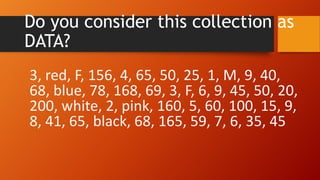
Do you consider this collection as
DATA?
3, red, F, 156, 4, 65, 50, 25, 1, M, 9, 40,
68, blue, 78, 168, 69, 3, F, 6, 9, 45, 50, 20,
200, white, 2, pink, 160, 5, 60, 100, 15, 9,
8, 41, 65, black, 68, 165, 59, 7, 6, 35, 45
DEFINITION
•Data are facts and figures that are
presented, collected and analyzed.
•Data are either numeric or non-
numeric and must be
contextualized.
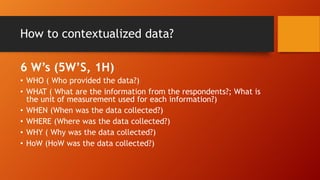
How to contextualized data?
6 W’s (5W’S, 1H)
• WHO ( Who provided the data?)
• WHAT ( What are the information from the respondents?; What is
the unit of measurement used for each information?)
• WHEN (When was the data collected?)
• WHERE (Where was the data collected?)
• WHY ( Why was the data collected?)
• HoW (HoW was the data collected?)
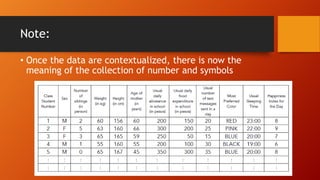
Note:
• Once the data are contextualized, there is now the
meaning of the collection of number and symbols
KEY POINTS
• Providing correct information in a government data
collection activity is a responsibility of every citizen in the
country.
• Data confidentiality is important in a data collection
activity.
• Census is collecting data from all possible respondents.
• Data to be collected must be clarified before the actual
data collection.
• Data must be contextualized by answering six W-questions.

02 CONTEXTUALIZATION OF DATA.pdf

  • 1.
  • 2.
    Point of View Acollection of facts from experiments, observations, sample surveys and censuses, and administrative reporting systems
  • 3.
    Do you considerthis collection as DATA? 3, red, F, 156, 4, 65, 50, 25, 1, M, 9, 40, 68, blue, 78, 168, 69, 3, F, 6, 9, 45, 50, 20, 200, white, 2, pink, 160, 5, 60, 100, 15, 9, 8, 41, 65, black, 68, 165, 59, 7, 6, 35, 45
  • 4.
    DEFINITION •Data are factsand figures that are presented, collected and analyzed. •Data are either numeric or non- numeric and must be contextualized.
  • 5.
    How to contextualizeddata? 6 W’s (5W’S, 1H) • WHO ( Who provided the data?) • WHAT ( What are the information from the respondents?; What is the unit of measurement used for each information?) • WHEN (When was the data collected?) • WHERE (Where was the data collected?) • WHY ( Why was the data collected?) • HoW (HoW was the data collected?)
  • 6.
    Note: • Once thedata are contextualized, there is now the meaning of the collection of number and symbols
  • 7.
    KEY POINTS • Providingcorrect information in a government data collection activity is a responsibility of every citizen in the country. • Data confidentiality is important in a data collection activity. • Census is collecting data from all possible respondents. • Data to be collected must be clarified before the actual data collection. • Data must be contextualized by answering six W-questions.