PRESENTATION NAME
Evolution and trends of medicine
• All human societies have medical beliefs
that provide explanations
for birth, death, and disease
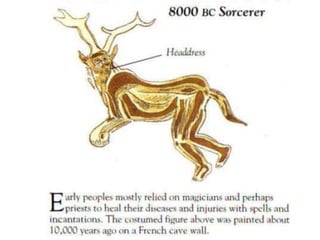
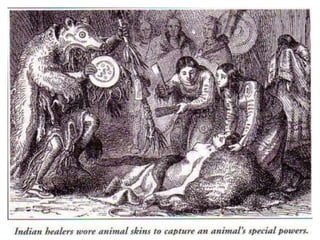
• Throughout history, illness has been
attributed to witchcraft, demons, astral
influence, or the will of the gods
• These ideas still retain some power,
with faith healing and shrines (holy
place/ place of worship) still used in
some places, although the rise of
scientific medicine over the past
millennium has altered or replaced
mysticism in most cases.
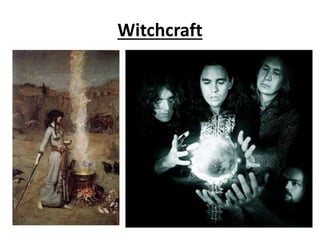
Witchcraft
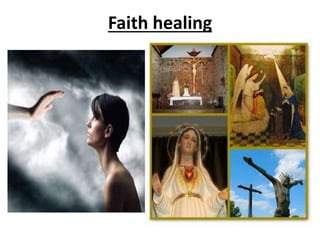
Faith healing
Evolution of medicine
• The ancient Egyptians had a system of
medicine that was very advanced for its time
and influenced later medical traditions
• The Egyptians and Babylonians both
introduced the concepts of
diagnosis, prognosis, and medical
examination
Evolution of medicine
• The Hippocratic Oath, still taken by doctors
today, was written in Greece in the 5th
century BCE
• In the medieval era, surgical practices
inherited from the ancient masters were
improved and then systematized
in Rogerius's The Practice of Surgery
Evolution of medicine
• During the Renaissance, understanding of
anatomy improved, and the invention of the
microscope would later lead to the ‘‘germ
theory of disease”
• These advancements, along with
developments in chemistry, genetics, and lab
technology (such as the x-ray) led to modern
medicine
Prehistoric medicine
• Herbalism: the use of plants as healing
agents is an ancient practice
• There is no record to establish when plants
were first used for medicinal purposes
Egypt
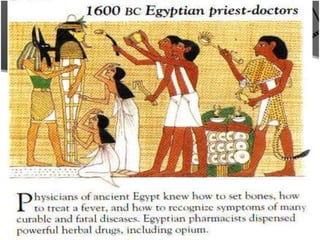
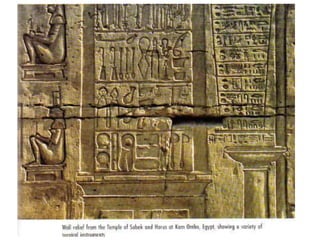
• Ancient Egypt developed a large, varied and
fruitful medical tradition
• They possessed notable public health system
• According to them, “the practice of medicine
is so specialized among them that each
physician is a healer of one disease and no
more."
Egypt
• Although Egyptian medicine, to a good
extent, dealt with the supernatural, it
eventually developed a practical use in the
fields of anatomy, public health, and clinical
diagnostics
Egypt
• Medical institutions, referred to
as Houses of Life are known to have
been established in ancient Egypt as
early as the 1st Dynasty
• By the time of the 19th Dynasty some
workers enjoyed such benefits
as medical insurance, pensions and sick
leave
Egypt
• Imhotep in the 3rd dynasty is sometimes
credited with being the founder of ancient
Egyptian medicine and with being the
original author of the Edwin Smith Papyrus,
detailing cures, ailments
and anatomical observations.
Mesopotamia
Babylonian Medicine
• Babylonians introduced the concepts
of diagnosis, prognosis, physical
examination, and medical prescriptions
Mesopotamia
Babylonian Medicine
• The Diagnostic Handbook introduced the methods
of therapy and etiology and the use
of empiricism, logic and rationality in diagnosis,
prognosis and therapy
• The text contains a list of medical symptoms and
often detailed empirical observations along with
logical rules used in combining observed
symptoms on the body of a patient with its
diagnosis and prognosis
Greek and Roman medicine
• The ancient Greeks developed a humoral
medicine system where treatment sought to
restore the balance of humors within the
body
• The four humors (of hippocratic medicine) –
metabolic agents of the 4 elements in the
human body are Black bile (melanchole/
sadness) , Yellow bile, Phlegm and Blood
The Four Humors
• The 4 humors and the elements they serve are
• Blood (red hemoglobin-rich portion)– Air
• Phlegm(clear plasma portion) – Water
• Yellow Bile(bilirubin) – Fire
• Black Bile( brownish grey sediment with
platelets & clotting factors) – Earth
• Humors or these vital fluids are present in the
blood stream in varying quantities. Right
balance & purity of them is essential for
maintaining health.
Greek and Roman medicine
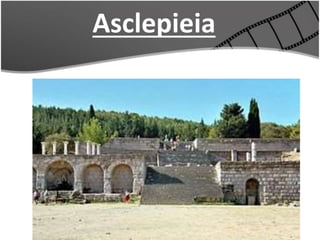
• Temples dedicated to the healer-
god Asclepius , known as Asclepieia
functioned as centers of medical advice,
prognosis, and healing (hospitals)
Asclepieia
Greek and Roman medicine
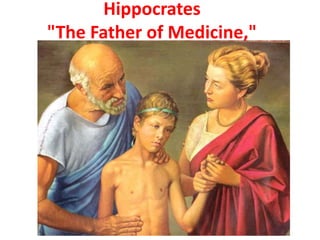
• The physician Hippocrates (460 BC –370 BC), is
considered as the "father of modern medicine“
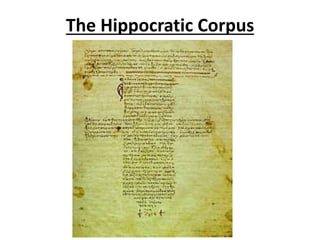
• The Hippocratic Corpus is a collection of around
seventy early medical works from ancient Greece
strongly associated with Hippocrates and his
students
• Most famously, Hippocrates invented
the Hippocratic Oath for physicians, which is still
relevant and in use today
Hippocrates
"The Father of Medicine,"
The Hippocratic Corpus
Greek and Roman medicine
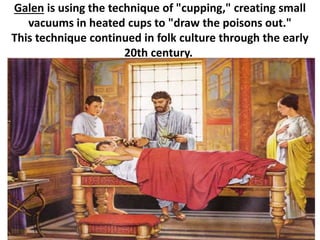
• The Greek Galen was one of the greatest surgeons
of the ancient world and performed many
audacious (risky/brave) operations — including
brain and eye surgeries— that were not tried again
for almost two millennia
• Galen's work around 140 AD in Rome ended up
being authoritative in Europe until the 16th
century!
Galen is using the technique of "cupping," creating small
vacuums in heated cups to "draw the poisons out."
This technique continued in folk culture through the early
20th century.
Greek and Roman medicine
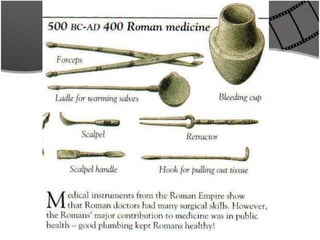
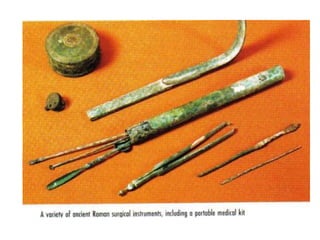
• The Romans invented numerous surgical
instruments, including the first instruments unique
to women as well as the surgical uses
of forceps, scalpels, cautery, cross-bladed scissors,
the surgical needle, the sound, and speculas
• Romans also performed cataract surgery
CHINA
• China developed a large body of traditional
medicine of which much of the philosophy derived
from empirical observations of disease and illness
by Taoist physicians
• It reflects the classical Chinese belief that
individual human experiences express causative
principles effective in the environment at all scales
• These causative principles, whether material,
essential, or mystical, correlate as the expression
of the natural order of the universe.
CHINA
• Traditional Chinese Medicine that is based on the
use of herbal medicine, acupuncture, massage and
other forms of therapy has been practiced in China
for thousands of years
• However, Western Medicine was introduced to
China in the 19th Century, mainly by medical
missionaries sent from various Christian mission
organizations
India
• The Atharvaveda, a sacred text of Hinduism dating
from the Early Iron Age, is the first Indian text
dealing with medicine, like the medicine of the
Ancient Near East based on concepts of
the exorcism of demons and magic
• The Atharvaveda also contain prescriptions of
herbs for various ailments
• The use of herbs to treat ailments would later form
a large part of Ayurveda.
India
• In the first millennium BCE, there emerges in
post-Vedic India the traditional medicine
system known as Ayurveda, meaning the
"complete knowledge for long life“
• Its two most famous texts belong to the
schools of Charaka, born 600 BCE,
and Sushruta, born 600 BCE
India
• According to the compendium (concise, yet
comprehensive compilation of a body of knowledge)
of Charaka, the Charakasamhitā, health and disease are
not predetermined and life may be prolonged by human
effort
• The compendium of Suśruta, the Suśrutasamhitā defines
the purpose of medicine to cure the diseases of the sick,
protect the healthy, and to prolong life
• Both these ancient compendia include details of the
examination, diagnosis, treatment, and prognosis of
numerous ailments
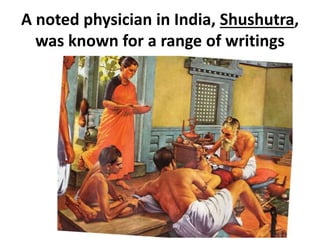
A noted physician in India, Shushutra,
was known for a range of writings
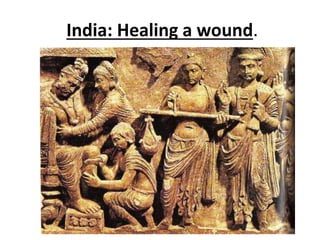
India: Healing a wound.
India
• The Ayurvedic classics mention eight branches of
medicine:
• kāyācikitsā (internal medicine)
• śalyacikitsā (surgery including anatomy)
• śālākyacikitsā (eye, ear, nose, and throat diseases)
• kaumārabhṛtya (pediatrics)
• bhūtavidyā (spirit medicine)
• agada tantra (toxicology)
• rasāyana (science of rejuvenation) and
• vājīkaraṇa (aphrodisiacs, mainly for men)
India
• Apart from learning these, the student of
Āyurveda was expected to know ten arts that were
indispensable in the preparation and application of
his medicines: distillation, operative skills, cooking,
horticulture, metallurgy, sugar manufacture,
pharmacy, analysis and separation of minerals,
compounding of metals, and preparation of alkalis
India
• As an alternative form of medicine in
India, Unani medicine got deep roots and
royal patronage during medieval times
• It progressed during
Indian Sultanate and Mughal periods
• Unani medicine is very close to Ayurveda
India
• Both are based on theory of the presence of
the elements (in Unani, they are considered
to be fire, water, earth and air) in the human
body
• According to followers of Unani medicine,
these elements are present in different fluids
and their balance leads to health and their
imbalance leads to illness
•Middle Ages
• Medieval medicine was an evolving mixture of
the scientific and the spiritual like Unani.
• In the early Middle Ages, following the fall of the
Roman Empire, standard medical knowledge was
based chiefly upon surviving Greek and Roman
texts, preserved in monasteries and elsewhere
• Ideas about the origin and cure of disease were
not, however, purely secular, but were also based
on a spiritual world view, in which factors such as
destiny, sin, and astral influences played as great a
part as any physical cause.
Islamic Middle Ages
• The Arabs were influenced by, and further
developed Greek, Roman and Indian medical
practices
• Galen,Hippocrates, Sushruta and Charaka were
pre-eminent authorities
Islamic Middle Ages
• The Islamic civilization rose to primacy in
medical science as
Muslim physicians contributed significantly
to the field of medicine,
including anatomy, ophthalmology, pharmac
ology, pharmacy, physiology, surgery, and
the pharmaceutical sciences
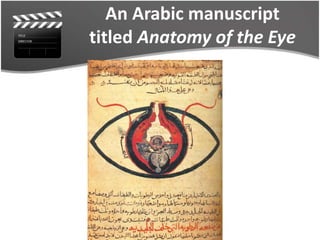
An Arabic manuscript
titled Anatomy of the Eye
Christian Middle Ages
• In Western Europe, with the collapse of
Roman imperial authority, medicine became
localised; folk-medicine supplemented what
remained of the medical knowledge of
antiquity
• Medical knowledge was preserved and
practised in many monastic institutions,
which often had a hospital attached
Christian Middle Ages
• Organised professional medicine re-emerged, with
the foundation of the medical college (Schola
Medica Salernitana) of Salerno in Italy in the 11th
century, which in co-operation with the monastery
of Monte Cassino, translated many Byzantine and
Arabic works
• In the 12th century universities were founded in
Italy and elsewhere, which soon developed schools
of medicine.

Christian Middle Ages
• Gradually the reliance on the masters of the
ancient world was augmented by the results of
individual observation and experience
• Surgical practice improved greatly during the
medieval period
• Rogerius Salernitanus composed
his Chirurgia, which became the foundation for
modern Western surgical manuals up to the
modern time.
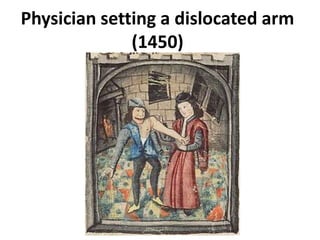
Physician setting a dislocated arm
(1450)
Renaissance to Early
Modern period
• With the Renaissance came an increase in
experimental investigation, principally in the field
of dissection and body examination, thus
advancing our knowledge of human anatomy
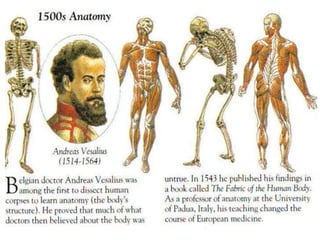
• The development of modern neurology began in
the 16th century with Vesalius, who described the
anatomy of the brain and other organs; he had
little knowledge of the brain's function, thinking
that it resided mainly in the ventricles
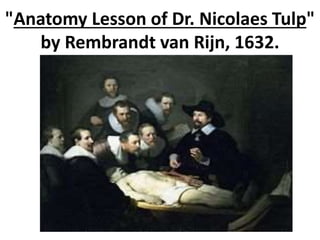
"Anatomy Lesson of Dr. Nicolaes Tulp"
by Rembrandt van Rijn, 1632.
Renaissance to Early
Modern period
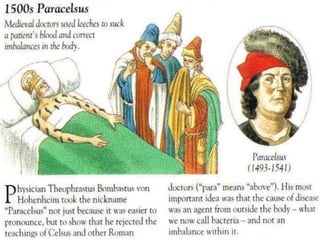
• Over his lifetime he corrected over 200
of Galen's mistakes
• Understanding of medical sciences and diagnosis
improved, but with little direct benefit to health
care
• Few effective drugs existed,
beyond opium and quinine
• Folklore cures and potentially poisonous metal-
based compounds were popular treatments.
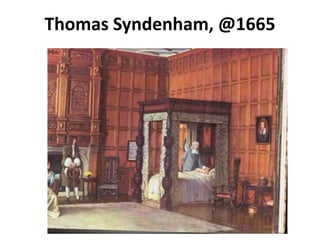
Thomas Syndenham, @1665
Anton van Leeuwenhoek, simple (but
surprisingly powerful) microscope, 1674
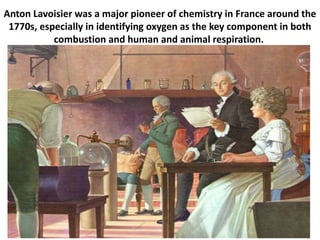
Anton Lavoisier was a major pioneer of chemistry in France around the
1770s, especially in identifying oxygen as the key component in both
combustion and human and animal respiration.
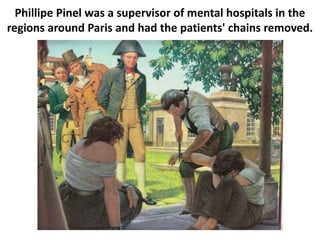
Phillipe Pinel was a supervisor of mental hospitals in the
regions around Paris and had the patients' chains removed.
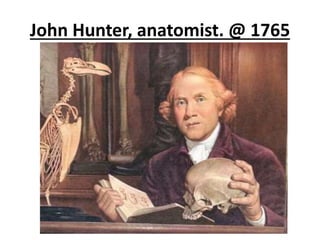
John Hunter, anatomist. @ 1765
19th century:
Rise of modern medicine
• Medicine was revolutionized in the 19th
century and beyond by advances
in chemistry and laboratory techniques and
equipment, old ideas of infectious
disease epidemiology were replaced
with bacteriology and virology
19th century:
Rise of modern medicine
• Bacteria and microorganisms were first
observed with a microscope by Antonie van
Leeuwenhoek in 1674, initiating the scientific
field microbiology
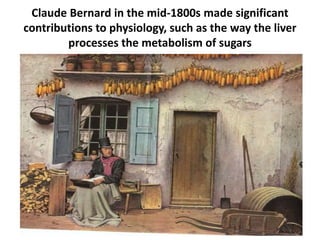
Claude Bernard in the mid-1800s made significant
contributions to physiology, such as the way the liver
processes the metabolism of sugars
19th century:
Rise of modern medicine
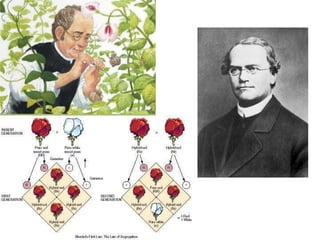
• Gregor Mendel (1822–1884) published in 1865 his
books on pea plants, which would be later known
as Mendel's laws
• Re-discovered at the turn of the 20th century, they
would form the basis of classical genetics
• The 1953 discovery of the structure
of DNA by Watson and Crick would open the door
to molecular biology and modern genetics
19th century:
Rise of modern medicine
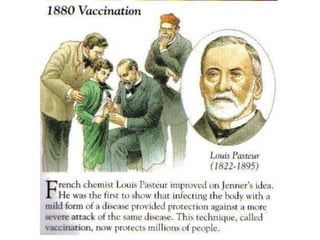
• Louis Pasteur:Linking microorganisms with
disease, Pasteur brought about a revolution
in medicine
• His experiments confirmed the germ theory
• He also invented with Claude Bernard (1813–
1878) the process of pasteurization still in
use today
19th century:
Rise of modern medicine
• Pasteur, along with Robert Koch (who was
awarded the Nobel Prize in 1905), founded
bacteriology
• Koch was also famous for the discovery of
the tubercle bacillus (1882) and the cholera
bacillus(1883) and for his development
of Koch's postulates.
19th century:
Rise of modern medicine
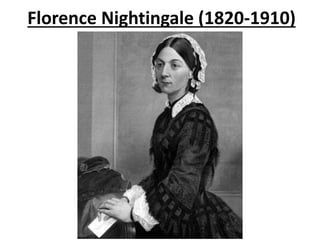
• The participation of women in medical care
(beyond serving as midwives, sitters and cleaning
women) was brought about by Florence
Nightingale
• Nightingale showed a previously male dominated
profession the elemental role of nursing in order to
lessen the aggravation of patient mortality which
resulted from lack of hygiene and nutrition.
19th century:
Rise of Modern medicine
• Florence Nightingale set up the St Thomas
Hospital, Post-Crimea, in 1852
• Elizabeth Blackwell (1821–1910) became the
first woman to formally study, and
subsequently practice, medicine in the
United States
Florence Nightingale (1820-1910)
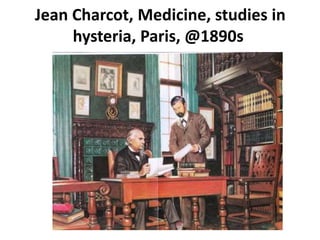
Jean Charcot, Medicine, studies in
hysteria, Paris, @1890s
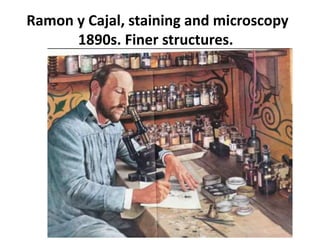
Ramon y Cajal, staining and microscopy
1890s. Finer structures.
19th century:
Rise of Modern medicine
• Actual cures were developed for certain endemic
infectious diseases
• The decline in many of the most lethal diseases
was more due to improvements in public health
and nutrition than to medicine
• It was not until the 20th century that the
application of the scientific method to medical
research began to produce multiple important
developments in medicine, with great advances
in pharmacology and surgery.
20th century
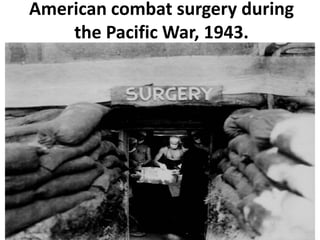
• Major wars have stressed the need for
qualified medical treatment and hygiene
American combat surgery during
the Pacific War, 1943.
20th century
• During the First World War, Alexis Carrel and Henry
Dakin developed the Carrel-Dakin method of
treating wounds with an irrigation, Dakin's
solution, a germicide which helped
prevent gangrene
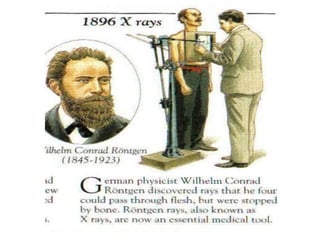
• The Great War spurred the usage of Roentgen's X-
ray, and the electrocardiograph, for the
monitoring of internal bodily functions
20th century
• This was followed in the inter-war period by the
development of the first anti-bacterial agents such
as the sulpha antibiotics.
• The Second World War saw the introduction of
widespread and effective antimicrobial
therapy with the development and mass
production of penicillin antibiotics, made possible
by the pressures of the war and the collaboration
of British scientists with the American
pharmaceutical industry
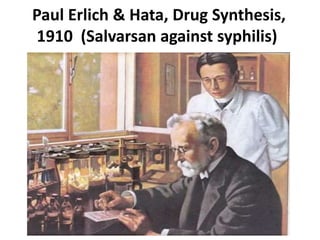
Paul Erlich & Hata, Drug Synthesis,
1910 (Salvarsan against syphilis)
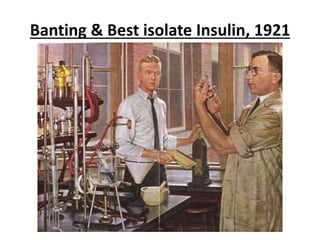
Banting & Best isolate Insulin, 1921
20th century
• Human subject research was at its height during
the mid-20th century, with Nazi human
experimentation during the Holocaust as the most
significant example.
• Principles of Medical ethics, such as
the Nuremberg Code, have been introduced to
prevent atrocities (violence/ murder).
• During and just after World War II, DDT was used
as insecticide to combat insect
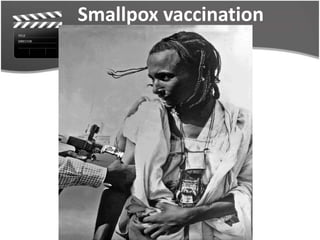
Smallpox vaccination
Post-World War II
• Smallpox vaccination in Niger, 1969
• A decade later, this was the first infectious disease
to be eradicated
• Most countries have seen a tremendous increase
in life expectancy since 1945
• However, in southern Africa, the HIV epidemic
beginning around 1990 has eroded national health.
Post-World War II
• The World Health Organization was founded in
1948 as a United Nations agency to improve global
health
• As infectious diseases have become less lethal, and
the most common causes of death in developed
countries are now tumors and cardiovascular
diseases, these conditions have received increased
attention in medical research
Post-World War II
• Tobacco smoking as a cause of lung cancer was
first researched in the 1920s, but was not widely
supported by publications until the 1950s
• Cancer treatment has been developed
with radiotherapy and chemotherapy
• Oral rehydration therapy has been extensively
used since the 1970s to treat cholera and other
diarrhea-inducing infections
Post-World War II
• Hormonal contraception was introduced in the
1950s, and was associated with the sexual
revolution, with normalization
of abortion and homosexuality
• Family planning has been applied around the
world, and has promoted a demographic
transition in most of the world
Post-World War II
• With threatening sexually transmitted infections,
not least HIV, use of barrier contraception has
become imperative
• The struggle against HIV has provided no cure, but
improved antiretroviral treatments
Post-World War II
• MR scanning and other imaging methods became
available.
• Genetics have advanced with the discovery of
the DNA molecule, genetic mapping and gene
therapy
• Stem cell research took off in the 2000s, with stem
cell therapy as a promising method.
Post-World War II
• Evidence-based medicine is a modern concept, not
introduced to literature until the 1990s.
• Prosthetics have improved
• In 1958, Arne Larsson in Sweden became the first
patient to depend on an artificial cardiac
pacemaker
• Lightweight materials as well as neural
prosthetics emerged in the end of the 20th
century.
PRESENTATION NAME
Current Trends in Medicine
• Increased Specialization
• Individualized care
• Sophisticated Equipments for patient care
• Advanced Investigations: point of care
testing
• Various Treatment Modalities
• Evidence based practice
PRESENTATION NAME

01_Evolution_and_trends_of_medicine.pptx

  • 1.
  • 2.
    Evolution and trendsof medicine • All human societies have medical beliefs that provide explanations for birth, death, and disease • Throughout history, illness has been attributed to witchcraft, demons, astral influence, or the will of the gods • These ideas still retain some power, with faith healing and shrines (holy place/ place of worship) still used in some places, although the rise of scientific medicine over the past millennium has altered or replaced mysticism in most cases.
  • 4.
  • 5.
  • 6.
    Evolution of medicine •The ancient Egyptians had a system of medicine that was very advanced for its time and influenced later medical traditions • The Egyptians and Babylonians both introduced the concepts of diagnosis, prognosis, and medical examination
  • 7.
    Evolution of medicine •The Hippocratic Oath, still taken by doctors today, was written in Greece in the 5th century BCE • In the medieval era, surgical practices inherited from the ancient masters were improved and then systematized in Rogerius's The Practice of Surgery
  • 8.
    Evolution of medicine •During the Renaissance, understanding of anatomy improved, and the invention of the microscope would later lead to the ‘‘germ theory of disease” • These advancements, along with developments in chemistry, genetics, and lab technology (such as the x-ray) led to modern medicine
  • 9.
    Prehistoric medicine • Herbalism:the use of plants as healing agents is an ancient practice • There is no record to establish when plants were first used for medicinal purposes
  • 10.
    Egypt • Ancient Egyptdeveloped a large, varied and fruitful medical tradition • They possessed notable public health system • According to them, “the practice of medicine is so specialized among them that each physician is a healer of one disease and no more."
  • 12.
    Egypt • Although Egyptianmedicine, to a good extent, dealt with the supernatural, it eventually developed a practical use in the fields of anatomy, public health, and clinical diagnostics
  • 14.
    Egypt • Medical institutions,referred to as Houses of Life are known to have been established in ancient Egypt as early as the 1st Dynasty • By the time of the 19th Dynasty some workers enjoyed such benefits as medical insurance, pensions and sick leave
  • 15.
    Egypt • Imhotep inthe 3rd dynasty is sometimes credited with being the founder of ancient Egyptian medicine and with being the original author of the Edwin Smith Papyrus, detailing cures, ailments and anatomical observations.
  • 16.
    Mesopotamia Babylonian Medicine • Babyloniansintroduced the concepts of diagnosis, prognosis, physical examination, and medical prescriptions
  • 17.
    Mesopotamia Babylonian Medicine • TheDiagnostic Handbook introduced the methods of therapy and etiology and the use of empiricism, logic and rationality in diagnosis, prognosis and therapy • The text contains a list of medical symptoms and often detailed empirical observations along with logical rules used in combining observed symptoms on the body of a patient with its diagnosis and prognosis
  • 18.
    Greek and Romanmedicine • The ancient Greeks developed a humoral medicine system where treatment sought to restore the balance of humors within the body • The four humors (of hippocratic medicine) – metabolic agents of the 4 elements in the human body are Black bile (melanchole/ sadness) , Yellow bile, Phlegm and Blood
  • 19.
    The Four Humors •The 4 humors and the elements they serve are • Blood (red hemoglobin-rich portion)– Air • Phlegm(clear plasma portion) – Water • Yellow Bile(bilirubin) – Fire • Black Bile( brownish grey sediment with platelets & clotting factors) – Earth • Humors or these vital fluids are present in the blood stream in varying quantities. Right balance & purity of them is essential for maintaining health.
  • 20.
    Greek and Romanmedicine • Temples dedicated to the healer- god Asclepius , known as Asclepieia functioned as centers of medical advice, prognosis, and healing (hospitals)
  • 21.
  • 22.
    Greek and Romanmedicine • The physician Hippocrates (460 BC –370 BC), is considered as the "father of modern medicine“ • The Hippocratic Corpus is a collection of around seventy early medical works from ancient Greece strongly associated with Hippocrates and his students • Most famously, Hippocrates invented the Hippocratic Oath for physicians, which is still relevant and in use today
  • 23.
  • 24.
  • 25.
    Greek and Romanmedicine • The Greek Galen was one of the greatest surgeons of the ancient world and performed many audacious (risky/brave) operations — including brain and eye surgeries— that were not tried again for almost two millennia • Galen's work around 140 AD in Rome ended up being authoritative in Europe until the 16th century!
  • 26.
    Galen is usingthe technique of "cupping," creating small vacuums in heated cups to "draw the poisons out." This technique continued in folk culture through the early 20th century.
  • 27.
    Greek and Romanmedicine • The Romans invented numerous surgical instruments, including the first instruments unique to women as well as the surgical uses of forceps, scalpels, cautery, cross-bladed scissors, the surgical needle, the sound, and speculas • Romans also performed cataract surgery
  • 30.
    CHINA • China developeda large body of traditional medicine of which much of the philosophy derived from empirical observations of disease and illness by Taoist physicians • It reflects the classical Chinese belief that individual human experiences express causative principles effective in the environment at all scales • These causative principles, whether material, essential, or mystical, correlate as the expression of the natural order of the universe.
  • 32.
    CHINA • Traditional ChineseMedicine that is based on the use of herbal medicine, acupuncture, massage and other forms of therapy has been practiced in China for thousands of years • However, Western Medicine was introduced to China in the 19th Century, mainly by medical missionaries sent from various Christian mission organizations
  • 33.
    India • The Atharvaveda,a sacred text of Hinduism dating from the Early Iron Age, is the first Indian text dealing with medicine, like the medicine of the Ancient Near East based on concepts of the exorcism of demons and magic • The Atharvaveda also contain prescriptions of herbs for various ailments • The use of herbs to treat ailments would later form a large part of Ayurveda.
  • 35.
    India • In thefirst millennium BCE, there emerges in post-Vedic India the traditional medicine system known as Ayurveda, meaning the "complete knowledge for long life“ • Its two most famous texts belong to the schools of Charaka, born 600 BCE, and Sushruta, born 600 BCE
  • 36.
    India • According tothe compendium (concise, yet comprehensive compilation of a body of knowledge) of Charaka, the Charakasamhitā, health and disease are not predetermined and life may be prolonged by human effort • The compendium of Suśruta, the Suśrutasamhitā defines the purpose of medicine to cure the diseases of the sick, protect the healthy, and to prolong life • Both these ancient compendia include details of the examination, diagnosis, treatment, and prognosis of numerous ailments
  • 37.
    A noted physicianin India, Shushutra, was known for a range of writings
  • 38.
  • 39.
    India • The Ayurvedicclassics mention eight branches of medicine: • kāyācikitsā (internal medicine) • śalyacikitsā (surgery including anatomy) • śālākyacikitsā (eye, ear, nose, and throat diseases) • kaumārabhṛtya (pediatrics) • bhūtavidyā (spirit medicine) • agada tantra (toxicology) • rasāyana (science of rejuvenation) and • vājīkaraṇa (aphrodisiacs, mainly for men)
  • 40.
    India • Apart fromlearning these, the student of Āyurveda was expected to know ten arts that were indispensable in the preparation and application of his medicines: distillation, operative skills, cooking, horticulture, metallurgy, sugar manufacture, pharmacy, analysis and separation of minerals, compounding of metals, and preparation of alkalis
  • 41.
    India • As analternative form of medicine in India, Unani medicine got deep roots and royal patronage during medieval times • It progressed during Indian Sultanate and Mughal periods • Unani medicine is very close to Ayurveda
  • 42.
    India • Both arebased on theory of the presence of the elements (in Unani, they are considered to be fire, water, earth and air) in the human body • According to followers of Unani medicine, these elements are present in different fluids and their balance leads to health and their imbalance leads to illness
  • 43.
  • 44.
    • Medieval medicinewas an evolving mixture of the scientific and the spiritual like Unani. • In the early Middle Ages, following the fall of the Roman Empire, standard medical knowledge was based chiefly upon surviving Greek and Roman texts, preserved in monasteries and elsewhere • Ideas about the origin and cure of disease were not, however, purely secular, but were also based on a spiritual world view, in which factors such as destiny, sin, and astral influences played as great a part as any physical cause.
  • 45.
    Islamic Middle Ages •The Arabs were influenced by, and further developed Greek, Roman and Indian medical practices • Galen,Hippocrates, Sushruta and Charaka were pre-eminent authorities
  • 46.
    Islamic Middle Ages •The Islamic civilization rose to primacy in medical science as Muslim physicians contributed significantly to the field of medicine, including anatomy, ophthalmology, pharmac ology, pharmacy, physiology, surgery, and the pharmaceutical sciences
  • 47.
    An Arabic manuscript titledAnatomy of the Eye
  • 48.
    Christian Middle Ages •In Western Europe, with the collapse of Roman imperial authority, medicine became localised; folk-medicine supplemented what remained of the medical knowledge of antiquity • Medical knowledge was preserved and practised in many monastic institutions, which often had a hospital attached
  • 49.
    Christian Middle Ages •Organised professional medicine re-emerged, with the foundation of the medical college (Schola Medica Salernitana) of Salerno in Italy in the 11th century, which in co-operation with the monastery of Monte Cassino, translated many Byzantine and Arabic works • In the 12th century universities were founded in Italy and elsewhere, which soon developed schools of medicine.
  • 50.
    Christian Middle Ages •Gradually the reliance on the masters of the ancient world was augmented by the results of individual observation and experience • Surgical practice improved greatly during the medieval period • Rogerius Salernitanus composed his Chirurgia, which became the foundation for modern Western surgical manuals up to the modern time.
  • 51.
    Physician setting adislocated arm (1450)
  • 54.
    Renaissance to Early Modernperiod • With the Renaissance came an increase in experimental investigation, principally in the field of dissection and body examination, thus advancing our knowledge of human anatomy • The development of modern neurology began in the 16th century with Vesalius, who described the anatomy of the brain and other organs; he had little knowledge of the brain's function, thinking that it resided mainly in the ventricles
  • 56.
    "Anatomy Lesson ofDr. Nicolaes Tulp" by Rembrandt van Rijn, 1632.
  • 57.
    Renaissance to Early Modernperiod • Over his lifetime he corrected over 200 of Galen's mistakes • Understanding of medical sciences and diagnosis improved, but with little direct benefit to health care • Few effective drugs existed, beyond opium and quinine • Folklore cures and potentially poisonous metal- based compounds were popular treatments.
  • 59.
  • 60.
    Anton van Leeuwenhoek,simple (but surprisingly powerful) microscope, 1674
  • 61.
    Anton Lavoisier wasa major pioneer of chemistry in France around the 1770s, especially in identifying oxygen as the key component in both combustion and human and animal respiration.
  • 62.
    Phillipe Pinel wasa supervisor of mental hospitals in the regions around Paris and had the patients' chains removed.
  • 64.
  • 65.
    19th century: Rise ofmodern medicine • Medicine was revolutionized in the 19th century and beyond by advances in chemistry and laboratory techniques and equipment, old ideas of infectious disease epidemiology were replaced with bacteriology and virology
  • 66.
    19th century: Rise ofmodern medicine • Bacteria and microorganisms were first observed with a microscope by Antonie van Leeuwenhoek in 1674, initiating the scientific field microbiology
  • 67.
    Claude Bernard inthe mid-1800s made significant contributions to physiology, such as the way the liver processes the metabolism of sugars
  • 69.
    19th century: Rise ofmodern medicine • Gregor Mendel (1822–1884) published in 1865 his books on pea plants, which would be later known as Mendel's laws • Re-discovered at the turn of the 20th century, they would form the basis of classical genetics • The 1953 discovery of the structure of DNA by Watson and Crick would open the door to molecular biology and modern genetics
  • 71.
    19th century: Rise ofmodern medicine • Louis Pasteur:Linking microorganisms with disease, Pasteur brought about a revolution in medicine • His experiments confirmed the germ theory • He also invented with Claude Bernard (1813– 1878) the process of pasteurization still in use today
  • 73.
    19th century: Rise ofmodern medicine • Pasteur, along with Robert Koch (who was awarded the Nobel Prize in 1905), founded bacteriology • Koch was also famous for the discovery of the tubercle bacillus (1882) and the cholera bacillus(1883) and for his development of Koch's postulates.
  • 74.
    19th century: Rise ofmodern medicine • The participation of women in medical care (beyond serving as midwives, sitters and cleaning women) was brought about by Florence Nightingale • Nightingale showed a previously male dominated profession the elemental role of nursing in order to lessen the aggravation of patient mortality which resulted from lack of hygiene and nutrition.
  • 75.
    19th century: Rise ofModern medicine • Florence Nightingale set up the St Thomas Hospital, Post-Crimea, in 1852 • Elizabeth Blackwell (1821–1910) became the first woman to formally study, and subsequently practice, medicine in the United States
  • 76.
  • 77.
    Jean Charcot, Medicine,studies in hysteria, Paris, @1890s
  • 78.
    Ramon y Cajal,staining and microscopy 1890s. Finer structures.
  • 80.
    19th century: Rise ofModern medicine • Actual cures were developed for certain endemic infectious diseases • The decline in many of the most lethal diseases was more due to improvements in public health and nutrition than to medicine • It was not until the 20th century that the application of the scientific method to medical research began to produce multiple important developments in medicine, with great advances in pharmacology and surgery.
  • 81.
    20th century • Majorwars have stressed the need for qualified medical treatment and hygiene
  • 82.
    American combat surgeryduring the Pacific War, 1943.
  • 83.
    20th century • Duringthe First World War, Alexis Carrel and Henry Dakin developed the Carrel-Dakin method of treating wounds with an irrigation, Dakin's solution, a germicide which helped prevent gangrene • The Great War spurred the usage of Roentgen's X- ray, and the electrocardiograph, for the monitoring of internal bodily functions
  • 85.
    20th century • Thiswas followed in the inter-war period by the development of the first anti-bacterial agents such as the sulpha antibiotics. • The Second World War saw the introduction of widespread and effective antimicrobial therapy with the development and mass production of penicillin antibiotics, made possible by the pressures of the war and the collaboration of British scientists with the American pharmaceutical industry
  • 86.
    Paul Erlich &Hata, Drug Synthesis, 1910 (Salvarsan against syphilis)
  • 87.
    Banting & Bestisolate Insulin, 1921
  • 88.
    20th century • Humansubject research was at its height during the mid-20th century, with Nazi human experimentation during the Holocaust as the most significant example. • Principles of Medical ethics, such as the Nuremberg Code, have been introduced to prevent atrocities (violence/ murder). • During and just after World War II, DDT was used as insecticide to combat insect
  • 89.
  • 90.
    Post-World War II •Smallpox vaccination in Niger, 1969 • A decade later, this was the first infectious disease to be eradicated • Most countries have seen a tremendous increase in life expectancy since 1945 • However, in southern Africa, the HIV epidemic beginning around 1990 has eroded national health.
  • 91.
    Post-World War II •The World Health Organization was founded in 1948 as a United Nations agency to improve global health • As infectious diseases have become less lethal, and the most common causes of death in developed countries are now tumors and cardiovascular diseases, these conditions have received increased attention in medical research
  • 92.
    Post-World War II •Tobacco smoking as a cause of lung cancer was first researched in the 1920s, but was not widely supported by publications until the 1950s • Cancer treatment has been developed with radiotherapy and chemotherapy • Oral rehydration therapy has been extensively used since the 1970s to treat cholera and other diarrhea-inducing infections
  • 93.
    Post-World War II •Hormonal contraception was introduced in the 1950s, and was associated with the sexual revolution, with normalization of abortion and homosexuality • Family planning has been applied around the world, and has promoted a demographic transition in most of the world
  • 94.
    Post-World War II •With threatening sexually transmitted infections, not least HIV, use of barrier contraception has become imperative • The struggle against HIV has provided no cure, but improved antiretroviral treatments
  • 95.
    Post-World War II •MR scanning and other imaging methods became available. • Genetics have advanced with the discovery of the DNA molecule, genetic mapping and gene therapy • Stem cell research took off in the 2000s, with stem cell therapy as a promising method.
  • 96.
    Post-World War II •Evidence-based medicine is a modern concept, not introduced to literature until the 1990s. • Prosthetics have improved • In 1958, Arne Larsson in Sweden became the first patient to depend on an artificial cardiac pacemaker • Lightweight materials as well as neural prosthetics emerged in the end of the 20th century.
  • 97.
  • 98.
    Current Trends inMedicine • Increased Specialization • Individualized care • Sophisticated Equipments for patient care • Advanced Investigations: point of care testing • Various Treatment Modalities • Evidence based practice
  • 100.