VERB PATTERNS
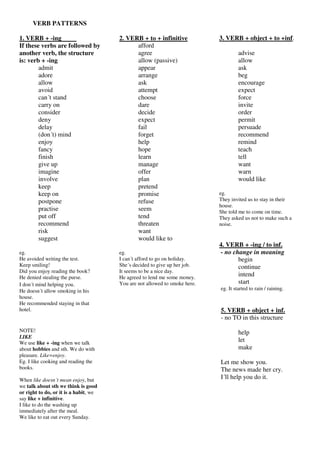
1. VERB + -ing
If these verbs are followed by
another verb, the structure
is: verb + -ing
admit
adore
allow
avoid
can´t stand
carry on
consider
deny
delay
(don´t) mind
enjoy
fancy
finish
give up
imagine
involve
keep
keep on
postpone
practise
put off
recommend
risk
suggest
eg.
He avoided writing the test.
Keep smiling!
Did you enjoy reading the book?
He denied stealing the purse.
I don´t mind helping you.
He doesn´t allow smoking in his
house.
He recommended staying in that
hotel.
NOTE!
LIKE
We use like + -ing when we talk
about hobbies and sth. We do with
pleasure. Like=enjoy.
Eg. I like cooking and reading the
books.
When like doesn´t mean enjoy, but
we talk about sth we think is good
or right to do, or it is a habit, we
say like + infinitive.
I like to do the washing up
immediately after the meal.
We like to eat out every Sunday.
2. VERB + to + infinitive
afford
agree
allow (passive)
appear
arrange
ask
attempt
choose
dare
decide
expect
fail
forget
help
hope
learn
manage
offer
plan
pretend
promise
refuse
seem
tend
threaten
want
would like to
eg.
I can´t afford to go on holiday.
She´s decided to give up her job.
It seems to be a nice day.
He agreed to lend me some money.
You are not allowed to smoke here.
3. VERB + object + to +inf.
advise
allow
ask
beg
encourage
expect
force
invite
order
permit
persuade
recommend
remind
teach
tell
want
warn
would like
eg.
They invited us to stay in their
house.
She told me to come on time.
They asked us not to make such a
noise.
4. VERB + -ing / to inf.
- no change in meaning
begin
continue
intend
start
eg. It started to rain / raining.
5. VERB + object + inf.
- no TO in this structure
help
let
make
Let me show you.
The news made her cry.
I´ll help you do it.
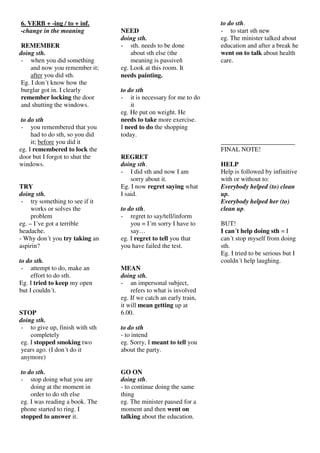
6. VERB + -ing / to + inf.
-change in the meaning
REMEMBER
doing sth.
- when you did something
and now you remember it;
after you did sth.
Eg. I don´t know how the
burglar got in. I clearly
remember locking the door
and shutting the windows.
to do sth
- you remembered that you
had to do sth, so you did
it; before you did it
eg. I remembered to lock the
door but I forgot to shut the
windows.
TRY
doing sth.
- try something to see if it
works or solves the
problem
eg. – I´ve got a terrible
headache.
- Why don´t you try taking an
aspirin?
to do sth.
- attempt to do, make an
effort to do sth.
Eg. I tried to keep my open
but I couldn´t.
STOP
doing sth.
- to give up, finish with sth
completely
eg. I stopped smoking two
years ago. (I don´t do it
anymore)
to do sth.
- stop doing what you are
doing at the moment in
order to do sth else
eg. I was reading a book. The
phone started to ring. I
stopped to answer it.
NEED
doing sth.
- sth. needs to be done
about sth else (the
meaning is passive
eg. Look at this room. It
needs painting.
to do sth
- it is necessary for me to do
it
eg. He put on weight. He
needs to take more exercise.
I need to do the shopping
today.
REGRET
doing sth.
- I did sth and now I am
sorry about it.
Eg. I now regret saying what
I said.
to do sth.
- regret to say/tell/inform
you = I´m sorry I have to
say…
eg. I regret to tell you that
you have failed the test.
MEAN
doing sth.
- an impersonal subject,
refers to what is involved
eg. If we catch an early train,
it will mean getting up at
6.00.
to do sth
- to intend
eg. Sorry, I meant to tell you
about the party.
GO ON
doing sth.
- to continue doing the same
thing
eg. The minister paused for a
moment and then went on
talking about the education.
to do sth.
- to start sth new
eg. The minister talked about
education and after a break he
went on to talk about health
care.
_______________________
FINAL NOTE!
HELP
Help is followed by infinitive
with or without to:
Everybody helped (to) clean
up.
Everybody helped her (to)
clean up.
BUT!
I can´t help doing sth = I
can´t stop myself from doing
sth.
Eg. I tried to be serious but I
couldn´t help laughing.

Verb patterns

  • 1.
    VERB PATTERNS 1. VERB+ -ing If these verbs are followed by another verb, the structure is: verb + -ing admit adore allow avoid can´t stand carry on consider deny delay (don´t) mind enjoy fancy finish give up imagine involve keep keep on postpone practise put off recommend risk suggest eg. He avoided writing the test. Keep smiling! Did you enjoy reading the book? He denied stealing the purse. I don´t mind helping you. He doesn´t allow smoking in his house. He recommended staying in that hotel. NOTE! LIKE We use like + -ing when we talk about hobbies and sth. We do with pleasure. Like=enjoy. Eg. I like cooking and reading the books. When like doesn´t mean enjoy, but we talk about sth we think is good or right to do, or it is a habit, we say like + infinitive. I like to do the washing up immediately after the meal. We like to eat out every Sunday. 2. VERB + to + infinitive afford agree allow (passive) appear arrange ask attempt choose dare decide expect fail forget help hope learn manage offer plan pretend promise refuse seem tend threaten want would like to eg. I can´t afford to go on holiday. She´s decided to give up her job. It seems to be a nice day. He agreed to lend me some money. You are not allowed to smoke here. 3. VERB + object + to +inf. advise allow ask beg encourage expect force invite order permit persuade recommend remind teach tell want warn would like eg. They invited us to stay in their house. She told me to come on time. They asked us not to make such a noise. 4. VERB + -ing / to inf. - no change in meaning begin continue intend start eg. It started to rain / raining. 5. VERB + object + inf. - no TO in this structure help let make Let me show you. The news made her cry. I´ll help you do it.
  • 2.
    6. VERB +-ing / to + inf. -change in the meaning REMEMBER doing sth. - when you did something and now you remember it; after you did sth. Eg. I don´t know how the burglar got in. I clearly remember locking the door and shutting the windows. to do sth - you remembered that you had to do sth, so you did it; before you did it eg. I remembered to lock the door but I forgot to shut the windows. TRY doing sth. - try something to see if it works or solves the problem eg. – I´ve got a terrible headache. - Why don´t you try taking an aspirin? to do sth. - attempt to do, make an effort to do sth. Eg. I tried to keep my open but I couldn´t. STOP doing sth. - to give up, finish with sth completely eg. I stopped smoking two years ago. (I don´t do it anymore) to do sth. - stop doing what you are doing at the moment in order to do sth else eg. I was reading a book. The phone started to ring. I stopped to answer it. NEED doing sth. - sth. needs to be done about sth else (the meaning is passive eg. Look at this room. It needs painting. to do sth - it is necessary for me to do it eg. He put on weight. He needs to take more exercise. I need to do the shopping today. REGRET doing sth. - I did sth and now I am sorry about it. Eg. I now regret saying what I said. to do sth. - regret to say/tell/inform you = I´m sorry I have to say… eg. I regret to tell you that you have failed the test. MEAN doing sth. - an impersonal subject, refers to what is involved eg. If we catch an early train, it will mean getting up at 6.00. to do sth - to intend eg. Sorry, I meant to tell you about the party. GO ON doing sth. - to continue doing the same thing eg. The minister paused for a moment and then went on talking about the education. to do sth. - to start sth new eg. The minister talked about education and after a break he went on to talk about health care. _______________________ FINAL NOTE! HELP Help is followed by infinitive with or without to: Everybody helped (to) clean up. Everybody helped her (to) clean up. BUT! I can´t help doing sth = I can´t stop myself from doing sth. Eg. I tried to be serious but I couldn´t help laughing.