
R ADAMS COWLEY SHOCK TRAUMA CENTER
All Bleeding Stops Eventually
Thromboembolism
Sam Galvagno, DO, PhD, FCCM
Col, USAF, MC, SFS
Associate Professor
Medical Director, Lung Rescue Unit (LRU)
Director, Shock Trauma Go-Team
University of Maryland School of Medicine
R Adams Cowley Shock Trauma Center
Baltimore, MD, USA
R ADAMS COWLEY SHOCK TRAUMA CENTER
Disclosures
• United States Air Force Reserve
• UpToDate® Author
• Department of Defense Funding
R ADAMS COWLEY SHOCK TRAUMA CENTER
Objectives
• Examine pathophysiological
mechanisms responsible for VTE in
trauma patients
• List risk factors for and incidence of
VTE
• Evaluate evidence-based
recommendations for prevention and
management
R ADAMS COWLEY SHOCK TRAUMA CENTER
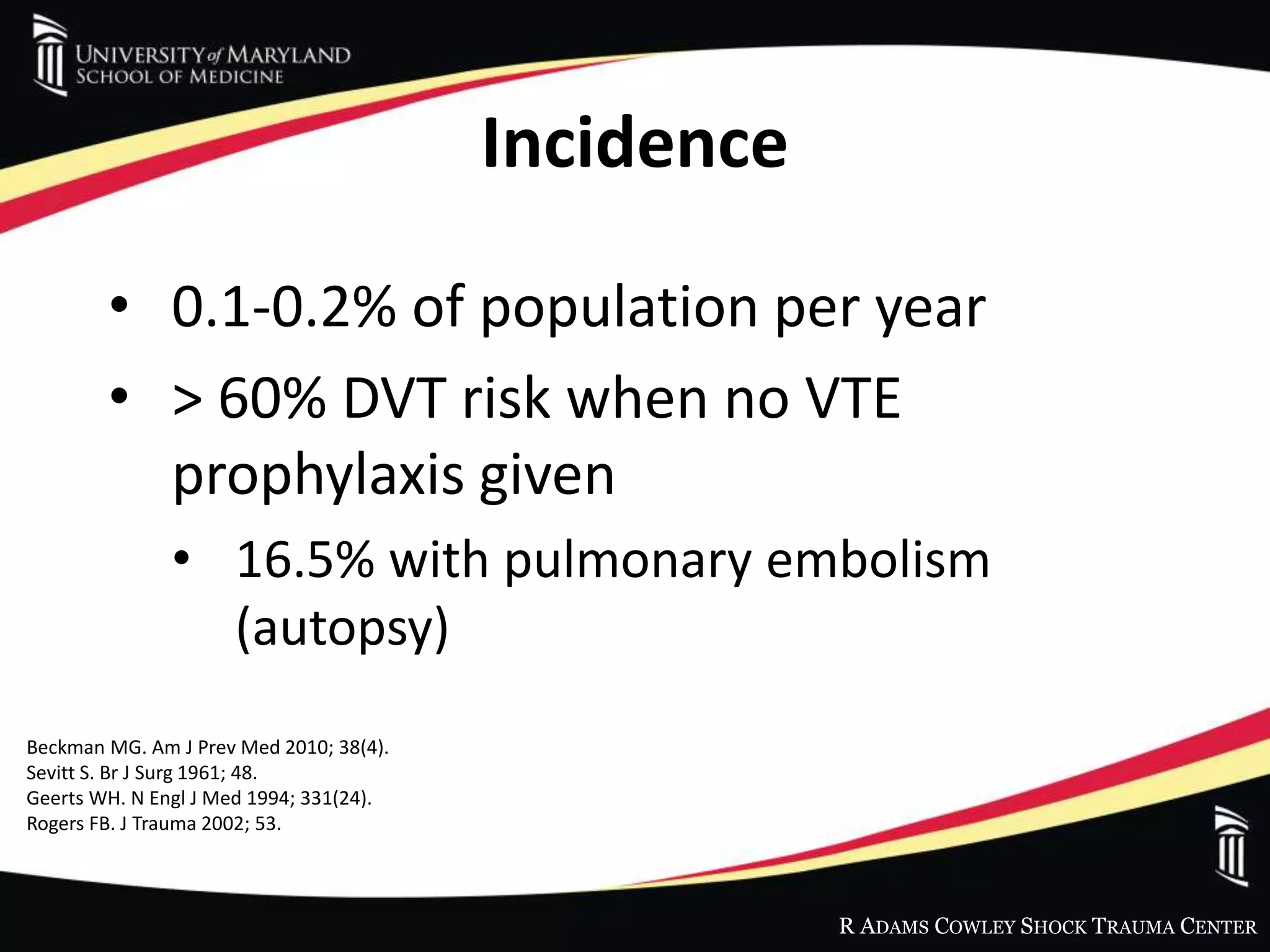
Incidence
• 0.1-0.2% of population per year
• > 60% DVT risk when no VTE
prophylaxis given
• 16.5% with pulmonary embolism
(autopsy)
Beckman MG. Am J Prev Med 2010; 38(4).
Sevitt S. Br J Surg 1961; 48.
Geerts WH. N Engl J Med 1994; 331(24).
Rogers FB. J Trauma 2002; 53.
R ADAMS COWLEY SHOCK TRAUMA CENTER
Pathophysiology
and
Risk Factors
R ADAMS COWLEY SHOCK TRAUMA CENTER
Pathophysiology
Semin Nucl Med. 2001; 31(2).
Crit Care Clin. 2011; 27(4).
Circulation. 2003; 107(23 Suppl 1).
R ADAMS COWLEY SHOCK TRAUMA CENTER
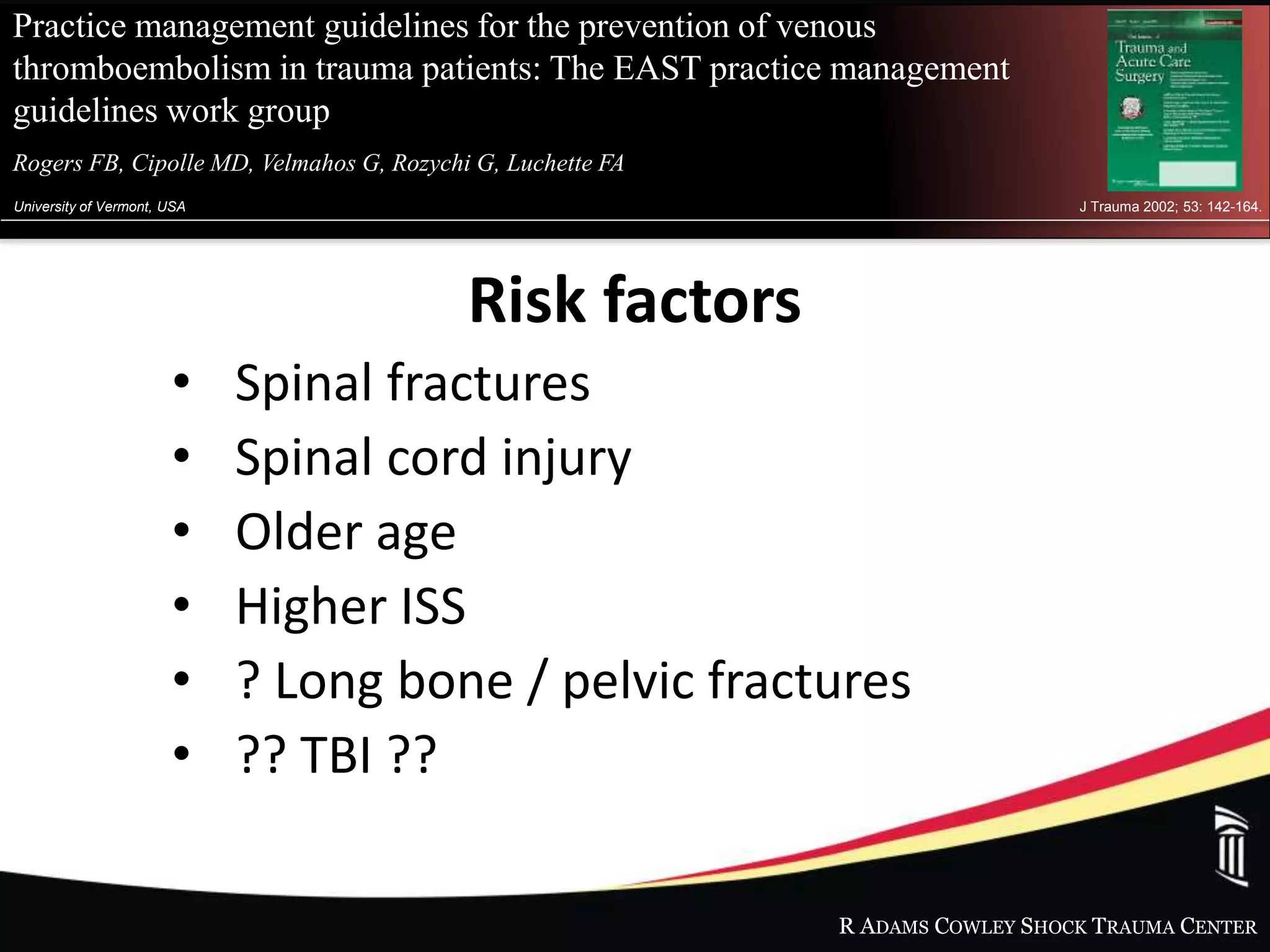
Practice management guidelines for the prevention of venous
thromboembolism in trauma patients: The EAST practice management
guidelines work group
Rogers FB, Cipolle MD, Velmahos G, Rozychi G, Luchette FAet al.
University of Vermont, USA J Trauma 2002; 53: 142-164.
Risk factors
• Spinal fractures
• Spinal cord injury
• Older age
• Higher ISS
• ? Long bone / pelvic fractures
• ?? TBI ??
R ADAMS COWLEY SHOCK TRAUMA CENTER
Venous thromboembolic events in critically ill traumatic brain injury patients
Skrifvars MB, Baily M, et al. (ANZICS Clinical Trials Group)al.
Australia and New Zealand Intensive Care Research Centre, Melbourne, Australia
Int Care Med 2017; 43: 419-428.
• EPO-TBI Trial
• Enoxaparin 40 mg once daily
• Received by 75%
• VTE rate 4x higher than general
medical and surgical populations
• 1/5 TBI patients developed DVT or PE
• 4-5 days until pharmacological
prophylaxis started
• Limitations: mobilization status, aFXa
levels unknown, once daily dosing
R ADAMS COWLEY SHOCK TRAUMA CENTER
Wells Criteria
Wells PS. N Engl J Med 2003; 349.
Modi S. World J Emerg Surg 2016; 11.
R ADAMS COWLEY SHOCK TRAUMA CENTER
Wells Score in Trauma
Modi S. World J Emerg Surg 2016; 11.
R ADAMS COWLEY SHOCK TRAUMA CENTER
Greenfield Risk Assessment Profile (RAP)
Greenfield LJ. J Trauma 1997.
≥10
R ADAMS COWLEY SHOCK TRAUMA CENTER
Pharmaceutical Prophylaxis
R ADAMS COWLEY SHOCK TRAUMA CENTER
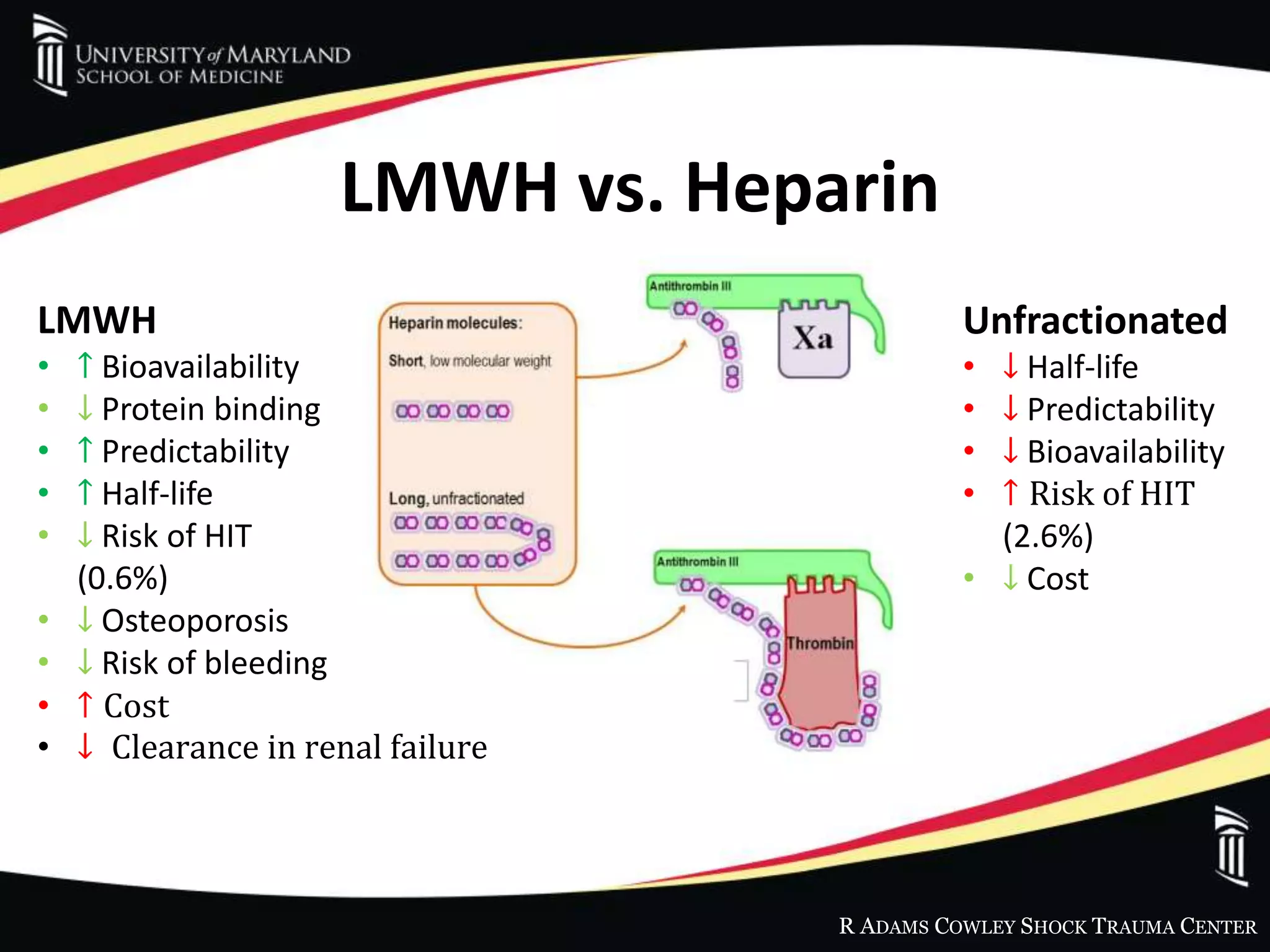
LMWH vs. Heparin
LMWH
• ↑ Bioavailability
• ↓ Protein binding
• ↑ Predictability
• ↑ Half-life
• ↓ Risk of HIT
(0.6%)
• ↓ Osteoporosis
• ↓ Risk of bleeding
• ↑ Cost
• ↓ Clearance in renal failure
Unfractionated
• ↓ Half-life
• ↓ Predictability
• ↓ Bioavailability
• ↑ Risk of HIT
(2.6%)
• ↓ Cost
R ADAMS COWLEY SHOCK TRAUMA CENTER
Unfractionated heparin vs. low-molecular weight heparin for venous
thromboembolism prophylaxis in trauma
Jacobs BN, Cain-Nielsen, AH, Jakubus, JL, et al.et al.
University of Michigan, USA J Trauma Acute Care Surg 2017; 83: 151-158.
LMWH vs. Unfractionated (properly dosed)
R ADAMS COWLEY SHOCK TRAUMA CENTER
Relation of antifactory-Xa peak levels and venous thromboembolism after
trauma
Karcutskie CA, Dharmaraja A, Patel J, et al.et al.
University of Miami
Jackson Memorial (Ryder Trauma Center), USA J Trauma Acute Care Surg 2017; 83: 1102-1107..
Optimal dosing for LMWH?
• Anti Xa level ≥ 0.2-0.4 IU/mL considered
“prophylactic”
• Nearly half were never > 0.2
• No difference between VTE, DVT, PE rates
in subprophylactic vs prophylactic
R ADAMS COWLEY SHOCK TRAUMA CENTER
Utility of anti-factor Xa monitoring in surgical patients receiving prophylactic
doses of enoxaparin for venous thromboembolism prophylaxis
Pannucci CJ, Prazak AM, Scheefer Mal.
University of Utah, USA
AM J Surg 2017; 213: 1143-1152.
Optimal dosing for LMWH?
• 30 mg BID in range aFXa 29-66% of time
• 0.6 mg/kg BID dose better (weight based)
• Burns  0.5 mg/kg
• More patients in range
R ADAMS COWLEY SHOCK TRAUMA CENTER
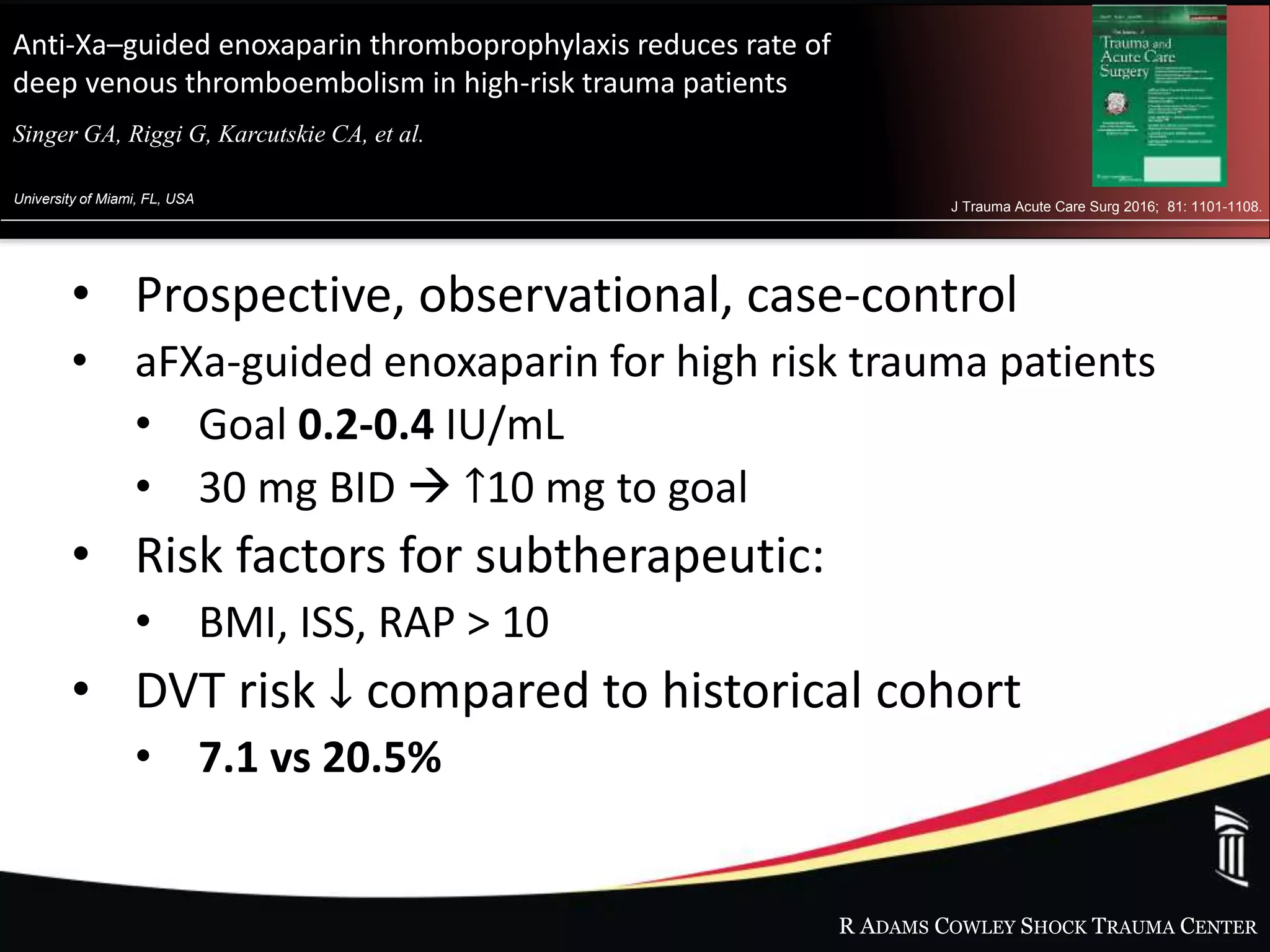
Anti-Xa–guided enoxaparin thromboprophylaxis reduces rate of
deep venous thromboembolism in high-risk trauma patients
Singer GA, Riggi G, Karcutskie CA, et al.al.
University of Miami, FL, USA
J Trauma Acute Care Surg 2016; 81: 1101-1108.
• Prospective, observational, case-control
• aFXa-guided enoxaparin for high risk trauma patients
• Goal 0.2-0.4 IU/mL
• 30 mg BID  ↑10 mg to goal
• Risk factors for subtherapeutic:
• BMI, ISS, RAP > 10
• DVT risk ↓ compared to historical cohort
• 7.1 vs 20.5%
R ADAMS COWLEY SHOCK TRAUMA CENTER
Low-molecular weight heparin venous thromboprophylaxis in critically ill
patients with renal dysfunction (PROTECT trial)
Pai M, Adhikari NKJ, Osterman M, (PROTECT Investigators)al.
Maastricht University, Netherlands
PLoS One 2018: 1-15.
• Preplanned subgroup study
• Patients with end-stage renal disease
• Dalteparin vs. unfractionated heparin
• No difference in proximal DVT, major
bleeding except in patients with severe
renal failure
• CrCl < 30 mL/min--> higher risk for VTE
• 7.6% vs. 3.7%, P = 0.04
R ADAMS COWLEY SHOCK TRAUMA CENTER
Reversal?
Clinical Practice Guideline on Anticoagulant Dosing and Management. American
Society of Hematology / American College of Chest Physicians, 8th Edition. 2011.
R ADAMS COWLEY SHOCK TRAUMA CENTER
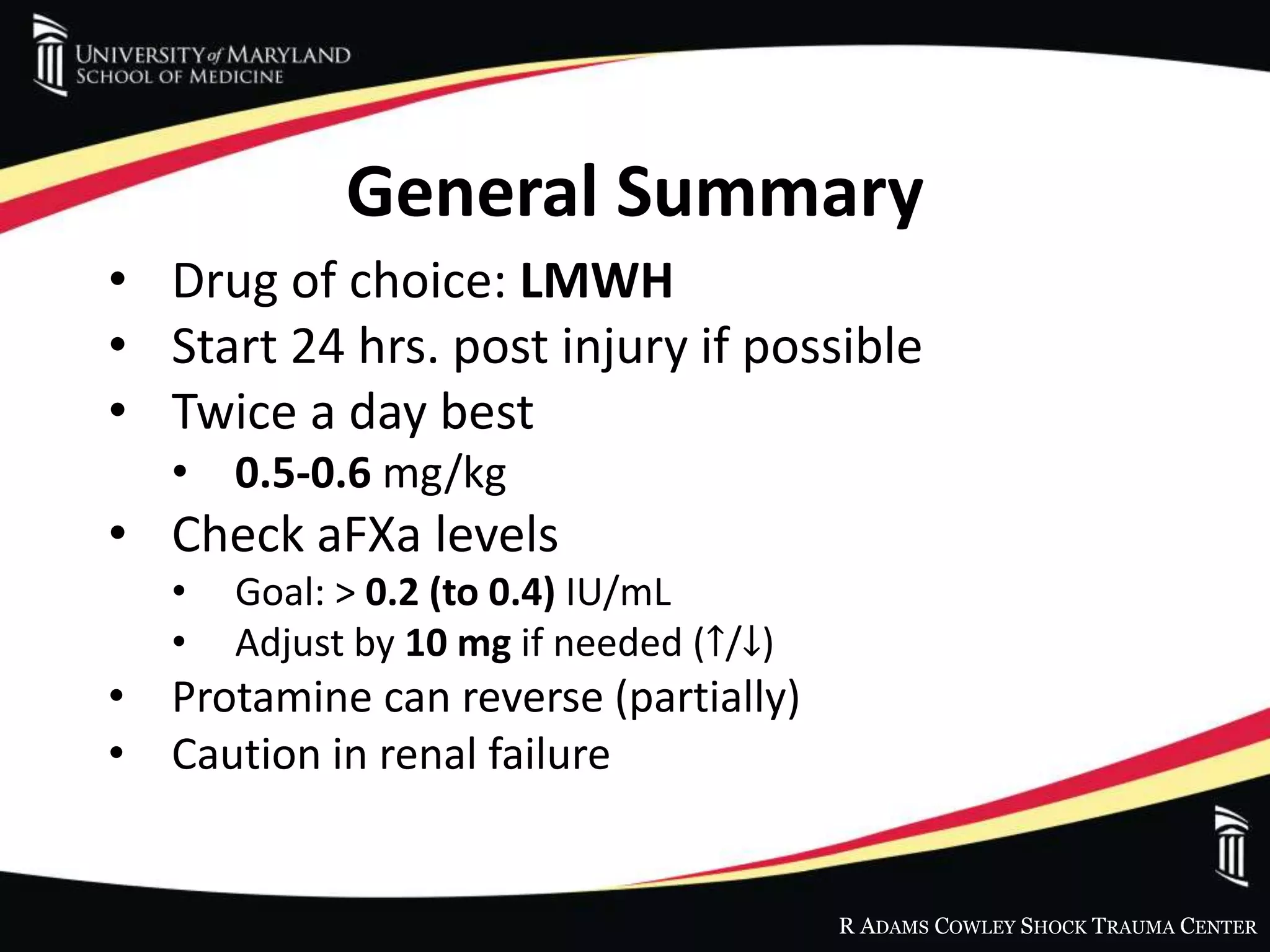
General Summary
• Drug of choice: LMWH
• Start 24 hrs. post injury if possible
• Twice a day best
• 0.5-0.6 mg/kg
• Check aFXa levels
• Goal: > 0.2 (to 0.4) IU/mL
• Adjust by 10 mg if needed (↑/↓)
• Protamine can reverse (partially)
• Caution in renal failure
R ADAMS COWLEY SHOCK TRAUMA CENTER
TBI
R ADAMS COWLEY SHOCK TRAUMA CENTER
Pharmacological thromboembolic prophylaxis in traumatic brain injuries
Benjamin E., Recinos G., Aiolfi A., Inaba K., Demetriades D.et al.
University of Southern California, USA
J Trauma Acute Care Surg. 2017; 266: 463-469.
• 20,417 TBI patients
• Risk factors
• Age > 65
• Hypotension on admission
• >AIS
• Time to VTE prophylaxis
LMWH was independently associated with a lower
risk of mortality and VTE regardless of timing
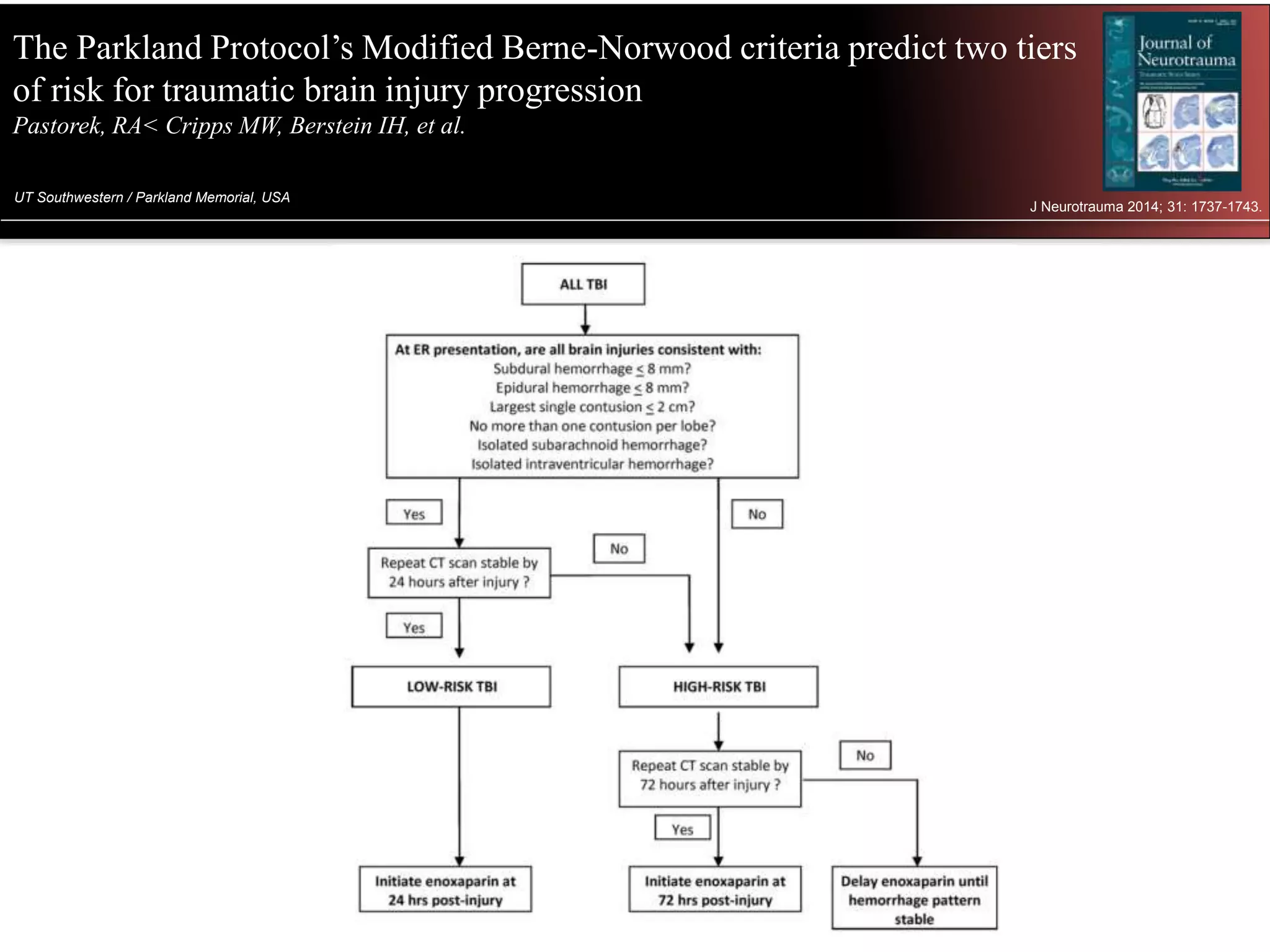
The Parkland Protocol’s Modified Berne-Norwood criteria predict two tiers
of risk for traumatic brain injury progression
Pastorek, RA< Cripps MW, Berstein IH, et al.et al.
UT Southwestern / Parkland Memorial, USA
J Neurotrauma 2014; 31: 1737-1743.
R ADAMS COWLEY SHOCK TRAUMA CENTER
Spinal Cord Injury
R ADAMS COWLEY SHOCK TRAUMA CENTER
Early chemoprophylaxis is associated with decreased venous
thromboembolism risk…after traumatic spinal cord injury
Chang R, Scerbo MH, Schmitt KM, et al..et al.
University of Southern California, USA
J Trauma Acute Care Surg 2017; 83(6): 1088-1094.
• Early (n=260) vs. Late (n=241) LMWH
• Aspirin also given to some patients
• DVT
• HR 0.37 (95% CI, 0.16-0.84)
• Pulmonary Embolism
• HR 0.20 (95% CI, 0.06-0.69)
• Spinal hemorrhage in 4 patients
• Aspirin not effective
R ADAMS COWLEY SHOCK TRAUMA CENTER
Meta-analysis of heparin therapy for preventing venous thromboembolism in
acute spinal cord injury
Liu Y, Xu H, Liu F, et al.et al.
Tianjin Medical University
Heping District, China Int J Surg 2017; 43: 94-100.4.
• Heparin better than nothing
• LMWH = unfractionated
• No difference in major bleeding
R ADAMS COWLEY SHOCK TRAUMA CENTER
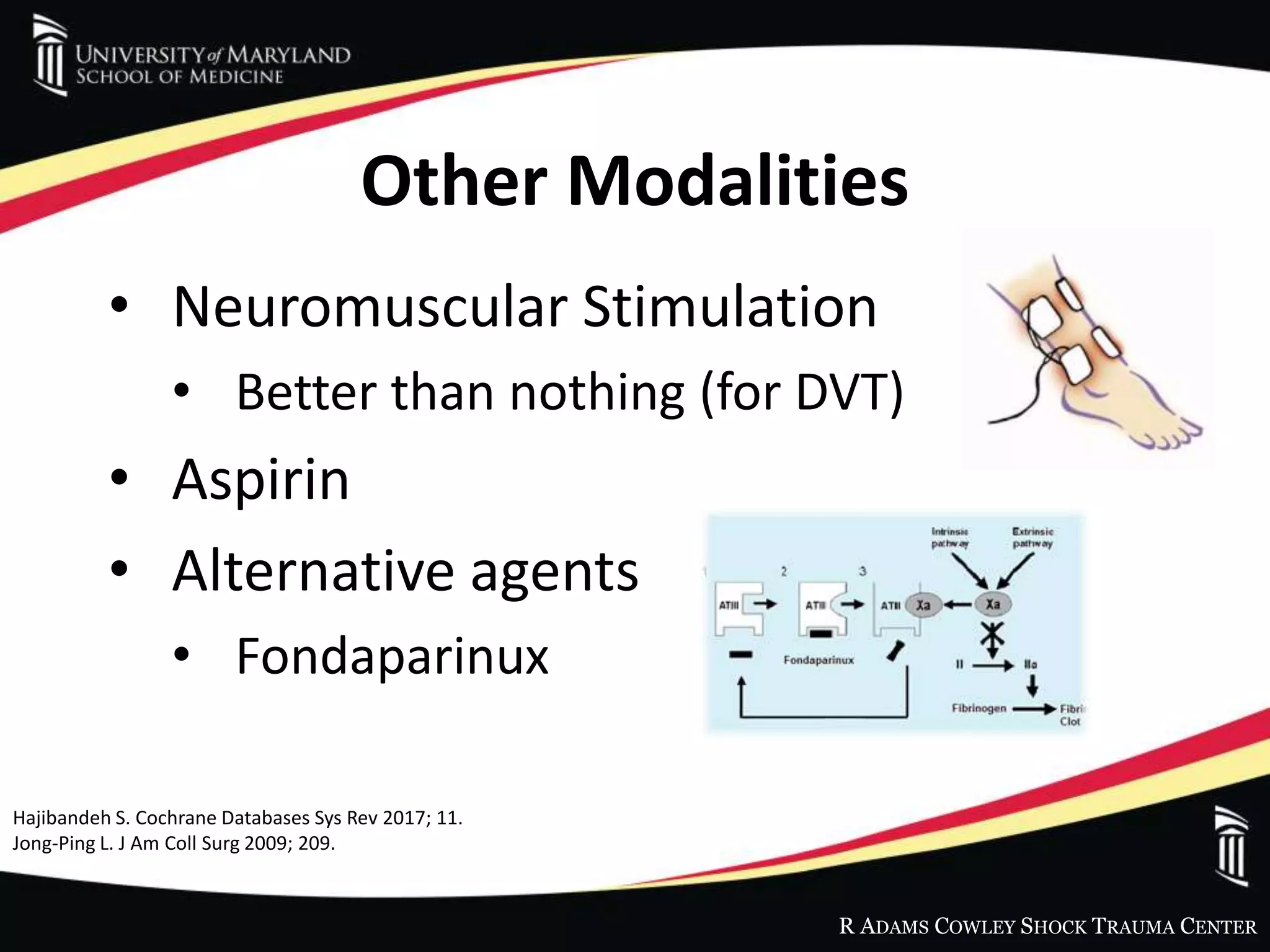
Other Modalities
• Neuromuscular Stimulation
• Better than nothing (for DVT)
• Aspirin
• Alternative agents
• Fondaparinux
Hajibandeh S. Cochrane Databases Sys Rev 2017; 11.
Jong-Ping L. J Am Coll Surg 2009; 209.
R ADAMS COWLEY SHOCK TRAUMA CENTER
IVC Filters
R ADAMS COWLEY SHOCK TRAUMA CENTER
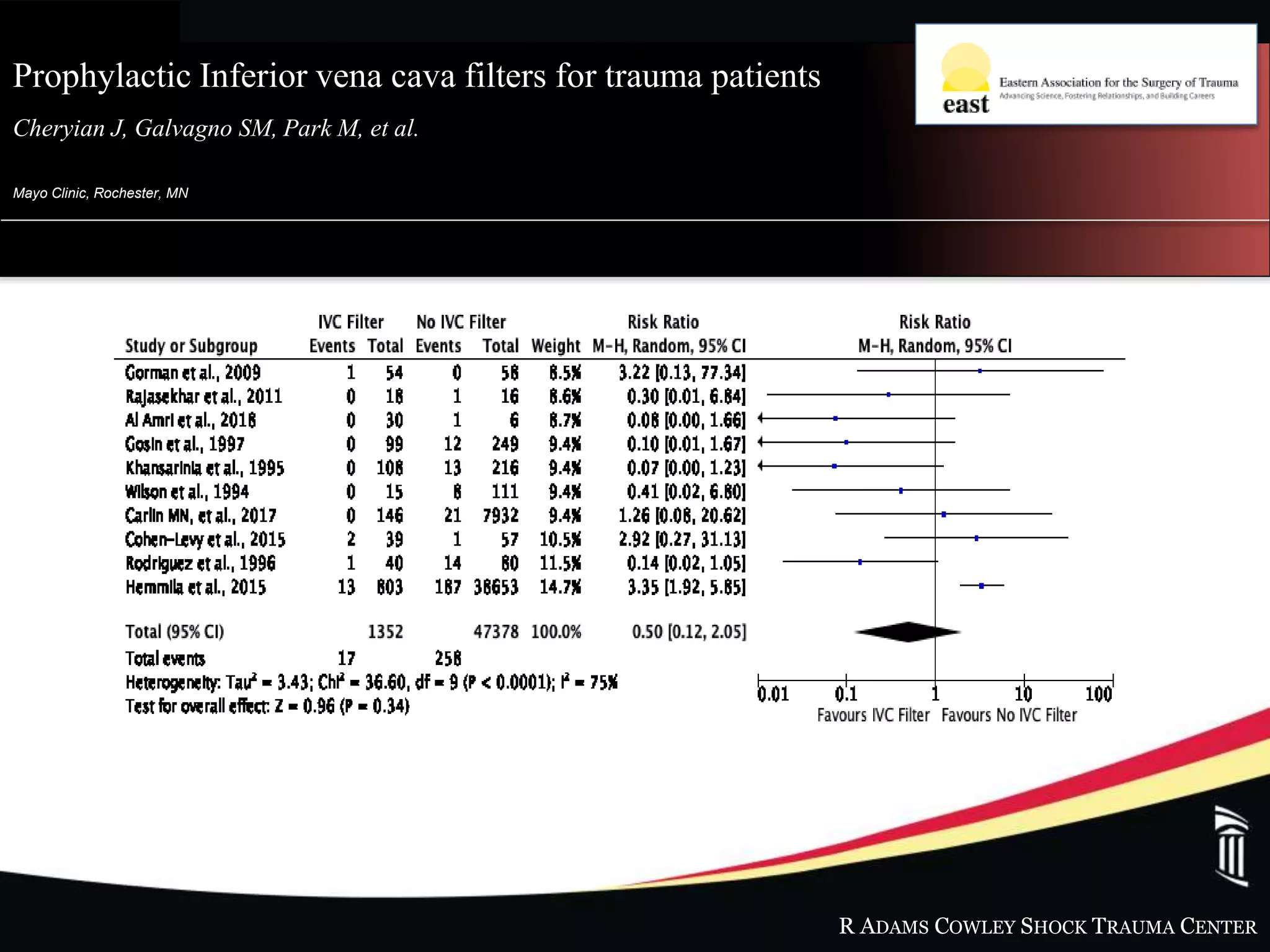
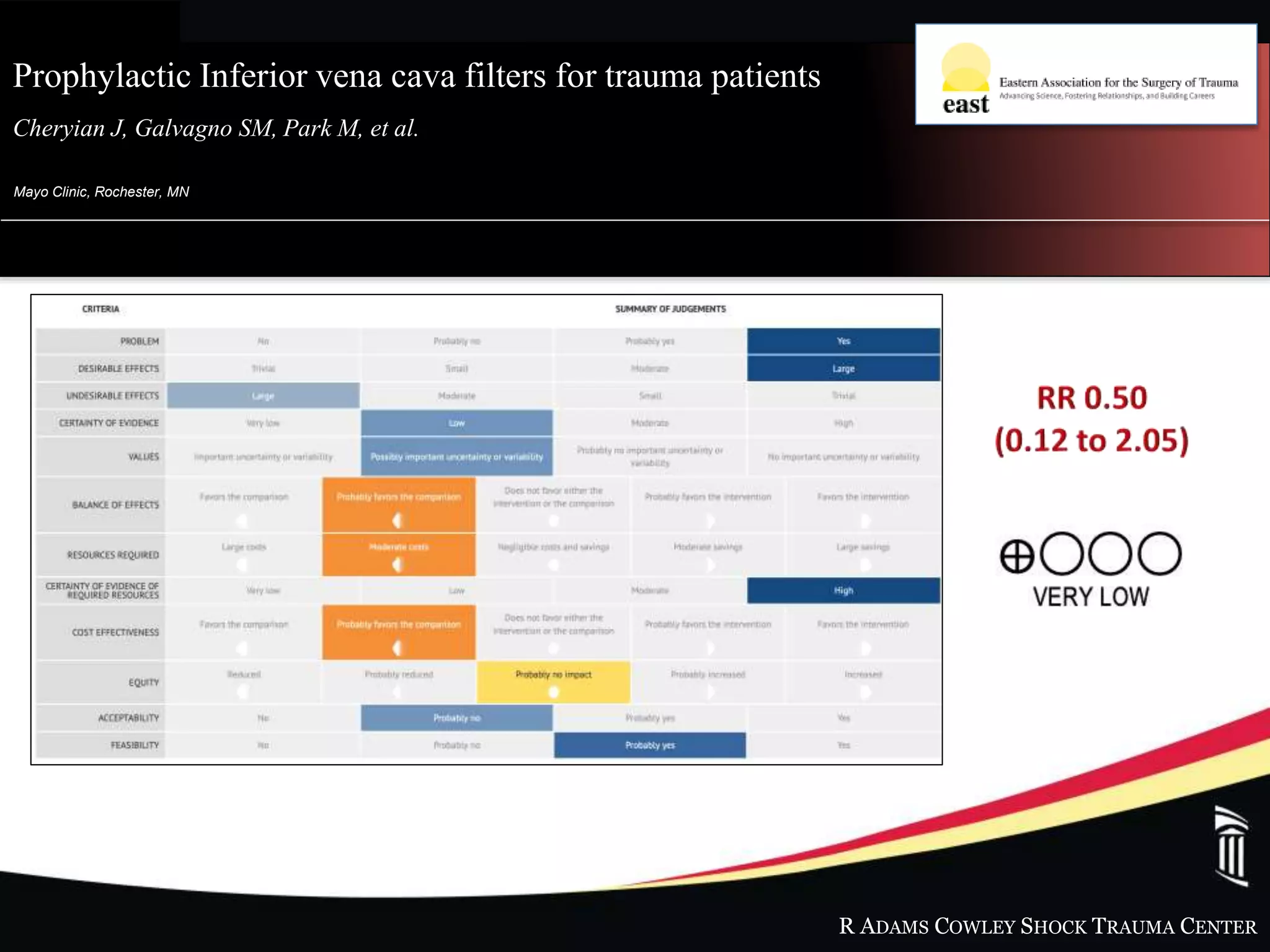
Mayo Clinic, Rochester, MN
Prophylactic Inferior vena cava filters for trauma patients
Cheryian J, Galvagno SM, Park M, et al..
R ADAMS COWLEY SHOCK TRAUMA CENTER
Mayo Clinic, Rochester, MN
Prophylactic Inferior vena cava filters for trauma patients
Cheryian J, Galvagno SM, Park M, et al. .
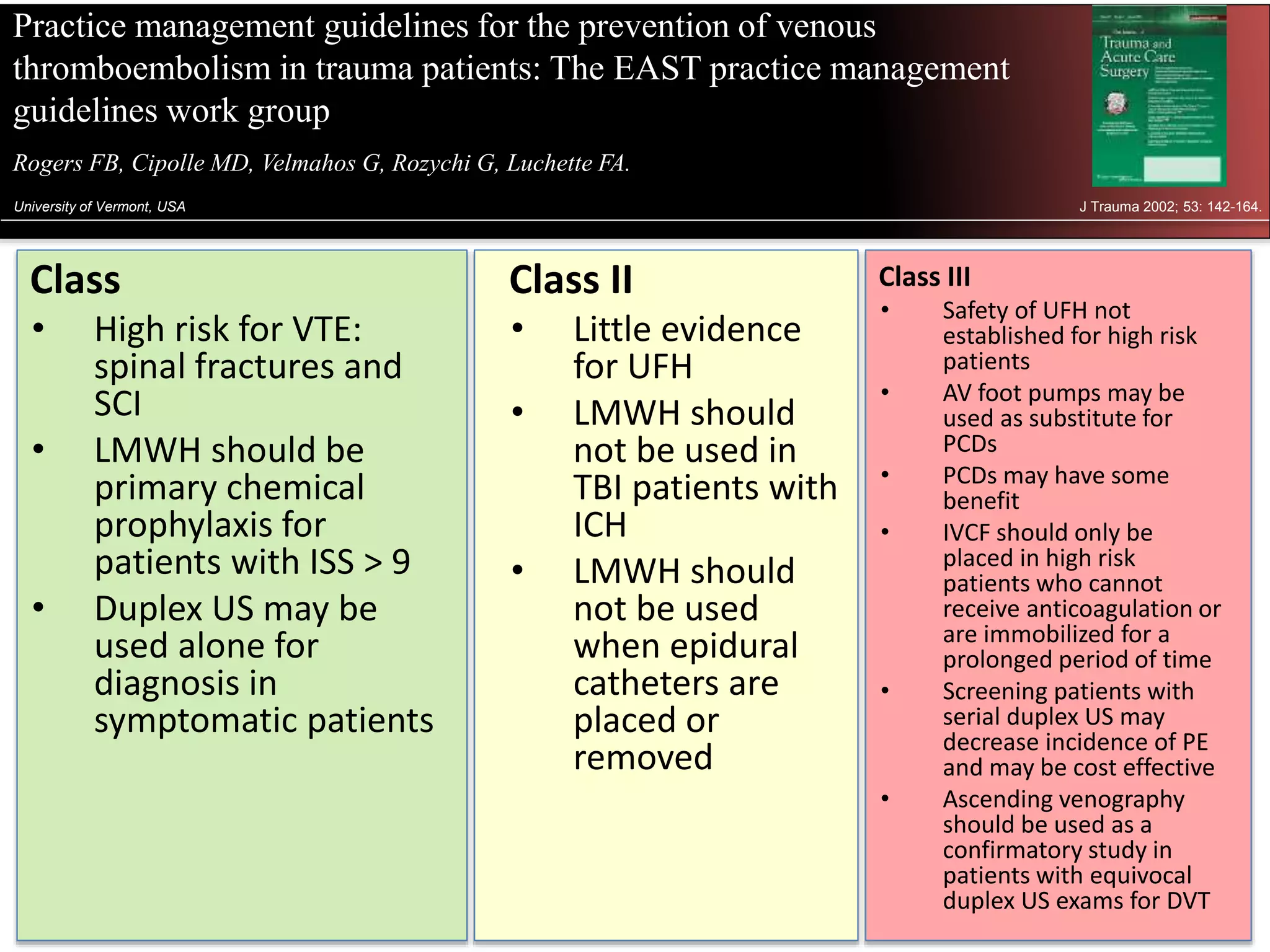
Practice management guidelines for the prevention of venous
thromboembolism in trauma patients: The EAST practice management
guidelines work group
Rogers FB, Cipolle MD, Velmahos G, Rozychi G, Luchette FA.et al.
University of Vermont, USA J Trauma 2002; 53: 142-164.
Class
• High risk for VTE:
spinal fractures and
SCI
• LMWH should be
primary chemical
prophylaxis for
patients with ISS > 9
• Duplex US may be
used alone for
diagnosis in
symptomatic patients
Class II
• Little evidence
for UFH
• LMWH should
not be used in
TBI patients with
ICH
• LMWH should
not be used
when epidural
catheters are
placed or
removed
Class III
• Safety of UFH not
established for high risk
patients
• AV foot pumps may be
used as substitute for
PCDs
• PCDs may have some
benefit
• IVCF should only be
placed in high risk
patients who cannot
receive anticoagulation or
are immobilized for a
prolonged period of time
• Screening patients with
serial duplex US may
decrease incidence of PE
and may be cost effective
• Ascending venography
should be used as a
confirmatory study in
patients with equivocal
duplex US exams for DVT
R ADAMS COWLEY SHOCK TRAUMA CENTER
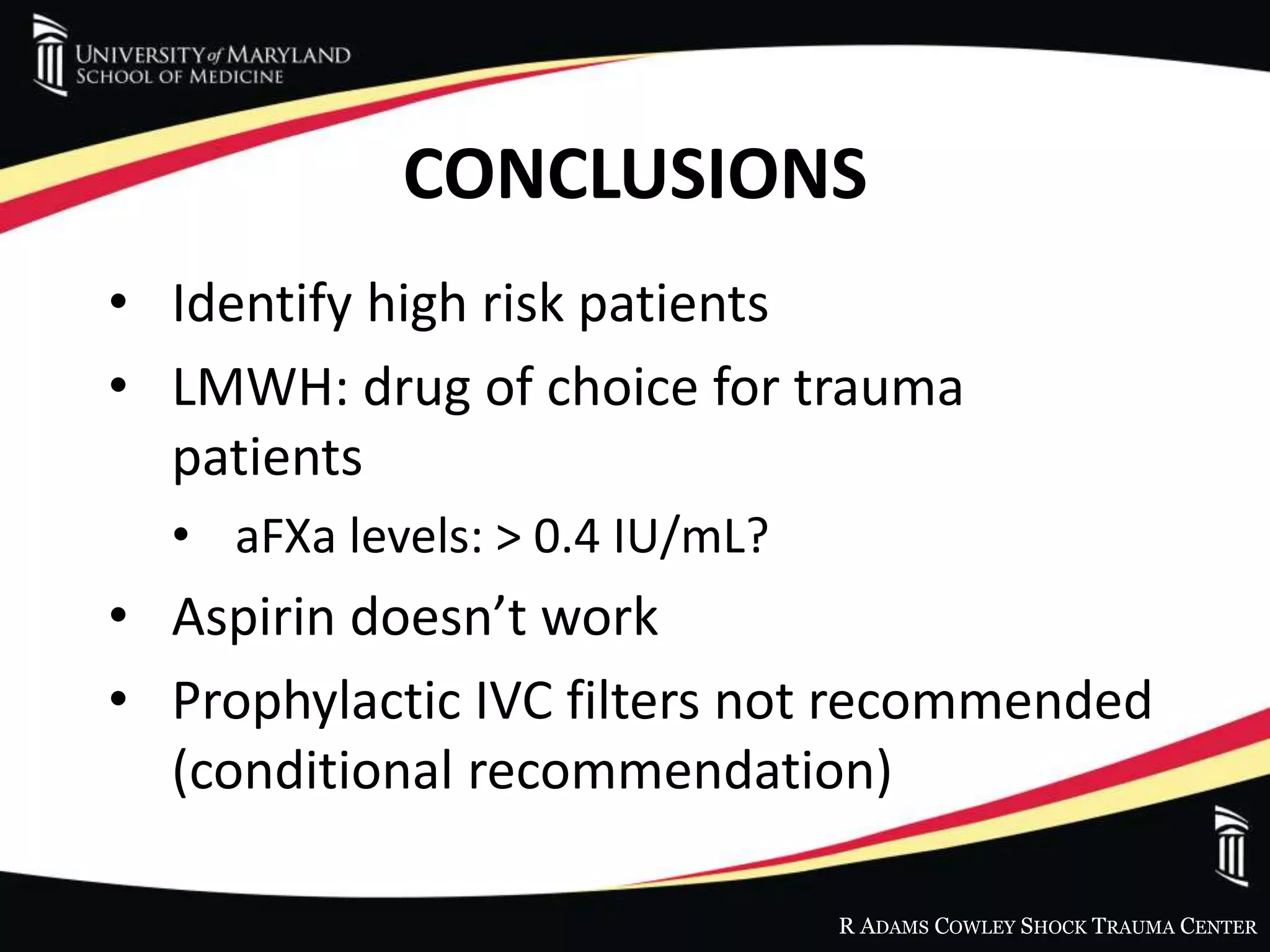
CONCLUSIONS
• Identify high risk patients
• LMWH: drug of choice for trauma
patients
• aFXa levels: > 0.4 IU/mL?
• Aspirin doesn’t work
• Prophylactic IVC filters not recommended
(conditional recommendation)
R ADAMS COWLEY SHOCK TRAUMA CENTER
Thank you!
sgalvagno@som.umaryland.edu
R ADAMS COWLEY SHOCK TRAUMA CENTER
LMWH in TBI??
• Kwiatt, et al., 2012
• Retrospective multicenter trial
• N=1,215
• 24 vs. 42%, P < 0.001, more hemorrhagic progression
in LMWH gp
• Limitations: Study gp more severely injured, LMWH gp
smaller, variability in practice across centers, only 18%
received LMWH, importance of radiographic
progression vs. clinical, higher than previously reported
hemorrhagic progression (14%, <2% in other studies)
R ADAMS COWLEY SHOCK TRAUMA CENTER
Failure to prevent VTE!
• Patterson et al., 2017
• Tibial fractures
• SINGLE SURGICAL INTERVENTION
• Meta-analysis
• 5 studies, 1,181 patients
• LMWH vs. placebo
• No significant reduction!
• Limitations: No dosing, no info on
mobilization practices, weight bearing?
R ADAMS COWLEY SHOCK TRAUMA CENTER

Thromboembolism

  • 1.
    R ADAMS COWLEYSHOCK TRAUMA CENTER All Bleeding Stops Eventually Thromboembolism Sam Galvagno, DO, PhD, FCCM Col, USAF, MC, SFS Associate Professor Medical Director, Lung Rescue Unit (LRU) Director, Shock Trauma Go-Team University of Maryland School of Medicine R Adams Cowley Shock Trauma Center Baltimore, MD, USA
  • 2.
    R ADAMS COWLEYSHOCK TRAUMA CENTER Disclosures • United States Air Force Reserve • UpToDate® Author • Department of Defense Funding
  • 3.
    R ADAMS COWLEYSHOCK TRAUMA CENTER Objectives • Examine pathophysiological mechanisms responsible for VTE in trauma patients • List risk factors for and incidence of VTE • Evaluate evidence-based recommendations for prevention and management
  • 5.
    R ADAMS COWLEYSHOCK TRAUMA CENTER Incidence • 0.1-0.2% of population per year • > 60% DVT risk when no VTE prophylaxis given • 16.5% with pulmonary embolism (autopsy) Beckman MG. Am J Prev Med 2010; 38(4). Sevitt S. Br J Surg 1961; 48. Geerts WH. N Engl J Med 1994; 331(24). Rogers FB. J Trauma 2002; 53.
  • 6.
    R ADAMS COWLEYSHOCK TRAUMA CENTER Pathophysiology and Risk Factors
  • 7.
    R ADAMS COWLEYSHOCK TRAUMA CENTER Pathophysiology Semin Nucl Med. 2001; 31(2). Crit Care Clin. 2011; 27(4). Circulation. 2003; 107(23 Suppl 1).
  • 8.
    R ADAMS COWLEYSHOCK TRAUMA CENTER Practice management guidelines for the prevention of venous thromboembolism in trauma patients: The EAST practice management guidelines work group Rogers FB, Cipolle MD, Velmahos G, Rozychi G, Luchette FAet al. University of Vermont, USA J Trauma 2002; 53: 142-164. Risk factors • Spinal fractures • Spinal cord injury • Older age • Higher ISS • ? Long bone / pelvic fractures • ?? TBI ??
  • 9.
    R ADAMS COWLEYSHOCK TRAUMA CENTER Venous thromboembolic events in critically ill traumatic brain injury patients Skrifvars MB, Baily M, et al. (ANZICS Clinical Trials Group)al. Australia and New Zealand Intensive Care Research Centre, Melbourne, Australia Int Care Med 2017; 43: 419-428. • EPO-TBI Trial • Enoxaparin 40 mg once daily • Received by 75% • VTE rate 4x higher than general medical and surgical populations • 1/5 TBI patients developed DVT or PE • 4-5 days until pharmacological prophylaxis started • Limitations: mobilization status, aFXa levels unknown, once daily dosing
  • 10.
    R ADAMS COWLEYSHOCK TRAUMA CENTER Wells Criteria Wells PS. N Engl J Med 2003; 349. Modi S. World J Emerg Surg 2016; 11.
  • 11.
    R ADAMS COWLEYSHOCK TRAUMA CENTER Wells Score in Trauma Modi S. World J Emerg Surg 2016; 11.
  • 12.
    R ADAMS COWLEYSHOCK TRAUMA CENTER Greenfield Risk Assessment Profile (RAP) Greenfield LJ. J Trauma 1997. ≥10
  • 13.
    R ADAMS COWLEYSHOCK TRAUMA CENTER Pharmaceutical Prophylaxis
  • 14.
    R ADAMS COWLEYSHOCK TRAUMA CENTER LMWH vs. Heparin LMWH • ↑ Bioavailability • ↓ Protein binding • ↑ Predictability • ↑ Half-life • ↓ Risk of HIT (0.6%) • ↓ Osteoporosis • ↓ Risk of bleeding • ↑ Cost • ↓ Clearance in renal failure Unfractionated • ↓ Half-life • ↓ Predictability • ↓ Bioavailability • ↑ Risk of HIT (2.6%) • ↓ Cost
  • 15.
    R ADAMS COWLEYSHOCK TRAUMA CENTER Unfractionated heparin vs. low-molecular weight heparin for venous thromboembolism prophylaxis in trauma Jacobs BN, Cain-Nielsen, AH, Jakubus, JL, et al.et al. University of Michigan, USA J Trauma Acute Care Surg 2017; 83: 151-158. LMWH vs. Unfractionated (properly dosed)
  • 16.
    R ADAMS COWLEYSHOCK TRAUMA CENTER Relation of antifactory-Xa peak levels and venous thromboembolism after trauma Karcutskie CA, Dharmaraja A, Patel J, et al.et al. University of Miami Jackson Memorial (Ryder Trauma Center), USA J Trauma Acute Care Surg 2017; 83: 1102-1107.. Optimal dosing for LMWH? • Anti Xa level ≥ 0.2-0.4 IU/mL considered “prophylactic” • Nearly half were never > 0.2 • No difference between VTE, DVT, PE rates in subprophylactic vs prophylactic
  • 17.
    R ADAMS COWLEYSHOCK TRAUMA CENTER Utility of anti-factor Xa monitoring in surgical patients receiving prophylactic doses of enoxaparin for venous thromboembolism prophylaxis Pannucci CJ, Prazak AM, Scheefer Mal. University of Utah, USA AM J Surg 2017; 213: 1143-1152. Optimal dosing for LMWH? • 30 mg BID in range aFXa 29-66% of time • 0.6 mg/kg BID dose better (weight based) • Burns  0.5 mg/kg • More patients in range
  • 18.
    R ADAMS COWLEYSHOCK TRAUMA CENTER Anti-Xa–guided enoxaparin thromboprophylaxis reduces rate of deep venous thromboembolism in high-risk trauma patients Singer GA, Riggi G, Karcutskie CA, et al.al. University of Miami, FL, USA J Trauma Acute Care Surg 2016; 81: 1101-1108. • Prospective, observational, case-control • aFXa-guided enoxaparin for high risk trauma patients • Goal 0.2-0.4 IU/mL • 30 mg BID  ↑10 mg to goal • Risk factors for subtherapeutic: • BMI, ISS, RAP > 10 • DVT risk ↓ compared to historical cohort • 7.1 vs 20.5%
  • 19.
    R ADAMS COWLEYSHOCK TRAUMA CENTER Low-molecular weight heparin venous thromboprophylaxis in critically ill patients with renal dysfunction (PROTECT trial) Pai M, Adhikari NKJ, Osterman M, (PROTECT Investigators)al. Maastricht University, Netherlands PLoS One 2018: 1-15. • Preplanned subgroup study • Patients with end-stage renal disease • Dalteparin vs. unfractionated heparin • No difference in proximal DVT, major bleeding except in patients with severe renal failure • CrCl < 30 mL/min--> higher risk for VTE • 7.6% vs. 3.7%, P = 0.04
  • 20.
    R ADAMS COWLEYSHOCK TRAUMA CENTER Reversal? Clinical Practice Guideline on Anticoagulant Dosing and Management. American Society of Hematology / American College of Chest Physicians, 8th Edition. 2011.
  • 21.
    R ADAMS COWLEYSHOCK TRAUMA CENTER General Summary • Drug of choice: LMWH • Start 24 hrs. post injury if possible • Twice a day best • 0.5-0.6 mg/kg • Check aFXa levels • Goal: > 0.2 (to 0.4) IU/mL • Adjust by 10 mg if needed (↑/↓) • Protamine can reverse (partially) • Caution in renal failure
  • 22.
    R ADAMS COWLEYSHOCK TRAUMA CENTER TBI
  • 23.
    R ADAMS COWLEYSHOCK TRAUMA CENTER Pharmacological thromboembolic prophylaxis in traumatic brain injuries Benjamin E., Recinos G., Aiolfi A., Inaba K., Demetriades D.et al. University of Southern California, USA J Trauma Acute Care Surg. 2017; 266: 463-469. • 20,417 TBI patients • Risk factors • Age > 65 • Hypotension on admission • >AIS • Time to VTE prophylaxis LMWH was independently associated with a lower risk of mortality and VTE regardless of timing
  • 24.
    The Parkland Protocol’sModified Berne-Norwood criteria predict two tiers of risk for traumatic brain injury progression Pastorek, RA< Cripps MW, Berstein IH, et al.et al. UT Southwestern / Parkland Memorial, USA J Neurotrauma 2014; 31: 1737-1743.
  • 25.
    R ADAMS COWLEYSHOCK TRAUMA CENTER Spinal Cord Injury
  • 26.
    R ADAMS COWLEYSHOCK TRAUMA CENTER Early chemoprophylaxis is associated with decreased venous thromboembolism risk…after traumatic spinal cord injury Chang R, Scerbo MH, Schmitt KM, et al..et al. University of Southern California, USA J Trauma Acute Care Surg 2017; 83(6): 1088-1094. • Early (n=260) vs. Late (n=241) LMWH • Aspirin also given to some patients • DVT • HR 0.37 (95% CI, 0.16-0.84) • Pulmonary Embolism • HR 0.20 (95% CI, 0.06-0.69) • Spinal hemorrhage in 4 patients • Aspirin not effective
  • 27.
    R ADAMS COWLEYSHOCK TRAUMA CENTER Meta-analysis of heparin therapy for preventing venous thromboembolism in acute spinal cord injury Liu Y, Xu H, Liu F, et al.et al. Tianjin Medical University Heping District, China Int J Surg 2017; 43: 94-100.4. • Heparin better than nothing • LMWH = unfractionated • No difference in major bleeding
  • 28.
    R ADAMS COWLEYSHOCK TRAUMA CENTER Other Modalities • Neuromuscular Stimulation • Better than nothing (for DVT) • Aspirin • Alternative agents • Fondaparinux Hajibandeh S. Cochrane Databases Sys Rev 2017; 11. Jong-Ping L. J Am Coll Surg 2009; 209.
  • 29.
    R ADAMS COWLEYSHOCK TRAUMA CENTER IVC Filters
  • 30.
    R ADAMS COWLEYSHOCK TRAUMA CENTER Mayo Clinic, Rochester, MN Prophylactic Inferior vena cava filters for trauma patients Cheryian J, Galvagno SM, Park M, et al..
  • 31.
    R ADAMS COWLEYSHOCK TRAUMA CENTER Mayo Clinic, Rochester, MN Prophylactic Inferior vena cava filters for trauma patients Cheryian J, Galvagno SM, Park M, et al. .
  • 32.
    Practice management guidelinesfor the prevention of venous thromboembolism in trauma patients: The EAST practice management guidelines work group Rogers FB, Cipolle MD, Velmahos G, Rozychi G, Luchette FA.et al. University of Vermont, USA J Trauma 2002; 53: 142-164. Class • High risk for VTE: spinal fractures and SCI • LMWH should be primary chemical prophylaxis for patients with ISS > 9 • Duplex US may be used alone for diagnosis in symptomatic patients Class II • Little evidence for UFH • LMWH should not be used in TBI patients with ICH • LMWH should not be used when epidural catheters are placed or removed Class III • Safety of UFH not established for high risk patients • AV foot pumps may be used as substitute for PCDs • PCDs may have some benefit • IVCF should only be placed in high risk patients who cannot receive anticoagulation or are immobilized for a prolonged period of time • Screening patients with serial duplex US may decrease incidence of PE and may be cost effective • Ascending venography should be used as a confirmatory study in patients with equivocal duplex US exams for DVT
  • 33.
    R ADAMS COWLEYSHOCK TRAUMA CENTER CONCLUSIONS • Identify high risk patients • LMWH: drug of choice for trauma patients • aFXa levels: > 0.4 IU/mL? • Aspirin doesn’t work • Prophylactic IVC filters not recommended (conditional recommendation)
  • 34.
    R ADAMS COWLEYSHOCK TRAUMA CENTER Thank you! sgalvagno@som.umaryland.edu
  • 35.
    R ADAMS COWLEYSHOCK TRAUMA CENTER LMWH in TBI?? • Kwiatt, et al., 2012 • Retrospective multicenter trial • N=1,215 • 24 vs. 42%, P < 0.001, more hemorrhagic progression in LMWH gp • Limitations: Study gp more severely injured, LMWH gp smaller, variability in practice across centers, only 18% received LMWH, importance of radiographic progression vs. clinical, higher than previously reported hemorrhagic progression (14%, <2% in other studies)
  • 36.
    R ADAMS COWLEYSHOCK TRAUMA CENTER Failure to prevent VTE! • Patterson et al., 2017 • Tibial fractures • SINGLE SURGICAL INTERVENTION • Meta-analysis • 5 studies, 1,181 patients • LMWH vs. placebo • No significant reduction! • Limitations: No dosing, no info on mobilization practices, weight bearing?
  • 37.
    R ADAMS COWLEYSHOCK TRAUMA CENTER

Editor's Notes

  • #5 This is a boring topic! Before you go on living your life, I hope you’ll “get it” because lives can be saved!
  • #8 Major trauma augments all components of Virchow’s triad ECMO-CaDVT > 80%
  • #10 TBI IS a risk factors! Multicentre, multinational, RCT, n=606 Moderate or severe TBI as defined by GCS Epoetin alfa vs placebo Population of interest: PLACEBO group (EPO group predisposed to VTE)
  • #12 Wells score < 1 can reliably rule out DVT in trauma patients Valid pretest for risk stratification N=298 6% positive for DVT
  • #13 Wells score < 1 can reliably rule out DVT in trauma patients Valid pretest for risk stratification N=298 6% positive for DVT
  • #15 Xa doesn’t care about length of heparin; Xa is inactivated by short chains of LMWH Long chains of heparin bind to thrombin and all 3 molecules form a tertiary complex Standard heparin consists of components with molecular weights ranging from 4000 to 30,000 daltons with a mean of 16,000 daltons. Heparin acts as an anticoagulant by enhancing the inhibition rate of clotting proteases by antithrombin III impairing normal hemostasis and inhibition of factor Xa. Low molecular weight heparins have a small effect on the activated partial thromboplastin time and strongly inhibit factor Xa. Enoxaparin is derived from porcine heparin that undergoes benzylation followed by alkaline depolymerization. The average molecular weight of enoxaparin is 4500 daltons which is distributed as (≤20%) 2000 daltons (≥68%) 2000 to 8000 daltons, and (≤18%) >8000 daltons. Enoxaparin has a higher ratio of antifactor Xa to antifactor IIa activity than unfractionated heparin.
  • #16 Major problem with previous studies: UFH given BID in some, not weight adjusted Michigan Trauma Quality Improvement Program (MTQIP), 23 Level I and II trauma centers in MI Primary outcome: VTE or PE, OVER 18,000 patients More whites and insured got LMWH! Higher head AIS in heparin group More drug use, dialysis, HTN, in heparin group
  • #17 194 ICU trauma patients over 2 years DVT rate 6.5 in subprophylactic, 6.9 in prophylactic PE rate N.S 1.1 vs 3.9 Reasons for findings: DECREASED AT III after trauma? Decreases effect of heparinoids Heparinoids induce platelet aggregation, promote P selectin Usually wait until after 4 doses, need to measure 4-6 hours after the dose
  • #18 Systematic review Current dosing is 30 mg BID but only results in in-range Xa level 29-66% of time
  • #19 aFXa guided enoxaparin to trauma patients 4 hrs after AM dose, wait 3 doses before next adjutment Injury Severity Score of 25 ± 10
  • #20 PROTECT: RCT, multicenter 118 patients with ESRD Dalteparin 5000 U ONCE A DAY vs. UFH 5000 U BID Primary outcome: proximal DVT
  • #22 Check 4-6 hrs after AM dose Usually wait for 4 doses to get to therapeutic levels Protamine only partially affected anti-Xa levels. Protamine may be of use in reversing bleeding associated with LMWH but not in all patients. Anti-Xa levels were useful to assess the amount of anticoagulation before protamine administration but unhelpful in assessing its effect
  • #25 N=414 200 were low risk, 75 moderate, 139 high High risk: higher ISS, AIS, lower GCS, more PRBCs, ICU LOS higher Mortality 4, 9, 25% (low, mod, high) Important: significant variation in practice amongst neurosurgeons: n=391 in study by Strollo Et al. J Crit Care 2018 50% without a standardized institutional protocol Progression in traumatic ICH reported to progress from 12-42% of patients on repeat CT (Patel NY. J Trauma 2000; Smith JS, J Trauma 2007)
  • #27 Aspirin was also given in 31 and 24% (early vs. late) 7 overall had spinal hemorrhage, 4 were on LMWH For the 4, 1 quadriplegic (but cord edema, not hemorrhage), 1 quadriplegic but was only moving ¾ extremities before the hematoma
  • #28 Meta analysis Heparin comparable to LMWH
  • #29 Neurostim: 5 RCTs OR lower compared to nothing (OR 0.4, 95% CI 0.2 to 0.7) OR higher for DVT compared to heparin (OR 2.78, 95% CI 1.2 to 6.5) Quality of evidence low Fondaparinux (potentiates activity of ATIII to inhibit factor Xa) N=87, overall incidence 4.6% bur only 1.2% in Fondaparinux group (1 patient had a DVT before going on) 2.5 mg SQ once a day