INTRODUCTION TO
GRAPHIC DESIGN
MOVEMENT, BALANCE,
CONTRAST, EMPHASIS, LINE,
AND COLOR
Made by-
Pankul Bindal
Diploma in Computer Engg.
(Designer & Programmer)
GRAPHIC DESIGN
Graphic design is the process of visual communication
and problem-solving using one or more
of typography, photography and illustration. The field
is considered a subset of visual
communication and communication design
USE OF GRAPHIC DESIGN
Common uses of graphic design include corporate
design (logos and branding), editorial design
(magazines, newspapers and books), way finding or
environmental design, advertising, web
design, communication design,
product packaging and signage.
Graphic design elements
Graphic design elements are the building blocks
of graphics.
Line
Color
Shape
Texture
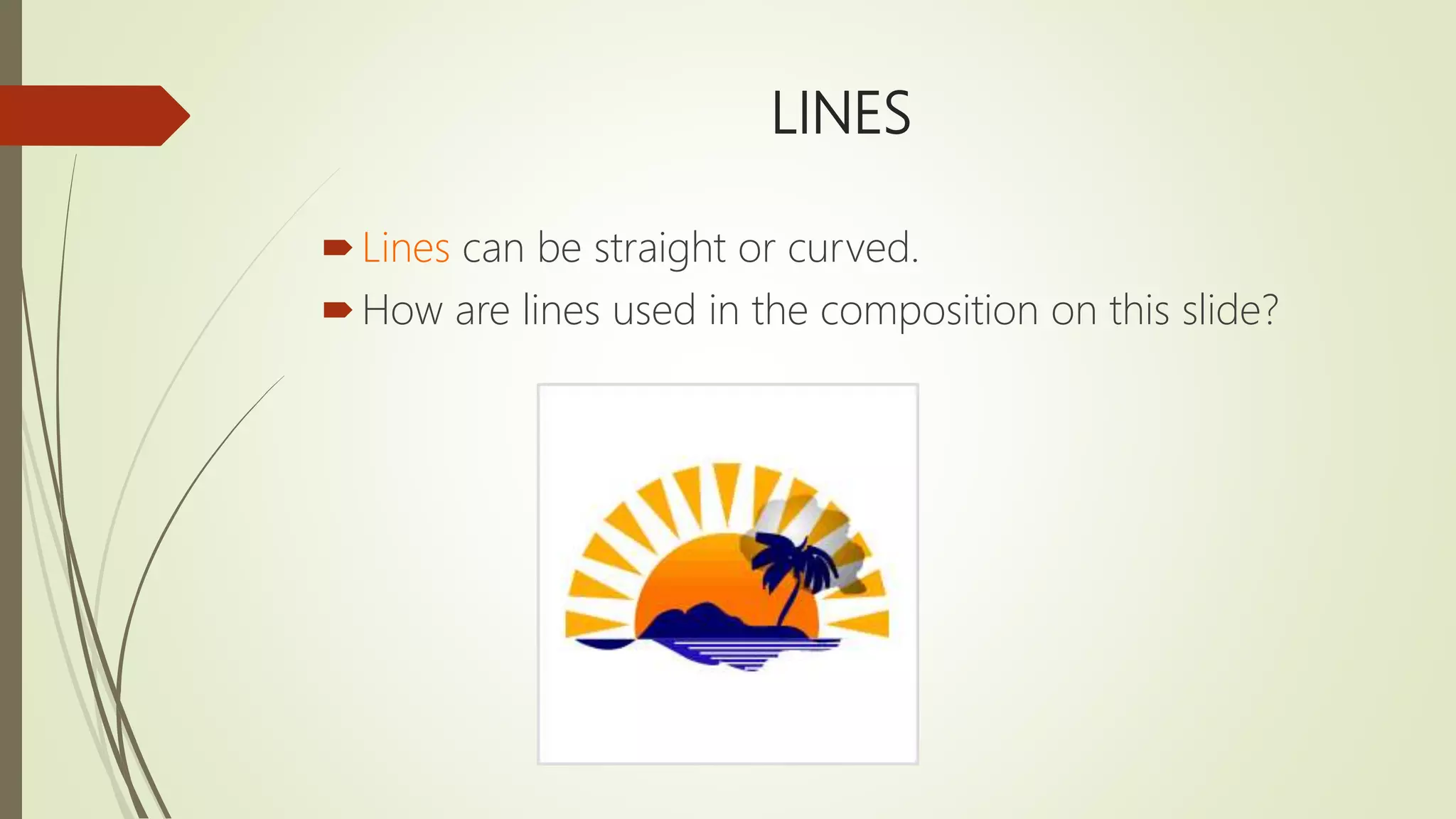
LINES
Lines can be straight or curved.
How are lines used in the composition on this slide?
COLOR DEFINITIONS
Hue is another word for color.
Chroma is the intensity or purity of color.
Tint is a color mixed with white.
Tone is a color mixed with gray.
Shade is a color mixed with black.
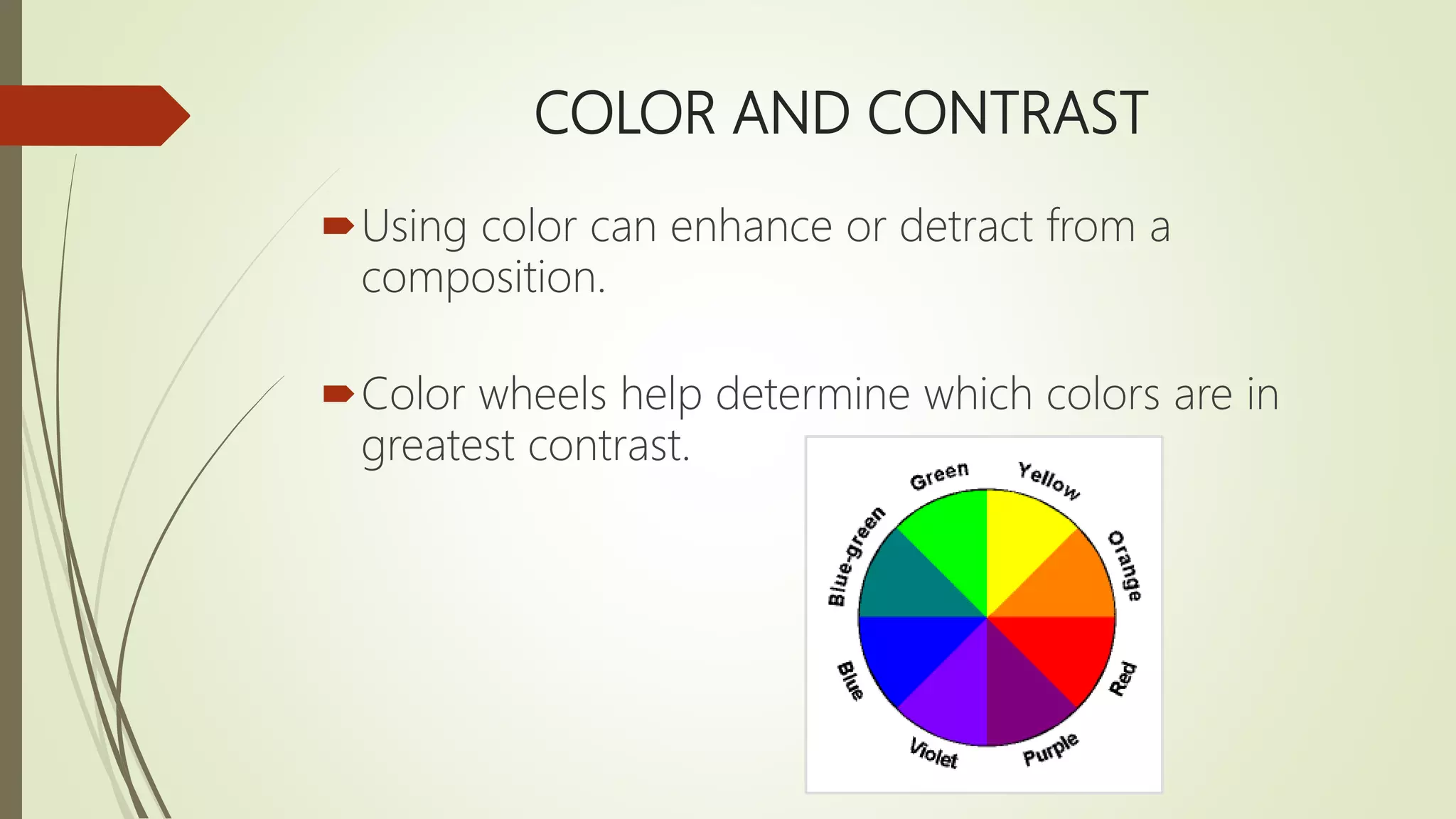
COLOR AND CONTRAST
Using color can enhance or detract from a
composition.
Color wheels help determine which colors are in
greatest contrast.
COLOR IN DESIGN
Use color to label or show hierarchy.
Use color to represent or imitate reality.
Use color to unify, separate, or emphasize.
Use color to decorate.
Use color consistently
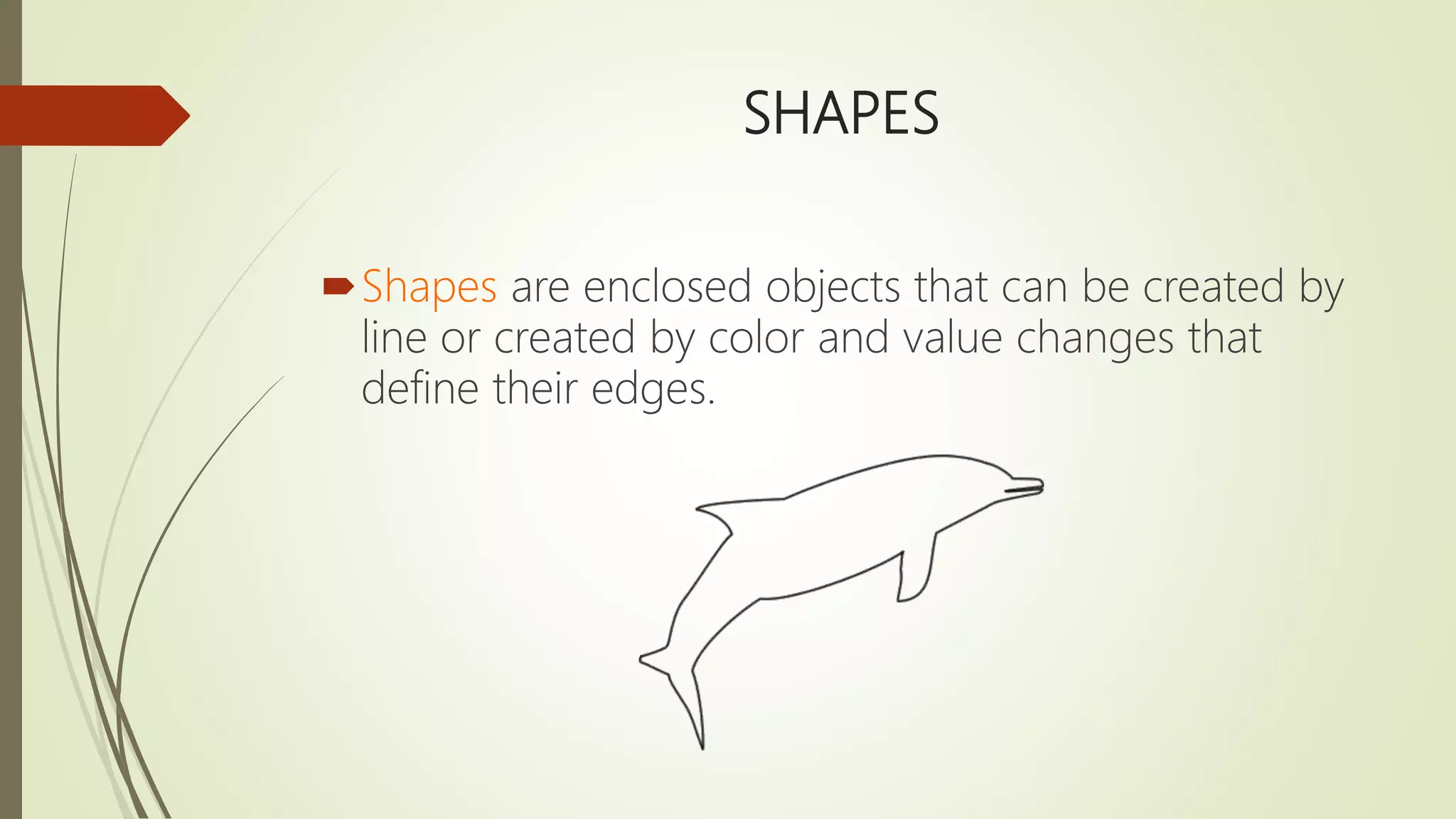
SHAPES
Shapes are enclosed objects that can be created by
line or created by color and value changes that
define their edges.
TEXTURE
Texture is the surface look of an object created by
varying dark and light areas.
Roughness
Smoothness
Depth
GRAPHIC DESIGN PRINCIPLES
Graphic design principles are ways in which
elements are used together.
Movement
Balance
Emphasis
Unity
MOVEMENT
Movement is the use of lines, color, and repetition
to create the illusion of motion.
Curved forms or lines
Repetition of geometric forms
Fuzzy lines or outlines
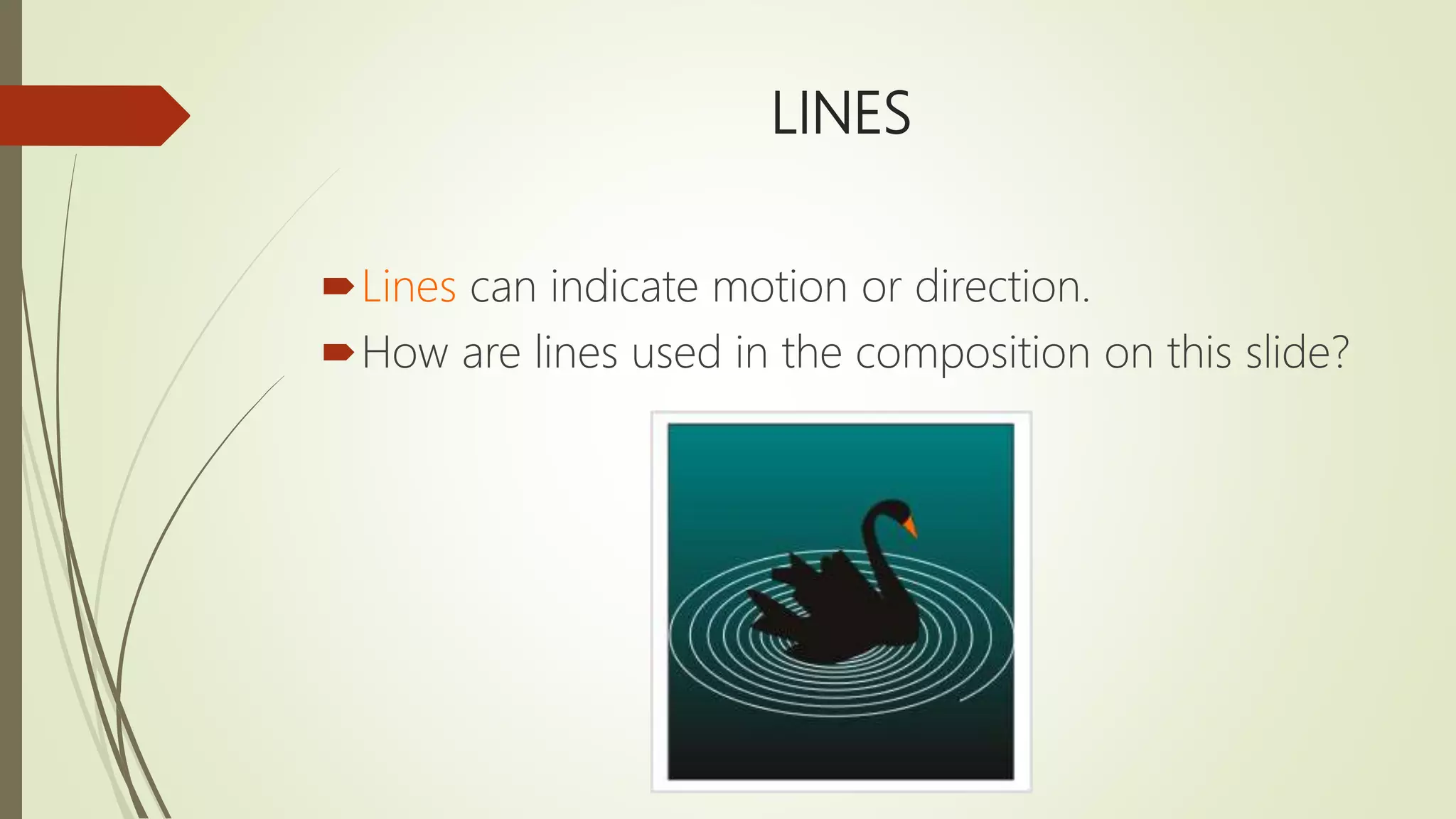
LINES
Lines can indicate motion or direction.
How are lines used in the composition on this slide?
BALANCE
Balance is the act of comparing or estimating two
things, one against the other, and the contrast
between:
Empty space (white space) and filled space
Text and images
Color and no colors and different colors
Textures against flat colors
BALANCE IN COMPOSITION
There are three different types of balance when
using color, shape, and position:
Symmetry
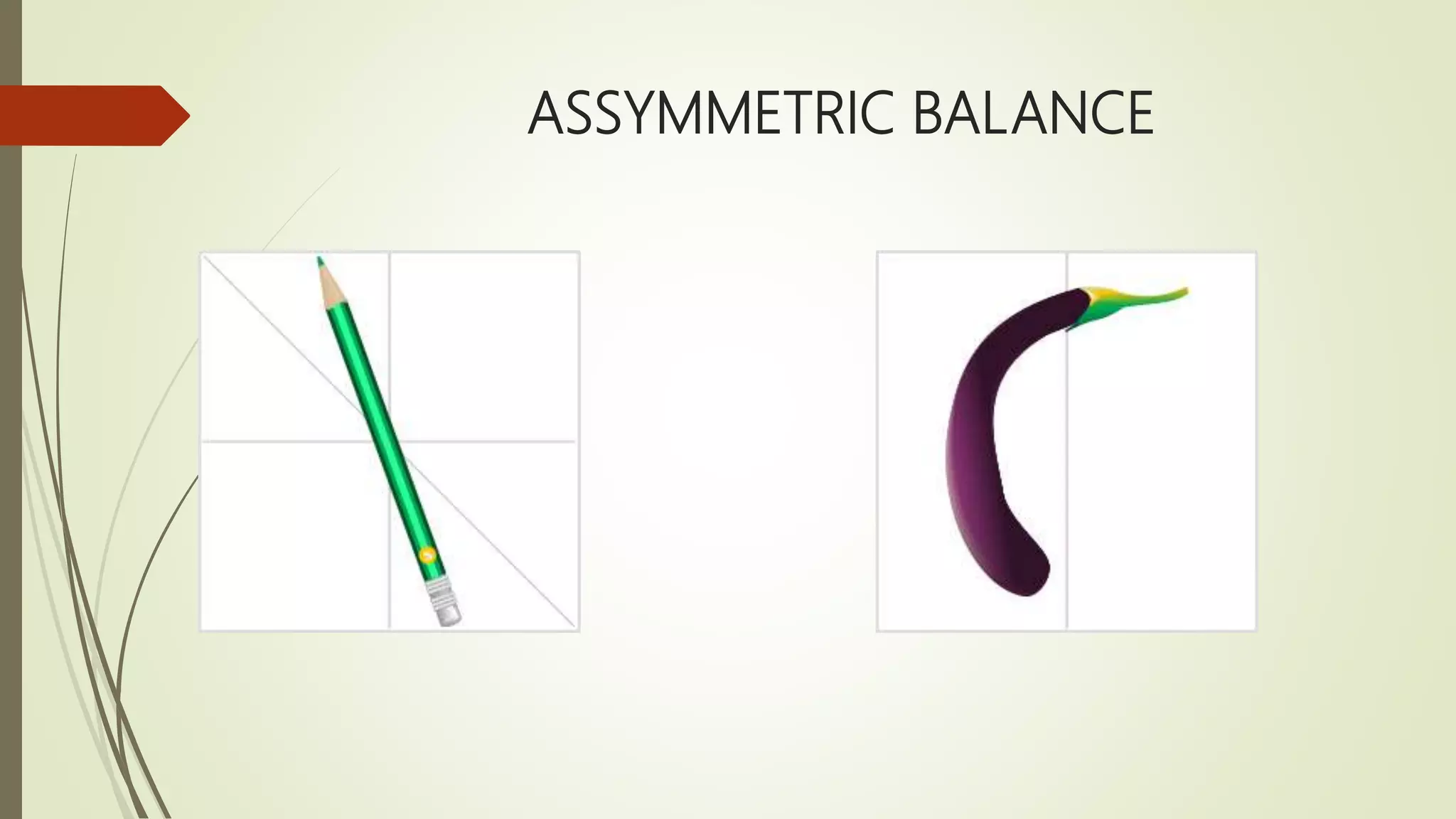
Asymmetry
Radial symmetry
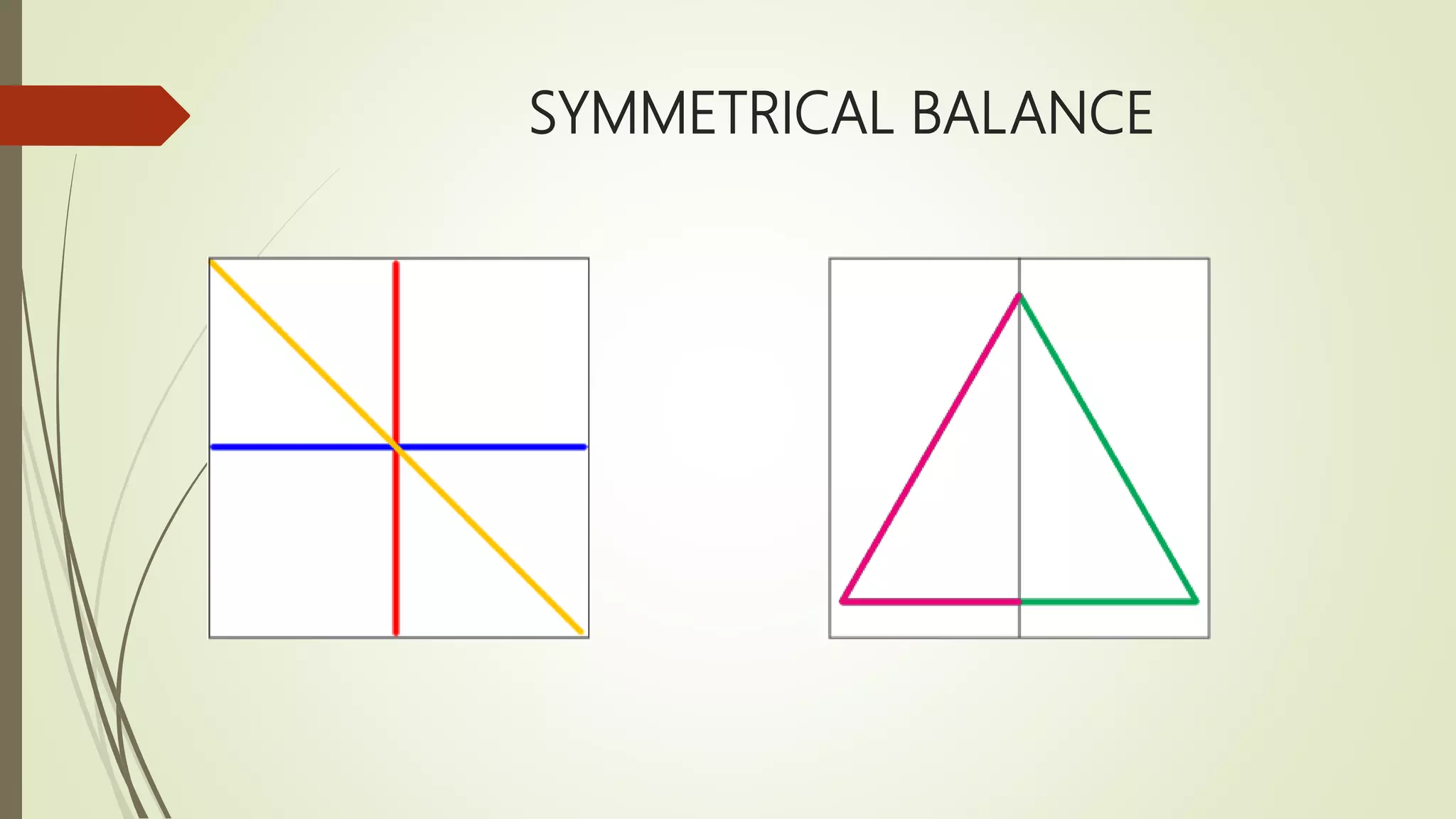
SYMMETRICAL BALANCE
ASSYMMETRIC BALANCE
UNITY
Unity: The correct balance of composition or color
that produces a harmonious effect.
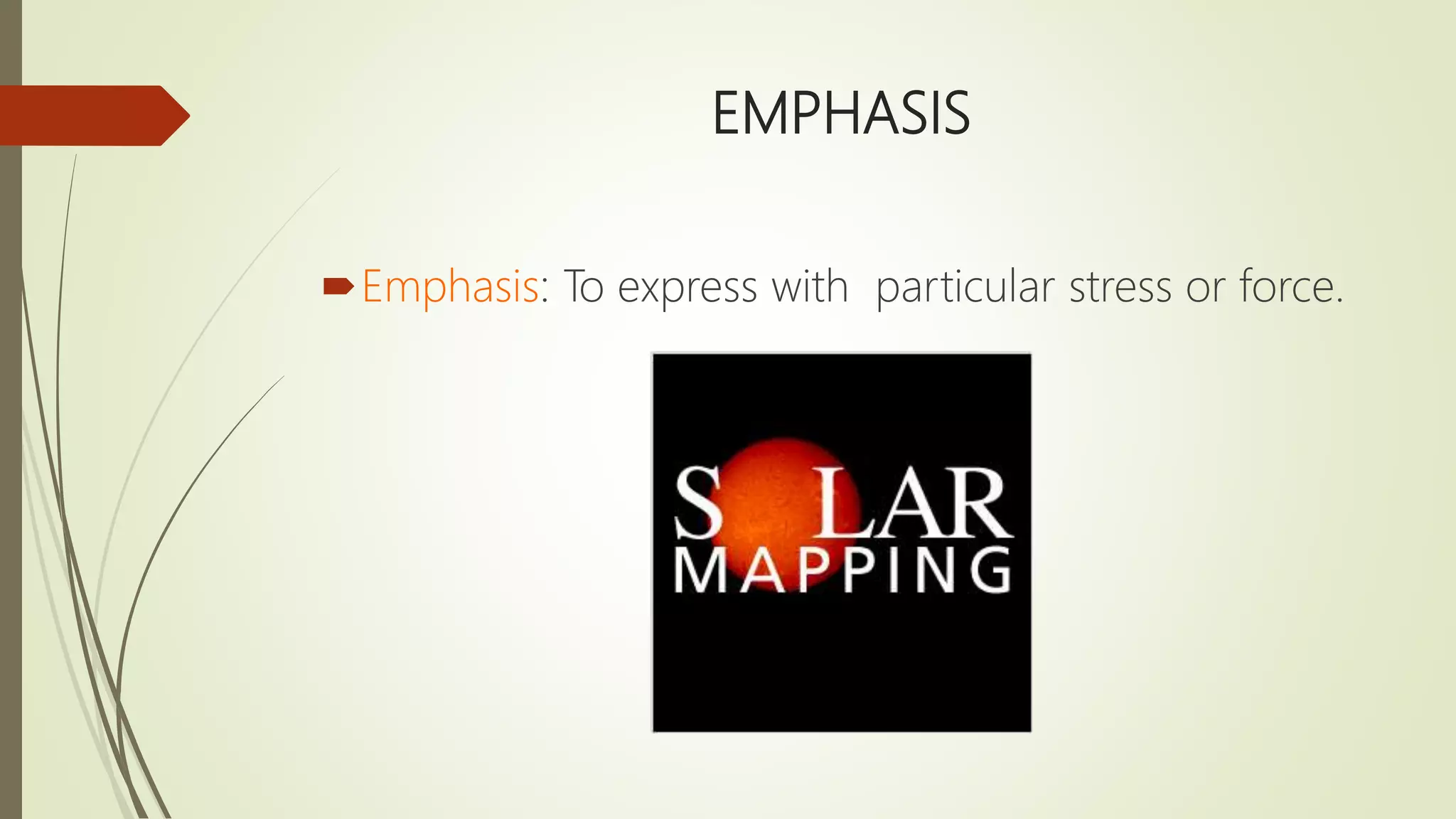
EMPHASIS
Emphasis: To express with particular stress or force.
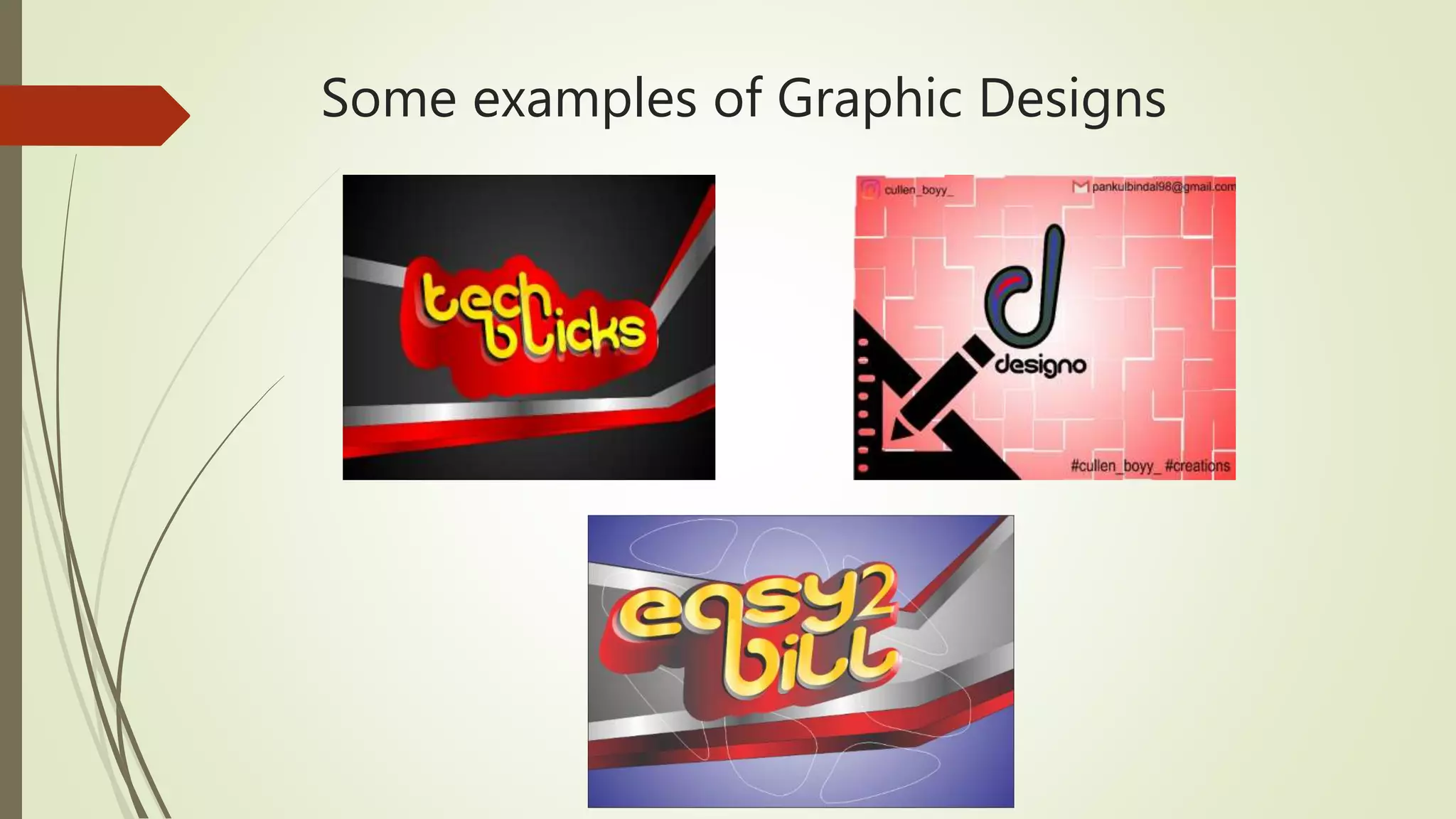
Some examples of Graphic Designs
SUMMARY
The basis of good graphic design is use of design
elements and their thoughtful application in the
form of design principles.
Clearly identify what you are trying to accomplish
— use design to convey your message.
Brainstorm alternatives.
An Introduction to graphic design

An Introduction to graphic design

  • 1.
    INTRODUCTION TO GRAPHIC DESIGN MOVEMENT,BALANCE, CONTRAST, EMPHASIS, LINE, AND COLOR Made by- Pankul Bindal Diploma in Computer Engg. (Designer & Programmer)
  • 2.
    GRAPHIC DESIGN Graphic designis the process of visual communication and problem-solving using one or more of typography, photography and illustration. The field is considered a subset of visual communication and communication design
  • 3.
    USE OF GRAPHICDESIGN Common uses of graphic design include corporate design (logos and branding), editorial design (magazines, newspapers and books), way finding or environmental design, advertising, web design, communication design, product packaging and signage.
  • 4.
    Graphic design elements Graphicdesign elements are the building blocks of graphics. Line Color Shape Texture
  • 5.
    LINES Lines can bestraight or curved. How are lines used in the composition on this slide?
  • 6.
    COLOR DEFINITIONS Hue isanother word for color. Chroma is the intensity or purity of color. Tint is a color mixed with white. Tone is a color mixed with gray. Shade is a color mixed with black.
  • 7.
    COLOR AND CONTRAST Usingcolor can enhance or detract from a composition. Color wheels help determine which colors are in greatest contrast.
  • 8.
    COLOR IN DESIGN Usecolor to label or show hierarchy. Use color to represent or imitate reality. Use color to unify, separate, or emphasize. Use color to decorate. Use color consistently
  • 9.
    SHAPES Shapes are enclosedobjects that can be created by line or created by color and value changes that define their edges.
  • 10.
    TEXTURE Texture is thesurface look of an object created by varying dark and light areas. Roughness Smoothness Depth
  • 11.
    GRAPHIC DESIGN PRINCIPLES Graphicdesign principles are ways in which elements are used together. Movement Balance Emphasis Unity
  • 12.
    MOVEMENT Movement is theuse of lines, color, and repetition to create the illusion of motion. Curved forms or lines Repetition of geometric forms Fuzzy lines or outlines
  • 13.
    LINES Lines can indicatemotion or direction. How are lines used in the composition on this slide?
  • 14.
    BALANCE Balance is theact of comparing or estimating two things, one against the other, and the contrast between: Empty space (white space) and filled space Text and images Color and no colors and different colors Textures against flat colors
  • 15.
    BALANCE IN COMPOSITION Thereare three different types of balance when using color, shape, and position: Symmetry Asymmetry Radial symmetry
  • 16.
  • 17.
  • 18.
    UNITY Unity: The correctbalance of composition or color that produces a harmonious effect.
  • 19.
    EMPHASIS Emphasis: To expresswith particular stress or force.
  • 20.
    Some examples ofGraphic Designs
  • 21.
    SUMMARY The basis ofgood graphic design is use of design elements and their thoughtful application in the form of design principles. Clearly identify what you are trying to accomplish — use design to convey your message. Brainstorm alternatives.