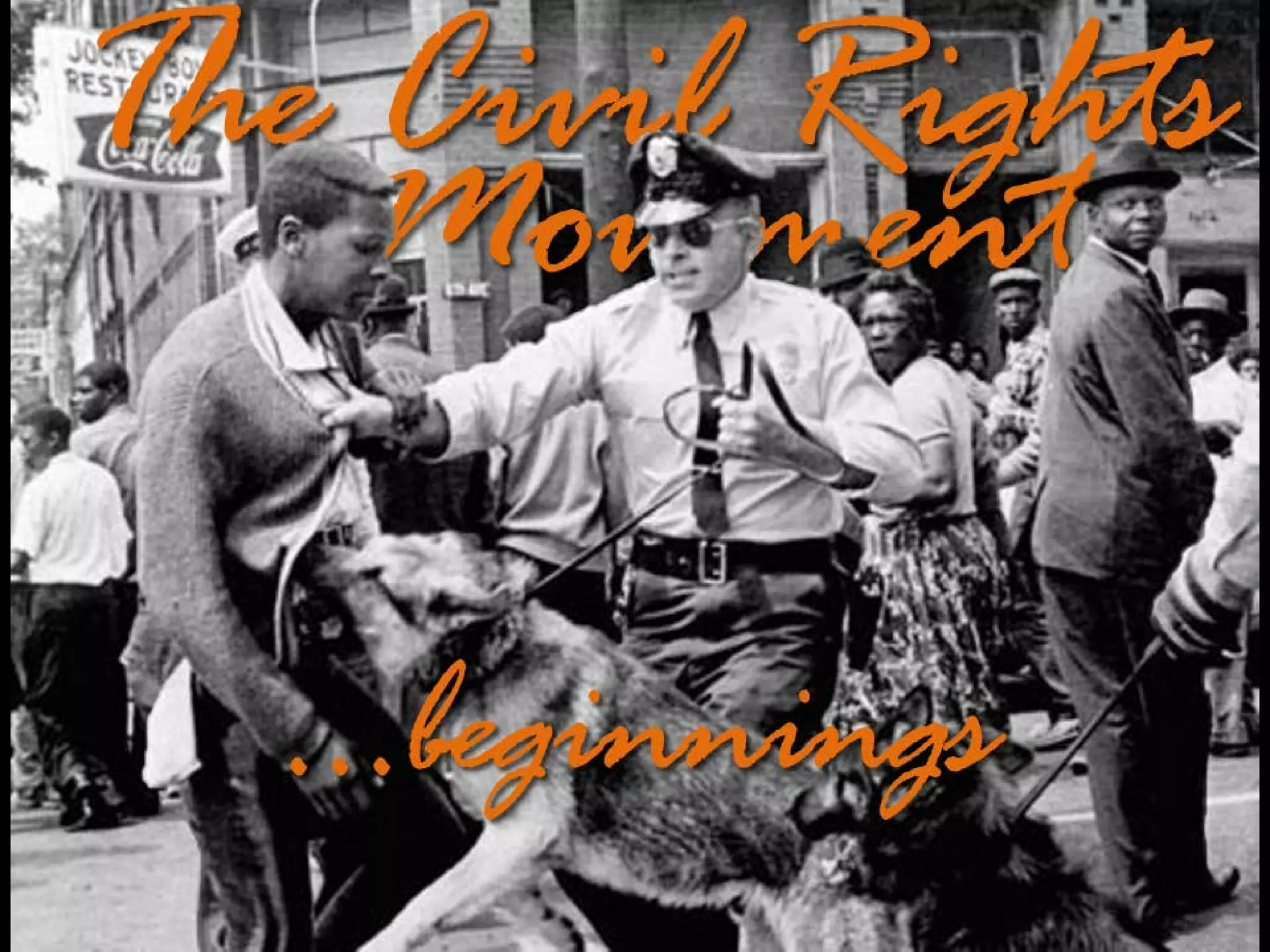

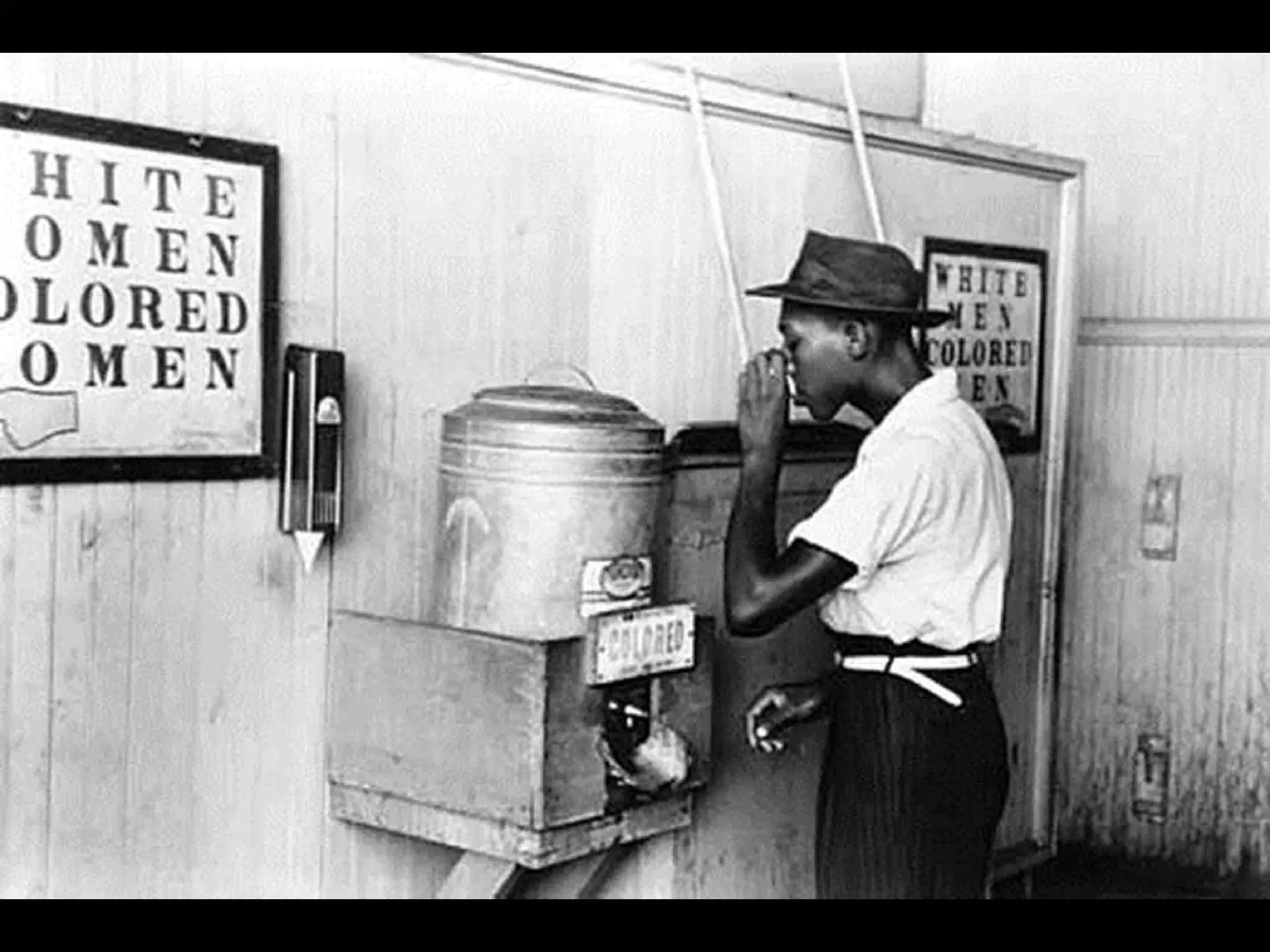
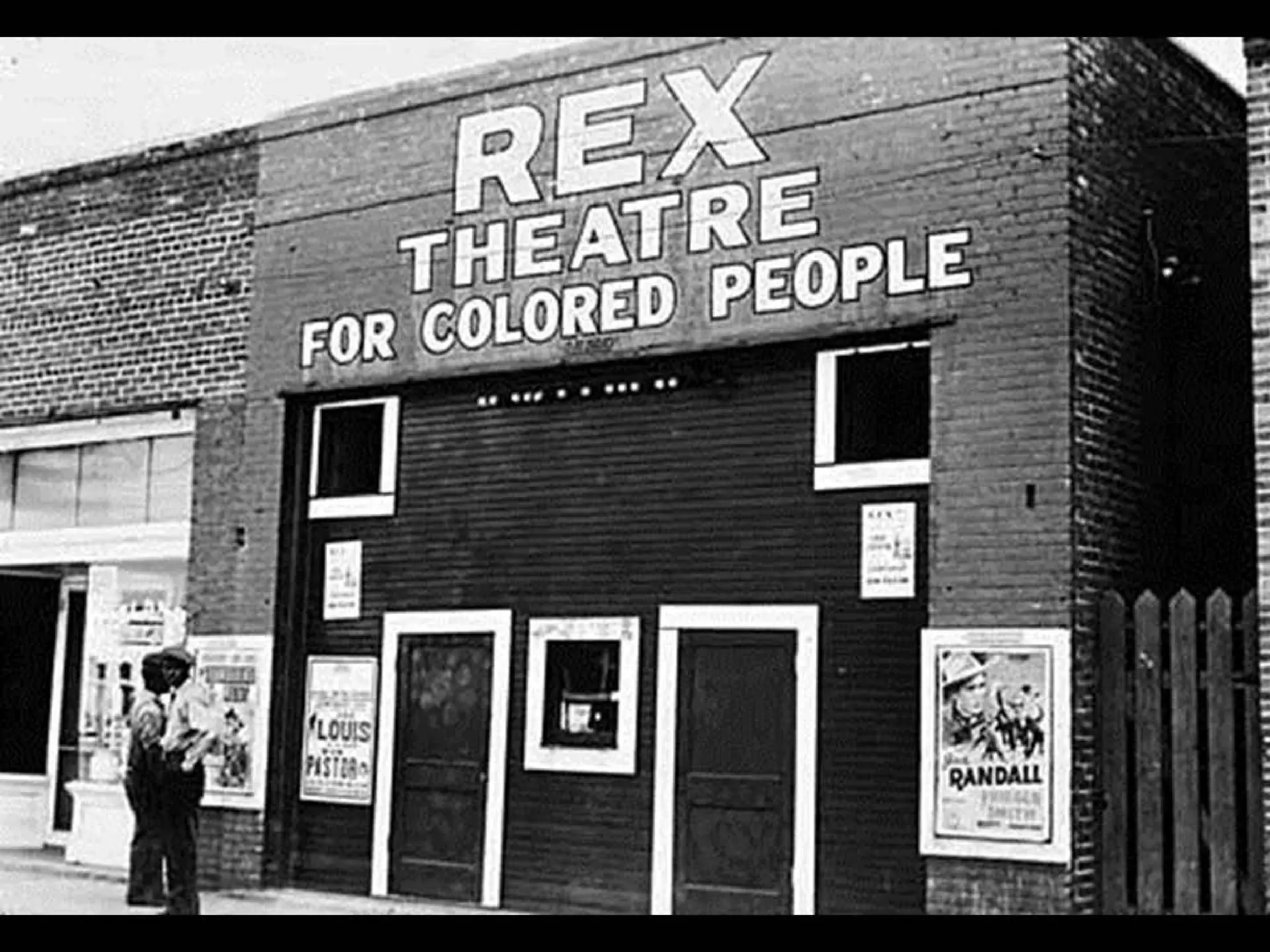










The Civil Rights
Movement
…beginnings
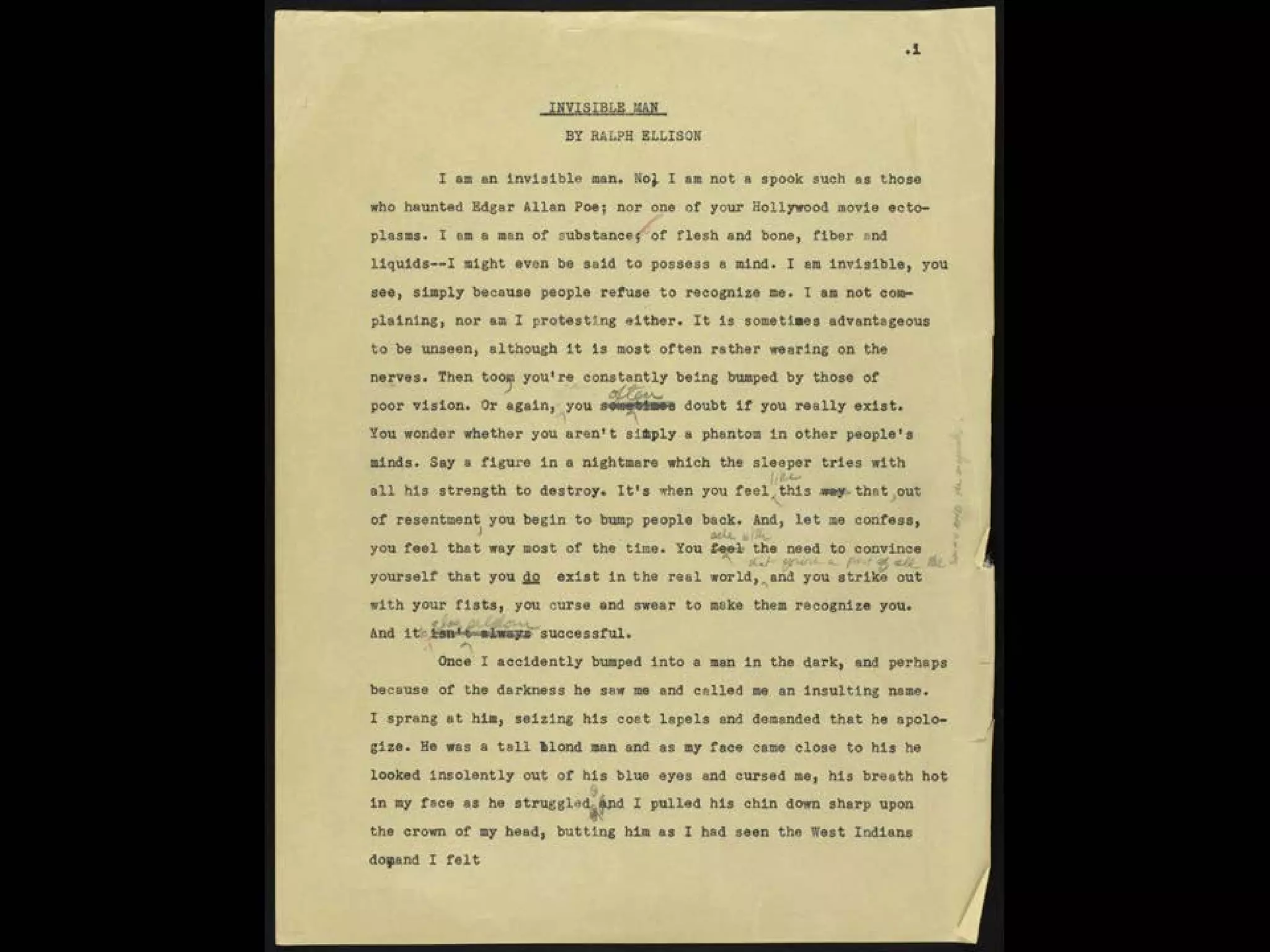
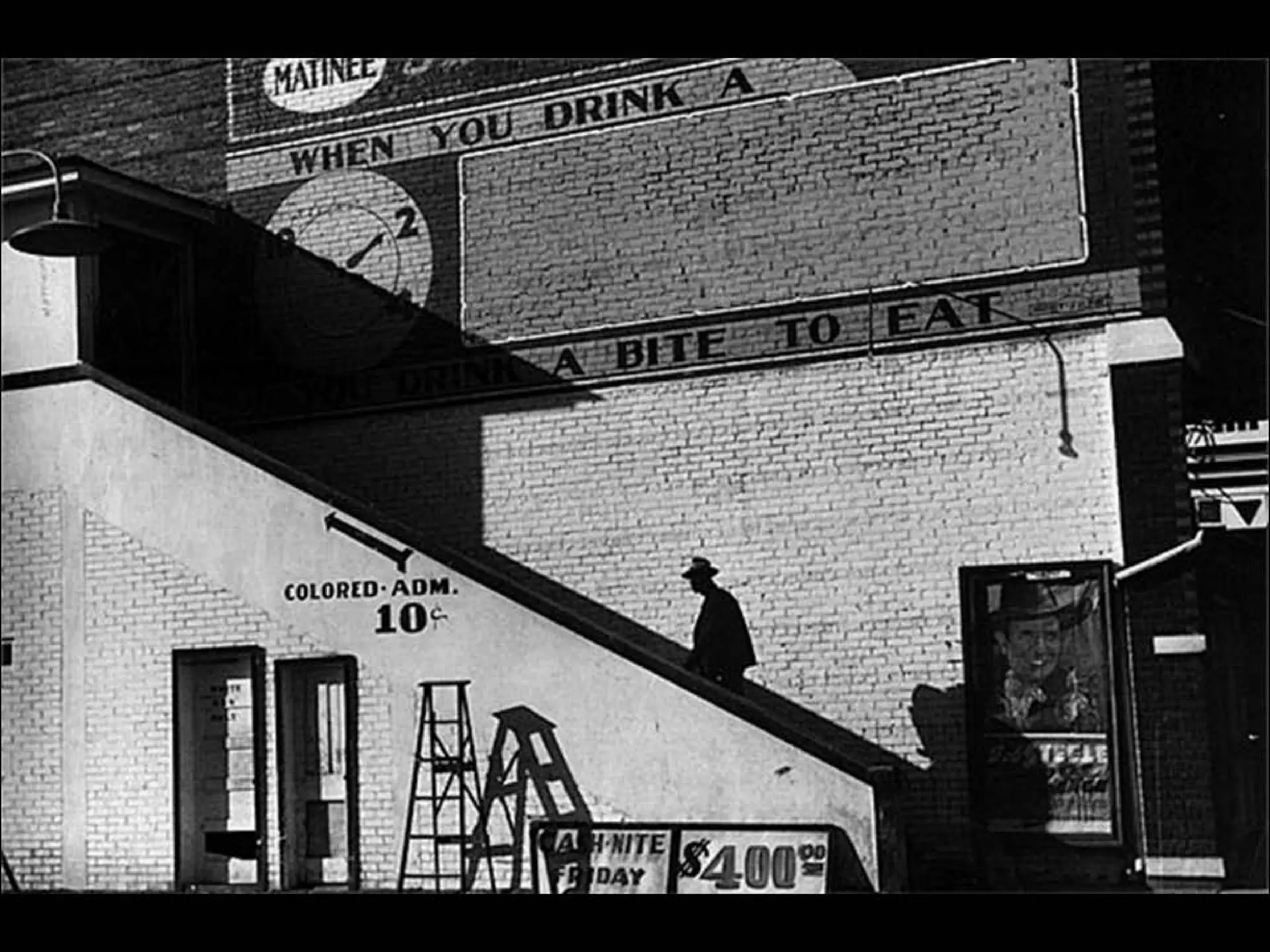
“I am an
“invisible man.
“No, I am not a spook like those who
“ haunted Edgar Allan Poe; nor am I
“ one of your Hollywood ectoplasms.
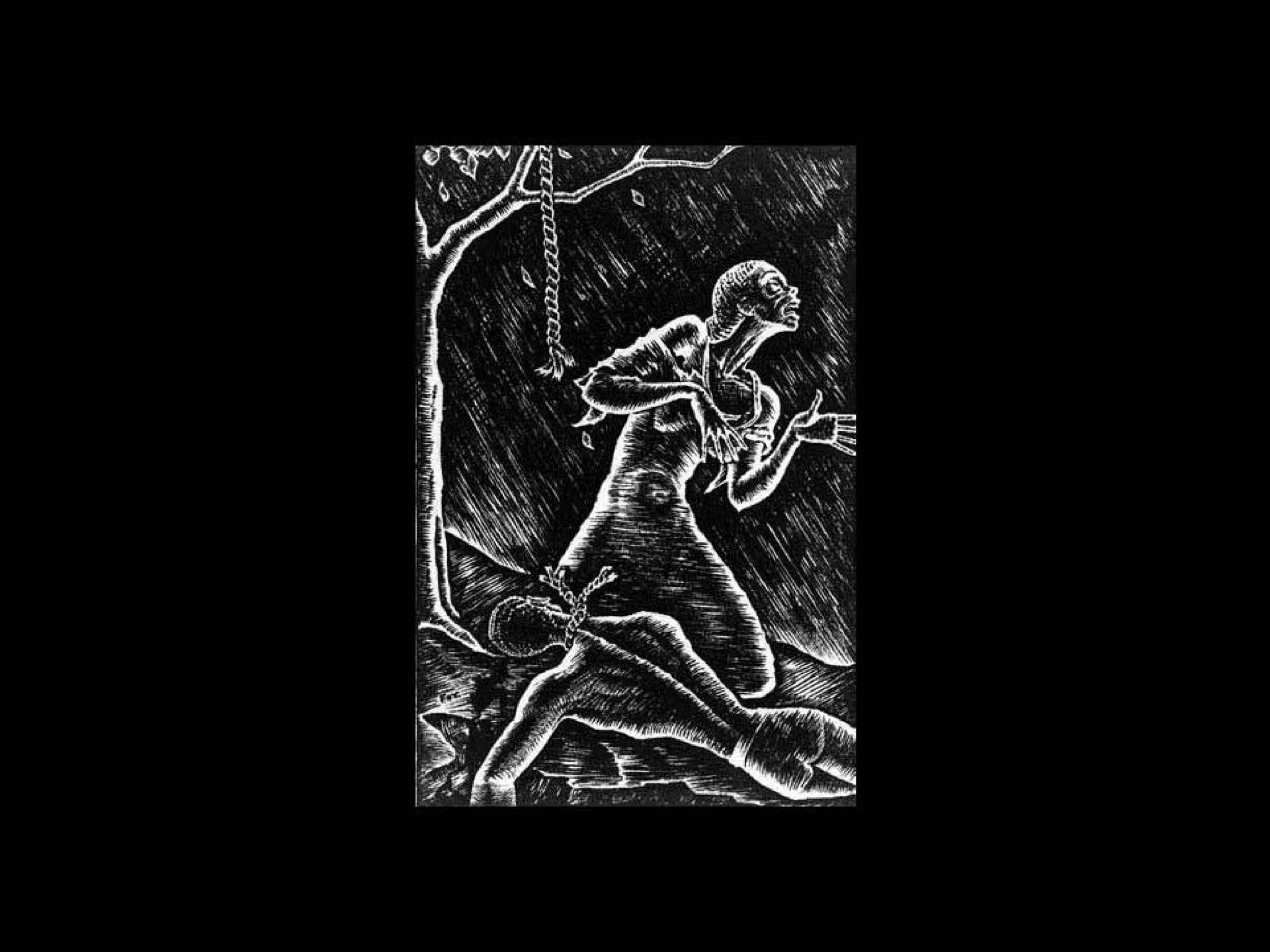
I am a man of substance, of flesh and
bone, and liquids, and I might even be
said to possess a mind.
I am invisible, understand, simply
because people refuse to see me….
When they approach me they see only my
surroundings, themselves, or figments of
their imagination — indeed, everything
and anything except me.
Nor is my invisibility exactly a matter of
biochemical accident to my epidermis.
That invisibility to which I refer occurs
because of a peculiar disposition of the
eyes of those with whom I come into
contact.
A matter of construction of their inner
eyes, those eyes with which they look
through their physical eyes upon reality.
I am not complaining, nor am I
protesting either.
It is sometimes advantageous to be
unseen, although it is most often rather
wearing on the nerves. Then, too, you’re
constantly being bumped against by
those of poor vision.
Or again, you often doubt if you really
exist.
You wonder whether you aren’t simply a
phantom in other people’s minds. Say, a
figure in a nightmare which the sleeper
tries with all his strength to destroy.
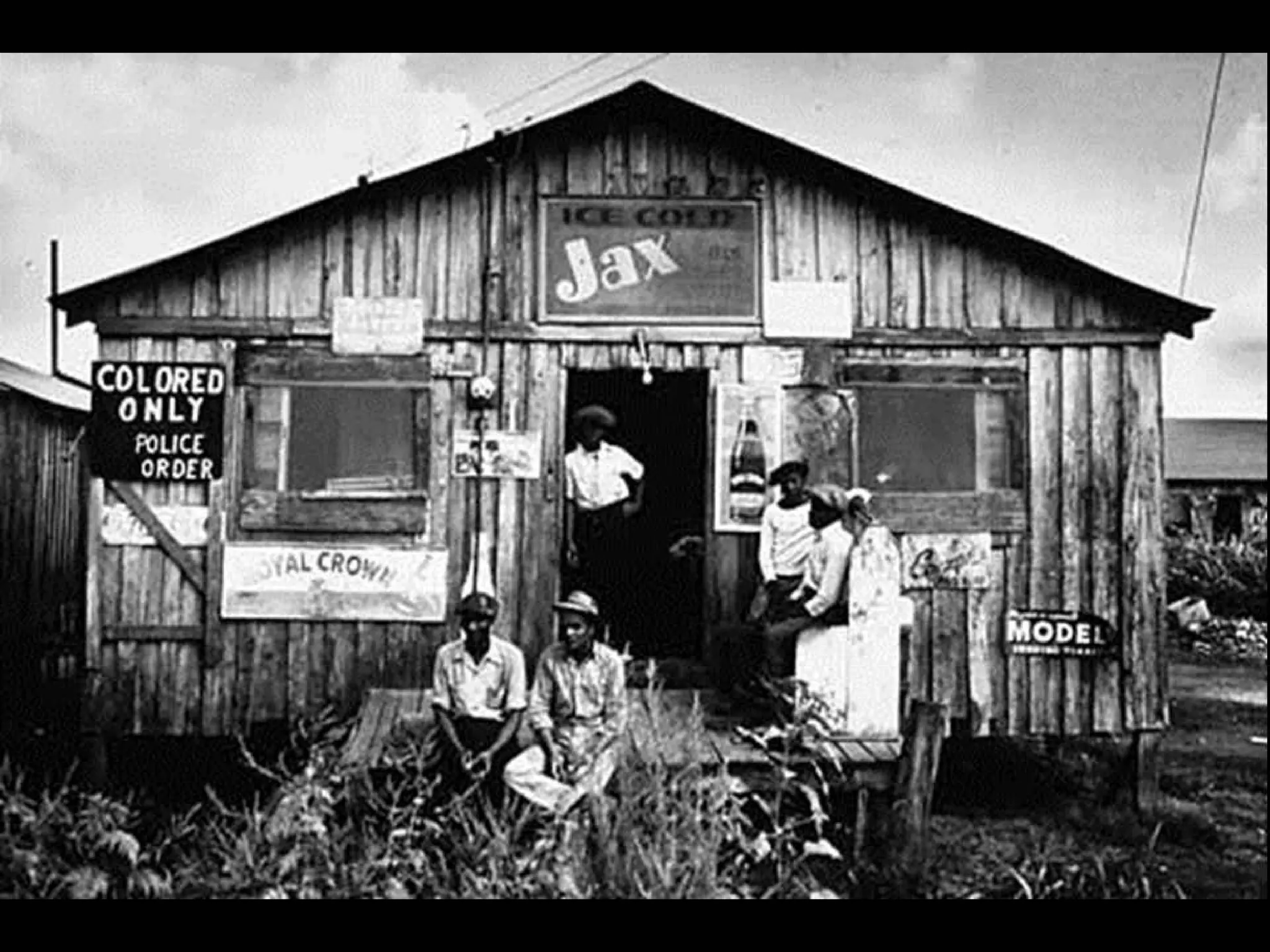
It’s when you feel like this that,
out of resentment,

you begin to
bump people
back.”
It’s when you feel like this that,
out of resentment,

you begin to
bump people
back.”
2 Questions
2 Stories
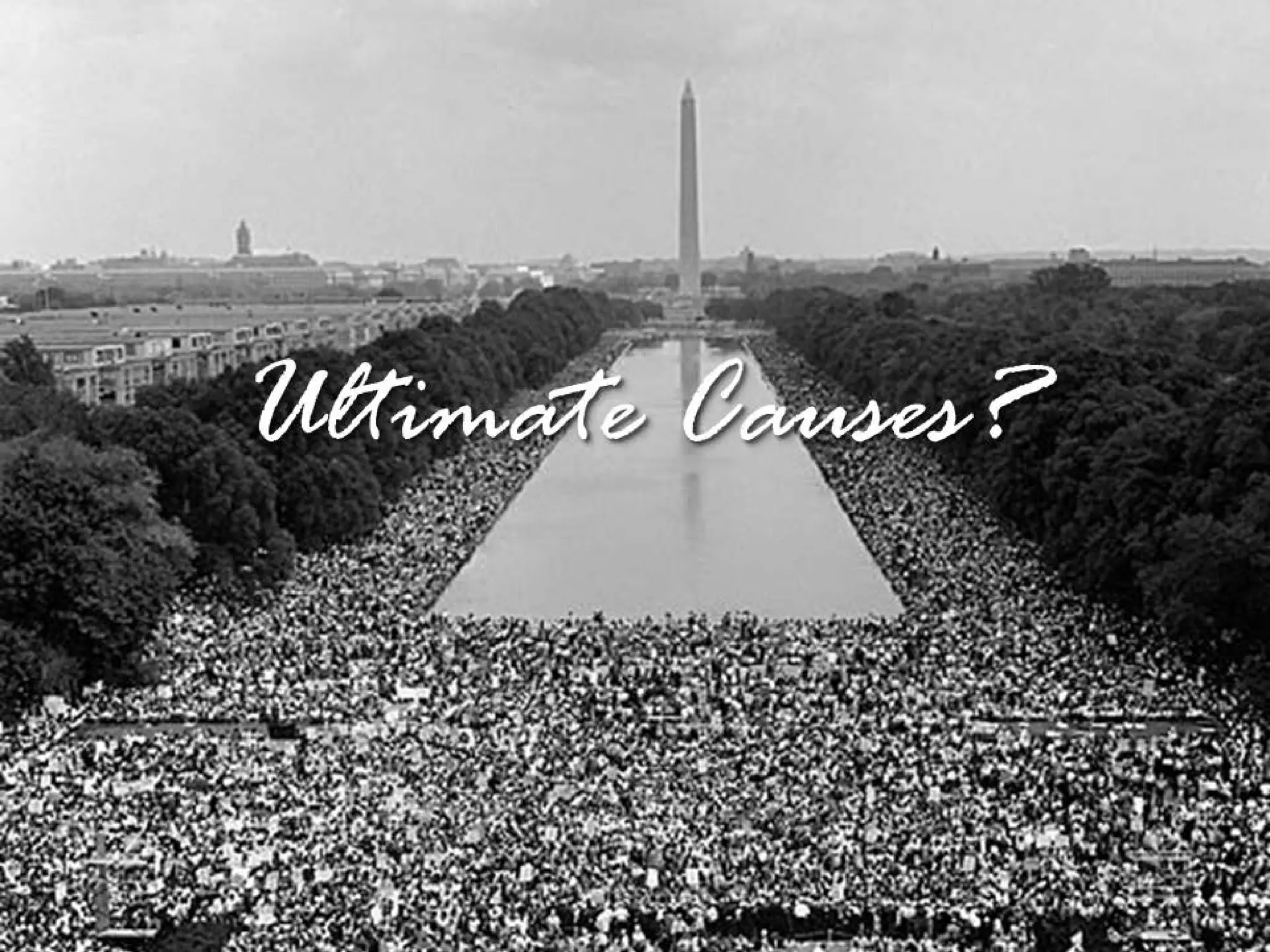
Ultimate Causes?
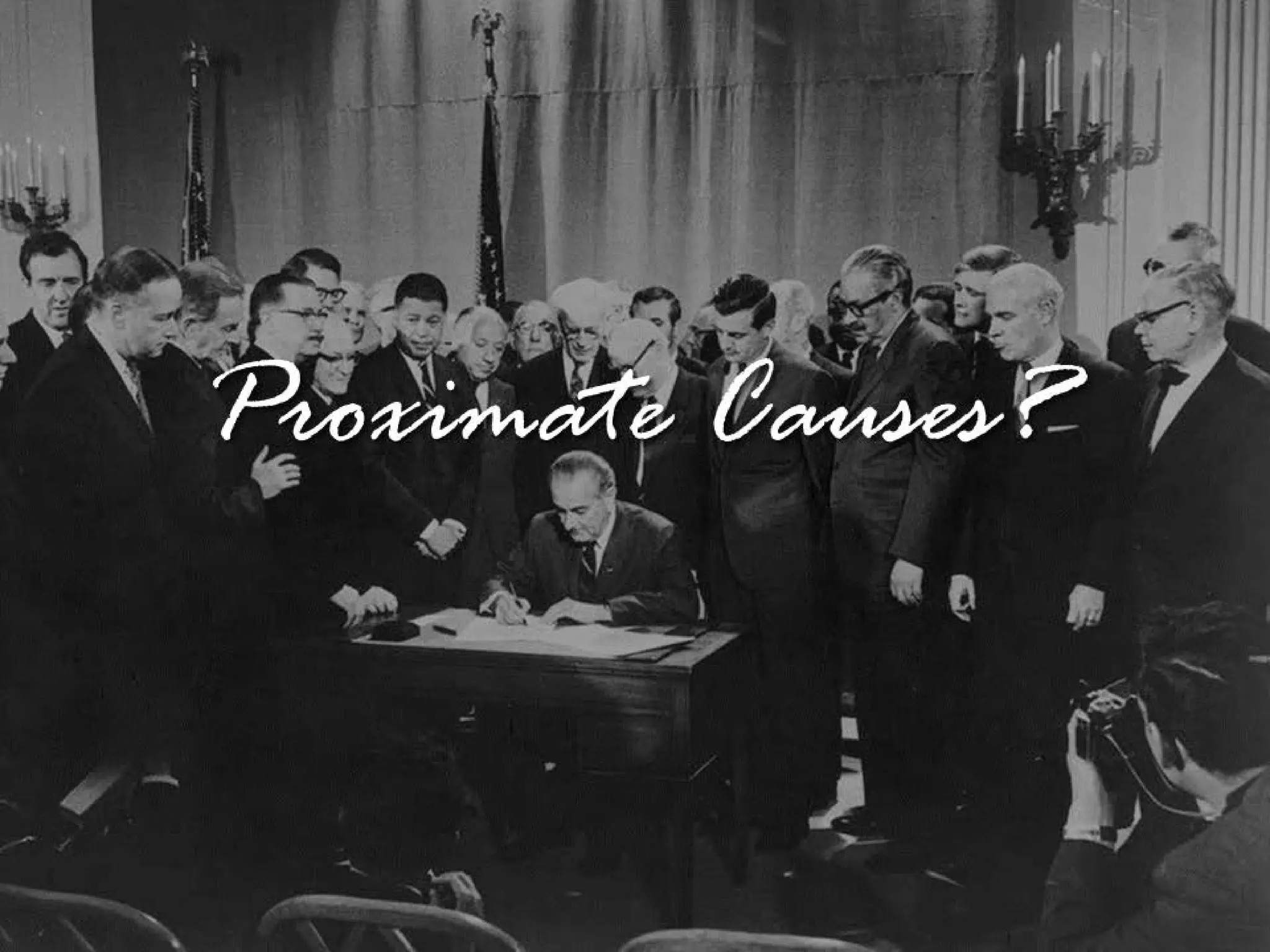
Proximate Causes?
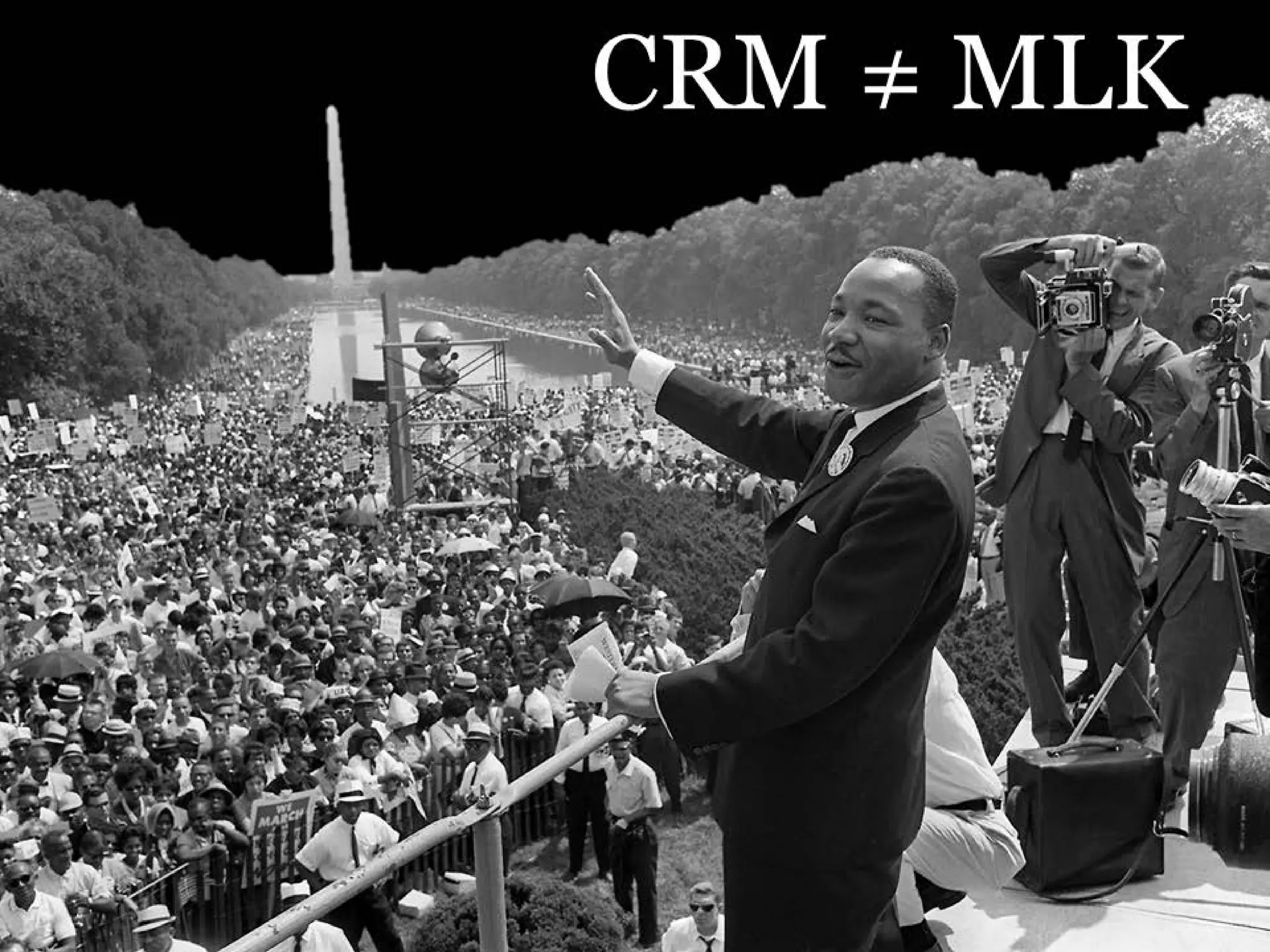
CRM ! MLK
<1>
Ultimate:

Preconditions
for Racial
Change
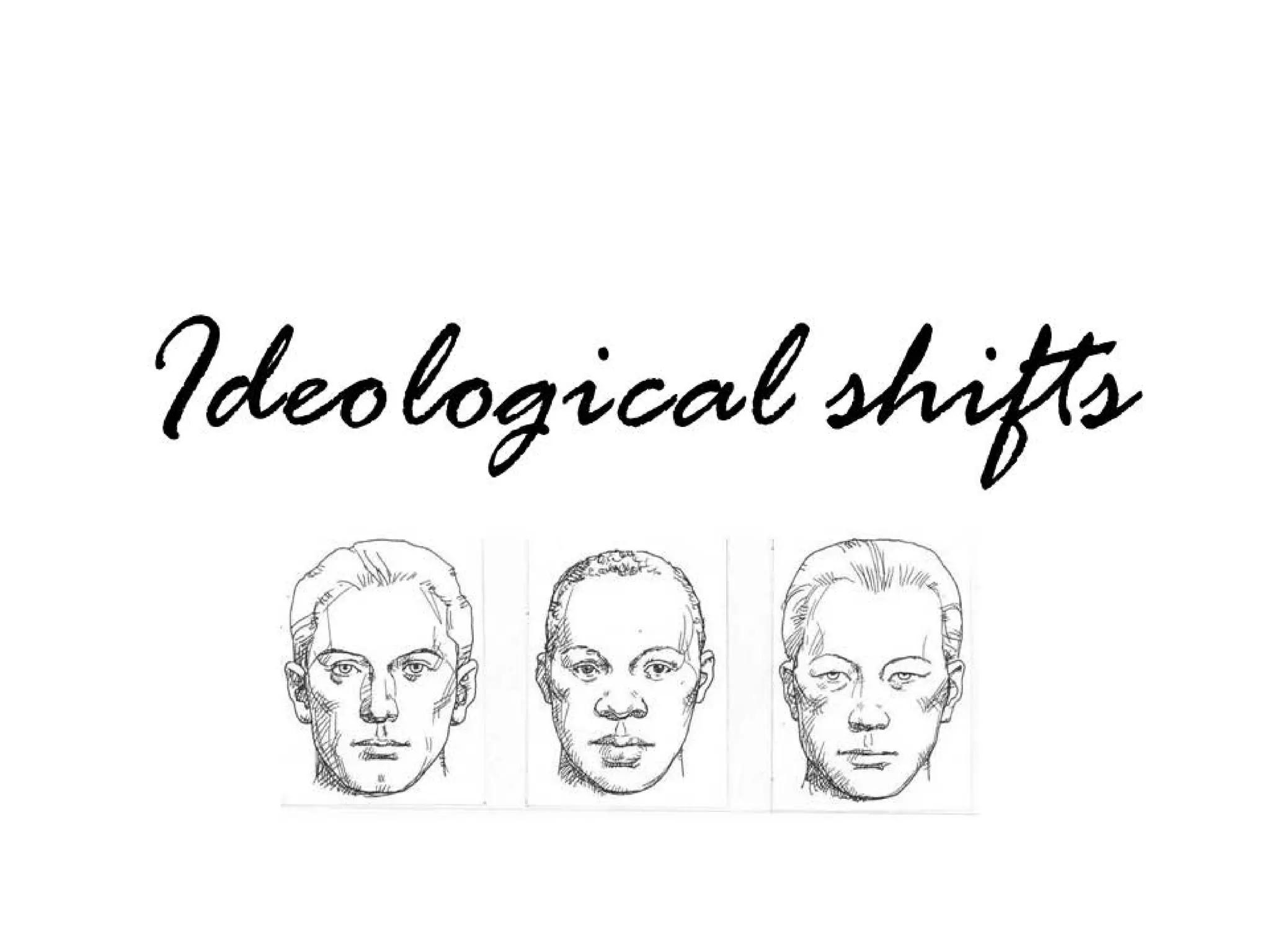
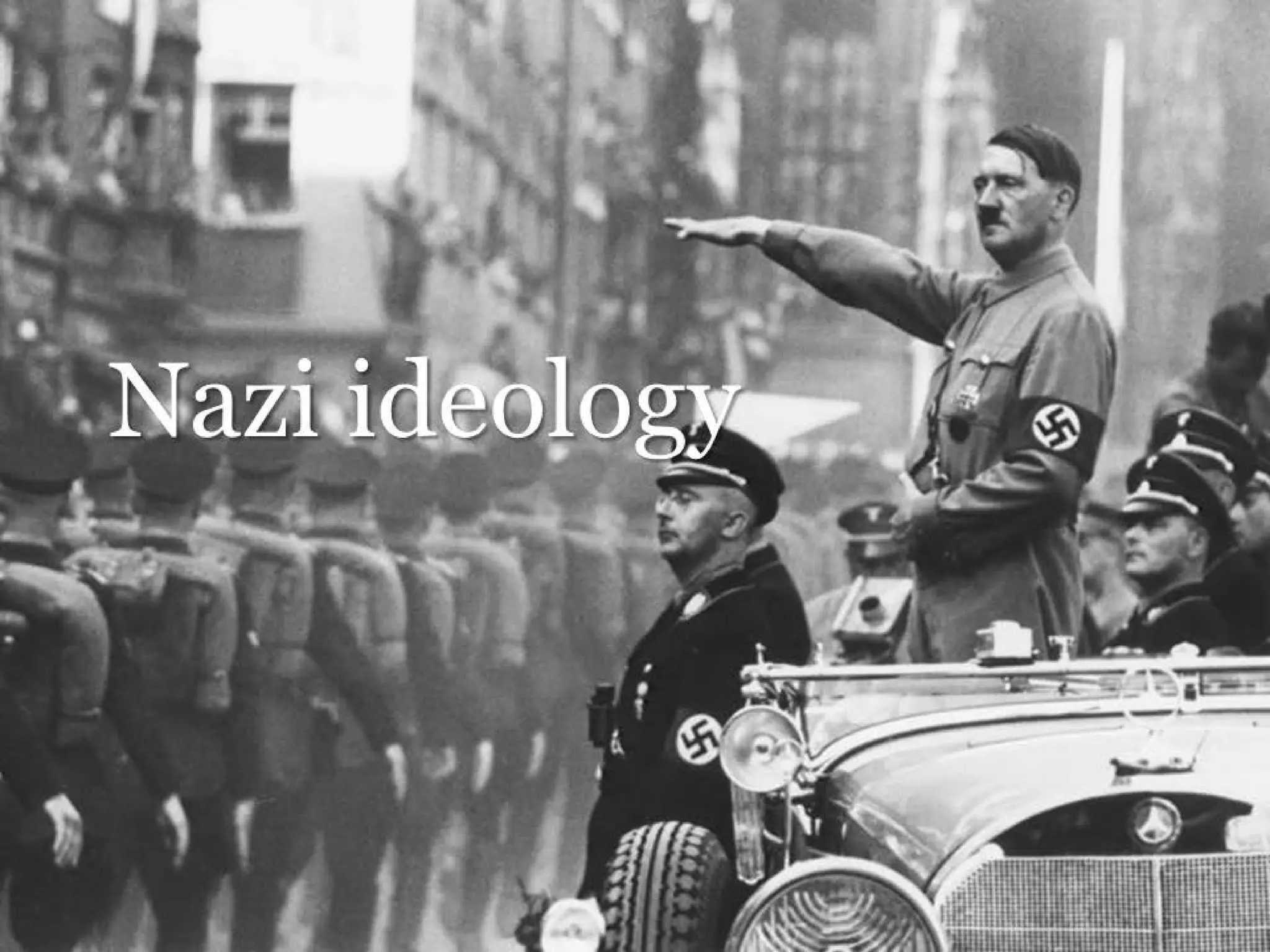
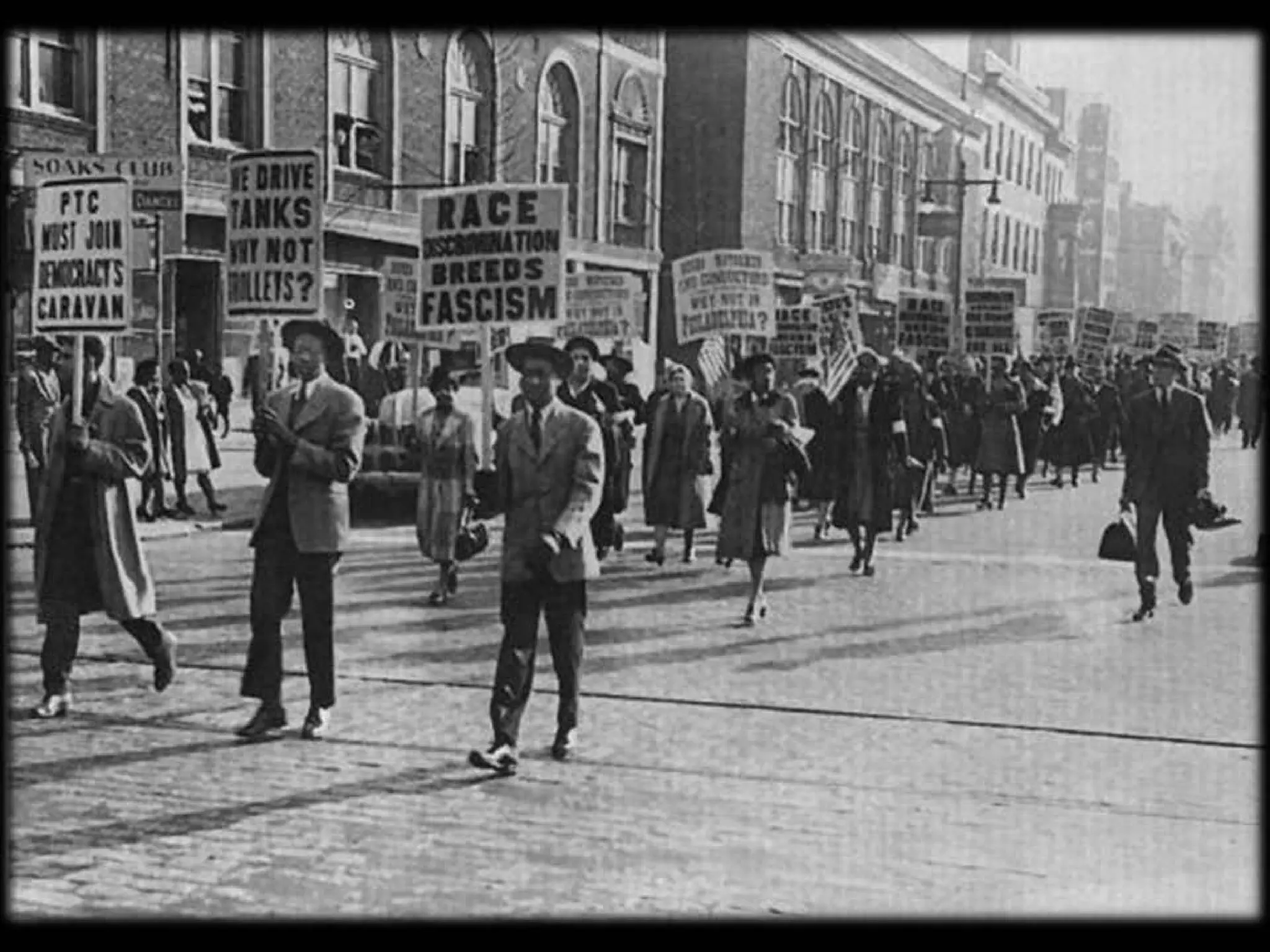
Ideological shifts
Liberal
Environmentalism
Nazi ideology
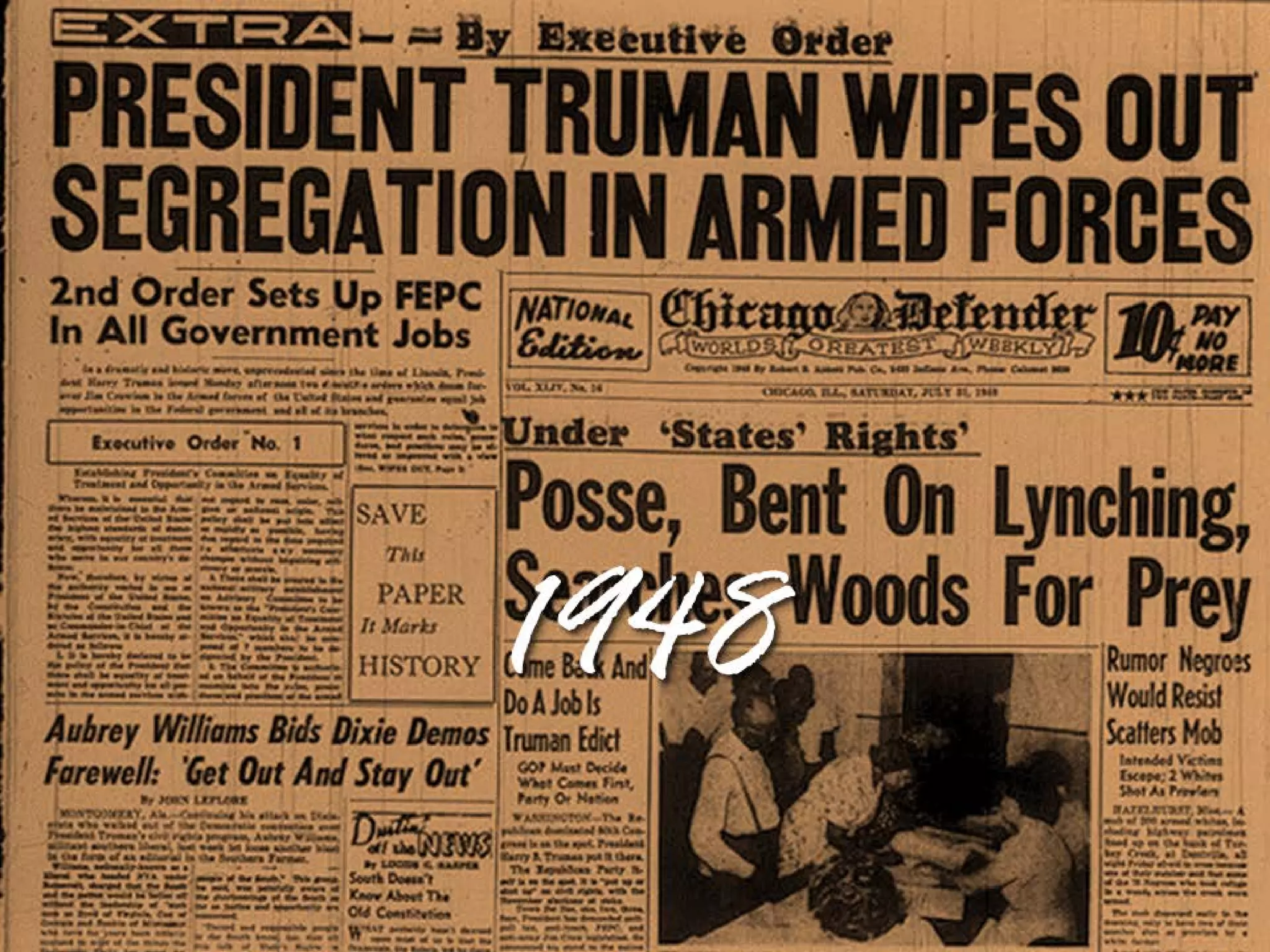
1948
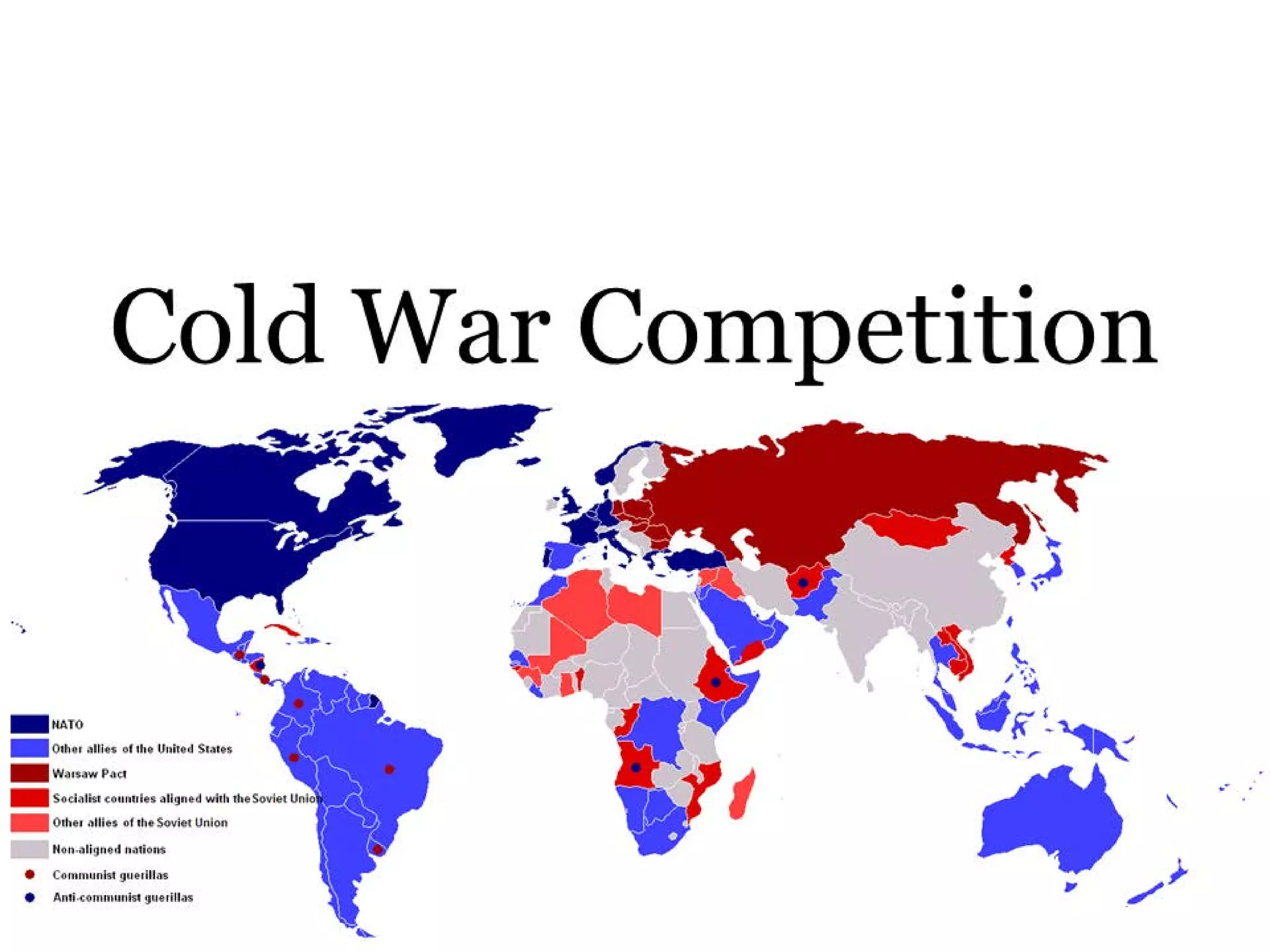
Cold War Competition
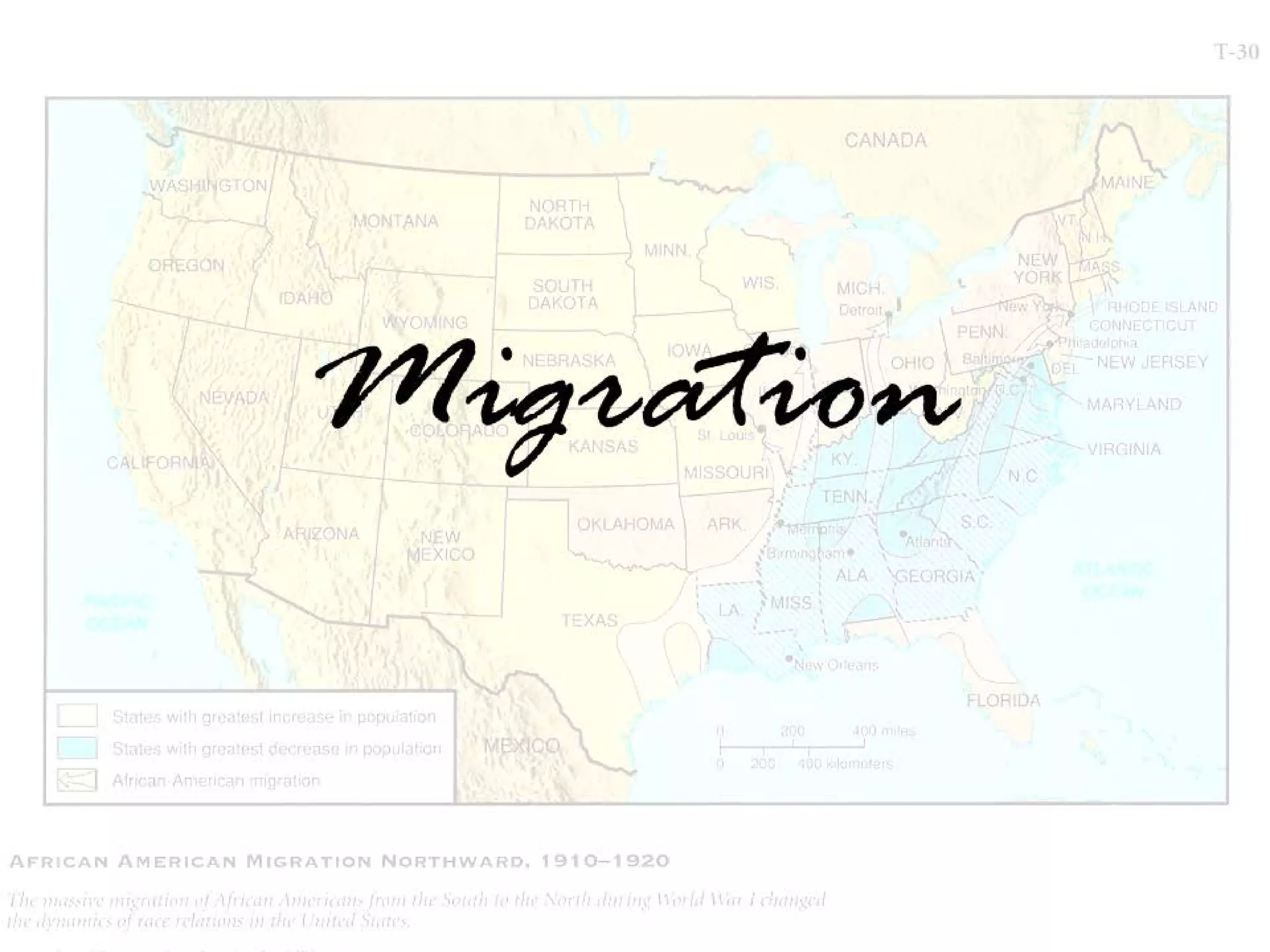
Migration
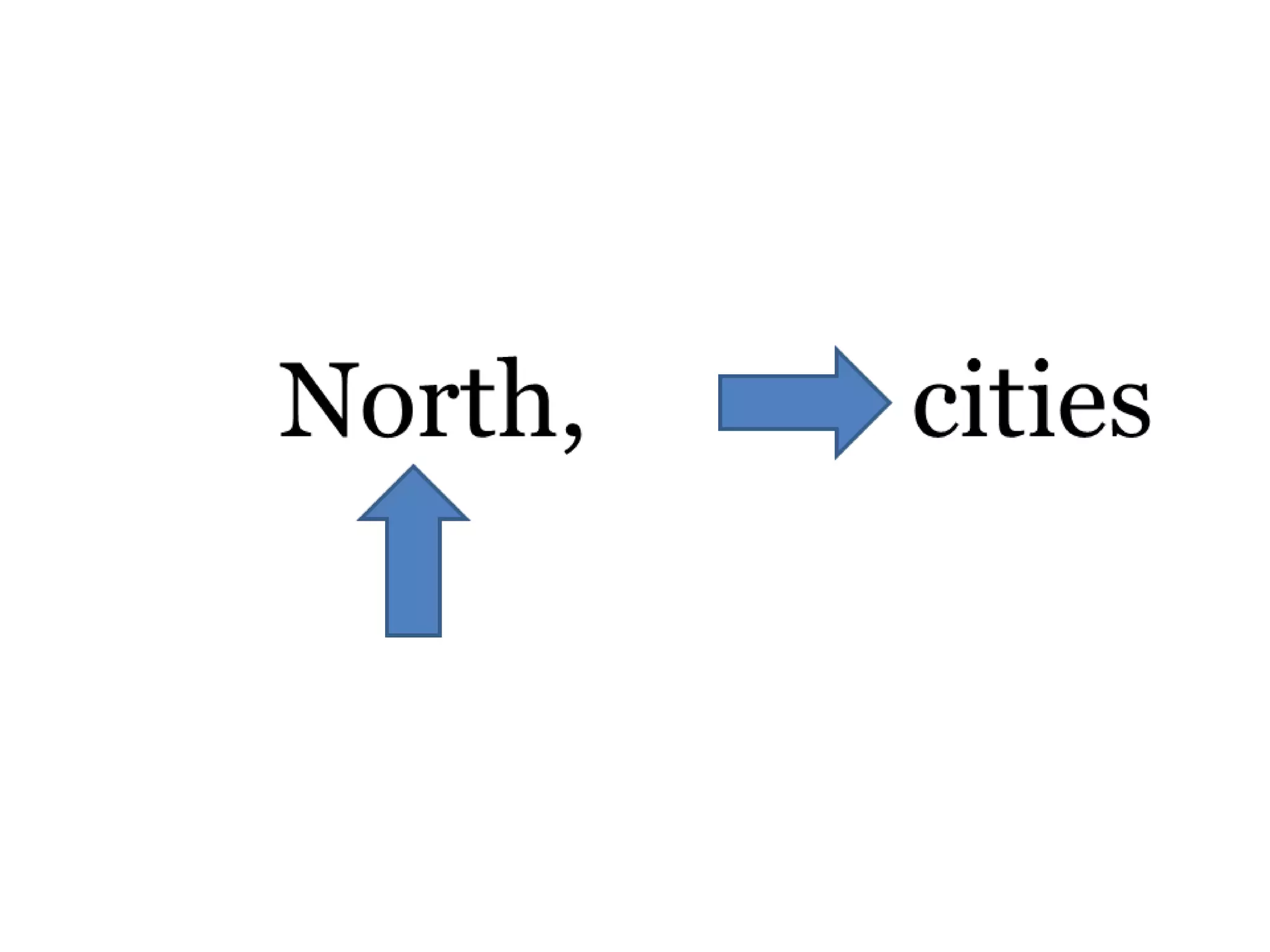
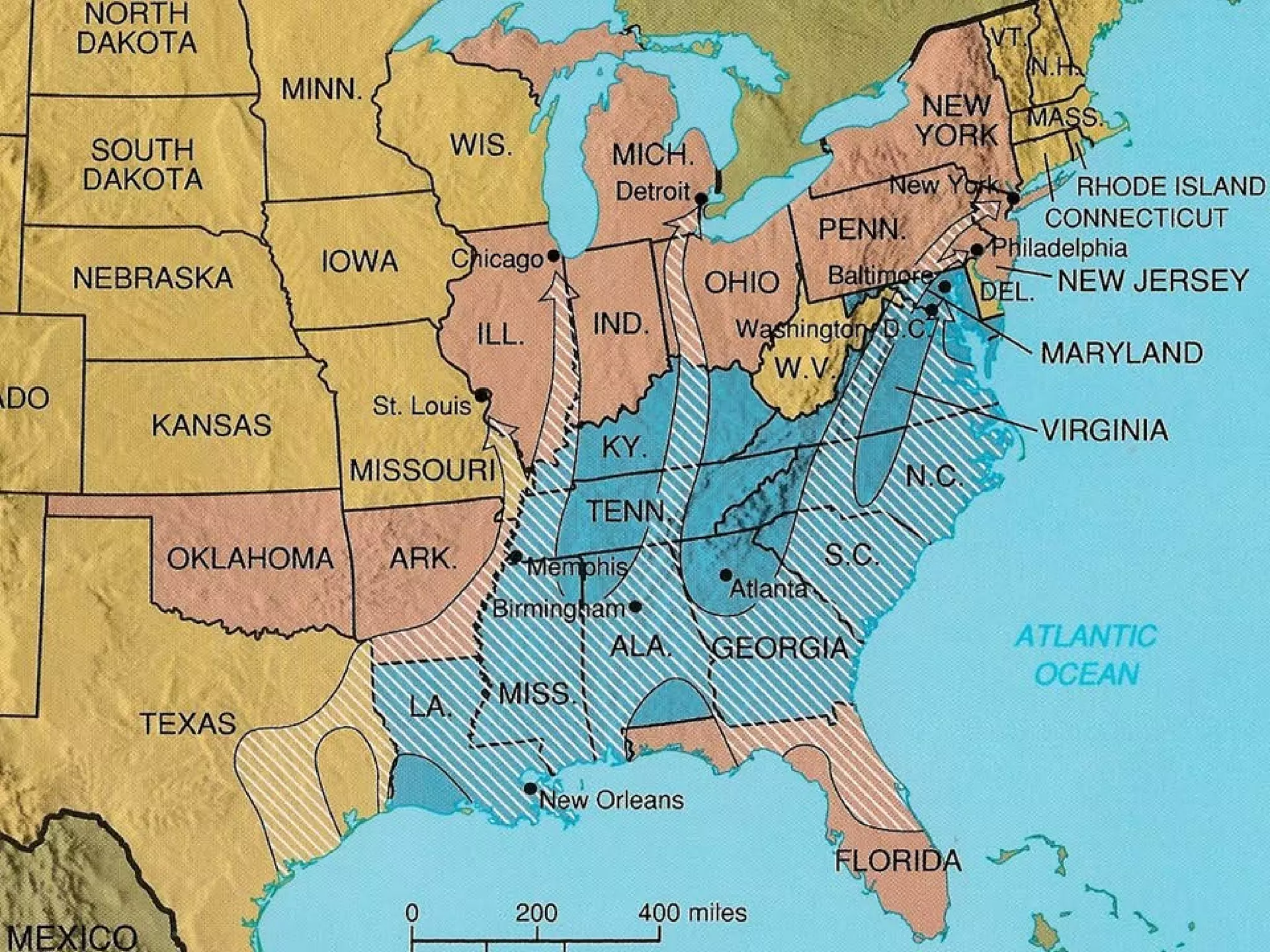
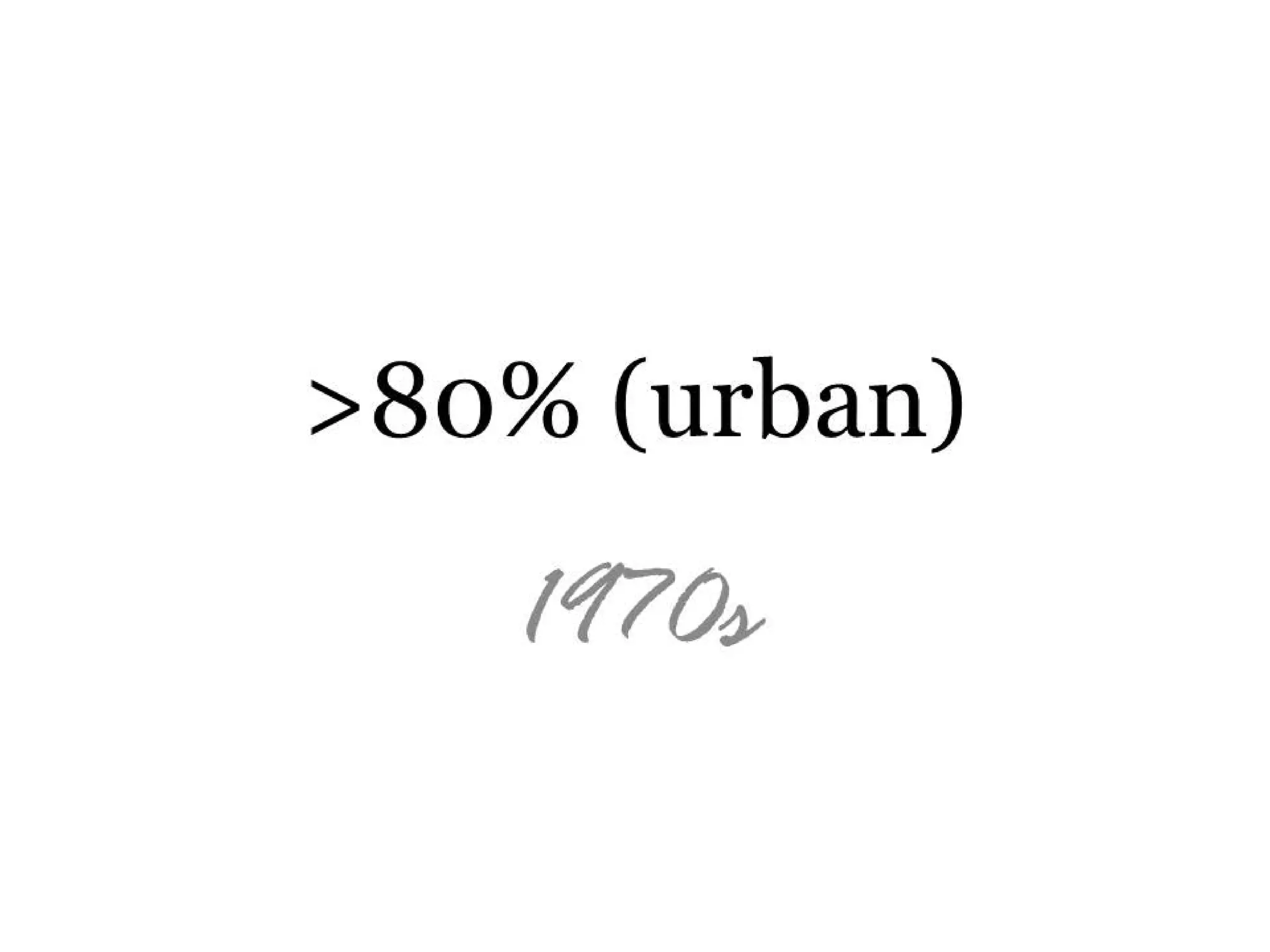
> North,

> cities
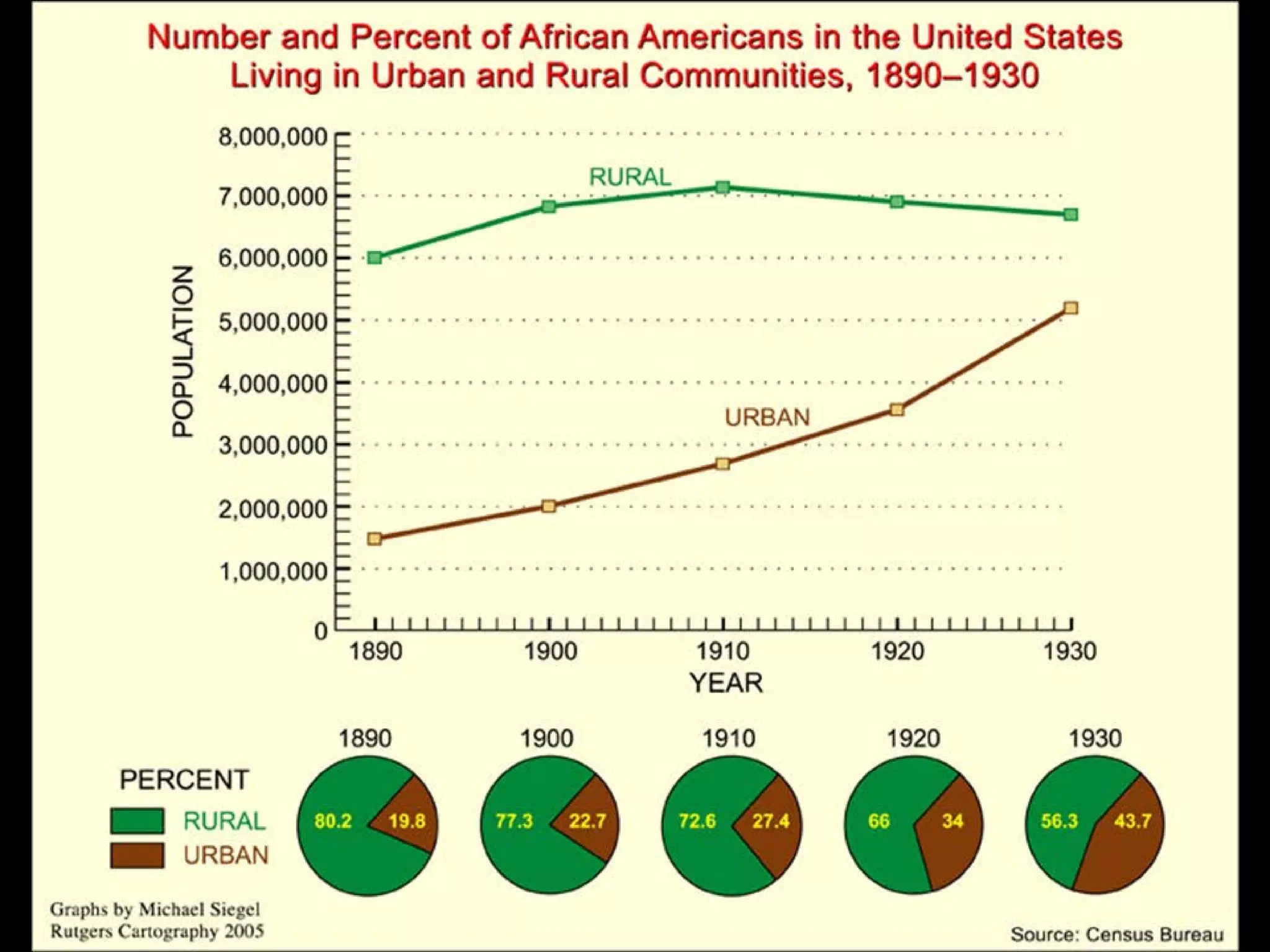
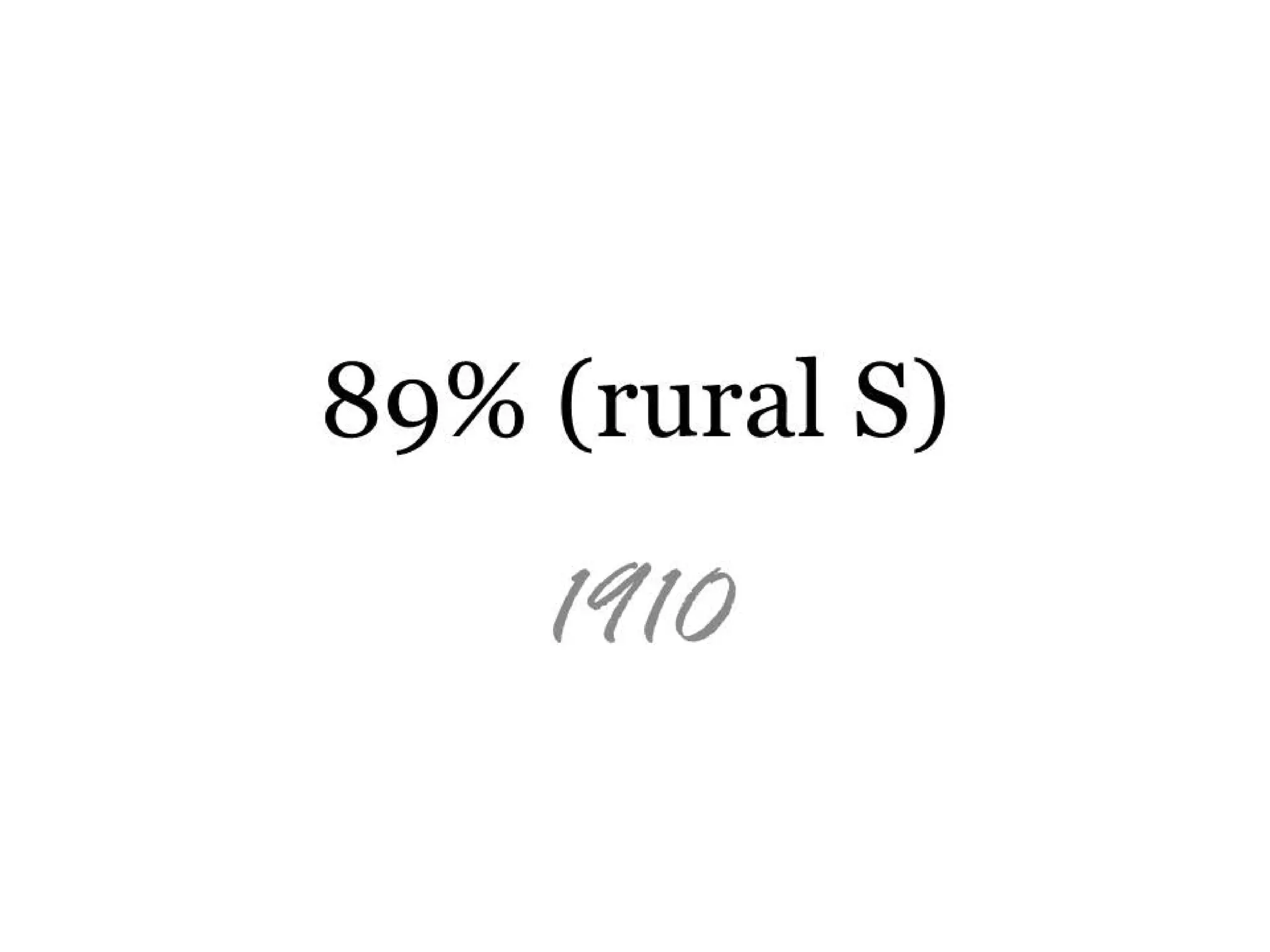
89% (80% rural) S

1910
>80% (urban)

1970s
Why?
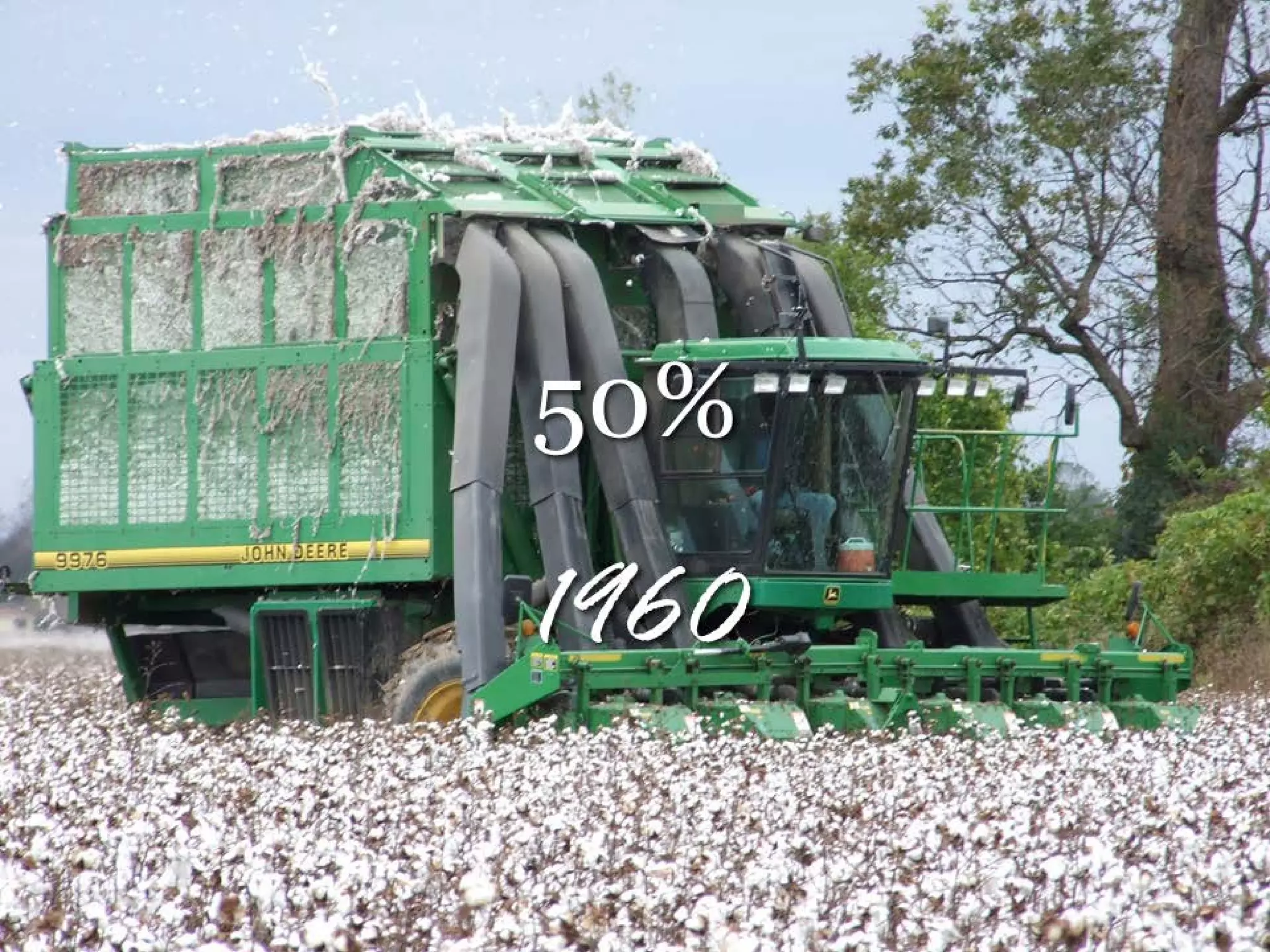
50%

1960
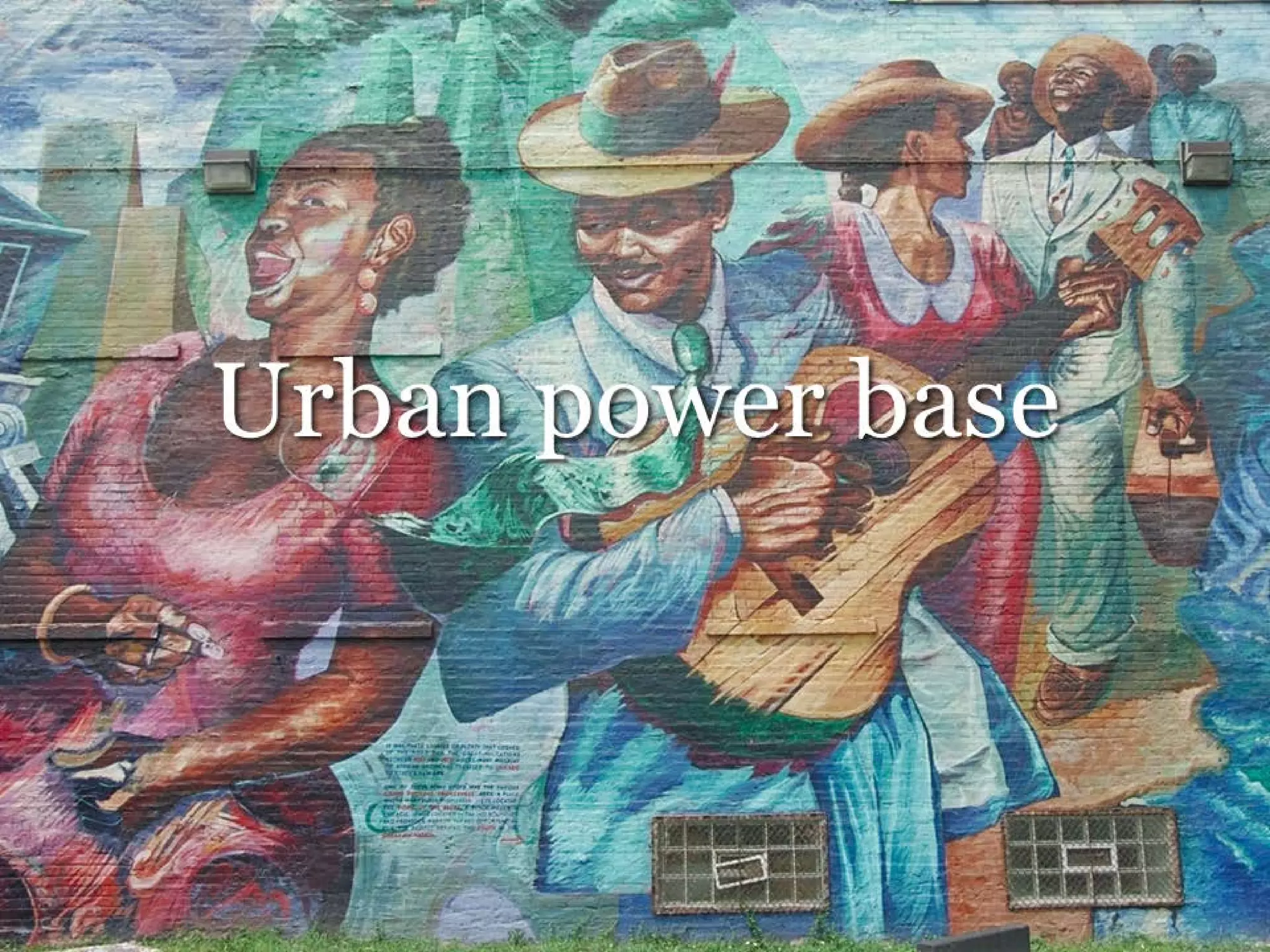
Urban power base
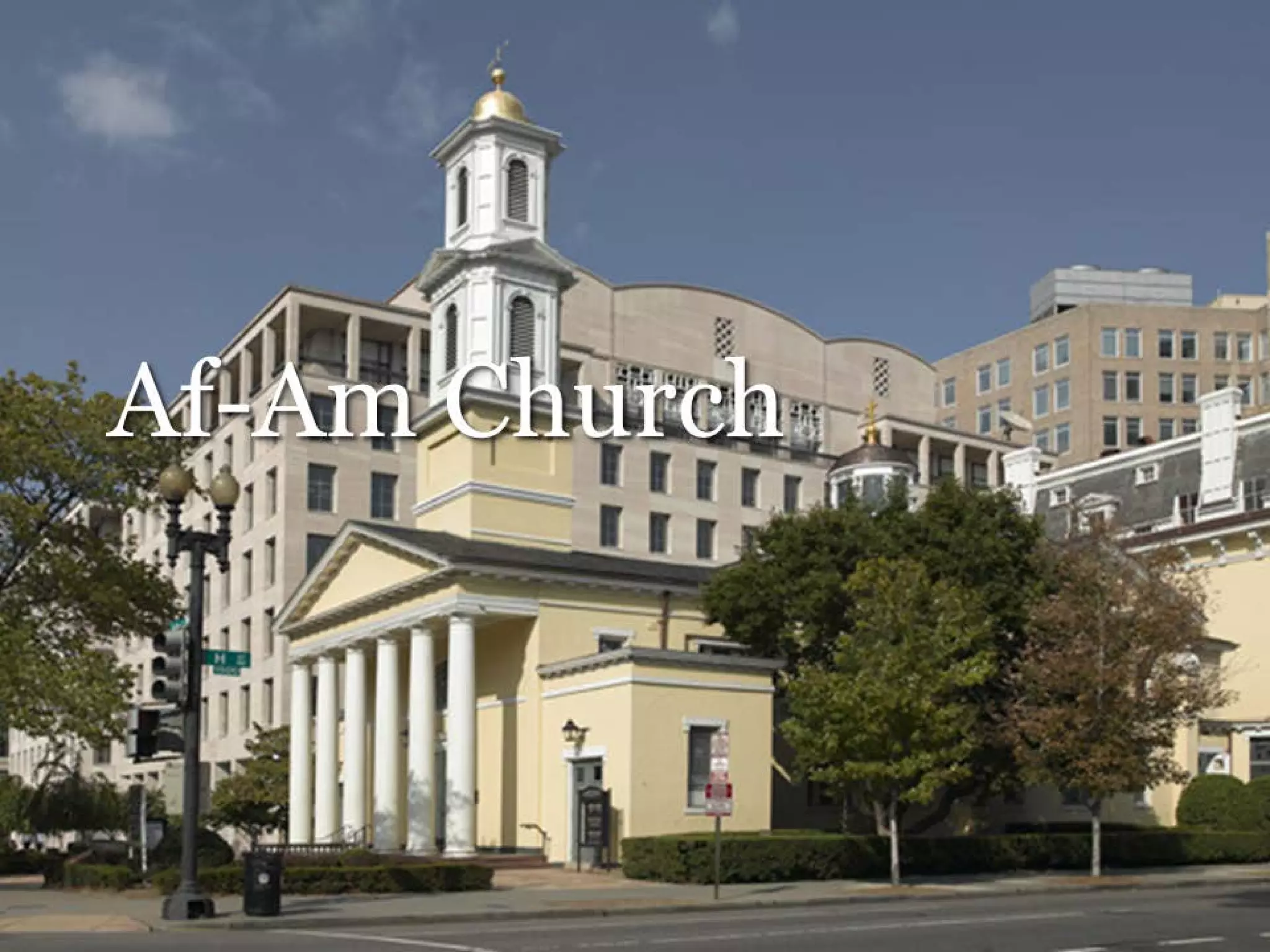
Af-Am Church
Af-Am Church
Af-Am Colleges
Af-Am High Schools
Af-Am High Schools
Af-Am High Schools
Af-Am High Schools
Af-Am High Schools
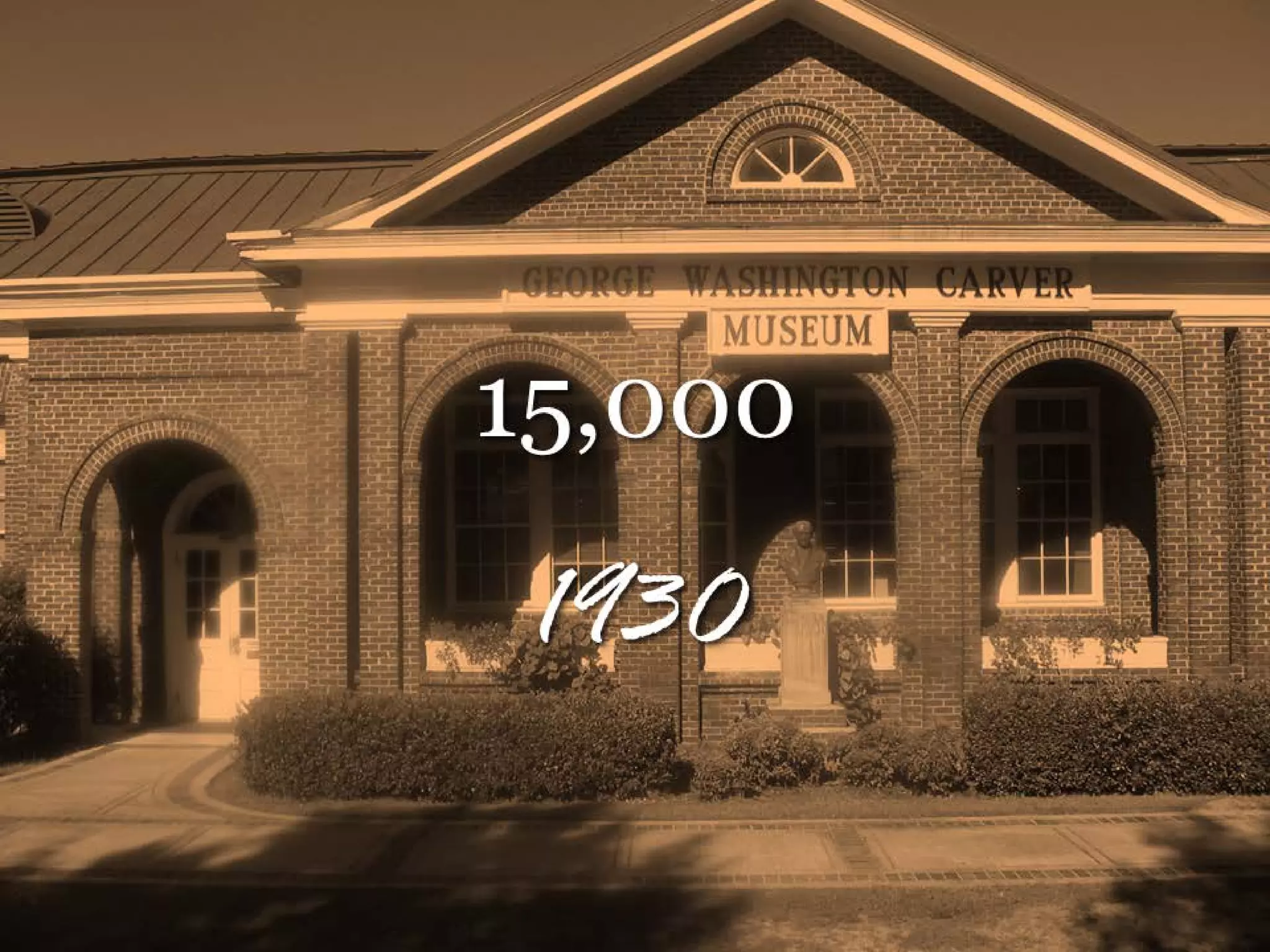
15,000

1930
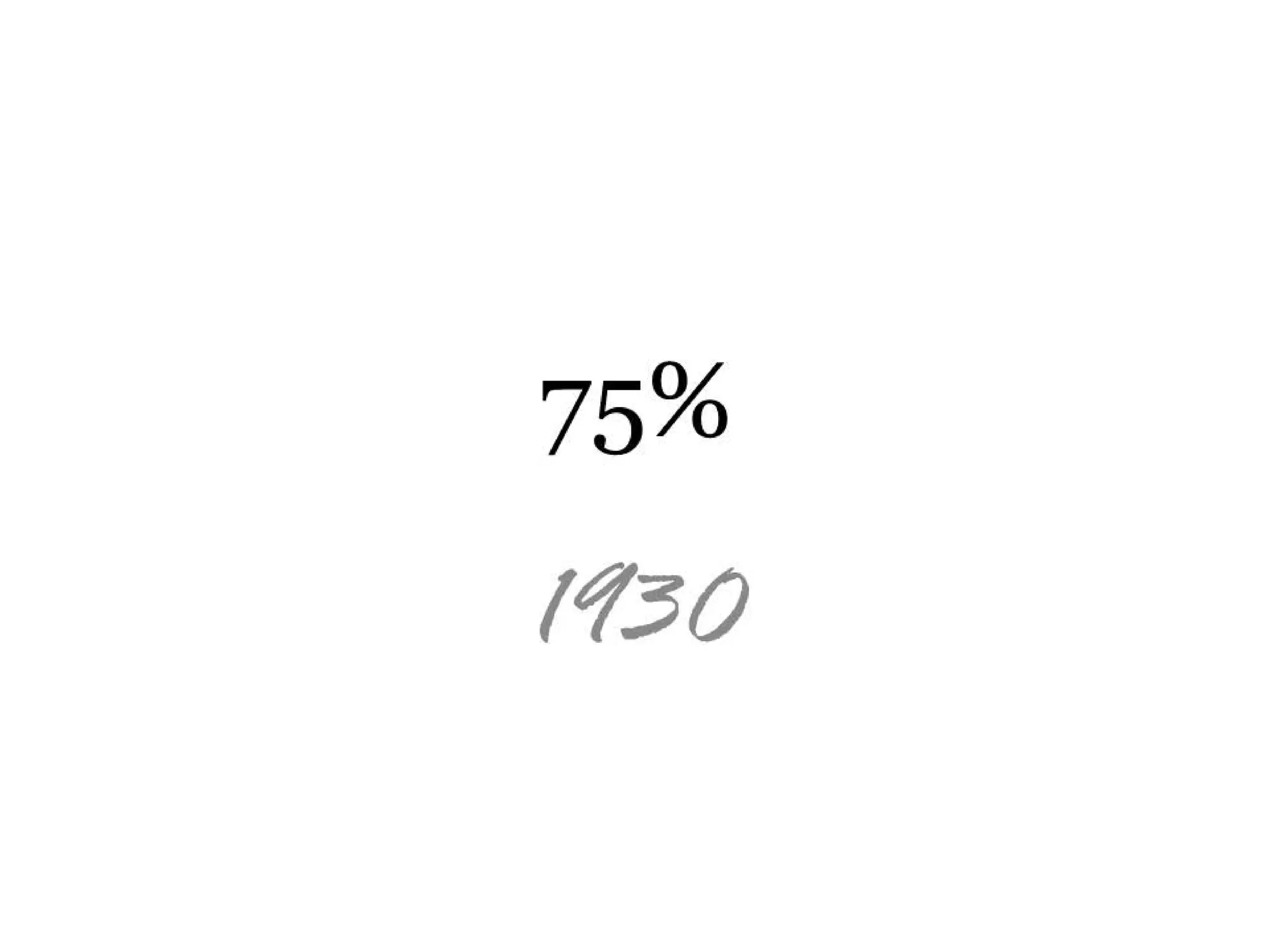
75,000

1950
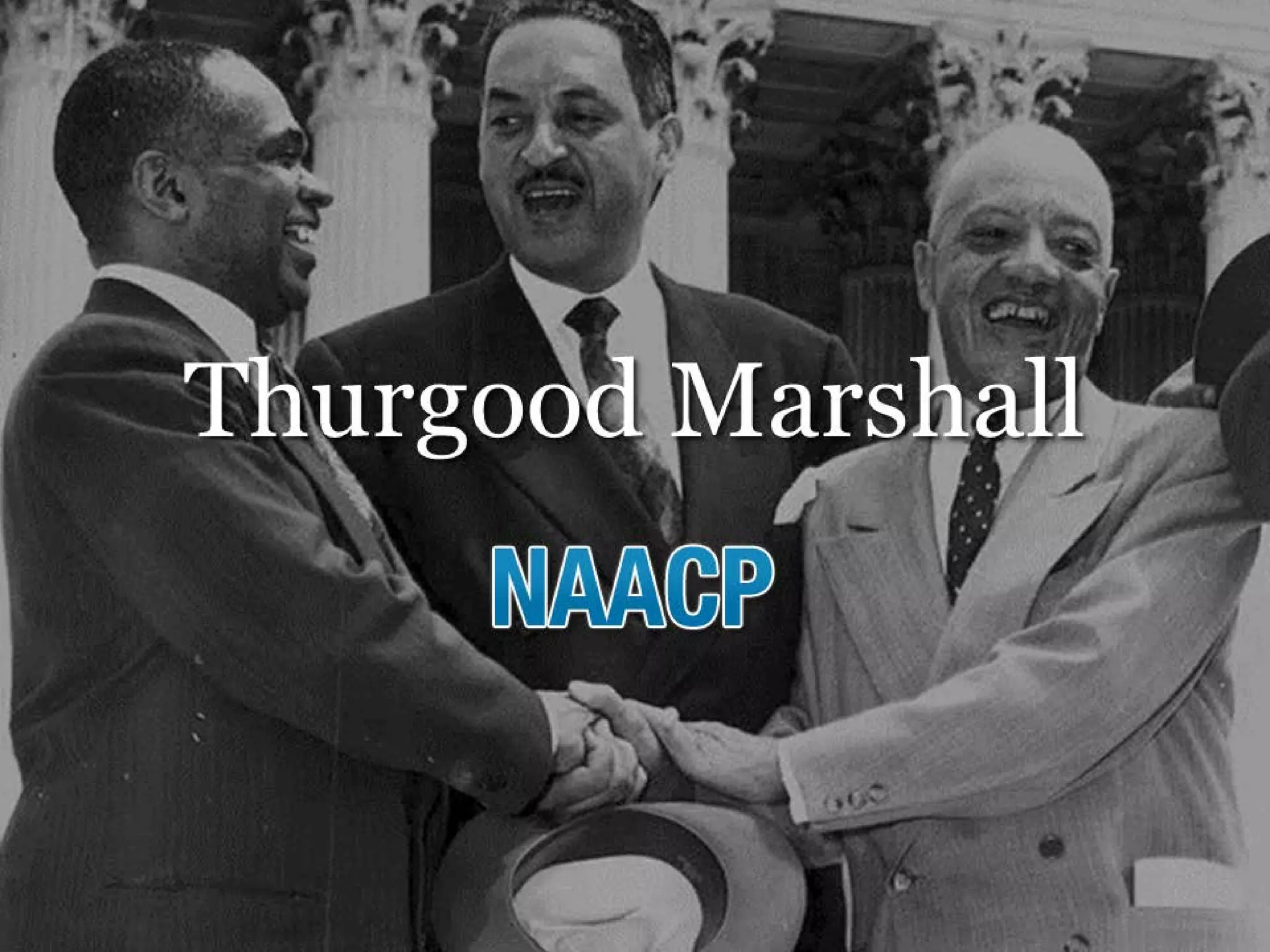
Protest Organizations
National Association for
the Advancement of
Colored Peoples
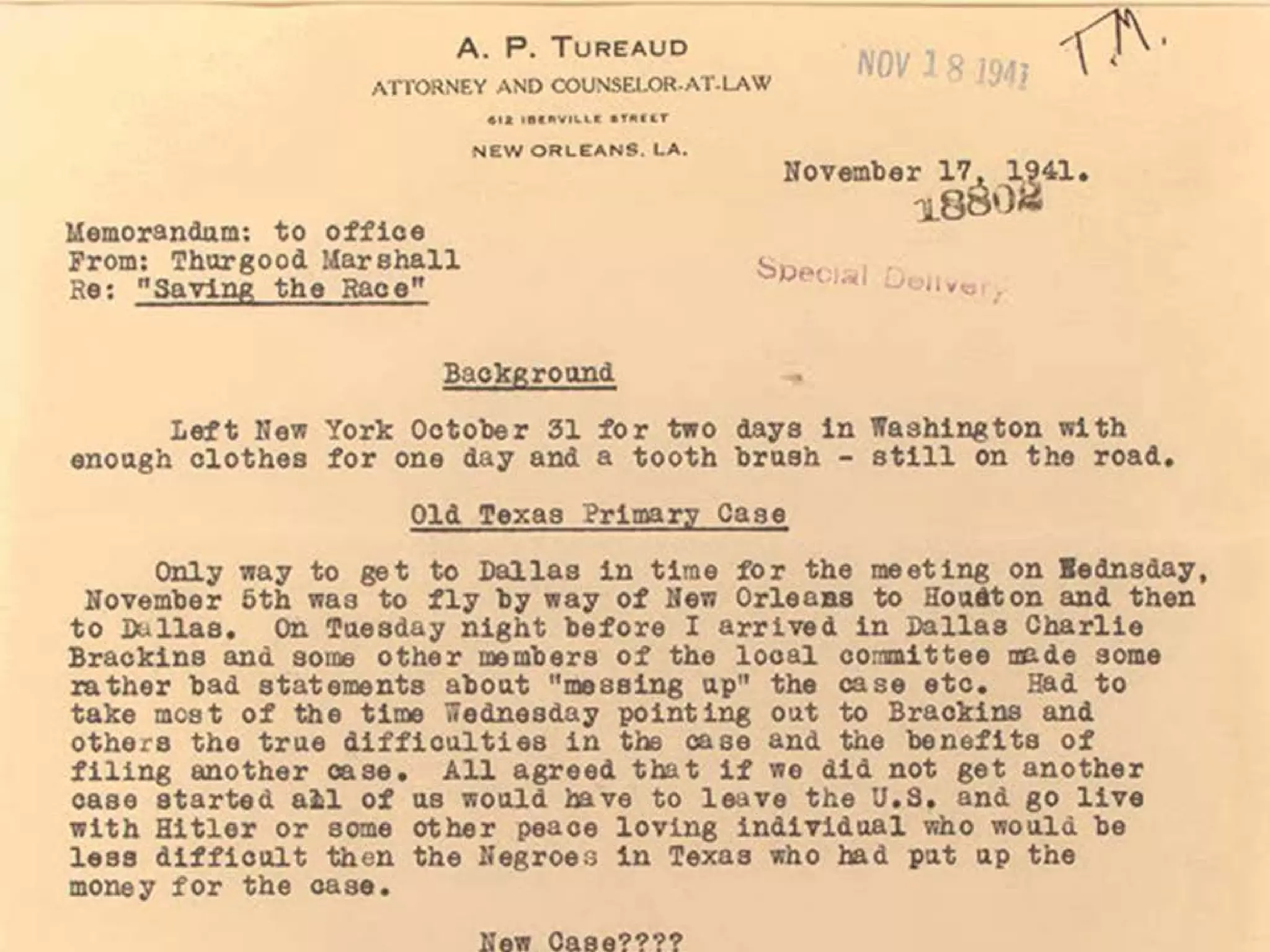
Thurgood Marshall
Economic Growth
United Negro
College Fund
Supreme Court

Brown v. Board of Education
of Topeka, Kansas (1954)
majority

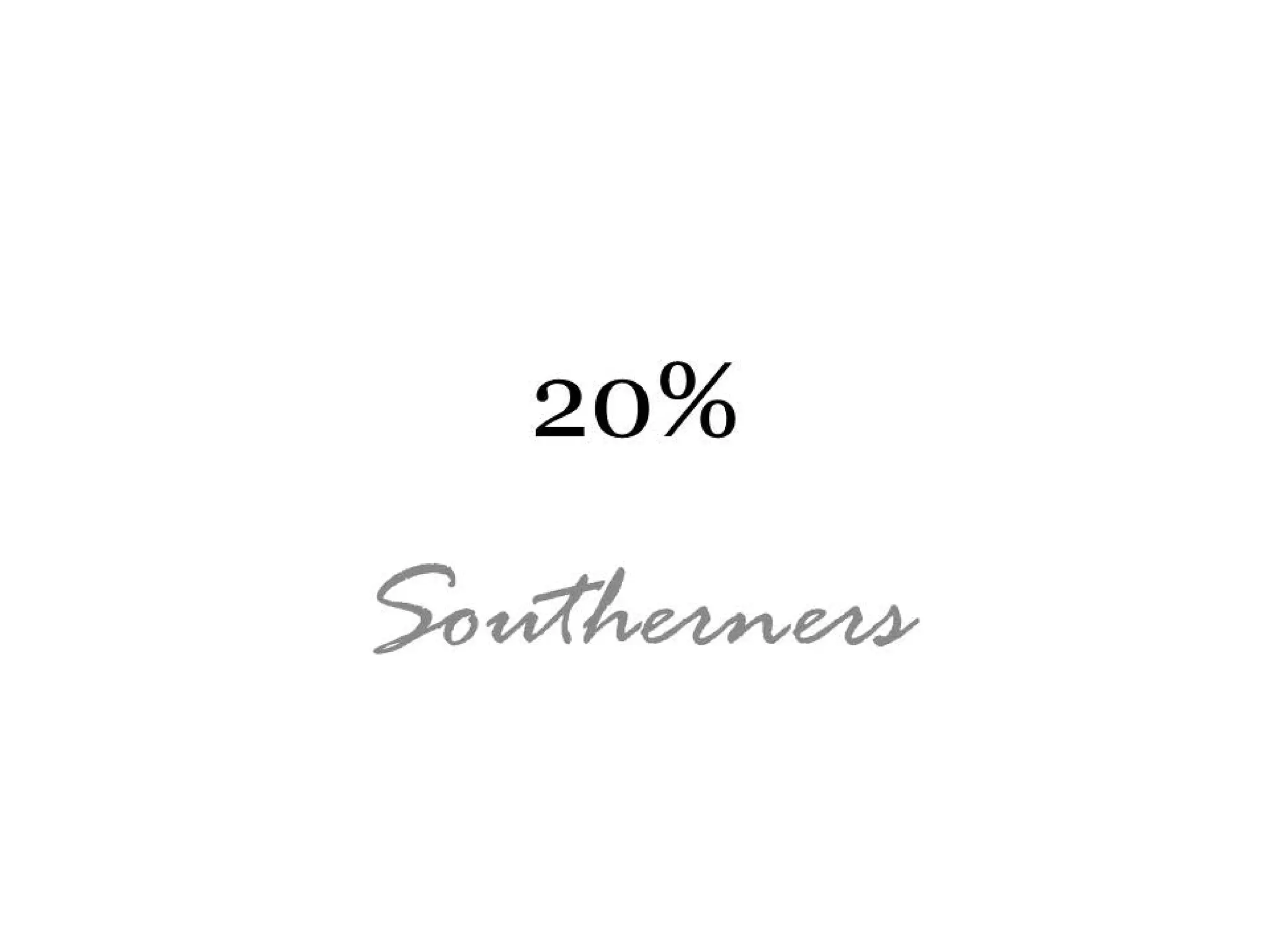
Northerners
20%

ers
ern
uth
So
Today I have stood…from this
Cradle of the Confederacy, this
very Heart of the Great AngloSaxon Southland, that today we
sound the drum for freedom as
have our generations of
forebears before us done, time and
time again through history…
Let us…send our answer to the
tyranny that clanks its chains upon
the South. In the name of the
greatest people that have ever trod
this earth, I draw the line in the
dust …and I say . . . segregation
today . . . segregation tomorrow . . .
segregation forever.
“They [white
southerners] are
not bad people.
All they are
concerned about
is…that their
sweet little girls
are not required
to sit in school
alongside some
big overgrown
Negroes.”
</1>
<2>
Proximate:

AntiSegregation
Tactics
“I know the one thing we did right
Was the day we started to fight.
Keep your eyes on the prize,
Hold on, hold on.”
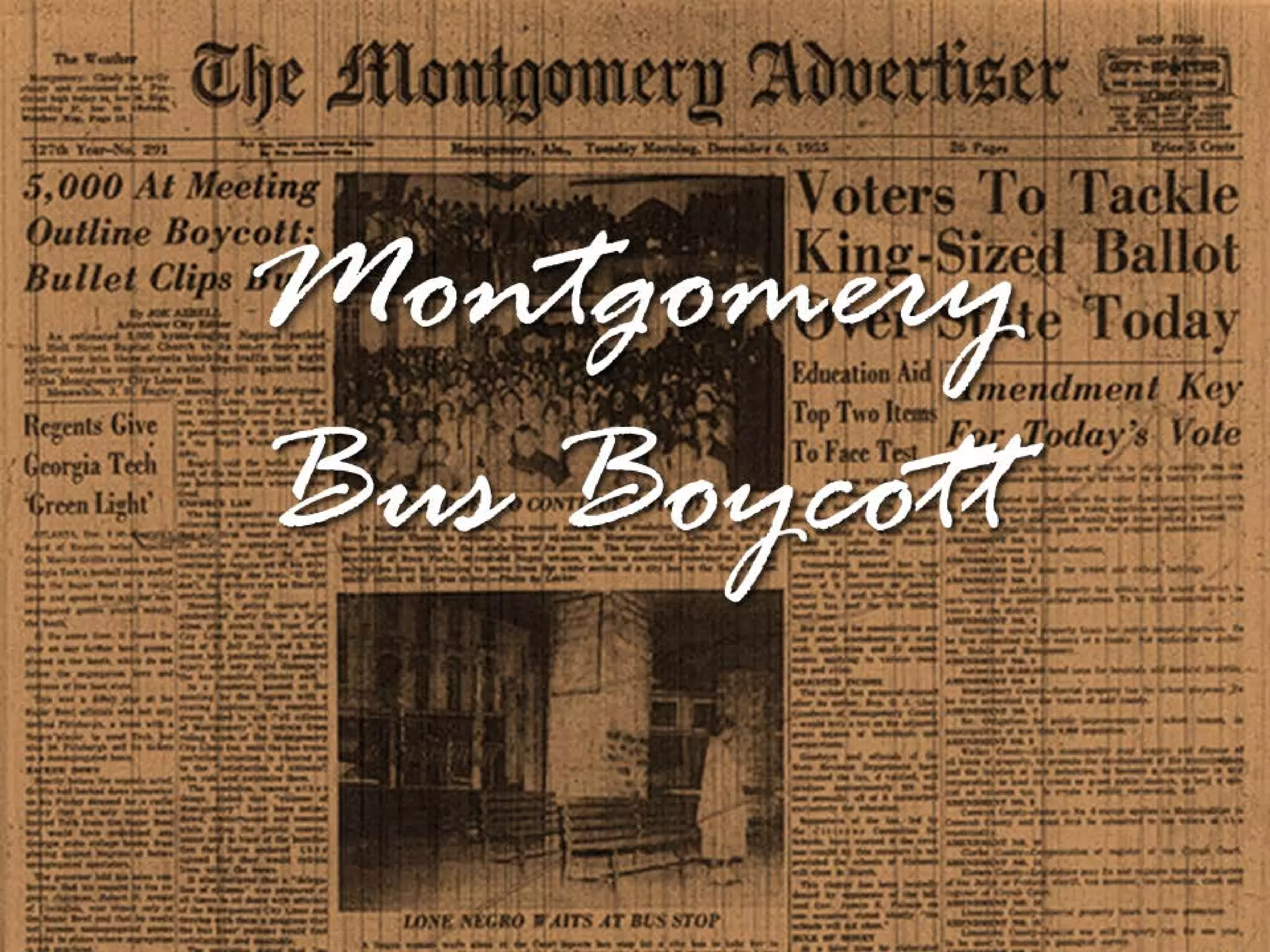
Montgomery
Bus Boycott
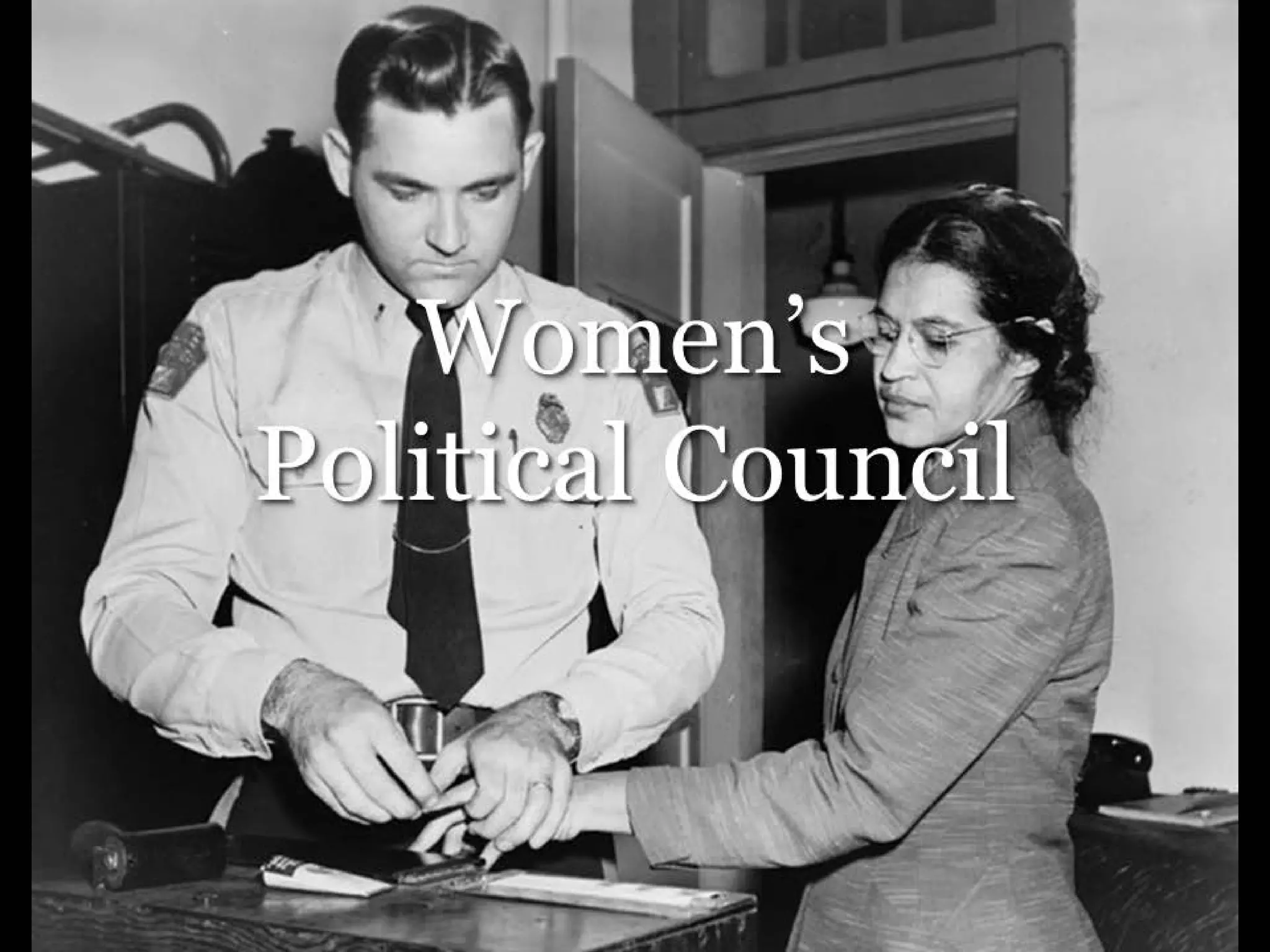
Rosa
Parks
Women’s
Political Council
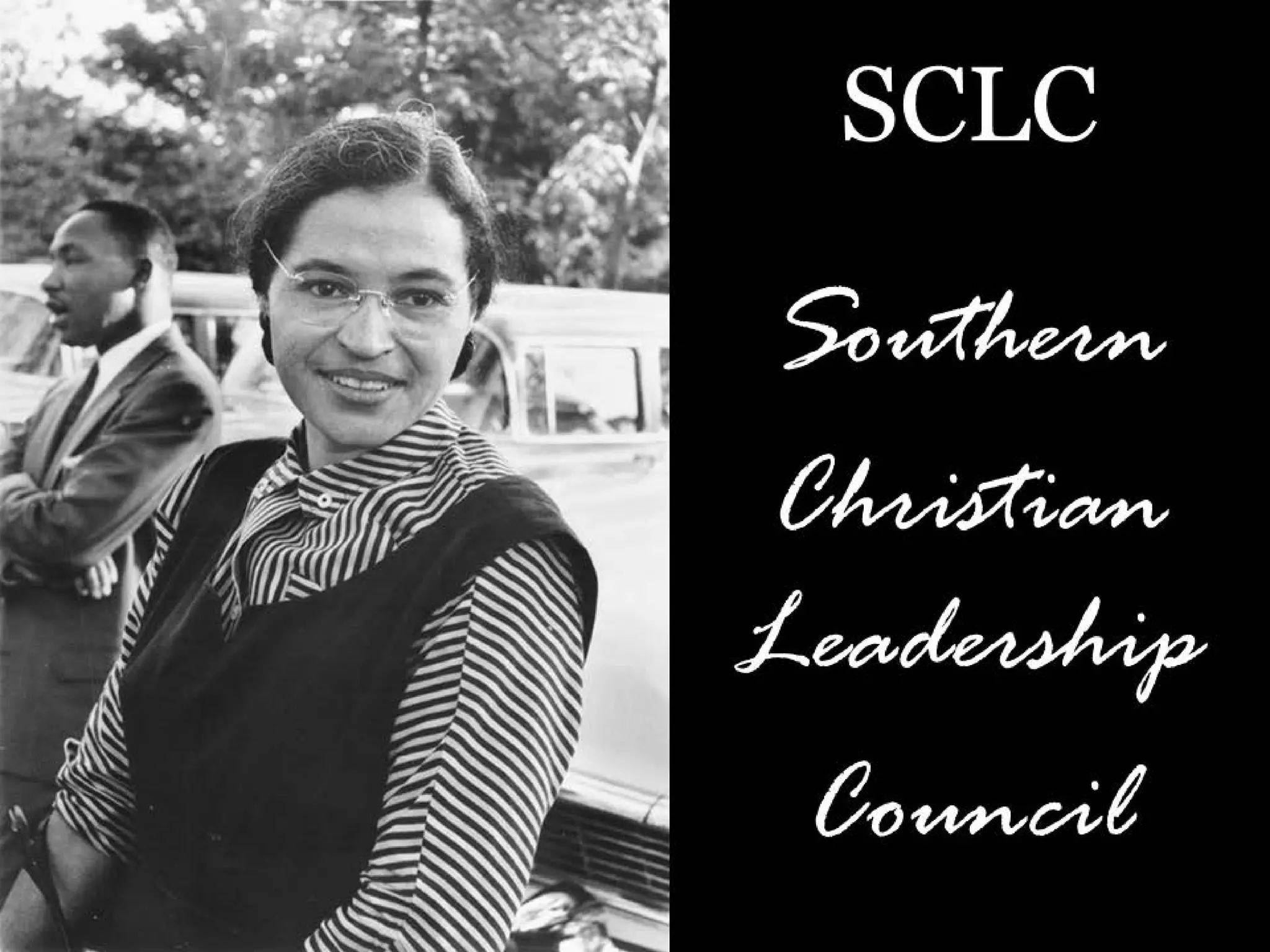
SCLC

Southern
Christian
Leadership
Council
381 days
“unConstitutional”

Alabama, 1956
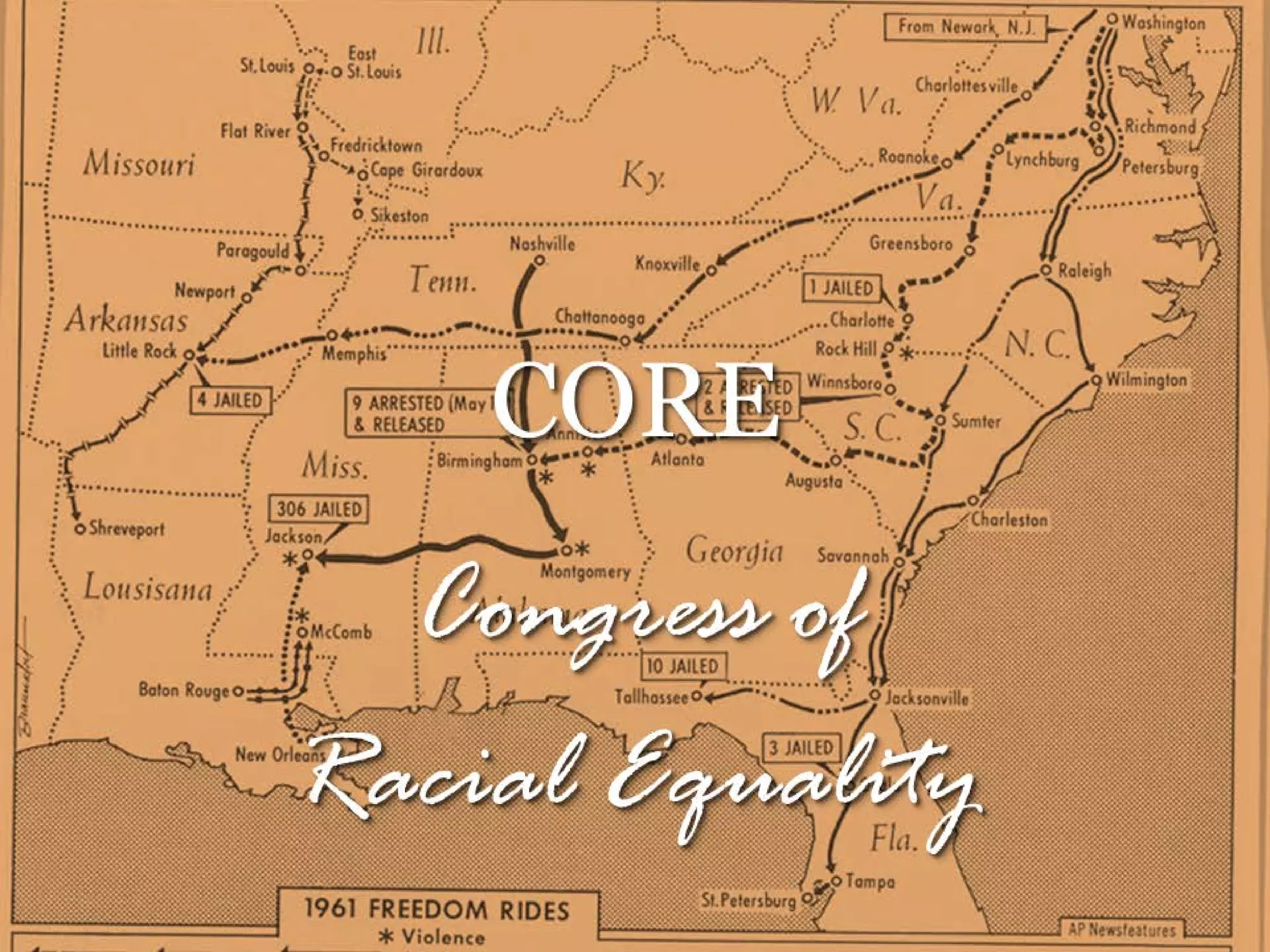
CORE

Congress of
Racial Equality
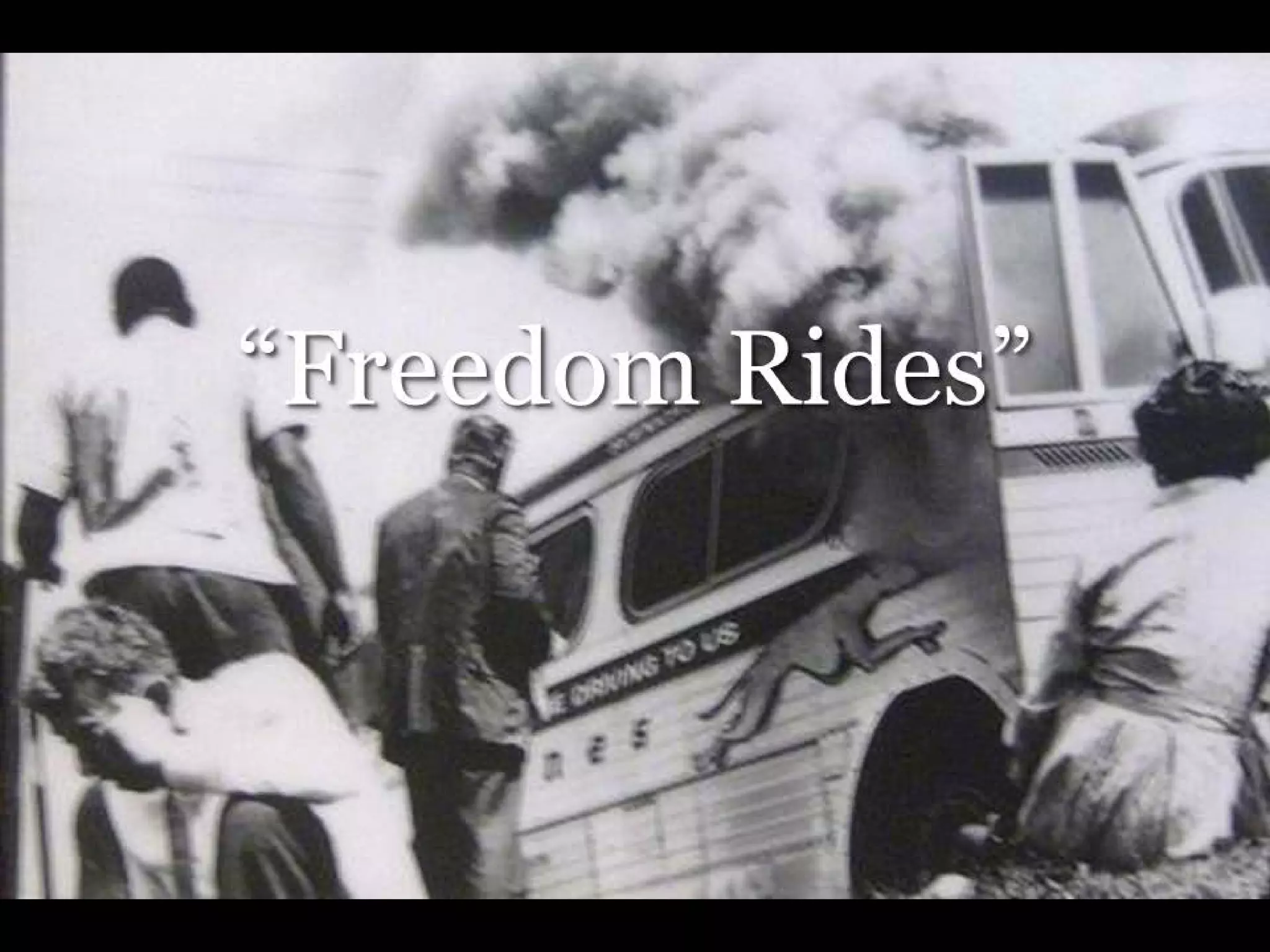
“Freedom Rides”
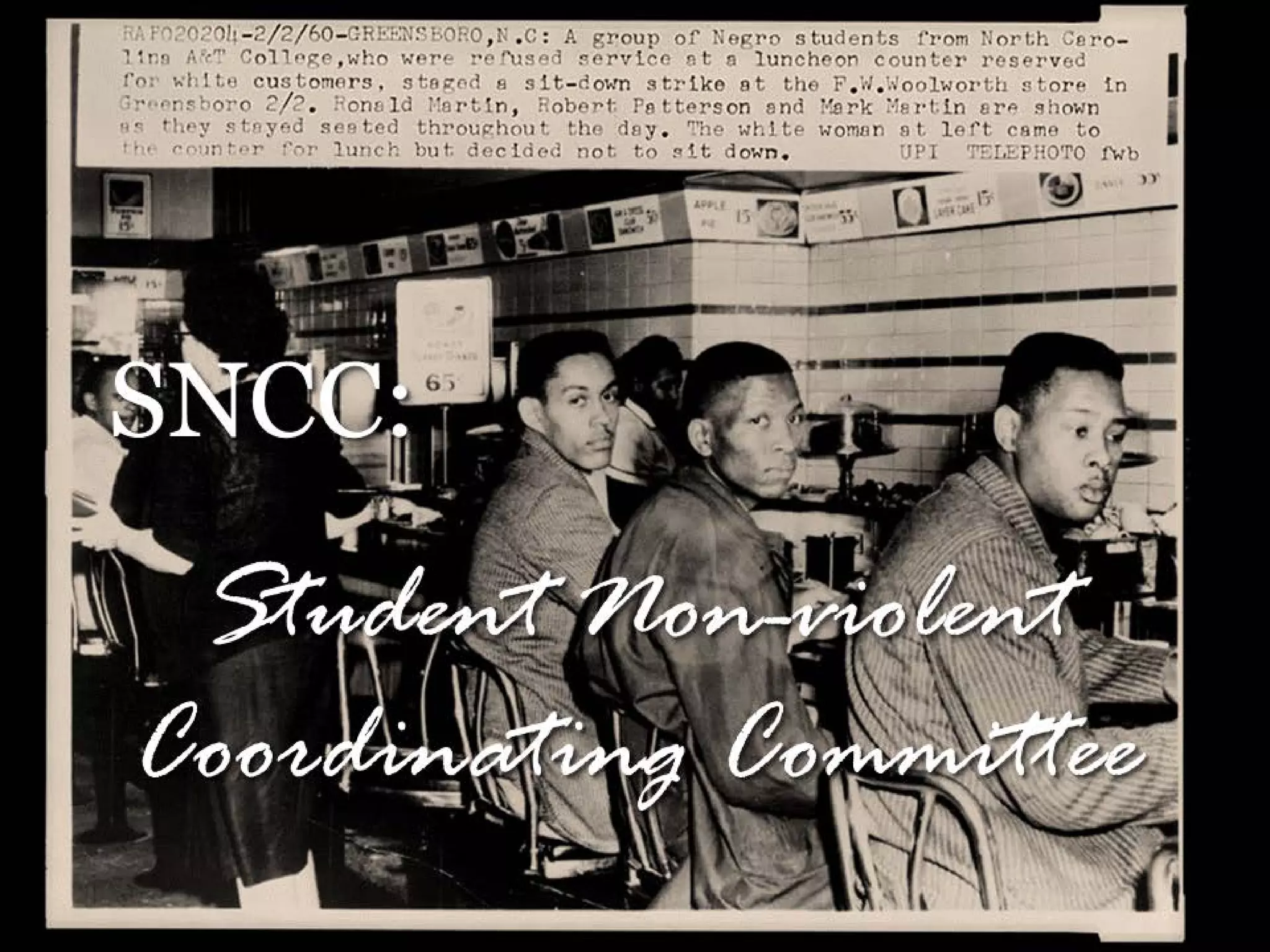
SNCC:

Student Non-violent
Coordinating Committee
</2>
<3>
RESULTS:
Legislative
Triumph
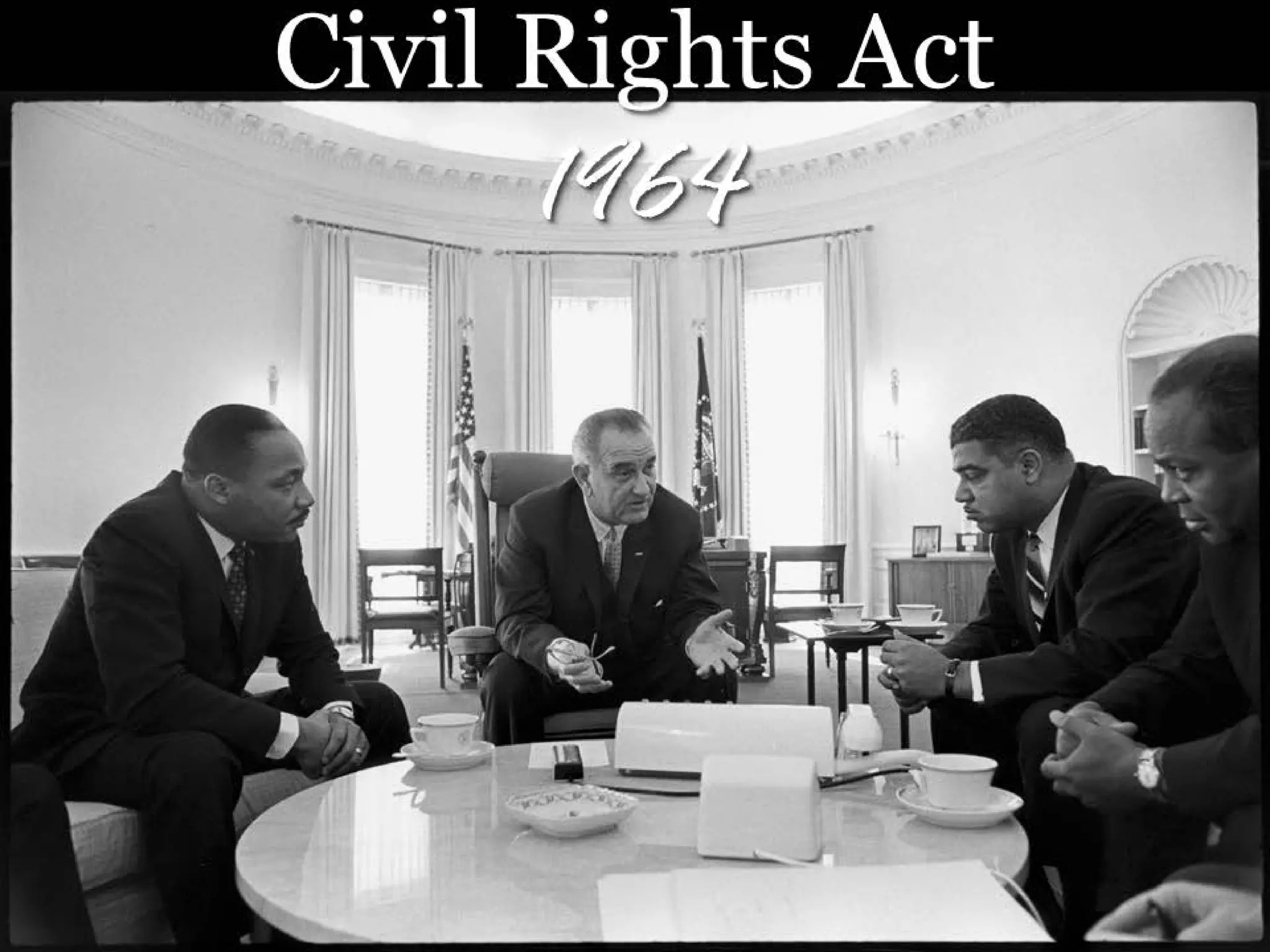
Civil Rights Act

1964
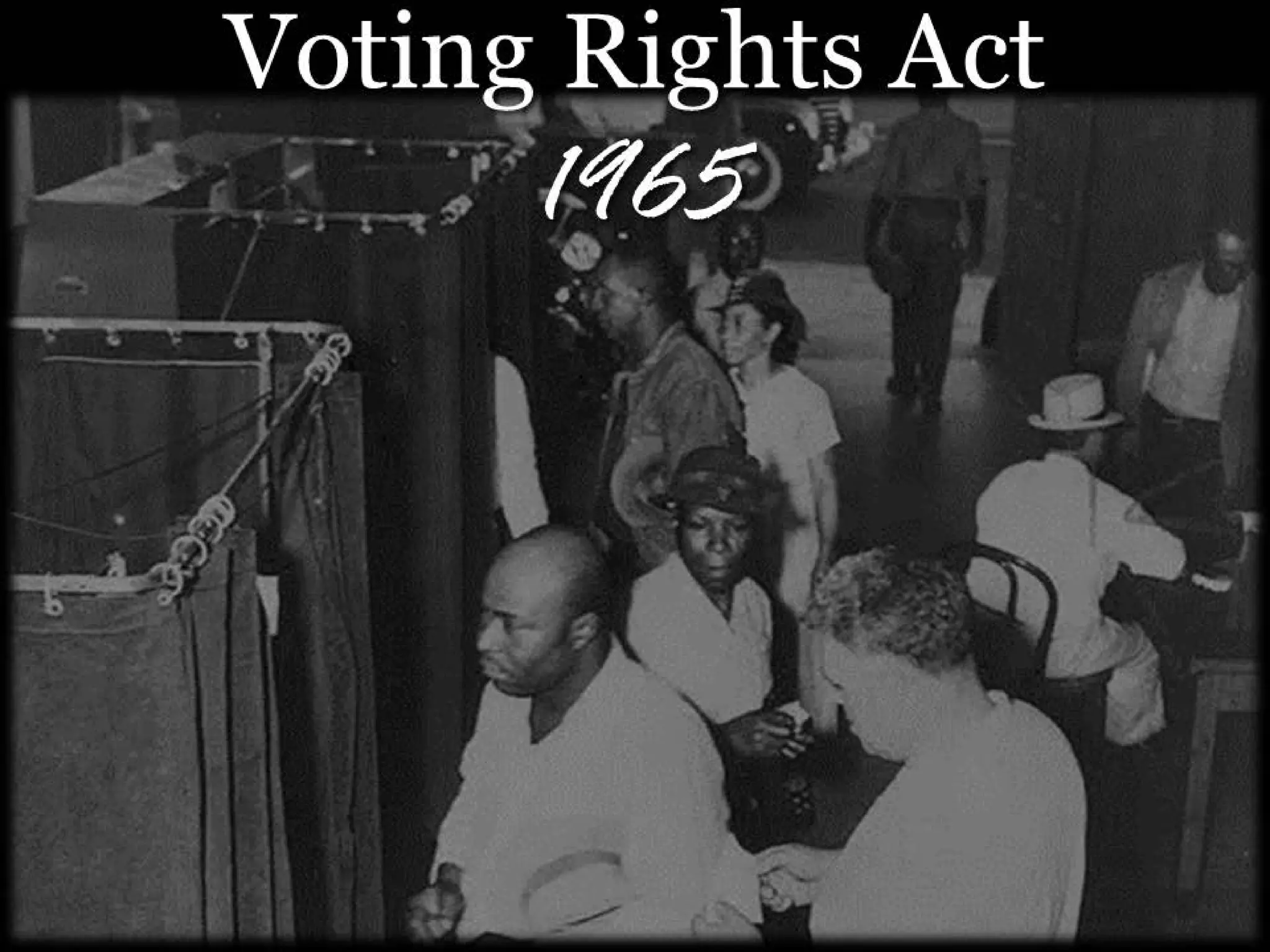
Voting Rights Act

1965
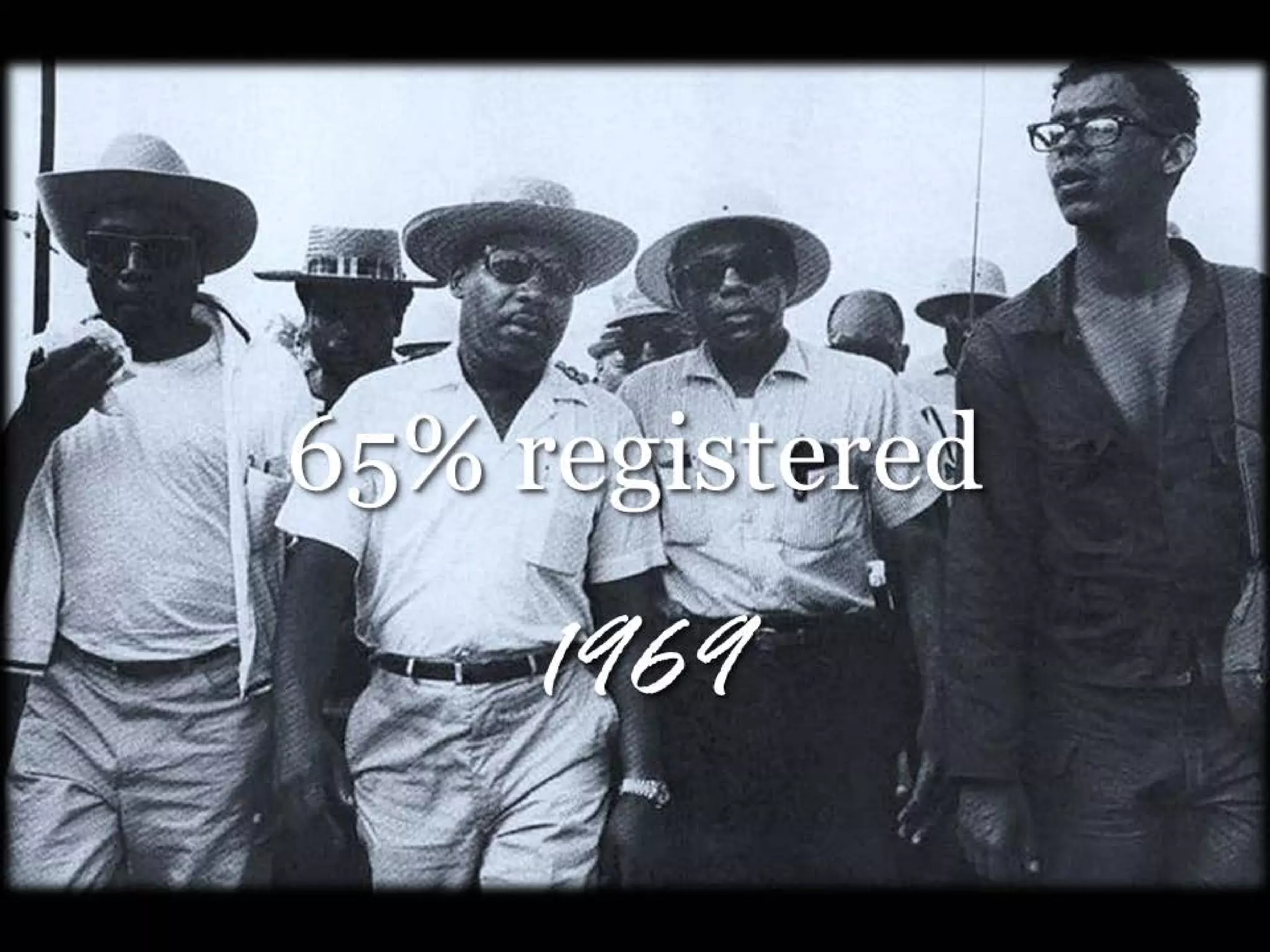
36% registered

1964
65% registered

1969
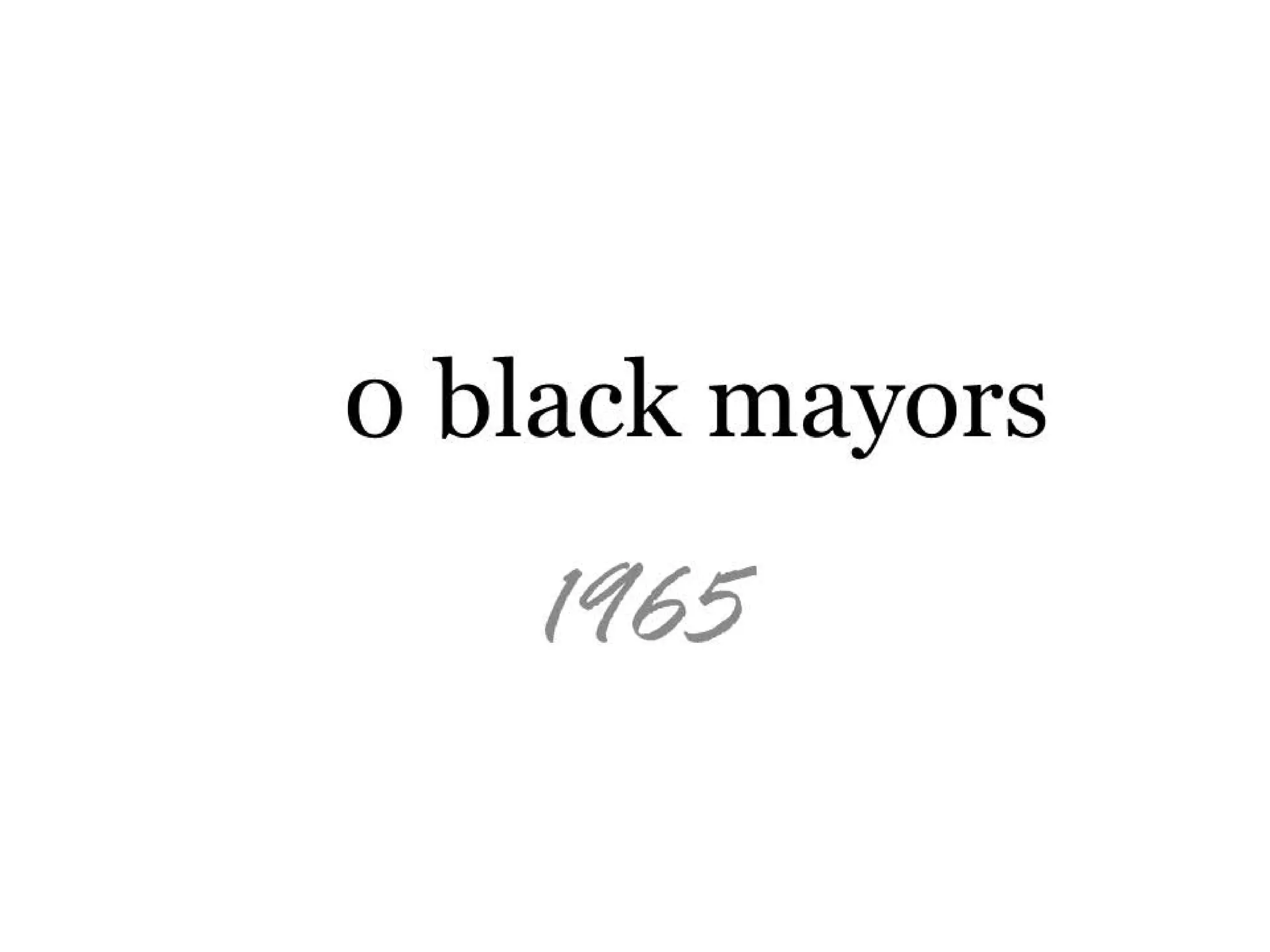
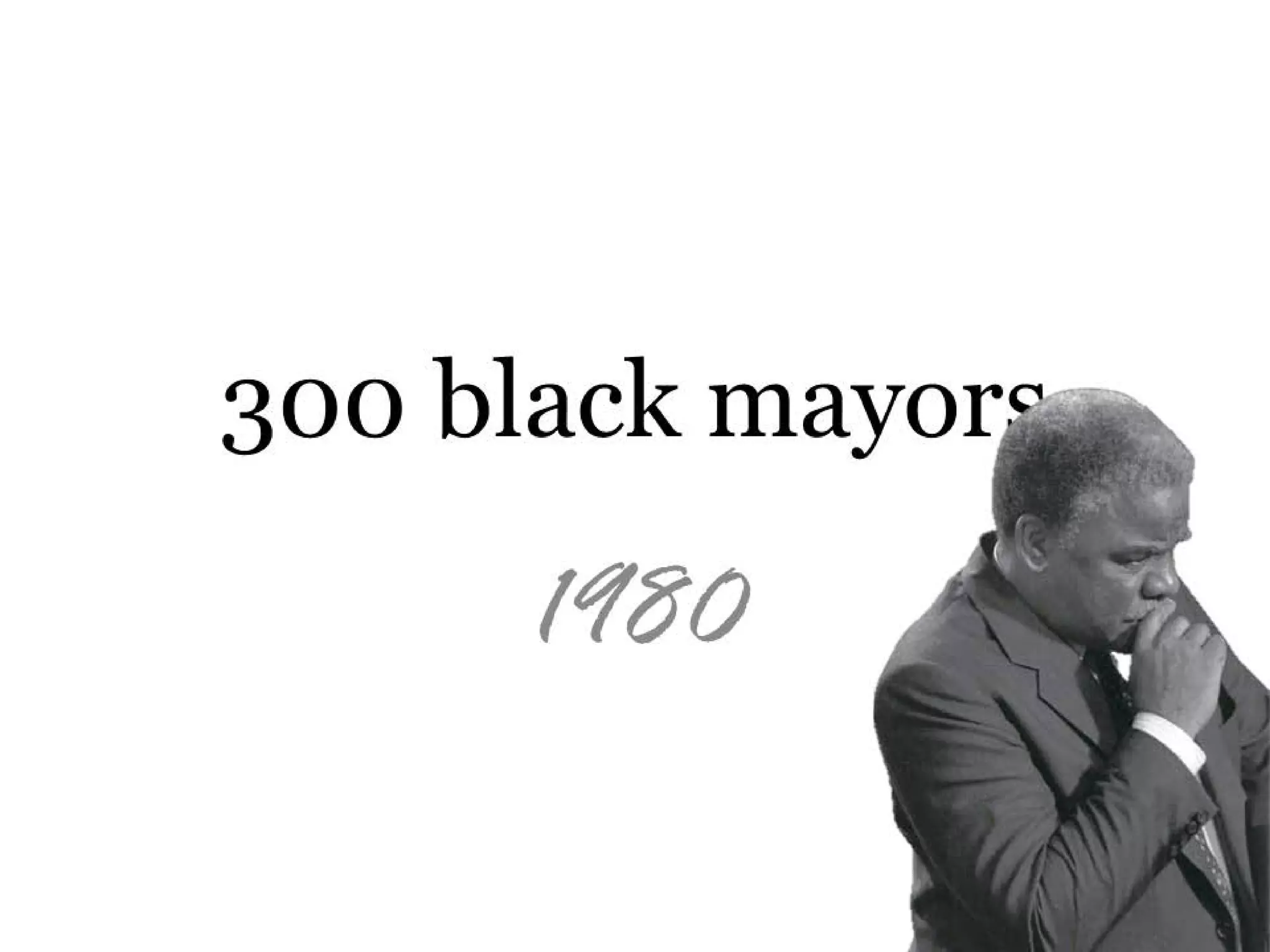
300 black mayors

1965
300 black mayors

1980
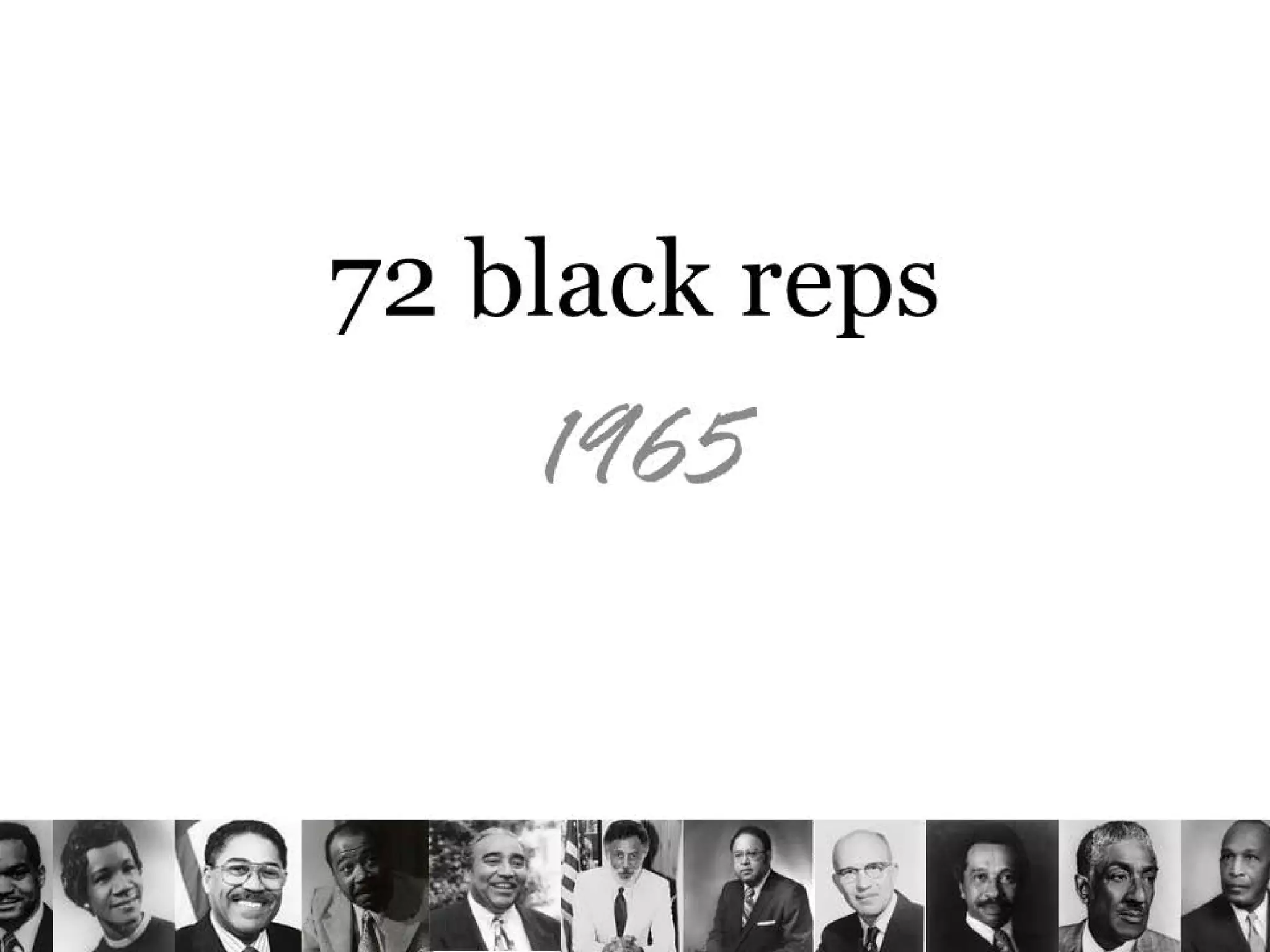
72 black reps

1965
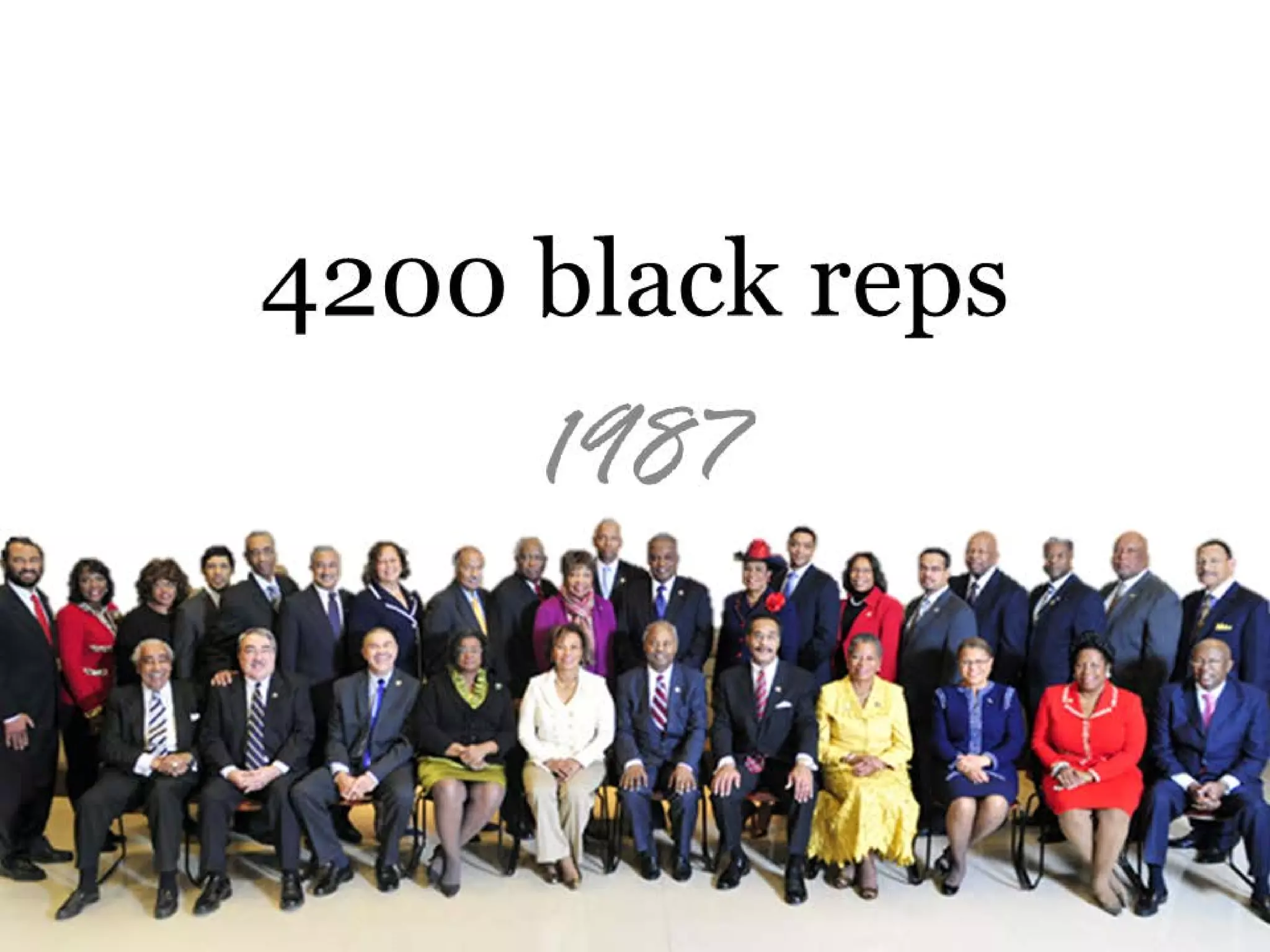
4200 black reps

1987
</3>
“We had breakfast while we were waiting for
the rain to stop, and I [was] sitting with the
[Indianapolis] Clowns in a restaurant behind
Griffith Stadium and hearing them break all
the plates in the kitchen after we were
finished eating. What a horrible sound.
Even as a kid, the irony of it hit me: here we
were in the capital in the land of freedom
and equality, and they had to destroy the
plates that had touched the forks that had
been in the mouths of black men.
If dogs had eaten off those plates,
they’d have washed them.”
“There was often a hate letter or two in the
mail, and I was always concerned about
Barbara and the kids being abused when
they went to the ballpark….
Returning to the South took some of the boy
from Mobile out of me, and replaced it with a
man who was weary of the way things were.
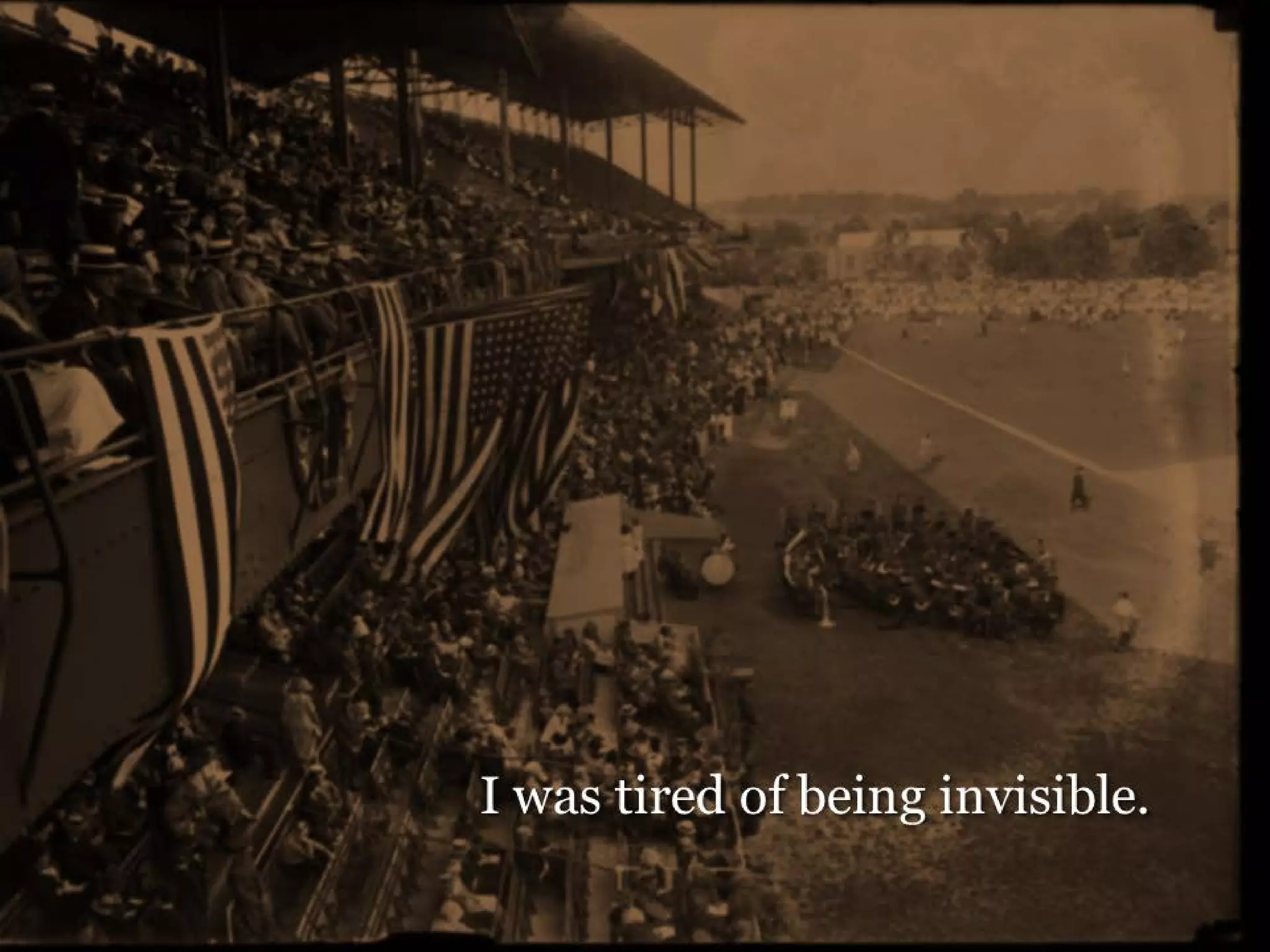
I was tired of being invisible.
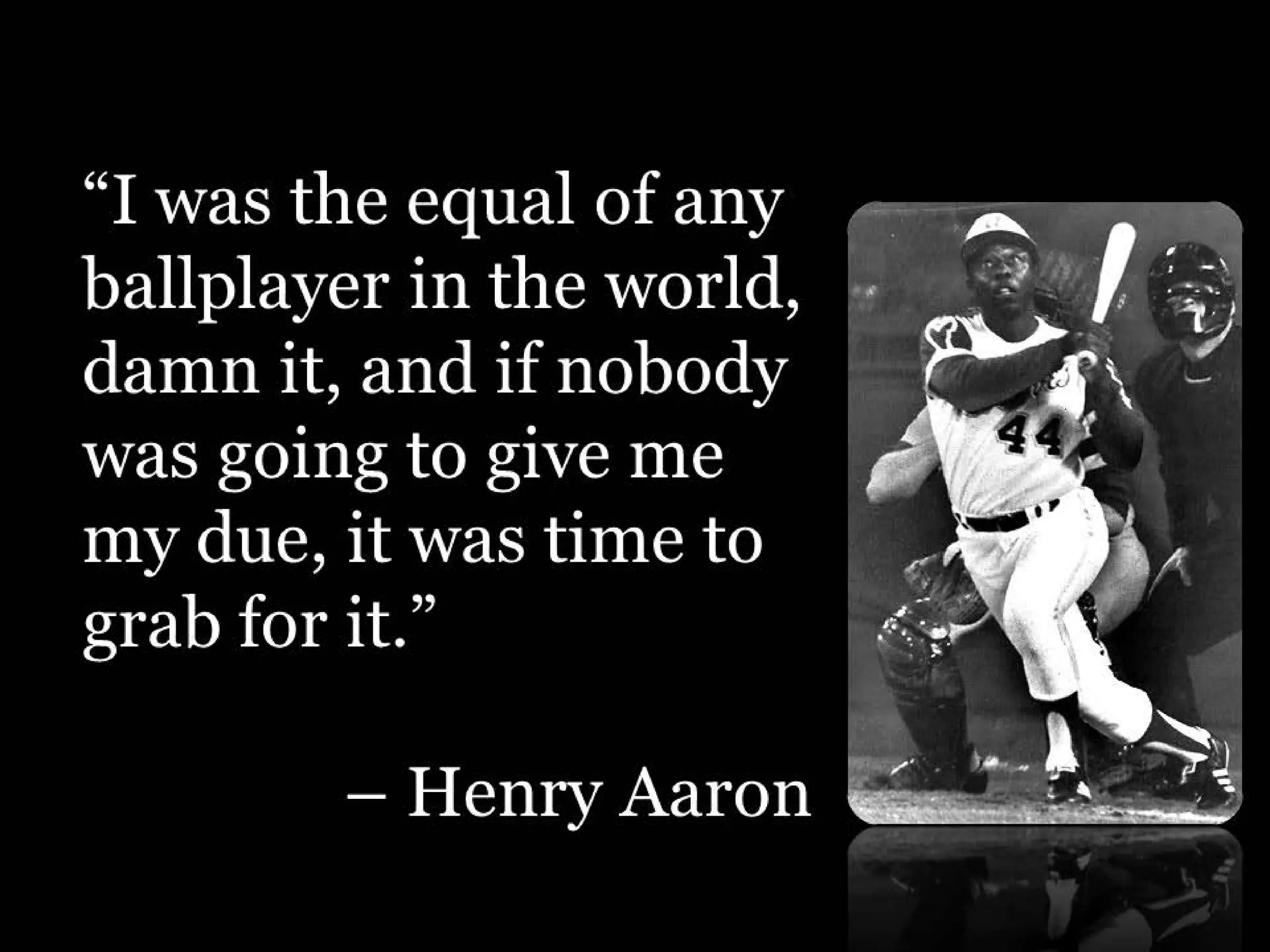
“I was the equal of any
ballplayer in the world,
damn it, and if nobody
was going to give me
my due, it was time to
grab for it.”
– Henry Aaron
Beginnings of the Civil Rights Movement

Beginnings of the Civil Rights Movement