Download as PDF, PPTX

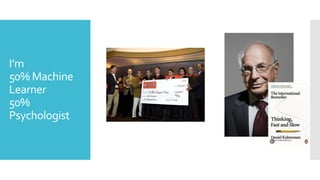
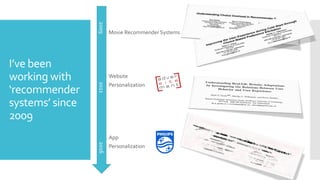

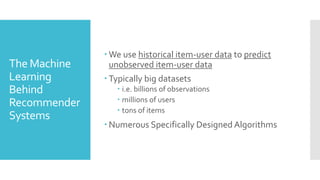


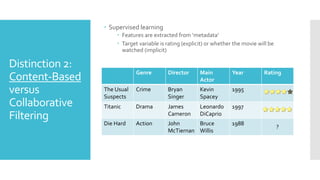


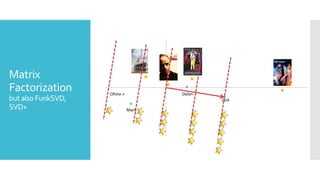

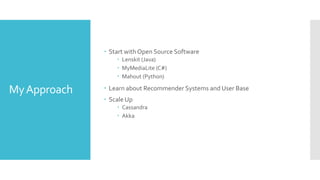


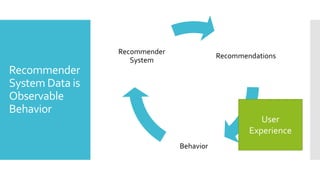


Mark Graus gave a presentation on recommender systems and the importance of considering the human factor. He discussed how recommender systems use machine learning algorithms like collaborative filtering and content-based filtering to make predictions, but that machine learning alone is not enough. User behavior data from recommender systems is limited and does not capture things like user preferences, privacy concerns, or choice overload. It is important to conduct A/B testing and user experience evaluations to understand how users actually interact with and feel about recommendation systems. The key takeaway is that recommender systems require both strong machine learning and a focus on the human perspective.


![[WI 2017] Affective Prediction By Collaborative Chains In Movie Recommendation](https://cdn.slidesharecdn.com/ss_thumbnails/slidewiemo-170812014141-thumbnail.jpg?width=640&height=640&fit=bounds)


![[WI 2017] Context Suggestion: Empirical Evaluations vs User Studies](https://cdn.slidesharecdn.com/ss_thumbnails/slidewicontextsuggestion-170812014320-thumbnail.jpg?width=640&height=640&fit=bounds)


![Presentation 2 (1)[1].pptx project pptx](https://cdn.slidesharecdn.com/ss_thumbnails/presentation211-250923084931-9f144da3-thumbnail.jpg?width=640&height=640&fit=bounds)


![[DSC Europe 25] Elena Menshikova - AI-Powered Operational Excellence: Revolut...](https://cdn.slidesharecdn.com/ss_thumbnails/es6nholbqy3zaao2c2yd-2-elena-menshikova-data-ai-in-decision-making-260115093812-4fba8b38-thumbnail.jpg?width=640&height=640&fit=bounds)

![[DSC Europe 25] Stefan Brankovic - #ResumeIsDead. AI-Powered Interviews and C...](https://cdn.slidesharecdn.com/ss_thumbnails/qnmbsv0xq3uysdrq3sev-2-stefan-brankovic-job-bolt-260114111931-a065aa3d-thumbnail.jpg?width=640&height=640&fit=bounds)
![[DSC Europe 25] Slobodan Dolinic - Smart and Intelligent Green Region.pptx](https://cdn.slidesharecdn.com/ss_thumbnails/0bribinjsp6ghwtvsvor-2-sigre-slobodan-dolinic-260115093812-c9c10e90-thumbnail.jpg?width=640&height=640&fit=bounds)


