
CLASS
CLASSES
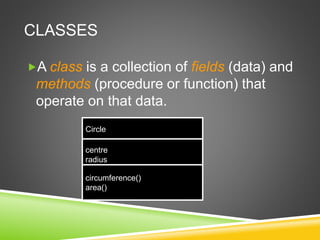
A class is a collection of fields (data) and
methods (procedure or function) that
operate on that data.
Circle
centre
radius
circumference()
area()
 A Class is a template
 It provides a new data type
 It is logical entity , does not exist physically
OBJECT
 The variable of the new data type i.e class is Called object
 It is an instance of the class
 It exists physically i.e take space in memory
 To access the class object is necessary
SYNTAX TO DECLARE CLASS…
 class demo
{
}
 class demo2
{type instance var;
type maethod(parameter lists)
{
}
}
 public class Circle {
double x, y; // centre coordinate
double r; // radius of the circle
}
 The fields (data) are also called the instance varaibles.
 A class with only data fields has no life. Objects created by such a
class cannot respond to any messages.
 Methods are declared inside the body of the class but
immediately after the declaration of data fields.
 The general form of a method declaration is
type MethodName (parameter-list)
{
Method-body;
}
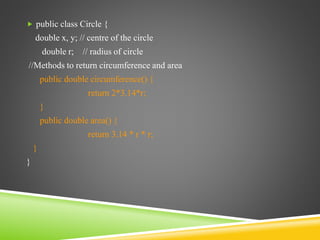
 public class Circle {
double x, y; // centre of the circle
double r; // radius of circle
//Methods to return circumference and area
public double circumference() {
return 2*3.14*r;
}
public double area() {
return 3.14 * r * r;
}
}
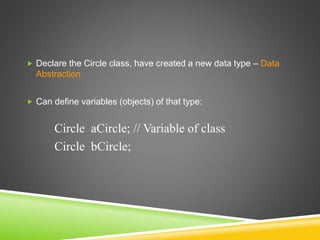
 Declare the Circle class, have created a new data type – Data
Abstraction
 Can define variables (objects) of that type:
Circle aCircle; // Variable of class
Circle bCircle;
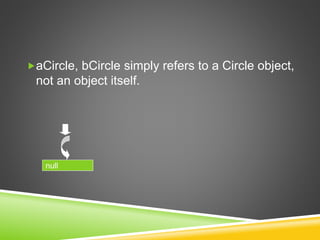
aCircle, bCircle simply refers to a Circle object,
not an object itself.
null
11
CREATING OBJECTS OF A CLASS
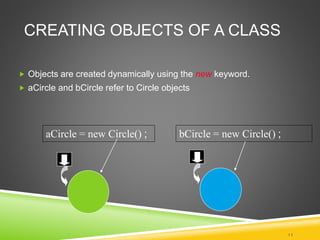
 Objects are created dynamically using the new keyword.
 aCircle and bCircle refer to Circle objects
bCircle = new Circle() ;aCircle = new Circle() ;
 aCircle = new Circle();
 bCircle = new Circle() ;
 bCircle = aCircle;
13
CREATING OBJECTS OF A CLASS
aCircle = new Circle();
bCircle = new Circle() ;
bCircle = aCircle;
P
aCircle
Q
bCircle
Before Assignment
P
aCircle
Q
bCircle
After Assignment
14
ACCESSING OBJECT/CIRCLE DATA
 Similar to C syntax for accessing data defined in a structure.
Circle aCircle = new Circle();
aCircle.x = 2.0 // initialize center and radius
aCircle.y = 2.0
aCircle.r = 1.0
ObjectName.VariableName
ObjectName.MethodName(parameter-list)
15
EXECUTING METHODS IN
OBJECT/CIRCLE
 Using Object Methods:
Circle aCircle = new Circle();
double area;
aCircle.r = 1.0;
area = aCircle.area();
sent ‘message’ to aCircle

Java Classes

  • 1.
  • 2.
    CLASSES A class isa collection of fields (data) and methods (procedure or function) that operate on that data. Circle centre radius circumference() area()
  • 3.
     A Classis a template  It provides a new data type  It is logical entity , does not exist physically
  • 4.
    OBJECT  The variableof the new data type i.e class is Called object  It is an instance of the class  It exists physically i.e take space in memory  To access the class object is necessary
  • 5.
    SYNTAX TO DECLARECLASS…  class demo { }  class demo2 {type instance var; type maethod(parameter lists) { } }
  • 6.
     public classCircle { double x, y; // centre coordinate double r; // radius of the circle }  The fields (data) are also called the instance varaibles.
  • 7.
     A classwith only data fields has no life. Objects created by such a class cannot respond to any messages.  Methods are declared inside the body of the class but immediately after the declaration of data fields.  The general form of a method declaration is type MethodName (parameter-list) { Method-body; }
  • 8.
     public classCircle { double x, y; // centre of the circle double r; // radius of circle //Methods to return circumference and area public double circumference() { return 2*3.14*r; } public double area() { return 3.14 * r * r; } }
  • 9.
     Declare theCircle class, have created a new data type – Data Abstraction  Can define variables (objects) of that type: Circle aCircle; // Variable of class Circle bCircle;
  • 10.
    aCircle, bCircle simplyrefers to a Circle object, not an object itself. null
  • 11.
    11 CREATING OBJECTS OFA CLASS  Objects are created dynamically using the new keyword.  aCircle and bCircle refer to Circle objects bCircle = new Circle() ;aCircle = new Circle() ;
  • 12.
     aCircle =new Circle();  bCircle = new Circle() ;  bCircle = aCircle;
  • 13.
    13 CREATING OBJECTS OFA CLASS aCircle = new Circle(); bCircle = new Circle() ; bCircle = aCircle; P aCircle Q bCircle Before Assignment P aCircle Q bCircle After Assignment
  • 14.
    14 ACCESSING OBJECT/CIRCLE DATA Similar to C syntax for accessing data defined in a structure. Circle aCircle = new Circle(); aCircle.x = 2.0 // initialize center and radius aCircle.y = 2.0 aCircle.r = 1.0 ObjectName.VariableName ObjectName.MethodName(parameter-list)
  • 15.
    15 EXECUTING METHODS IN OBJECT/CIRCLE Using Object Methods: Circle aCircle = new Circle(); double area; aCircle.r = 1.0; area = aCircle.area(); sent ‘message’ to aCircle