Horror Genre ConventionsBy George WoodfordGeorge Woodford
D.I.S.T.I.N.C.TDon’tIgnoreSettingTechnicalIconographyNarrativeCharacterisationThemesGeorge Woodford
SettingGeorge WoodfordSmall communities or isolated places. Urban environments,  dark streets and narrow alleyways. Large cities or run down ghost towns. Anything that  connotes isolation or being alone.
Often sometimes places with “dark” history, like abandoned houses, hotels and insane asylums.
Locations for any good horror genre film could be: Lakes, Roads, Highways, Countryside, Barns, Farms, Dark Woods, Woodlands, Houses, Cabins, Cities, Subways, Gloomy Underground Tunnels, Creepy Hotels, Abounded Houses, Haunted Houses, Space-Stations (for Sci-Fi Horror), Graveyard (Or Cemetery), Dungeons, Deserted Ships at Sea, Space Ships, Alien Planets (Like Predators), basements, attics, meat factories, science lab, London Underground, Shopping Mall, Cornfield, Pirate Ship, Tundra, Asylum, Deep Water, Blizzards and many other dark locations.  George Woodford
Technical CodesGeorge WoodfordCamerawork is very expressive and not natural. High and Low angles can connote fear and nightmares.
POV shots are important because they allow the audience to see the world from the monster’s eye. This happens roughly at the end or in the middle of typical horror film (Evil Dead had a very long POV shot when it chasing Ash the hero through his house).
Handheld shots make it difficult for the audience to make out what is happening. Cloverfieldis one prime example of this, since the entire movie is shot with a handheld camera to promote the feeling of terror and the unknown.
Sometimes framework uses the depth of field, makes it harder to see the monster creeping up behind the protagonist.
Disturbing sounds are very important in a horror movie. Ambient diegetic sounds like footsteps and non-diegetic sounds (like a heartbeat).
Types of shots used like ECU on a certain victim’s face can help the audience identification with horror and fear, and also to exclude any threats (if we can’t see it, then its more terrifying).
Editing can create unsettling tension and suspense. If the editing hasn’t been paced up in a while then you know that something very bad is about to jump out and scare you.George Woodford
IconographyGeorge WoodfordVisual style: Often dark colours like red and black (links to evil, blood and danger etc).
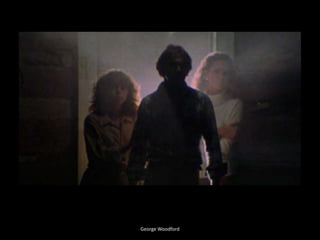
Lighting is expressive and non-naturalistic. Low-key lighting can help to crate dark shadows and unfamiliar shapes in the blackness. Lighting can be motivated in the world of the film (like bonfires, fireplaces and torches).
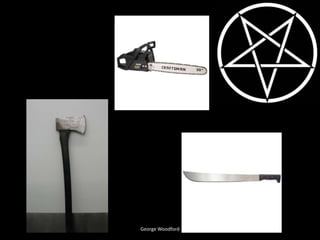
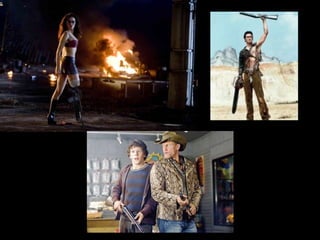
Props can help us to further identify horror genre. Specific props can be identified with a certain villain or character (Chainsaws, Machetes, Knife, Claw Gauntlets, Costumes, Firearms etc).

Horror genre conventions

  • 1.
    Horror Genre ConventionsByGeorge WoodfordGeorge Woodford
  • 2.
  • 3.
    SettingGeorge WoodfordSmall communitiesor isolated places. Urban environments, dark streets and narrow alleyways. Large cities or run down ghost towns. Anything that connotes isolation or being alone.
  • 4.
    Often sometimes placeswith “dark” history, like abandoned houses, hotels and insane asylums.
  • 5.
    Locations for anygood horror genre film could be: Lakes, Roads, Highways, Countryside, Barns, Farms, Dark Woods, Woodlands, Houses, Cabins, Cities, Subways, Gloomy Underground Tunnels, Creepy Hotels, Abounded Houses, Haunted Houses, Space-Stations (for Sci-Fi Horror), Graveyard (Or Cemetery), Dungeons, Deserted Ships at Sea, Space Ships, Alien Planets (Like Predators), basements, attics, meat factories, science lab, London Underground, Shopping Mall, Cornfield, Pirate Ship, Tundra, Asylum, Deep Water, Blizzards and many other dark locations. George Woodford
  • 6.
    Technical CodesGeorge WoodfordCameraworkis very expressive and not natural. High and Low angles can connote fear and nightmares.
  • 7.
    POV shots areimportant because they allow the audience to see the world from the monster’s eye. This happens roughly at the end or in the middle of typical horror film (Evil Dead had a very long POV shot when it chasing Ash the hero through his house).
  • 8.
    Handheld shots makeit difficult for the audience to make out what is happening. Cloverfieldis one prime example of this, since the entire movie is shot with a handheld camera to promote the feeling of terror and the unknown.
  • 9.
    Sometimes framework usesthe depth of field, makes it harder to see the monster creeping up behind the protagonist.
  • 10.
    Disturbing sounds arevery important in a horror movie. Ambient diegetic sounds like footsteps and non-diegetic sounds (like a heartbeat).
  • 11.
    Types of shotsused like ECU on a certain victim’s face can help the audience identification with horror and fear, and also to exclude any threats (if we can’t see it, then its more terrifying).
  • 12.
    Editing can createunsettling tension and suspense. If the editing hasn’t been paced up in a while then you know that something very bad is about to jump out and scare you.George Woodford
  • 13.
    IconographyGeorge WoodfordVisual style:Often dark colours like red and black (links to evil, blood and danger etc).
  • 14.
    Lighting is expressiveand non-naturalistic. Low-key lighting can help to crate dark shadows and unfamiliar shapes in the blackness. Lighting can be motivated in the world of the film (like bonfires, fireplaces and torches).
  • 15.
    Props can helpus to further identify horror genre. Specific props can be identified with a certain villain or character (Chainsaws, Machetes, Knife, Claw Gauntlets, Costumes, Firearms etc).