Introduction to Fingerspelling
Key Features

FingerSpelling is also known as the manual alphabet. Some of its main features are listed below:

    •   represents letters of the alphabet
    •   relies on knowledge of the spoken/written word
    •   is an important and integrated part of BSL
    •   forms words as patterns
    •   some small words are often spelt and are recognised as 'signs' eg 'DAY', 'STAFF'
    •   can be used for abbreviated forms of words eg 'BHM' BIRMINGHAM
    •   repeated initials can become signs eg 'MM' MOTHER, 'KK' KITCHEN
    •   is used for acronyms eg 'NVQ', 'GCSE', 'BBC', 'NHS' and 'BSL'
    •   can be integrated into a sign eg COMMUNICATION
    •   can be quickly learned but needs lots of practice to recognise words as patterns
    •   useful for names and places
    •   used more in some parts of the country than others
    •   used more by older Deaf people
    •   can provide deaf children with a link to literacy
    •   BSL uses a two-handed fingerspelling alphabet
    •   Australian Sign Language (Auslan) uses a two-handed alphabet
    •   some sign languages use one-handed alphabets, eg Irish Sign Language, American Sign
        Language

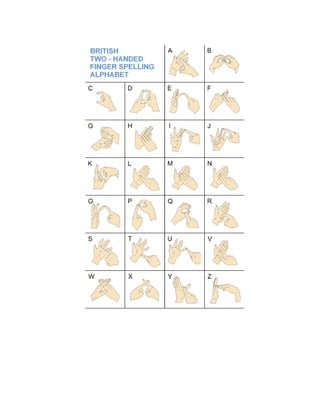
Fingerspelling provides a direct representation of the letters of the English alphabet.

The individual letters in the alphabet shown in the illustrations can be compared with the written form of
individual letters taught at primary school level. Just as written letters change considerably when written
fluently by hand, so fingerpelt letters alter considerably in fluent use. A similar ability to recognise words
as 'patterns' also occurs in the fluent use of fingerpelling, as it does in the reading of written words.

The use of fingerspelling within BSL varies considerably from individual to individual, depending on age,
educational background, geographical area, knowledge of English, or personal preference. Older people
and people in parts of northern England and Scotland, tend to use a large proportion of fingerspelt words
in all contexts, than younger people and those in the South.

Fingerspelling can be used to spell out words in full, or to provide an abbreviated form of words,
sometimes simply the initial letter.

For some words, such abbreviated forms are so commonly used that they have become signs. In other
instances, a fingerspelt formation has been incorporated into a sign.

Like all languages, BSL is constantly evolving and changing - influenced by surrounding languages,
picking up and borrowing as the fancy takes, and fingerspelling provides a rich source of borrowings from
English. However, since it provides a letter-for-letter representation of the written alphabet, it relies on
familiarity with the English word and should be used with caution.

There are many different written alphabets and different forms of manual alphabets in existence
throughout the world. Britain uses a two-handed fingerspelling system, which originated in the
seventeenth century, but the majority of fingerspelling systems used by other countries are one-handed
forms.
Drawings give a static image of the alphabet, but in fluent use, the shapes can merge and appear quite
different, so that they are recognised as word patterns, and this requires practice. A number of regularly
fingerspelt small words such as 'DAY', ' IF' and 'SON' have become accepted as 'signs'.

Fingerspelling is commonly used for names and places. Days of the week and months of the year are
also often a repeated initial or abbreviated pattern, eg WEDNESDAY - 'WW', JANUARY - 'JAN', and so
on.


DeafBlind Communication
Communicating with people with combined sight and hearing loss

Different terms are used when referring to people with combined loss of sight and hearing, but the term
deafblind is succinct and useful, although it is important to point out that very few people are totally deaf
and totally blind.

Degree of sight or hearing loss is very variable, as is the age of onset of either deafness or blindness,
resulting in extremely individual and wide ranging communication needs.

Communication with deafblind people is therefore a very complex process which may involve a variety of
communication methods.

Deafened/hard of hearing people with sight loss

People who are deafened or hard of hearing with combined sight loss, may communicate predominantly
through spoken language mediums, using

    •   speech/amplified speech
    •   lipreading/hearing aids
    •   the deafblind manual alphabet shown here or block alphabet in which the shapes of written letters
        are formed onto the palm of the hand.
    •   large print or braille.

Some of the above methods may also be used by born deaf people, in addition to BSL.

Sign Language Users with Sight Loss

It is estimated that approximately 5% of the born deaf sign language using Deaf community may develop
Usher Syndrome which combines congenital deafness with Retinitis Pigmentosa (a degenerative eye
condition).

Among the communication methods used by sign language users with sight loss are;

    •   the Manual Alphabet,
    •   Visual Frame Signing in which signs are made in a restricted space to suit the receiver's visual
        needs, and
    •   Hands On Signing in which BSL users who can no longer see the signs make contact with the
        signer's hands, to feel the meaning from the movements.
Sign Language

Sign Language

  • 1.
    Introduction to Fingerspelling KeyFeatures FingerSpelling is also known as the manual alphabet. Some of its main features are listed below: • represents letters of the alphabet • relies on knowledge of the spoken/written word • is an important and integrated part of BSL • forms words as patterns • some small words are often spelt and are recognised as 'signs' eg 'DAY', 'STAFF' • can be used for abbreviated forms of words eg 'BHM' BIRMINGHAM • repeated initials can become signs eg 'MM' MOTHER, 'KK' KITCHEN • is used for acronyms eg 'NVQ', 'GCSE', 'BBC', 'NHS' and 'BSL' • can be integrated into a sign eg COMMUNICATION • can be quickly learned but needs lots of practice to recognise words as patterns • useful for names and places • used more in some parts of the country than others • used more by older Deaf people • can provide deaf children with a link to literacy • BSL uses a two-handed fingerspelling alphabet • Australian Sign Language (Auslan) uses a two-handed alphabet • some sign languages use one-handed alphabets, eg Irish Sign Language, American Sign Language Fingerspelling provides a direct representation of the letters of the English alphabet. The individual letters in the alphabet shown in the illustrations can be compared with the written form of individual letters taught at primary school level. Just as written letters change considerably when written fluently by hand, so fingerpelt letters alter considerably in fluent use. A similar ability to recognise words as 'patterns' also occurs in the fluent use of fingerpelling, as it does in the reading of written words. The use of fingerspelling within BSL varies considerably from individual to individual, depending on age, educational background, geographical area, knowledge of English, or personal preference. Older people and people in parts of northern England and Scotland, tend to use a large proportion of fingerspelt words in all contexts, than younger people and those in the South. Fingerspelling can be used to spell out words in full, or to provide an abbreviated form of words, sometimes simply the initial letter. For some words, such abbreviated forms are so commonly used that they have become signs. In other instances, a fingerspelt formation has been incorporated into a sign. Like all languages, BSL is constantly evolving and changing - influenced by surrounding languages, picking up and borrowing as the fancy takes, and fingerspelling provides a rich source of borrowings from English. However, since it provides a letter-for-letter representation of the written alphabet, it relies on familiarity with the English word and should be used with caution. There are many different written alphabets and different forms of manual alphabets in existence throughout the world. Britain uses a two-handed fingerspelling system, which originated in the seventeenth century, but the majority of fingerspelling systems used by other countries are one-handed forms.
  • 2.
    Drawings give astatic image of the alphabet, but in fluent use, the shapes can merge and appear quite different, so that they are recognised as word patterns, and this requires practice. A number of regularly fingerspelt small words such as 'DAY', ' IF' and 'SON' have become accepted as 'signs'. Fingerspelling is commonly used for names and places. Days of the week and months of the year are also often a repeated initial or abbreviated pattern, eg WEDNESDAY - 'WW', JANUARY - 'JAN', and so on. DeafBlind Communication Communicating with people with combined sight and hearing loss Different terms are used when referring to people with combined loss of sight and hearing, but the term deafblind is succinct and useful, although it is important to point out that very few people are totally deaf and totally blind. Degree of sight or hearing loss is very variable, as is the age of onset of either deafness or blindness, resulting in extremely individual and wide ranging communication needs. Communication with deafblind people is therefore a very complex process which may involve a variety of communication methods. Deafened/hard of hearing people with sight loss People who are deafened or hard of hearing with combined sight loss, may communicate predominantly through spoken language mediums, using • speech/amplified speech • lipreading/hearing aids • the deafblind manual alphabet shown here or block alphabet in which the shapes of written letters are formed onto the palm of the hand. • large print or braille. Some of the above methods may also be used by born deaf people, in addition to BSL. Sign Language Users with Sight Loss It is estimated that approximately 5% of the born deaf sign language using Deaf community may develop Usher Syndrome which combines congenital deafness with Retinitis Pigmentosa (a degenerative eye condition). Among the communication methods used by sign language users with sight loss are; • the Manual Alphabet, • Visual Frame Signing in which signs are made in a restricted space to suit the receiver's visual needs, and • Hands On Signing in which BSL users who can no longer see the signs make contact with the signer's hands, to feel the meaning from the movements.