Vol. 20 No. 2, 2006 
Subarachnoid Block With Low Dose Bupivacaine And 
Fentanyl In Elderly Hypertensive Female Patients Undergoing 
Vaginal Hysterectomy 
1Dr. Lalita Gouri Mitra, 2Dr.Suman Chattopadhyay, 3Dr. B. N.Biswas, 4Dr. Manjushree Ray, 5Dr.Pinaki 
Mazumder. 
Summary : 
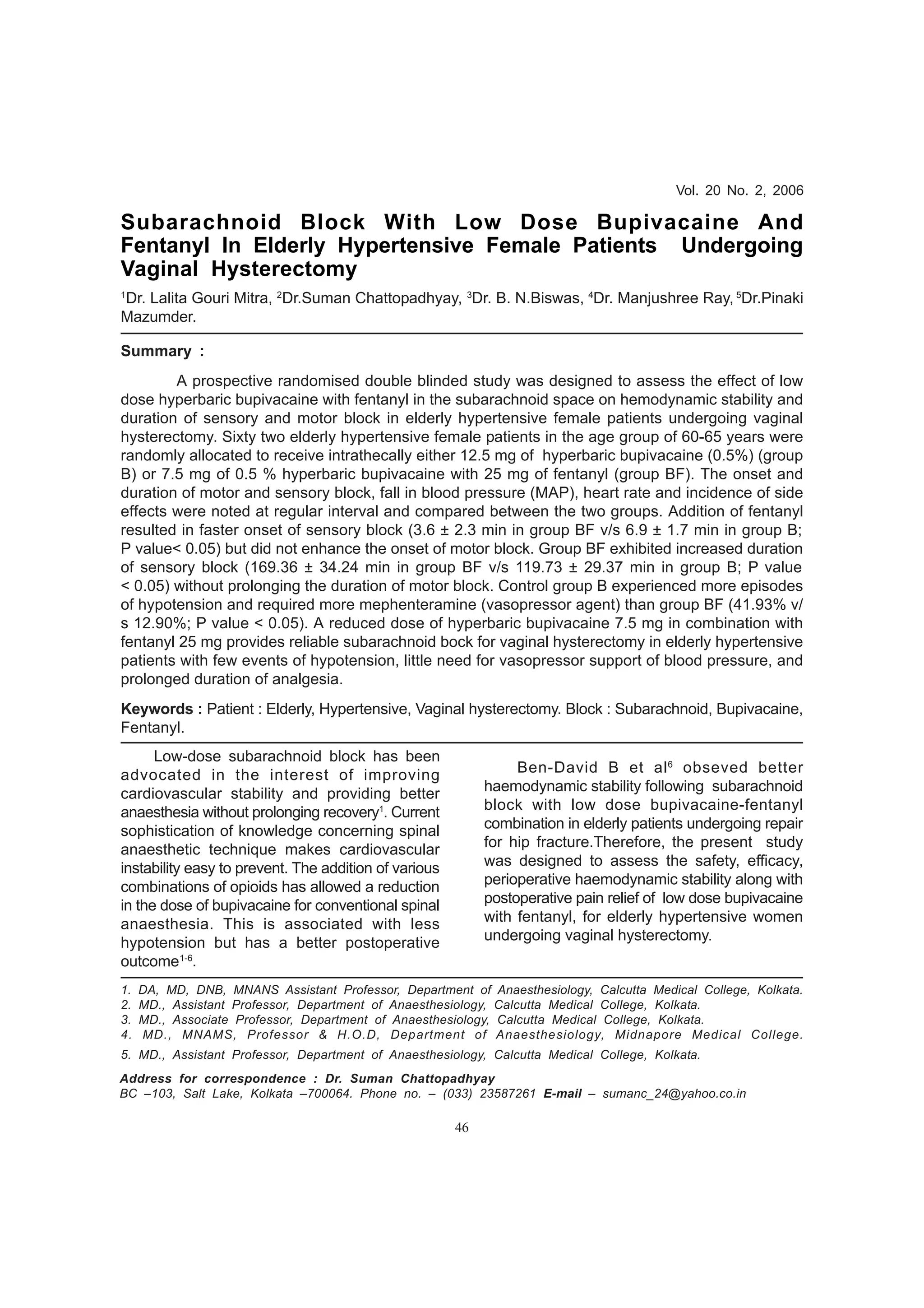
A prospective randomised double blinded study was designed to assess the effect of low 
dose hyperbaric bupivacaine with fentanyl in the subarachnoid space on hemodynamic stability and 
duration of sensory and motor block in elderly hypertensive female patients undergoing vaginal 
hysterectomy. Sixty two elderly hypertensive female patients in the age group of 60-65 years were 
randomly allocated to receive intrathecally either 12.5 mg of hyperbaric bupivacaine (0.5%) (group 
B) or 7.5 mg of 0.5 % hyperbaric bupivacaine with 25 mg of fentanyl (group BF). The onset and 
duration of motor and sensory block, fall in blood pressure (MAP), heart rate and incidence of side 
effects were noted at regular interval and compared between the two groups. Addition of fentanyl 
resulted in faster onset of sensory block (3.6 ± 2.3 min in group BF v/s 6.9 ± 1.7 min in group B; 
P value< 0.05) but did not enhance the onset of motor block. Group BF exhibited increased duration 
of sensory block (169.36 ± 34.24 min in group BF v/s 119.73 ± 29.37 min in group B; P value 
< 0.05) without prolonging the duration of motor block. Control group B experienced more episodes 
of hypotension and required more mephenteramine (vasopressor agent) than group BF (41.93% v/ 
s 12.90%; P value < 0.05). A reduced dose of hyperbaric bupivacaine 7.5 mg in combination with 
fentanyl 25 mg provides reliable subarachnoid bock for vaginal hysterectomy in elderly hypertensive 
patients with few events of hypotension, little need for vasopressor support of blood pressure, and 
prolonged duration of analgesia. 
Keywords : Patient : Elderly, Hypertensive, Vaginal hysterectomy. Block : Subarachnoid, Bupivacaine, 
Fentanyl. 
1. DA, MD, DNB, MNANS Assistant Professor, Department of Anaesthesiology, Calcutta Medical College, Kolkata. 
2. MD., Assistant Professor, Department of Anaesthesiology, Calcutta Medical College, Kolkata. 
3. MD., Associate Professor, Department of Anaesthesiology, Calcutta Medical College, Kolkata. 
4. MD., MNAMS, Professor & H.O.D, Department of Anaesthesiology, Midnapore Medical College. 
5. MD., Assistant Professor, Department of Anaesthesiology, Calcutta Medical College, Kolkata. 
46 
Low-dose subarachnoid block has been 
advocated in the interest of improving 
cardiovascular stability and providing better 
anaesthesia without prolonging recovery1. Current 
sophistication of knowledge concerning spinal 
anaesthetic technique makes cardiovascular 
instability easy to prevent. The addition of various 
combinations of opioids has allowed a reduction 
in the dose of bupivacaine for conventional spinal 
anaesthesia. This is associated with less 
hypotension but has a better postoperative 
outcome1-6. 
Ben-David B et al6 obseved better 
haemodynamic stability following subarachnoid 
block with low dose bupivacaine-fentanyl 
combination in elderly patients undergoing repair 
for hip fracture.Therefore, the present study 
was designed to assess the safety, efficacy, 
perioperative haemodynamic stability along with 
postoperative pain relief of low dose bupivacaine 
with fentanyl, for elderly hypertensive women 
undergoing vaginal hysterectomy. 
Address for correspondence : Dr. Suman Chattopadhyay 
BC –103, Salt Lake, Kolkata –700064. Phone no. – (033) 23587261 E-mail – sumanc_24@yahoo.co.in
47 
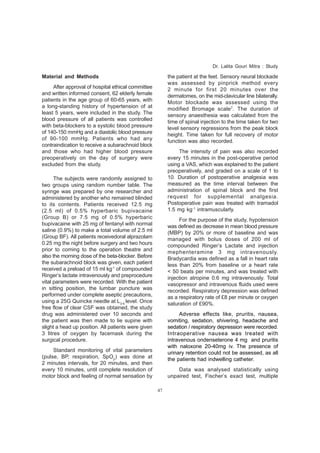
Material and Methods 
After approval of hospital ethical committee 
and written informed consent, 62 elderly female 
patients in the age group of 60-65 years, with 
a long-standing history of hypertension of at 
least 5 years, were included in the study. The 
blood pressure of all patients was controlled 
with beta-blockers to a systolic blood pressure 
of 140-150 mmHg and a diastolic blood pressure 
of 90-100 mmHg. Patients who had any 
contraindication to receive a subarachnoid block 
and those who had higher blood pressure 
preoperatively on the day of surgery were 
excluded from the study. 
The subjects were randomly assigned to 
two groups using random number table. The 
syringe was prepared by one researcher and 
administered by another who remained blinded 
to its contents. Patients received 12.5 mg 
(2.5 ml) of 0.5% hyperbaric bupivacaine 
(Group B) or 7.5 mg of 0.5% hyperbaric 
bupivacaine with 25 mg of fentanyl with normal 
saline (0.9%) to make a total volume of 2.5 ml 
(Group BF). All patients receivedoral alprazolam 
0.25 mg the night before surgery and two hours 
prior to coming to the operation theatre and 
also the morning dose of the beta-blocker. Before 
the subarachnoid block was given, each patient 
received a preload of 15 ml kg-1 of compounded 
Ringer’s lactate intravenously and preprocedure 
vital parameters were recorded. With the patient 
in sitting position, the lumbar puncture was 
performed under complete aseptic precautions, 
using a 25G Quincke needle at L3-4 level. Once 
free flow of clear CSF was obtained, the study 
drug was administered over 10 seconds and 
the patient was then made to lie supine with 
slight a head up position. All patients were given 
3 litres of oxygen by facemask during the 
surgical procedure. 
Standard monitoring of vital parameters 
(pulse, BP, respiration, SpO2) was done at 
2 minutes intervals, for 20 minutes, and then 
every 10 minutes, until complete resolution of 
motor block and feeling of normal sensation by 
Dr. Lalita Gouri Mitra : Study 
the patient at the feet. Sensory neural blockade 
was assessed by pinprick method every 
2 minute for first 20 minutes over the 
dermatomes, on the mid-clavicular line bilaterally. 
Motor blockade was assessed using the 
modified Bromage scale7. The duration of 
sensory anaesthesia was calculated from the 
time of spinal injection to the time taken for two 
level sensory regressions from the peak block 
height. Time taken for full recovery of motor 
function was also recorded. 
The intensity of pain was also recorded 
every 15 minutes in the post-operative period 
using a VAS, which was explained to the patient 
preoperatively, and graded on a scale of 1 to 
10. Duration of postoperative analgesia was 
measured as the time interval between the 
administration of spinal block and the first 
request for supplemental analgesia. 
Postoperative pain was treated with tramadol 
1.5 mg kg-1 intramuscularly. 
For the purpose of the study, hypotension 
was defined as decrease in mean blood pressure 
(MBP) by 20% or more of baseline and was 
managed with bolus doses of 200 ml of 
compounded Ringer’s Lactate and injection 
mephenteramine 3 mg intravenously. 
Bradycardia was defined as a fall in heart rate 
less than 20% from baseline or a heart rate 
< 50 beats per minutes, and was treated with 
injection atropine 0.6 mg intravenously. Total 
vasopressor and intravenous fluids used were 
recorded. Respiratory depression was defined 
as a respiratory rate of £8 per minute or oxygen 
saturation of £90%. 
Adverse effects like, pruritis, nausea, 
vomiting, sedation, shivering, headache and 
sedation / respiratory depression were recorded. 
Intraoperative nausea was treated with 
intravenous ondenseterone 4 mg and pruritis 
with naloxone 20-40mg iv. The presence of 
urinary retention could not be assessed, as all 
the patients had indwelling catheter. 
Data was analysed statistically using 
unpaired test, Fischer’s exact test, multiple
48 
comparison and multiple range tests, wherever 
applicable. P value (corrected for multiple 
comparisons) < 0.05 was considered significant. 
Data was presented as mean values ± SD, 
median (range) values, and numbers (percent). 
Results 
The two treatment groups (consisting 31 
patients each) were comparable with respect to 
ASA physical status, age, weight, height, and 
the surgical duration (Table 1). The highest 
sensory levels achieved were T 7 (T6-8) in both 
Group B (control) and Group BF (fentanyl). Time 
for onset of sensory block was 3.6 ± 2.3 min 
and the duration of sensory block was 89 ± 
18 min in Group BF (v/s 6.9 ± 1.7 min and 
72 ± 15 min, respectively in Group B, P<0.05) 
(Table 2). Neither the onset of bupivacaine 
induced motor blocks nor their duration were 
prolonged by the addition of fentanyl to 
bupivacaine for subarachnoid block (Table 2). 
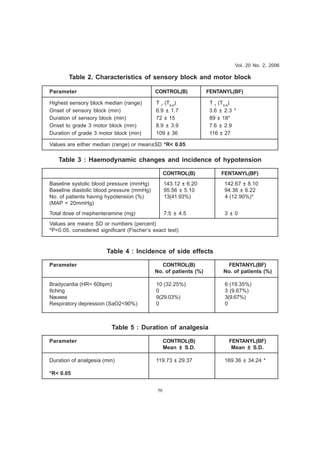
More patients in Group B experienced 
hypotension in comparison to in Group BF [13 
(41.93%) v/s 4 (12.90%)] (Table 3, P<0.05). 
The requirement of mephenteramine was higher 
in Group B than in Group BF (7.5 ± 4.5 v/s 3.0 
± 0 mg, P<0.05) (Table 3). Between the two 
groups we found no differences in the incidence 
of pruritis, shivering, nausea and bradycardia 
(Table 4). No patient experienced respiratory 
depression in our study. Patients in Group BF 
demanded the first dose of analgesia much later 
than in patients in Group B (169.36 ± 34.24 min 
v/s 119.73 ± 29.37 min, P<0.05) (Table 5). 
Discussion 
The choice of the local anaesthetic depends 
upon both duration of action and potential for 
neurological injury. Bupivacaine, the best 
available drug available for subarachnoid block 
in India, has duration of action that is 
intermediate between that of lignocaine and 
tetracaine, a lower incidence of transient 
radicular irritation than lignocaine, and a more 
rapid and shorter duration of motor blockade 
than tetracaine. Bupivacaine has a longer 
duration than levobupivacaine and ropivacaine, 
Vol. 20 No. 2, 2006 
and a higher success rate than an identical 
dose of levobupivacaine8. The most important 
determinant of both successful surgical 
anaesthesia and time until recovery is the dose 
of local anaesthetic drug9. Using an intrathecal 
opioid, reduces the period of recumbency after 
spinal anaesthesia, by allowing early 
ambulation, and results in decrease in the 
incidence of post-dural puncture headache10 and 
the duration of hospital stay. 
We have chosen the dose of 25 mg of 
fentanyl as most studies have shown this dose 
provides maximum duration of postoperative 
analgesia with minimal side effects like 
respiratory depression and pruritis 11,12,13. There 
was evidence of a dose response relationship 
in a study by Belzarena SD14 where higher 
doses were associated with increased analgesia 
but with increased pruritis. In addition to minimal 
side effects, the ideal intrathecal opiate should 
have a rapid onset and a long duration of action, 
thus providing improved intra- and postoperative 
analgesia. Diamorpine 15,16 has theoretical 
benefits in this regard however this drug is not 
available in our country. 
We evaluated the use of 7.5 mg hyperbaric 
bupivacaine with 25 mg fentanyl in the 
subarachnoid space and its hemodynamic 
stability, duration of spinal anaesthesia, time 
taken for full recovery of motor and sensory 
function and the requirement for mephenteramine 
in elderly hypertensive female patients. 
In two different studies1,17 the use of low 
dose bupivacaine (5mg) along with two different 
doses of fentanyl intrathecally resulted in shorter 
lasting motor block, but maintained the same 
level of sensory analgesia as with larger doses 
of bupivacaine (7.5 mg, 10mg) with or without 
fentanyl. The level of sensory analgesia was 
same in both groups in our study. Sensory 
analgesia should be at least upto T6 for vaginal 
hysterectomy, and we could achieve this level 
both with dosage of 12.5 mg hyperbaric 
bupivacaine alone and with 7.5 mg hyperbaric 
bupivacaine with 25 mg fentanyl. However, the 
addition of fentanyl resulted in faster onset of 
sensory block (3.6 ± 2.3 min v/s 6.9 ± 1.7 min)
49 
and duration of sensory block was prolonged in 
Group BF (89 ± 18 min v/s 72 ± 15 min).Onset 
and duration of motor block was similar in both 
the groups. Mahajan R et al18 found that the 
level of sensory analgesia was not influenced 
by intrathecal fentanyl but there was significant 
prolongation of time taken for the regression of 
sensory block below T12 dermatome when 
fentanyl was included, though the onset and 
regression of motor blockade were comparable 
in both groups. 
All patients in a study by Liu S et al19, 
developed pruiritis, a common complication of 
intra-thecal opioid use. Few patients in our study 
(9.67%) in the group BF developed pruritis. 
Fernandez-Galinski D et al20, found that 25 mg 
of fentanyl given in the intra-thecal space, 
induced hypoxia in elderly patients undergoing 
hip or knee surgery, when combined with 
pre and intra-operative benzodiazepines. None 
of the patients in either of the two groups, in 
our study developed respiratory depression, even 
though all the patients were premedicated with 
sustained release oral alprazolam 0.25 mg the 
night before surgery and two hours prior to 
coming to the operation theatre. 
Fernandez-Galinski D et al20 also reported 
that fewer patients who received 4 mg isobaric 
bupivacaine with 20 mg of fentanyl, developed 
hypotension, in comparison to patients receiving 
only 10 mg isobaric bupivacaine intra-thecally. 
Ramanathan et al21, have reported a modest 
decrease in MAP using intrathecal 7.5 mg 
bupivacaine and 25 mg fentanyl in severely 
preeclamptic parturients with combined spinal-epidural 
Dr. Lalita Gouri Mitra : Study 
approach (15 ± 7% in caesarean delivery 
and 16 ± 9% in labour analgesia. Patients in 
both the groups in our study showed a fall in 
MAP, within 4-7 minutes. The fall in MAP was 
more significant in the Group B than in Group 
BF [13 (41.93%) v/s 4 (12.90%)] and the 
requirement of mephenteramine was higher in 
Group B than in Group BF (7.5±4.5 v/s 3.0 ± 
0 mg, P<0.05). Intrathecal fentanyl by itself and 
not in combination with bupivacaine causes a 
further blockade of sympathetic efferent activity 
and that clinical influence after spinal 
anaesthesia is related to the dose of 
bupivacaine1,5,6. Fentanyl has been found to 
provide greater hemodynamic stability and better 
quality of analgesia as compared to isolated 
use of either drug alone22. 
The first dose of postoperative analgesia 
was required much later in Group BF than in 
patients in Group B (169.36 ± 34.24 min v/s 
119.73 ± 29.37 min, P < 0.05). Higher doses of 
bupivacaine reduces the occurrence of visceral 
pain even though T4 sensory level has been 
achieved with lesser doses23. Intrathecal fentanyl 
inhibits afferent synaptic transmission via C and 
A fibres, and also has direct postsynaptic effect 
with hyperpolarisation and reduced neuronal 
activity causing prolonged postoperative pain 
relief24,25. 
To conclude, addition of 25 mg of fentanyl 
to 7.5 mg of hyperbaric bupivacaine provides 
adequate surgical anaesthesia for vaginal 
hysterectomy, stable hemodynamics, lesser 
events of hypotension and need for vasopressor, 
as well as a longer postoperative pain free period 
in elderly hypertensive patients. 
Table 1. Demographic characteristics of the two treatment group 
Control(B)Mean ± S.D. Fentanyl(BF)Mean ± S.D. 
Age (yrs) 62 ± 2 63 ± 2 
Height (cm) 153 ± 4 151 ± 5 
Weight (kg ) 55 ± 11 56 ± 15 
Duration of surgery (min) 99 ± 27 101 ± 32 
No statistical differences
Table 3 : Haemodynamic changes and incidence of hypotension 
Table 4 : Incidence of side effects 
Parameter CONTROL(B) FENTANYL(BF) 
No. of patients (%) No. of patients (%) 
Bradycardia (HR< 60bpm) 10 (32.25%) 6 (19.35%) 
Itching 0 3 (9.67%) 
Nausea 9(29.03%) 3(9.67%) 
Respiratory depression (SaO2<90%) 0 0 
Table 5 : Duration of analgesia 
Parameter CONTROL(B) FENTANYL(BF) 
Mean ± S.D. Mean ± S.D. 
Duration of analgesia (min) 119.73 ± 29.37 169.36 ± 34.24 * 
*R< 0.05 
CONTROL(B) FENTANYL(BF) 
Baseline systolic blood pressure (mmHg) 143.12 ± 6.20 142.67 ± 8.10 
Baseline diastolic blood pressure (mmHg) 95.56 ± 5.10 94.36 ± 6.22 
No. of patients having hypotension (%) 13(41.93%) 4 (12.90%)* 
(MAP < 20mmHg) 
Total dose of mephenteramine (mg) 7.5 ± 4.5 3 ± 0 
Values are mean± SD or numbers (percent) 
*P<0.05, considered significant (Fischer’s exact test) 
50 
Vol. 20 No. 2, 2006 
Table 2. Characteristics of sensory block and motor block 
Parameter CONTROL(B) FENTANYL(BF) 
Highest sensory block median (range) T 7 (T6-8) T 7 (T6-8) 
Onset of sensory block (min) 6.9 ± 1.7 3.6 ± 2.3 * 
Duration of sensory block (min) 72 ± 15 89 ± 18* 
Onset to grade 3 motor block (min) 8.9 ± 3.9 7.6 ± 2.9 
Duration of grade 3 motor block (min) 109 ± 36 116 ± 27 
Values are either median (range) or mean±SD *R< 0.05
51 
References : 
1. Ben-David B, Solomon E, Levin H, et al. Intrathecal 
fentanyl with small-dose dilute bupivacaine: Better 
anaesthesia without prolonging recovery. Anesth 
Analg 1997; 85: 560 - 65. 
2. Hood DD, Regina Curry RN. Spinal versus epidural 
anaesthesia for caesarean section in severely 
preeclamptic patients. Anesthesiology 1999; 
90: 1276-82. 
3. Wallace DH, Leveno KJ, Cunningham IG, et al. 
Randomised comparison of general and regional 
anaesthesia for caesarean delivery in pregnancies 
complicated by severe preeclampsia. Obstet 
Gynecol 1995; 86: 193-9. 
4. Karinen J, Asanen J, Alahuhta S, et al. Maternal 
and uteroplacental hemodynamic state in 
preeclapmtic patients during spinal anaesthesia for 
caesarean section. Br J Anaesth 1996; 76:616-20. 
5. Martyr JW and Clark MX. Hypotension in elderly 
patients undergoing spinal anaesthesia for repair 
of fracture neck of femur. A comparison of two 
different spinal solutions. Anaesth Intens Care 
2001; 29:501-5. 
6. Ben-David B, Frankel R, Arzumonov I, et al. 
Minidose bupivacaine-fentanyl spinal anaesthesia 
for surgical repair of fracture in the aged. 
Anaesthesiology 2000; 92:6-10. 
7. Bromage PR, Burfoot MF, Crowell DE, et al. Quality 
of epidural blockade: Influence of physical factors. 
Br J Anaesth 1964; 36:342-52. 
8. Gautier P, De Kock M, Huberty L, et al. Comparison 
of the effects of intrathecal ropivacaine, 
levobupivacaine, and bupivacaine for caesarean 
section. Br J Anaesth 2003; 91:684-89. 
9. Ben David B, Levin H, Solomon E, et al. Spinal 
bupivacaine in ambulatory surgery. The effect of 
saline dilution. Anesth Analg 1996; 83:716-20. 
10. Jones RJ. The role of recumbency in the prevention 
and treatment of post-spinal headache. Anesth 
Analg 1974; 53:788. 
11. Spencer S Liu, Susan B McDonald. Current issues 
in spinal anaesthesia. Anaesthesiology 2001; 
94:888-906. 
12. Singh H, Yang J, Thorton K, et al. Intrathecal 
fentanyl prolongs sensory bupivacaine spinal block. 
Can J Anaesth 1995; 42: 987-91. 
13. Varrassi G, Celleno D, Capogna G, et al. Ventilatory 
effects of subacrachnoid fentanyl in the elderly. 
Anaesthesia 1992; 47:558-62. 
Dr. Lalita Gouri Mitra : Study 
14. Belzarena SD. Clinical effects of intrathecally 
administered fentanyl in patients undergoing 
caesarean section. Anesth Analg 1992; 
74: 653-57. 
15. Husaini SW, Russell IF. Intrathecal diamorphine 
compared with morphine for postoperative 
analgesia after caesarean section under spinal 
anaesthesia. Br J Anaesth 1998; 81:135-39. 
16. Cowen CM, Kendall JB, Barclay PM, et al. 
Comparison of intrathecal fentanyl and diamorphine 
in addition to bupivacaine for caesarean section 
under spinal anaesthesia. Br J Anaesth 2002; 
89:452-58. 
17. Kuusniemi KS, Pihlajamaki KK, Pitkanen MT, et al. 
The use of bupivacaine and fentanyl for spinal 
anaesthesia for urological surgery. Anesth Analg 
2000; 91: 1452-56. 
18. Mahajan R, Grover VK, Jain K, et al. Intrathecal 
fentanyl with low dose hyperbaric bupivacaine for 
caesarean delivery in patients with pregnancy 
induced hypertension. J Anaesth Clin Pharmacol 
2005; 21(1): 51-8. 
19. Liu S, Chiu A, Carpenter R, et al. Fentanyl prolongs 
lidocaine spinal anaesthesia spinal anaesthesia 
without prolonging recovery. Anesth Analg 1995; 
80: 730-34. 
20. Fernandez-Galinski D, Rue M, Moral V, et al. Spinal 
anaesthesia with bupivacaine and fentanyl in 
geriatric patients. Anesth Analg 1996; 83: 537-41. 
21. Ramanathan J, Vaddadi AK, Arheart KL. Combined 
spinal and epidural anaesthesia with low doses of 
intrathecal bupivacaine in women with severe 
preeclampsia. Reg Anaesth Pain Med 2000; 
25: 170-73. 
22. Hunt CO, Naulty SJ, Bader AM, et al. Perioperative 
analgesia with subarachnoid fentanyl-bupivacaine 
for caesarean delivery. Anesthesiology 1989; 
71: 535-40. 
23. Pedersen H, Santos C, Steinberg ES, et al. 
Incidence of visceral pain during caesarean 
section: The effect of varying doses of spinal 
bupivacaine. Anesth Analg 1989; 69: 46-9. 
24. Dickenson AH, Mechanism of the analgesic action 
of opiates and opioids. Br Med Bull 1991; 
47: 690-702. 
25. Wand C, Chakrabarti MK, Whitwarm JG. Specific 
enhancement by fentanyl of the effect of intrathecal 
bupivacaine on nociceptive efferent but not on 
sympathetic efferent pathways in dogs. 
Anesthesiology 1993; 79:766-773.

Subarachnoid Block With Low Dose Bupivacaine And Fentanyl In Elderly Hypertensive Female Patients Undergoing Vaginal Hysterectomy-1Dr. Lalita Gouri Mitra, 2Dr.Suman Chattopadhyay, 3Dr. B. N.Biswas, 4Dr. Manjushree Ray, 5Dr.Pinaki Mazumder.

  • 1.
    Vol. 20 No.2, 2006 Subarachnoid Block With Low Dose Bupivacaine And Fentanyl In Elderly Hypertensive Female Patients Undergoing Vaginal Hysterectomy 1Dr. Lalita Gouri Mitra, 2Dr.Suman Chattopadhyay, 3Dr. B. N.Biswas, 4Dr. Manjushree Ray, 5Dr.Pinaki Mazumder. Summary : A prospective randomised double blinded study was designed to assess the effect of low dose hyperbaric bupivacaine with fentanyl in the subarachnoid space on hemodynamic stability and duration of sensory and motor block in elderly hypertensive female patients undergoing vaginal hysterectomy. Sixty two elderly hypertensive female patients in the age group of 60-65 years were randomly allocated to receive intrathecally either 12.5 mg of hyperbaric bupivacaine (0.5%) (group B) or 7.5 mg of 0.5 % hyperbaric bupivacaine with 25 mg of fentanyl (group BF). The onset and duration of motor and sensory block, fall in blood pressure (MAP), heart rate and incidence of side effects were noted at regular interval and compared between the two groups. Addition of fentanyl resulted in faster onset of sensory block (3.6 ± 2.3 min in group BF v/s 6.9 ± 1.7 min in group B; P value< 0.05) but did not enhance the onset of motor block. Group BF exhibited increased duration of sensory block (169.36 ± 34.24 min in group BF v/s 119.73 ± 29.37 min in group B; P value < 0.05) without prolonging the duration of motor block. Control group B experienced more episodes of hypotension and required more mephenteramine (vasopressor agent) than group BF (41.93% v/ s 12.90%; P value < 0.05). A reduced dose of hyperbaric bupivacaine 7.5 mg in combination with fentanyl 25 mg provides reliable subarachnoid bock for vaginal hysterectomy in elderly hypertensive patients with few events of hypotension, little need for vasopressor support of blood pressure, and prolonged duration of analgesia. Keywords : Patient : Elderly, Hypertensive, Vaginal hysterectomy. Block : Subarachnoid, Bupivacaine, Fentanyl. 1. DA, MD, DNB, MNANS Assistant Professor, Department of Anaesthesiology, Calcutta Medical College, Kolkata. 2. MD., Assistant Professor, Department of Anaesthesiology, Calcutta Medical College, Kolkata. 3. MD., Associate Professor, Department of Anaesthesiology, Calcutta Medical College, Kolkata. 4. MD., MNAMS, Professor & H.O.D, Department of Anaesthesiology, Midnapore Medical College. 5. MD., Assistant Professor, Department of Anaesthesiology, Calcutta Medical College, Kolkata. 46 Low-dose subarachnoid block has been advocated in the interest of improving cardiovascular stability and providing better anaesthesia without prolonging recovery1. Current sophistication of knowledge concerning spinal anaesthetic technique makes cardiovascular instability easy to prevent. The addition of various combinations of opioids has allowed a reduction in the dose of bupivacaine for conventional spinal anaesthesia. This is associated with less hypotension but has a better postoperative outcome1-6. Ben-David B et al6 obseved better haemodynamic stability following subarachnoid block with low dose bupivacaine-fentanyl combination in elderly patients undergoing repair for hip fracture.Therefore, the present study was designed to assess the safety, efficacy, perioperative haemodynamic stability along with postoperative pain relief of low dose bupivacaine with fentanyl, for elderly hypertensive women undergoing vaginal hysterectomy. Address for correspondence : Dr. Suman Chattopadhyay BC –103, Salt Lake, Kolkata –700064. Phone no. – (033) 23587261 E-mail – sumanc_24@yahoo.co.in
  • 2.
    47 Material andMethods After approval of hospital ethical committee and written informed consent, 62 elderly female patients in the age group of 60-65 years, with a long-standing history of hypertension of at least 5 years, were included in the study. The blood pressure of all patients was controlled with beta-blockers to a systolic blood pressure of 140-150 mmHg and a diastolic blood pressure of 90-100 mmHg. Patients who had any contraindication to receive a subarachnoid block and those who had higher blood pressure preoperatively on the day of surgery were excluded from the study. The subjects were randomly assigned to two groups using random number table. The syringe was prepared by one researcher and administered by another who remained blinded to its contents. Patients received 12.5 mg (2.5 ml) of 0.5% hyperbaric bupivacaine (Group B) or 7.5 mg of 0.5% hyperbaric bupivacaine with 25 mg of fentanyl with normal saline (0.9%) to make a total volume of 2.5 ml (Group BF). All patients receivedoral alprazolam 0.25 mg the night before surgery and two hours prior to coming to the operation theatre and also the morning dose of the beta-blocker. Before the subarachnoid block was given, each patient received a preload of 15 ml kg-1 of compounded Ringer’s lactate intravenously and preprocedure vital parameters were recorded. With the patient in sitting position, the lumbar puncture was performed under complete aseptic precautions, using a 25G Quincke needle at L3-4 level. Once free flow of clear CSF was obtained, the study drug was administered over 10 seconds and the patient was then made to lie supine with slight a head up position. All patients were given 3 litres of oxygen by facemask during the surgical procedure. Standard monitoring of vital parameters (pulse, BP, respiration, SpO2) was done at 2 minutes intervals, for 20 minutes, and then every 10 minutes, until complete resolution of motor block and feeling of normal sensation by Dr. Lalita Gouri Mitra : Study the patient at the feet. Sensory neural blockade was assessed by pinprick method every 2 minute for first 20 minutes over the dermatomes, on the mid-clavicular line bilaterally. Motor blockade was assessed using the modified Bromage scale7. The duration of sensory anaesthesia was calculated from the time of spinal injection to the time taken for two level sensory regressions from the peak block height. Time taken for full recovery of motor function was also recorded. The intensity of pain was also recorded every 15 minutes in the post-operative period using a VAS, which was explained to the patient preoperatively, and graded on a scale of 1 to 10. Duration of postoperative analgesia was measured as the time interval between the administration of spinal block and the first request for supplemental analgesia. Postoperative pain was treated with tramadol 1.5 mg kg-1 intramuscularly. For the purpose of the study, hypotension was defined as decrease in mean blood pressure (MBP) by 20% or more of baseline and was managed with bolus doses of 200 ml of compounded Ringer’s Lactate and injection mephenteramine 3 mg intravenously. Bradycardia was defined as a fall in heart rate less than 20% from baseline or a heart rate < 50 beats per minutes, and was treated with injection atropine 0.6 mg intravenously. Total vasopressor and intravenous fluids used were recorded. Respiratory depression was defined as a respiratory rate of £8 per minute or oxygen saturation of £90%. Adverse effects like, pruritis, nausea, vomiting, sedation, shivering, headache and sedation / respiratory depression were recorded. Intraoperative nausea was treated with intravenous ondenseterone 4 mg and pruritis with naloxone 20-40mg iv. The presence of urinary retention could not be assessed, as all the patients had indwelling catheter. Data was analysed statistically using unpaired test, Fischer’s exact test, multiple
  • 3.
    48 comparison andmultiple range tests, wherever applicable. P value (corrected for multiple comparisons) < 0.05 was considered significant. Data was presented as mean values ± SD, median (range) values, and numbers (percent). Results The two treatment groups (consisting 31 patients each) were comparable with respect to ASA physical status, age, weight, height, and the surgical duration (Table 1). The highest sensory levels achieved were T 7 (T6-8) in both Group B (control) and Group BF (fentanyl). Time for onset of sensory block was 3.6 ± 2.3 min and the duration of sensory block was 89 ± 18 min in Group BF (v/s 6.9 ± 1.7 min and 72 ± 15 min, respectively in Group B, P<0.05) (Table 2). Neither the onset of bupivacaine induced motor blocks nor their duration were prolonged by the addition of fentanyl to bupivacaine for subarachnoid block (Table 2). More patients in Group B experienced hypotension in comparison to in Group BF [13 (41.93%) v/s 4 (12.90%)] (Table 3, P<0.05). The requirement of mephenteramine was higher in Group B than in Group BF (7.5 ± 4.5 v/s 3.0 ± 0 mg, P<0.05) (Table 3). Between the two groups we found no differences in the incidence of pruritis, shivering, nausea and bradycardia (Table 4). No patient experienced respiratory depression in our study. Patients in Group BF demanded the first dose of analgesia much later than in patients in Group B (169.36 ± 34.24 min v/s 119.73 ± 29.37 min, P<0.05) (Table 5). Discussion The choice of the local anaesthetic depends upon both duration of action and potential for neurological injury. Bupivacaine, the best available drug available for subarachnoid block in India, has duration of action that is intermediate between that of lignocaine and tetracaine, a lower incidence of transient radicular irritation than lignocaine, and a more rapid and shorter duration of motor blockade than tetracaine. Bupivacaine has a longer duration than levobupivacaine and ropivacaine, Vol. 20 No. 2, 2006 and a higher success rate than an identical dose of levobupivacaine8. The most important determinant of both successful surgical anaesthesia and time until recovery is the dose of local anaesthetic drug9. Using an intrathecal opioid, reduces the period of recumbency after spinal anaesthesia, by allowing early ambulation, and results in decrease in the incidence of post-dural puncture headache10 and the duration of hospital stay. We have chosen the dose of 25 mg of fentanyl as most studies have shown this dose provides maximum duration of postoperative analgesia with minimal side effects like respiratory depression and pruritis 11,12,13. There was evidence of a dose response relationship in a study by Belzarena SD14 where higher doses were associated with increased analgesia but with increased pruritis. In addition to minimal side effects, the ideal intrathecal opiate should have a rapid onset and a long duration of action, thus providing improved intra- and postoperative analgesia. Diamorpine 15,16 has theoretical benefits in this regard however this drug is not available in our country. We evaluated the use of 7.5 mg hyperbaric bupivacaine with 25 mg fentanyl in the subarachnoid space and its hemodynamic stability, duration of spinal anaesthesia, time taken for full recovery of motor and sensory function and the requirement for mephenteramine in elderly hypertensive female patients. In two different studies1,17 the use of low dose bupivacaine (5mg) along with two different doses of fentanyl intrathecally resulted in shorter lasting motor block, but maintained the same level of sensory analgesia as with larger doses of bupivacaine (7.5 mg, 10mg) with or without fentanyl. The level of sensory analgesia was same in both groups in our study. Sensory analgesia should be at least upto T6 for vaginal hysterectomy, and we could achieve this level both with dosage of 12.5 mg hyperbaric bupivacaine alone and with 7.5 mg hyperbaric bupivacaine with 25 mg fentanyl. However, the addition of fentanyl resulted in faster onset of sensory block (3.6 ± 2.3 min v/s 6.9 ± 1.7 min)
  • 4.
    49 and durationof sensory block was prolonged in Group BF (89 ± 18 min v/s 72 ± 15 min).Onset and duration of motor block was similar in both the groups. Mahajan R et al18 found that the level of sensory analgesia was not influenced by intrathecal fentanyl but there was significant prolongation of time taken for the regression of sensory block below T12 dermatome when fentanyl was included, though the onset and regression of motor blockade were comparable in both groups. All patients in a study by Liu S et al19, developed pruiritis, a common complication of intra-thecal opioid use. Few patients in our study (9.67%) in the group BF developed pruritis. Fernandez-Galinski D et al20, found that 25 mg of fentanyl given in the intra-thecal space, induced hypoxia in elderly patients undergoing hip or knee surgery, when combined with pre and intra-operative benzodiazepines. None of the patients in either of the two groups, in our study developed respiratory depression, even though all the patients were premedicated with sustained release oral alprazolam 0.25 mg the night before surgery and two hours prior to coming to the operation theatre. Fernandez-Galinski D et al20 also reported that fewer patients who received 4 mg isobaric bupivacaine with 20 mg of fentanyl, developed hypotension, in comparison to patients receiving only 10 mg isobaric bupivacaine intra-thecally. Ramanathan et al21, have reported a modest decrease in MAP using intrathecal 7.5 mg bupivacaine and 25 mg fentanyl in severely preeclamptic parturients with combined spinal-epidural Dr. Lalita Gouri Mitra : Study approach (15 ± 7% in caesarean delivery and 16 ± 9% in labour analgesia. Patients in both the groups in our study showed a fall in MAP, within 4-7 minutes. The fall in MAP was more significant in the Group B than in Group BF [13 (41.93%) v/s 4 (12.90%)] and the requirement of mephenteramine was higher in Group B than in Group BF (7.5±4.5 v/s 3.0 ± 0 mg, P<0.05). Intrathecal fentanyl by itself and not in combination with bupivacaine causes a further blockade of sympathetic efferent activity and that clinical influence after spinal anaesthesia is related to the dose of bupivacaine1,5,6. Fentanyl has been found to provide greater hemodynamic stability and better quality of analgesia as compared to isolated use of either drug alone22. The first dose of postoperative analgesia was required much later in Group BF than in patients in Group B (169.36 ± 34.24 min v/s 119.73 ± 29.37 min, P < 0.05). Higher doses of bupivacaine reduces the occurrence of visceral pain even though T4 sensory level has been achieved with lesser doses23. Intrathecal fentanyl inhibits afferent synaptic transmission via C and A fibres, and also has direct postsynaptic effect with hyperpolarisation and reduced neuronal activity causing prolonged postoperative pain relief24,25. To conclude, addition of 25 mg of fentanyl to 7.5 mg of hyperbaric bupivacaine provides adequate surgical anaesthesia for vaginal hysterectomy, stable hemodynamics, lesser events of hypotension and need for vasopressor, as well as a longer postoperative pain free period in elderly hypertensive patients. Table 1. Demographic characteristics of the two treatment group Control(B)Mean ± S.D. Fentanyl(BF)Mean ± S.D. Age (yrs) 62 ± 2 63 ± 2 Height (cm) 153 ± 4 151 ± 5 Weight (kg ) 55 ± 11 56 ± 15 Duration of surgery (min) 99 ± 27 101 ± 32 No statistical differences
  • 5.
    Table 3 :Haemodynamic changes and incidence of hypotension Table 4 : Incidence of side effects Parameter CONTROL(B) FENTANYL(BF) No. of patients (%) No. of patients (%) Bradycardia (HR< 60bpm) 10 (32.25%) 6 (19.35%) Itching 0 3 (9.67%) Nausea 9(29.03%) 3(9.67%) Respiratory depression (SaO2<90%) 0 0 Table 5 : Duration of analgesia Parameter CONTROL(B) FENTANYL(BF) Mean ± S.D. Mean ± S.D. Duration of analgesia (min) 119.73 ± 29.37 169.36 ± 34.24 * *R< 0.05 CONTROL(B) FENTANYL(BF) Baseline systolic blood pressure (mmHg) 143.12 ± 6.20 142.67 ± 8.10 Baseline diastolic blood pressure (mmHg) 95.56 ± 5.10 94.36 ± 6.22 No. of patients having hypotension (%) 13(41.93%) 4 (12.90%)* (MAP < 20mmHg) Total dose of mephenteramine (mg) 7.5 ± 4.5 3 ± 0 Values are mean± SD or numbers (percent) *P<0.05, considered significant (Fischer’s exact test) 50 Vol. 20 No. 2, 2006 Table 2. Characteristics of sensory block and motor block Parameter CONTROL(B) FENTANYL(BF) Highest sensory block median (range) T 7 (T6-8) T 7 (T6-8) Onset of sensory block (min) 6.9 ± 1.7 3.6 ± 2.3 * Duration of sensory block (min) 72 ± 15 89 ± 18* Onset to grade 3 motor block (min) 8.9 ± 3.9 7.6 ± 2.9 Duration of grade 3 motor block (min) 109 ± 36 116 ± 27 Values are either median (range) or mean±SD *R< 0.05
  • 6.
    51 References : 1. Ben-David B, Solomon E, Levin H, et al. Intrathecal fentanyl with small-dose dilute bupivacaine: Better anaesthesia without prolonging recovery. Anesth Analg 1997; 85: 560 - 65. 2. Hood DD, Regina Curry RN. Spinal versus epidural anaesthesia for caesarean section in severely preeclamptic patients. Anesthesiology 1999; 90: 1276-82. 3. Wallace DH, Leveno KJ, Cunningham IG, et al. Randomised comparison of general and regional anaesthesia for caesarean delivery in pregnancies complicated by severe preeclampsia. Obstet Gynecol 1995; 86: 193-9. 4. Karinen J, Asanen J, Alahuhta S, et al. Maternal and uteroplacental hemodynamic state in preeclapmtic patients during spinal anaesthesia for caesarean section. Br J Anaesth 1996; 76:616-20. 5. Martyr JW and Clark MX. Hypotension in elderly patients undergoing spinal anaesthesia for repair of fracture neck of femur. A comparison of two different spinal solutions. Anaesth Intens Care 2001; 29:501-5. 6. Ben-David B, Frankel R, Arzumonov I, et al. Minidose bupivacaine-fentanyl spinal anaesthesia for surgical repair of fracture in the aged. Anaesthesiology 2000; 92:6-10. 7. Bromage PR, Burfoot MF, Crowell DE, et al. Quality of epidural blockade: Influence of physical factors. Br J Anaesth 1964; 36:342-52. 8. Gautier P, De Kock M, Huberty L, et al. Comparison of the effects of intrathecal ropivacaine, levobupivacaine, and bupivacaine for caesarean section. Br J Anaesth 2003; 91:684-89. 9. Ben David B, Levin H, Solomon E, et al. Spinal bupivacaine in ambulatory surgery. The effect of saline dilution. Anesth Analg 1996; 83:716-20. 10. Jones RJ. The role of recumbency in the prevention and treatment of post-spinal headache. Anesth Analg 1974; 53:788. 11. Spencer S Liu, Susan B McDonald. Current issues in spinal anaesthesia. Anaesthesiology 2001; 94:888-906. 12. Singh H, Yang J, Thorton K, et al. Intrathecal fentanyl prolongs sensory bupivacaine spinal block. Can J Anaesth 1995; 42: 987-91. 13. Varrassi G, Celleno D, Capogna G, et al. Ventilatory effects of subacrachnoid fentanyl in the elderly. Anaesthesia 1992; 47:558-62. Dr. Lalita Gouri Mitra : Study 14. Belzarena SD. Clinical effects of intrathecally administered fentanyl in patients undergoing caesarean section. Anesth Analg 1992; 74: 653-57. 15. Husaini SW, Russell IF. Intrathecal diamorphine compared with morphine for postoperative analgesia after caesarean section under spinal anaesthesia. Br J Anaesth 1998; 81:135-39. 16. Cowen CM, Kendall JB, Barclay PM, et al. Comparison of intrathecal fentanyl and diamorphine in addition to bupivacaine for caesarean section under spinal anaesthesia. Br J Anaesth 2002; 89:452-58. 17. Kuusniemi KS, Pihlajamaki KK, Pitkanen MT, et al. The use of bupivacaine and fentanyl for spinal anaesthesia for urological surgery. Anesth Analg 2000; 91: 1452-56. 18. Mahajan R, Grover VK, Jain K, et al. Intrathecal fentanyl with low dose hyperbaric bupivacaine for caesarean delivery in patients with pregnancy induced hypertension. J Anaesth Clin Pharmacol 2005; 21(1): 51-8. 19. Liu S, Chiu A, Carpenter R, et al. Fentanyl prolongs lidocaine spinal anaesthesia spinal anaesthesia without prolonging recovery. Anesth Analg 1995; 80: 730-34. 20. Fernandez-Galinski D, Rue M, Moral V, et al. Spinal anaesthesia with bupivacaine and fentanyl in geriatric patients. Anesth Analg 1996; 83: 537-41. 21. Ramanathan J, Vaddadi AK, Arheart KL. Combined spinal and epidural anaesthesia with low doses of intrathecal bupivacaine in women with severe preeclampsia. Reg Anaesth Pain Med 2000; 25: 170-73. 22. Hunt CO, Naulty SJ, Bader AM, et al. Perioperative analgesia with subarachnoid fentanyl-bupivacaine for caesarean delivery. Anesthesiology 1989; 71: 535-40. 23. Pedersen H, Santos C, Steinberg ES, et al. Incidence of visceral pain during caesarean section: The effect of varying doses of spinal bupivacaine. Anesth Analg 1989; 69: 46-9. 24. Dickenson AH, Mechanism of the analgesic action of opiates and opioids. Br Med Bull 1991; 47: 690-702. 25. Wand C, Chakrabarti MK, Whitwarm JG. Specific enhancement by fentanyl of the effect of intrathecal bupivacaine on nociceptive efferent but not on sympathetic efferent pathways in dogs. Anesthesiology 1993; 79:766-773.