By: Seth Kessel
   My hypothesis is that the electrodes in a single
    citrus fruit will be an alternative way to power
    something like a light bulb. I base my
    hypothesis on that there will be enough
    electrodes to power a light bulb.
   The purpose of this experiment was to see if
    there was an alternative way to have a battery
    source. I became interested in this experiment
    when I was putting batteries in my flashlight
    and I wanted to know what else could be used
    to power a light bulb. The information
    gathered in this experiment with help others by
    helping someone power something for a short
    period of time.
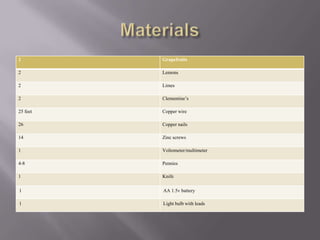
2         Grapefruits

2         Lemons

2         Limes

2         Clementine’s

25 feet   Copper wire

26        Copper nails

14        Zinc screws

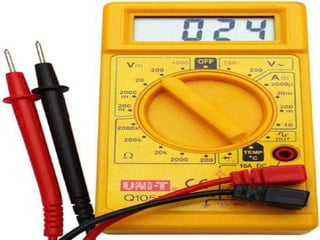
1         Voltometer/multimeter

4-8       Pennies

1         Knife

1         AA 1.5v battery

1         Light bulb with leads
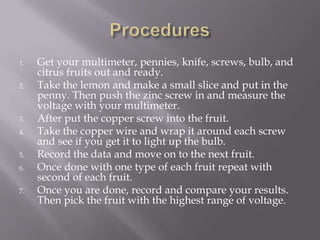
1.   Get your multimeter, pennies, knife, screws, bulb, and
     citrus fruits out and ready.
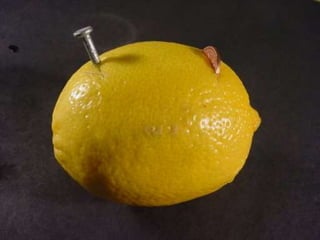
2.   Take the lemon and make a small slice and put in the
     penny. Then push the zinc screw in and measure the
     voltage with your multimeter.
3.   After put the copper screw into the fruit.
4.   Take the copper wire and wrap it around each screw
     and see if you get it to light up the bulb.
5.   Record the data and move on to the next fruit.
6.   Once done with one type of each fruit repeat with
     second of each fruit.
7.   Once you are done, record and compare your results.
     Then pick the fruit with the highest range of voltage.
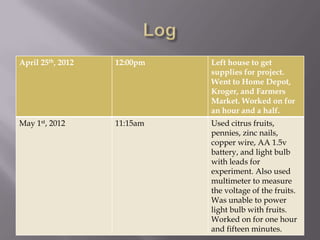
April 25th, 2012   12:00pm   Left house to get
                             supplies for project.
                             Went to Home Depot,
                             Kroger, and Farmers
                             Market. Worked on for
                             an hour and a half.
May 1st, 2012      11:15am   Used citrus fruits,
                             pennies, zinc nails,
                             copper wire, AA 1.5v
                             battery, and light bulb
                             with leads for
                             experiment. Also used
                             multimeter to measure
                             the voltage of the fruits.
                             Was unable to power
                             light bulb with fruits.
                             Worked on for one hour
                             and fifteen minutes.
   The original purpose of this experiment was to see
    if one citrus fruit was an alternative way to power
    a light bulb and see how much voltage a single
    fruit could produce. The results of the experiment
    were that one fruit was not able to power a light
    bulb. Also the voltage of each fruit is as follows;
    Lemons produced 0.660v to 0.720v, the Limes
    produced 0.629v to 0.738v, the Grapefruits
    produced 0.602v to 0.730v, the Oranges produced
    0.668v to 0.690v, and the Clementine’s produced
    0.813v to 0.815v. From the results, on average, the
    Clementine’s produce the highest voltage.
   My hypothesis was that one single citrus fruit
    would be able to power a light bulb. I base my
    hypothesis on the idea that if it were able to power
    a light bulb, it might have been an early version of
    a light bulb, to early people. The results indicate
    that this hypothesis should be considered false.
    The amount of voltage produced by one fruit is not
    strong enough. Because of the results of this
    experiment, I wonder if more than one fruit might
    have been able to power a light bulb. If I were to
    conduct this science fair project again I would try
    connecting more than one fruit together to try to
    get a higher voltage.
   The purpose of this experiment was to see if there was an alternative way to have a
    battery source. I became interested in this experiment when I was putting batteries in my
    flashlight and I wanted to know what else could be used to power a light bulb. The
    information gathered in this experiment with help others by helping someone power
    something for a short period of time. My hypothesis is that the electrodes in a single
    citrus fruit will be an alternative way to power something like a light bulb. I base my
    hypothesis on that there will be enough electrodes to power a light bulb. The constants
    and controls in my experiment were a regular AA 1.5v battery powering a light bulb and
    the fruits. The variable in experiment was the penny and the zinc nail. I measure the
    dependant variable by using a multimeter to measure the voltage. The results of the
    experiment were that none of the fruits were able to produce enough voltage to power a
    light bulb. The lemons produced 0.660v to 0.720v, the limes produced 0.629v to 0.738v,
    the grapefruits produced 0.602v to 0.730v, the oranges produced 0.668v to 0.690v, and
    the Clementine’s produced 0.813v to 0.815v. The results show that my hypothesis should
    not be accepted because the fruits were not able to produce enough voltage to power a
    light bulb and my hypothesis said that it would be able to. If I were going to do this
    experiment again in the future or expand on this experiment I would try connecting
    more than one citrus fruit together to try to get a larger voltage and try to power a light
    bulb.
     Helmenstine, Anne M.
    "Fruit Battery." About.com Chemistry. Web. 07
    May 2012.
    <http://chemistry.about.com/od/chemistryho
    wtoguide/a/fruitbattery.htm>.


   "Lemon Battery." Lemon Battery. Web. 07 May
    2012.
    <http://www.hilaroad.com/camp/projects/le
    mon/lemon_battery.html>.
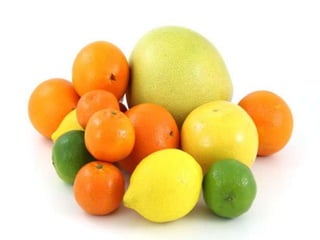
   What device did I use to measure the voltage of
    the fruits?
   How many fruits did I use?
   What fruits did I use?
   What do all of those fruits have in common?
   Where did I go to get my supplies?

Citrus Battery Science Fair Project

  • 1.
  • 3.
    My hypothesis is that the electrodes in a single citrus fruit will be an alternative way to power something like a light bulb. I base my hypothesis on that there will be enough electrodes to power a light bulb.
  • 5.
    The purpose of this experiment was to see if there was an alternative way to have a battery source. I became interested in this experiment when I was putting batteries in my flashlight and I wanted to know what else could be used to power a light bulb. The information gathered in this experiment with help others by helping someone power something for a short period of time.
  • 6.
    2 Grapefruits 2 Lemons 2 Limes 2 Clementine’s 25 feet Copper wire 26 Copper nails 14 Zinc screws 1 Voltometer/multimeter 4-8 Pennies 1 Knife 1 AA 1.5v battery 1 Light bulb with leads
  • 8.
    1. Get your multimeter, pennies, knife, screws, bulb, and citrus fruits out and ready. 2. Take the lemon and make a small slice and put in the penny. Then push the zinc screw in and measure the voltage with your multimeter. 3. After put the copper screw into the fruit. 4. Take the copper wire and wrap it around each screw and see if you get it to light up the bulb. 5. Record the data and move on to the next fruit. 6. Once done with one type of each fruit repeat with second of each fruit. 7. Once you are done, record and compare your results. Then pick the fruit with the highest range of voltage.
  • 9.
    April 25th, 2012 12:00pm Left house to get supplies for project. Went to Home Depot, Kroger, and Farmers Market. Worked on for an hour and a half. May 1st, 2012 11:15am Used citrus fruits, pennies, zinc nails, copper wire, AA 1.5v battery, and light bulb with leads for experiment. Also used multimeter to measure the voltage of the fruits. Was unable to power light bulb with fruits. Worked on for one hour and fifteen minutes.
  • 11.
    The original purpose of this experiment was to see if one citrus fruit was an alternative way to power a light bulb and see how much voltage a single fruit could produce. The results of the experiment were that one fruit was not able to power a light bulb. Also the voltage of each fruit is as follows; Lemons produced 0.660v to 0.720v, the Limes produced 0.629v to 0.738v, the Grapefruits produced 0.602v to 0.730v, the Oranges produced 0.668v to 0.690v, and the Clementine’s produced 0.813v to 0.815v. From the results, on average, the Clementine’s produce the highest voltage.
  • 13.
    My hypothesis was that one single citrus fruit would be able to power a light bulb. I base my hypothesis on the idea that if it were able to power a light bulb, it might have been an early version of a light bulb, to early people. The results indicate that this hypothesis should be considered false. The amount of voltage produced by one fruit is not strong enough. Because of the results of this experiment, I wonder if more than one fruit might have been able to power a light bulb. If I were to conduct this science fair project again I would try connecting more than one fruit together to try to get a higher voltage.
  • 15.
    The purpose of this experiment was to see if there was an alternative way to have a battery source. I became interested in this experiment when I was putting batteries in my flashlight and I wanted to know what else could be used to power a light bulb. The information gathered in this experiment with help others by helping someone power something for a short period of time. My hypothesis is that the electrodes in a single citrus fruit will be an alternative way to power something like a light bulb. I base my hypothesis on that there will be enough electrodes to power a light bulb. The constants and controls in my experiment were a regular AA 1.5v battery powering a light bulb and the fruits. The variable in experiment was the penny and the zinc nail. I measure the dependant variable by using a multimeter to measure the voltage. The results of the experiment were that none of the fruits were able to produce enough voltage to power a light bulb. The lemons produced 0.660v to 0.720v, the limes produced 0.629v to 0.738v, the grapefruits produced 0.602v to 0.730v, the oranges produced 0.668v to 0.690v, and the Clementine’s produced 0.813v to 0.815v. The results show that my hypothesis should not be accepted because the fruits were not able to produce enough voltage to power a light bulb and my hypothesis said that it would be able to. If I were going to do this experiment again in the future or expand on this experiment I would try connecting more than one citrus fruit together to try to get a larger voltage and try to power a light bulb.
  • 16.
    Helmenstine, Anne M. "Fruit Battery." About.com Chemistry. Web. 07 May 2012. <http://chemistry.about.com/od/chemistryho wtoguide/a/fruitbattery.htm>.   "Lemon Battery." Lemon Battery. Web. 07 May 2012. <http://www.hilaroad.com/camp/projects/le mon/lemon_battery.html>.
  • 17.
    What device did I use to measure the voltage of the fruits?  How many fruits did I use?  What fruits did I use?  What do all of those fruits have in common?  Where did I go to get my supplies?