DevOps: What's Buried in the Fine Print
Introduction
Name: Jeff Smith
Company: @Grubhub
Title: Manager, Site Reliability
Engineering
Twitter: @DarkAndNerdy
Email: jeff@allthingsdork.com
We're hiring! www.grubhub.com/
careers
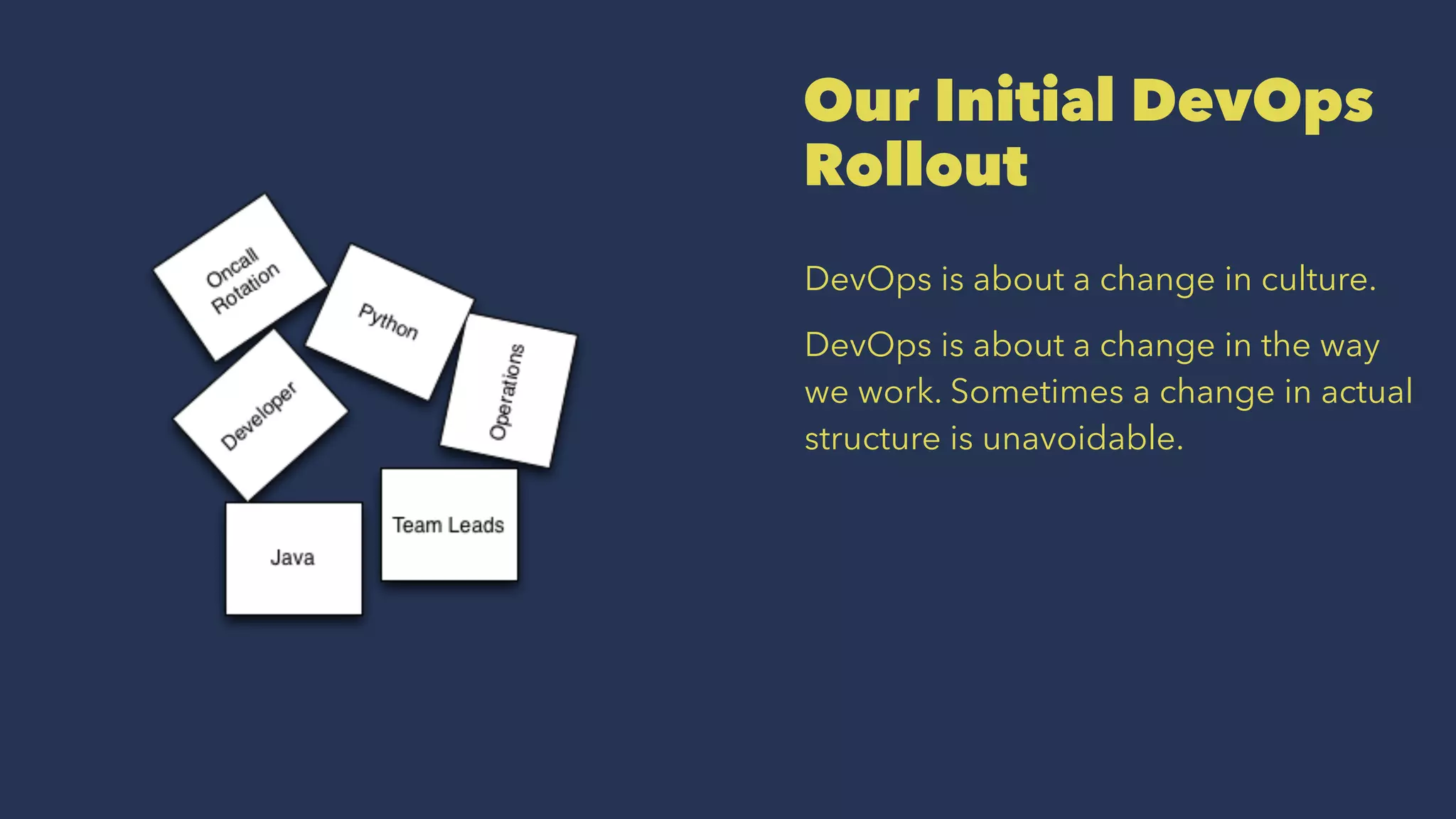
Our Initial DevOps
Rollout
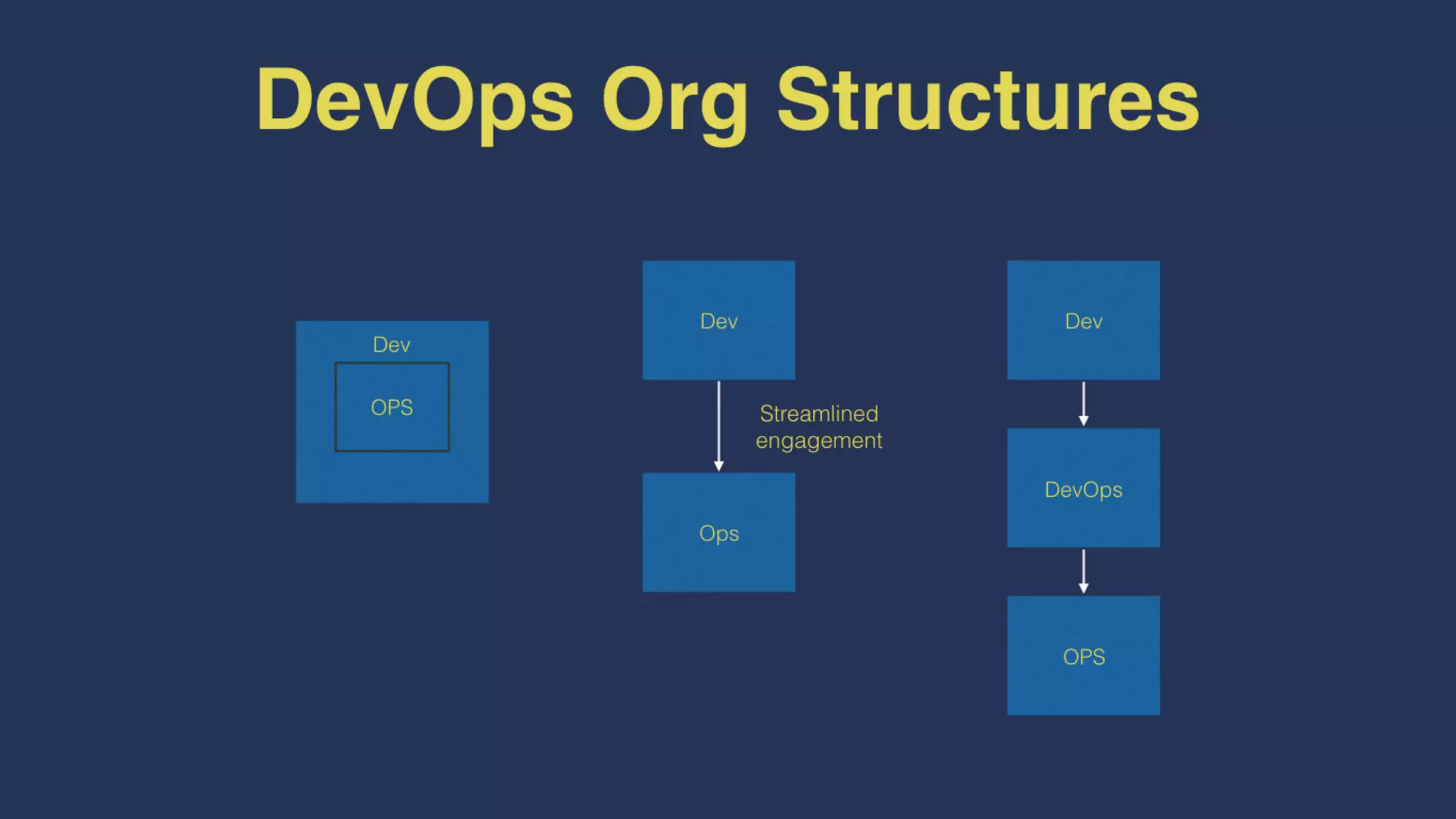
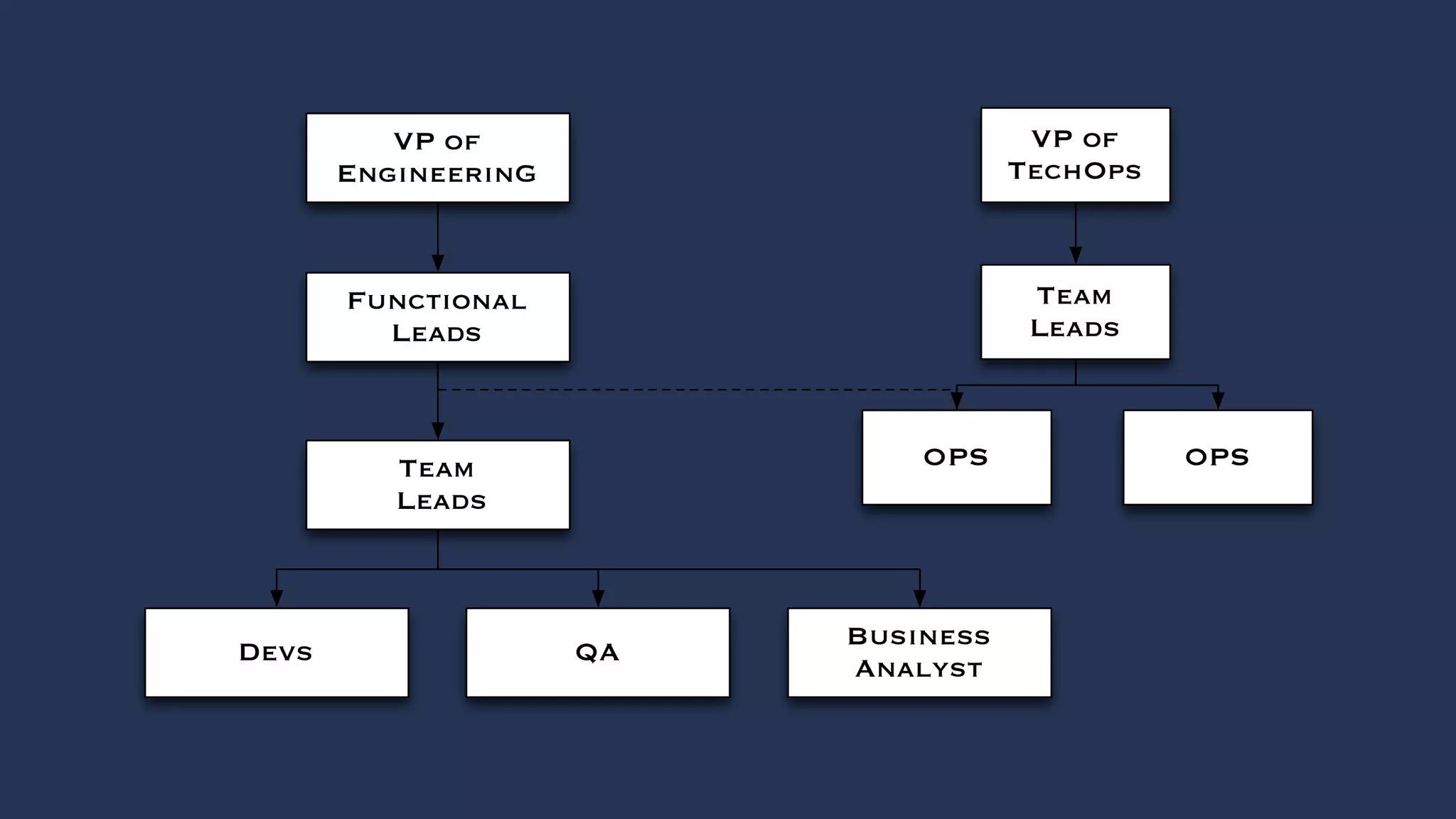
DevOps is about a change in culture.
DevOps is about a change in the way
we work. Sometimes a change in actual
structure is unavoidable.
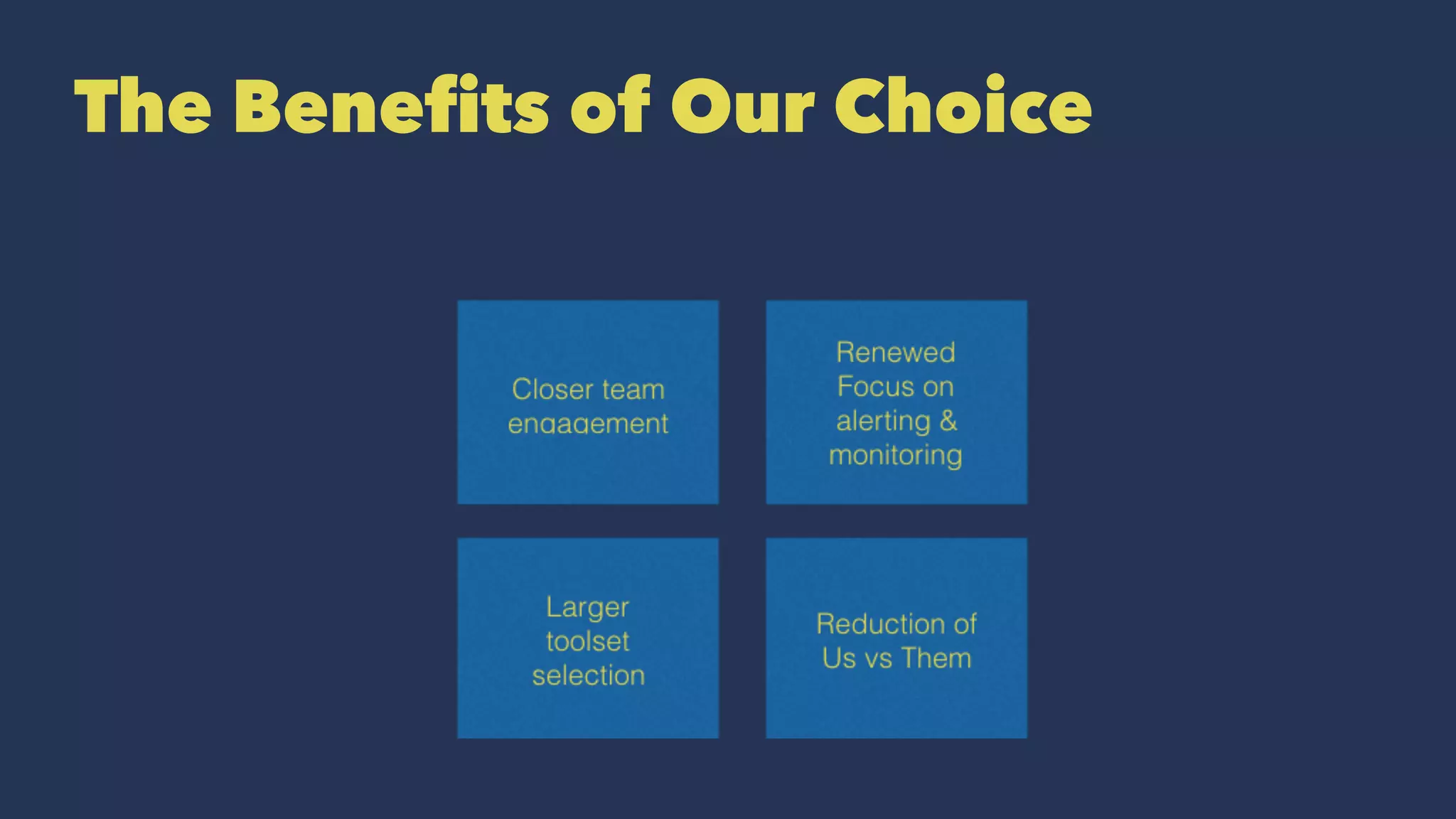
The Benefits of Our Choice
The Bad and the Ugly
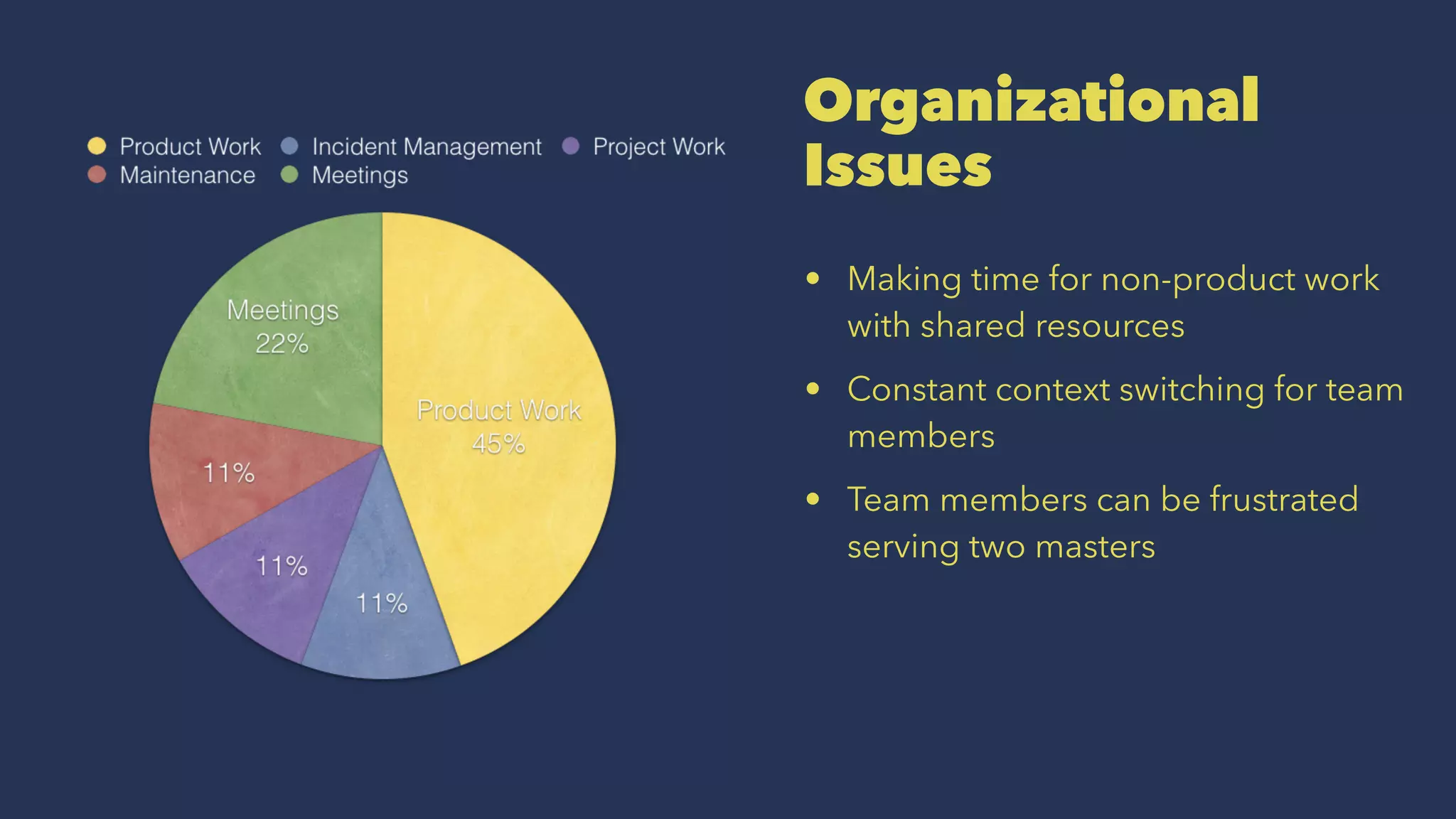
Organizational
Issues
• Making time for non-product work
with shared resources
• Constant context switching for team
members
• Team members can be frustrated
serving two masters
Priorities
• How and who sets the priorities for
the OPS team?
• Balance OPS work-intake with team
velocity
• Are OPS staff needed on every
team?
• Dedicated resources leads to poor
planning
When the DEV/OPS Line is Blurred
Removing the Dev/OPS divide puts pressure on organizations
of a certain size with audit requirements.
• Who gets production access?
• If developers don't have access to production, how do they
assume co-ownership?
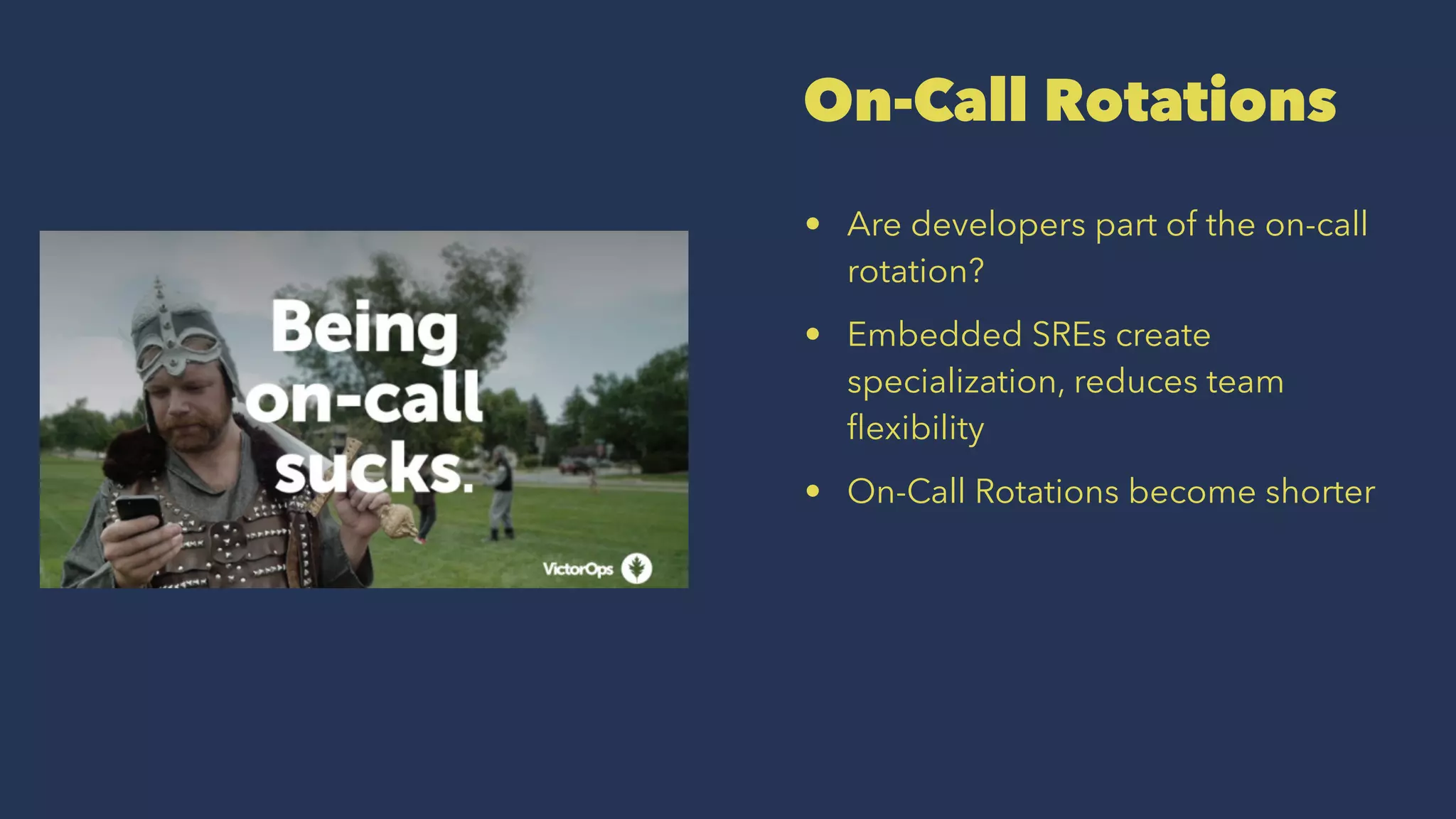
On-Call Rotations
• Are developers part of the on-call
rotation?
• Embedded SREs create
specialization, reduces team
flexibility
• On-Call Rotations become shorter
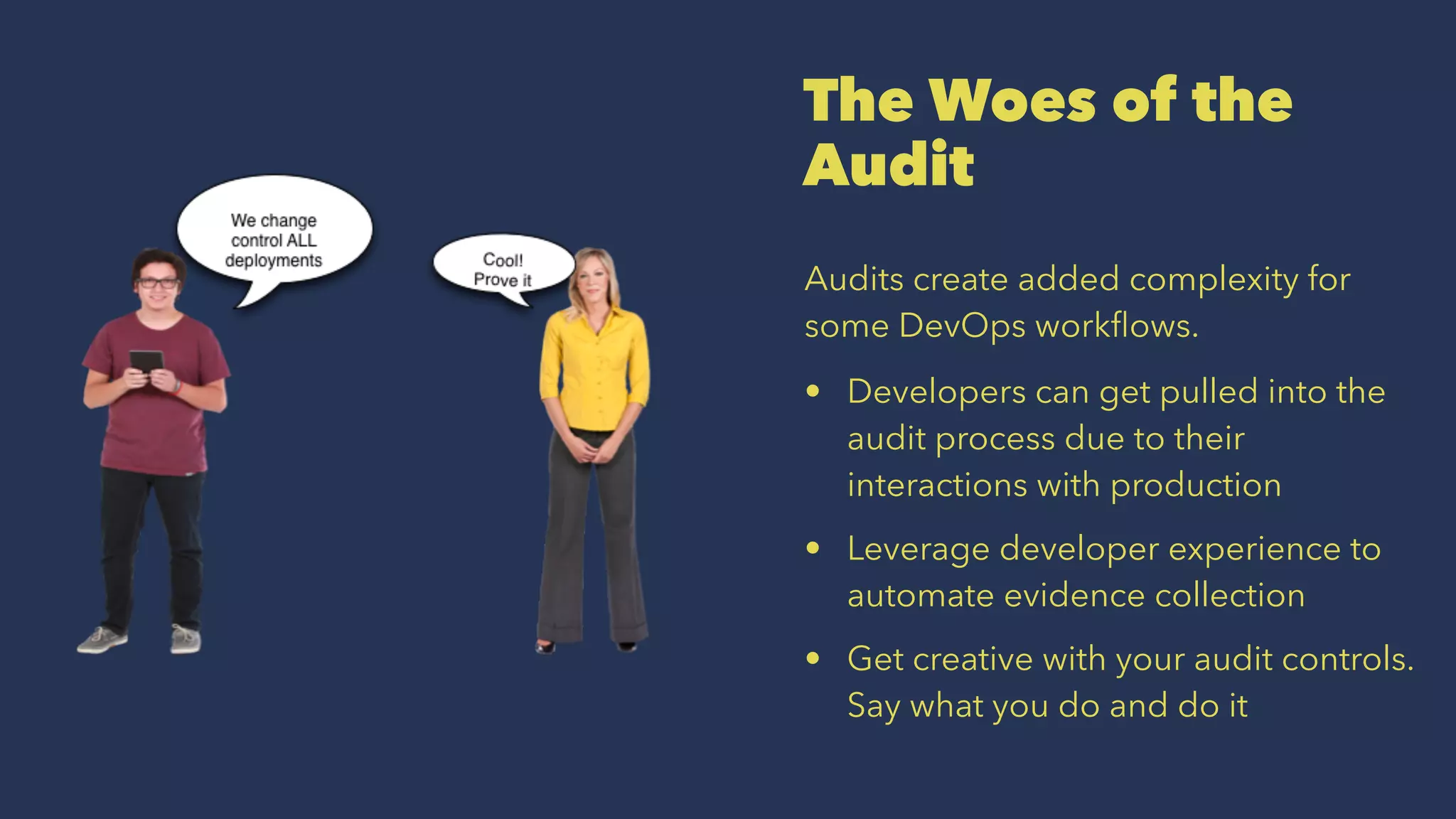
The Woes of the
Audit
Audits create added complexity for
some DevOps workflows.
• Developers can get pulled into the
audit process due to their
interactions with production
• Leverage developer experience to
automate evidence collection
• Get creative with your audit controls.
Say what you do and do it
Be Wary of the 3rd Silo
Change is hard, but starting a team from scratch makes it
easier. DON'T DO IT
• The 3rd SILO introduces huge knowledge gaps
• The DevOps team further concentrates responsibility
• Ownership of production is even murkier now
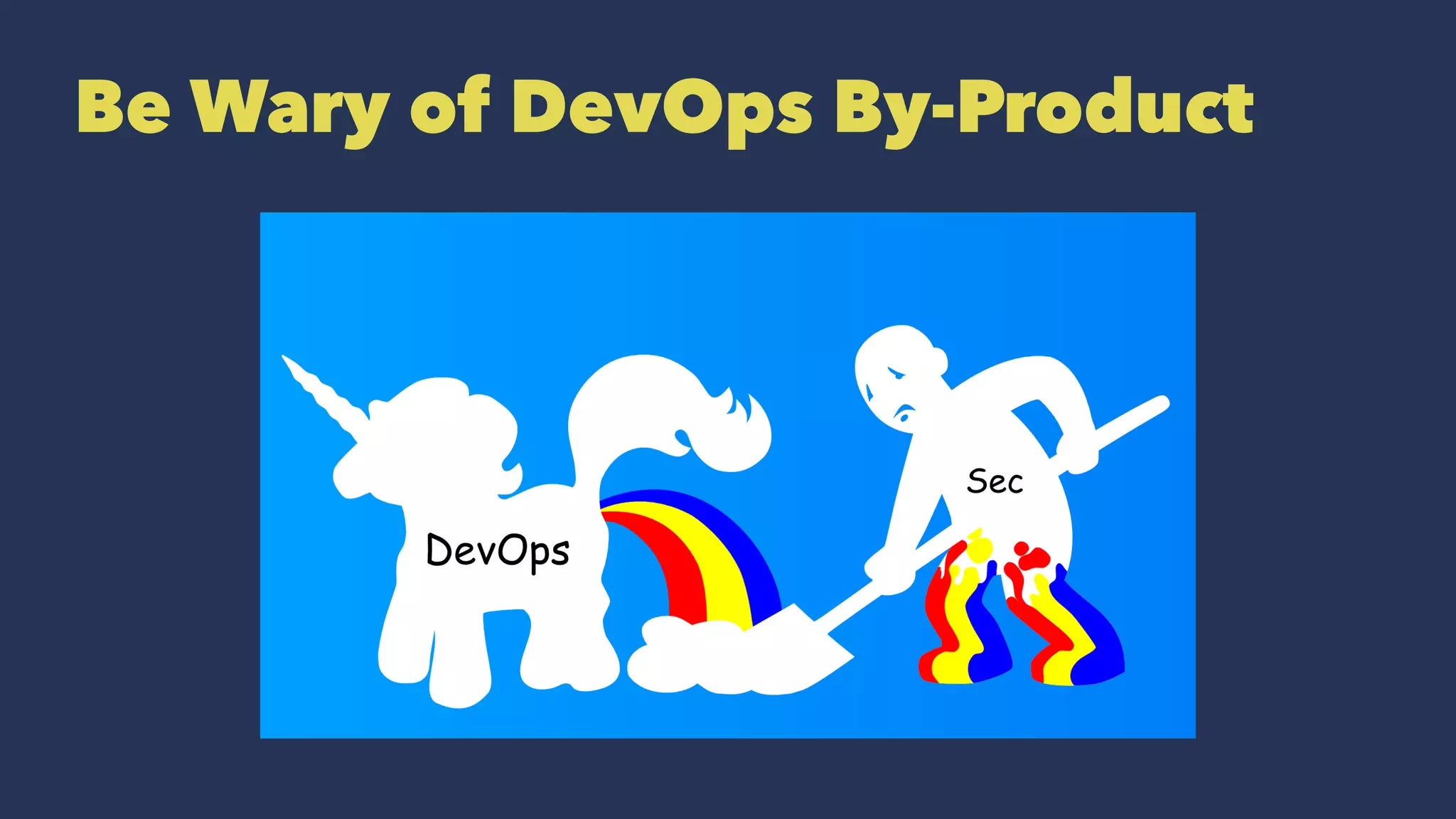
Be Wary of DevOps By-Product
Choosing a Toolset
• Avoid analysis paralysis. Every tool
sucks in its own special way
• Commit to iteration. You won't get it
right the first time
• Try to find quick wins to build
momentum
• Solve your own problems
Addressing Skill Set
Gaps
The move to DevOps might put some
people in roles they're not accustomed
to. Don't gloss over these hurdles.
• Choose a common programming
language for Operational things
• Easier adoption and co-ownership
of code base
• Reuse, reuse, reuse
Hire Differently for Ops
The change seems to have hit the Ops organization more than
the development group
• Put emphasis on development skills and mindset. Bake it
into the interview
• Make sure you emphasize that common language choice.
They may hate your choice, better to know in the phone
screen
• Consider bringing developers into the OPS hiring process
Training Isn't Enough
You need real projects, real deliverables to help people grow.
• Find development mentors
• Ensure Dev helps OPS create workflows and a solid SDLC
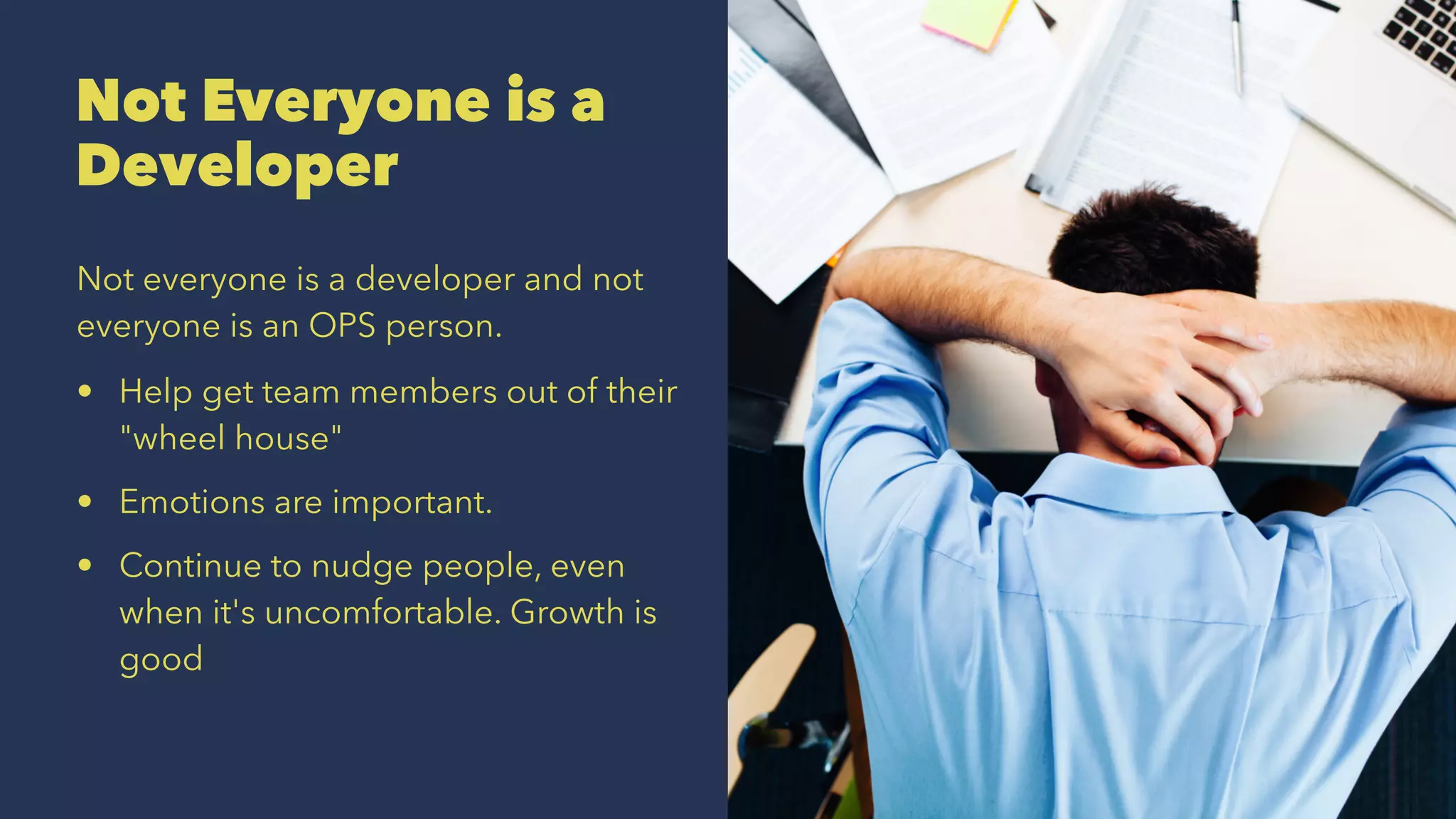
Not Everyone is a
Developer
Not everyone is a developer and not
everyone is an OPS person.
• Help get team members out of their
"wheel house"
• Emotions are important.
• Continue to nudge people, even
when it's uncomfortable. Growth is
good
The journey to
DevOps is hard and
your journey will
differ from others.
But the journey is
totally worth it.
Thanks!

DevOps: What's Buried in the Fine Print

  • 1.
    DevOps: What's Buriedin the Fine Print
  • 2.
    Introduction Name: Jeff Smith Company:@Grubhub Title: Manager, Site Reliability Engineering Twitter: @DarkAndNerdy Email: jeff@allthingsdork.com We're hiring! www.grubhub.com/ careers
  • 6.
    Our Initial DevOps Rollout DevOpsis about a change in culture. DevOps is about a change in the way we work. Sometimes a change in actual structure is unavoidable.
  • 9.
    The Benefits ofOur Choice
  • 10.
    The Bad andthe Ugly
  • 11.
    Organizational Issues • Making timefor non-product work with shared resources • Constant context switching for team members • Team members can be frustrated serving two masters
  • 12.
    Priorities • How andwho sets the priorities for the OPS team? • Balance OPS work-intake with team velocity • Are OPS staff needed on every team? • Dedicated resources leads to poor planning
  • 13.
    When the DEV/OPSLine is Blurred Removing the Dev/OPS divide puts pressure on organizations of a certain size with audit requirements. • Who gets production access? • If developers don't have access to production, how do they assume co-ownership?
  • 14.
    On-Call Rotations • Aredevelopers part of the on-call rotation? • Embedded SREs create specialization, reduces team flexibility • On-Call Rotations become shorter
  • 15.
    The Woes ofthe Audit Audits create added complexity for some DevOps workflows. • Developers can get pulled into the audit process due to their interactions with production • Leverage developer experience to automate evidence collection • Get creative with your audit controls. Say what you do and do it
  • 16.
    Be Wary ofthe 3rd Silo Change is hard, but starting a team from scratch makes it easier. DON'T DO IT • The 3rd SILO introduces huge knowledge gaps • The DevOps team further concentrates responsibility • Ownership of production is even murkier now
  • 17.
    Be Wary ofDevOps By-Product
  • 18.
    Choosing a Toolset •Avoid analysis paralysis. Every tool sucks in its own special way • Commit to iteration. You won't get it right the first time • Try to find quick wins to build momentum • Solve your own problems
  • 19.
    Addressing Skill Set Gaps Themove to DevOps might put some people in roles they're not accustomed to. Don't gloss over these hurdles. • Choose a common programming language for Operational things • Easier adoption and co-ownership of code base • Reuse, reuse, reuse
  • 20.
    Hire Differently forOps The change seems to have hit the Ops organization more than the development group • Put emphasis on development skills and mindset. Bake it into the interview • Make sure you emphasize that common language choice. They may hate your choice, better to know in the phone screen • Consider bringing developers into the OPS hiring process
  • 21.
    Training Isn't Enough Youneed real projects, real deliverables to help people grow. • Find development mentors • Ensure Dev helps OPS create workflows and a solid SDLC
  • 22.
    Not Everyone isa Developer Not everyone is a developer and not everyone is an OPS person. • Help get team members out of their "wheel house" • Emotions are important. • Continue to nudge people, even when it's uncomfortable. Growth is good
  • 23.
    The journey to DevOpsis hard and your journey will differ from others. But the journey is totally worth it.
  • 24.