Introduction
Dementia is a life limiting condition.
People with dementia should have
opportunities to make informed
decisions about their future care at an
early stage in their journey and have
their palliative care needs addressed.
Healthcare staff may feel unequipped
in discussing end-of-life care with
people with dementia. Planning future
care can optimise comfort care at end
of life.
Authors: Cronin, S., Lynch, M., Collins, C., Maguire, L., O’Donnell, N.,
Quinn, A., Timmons, Dr. S & Barber, J.
Aim
The aim of this guidance document
is to inform and guide healthcare
staff in initiating and facilitating
discussion relating to future and end-
of-life care with people who have
dementia.
Method
1.
• Expert Advisory Group
convened
2.
• Literature review completed
using a systematic search
strategy
3.
• Key themes collated to inform
key considerations and
guidance areas
4.
• Draft document prepared for
public consultation
5. • Document finalised and
consultation report prepared
Results
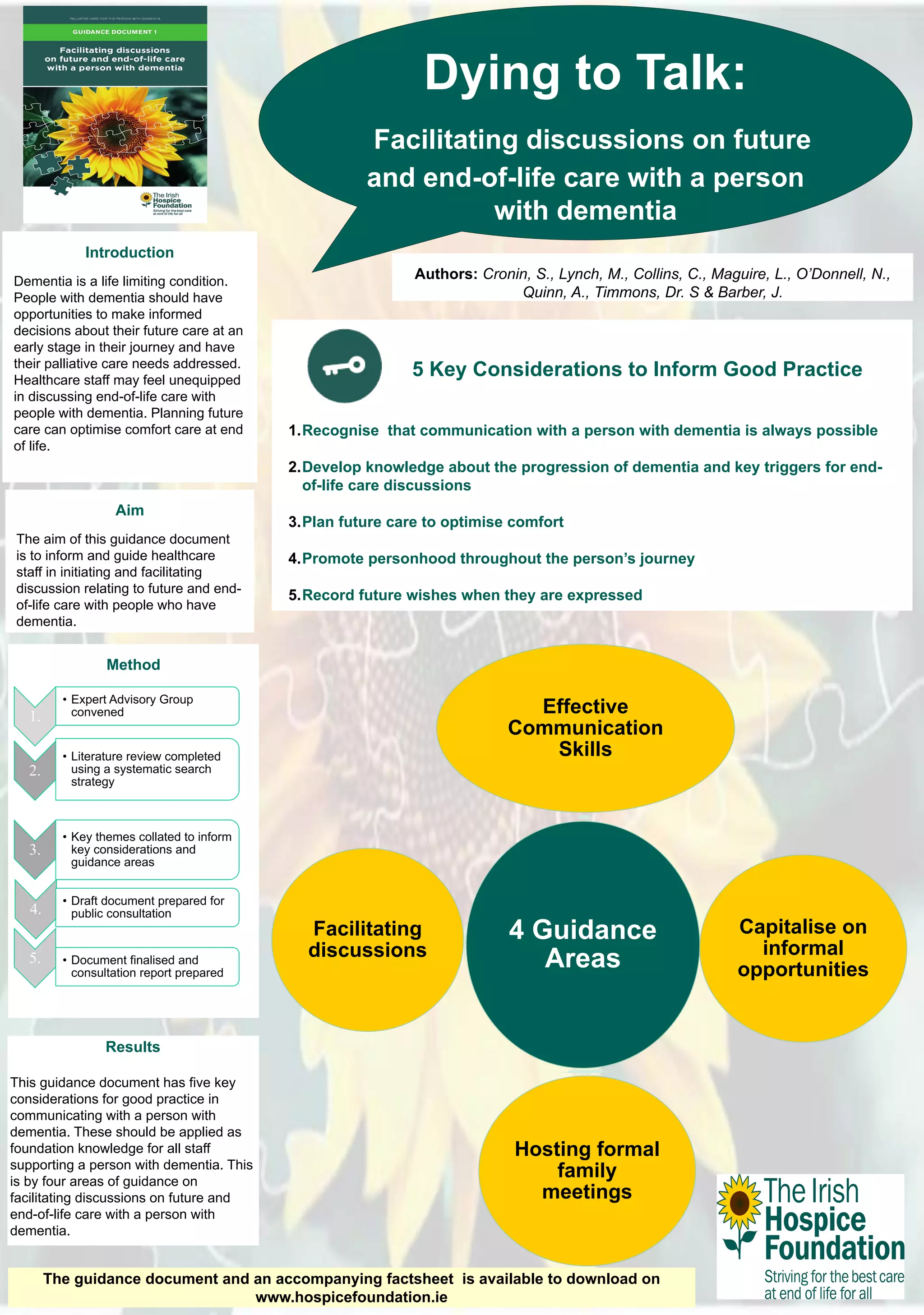
This guidance document has five key
considerations for good practice in
communicating with a person with
dementia. These should be applied as
foundation knowledge for all staff
supporting a person with dementia. This
is by four areas of guidance on
facilitating discussions on future and
end-of-life care with a person with
dementia.
Dying to Talk:
Facilitating discussions on future
and end-of-life care with a person
with dementia
5 Key Considerations to Inform Good Practice
1.Recognise that communication with a person with dementia is always possible
2.Develop knowledge about the progression of dementia and key triggers for end-
of-life care discussions
3.Plan future care to optimise comfort
4.Promote personhood throughout the person’s journey
5.Record future wishes when they are expressed
4 Guidance
Areas
Effective
Communication
Skills
Capitalise on
informal
opportunities
Hosting formal
family
meetings
Facilitating
discussions
The guidance document and an accompanying factsheet is available to download on
www.hospicefoundation.ie

Dying to talk

  • 1.
    Introduction Dementia is alife limiting condition. People with dementia should have opportunities to make informed decisions about their future care at an early stage in their journey and have their palliative care needs addressed. Healthcare staff may feel unequipped in discussing end-of-life care with people with dementia. Planning future care can optimise comfort care at end of life. Authors: Cronin, S., Lynch, M., Collins, C., Maguire, L., O’Donnell, N., Quinn, A., Timmons, Dr. S & Barber, J. Aim The aim of this guidance document is to inform and guide healthcare staff in initiating and facilitating discussion relating to future and end- of-life care with people who have dementia. Method 1. • Expert Advisory Group convened 2. • Literature review completed using a systematic search strategy 3. • Key themes collated to inform key considerations and guidance areas 4. • Draft document prepared for public consultation 5. • Document finalised and consultation report prepared Results This guidance document has five key considerations for good practice in communicating with a person with dementia. These should be applied as foundation knowledge for all staff supporting a person with dementia. This is by four areas of guidance on facilitating discussions on future and end-of-life care with a person with dementia. Dying to Talk: Facilitating discussions on future and end-of-life care with a person with dementia 5 Key Considerations to Inform Good Practice 1.Recognise that communication with a person with dementia is always possible 2.Develop knowledge about the progression of dementia and key triggers for end- of-life care discussions 3.Plan future care to optimise comfort 4.Promote personhood throughout the person’s journey 5.Record future wishes when they are expressed 4 Guidance Areas Effective Communication Skills Capitalise on informal opportunities Hosting formal family meetings Facilitating discussions The guidance document and an accompanying factsheet is available to download on www.hospicefoundation.ie