As
a
building
material

Earth Crust

Rock

Hrishiraj Sarma, APIED/2013

Stone

1
1. Geological Classification
a)
b)
c)

Igneous rocks
Sedimentary rocks
Metamorphic rocks

2. Physical Classification
a)
b)
c)

Stratified rocks
Non-stratified rocks
Foliated rocks

Hrishiraj Sarma, APIED/2013

3. Chemical Classification
a)
b)
c)

Siliceous rocks
Argillaceous rocks
Calcareous rocks

2
Sources of stone:

Monomineralic rock
Polymineralic rock
Rock forming minerals: ( Found in igneous rocks)
1.
2.
3.
4.
5.
6.

7.
8.

Augite.
Chlorite.
Felspar.
Hornblende.
Mica
Olivine.
Plagioclase.
Quartz.

9. Serpentine.
10. Calcite.

Hrishiraj Sarma, APIED/2013

3
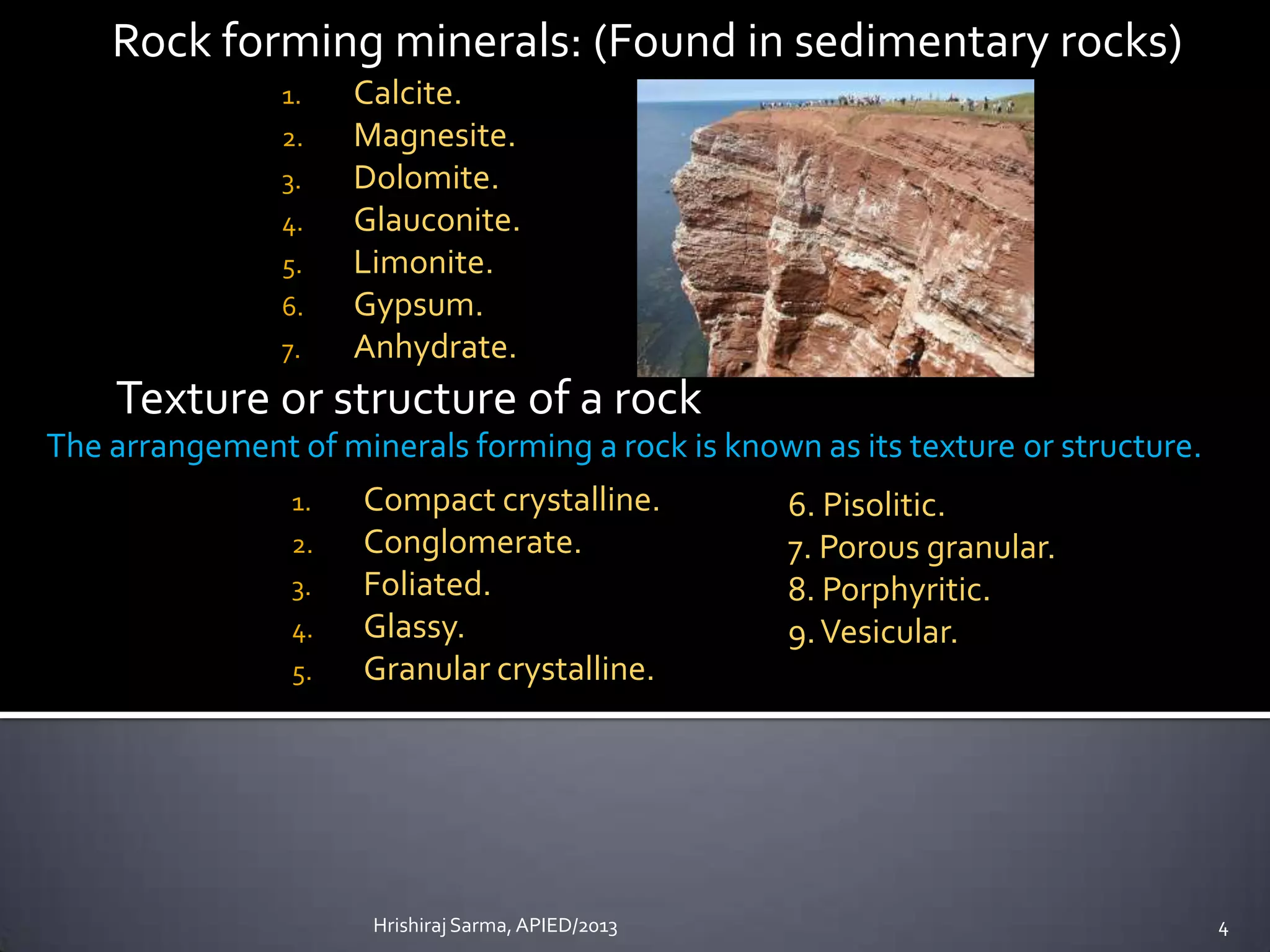
Rock forming minerals: (Found in sedimentary rocks)
1.

2.
3.
4.
5.
6.

7.

Calcite.
Magnesite.
Dolomite.
Glauconite.
Limonite.
Gypsum.
Anhydrate.

Texture or structure of a rock
The arrangement of minerals forming a rock is known as its texture or structure.
1.
2.
3.
4.
5.

Compact crystalline.
Conglomerate.
Foliated.
Glassy.
Granular crystalline.

Hrishiraj Sarma, APIED/2013

6. Pisolitic.
7. Porous granular.
8. Porphyritic.
9. Vesicular.

4
Fracture of a rock
The type of surface obtained, when a rock is broken, indicates its fracture.
1.
Conchoidal.
2.
Earthy.
3.
Even.
4.
Fibrous.
5.
Hackly.
6.
Uneven.

Uses of stones:
1.
2.

3.
4.
5.

Structure.
Face work.
Paving.
Basic mineral.
Miscellaneous
ballast for railways, blocks in construction of bridges, piers,
retaining walls, light house, damns, etc,

Hrishiraj Sarma, APIED/2013

5
1.
2.
3.
4.

Dressing of stones is tedious, laborious and time
consuming.
Desired strength and quality not available at moderate
rates especially in plain areas.
RCC, Steel are alternatives to stones and gives more
strength and flexibility.
Stone structure design can’t give freeness and flexibility to
the designer.

Hrishiraj Sarma, APIED/2013

6
Definition and Importance

Hrishiraj Sarma, APIED/2013

7
1.
2.
3.
4.
5.
6.
7.
8.
9.
10.

Acid test.
Attrition test.
Crushing test.
Crystallization test.
Freezing and thawing test.
Hardness test.
Impact test.
Microscopic test.
Smith’s test.
Water absorption test.

Hrishiraj Sarma, APIED/2013

8
1.
2.
3.
4.
5.
6.
7.
8.
9.
10.

Crushing strength.
Appearance.
Durability.
Facility of dressing.
Fracture.
Hardness.
Percentage wear.
Resistance to fire.
Seasoning.
Specific gravity.

Hrishiraj Sarma, APIED/2013

11. Texture.
12. Toughness index
(between 13 and 19
13. Water absorption must be
Less than 0.60
14. Weathering.

9
Quarrying with hand tools.
Quarrying with channeling machine.
3. Quarrying by blasting.
1.
2.

Hrishiraj Sarma, APIED/2013

10
Purpose:

Classification

1.
1. To get desired
appearance.
2.
2. To make the transport
from quarry easy and
economical.
3. To suit the requirements
of stone masonry.
4. To take the advantage of
local people who are
trained to such type of
work.

Quarry dressing
Site dressing.

Finishes used
1.
2.
3.
4.
5.
6.
7.
8.
9.
10.
11.
12.
13.
14.
15.

16.
17.

Hrishiraj Sarma, APIED/2013

18.

Axed finish.
Boasted or drove
finish.
Chisel finish.
Dragged or
combed finish.
Furrowed finish.
Moulded finish.
Hammer dressed
finish.
Plain finish.
Polished finished.
Punched machine.
Reticulated finish.
Rubbed finish.
Scabbling finish.
Tooled finish.
Self-faced or rockfaced or quarryfaced finish.
Sunk finish.
Vermiculated
finish.
Circular finish.
11
Alternate wetness and
drying.
2. Frost.
3. Impurities in atmosphere.
4. Living organisms.
5. Movement of chemicals.
6. Nature of mortar.
7. Rain water.
8. Temperature variations.
9. Vegetable growth.
10. Wind.
1.

Hrishiraj Sarma, APIED/2013

12
Following precautions to be taken to retard the decaying action of weathering
agencies on stones:
1.
2.
3.
4.
5.
6.
7.
8.

Compact siliceous stones.
External renderings.
Joints.
Natural beds.
Qualities of stones.
Seasoned stones.
Size of stones.
Washing with water.

Hrishiraj Sarma, APIED/2013

13
Why?
Coal tar.
Linseed oil.
3. Paint.
4. Paraffin.
5. Solution of alum and soap.
6. Solution of baryta.
1.
2.

What is an artificial stone?
1.
2.
3.

Cement concrete.
Mosaic tiles.
Terrazzo.

Advantages of artificial stones
Assignment: Make a list on common building stones in India describing
stone name, classification, qualities, uses and localities where they
are available ( in A-1 sheet )
Hrishiraj Sarma, APIED/2013

14

Stone as a building material

  • 1.
  • 2.
    1. Geological Classification a) b) c) Igneousrocks Sedimentary rocks Metamorphic rocks 2. Physical Classification a) b) c) Stratified rocks Non-stratified rocks Foliated rocks Hrishiraj Sarma, APIED/2013 3. Chemical Classification a) b) c) Siliceous rocks Argillaceous rocks Calcareous rocks 2
  • 3.
    Sources of stone: Monomineralicrock Polymineralic rock Rock forming minerals: ( Found in igneous rocks) 1. 2. 3. 4. 5. 6. 7. 8. Augite. Chlorite. Felspar. Hornblende. Mica Olivine. Plagioclase. Quartz. 9. Serpentine. 10. Calcite. Hrishiraj Sarma, APIED/2013 3
  • 4.
    Rock forming minerals:(Found in sedimentary rocks) 1. 2. 3. 4. 5. 6. 7. Calcite. Magnesite. Dolomite. Glauconite. Limonite. Gypsum. Anhydrate. Texture or structure of a rock The arrangement of minerals forming a rock is known as its texture or structure. 1. 2. 3. 4. 5. Compact crystalline. Conglomerate. Foliated. Glassy. Granular crystalline. Hrishiraj Sarma, APIED/2013 6. Pisolitic. 7. Porous granular. 8. Porphyritic. 9. Vesicular. 4
  • 5.
    Fracture of arock The type of surface obtained, when a rock is broken, indicates its fracture. 1. Conchoidal. 2. Earthy. 3. Even. 4. Fibrous. 5. Hackly. 6. Uneven. Uses of stones: 1. 2. 3. 4. 5. Structure. Face work. Paving. Basic mineral. Miscellaneous ballast for railways, blocks in construction of bridges, piers, retaining walls, light house, damns, etc, Hrishiraj Sarma, APIED/2013 5
  • 6.
    1. 2. 3. 4. Dressing of stonesis tedious, laborious and time consuming. Desired strength and quality not available at moderate rates especially in plain areas. RCC, Steel are alternatives to stones and gives more strength and flexibility. Stone structure design can’t give freeness and flexibility to the designer. Hrishiraj Sarma, APIED/2013 6
  • 7.
  • 8.
    1. 2. 3. 4. 5. 6. 7. 8. 9. 10. Acid test. Attrition test. Crushingtest. Crystallization test. Freezing and thawing test. Hardness test. Impact test. Microscopic test. Smith’s test. Water absorption test. Hrishiraj Sarma, APIED/2013 8
  • 9.
    1. 2. 3. 4. 5. 6. 7. 8. 9. 10. Crushing strength. Appearance. Durability. Facility ofdressing. Fracture. Hardness. Percentage wear. Resistance to fire. Seasoning. Specific gravity. Hrishiraj Sarma, APIED/2013 11. Texture. 12. Toughness index (between 13 and 19 13. Water absorption must be Less than 0.60 14. Weathering. 9
  • 10.
    Quarrying with handtools. Quarrying with channeling machine. 3. Quarrying by blasting. 1. 2. Hrishiraj Sarma, APIED/2013 10
  • 11.
    Purpose: Classification 1. 1. To getdesired appearance. 2. 2. To make the transport from quarry easy and economical. 3. To suit the requirements of stone masonry. 4. To take the advantage of local people who are trained to such type of work. Quarry dressing Site dressing. Finishes used 1. 2. 3. 4. 5. 6. 7. 8. 9. 10. 11. 12. 13. 14. 15. 16. 17. Hrishiraj Sarma, APIED/2013 18. Axed finish. Boasted or drove finish. Chisel finish. Dragged or combed finish. Furrowed finish. Moulded finish. Hammer dressed finish. Plain finish. Polished finished. Punched machine. Reticulated finish. Rubbed finish. Scabbling finish. Tooled finish. Self-faced or rockfaced or quarryfaced finish. Sunk finish. Vermiculated finish. Circular finish. 11
  • 12.
    Alternate wetness and drying. 2.Frost. 3. Impurities in atmosphere. 4. Living organisms. 5. Movement of chemicals. 6. Nature of mortar. 7. Rain water. 8. Temperature variations. 9. Vegetable growth. 10. Wind. 1. Hrishiraj Sarma, APIED/2013 12
  • 13.
    Following precautions tobe taken to retard the decaying action of weathering agencies on stones: 1. 2. 3. 4. 5. 6. 7. 8. Compact siliceous stones. External renderings. Joints. Natural beds. Qualities of stones. Seasoned stones. Size of stones. Washing with water. Hrishiraj Sarma, APIED/2013 13
  • 14.
    Why? Coal tar. Linseed oil. 3.Paint. 4. Paraffin. 5. Solution of alum and soap. 6. Solution of baryta. 1. 2. What is an artificial stone? 1. 2. 3. Cement concrete. Mosaic tiles. Terrazzo. Advantages of artificial stones Assignment: Make a list on common building stones in India describing stone name, classification, qualities, uses and localities where they are available ( in A-1 sheet ) Hrishiraj Sarma, APIED/2013 14