State of Startups
2 0 1 5
Why a
Survey?
What does it mean to be a startup entrepreneur
in 2015? And how can sharing this experience help
everyone? These are the questions we seek to answer
every week on the First Round Review and through the
many events, online forums and other programs we
run internally.
Now we want to leverage this approach to provide an
even more in-depth snapshot of what founders across
the entire ecosystem are thinking and doing, what
they're excited about and worried about, and how
they're seeing the market — things that could very
well change dramatically over the next several years.
We surveyed venture-backed founders from
everywhere — less than 25% from the First Round
community — and received over 500 responses,
volunteering their experience and opinions.
What follows is what we're calling the 2015 State of
Startups, designed to share meaningful insights into
what it's like to run a startup today.
The Highlights
1Most think it won’t get easier to
raise funding.
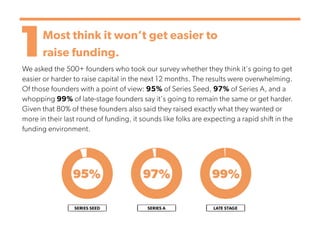
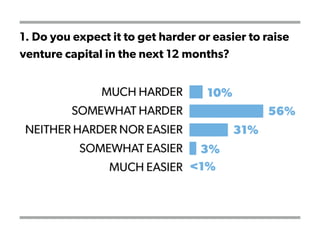
We asked the 500+ founders who took our survey whether they think it's going to get
easier or harder to raise capital in the next 12 months. The results were overwhelming.
Of those founders with a point of view: 95% of Series Seed, 97% of Series A, and a
whopping 99% of late-stage founders say it's going to remain the same or get harder.
Given that 80% of these founders also said they raised exactly what they wanted or
more in their last round of funding, it sounds like folks are expecting a rapid shift in the
funding environment.
273% say we're
in a bubble.
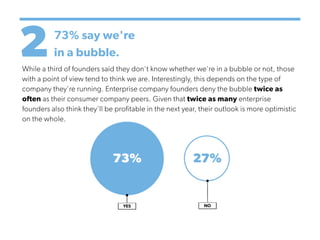
While a third of founders said they don't know whether we're in a bubble or not, those
with a point of view tend to think we are. Interestingly, this depends on the type of
company they're running. Enterprise company founders deny the bubble twice as
often as their consumer company peers. Given that twice as many enterprise
founders also think they'll be profitable in the next year, their outlook is more optimistic
on the whole.
3No one has a clue
about the IPO market.
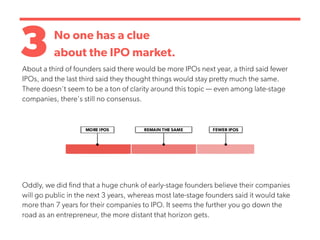
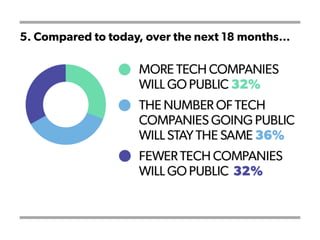
About a third of founders said there would be more IPOs next year, a third said fewer
IPOs, and the last third said they thought things would stay pretty much the same.
There doesn't seem to be a ton of clarity around this topic — even among late-stage
companies, there's still no consensus.
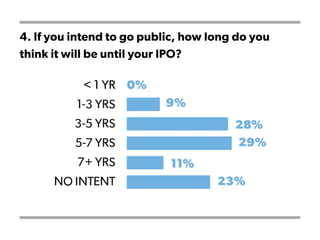
Oddly, we did find that a huge chunk of early-stage founders believe their companies
will go public in the next 3 years, whereas most late-stage founders said it would take
more than 7 years for their companies to IPO. It seems the further you go down the
road as an entrepreneur, the more distant that horizon gets.
4Women-led companies are more
diversity focused.
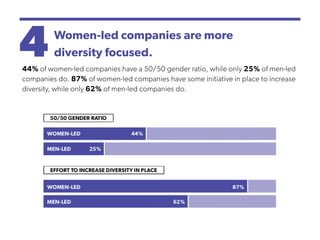
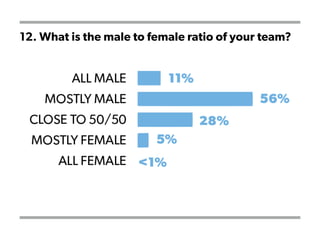
44% of women-led companies have a 50/50 gender ratio, while only 25% of men-led
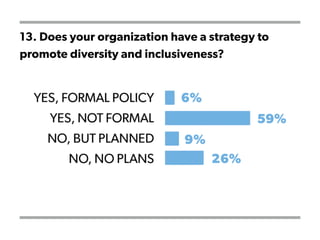
companies do. 87% of women-led companies have some initiative in place to increase
diversity, while only 62% of men-led companies do.
5Founders see the power shifting from
entrepreneurs to investors.
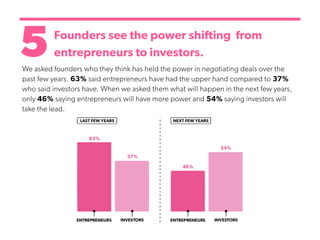
We asked founders who they think has held the power in negotiating deals over the
past few years. 63% said entrepreneurs have had the upper hand compared to 37%
who said investors have. When we asked them what will happen in the next few years,
only 46% saying entrepreneurs will have more power and 54% saying investors will
take the lead.
6Hiring the right people and revenue
growth top the list of founder concerns.
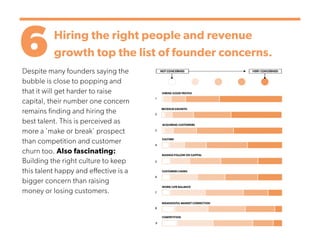
Despite many founders saying the
bubble is close to popping and
that it will get harder to raise
capital, their number one concern
remains finding and hiring the
best talent. This is perceived as
more a 'make or break' prospect
than competition and customer
churn too. Also fascinating:
Building the right culture to keep
this talent happy and effective is a
bigger concern than raising
money or losing customers.
7Co-founder relationships
change with age.
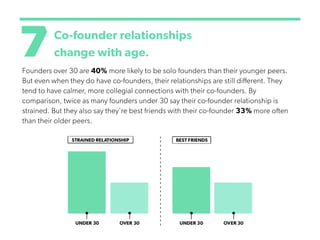
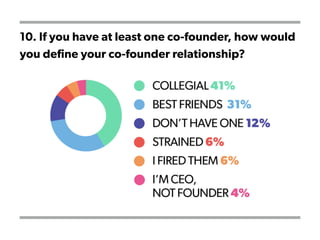
Founders over 30 are 40% more likely to be solo founders than their younger peers.
But even when they do have co-founders, their relationships are still different. They
tend to have calmer, more collegial connections with their co-founders. By
comparison, twice as many founders under 30 say their co-founder relationship is
strained. But they also say they're best friends with their co-founder 33% more often
than their older peers.
8Bitcoin is overhyped while autonomous
vehicles are underhyped.
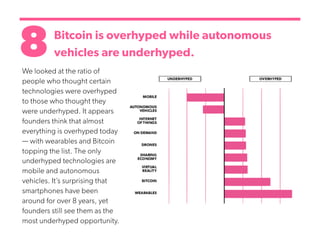
We looked at the ratio of
people who thought certain
technologies were overhyped
to those who thought they
were underhyped. It appears
founders think that almost
everything is overhyped today
— with wearables and Bitcoin
topping the list. The only
underhyped technologies are
mobile and autonomous
vehicles. It’s surprising that
smartphones have been
around for over 8 years, yet
founders still see them as the
most underhyped opportunity.
9Founders fear long-term failure, but not
the short-term mistakes that lead to it.
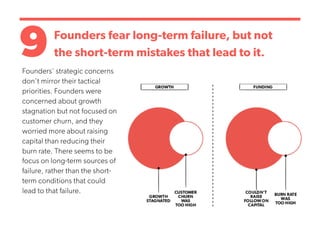
Founders' strategic concerns
don't mirror their tactical
priorities. Founders were
concerned about growth
stagnation but not focused on
customer churn, and they
worried more about raising
capital than reducing their
burn rate. There seems to be
focus on long-term sources of
failure, rather than the short-
term conditions that could
lead to that failure.
10 Elon Musk is the far-and-away most
admired leader in technology.
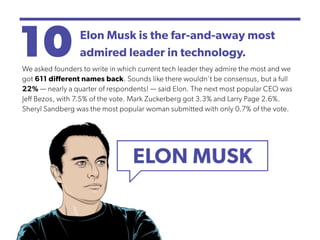
We asked founders to write in which current tech leader they admire the most and we
got 611 different names back. Sounds like there wouldn't be consensus, but a full
22% — nearly a quarter of respondents! — said Elon. The next most popular CEO was
Jeff Bezos, with 7.5% of the vote. Mark Zuckerberg got 3.3% and Larry Page 2.6%.
Sheryl Sandberg was the most popular woman submitted with only 0.7% of the vote.
Complete
Survey Results
While we selected 10 data points to highlight, the survey actually yielded
many interesting, surprising, non-obvious results. See below for everything
from how often companies rely on bridge loans to what they're 

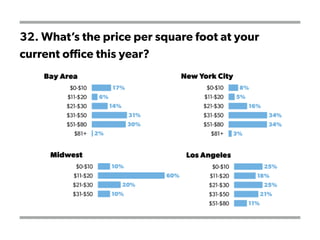
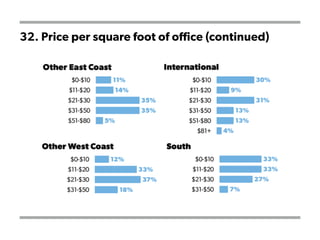
paying for office space.
1. Do you expect it to get harder or easier to raise
venture capital in the next 12 months?
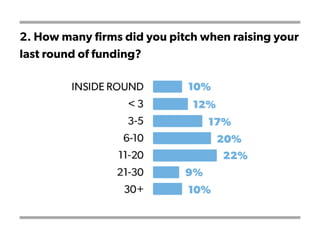
2. How many firms did you pitch when raising your
last round of funding?
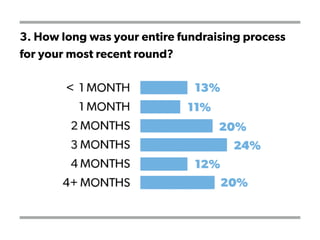
3. How long was your entire fundraising process
for your most recent round?
4. If you intend to go public, how long do you
think it will be until your IPO?
5. Compared to today, over the next 18 months…
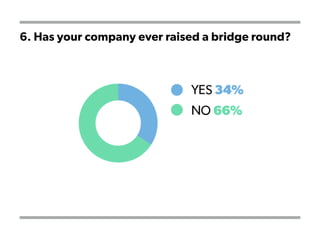
6. Has your company ever raised a bridge round?
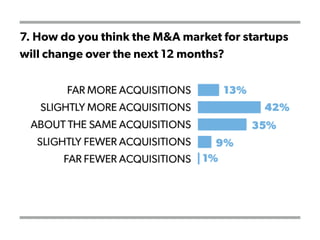
7. How do you think the M&A market for startups
will change over the next 12 months?
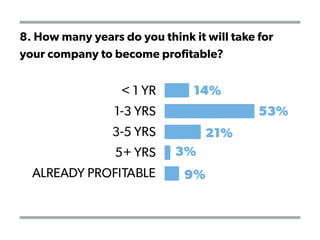
8. How many years do you think it will take for
your company to become profitable?
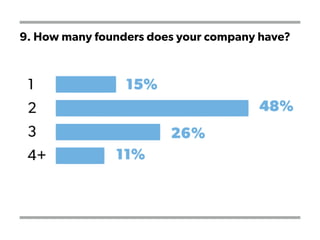
9. How many founders does your company have?
10. If you have at least one co-founder, how would
you define your co-founder relationship?
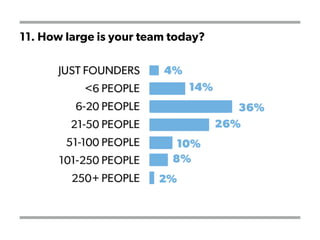
11. How large is your team today?
12. What is the male to female ratio of your team?
13. Does your organization have a strategy to
promote diversity and inclusiveness?
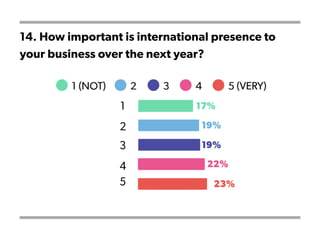
14. How important is international presence to
your business over the next year?
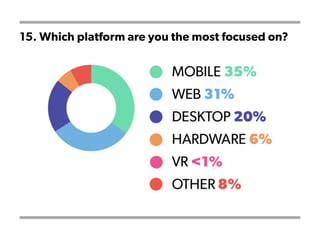
15. Which platform are you the most focused on?
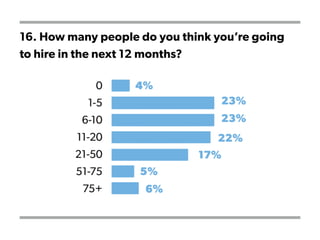
16. How many people do you think you’re going
to hire in the next 12 months?
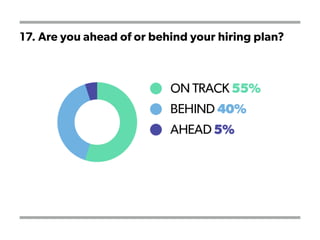
17. Are you ahead of or behind your hiring plan?
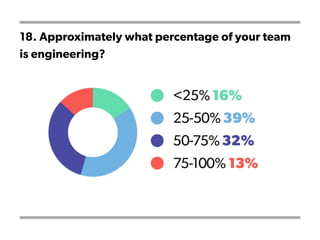
18. Approximately what percentage of your team
is engineering?
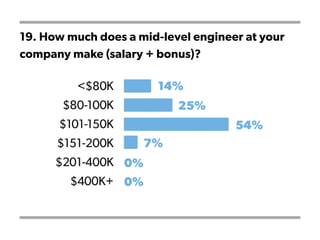
19. How much does a mid-level engineer at your
company make (salary + bonus)?
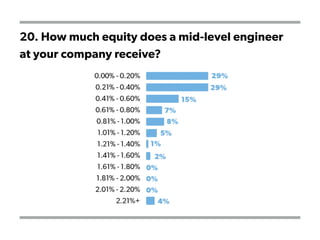
20. How much equity does a mid-level engineer
at your company receive?
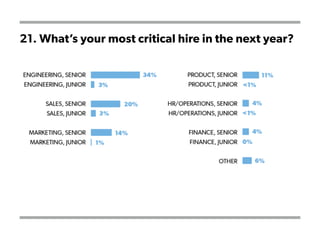
21. What’s your most critical hire in the next year?
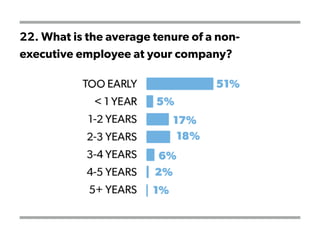
22. What is the average tenure of a non-
executive employee at your company?
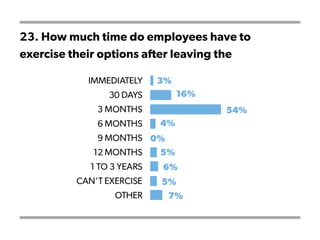
23. How much time do employees have to
exercise their options after leaving the
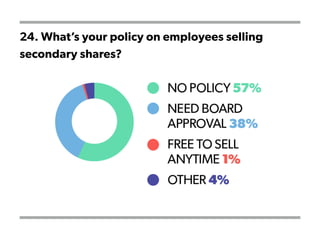
24. What’s your policy on employees selling
secondary shares?
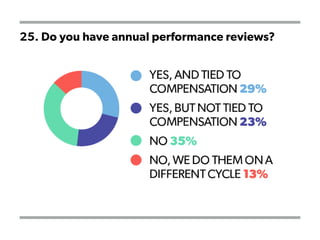
25. Do you have annual performance reviews?
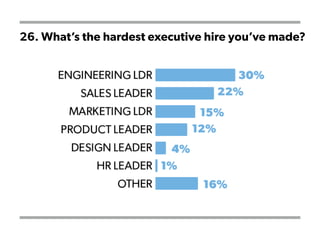
26. What’s the hardest executive hire you’ve made?
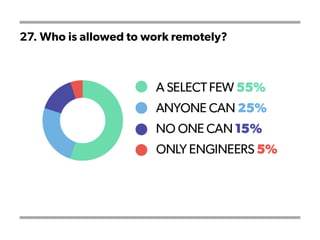
27. Who is allowed to work remotely?
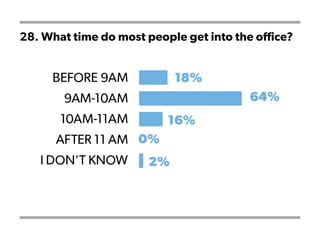
28. What time do most people get into the office?
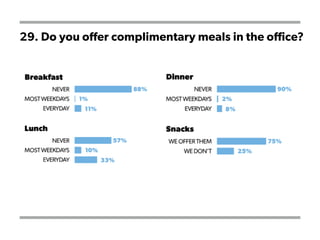
29. Do you offer complimentary meals in the office?
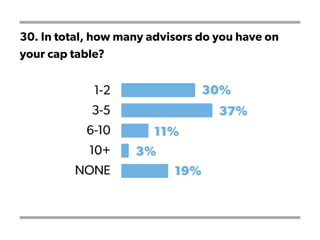
30. In total, how many advisors do you have on
your cap table?
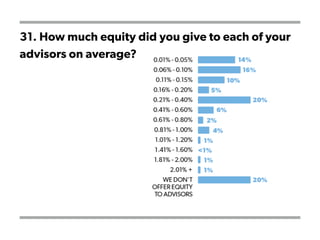
31. How much equity did you give to each of your
advisors on average?
32. What’s the price per square foot at your
current office this year?
32. Price per square foot of office (continued)
The Sample
Here are the demographics and attributes of the 500+ venture-backed
founders who responded to our survey
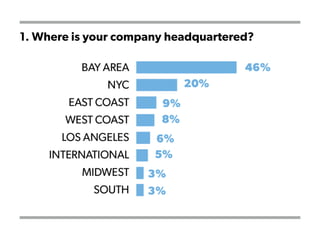
1. Where is your company headquartered?
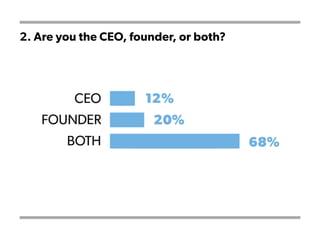
2. Are you the CEO, founder, or both?
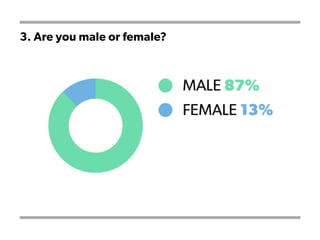
3. Are you male or female?
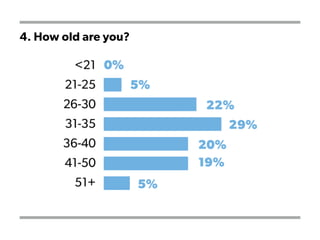
4. How old are you?
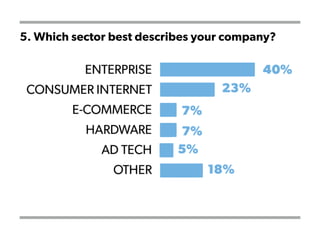
5. Which sector best describes your company?
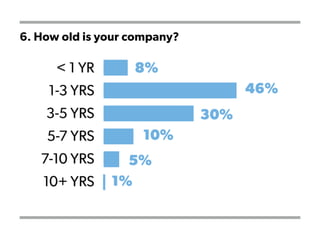
6. How old is your company?
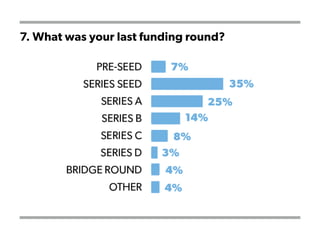
7. What was your last funding round?
Thanks
We had some incredible help making this project possible. Many thanks to
Visage for creating all the newsroom graphics. And to Will Aldrich and Nick
Teckman at SurveyMonkey who made sure we did everything right
(including our math). We’d also like to thank Silicon Valley Bank, SV Angel,
TechStarts, DreamIt, Kent Goldman, Paul Arnold and Ligaya Tichy for
making sure the survey found its way into the right hands.
stateofstartups.firstround.com

State of Startups 2015

  • 1.
  • 2.
    Why a Survey? What doesit mean to be a startup entrepreneur in 2015? And how can sharing this experience help everyone? These are the questions we seek to answer every week on the First Round Review and through the many events, online forums and other programs we run internally. Now we want to leverage this approach to provide an even more in-depth snapshot of what founders across the entire ecosystem are thinking and doing, what they're excited about and worried about, and how they're seeing the market — things that could very well change dramatically over the next several years. We surveyed venture-backed founders from everywhere — less than 25% from the First Round community — and received over 500 responses, volunteering their experience and opinions. What follows is what we're calling the 2015 State of Startups, designed to share meaningful insights into what it's like to run a startup today.
  • 3.
  • 4.
    1Most think itwon’t get easier to raise funding. We asked the 500+ founders who took our survey whether they think it's going to get easier or harder to raise capital in the next 12 months. The results were overwhelming. Of those founders with a point of view: 95% of Series Seed, 97% of Series A, and a whopping 99% of late-stage founders say it's going to remain the same or get harder. Given that 80% of these founders also said they raised exactly what they wanted or more in their last round of funding, it sounds like folks are expecting a rapid shift in the funding environment.
  • 5.
    273% say we're ina bubble. While a third of founders said they don't know whether we're in a bubble or not, those with a point of view tend to think we are. Interestingly, this depends on the type of company they're running. Enterprise company founders deny the bubble twice as often as their consumer company peers. Given that twice as many enterprise founders also think they'll be profitable in the next year, their outlook is more optimistic on the whole.
  • 6.
    3No one hasa clue about the IPO market. About a third of founders said there would be more IPOs next year, a third said fewer IPOs, and the last third said they thought things would stay pretty much the same. There doesn't seem to be a ton of clarity around this topic — even among late-stage companies, there's still no consensus. Oddly, we did find that a huge chunk of early-stage founders believe their companies will go public in the next 3 years, whereas most late-stage founders said it would take more than 7 years for their companies to IPO. It seems the further you go down the road as an entrepreneur, the more distant that horizon gets.
  • 7.
    4Women-led companies aremore diversity focused. 44% of women-led companies have a 50/50 gender ratio, while only 25% of men-led companies do. 87% of women-led companies have some initiative in place to increase diversity, while only 62% of men-led companies do.
  • 8.
    5Founders see thepower shifting from entrepreneurs to investors. We asked founders who they think has held the power in negotiating deals over the past few years. 63% said entrepreneurs have had the upper hand compared to 37% who said investors have. When we asked them what will happen in the next few years, only 46% saying entrepreneurs will have more power and 54% saying investors will take the lead.
  • 9.
    6Hiring the rightpeople and revenue growth top the list of founder concerns. Despite many founders saying the bubble is close to popping and that it will get harder to raise capital, their number one concern remains finding and hiring the best talent. This is perceived as more a 'make or break' prospect than competition and customer churn too. Also fascinating: Building the right culture to keep this talent happy and effective is a bigger concern than raising money or losing customers.
  • 10.
    7Co-founder relationships change withage. Founders over 30 are 40% more likely to be solo founders than their younger peers. But even when they do have co-founders, their relationships are still different. They tend to have calmer, more collegial connections with their co-founders. By comparison, twice as many founders under 30 say their co-founder relationship is strained. But they also say they're best friends with their co-founder 33% more often than their older peers.
  • 11.
    8Bitcoin is overhypedwhile autonomous vehicles are underhyped. We looked at the ratio of people who thought certain technologies were overhyped to those who thought they were underhyped. It appears founders think that almost everything is overhyped today — with wearables and Bitcoin topping the list. The only underhyped technologies are mobile and autonomous vehicles. It’s surprising that smartphones have been around for over 8 years, yet founders still see them as the most underhyped opportunity.
  • 12.
    9Founders fear long-termfailure, but not the short-term mistakes that lead to it. Founders' strategic concerns don't mirror their tactical priorities. Founders were concerned about growth stagnation but not focused on customer churn, and they worried more about raising capital than reducing their burn rate. There seems to be focus on long-term sources of failure, rather than the short- term conditions that could lead to that failure.
  • 13.
    10 Elon Muskis the far-and-away most admired leader in technology. We asked founders to write in which current tech leader they admire the most and we got 611 different names back. Sounds like there wouldn't be consensus, but a full 22% — nearly a quarter of respondents! — said Elon. The next most popular CEO was Jeff Bezos, with 7.5% of the vote. Mark Zuckerberg got 3.3% and Larry Page 2.6%. Sheryl Sandberg was the most popular woman submitted with only 0.7% of the vote.
  • 14.
    Complete Survey Results While weselected 10 data points to highlight, the survey actually yielded many interesting, surprising, non-obvious results. See below for everything from how often companies rely on bridge loans to what they're 
 paying for office space.
  • 15.
    1. Do youexpect it to get harder or easier to raise venture capital in the next 12 months?
  • 16.
    2. How manyfirms did you pitch when raising your last round of funding?
  • 17.
    3. How longwas your entire fundraising process for your most recent round?
  • 18.
    4. If youintend to go public, how long do you think it will be until your IPO?
  • 19.
    5. Compared totoday, over the next 18 months…
  • 20.
    6. Has yourcompany ever raised a bridge round?
  • 21.
    7. How doyou think the M&A market for startups will change over the next 12 months?
  • 22.
    8. How manyyears do you think it will take for your company to become profitable?
  • 23.
    9. How manyfounders does your company have?
  • 24.
    10. If youhave at least one co-founder, how would you define your co-founder relationship?
  • 25.
    11. How largeis your team today?
  • 26.
    12. What isthe male to female ratio of your team?
  • 27.
    13. Does yourorganization have a strategy to promote diversity and inclusiveness?
  • 28.
    14. How importantis international presence to your business over the next year?
  • 29.
    15. Which platformare you the most focused on?
  • 30.
    16. How manypeople do you think you’re going to hire in the next 12 months?
  • 31.
    17. Are youahead of or behind your hiring plan?
  • 32.
    18. Approximately whatpercentage of your team is engineering?
  • 33.
    19. How muchdoes a mid-level engineer at your company make (salary + bonus)?
  • 34.
    20. How muchequity does a mid-level engineer at your company receive?
  • 35.
    21. What’s yourmost critical hire in the next year?
  • 36.
    22. What isthe average tenure of a non- executive employee at your company?
  • 37.
    23. How muchtime do employees have to exercise their options after leaving the
  • 38.
    24. What’s yourpolicy on employees selling secondary shares?
  • 39.
    25. Do youhave annual performance reviews?
  • 40.
    26. What’s thehardest executive hire you’ve made?
  • 41.
    27. Who isallowed to work remotely?
  • 42.
    28. What timedo most people get into the office?
  • 43.
    29. Do youoffer complimentary meals in the office?
  • 44.
    30. In total,how many advisors do you have on your cap table?
  • 45.
    31. How muchequity did you give to each of your advisors on average?
  • 46.
    32. What’s theprice per square foot at your current office this year?
  • 47.
    32. Price persquare foot of office (continued)
  • 48.
    The Sample Here arethe demographics and attributes of the 500+ venture-backed founders who responded to our survey
  • 49.
    1. Where isyour company headquartered?
  • 50.
    2. Are youthe CEO, founder, or both?
  • 51.
    3. Are youmale or female?
  • 52.
    4. How oldare you?
  • 53.
    5. Which sectorbest describes your company?
  • 54.
    6. How oldis your company?
  • 55.
    7. What wasyour last funding round?
  • 56.
    Thanks We had someincredible help making this project possible. Many thanks to Visage for creating all the newsroom graphics. And to Will Aldrich and Nick Teckman at SurveyMonkey who made sure we did everything right (including our math). We’d also like to thank Silicon Valley Bank, SV Angel, TechStarts, DreamIt, Kent Goldman, Paul Arnold and Ligaya Tichy for making sure the survey found its way into the right hands.
  • 57.