What Do We Do with
All This Big Data?
Fostering Insight and Trust in the Digital Age
A Market Definition Report
January 21, 2015
By Susan Etlinger
Edited by Rebecca Lieb
Preview Only
Introduction
Every day, we hear new stories about data: how much there is, how fast it
moves, how it’s used for good or ill. Data ubiquity affects our businesses,
our educational and legal systems, our society, and increasingly, our
dinner-table conversation. I had the opportunity to speak at TED@IBM
in San Francisco on September 23, 2014, about the implications of a
data-rich world, and what we can do as businesspeople, citizens, and
consumers, to use it to our best advantage.1
That talk, as well as this document, examines two themes that underlie
many conversations about data and technology that correspond to fears
that George Orwell and Aldous Huxley chronicled in their novels 1984 and
Brave New World. As the culture critic Neil Postman put it in his 1985 book,
Amusing Ourselves to Death:
What Orwell feared were those who would ban books. What
Huxley feared was that there would be no reason to ban a book,
for there would be no one who wanted to read one. Orwell
feared those who would deprive us of information. Huxley
feared those who would give us so much that we would be
reduced to passivity and egotism. Orwell feared that the truth
would be concealed from us. Huxley feared the truth would
be drowned in a sea of irrelevance. Orwell feared we would
become a captive culture. Huxley feared we would become a
trivial culture.2
These two themes—irrelevance and narcissism on one hand (Huxley) and
surveillance and power on the other (Orwell)—anticipate modern fears
about the explosion of data in our personal and professional lives. As
individuals, we crave insight and convenience, yet we simultaneously fear
loss of control over our privacy and our digital identities.
Preview Only
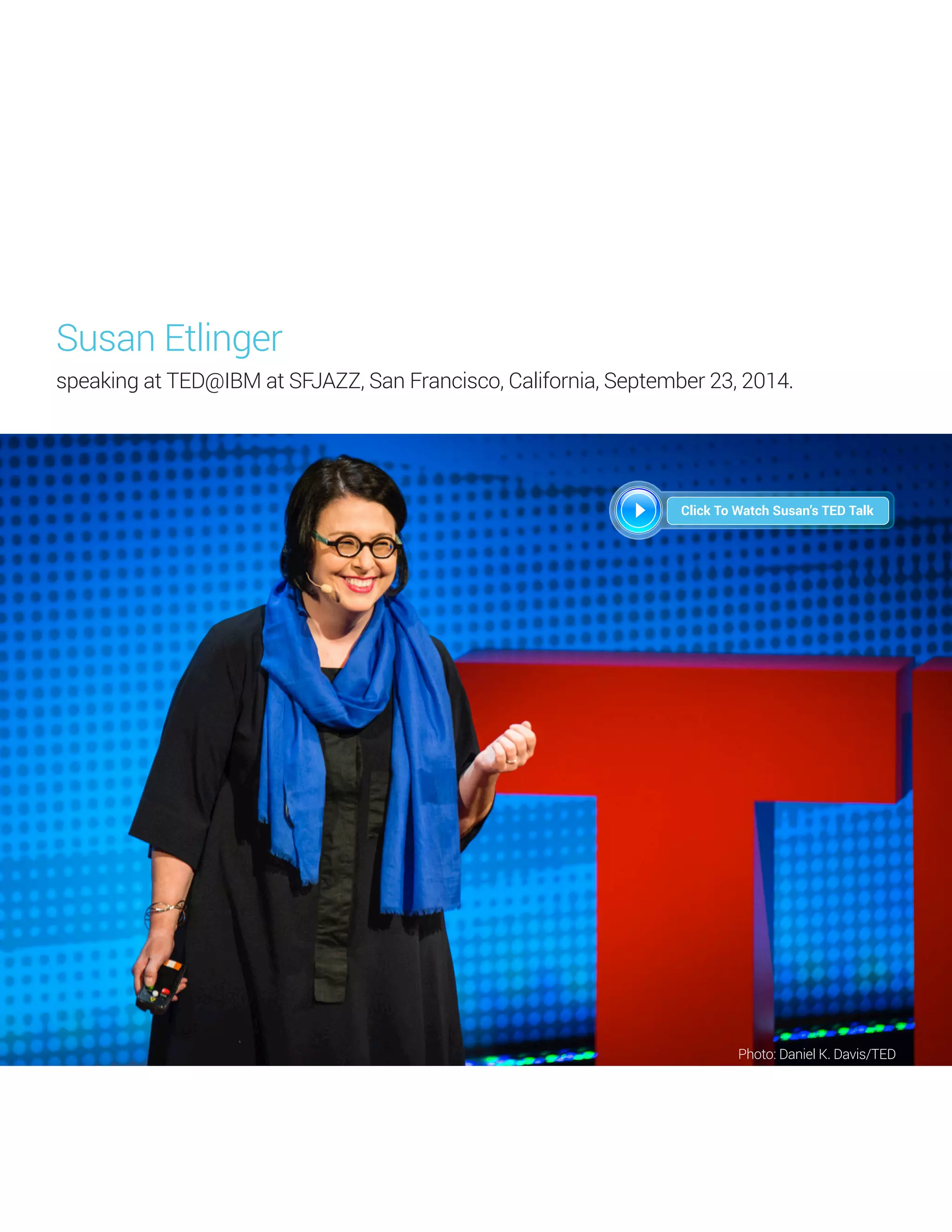
Photo: Daniel K. Davis/TED
Susan Etlinger
speaking at TED@IBM at SFJAZZ, San Francisco, California, September 23, 2014.
Preview Only
Executive Summary
This document proposes an approach to better understand and address:
•	 How we extract insight from data
•	 How we use data in such a way as to earn and protect trust: the trust of customers,
constituents, patients, and partners
To be clear, these twin challenges of insight and trust will occupy data scientists, engineers,
analysts, ethicists, linguists, lawyers, social scientists, journalists, and, of course, the public for
many years to come. To derive insight from data while protecting and sustaining trust with
communities, organizations must think deeply about how they source and analyze it and clarify and
communicate their roles as stewards of increasingly revealing information. This is only a first step,
but it’s a critical one if we are to derive sustainable advantage from data, big and small.
Preview Only
What’s So Hard About Big Data? .......................................................................................................................................
With Big Data, Size Isn’t Everything ...............................................................................................................................
Unstructured Data Demands New Analytical Approaches ........................................................................................
Traditional Methodologies Must Adapt ........................................................................................................................
From Data to Insight ..............................................................................................................................................................................
Big Data Requires Linguistic Expertise .........................................................................................................................
Big Data Requires Expertise in Data Science and Critical Thinking .........................................................................
Legal and Ethical Issues of Big Data .................................................................................................................................
Planning for Data Ubiquity .............................................................................................................................................................
Conclusion .........................................................................................................................................................................
Table of Contents
5
6
8
10
13
14
14
17
21
23
What’s So Hard
About Big Data?
5
Preview Only
6
Preview Only
To download this report in full at no cost, please visit our website at:
http://pages.altimetergroup.com/what-do-we-do-with-all-this-big-data-report.html
About Us
How to Work with Us
Altimeter Group research is applied and brought to life in our client engagements. We help organizations understand and
take advantage of digital disruption. There are several ways Altimeter can help you with your business initiatives:
•	 Strategy Consulting. Altimeter creates strategies and plans to help companies act on disruptive business and
technology trends. Our team of analysts and consultants works with senior executives, strategists .and marketers on
needs assessment, strategy roadmaps, and pragmatic recommendations across disruptive trends.
•	 Education and Workshops. Engage an Altimeter speaker to help make the business case to executives or arm
practitioners with new knowledge and skills.
•	 Advisory. Retain Altimeter for ongoing research-based advisory: conduct an ad-hoc session to address an immediate
challenge; or gain deeper access to research and strategy counsel.
To learn more about Altimeter’s offerings, contact sales@altimetergroup.com.
7
Altimeter is a research and
consulting firm that helps
companies understand and
act on technology disruption.
We give business leaders the
insight and confidence to help
their companies thrive in the
face of disruption. In addition to
publishing research, Altimeter
Group analysts speak and
provide strategy consulting
on trends in leadership, digital
transformation, social business,
data disruption and content
marketing strategy.
Altimeter Group
1875 S Grant St #680
San Mateo, CA 94402
info@altimetergroup.com
www.altimetergroup.com
@altimetergroup
650.212.2272
Susan Etlinger, Industry Analyst
Susan Etlinger is an industry analyst at Altimeter Group,
where she works with global organizations to develop
data and analytics strategies that support their business
objectives. Susan has a diverse background in marketing
and strategic planning within both corporations and
agencies. She’s a frequent speaker on social data and
analytics and has been extensively quoted in outlets,
including Fast Company, BBC, The New York Times, and The
Wall Street Journal. Find her on Twitter at @setlinger and at
her blog, Thought Experiments, at susanetlinger.com.
Rebecca Lieb, Industry Analyst
Rebecca Lieb (@lieblink) covers digital advertising and
media, encompassing brands, publishers, agencies and
technology vendors. In addition to her background as a
marketing executive, she was VP and editor-in-chief of the
ClickZ Network for over seven years. She’s written two
books on digital marketing: The Truth About Search Engine
Optimization (2009) and Content Marketing (2011). Rebecca
blogs at www.rebeccalieb.com/blog.
Preview Only

[Report] What Do We Do With All This Big Data? Fostering Insight and Trust in the Digital Age

  • 1.
    What Do WeDo with All This Big Data? Fostering Insight and Trust in the Digital Age A Market Definition Report January 21, 2015 By Susan Etlinger Edited by Rebecca Lieb Preview Only
  • 2.
    Introduction Every day, wehear new stories about data: how much there is, how fast it moves, how it’s used for good or ill. Data ubiquity affects our businesses, our educational and legal systems, our society, and increasingly, our dinner-table conversation. I had the opportunity to speak at TED@IBM in San Francisco on September 23, 2014, about the implications of a data-rich world, and what we can do as businesspeople, citizens, and consumers, to use it to our best advantage.1 That talk, as well as this document, examines two themes that underlie many conversations about data and technology that correspond to fears that George Orwell and Aldous Huxley chronicled in their novels 1984 and Brave New World. As the culture critic Neil Postman put it in his 1985 book, Amusing Ourselves to Death: What Orwell feared were those who would ban books. What Huxley feared was that there would be no reason to ban a book, for there would be no one who wanted to read one. Orwell feared those who would deprive us of information. Huxley feared those who would give us so much that we would be reduced to passivity and egotism. Orwell feared that the truth would be concealed from us. Huxley feared the truth would be drowned in a sea of irrelevance. Orwell feared we would become a captive culture. Huxley feared we would become a trivial culture.2 These two themes—irrelevance and narcissism on one hand (Huxley) and surveillance and power on the other (Orwell)—anticipate modern fears about the explosion of data in our personal and professional lives. As individuals, we crave insight and convenience, yet we simultaneously fear loss of control over our privacy and our digital identities. Preview Only
  • 3.
    Photo: Daniel K.Davis/TED Susan Etlinger speaking at TED@IBM at SFJAZZ, San Francisco, California, September 23, 2014. Preview Only
  • 4.
    Executive Summary This documentproposes an approach to better understand and address: • How we extract insight from data • How we use data in such a way as to earn and protect trust: the trust of customers, constituents, patients, and partners To be clear, these twin challenges of insight and trust will occupy data scientists, engineers, analysts, ethicists, linguists, lawyers, social scientists, journalists, and, of course, the public for many years to come. To derive insight from data while protecting and sustaining trust with communities, organizations must think deeply about how they source and analyze it and clarify and communicate their roles as stewards of increasingly revealing information. This is only a first step, but it’s a critical one if we are to derive sustainable advantage from data, big and small. Preview Only What’s So Hard About Big Data? ....................................................................................................................................... With Big Data, Size Isn’t Everything ............................................................................................................................... Unstructured Data Demands New Analytical Approaches ........................................................................................ Traditional Methodologies Must Adapt ........................................................................................................................ From Data to Insight .............................................................................................................................................................................. Big Data Requires Linguistic Expertise ......................................................................................................................... Big Data Requires Expertise in Data Science and Critical Thinking ......................................................................... Legal and Ethical Issues of Big Data ................................................................................................................................. Planning for Data Ubiquity ............................................................................................................................................................. Conclusion ......................................................................................................................................................................... Table of Contents 5 6 8 10 13 14 14 17 21 23
  • 5.
    What’s So Hard AboutBig Data? 5 Preview Only
  • 6.
    6 Preview Only To downloadthis report in full at no cost, please visit our website at: http://pages.altimetergroup.com/what-do-we-do-with-all-this-big-data-report.html
  • 7.
    About Us How toWork with Us Altimeter Group research is applied and brought to life in our client engagements. We help organizations understand and take advantage of digital disruption. There are several ways Altimeter can help you with your business initiatives: • Strategy Consulting. Altimeter creates strategies and plans to help companies act on disruptive business and technology trends. Our team of analysts and consultants works with senior executives, strategists .and marketers on needs assessment, strategy roadmaps, and pragmatic recommendations across disruptive trends. • Education and Workshops. Engage an Altimeter speaker to help make the business case to executives or arm practitioners with new knowledge and skills. • Advisory. Retain Altimeter for ongoing research-based advisory: conduct an ad-hoc session to address an immediate challenge; or gain deeper access to research and strategy counsel. To learn more about Altimeter’s offerings, contact sales@altimetergroup.com. 7 Altimeter is a research and consulting firm that helps companies understand and act on technology disruption. We give business leaders the insight and confidence to help their companies thrive in the face of disruption. In addition to publishing research, Altimeter Group analysts speak and provide strategy consulting on trends in leadership, digital transformation, social business, data disruption and content marketing strategy. Altimeter Group 1875 S Grant St #680 San Mateo, CA 94402 info@altimetergroup.com www.altimetergroup.com @altimetergroup 650.212.2272 Susan Etlinger, Industry Analyst Susan Etlinger is an industry analyst at Altimeter Group, where she works with global organizations to develop data and analytics strategies that support their business objectives. Susan has a diverse background in marketing and strategic planning within both corporations and agencies. She’s a frequent speaker on social data and analytics and has been extensively quoted in outlets, including Fast Company, BBC, The New York Times, and The Wall Street Journal. Find her on Twitter at @setlinger and at her blog, Thought Experiments, at susanetlinger.com. Rebecca Lieb, Industry Analyst Rebecca Lieb (@lieblink) covers digital advertising and media, encompassing brands, publishers, agencies and technology vendors. In addition to her background as a marketing executive, she was VP and editor-in-chief of the ClickZ Network for over seven years. She’s written two books on digital marketing: The Truth About Search Engine Optimization (2009) and Content Marketing (2011). Rebecca blogs at www.rebeccalieb.com/blog. Preview Only