THE ART OF SCALI             NG PEOPLE
How to grow a dev team from startup to company
             Dominik Hamann, Lead Architect
AN IDEA TAKES OFF
 "A few months ago nobody ever heard of Trademob,
       now it seems like you are everywhere."

          Google mobile Northern Europe manager
A CRAZY RIDE IN NUMBERS
 Trademob, Dec 2011            9 months later...


                                               (Berlin team)


       1 server            60 servers in 3 locations
       1 office             6 offices in 5 countries
   10 req/s tracking          500 req/s Tracking
10 apps, 10 ad networks   150 apps, 100 ad networks
     8 employees                60 employees
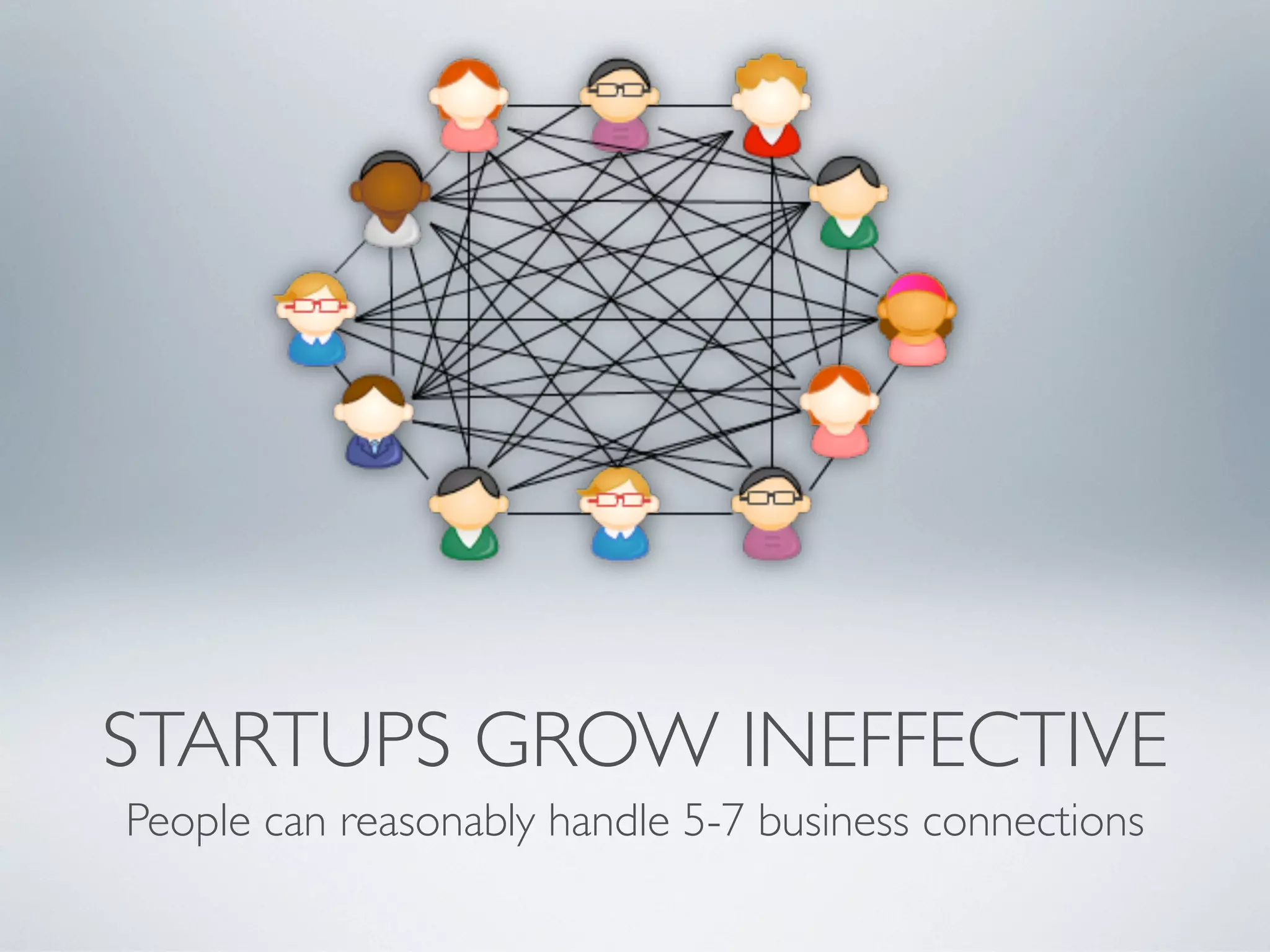
WHY SCALING PEOPLE IS HARD:
          It’s an O(n^2) problem.
STARTUPS ARE ULTRA-EFFECTIVE
There’s full agreement and near-zero loss in communication
STARTUPS GROW INEFFECTIVE
People can reasonably handle 5-7 business connections
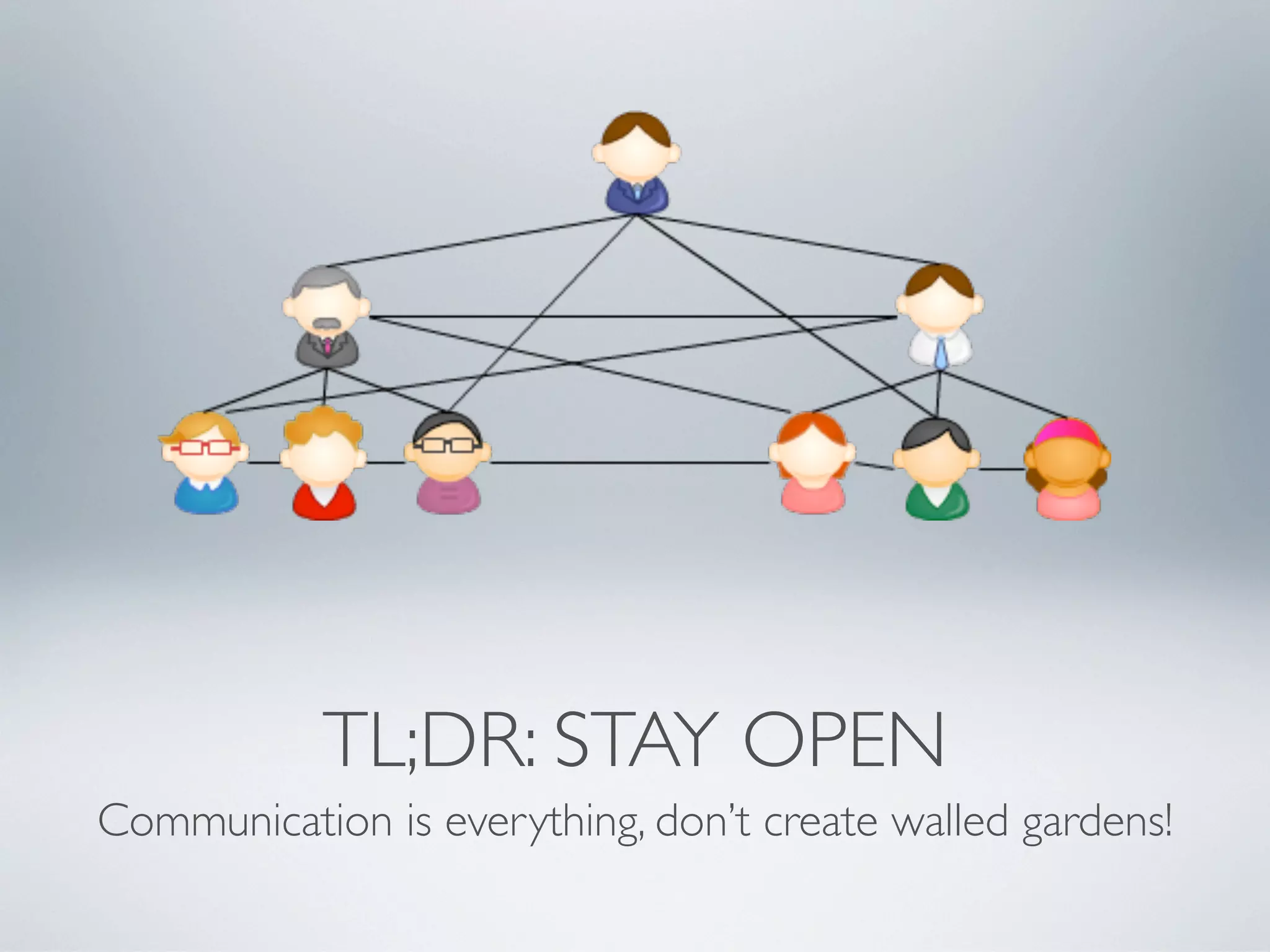
THE “SOLUTION” IS HIERARCHY
    Big corporations have done it for years...
THE PROBLEM WITH
                HIERARCHY

• More    layers reduce the number of connections

•   But: Every layer of indirection reduces information, domain
    knowledge, emotional attachment and buy-in by 50%!

• From    a logical perspective, the best solution is to keep
    hierarchies flat cut through the red tape
TL;DR: STAY OPEN
Communication is everything, don’t create walled gardens!
WHAT WORKED FOR US

• Daily   Standup: Move to individual teams when too large

• Biweekly All-Hands: Move    to team leader presentation later

• Weekly Tech Talk   (internal learning)

• Mentoring    & Institutionalized Coaching

• Tech    Open Hour (for other departments)
FLEXTEAMS

• You   start with a handful of great generalists

• You   end up with a few specialized Agile teams

• What    to do in the middle?

• Flexteams: Clear   responsibility with part-time resources

• Scrum   Light/Kanban without Product Owner or Scrum Master
ON PROCESS
“Process is an embedded reaction to prior stupidity.”
                      Clay Shirky
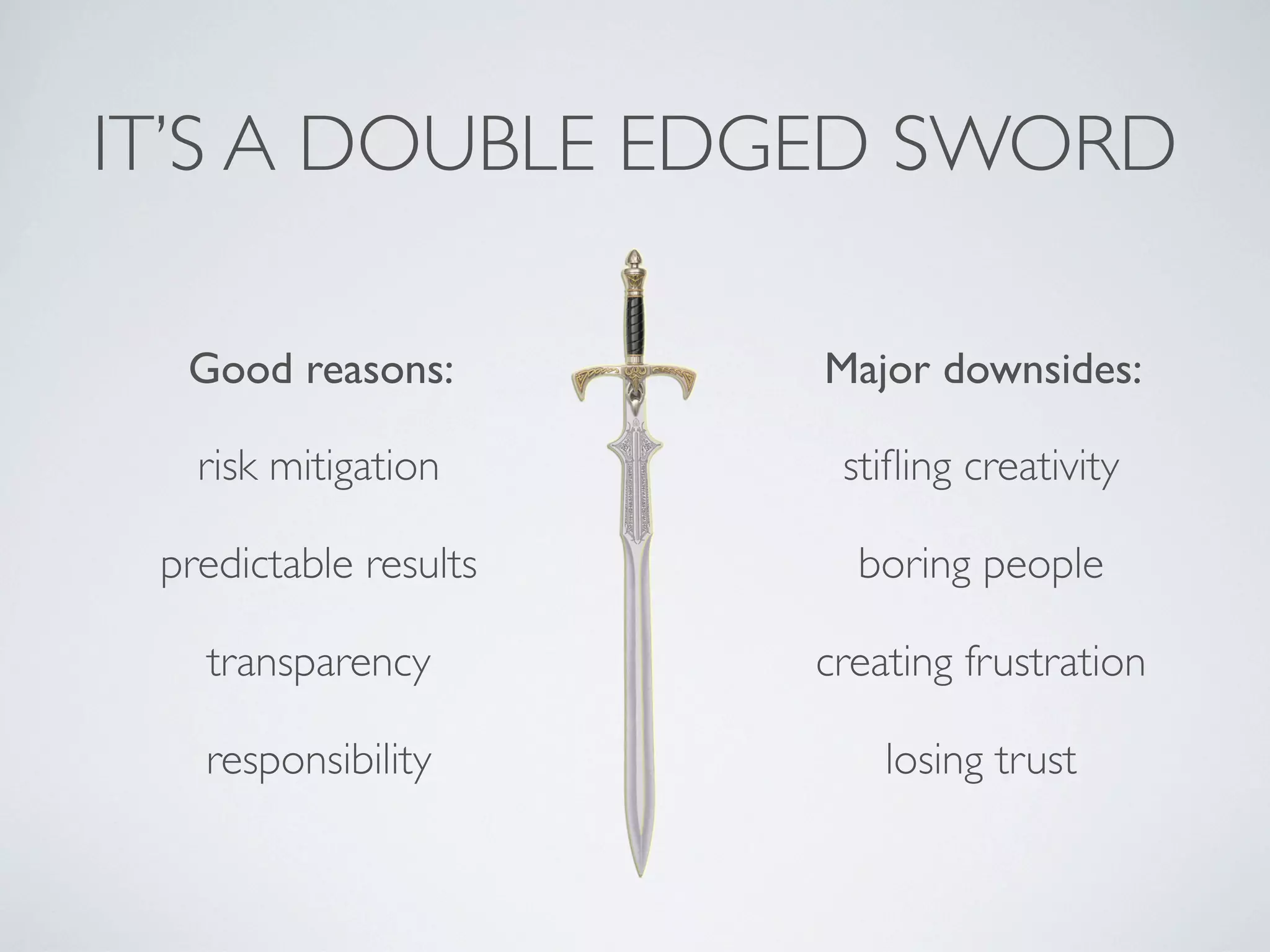
IT’S A DOUBLE EDGED SWORD

  Good reasons:        Major downsides:

   risk mitigation      stifling creativity

 predictable results     boring people

   transparency        creating frustration

   responsibility          losing trust
SOME RULES OF THUMB

•   Get full buy-in for process and apply “just-in-time”, not
    preventively

•   Soft process (checklists, conventions) before hard process
    (enforcing by hard-/software)

•   Need for process determined by risk category

•   Think twice about establishing a process - but if you do it,
    do it right!
ON HIRING
“Hiring well is the most important thing in the universe.
                Nothing else comes close.
         It’s more important than breathing.”

          From the Valve Handbook for New Employees
THE TEAM IS PRIORITY

• Keep   the balance - mix different types of peole

• Hire   people smarter than yourself

• T-shaped   employees: generalists with special knowledge

• Aptitude   and attitude before skill - select for team fit

• One    arrogant person can drag down a whole team.
DOUBLE HEADS

• We’ve    had continuous success filling positions “twice”

• Start   fast, specialize later

• Most    big decisions need to be done first

• Great    way to get first-timers started

• Risk: Mismatch, too     late separation of responsibilities
ON TRUST
“Trust is the lubrication that makes it possible for organizations to work.”

                                Warren Bemis
IDENTIFICATION & TRUST

• An    atmosphere of high freedom and high responsibility

• “No    fear at work” / “Don’t shoot the messenger”

• Admit    mistakes openly and let the better idea win

• You   can’t buy trust - no matter how much you pay

• Let   the team take the credit - “We did it!”
THE NEXT GENERATION

• Build   up future leaders from the start

• Communicate      the big vision and sync regularly, skip the details

• Have    a permeable career path for talents

• Thequality of a leader can be measured on the leaders that
 grow up under his wing
YOUR JOB WILL CHANGE

• With   a larger size of the company, focus will change.

• You   will code less and manage more.

• Embrace   it and get Help!
THANKS FOR WATCHING
          and please...


     (I never really got it ;-)
THE ART OF SCALI             NG PEOPLE
How to grow a dev team from startup to company
             Dominik Hamann, Lead Architect

The Art of Scaling People (English)

  • 1.
    THE ART OFSCALI NG PEOPLE How to grow a dev team from startup to company Dominik Hamann, Lead Architect
  • 2.
    AN IDEA TAKESOFF "A few months ago nobody ever heard of Trademob, now it seems like you are everywhere." Google mobile Northern Europe manager
  • 3.
    A CRAZY RIDEIN NUMBERS Trademob, Dec 2011 9 months later... (Berlin team) 1 server 60 servers in 3 locations 1 office 6 offices in 5 countries 10 req/s tracking 500 req/s Tracking 10 apps, 10 ad networks 150 apps, 100 ad networks 8 employees 60 employees
  • 4.
    WHY SCALING PEOPLEIS HARD: It’s an O(n^2) problem.
  • 5.
    STARTUPS ARE ULTRA-EFFECTIVE There’sfull agreement and near-zero loss in communication
  • 6.
    STARTUPS GROW INEFFECTIVE Peoplecan reasonably handle 5-7 business connections
  • 7.
    THE “SOLUTION” ISHIERARCHY Big corporations have done it for years...
  • 8.
    THE PROBLEM WITH HIERARCHY • More layers reduce the number of connections • But: Every layer of indirection reduces information, domain knowledge, emotional attachment and buy-in by 50%! • From a logical perspective, the best solution is to keep hierarchies flat cut through the red tape
  • 9.
    TL;DR: STAY OPEN Communicationis everything, don’t create walled gardens!
  • 10.
    WHAT WORKED FORUS • Daily Standup: Move to individual teams when too large • Biweekly All-Hands: Move to team leader presentation later • Weekly Tech Talk (internal learning) • Mentoring & Institutionalized Coaching • Tech Open Hour (for other departments)
  • 11.
    FLEXTEAMS • You start with a handful of great generalists • You end up with a few specialized Agile teams • What to do in the middle? • Flexteams: Clear responsibility with part-time resources • Scrum Light/Kanban without Product Owner or Scrum Master
  • 12.
    ON PROCESS “Process isan embedded reaction to prior stupidity.” Clay Shirky
  • 13.
    IT’S A DOUBLEEDGED SWORD Good reasons: Major downsides: risk mitigation stifling creativity predictable results boring people transparency creating frustration responsibility losing trust
  • 14.
    SOME RULES OFTHUMB • Get full buy-in for process and apply “just-in-time”, not preventively • Soft process (checklists, conventions) before hard process (enforcing by hard-/software) • Need for process determined by risk category • Think twice about establishing a process - but if you do it, do it right!
  • 15.
    ON HIRING “Hiring wellis the most important thing in the universe. Nothing else comes close. It’s more important than breathing.” From the Valve Handbook for New Employees
  • 16.
    THE TEAM ISPRIORITY • Keep the balance - mix different types of peole • Hire people smarter than yourself • T-shaped employees: generalists with special knowledge • Aptitude and attitude before skill - select for team fit • One arrogant person can drag down a whole team.
  • 17.
    DOUBLE HEADS • We’ve had continuous success filling positions “twice” • Start fast, specialize later • Most big decisions need to be done first • Great way to get first-timers started • Risk: Mismatch, too late separation of responsibilities
  • 18.
    ON TRUST “Trust isthe lubrication that makes it possible for organizations to work.” Warren Bemis
  • 19.
    IDENTIFICATION & TRUST •An atmosphere of high freedom and high responsibility • “No fear at work” / “Don’t shoot the messenger” • Admit mistakes openly and let the better idea win • You can’t buy trust - no matter how much you pay • Let the team take the credit - “We did it!”
  • 20.
    THE NEXT GENERATION •Build up future leaders from the start • Communicate the big vision and sync regularly, skip the details • Have a permeable career path for talents • Thequality of a leader can be measured on the leaders that grow up under his wing
  • 21.
    YOUR JOB WILLCHANGE • With a larger size of the company, focus will change. • You will code less and manage more. • Embrace it and get Help!
  • 22.
    THANKS FOR WATCHING and please... (I never really got it ;-)
  • 23.
    THE ART OFSCALI NG PEOPLE How to grow a dev team from startup to company Dominik Hamann, Lead Architect