Line
Drawing
Techniques
Line can be used to show
                shape,
              contour,
               texture
               & tone.
Hatching


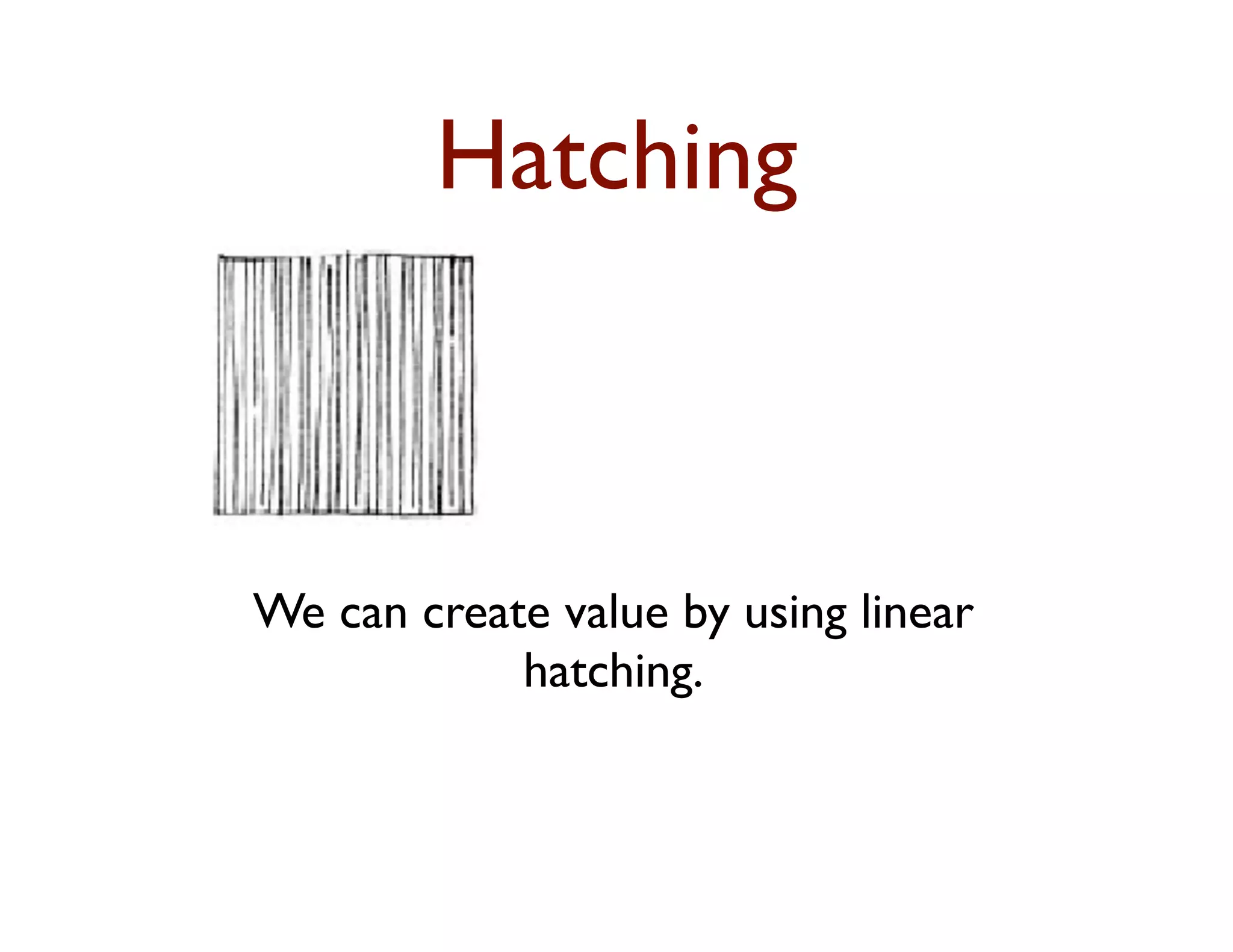
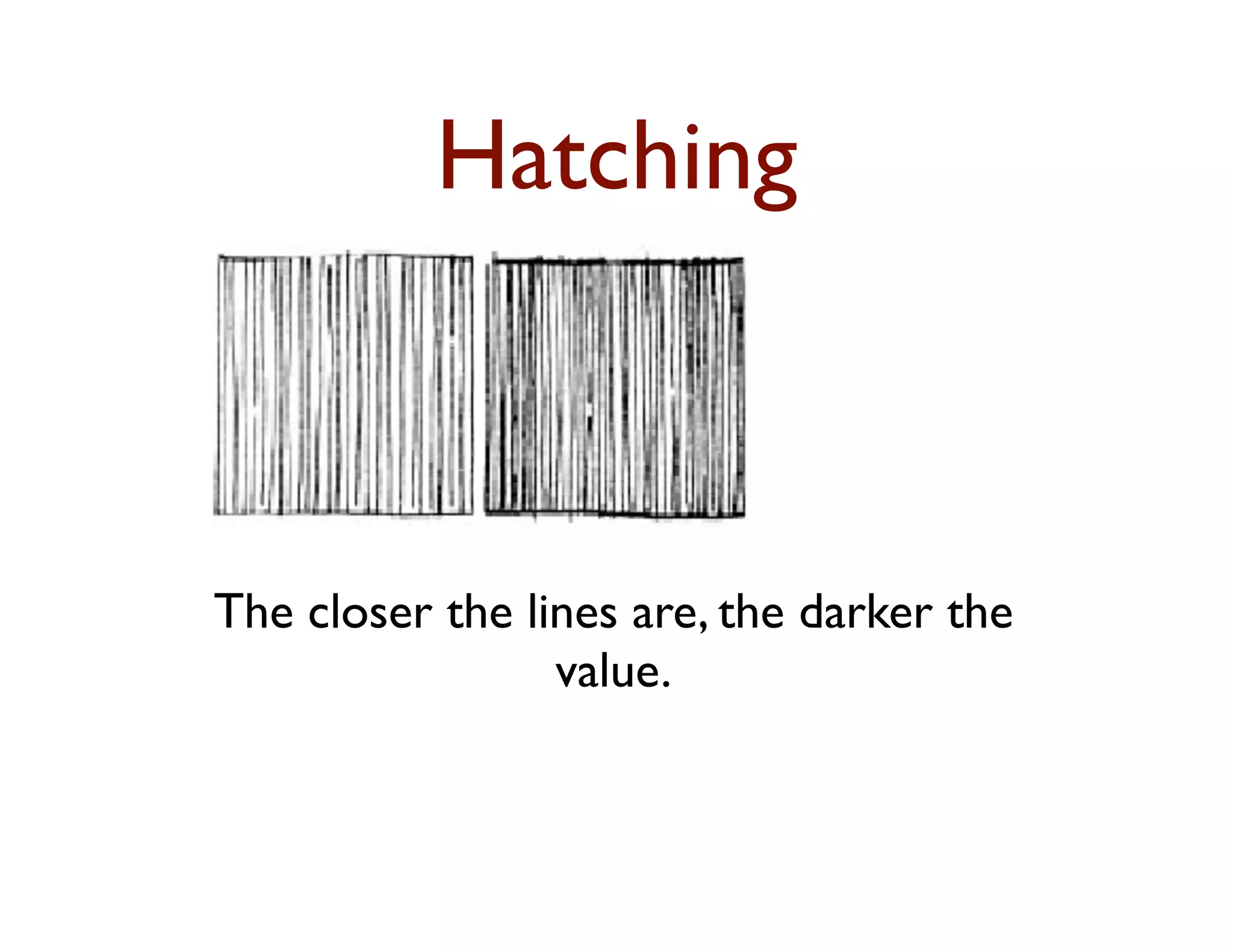
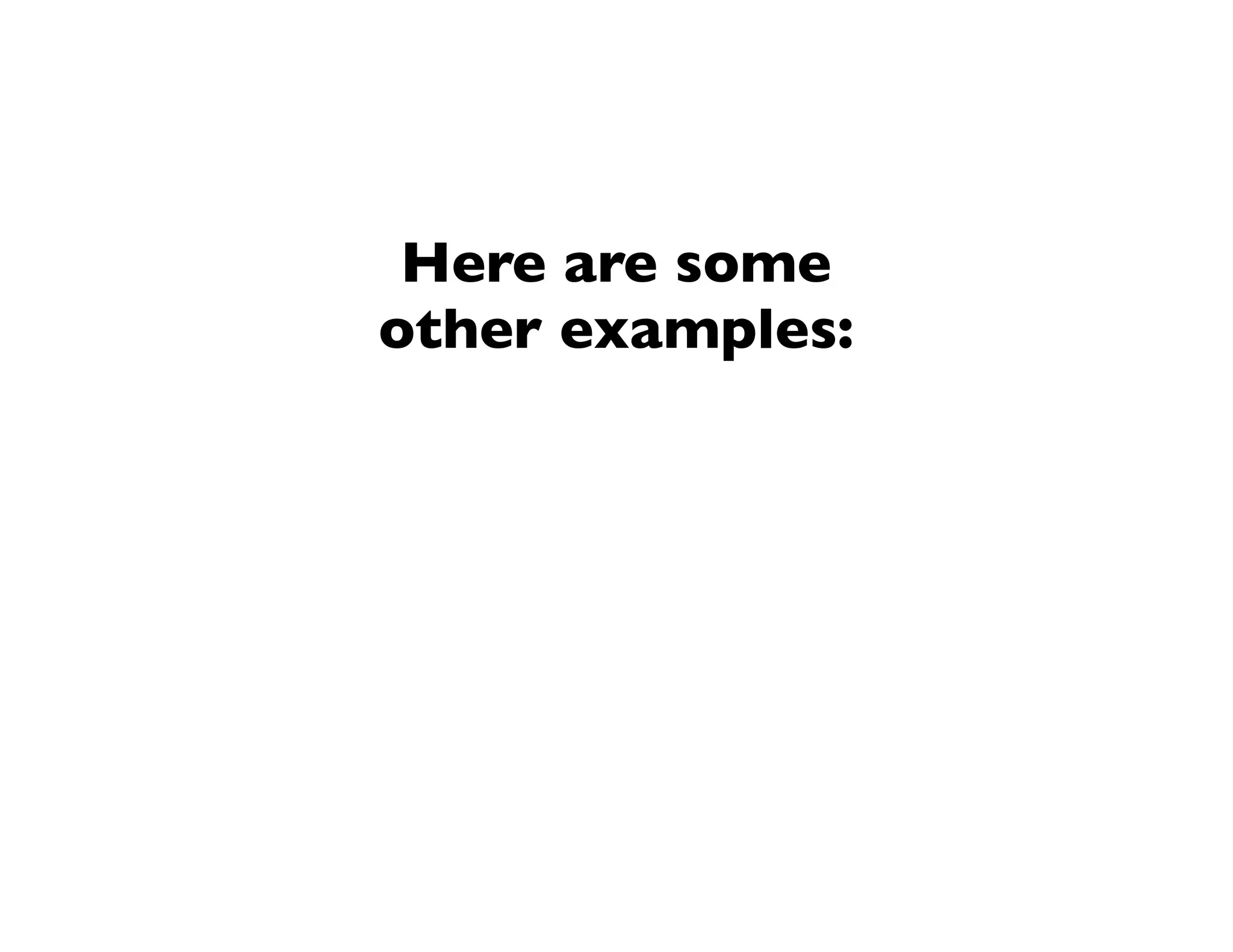
We can create value by using linear
            hatching.
Hatching


The closer the lines are, the darker the
                 value.
Hatching


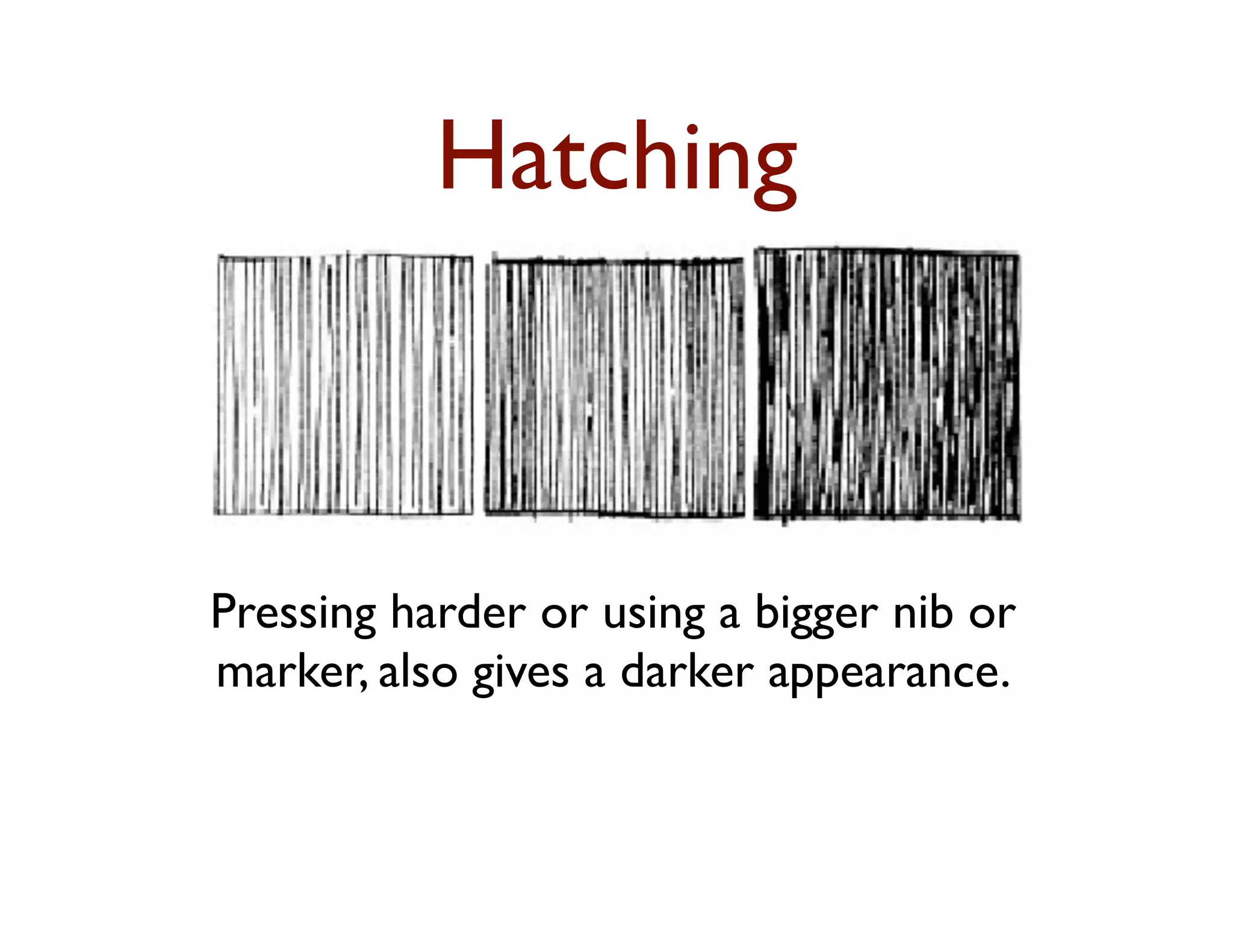
Pressing harder or using a bigger nib or
marker, also gives a darker appearance.
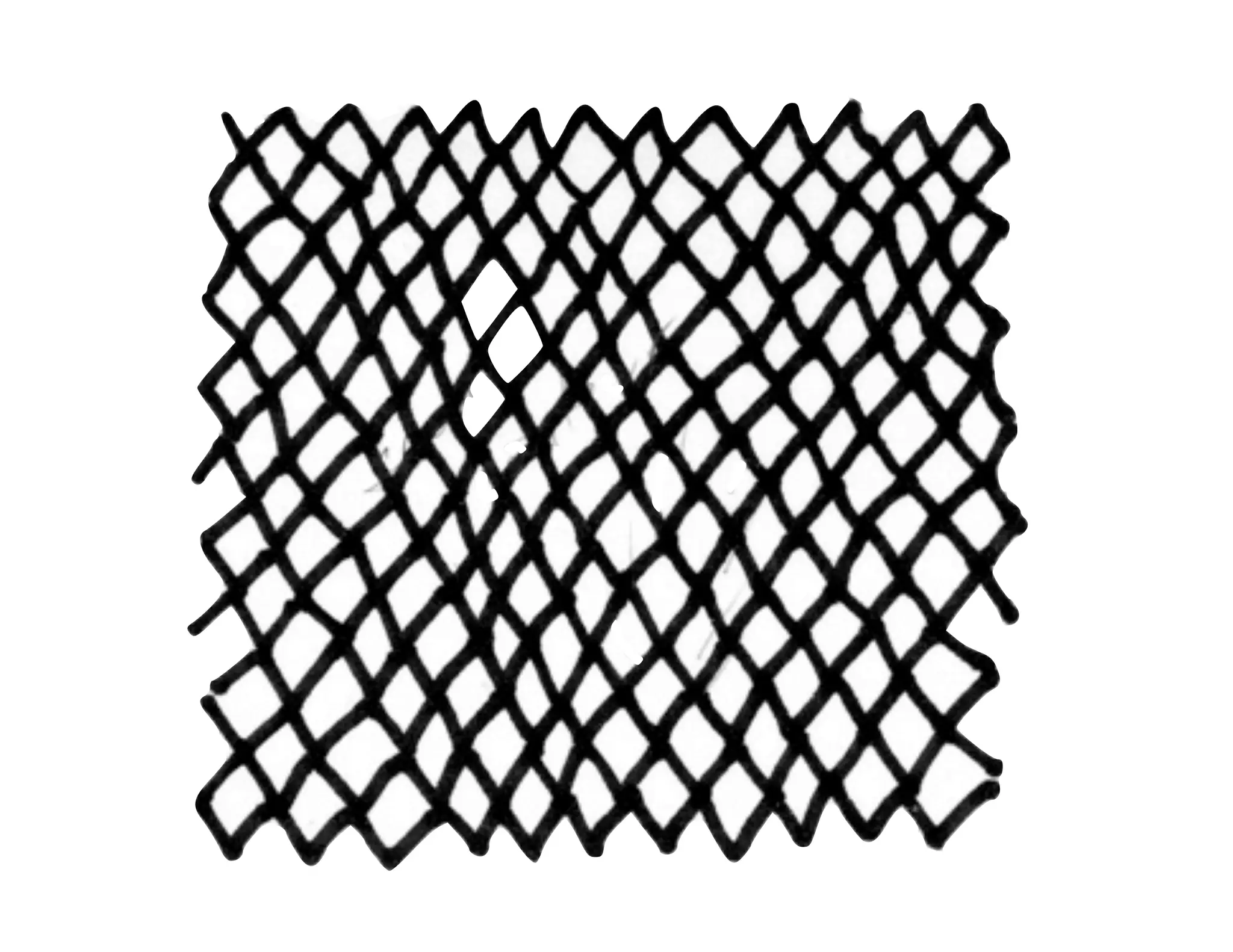
Crosshatching
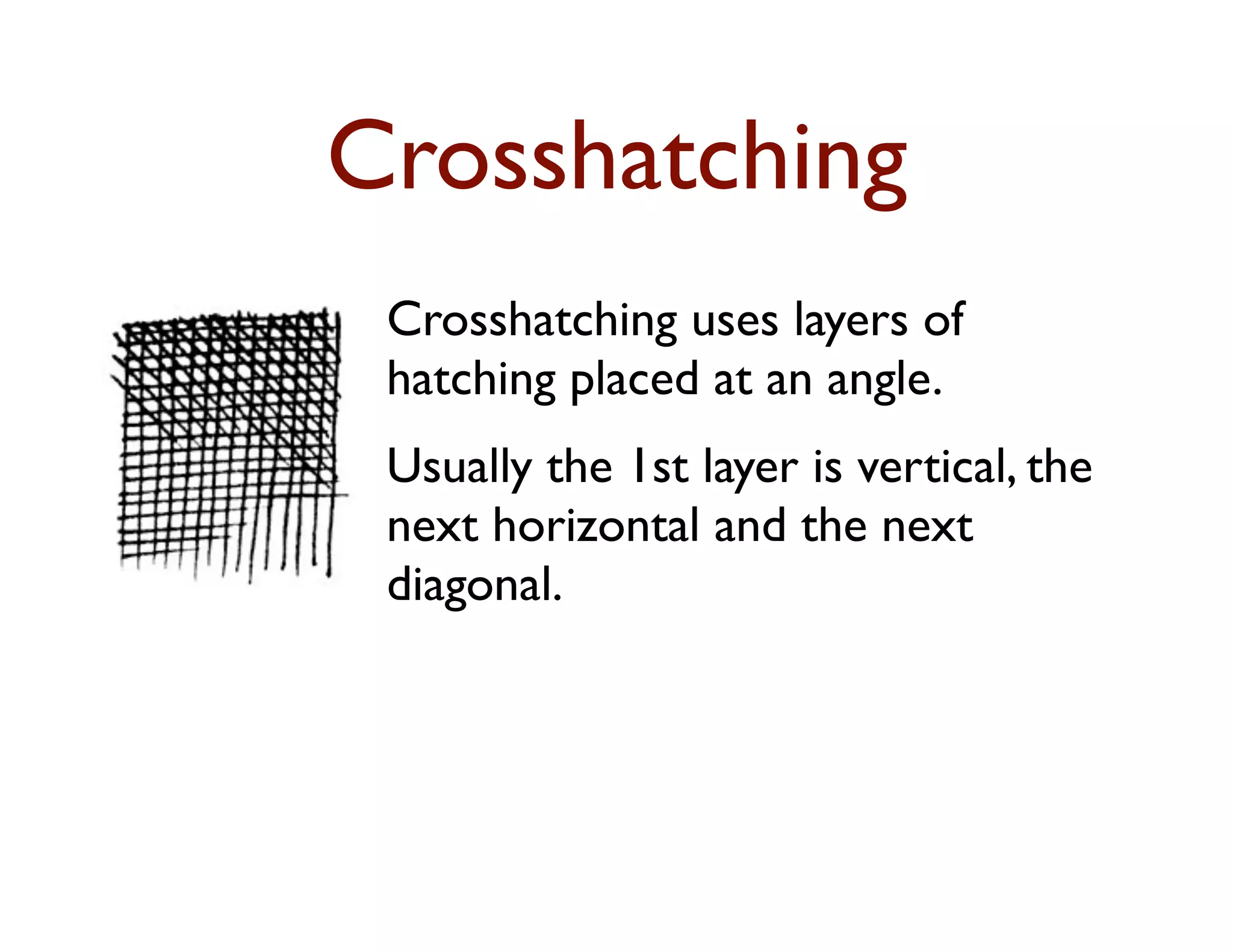
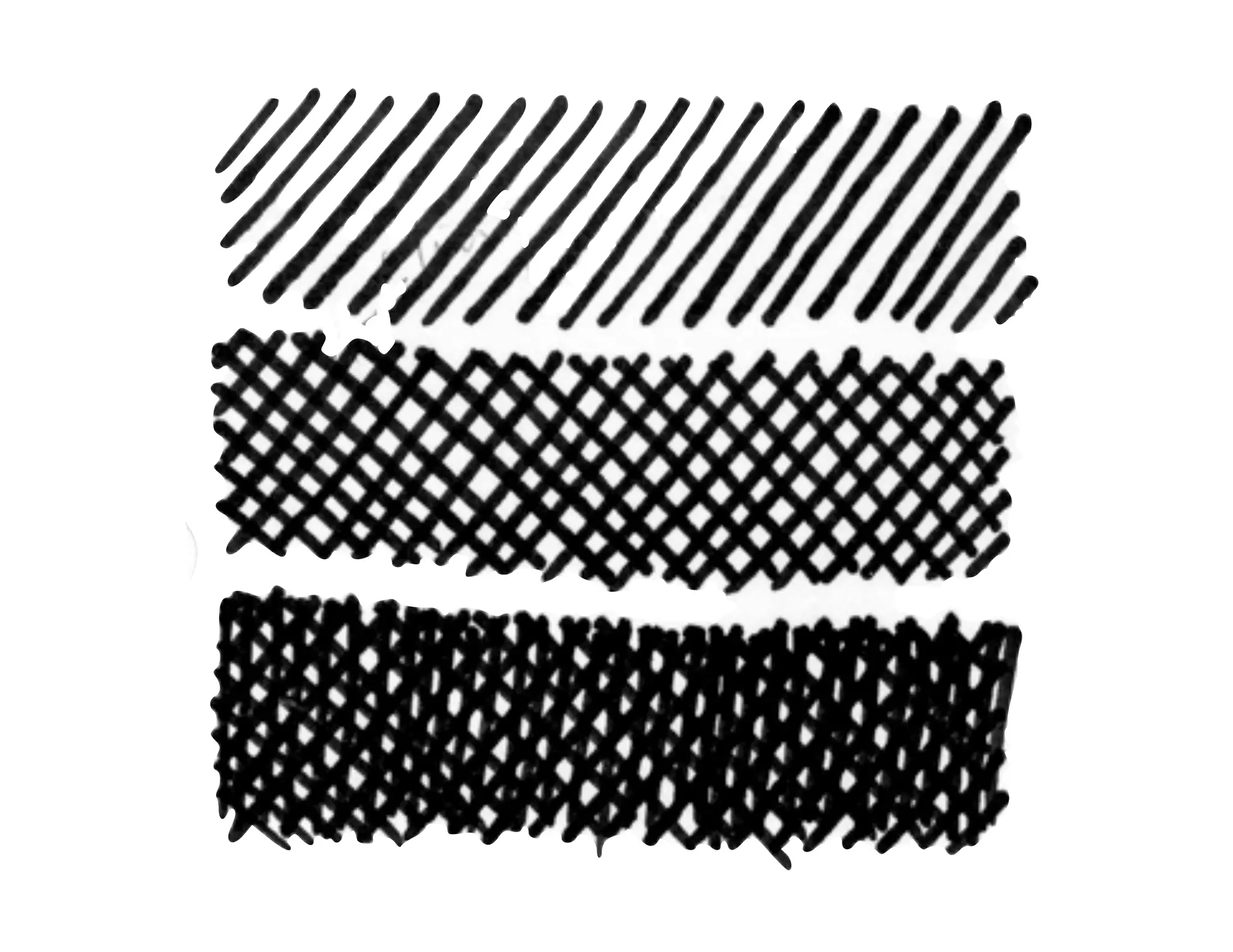
 Crosshatching uses layers of
 hatching placed at an angle.
 Usually the 1st layer is vertical, the
 next horizontal and the next
 diagonal.
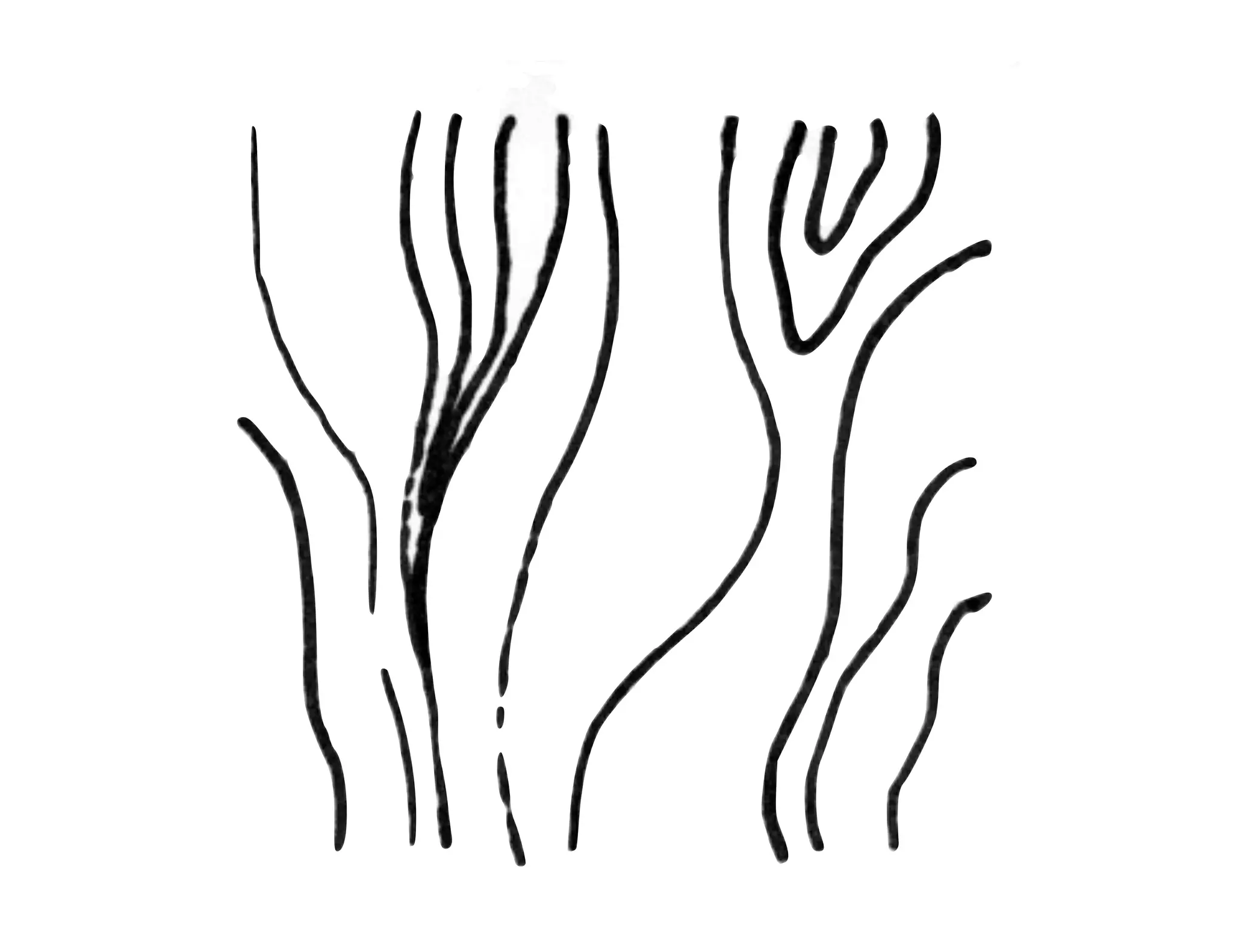
Contour Hatching
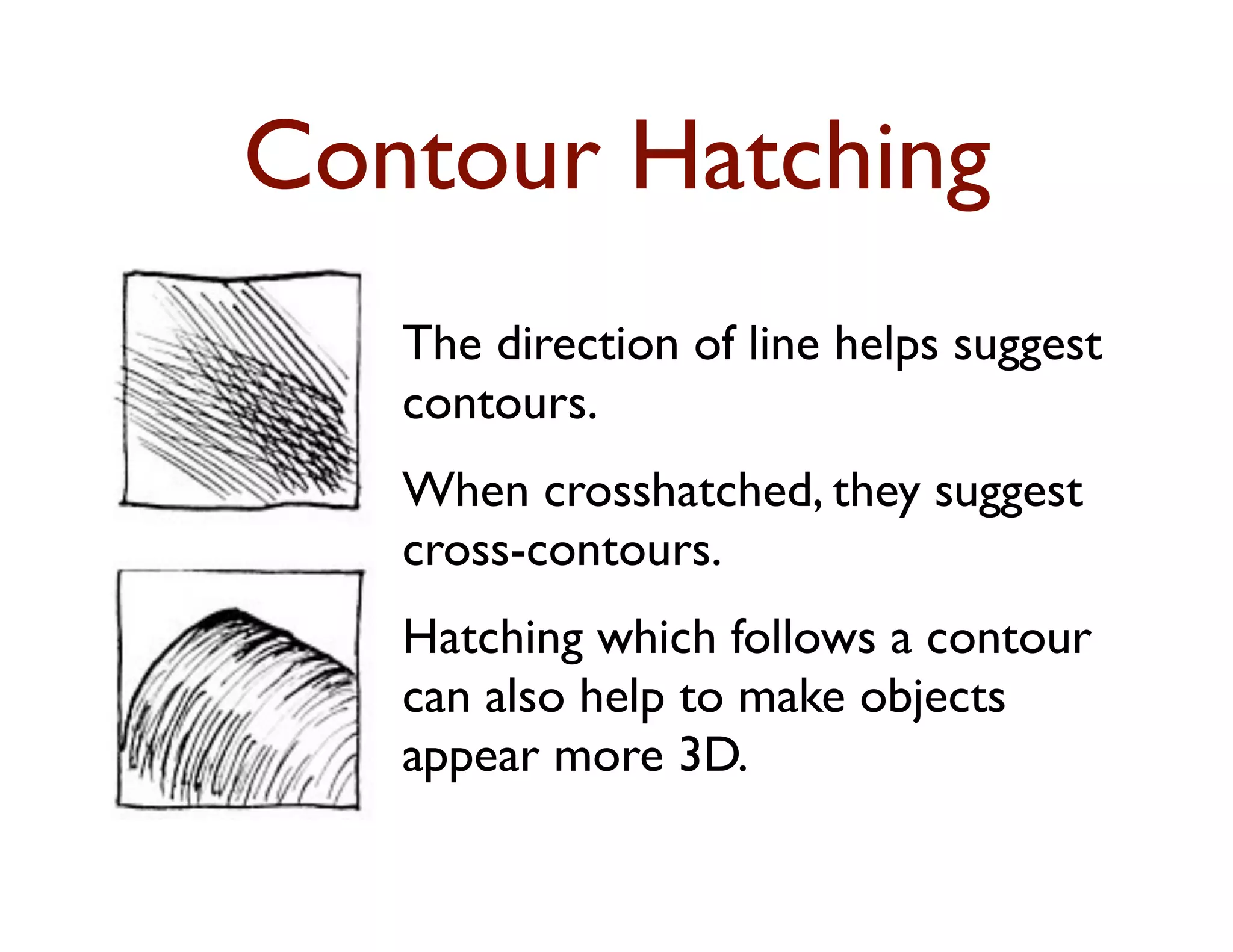
   The direction of line helps suggest
   contours.
   When crosshatched, they suggest
   cross-contours.
   Hatching which follows a contour
   can also help to make objects
   appear more 3D.
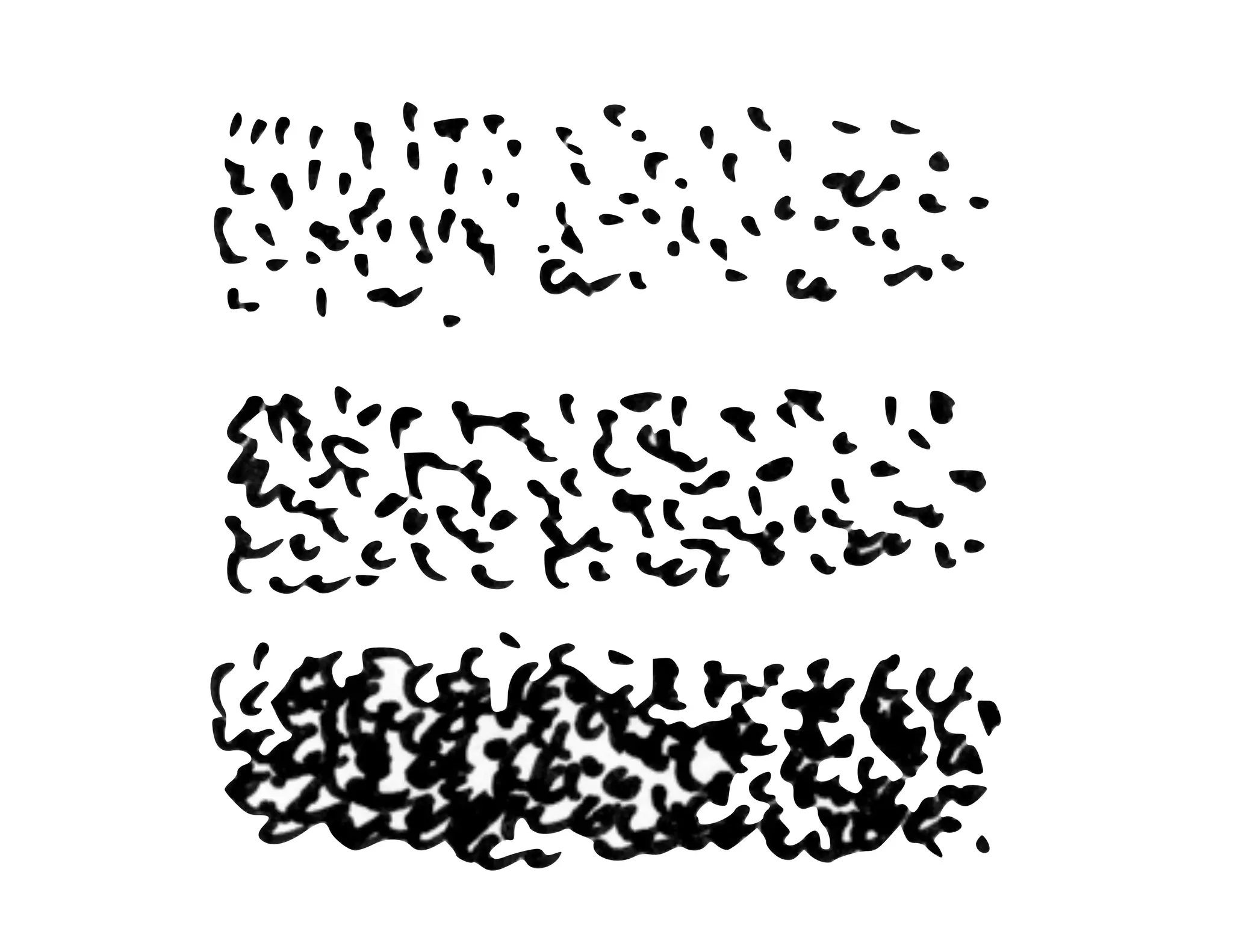
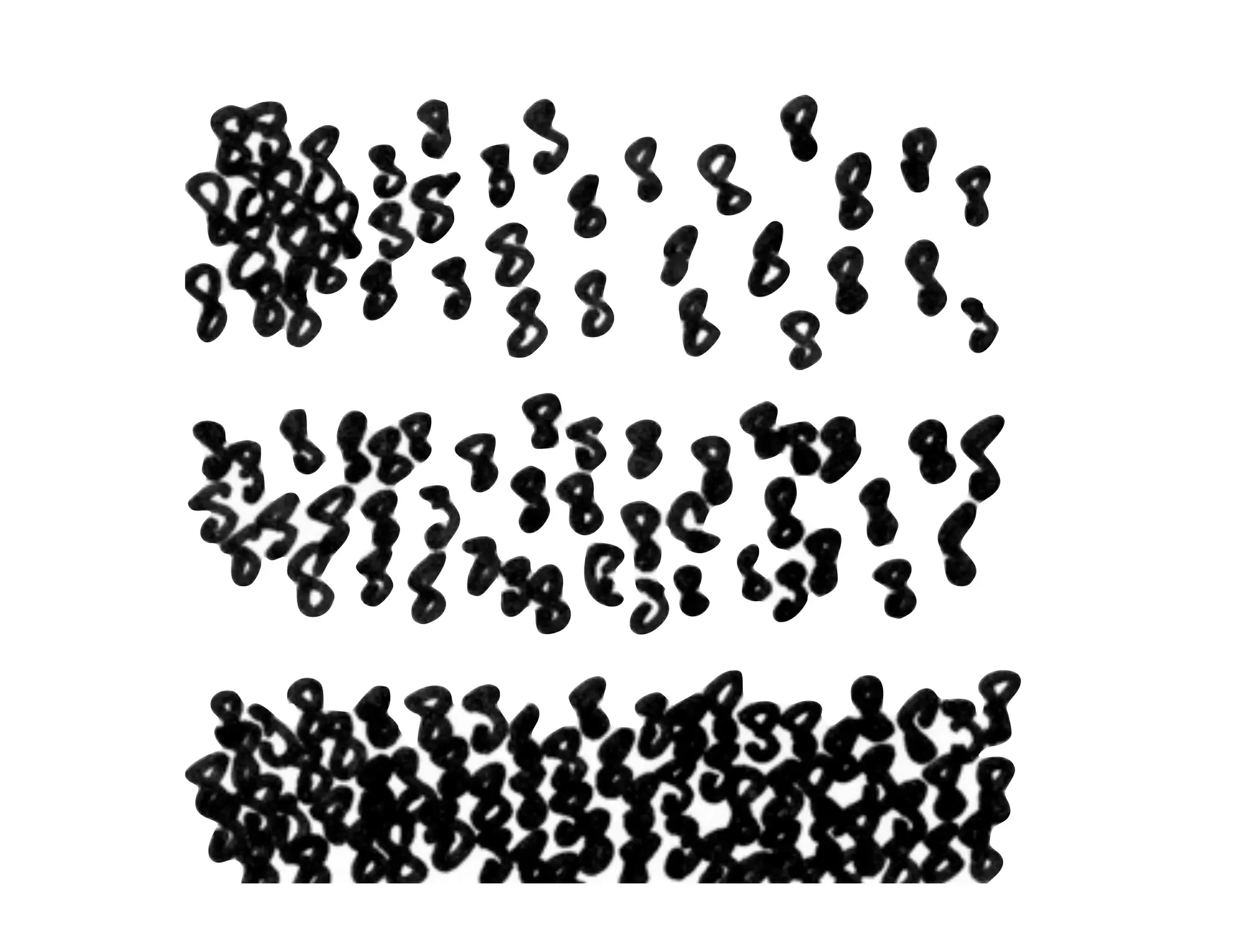
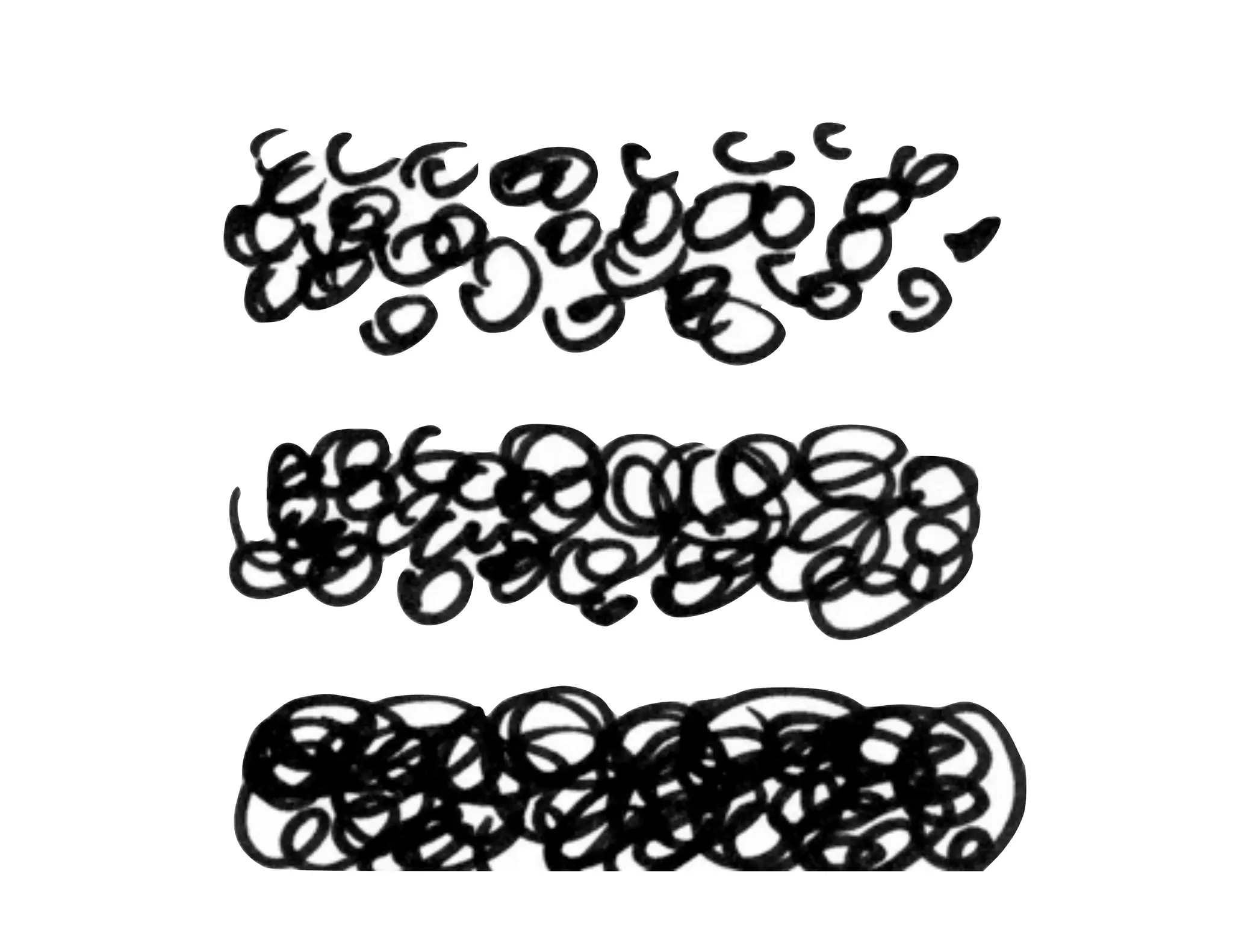
Scumbling
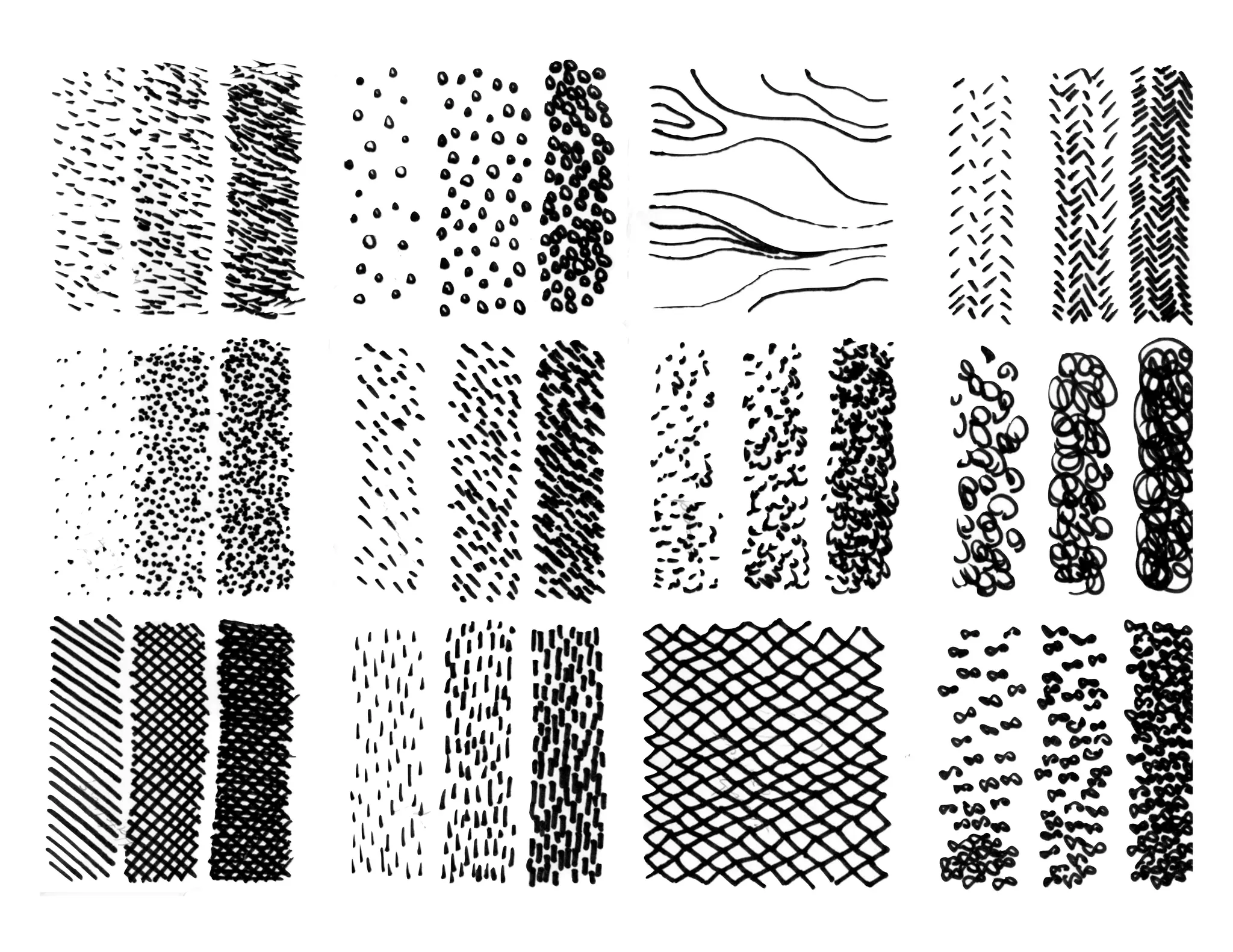
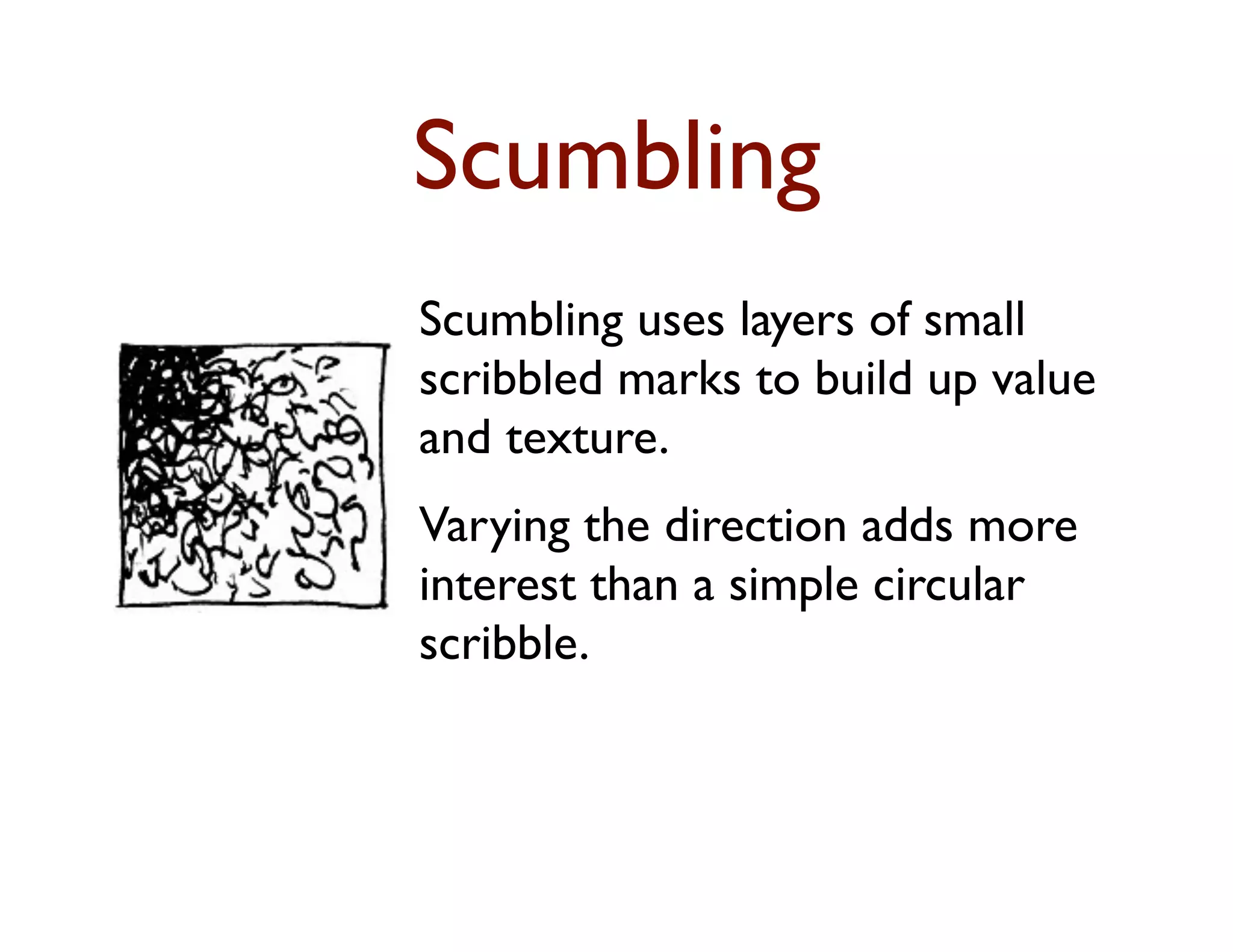
Scumbling uses layers of small
scribbled marks to build up value
and texture.
Varying the direction adds more
interest than a simple circular
scribble.
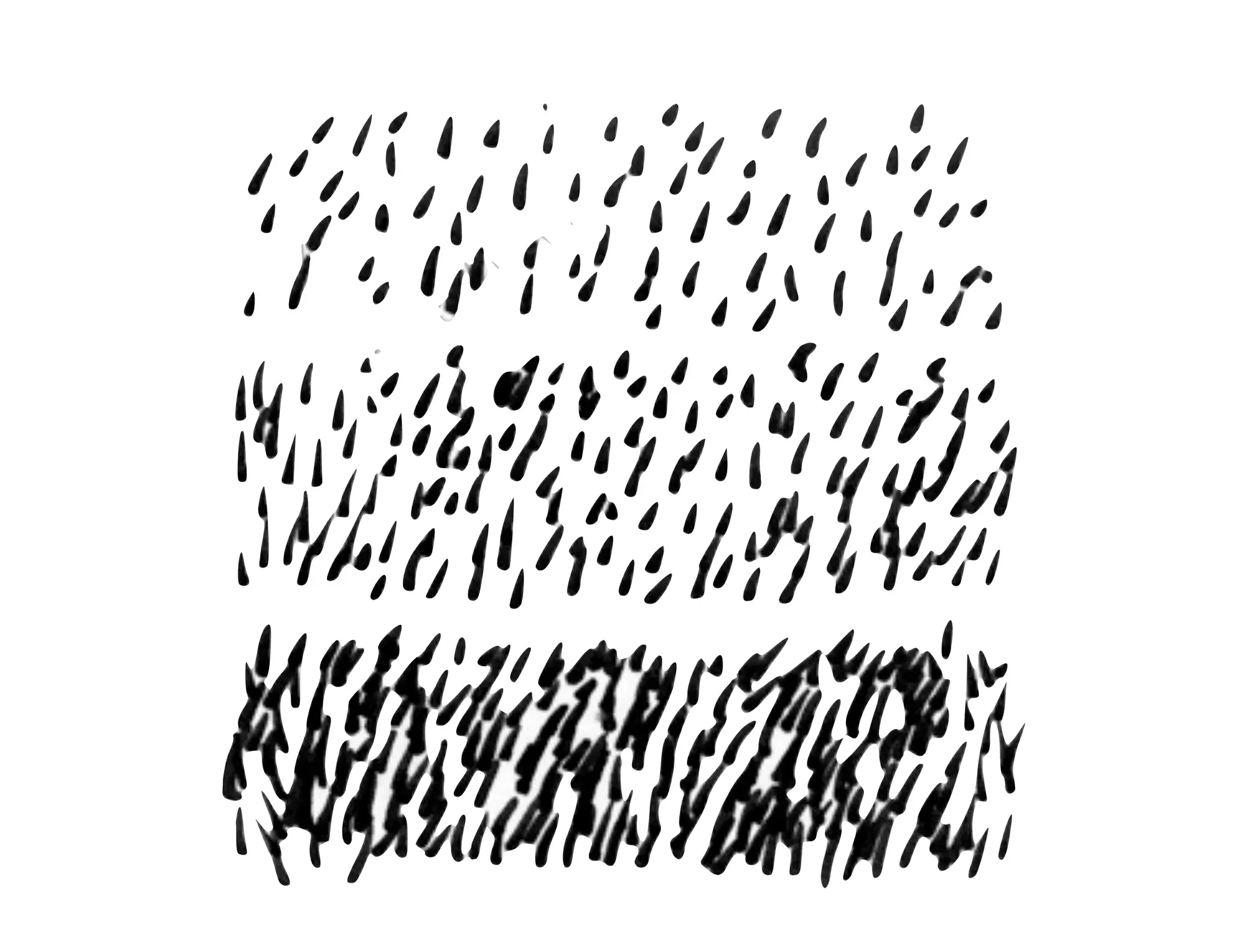
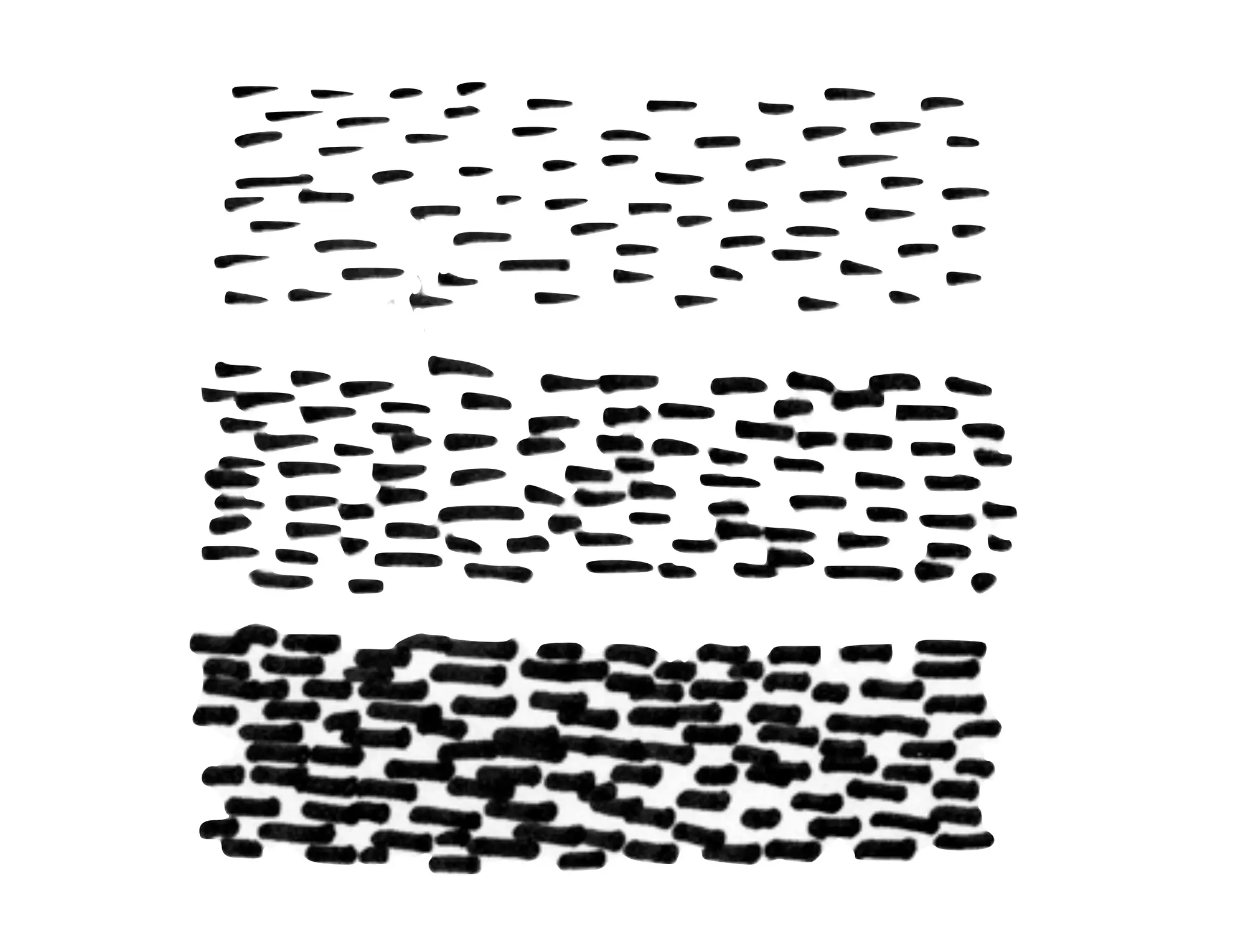
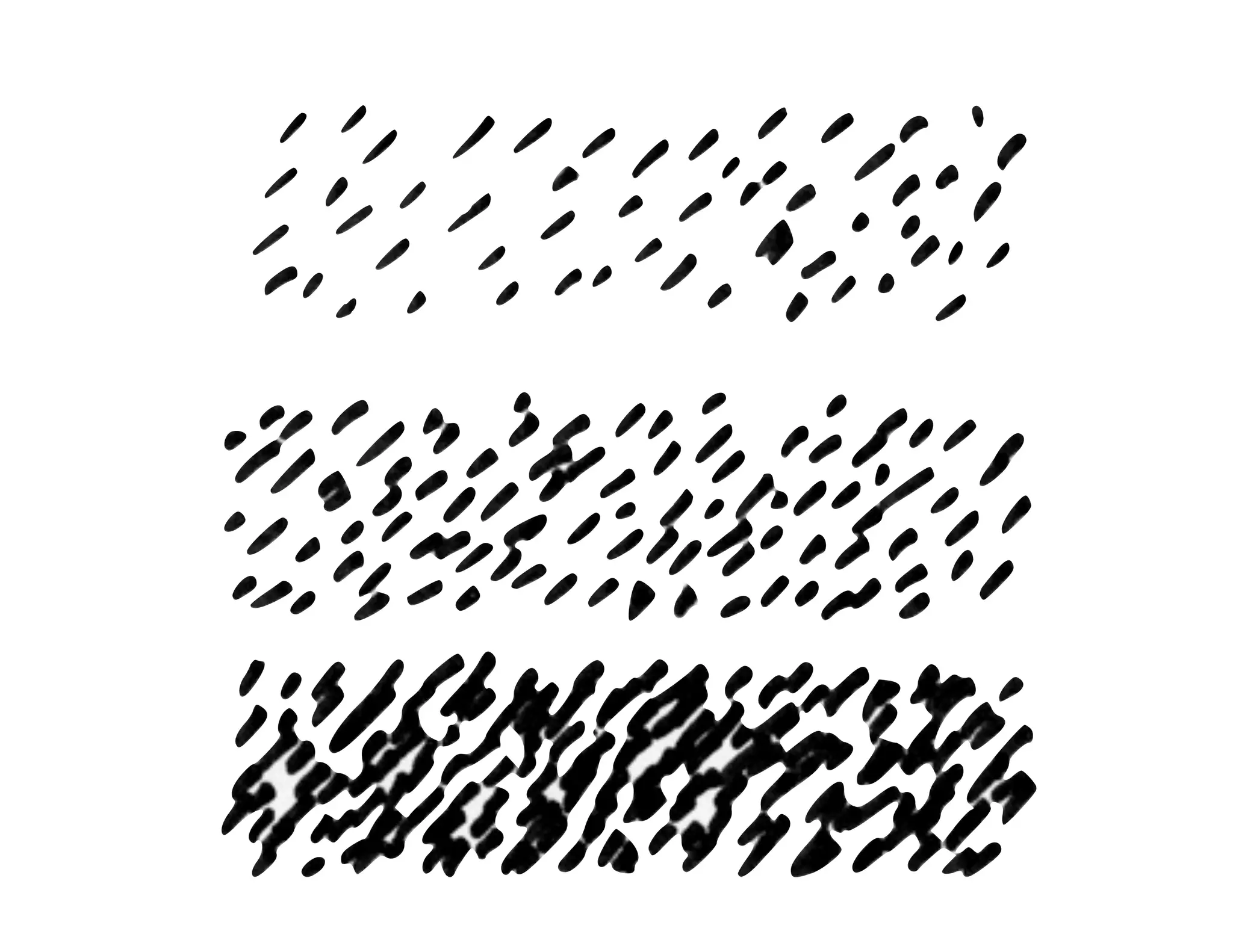
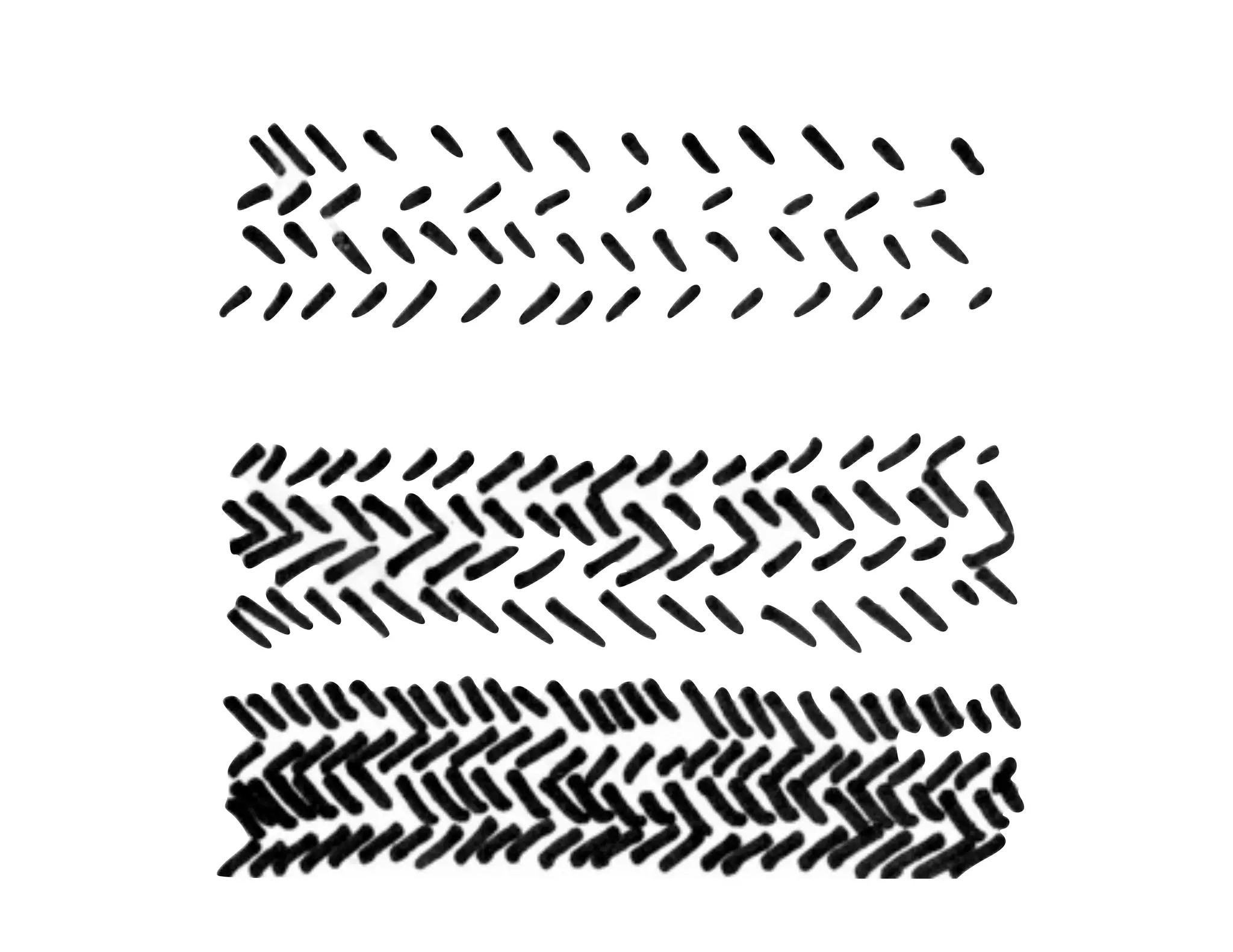
Random Hatching
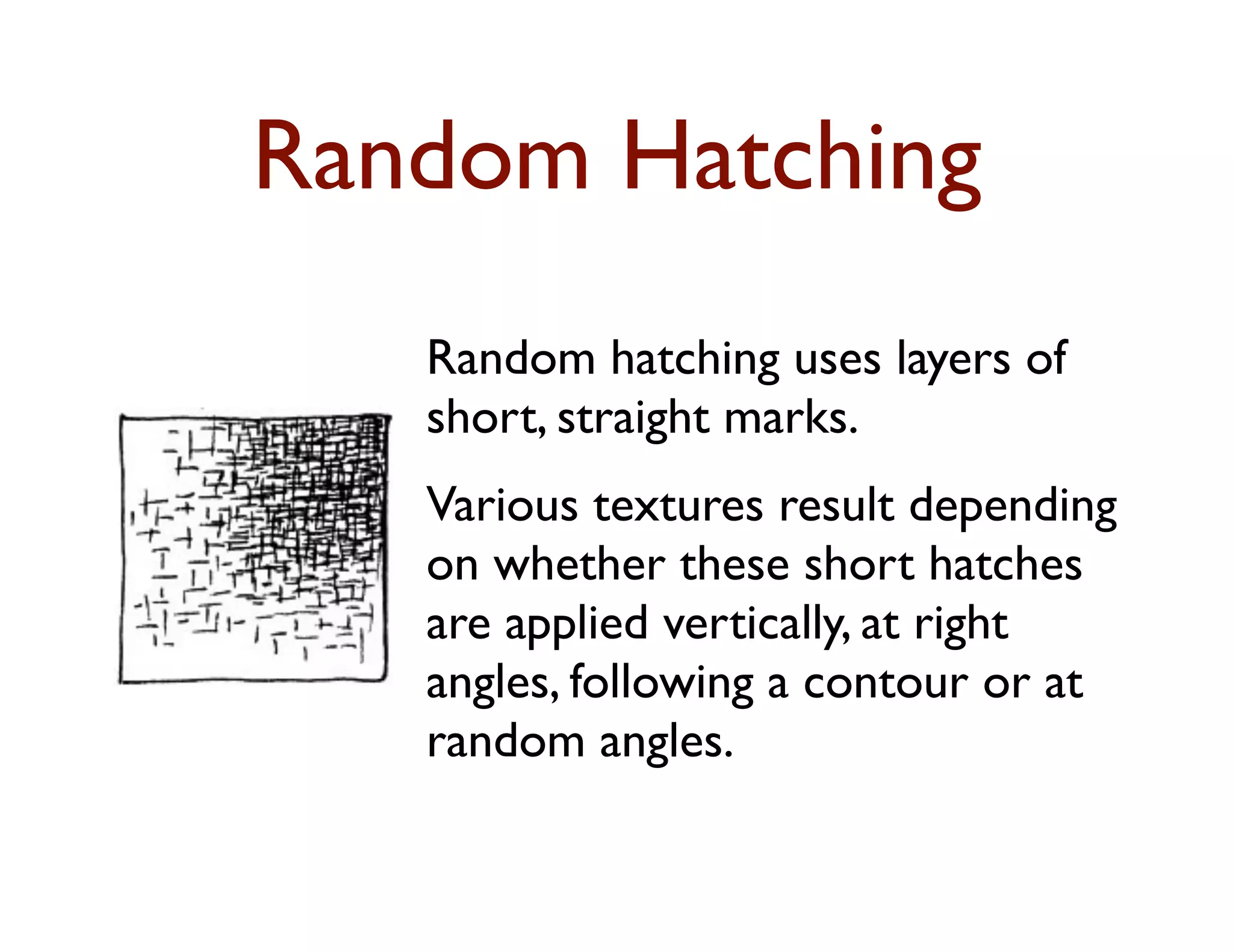
   Random hatching uses layers of
   short, straight marks.
   Various textures result depending
   on whether these short hatches
   are applied vertically, at right
   angles, following a contour or at
   random angles.
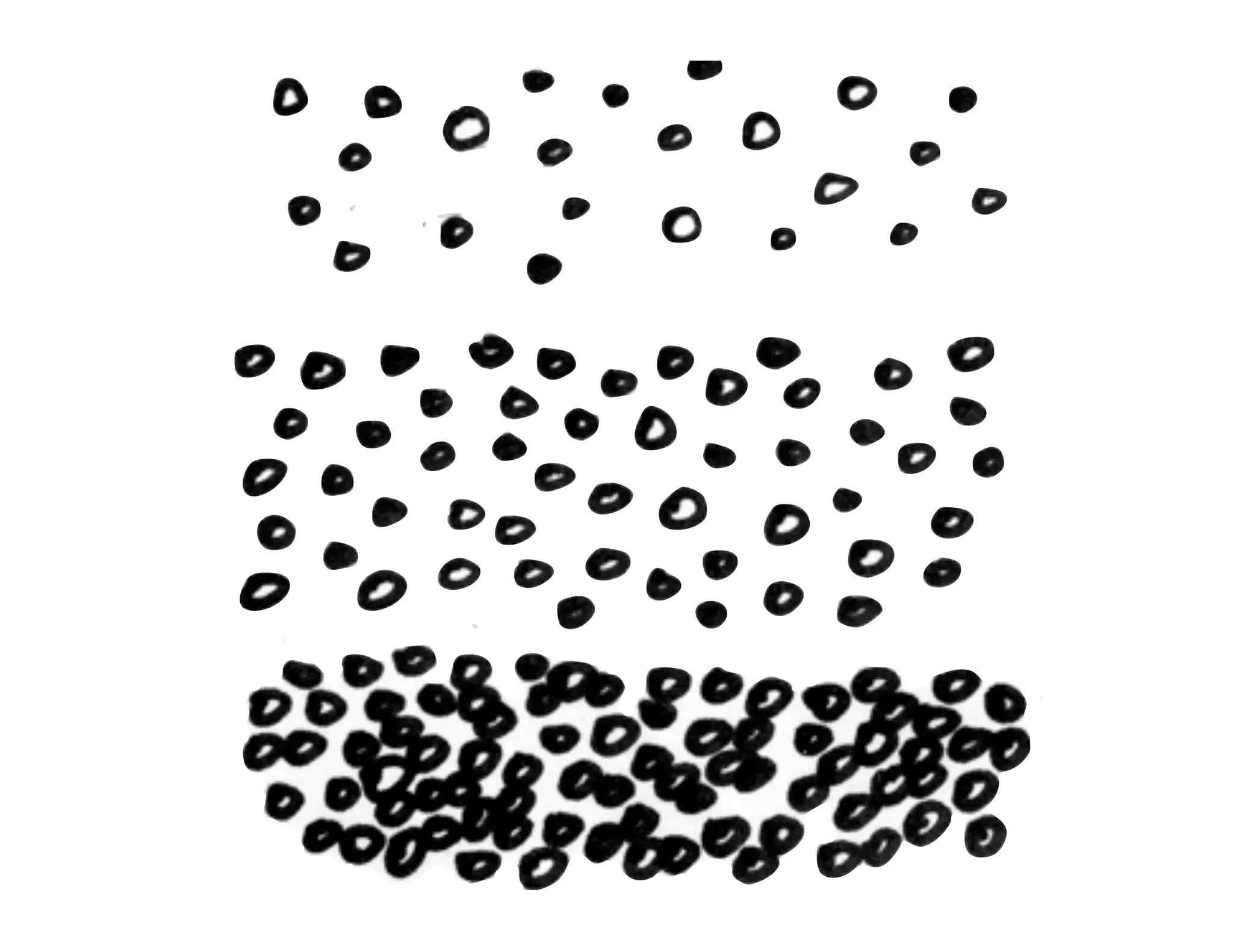
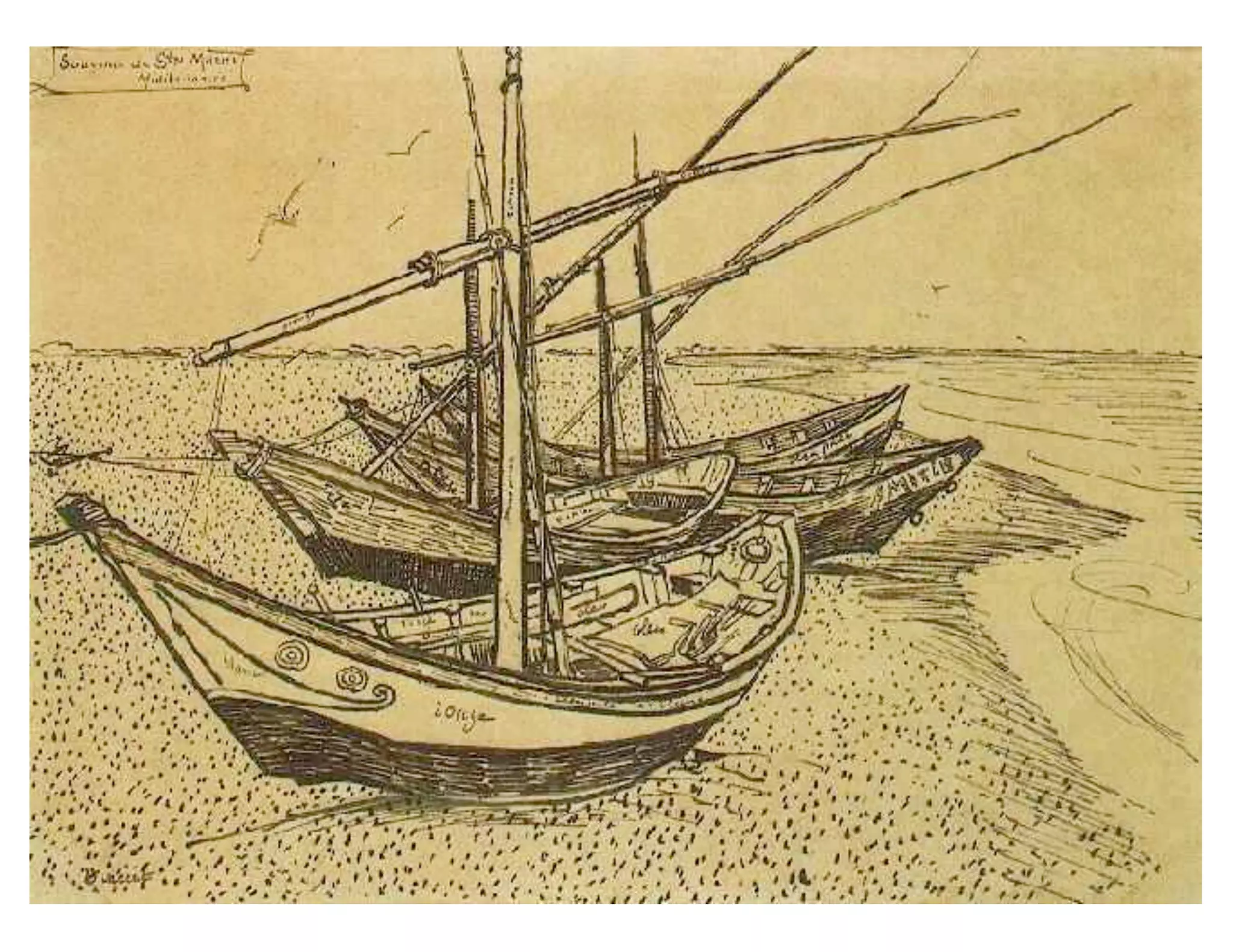
Stippling
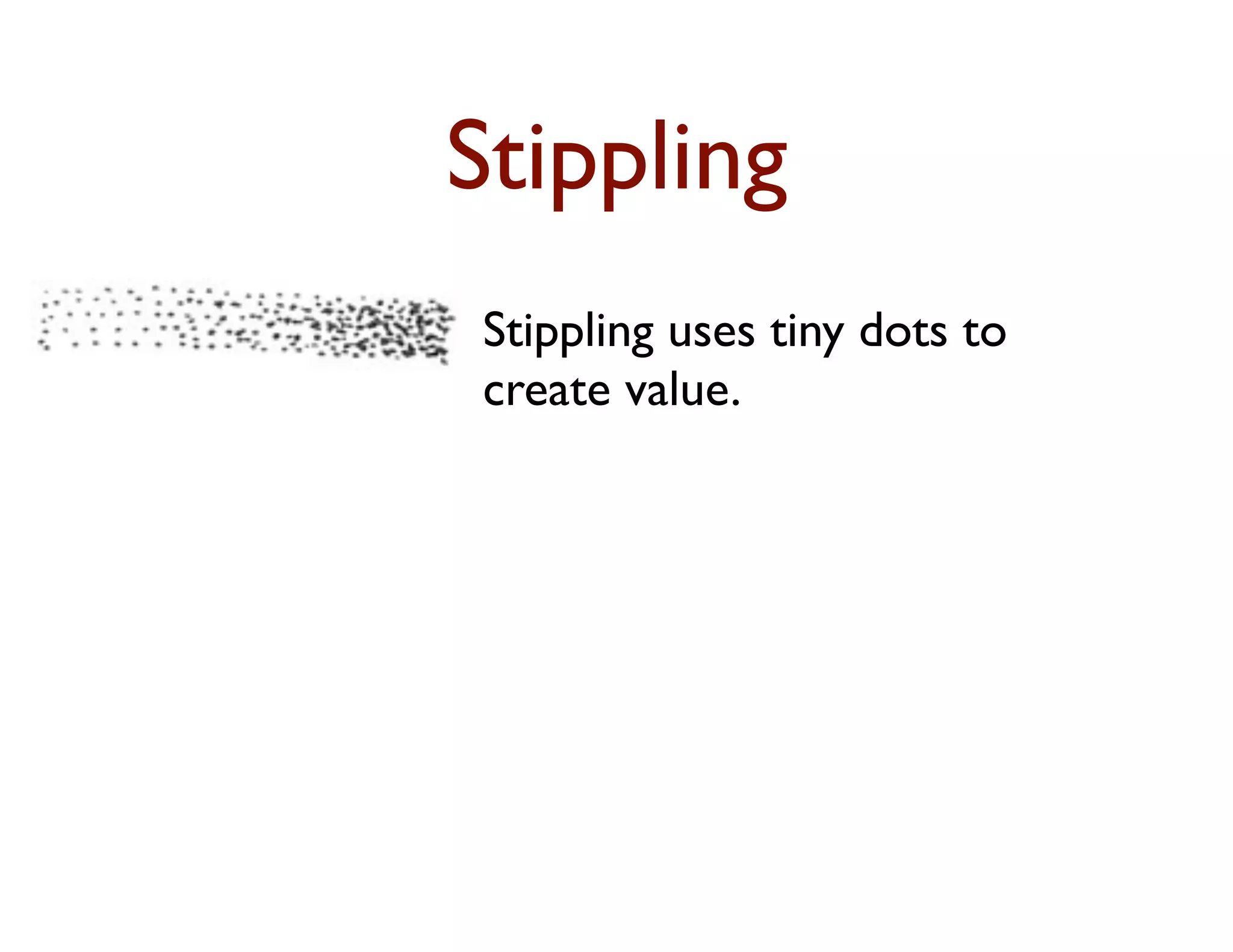
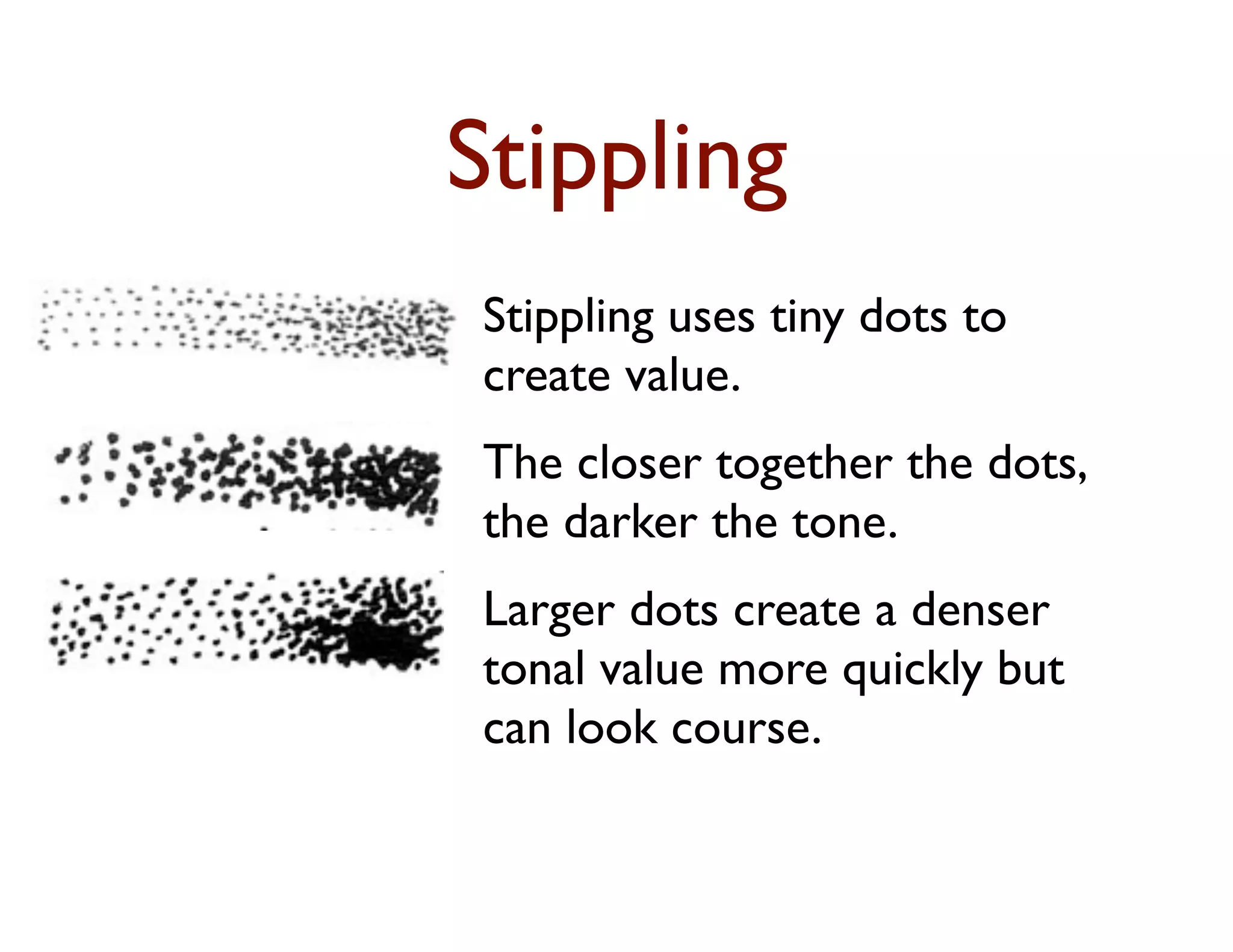
Stippling uses tiny dots to
create value.
The closer together the dots,
the darker the tone
Stippling
Stippling uses tiny dots to
create value.
The closer together the dots,
the darker the tone.
Stippling
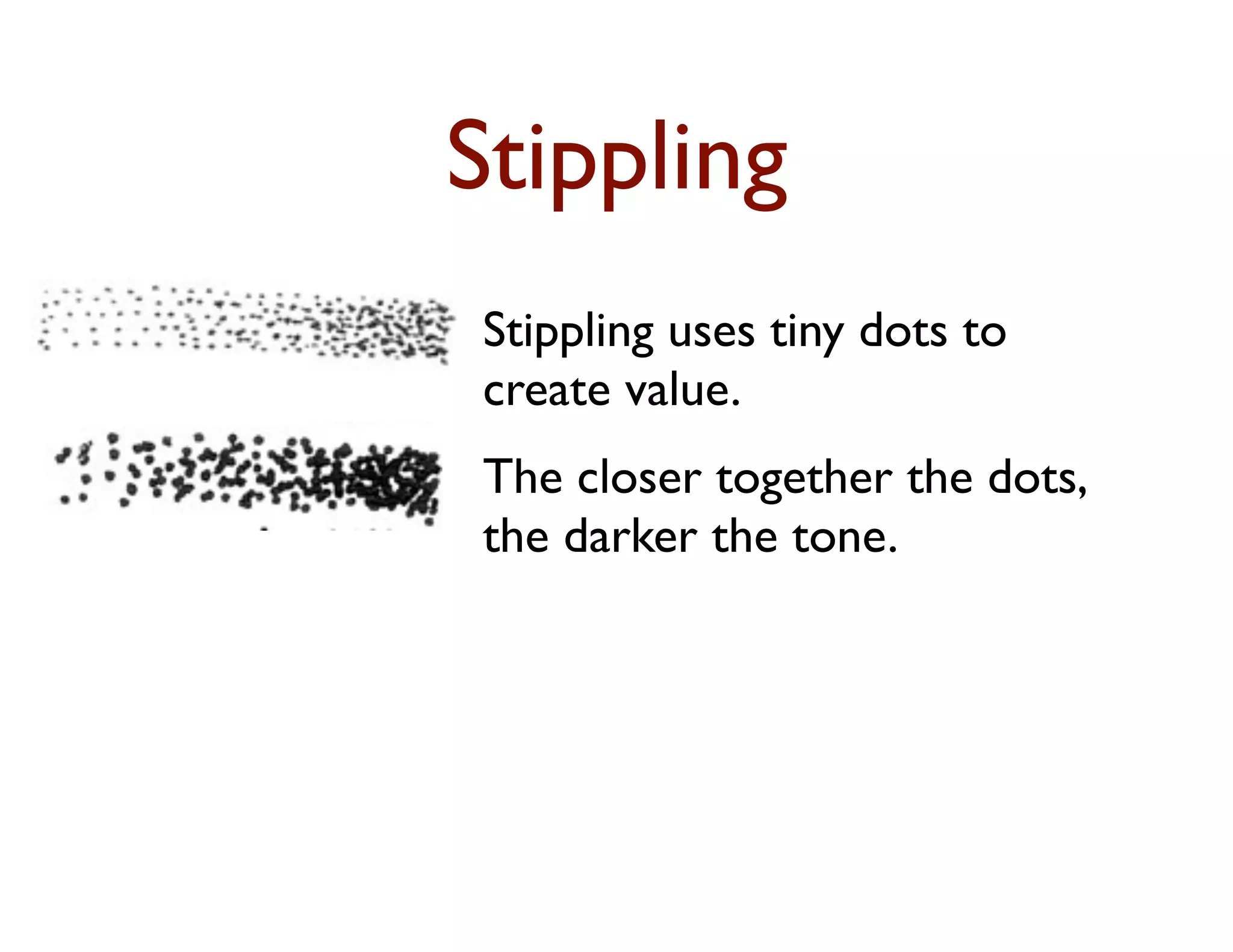
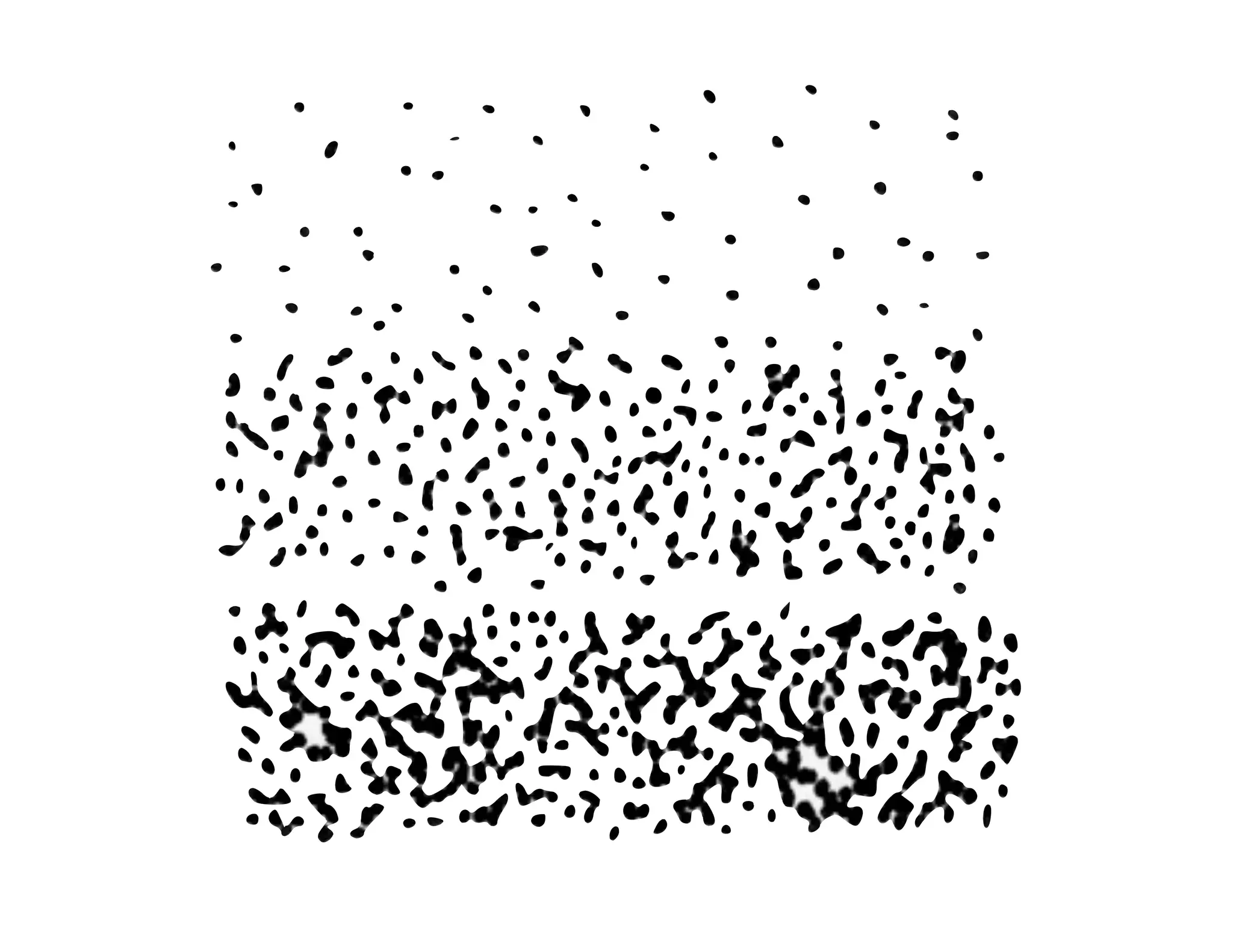
Stippling uses tiny dots to
create value.
The closer together the dots,
the darker the tone.
Larger dots create a denser
tonal value more quickly but
can look course.
Here are some
other examples:
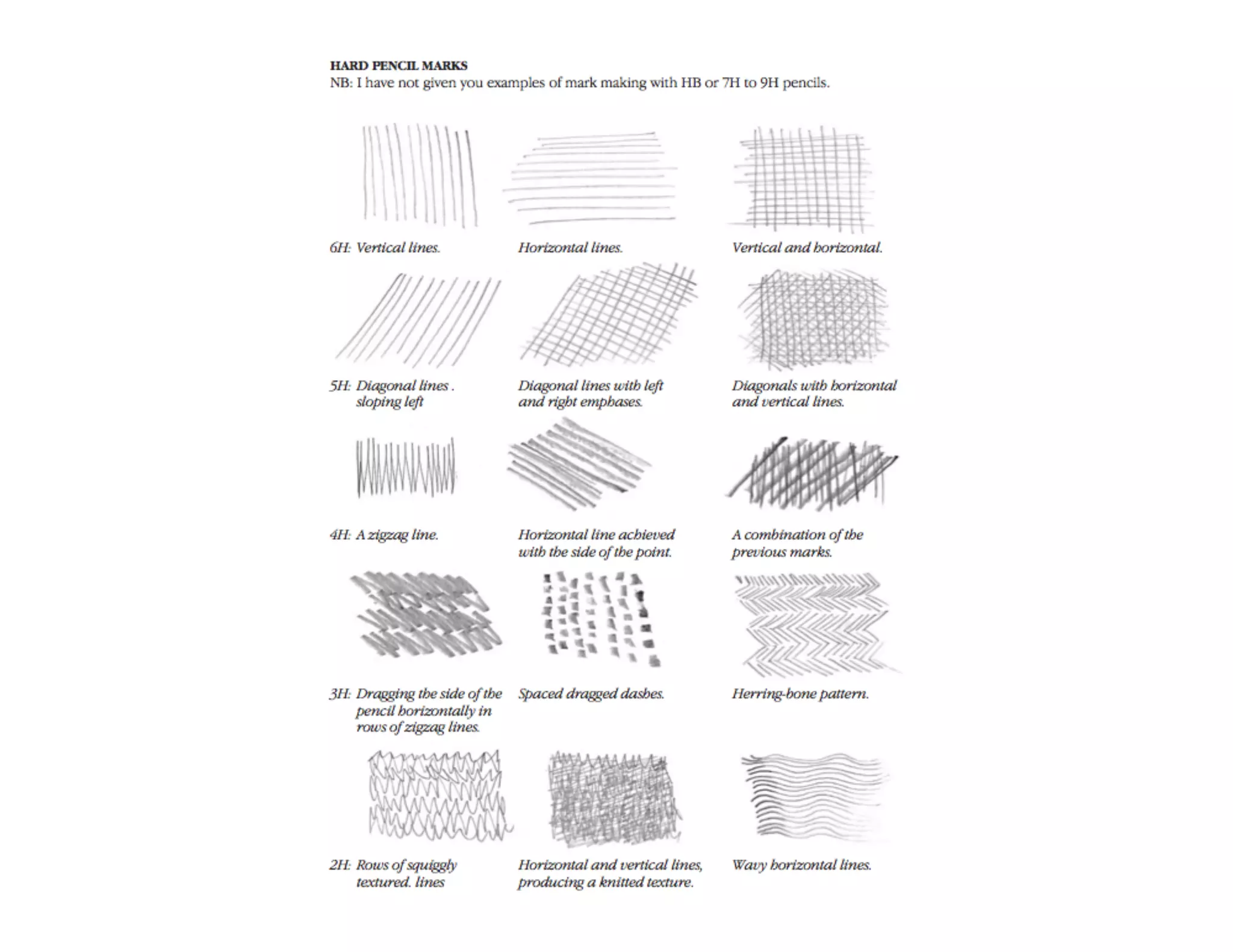
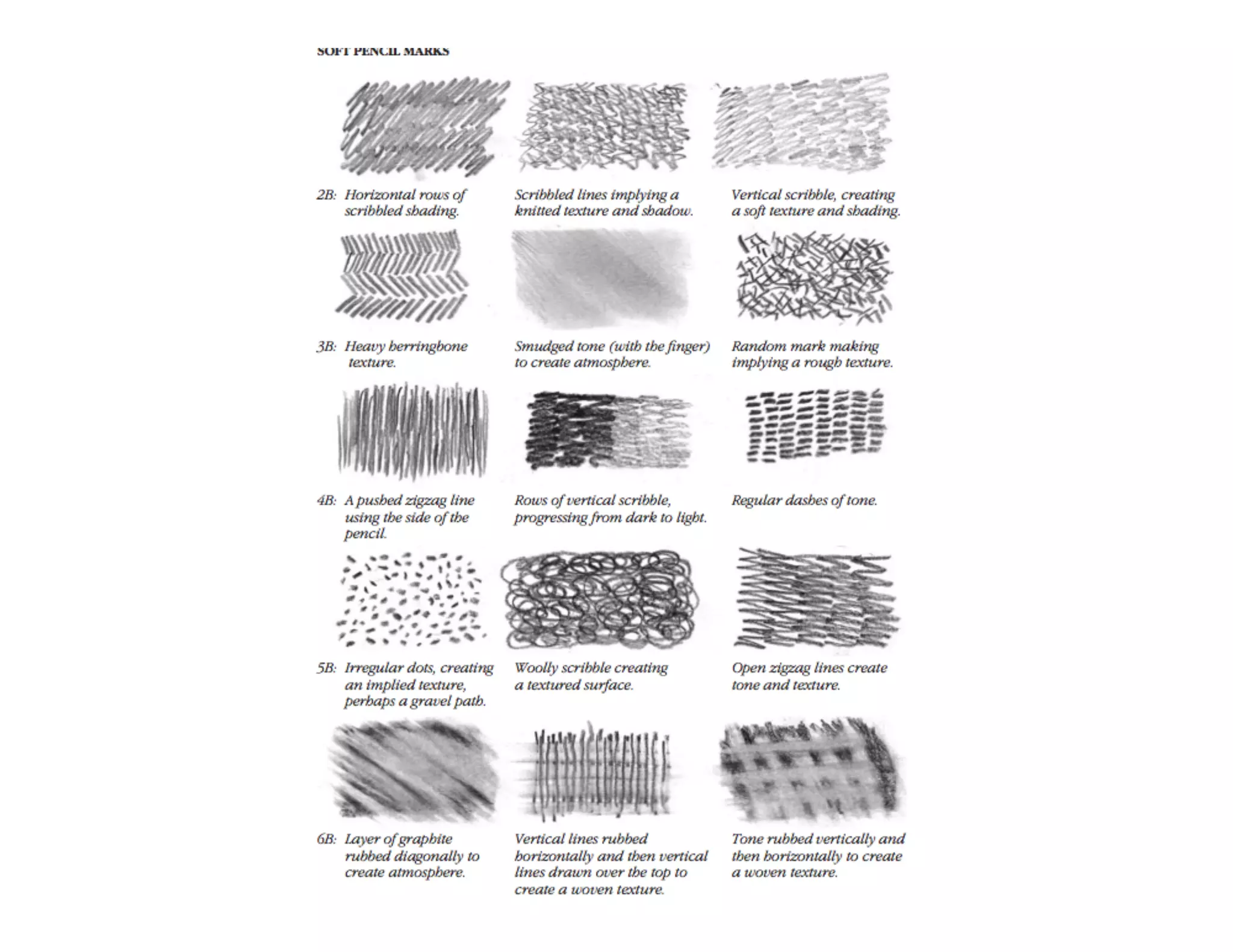
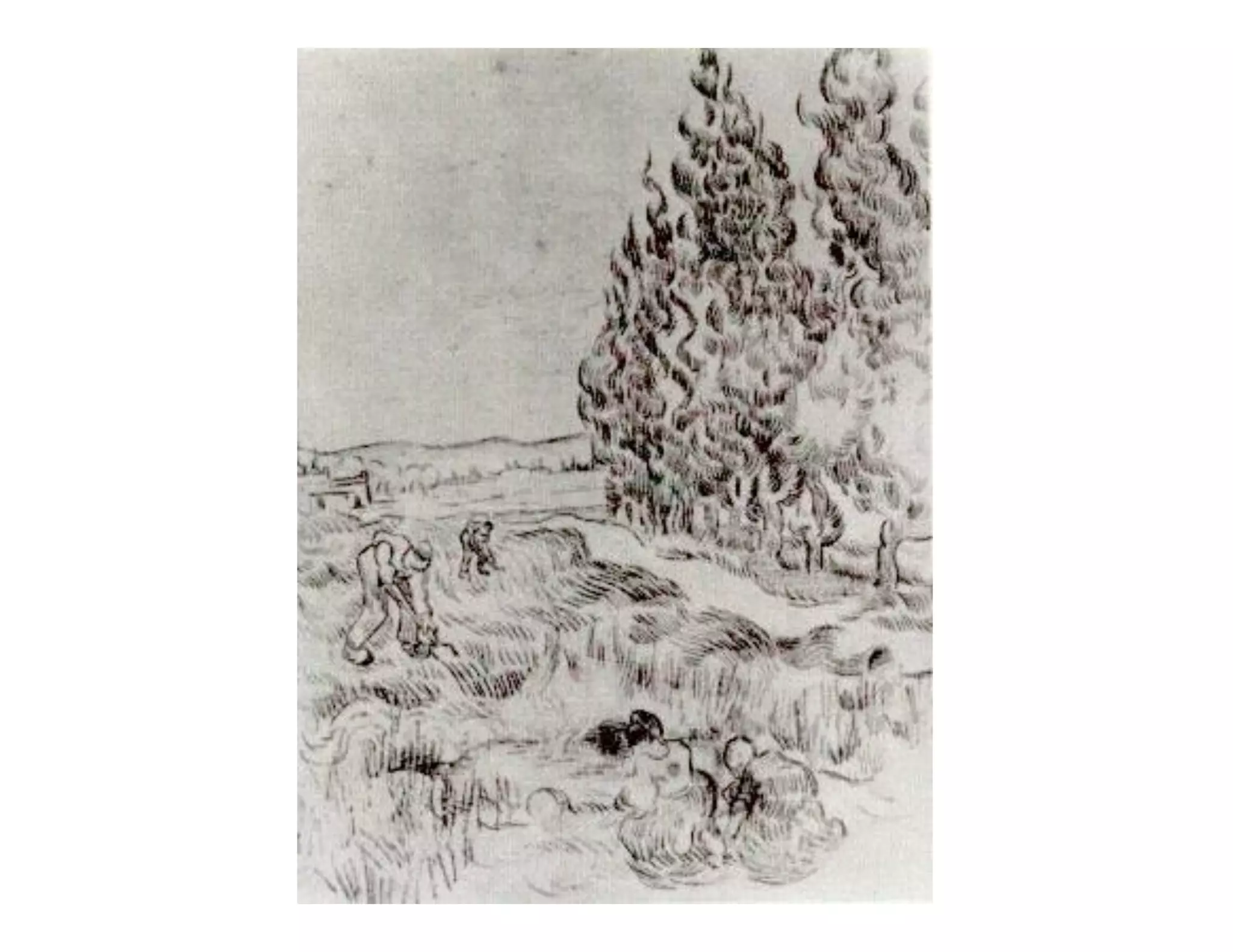
Here are some
pencil examples:
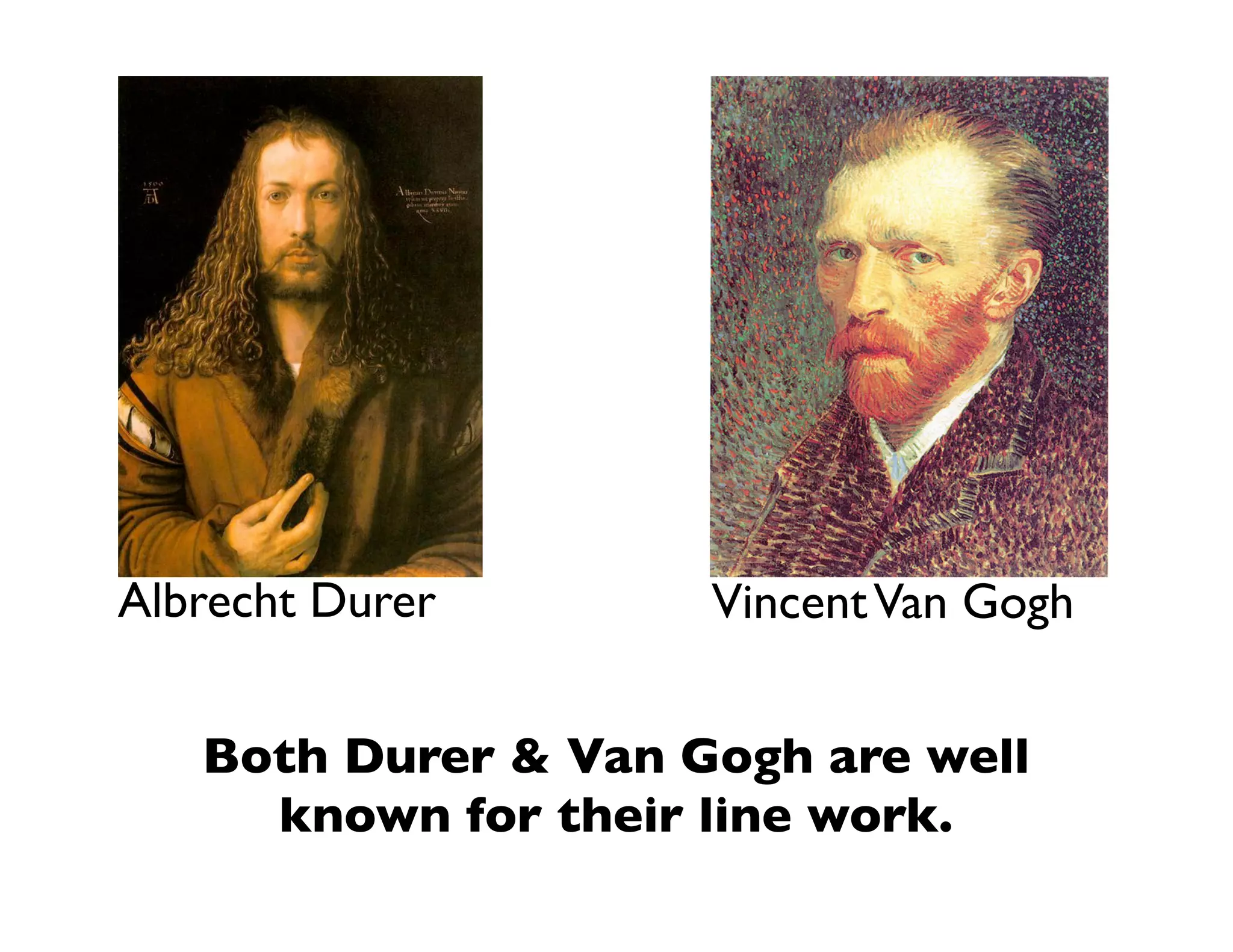
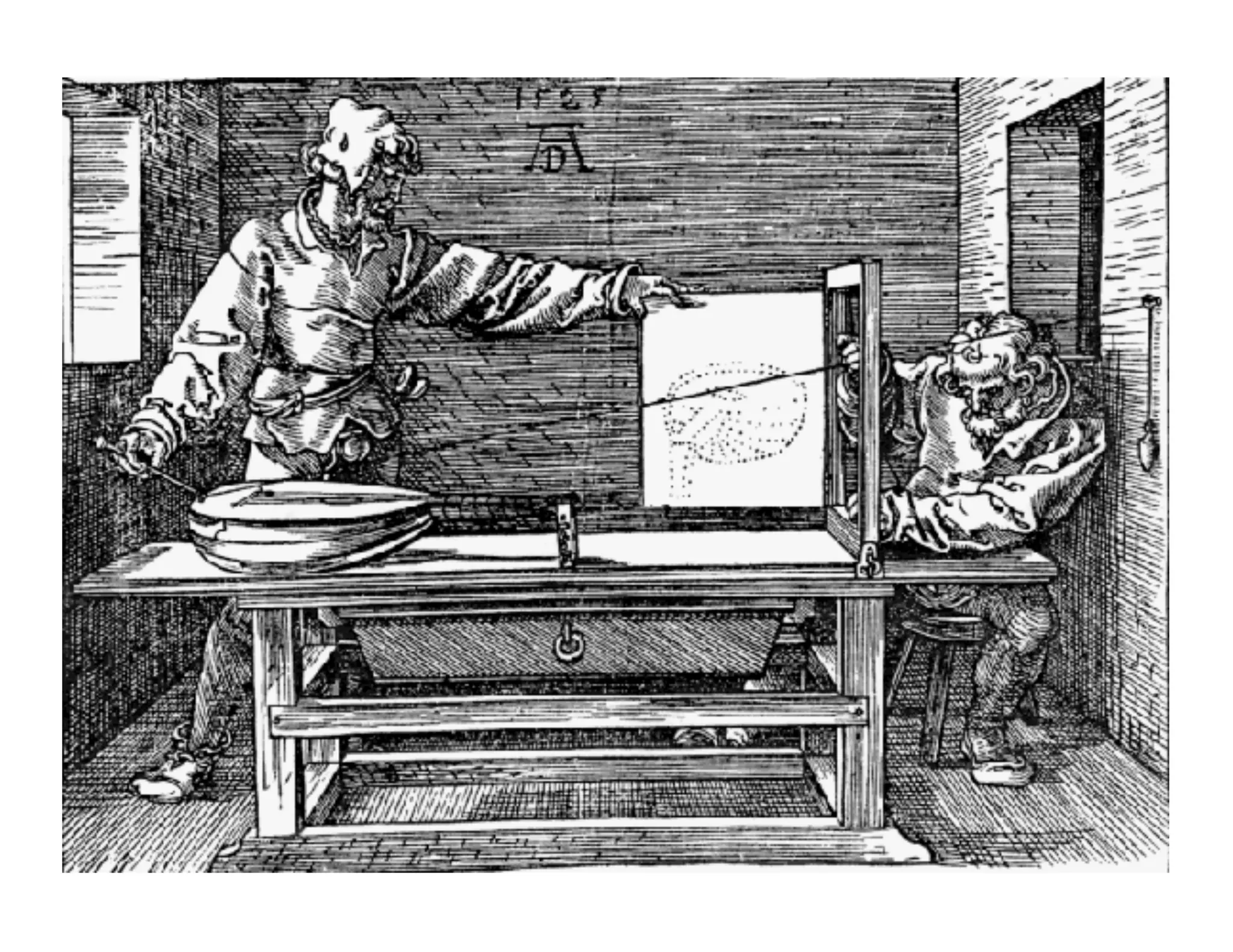
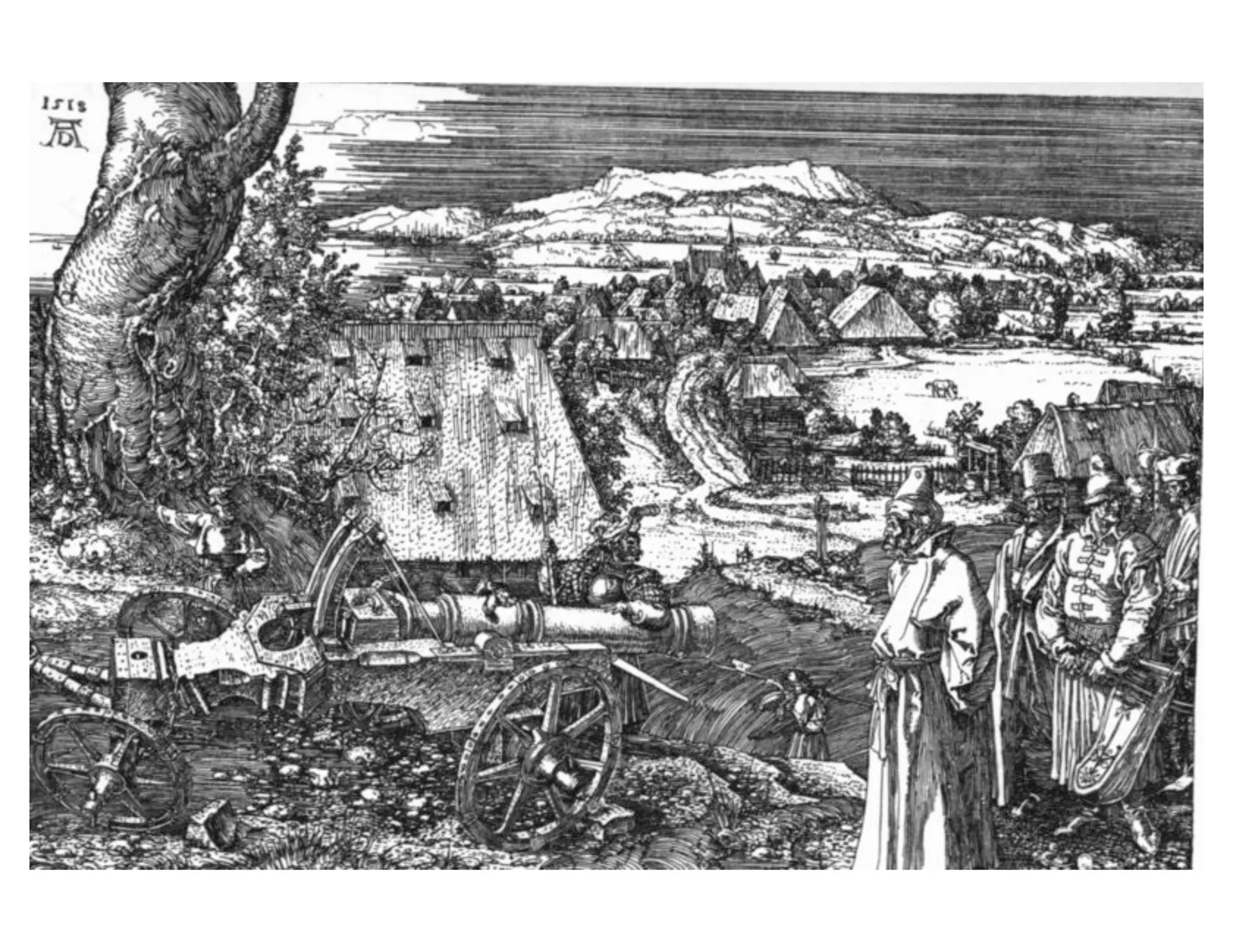
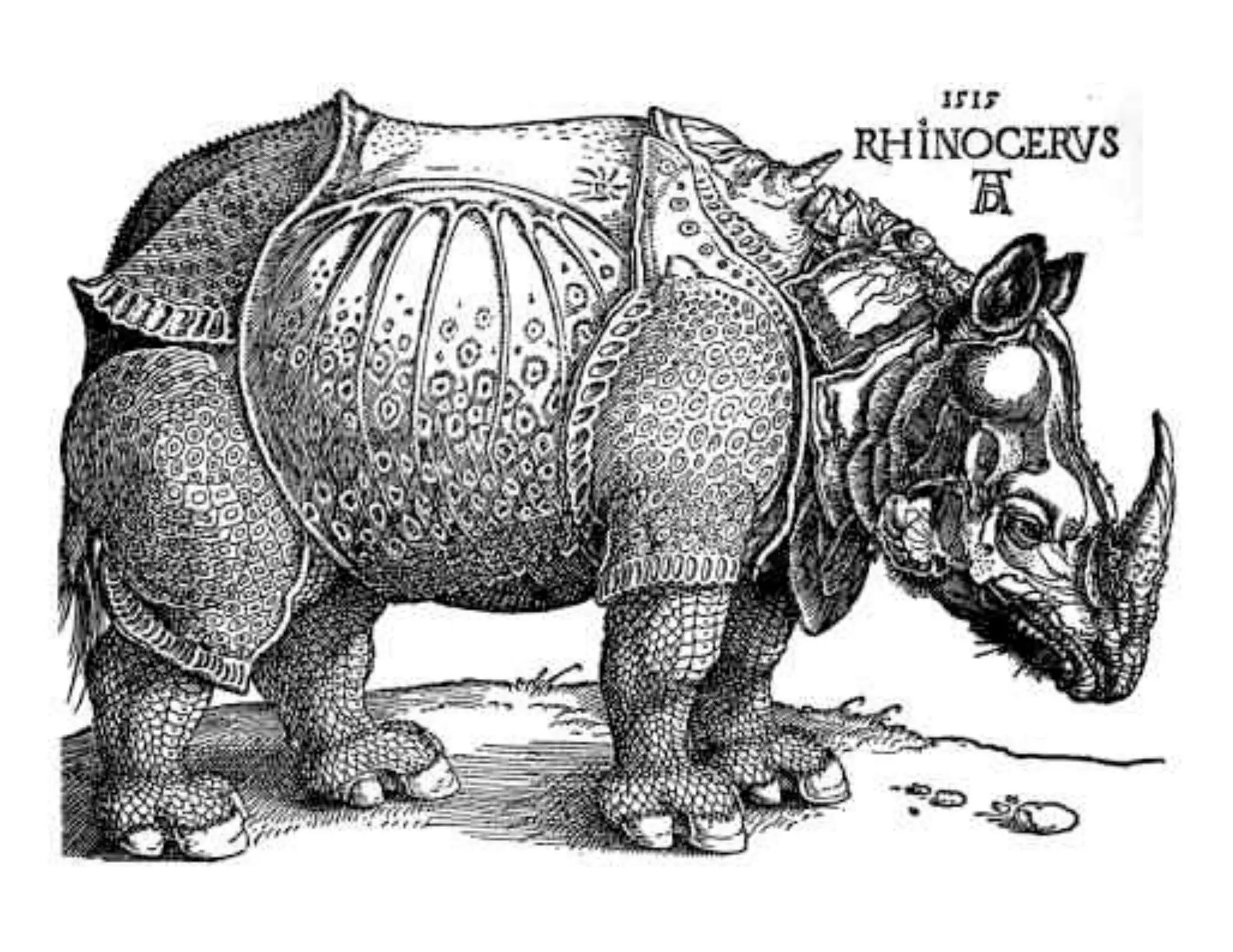
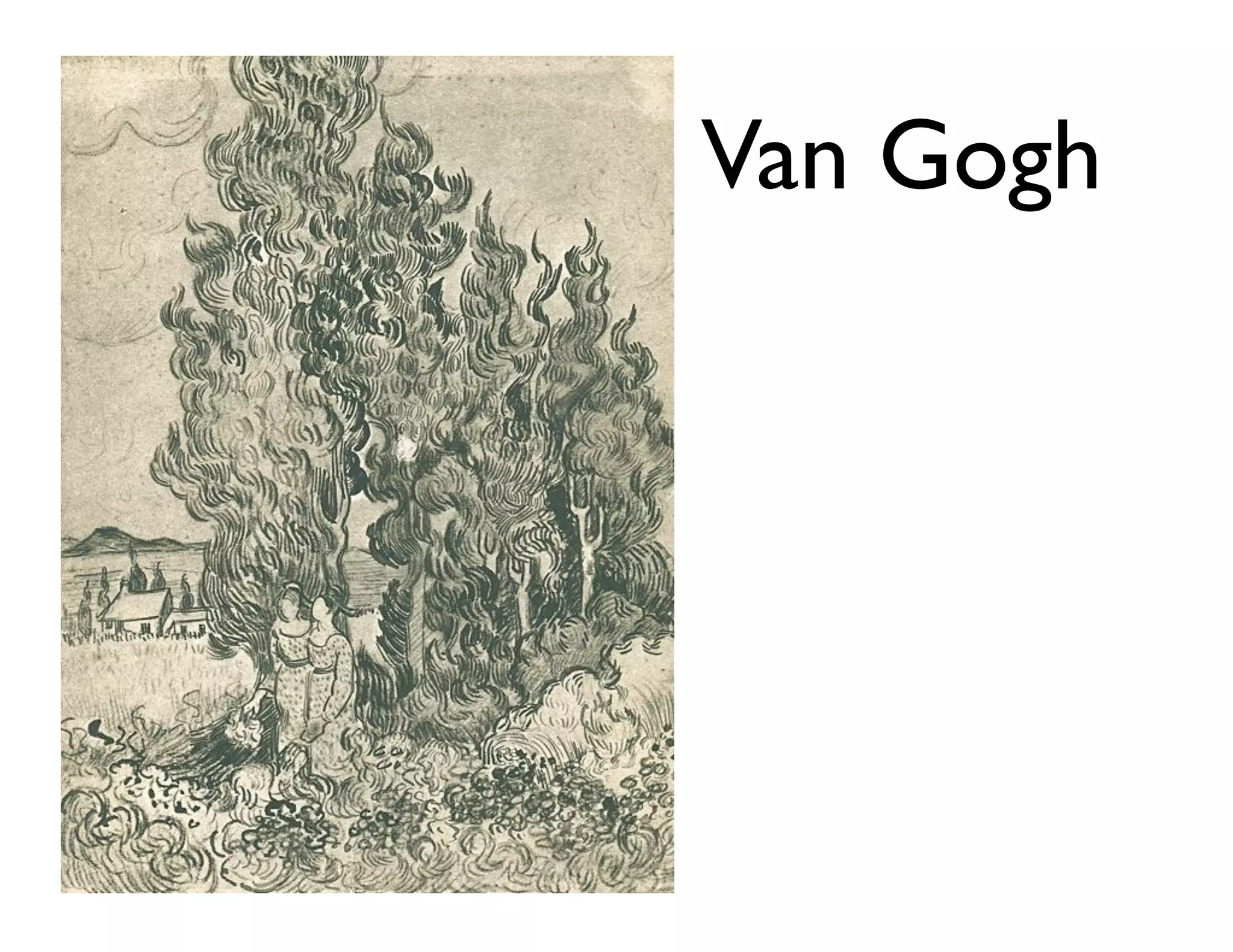
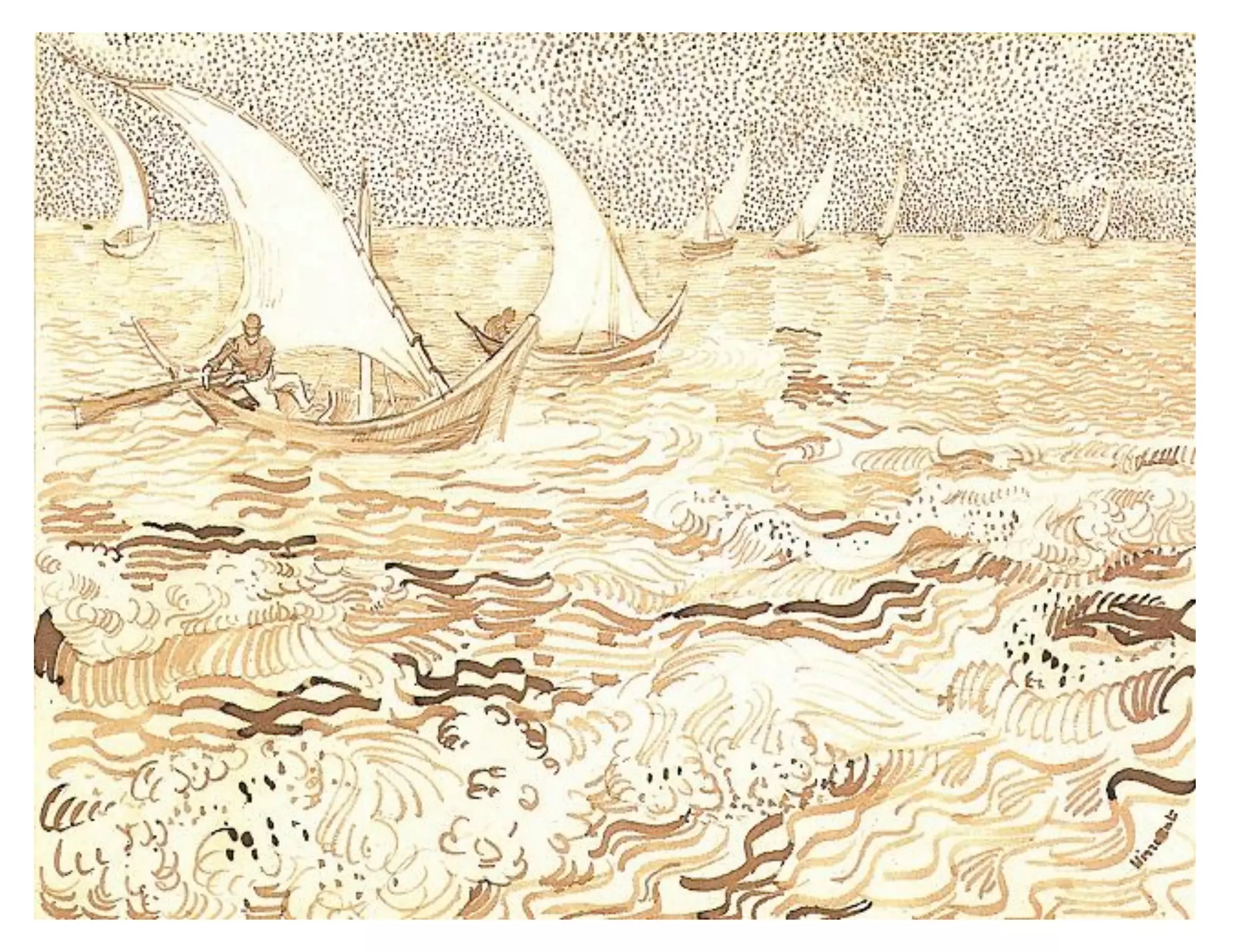
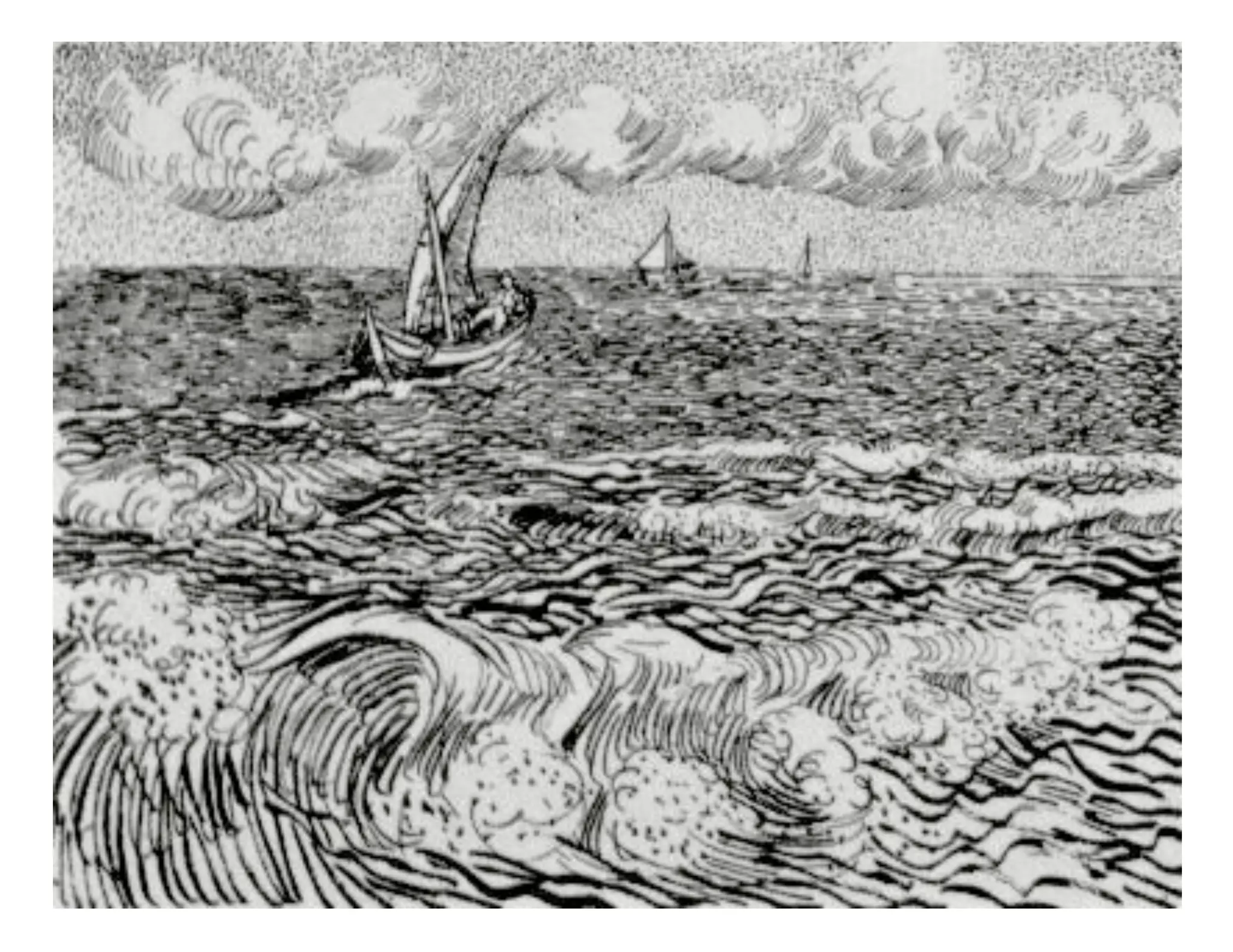
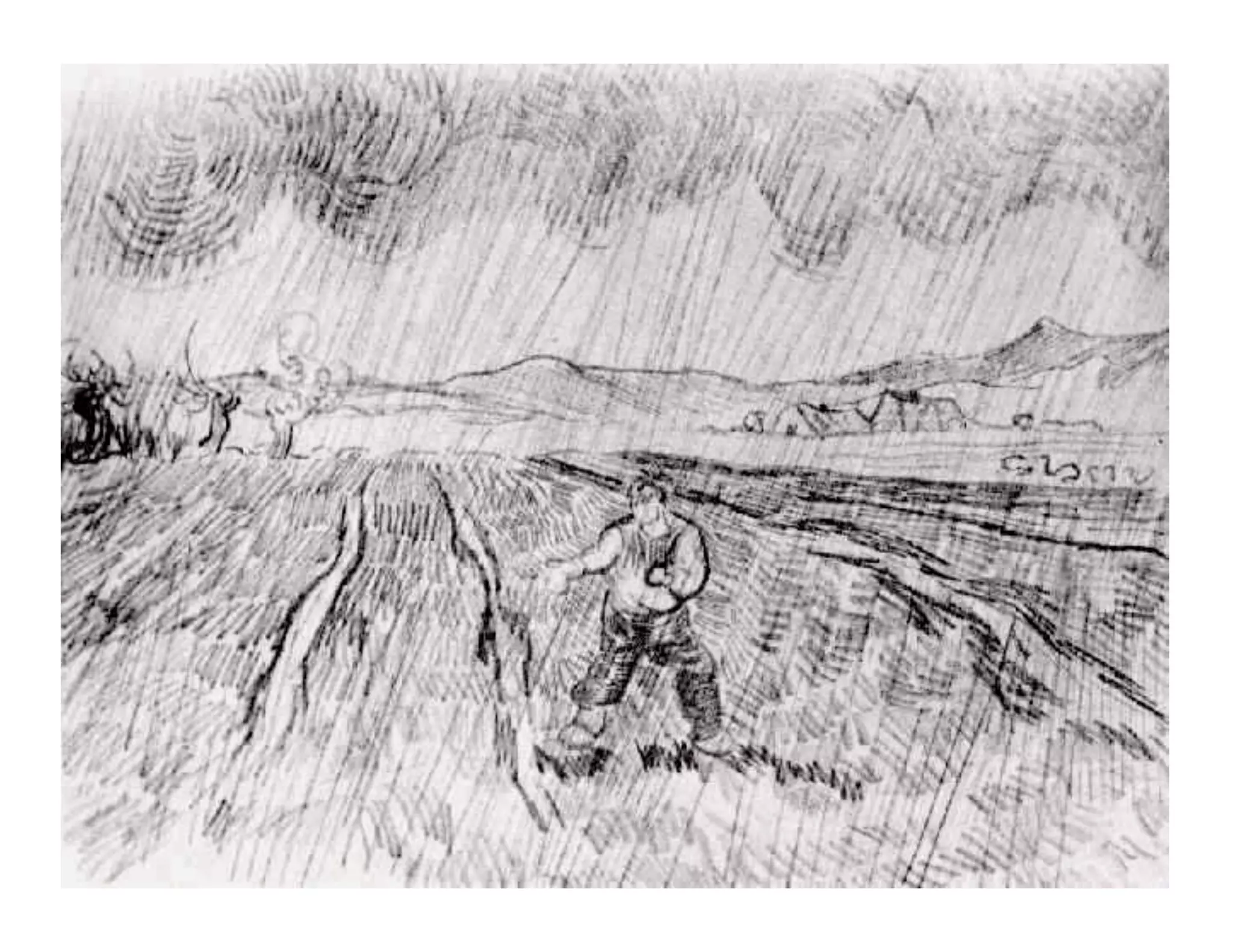
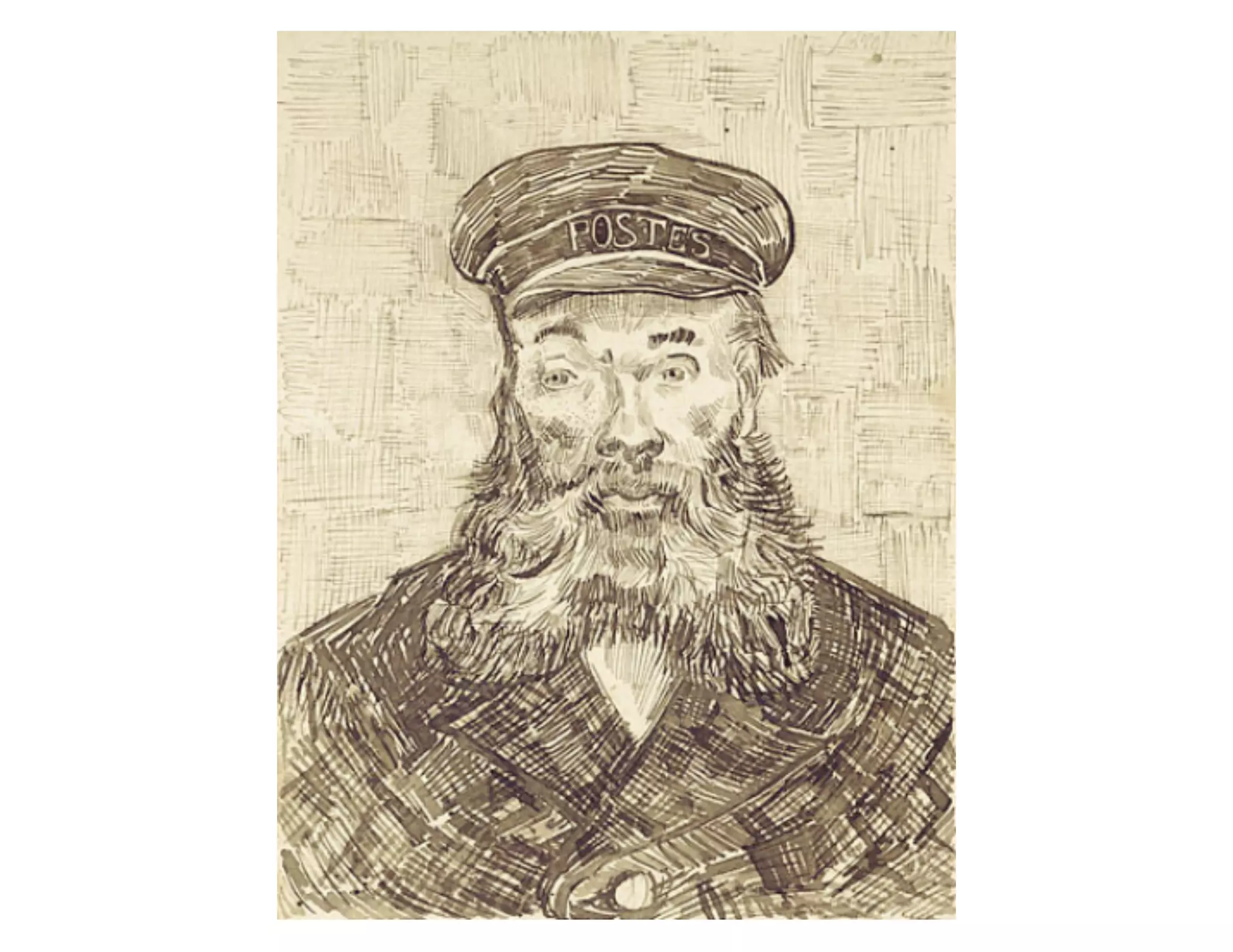
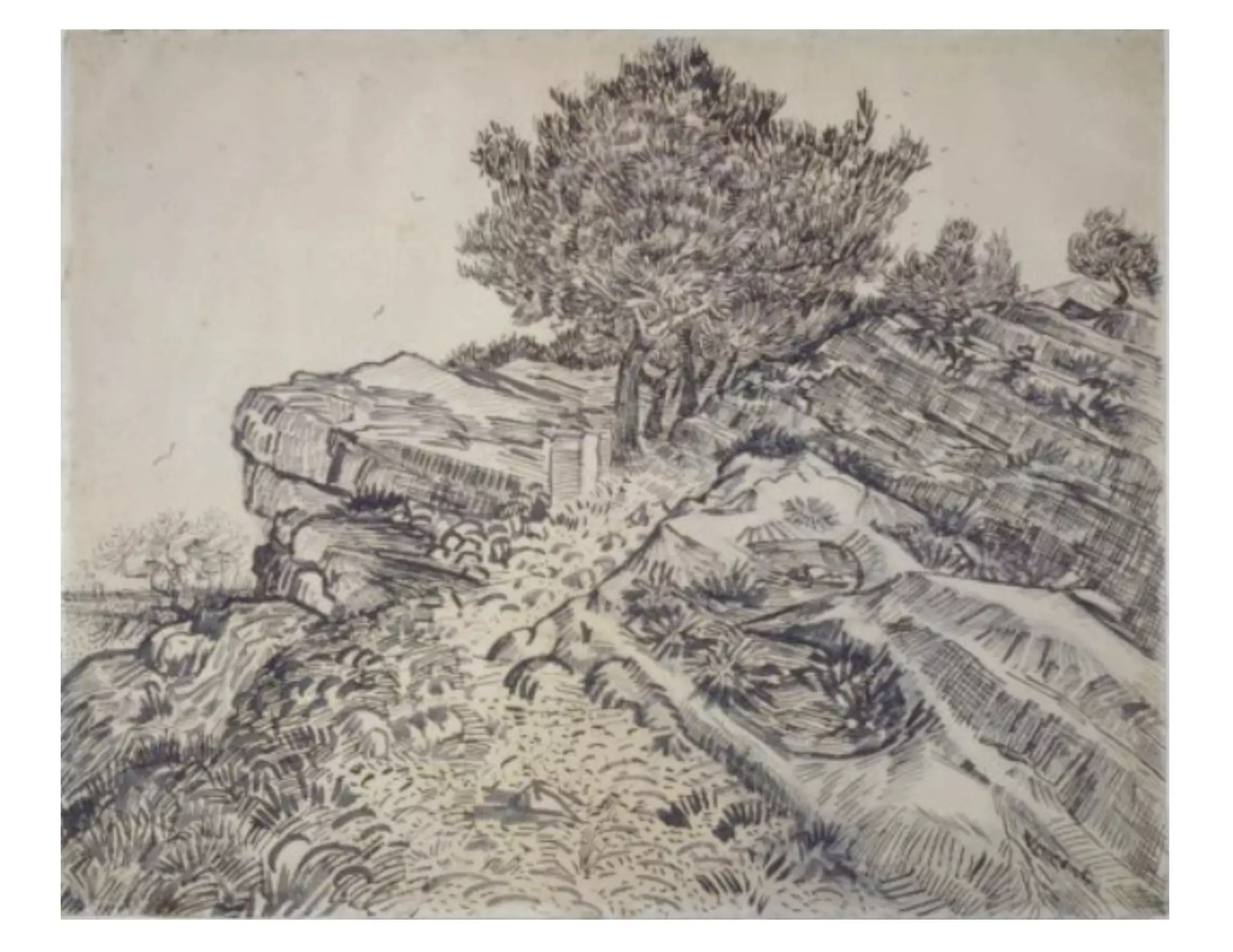
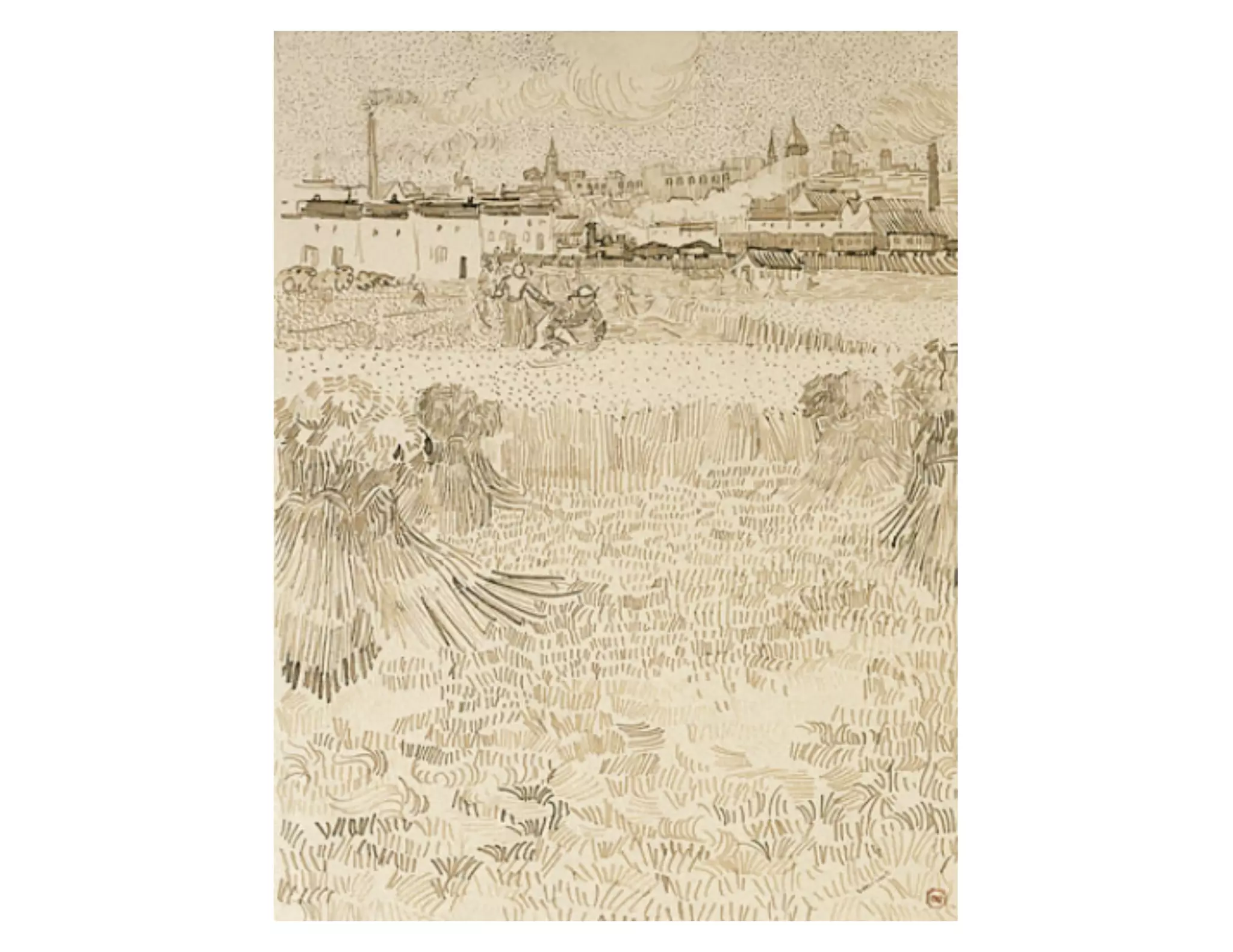
Albrecht Durer       Vincent Van Gogh


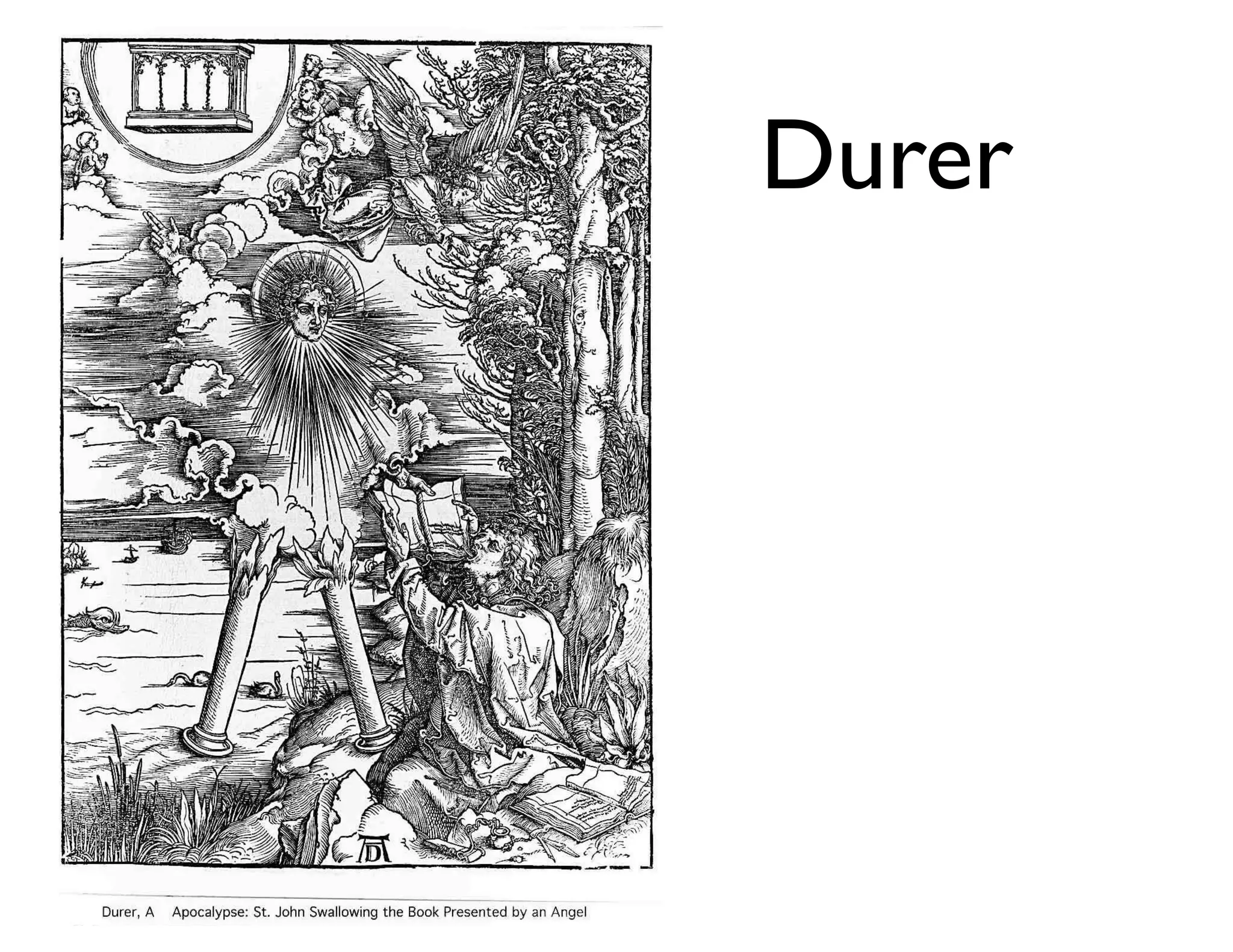
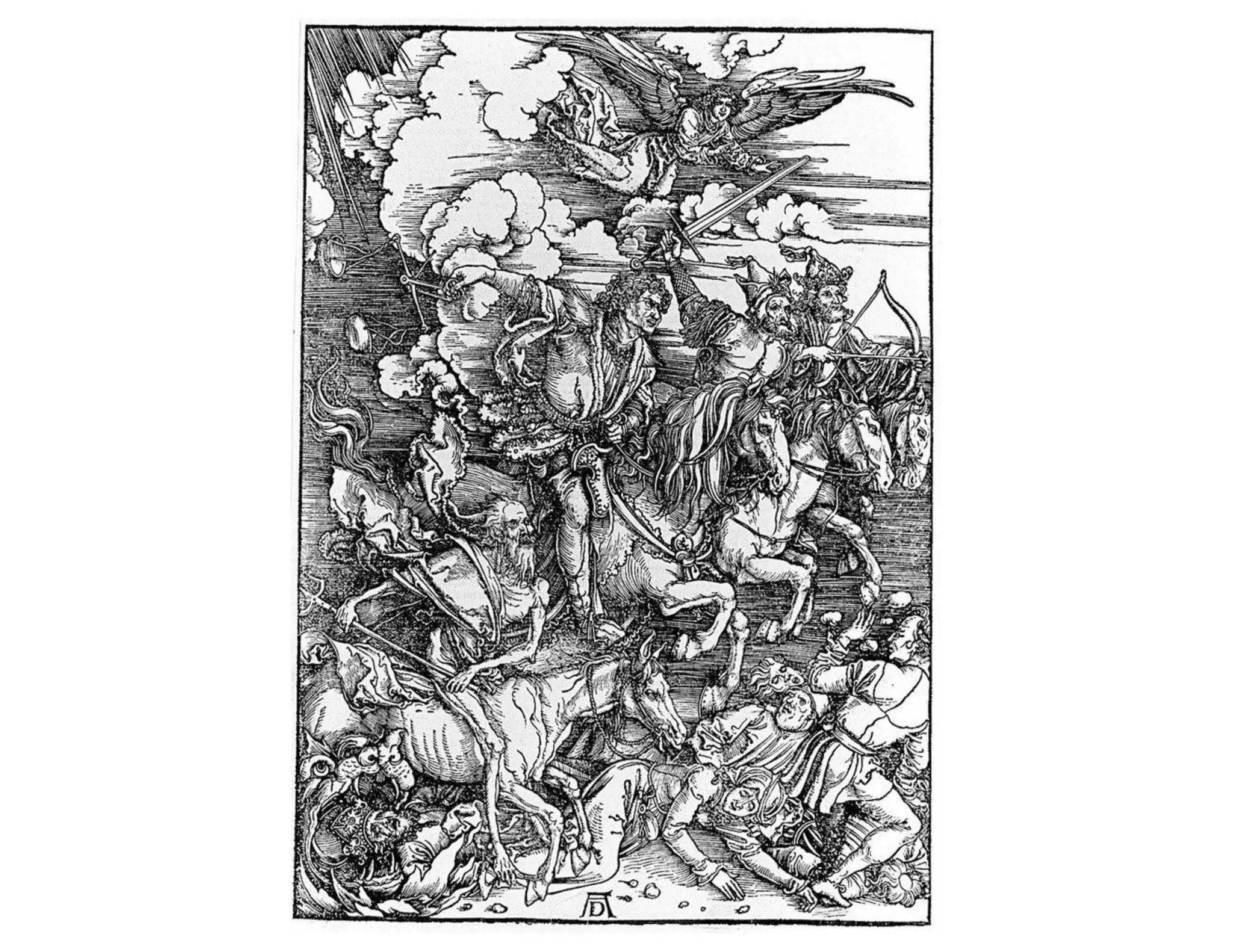
   Both Durer & Van Gogh are well
     known for their line work.
Durer
Van Gogh
Try to incorporate some of these
 techniques into your own work.
Consider shape, contour, texture
           and tone.
for educational purposes only

Line Drawing Techniques