SURVEYING STATE
BREAKING DOWN
LEGISLATORS
edchoice.org/LegislatorSurvey
Surveying State Legislators is the first
comprehensive phone-only survey to
ask state legislators how they make
decisions on K–12 issues.
EDCHOICE.ORG
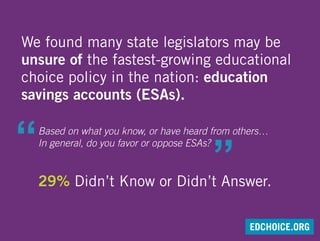
We found many state legislators may be
unsure of the fastest-growing educational
choice policy in the nation: education
savings accounts (ESAs).
29% Didn’t Know or Didn’t Answer.
Based on what you know, or have heard from others…
In general, do you favor or oppose ESAs?
EDCHOICE.ORG
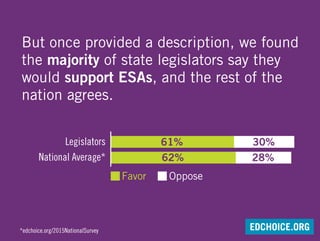
But once provided a description, we found
the majority of state legislators say they
would support ESAs, and the rest of the
nation agrees.
*edchoice.org/2015NationalSurvey
Favor Oppose
Legislators
National Average*
61%
62%
30%
28%
EDCHOICE.ORG
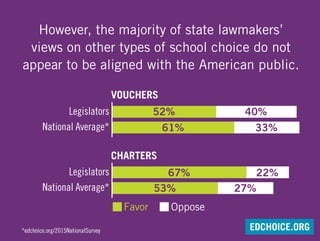
However, the majority of state lawmakers’
views on other types of school choice do not
appear to be aligned with the American public.
*edchoice.org/2015NationalSurvey
Legislators
National Average*
52% 40%
61% 33%
VOUCHERS
Legislators
National Average*
Favor Oppose
67% 22%
53% 27%
CHARTERS
EDCHOICE.ORG
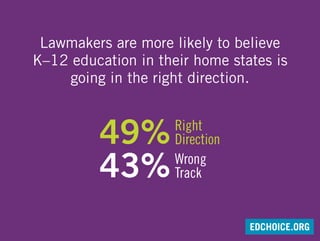
Lawmakers are more likely to believe
K–12 education in their home states is
going in the right direction.
Right
Direction
Wrong
Track
49%
43%
EDCHOICE.ORG
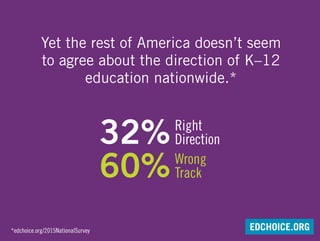
Yet the rest of America doesn’t seem
to agree about the direction of K–12
education nationwide.*
Right
Direction
Wrong
Track
32%
60%
EDCHOICE.ORG*edchoice.org/2015NationalSurvey
There’s certainly more
educating to be done.
EDCHOICE.ORG
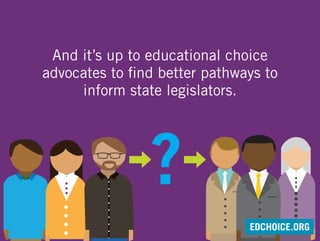
And it’s up to educational choice
advocates to find better pathways to
inform state legislators.
?
EDCHOICE.ORG
Here’s what we’ve learned
about state lawmakers’ habits
and preferences.
EDCHOICE.ORG
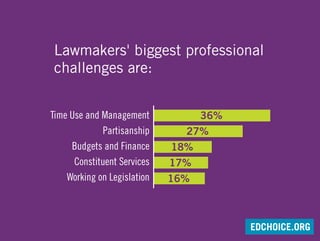
Lawmakers' biggest professional
challenges are:
Time Use and Management
Partisanship
Budgets and Finance
Constituent Services
Working on Legislation
36%
27%
18%
17%
16%
EDCHOICE.ORG
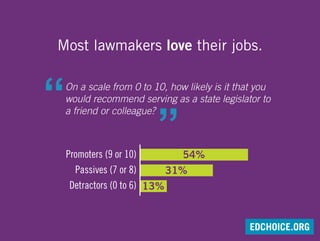
Most lawmakers love their jobs.
On a scale from 0 to 10, how likely is it that you
would recommend serving as a state legislator to
a friend or colleague?
Promoters (9 or 10)
Passives (7 or 8)
Detractors (0 to 6)
54%
31%
13%
EDCHOICE.ORG
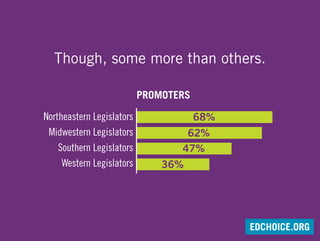
Though, some more than others.
Northeastern Legislators
Midwestern Legislators
Southern Legislators
Western Legislators
68%
47%
62%
36%
PROMOTERS
EDCHOICE.ORG
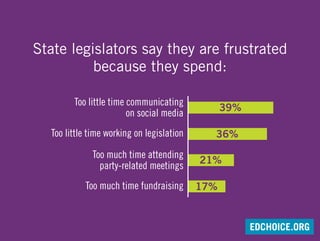
State legislators say they are frustrated
because they spend:
Too little time communicating
on social media
Too much time attending
party-related meetings
Too little time working on legislation
Too much time fundraising
39%
21%
36%
17%
EDCHOICE.ORG
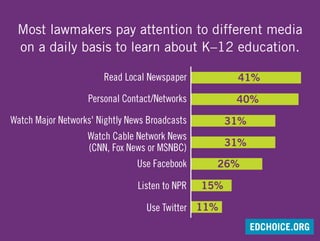
Most lawmakers pay attention to different media
on a daily basis to learn about K–12 education.
Read Local Newspaper
Personal Contact/Networks
Watch Major Networks' Nightly News Broadcasts
Watch Cable Network News
(CNN, Fox News or MSNBC)
Use Facebook
Listen to NPR
Use Twitter
41%
40%
31%
31%
26%
15%
11%
EDCHOICE.ORG
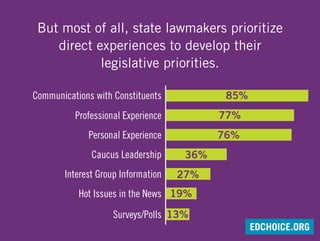
But most of all, state lawmakers prioritize
direct experiences to develop their
legislative priorities.
Communications with Constituents
Professional Experience
Personal Experience
Caucus Leadership
Interest Group Information
Hot Issues in the News
Surveys/Polls
85%
77%
76%
36%
27%
19%
13%
EDCHOICE.ORG
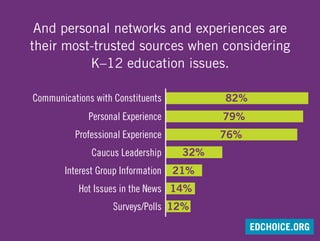
And personal networks and experiences are
their most-trusted sources when considering
K–12 education issues.
79%Personal Experience
Professional Experience
Caucus Leadership
Interest Group Information
Hot Issues in the News
Surveys/Polls
Communications with Constituents 82%
76%
32%
21%
14%
12%
EDCHOICE.ORG
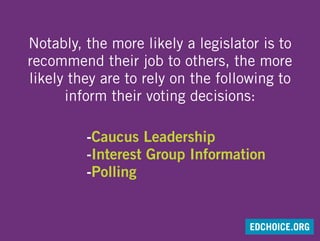
Notably, the more likely a legislator is to
recommend their job to others, the more
likely they are to rely on the following to
inform their voting decisions:
-Caucus Leadership
-Interest Group Information
-Polling
EDCHOICE.ORG
Our No. 1 takeaway?
EDCHOICE.ORG
The work educational choice advocates
are already doing—promoting research
and data, engaging families—all
matters, but…
EDCHOICE.ORG
…because of their limited time and
capacity, lawmakers likely prefer to learn
about that work from the people closest
to them—their trusted personal
contacts and constituents.
EDCHOICE.ORG
To contact the author,
Vice President of Research and Innovation
Paul DiPerna, email paul@edchoice.org
EDCHOICE.ORG/LegislatorSurvey
For more regional and demographic
details from this survey, visit

Breaking Down the EdChoice “Surveying State Legislators” Report

  • 1.
  • 2.
    Surveying State Legislatorsis the first comprehensive phone-only survey to ask state legislators how they make decisions on K–12 issues. EDCHOICE.ORG
  • 3.
    We found manystate legislators may be unsure of the fastest-growing educational choice policy in the nation: education savings accounts (ESAs). 29% Didn’t Know or Didn’t Answer. Based on what you know, or have heard from others… In general, do you favor or oppose ESAs? EDCHOICE.ORG
  • 4.
    But once provideda description, we found the majority of state legislators say they would support ESAs, and the rest of the nation agrees. *edchoice.org/2015NationalSurvey Favor Oppose Legislators National Average* 61% 62% 30% 28% EDCHOICE.ORG
  • 5.
    However, the majorityof state lawmakers’ views on other types of school choice do not appear to be aligned with the American public. *edchoice.org/2015NationalSurvey Legislators National Average* 52% 40% 61% 33% VOUCHERS Legislators National Average* Favor Oppose 67% 22% 53% 27% CHARTERS EDCHOICE.ORG
  • 6.
    Lawmakers are morelikely to believe K–12 education in their home states is going in the right direction. Right Direction Wrong Track 49% 43% EDCHOICE.ORG
  • 7.
    Yet the restof America doesn’t seem to agree about the direction of K–12 education nationwide.* Right Direction Wrong Track 32% 60% EDCHOICE.ORG*edchoice.org/2015NationalSurvey
  • 8.
    There’s certainly more educatingto be done. EDCHOICE.ORG
  • 9.
    And it’s upto educational choice advocates to find better pathways to inform state legislators. ? EDCHOICE.ORG
  • 10.
    Here’s what we’velearned about state lawmakers’ habits and preferences. EDCHOICE.ORG
  • 11.
    Lawmakers' biggest professional challengesare: Time Use and Management Partisanship Budgets and Finance Constituent Services Working on Legislation 36% 27% 18% 17% 16% EDCHOICE.ORG
  • 12.
    Most lawmakers lovetheir jobs. On a scale from 0 to 10, how likely is it that you would recommend serving as a state legislator to a friend or colleague? Promoters (9 or 10) Passives (7 or 8) Detractors (0 to 6) 54% 31% 13% EDCHOICE.ORG
  • 13.
    Though, some morethan others. Northeastern Legislators Midwestern Legislators Southern Legislators Western Legislators 68% 47% 62% 36% PROMOTERS EDCHOICE.ORG
  • 14.
    State legislators saythey are frustrated because they spend: Too little time communicating on social media Too much time attending party-related meetings Too little time working on legislation Too much time fundraising 39% 21% 36% 17% EDCHOICE.ORG
  • 15.
    Most lawmakers payattention to different media on a daily basis to learn about K–12 education. Read Local Newspaper Personal Contact/Networks Watch Major Networks' Nightly News Broadcasts Watch Cable Network News (CNN, Fox News or MSNBC) Use Facebook Listen to NPR Use Twitter 41% 40% 31% 31% 26% 15% 11% EDCHOICE.ORG
  • 16.
    But most ofall, state lawmakers prioritize direct experiences to develop their legislative priorities. Communications with Constituents Professional Experience Personal Experience Caucus Leadership Interest Group Information Hot Issues in the News Surveys/Polls 85% 77% 76% 36% 27% 19% 13% EDCHOICE.ORG
  • 17.
    And personal networksand experiences are their most-trusted sources when considering K–12 education issues. 79%Personal Experience Professional Experience Caucus Leadership Interest Group Information Hot Issues in the News Surveys/Polls Communications with Constituents 82% 76% 32% 21% 14% 12% EDCHOICE.ORG
  • 18.
    Notably, the morelikely a legislator is to recommend their job to others, the more likely they are to rely on the following to inform their voting decisions: -Caucus Leadership -Interest Group Information -Polling EDCHOICE.ORG
  • 19.
    Our No. 1takeaway? EDCHOICE.ORG
  • 20.
    The work educationalchoice advocates are already doing—promoting research and data, engaging families—all matters, but… EDCHOICE.ORG
  • 21.
    …because of theirlimited time and capacity, lawmakers likely prefer to learn about that work from the people closest to them—their trusted personal contacts and constituents. EDCHOICE.ORG
  • 22.
    To contact theauthor, Vice President of Research and Innovation Paul DiPerna, email paul@edchoice.org EDCHOICE.ORG/LegislatorSurvey For more regional and demographic details from this survey, visit