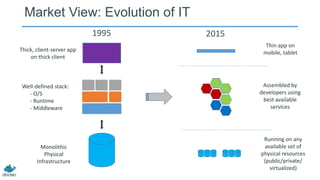
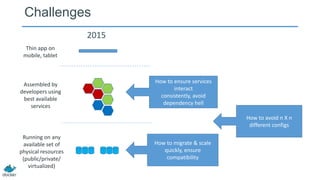
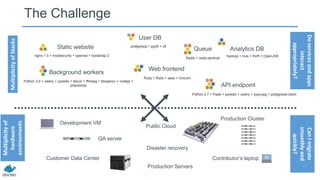
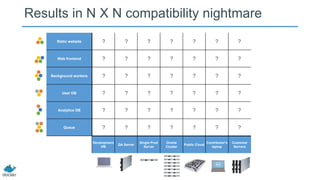
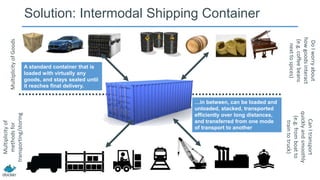
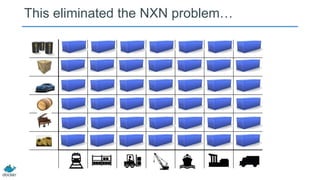
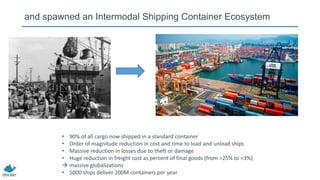
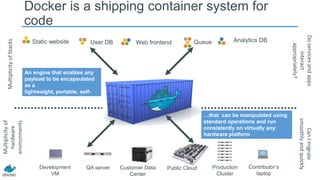
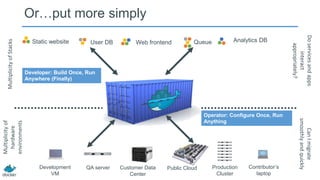
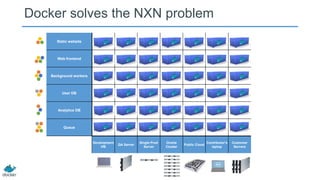
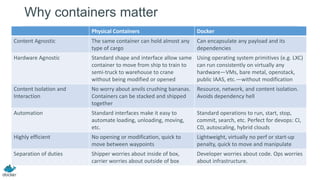
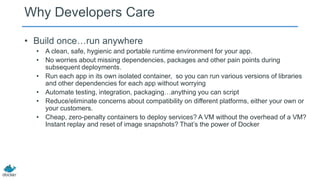
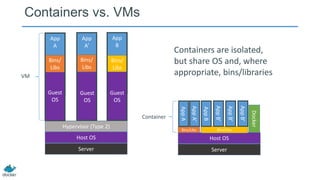
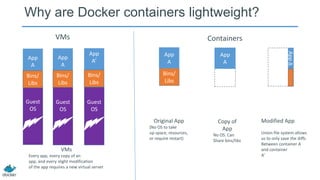
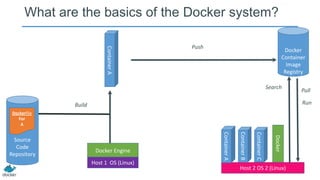
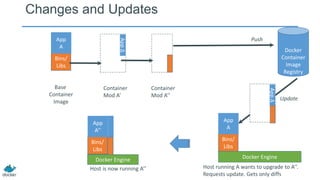
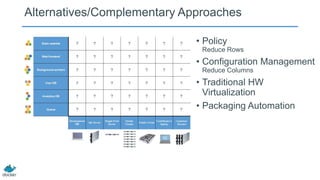
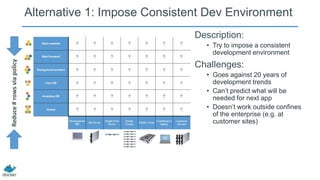
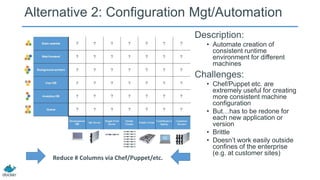
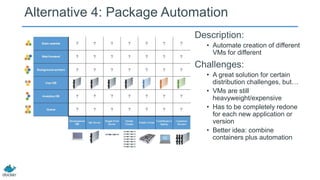
Configuration management tools like Chef, Puppet, and Ansible aim to reduce inconsistencies by imposing and managing consistent configurations across environments. However, they do not fully address issues related to dependencies, isolation, and portability. Docker containers build on these tools by adding standard interfaces and a lightweight virtualization layer that encapsulates code and dependencies, allowing applications and their environments to be packaged together and run consistently on any infrastructure while also providing isolation.



![[Open stack] heat + docker](https://cdn.slidesharecdn.com/ss_thumbnails/openstackheatdocker-131022214649-phpapp02-thumbnail.jpg?width=640&height=640&fit=bounds)


