Perfec  onizm ti
Outline What is Perfectionism? Characteristics Consequences Success  and  Happiness Sources of Perfectionism Overcoming Perfectionism
 
 
Learn to fail or fail to learn
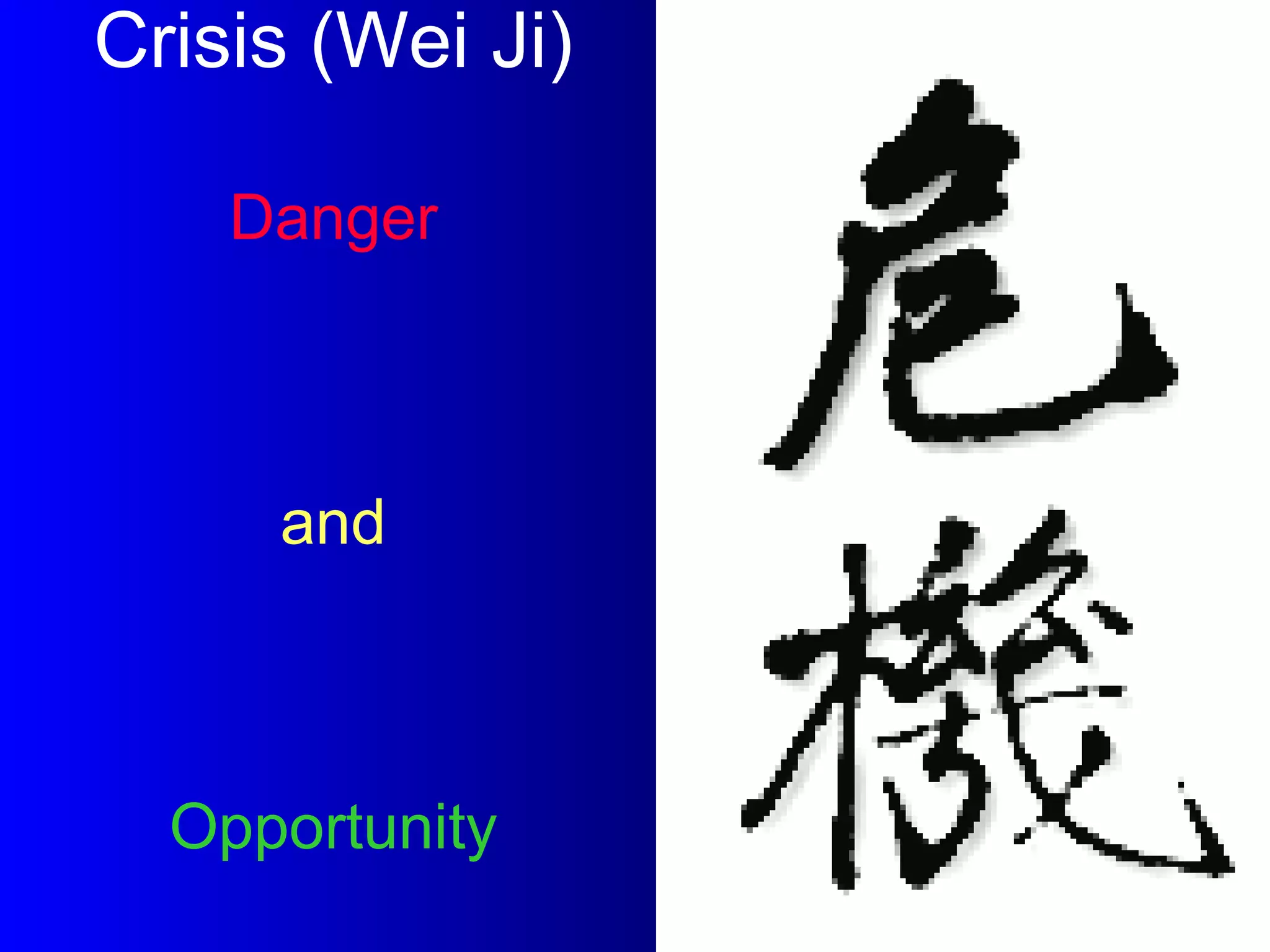
Crisis (Wei Ji) Danger and Opportunity
“ The greatest mistake a man can make is to be afraid of making one. ” Elbert Hubbard
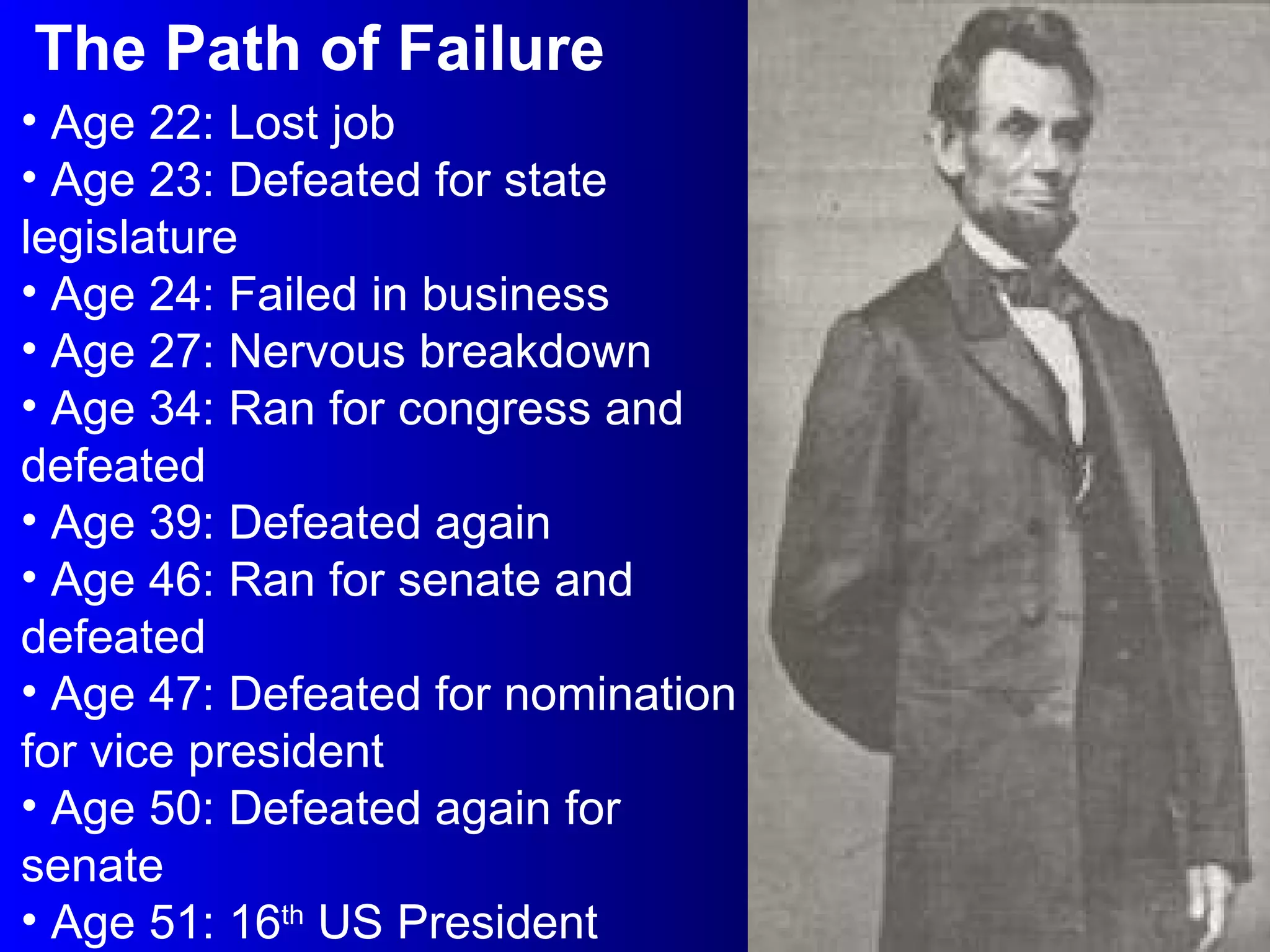
The Path of Failure Age 22: Lost job Age 23: Defeated for state legislature Age 24: Failed in business Age 27: Nervous breakdown Age 34: Ran for congress and defeated Age 39: Defeated again Age 46: Ran for senate and defeated Age 47: Defeated for nomination for vice president Age 50: Defeated again for senate Age 51: 16 th  US President
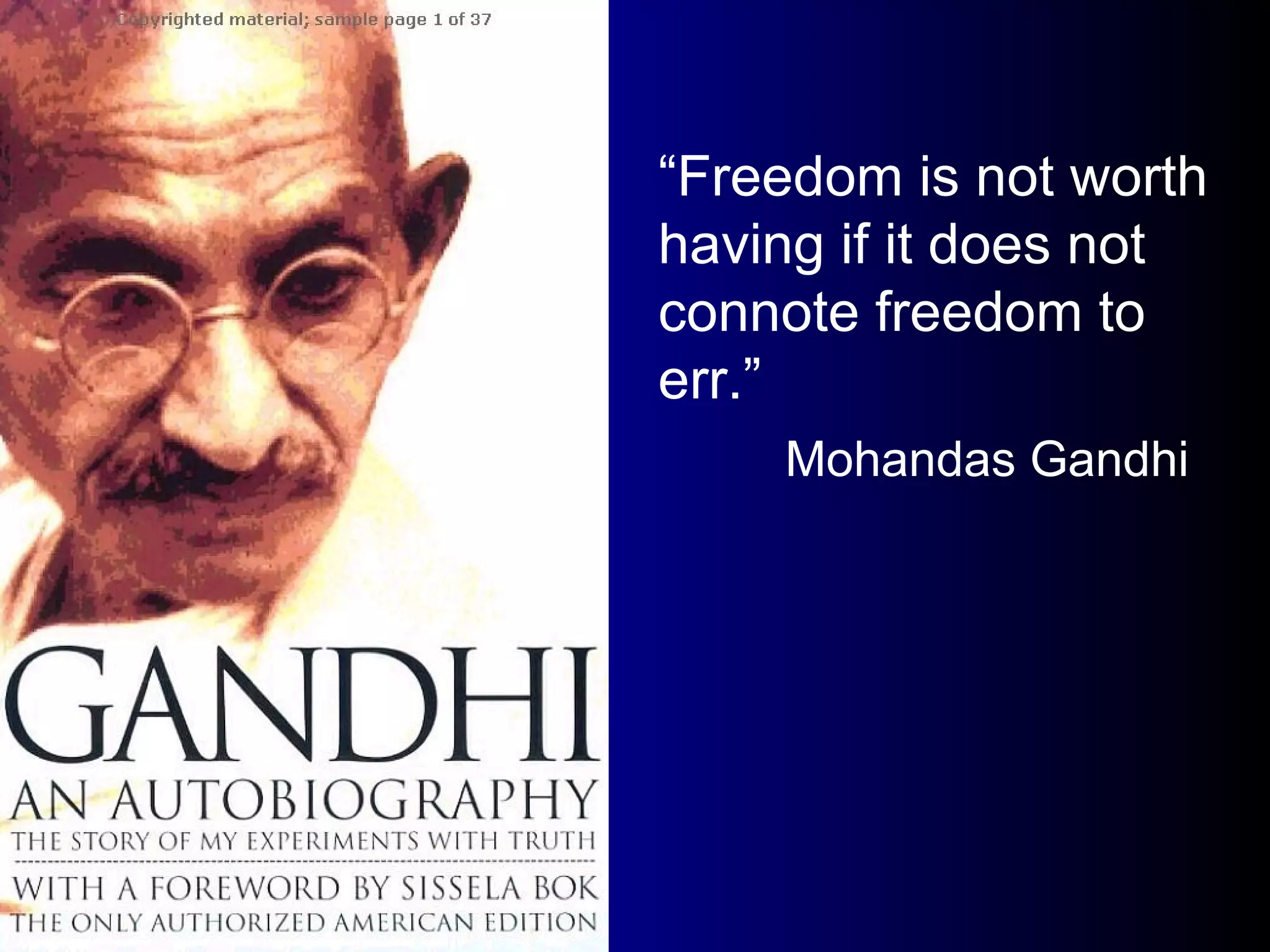
“ Freedom is not worth having if it does not connote freedom to err.” Mohandas Gandhi
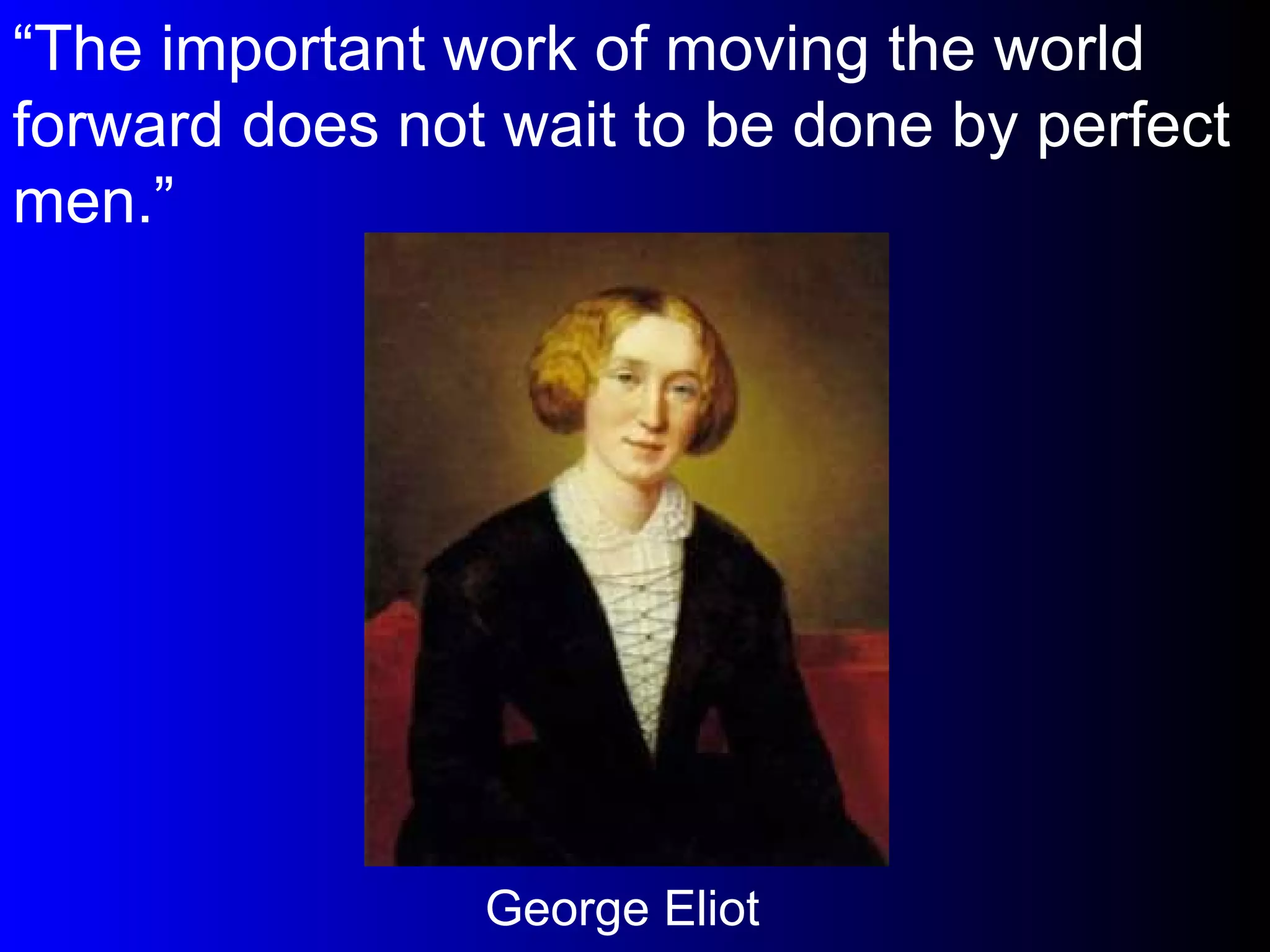
“ The important work of moving the world forward does not wait to be done by perfect men.” George Eliot


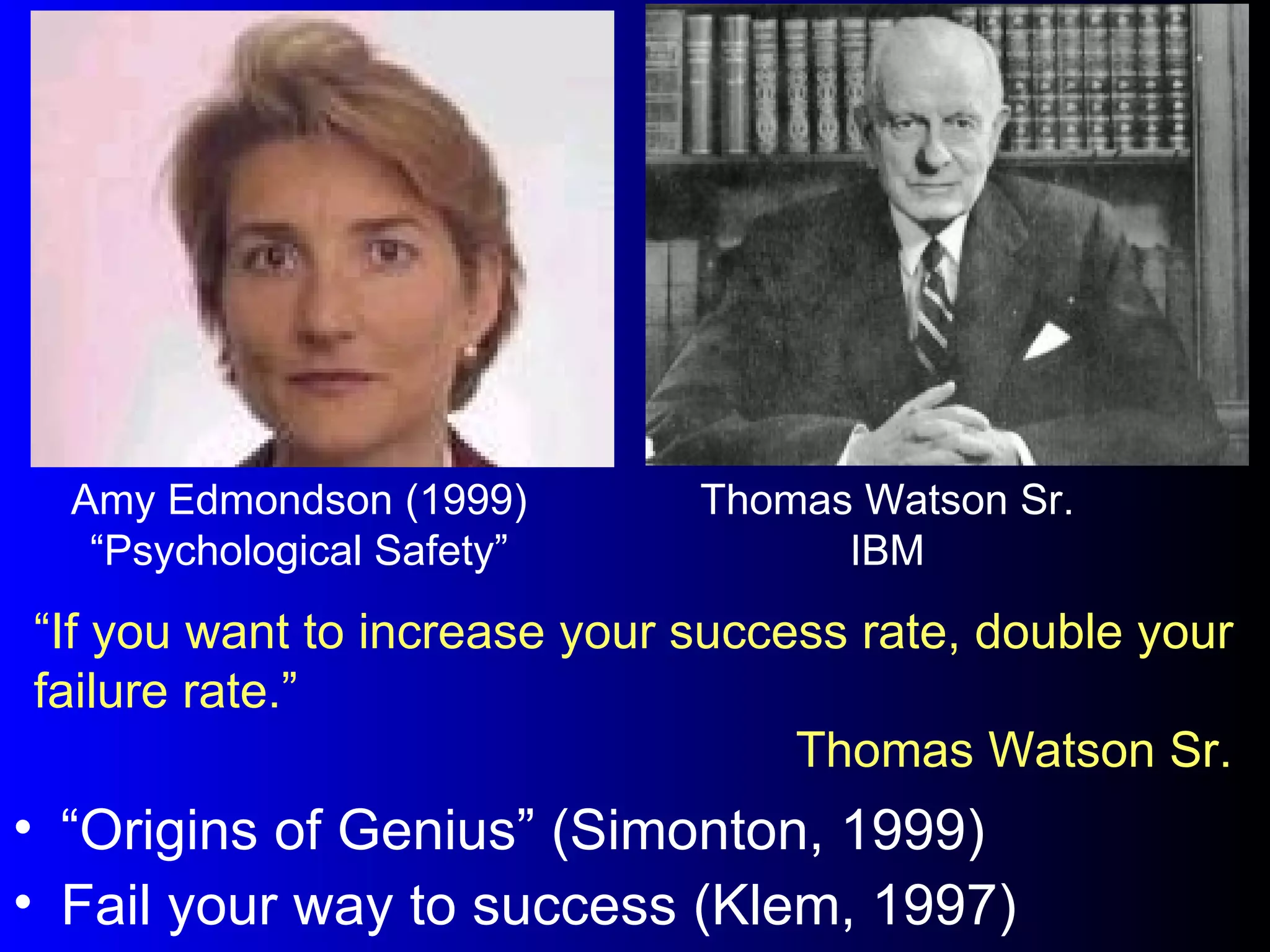
Amy Edmondson (1999) “ Psychological Safety” “ If you want to increase your success rate, double your failure rate.” Thomas Watson Sr. “ Origins of Genius” (Simonton, 1999) Fail your way to success (Klem, 1997) Thomas Watson Sr. IBM
Perfectionism is an incapacitating fear of failure that permeates our lives, especially those areas that we care about most. It is an approach, a cognitive and emotional schema, that we hold toward the journey of our lives, toward the process of getting from point A to point B.
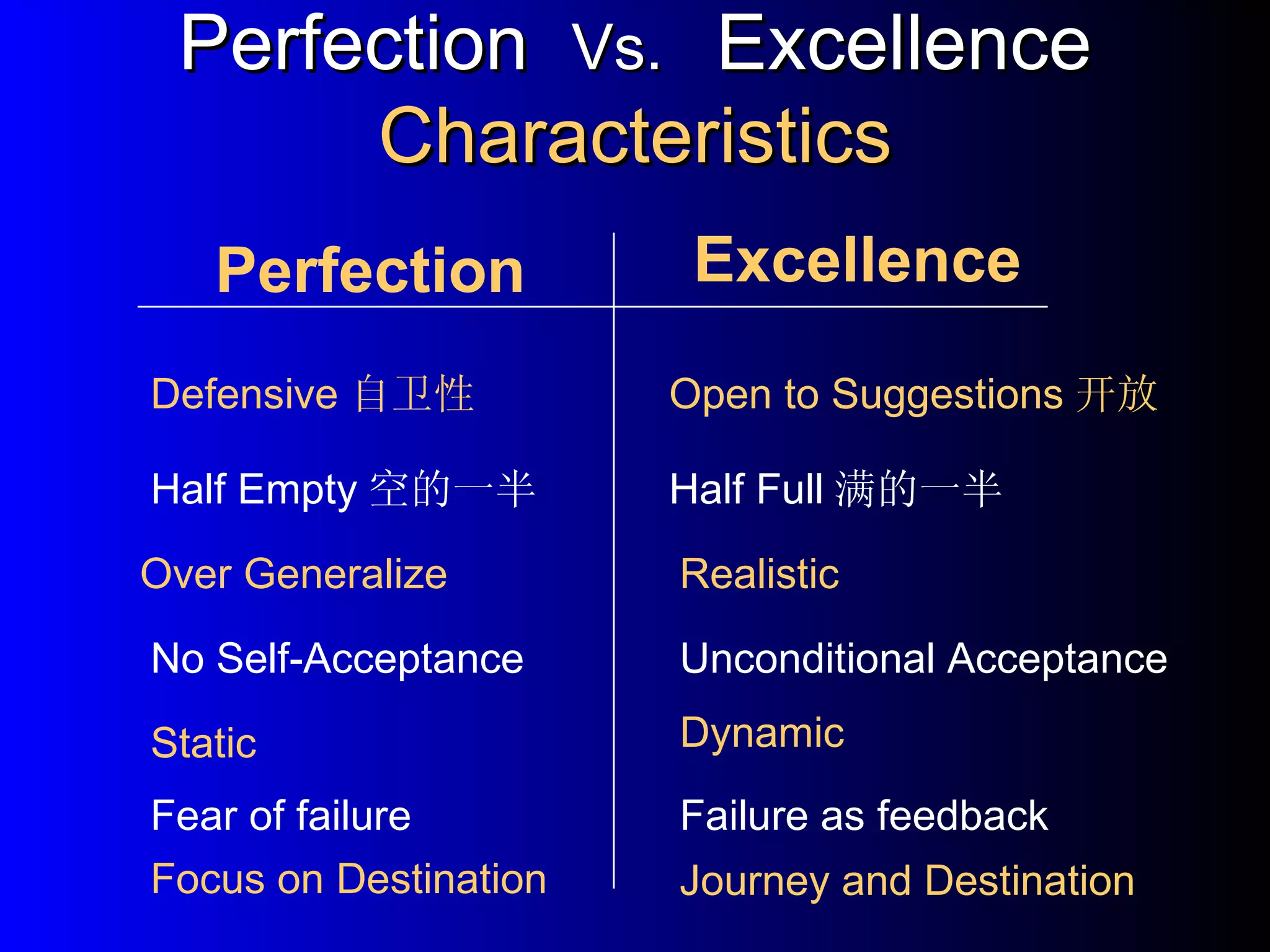
Perfection  Vs.  Excellence Characteristics Defensive 自卫性 Open to Suggestions 开放 Half Empty 空的一半 Half Full 满的一半 Over Generalize Realistic No Self-Acceptance Unconditional Acceptance Static Dynamic Perfection Excellence Fear of failure Failure as feedback Focus on Destination Journey and Destination
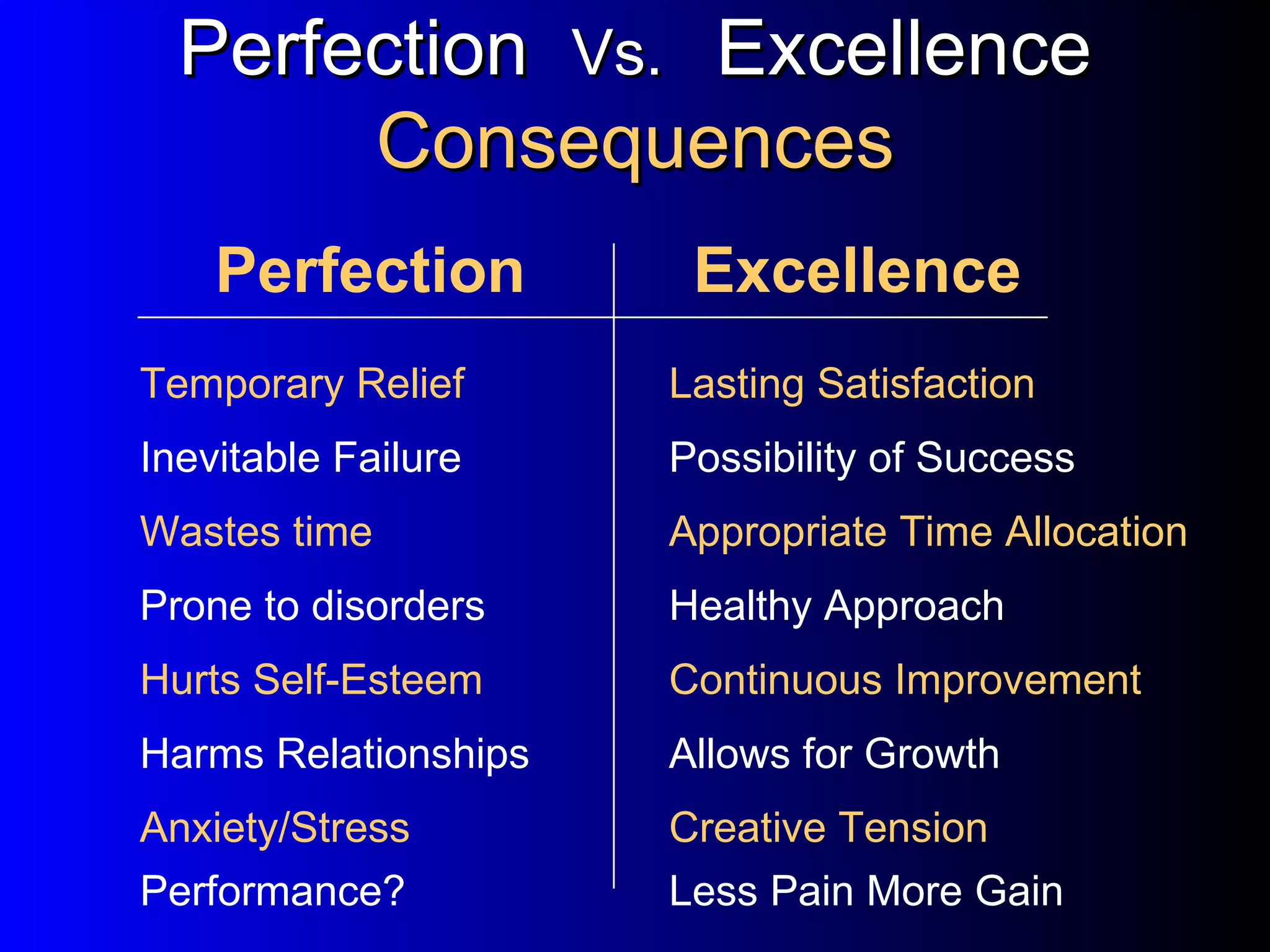
Perfection  Vs.  Excellence Consequences Temporary Relief Lasting Satisfaction Inevitable Failure Possibility of Success Wastes time Appropriate Time Allocation Prone to disorders Healthy Approach Hurts Self-Esteem Continuous Improvement Harms Relationships Allows for Growth Anxiety/Stress Creative Tension Perfection Excellence Performance? Less Pain More Gain
Less Pain More Gain ??*@#!!#?? Sustainable approach to growth Procrastination Higher levels of self-confidence Learn to fail or fail to learn ‘ The Luck Factor’ (Wiseman, 2003) Creativity (Simonton, 1999) 80/20 Rule (Pareto’s Principle) Increase in flow experiences (Csikszentmihalyi, 1991)
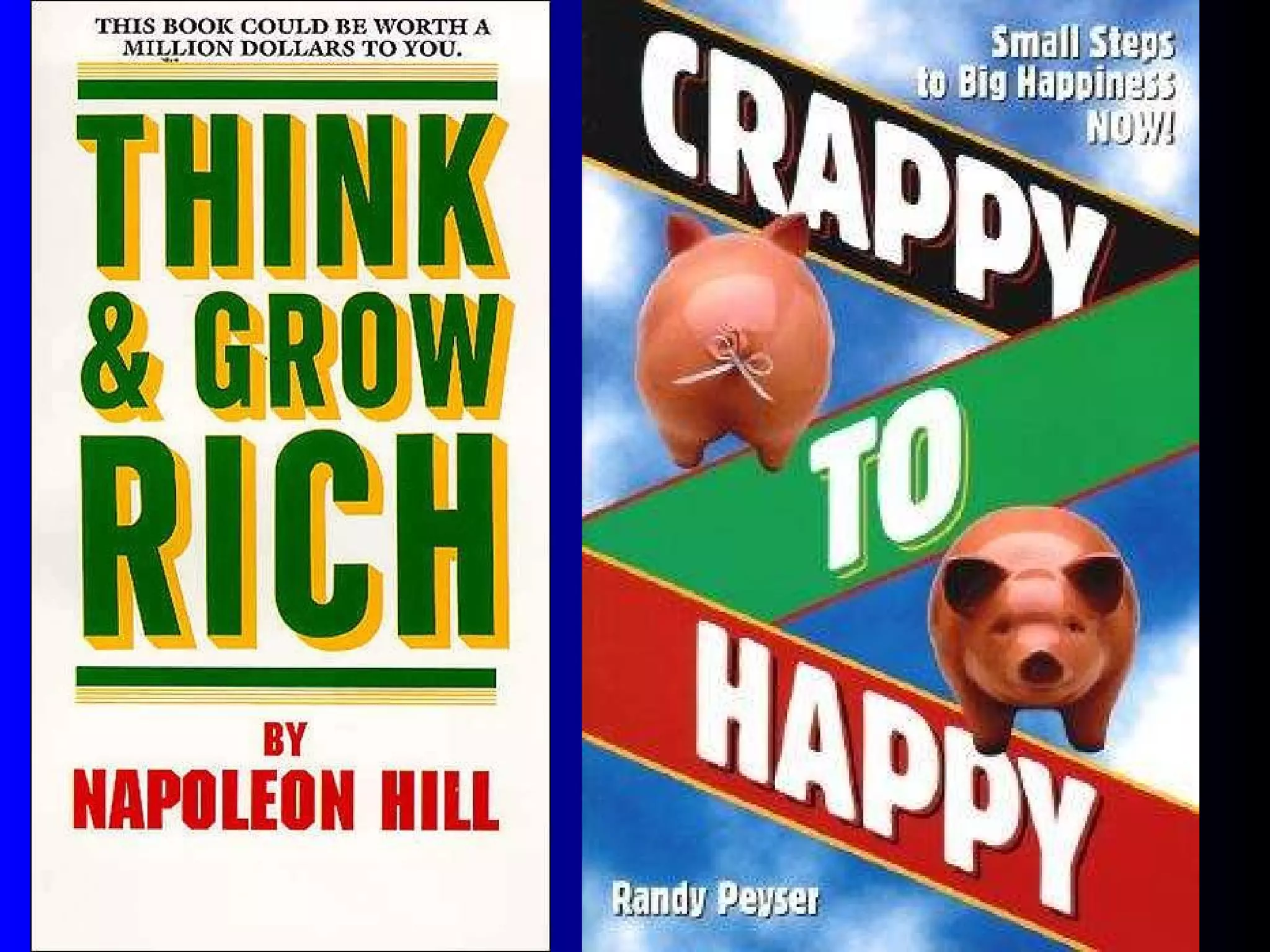
Source of Perfectionism Conditioning Destination = Reward = Acceptance Journey = Unrewarded = Means Only Social environment Permission to be human?


“ Emphasizing effort gives a child a variable that they can control.  They come to see themselves as in control of their success.  Emphasizing natural intelligence takes it out of the child’s control, and it provides no good recipe for responding to a failure.” Intelligence versus Effort Harmful Praise? (Dweck, 2005) “ When you praise kids' intelligence and then they fail, they think they're not smart anymore, and they lose interest in their work.  In contrast, kids praised for effort show no impairment and often are energized in the face of difficulty.” Fixed versus Malleable
Overcoming Perfectionism Awareness
 
Overcoming Perfectionism Awareness Focus on, and reward, effort Active Acceptance Behavior changes attitude Meditation and visualization Setting a liberating goal or vision The Platinum Rule Helping others?
Applying the 3 P’s… 1. Permission Acceptance Respect for reality 2. Positive Benefit finding Failure as opportunity Distracting 3. Perspective Don’t sweat the small stuff… Psychological maturity
Nature to be commanded must be obeyed. Francis Bacon

1504 07-perfection

  • 1.
  • 2.
    Outline What isPerfectionism? Characteristics Consequences Success and Happiness Sources of Perfectionism Overcoming Perfectionism
  • 3.
  • 4.
  • 5.
    Learn to failor fail to learn
  • 6.
    Crisis (Wei Ji)Danger and Opportunity
  • 7.
    “ The greatestmistake a man can make is to be afraid of making one. ” Elbert Hubbard
  • 8.
    The Path ofFailure Age 22: Lost job Age 23: Defeated for state legislature Age 24: Failed in business Age 27: Nervous breakdown Age 34: Ran for congress and defeated Age 39: Defeated again Age 46: Ran for senate and defeated Age 47: Defeated for nomination for vice president Age 50: Defeated again for senate Age 51: 16 th US President
  • 9.
    “ Freedom isnot worth having if it does not connote freedom to err.” Mohandas Gandhi
  • 10.
    “ The importantwork of moving the world forward does not wait to be done by perfect men.” George Eliot
  • 11.
  • 12.
  • 13.
  • 14.
  • 15.
    Amy Edmondson (1999)“ Psychological Safety” “ If you want to increase your success rate, double your failure rate.” Thomas Watson Sr. “ Origins of Genius” (Simonton, 1999) Fail your way to success (Klem, 1997) Thomas Watson Sr. IBM
  • 16.
    Perfectionism is anincapacitating fear of failure that permeates our lives, especially those areas that we care about most. It is an approach, a cognitive and emotional schema, that we hold toward the journey of our lives, toward the process of getting from point A to point B.
  • 17.
    Perfection Vs. Excellence Characteristics Defensive 自卫性 Open to Suggestions 开放 Half Empty 空的一半 Half Full 满的一半 Over Generalize Realistic No Self-Acceptance Unconditional Acceptance Static Dynamic Perfection Excellence Fear of failure Failure as feedback Focus on Destination Journey and Destination
  • 18.
    Perfection Vs. Excellence Consequences Temporary Relief Lasting Satisfaction Inevitable Failure Possibility of Success Wastes time Appropriate Time Allocation Prone to disorders Healthy Approach Hurts Self-Esteem Continuous Improvement Harms Relationships Allows for Growth Anxiety/Stress Creative Tension Perfection Excellence Performance? Less Pain More Gain
  • 19.
    Less Pain MoreGain ??*@#!!#?? Sustainable approach to growth Procrastination Higher levels of self-confidence Learn to fail or fail to learn ‘ The Luck Factor’ (Wiseman, 2003) Creativity (Simonton, 1999) 80/20 Rule (Pareto’s Principle) Increase in flow experiences (Csikszentmihalyi, 1991)
  • 20.
    Source of PerfectionismConditioning Destination = Reward = Acceptance Journey = Unrewarded = Means Only Social environment Permission to be human?
  • 21.
  • 22.
  • 23.
  • 24.
  • 25.
  • 26.
  • 27.
    “ Emphasizing effortgives a child a variable that they can control. They come to see themselves as in control of their success. Emphasizing natural intelligence takes it out of the child’s control, and it provides no good recipe for responding to a failure.” Intelligence versus Effort Harmful Praise? (Dweck, 2005) “ When you praise kids' intelligence and then they fail, they think they're not smart anymore, and they lose interest in their work. In contrast, kids praised for effort show no impairment and often are energized in the face of difficulty.” Fixed versus Malleable
  • 28.
  • 29.
  • 30.
    Overcoming Perfectionism AwarenessFocus on, and reward, effort Active Acceptance Behavior changes attitude Meditation and visualization Setting a liberating goal or vision The Platinum Rule Helping others?
  • 31.
    Applying the 3P’s… 1. Permission Acceptance Respect for reality 2. Positive Benefit finding Failure as opportunity Distracting 3. Perspective Don’t sweat the small stuff… Psychological maturity
  • 32.
    Nature to becommanded must be obeyed. Francis Bacon