Claudia Marlene Ávila
Islas.
∗ During root canal therapy, a 68-year-old male patient
becomes pale, perspires profusely, and clutches his
chest. He appears confused, and is now unresponsive
to verbal stimuli. He is not breathing and no pulse can
be felt in the carotid artery.
∗ Do you know how to handle this situation?
Introduction.
∗ Medical emergencies can occur at any time in the
dental office. They can happen to anyone, from the
anxious patient in the reception room to the elderly
diabetic who was told to skip breakfast prior to
coming to her appointment.
∗ The best way to handle an emergency is to be
prepared.
∗ Staff should be trained and frequently updated in
first aid and cardiopulmonary resuscitation
procedures. A written emergency plan should be
available
Preparation for Emergencies
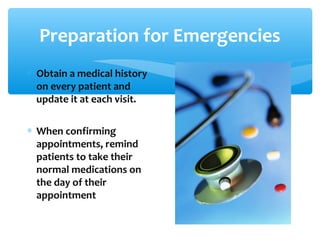
∗ Obtain a medical history
on every patient and
update it at each visit.
∗ When confirming
appointments, remind
patients to take their
normal medications on
the day of their
appointment
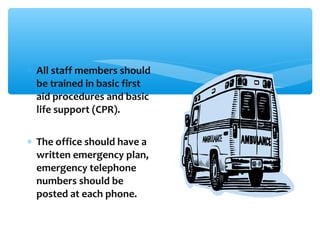
∗ All staff members should
be trained in basic first
aid procedures and basic
life support (CPR).
∗ The office should have a
written emergency plan,
emergency telephone
numbers should be
posted at each phone.
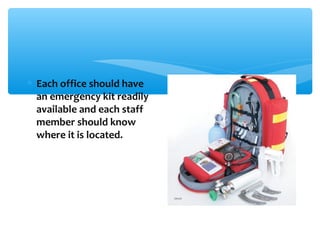
∗ Each office should have
an emergency kit readily
available and each staff
member should know
where it is located.
Health Assessment
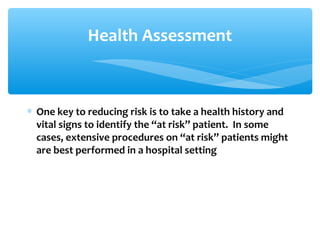
∗ One key to reducing risk is to take a health history and
vital signs to identify the “at risk” patient. In some
cases, extensive procedures on “at risk” patients might
are best performed in a hospital setting
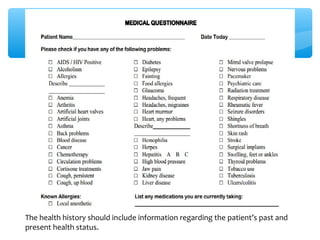
The health history should include information regarding the patient’s past and
present health status.
Vital Signs
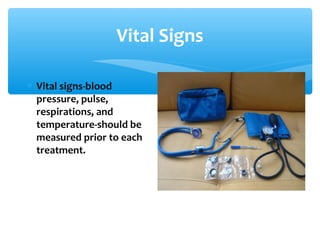
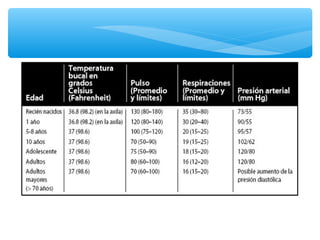
∗ Vital signs-blood
pressure, pulse,
respirations, and
temperature-should be
measured prior to each
treatment.
Recognition of an Emergency and
Initial Emergency Procedures
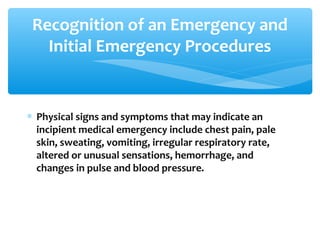
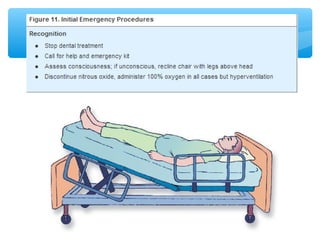
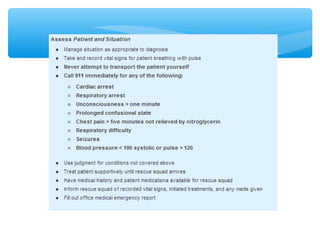
∗ Physical signs and symptoms that may indicate an
incipient medical emergency include chest pain, pale
skin, sweating, vomiting, irregular respiratory rate,
altered or unusual sensations, hemorrhage, and
changes in pulse and blood pressure.
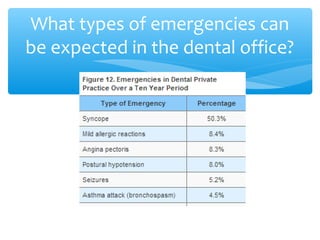
What types of emergencies can
be expected in the dental office?
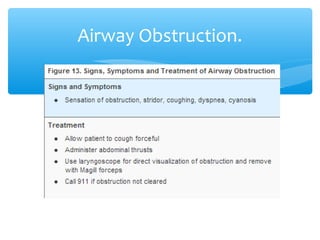
Airway Obstruction.
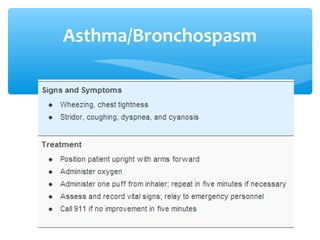
Asthma/Bronchospasm
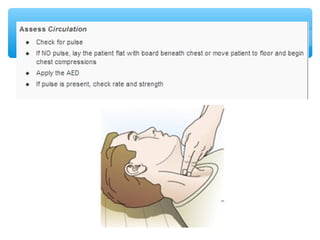
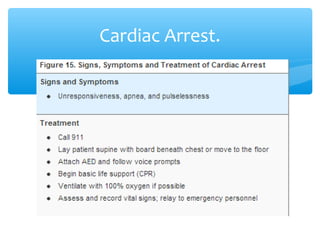
Cardiac Arrest.
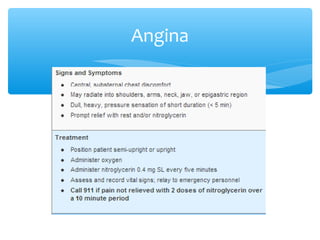
Angina
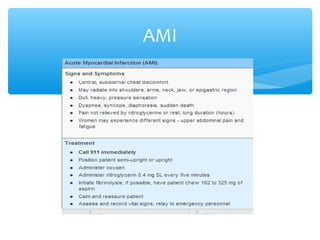
AMI
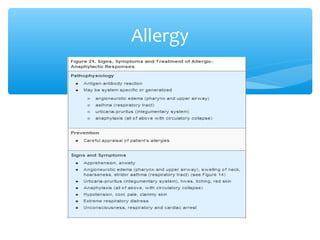
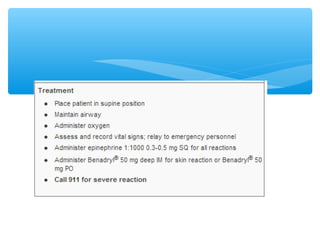
Allergy
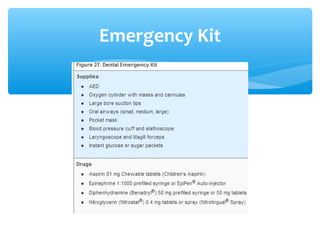
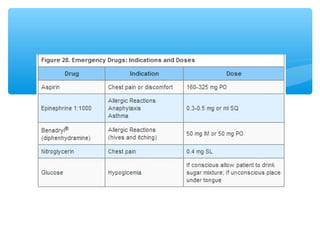
Emergency Kit
∗ It has been estimated that one or two life threatening
emergencies will occur in the lifetime practice of a
general dentist.
∗ Obtaining a health history and a set of vital signs is
the first step in identifying the patient likely to
develop a medical emergency. With proper training,
thorough preparation, and regular practice, the staff
of the dental office will be able to provide
appropriate medical care should the need arise.
Summary.
Emergency in dental office

Emergency in dental office

  • 1.
  • 2.
    ∗ During rootcanal therapy, a 68-year-old male patient becomes pale, perspires profusely, and clutches his chest. He appears confused, and is now unresponsive to verbal stimuli. He is not breathing and no pulse can be felt in the carotid artery. ∗ Do you know how to handle this situation? Introduction.
  • 4.
    ∗ Medical emergenciescan occur at any time in the dental office. They can happen to anyone, from the anxious patient in the reception room to the elderly diabetic who was told to skip breakfast prior to coming to her appointment.
  • 5.
    ∗ The bestway to handle an emergency is to be prepared. ∗ Staff should be trained and frequently updated in first aid and cardiopulmonary resuscitation procedures. A written emergency plan should be available
  • 6.
    Preparation for Emergencies ∗Obtain a medical history on every patient and update it at each visit. ∗ When confirming appointments, remind patients to take their normal medications on the day of their appointment
  • 7.
    ∗ All staffmembers should be trained in basic first aid procedures and basic life support (CPR). ∗ The office should have a written emergency plan, emergency telephone numbers should be posted at each phone.
  • 8.
    ∗ Each officeshould have an emergency kit readily available and each staff member should know where it is located.
  • 9.
    Health Assessment ∗ Onekey to reducing risk is to take a health history and vital signs to identify the “at risk” patient. In some cases, extensive procedures on “at risk” patients might are best performed in a hospital setting
  • 10.
    The health historyshould include information regarding the patient’s past and present health status.
  • 11.
    Vital Signs ∗ Vitalsigns-blood pressure, pulse, respirations, and temperature-should be measured prior to each treatment.
  • 13.
    Recognition of anEmergency and Initial Emergency Procedures ∗ Physical signs and symptoms that may indicate an incipient medical emergency include chest pain, pale skin, sweating, vomiting, irregular respiratory rate, altered or unusual sensations, hemorrhage, and changes in pulse and blood pressure.
  • 19.
    What types ofemergencies can be expected in the dental office?
  • 20.
  • 21.
  • 22.
  • 23.
  • 24.
  • 25.
  • 27.
  • 29.
    ∗ It hasbeen estimated that one or two life threatening emergencies will occur in the lifetime practice of a general dentist. ∗ Obtaining a health history and a set of vital signs is the first step in identifying the patient likely to develop a medical emergency. With proper training, thorough preparation, and regular practice, the staff of the dental office will be able to provide appropriate medical care should the need arise. Summary.