Exploring frames of mindA workshop to expand thinking potential, starting with Howard Gardner’s Five Minds for the FuturePresented by Christo van Stadenhttp://www.learningdesign.co.za
Programme08:00	Arrival09:30	Seeing our thinking: Experiencing and exploring the five minds in action11:00	Tea11:30	Experiencing our thinking: How mind makes the world13:15Lunch14:00	Accessing and practising the five minds15:00	Tea15:15	Accessing and practising the five minds (continued)16:15	Close
Our approach todayVery little lecturing …Lots of conversationGoethe’s fairy tale of the Emerald Snake – “And what is more quickening than Light?” – “Conversation”Con-versare – to turn togetherYou know it already; we are here to help you discover how
We are not …Giving you quick mental fixes – this is not a box of tricksWe challenge you to engage in fundamental shifts of perspectiveWe work on a integrative level – one mind does not exist separately from another;one mode flows into the nextDiscipline is inherent in all five minds – it is about consistently practising our knowledgeFocused exclusively on the intellectual side of “mind”We challenge you to engage your heart and your will too,As well as your inspiration and your aspirationPhysical, emotional, mental and spiritual
This is not just about skills to think differently about the worldIt is about transforming the world by transforming the way that we think!
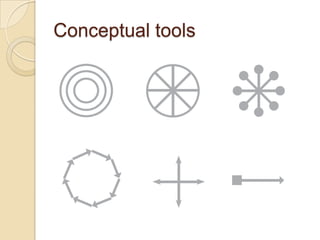
Conceptual tools
IntroductionWhat is mind? Why five minds? Which five minds?
What is “mind”?Mind is more than thinkingSmall mind – Big mind: what is inside the mind and what is outside the mind?Mind and perception: mind provides frameworksMind and consciousness – mind as the unlimited“What we perceive is what we are”
Why five minds?The five minds suggest a framework for approaching thinking challenges from different perspectivesIt’s similar to, yet at the same time very different from De Bono’s Six HatsBohm: similar differences, different similaritiesBateson: the difference that makes a differenceEach mind can be practised in a disciplined mannerEach mind represents a thinking competence required for success in our world
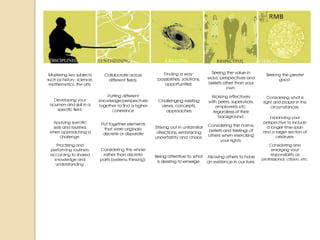
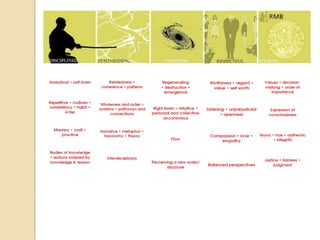
An overview of the five mindsWhat are the different ways in which you think every day?Disciplined mindSynthesising mindCreating mindRespectful mindEthical mind
The disciplined mindDiscipline is about creating order through focus,  concentration, routine, habit, mastery of technique, etc.Important disciplines:Body (exercise disciplines, body care disciplines)Emotion (shadow work discipline)Mind (classical intellectual disciplines)Spirit (mindfulness, devotion)The disciplined mind develops habits and attitudes that enable us to continuously refine and improve methods and frameworks for creating knowledge and maintaining well-being.We need to know what works for us – how our mind works – and apply it in a disciplined manner.
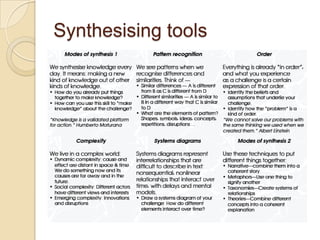
The synthesising mindSynthesis is about putting different things together to make something more complex, more encompassing, more conceptually powerful.It is also about seeing relationships and connections and making the right combinations, links, categories – it’s an ordering act.The synthesising mind seeks out opportunities for synthesis and then experiments to find new levels of perspective and understanding
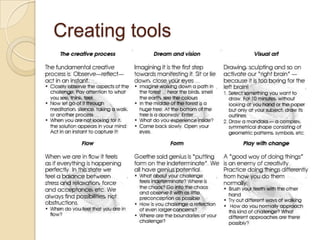
The creating mindTo create is a fundamental instinctual activity of all living beingsWe create every moment through our movements – Spiritual movements such as praying, visioning, meditationMental movements such as thinkingEmotional movements – emotions are energy in motion!Physical movementsThe creating mind brings our world into existence every moment!
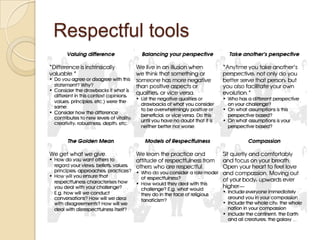
The respectful mindRespect is about valuing others for whatever reason:Traditional and cultural ideals, such as age or hierarchyAs inspiration for our present and future actionsThe intrinsic value of diversity and differenceThe intrinsic value of all lifeThe respectful mind creates a safe space where we can discover our  “kindness” – being of the same kind
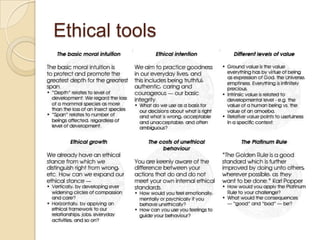
The ethical mindEthical action is when we consider what is in our best interestWho are we? Ethical thinking expands our sense of who we are to include more “others”, at more profound levelsThe ethical mind enables ethical thinking and ethical action
Transforming thoughtWe think the way we think because we think it’s the only way to thinkHow do we escape this trap?By first seeing how we thinkThen realising how our thinking creates the world we are living inThen facing the worst of what could happen if we did not think that wayThen stopping our thinkingAnd allowing new thinking to come to mindThen practising the new thinking
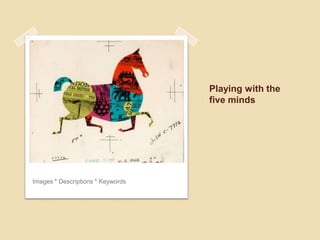
Playing with the five mindsImages * Descriptions * Keywords
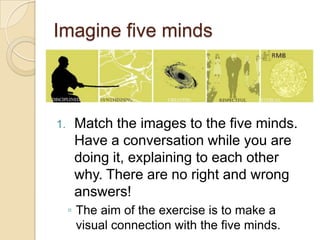
Imagine five mindsMatch the images to the five minds. Have a conversation while you are doing it, explaining to each other why. There are no right and wrong answers! The aim of the exercise is to make a visual connection with the five minds.
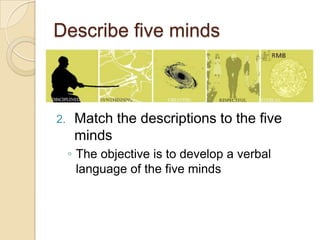
Describe five mindsMatch the descriptions to the five mindsThe objective is to develop a verbal language of the five minds
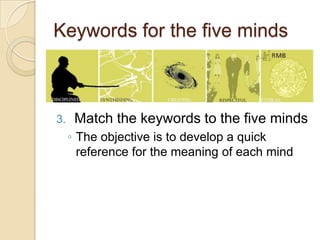
Keywords for the five mindsMatch the keywords to the five mindsThe objective is to develop a quick reference for the meaning of each mind
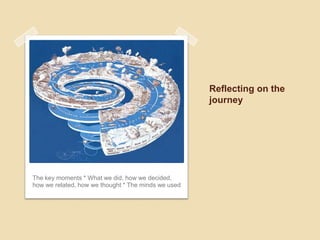
Reflecting on the journeyThe key moments * What we did, how we decided, how we related, how we thought * The minds we used
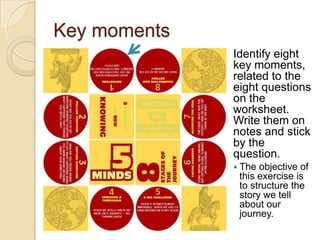
Key momentsIdentify eight key moments, related to the eight questions on the worksheet. Write them on notes and stick by the question.The objective of this exercise is to structure the story we tell about our journey.
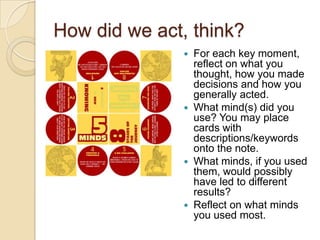
How did we act, think?For each key moment, reflect on what you thought, how you made decisions and how you generally acted.What mind(s) did you use? You may place cards with descriptions/keywords onto the note.What minds, if you used them, would possibly have led to different results? Reflect on what minds you used most.
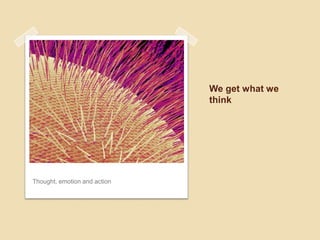
We get what we thinkThought, emotion and action
“Thought produces results, but thought says it didn’t do it.  And that is a problem.” David Bohm
Maturana’s story of the frogand the cruel experiment with the kittens in the white roomWhat is perception?Thoughts and perceptionEvery act is a perception
Thought makes the worldAssumptions, beliefs, habits, practicesWhat are they about thinking?ParticipationHow do we continuously recreate our thinking patterns?Letting goLetting go of our thinking patterns, habitsLetting comeNew vision of thinking practicePut in practiceTrying out new modes of thinking
Movement exerciseSynchronySyntonyFlow
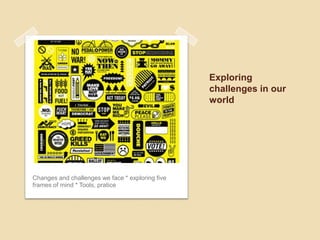
Exploring challenges in our worldChanges and challenges we face * exploring five frames of mind * Tools, pratice
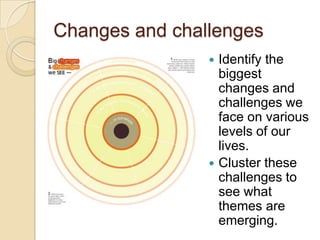
Changes and challengesIdentify the biggest changes and challenges we face on various levels of our lives.Cluster these challenges to see what themes are emerging.
Think in different framesUse the five minds to think about specific challenges we are facing.Divide into five groups - each group select a mindExplore the tool/technique and how you can apply it to the challengeWe come together and give feedback to the other groups about what we have done and what results we achieved.
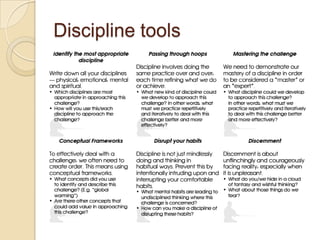
Discipline tools
Synthesising tools
Creating tools
Respectful tools
Ethical tools

Frames Of Mind

  • 1.
    Exploring frames ofmindA workshop to expand thinking potential, starting with Howard Gardner’s Five Minds for the FuturePresented by Christo van Stadenhttp://www.learningdesign.co.za
  • 2.
    Programme08:00 Arrival09:30 Seeing our thinking:Experiencing and exploring the five minds in action11:00 Tea11:30 Experiencing our thinking: How mind makes the world13:15Lunch14:00 Accessing and practising the five minds15:00 Tea15:15 Accessing and practising the five minds (continued)16:15 Close
  • 3.
    Our approach todayVerylittle lecturing …Lots of conversationGoethe’s fairy tale of the Emerald Snake – “And what is more quickening than Light?” – “Conversation”Con-versare – to turn togetherYou know it already; we are here to help you discover how
  • 4.
    We are not…Giving you quick mental fixes – this is not a box of tricksWe challenge you to engage in fundamental shifts of perspectiveWe work on a integrative level – one mind does not exist separately from another;one mode flows into the nextDiscipline is inherent in all five minds – it is about consistently practising our knowledgeFocused exclusively on the intellectual side of “mind”We challenge you to engage your heart and your will too,As well as your inspiration and your aspirationPhysical, emotional, mental and spiritual
  • 5.
    This is notjust about skills to think differently about the worldIt is about transforming the world by transforming the way that we think!
  • 6.
  • 7.
    IntroductionWhat is mind?Why five minds? Which five minds?
  • 8.
    What is “mind”?Mindis more than thinkingSmall mind – Big mind: what is inside the mind and what is outside the mind?Mind and perception: mind provides frameworksMind and consciousness – mind as the unlimited“What we perceive is what we are”
  • 9.
    Why five minds?Thefive minds suggest a framework for approaching thinking challenges from different perspectivesIt’s similar to, yet at the same time very different from De Bono’s Six HatsBohm: similar differences, different similaritiesBateson: the difference that makes a differenceEach mind can be practised in a disciplined mannerEach mind represents a thinking competence required for success in our world
  • 10.
    An overview ofthe five mindsWhat are the different ways in which you think every day?Disciplined mindSynthesising mindCreating mindRespectful mindEthical mind
  • 11.
    The disciplined mindDisciplineis about creating order through focus, concentration, routine, habit, mastery of technique, etc.Important disciplines:Body (exercise disciplines, body care disciplines)Emotion (shadow work discipline)Mind (classical intellectual disciplines)Spirit (mindfulness, devotion)The disciplined mind develops habits and attitudes that enable us to continuously refine and improve methods and frameworks for creating knowledge and maintaining well-being.We need to know what works for us – how our mind works – and apply it in a disciplined manner.
  • 12.
    The synthesising mindSynthesisis about putting different things together to make something more complex, more encompassing, more conceptually powerful.It is also about seeing relationships and connections and making the right combinations, links, categories – it’s an ordering act.The synthesising mind seeks out opportunities for synthesis and then experiments to find new levels of perspective and understanding
  • 13.
    The creating mindTocreate is a fundamental instinctual activity of all living beingsWe create every moment through our movements – Spiritual movements such as praying, visioning, meditationMental movements such as thinkingEmotional movements – emotions are energy in motion!Physical movementsThe creating mind brings our world into existence every moment!
  • 14.
    The respectful mindRespectis about valuing others for whatever reason:Traditional and cultural ideals, such as age or hierarchyAs inspiration for our present and future actionsThe intrinsic value of diversity and differenceThe intrinsic value of all lifeThe respectful mind creates a safe space where we can discover our “kindness” – being of the same kind
  • 15.
    The ethical mindEthicalaction is when we consider what is in our best interestWho are we? Ethical thinking expands our sense of who we are to include more “others”, at more profound levelsThe ethical mind enables ethical thinking and ethical action
  • 16.
    Transforming thoughtWe thinkthe way we think because we think it’s the only way to thinkHow do we escape this trap?By first seeing how we thinkThen realising how our thinking creates the world we are living inThen facing the worst of what could happen if we did not think that wayThen stopping our thinkingAnd allowing new thinking to come to mindThen practising the new thinking
  • 17.
    Playing with thefive mindsImages * Descriptions * Keywords
  • 18.
    Imagine five mindsMatchthe images to the five minds. Have a conversation while you are doing it, explaining to each other why. There are no right and wrong answers! The aim of the exercise is to make a visual connection with the five minds.
  • 19.
    Describe five mindsMatchthe descriptions to the five mindsThe objective is to develop a verbal language of the five minds
  • 21.
    Keywords for thefive mindsMatch the keywords to the five mindsThe objective is to develop a quick reference for the meaning of each mind
  • 23.
    Reflecting on thejourneyThe key moments * What we did, how we decided, how we related, how we thought * The minds we used
  • 24.
    Key momentsIdentify eightkey moments, related to the eight questions on the worksheet. Write them on notes and stick by the question.The objective of this exercise is to structure the story we tell about our journey.
  • 25.
    How did weact, think?For each key moment, reflect on what you thought, how you made decisions and how you generally acted.What mind(s) did you use? You may place cards with descriptions/keywords onto the note.What minds, if you used them, would possibly have led to different results? Reflect on what minds you used most.
  • 26.
    We get whatwe thinkThought, emotion and action
  • 27.
    “Thought produces results,but thought says it didn’t do it. And that is a problem.” David Bohm
  • 28.
    Maturana’s story ofthe frogand the cruel experiment with the kittens in the white roomWhat is perception?Thoughts and perceptionEvery act is a perception
  • 29.
    Thought makes theworldAssumptions, beliefs, habits, practicesWhat are they about thinking?ParticipationHow do we continuously recreate our thinking patterns?Letting goLetting go of our thinking patterns, habitsLetting comeNew vision of thinking practicePut in practiceTrying out new modes of thinking
  • 30.
  • 31.
    Exploring challenges inour worldChanges and challenges we face * exploring five frames of mind * Tools, pratice
  • 32.
    Changes and challengesIdentifythe biggest changes and challenges we face on various levels of our lives.Cluster these challenges to see what themes are emerging.
  • 33.
    Think in differentframesUse the five minds to think about specific challenges we are facing.Divide into five groups - each group select a mindExplore the tool/technique and how you can apply it to the challengeWe come together and give feedback to the other groups about what we have done and what results we achieved.
  • 34.
  • 35.
  • 36.
  • 37.
  • 38.