Congressional Budget Office
                                                     July 31, 2012


Productivity and Growth in CBO’s Forecasts
                Robert Shackleton
             Macroeconomic Analysis Division


                   NABE Foundation
      9th Annual Economic Measurement Seminar
        Sheraton Crystal City, Arlington, Virginia
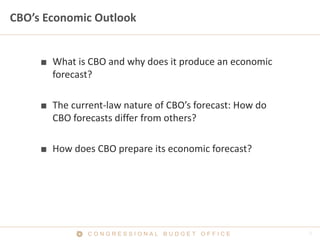
CBO’s Economic Outlook


     ■ What is CBO and why does it produce an economic
       forecast?

     ■ The current-law nature of CBO’s forecast: How do
       CBO forecasts differ from others?

     ■ How does CBO prepare its economic forecast?


               CONGRESSIONAL BUDGET OFFICE
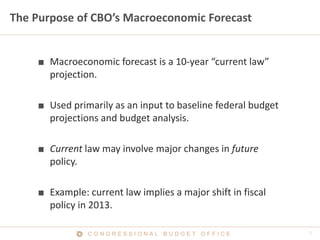
The Purpose of CBO’s Macroeconomic Forecast


    ■ Macroeconomic forecast is a 10-year “current law”
      projection.

    ■ Used primarily as an input to baseline federal budget
      projections and budget analysis.

    ■ Current law may involve major changes in future
      policy.

    ■ Example: current law implies a major shift in fiscal
      policy in 2013.

               CONGRESSIONAL BUDGET OFFICE
CBO’s Approach to Forecasting


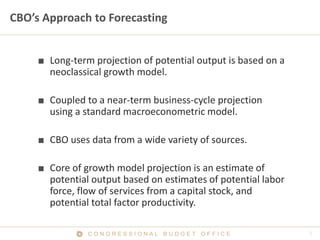
     ■ Long-term projection of potential output is based on a
       neoclassical growth model.

     ■ Coupled to a near-term business-cycle projection
       using a standard macroeconometric model.

     ■ CBO uses data from a wide variety of sources.

     ■ Core of growth model projection is an estimate of
       potential output based on estimates of potential labor
       force, flow of services from a capital stock, and
       potential total factor productivity.

                CONGRESSIONAL BUDGET OFFICE
Overview of CBO’s Growth Model


         QNFB = F [LNFB, KNFB, TFPNFB]
    Where

    ■ QNFB     = real GDP in the non-farm business sector;
    ■ LNFB     = index of hours worked;
    ■ KNFB     = index of real capital services from 7
                 different types of capital assets; and
    ■ TFPNFB   = total factor productivity (a residual)


               CONGRESSIONAL BUDGET OFFICE
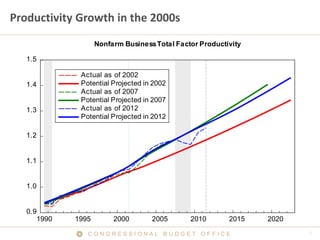
Productivity Growth in the 2000s
                    Nonfarm Business Total Factor Productivity

   1.5

              Actual as of 2002
   1.4        Potential Projected in 2002
              Actual as of 2007
              Potential Projected in 2007
   1.3        Actual as of 2012
              Potential Projected in 2012

   1.2


   1.1


   1.0


   0.9
      1990   1995        2000       2005       2010       2015   2020

                CONGRESSIONAL BUDGET OFFICE
Labor Productivity Growth Equation


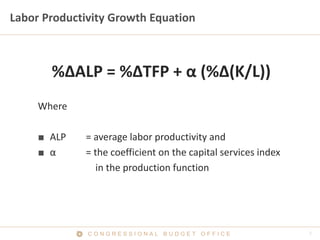
       %ΔALP = %ΔTFP + α (%Δ(K/L))
     Where

     ■ ALP   = average labor productivity and
     ■ α     = the coefficient on the capital services index
                in the production function


              CONGRESSIONAL BUDGET OFFICE
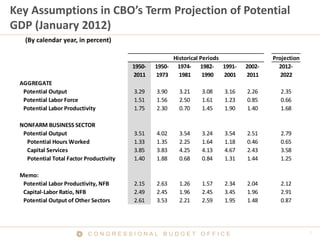
Key Assumptions in CBO’s Term Projection of Potential
GDP (January 2012)
   (By calendar year, in percent)

                                                       Historical Periods                Projection
                                         1950-   1950- 1974- 1982- 1991-         2002-     2012-
                                         2011    1973    1981      1990   2001   2011       2022
 AGGREGATE
  Potential Output                       3.29    3.90    3.21    3.08    3.16    2.26      2.35
  Potential Labor Force                  1.51    1.56    2.50    1.61    1.23    0.85      0.66
  Potential Labor Productivity           1.75    2.30    0.70    1.45    1.90    1.40      1.68

 NONFARM BUSINESS SECTOR
  Potential Output                       3.51    4.02    3.54    3.24    3.54    2.51      2.79
   Potential Hours Worked                1.33    1.35    2.25    1.64    1.18    0.46      0.65
   Capital Services                      3.85    3.83    4.25    4.13    4.67    2.43      3.58
   Potential Total Factor Productivity   1.40    1.88    0.68    0.84    1.31    1.44      1.25

 Memo:
  Potential Labor Productivity, NFB      2.15    2.63    1.26    1.57    2.34    2.04      2.12
  Capital-Labor Ratio, NFB               2.49    2.45    1.96    2.45    3.45    1.96      2.91
  Potential Output of Other Sectors      2.61    3.53    2.21    2.59    1.95    1.48      0.87


                           CONGRESSIONAL BUDGET OFFICE
Other Considerations


     ■ Measurement of productivity growth in services
       sectors, especially health care.

     ■ Channels of influence from public expenditures to
       private-sector productivity and productivity growth.

     ■ Contribution of productivity growth to incomes,
       income shares, and budget.


                CONGRESSIONAL BUDGET OFFICE

Productivity and Growth in CBO's Forecasts

  • 1.
    Congressional Budget Office July 31, 2012 Productivity and Growth in CBO’s Forecasts Robert Shackleton Macroeconomic Analysis Division NABE Foundation 9th Annual Economic Measurement Seminar Sheraton Crystal City, Arlington, Virginia
  • 2.
    CBO’s Economic Outlook ■ What is CBO and why does it produce an economic forecast? ■ The current-law nature of CBO’s forecast: How do CBO forecasts differ from others? ■ How does CBO prepare its economic forecast? CONGRESSIONAL BUDGET OFFICE
  • 3.
    The Purpose ofCBO’s Macroeconomic Forecast ■ Macroeconomic forecast is a 10-year “current law” projection. ■ Used primarily as an input to baseline federal budget projections and budget analysis. ■ Current law may involve major changes in future policy. ■ Example: current law implies a major shift in fiscal policy in 2013. CONGRESSIONAL BUDGET OFFICE
  • 4.
    CBO’s Approach toForecasting ■ Long-term projection of potential output is based on a neoclassical growth model. ■ Coupled to a near-term business-cycle projection using a standard macroeconometric model. ■ CBO uses data from a wide variety of sources. ■ Core of growth model projection is an estimate of potential output based on estimates of potential labor force, flow of services from a capital stock, and potential total factor productivity. CONGRESSIONAL BUDGET OFFICE
  • 5.
    Overview of CBO’sGrowth Model QNFB = F [LNFB, KNFB, TFPNFB] Where ■ QNFB = real GDP in the non-farm business sector; ■ LNFB = index of hours worked; ■ KNFB = index of real capital services from 7 different types of capital assets; and ■ TFPNFB = total factor productivity (a residual) CONGRESSIONAL BUDGET OFFICE
  • 6.
    Productivity Growth inthe 2000s Nonfarm Business Total Factor Productivity 1.5 Actual as of 2002 1.4 Potential Projected in 2002 Actual as of 2007 Potential Projected in 2007 1.3 Actual as of 2012 Potential Projected in 2012 1.2 1.1 1.0 0.9 1990 1995 2000 2005 2010 2015 2020 CONGRESSIONAL BUDGET OFFICE
  • 7.
    Labor Productivity GrowthEquation %ΔALP = %ΔTFP + α (%Δ(K/L)) Where ■ ALP = average labor productivity and ■ α = the coefficient on the capital services index in the production function CONGRESSIONAL BUDGET OFFICE
  • 8.
    Key Assumptions inCBO’s Term Projection of Potential GDP (January 2012) (By calendar year, in percent) Historical Periods Projection 1950- 1950- 1974- 1982- 1991- 2002- 2012- 2011 1973 1981 1990 2001 2011 2022 AGGREGATE Potential Output 3.29 3.90 3.21 3.08 3.16 2.26 2.35 Potential Labor Force 1.51 1.56 2.50 1.61 1.23 0.85 0.66 Potential Labor Productivity 1.75 2.30 0.70 1.45 1.90 1.40 1.68 NONFARM BUSINESS SECTOR Potential Output 3.51 4.02 3.54 3.24 3.54 2.51 2.79 Potential Hours Worked 1.33 1.35 2.25 1.64 1.18 0.46 0.65 Capital Services 3.85 3.83 4.25 4.13 4.67 2.43 3.58 Potential Total Factor Productivity 1.40 1.88 0.68 0.84 1.31 1.44 1.25 Memo: Potential Labor Productivity, NFB 2.15 2.63 1.26 1.57 2.34 2.04 2.12 Capital-Labor Ratio, NFB 2.49 2.45 1.96 2.45 3.45 1.96 2.91 Potential Output of Other Sectors 2.61 3.53 2.21 2.59 1.95 1.48 0.87 CONGRESSIONAL BUDGET OFFICE
  • 9.
    Other Considerations ■ Measurement of productivity growth in services sectors, especially health care. ■ Channels of influence from public expenditures to private-sector productivity and productivity growth. ■ Contribution of productivity growth to incomes, income shares, and budget. CONGRESSIONAL BUDGET OFFICE