t
STEP-BY-STEP GUIDE:
CONDUCTING A
HAZARD ASSESSMENT
USING A TEMPLATE
safetydriven.ca
Welcome to our presentation on "Step-by-Step
Guide: Conducting a Hazard Assessment Using
a Template." In today's session, we will delve
into the essential process of identifying and
mitigating workplace hazards. By the end of
this presentation, you'll have a clear
understanding of how to utilise our Hazard
Assessment Template to create a safer work
environment for everyone.
INTRODUCTION
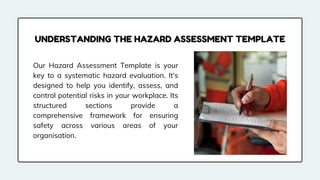
Our Hazard Assessment Template is your
key to a systematic hazard evaluation. It's
designed to help you identify, assess, and
control potential risks in your workplace. Its
structured sections provide a
comprehensive framework for ensuring
safety across various areas of your
organisation.
UNDERSTANDING THE HAZARD ASSESSMENT TEMPLATE
The journey begins with observation and
collaboration. Encourage your employees to actively
participate in spotting potential hazards. Their
insights are invaluable in capturing a complete
picture of your workplace's safety landscape.
Engage different departments, review incident
reports, and consider near-miss incidents to gather
accurate information.
STEP 1 - GATHER INFORMATION
STEP 2 - HAZARD IDENTIFICATION
Dive into the heart of hazard assessment by using our
template's hazard identification section. This is where you list
and categorise various types of hazards, from physical to
psychological. Be specific and comprehensive in your
approach – it's crucial for capturing all potential risks.
STEP 3 - HAZARD ASSESSMENT
Evaluate risks using our template's assessment process. The
risk rating scale guides you in assessing hazards based on
their severity, exposure, and potential consequences. This
systematic approach helps prioritise risks for effective
mitigation.
STEP 4 - HAZARD CONTROL
Mitigate identified risks by implementing controls. Our
template's control measures section offers a roadmap.
Remember the hierarchy of controls: aim for elimination or
substitution first, followed by engineering, administrative
controls, and personal protective equipment (PPE). Engage
employees in suggesting practical control measures.
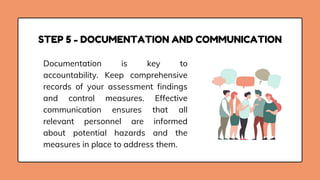
STEP 5 - DOCUMENTATION AND COMMUNICATION
Documentation is key to
accountability. Keep comprehensive
records of your assessment findings
and control measures. Effective
communication ensures that all
relevant personnel are informed
about potential hazards and the
measures in place to address them.
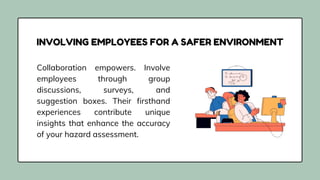
Collaboration empowers. Involve
employees through group
discussions, surveys, and
suggestion boxes. Their firsthand
experiences contribute unique
insights that enhance the accuracy
of your hazard assessment.
INVOLVING EMPLOYEES FOR A SAFER ENVIRONMENT
Safety is an ongoing commitment.
Regularly review and reassess your
hazard assessment. Changing
conditions in the workplace demand
adaptability. This continuous
assessment culture contributes to
sustained safety improvements.
REVIEW AND PERIODIC ASSESSMENT
Conducting a hazard assessment using our template is an essential
step toward creating a safer work environment. By involving
employees and following the structured process, you enhance
workplace safety. Remember, together we can Spot The Hazards In
The Workplace and build a safer, healthier workplace for all. Thank
you for your attention.
CONCLUSION
Thank you for being
attentive!
safetydriven.ca

Step-by-Step Guide Conducting a Hazard Assessment Using a Template.pptx

  • 1.
    t STEP-BY-STEP GUIDE: CONDUCTING A HAZARDASSESSMENT USING A TEMPLATE safetydriven.ca
  • 2.
    Welcome to ourpresentation on "Step-by-Step Guide: Conducting a Hazard Assessment Using a Template." In today's session, we will delve into the essential process of identifying and mitigating workplace hazards. By the end of this presentation, you'll have a clear understanding of how to utilise our Hazard Assessment Template to create a safer work environment for everyone. INTRODUCTION
  • 3.
    Our Hazard AssessmentTemplate is your key to a systematic hazard evaluation. It's designed to help you identify, assess, and control potential risks in your workplace. Its structured sections provide a comprehensive framework for ensuring safety across various areas of your organisation. UNDERSTANDING THE HAZARD ASSESSMENT TEMPLATE
  • 4.
    The journey beginswith observation and collaboration. Encourage your employees to actively participate in spotting potential hazards. Their insights are invaluable in capturing a complete picture of your workplace's safety landscape. Engage different departments, review incident reports, and consider near-miss incidents to gather accurate information. STEP 1 - GATHER INFORMATION
  • 5.
    STEP 2 -HAZARD IDENTIFICATION Dive into the heart of hazard assessment by using our template's hazard identification section. This is where you list and categorise various types of hazards, from physical to psychological. Be specific and comprehensive in your approach – it's crucial for capturing all potential risks.
  • 6.
    STEP 3 -HAZARD ASSESSMENT Evaluate risks using our template's assessment process. The risk rating scale guides you in assessing hazards based on their severity, exposure, and potential consequences. This systematic approach helps prioritise risks for effective mitigation.
  • 7.
    STEP 4 -HAZARD CONTROL Mitigate identified risks by implementing controls. Our template's control measures section offers a roadmap. Remember the hierarchy of controls: aim for elimination or substitution first, followed by engineering, administrative controls, and personal protective equipment (PPE). Engage employees in suggesting practical control measures.
  • 8.
    STEP 5 -DOCUMENTATION AND COMMUNICATION Documentation is key to accountability. Keep comprehensive records of your assessment findings and control measures. Effective communication ensures that all relevant personnel are informed about potential hazards and the measures in place to address them.
  • 9.
    Collaboration empowers. Involve employeesthrough group discussions, surveys, and suggestion boxes. Their firsthand experiences contribute unique insights that enhance the accuracy of your hazard assessment. INVOLVING EMPLOYEES FOR A SAFER ENVIRONMENT
  • 10.
    Safety is anongoing commitment. Regularly review and reassess your hazard assessment. Changing conditions in the workplace demand adaptability. This continuous assessment culture contributes to sustained safety improvements. REVIEW AND PERIODIC ASSESSMENT
  • 11.
    Conducting a hazardassessment using our template is an essential step toward creating a safer work environment. By involving employees and following the structured process, you enhance workplace safety. Remember, together we can Spot The Hazards In The Workplace and build a safer, healthier workplace for all. Thank you for your attention. CONCLUSION
  • 12.
    Thank you forbeing attentive! safetydriven.ca