Downloaded 14 times








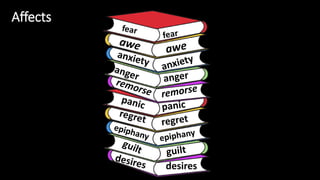

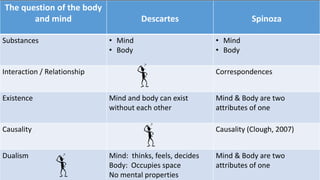

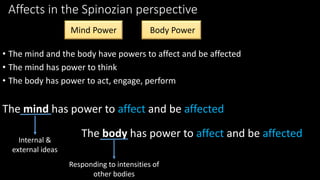
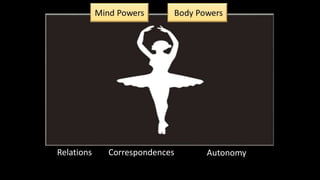
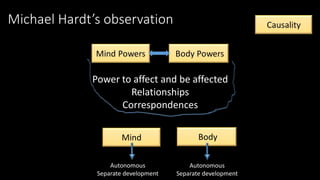
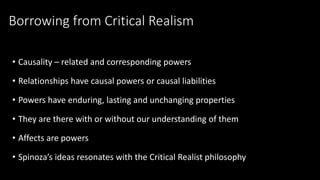
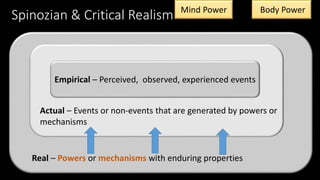
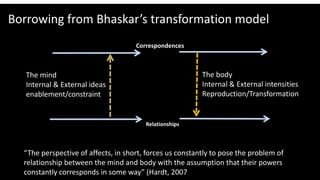





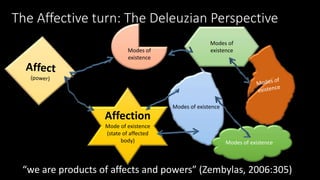
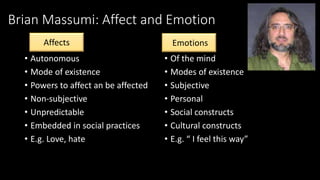
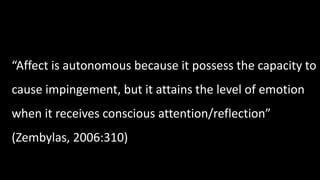

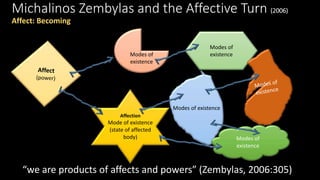
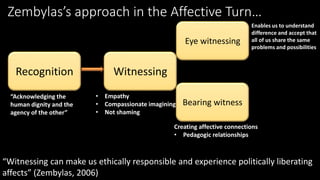
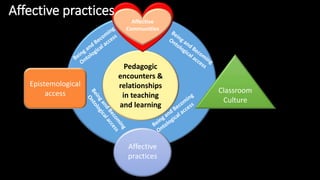
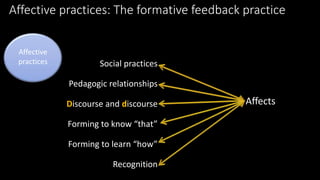
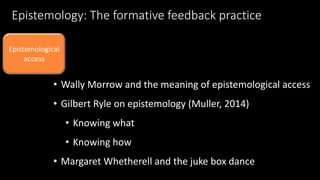

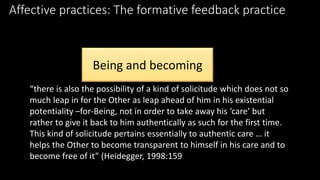
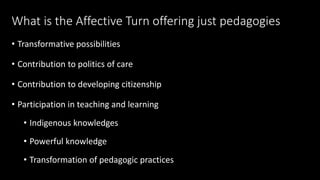



This document discusses the affective turn in pedagogy and research. It explores the perspectives of Spinoza, Deleuze, Guattari, Massumi, Zembylas and others on affects, emotions and the relationship between body and mind. The key ideas are that we are products of affects and powers; affects are autonomous and precede emotions; and affective practices, communities and witnessing can support just pedagogies and political transformation. The affective turn offers transformative possibilities for teaching, learning, indigenous knowledges and developing citizenship.


![Jean farmernrsrhe[2]](https://cdn.slidesharecdn.com/ss_thumbnails/jeanfarmernrsrhe2-141211041503-conversion-gate02-thumbnail.jpg?width=640&height=640&fit=bounds)


